The truth about modern adulthood: rootlessness and global drift
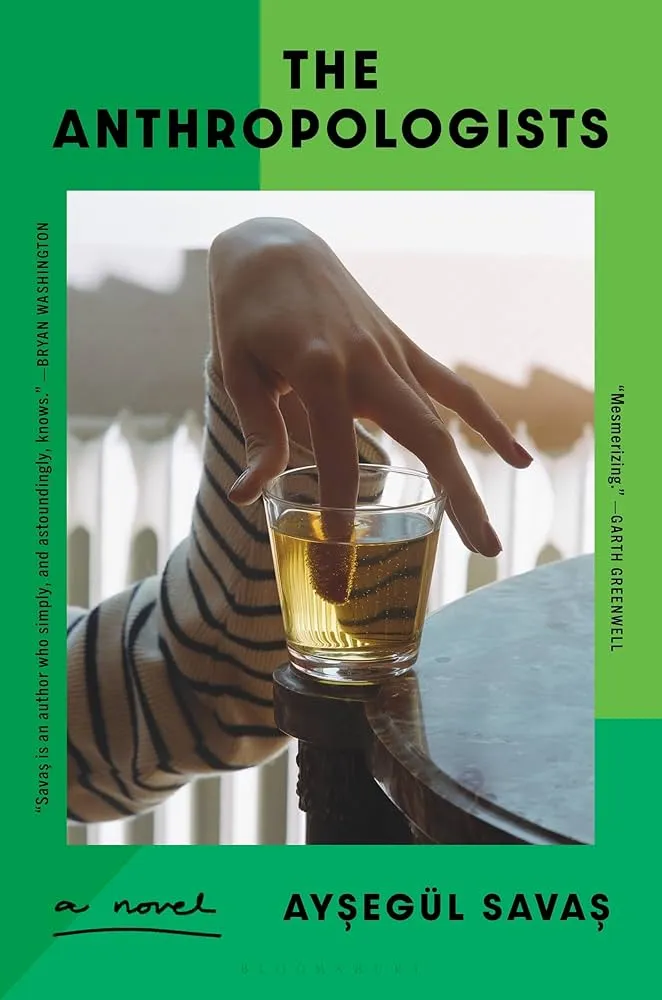
Into Ayşegül Savaş’s new novel, The Anthropologists – unnamed cities, rituals, and a life lived between languages reveal the architecture of modern adulthood and global displacement
A city without a name: how Ayşegül Savaş turns rootlessness and global drift into the geography of The Anthropologists
In The Anthropologists, Ayşegül Savaş sets her narrative in a city that remains unnamed. It could be anywhere. Streets, cafés, apartments blur into a single landscape of early adulthood: half-rooted, half-adrift. “It’s a way to bring the relationship to the forefront and to universalize aspects of building a life in early adulthood,” she says.
This anonymity is more than a stylistic device. For Savaş, who has lived across continents and writes in a language not her own, the unnamed city reflects the condition of contemporary existence: belonging is not anchored to geography but to fragile networks — a shared kitchen, a borrowed phrase, the familiar silence of a friend. It is a geography of affect rather than place.
In this uncertainty, Asya and Manu invent a private vocabulary, a code that spans the distances between languages and lives. Around them, conversations unfold in translation — between those who left and those who stayed, between different versions of the self. Savaş captures this not as instability but as the raw material of modern life. “Life is always an act of translation, no matter the era, because we live in language and in imagination — and those are never fixed in their meanings.”
The city without a name becomes the perfect stage for a writer whose work lives precisely in these shifting meanings.
Finding the extraordinary in the everyday: Ayşegül Savaş’s pandemic-era vision of life, stillness, and the small gestures that shape us
Savaş began writing The Anthropologists during the stillness of the first lockdown — a moment when ordinary life, abruptly interrupted, appeared strange and precious. “I wanted to dwell in all the pleasures of a day — going to cafés, meeting up with friends, walking around flea markets — because I could suddenly see how marvelous it was to live like this.”
That rediscovery of the mundane permeates the novel. Asya and Manu’s lives unfold not through turning points but through intervals: pauses between actions, the repetition of habits, the shifting light on familiar streets. Savaş’s minimalist aesthetic turns these small moments into the true architecture of meaning. What once seemed invisible becomes the very fabric of existence.
Two lives built from quiet gestures: Asya, Manu, and the intimate minimalism at the heart of Ayşegül Savaş’s writing
Asya and Manu live quietly in a city that could be anywhere. Their days are shaped more by gestures than events, by a language they’ve built together as if defining a small, shared territory. Nothing exceptional happens, and yet everything occurs within that stillness.
Savaş draws on her experience of living between countries and languages. The autobiographical layer is subtle but persistent: a familiarity with displacement, with observing from a slight remove. Trained in anthropology, she structures the novel into short, precise chapters named after elements of fieldwork — observation, ritual, language, home. These fragments accumulate into a calm, meticulous form of documentation, echoing the book’s title and the method of its author. The Anthropologists becomes a novel about endurance — and about the effort to remain present inside an unsettled life.
The unfinished state of adulthood: Ayşegül Savaş on slow becoming, uncertainty, and redefining what it means to grow up today
Savaş often reflects on what it means to grow older without ever quite “arriving” — to live in an age where transitions stretch and definitions blur. Adulthood, in her view, is no longer a destination but a shifting threshold. “Perhaps because our generation has lingered longer in the transition to adulthood — making choices that will shape the rest of our lives, stepping fully into responsibilities — we also dwell longer in uncertainty. That uncertainty can be a choice in itself. It can become a whole life.”
In The Anthropologists, this condition is not failure but quiet resistance: an acceptance of the unfinished as a permanent state. Yet within that uncertainty lies a slow form of learning — a maturity redefined. “We are learning to clarify our own priorities, what merits commitment,” she says.
Her characters inhabit this space of discernment: where growing up means not closure but choosing what to hold onto when nothing feels secure.
Rituals as shelter and exposure: daily gestures, invented traditions, and the subtle anthropology of Ayşegül Savaş
In Savaş’s fiction, small rituals replace grand narratives. A morning coffee, the search for a new apartment, evenings spent with friends rehearsing familiar stories — these repetitions become a way to anchor oneself in a world of shifting ground.
“I wanted to give meaning to the lives of my characters, no matter how precarious they may seem. Their invented rituals seemed like a good vantage point to anchor them and to find beauty and symbolic value in their everyday lives. These rituals are both a resignation, because they can never replace the rituals of a whole culture, and a resistance to an adrift, cosmopolitan life.”
This dual nature — shelter and exposure — is central to Savaş’s vision of contemporary living.
Emotional stability without certainty: love, distance, and the fragile forms of connection in Ayşegül Savaş’s The Anthropologists
Love in The Anthropologists is quiet, uneven, and persistent. Between Asya and Manu, it is built not from declarations but from presence — from staying. Around them, love stretches across continents: phone calls to distant parents, video messages that attempt to compress intimacy into a screen.
Between their friends Ravi and Lena, however, love fails to find its language. Their relationship flickers and dissipates, full of movement yet empty of ground — as if intensity alone could stand in for meaning. For Savaş, emotional steadiness depends not on clarity or proximity but on persistence. “The stability afforded by love is always an emotional state,” she says. Stability exists where feeling endures, even without clear form.
Observation as a moral and creative practice: how Ayşegül Savaş transforms watching into care, wisdom, and the architecture of her fiction
Observation, for Savaş, is both method and ethic. Asya films strangers in a park, studies gestures, listens more than she speaks. She observes her elderly neighbor Tereza with the same attention — their dinners, their poetry, their shared rituals of quiet.
When she visits a friend’s mother in the suburbs, she watches the stillness of domestic life: faded photographs, generational silences. Observation becomes, in the novel and in Savaş’s own practice, a form of care — presence over explanation. “Observation is the essence of writing; we have to wait for these observations to mature so we can make connections with other aspects of our imagination. This is also how observation thickens in life, evolving from judgment to wisdom.”
In a world that rewards speed, Asya’s slowness becomes radical — an insistence on attention in a society that moves too fast to be truly seen.
Ayşegül Savaş: writing from the in-between
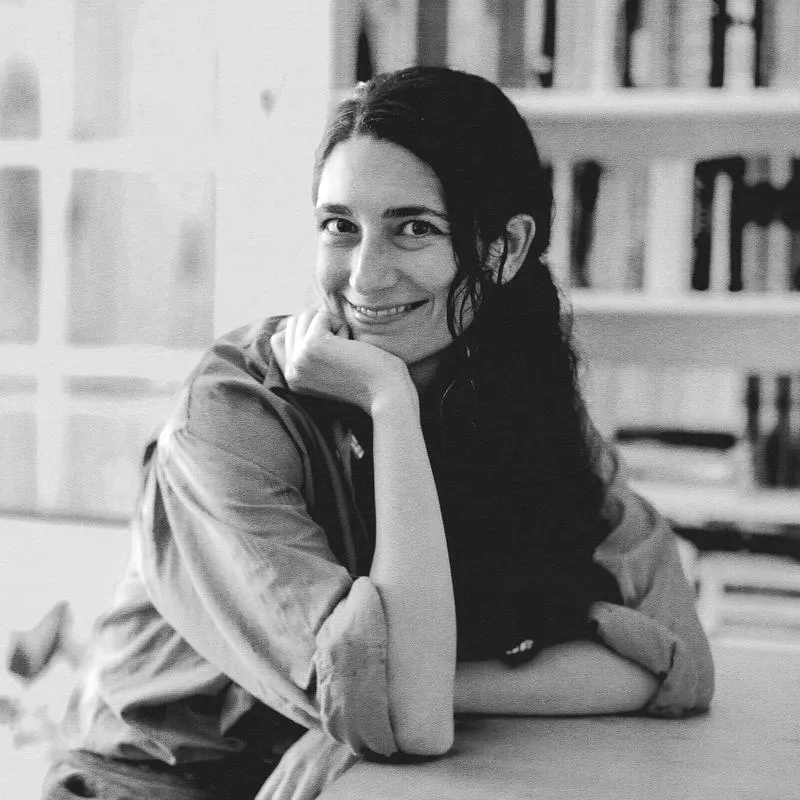
Ayşegül Savaş writes from the threshold — between languages, between countries, between states of becoming. Born in Istanbul, educated in the United States, and now living in Paris, she has long inhabited the liminal spaces that shape her fiction. Her academic background in sociology and anthropology informs not only the themes she explores but the very structure of her novels: attentive to gestures, rituals, and the quiet choreography of daily life. Known for her distilled, contemplative prose — honed across novels, stories in The New Yorker, and nonfiction — Savaş examines how we construct meaning in a world of constant displacement. The Anthropologists, her most recent novel, is perhaps her clearest expression of this vision: a study of observation, intimacy, and the unstable territories we call home. It is within this frame that the story unfolds.
Ayşegül Savaş: a life between languages, countries, and forms — the writer behind The Anthropologists
Ayşegül Savaş is the author of the novels The Anthropologists, White on White, and Walking on the Ceiling; the story collection Long Distance; and the nonfiction book The Wilderness. Born in Istanbul, she studied sociology and anthropology at Middlebury College in Vermont and later lived in the United Kingdom and Denmark before settling in Paris. She writes in English, and her work — translated into multiple languages — appears regularly in The New Yorker and other literary magazines.
Elisa Russo