Where Chiado meets Bairro Alto: inside Lisbon’s most storied boutique hotel
Rooted in historic architecture yet open to the city’s present, Bairro Alto Hotel interprets the genius loci of this part of Lisbon, from the ground floor to the upper levels of its four Pombaline buildings
Bairro Alto Hotel: Lisbon between two identities
Lisbon unfolds on different levels: the river where arrivals imprint themselves on collective memory, and the hills where printing shops, workshops and bars have shaped daily culture. Bairro Alto Hotel stands between these two conditions – the composed elegance of Chiado and the irreverent energy of Bairro Alto.
Occupying four interconnected eighteenth–century buildings on Praça Luís de Camões, the hotel first opened in 2005 on the site of the former Grand Hôtel de l’Europe, one of the city’s historic grand hotels, which had closed in the late twentieth century. From the beginning, Bairro Alto Hotel positioned itself as one of Lisbon’s first true luxury boutique hotels: an independent five–star property run by a Portuguese company that would later join The Leading Hotels of the World.
In 2017 the hotel temporarily closed to undergo a major architectural and programmatic transformation. When it reopened in 2019, it returned with almost double the interior space, 87 rooms instead of the original 55, and a constellation of public areas – restaurants, terraces, café, rooftop and wellness spaces – that speak as much to local residents as to travelers. From the square, however, what you see is still a compact historic façade with wrought–iron balconies and Pombaline proportions. Behind that surface, the entire block has quietly become a single, continuous organism.
Architecture and urban context of Bairro Alto Hotel in Lisbon’s historic center
The transformation completed in 2019 followed a clear principle: preserve the building’s memory while allowing it to evolve. The project was entrusted to Portuguese architect Eduardo Souto de Moura, winner of the Pritzker Prize, whose work often explores the line between restoration and contemporary intervention. His task at Bairro Alto Hotel was to almost double the interior footprint without disrupting the historic scale of the façades or the rhythm of the streets.
The hotel now occupies four adjoining eighteenth-century Pombaline buildings – structures rebuilt after the 1755 earthquake following a pioneering anti-seismic system known as the gaiola, a flexible timber frame concealed within masonry walls. This construction method gives the façades their ordered rhythm and leaves subtle irregularities inside: shifting ceiling heights, angled corners and changes of level that preserve the memory of the original houses.
The façade that faces Praça Luís de Camões retains its primrose-yellow tone, traditional shutters and wrought-iron balconies. Along the side streets, windows and doors follow the proportions typical of Pombaline reconstruction – regular bays, stone-framed openings, restrained ornament. The sense is that of a historic block carefully repaired rather than radically altered.
Renovation by Eduardo Souto de Moura: expansion with preservation
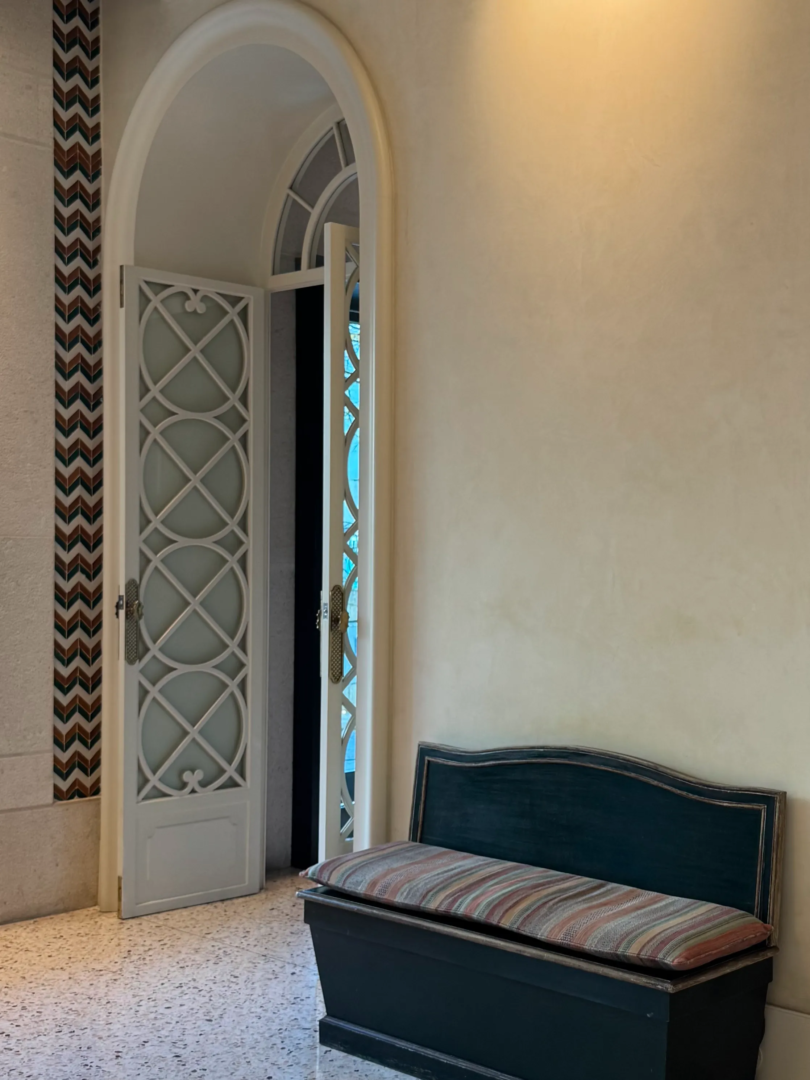
Inside, circulation has been reorganized to unify the four buildings into one coherent whole. New vertical cores and corridors connect wings that once functioned independently. Yet small clues remain: changes in ceiling height, short flights of steps between levels, slightly irregular junctions. These traces reveal where one structure ends and another begins, keeping alive the memory of former apartments, shops and service spaces.
The underlying Pombaline structural system – masonry walls and timber frameworks designed for earthquake resistance – has been strengthened and updated for contemporary standards. The expansion also extended the building upward. The fifth and sixth floors were rethought as a kind of belvedere, where BAHR, the terrace and the rooftop bar establish a direct relationship with Lisbon’s skyline and the Tagus River. These upper levels do not feel like a separate architectural object placed on top of the old building; instead, they read as a natural continuation of the existing cornice and rooflines, with lightweight structures and glazed openings framing the city in different directions.
Interior design at Bairro Alto Hotel: Atelier Bastir, TheStudio and Portuguese materials
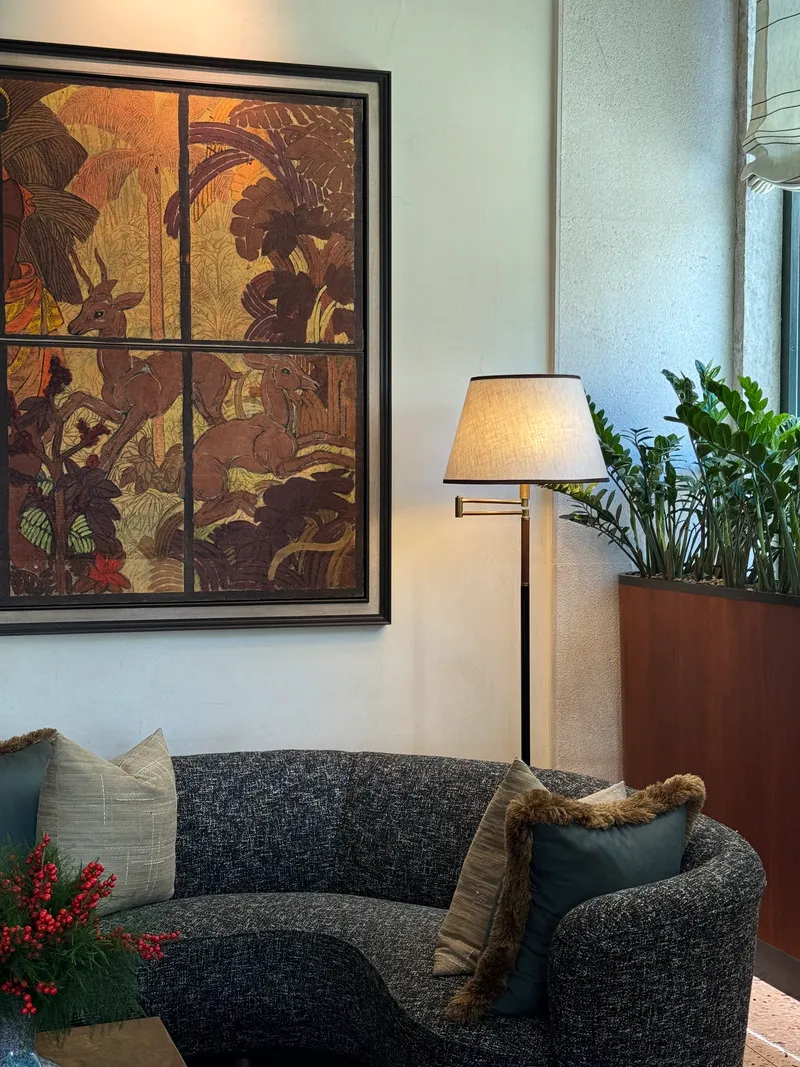
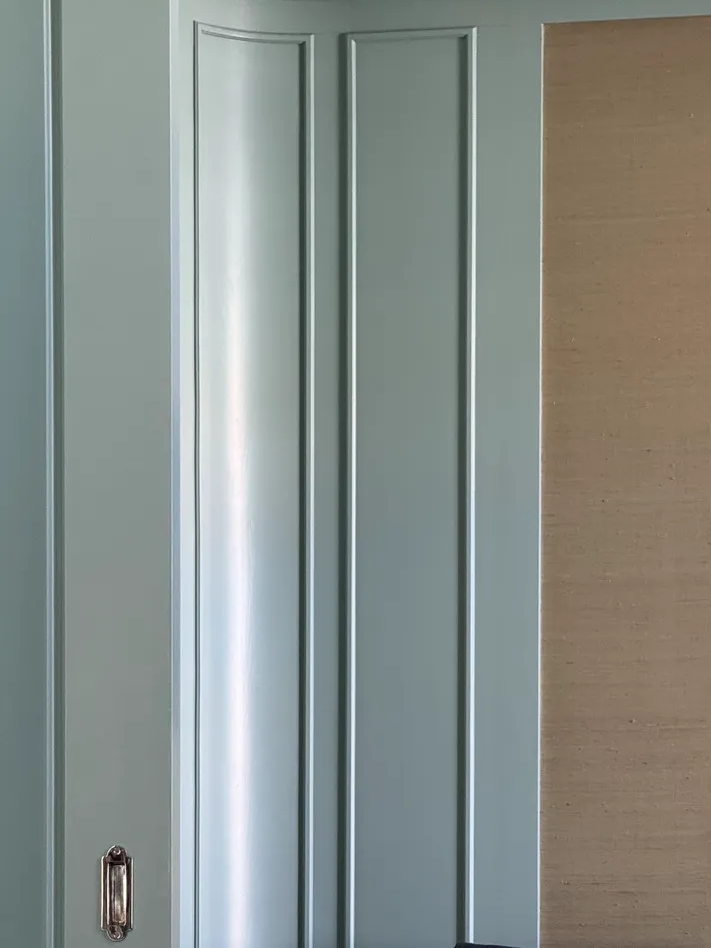
Interior architecture and design were handled by Atelier Bastir, the Porto–based studio responsible for the original 2005 hotel, working in collaboration with TheStudio, particularly on the food and beverage areas. The result is a language of calm clarity: strong lines, generous but controlled use of materials, and a color palette that echoes Lisbon’s atmospheres – washed blues, stone greys, sandy neutrals, contrasted with deeper tones in selected spaces.
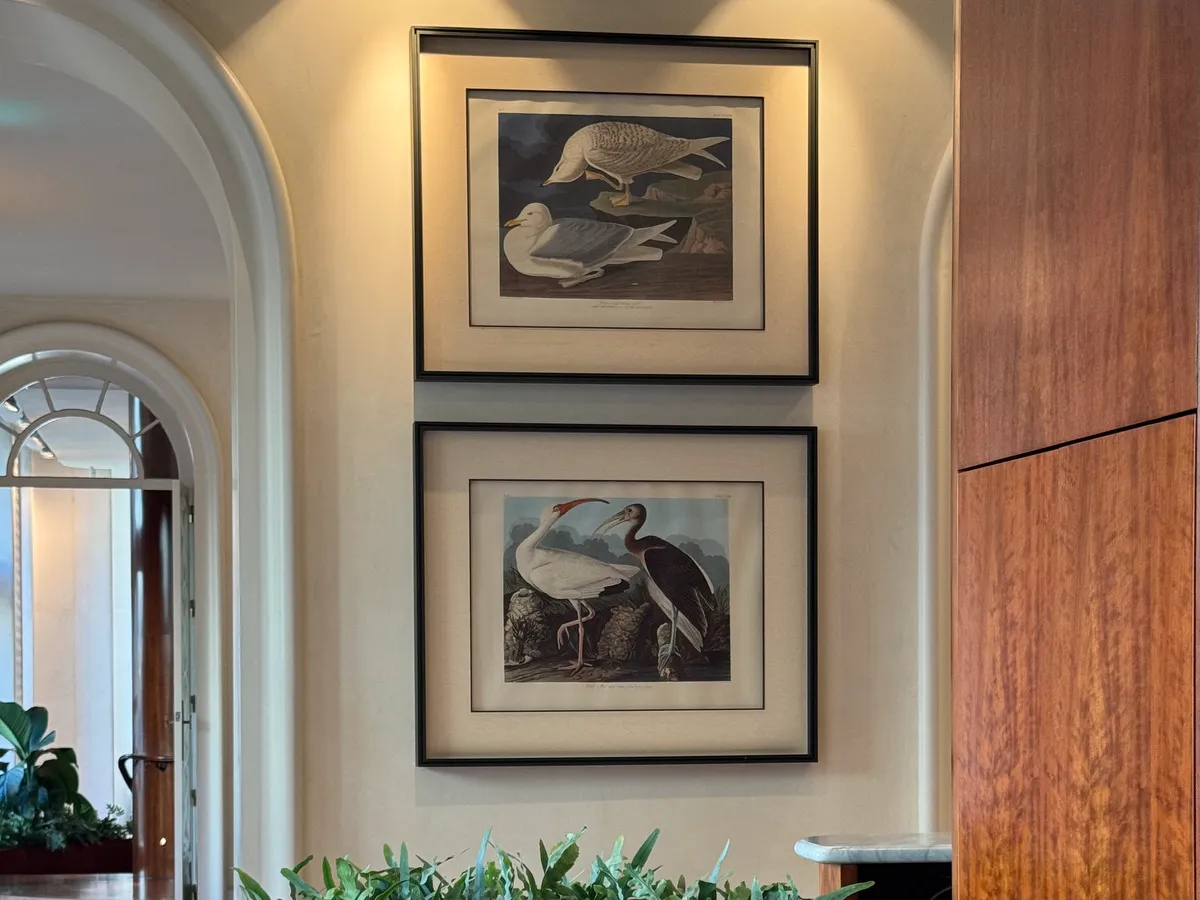
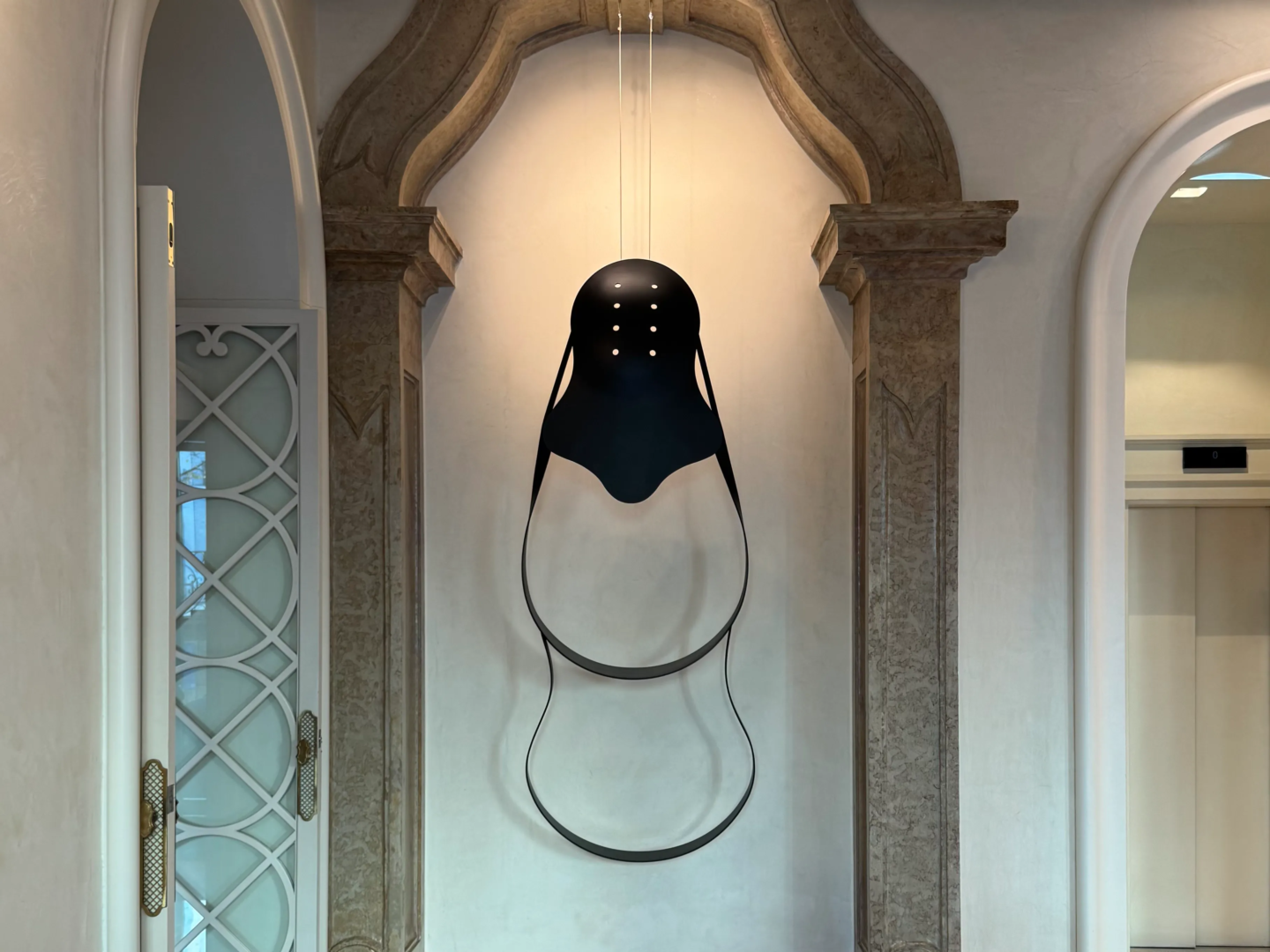
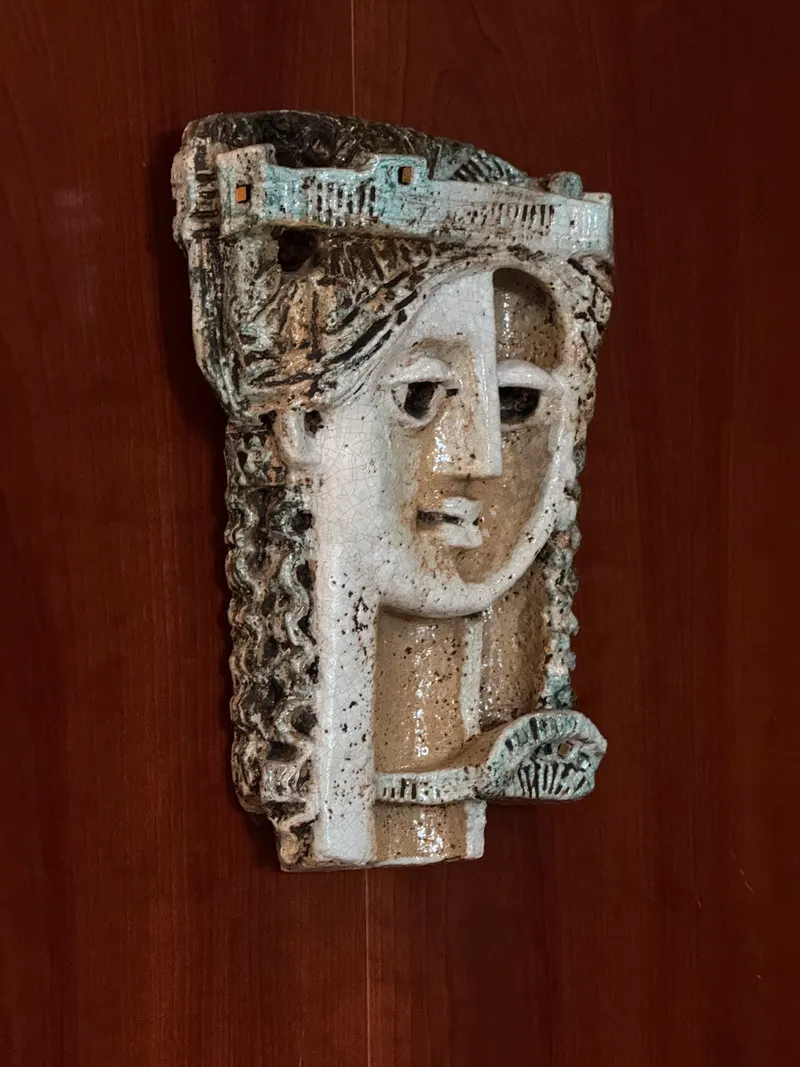
Art plays a quiet but constant role. Portuguese artists are present throughout the building: iron sculptures by Rui Chafes in the lobby, works by Rui Calçada Bastos along circulation paths, and a dramatic vertical tapestry in macramé and high–warp weaving by Oficina 166 that cascades through several floors. In the lobby, two suspended iron sculptures by Rui Chafes occupy recessed niches in the stone walls, establishing from the very entrance the hotel’s dialogue between Pombaline heritage and contemporary Portuguese art.
The architectural project is recognized as a careful piece of urban rehabilitation at the heart of historic Lisbon, balancing contemporary hotel requirements with the character of the original Pombaline fabric.
Rooms and suites at Bairro Alto Hotel: light, topography and views of Lisbon
The hotel’s 87 rooms – 22 of them suites – are conceived less as standardized units and more as a family of spaces shaped by the existing buildings and by Lisbon’s light. Instead of forcing every room into identical proportions, the project embraces variation: ceiling heights change, wall lines are sometimes angled, windows open onto different kinds of urban scenes. This diversity becomes the starting point for the interior design.
Natural light, in particular, is treated as a structural material. In some rooms it arrives directly from large windows facing the Tagus, catching the shimmer of the river and the bridge in the distance. In others it filters in from the square, from side streets, from internal courtyards, tracing precise paths across wood floors, brass details and fabrics in soft mineral tones. The palette draws consciously on Lisbon’s topography and surfaces: the stone of calçada pavements, the pale blues of azulejos, the warm whites of façades under sun.
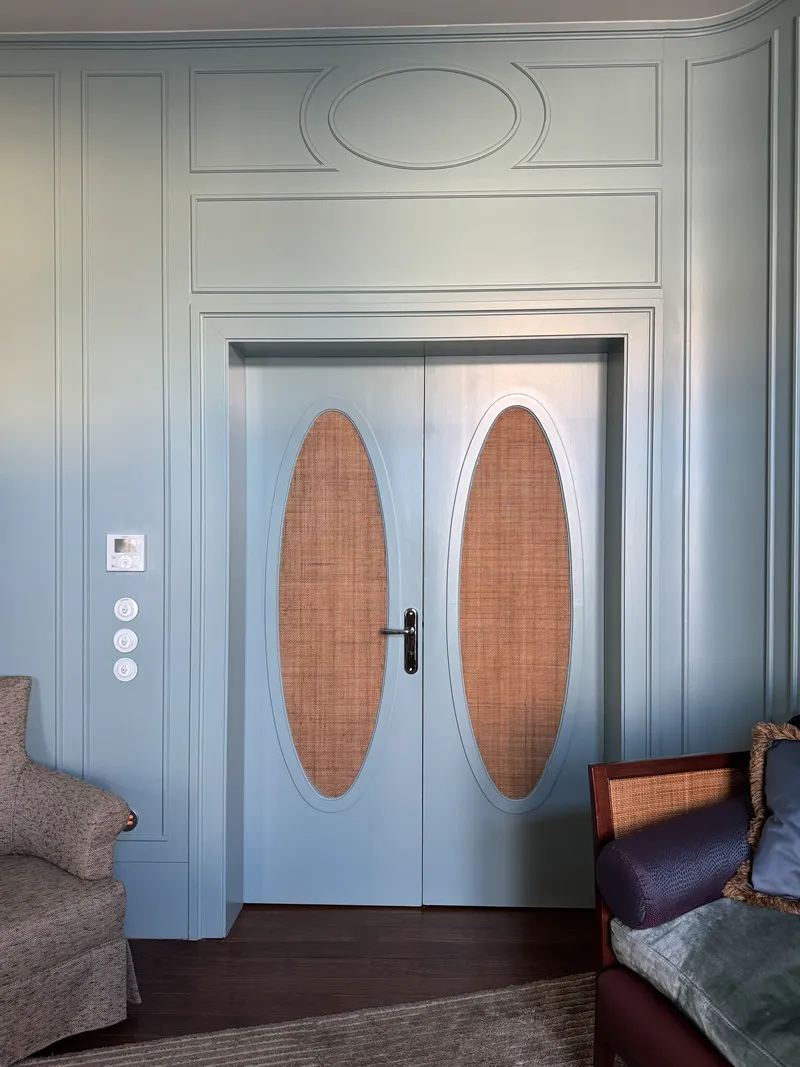
Chiado Suite at Bairro Alto Hotel: main square views and luminous city living
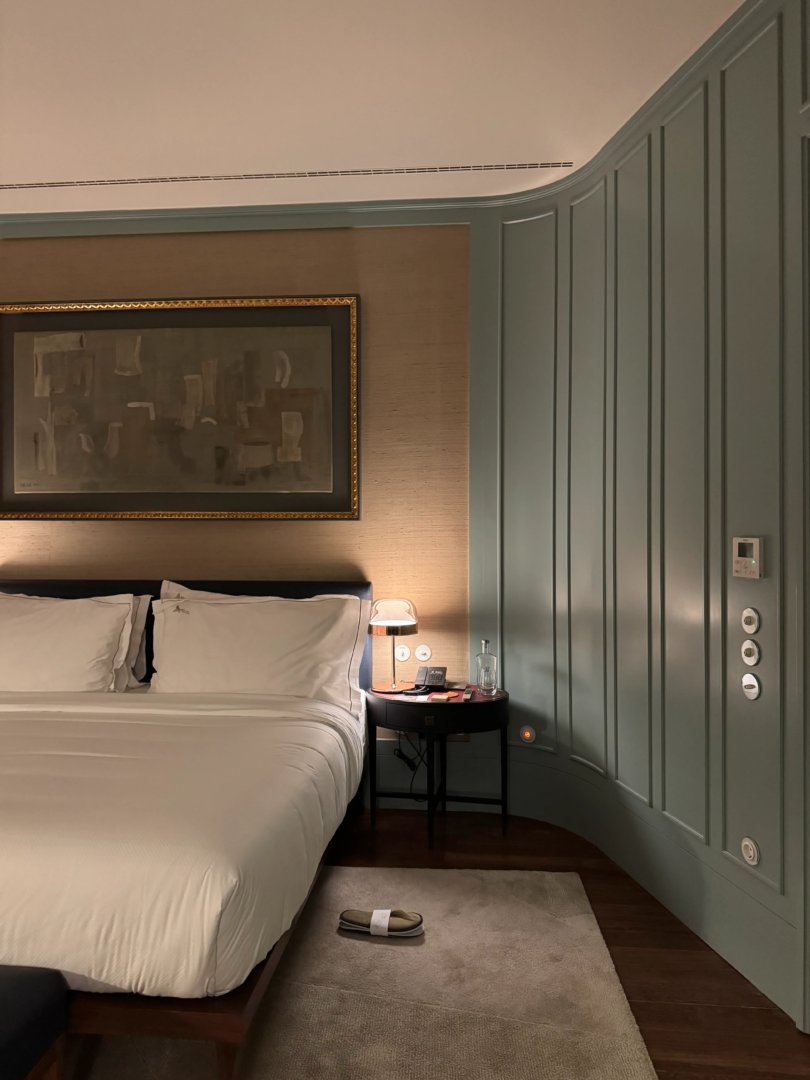
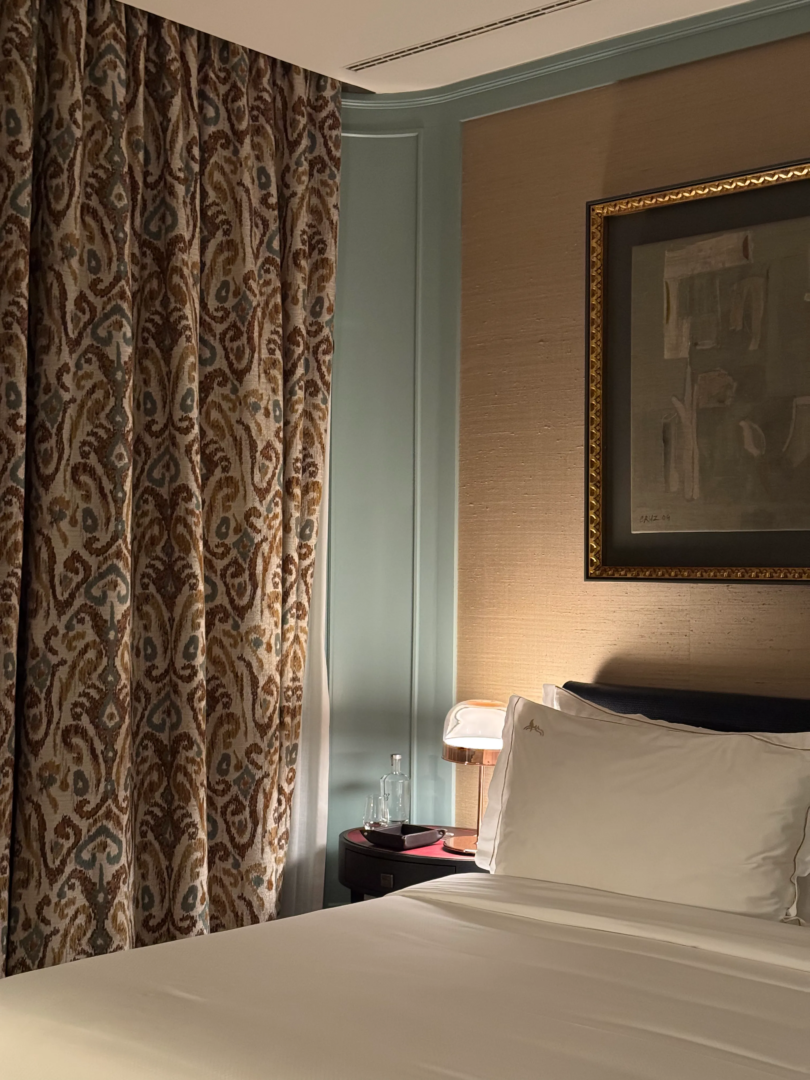
Furniture is largely custom–designed, with clean lines and an understated mid–century inflection. Built–in wardrobes, consoles and headboards are crafted in wood, sometimes combined with cane or fabric panels. Freestanding pieces – armchairs, side tables, desks – come from a mix of contemporary Portuguese makers and carefully selected vintage items. Textiles are produced by local artisans: woven rugs, throws, curtains and upholstery add texture without overwhelming the rooms.
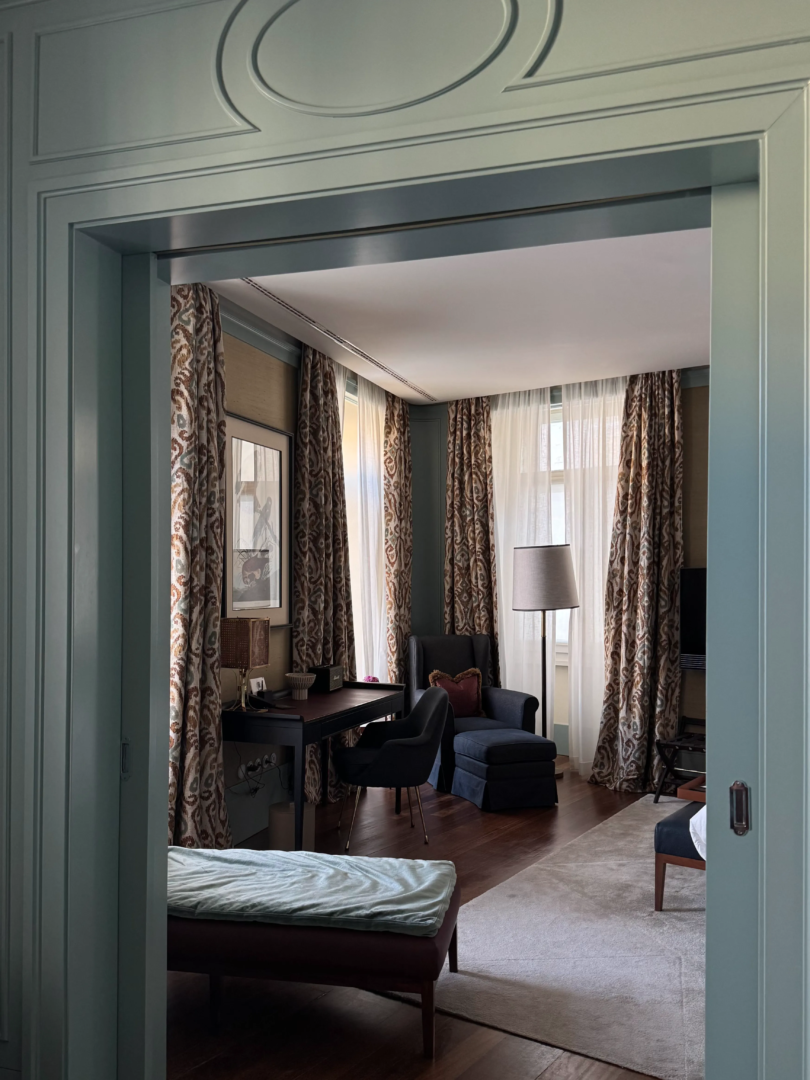
Within this overall language, the Chiado Suite is the clearest expression of the hotel’s idea of a “Lisbon–facing” room. It is a spacious corner suite, measuring between 538 and 635 square feet, that looks directly onto the historic center and, in particular, over Praça Luís de Camões. Large windows bring in the light of the square and its constant movement – trams passing, people crossing, the slopes of Chiado rising behind – so that the city is always present, even when the suite is quiet.
Inside, the layout is organized as a small apartment. A separate living area provides sofas and armchairs for reading or conversation. The bedroom is centered on a king–size bed, with the same custom headboards and woodwork found elsewhere in the hotel, but here paired with slightly more pronounced, decorative elements that keep the atmosphere both sophisticated and relaxed.
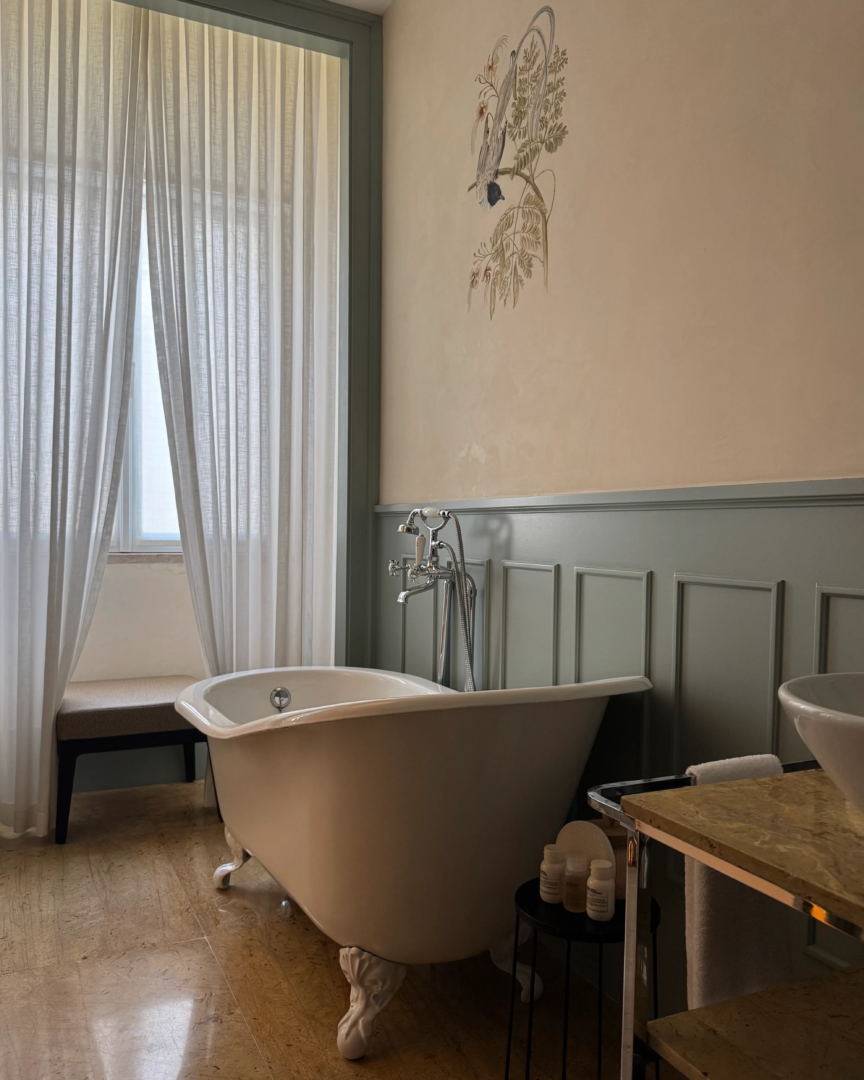
One of the defining features of the Chiado Suite is the bathroom. It receives natural daylight and includes both a walk–in shower and an antique bathtub, giving guests a choice between a quick, efficient routine and a slower, more indulgent bath. Surfaces are in stone and marble, fittings are modern but unobtrusive, and the whole room is designed to feel like an extension of the living area rather than a purely functional annex. Le Labo bath products, soft robes and careful lighting complete the impression of a private sanctuary that still feels connected to the day outside.
The suite’s equipment reflects the hotel’s broader approach to technology: present and up to date, but not dominant. A Bang & Olufsen television, a Marshall speaker and Chromecast allow for easy connection to personal devices. There is an espresso coffee machine with supplied capsules, a complimentary minibar with snacks, USB–C ports, a Dyson hairdryer and a pillow menu that lets guests fine–tune their sleeping comfort. On the service side, valet parking, shoe–shine on request, a welcome drink on arrival, a “Lost in Lisbon” concierge service and the option to receive a selection of newspapers reinforce the sense of being looked after in a discreet, precise way.
BAHR restaurant at Bairro Alto Hotel: concept, chefs and culinary direction
On the fifth floor, BAHR (Bairro Alto Hotel Restaurant) anchors the hotel’s gastronomic identity and forms one of its most emblematic spaces. The restaurant aligns two focal points: the terrace and panoramic window overlooking the Tagus, and the open kitchen that brings movement and precision into the dining room. From many seats, guests can observe both the slow rhythm of the river and the choreography of the kitchen at work.
BAHR is led by executive chef Fábio Pereira, whose cuisine emphasizes high–quality Portuguese ingredients, seasonal clarity and clean, confident flavors. He brings a contemporary approach informed by earlier experience at restaurants such as 100 Maneiras and Bica do Sapato, followed by eight years at the Ritz Four Seasons Lisbon as sous–chef and executive sous–chef.
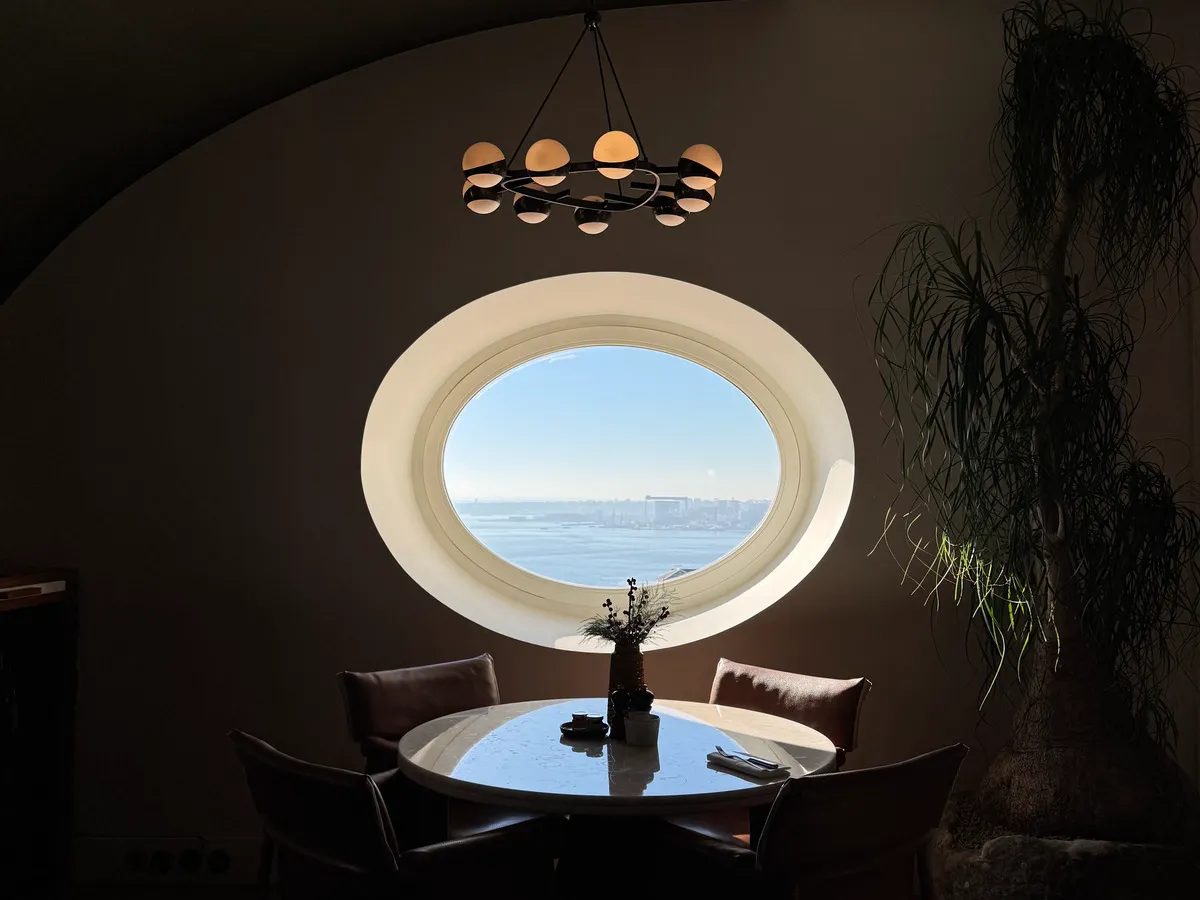
Interior design of BAHR: atmosphere, materials and view over the Tagus
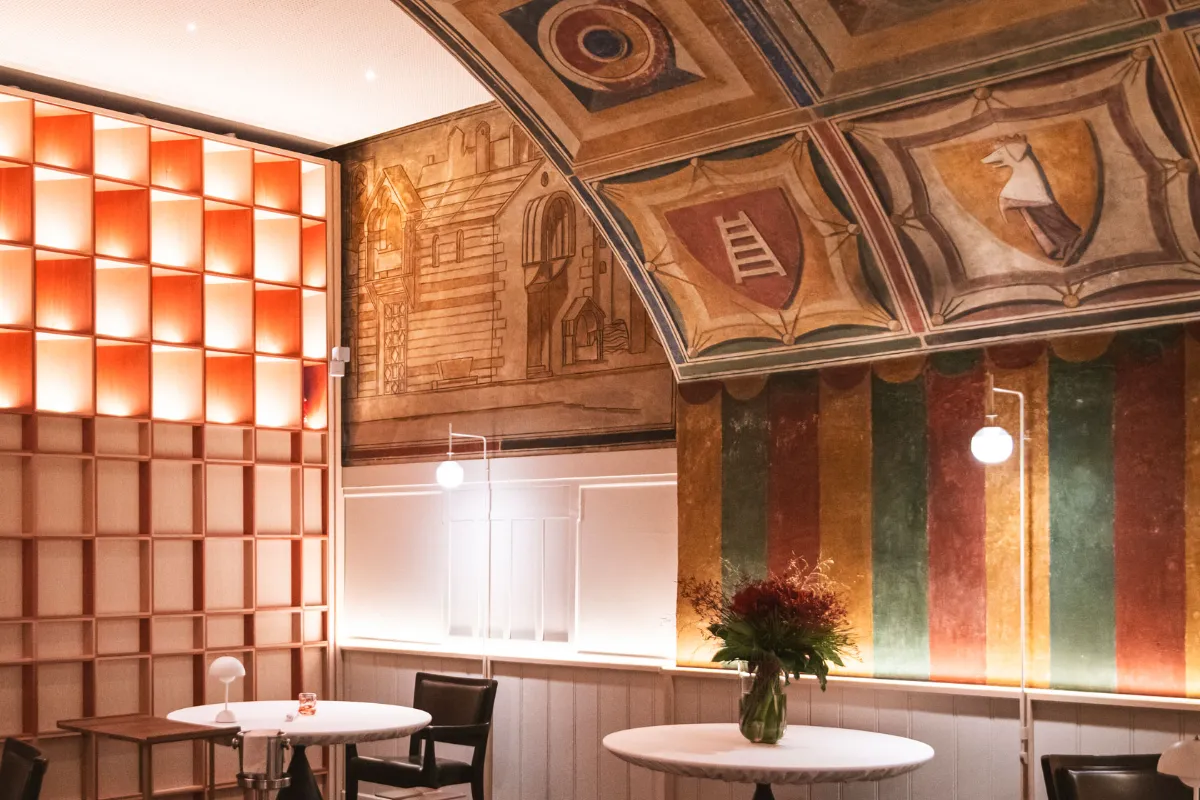
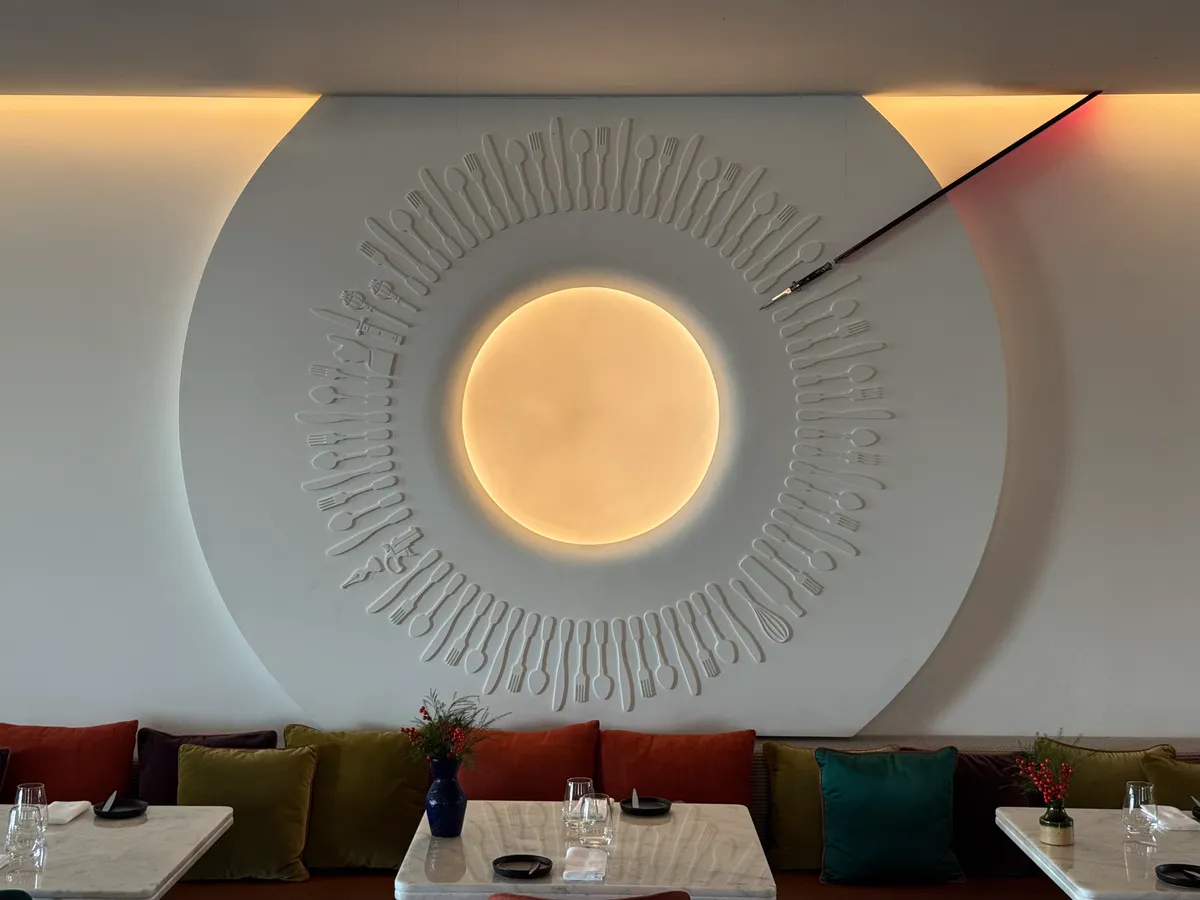
The interior design at BAHR, created in collaboration between Atelier Bastir and TheStudio, translates the atmosphere of Chiado and Bairro Alto into materials and volumes. Inside, dark woods, marble counters and metal accents lend a sense of solidity that will patinate with time and use. Banquettes run along walls, bar stools line the counter, and freestanding tables are dressed with linen and carefully chosen tableware.
Much of the crockery is made by small Portuguese ceramic studios, whose pieces bring subtle irregularities and a tactile, handmade presence to the table. The large oval window frames the river almost like a proscenium, while the open kitchen keeps the energy of cooking visible, connecting guests directly to the process behind each dish.
BAHR cuisine: Portuguese ingredients, seasonal menus and wine list
Culinarily, BAHR works in the space between Portuguese tradition and contemporary interpretation. The menu is anchored in Portuguese raw materials: beef from northern regions, fish and shellfish from the Atlantic coast, oysters and halophyte plants from estuarine wetlands, Alentejo pork, goat and sheep cheeses from inland and coastal areas, vegetables and fruit sourced seasonally from different parts of the country, wild mushrooms from the north, and Carolino rice grown near the Mondego. Rather than constructing a fixed repertoire of “classics”, the kitchen uses these ingredients as a changing vocabulary, adjusting dishes as seasons and supply conditions shift.
Certain ideas recur: long–fermented sourdough breads served warm; precise handling of fish and seafood; combinations that highlight natural flavors rather than conceal them. Many plates are presented with a kind of informal elegance – refined but not theatrical. The wine list gives significant space to Portuguese producers, from well–established regions such as Douro and Alentejo to smaller appellations and low–intervention winemakers. Cocktails at the bar similarly draw on local spirits, fortified wines and seasonal ingredients, extending BAHR’s culinary language into liquid form.
Breakfast is also served at BAHR and on its terrace. Instead of a conventional buffet, the hotel offers an à–la–carte format: breads and pastries baked in–house, charcuterie and cheeses, eggs prepared to order, fruit, yogurts and small dishes that reflect both Portuguese and international morning habits. Lunch tends to be lighter and more aligned with the rhythms of the working day, while dinner becomes more structured, with a more pronounced focus on technique. Across all services, the underlying logic remains: high–quality Portuguese ingredients, treated with clarity and respect.
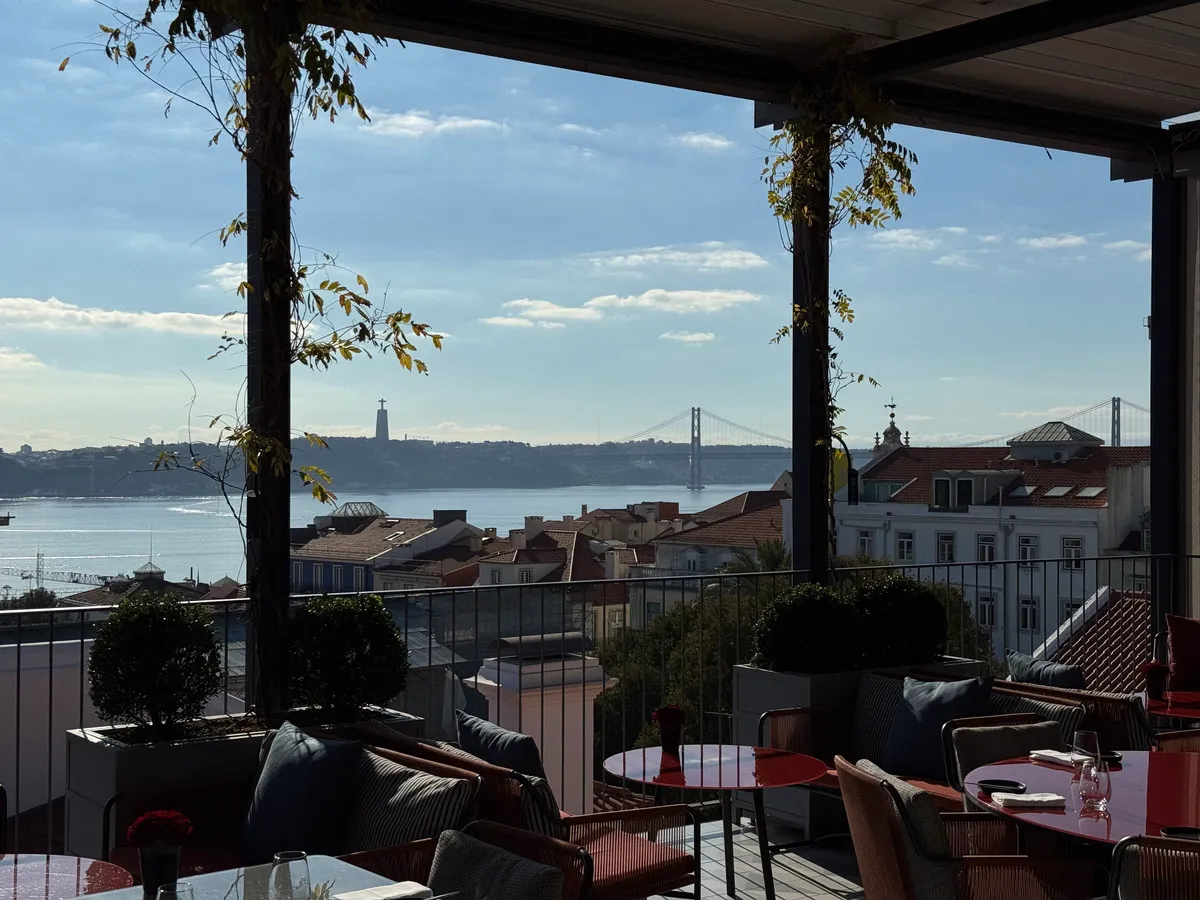
Rooftop terraces at Bairro Alto Hotel: panoramic views of Lisbon and the Tagus River
The hotel’s relationship with Lisbon is perhaps most tangible on its terraces. On the fifth floor, BAHR’s terrace extends the restaurant outward, projecting above Praça Luís de Camões and catching different aspects of the city throughout the day. The square below, the tram lines, church towers and the layered roofs of Chiado all become part of the scene, while the Tagus glints in the distance.
Here, guests and locals share the same chairs and tables. In the morning, it might host a quiet coffee or an unhurried breakfast; at midday, a working lunch or a short break; in the late afternoon and evening, glasses of wine, cocktails and conversations. The design avoids the feeling of a rooftop that is only for show: it is landscaped and furnished in a way that invites everyday use, not just photo opportunities.
Bairro Alto Hotel rooftop bar: sunset cocktails and Lisbon skyline
One level higher, the sixth–floor rooftop bar offers a more expansive panorama. From this vantage point, the river opens wide, bridges and shipping routes become visible, and Lisbon’s rooftops compress into a continuous field of terracotta and stone. Light meals are served throughout the day – salads, petiscos and small plates linked to the BAHR kitchen – and the drinks menu is aligned with the hotel’s overall gastronomic philosophy.
Over the years, this rooftop has come to be regarded as one of the city’s most appealing sunset spots. Yet even at its busiest, it retains something of the hotel’s overall tone: relaxed, attentive, more focused on the pleasure of staying than on spectacle. Wind and light conditions vary; sometimes the air is still and warm, sometimes the Atlantic breeze is more insistent. Rather than shielding guests from these shifts, the design accepts them as part of the experience of being suspended above a maritime city.
Bairro Alto Hotel Pastelaria on Rua do Alecrim: neighborhood café and pastry shop
At street level, the Pastelaria opens directly onto Rua do Alecrim, with its own entrance and identity. Many customers come and go without realizing that the space is part of a five–star hotel above. The concept is simple but carefully executed: a café and pastry shop rooted in Portuguese tradition but updated in terms of ingredients and balance.
Pastries such as pastel de nata, pão de deus and seasonal specialties are made with attention to texture and flavor, often with a lighter approach to sugar than in many conventional versions. Alongside them, there are cakes, tarts, savory snacks and breads designed for daily, repeat visits rather than for occasional indulgence. Coffee is supplied by a local specialty roastery, reinforcing the sense that this is a neighborhood address as well as a hotel venue.
Mezzanine lounge at Bairro Alto Hotel: library-inspired urban living room
Just above, on a mezzanine level, a lounge stretches out like a compact library or salon. The design has something of a 1920s ocean-liner atmosphere: curved wood panels, low ceilings, deep upholstered armchairs and sofas, brass details, shelves filled with art, design and photography books. Small tables accommodate laptops, notebooks, cocktails or tea trays depending on the time of day.
This mezzanine functions as an urban living room. In the morning it may host informal work sessions; in the afternoon, tea and pastries; in the early evening, a quieter alternative to street-level bars. At times, it becomes a backdrop for small cultural events, like intimate film screenings or talks. The boundary between hotel guest and Lisbon resident is deliberately porous: people arrive from the street or from their rooms and occupy the same space under the same conditions.
The combination of Pastelaria and mezzanine encapsulates one of Bairro Alto Hotel’s core ideas: that hospitality and city life should not be separated into rigid categories. The building offers places that can be used by whoever happens to be passing through – whether or not they are carrying a room key.
Wellness and fitness at Bairro Alto Hotel: urban well-being aligned with Lisbon’s rhythm
The Wellness & Fitness Centre occupies an intermediate floor of the hotel, mirroring Lisbon’s own pacing – energetic, but rarely frantic; calm, but not detached. The intent here is not to simulate a remote spa retreat, but to offer a space where guests can rebalance without leaving the urban context behind.
The fitness area is equipped with contemporary Technogym machines and free weights, arranged to make efficient use of space. It is designed above all for short, effective workouts: twenty or thirty minutes between meetings; a focused session before breakfast; a stretch and cool-down after a day spent walking steep streets and stone staircases.
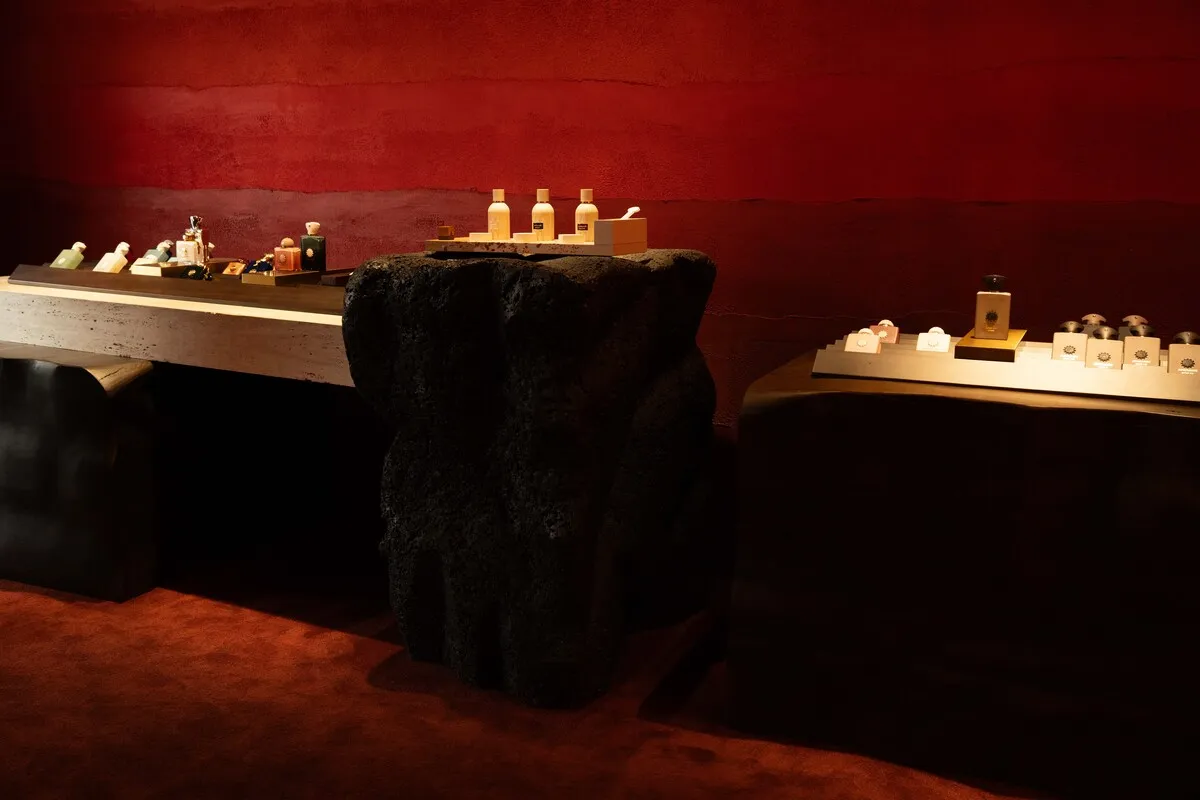
Adjacent to the gym, a compact spa zone offers a sauna, a sensory shower and treatment rooms. The menu of treatments emphasizes simplicity and effectiveness: massages and therapies based on natural and organic formulations from European brands such as Susanne Kaufmann, rather than complicated, multi-step rituals. Amenities in rooms and bathrooms include products from Le Labo, extending the same sensibility – precise, understated care – into everyday routines.
Natural light filters in from side windows, sufficient to keep a sense of time and weather. The design avoids grand gestures: there are no dramatic pools or cinematic lighting schemes, but a measured combination of materials, surfaces and tones intended to relax the body and the eye. Guests who prefer guidance can work with trainers; those who value autonomy can move through the space on their own terms.
Matteo Mammoli