Banyan Tree Kyoto, a hotel built on Higashiyama’s sacred edge
On Ryozen hill, fifty-two rooms sit above a hot spring rising at 40°C, wrapped around a bamboo Noh stage and stone walls
Banyan Tree Higashiyama Kyoto: Where Ancient Spirituality Meets Contemporary Japanese Luxury on a Sacred Hill
There are hotels that offer accommodation, and then there are places that offer transformation. The Banyan Tree Higashiyama Kyoto, which opened its doors on August 1, 2024, belongs to the latter category. Perched on the sacred slopes of Higashiyama, overlooking the ancient capital of Japan, this 52-room sanctuary is a meditation on the delicate boundary between the earthly and the eternal.
The hotel occupies a site steeped in history and spirituality. For centuries, the Ryozen hill has been regarded as a liminal space, a threshold between the world of the living and the spiritual realm. Here, prominent figures from Japanese history found their final rest, and the land itself became consecrated by their presence. To build here required not just architectural skill, but profound cultural sensitivity—a challenge that fell to one of Japan’s most celebrated architects, Kengo Kuma, whose vision would transform this hallowed ground into a contemporary sanctuary that honors rather than disrupts its sacred heritage.
The Architecture of Disappearance: Kengo Kuma’s Vision for a Hotel That Dissolves Into the Forest
When Kengo Kuma accepted the commission to design the Banyan Tree Higashiyama Kyoto, he conceived it as a building that would gradually dissolve into the landscape. His design philosophy, informed by the classical Japanese theater form of Noh, centers on the concept of yūgen—a sense of mysterious, subtle, yet profound beauty that cannot be directly expressed but only suggested.
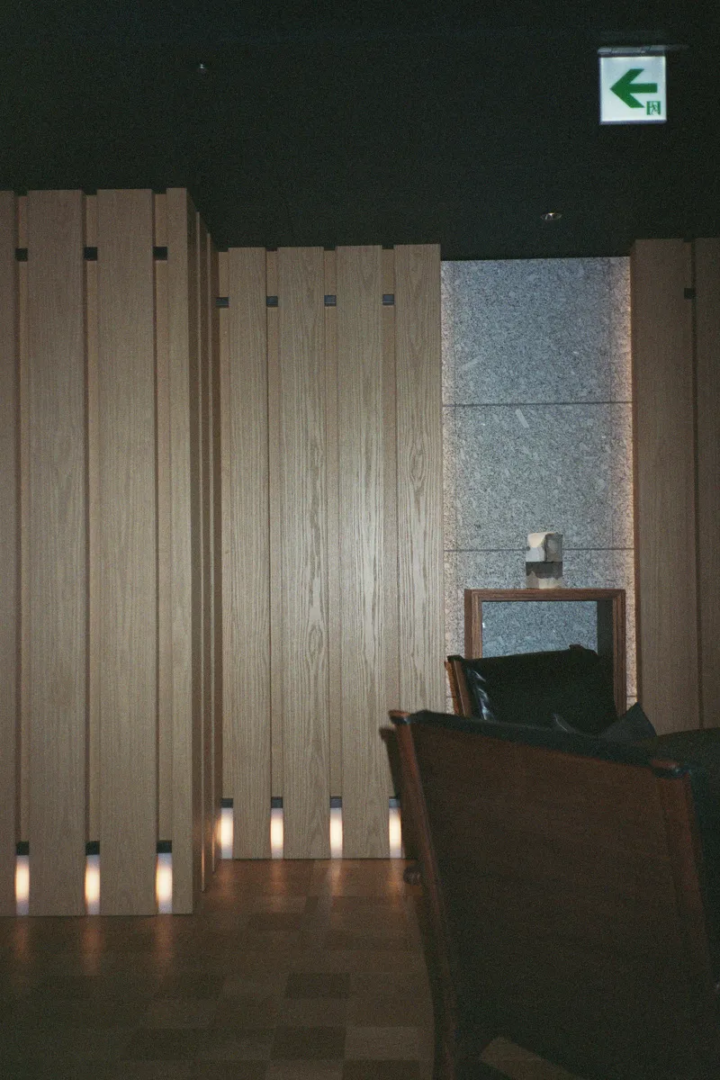
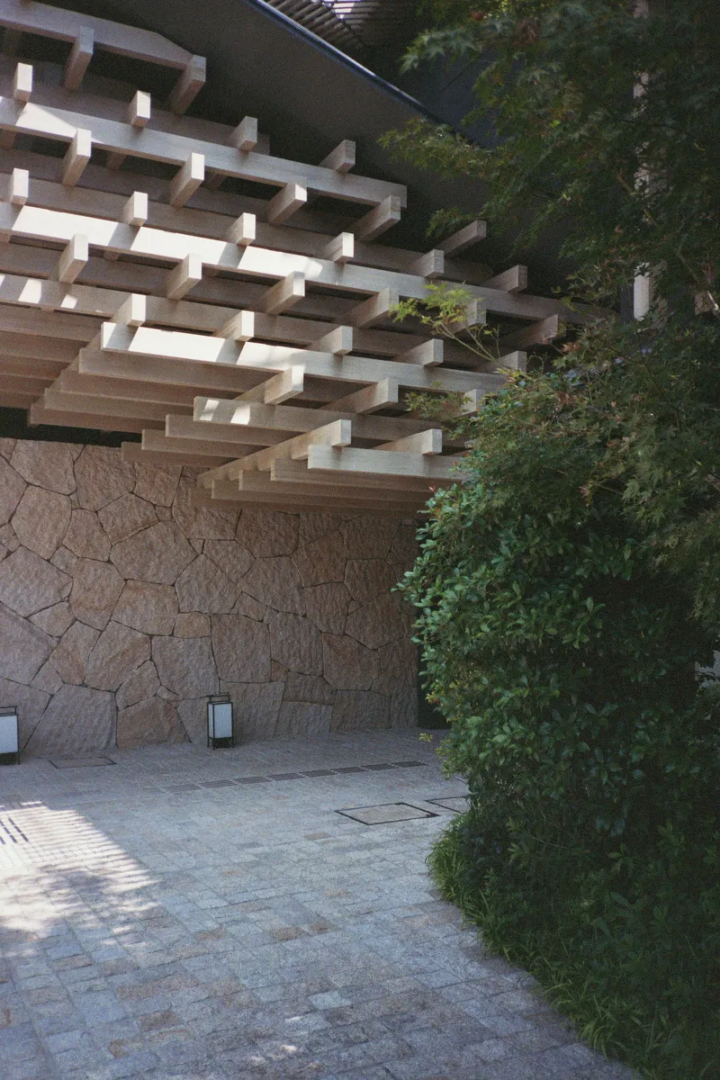
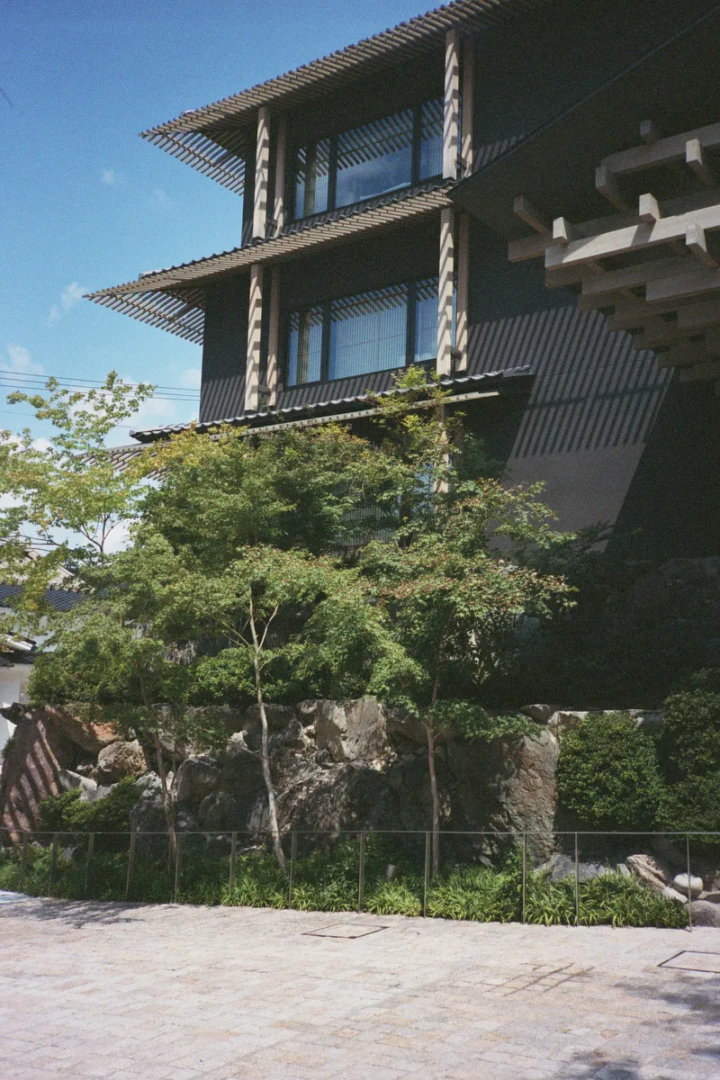
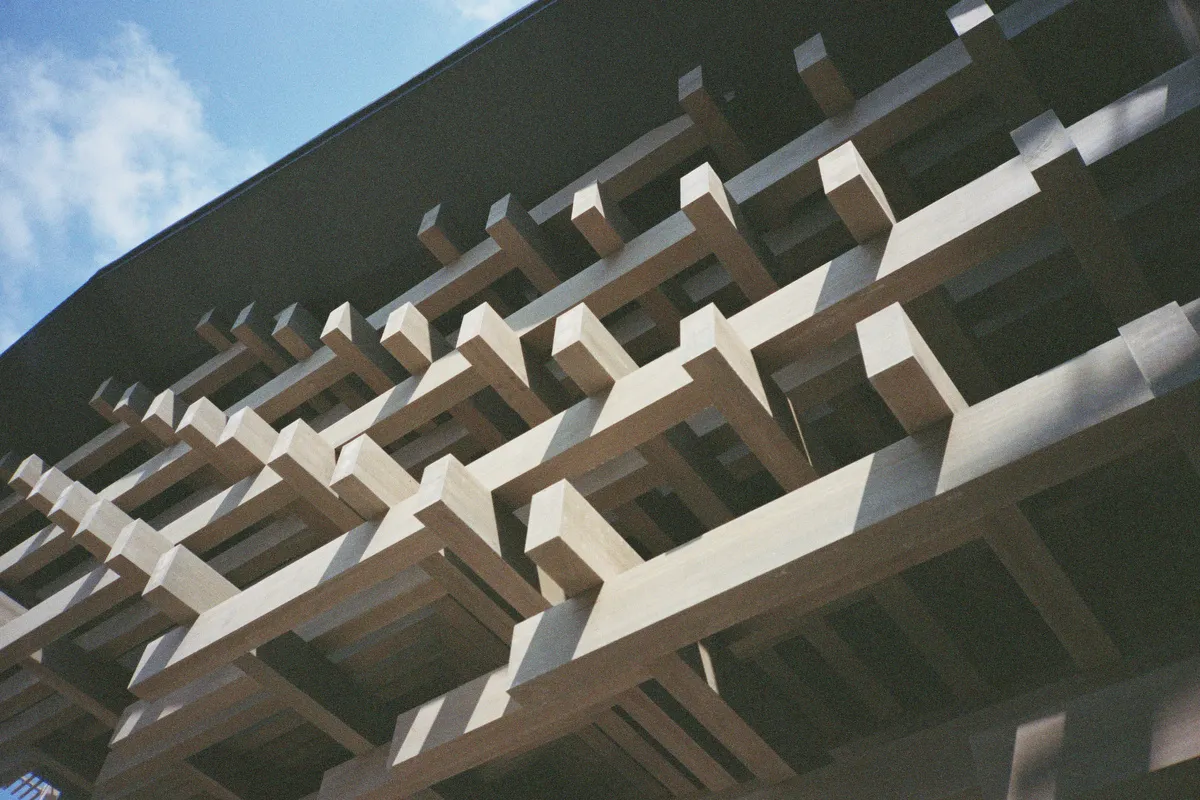
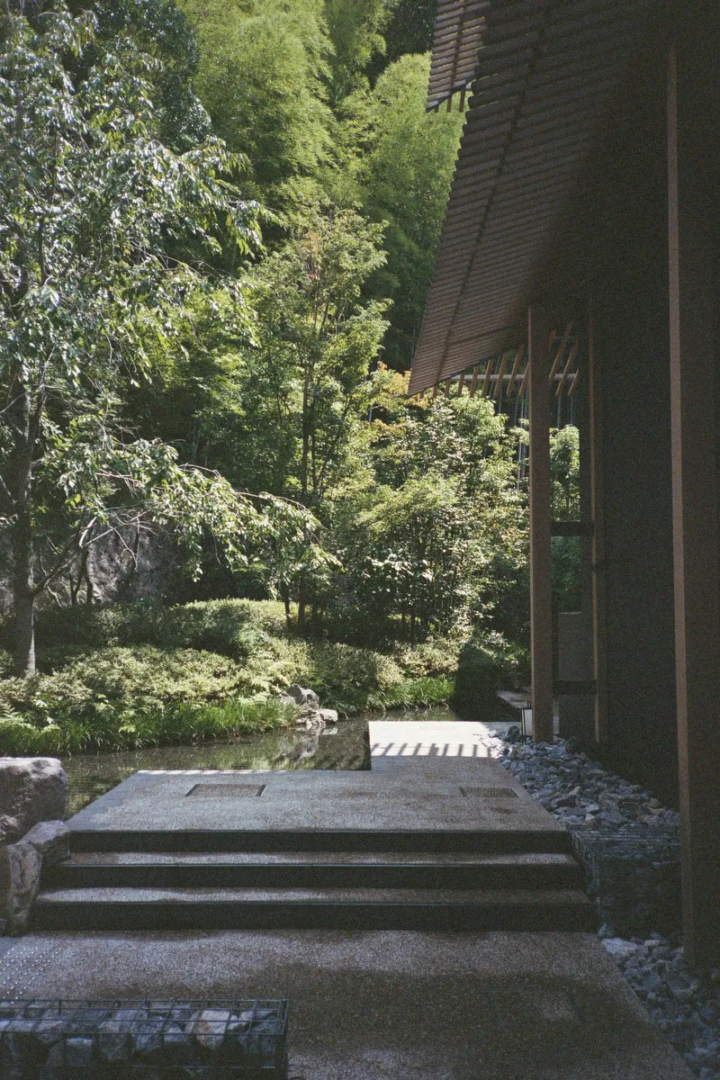
The 7,171-square-meter property demonstrates this philosophy in every detail. Rather than imposing a monolithic structure on the hillside, Kuma divided the volumes with three levels of overhanging eaves featuring slatted wooden projections. This creates a rhythm of light and shadow that shifts throughout the day, making the building appear to breathe with the forest around it. The exterior walls are clad in black matte surfaces enriched with vertical woods, beams, and eaves crafted from hinoki cypress—a wood revered in Japanese culture for its aromatic properties and sacred associations with Shinto shrine architecture.
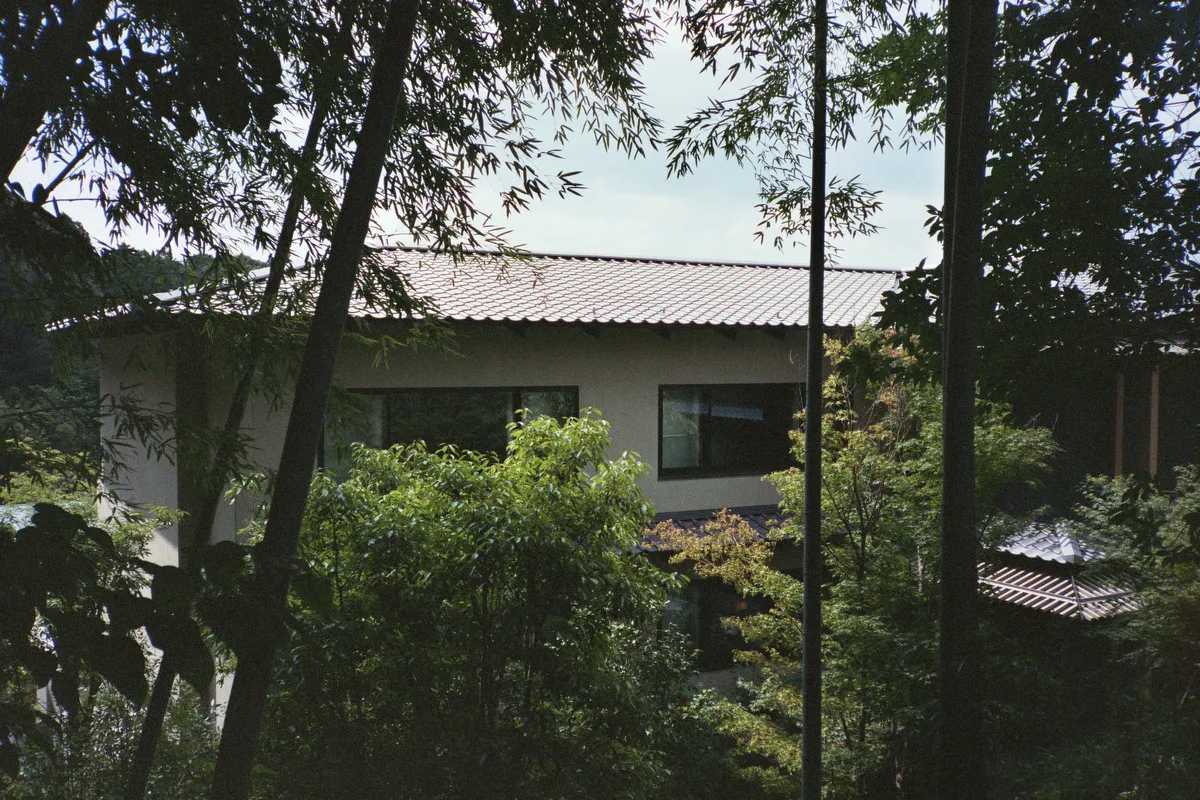
Kyoto’s stringent landscape regulations mandate the use of tiled roofs, a requirement that lesser architects might view as restrictive. Kuma, however, transformed this constraint into opportunity, creating deep eaves that cast soft shadows and create protected outdoor spaces that blur the boundary between interior and exterior. The effect is distinctly Japanese—a building that seems to hover lightly on the land rather than anchor itself heavily to it.
The Bamboo Pavilion: A Noh Stage That Embodies the Spirit of Yūgen
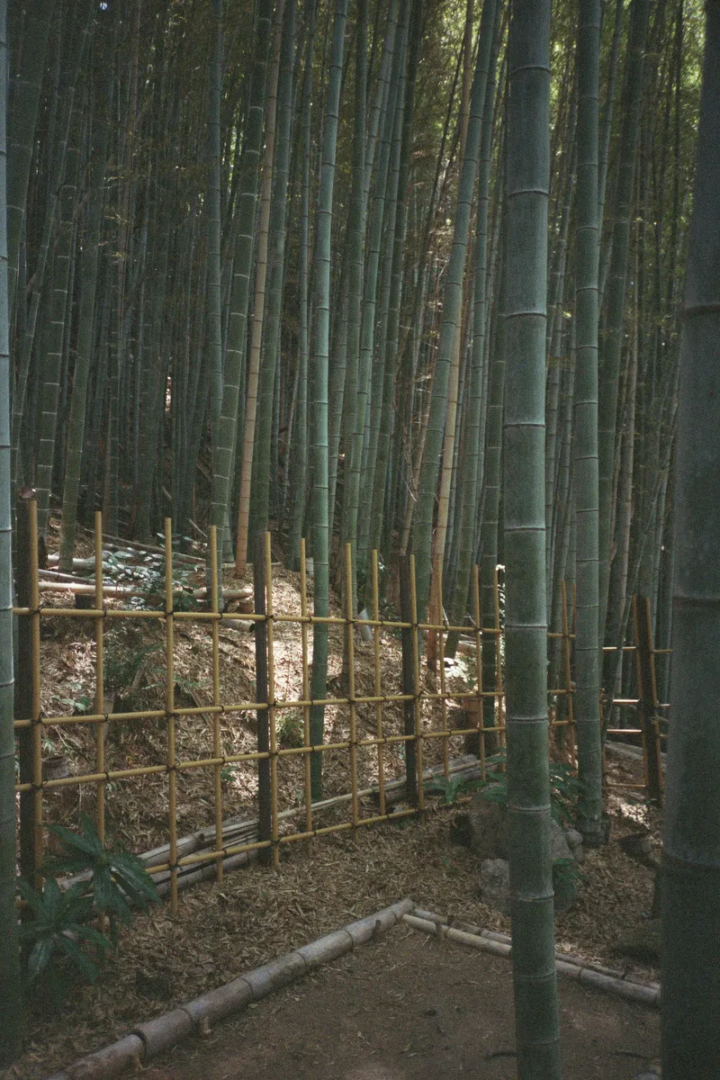
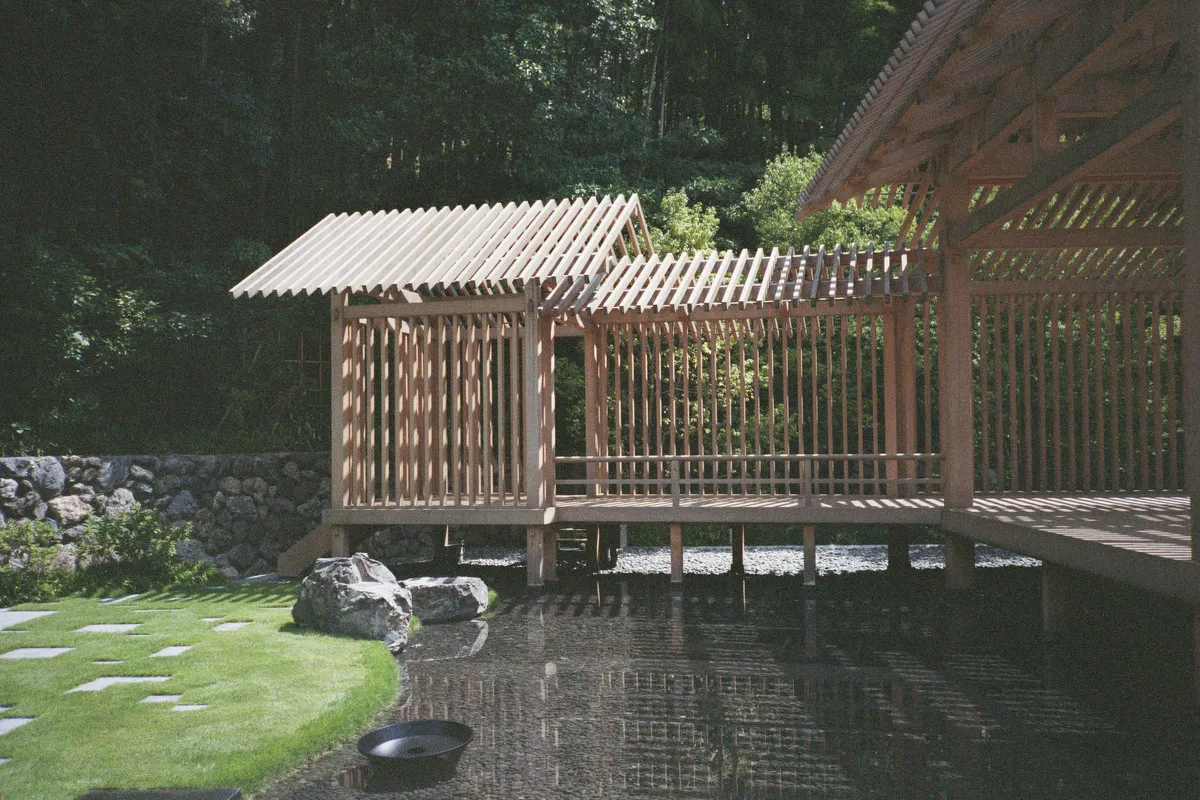
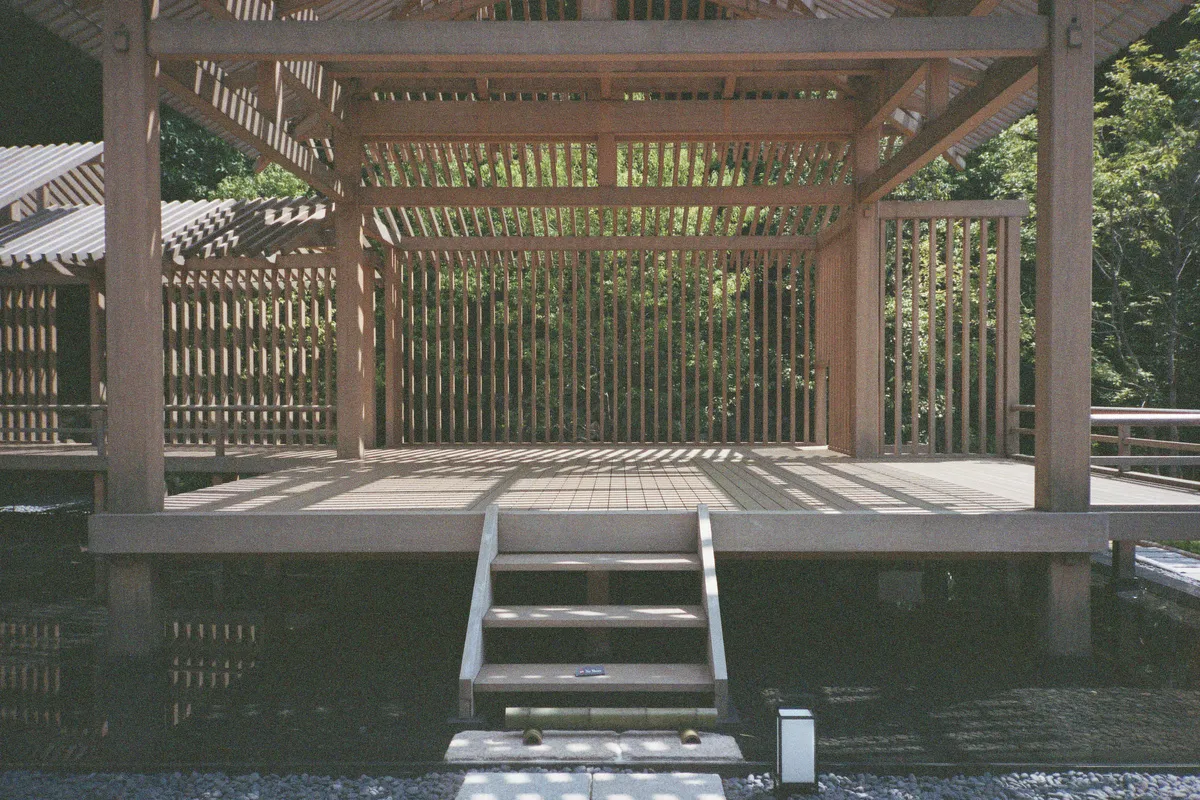
Perhaps the most striking element of Kuma’s design is the Bamboo Pavilion, a full-scale Noh stage that stands as the only such structure within a Kyoto hotel. The open wooden frame, constructed with meticulous attention to the proportions of classical Noh stages, appears almost transparent against the bamboo forest that surrounds it. Using vertical slats that echo both the bamboo stems and traditional Japanese architectural screens, Kuma created a structure that seems to dematerialize before your eyes—present yet ephemeral, solid yet somehow ghostly.
This design embodies the Noh concept of “Hisureba Hana”—the hidden flower—which suggests that true beauty reveals itself gradually, subtly, requiring patience and contemplation to fully appreciate. The stage occasionally hosts performances of this centuries-old theatrical art form, allowing guests to experience the same mysterious beauty that inspired the building’s design. To sit beside the stage as masked performers move with deliberate slowness through stories of ghosts and gods is to understand why Kuma chose Noh as his architectural muse.

The Preservation of Memory: Building on the Ruins of History
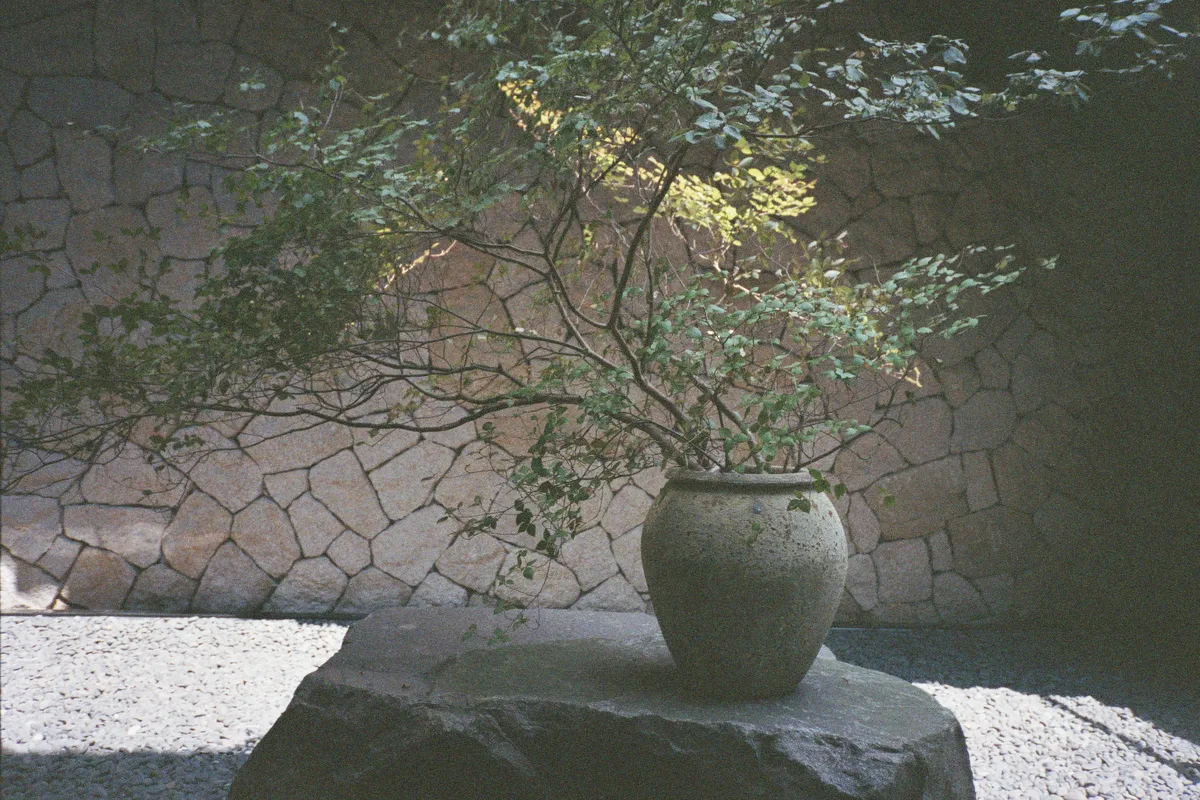
The Banyan Tree Higashiyama Kyoto rises on the site of the former Hotel Ryozen, and the decision to preserve elements of that historic property speaks volumes about the project’s philosophical underpinnings. The original stone walls, weathered by decades of Kyoto’s humid summers and cold winters, were not demolished but carefully reinforced and integrated into the new design. During construction, moss was cultivated specifically for these walls, accelerating the process by which new and old would merge into a seamless whole.
The existing symbolic trees and the bamboo grove that originally graced the property were maintained, with the hotel literally built around them rather than clearing them to make way for construction. This approach reflects a distinctly Japanese understanding of time and change—the recognition that true beauty often comes from the accumulation of years, from patina and weathering, from the slow dialogue between human creation and natural process.
The natural hot spring that fed the original hotel’s baths continues to flow beneath the property, its waters now channeling into the contemporary onsen facilities at a consistent 40°C. This represents a literal connection to the deep past—water that has traveled through rock and earth for unknowable distances and durations, emerging here on this sacred hill to offer healing and purification just as it has for generations.
Rooms Designed for Contemplation: The Interior Vision of Hashimoto Yukio
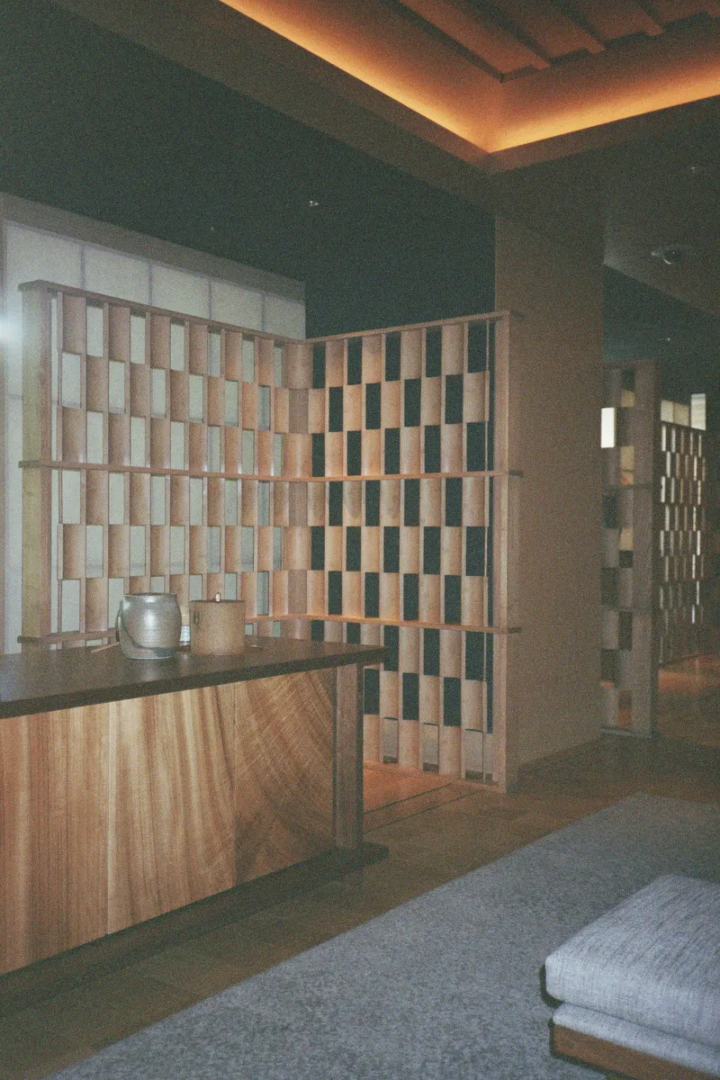
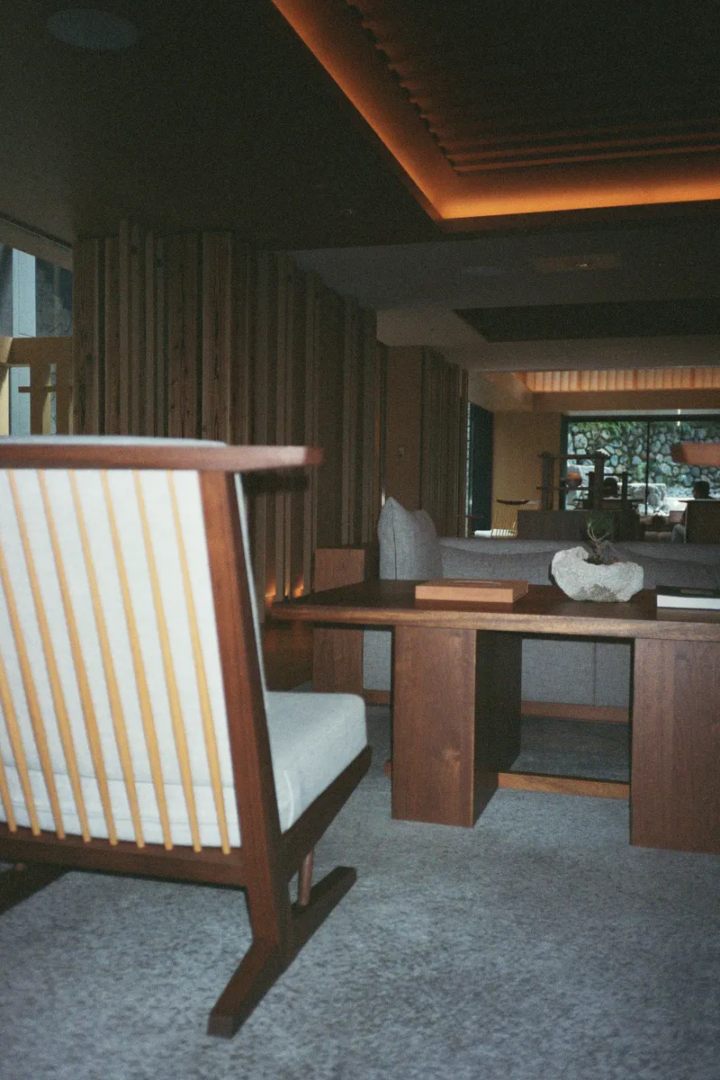
While Kuma shaped the exterior envelope and overall architectural concept, the interior design of the 52 guest rooms fell to Hashimoto Yukio Design Studio, with the public spaces crafted by DWP International. Hashimoto drew his inspiration from the same philosophical well as Kuma—the concept of yūgen and the Noh principle of Hisureba Hana. The result is a series of spaces that feel simultaneously contemporary and deeply rooted in Japanese aesthetic tradition.
The Sensory Experience of Natural Materials
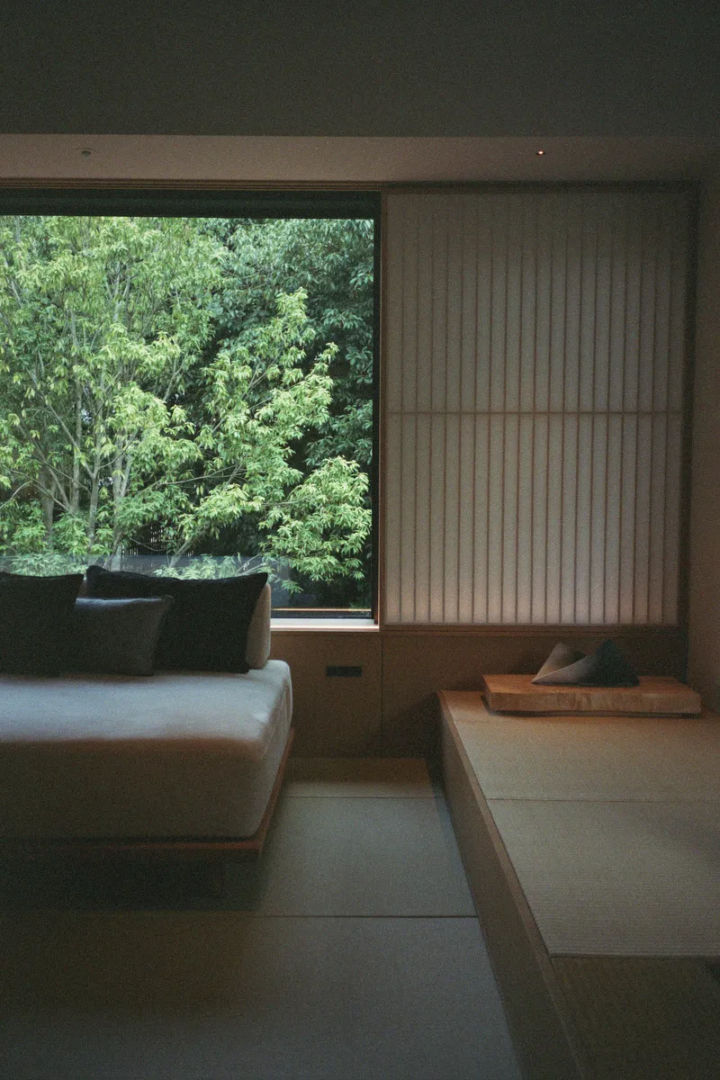
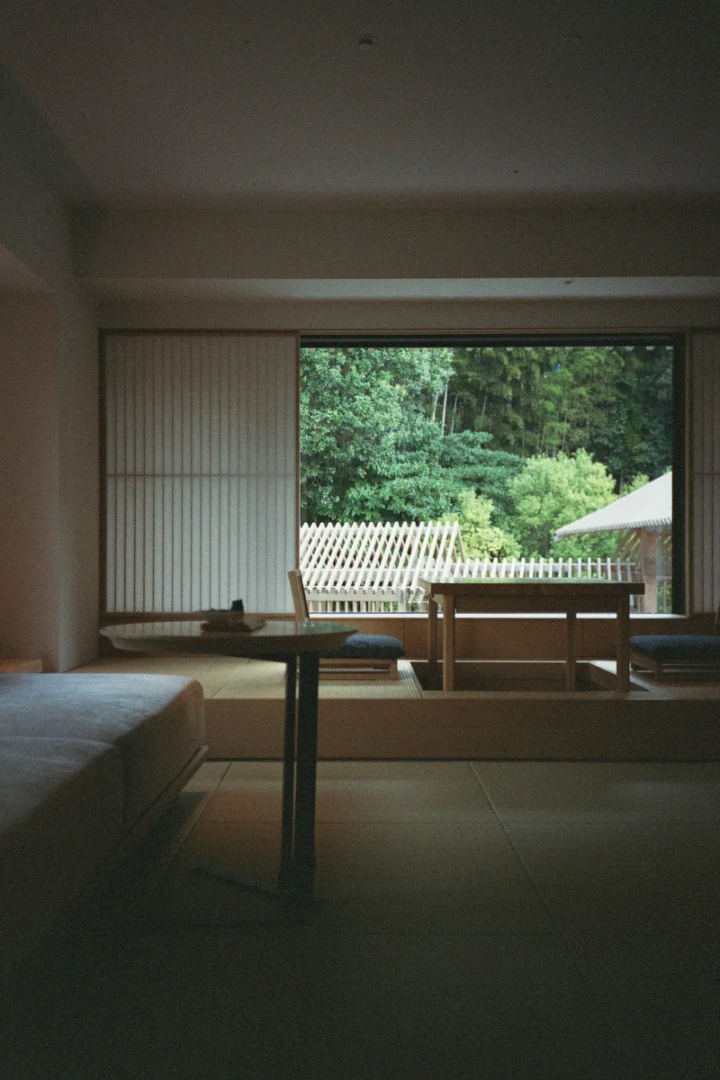
Every room features tatami flooring, that quintessentially Japanese woven mat made from rush grass that releases a subtle, grassy scent and provides a gentle springiness underfoot. The decision to use tatami throughout represents a commitment to authenticity that many contemporary hotels would avoid—tatami requires specific maintenance, can be damaged by moisture, and dictates certain behaviors (guests remove shoes, furniture must be light enough not to damage the mats). Yet it also creates an immediate sensory connection to traditional Japanese domestic space.
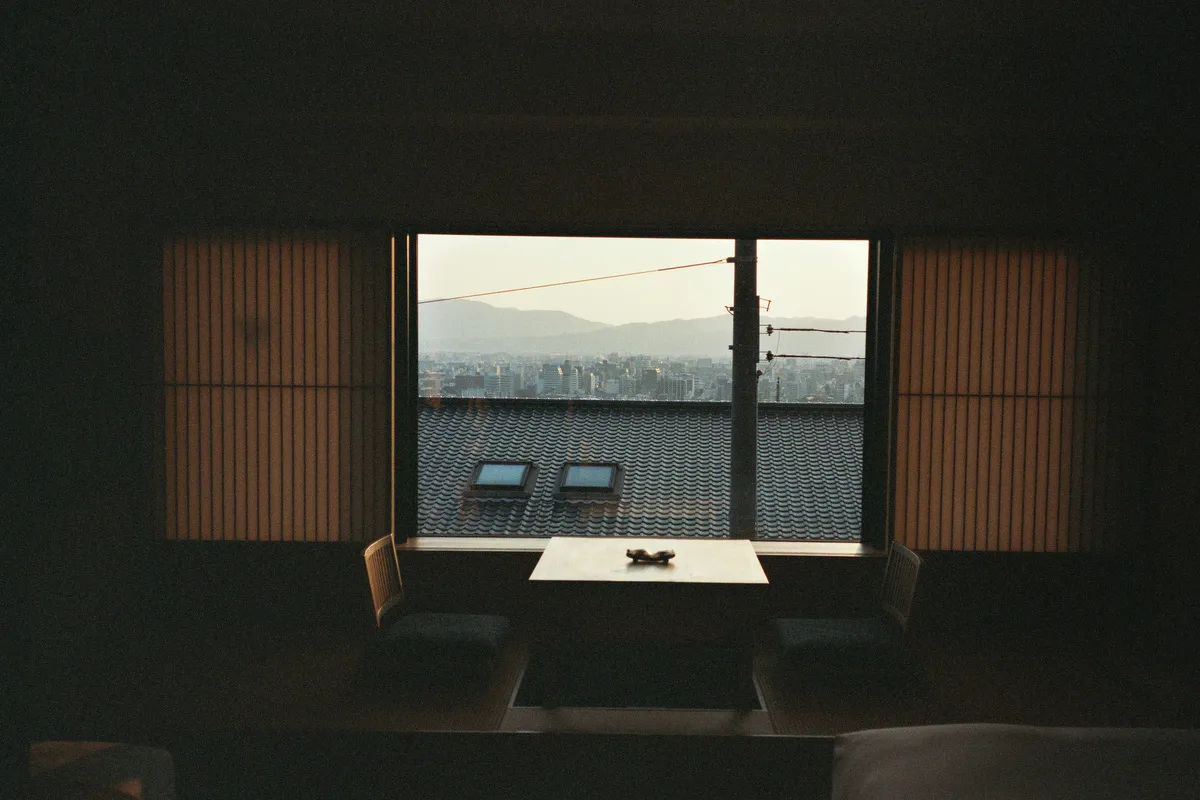
The sleeping areas are furnished with beds dressed in natural cotton linens, but the rooms also include low chabudai-style seating areas where guests can sit on cushions placed directly on the tatami, drinking tea or simply contemplating the view. This dual configuration acknowledges that international guests may prefer the comfort of Western-style beds while still offering opportunities to experience traditional Japanese ways of inhabiting space.
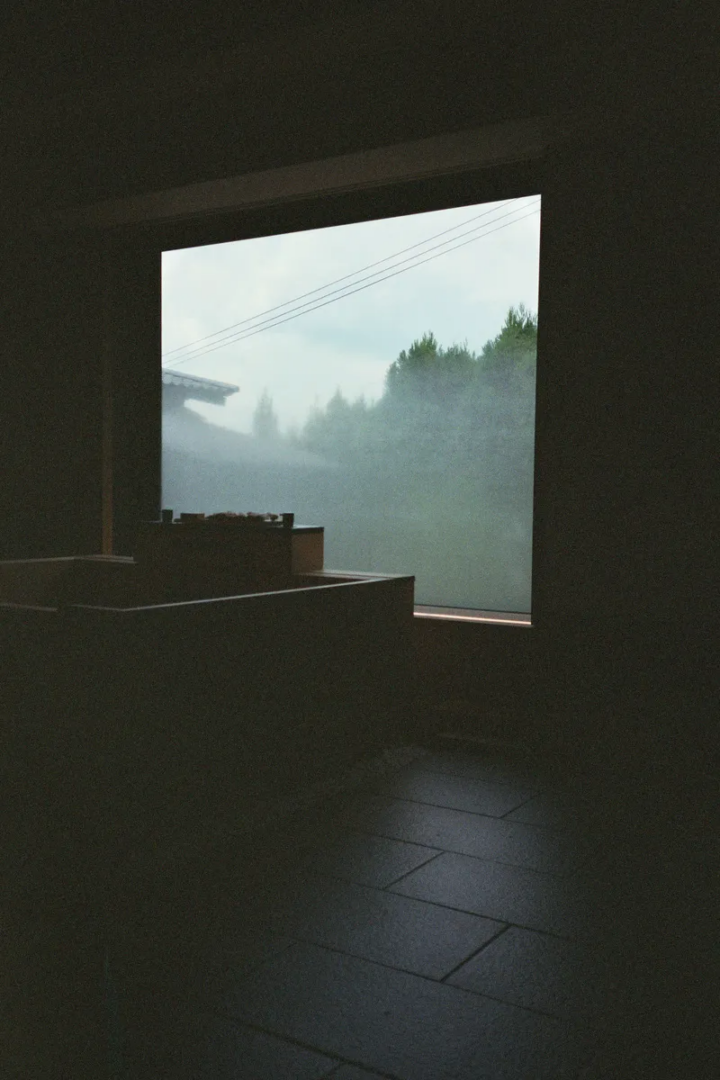
Large bathtubs crafted from Hiba cypress occupy prominent positions in each room. Hiba, a wood native to northern Japan, possesses natural antibacterial properties and releases a complex, forest-like aroma when filled with hot water. The wood’s warm honey color deepens over time with exposure to water and heat, meaning each tub carries a unique patina that records its history of use. To bathe in these tubs is to engage with a living material that changes and responds to human presence.
Gold leaf accents appear throughout the rooms in carefully considered locations—a touch on a screen, an embellishment on a wall panel. This references Kyoto’s long tradition of gold leaf craftsmanship while also invoking the Buddhist concept of impermanence. Gold, though precious and beautiful, is also soft and easily damaged, a reminder that even the most valuable things are subject to change and decay.
The Eight Onsen Retreat Rooms: Private Springs in Sacred Space
Eight of the 52 rooms feature something extraordinarily rare: private onsen baths fed directly by the property’s natural hot spring. These Onsen Retreat rooms, which overlook either intimate courtyard gardens or the bamboo grove and Noh stage, offer an experience that would typically require a journey to remote mountain ryokan. The spring water, naturally heated to 40°C as it rises through volcanic rock, is known for its beneficial effects on muscle pain and skin conditions—therapeutic properties recognized in Japan for centuries.
The experience of bathing in these private onsen transcends mere physical relaxation. Traditional Japanese culture views the onsen experience as both purification and meditation, a practice that cleanses not just the body but the spirit. To sink into naturally heated spring water while gazing out at a carefully composed garden or the ethereal transparency of the Noh stage is to participate in a ritual that connects present moment to deep tradition.
Room Categories: From Serenity to Sanctuary
The hotel’s room categories range from the entry-level Serenity Room at 48 square meters to the 74-square-meter Banyan Onsen Retreat, the property’s largest suite. Even the smallest rooms offer generous proportions by Japanese hotel standards, reflecting Banyan Tree’s commitment to spaciousness and comfort. Each category maintains the core elements—tatami flooring, Hiba cypress tubs, natural materials, and views that frame Kyoto’s historic landscape—while varying in size and specific amenities.
All rooms include modern conveniences seamlessly integrated into the traditional aesthetic: flat-screen televisions, Bluetooth speakers, air conditioning, tea and coffee sets, minibars, complimentary bottled water, yukata robes, and slippers. The bathroom amenities are custom-designed for the property, with formulations that complement rather than compete with the natural aromas of the Hiba wood and tatami.
The Banyan Tree Spa: Traditional Japanese Healing Meets Thai Wisdom
The award-winning Banyan Tree Spa occupies a specially designed space within the property, offering six treatment rooms including facilities fed by the natural hot spring and a steam bath. Operating from 11:00 to 20:00 daily, the spa represents a unique fusion of Japanese onsen tradition and the Thai-inspired therapies for which Banyan Tree has become renowned worldwide.
The Signature Onsen Indulgence Treatment
The spa’s signature offering, the Onsen Indulgence treatment, combines 60 minutes of private onsen bathing with 60 minutes of full-body therapeutic treatment. This pairing recognizes the synergy between heat therapy and manual bodywork—the hot spring water softens muscles and increases circulation, preparing the body to receive deeper therapeutic touch. Treatments incorporate bamboo massage techniques, body scrubs using natural ingredients, and essential oils selected for their aromatic and therapeutic properties.
The communal onsen facilities, separated by gender in accordance with Japanese bathing tradition, include both indoor and outdoor pools fed by the natural spring, as well as sauna and steam facilities. The outdoor baths offer views over the bamboo forest and toward the city below, creating that quintessentially Japanese experience of rotenburo—bathing under the open sky while surrounded by nature. Morning visits catch the mist rising from the heated water into cool air; evening sessions offer views of Kyoto’s lights beginning to glow as darkness falls.
Movement and Meditation: The 24-Hour Fitness Center and Yoga Sessions
Beyond the spa treatments, the property offers a 24-hour fitness center for guests who wish to maintain their exercise routines, as well as scheduled yoga sessions held in the Bamboo Pavilion. To practice yoga on a stage designed for Noh performance, surrounded by bamboo that rustles with each breeze, creates a connection between contemporary wellness practice and ancient Japanese aesthetics. The pavilion’s open design means practitioners move through their sequences in constant dialogue with the natural environment—the temperature of the air, the quality of light, the sounds of birds and rustling leaves.
Ryozen Restaurant: Kaiseki Cuisine as Edible Art
The hotel’s main dining venue, Ryozen, embodies the Japanese culinary philosophy of kaiseki—a multi-course dining experience that showcases seasonal ingredients through precise preparation techniques and artistic presentation. With capacity for 48 guests including a private room accommodating up to ten, the restaurant operates in the kappo style, where diners can observe chefs at work.
Local Sourcing and the Philosophy of Farm-to-Table
Head chef’s approach centers on showcasing Kyoto’s extraordinary agricultural heritage. Kyo-yasai—vegetables specifically cultivated in Kyoto’s unique climate and soil conditions—feature prominently in seasonal menus. These heirloom varieties, some cultivated for centuries, possess flavors and textures distinct from their counterparts grown elsewhere in Japan. The sweetness of Kamo eggplant, the delicate bitterness of Shogoin turnip, the crisp texture of Kujo green onion—each vegetable carries not just flavor but cultural memory.
The restaurant works directly with small local farms, organic tea producers, and fishermen from nearby Wakayama prefecture, ensuring ingredients travel minimal distances from source to plate. This commitment to local sourcing serves multiple purposes: it guarantees freshness and quality, supports regional producers, reduces environmental impact, and connects diners to the specific terroir of Kyoto and the surrounding Kansai region.