Ben Shattuck: The History of Sound from Edison’s miracle to Hotmail sadness
From the first recorded voice to the last forgotten inbox: Shattuck’s world is built on artifacts with charge. The digital leaves traces, not relics—and grief doesn’t live in a timeline
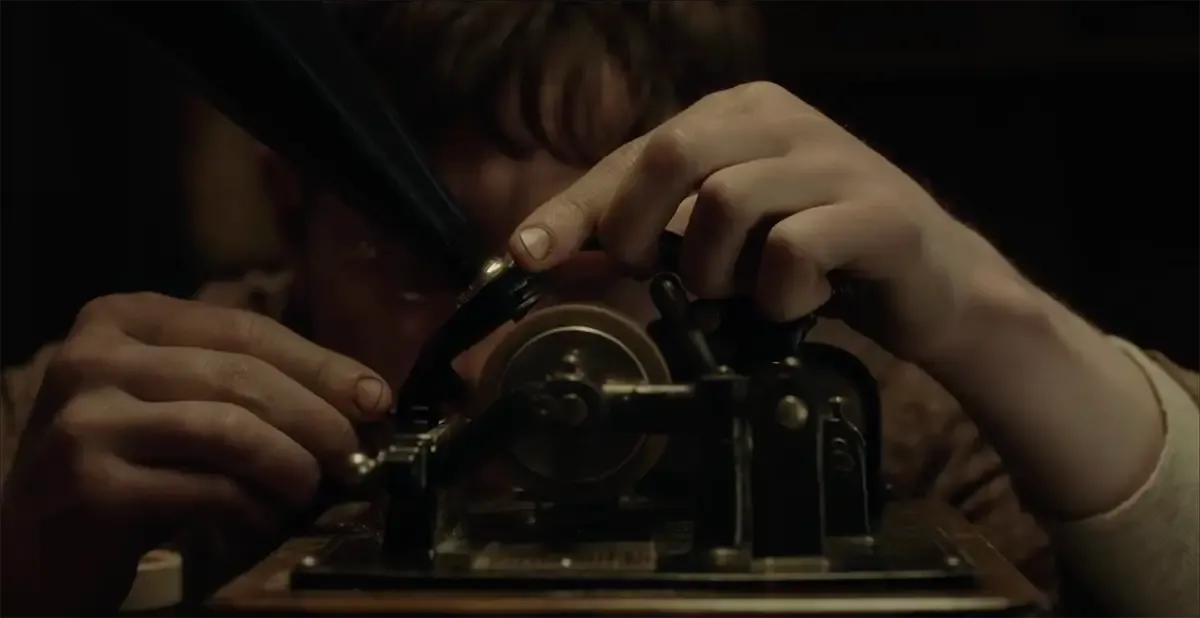
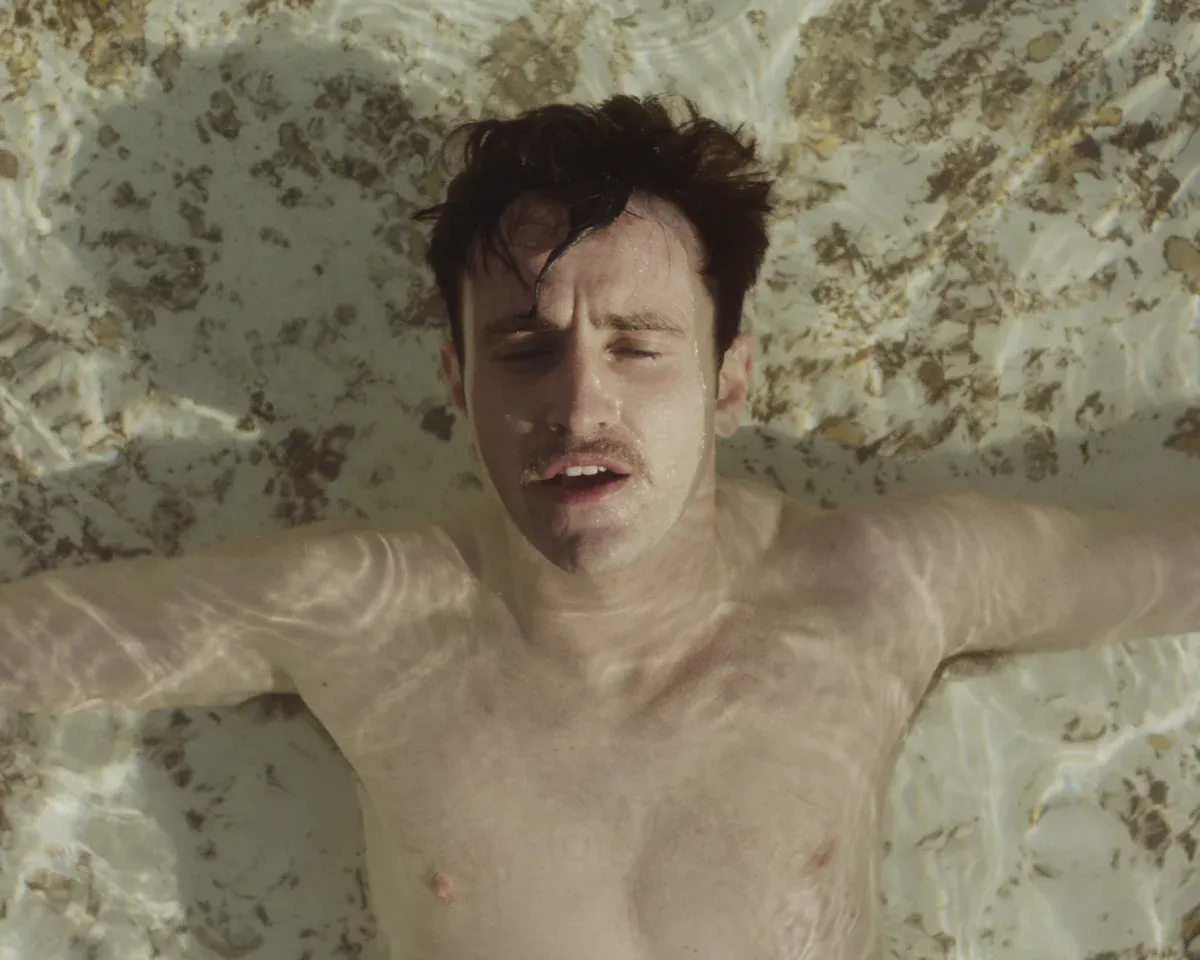
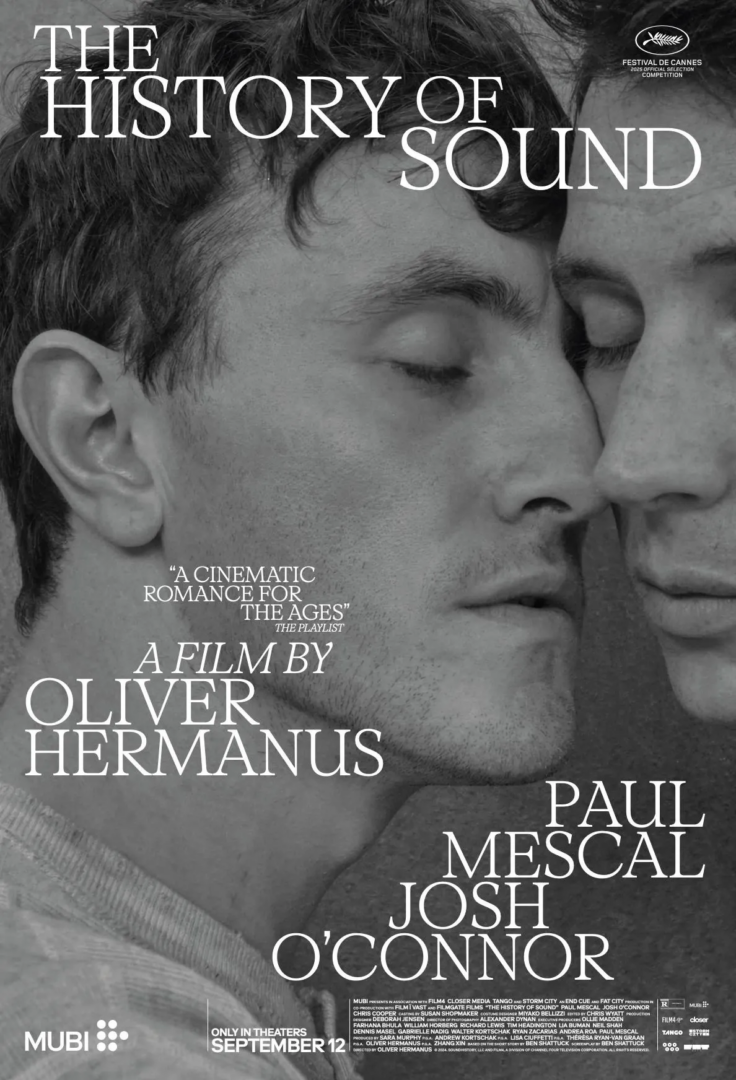
‘The History of Sound’ is a period romance film directed by Oliver Hermanus and written by Ben Shattuck, based on his short stories, released in Italy on March 26, 2026. Set in the early twentieth century, around the years of the First World War, the film follows Lionel and David, two young men who meet in 1917 while studying music in Boston. After the war, they reunite and travel through rural New England, recording traditional folk songs. Their project is to document voices, music, and oral traditions before they disappear, using early sound recording technologies. As they collect songs and testimonies, their relationship develops into a romantic bond, set against a broader reflection on memory, time, and loss. The film stars Paul Mescal and Josh O’Connor in the leading roles, with Chris Cooper in a supporting role.
In the upcoming issue of Lampoon Magazine, we spoke with Ben Shattuck about recorded sound and the limits of what technology can preserve. Ben Shattuck is published in Italy by Neri Pozza Editore.
In The History of Sound, Ben Shattuck turns recorded sound into memory, grief, and the fear of losing a voice
Ben Shattuck is an American writer whose work moves through historical time with unusual restraint. His debut collection of short stories, The History of Sound: Stories, traces the American East Coast across different centuries, returning repeatedly to moments of technological transition, intimate relationships, and the objects that survive them.
The book’s titular story, The History of Sound, is centered on the earliest days of sound recording. The short text has been recently adapted for the screen by Shattuck and Oliver Hermanus.
We spoke with Shattuck about recorded sound – once, such a process was entirely mechanical – and about the limits of what technology can preserve.
An interview with Ben Shattuck on The History of Sound, the dark ages of artifacts, and why the digital world feels hollow
Ben Shattuck “I tried to go on TikTok for about five minutes; I didn’t understand it.” Every once in a while, I’ll download Instagram to post something professionally. I don’t have Twitter or X. What’s the other one? There’s another social media. I’m the worst person to ask this question to.
The digital world doesn’t leave behind anything special. I don’t mean to be a wet blanket about it. It just feels like nothing in the digital world is special. Maybe that’s because I’m over 40 and I didn’t get my first phone until college—we didn’t have internet until eighth grade.
If I’m answering truthfully, it feels like the dark ages of artifacts. I once came across a stack of letters my great-grandmother had been sent by lovers in the early 1900s. On one of them, a man had attached a little red cloth with the words “Burn these.” That physical red cloth, and the letter I was holding that my grandmother had held—a text message doesn’t have anything like that. There is something about the fact that we live in a physical world. Physical objects have a charge to them. I don’t know what would be precious in the digital age. Do you have any idea?
ICM Maybe my daughter will find my Snapchat messages with my high school crushes. That would be a horrifying experience.
Ben Shattuck I don’t know where it all goes. Where does it all go? If I were a hundred years in the future and tried to write a story like The History of Sound, where an object like a wax cylinder brings someone back in time—would the object be a password to an old Hotmail account? Would someone read through old emails?
“The good stuff is left unrecorded”: sound, memory, and the dark matter of everyday life according to Ben Shattuck
ICM There is always a gulf between what is said, what happens, and what is recorded and told as history. Many of your stories deal with improprieties that leave traces which don’t fit a nation’s historical imagination. I’m thinking about The History of Sound – that is a love story – <or the children born out of wedlock. Do you think about things that feel unsayable in our current moment, but that might become transcendent with the right displacement?
Ben Shattuck In many ways, The History of Sound is itself a collection about the dark matter of our lives. The title comes from a fragment of a sentence: “the history of sound lost daily.” It’s about everything that’s not said. The chances that are missed. The things that swirl around and are never put down, never recorded.
That’s a huge theme of the book. I recently read Ian McEwan’s What We Can Know, which is set in a future England where the oceans have risen, and everything is underwater. Everything, however, has been recorded on the cloud. Anyone in the future writing an academic paper could find a recording of what Ben Shattuck thought about The History of Sound. The novel then tips back into the present day to tell a story that nobody could ever know, because it was never recorded.
That gets to what interests me in your question. The good stuff is left unrecorded. The more that is recorded, the more you can put down, the more disharmony there can be.
Social media is an example. Everyone is recorded. Everyone is making sure they are heard, across the political spectrum. It turns out we’ve just become far more divided. The things that define a life—the things you might actually write a story about—aren’t there.
The gesture a former lover might make toward you while walking down a street: that’s the real marrow of life. Something never put down or recorded.
Thomas Edison, recorded sound, and the historical moment that sparked The History of Sound by Ben Shattuck
ICM Many of the stories revolve around physical artifacts—objects designed to store memory. In The History of Sound, sound itself becomes one of those objects.
Ben Shattuck The moment of Thomas Edison: for the entirety of human history, there was no recorded sound – then this one person almost received a transmission—something close to a divine thought—about how to record sound.
He drew it up, had his Czechoslovakian engineer mock one up, and it just worked. Suddenly, and for the rest of humanity, there would be recorded sound. That shift, that technology, that entire world—musicians trying to capture sound, trying to capture music—fascinated me. The emotion came later.
It’s a broad story, one that holds many of my interests at once. I would be negligent to dismiss it as a non-favorite.
I wrote it over ten years ago, and it just sat there without its emotional resonance and without a thesis. That thesis came later: that you only get one chance at deep love. It might happen in your early twenties and then never happens again. And that you should be regretting something you didn’t even know you were regretting. Or, as the line in the story puts it, “my life feels an inch shorter than it could have been.”
The story was written first. The emotion came later and infused it with vitality. That’s when it became something else.
It was published in The Common, then it received a Pushcart Prize. That led to a production company reading it, which then created the offer for a screenplay. So yes—this story did me well. I love it, and I love the life it’s had.
I also wrote it during a deep, dark winter in Iowa, in the Midwest, when there was nothing. That matters too.
Quiet stories, minimal plots, and the power of what almost gets said – interview with Ben Shattuck
Ben Shattuck There are other stories that mean a lot to me personally. Edwin Chase of Nantucket is one of my favorite stories. It’s quiet. It barely has a plot—nothing happens.
Every character comes close to saying something, but never quite says the thing. If the big plot point of The White Lotus is that there’s a dead body, the great plot point of Edwin Chase of Nantucket is that he forges a signature. That’s it. Nothing else happens.
But you realize it means everything for these people, living these hardscrabble lives, who can’t quite say much to each other.
There were also stories that were just fun to write. One that I think goes under the radar because of its form is The Journal of Thomas Thurber. I loved writing it because—even though I didn’t know how I’d get there when I started—I knew that somehow, I needed to write a journal entry that ended with everybody dying.
Writing characters out of time: historical fiction, timeless emotions, and social texture
ICM Throughout the collection, many of your characters feel slightly out of time. They share a set of humanistic principles that seem to make them more aware of their circumstances than their peers.
Ben Shattuck There are a few points that are always in my mind—probably in anyone’s mind—when writing about the past. Historical accuracy, old fashion, and timelessness. When you’re writing historical fiction, those are the four pillars. Or maybe they’re more like moons orbiting a planet. They’re always circling the story.
I’m trying to avoid anachronism, to make sure the story doesn’t feel like a theme park of the past. That means not cluttering it with technology or accouterments, or with a kind of self-awareness that doesn’t feel realistic. At the same time, I’m trying to cut through the fabric of the period to reach emotions that are timeless.
Jealousy, being bullied, shame—these are ancient, geologic feelings. You can always find them, as long as you don’t distract the reader with anachronism or with an obsession with the time period itself.
It’s exciting to set things in the past because it creates a kind of inversion of expectation. Take The Children of New Eden. It’s about betrayal and blind adoration. Cults look the same across time. People still make terrible moral decisions based on the same principles. There are just more lantern light and less Zoom.
Staying deep in the past without being obsessed with it. That’s what allows for the moment when a reader thinks, “I weirdly felt that exact same thing.” And suddenly you feel connected to a larger pool of humanity, even though these characters are supposed to exist in 1698 or wherever.
Ben Shattuck: Anachronism, research, and the decision to strip historical detail away
ICM Were there anachronisms you had to edit out as you moved between research, writing, and editing? Or is that something you intuitively avoid?
Ben Shattuck There’s an assumption that you do the research first—you go to the library, go to the archive, then you think of a story, and finally you place that story inside the research and everything lines up perfectly.
Often, the research comes after you write the story. That’s what happened with Edwin Chase of Nantucket. I had this image of a young man and his mother living alone on a wind-swept peninsula in New England. I knew I wanted it to be set just after the American Revolution and before the Industrial Revolution, but I had no idea what that would actually look like.
I wrote the story first. Then I went back and ironed out the anachronistic wrinkles. Usually that means stripping out, stripping out, stripping out—creating a minimalistic quality.
Our culture is saturated with images. If I say: “it’s 1801 in Polynesia” or “it’s 13th-century Paris,” most readers already have a mental picture. As long as the writer gets out of the way, you can leave a lot to the reader’s imagination. You just have to place them in a specific time without leaving it vague.
Every once in a while, though, you discover something small that earns its place. In Edwin Chase of Nantucket, there’s a moment where he lights a rush light—the pith inside rushes, soaked in grease. It’s like clicking on a headlamp to write a letter, if you didn’t want to waste a more expensive candle. I was researching how people lit their homes, and that detail felt right, so it stayed.
Physical artifacts, stored memory, and the disappearance of objects in the digital age
ICM In many of the stories, someone encounters a physical artifact from a past time—a piece of human technology designed to store memory. Whether it’s an oil painting or a wax cylinder, there’s always an object mediating an experience that is later revisited, often by someone from a future generation. Today, we create far more ephemeral digital objects than physical ones. Letters and paintings can be passed down; text messages and voice notes can disappear. Do you see anything in digital culture that might become meaningful artifacts in the future?
Ben Shattuck I don’t mean to sound dismissive. It just feels like nothing in the digital world is special.
ICM Your stories suggest a different relationship to objects than the one we have now.
Ben Shattuck That interest goes back to my time as a research fellow at the Nantucket Historical Association. I was looking into the first bank robbery in the United States—which happened on Nantucket in the 1700s—and I slowly became more interested in writing fiction.
Nothing made me feel more distant from the past than reading final wills and testaments from before 1900. They’re always incredibly specific: “three copper pots, one washboard, oak desk.” People’s relationships to what they owned, and what they were passing on, were so clear.
What we value has shifted drastically. There’s something about physical objects that we’re losing, or have already lost. Maybe that’s good. Maybe it’s not. In a capitalist culture that thinks of itself as hyper-materialistic, it turns out things don’t mean what they used to.
We don’t have a relationship to a wooden spoon the way someone once did. In Jane Smiley’s The Greenlanders, there’s an entire chapter about a character wanting to kill someone for breaking a wooden spoon. That kind of attachment is almost impossible to imagine now.
The broken mandolin: a perfect object, a perfect story
ICM You once mentioned writing in your great-grandfather’s tool shed.
Ben Shattuck Yes. There’s no internet there. There’s a mandolin in the shed that I always assumed was a still life my dad had painted. One day my mom walked in and said, “Oh, that’s still here?” I said, “Yeah, it’s dad’s.” She said, “No, it’s not.”
It turned out one of her first boyfriends, from Kentucky, had given her that mandolin. Somehow it just stayed in my dad’s studio for decades. The neck had this beautiful pear shape, but because of weather and seasons it had snapped and fallen in.
It felt like a perfect metaphor. A perfect motif. A complete short story sitting there in an object.
And I kept thinking: in the digital age, what would be the equivalent of a broken mandolin that had lasted for decades in a studio?
Radiolab, podcast culture, and the problem of misunderstood stories
ICM Tell me about the Radiolab story. What was the decision like to bring such a different medium into the collection?
Ben Shattuck I love Radiolab. I feel like I need to say that up front, so it doesn’t sound like I’m making fun of it. When I first lived in Brooklyn, my friends and housemates were all Radiolab producers.
I knew the sound of Radiolab so well—as a listener—that I could almost write it out. I also had a friend who’s still a producer there look over the piece and give notes on what might sound right, what might not, how to position the photograph at the center of the story. He suggested starting with them looking at the photograph, which is such a Radiolab move.
What I started to notice in a lot of podcasts—not just Radiolab—is that they’re often hosted, researched, and presented by people who aren’t professionals, but who present a professional-sounding opinion. In the podcast world, you add a little music, a little pat messaging, craft a good sentence, and suddenly it appears as truth. It’s not objective truth.
That world—of another millennial, someone my age, going into a place, almost predatory, taking a story and presenting it as if they understood it—felt like prime territory for a collection about misunderstandings. About lives built on partial information, lies, and misreadings.
In that story, as in others in the collection, even with the misunderstanding—despite the big dark hole where information is missing—you can still come away with something meaningful. She meets her husband while researching a false story. Even if you don’t know where something is going, you can still move through it and find a positive charge inside a negative one.
I could almost hear the voices while writing it. I also wanted to address something I’d noticed but rarely see questioned: thousands of college-educated podcasters going into towns across America, interviewing scientists, physicists, historians, presenting stories for entertainment—while they themselves are not experts. They’re presenting an opinion as understanding. What is going on there? Why?
Tourism, storytelling, and the decision to write places without visitors
ICM That story also leads to an increase in tourism, which you handle humorously. The collection is almost a topography of the East Coast, places that are central to the American imagination. Yet tourism itself is largely absent. Like podcasters, tourists can have a vulture-like relationship to places. How did you decide to approach that?
Ben Shattuck You’re right. Nantucket is a tourist place. Cape Cod—Tundra Swan—is a tourist place too. In Tundra Swan, there’s an explicit reference to people traveling from Woods Hole to Martha’s Vineyard, and the character tricks them into buying “organic food,” which is actually grocery store produce covered in dirt and sold at a markup.
And then there’s coastal Maine. Belle, in the final story, ends up on Isle au Haut, which is famous. Nowhere has a more contentious relationship with tourists than Downeast Maine. There’s a difficult dynamic with the summer community there.
So why didn’t I include tourists more directly? Part of it is perspective. My brother and I own the general store in town—the same one where I bought penny candy, and where my great-grandmother bought molasses and cheese. I went to the same Quaker Bay school as my mother. It’s a summer town, so I’ve always felt a kind of ownership over living in a place people come to temporarily.
I understand how irritating it is when, suddenly in August, hundreds of men and women in bicycle spandex are taking over the roads while people are just trying to get to work. Those details might escape someone who hasn’t lived in a town that tourists descend upon. For me, they’re low-hanging fruit.
But the tourist narrative itself felt overwritten. “Someone from New York summers in Downeast Maine, and there’s tension with the locals.” That story has been told a lot. It’s almost its own genre.
The general store, long time, and why timeless social rituals still matter
ICM Tell me about the general store. What has it been like to be a steward of that building?
Ben Shattuck It’s been operating since 1793. George Washington was alive at that time. Every once in a while, I’m standing in the store, checking the news on my iPhone, and thinking about that scale of time.
In two hundred years, what will this room look like? Will people be hovering around in metal suits? If George Washington were standing in this room with me now, and I was holding an iPhone, with ceiling lights above us and people paying with credit cards?
This is true of my collection as well: so many of the things we love aren’t old-fashioned, they’re timeless. Nobody will ever get tired of having a cup of coffee with a friend. From early nineteenth-century Paris to 2025 in Massachusetts, that activity hasn’t lost its appeal.
That’s why it feels obvious to me why people get unhappy when social media—or whatever Silicon Valley is trying to push—attempts to replace these timeless activities. I talk to independent bookstore owners all the time, and they’re doing incredibly well.
The general store is a bookstore, a country pub, a café, and a grocery store. It’s full of life. Anyone who feels pessimistic about the future should go to a New England general store on a Sunday and see how excited people are just to be around each other. It makes me optimistic that these old, timeless ways of being together are an inevitable part of being human.
Maps, directions, and the quiet erosion of everyday interaction
ICM Some theorists argue that people are retreating from life itself, that meaning is disappearing.
Ben Shattuck There may be a gap between how people make sense of life now and how they used to, but meaning hasn’t disappeared.
You see it right there in the store. Nobody’s just sitting on their phone because there are too many people talking to each other.
Years ago, I moved to Amsterdam and lived there for two and a half years. I never bothered to get a new phone number. This was around 2016 or 2017, when we were all already addicted to our phones and Instagram still felt new. It took about two days for any sense of addiction to disappear. I just had to ask people on the street for directions.
I have a wrong take that Google Maps might actually be one of the most detrimental apps to our social fabric. People usually say TikTok, but because of Google Maps, nobody knows where they are anymore—and nobody asks for directions.
We’re not going back to riding horses. These forms of social interaction, and our relationships with objects, are still available to anyone who wants to step outside and reach for them.
Adapting The History of Sound for film: interiority, images, and what can be shown
ICM Did you have images in mind when you started working on the screenplay?
Ben Shattuck I knew it had to be expanded. The History of Sound is a story with an almost asymptotic shape. You don’t understand what it’s about until the end, when it lifts—and that lift is almost entirely interior.
The question became: what is that scene on screen? In the story, it’s small. It’s him and his friend putting on a cylinder. That’s almost it. Everything else is internal.
To translate that to film, there had to be invention. It wasn’t difficult, because I knew these characters so well. The places—Boston, coastal Maine, Rome—were already clear in my head.
Writing visually: painting, prose, screenplays, and creative “seasons”
ICM If I asked anything else, I’d be asking you to serve as an oracle. To close out: what projects are you working on now that excite you most?
Ben Shattuck I’m adapting Graft, another story from the collection, which feels much more obviously cinematic than The History of Sound. I’m also working on a novel.
And because I’ve fallen sideways into screenwriting, I’m excited about a screenplay I wrote last year about an American in occupied France during World War II, who has to make his way over the Pyrenees. That’s shooting next winter.
I grew up on the floor of my dad’s studio. Everyone in my family has been painters for generations. As a writer, I work from a visual platform rather than a language-based one. I’m a slow reader. I like reading, but I didn’t grow up immersed in books. It was always about getting images out of my head—onto the page or into a painting.