A Journey Through Contemporary Art and Architecture on the French Riviera
At Fondation CAB Saint-Paul-de-Vence, Design Converges with Art and Architecture
Saint-Paul-de-Vence: A Historic Village Meets Contemporary Art
Situated in the south of France, Fondation CAB opened its second location in Saint-Paul-de-Vence in 2021, in a village known for its artistic history. Narrow stone streets, medieval walls and terraced rooftops have long drawn painters and sculptors, including Picasso, Chagall, and Matisse. The location extends the mission of the Brussels-based parent institution, founded in 2012 by Hubert Bonnet, a collector inspired by constructivism and minimalist art. Bonnet’s goal was to provide a space where contemporary works coexist with design and architectural interventions, and the Saint-Paul-de-Vence branch brings that vision into a southern Mediterranean context.
The village itself participates in the experience. Terraces, distant views of Cap d’Antibes, and the shifting sunlight across stone walls create a framework for perception that complements the foundation’s architecture. Visitors encounter art and design within a living landscape, where the history of place meets contemporary interventions.
Charles Zana’s Renovation: Light, Material, and Spatial Logic
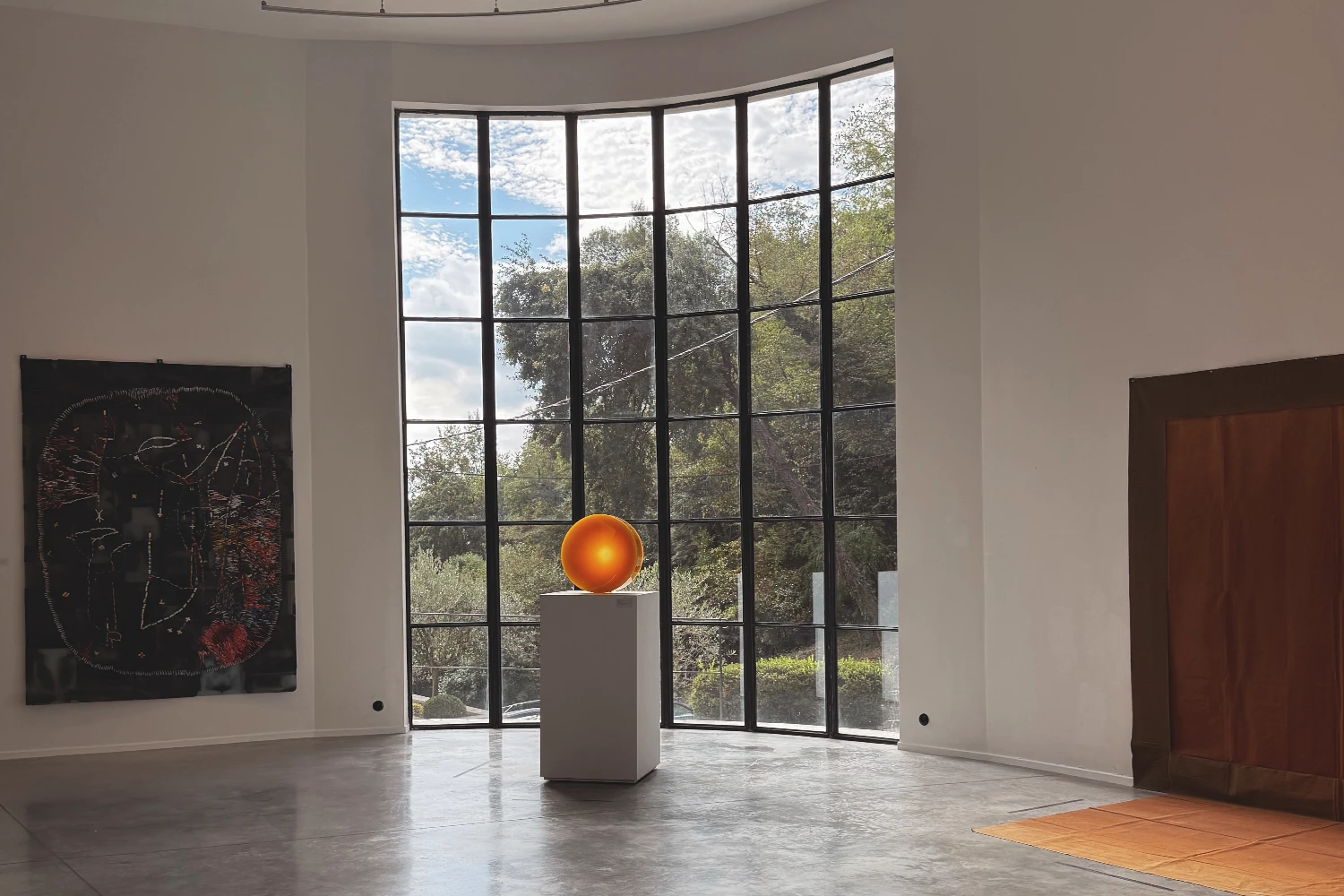
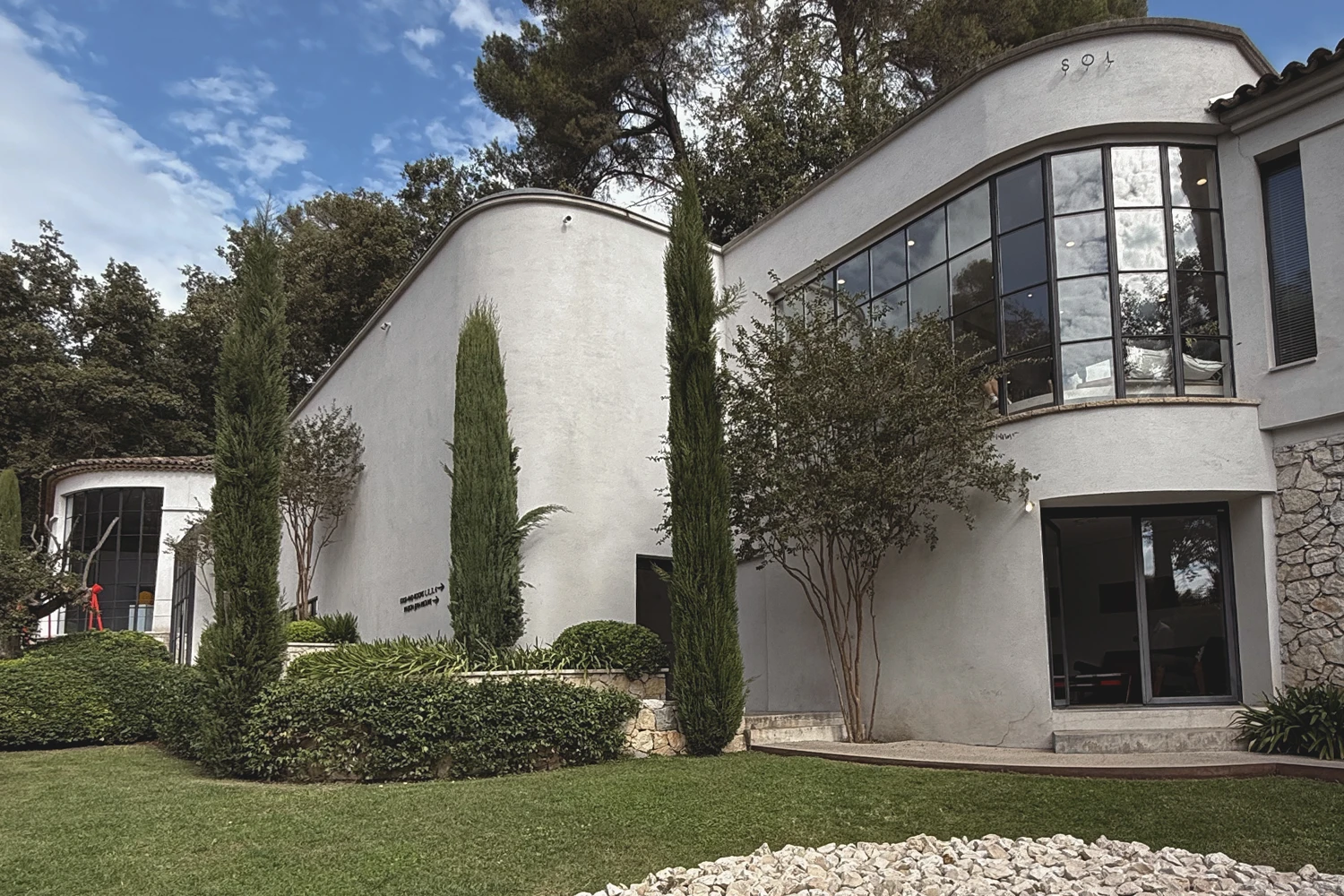
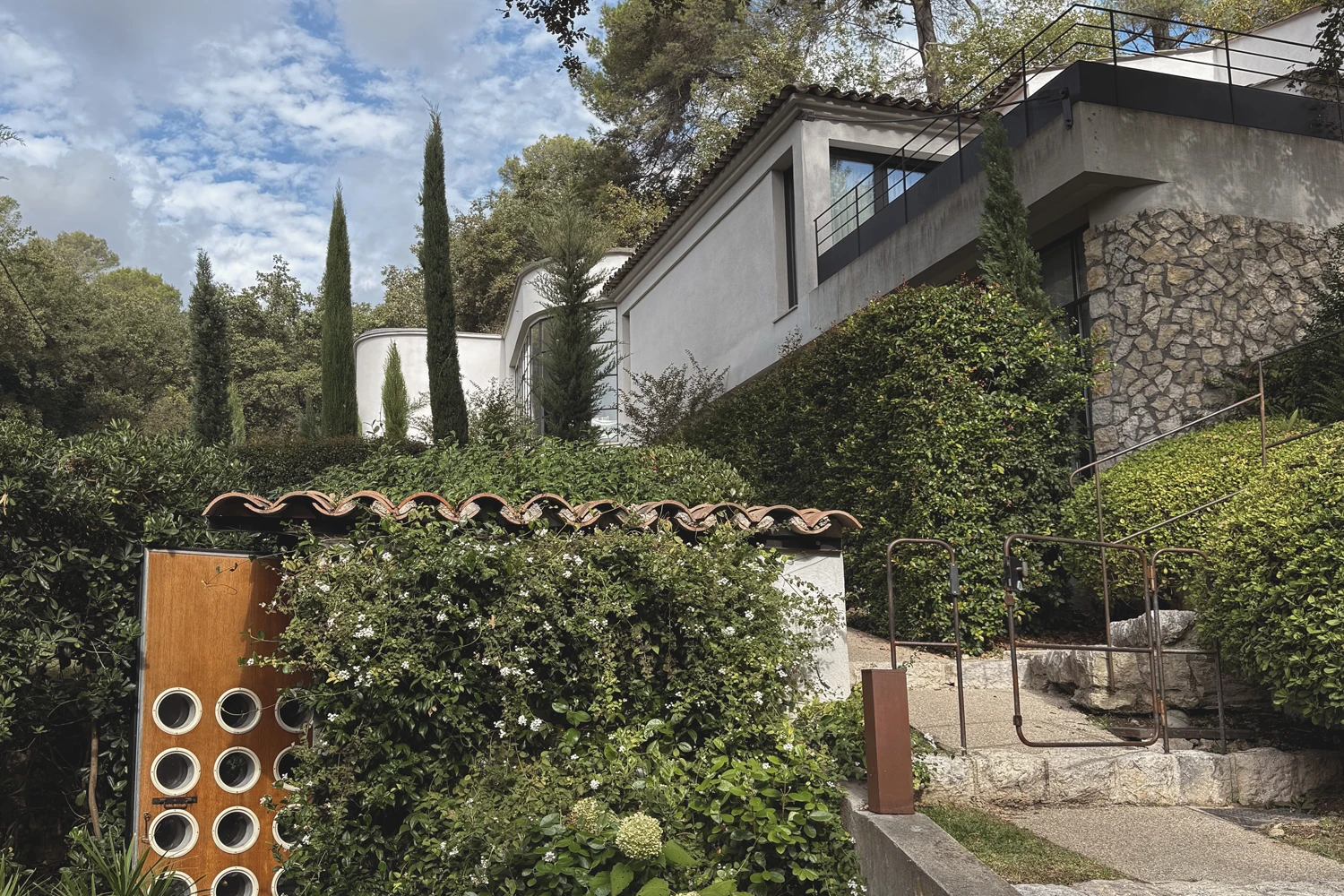
The foundation occupies a building dating from the nineteen-fifties, renovated by French architect Charles Zana. The intervention maintains the clarity, rhythm, and openness of the original structure while introducing galleries, terraces, and gardens that define movement through space. Light animates walls and floors, thresholds establish moments of pause, and corridors guide circulation. Materials stone, plaster, exposed metal, and timber interact with the Mediterranean sun, producing subtle changes over the course of the day. The design prioritizes proportion and spatial logic rather than decoration, allowing architecture itself to shape the perception of art.
Zana’s work does not merely house art; it organizes it. Circulation and lighting create vantage points, and the sequence of rooms and outdoor areas frames the collection in relation to the horizon, landscape, and building geometry. The architecture is rigorous and deliberate, producing a setting where visitors navigate the space as a coherent experience rather than a series of isolated rooms.
Art in Dialogue with Architecture and Landscape
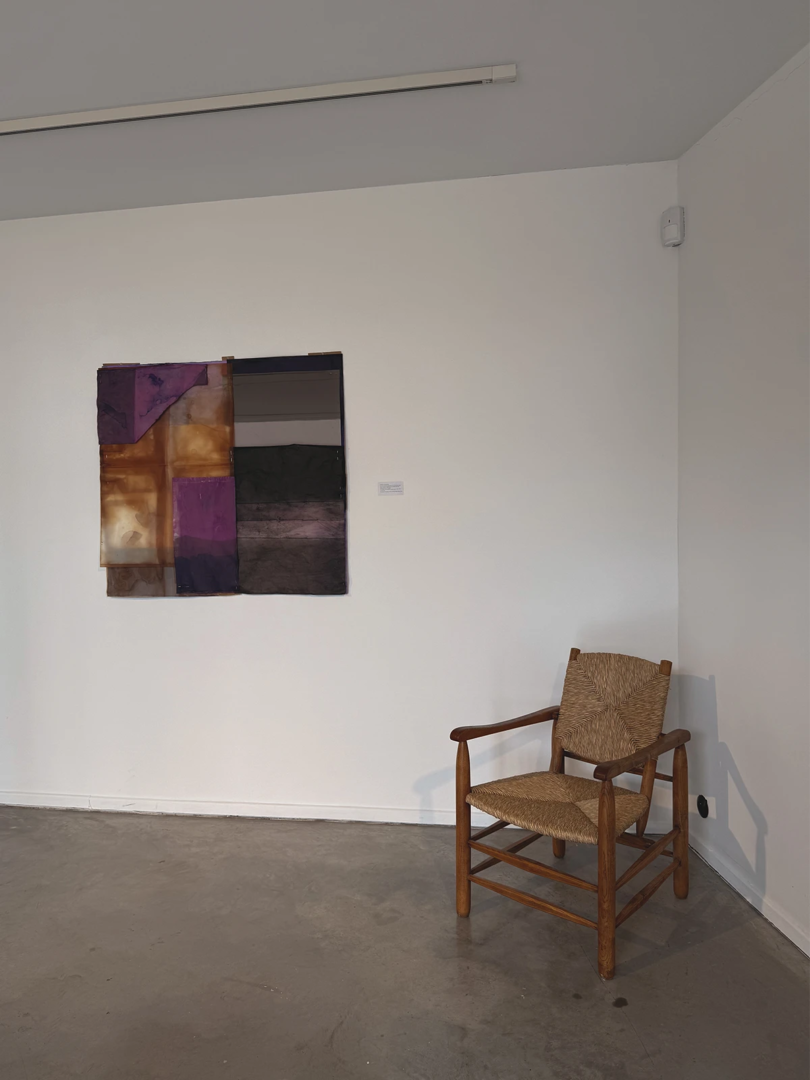
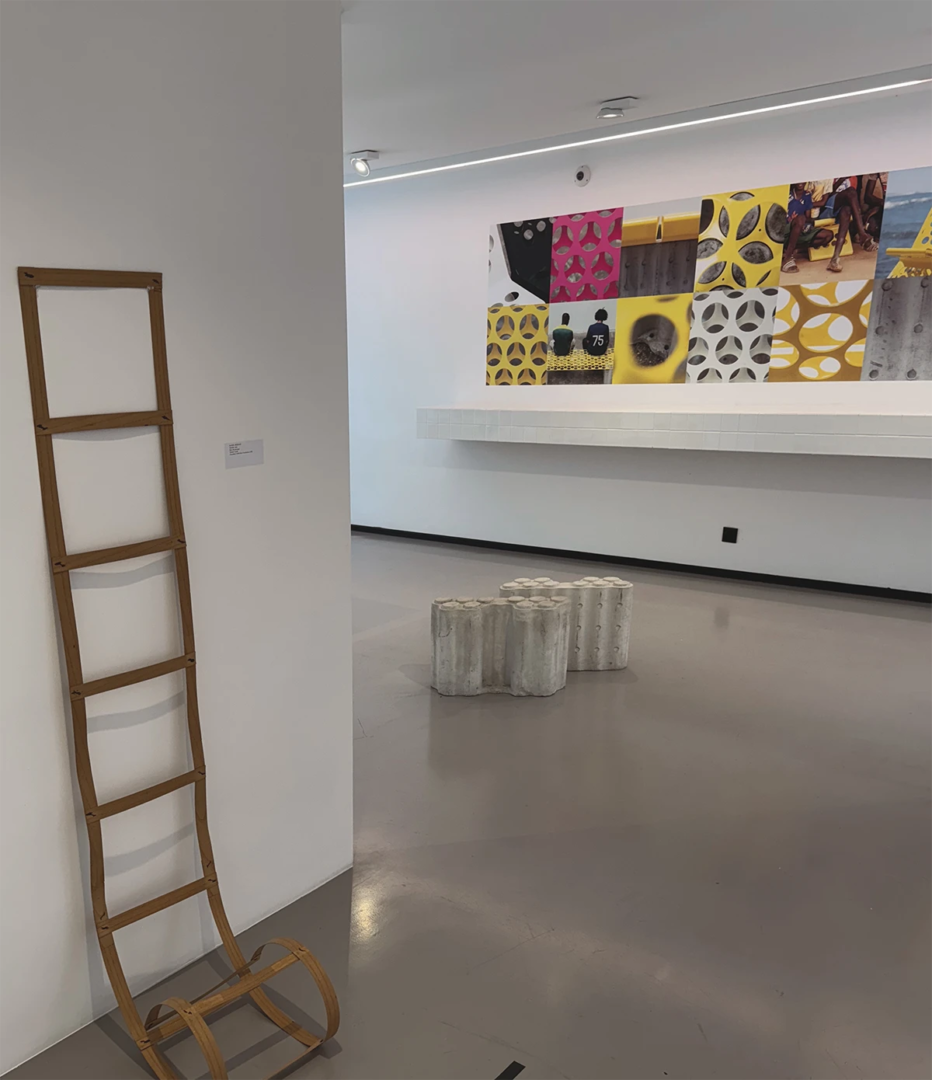
Within this carefully structured environment, artworks occupy a spatial continuum. Sculptures are placed at thresholds and in courtyards, installations respond to shadow and reflection, and wall-mounted pieces align with corridor axes. Art is experienced through proportion, light, and horizon rather than narrative or decoration. Outdoor terraces, gardens, and plantings extend the gallery into the landscape, establishing a continuous dialogue between built form, natural setting, and artistic practice.
The plateau becomes a living frame. Visitors move through spaces where circulation, light, and landscape interact with objects, creating a sequence that blends architecture and display. Every threshold, terrace, and viewpoint contributes to the presentation of the collection, encouraging observation without prescribing interpretation. In this context, art is encountered as part of a structured spatial narrative, shaped as much by architecture and environment as by the works themselves.
Hospitality and Design: Guest Rooms, Café, and Bookshop
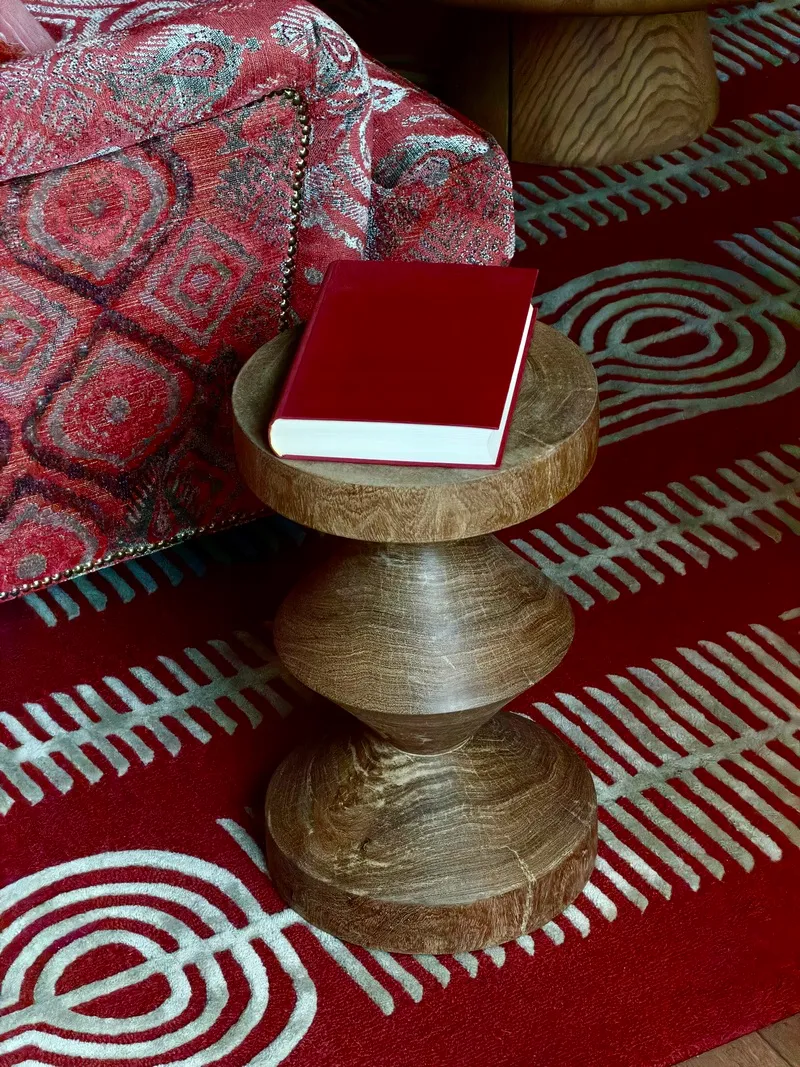
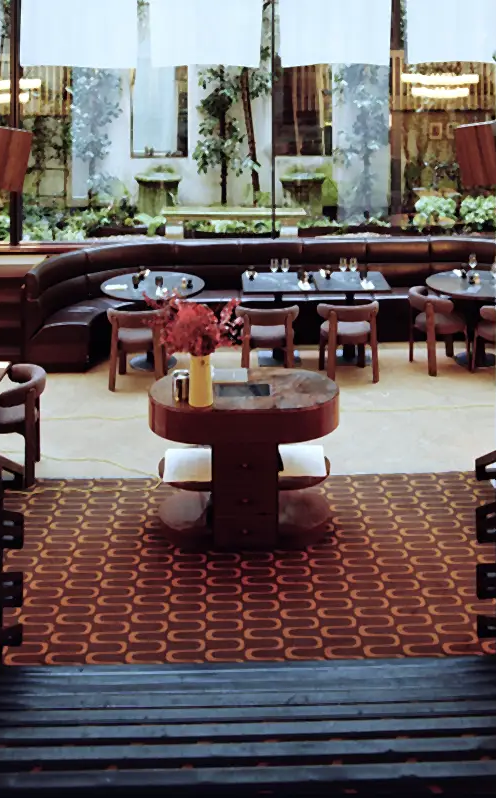
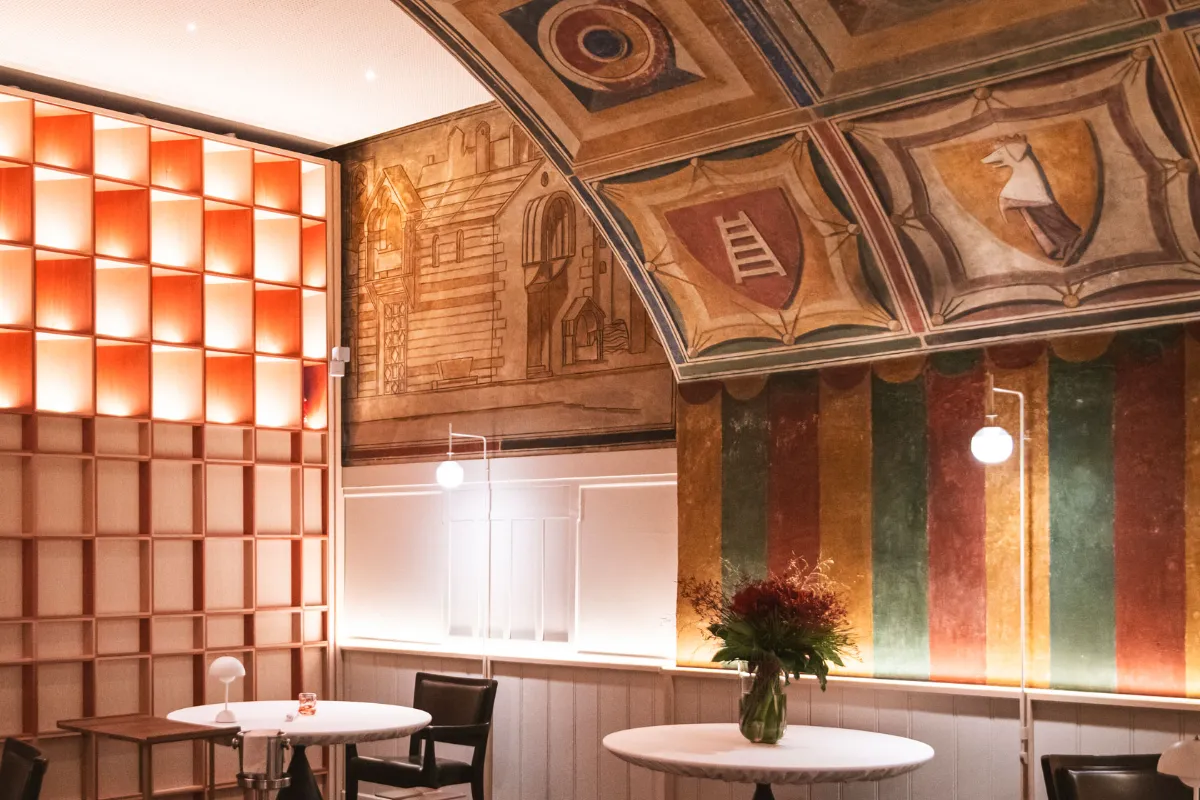
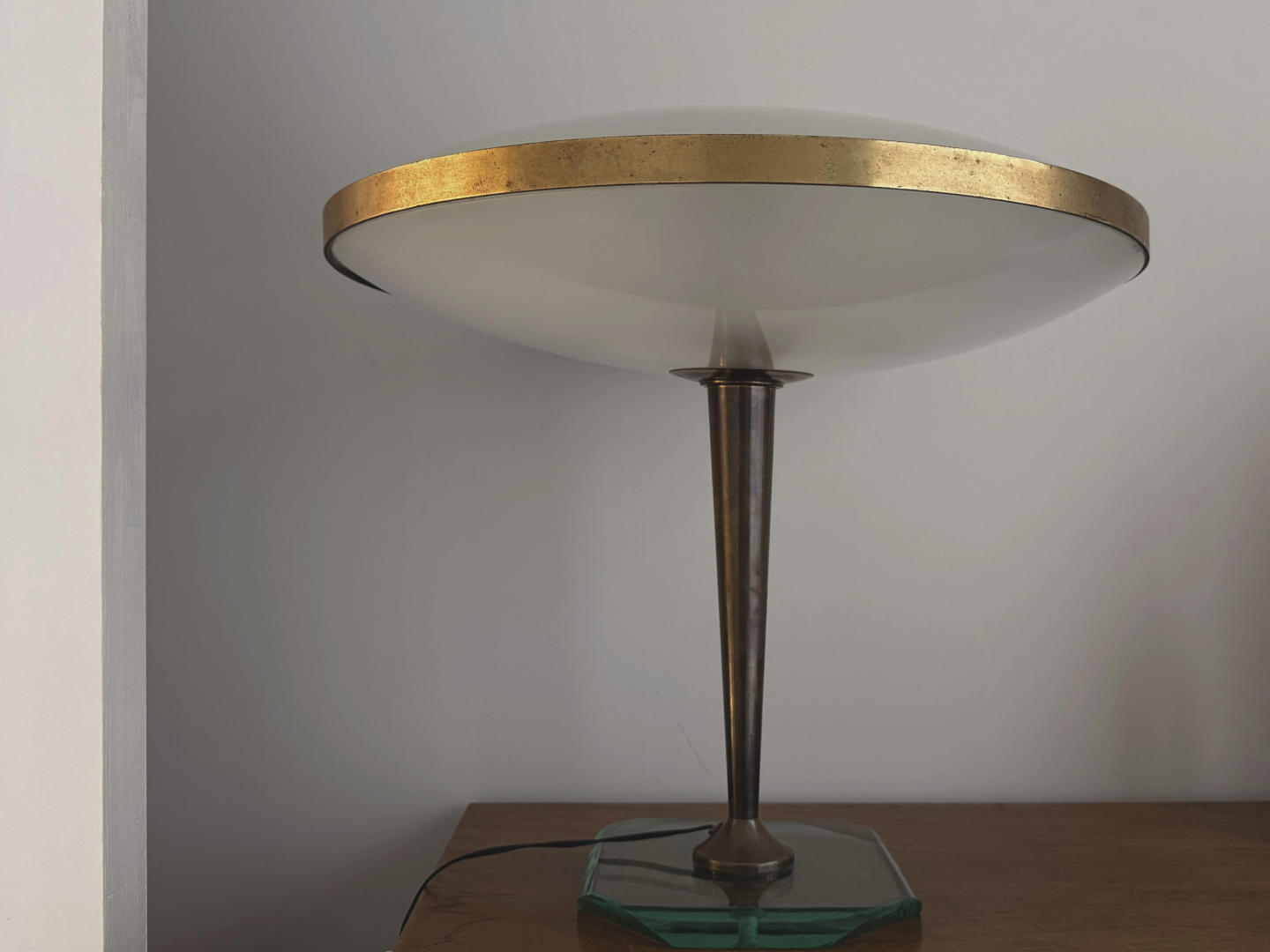
Hospitality at Fondation CAB is integrated into the architectural and artistic narrative. The bookshop and café-restaurant SOL open onto terraces shaded by orange and lemon trees, creating an extension of the exhibition spaces into everyday life. Furniture, lighting, and circulation maintain the clarity established in galleries. Selected pieces by Charlotte Perriand are interspersed, connecting historical design with contemporary practice.
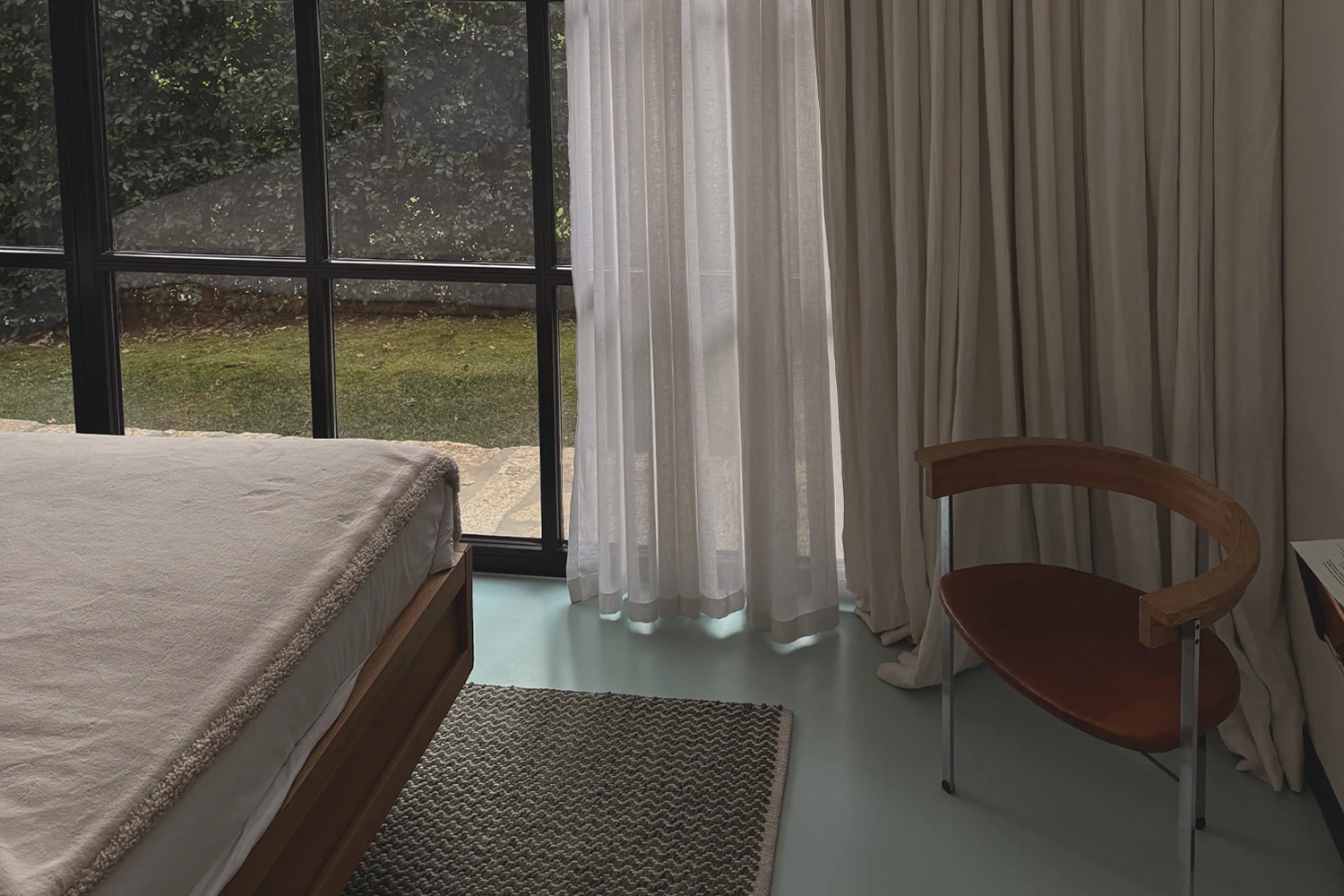
The café offers seasonal menus sourced from the region, folding culinary rhythm into the spatial experience. Four guest rooms extend the foundation’s architectural and artistic narrative, framing views of the horizon, gardens, and terraces. Visitors inhabit the foundation not only visually but spatially, navigating a continuous sequence of art, architecture, and design. These accommodations are conceived as extensions of the galleries themselves, aligning proportion, material, and circulation with the broader experience of the site.
Jean Prouvé’s Demountable House: Industrial Design as Spatial Anchor
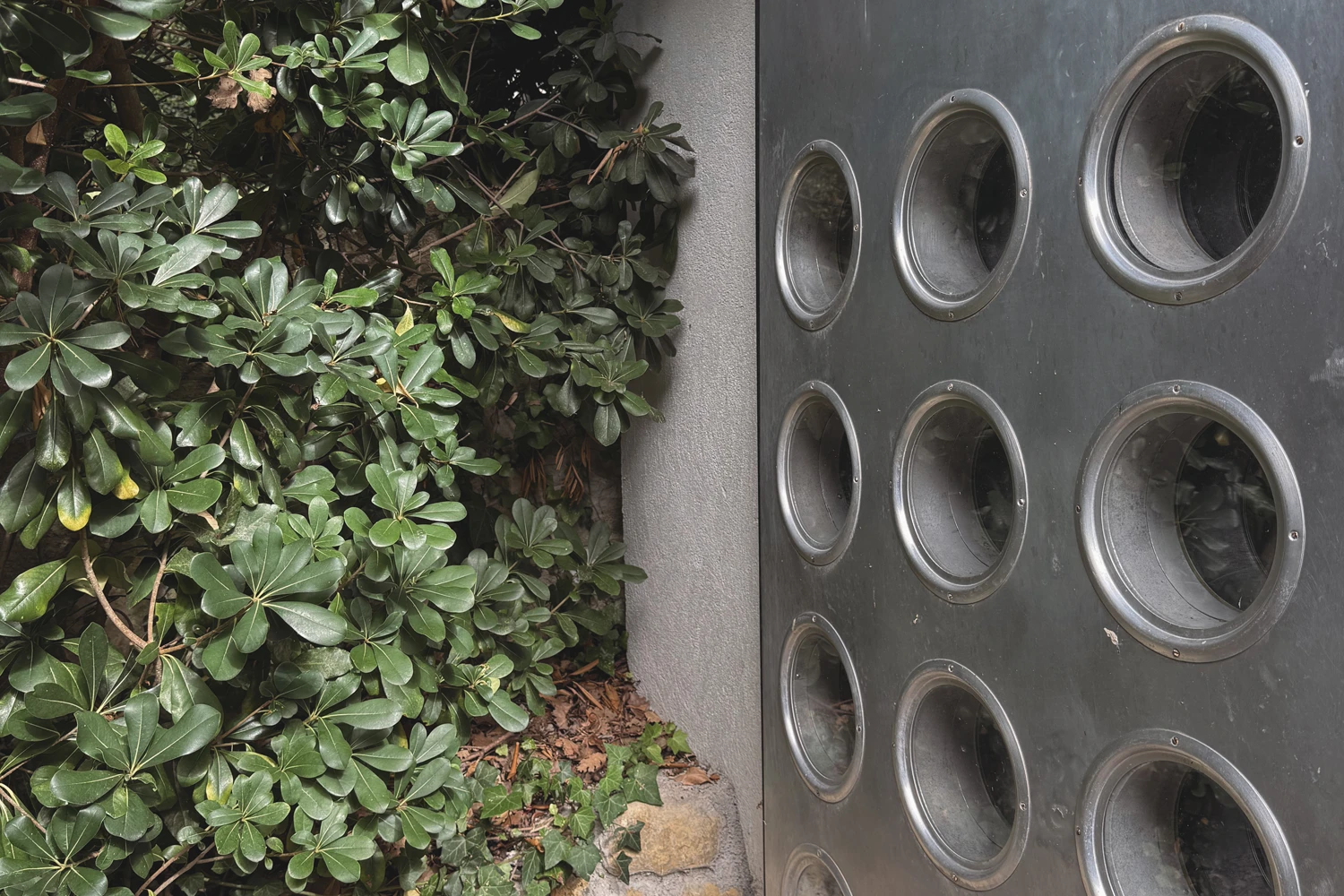
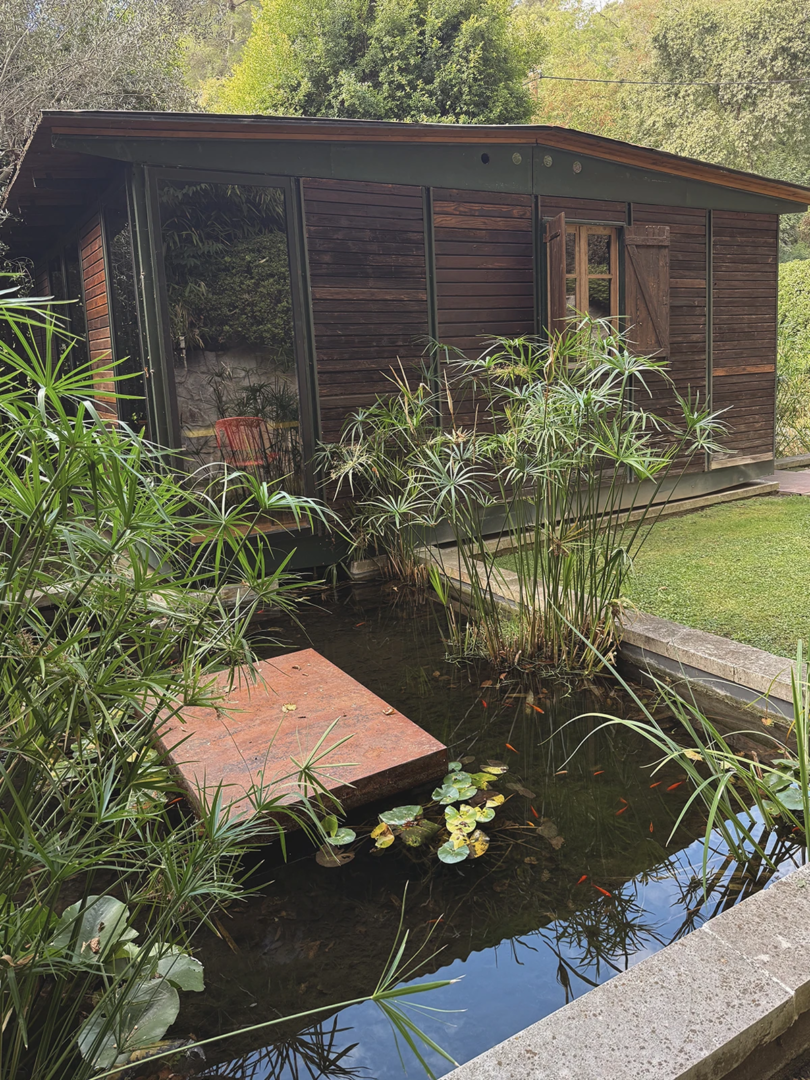
Central to the Saint-Paul-de-Vence branch is the Jean Prouvé demountable house. Prefabricated in metal with modular panels, it illustrates principles of adaptability, repeatability, and structural clarity. Its openings frame views in ways that mirror gallery alignments, integrating historical architectural design into contemporary spatial experience. The house’s presence creates a dialogue between mid-twentieth-century industrial innovation and the foundation’s modern curatorial practices, bridging past and present without interpretation or embellishment.
Within the garden, pathways, seating, and plantings are arranged to guide visitors and frame views of both Prouvé’s structure and the surrounding landscape. The house operates as an object, a viewpoint, and a measure of proportion within the foundation’s architectural and artistic sequence. Its modular construction and metal detailing are functional, precise, and understated, providing contrast with the stone, plaster, and timber of the main building while contributing to a coherent spatial narrative.
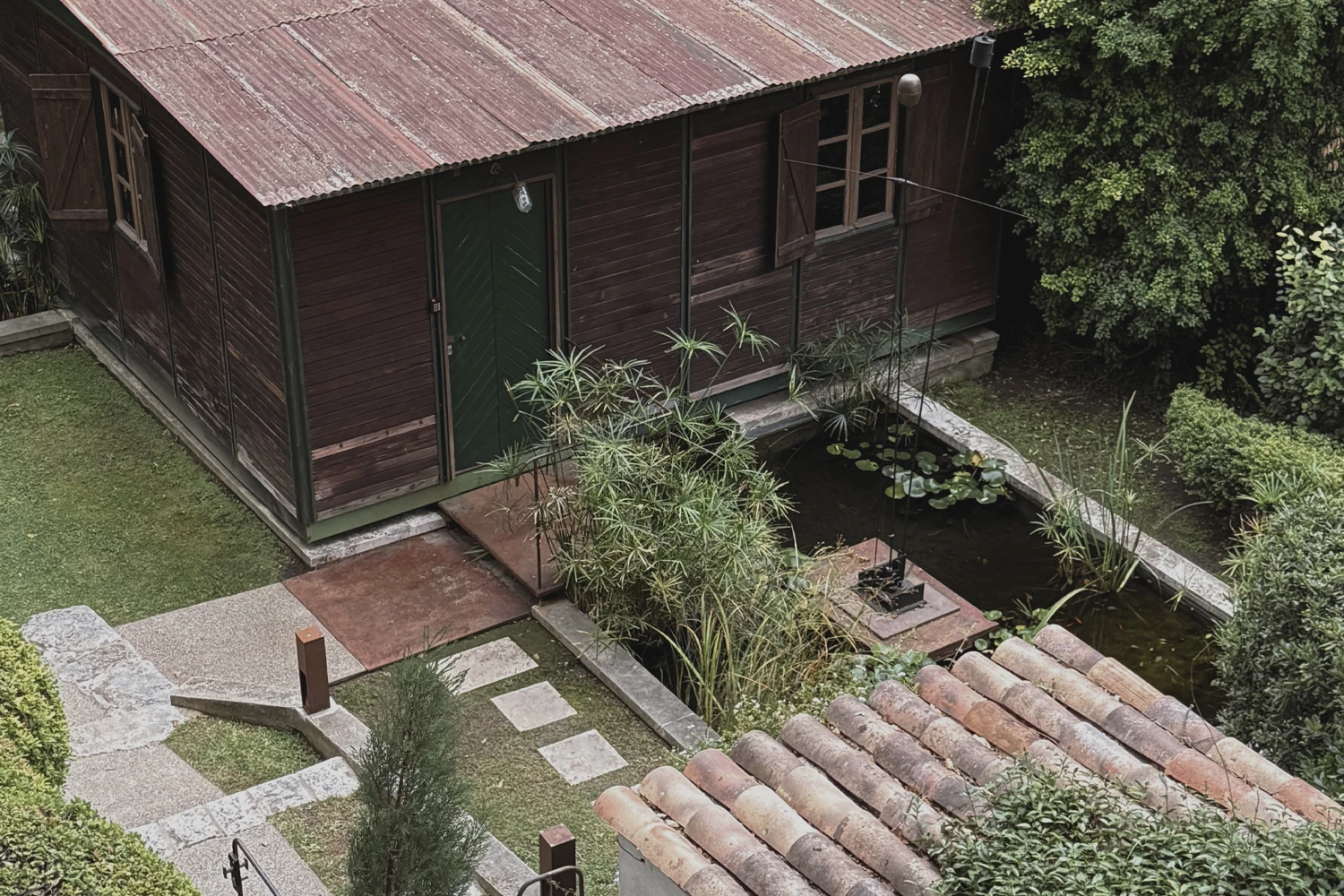
6 X 6 MÈTRES, 1944
A Cohesive Spatial Narrative
By combining galleries, terraces, gardens, guest rooms, the SOL café, and the Prouvé house into a single spatial continuum, Fondation CAB Saint-Paul-de-Vence presents art as an inhabitable experience. Proportion, circulation, light, and horizon structure perception across the foundation. Every element—architecture, landscape, design, and collection—operates within the same rigorous logic. The site is structured, deliberate, and neutral, allowing art and design to occupy space as fully integrated components of a larger environment.
Saint-Paul-de-Vence itself remains an active participant in this experience. Its streets, terraces, and views establish a framework that interacts with the foundation’s architecture, shaping movement, observation, and attention. The plateau is both setting and participant, connecting past and present, landscape and building, art and design, producing a sequence of spaces that visitors inhabit as much as they observe.
6 X 6 MÈTRES, 1944