Four Seasons Ritz Lisbon: reading the city through modernism, art, and elevation
Here the city feels both near and remote – the real voyage runs through halls and tapestries, where art and architecture narrate Portugal’s modern past without losing sight of the present
Four Seasons Ritz Lisbon on Parque Eduardo VII: a commanding location, modernist art and architecture to read Lisbon from the inside out
Arriving at the Four Seasons Ritz Lisbon means choosing a different angle on the city. You don’t immediately dive into the narrow streets of Alfama or chase the storefronts of Chiado, because the hotel rises above them, overlooking Parque Eduardo VII, a vantage point from which to observe Lisbon before entering it. This physical distance sets up an opposite narrative movement: seeing the city from above first, then understanding it up close, with an attention that goes beyond the view and runs through the building itself.
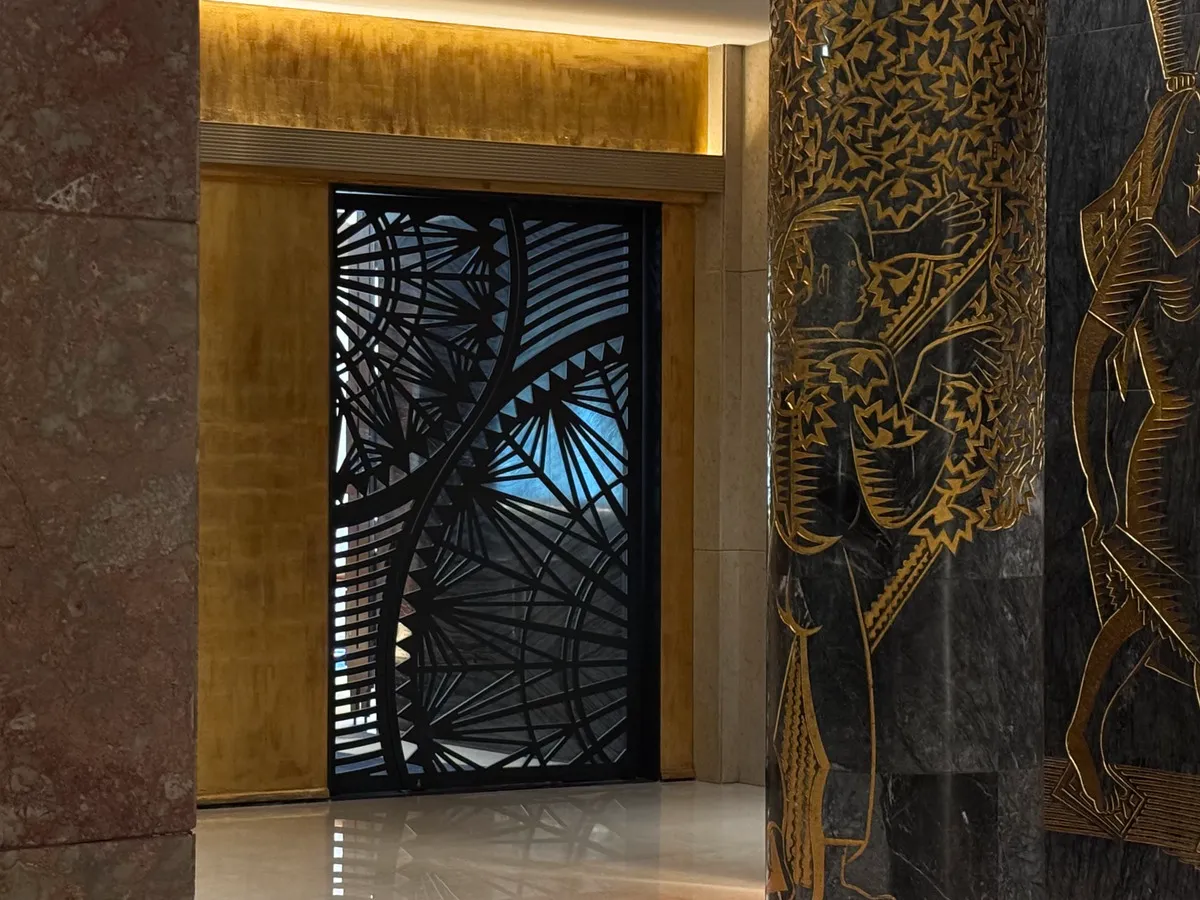
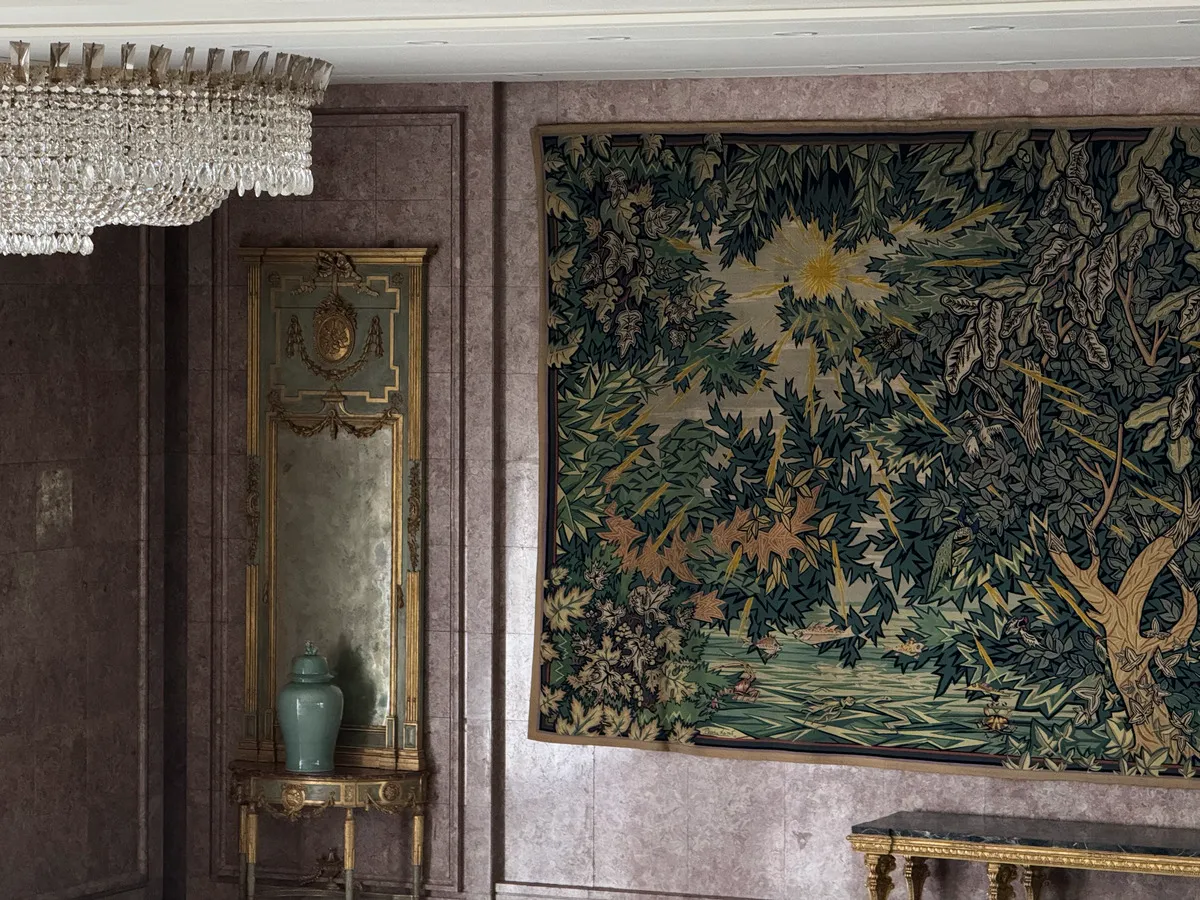
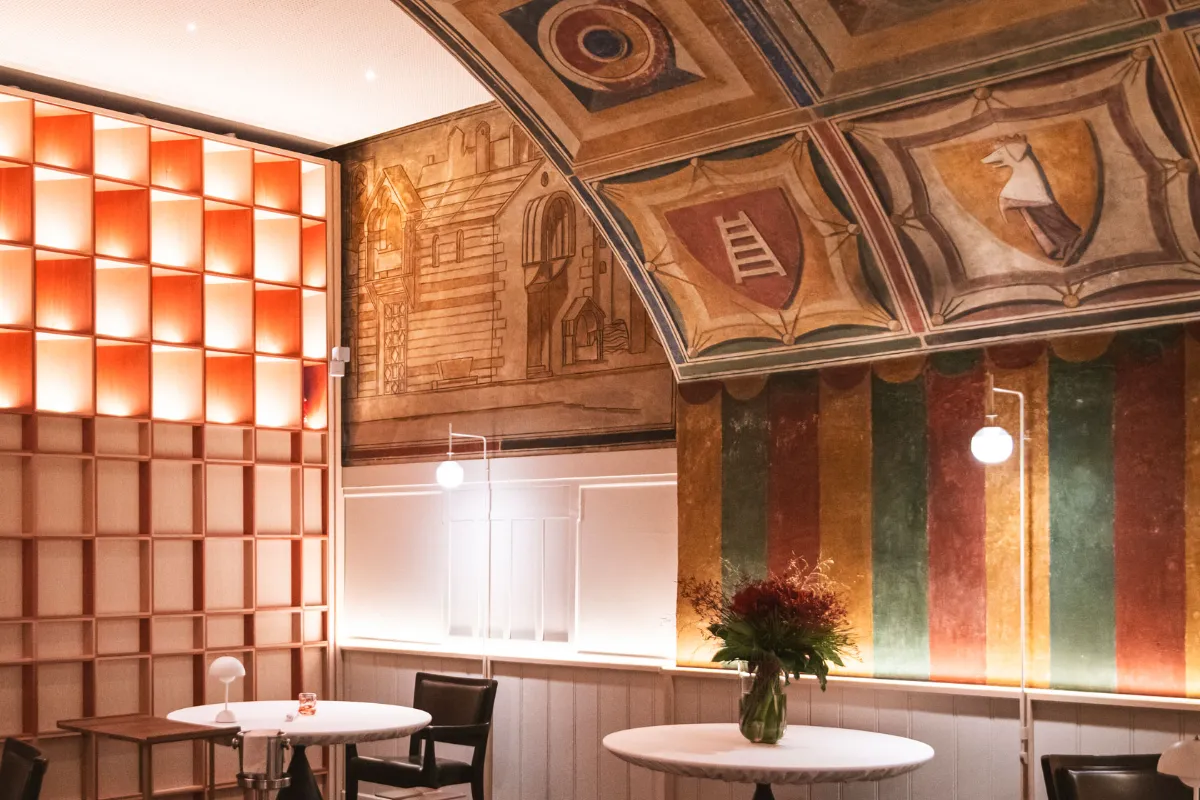
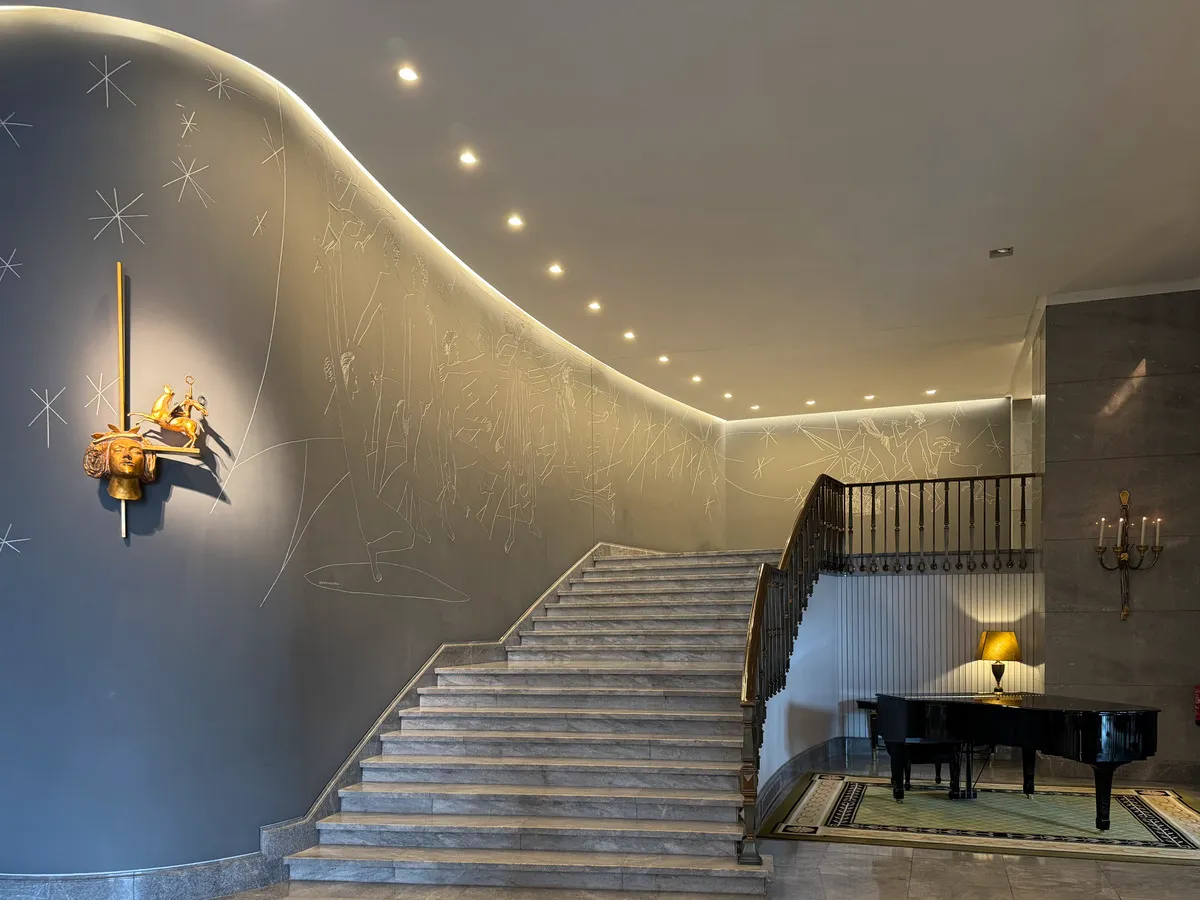
Inside, the impression is that of stepping into a place that condenses 20th-century Portugal. The halls, materials, artworks, and architectural solutions tell the story of a moment when the country wanted to present itself as international, modern, and competitive, even within a rigid political framework. Walking the corridors feels like reading history in motion: time bends, and the original ambition coexists with recent renovations that updated the hotel without altering its identity.
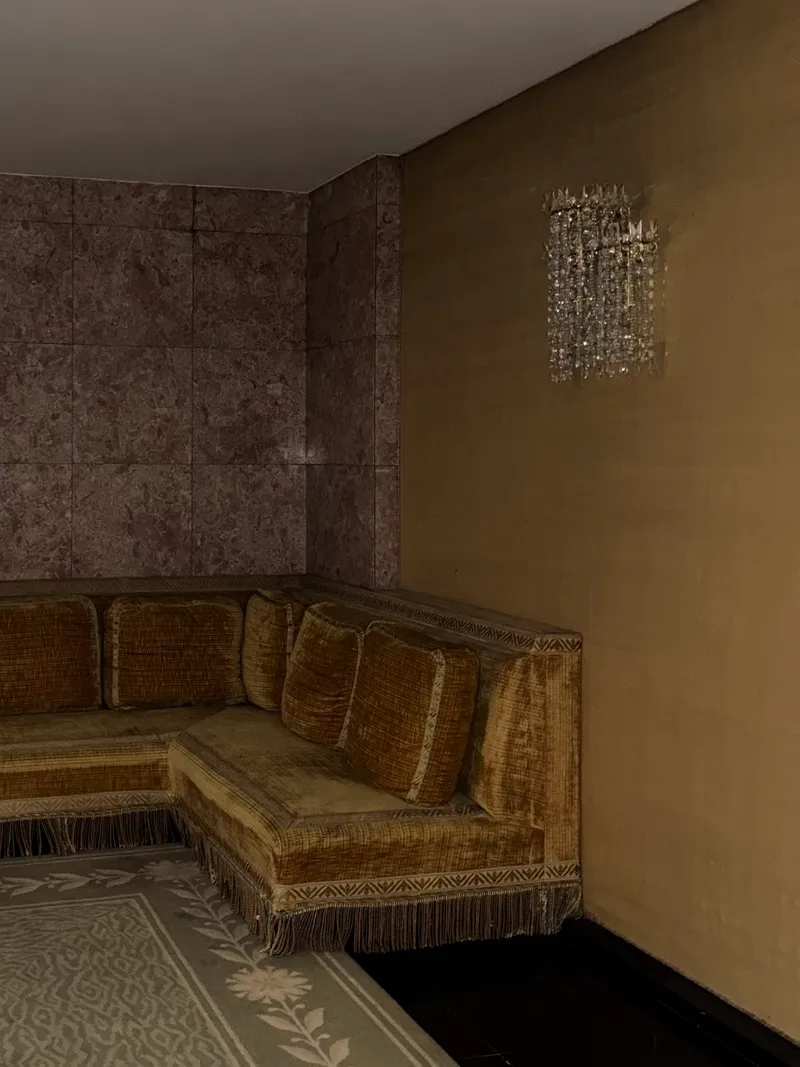
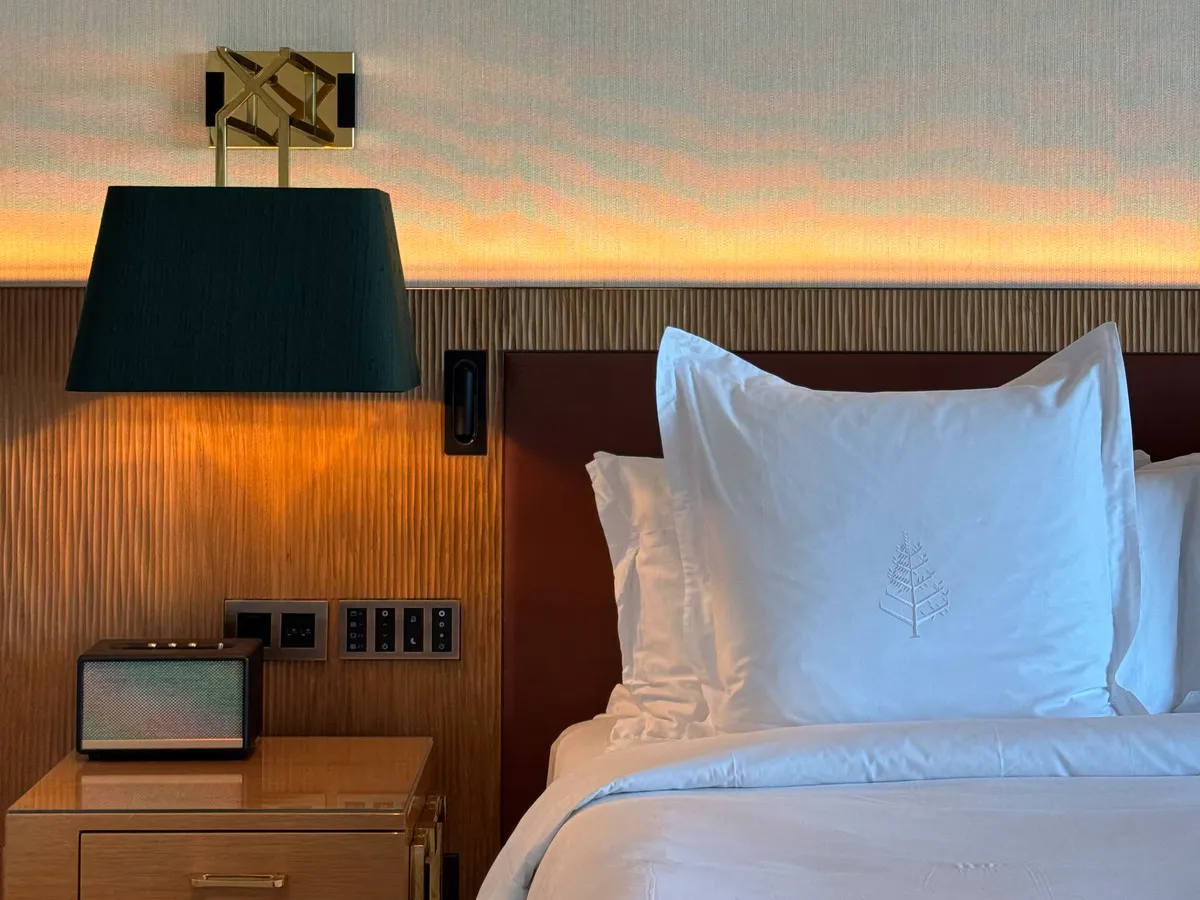
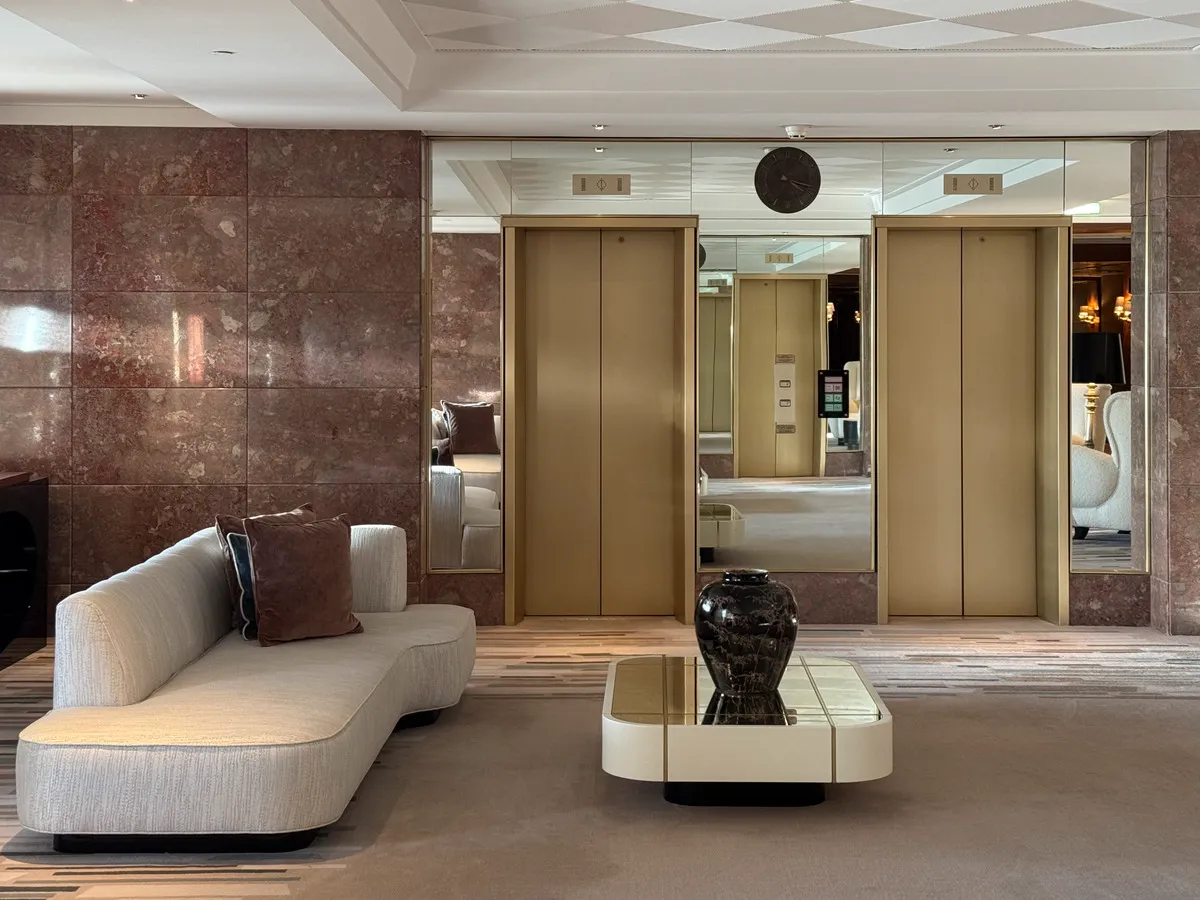
The renovations launched in 2021 by Artur Miranda and Jacques Bec – OITOEMPONTO studio – renewed guest rooms and common areas while respecting original proportions and layout. The modernist imprint remains readable; the monumental presence isn’t softened, just brought into the present.


From a 1912 idea to its 1959 opening: how the Ritz was conceived and why it became a key building for Lisbon
The Ritz in Lisbon grew out of an unrealized 1912 project, when conversations had already begun about the need for a major representative hotel in the city. The idea remained suspended for decades until Salazar’s Estado Novo regime revived it as a strategic matter. Lisbon could not go without an international-standard hotel capable of hosting heads of state, diplomats, and delegations.
The project was assigned to SODIM (Sociedade de Investimentos Imobiliários), created specifically to develop it by bringing together bankers and entrepreneurs. Architectural direction was given in 1952 to Porfírio Pardal Monteiro, already known for public and civic works, chosen for his ability to combine rigor, monumentality, and modernity. Monteiro was commissioned even before the land was purchased, to define the ideal placement: a site that would look over the city and represent its transformation.
Construction continued throughout the decade and led to the 1959 opening. At its inauguration, the Ritz was an international signal. Portugal presented itself as a country seeking recognition for its building capability, aesthetic quality, and openness to Europe, even under the restrictions of the regime. This duality – modernity and control – still makes the building a historical document as well as a hotel.
Modernism and the city: post-war Lisbon and the ground that shaped Monteiro’s project
To understand the Ritz’s design, you need to look at post-war Lisbon. In the 1940s and 1950s, the city was experiencing gradual but decisive transformation: urban expansion, new infrastructure, modern residential districts, major roadways. At the same time, debates around Portuguese modernism — growing since the 1920s and 1930s through international influences and specialist publications — were reaching maturity.
The process wasn’t linear. The regime welcomed modernism when it served as a symbol of progress, but limited its more radical impulses in favor of a supposed national architectural identity. The 1st National Congress of Architecture in 1948 marked a key moment, giving a generation of architects visibility and calling for the recognition of functionalist, rationalist, and modernist languages.
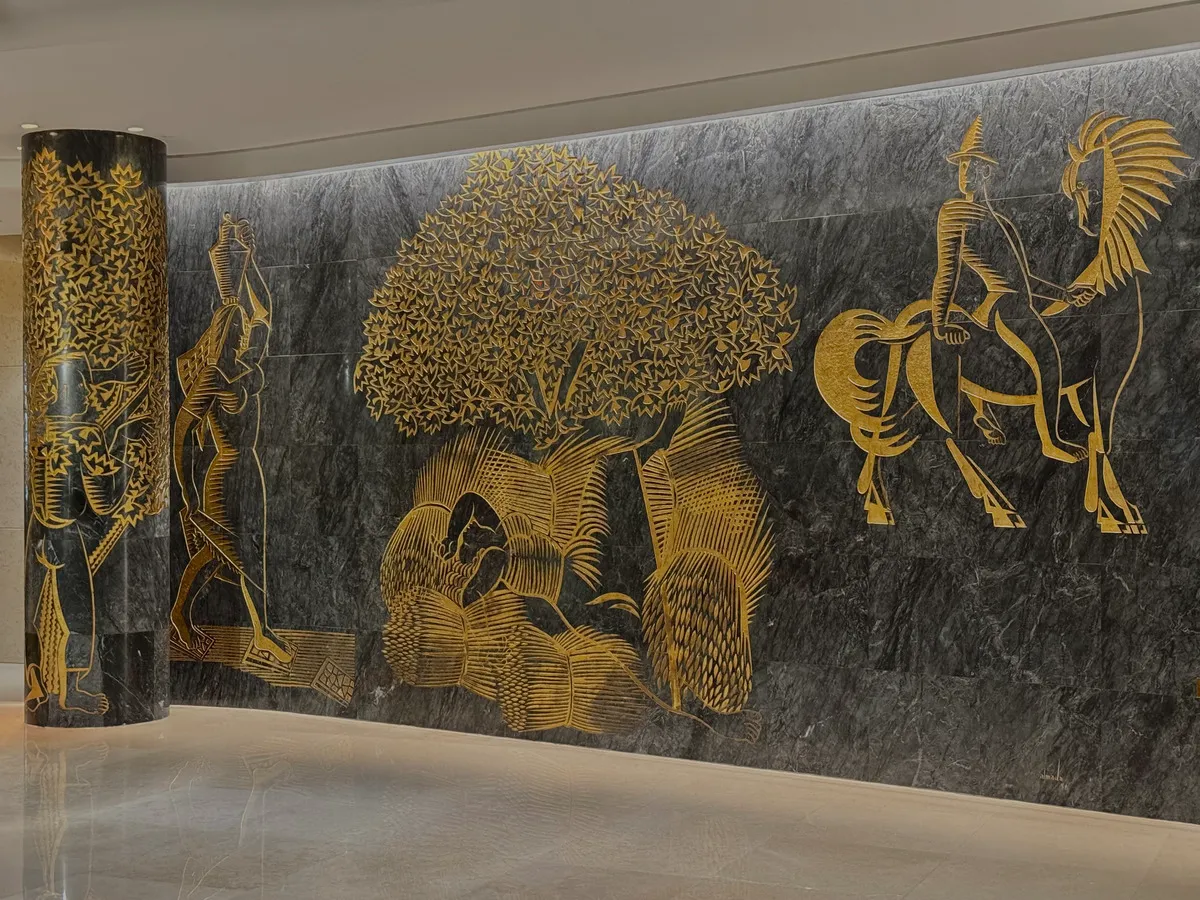
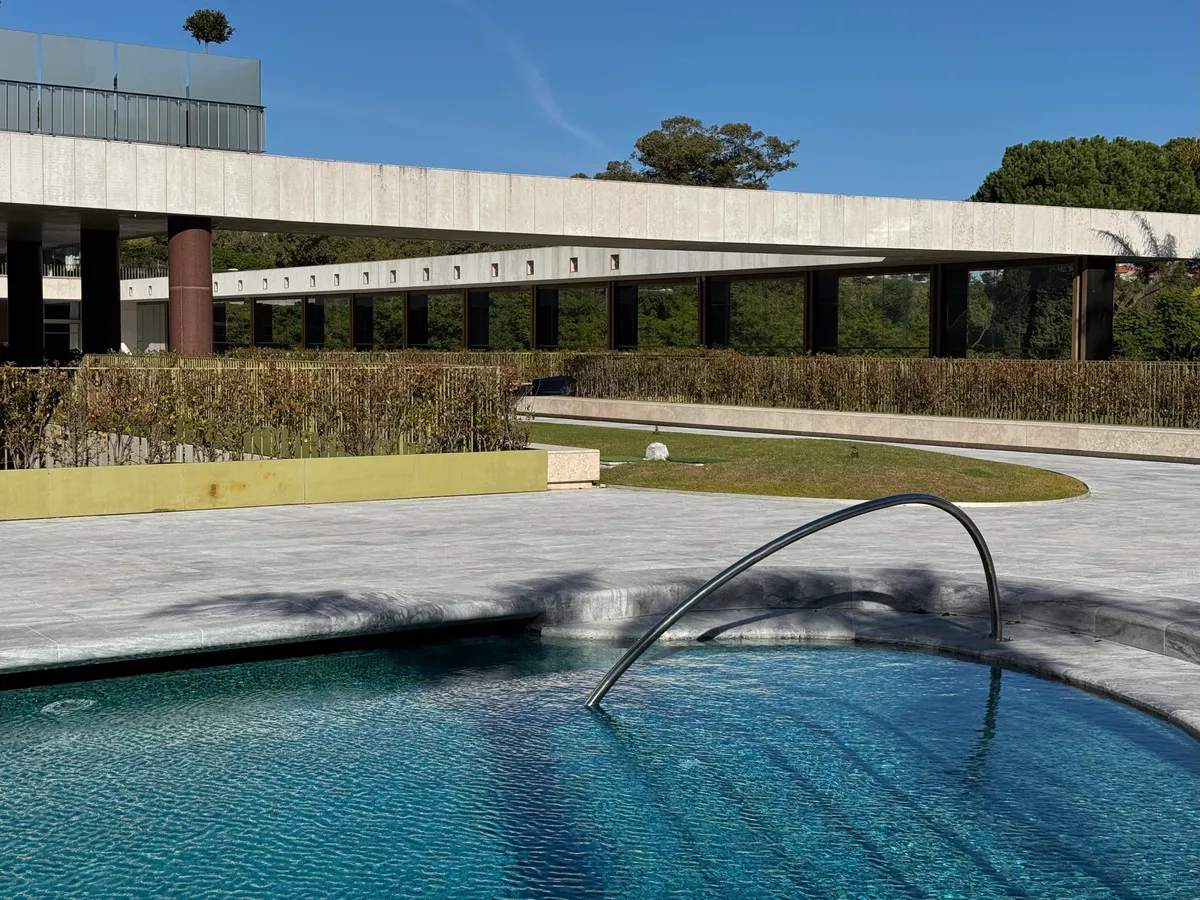
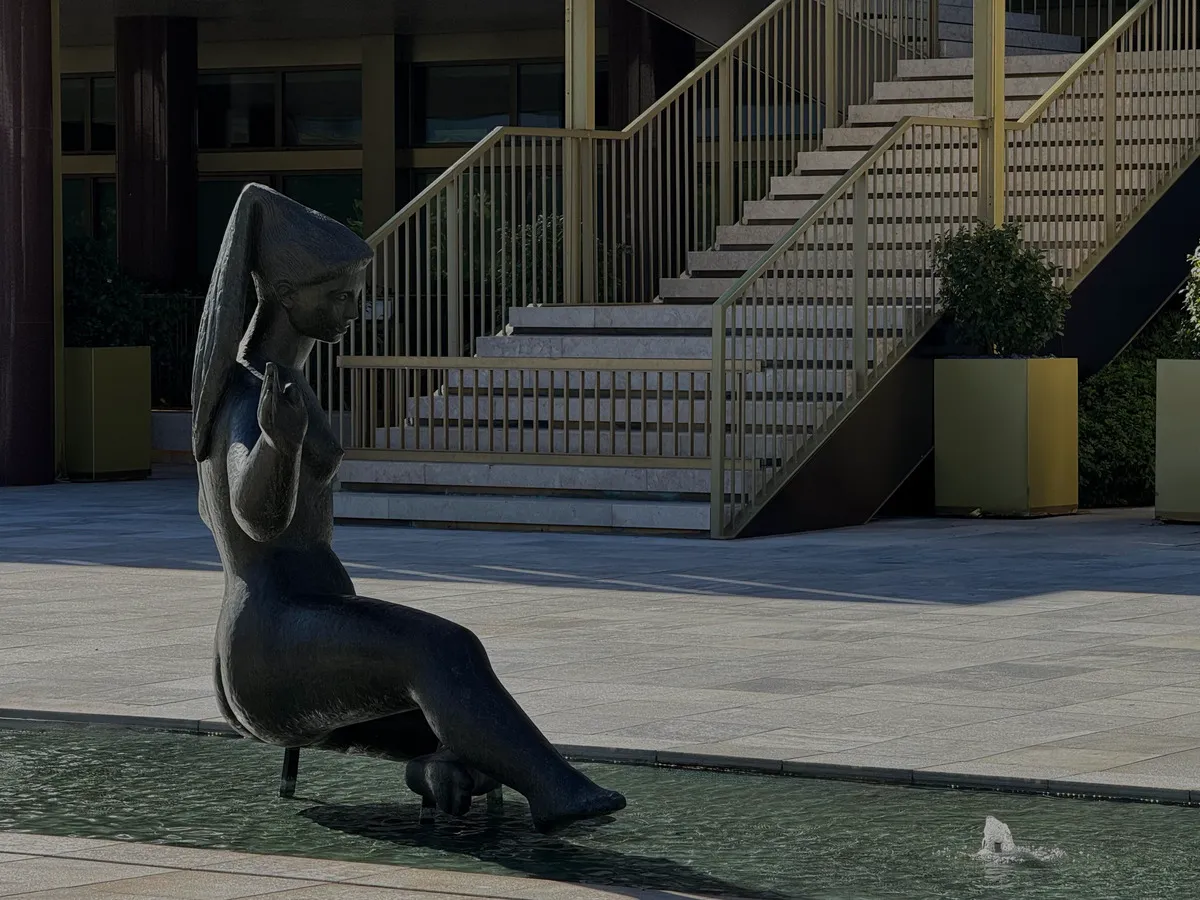
Within this context, Monteiro shaped the Ritz using modern materials — reinforced concrete, rational structures, broad volumes — applied with discipline and restraint, avoiding gratuitous gestures. The art commissioned for the interiors was not decorative veneer but part of the architectural plan: it expressed the same aim of integrating tradition and modernity, making the hotel a synthesis of institutional representation and artistic research.
The Ritz becomes a lens for reading mid-20th-century Lisbon: a building that not only stands out in the urban landscape, but narrates the moment when the city tried to look beyond its past without erasing it.
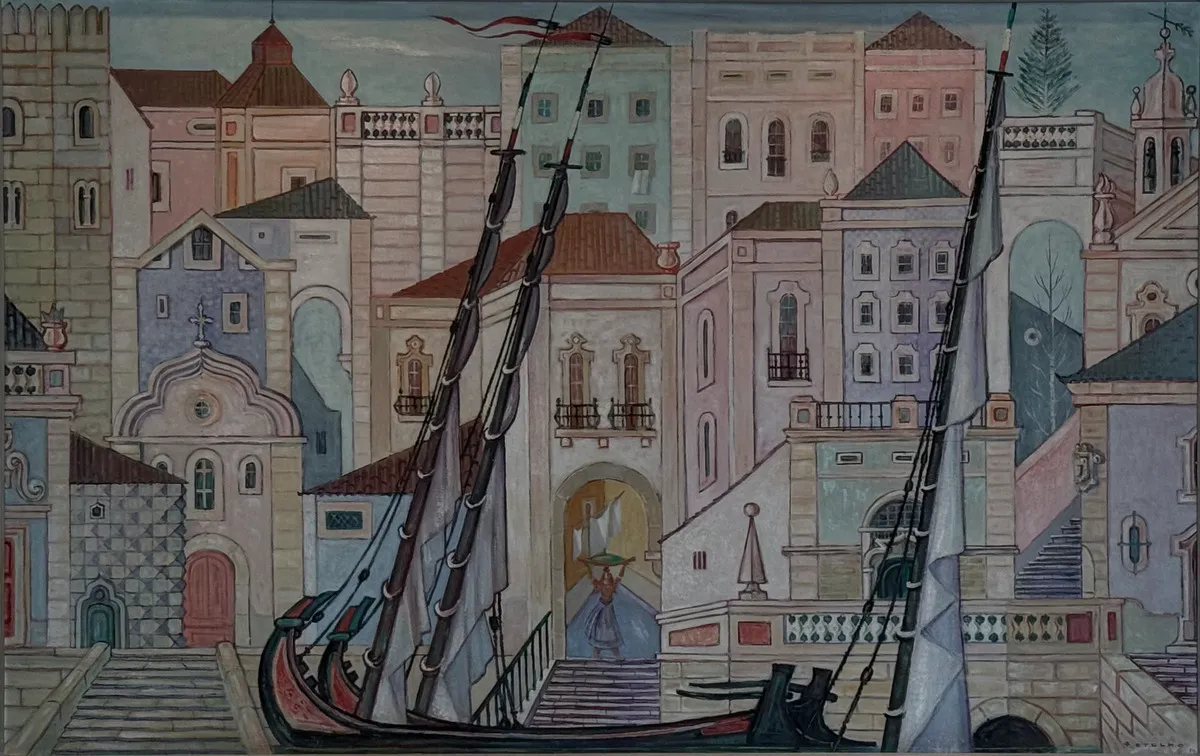
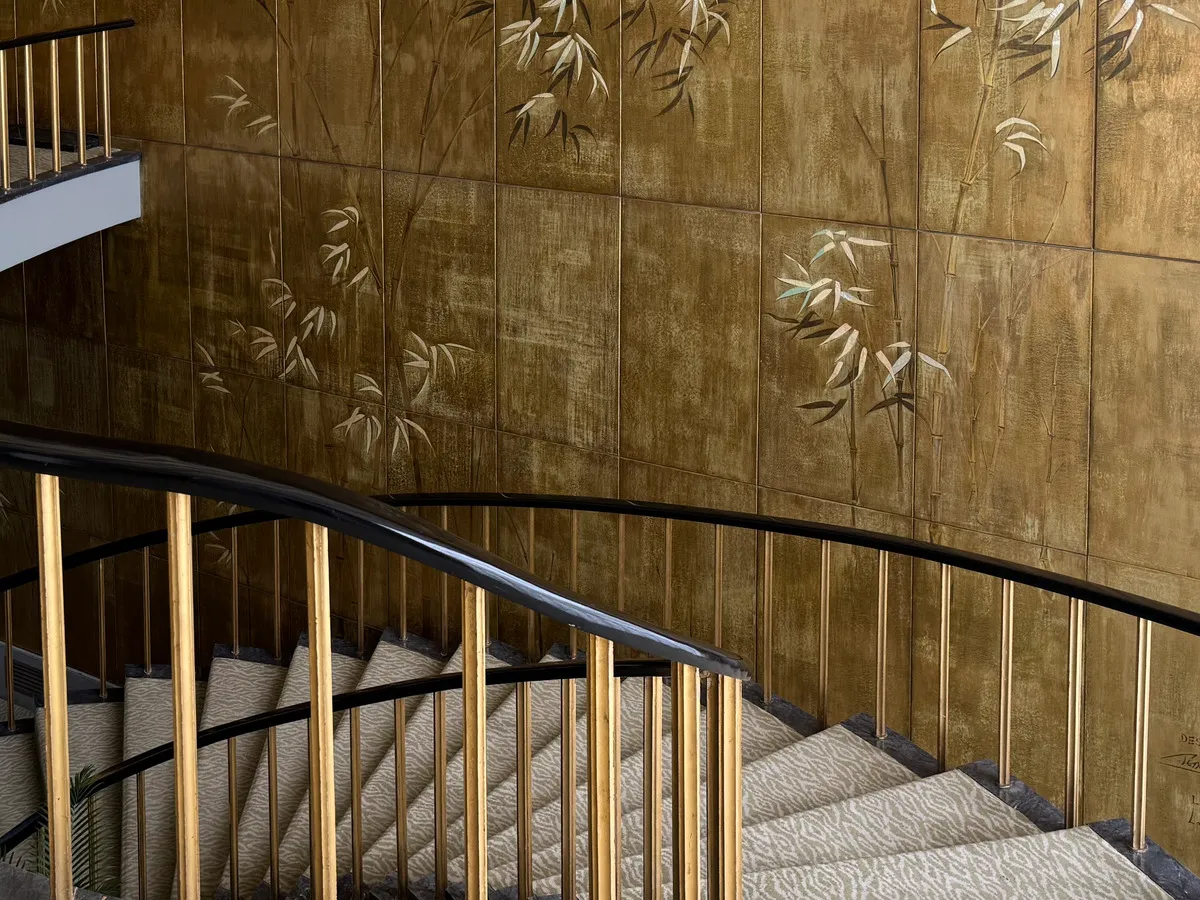
The art collection at Four Seasons Ritz Lisbon: modernist works, major 20th-century Portuguese artists, and a museum woven into the building
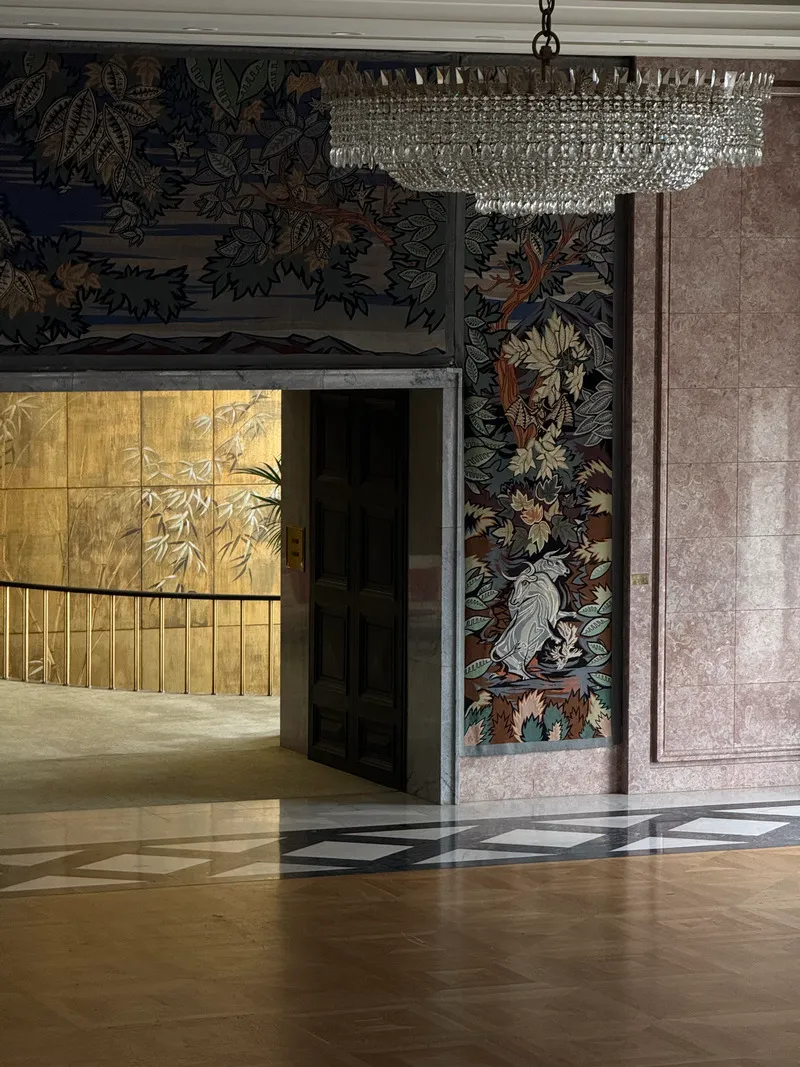
If the Ritz’s architecture gives physical shape to Portuguese modernity, its art collection provides the cultural extension of that idea. When the hotel opened in 1959, works were commissioned from selected 20th-century Portuguese artists, forming a permanent collection that still defines how guests experience the interiors. This is not an add-on display: art was planned as part of the building and guides guests through halls, lobbies, and dining rooms, effectively turning the hotel into an unofficial museum.
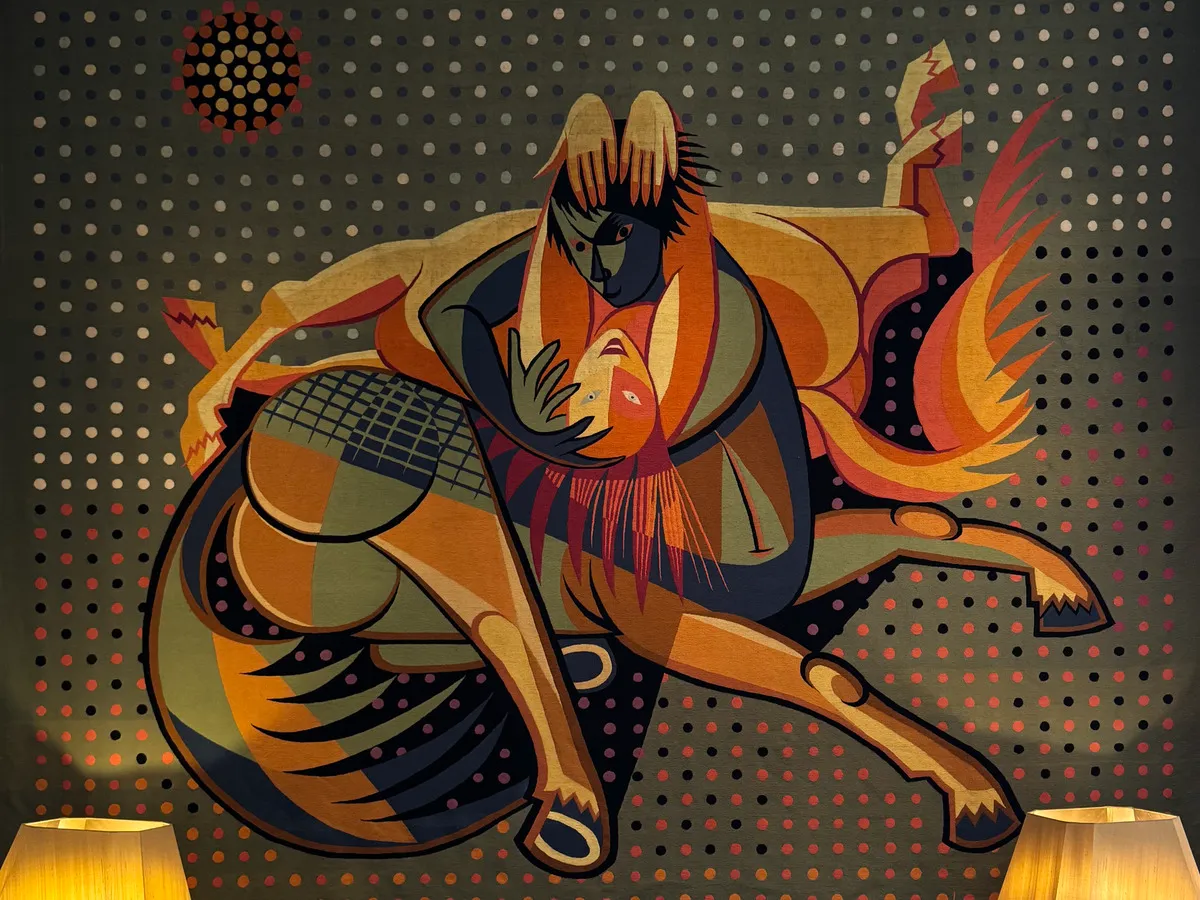
José de Almada Negreiros is a defining presence: his “Trilogia dos Centauros” (Trilogy of the Centaurs) occupies the lounge that bears his name. The three large tapestries, inspired by myth and geometry, condense his modernist visual language. The centaur here is not ornamental — it is a structural form that sets rhythm and verticality.
With “Vistas de Lisboa” and “Barcos no Tejo,” Carlos Botelho brings the city into the hotel: hills, rooftops, river, labor — a Lisbon in transition yet recognizable. These are emotional maps: they fix an era and return the city that the hotel overlooks.
“Bambús,” conceived by Pedro Leitão and executed by Arnaldo Louro de Almeida, appears at the entrance to the ballroom. Lacquered wood and mother-of-pearl form a three-dimensional visual grid, guiding the gaze toward the suspended staircase.
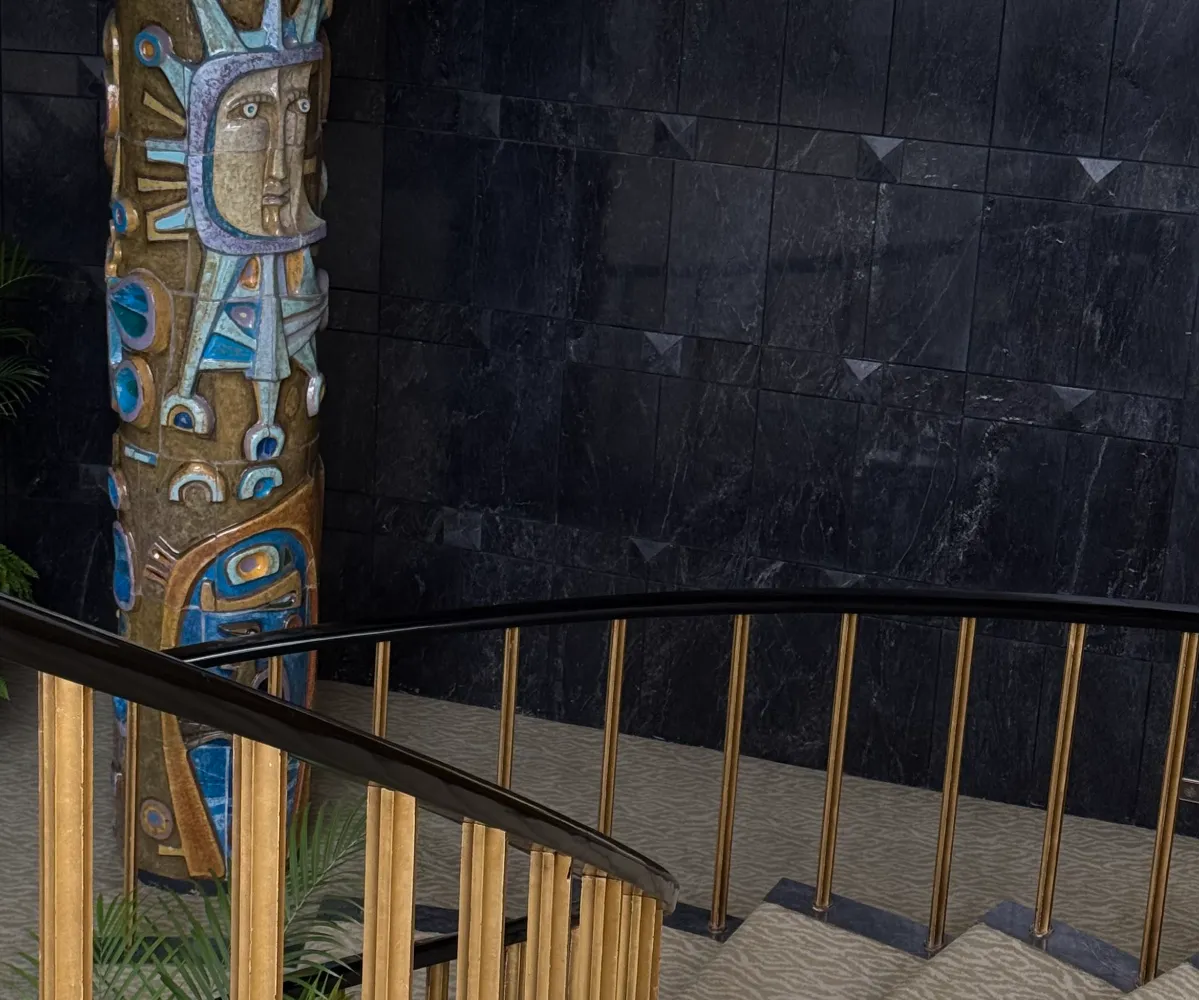
Works by Querubim Lapa and Estrela Faria bring the tradition of tiles and ceramics into the hotel without nostalgia. Lapa’s Lisbon column condenses the city into a vertical sculpture; Faria’s “As Sete Colinas de Lisboa” references the capital’s seven hills, inviting viewers to locate each one in the image.
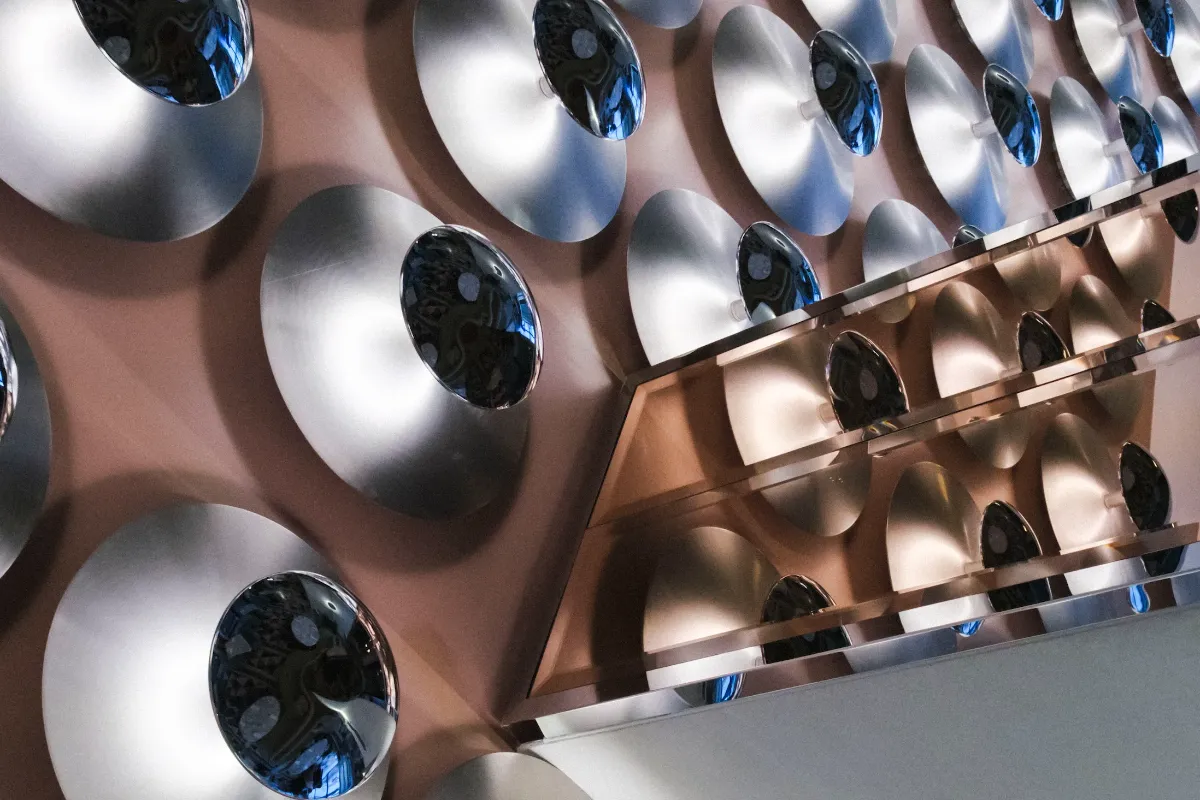
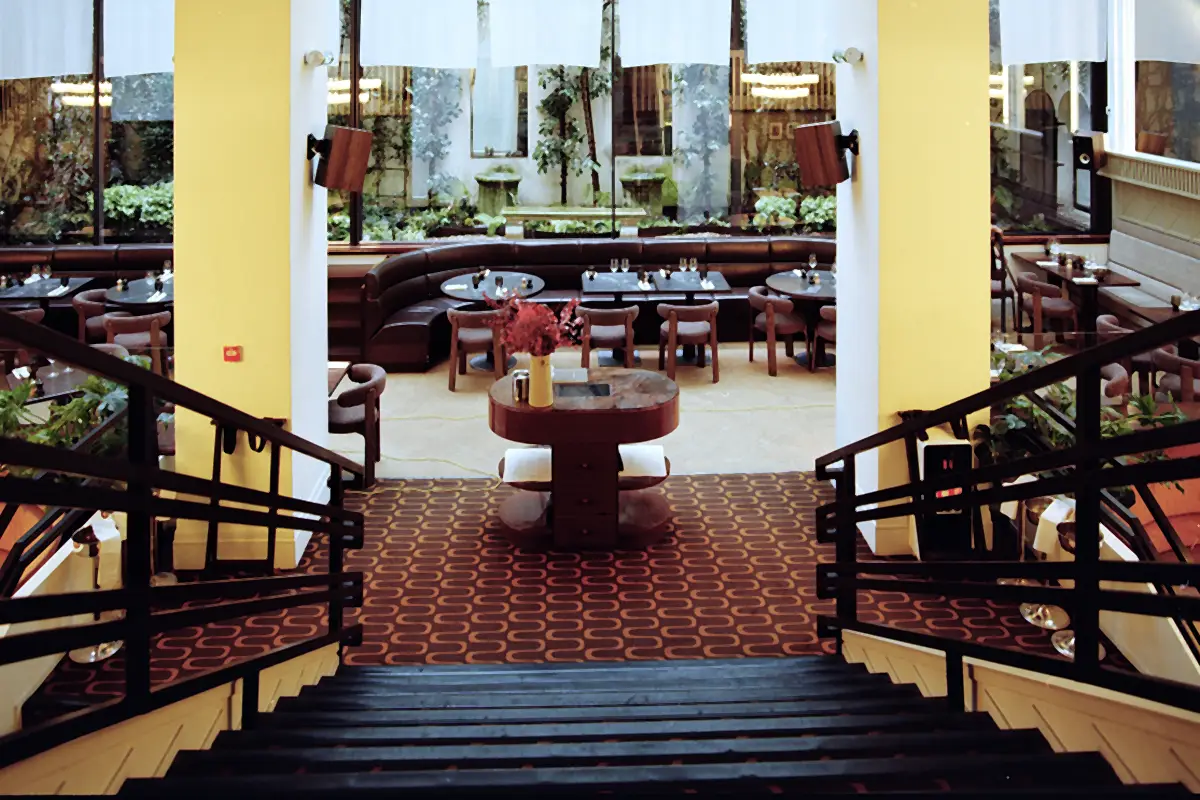
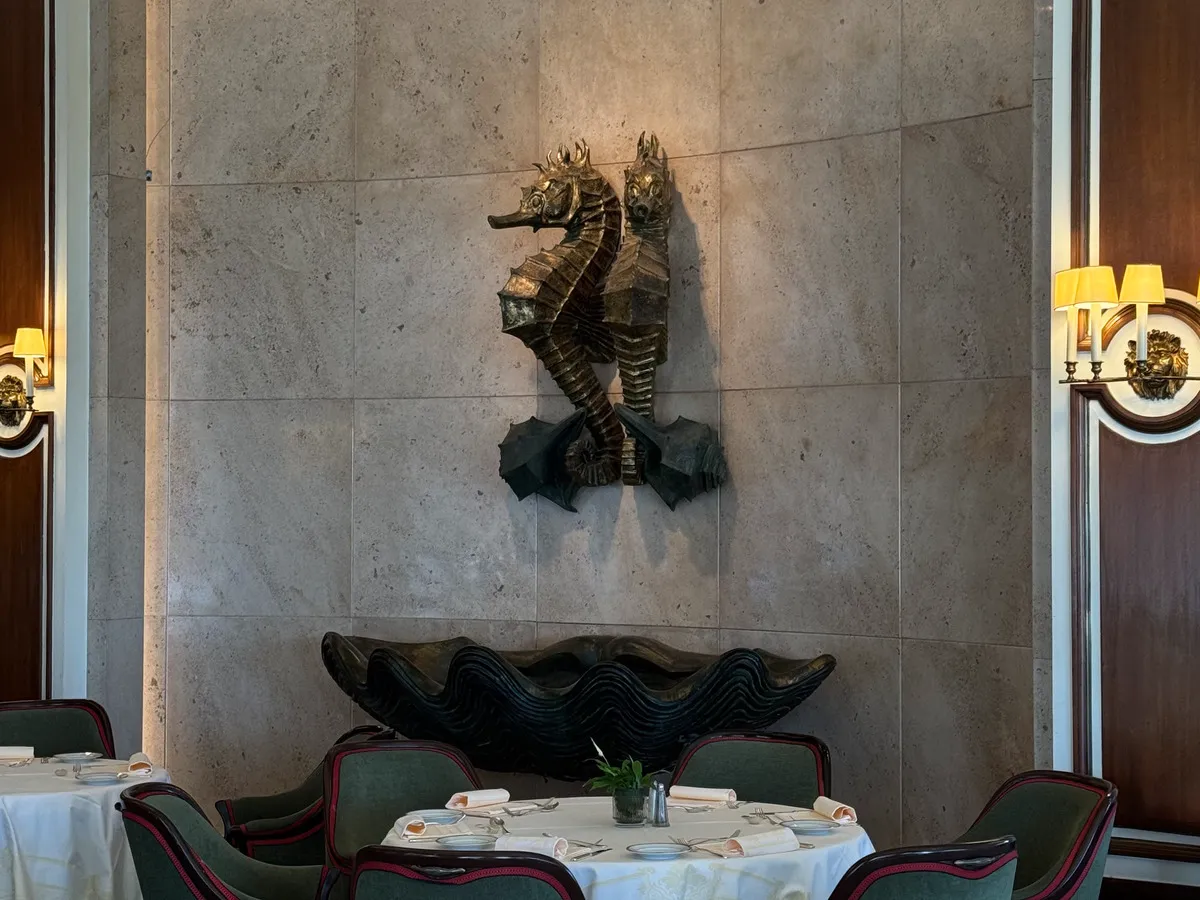
Lagoa Henriques’ bronze seahorses in the Varanda restaurant establish a direct link to the Atlantic and to Portugal’s maritime identity, while shell-shaped sconces echo marine motifs as functional elements.
Here, art and architecture are inseparable. Each reinforces the other, making the Ritz a visual grammar of Portuguese modernity — not museum-like, but alive.
Spa and rooftop gym at Four Seasons Ritz Lisbon: an 18-meter indoor pool and a rooftop running track over the city
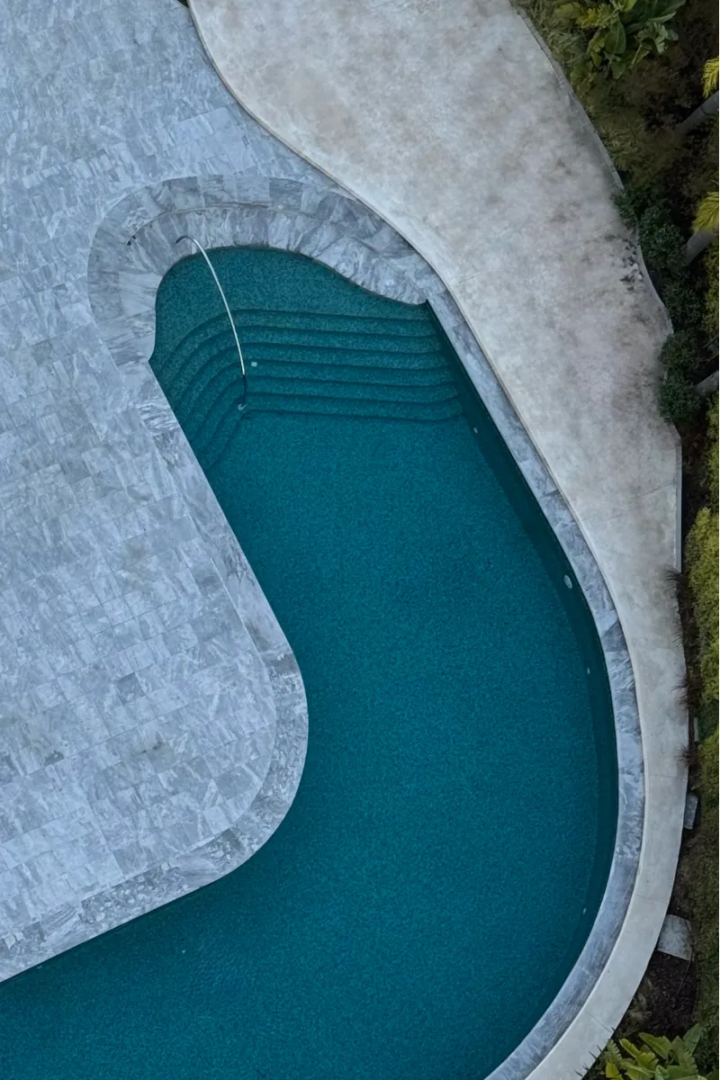
The wellness areas complete the hotel’s contemporary reading. The spa, located in a quiet, bright section of the building, offers a 18-meter heated indoor pool, sauna, steam room, treatment rooms, and relaxation areas overlooking the gardens. It is a space designed to slow down the city’s pace and create personal time aligned with the hotel’s underlying sense of suspension.
Moving upward shifts the atmosphere. Fitness becomes a way of seeing the city. The panoramic gym, with equipment for cardio, strength, and personalized training, looks out over Lisbon through expansive windows. the hotel’s defining wellness feature is its rooftop running track, a path running along the building’s perimeter that allows guests to train at elevation, with open views of the river and surrounding neighborhoods.
Running here becomes both a physical and visual experience: movement becomes a wayfinding tool; the city slides past the edges of vision, and exercise turns into a reading of Lisbon’s geography. The spa and rooftop gym function as two poles — one slows and recenters, the other activates and circulates energy. Together, they define a form of wellness embedded in the city, not withdrawn from it.

CURA at Four Seasons Ritz Lisbon: a one-Michelin-star restaurant reframing Portuguese cuisine with precision and product-driven cooking
Inside the hotel, CURA, awarded one Michelin star, extends the narrative through a culinary approach that updates Portuguese cuisine without nostalgia or theatrics. Chef Rodolfo Lavrador works with seasonal, local ingredients and structures the menu into short and long tasting options that shift with the year.
The cooking starts with the product — Atlantic fish and shellfish, regional meats and vegetables — and interprets it with contemporary techniques aimed at balance and precision rather than spectacle. In the intimate dining room, with views into the open kitchen, the experience is defined by consistent execution, controlled acidity, and attention to texture.
The wine list prioritizes selected Portuguese labels, supplemented by international options, supporting the menu without overshadowing it. The result is a translation of tradition rather than a reenactment — a kitchen that preserves recognizable flavors while offering a current reading of Portuguese gastronomy.
Text and Images: Matteo Mammoli