A journey through Oman, between tradition and tomorrow
Across deserts, ports, and mountain plateaus, Oman blends tradition and reform, building a future centered on green industry, digital growth, and a steady diplomatic voice in a shifting region
Oman: Fifty years of transformation and a future on the global stage
When discussing rapid national transformations, people often think of Gulf countries that have, within a few decades, shifted from rural or maritime economies to global financial, industrial, and tourism hubs. Oman belongs to this trajectory, with one decisive difference: modernization advanced through patient accumulation, a measured public profile, and a cultural continuity upheld as a political choice.
On the eve of 1970, the Sultanate lived in near-total isolation, with minimal public services, fragile internal mobility, and an economy rooted in subsistence agriculture, fishing, and regional trade. Today—fifty-five years after the beginning of its major turning point—it is a nation investing in renewables and green hydrogen, accelerating industrial diversification, and building a logistical centrality that reconnects with its long oceanic history.
Sultan Qaboos and the construction of modern Oman
When Sultan Qaboos bin Said ascended the throne in 1970, he launched one of the most radical state-building programs in the contemporary Middle East. In a speech, he summarized the urgency of his political mandate: “I work as fast as I can to build this country and everybody live good conditions.” That promise became concrete modernity: paved roads, widespread schools, hospitals, and a central administration capable of delivering essential services nationwide.
Within a few years, Oman moved from a patchwork of isolated villages to a connected territorial network, with rising literacy rates, expanded access to healthcare, and a new idea of citizenship built on infrastructure and welfare. Qaboos governed as a modernizing, patriarchal monarch, holding together tribes, inland regions, and coastal cities through a unifying national narrative.
Diplomacy of balance and national identity during Qaboos’s reign
For half a century, Qaboos maintained a foreign policy grounded in prudence and mediation, cultivating strong ties with both Western countries and regional neighbors without turning Oman into a battleground for geopolitical competition. This posture made the Sultanate a credible interlocutor in Gulf crises, with diplomatic capital built on active neutrality.
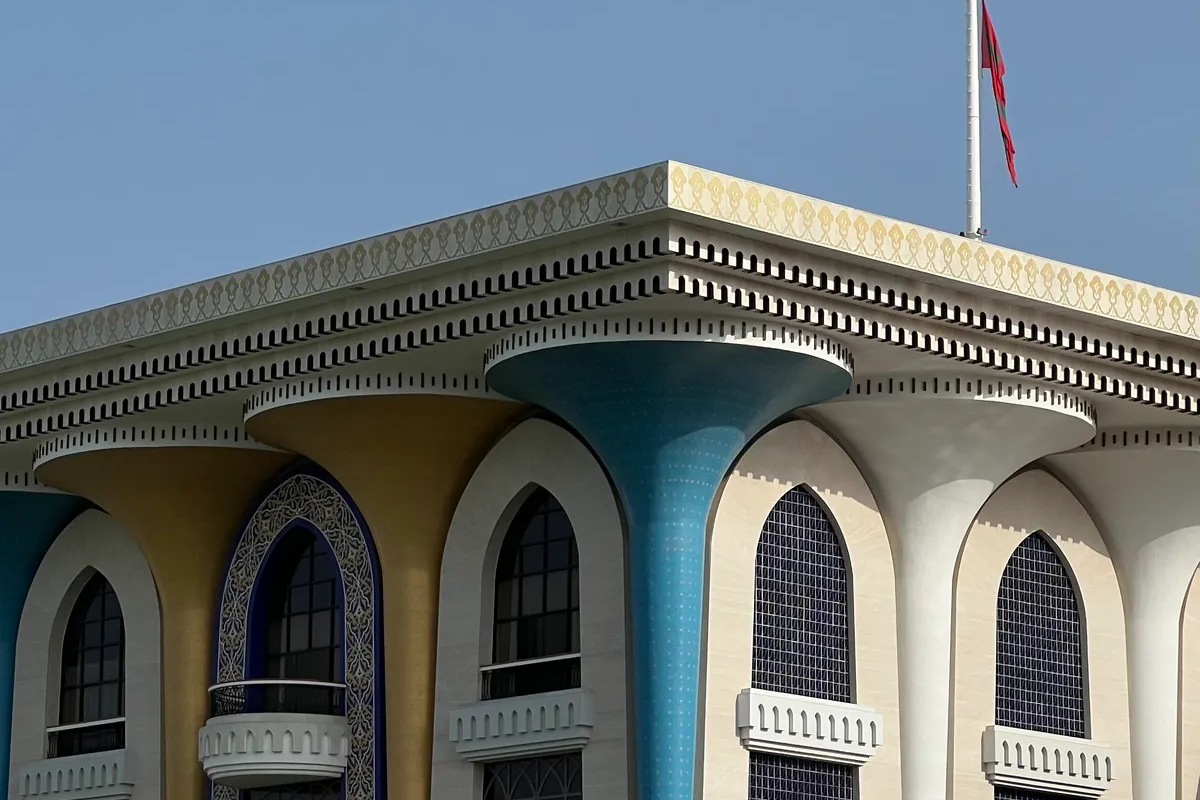
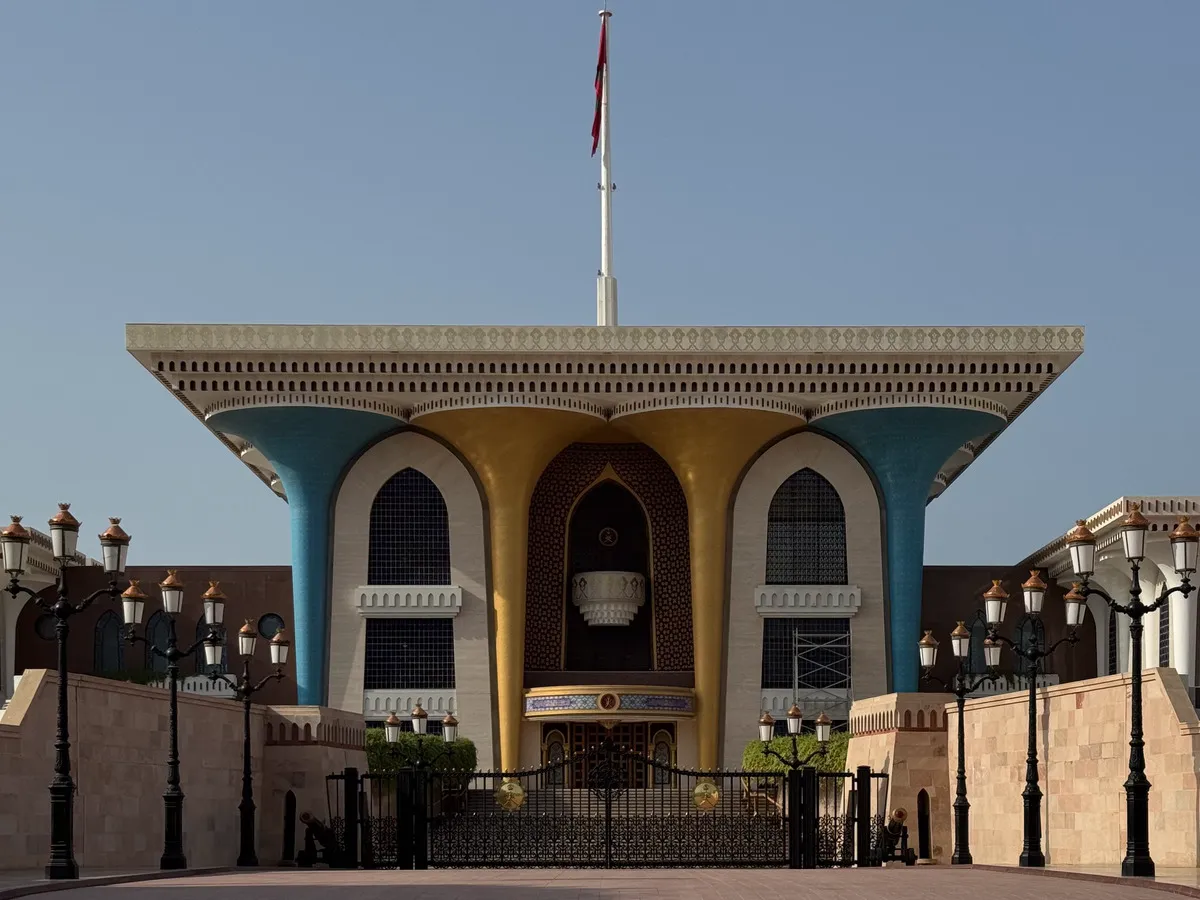
His legacy is visible in Muscat’s architecture, in the rise of national cultural institutions, and in a collective identity that guided the country’s growth without severing bonds with its religious, tribal, and maritime traditions.
Haitham bin Tariq and economic stabilization after 2020
After Qaboos’s death in January 2020, the mantle passed to his cousin Haitham bin Tariq Al Said. The new sultan inherited a more stable nation with an immediate challenge: reducing dependence on oil and ensuring the long-term sustainability of public finances and welfare systems. In recent years, public debt has declined significantly, while diversified investments and more structured fiscal policies have grown.
Macroeconomic consolidation strengthened international confidence and opened space for a more articulated industrial policy—one able to attract foreign capital and stimulate the creation of new production chains.
Oman Vision 2040, fiscal reforms, and new investment incentives
Current economic policies fall within the framework of Oman Vision 2040, the national strategy centered on macroeconomic stability, private-sector employment, advanced logistics, industry, and innovation. One of the most symbolic measures is the introduction of a personal income tax on high earners starting in 2028—a pioneering move in the Gulf and a clear signal of intent to expand non-oil revenue sources.
Special economic zones and free zones—Duqm, Sohar, Salalah—have been strengthened as platforms for investment, with simplified governance, targeted incentives, and integrated infrastructure. In five years, total investment in these areas has risen rapidly, accompanied by a significant expansion of skilled employment.
Green hydrogen and renewables: Oman as an energy hub of the future
The most ambitious front of transformation is energy. Through Hydrom, the state agency dedicated to green hydrogen development, the country has launched concessions and tenders for large-scale projects aimed at producing green hydrogen and ammonia for export. The Duqm and Dhofar regions are becoming international poles for investors, operators, and developers.
Geographic conditions—vast spaces, intense solar radiation, constant winds, and ports open to the Indian Ocean—give Oman a competitive edge in clean-energy production. The goal is clear: progressively replace oil rents with an economy based on green molecules.
Digital economy and artificial intelligence: the new tech phase of modernization
Alongside the energy transition, Oman has initiated a next-generation digital transformation. At COMEX 2025, three strategic projects were presented: the Green Artificial Intelligence Alliance, dedicated to environmentally aligned AI development; an AI Designated Zone in Muscat for startups, research, and international operators; and the Digital Triangle, a system of three tech hubs dedicated to cloud, data, and advanced digital services.
This is a digitalization focused more on structure than spectacle: robust infrastructure, talent development, regulatory clarity, clean energy, and a tech ecosystem where innovation and sustainability progress together.
Green data centers and sovereign cloud infrastructure
This digital shift takes material form in strengthened infrastructure. Oman Data Park has launched a program to power its data centers with solar energy, beginning with the Rusayl and Firq campuses. The objective is twofold: expand national cloud capacity and do so using renewable energy, building a low-emission sovereign cloud.
The move reinforces technological independence, reduces long-term energy costs, and positions Oman as a regional hub for green cloud computing.
Advanced mobility and aeronautical experimentation in the Omani landscape
The Sultanate is becoming a laboratory for technological experimentation. In 2025, Oman was announced as the site for operational testing of Laila, an autonomous hybrid-electric VTOL aircraft developed for logistics, emergency response, and rapid links across remote areas. Tests will take place in real-world environments—desert, mountains, coastline—leveraging the country’s geographic diversity.
It is a concrete example of how Oman is using its territory as a regulated innovation space capable of attracting emerging industries.
Green heavy industry: low-carbon steel and circular economy
The national strategy aims not only to export clean energy but also to build industrial supply chains compatible with it. In Duqm, emerging hubs are dedicated to low-emission steel and iron processing, designed to integrate green hydrogen into production.
In Barka, a waste-to-energy project links waste management to electricity production, supporting a circular-economy model that reduces environmental impact and diversifies the energy base.
Ports and ocean routes: Duqm as a global logistics node
The sea, in Oman, is both memory and future. The ports of Duqm, Sohar, and Salalah form a strategic network positioned along routes connecting Asia, East Africa, and Europe. Duqm in particular—with its large port and new terminals—is becoming a competitive regional logistics node.
Beyond transit functions, industrial services, shipyards, energy storage facilities, and hydrogen-export infrastructure are emerging, reinforcing the maritime dimension of the Omani economy.
Muscat, Oman’s capital and a cultural laboratory
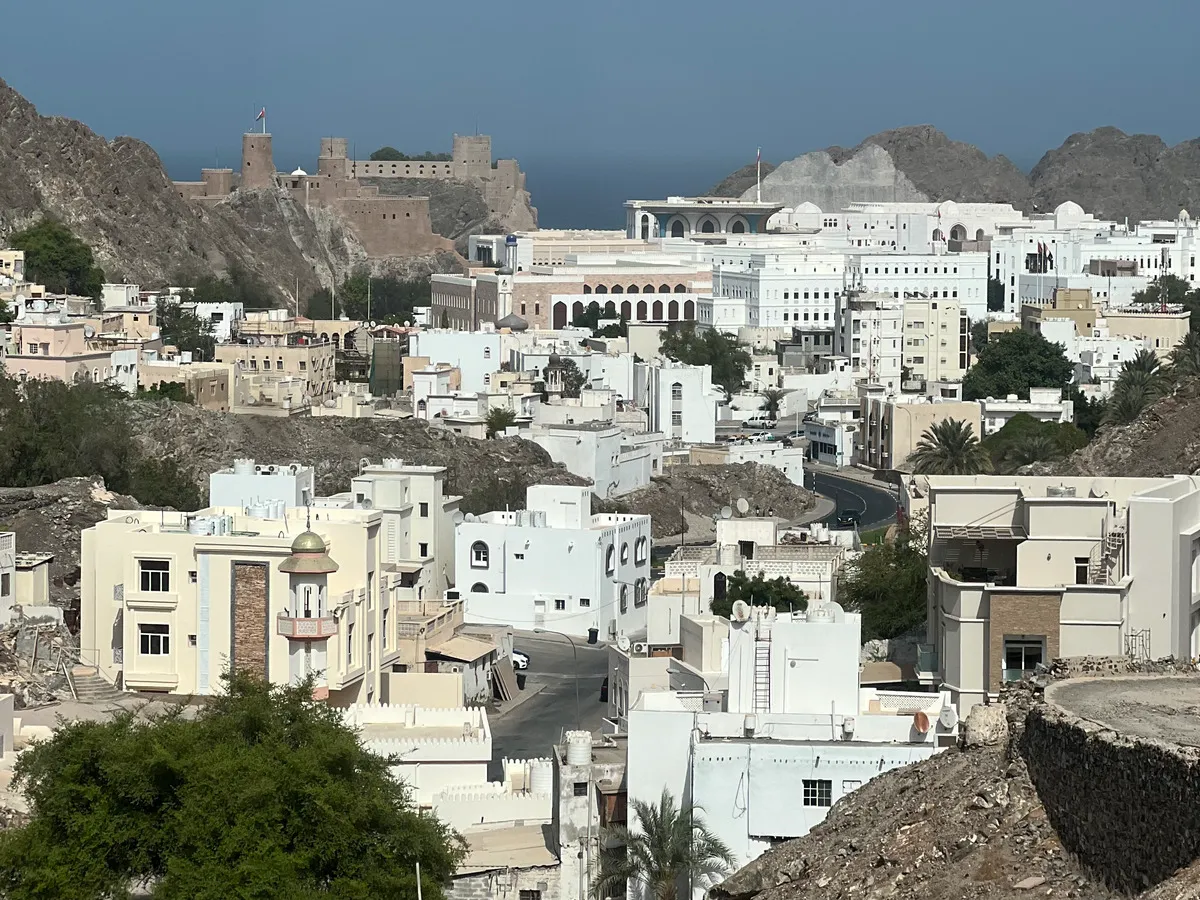
A journey through Oman begins in the capital. Muscat embodies the nation’s modern face: orderly urban planning, essential architecture, and growth that avoided excessive verticality while respecting the mountains that frame the city between rock and sea. The capital stretches along more than 200 kilometers of coastline, a sequence of neighborhoods, natural inlets, and headlands that explain why Muscat has always been a horizontal city. The city’s low building heights, predominant use of white, and restrained geometric lines are not isolated aesthetic choices—they reflect an urban code designed to maintain harmony with the surrounding landscape.
The international airport (MCT), expanded in recent years, is one of the Gulf’s most efficient gateways, immediately showcasing the rational design of the urban environment. The new Terminal 1, opened in 2018, increased initial capacity to about 20 million passengers per year, with plans for further expansion. Covering over half a million square meters, it includes more than 100 check-in counters, around 40 gates, and a control tower nearly 100 meters tall. Designed to accommodate the largest commercial aircraft, the airport has surpassed twelve million passengers in recent years, becoming the Sultanate’s main aviation hub.
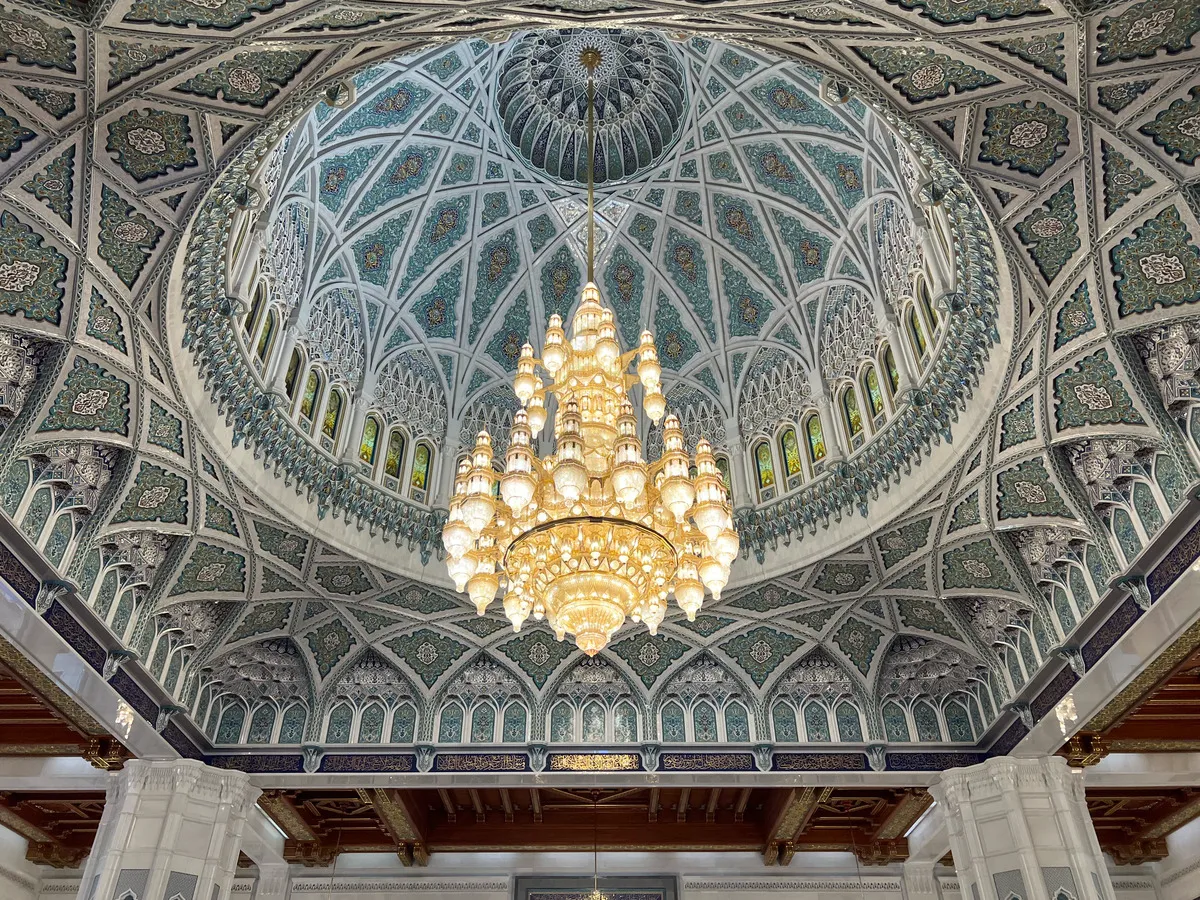
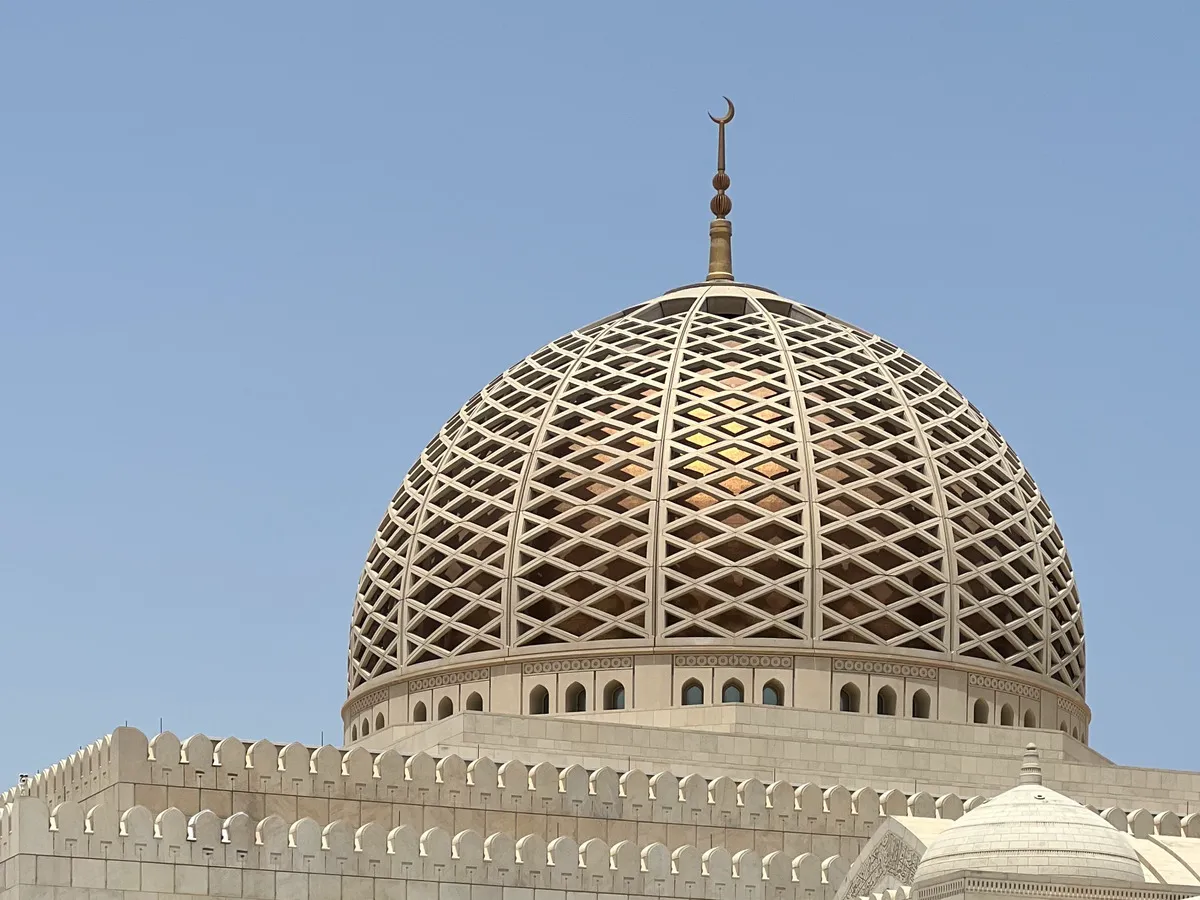
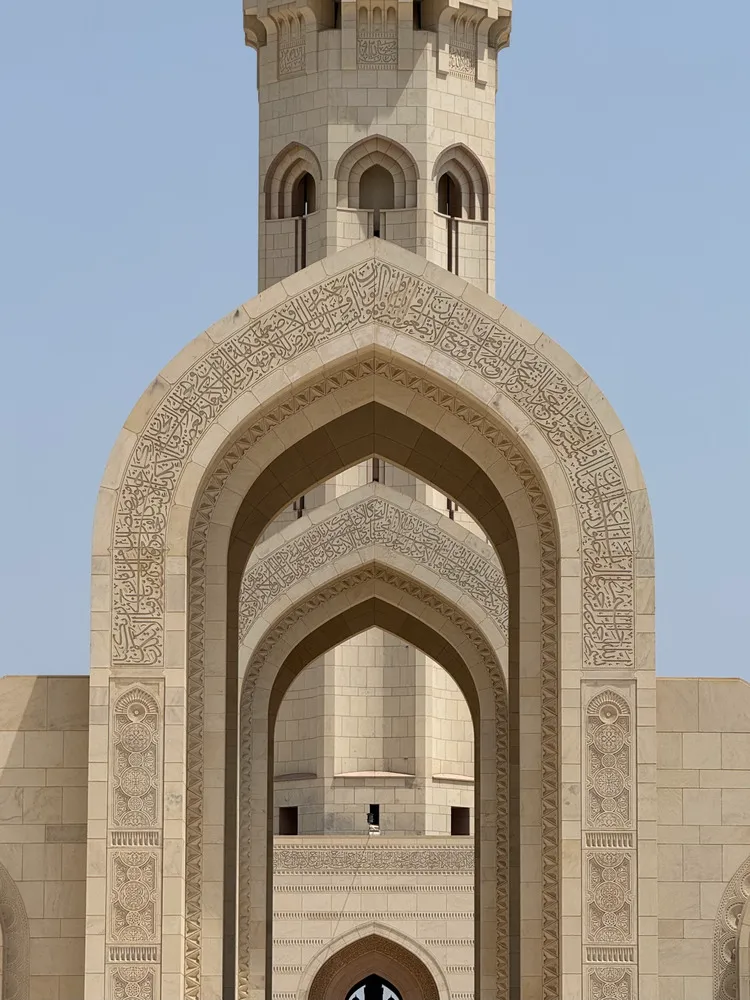
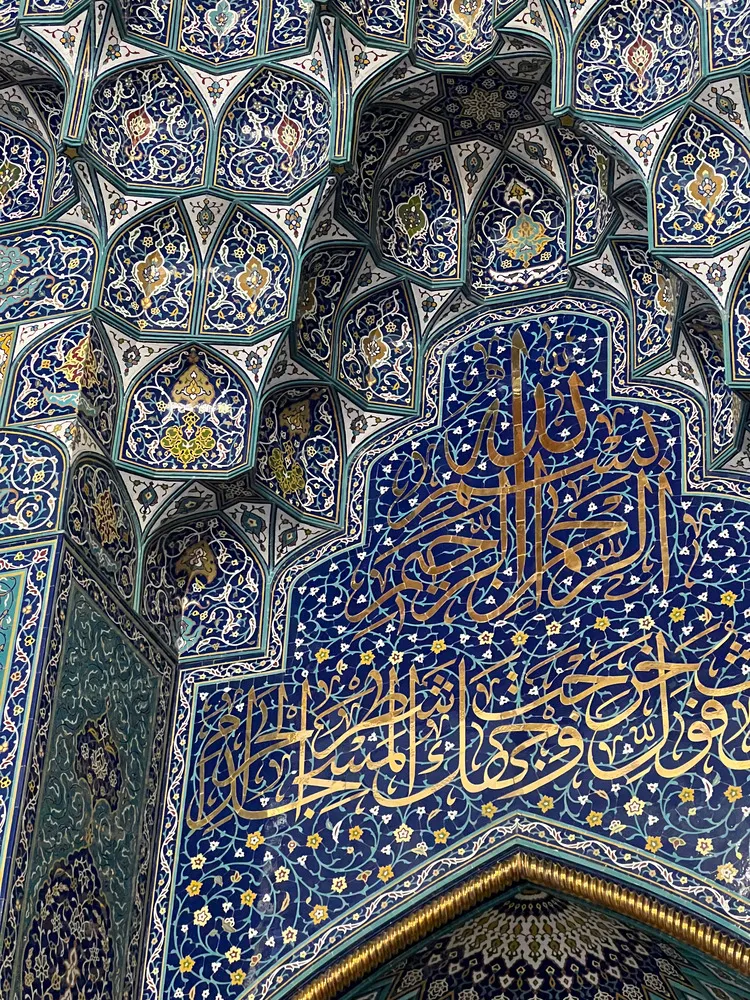
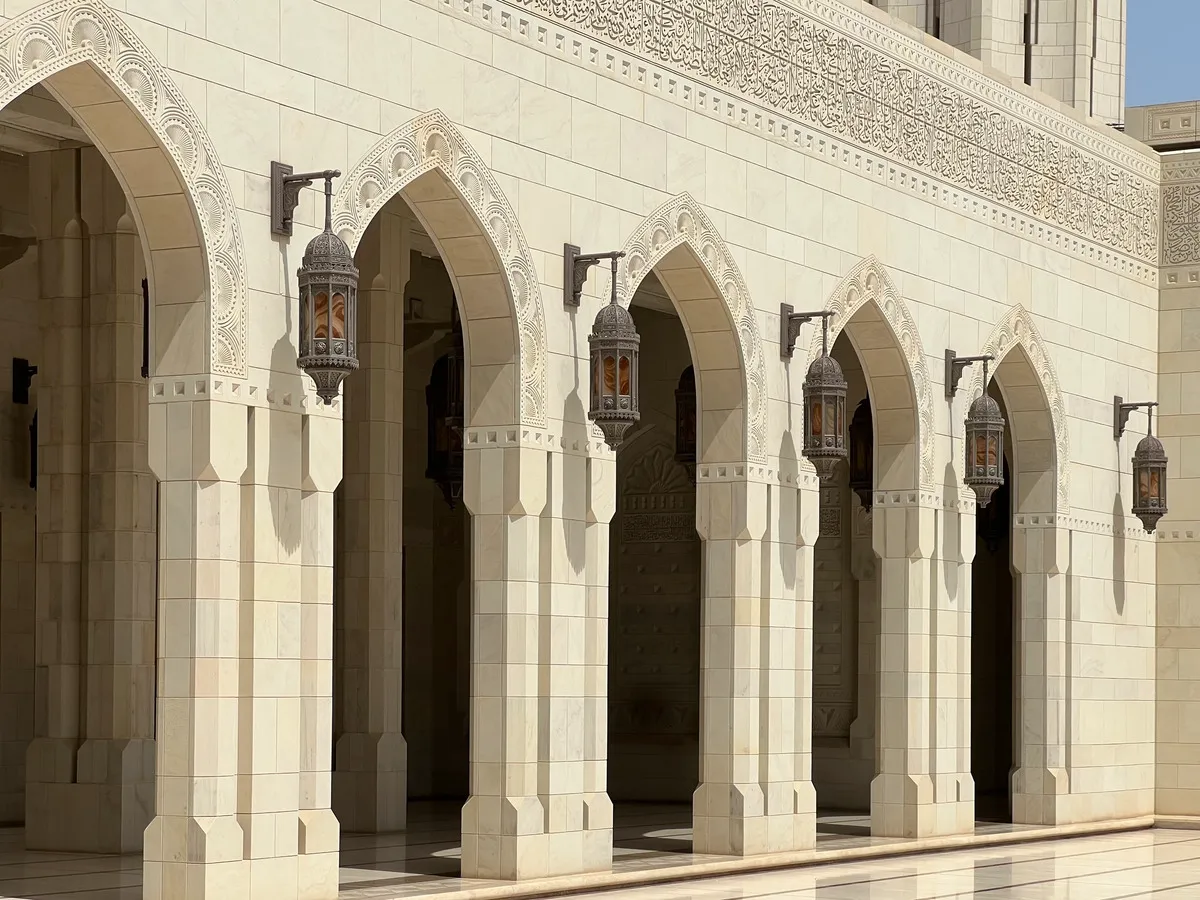
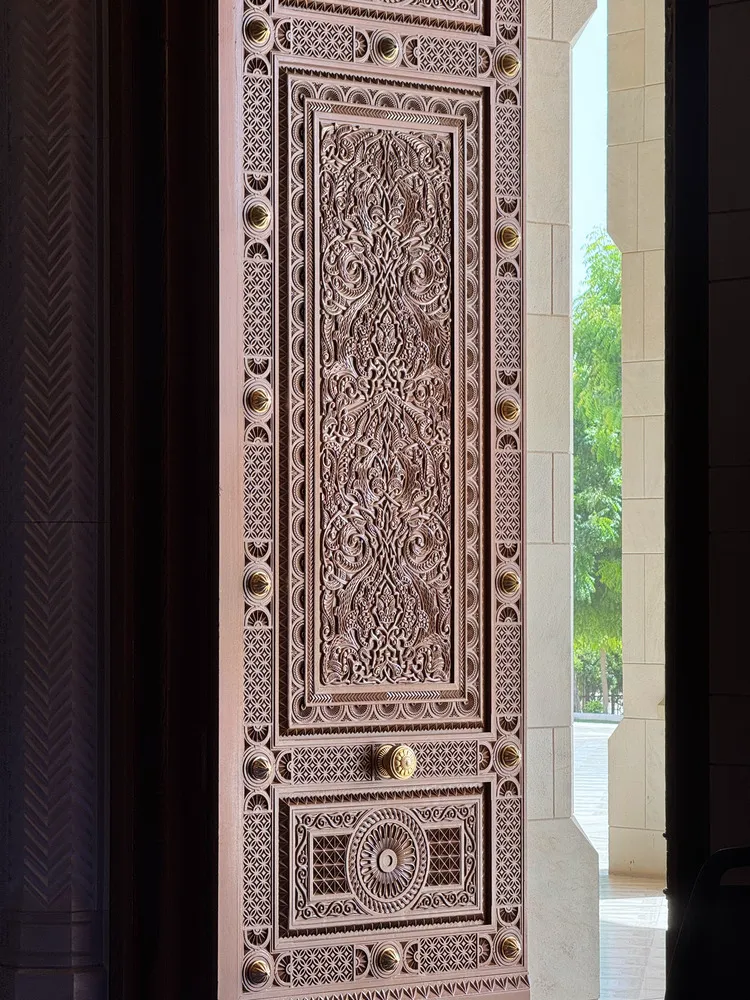
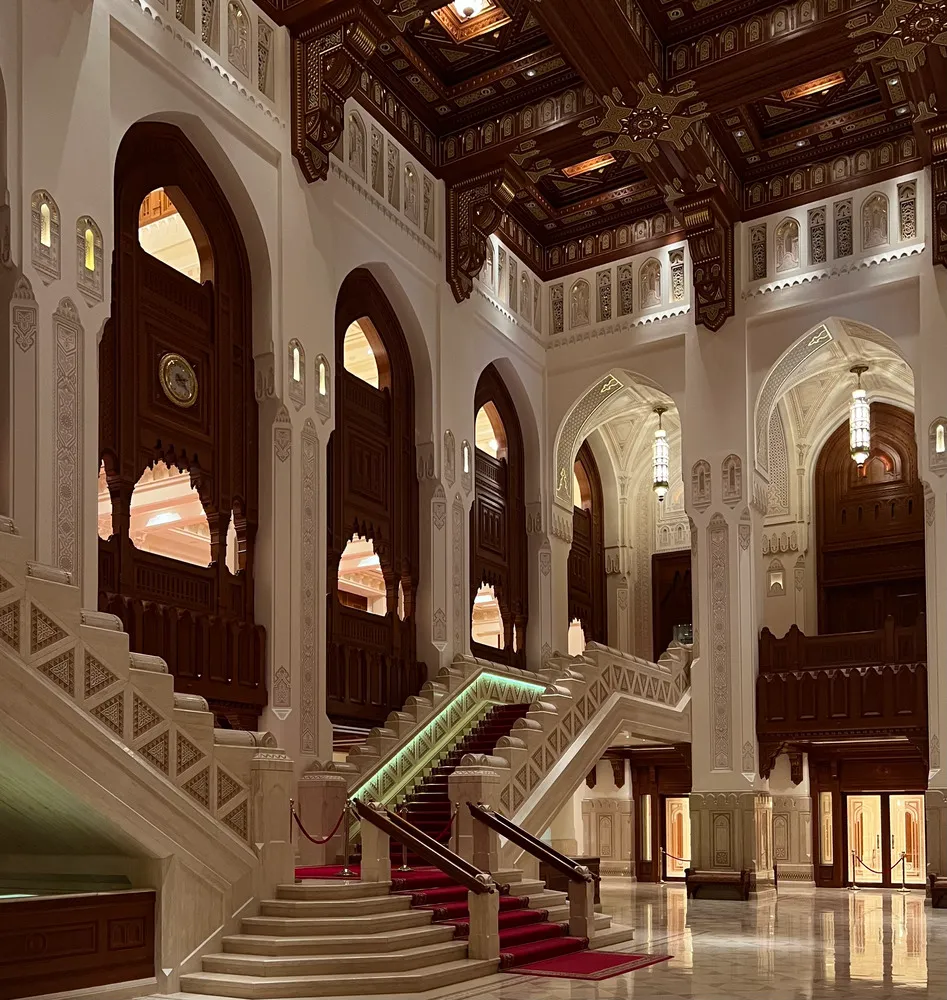
Three iconic sites in Muscat: Royal Opera House, National Museum, Sultan Qaboos Grand Mosque
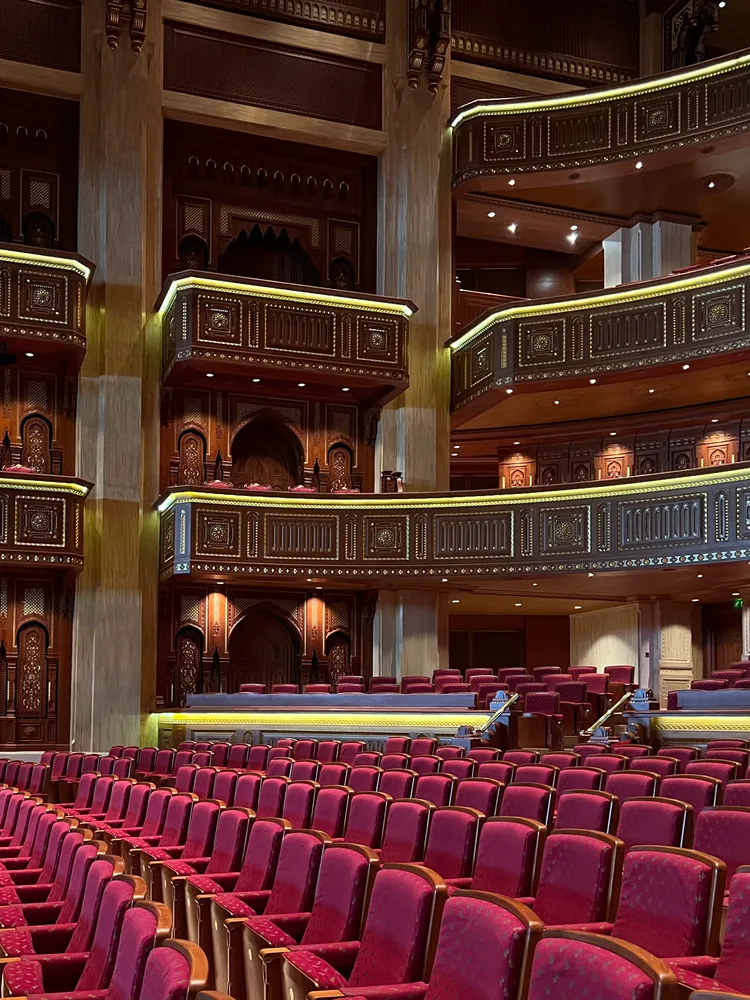
The Royal Opera House Muscat expresses the dialogue between modernity and tradition through a measured monumentality. Opened in 2011 at the initiative of Sultan Qaboos, it was the first opera house in the Arabian Peninsula. The main hall seats about 1,100 people, prioritizing acoustics and stage quality over sheer scale. The complex includes exhibition spaces, a formal garden, areas dedicated to music education, and a small commercial gallery focused on music, craftsmanship, and cultural objects. Its architecture, built with local stone, combines contemporary Islamic motifs and clean lines to visually express national identity.
Nearby, the National Museum narrates centuries of national history—archaeology, navigation, tribal traditions, and material culture. Opened in 2016, it is the country’s most comprehensive museum, housing thousands of objects and covering over two million years of human settlement. Fifteen permanent galleries explore eras ranging from prehistoric traces to Indian Ocean maritime life, Islamic decorative arts, tribal artifacts, and modern Oman. One of the most emblematic sections is dedicated to navigation, with dhow models and instruments used by Omani traders on routes to East Africa and India.
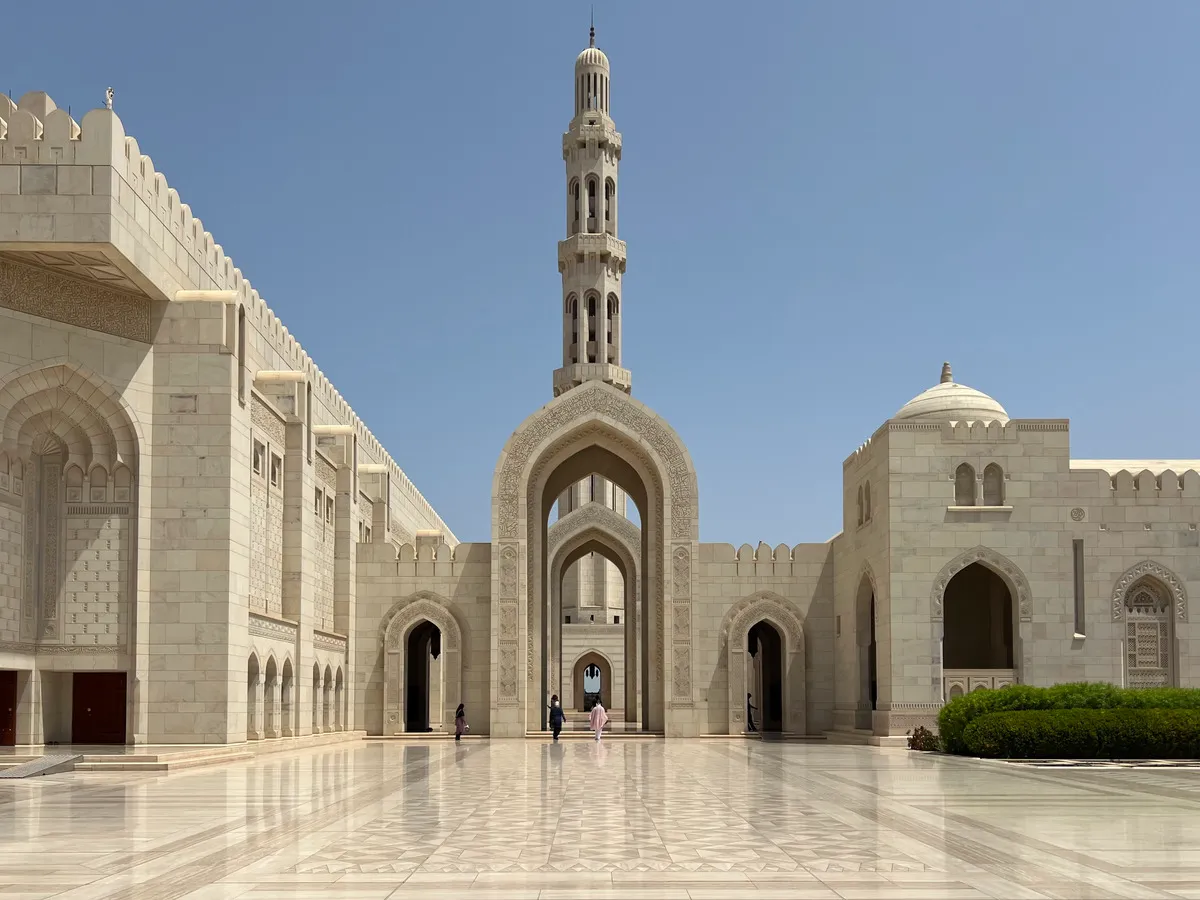
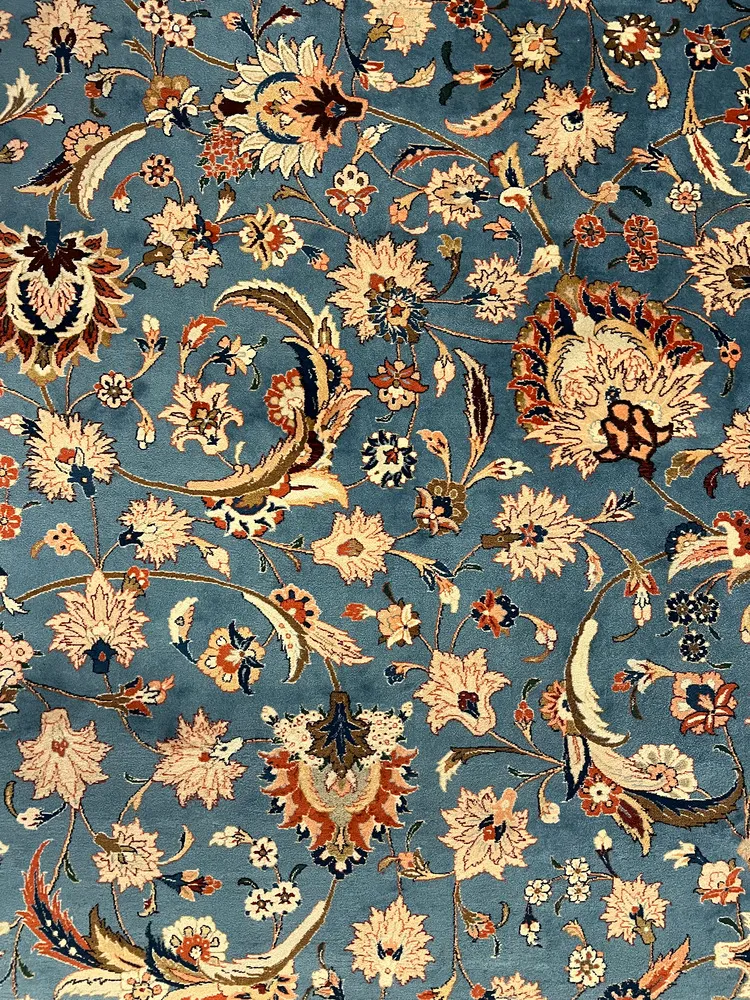
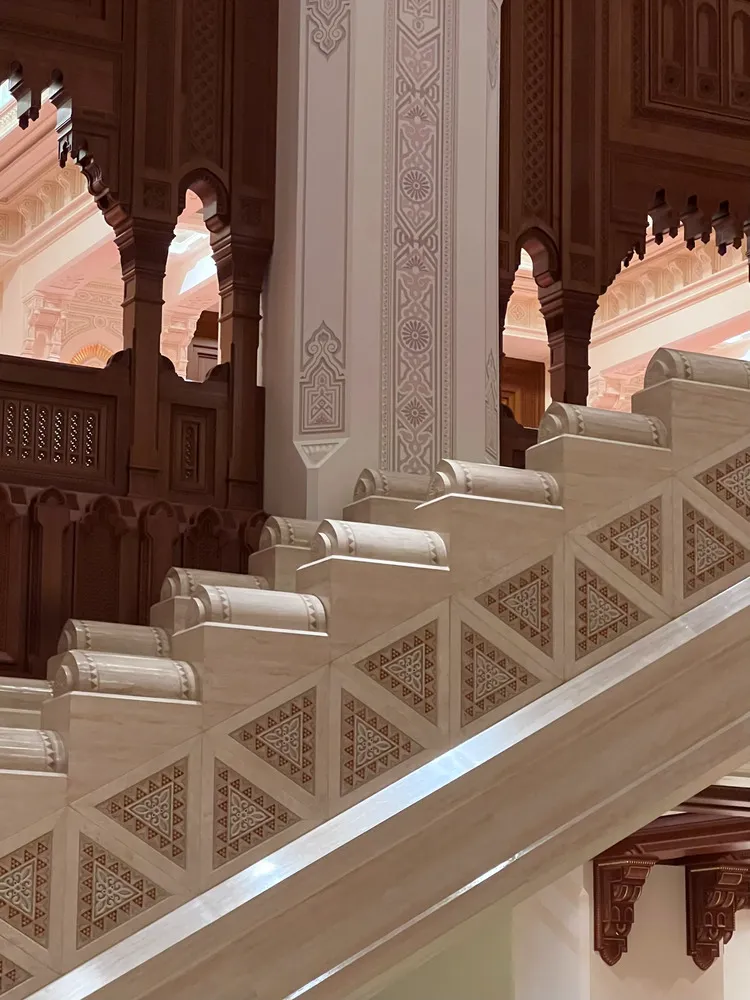
The Sultan Qaboos Grand Mosque—among the largest in the Islamic world—is a political as well as religious symbol, embodying a vision of national unity born during Qaboos’s reign. Opened in 2001 after six years of construction, it can host up to 20,000 worshippers across its main hall and courtyards. The interior features a massive hand-knotted Persian carpet woven in a single piece, and a central chandelier over 14 meters tall, made of crystal and brass, illuminating the hall with hundreds of lights. White marble, carved wood, geometric and calligraphic motifs reflect an aesthetic that blends Islamic identity, local craftsmanship, and national architectural ambition. In many ways, it is the place that best expresses the synthesis of devotion, modernity, and the state image of contemporary Oman.
Daymaniyat Islands and the sea as a protected resource
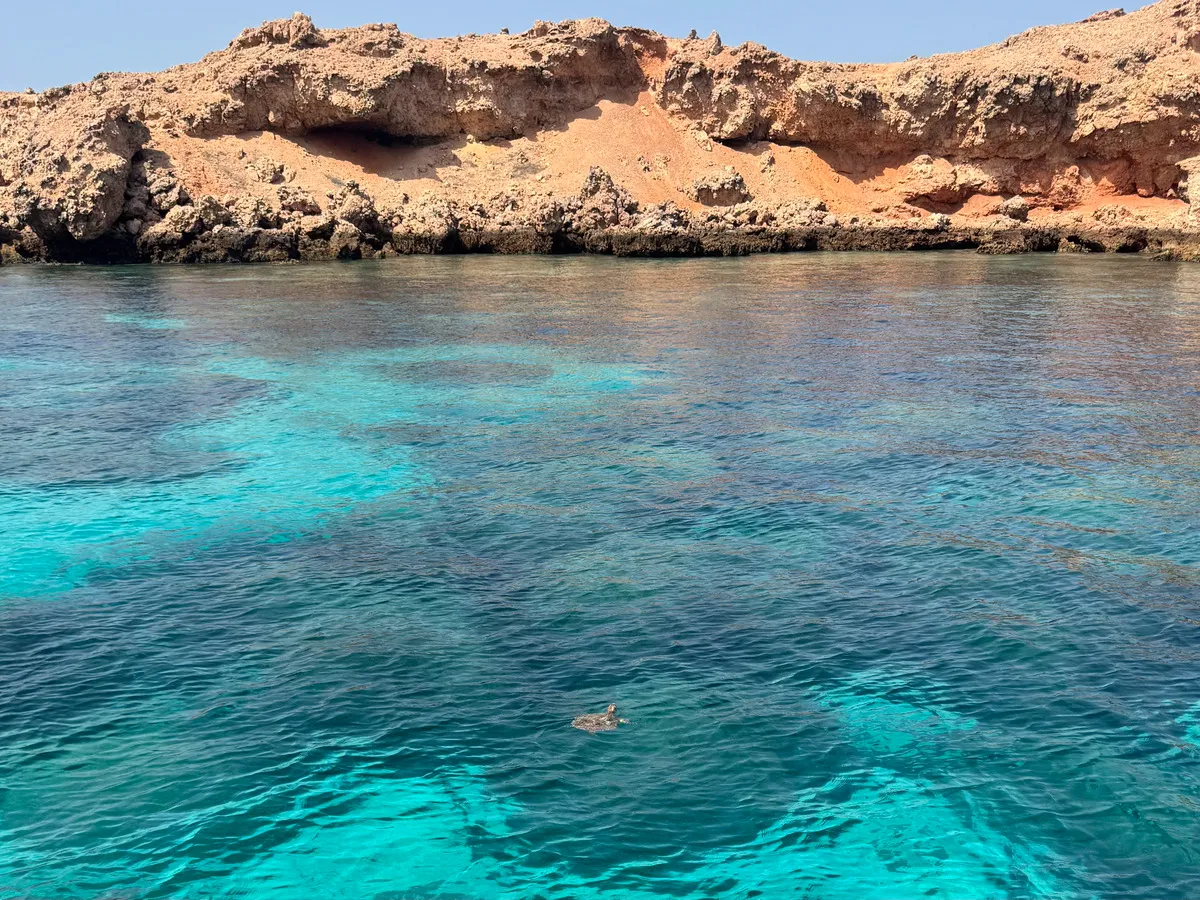
From Muscat, one of the most emblematic experiences is a trip to the Daymaniyat Islands, a protected natural sanctuary. The archipelago consists of nine uninhabited islands located about 16–18 kilometers offshore, reachable only by boat in under an hour. The reserve was established in the 1990s to protect a rare Gulf ecosystem: turtle-nesting beaches, intact limestone cliffs, coral reefs, and migratory bird routes. This combination of terrestrial and underwater elements explains why the archipelago is considered the country’s main marine-conservation laboratory.
Transparent waters, coral formations, and remarkable biodiversity make the Daymaniyat one of the most spectacular snorkeling and diving locations in the Arabian Sea. More than 20 coral species and numerous varieties of tropical fish thrive here, with frequent sightings of rays, moray eels, and large pelagic species. The islands are also a key nesting site for green and hawksbill turtles, which come ashore to lay eggs—primarily between late spring and summer. In autumn, from September to November, the archipelago becomes one of the best spots to see whale sharks during their coastal migrations.
Tourism management is deliberately restrictive. Access is allowed only through authorized operators and with permits, and landing on beaches is prohibited from May to October to protect turtle and bird nesting. Marine activities such as snorkeling and diving remain allowed but regulated. Touching corals or wildlife, leaving waste, or disturbing turtles is banned. The entire system of rules clearly communicates Oman’s idea of nature-based tourism: controlled access in which ecosystem fragility is not a limitation but the core value of the experience.
Nizwa and Oman’s interior: living history, craftsmanship, and tribal architecture
Leaving the capital, the journey moves into Oman’s interior, where cities narrate a slower timeline of fortresses, caravan routes, and traditional craftsmanship. Nizwa—once the religious and political capital—is still one of the most important cultural centers inland. The city develops around its oasis and falaj irrigation network, with narrow streets, traditional quarters, and historic markets.
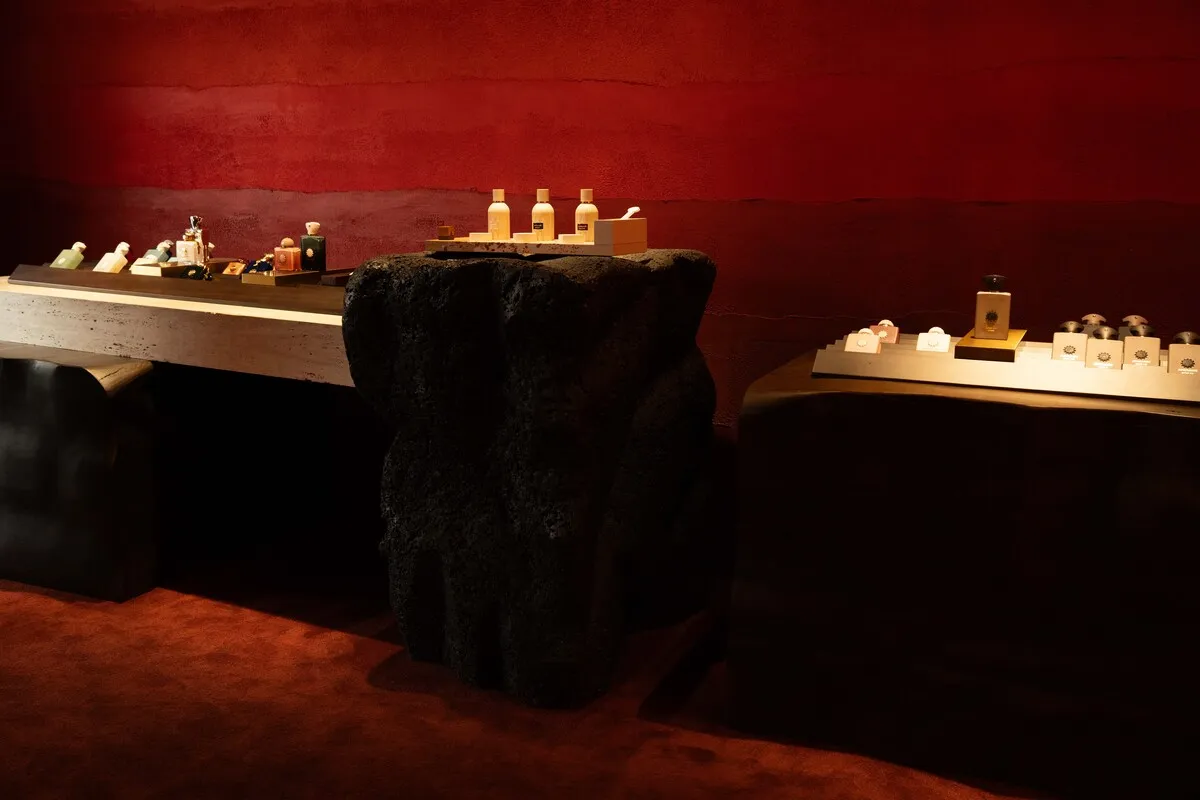
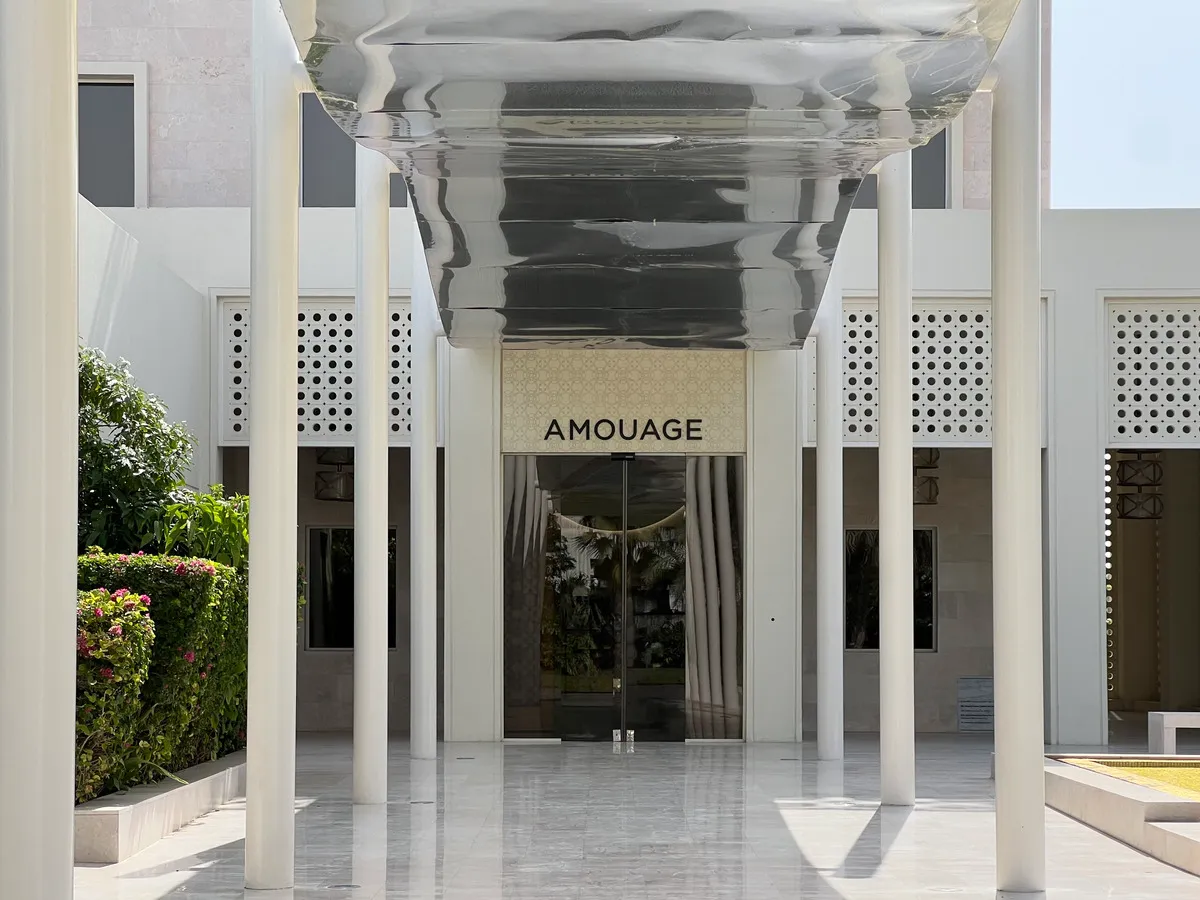
The Amouage Perfume Factory, located just outside Nizwa, represents an excellence of Omani luxury: fragrances made with resins, spices, and traditional distillation techniques, exported worldwide as symbols of local craftsmanship elevated to cultural industry. Visits showcase the full production process—from raw materials to bottling—illustrating how the country transforms age-old traditions into contemporary products.
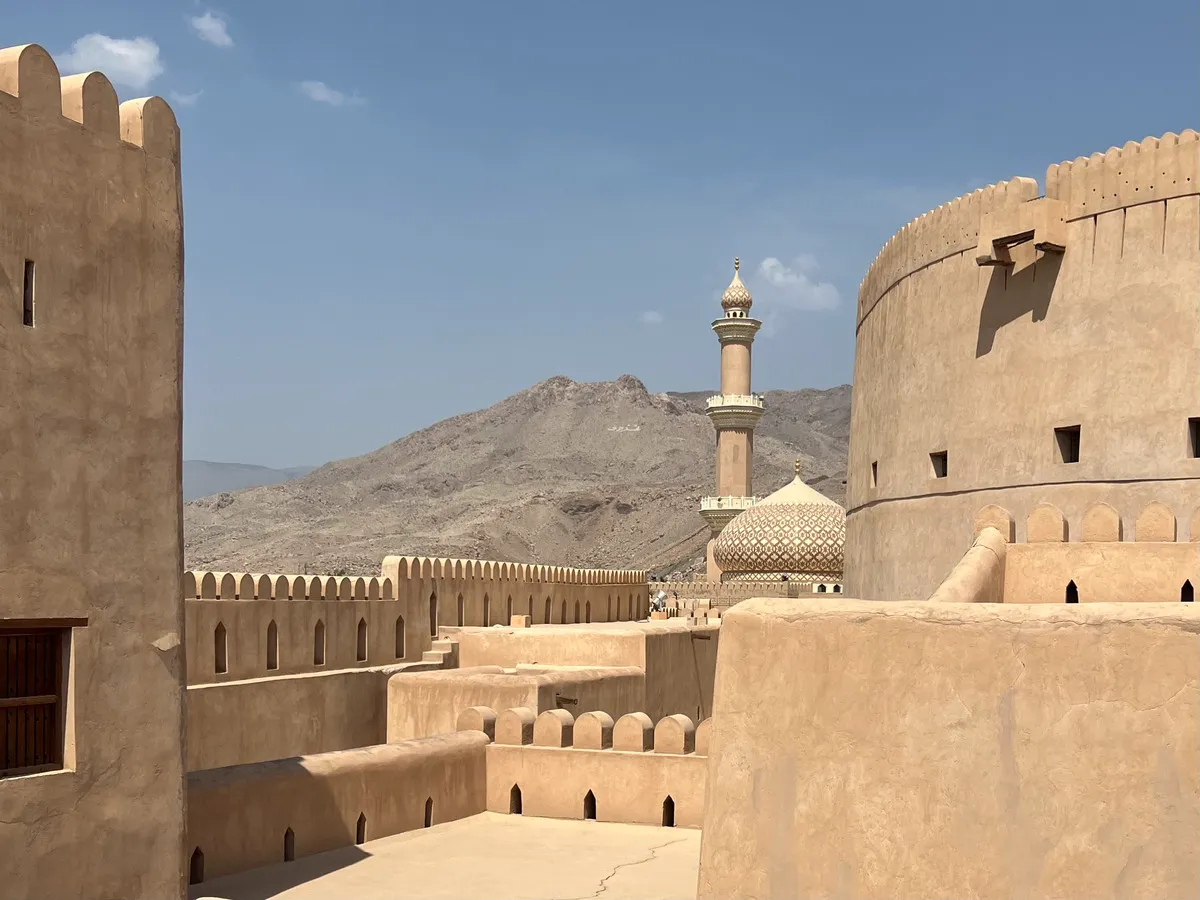
Nizwa’s historic heart is its Fort, recognizable for its massive 17th-century circular tower, among the largest in Oman. Built to defend the city and control trade routes between desert and mountains, the fort today hosts ethnographic displays, historic weapons, and reconstructions of domestic spaces. From its bastions, views stretch across palm groves, mountains, and historic quarters, offering a glimpse of pre-modern Oman.
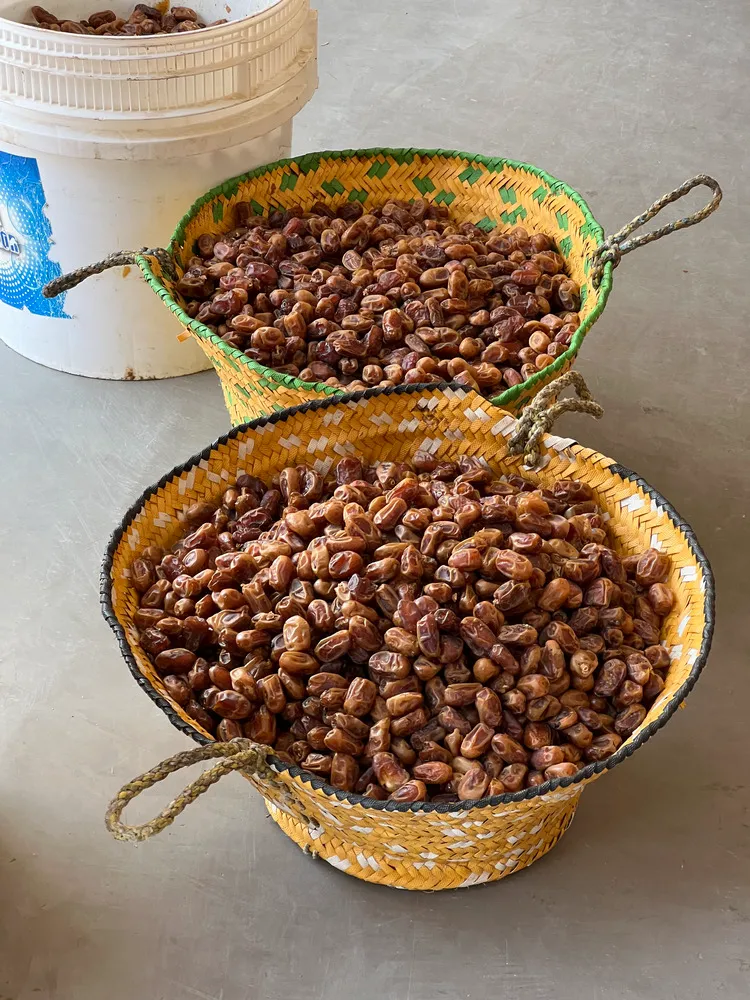
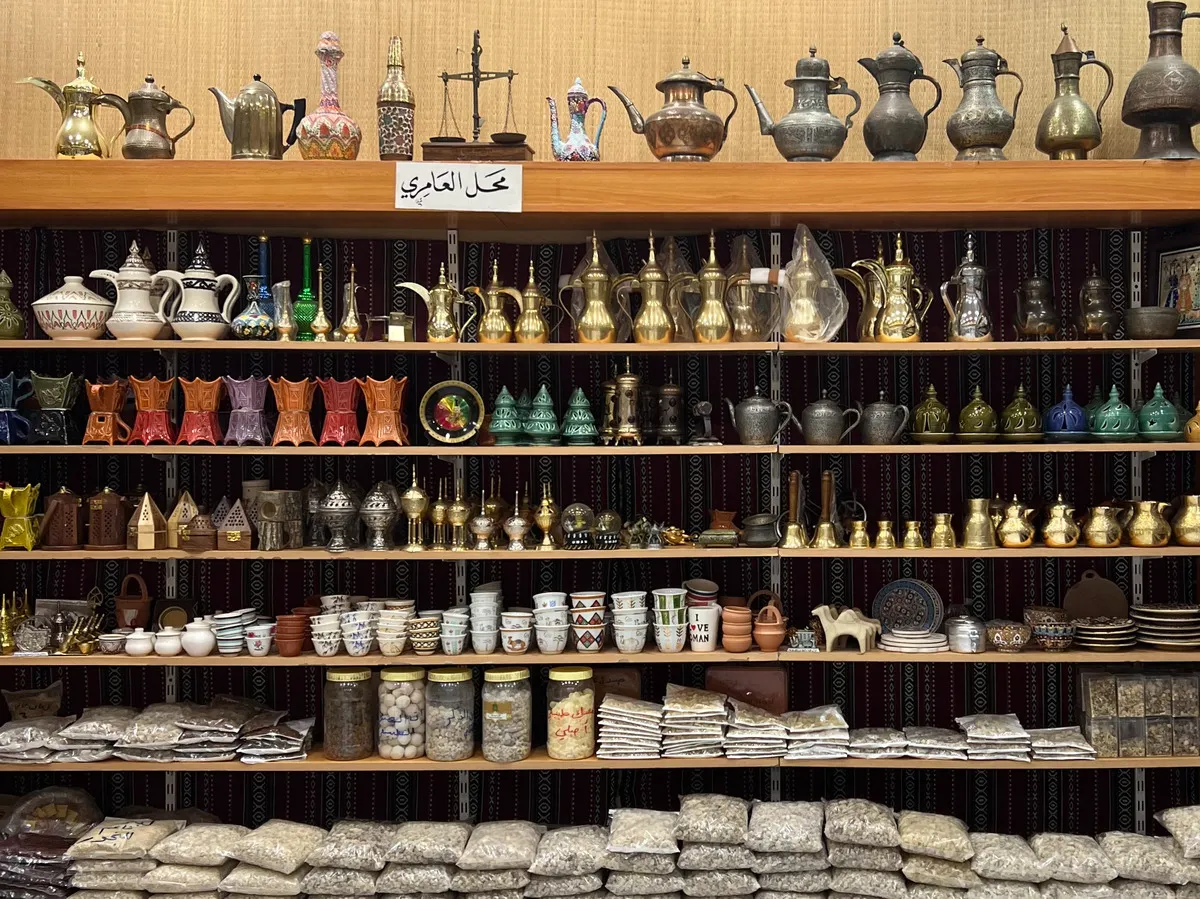
A short walk away, the Nizwa souq remains a vibrant commercial system organized into thematic sections: dates, spices, pottery, silverwork, and textiles. The livestock market, held on selected mornings, is a direct testimony to the economic and social continuity that still links the city to the traditional rhythms of the region.
Jabal Akhdar, mountain agriculture, and falaj systems: the resilience of Omani highlands
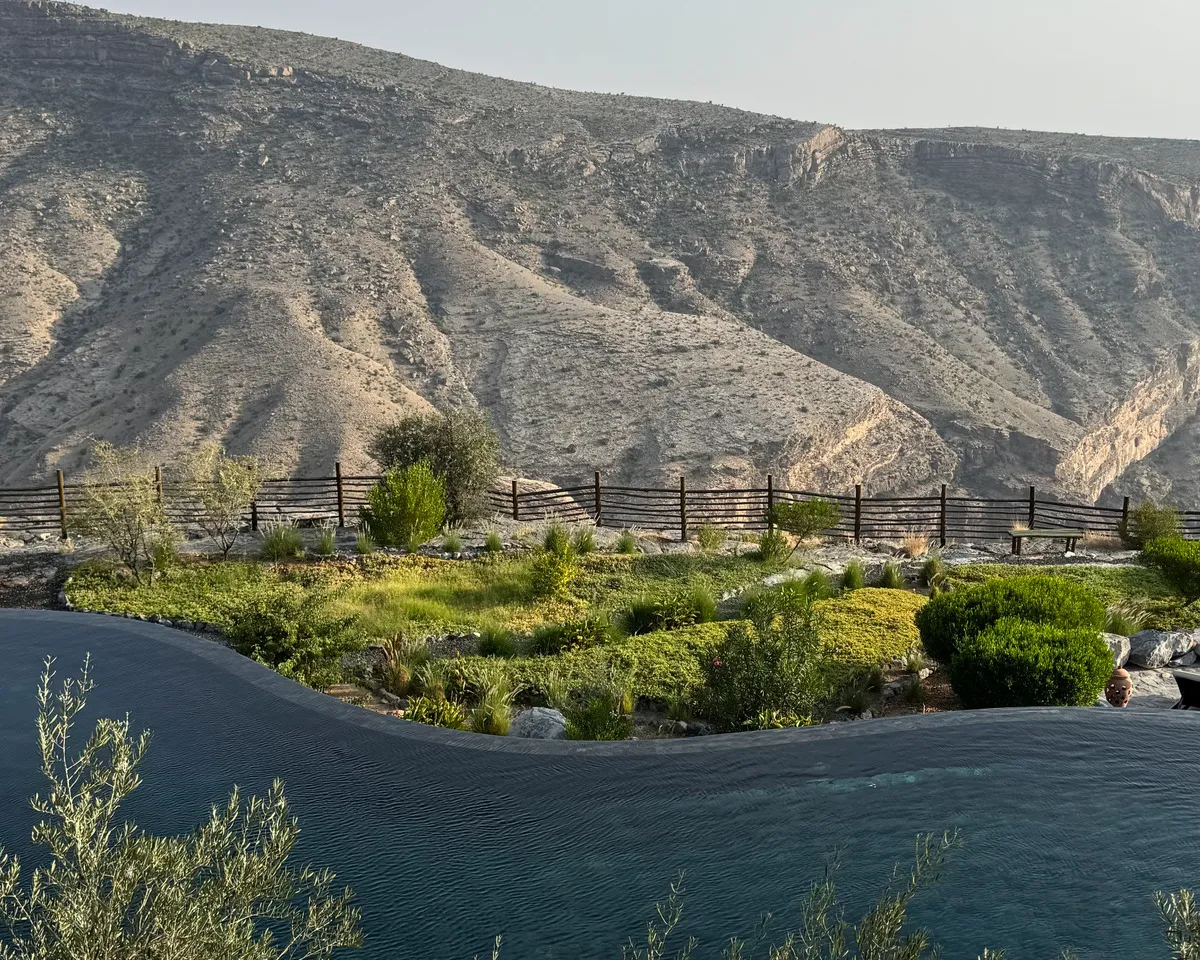
Continuing north, the road climbs to the high plateaus of Jabal Akhdar, the “Green Mountain.” Here the climate shifts: temperatures cool, and the landscape alternates terraces, deep canyons, and stone-built villages. The area is famous for its orchards—peaches, apricots, pomegranates—and especially the roses of Jabal Akhdar, harvested in spring to distill an aromatic water considered among the finest in the Gulf.
Villages such as Suwqra, Al Ayn, and Al Aqur showcase the ingenuity of mountain communities that have inhabited these elevations for centuries thanks to falaj irrigation systems: underground and surface channels that distribute spring water equitably. This system, still fully functional, is one of the clearest symbols of Omani hydraulic knowledge and adaptation to a complex environment.
Modernization has arrived here in a controlled way: access is regulated, roads have been designed for safety, and tourism development has focused on sustainable resorts and hiking activities, preserving the area’s environmental value.
Sharqiya and Wahiba Sands: oases, caravan routes, and the memory of the Omani desert
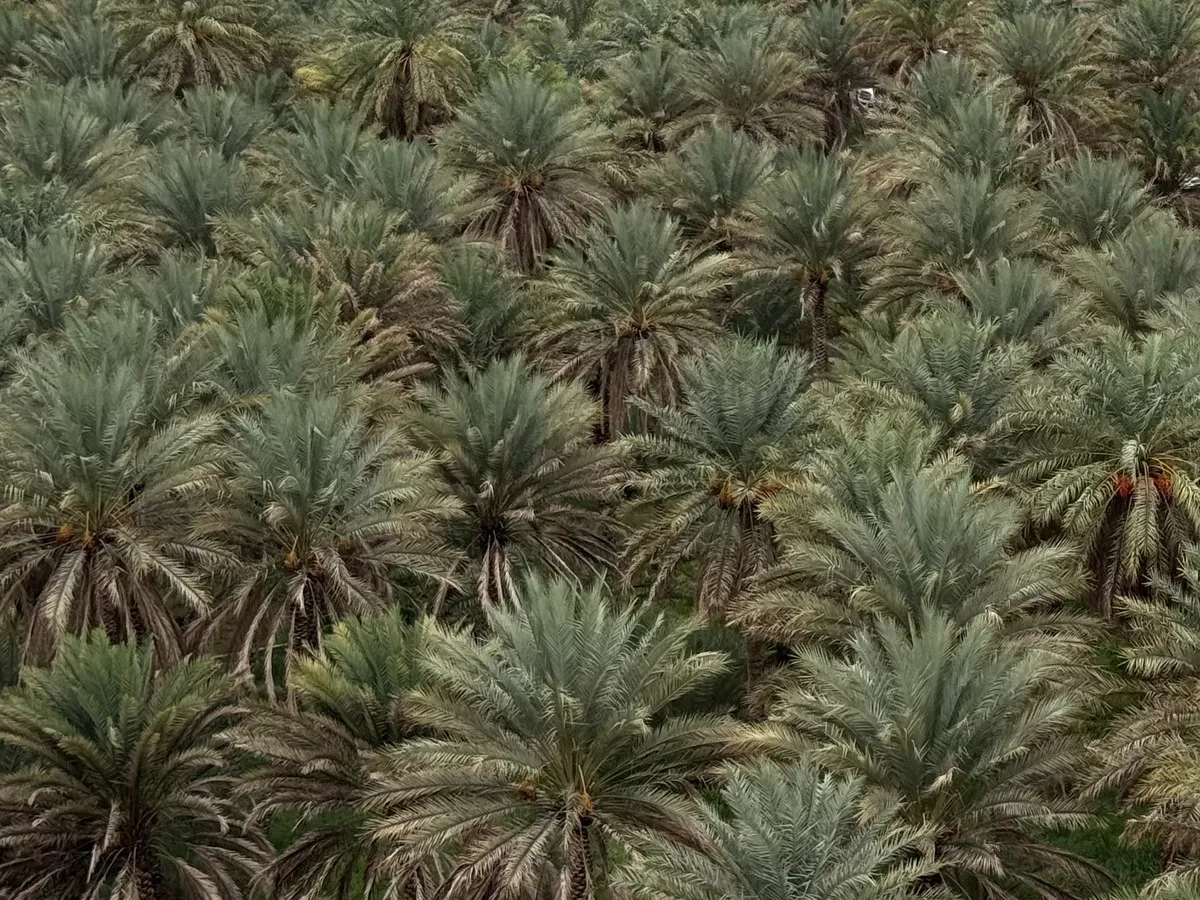
Descending from the mountains leads into the Sharqiya region, where the landscape alternates fertile oases, historic villages, and monumental deserts. Birkat Al Mouz—with its palm groves and ruins of ancient earthen houses—offers a glimpse of traditional agricultural life. Falaj channels guide water to fields and gardens, creating a microclimate that has supported date and banana cultivation for centuries.
Farther east lies Ibra, one of Oman’s oldest towns and once a major stop along desert caravan routes. Its traditional women’s market, held weekly, is one of the most fascinating in the region, with textiles, jewelry, and local products sold directly by women.
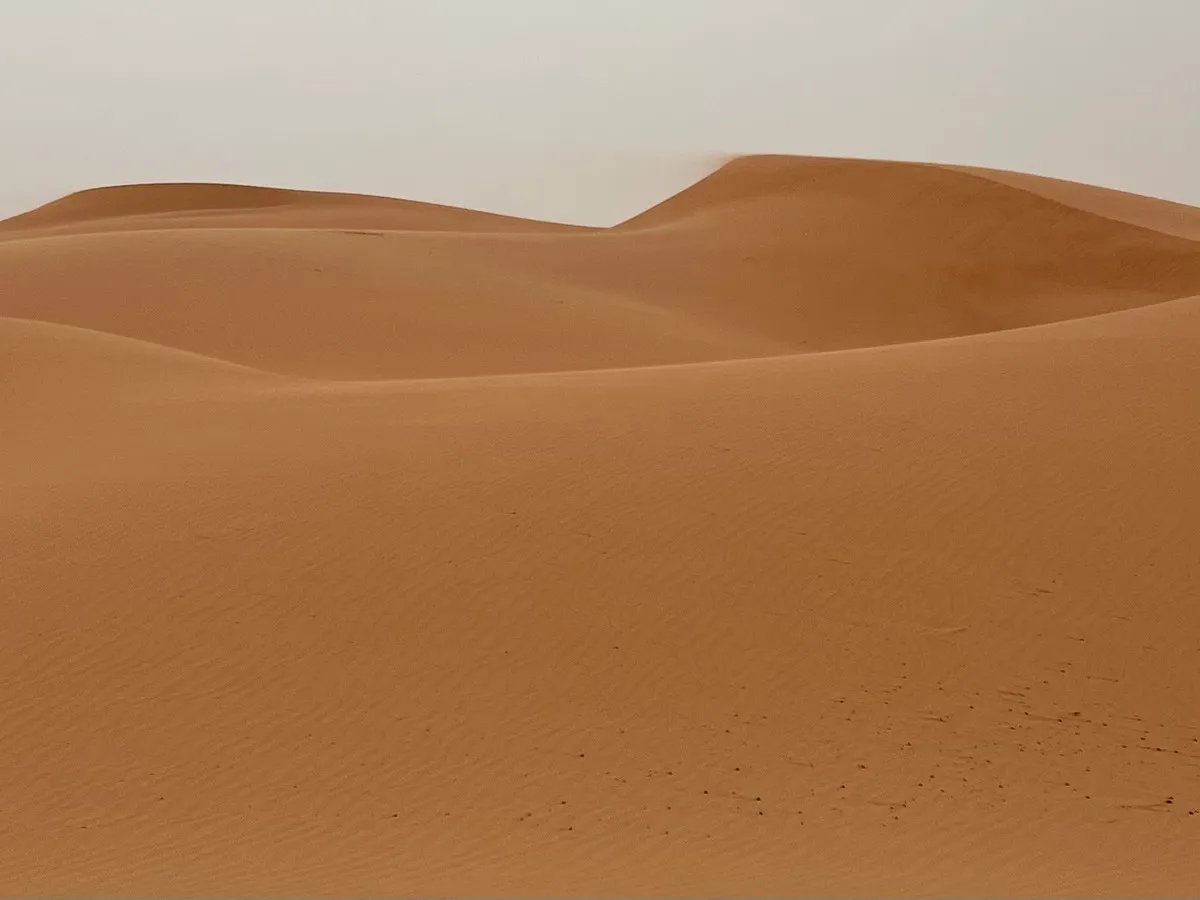
The landscape eventually opens into Wahiba Sands, a vast desert of golden dunes stretching more than 180 kilometers north to south. Here, the pace of travel shifts: Bedouin camps welcome visitors with traditional tents and camels, and the desert’s deep silence conveys Oman’s oldest essence. Dunes over 100 meters tall change color and shape throughout the day, creating some of the Arabian Peninsula’s most spectacular vistas.
Wadi Bani Khalid, canyons, and clear waters: another geography of Oman
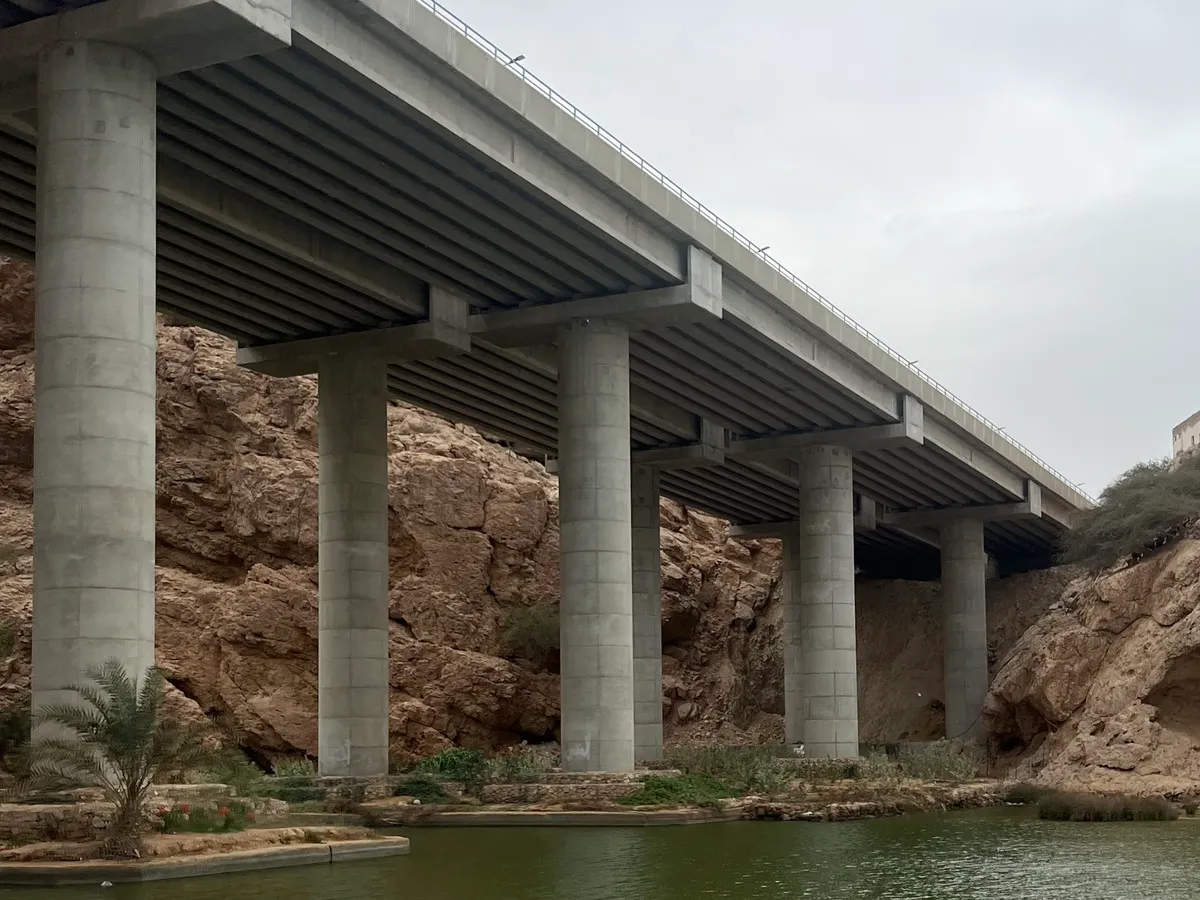
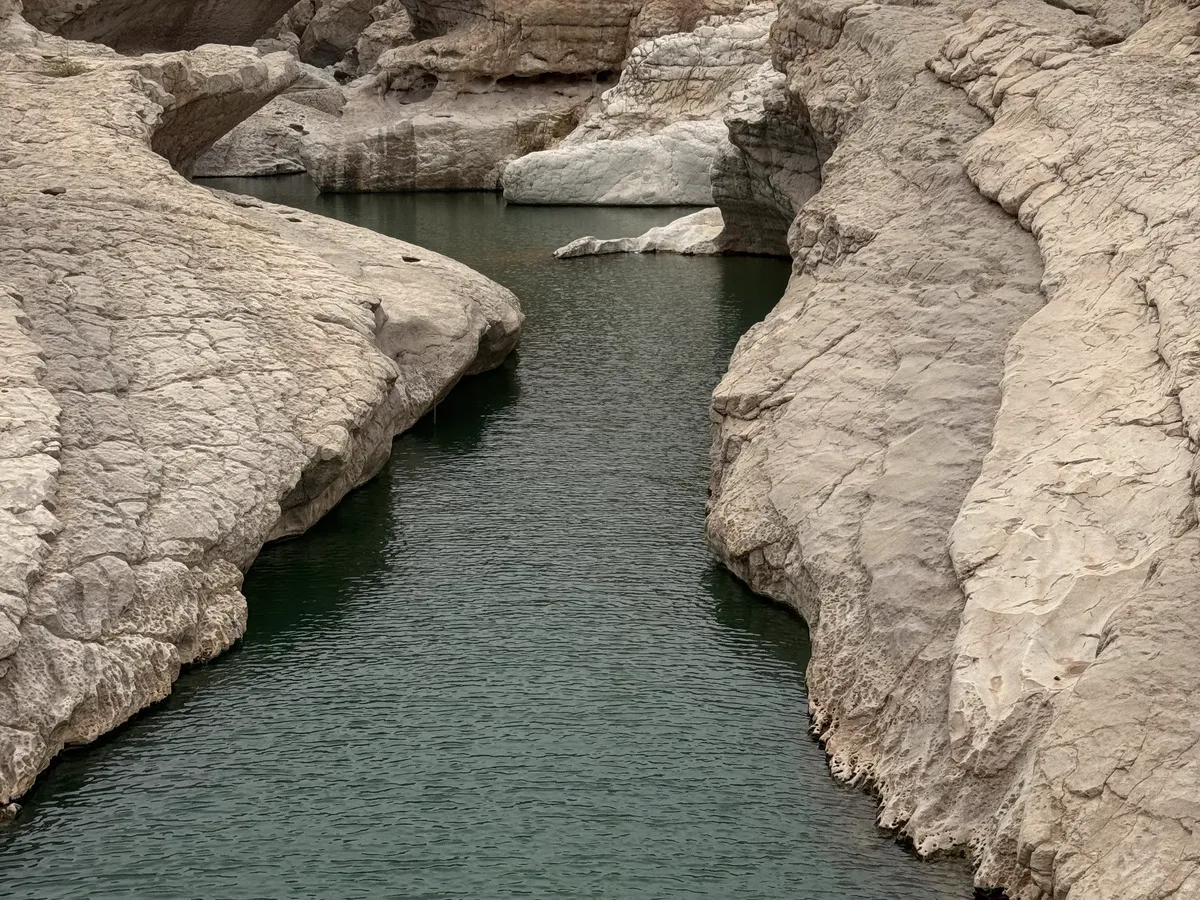
Oman is not only desert. Its wadis—rocky gorges carved by water—form another key element of the landscape. Wadi Bani Khalid is one of the country’s most scenic, with emerald pools, limestone walls, and vegetation that grows thicker along the water’s path. The trail alternates walkable stretches, natural bridges, and areas where visitors can swim in clear pools.
Persistent water flow in parts of the canyon has supported small settlements and cultivated terraces. The wadi exemplifies how Omani geography combines rock, water, shade, vegetation, and suspended spaces between mountain and desert.
Ras Al Jinz, Wadi Tiwi, and Wadi Shab: marine turtles, canyons, and coastal trails
On the eastern coast, the journey continues toward Ras Al Jinz, one of the world’s most important sites for observing sea turtles. On summer nights, green turtles come ashore to lay eggs—an event protected by strict rules that limit visitor numbers and access times. Tours are guided to avoid disturbing the ecosystem.
Heading north along the coast brings travelers to Wadi Tiwi and Wadi Shab—two deep canyons alternating cliffs, trails, palm groves, and freshwater pools. Wadi Tiwi is more rugged, lined with villages perched on the rocks, while Wadi Shab is known for a trail that ends in a natural cave reachable by swimming. Both wadis display hybrid geographies where desert and tropical features intertwine, with landscapes that shift at every bend.