JW Anderson – classic clothing forms collide with unworn everyday
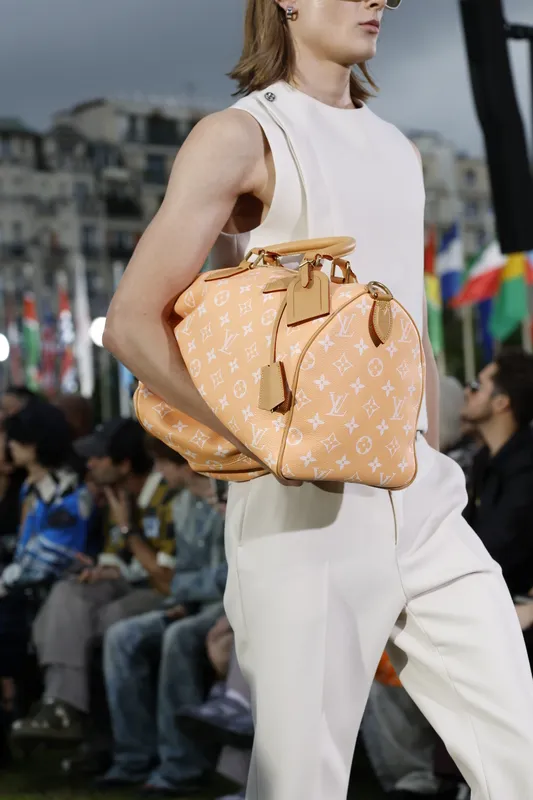
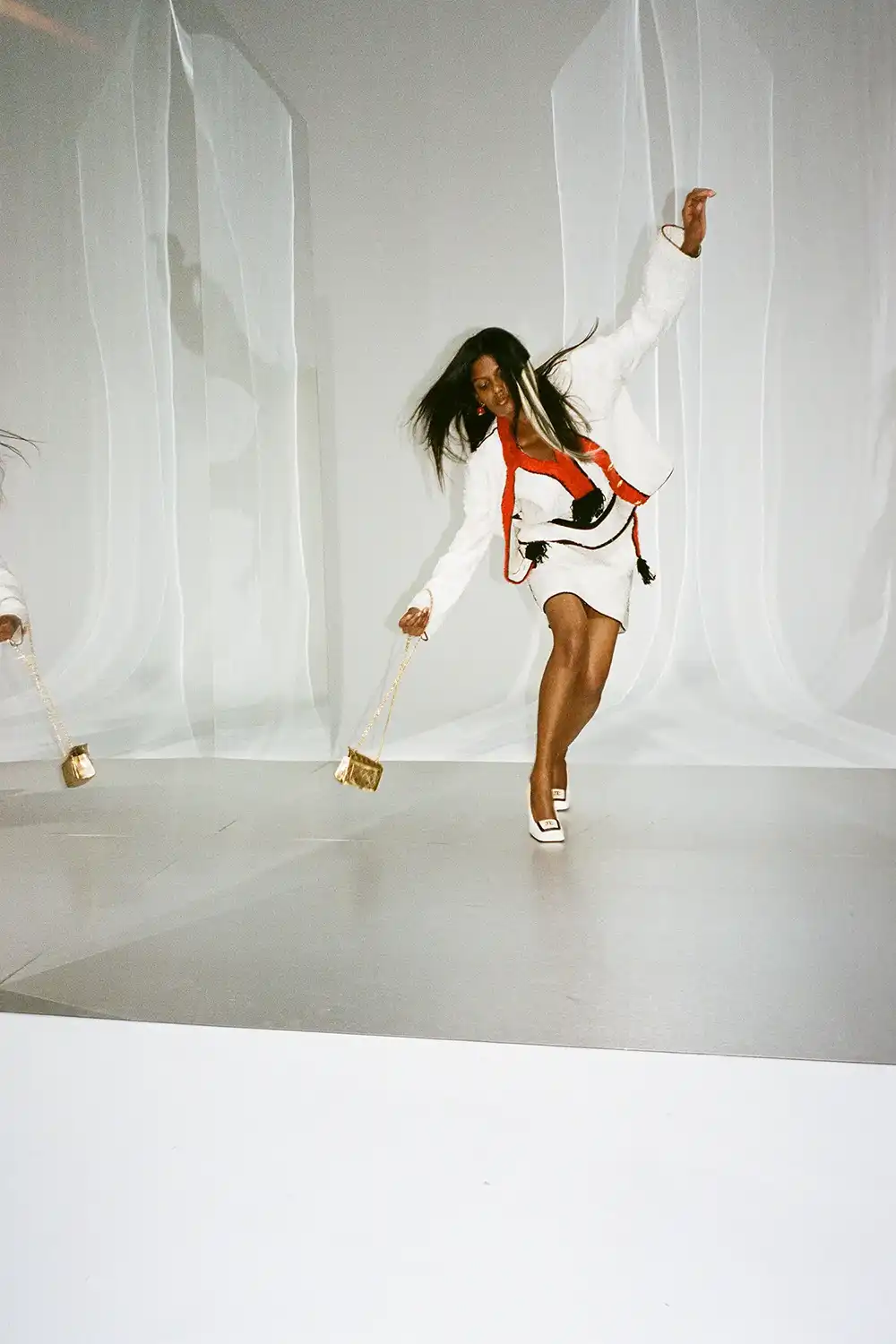
Split skateboard sweaters, terry cloth dresses, dumbbells holding up knitwear. The surrealistic garments in the spring/summer 2023 collection presented at Milan Fashion Week
From the show to the performance, reflection on the catwalk
What reason does performance exist if not in its relationship with the audience? This concept is reflected by the recent runway show of designer JW Anderson, who returns to the catwalk during Milan Men’s Fashion Week. Last June 20, the show took place in the aseptic setting of a space little different from any city reality, an abandoned hangar.
No disruptive set design to welcome the spectators seated on simple chairs and focused solely on the clothes. There is potential for each piece to take on a new meaning and be relegated to the individual’s experience. Indifference seems to be the only attitude not contemplated by the designer’s runway.
Active response to what is happening and surrounding the audience is necessary to understand the collection. Sounds far from existence. And then a rapid melody with violins and a piano brings us back to a universe other than the reality. Accompanying the personal reflection of the viewer.
[envira-gallery id=”102971″]
Subjectivity and objectivity of thought
It begins with Rembrandt and his idea of the self-portrait, which plays with the viewer provocatively.Fashion and art are both forms of subjective or objective representation. So which is the correct representation?
JW Anderson’s imagined clothes define individuals, just as paintings do, and can have a unique meaning for the viewer. Observation and subjective thinking intersect with the idea of protection that clothing want to provide. The parallel between Rembrandt’s self-portrait and the current self-representation through a selfie is striking in its potential to be subjugated to the other’s eye.
In the provocative encounter of his garments, the designer questions the possibility of deciphering this message and code. The ultimate answer dwells on the actual need for interpretation. Is it essential?
The encounter that springs in the genderless
It is nothing new that many fashion shows unveiled in recent years have decided to present men’s and women’s clothes on the runway. Co-ed is the term that defines the meeting of these two ways of dressing the body and has driven an increasing trend of gender hybridization.
If JW Anderson has the SS23 men’s collection and women’s resort 23 on the runway, many of its garments appear genderless rather than remarking on this division. Volumes and designs that characterize masculine and feminine clothes mingle in an encounter with the wearer’s personality. The straight and often oversized silhouettes of the garments in the line accentuate the achievement of this result.
The value of the clash: focus on the collection
The collection construction is based on the interaction of contrasting elements against each other. On the one hand, the shapes, almost banal, of the classical garments such as the T-shirt, sweatshirt, Bermuda shorts, denim jacket, bomber jacket, and double-breasted tailored blazer, on the other hand, are common things belonging to everyday life.
Wearable and non-wearable items collide to create a surrealist reality. Fashion is the central element of this fragmentation between subjectivity and objectivity, from the sweaters that incorporate torn skateboards to a bicycle handlebar and work gloves that complement the classic forms of clothing.
During a staged conflict, elemental forms become provocative and personal. Some cuts in the garments displayed barcodes, as did a sponge fashioned into a minidress. Accessories bring back the brand’s hallmarks, eccentric colors for bags and shoes, then high soles and exaggerated metallic details.
Relevant is the observation, the meaning that the audience ascribes, which, however, may be meaningless. According to JW Anderson, what is essential is «to look at the collection in perspective: from the top of the selfie stick».
JW Anderson
The brand, founded in 2008 by the Irish designer Jonathan Anderson, has evolved from its focus on fast accessories. The internationally recognized label has differentiated itself since the first years by its ability to hybridize men’s and women’s fashion.