The hotel where Proust’s obsessions finally got a room of their own
In the Marais, Maison Proust has turned the Recherche into a place you can sleep in — Belle Époque salons, a bar run by a Ritz legend, and a spa that smells like Tante Léonie’s drawing room
From À la recherche du temps perdu to Maison Proust, Hotel & Spa La Mer
Someone—perhaps a famous director—once said that everyone has started reading À la recherche du temps perdu at least once in their life. Few, however, have completed it. Marcel Proust’s work spans around 3,700 pages, was written between 1906 and 1922, and published over fourteen years in seven volumes, the last three appearing posthumously.
It is a world unto itself, an œuvre cathédrale: a prolonged digression on time and memory, love, writing, and countless other matters. In her book Paris, s’il vous plaît (Einaudi), Italian writer Eleonora Marangoni describes it as the story of a young man who wants to write a book but fails to do so, and meanwhile lives, travels, makes mistakes, suffers, falls in love, falls ill, and begins again.
Within the Recherche appear the light of Balbec, the countryside paths of Combray, Venice, Padua, and above all Paris, with its streets and salons. Proust was attentive to interiors: heavy curtains, half-closed shutters, soirées mondaines, walls covered with paintings and wallpaper. He was interested in homes and domestic corners.
Maison Proust, Hotel & Spa La Mer, a boutique hotel located in central Paris, pays homage to Marcel Proust and his work by recreating the atmosphere of the salons described by the author, once frequented by kings and queens, princes and princesses, emperors, and the aristocracy of the Faubourg Saint-Germain. It includes 23 rooms and suites, a bar, a library, a winter garden, and a private spa.
Proust’s Paris and the Recherche: addresses, salons and the rive droite geography behind Maison Proust
Proust’s Paris is that of the rive droite, the quadrilateral stretching from Parc Monceau to Place de la Concorde, from the Concorde to Auteuil, the Bois de Boulogne, and the Étoile. At the time, it was inhabited by the aristocracy and by the financial, industrial, and cultural upper middle class.
Proust lived at six different addresses in the city. He was born in Auteuil—then a country village, now part of the 16th arrondissement—in his maternal uncle’s house at 96 rue de la Fontaine. The Goncourt family and the portrait painter Jacques-Émile Blanche lived in the same suburb.
After the end of the insurrectionary uprisings that led to the proclamation of the Paris Commune, the Proust family returned to the city, first to 9 boulevard Malesherbes, then to a large apartment on rue de Courcelles.
After his mother’s death in 1906, Marcel moved into a small apartment in his aunt Weil’s building at 102 boulevard Haussmann, where he lived until 1919, when his aunt sold the property to a bank. Here, Proust had the walls of his bedroom lined with cork to insulate himself from the noise of the world and began writing the Recherche. In a letter to Madame Catusse, Proust described the apartment as the ugliest place he had ever seen, the triumph of bourgeois bad taste. Legend has it that when he was forced to leave, he donated his book collection to a gay brothel he used to frequent, so that he would feel “at home” each time he entered.
Proust died in November 1922 at 44 rue Hamelin, in the same room where he completed the Recherche. The building has since been converted into a hotel, while Proust’s room has been reconstructed at the Musée Carnavalet in the Marais.
Alongside its interiors, the Recherche depicts a Paris crossed by noisy boulevards and dotted with Morris columns. There are the gardens of the Champs-Élysées, the Bois de Boulogne, the Île aux Cygnes, the Île Saint-Louis, as well as rue de Varenne, the 16th arrondissement, and the Saint-Augustin district.
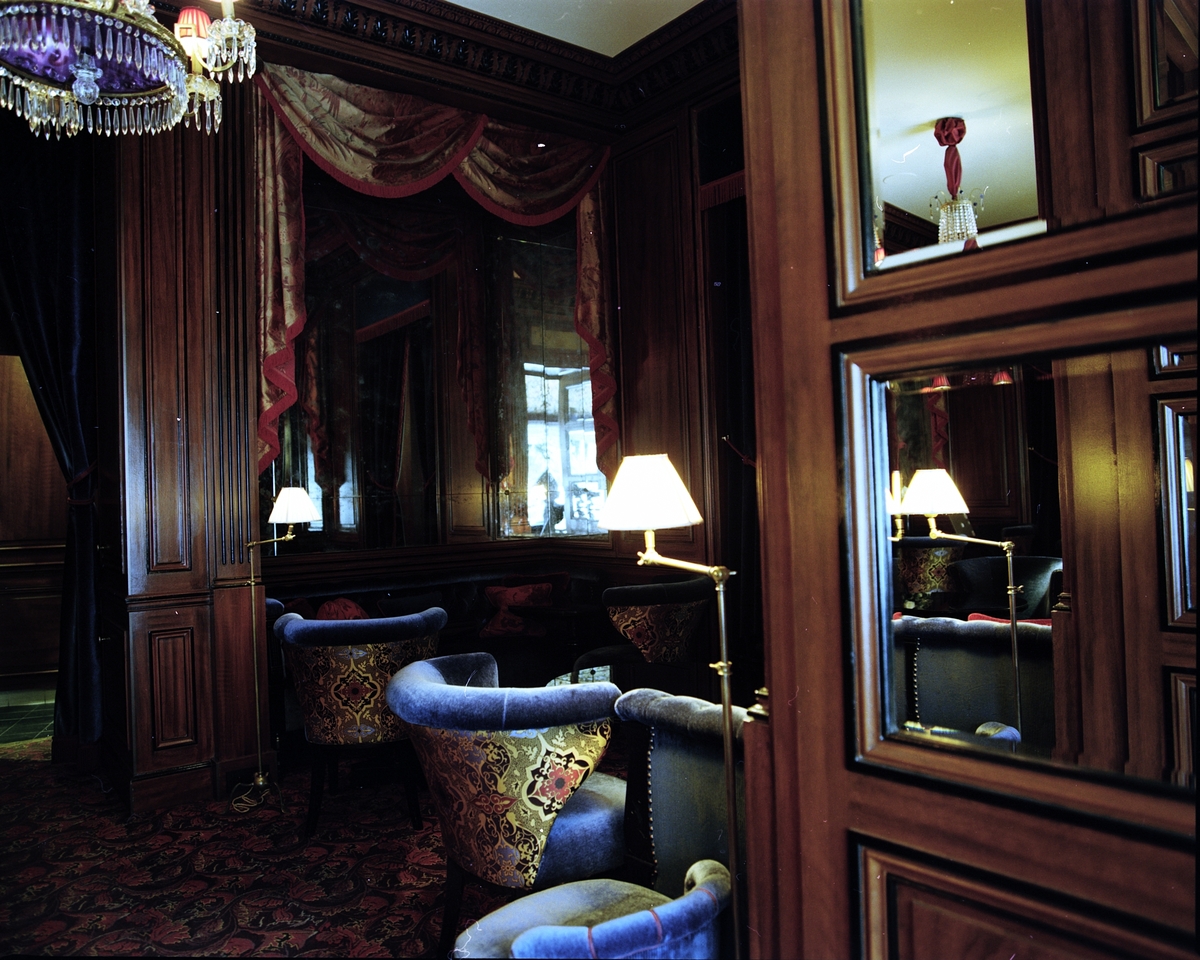
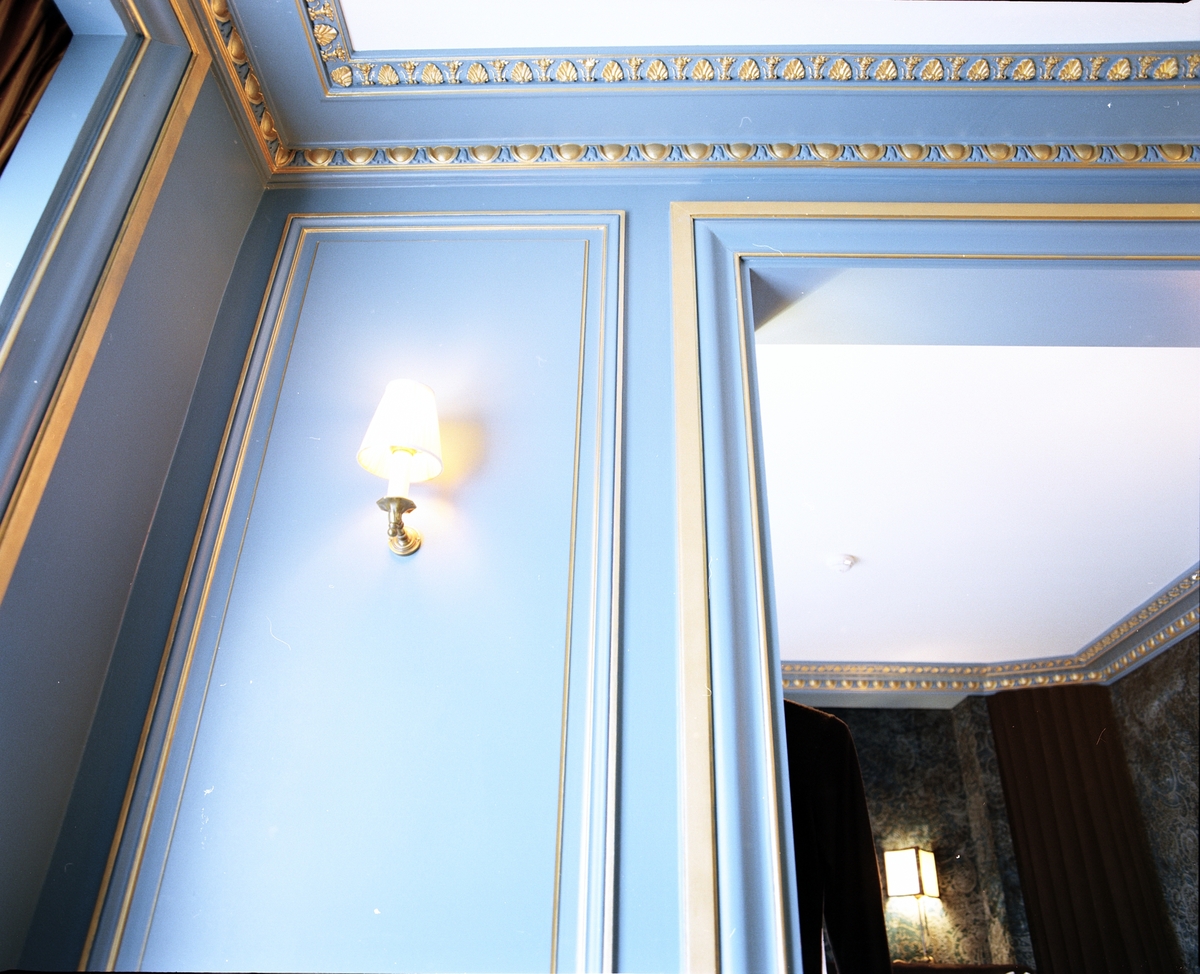
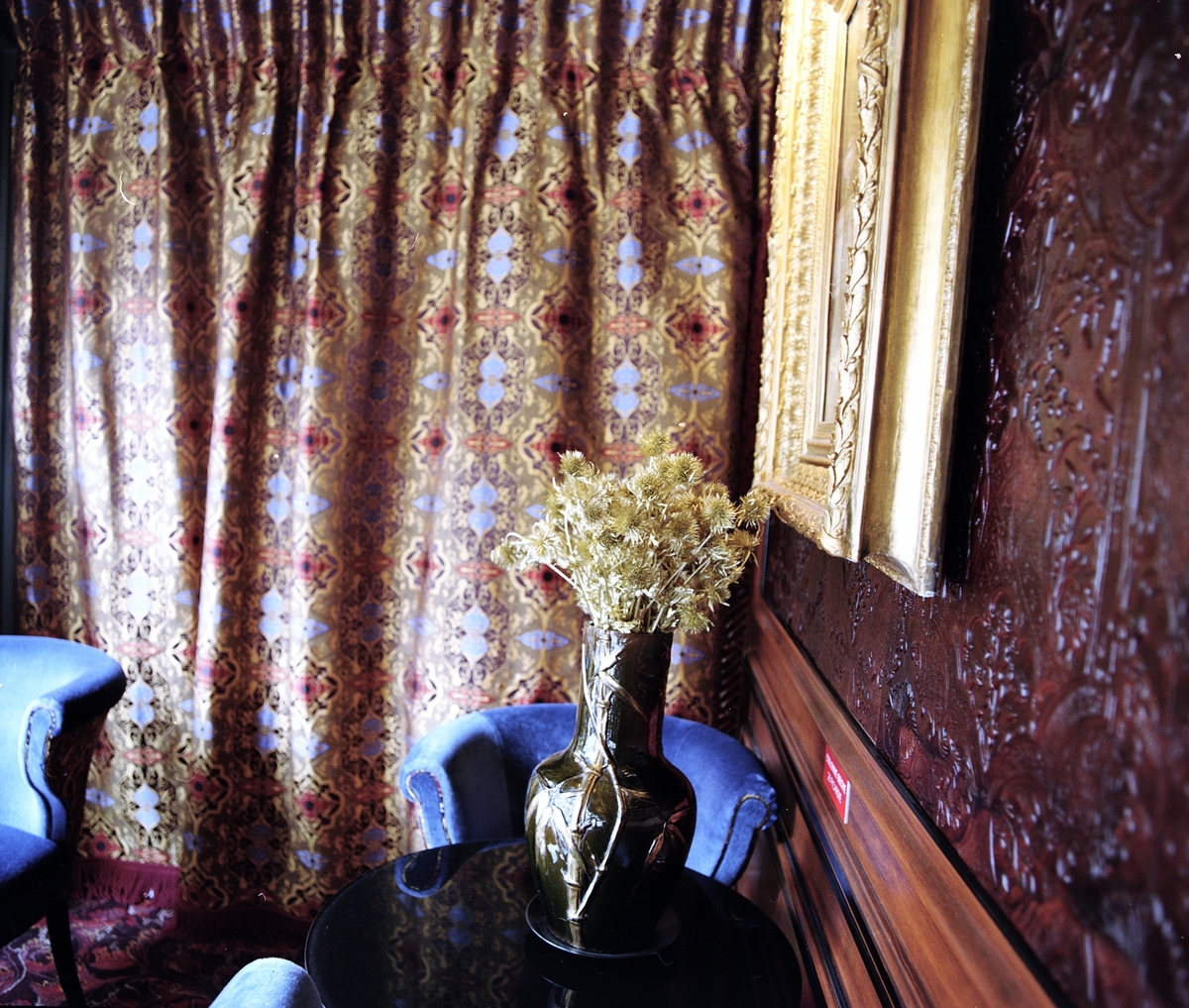
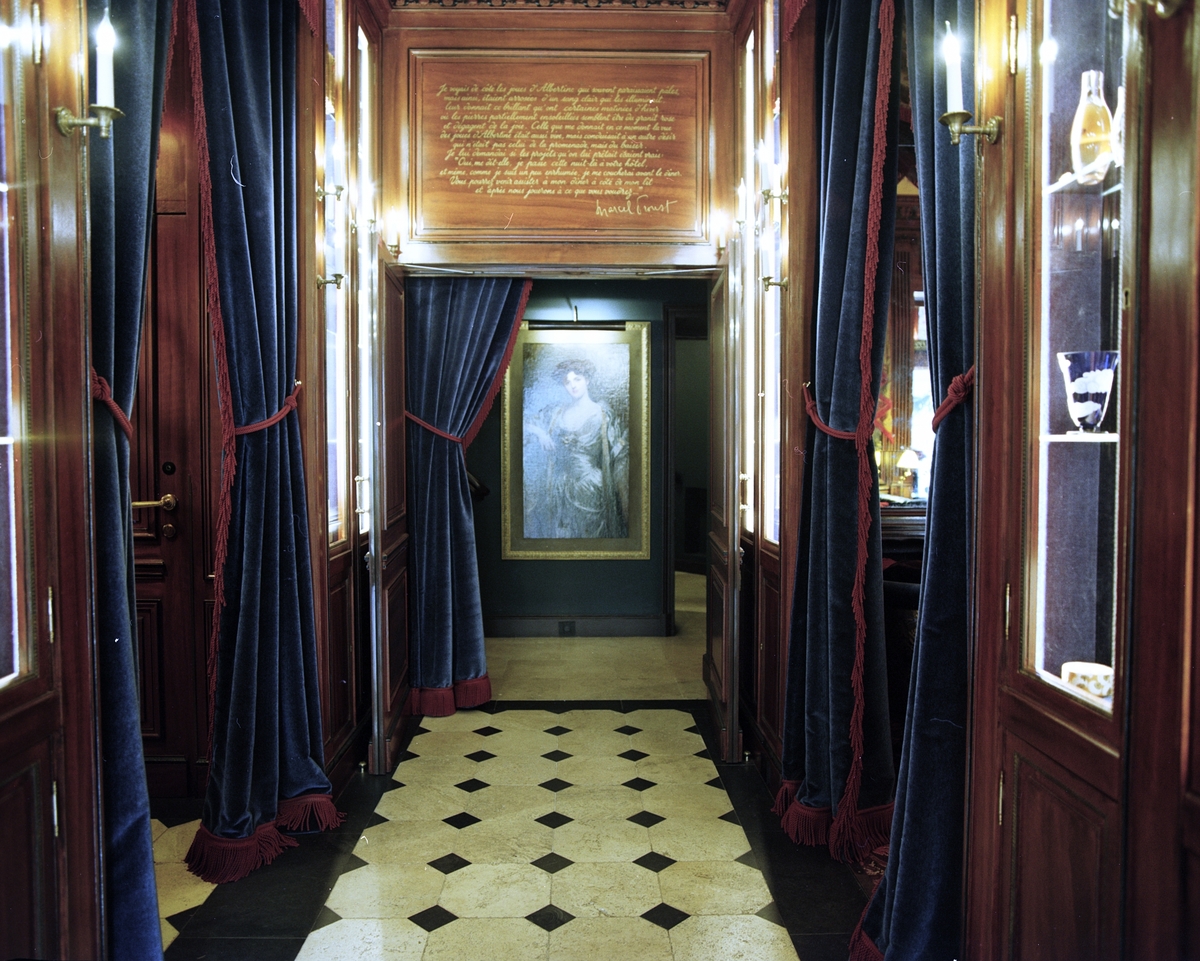
Maison Proust hotel in Le Marais: a literary boutique hotel in Paris
The address is 26 rue de Picardie, in the Marais. Maison Proust belongs to the Collection Maisons Particulières, a group of three Paris addresses founded by Sylviane Sanz and Yoni Aïdan — Maison Souquet in Montmartre and Maison Athénée on Place Vendôme are the other two. Each property is conceived as a private mansion – service here is meant to be discreet, the daily rhythms those of an inhabited house, not a lobby.
The guiding idea at Maison Proust is to recreate not simply the appearance of a Belle Époque salon, but its function — the salon as a machine for manufacturing reputation, desire, social hierarchy. A room where conversations were constructed to be half-overheard, where an invitation signified everything, where the architecture of intimacy was itself a performance.
Interior design at Maison Proust, Hotel & Spa La Mer: Jacques Garcia and the Belle Époque layered room
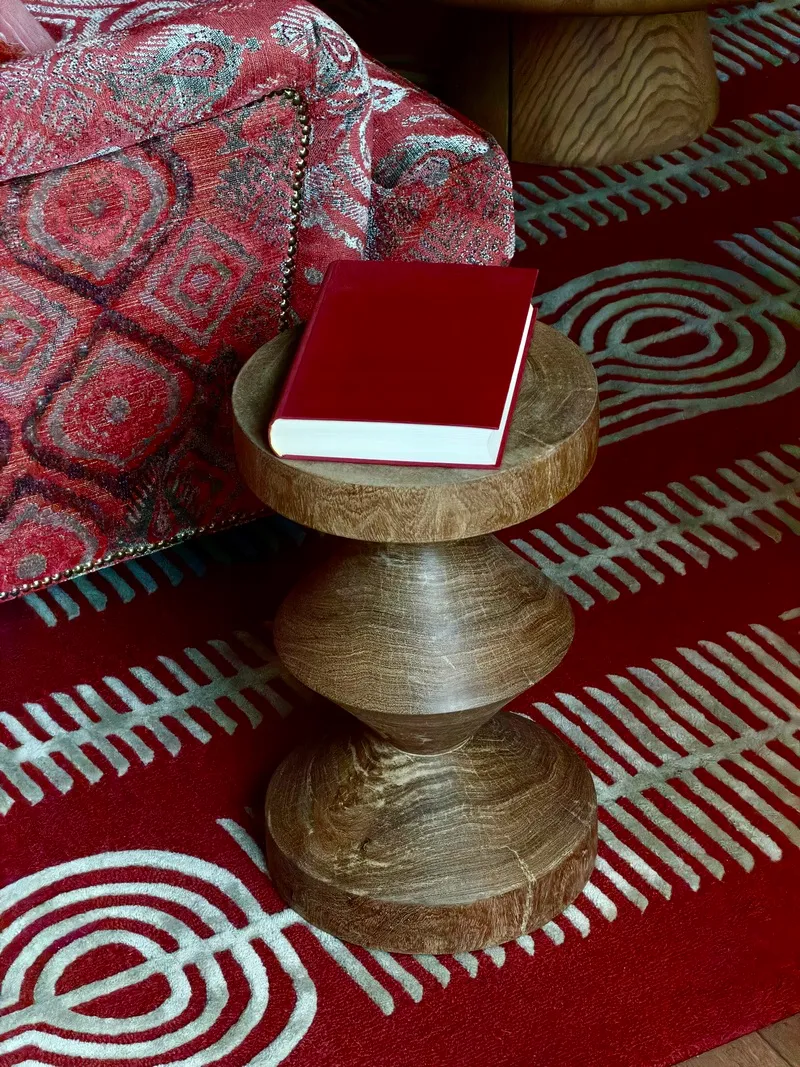
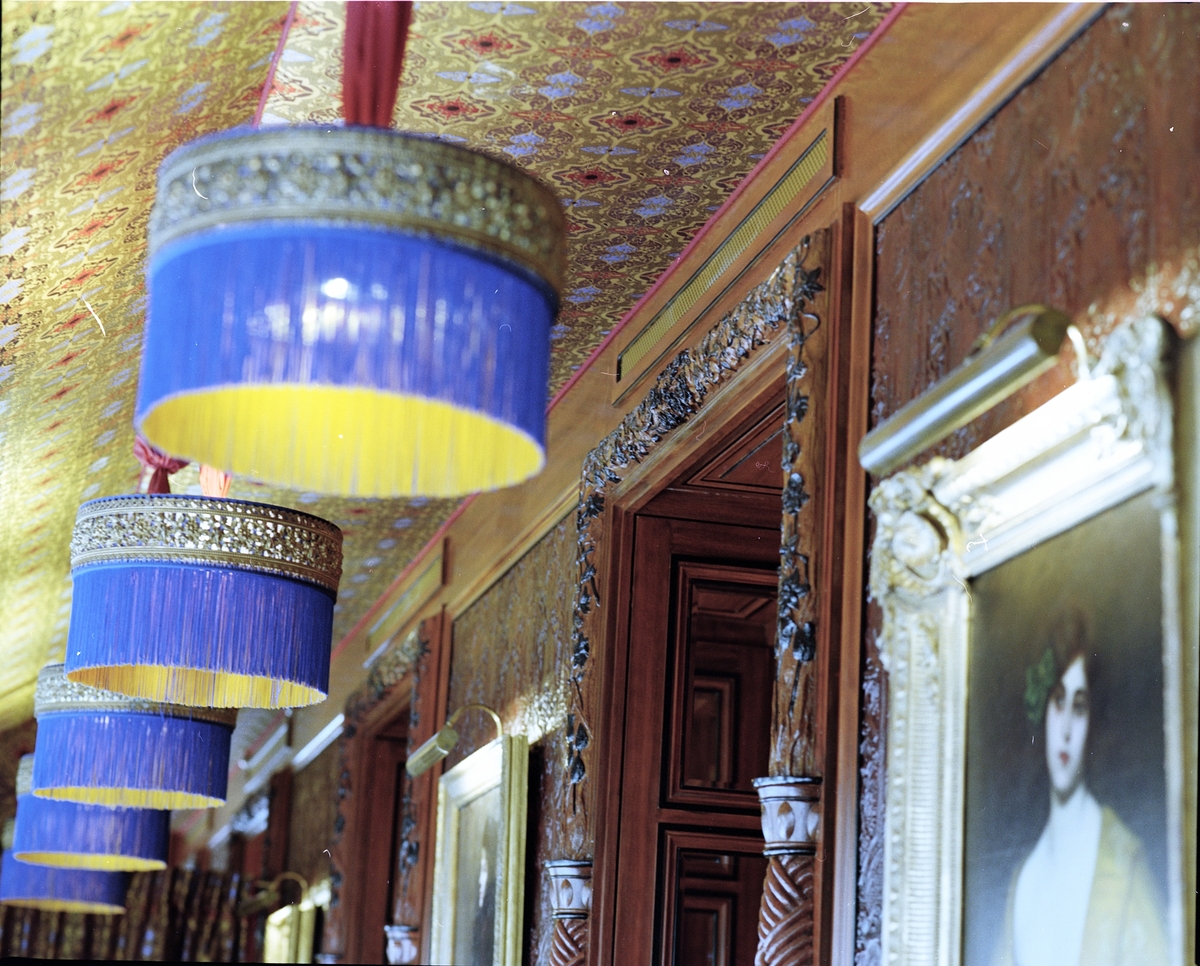
The interiors were designed by Jacques Garcia, trained at the École des Métiers d’Art and responsible for some of the most theatrically loaded rooms in contemporary hospitality — projects in Paris, Monte Carlo, Marrakech, Sorrento, New York, alongside institutional work connected to Versailles and the Louvre. His method is legible: dark woods, controlled light, accumulated objects, overlapping textiles, paintings pressed close together on papered walls. Nothing aims for neutrality. Everything aims for memory.
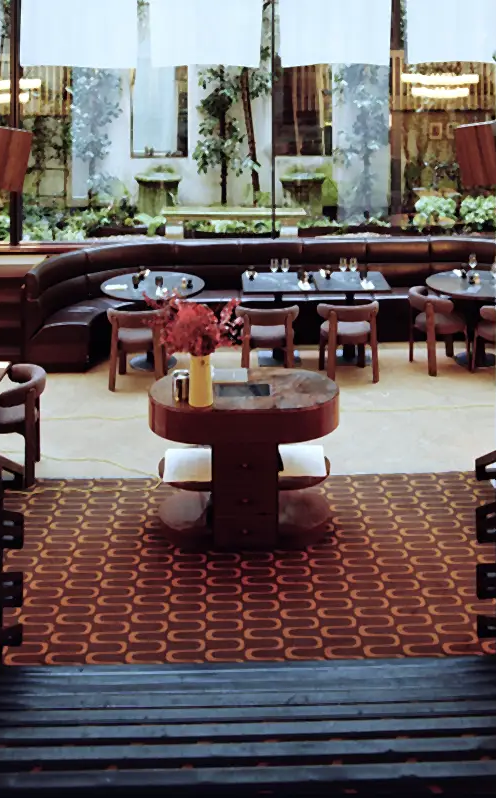
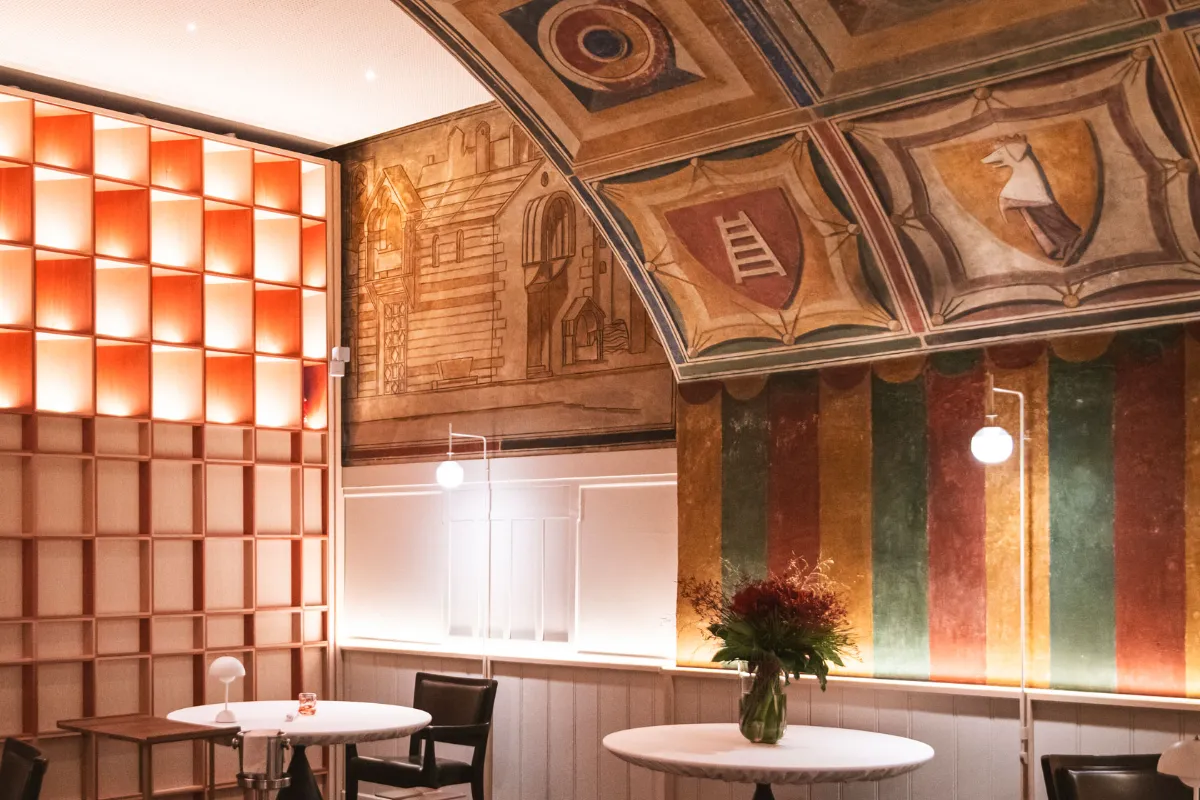
The salons feel late nineteenth century in the best possible sense. The kind of rooms that seem to retain the temperature of the previous evening’s conversation. Garcia is not interested in recreation as such; the goal is suggestion, the feeling that someone has already lived here extensively and recently.
The craft that underwrites this atmosphere is worth pausing on. Wall coverings in “Cordoue” leather from House Fey. Textiles by Pierre Frey. Lamps from Galerie des Lampes, designed by Garcia. Door frames with floral motifs by Benjamin Georgeaud, drawn from Proustian botanical imagery. Glass surfaces worked in églomisé — painted from behind, in the traditional technique — using gold and palladium leaf, pearl powder, mica. One of the decorative painters holds the title Meilleur Ouvrier de France. These are not details for the press kit. They are what separates scenography from theatre set.
Among the objects placed with deliberate intent: a letter from Marcel Proust to the Princesse Soutzo, and a signed copy of Du côté de chez Swann. They sit in the rooms as natural presences, not behind glass, not labelled. Which is the point.
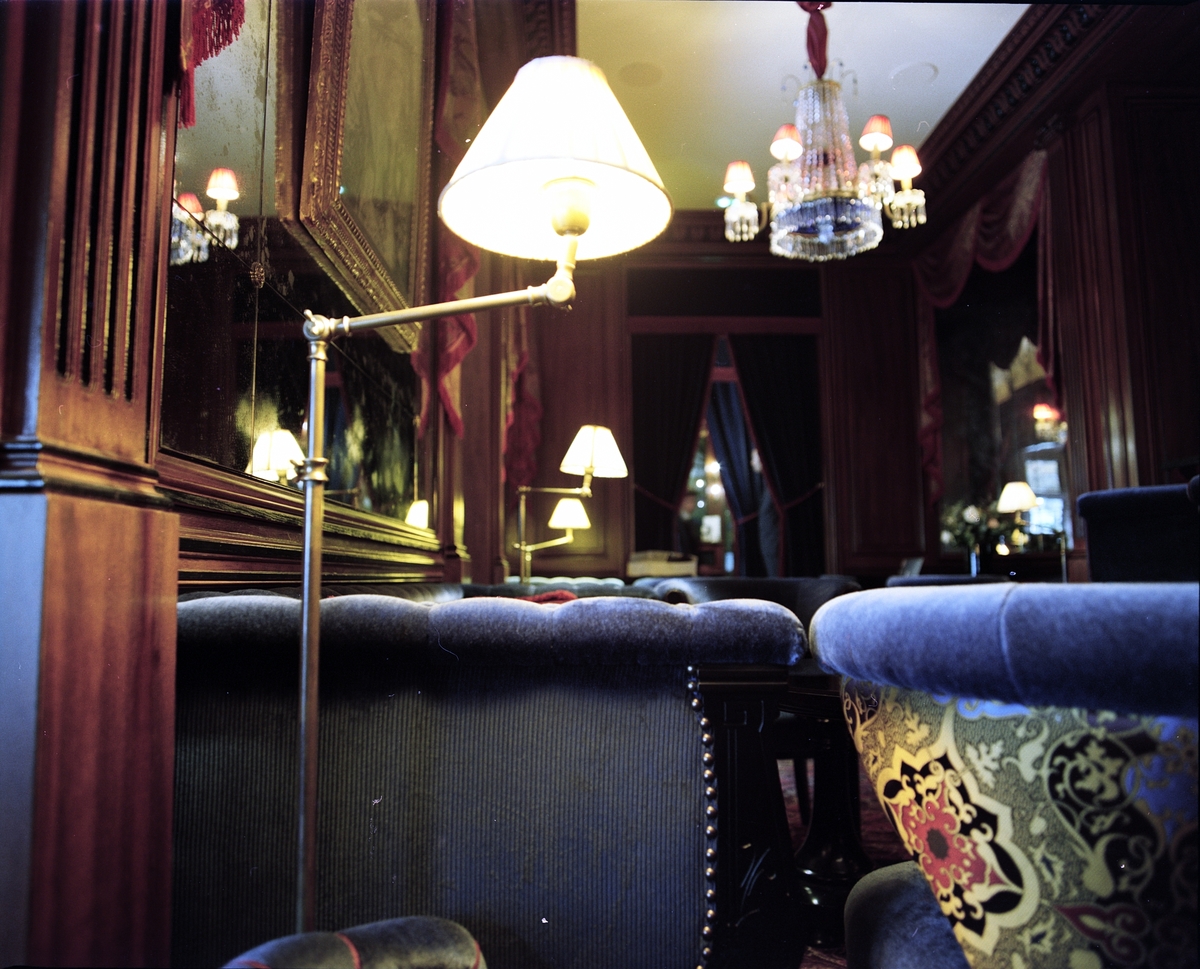
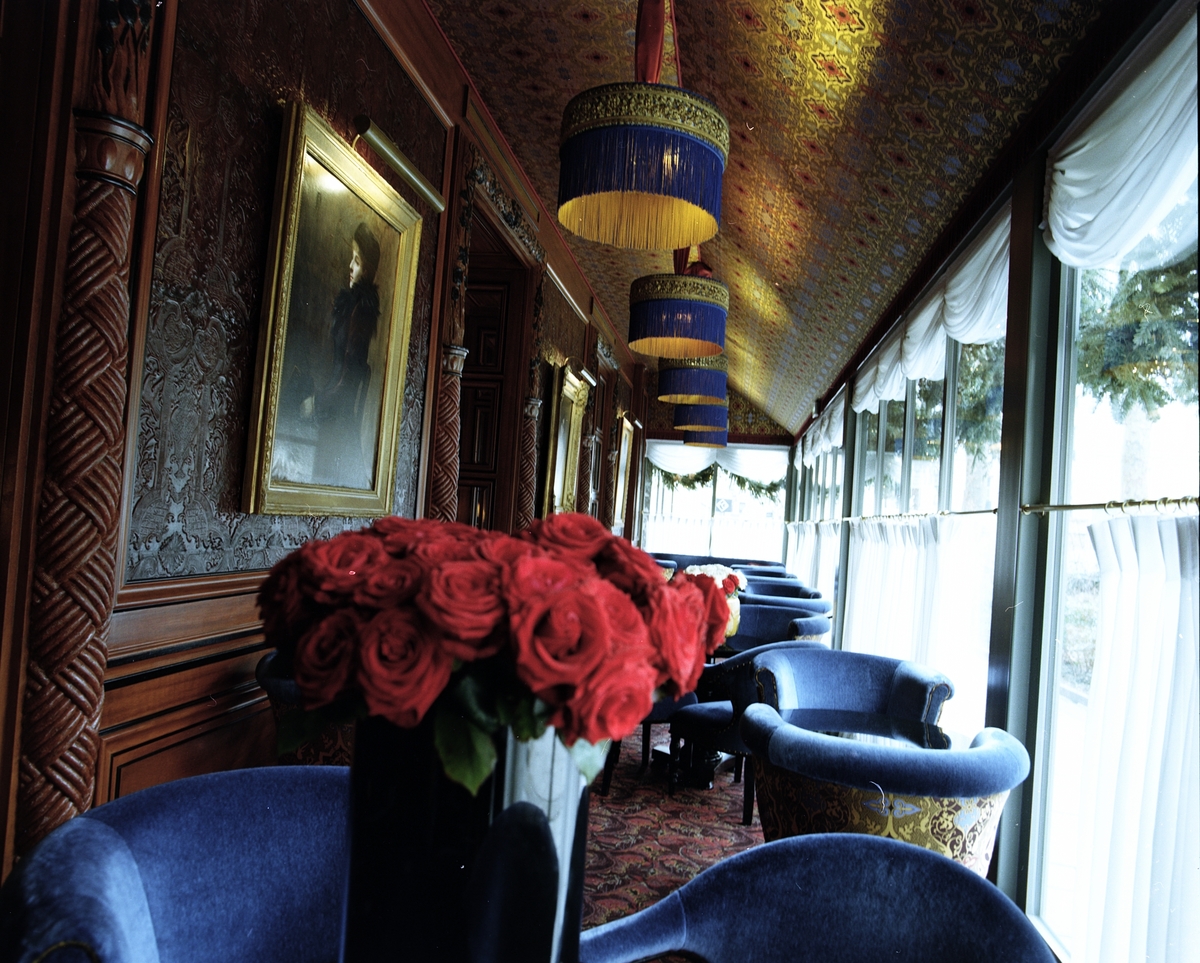
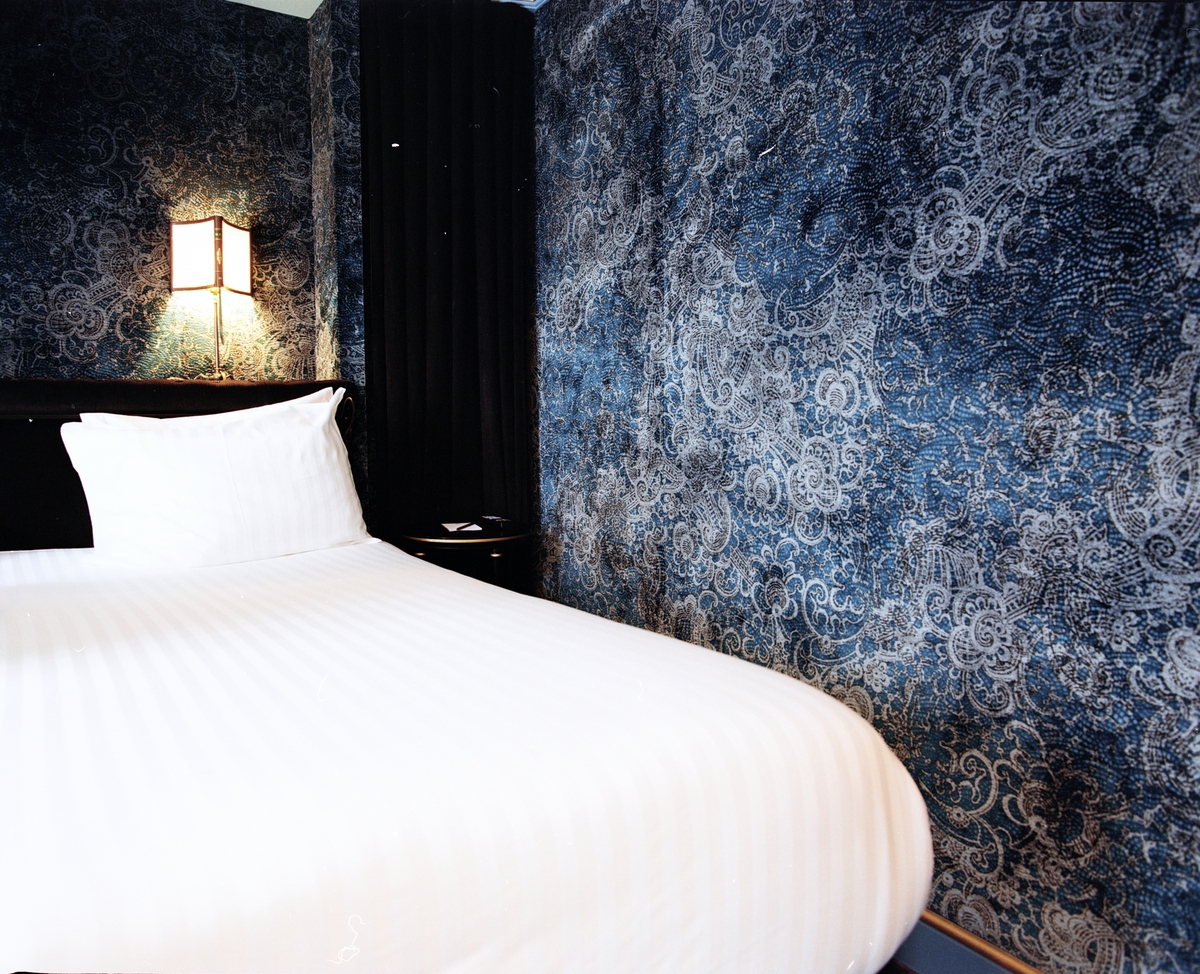
Rooms and suites at Maison Proust: themed floors inspired by Marcel Proust’s world
The hotel is organised by floor, each one devoted to a figure from Proust’s world — social, artistic, literary. It reads less like a thematic exercise and more like a table of contents for a novel that was never quite written.
The lower floors are anchored in the mondaine Paris that Proust both inhabited and anatomised. Léontine de Caillavet was one of the great salon-keepers of the fin-de-siècle: companion to Anatole France, a structural presence in the literary and political circuits of the era, the kind of woman whose invitations functioned as verdicts. She establishes the register of the house — the salon as a place where power moves quietly, under cover of conversation.
Sarah Bernhardt arrives as the period’s most globally famous performer, a woman who managed her own celebrity with the same rigour she applied to her repertoire. Proust watched her closely as a model of how public presence could be constructed and sustained. In the hotel, her floor reads as the room as dressing room — performance as private act.
Maria Sofia of Bavaria — sister to Empress Sisi, queen consort of the Two Sicilies, exiled after 1860 — represents a different kind of figure: the aristocrat whose title has outlasted her kingdom, whose biography travels through Parisian drawing rooms as anecdote rather than history. In the Recherche, this is a recurring type. Names from the Almanach de Gotha, trailing stories that have accumulated more legend than fact.
Higher up, the register shifts. The fourth floor belongs to the Impressionists — Monet, Manet, Renoir — not as a survey of the movement but as a climate. The Paris Proust inherited, where light and atmospheric time had become legitimate subjects. The fifth floor is given to two writers who approached that same reality from opposite angles: Zola, for whom the city was raw material and the press an arena; Colette, who made appetite and the social body into a moral argument. The sixth floor is Proust’s own — his apartment, transposed into a guest room.
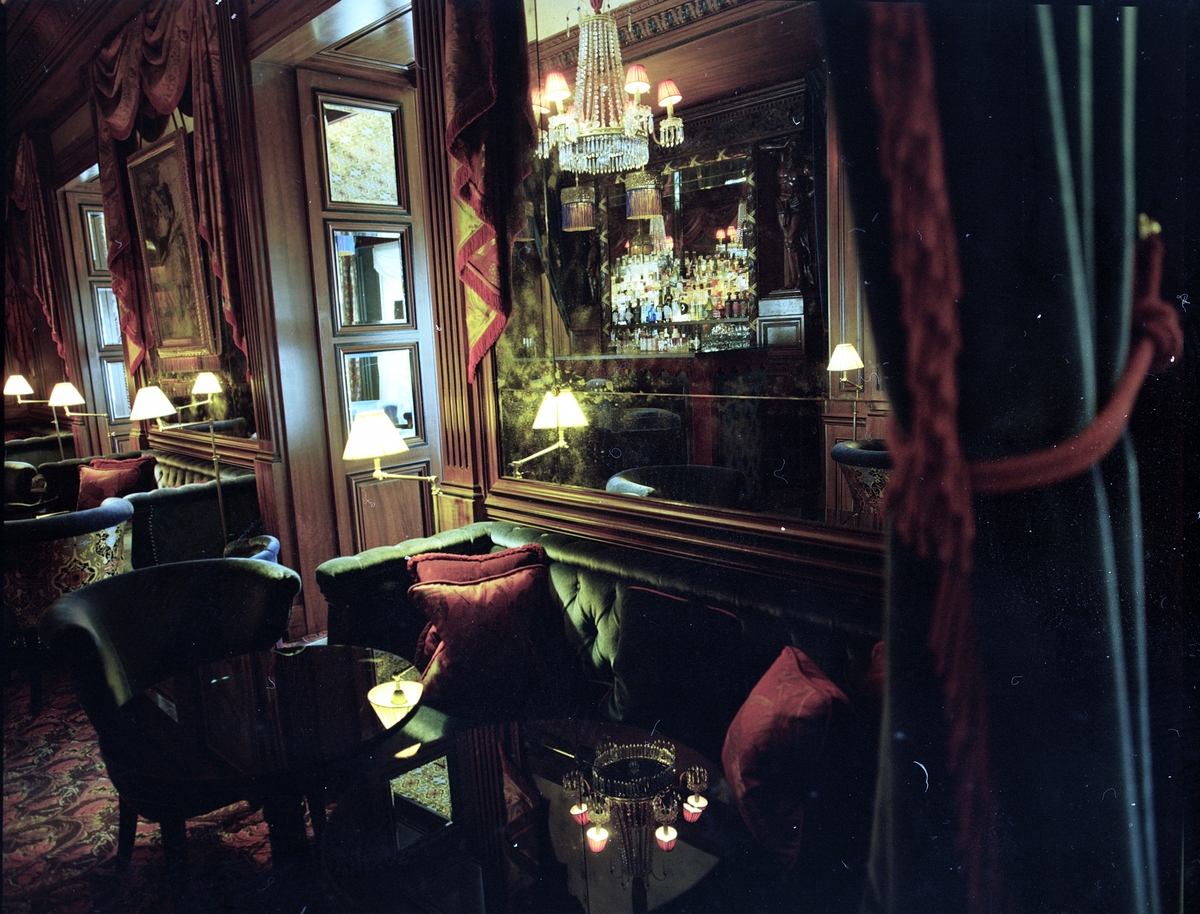
The bar at Maison Proust Paris: Colin Field, signature cocktails and salon rituals
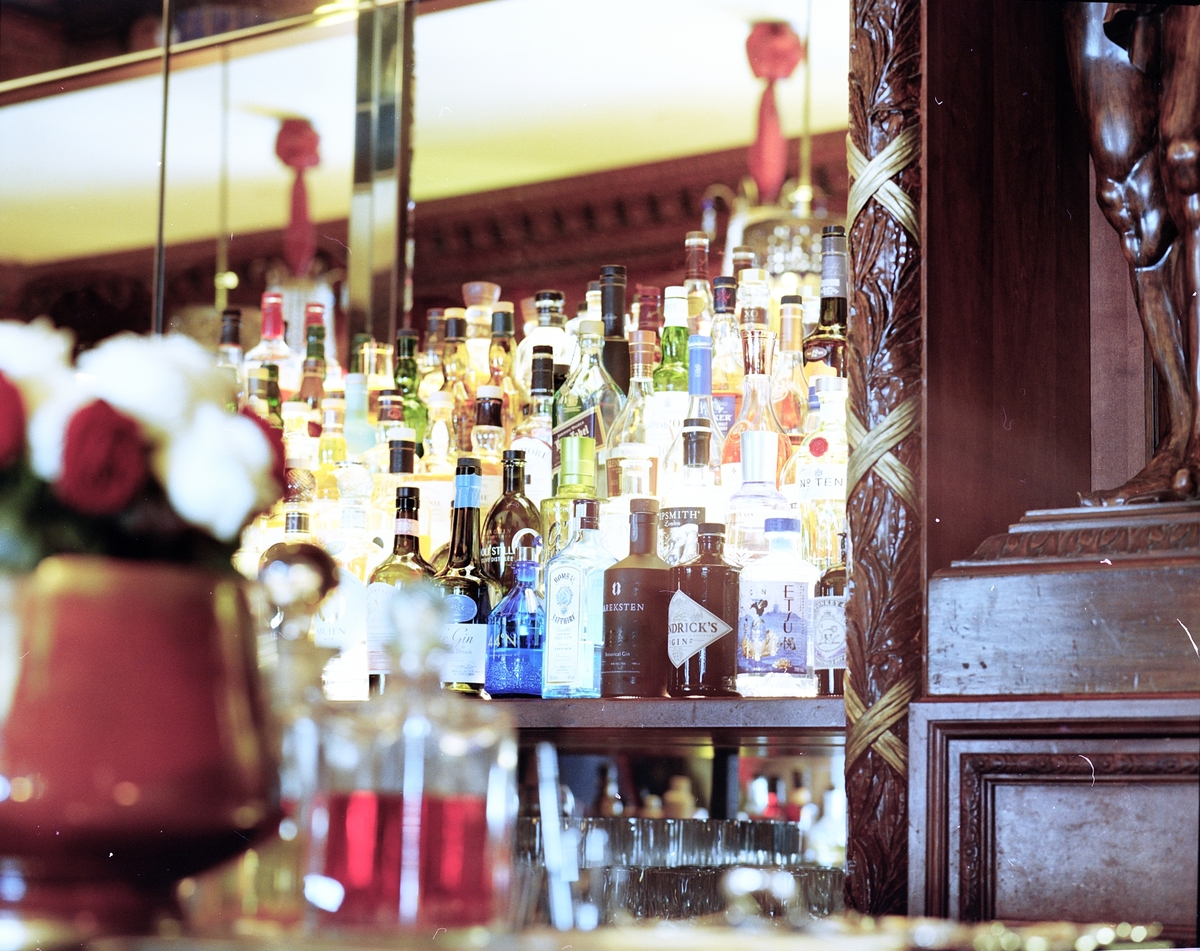
The bar is treated as a working salon — a place where something is actually happening, not a room you pass through on the way somewhere else. Colin Field, who spent nearly three decades running the Hemingway Bar at the Ritz Paris and built a reputation as one of the defining figures of French hotel bartending, appears at Maison Proust every Friday from five in the evening until one in the morning, under the title of permanent guest. He works alongside head barman Pierrick Baudry, who holds the title Meilleur Apprenti de France.
The cocktail that states the house’s position most plainly is called Le Temps Retrouvé. It begins with a madeleine. It continues with Armagnac Château Laubade 1922, black truffle from the Périgord, and Brut Nature Champagne from Barons de Rothschild.
Maison Proust, Hotel & Spa La Mer: private wellness, orientalist atmosphere and 10-metre pool
The spa operates under the La Mer name, in a partnership that brings together the brand’s protocols and the hotel’s scenography. La Mer’s origin story — Dr. Max Huber, a laboratory accident, years of research into sea kelp fermentation, the resulting Miracle Broth™ — functions as its own founding myth, the kind of narrative that translates well into the language of ritual and transformation. Maison Proust provides the stage on which that ritual is performed.
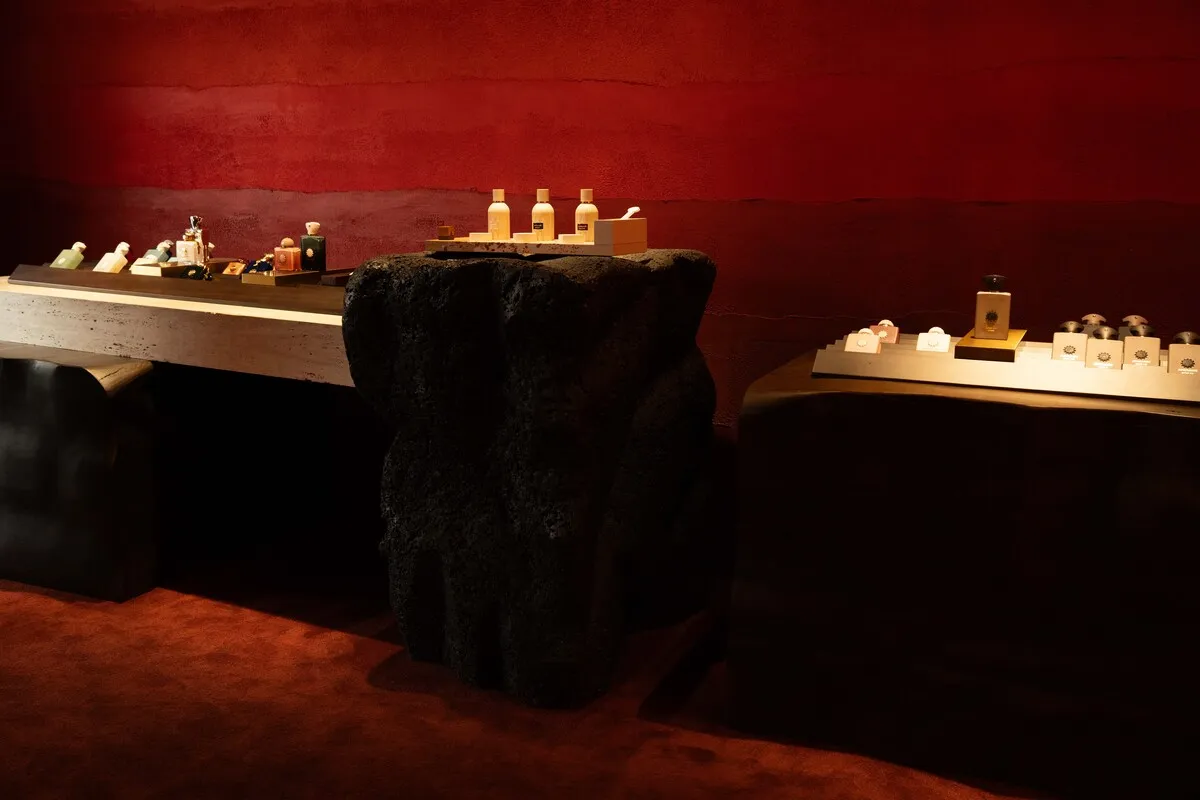
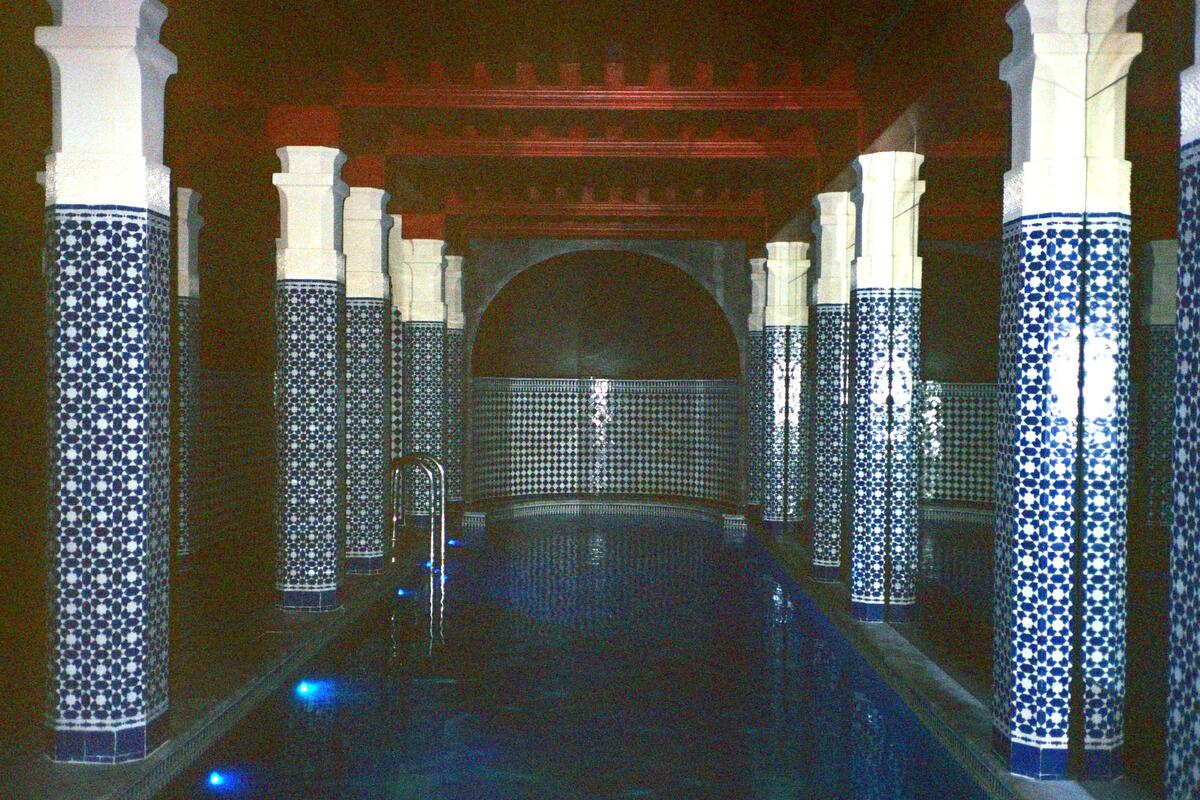
The visual reference is the orientalist salon — specifically the world of Tante Léonie in the Recherche, heavy with objects and half-light. Dark wood, lanterns, marble floors, a ten-metre pool whose surface moves in ways that become a detail you notice. The treatments are described in the vocabulary of haute skincare: precision, personalisation, “the right gesture.” The promise is the same one the hotel makes everywhere: time, slowed down or suspended, given back to you in a different form.
The art collection at Maison Proust: Belle Époque paintings and Proustian objects
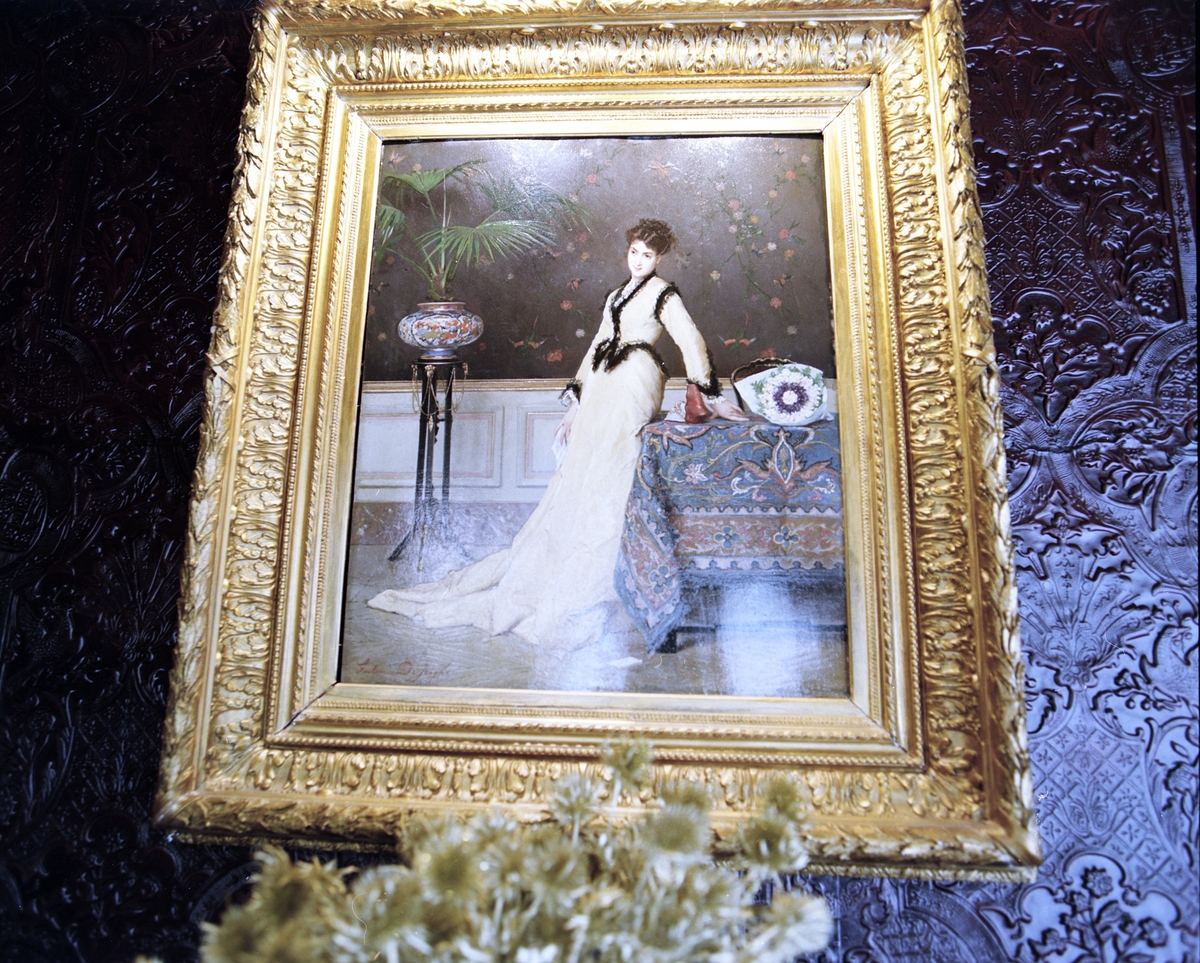
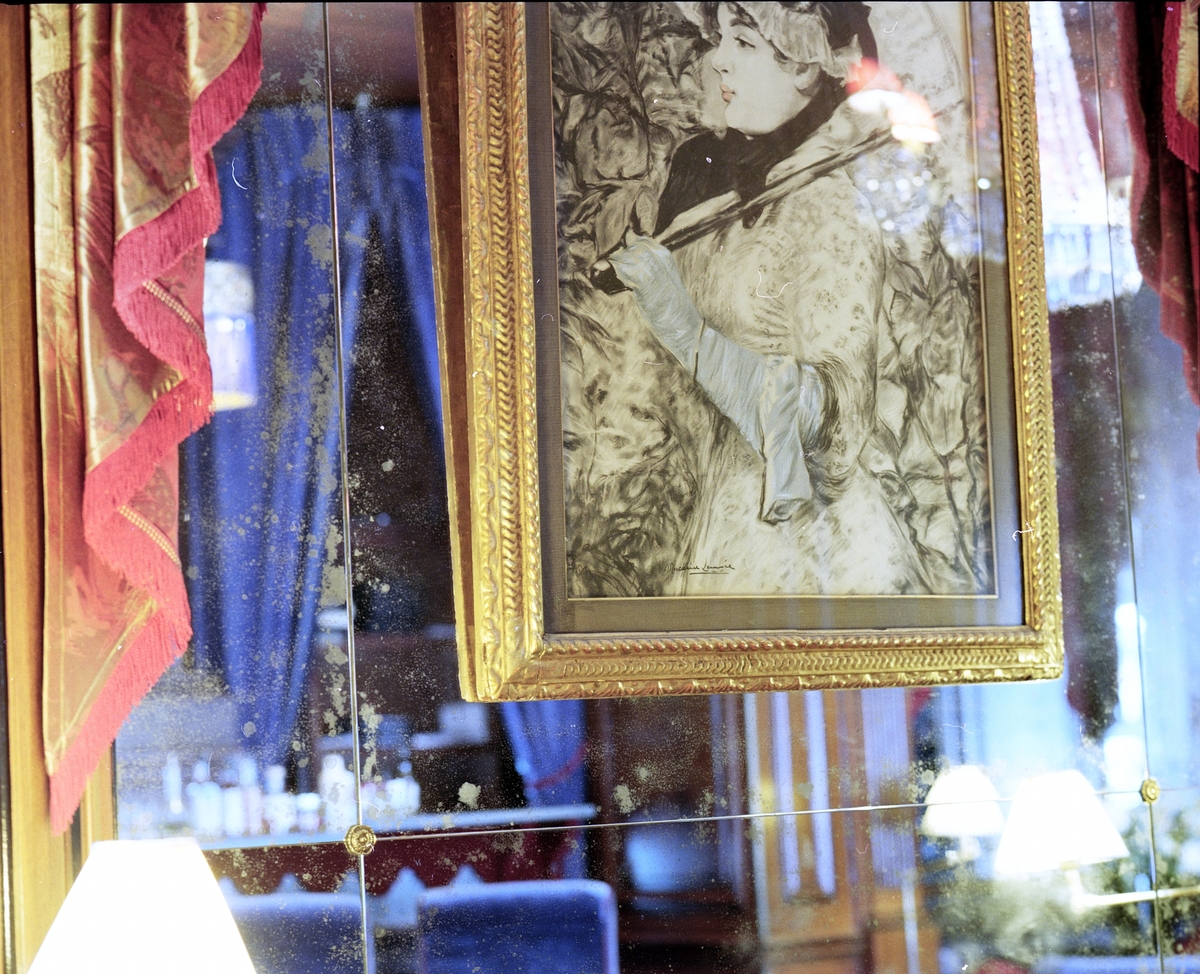
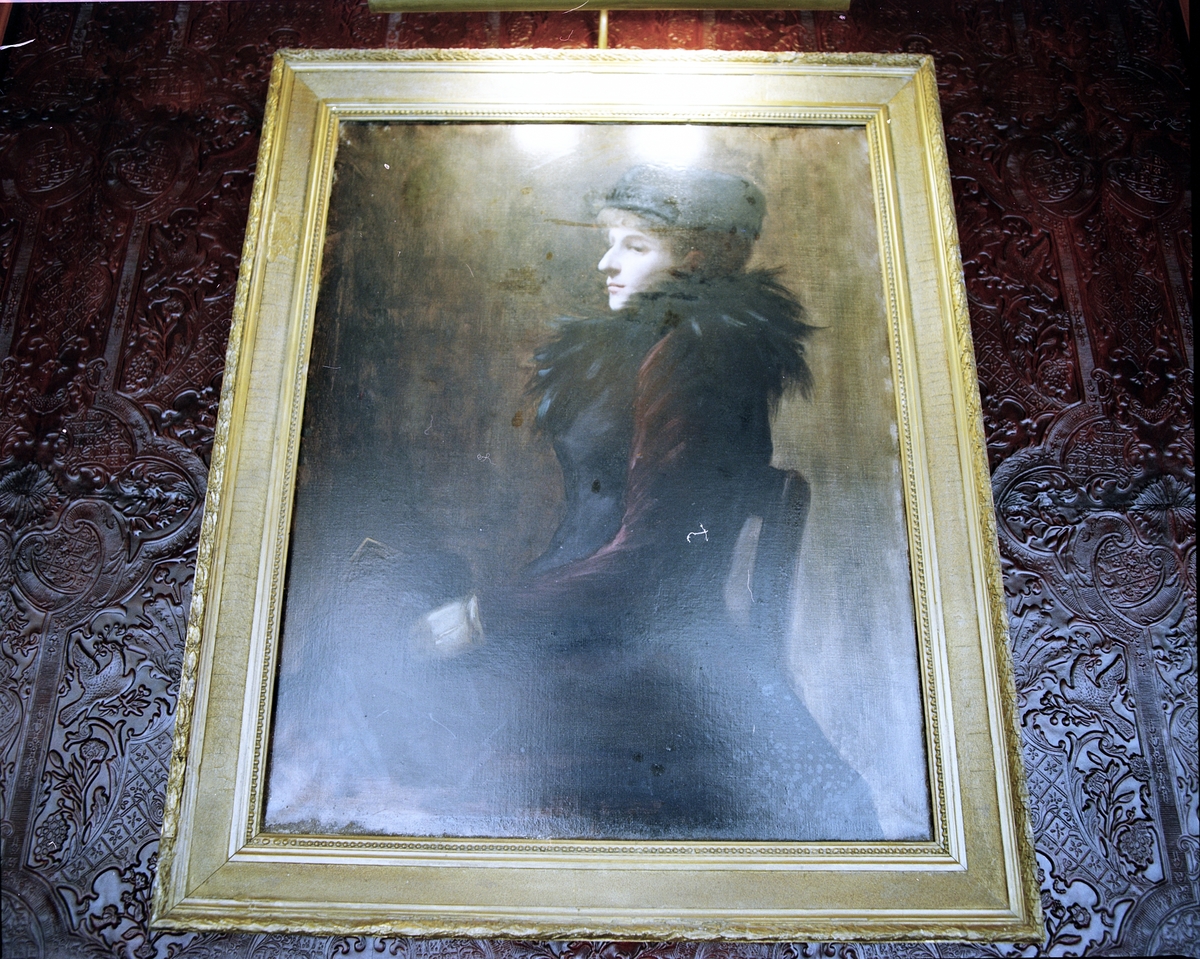
Running through the house is a collection of Belle Époque painting, absorbed into the rooms. Women in parks, fans and parasols, dandy portraits, pianos, the texture of a very particular social world. Artists represented include Giovanni Boldini, Jean Béraud, Paul César Helleu, Léon Bonnat, Eduardo León Garrido, François Schommer, and a number of their contemporaries.
Helleu carries a particular weight here. He was a friend of Proust’s, a painter of society and its surfaces, associated with the elegance the Recherche both celebrated and mourned. He is also the artist connected to the portrait of Proust on his deathbed — which gives him a strange duality in this house, where glamour and the decomposition of time are not opposites but the same subject viewed from different distances. It is, in the end, what the whole place is about.