Mesm Tokyo and the sensory language of sustainability
Located within the Waters Takeshiba complex overlooking Tokyo Bay, Mesm Tokyo presents the city’s motion through materials, light, and tactility: sustainable operations and local collaborations
Mesm Tokyo and the sense of place: Interpreting the waves
Overlooking the waterfront of Tokyo Bay, Mesm Tokyo – Autograph Collection by Marriott was conceived as a translation of the city’s energy into architecture, sound, and tactility. Designed by Wilson Associates in collaboration with IntercultureArt, the concept of “Tokyo Waves” represents the movement of a metropolis that never stops—its cultural layers, the alternation of calm and velocity, and the coexistence of precision and spontaneity.
The name Mesm derives from “mesmerize,” evoking the idea of a sensory experience capable of holding attention. The hotel stands within Waters Takeshiba, a mixed-use development connecting hospitality, culture, and public space through the nearby Sumida River.
Inside, the notion of waves extends from design to atmosphere. Public areas are fluid and open toward the light of the bay, while guest rooms alternate reflective surfaces and soft textiles, creating transitions between private and collective perception. The visual rhythm mirrors the city’s own pulse—dense, layered, and reflective.
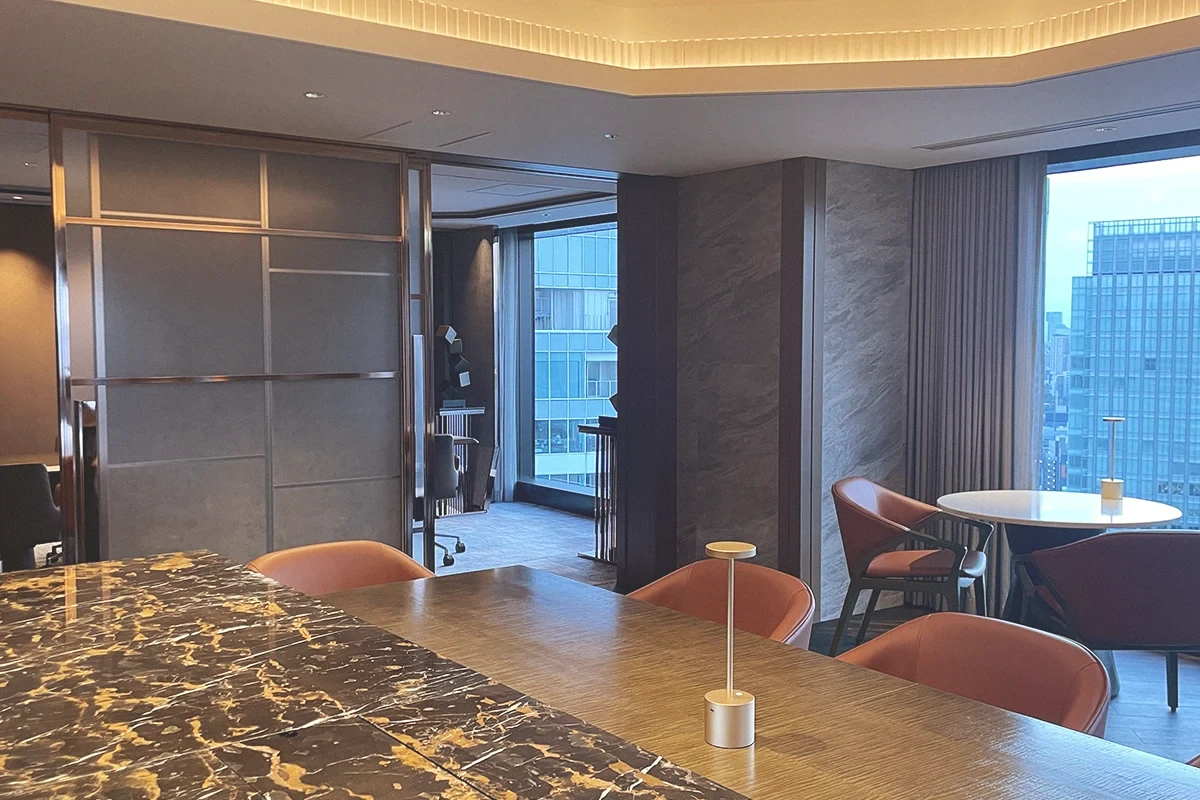
The aesthetic vocabulary of Mesm Tokyo translates the city’s dynamism into materials and gestures: water as a metaphor for transformation, glass and steel as carriers of transparency, wood and stone as anchors to natural context. The hotel’s architecture is conceived not as a static frame but as an organism in dialogue with its surroundings.
Sustainable hospitality in Tokyo: Certifications and daily practices
Mesm Tokyo has received both the Green Key ecolabel and Japan’s Sakura Quality Green 4 GyoikoZakura certification. The Green Key label, granted to sustainable hospitality operations, acknowledges the hotel’s commitment to energy management, waste reduction, and responsible sourcing. The Sakura Quality Green 4 certification, established in Japan, complements these international criteria by evaluating local supply chains and community engagement.
The hotel’s internal operations are defined by continuous review of their ecological impact. Energy consumption is monitored through smart systems, while cleaning and laundry processes rely on biodegradable products and water-efficient equipment.
Plastic reduction policies are applied throughout the property. Guest rooms use refillable dispensers instead of single-use amenities, while in-room information is provided digitally to minimize paper waste. The restaurant and bar source ingredients within a hundred-kilometer radius, reducing transport emissions and supporting regional producers.
Sustainable hotel design: Materials, textures, and tactility
In the collaboration between Wilson Associates and IntercultureArt, sustainable hotel design becomes a language of material honesty and cultural continuity. The designers interpreted Tokyo’s rhythm through tactile contrasts and structural transparency, combining traditional craftsmanship with modern fabrication techniques.
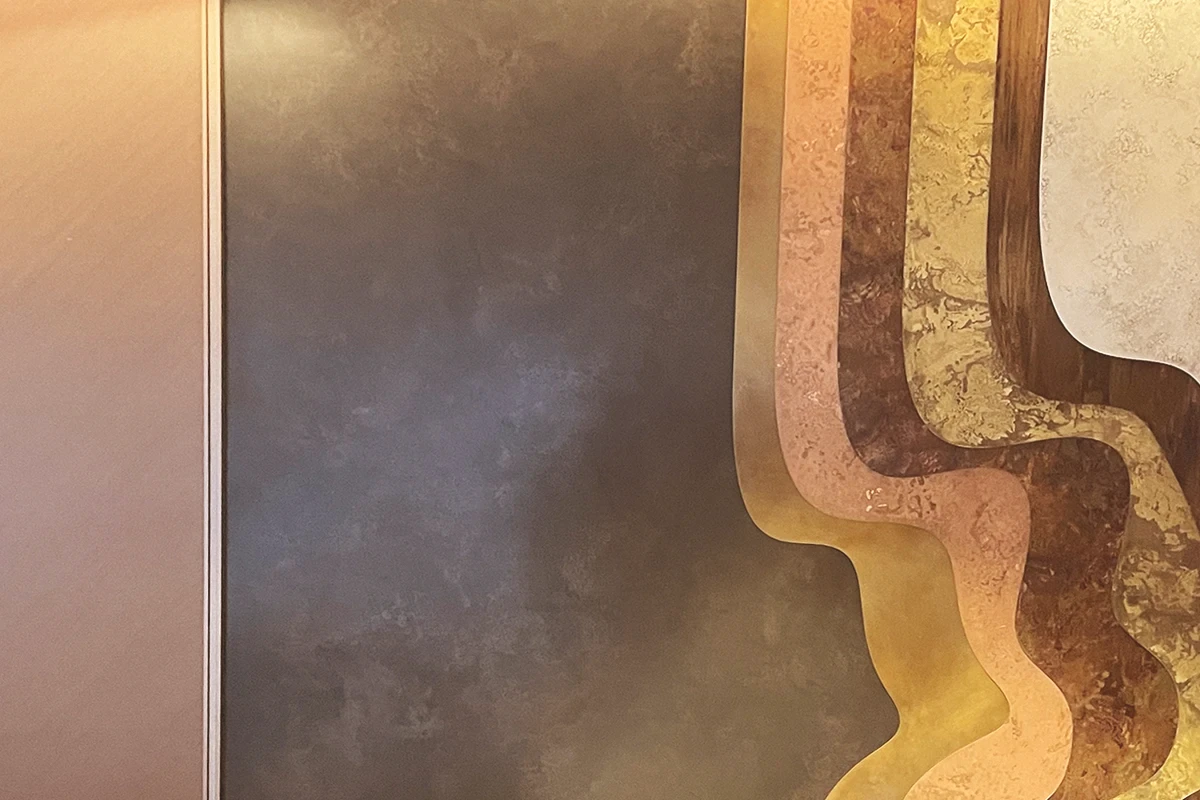
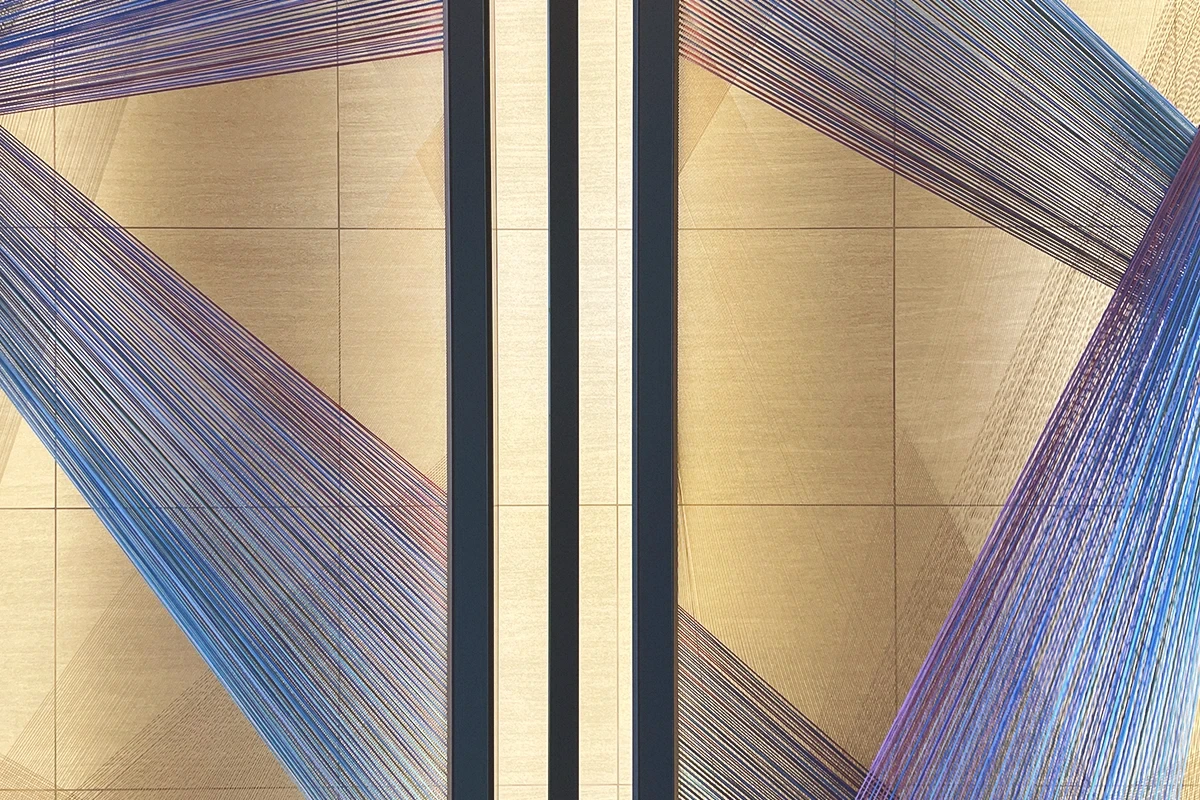
The interiors feature Mizuhiki cords—symbolic paper strings often used in Japanese gift wrapping—transformed into decorative motifs. The Miura-ori folding pattern, a mathematical structure developed in Japan for space engineering, inspires both wall surfaces and textiles. These gestures reflect an aesthetic rooted in repetition and movement, echoing the hotel’s wave concept.
Materials are selected for their lifecycle impact as well as for their cultural relevance. Biodegradable plastics, organic cottons, and absorbent towels form part of a broader effort to reduce synthetic waste and enhance the tactile awareness of guests.
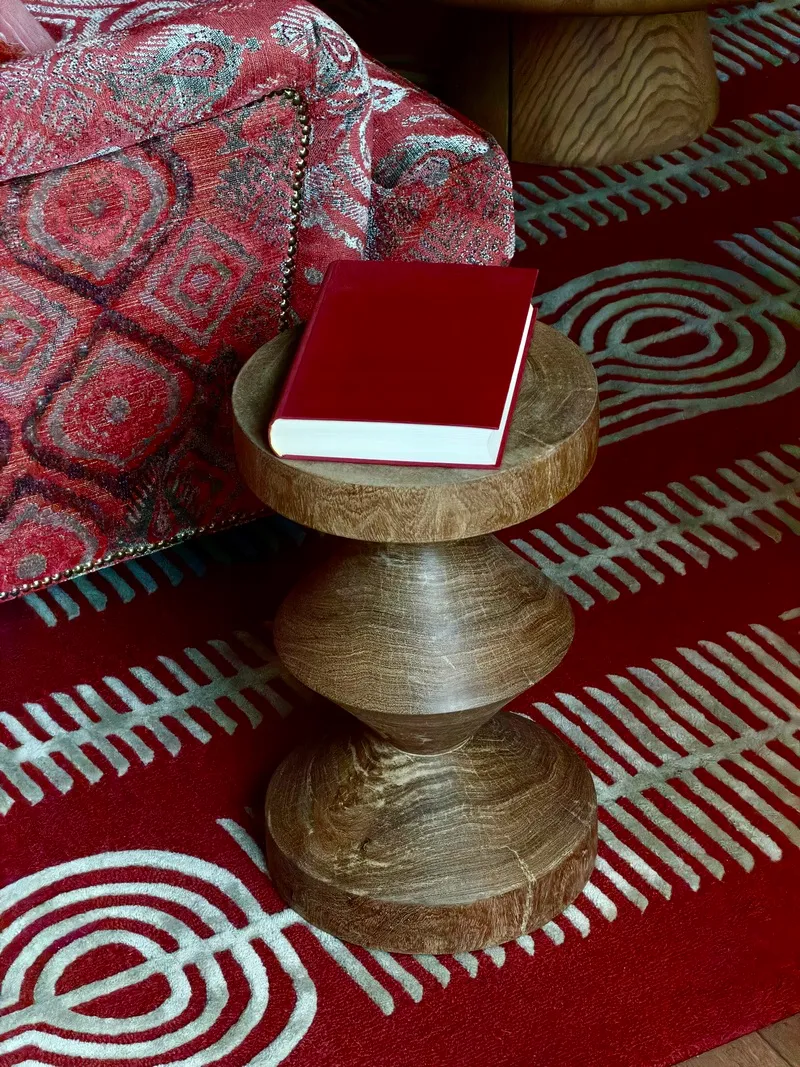
Sustainability here passes through the senses: the texture of a towel, the grain of a wooden handrail, the diffuse reflection of natural light. The interiors favor subdued colors—grays, beiges, deep blues—to extend calm rather than spectacle. In each design choice, sustainability is treated as a tool for environmental literacy rather than as decoration.
Ethical design in uniforms: The collaboration with Y’s BANG ON! by Yohji Yamamoto
Among the most symbolic collaborations at Mesm Tokyo is the partnership with Y’s BANG ON! by Yohji Yamamoto, which designed the staff uniforms following principles of ethics and aesthetics.
The collection is gender-neutral, produced in universal sizes to minimize surplus inventory. The silhouettes are minimal and structured, in dark tones that align with the hotel’s architectural palette. The fabrics are selected for durability and reduced environmental impact.
Through this approach, the uniform becomes a microcosm of the hotel’s philosophy: style as a function of equality and restraint. Textile waste is limited through a modular pattern system that optimizes fabric cutting, while maintenance routines extend the garments’ lifespan.
The visual consistency between staff attire and spatial design underlines a shared language of responsibility. In the daily rhythm of hospitality, the uniform operates as a form of silent communication—an ethical design visible through discretion.
Art and local craftsmanship: Design collaboration and creative production
Inside Mesm Tokyo, art and design coexist as parts of the same ecosystem. The integration of curated artworks transforms interior space into a narrative of craft and making.
Ceiling installations capture the shimmer of water; corridor pieces reinterpret the city’s nightscape. These works are not decorative additions but structural components of the environment. Each artist involved responds to the hotel’s thematic core—the coexistence of nature and metropolis.
One installation, inspired by the reflection of trees on urban surfaces, embodies this dialogue. Created through collaboration between designers and local artisans, it merges digital precision with manual skill. The result illustrates how technology and tradition can coexist within a sustainable creative economy.
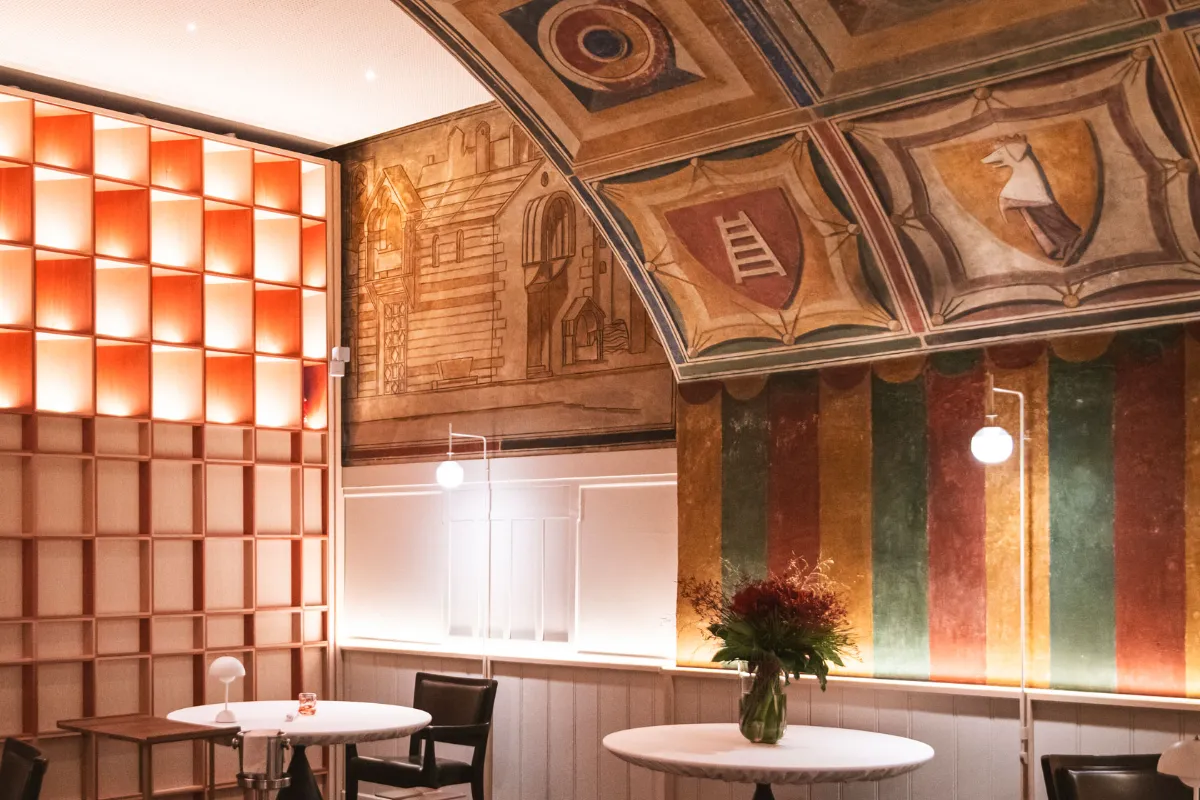
Mesm Tokyo also extends its engagement to culinary craftsmanship. At Chef’s Theatre, the dining experience “Cinderella” combines French bistronomy and storytelling. Each dish corresponds to a narrative chapter, using seasonal ingredients sourced directly from local producers.
This approach redefines fine dining through locality and transparency. The short supply chain ensures freshness while sustaining regional agriculture and fisheries. Through the culinary narrative, sustainability becomes sensory, connecting producers, chefs, and guests in a shared cycle of awareness.
Architecture and landscape: The waterfront as cultural interface
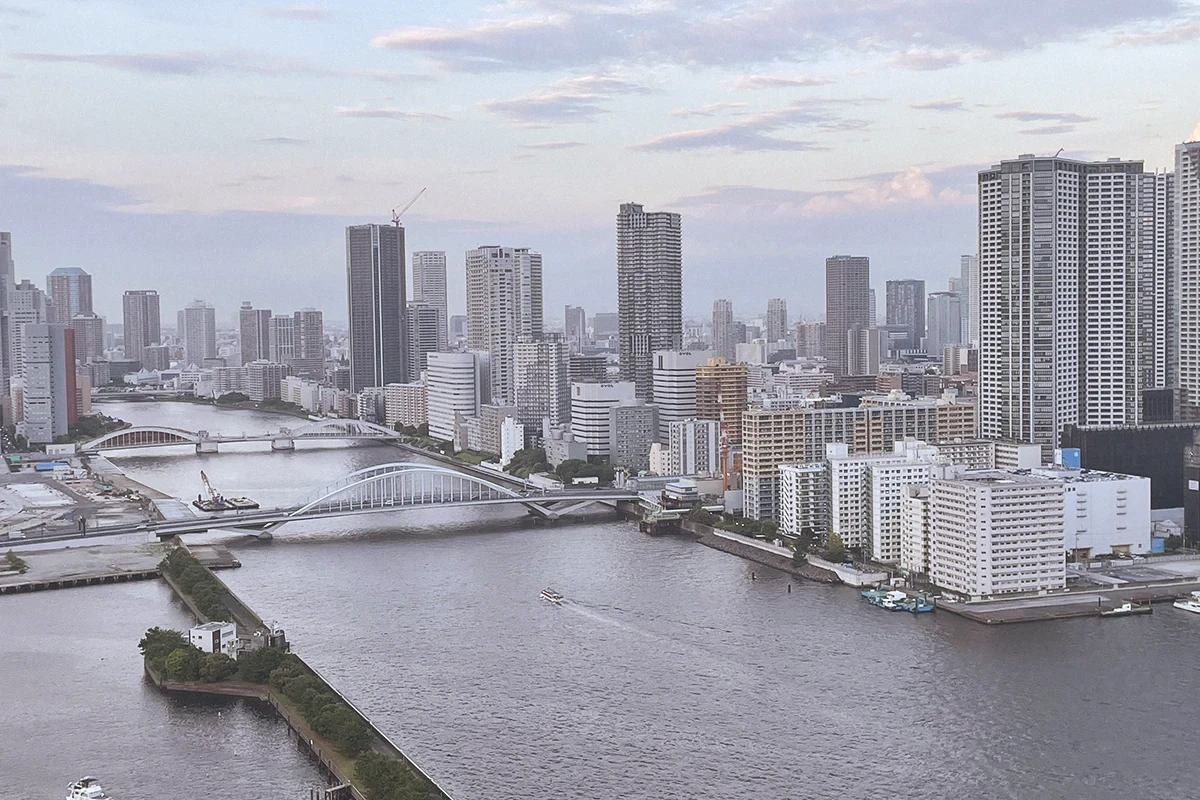
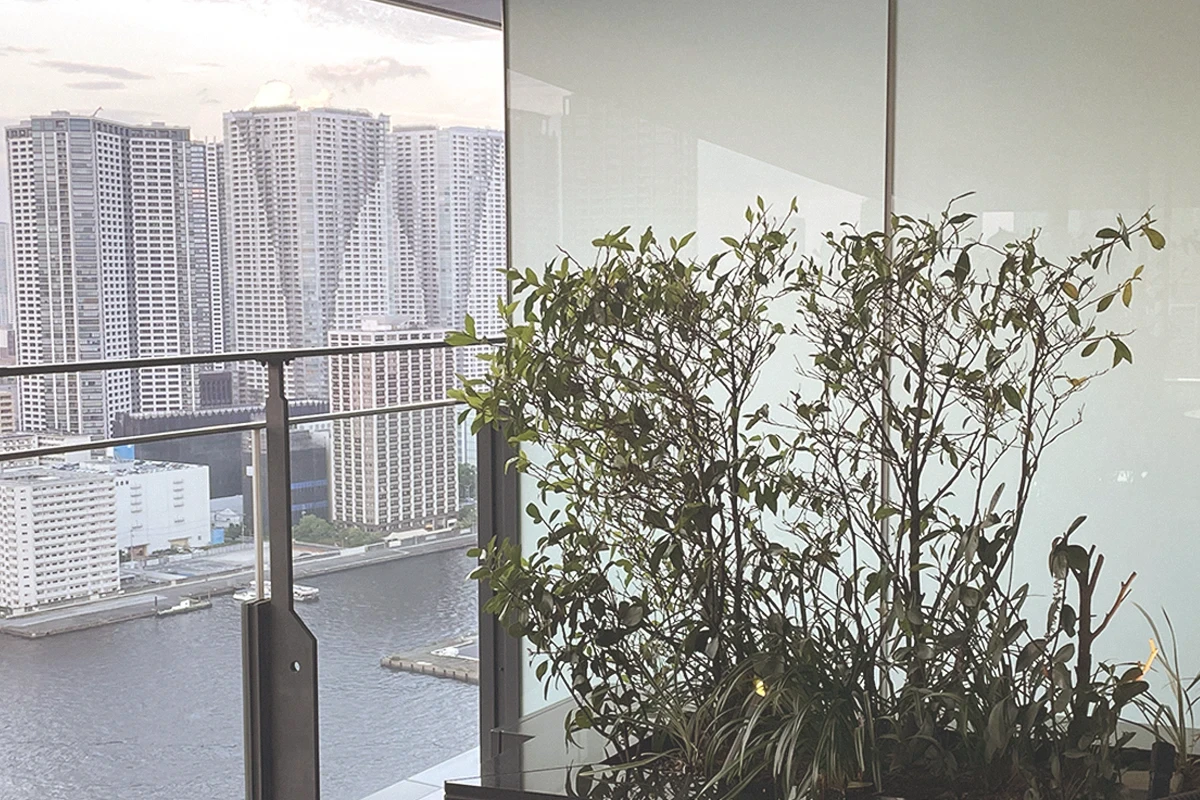
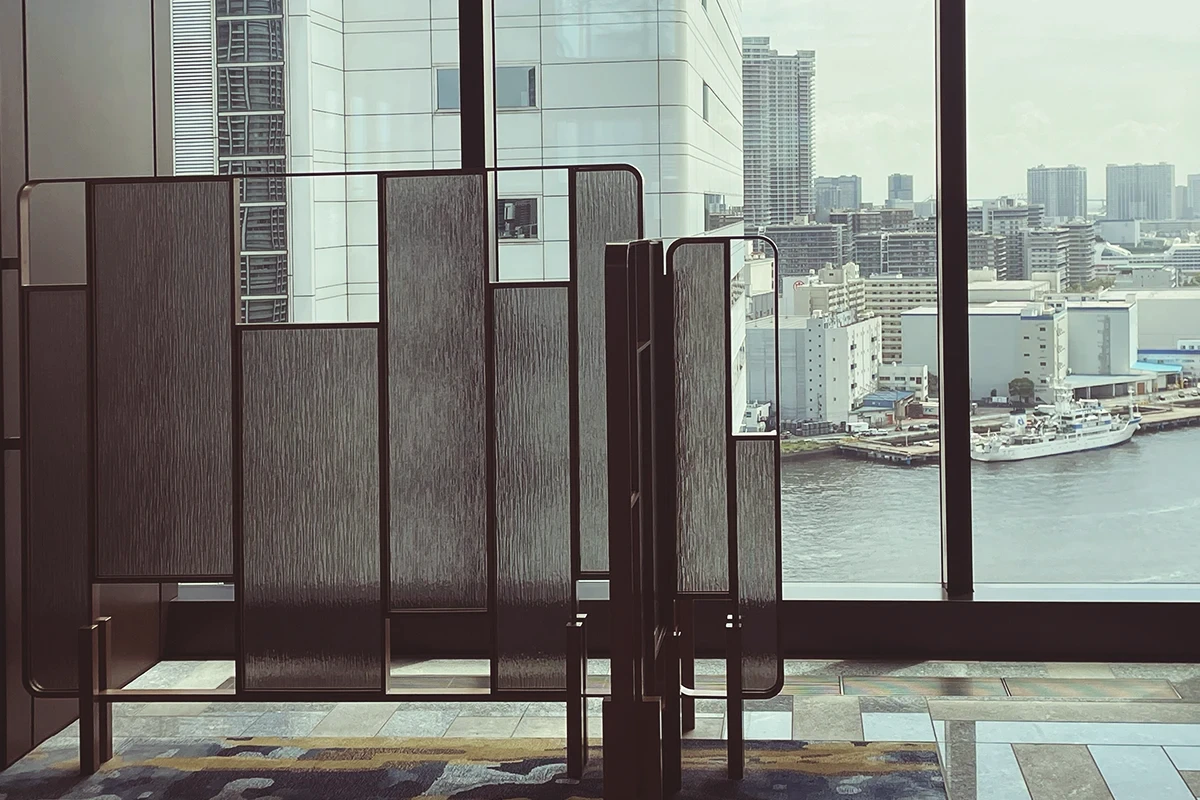
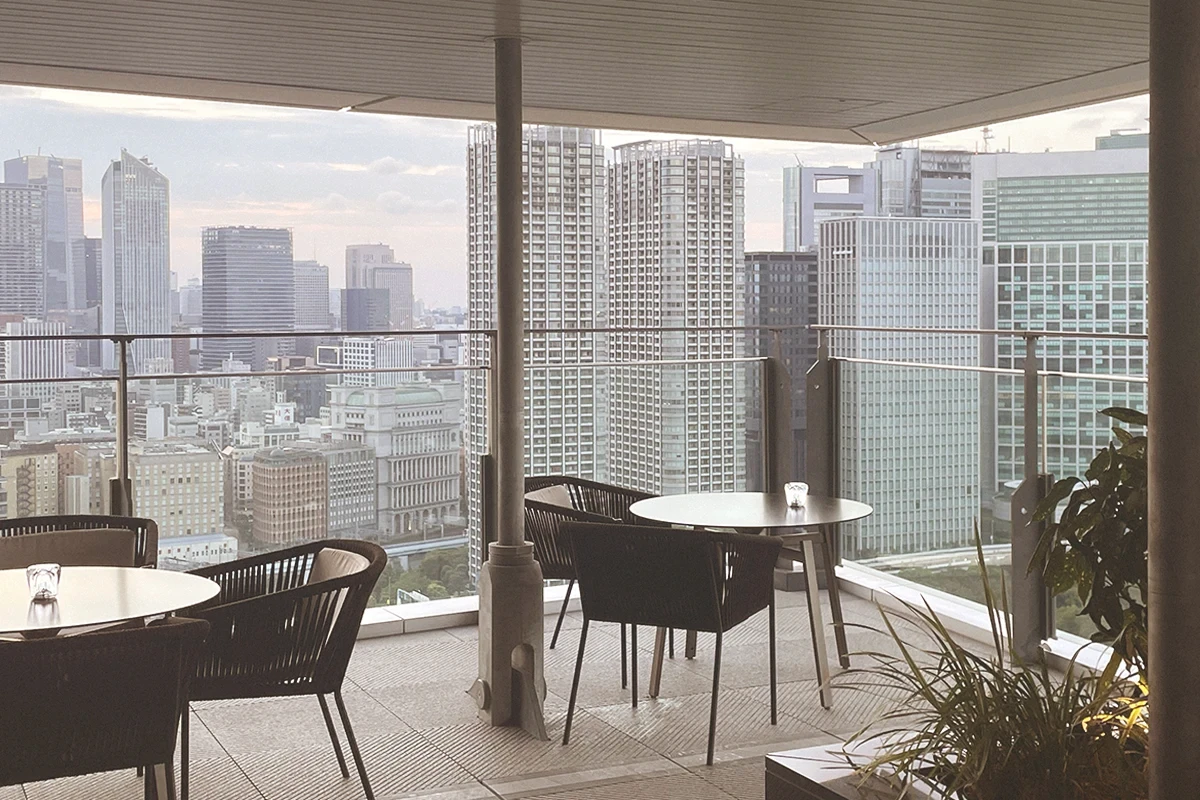
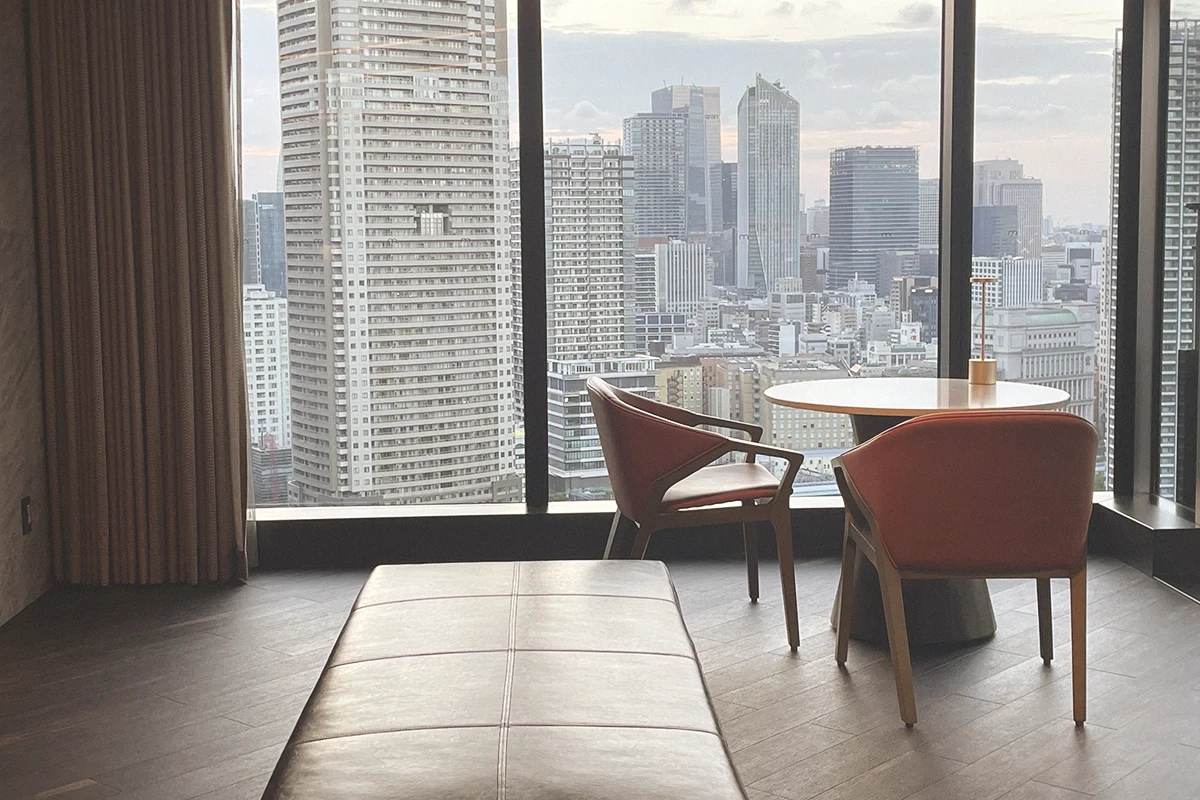
The hotel’s position on the edge of Tokyo Bay gives it a distinct identity as an interface between the city and the sea. From the upper floors, guests observe the skyline of Shibaura and the distant outline of the Rainbow Bridge. The architectural design responds to these surroundings by opening the interiors toward the waterfront, creating a constant visual and climatic exchange.
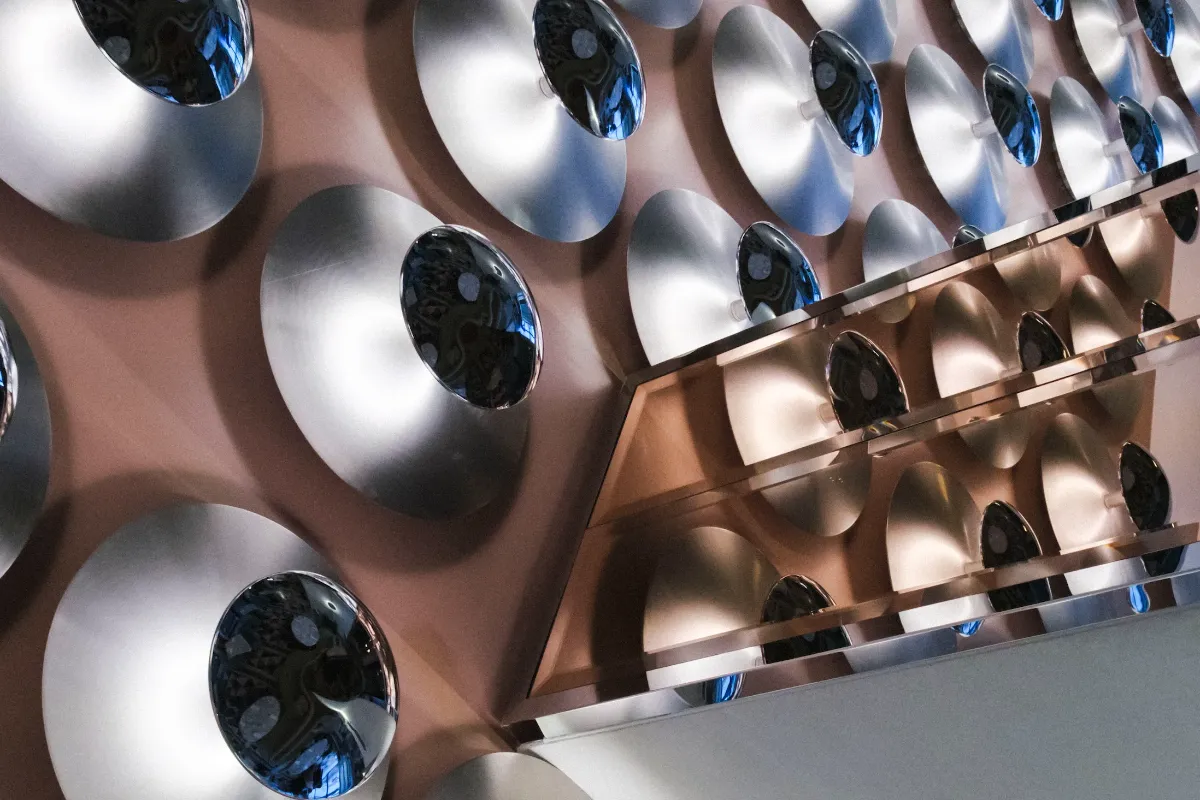
The bay reflects the light of the city, altering the perception of time and movement within the hotel. Materials like glass and brushed steel absorb and refract the changing illumination, while natural woods and stones provide balance and grounding. The dialogue between natural and artificial light defines the spatial atmosphere.
By translating environmental variation into design, Mesm Tokyo embodies a notion of fluidity. The building’s rhythm aligns with the urban and marine rhythms surrounding it, transforming architecture into an observation tool for the city’s own transformation.
Culinary storytelling and sustainable gastronomy at Chef’s Theatre
At Chef’s Theatre, food operates as narrative. The “Cinderella” experience combines gastronomy and performance: a series of courses corresponding to scenes, each introduced through light, sound, and verbal cues.
Seasonal vegetables, herbs, and seafood are sourced from producers within the Tokyo region. Menus change regularly, adapting to local harvests and minimizing waste. The kitchen’s structure follows a transparent chain—from farmer to chef to guest—ensuring traceability at every stage.
Sustainability in this context extends beyond ingredients. The restaurant limits disposable packaging, composts organic waste, and works with suppliers using low-emission logistics. Through this system, the act of dining becomes part of the hotel’s environmental narrative.
The connection between food and storytelling reinforces the idea of sustainability as culture: a practice that involves participation rather than instruction. Guests are invited to perceive locality not as a constraint but as a resource for creativity.
A hotel in dialogue with the city: Community and cultural engagement
Mesm Tokyo defines hospitality as coexistence. Collaborations with artists, craftspeople, and regional producers create a network of relationships that extends beyond the building. The hotel’s public spaces host occasional installations and performances involving the local creative community.
This engagement translates the hotel’s role from passive accommodation to active participant in Tokyo’s cultural landscape. By aligning its operations with the city’s creative and environmental pulse, Mesm Tokyo functions as a mediator between global standards and local identity.
The approach suggests a redefinition of luxury—not as isolation but as interconnection. Comfort derives from coherence, from the understanding that each material and gesture participates in a shared ecosystem.
Tokyo Waves: Coexistence as the new narrative
The philosophy underlying Mesm Tokyo articulates a continuous negotiation between progress and preservation. Its architecture, materials, uniforms, and culinary practices share a common premise: that sustainability is a method, not a message.
In a city characterized by speed and transformation, Mesm Tokyo proposes reflection and rhythm. The Tokyo Waves concept becomes both aesthetic and ethical—an architecture of motion that accommodates stillness.
The hotel’s contribution lies in its ability to make sustainability tangible through experience: a light touch, a texture, a sound. Rather than demonstrating innovation through spectacle, it operates through precision and restraint. The result is an evolving model of urban hospitality—a layered structure where environment and culture move together, like the waves that inspired its name.