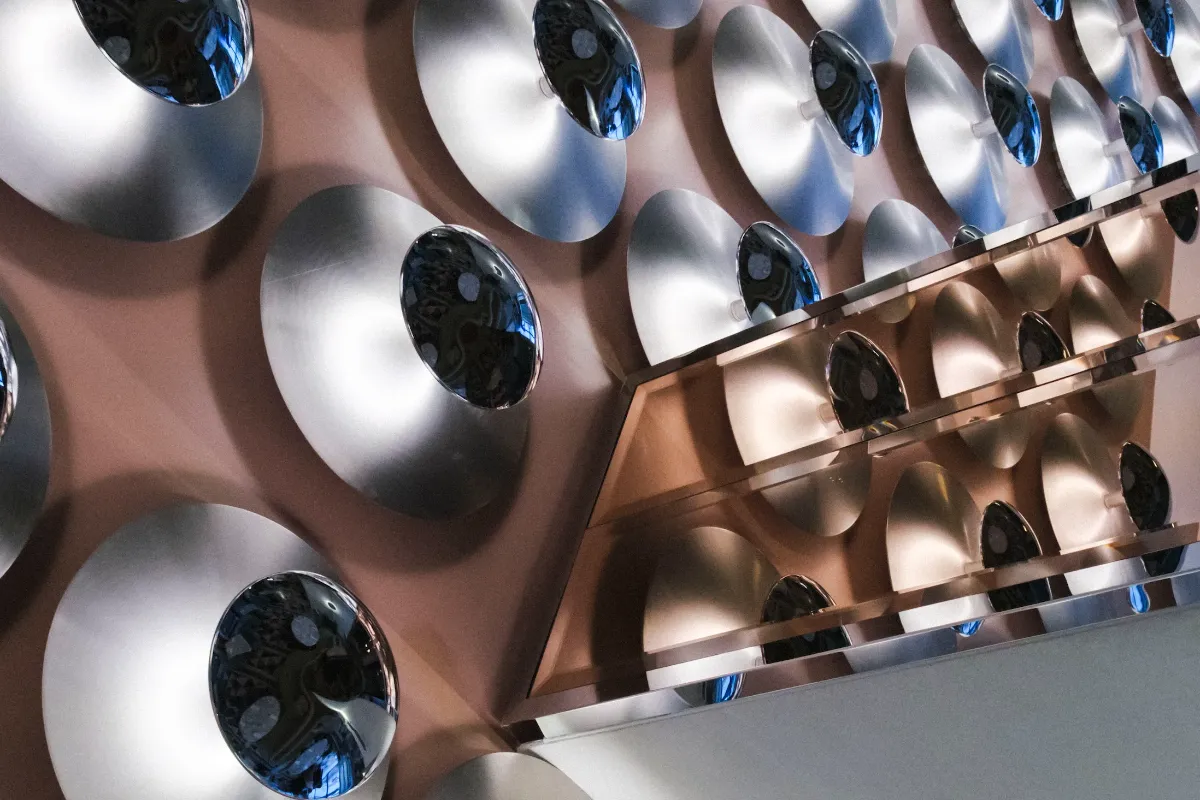
OGR Torino: how a former railway depot became a center for art and innovation
OGR – the former Officine Grandi Riparazioni of Turin — a 35,000-square-metre industrial complex restored by Fondazione CRT — artistic experimentation and technological innovation
A place where art, technology, and research intersect in Turin
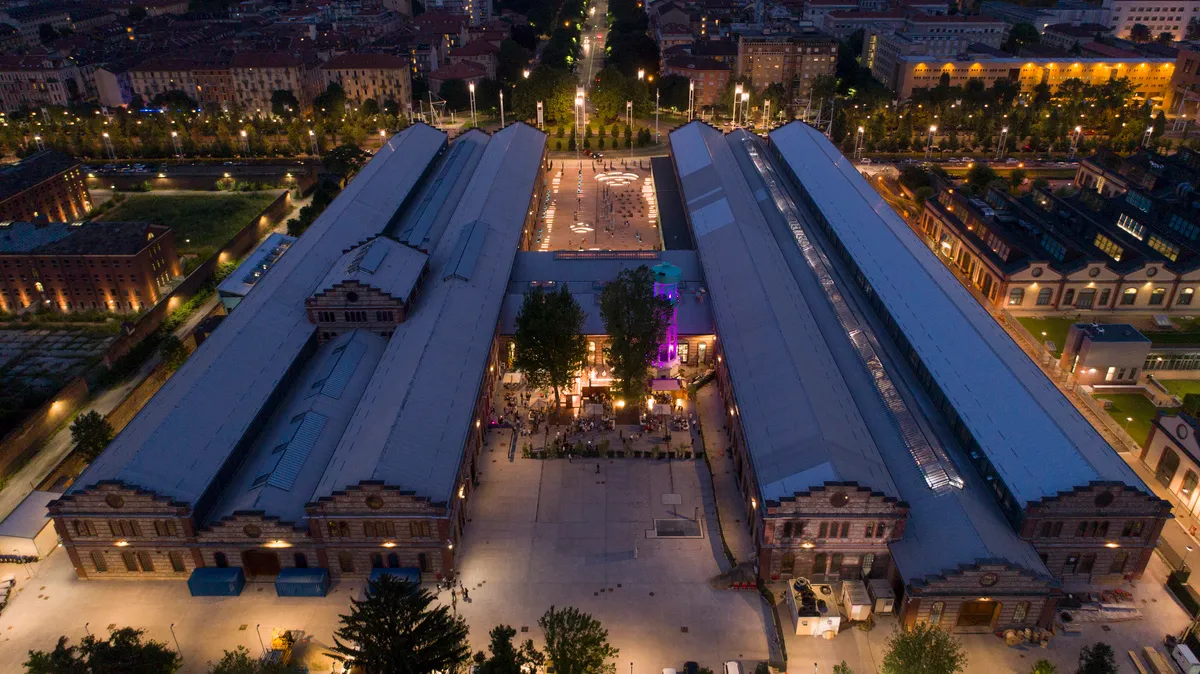
In a former railway repair depot in central Turin, club culture meets quantum computing, contemporary art meets startup incubators, and experimental sound meets artificial intelligence research. OGR Torino’s program extends from C2C Festival’s nocturnal beats to Italian Tech Week’s institutional forums, addressing both artistic experimentation and technological discourse within a single 35,000-square-metre industrial volume.
The program reflects OGR’s character: not a venue, but an infrastructure. A system connecting production, research, and public engagement, where the city’s industrial history continues into its future.
From railway workshop to infrastructure for creativity and innovation
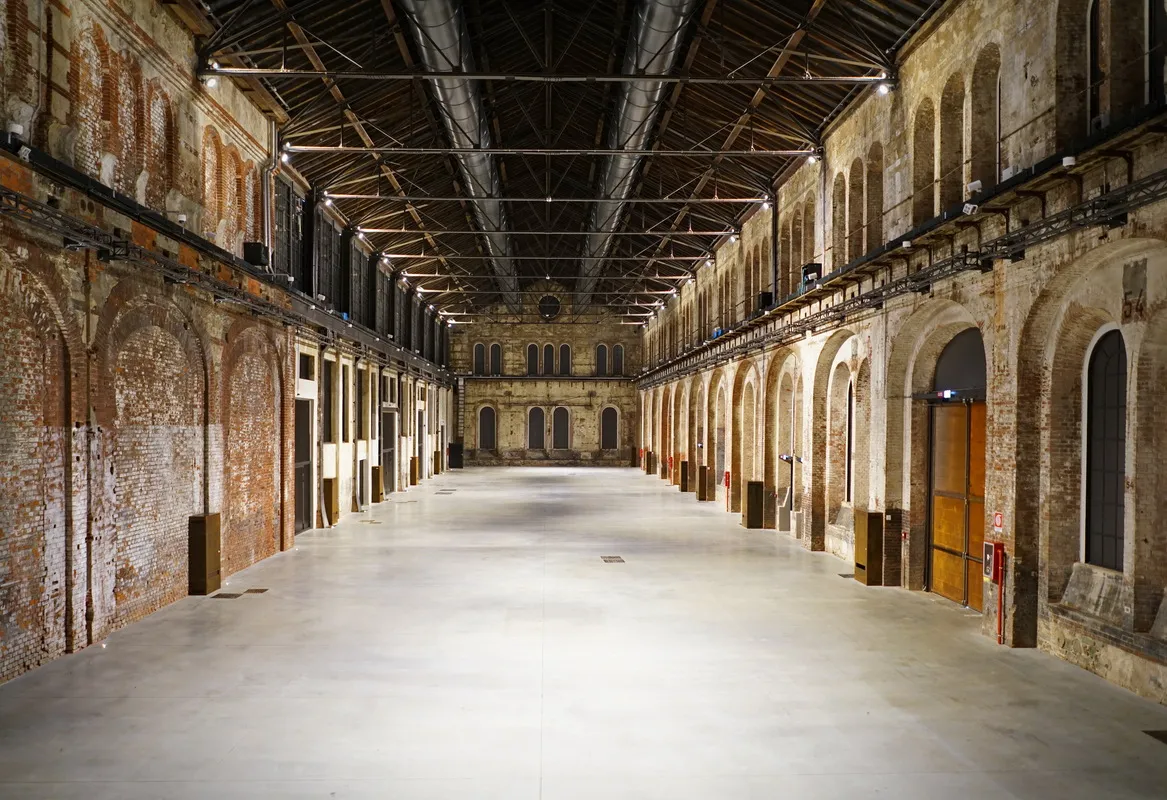
Guided by Fondazione CRT, the former Officine Grandi Riparazioni — a late-nineteenth-century railway workshop — was restored between 2013 and 2017 to become a space for creative and technological development.
The restoration preserved the industrial structure — cast-iron columns, brick façades, and vaulted roofs — while introducing systems for light, sound, and energy suited to contemporary use. Silent since the early 1990s, the building reopened as a platform for cultural and scientific research, marking a shift from mechanical repair to the assembly of ideas. The architecture functions not as a backdrop but as a tool for production, linking artistic and scientific communities within a shared space of experimentation.
Fondazione CRT and the development of civic infrastructures
Fondazione CRT is a private foundation with a public mission, active since 1991 in culture, research, education, welfare, and sustainable growth across Piedmont and the Aosta Valley. It operates through investments, partnerships, and networks that strengthen the region’s social and economic fabric.
Its approach combines civic responsibility with experimentation, transforming financial resources into infrastructures for knowledge and creativity. Fondazione CRT financed and promoted the complete restoration of the Officine Grandi Riparazioni and continues to define their strategic direction. Through OGR Torino, the Foundation explores a model of philanthropy based on the interaction of art, science, and innovation.
OGR Tech and OGR Cult: parallel fields of research
OGR Torino operates through two interconnected cores: OGR Tech and OGR Cult. The distinction is functional rather than ideological. OGR Tech focuses on innovation processes, venture programmes, and collaborations with universities and companies, addressing artificial intelligence, sustainability, and the social implications of technology. OGR Cult develops exhibitions, performances, and residencies dedicated to artistic and interdisciplinary research.
The dual structure mirrors the building’s history. William Kentridge’s Procession of Reparationists (2017), the first site-specific work for OGR, installed along the former railway platforms, evokes continuous motion and collective labour. The piece captures the transition from mechanical restoration to cultural and technological reparation.
Snodo as a point of connection and exchange
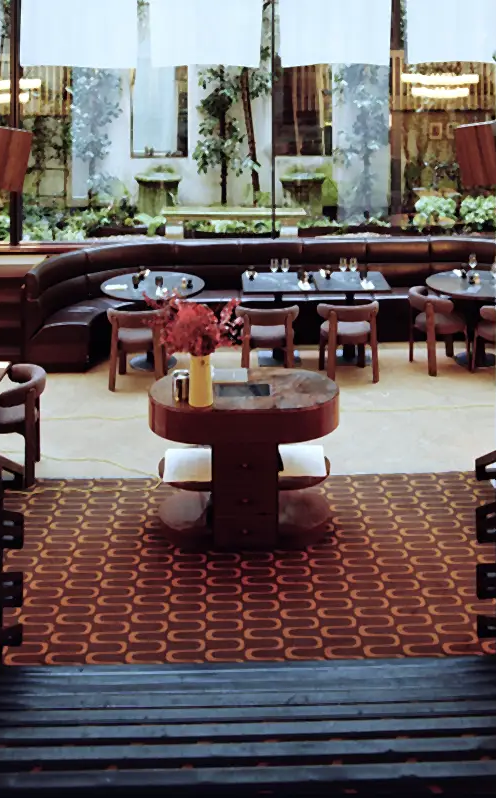
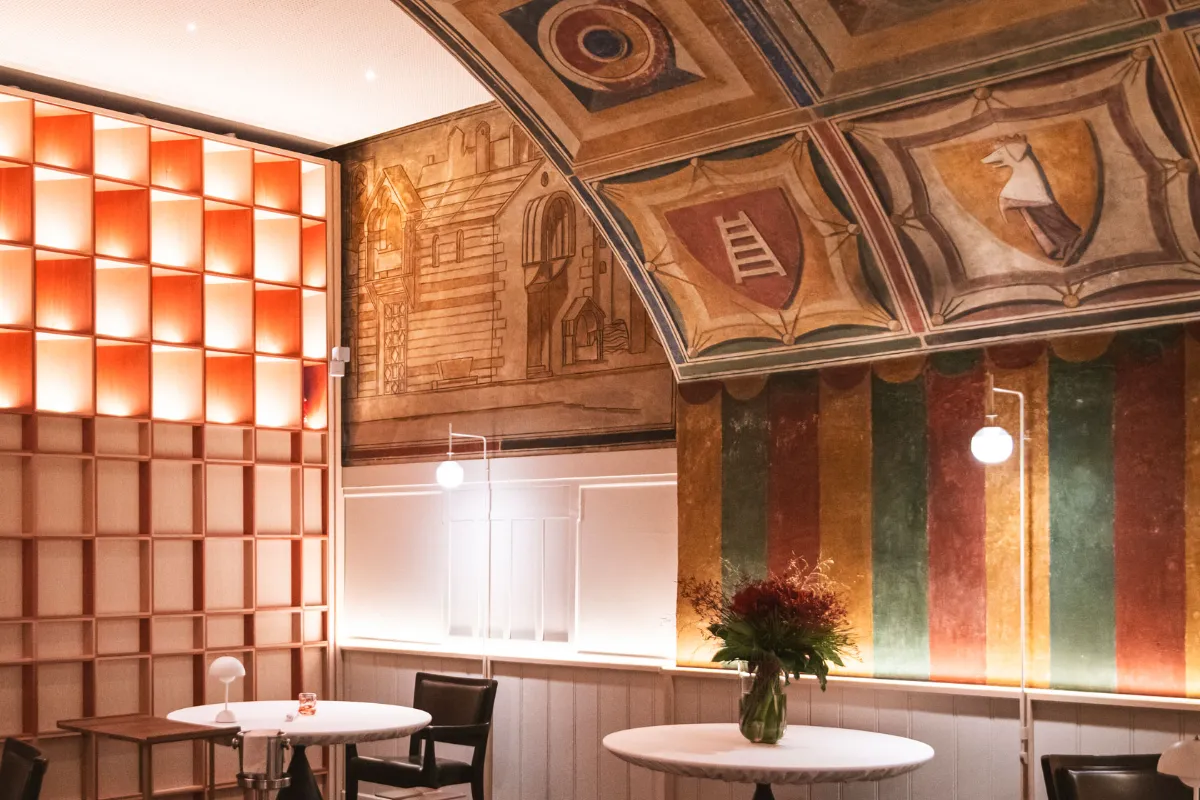
Between OGR Tech and OGR Cult lies Snodo — a space conceived as a junction rather than a restaurant or café. It accommodates food, discussions, informal meetings, and unplanned exchanges that sustain the institution’s daily activity.
At its center stands a forty-six-meter social table in brushed steel and oak, designed to bring together researchers, artists, and visitors. The setting maintains the proportions of the original industrial hall: long tables, exposed materials, minimal signage.
Snodo operates as an interface between disciplines and as an environment where ideas circulate before they take form, continuing the building’s logic of production through contact.
Electric Dreams and the history of art and technology before the digital age
Opening in autumn 2025, Electric Dreams: Art & Technology Before the Internet examines four decades of artistic experimentation with technology prior to the digital era. The exhibition gathers works employing computers, circuitry, light, and kinetic systems as tools for perception and participation rather than as technological novelties.
Presented within the former repair halls, the exhibition situates these works within an industrial context, transforming the memory of machines into a language for reflection. It considers how artists anticipated questions of automation, interface, and human presence that continue to inform contemporary practice at OGR.
We Felt a Star Dying and the dialogue between art and quantum research
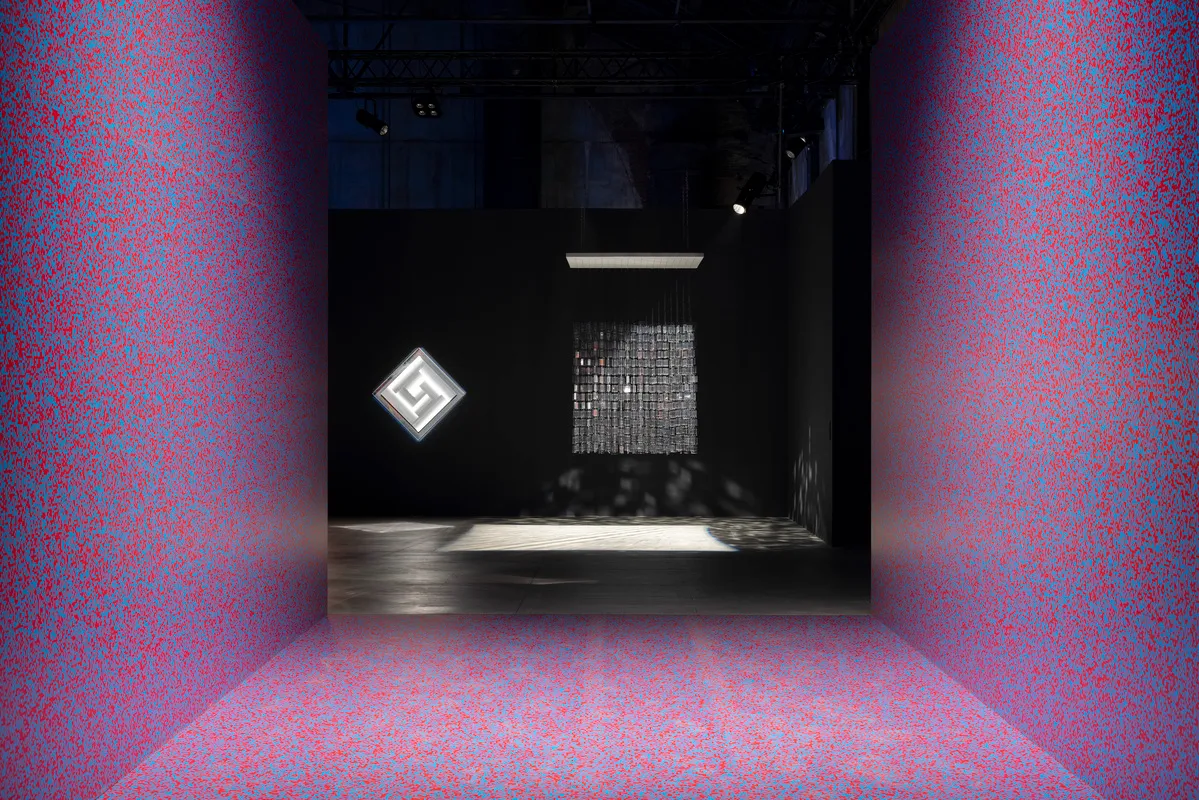
In parallel with Electric Dreams, OGR Torino presents We Felt a Star Dying, an international commission by Laure Prouvost, realized with philosopher Tobias Rees and scientist Hartmut Neven (founder of Google Quantum AI), in collaboration with LAS Art Foundation.
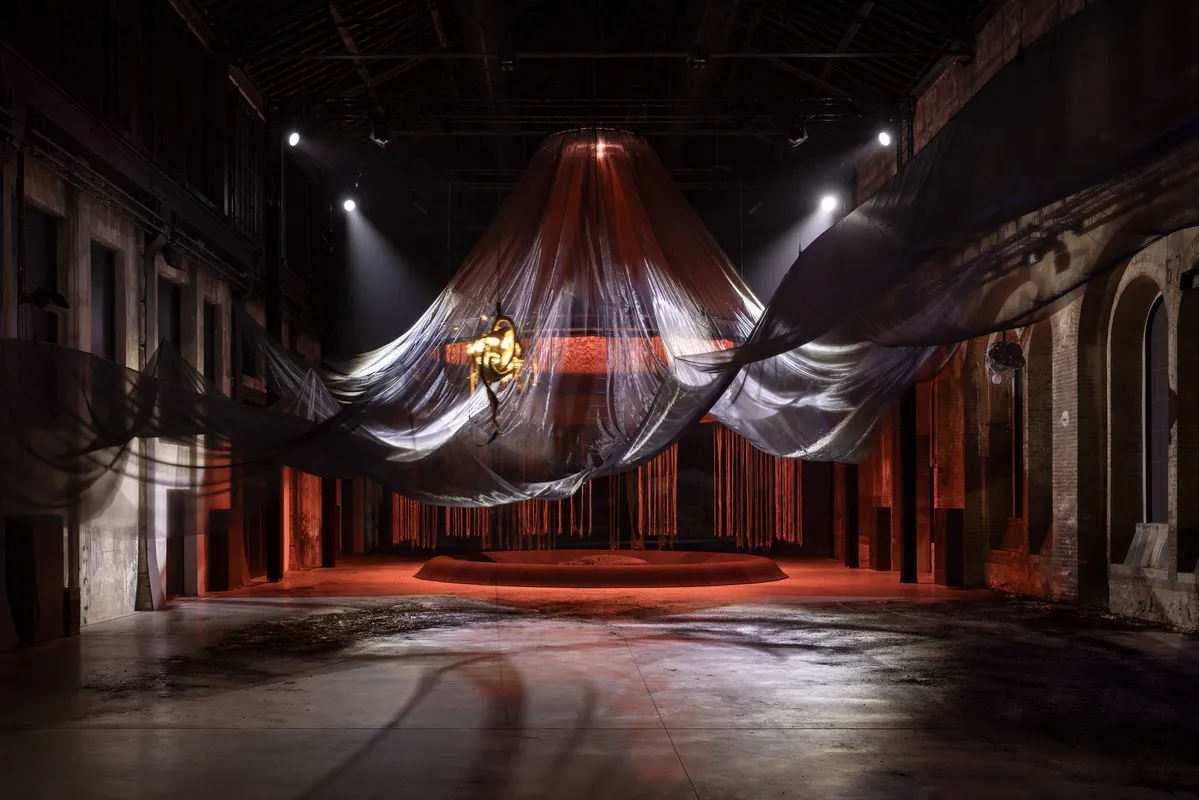
The work explores the perceptual and philosophical implications of quantum phenomena through moving image, sound, and scent. Installed in Binario 1 — OGR’s largest industrial hall — it treats quantum computing as material rather than subject, characterized by instability and flux.
Within this context, We Felt a Star Dying extends OGR’s enquiry from the mechanical to the immaterial, from the tangible presence of machines to the dynamics of particles. Together, the projects outline OGR’s ongoing exploration of the intersections between cultural and scientific processes.
OGR Torino as a contemporary center for research and production
OGR Torino operates across performing arts, music, literature, visual art, design, and technological research. In 2013, OGR-CRT acquired the Officine Grandi Riparazioni from RFI Sistemi Urbani, one of Turin’s most significant nineteenth-century industrial sites.
The renovation lasted 1,000 working days and required an investment of over €100 million by Fondazione CRT. The Cult Area opened in September 2017, followed by the Tech Area in June 2019, completing the transformation of the former repair factory into a center dedicated to research, production, and innovation.
Elisa Russo