Preservation becomes creative reimagining at Rome’s Palazzo Talìa
The muse Thalia has returned to the site where nymphs were once venerated: history and myth, cinema and architecture intersect in a Renaissance site restored to the city by the Federici family
Inside Luca Guadagnino’s sensual reimagining of a Renaissance palazzo
There’s a particular quality of afternoon light in Rome that transforms stone into something warmer, almost breathing. On Largo del Nazareno, just far enough from the Trevi Fountain to escape the river of tourists yet close enough to hear the distant splash of water, this light falls across a palazzo facade that has witnessed five centuries of transformation.
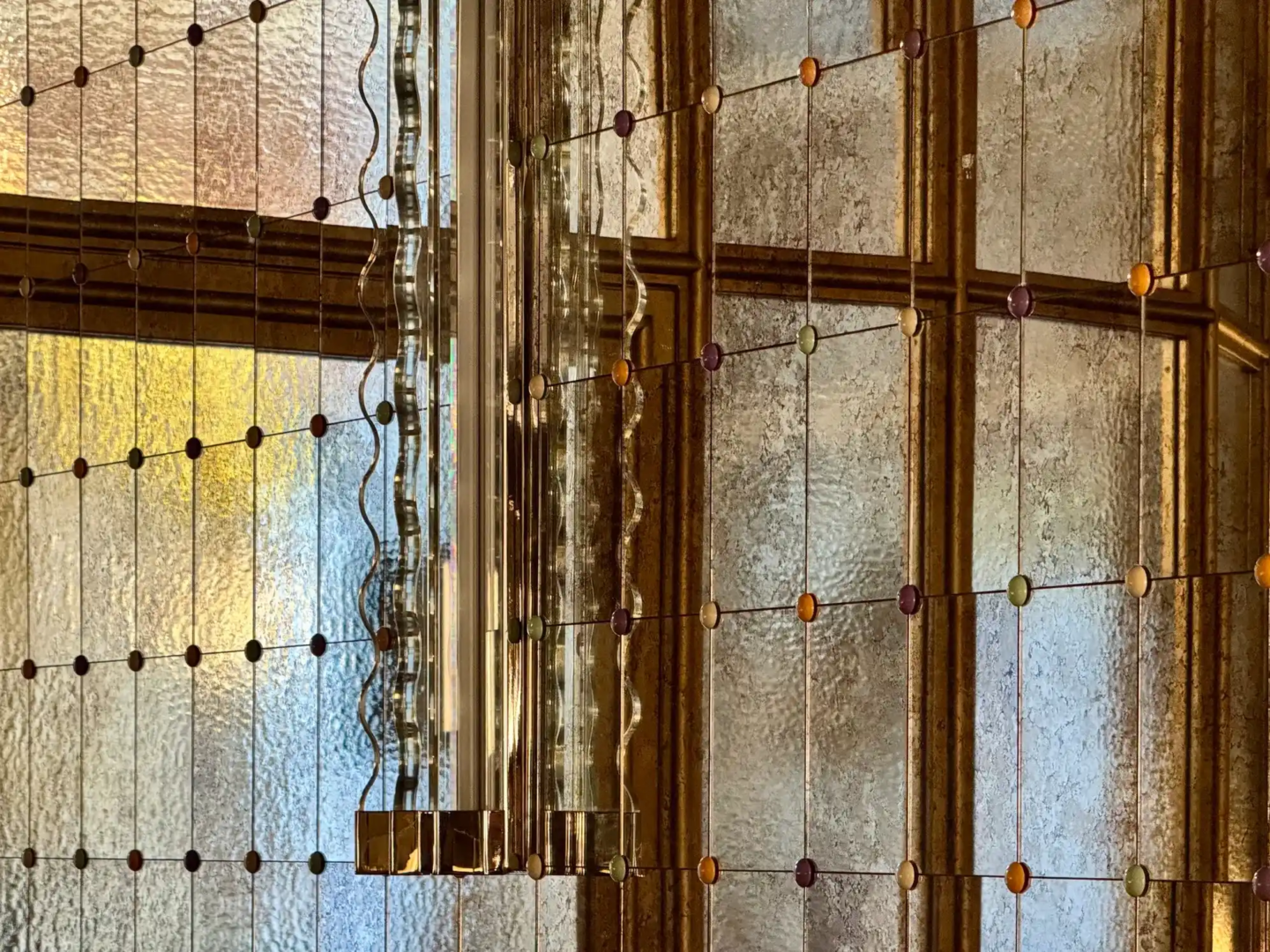
Inside Palazzo Talìa, that same light catches on mirrored surfaces and glazed volcanic stone, on velvet the color of aged wine and carpets that seem to hold entire narratives in their weave. The spaces possess a cinematic quality—not in the obvious sense of grandeur, but in how they manipulate mood, texture, and memory. Luca Guadagnino’s first venture into hospitality has found its rhythm, settling into a confidence that comes only when design stops announcing itself and simply exists.
Thalia, the Greek muse of comedy and pastoral poetry behind the identity of Palazzo Talìa
This is a palazzo that understands the weight of its history without being crushed by it. The name honors Thalia. Among the nine Muses born from the union of Zeus and Mnemosyne – goddess of memory – Thalia presided over comedy and pastoral poetry. Her name derives from the Greek word meaning “to bloom” or “rich festivity,” and she embodied the flourishing, joyous aspects of artistic creation. Classical depictions show her crowned with ivy, holding a shepherd’s staff and the comic mask – that smiling counterpoint to tragedy’s tears.
She was no minor deity. Ancient poets invoked her before performances, seeking her blessing for works that would make audiences laugh or contemplate the simple pleasures of rural life. According to myth, she bore the Corybantes to Apollo – ecstatic dancers who served the goddess Cybele. But more than her mythological biography, Thalia represented something essential: the idea that art need not always be solemn or monumental. Comedy, lightness, the pastoral – these too deserve divine patronage.
From Renaissance residence to Collegio Nazareno: five centuries of Roman history inside Palazzo Talìa
The choice to name this palazzo after the Muse feels increasingly apt the longer you spend within its walls. There’s wit here, irony, a refusal to take itself too seriously despite the long history.
The building’s past spans five centuries, each era leaving its mark. During the Renaissance, humanist scholar Angelo Maria Colocci – secretary to Pope Leo X – made this his residence. The site itself held older significance: Roman aqueducts once channeled water beneath these foundations, and temples honoring water nymphs and artistic muses predated Christian construction.
The seventeenth century brought Cardinal Michelangelo Tonti, whose ecclesiastical career shaped the building’s enduring identity. Born in 1566, Tonti rose through the Church hierarchy with remarkable speed. In 1608, Pope Paul V appointed him titular Archbishop of Nazareth—a prestigious honorific title referring to the biblical city in the Holy Land, then under Ottoman control. The position carried no actual territorial jurisdiction but signified the bearer’s elevated status within the Church. It was this appointment that earned Tonti his nickname: Cardinal Nazareno, the Cardinal of Nazareth.
The name stuck, and when Tonti acquired this palazzo, the building itself inherited his epithet. Even today, the address – Largo del Nazareno – preserves that seventeenth-century ecclesiastical connection. After Tonti’s death in 1622, legal complications delayed the execution of his will, but eventually the property passed to San Giuseppe Calasanzio, founder of the Piarist Fathers. The cardinal’s bequest specified that a school be established for disadvantaged children, transforming a prelate’s residence into an educational institution.
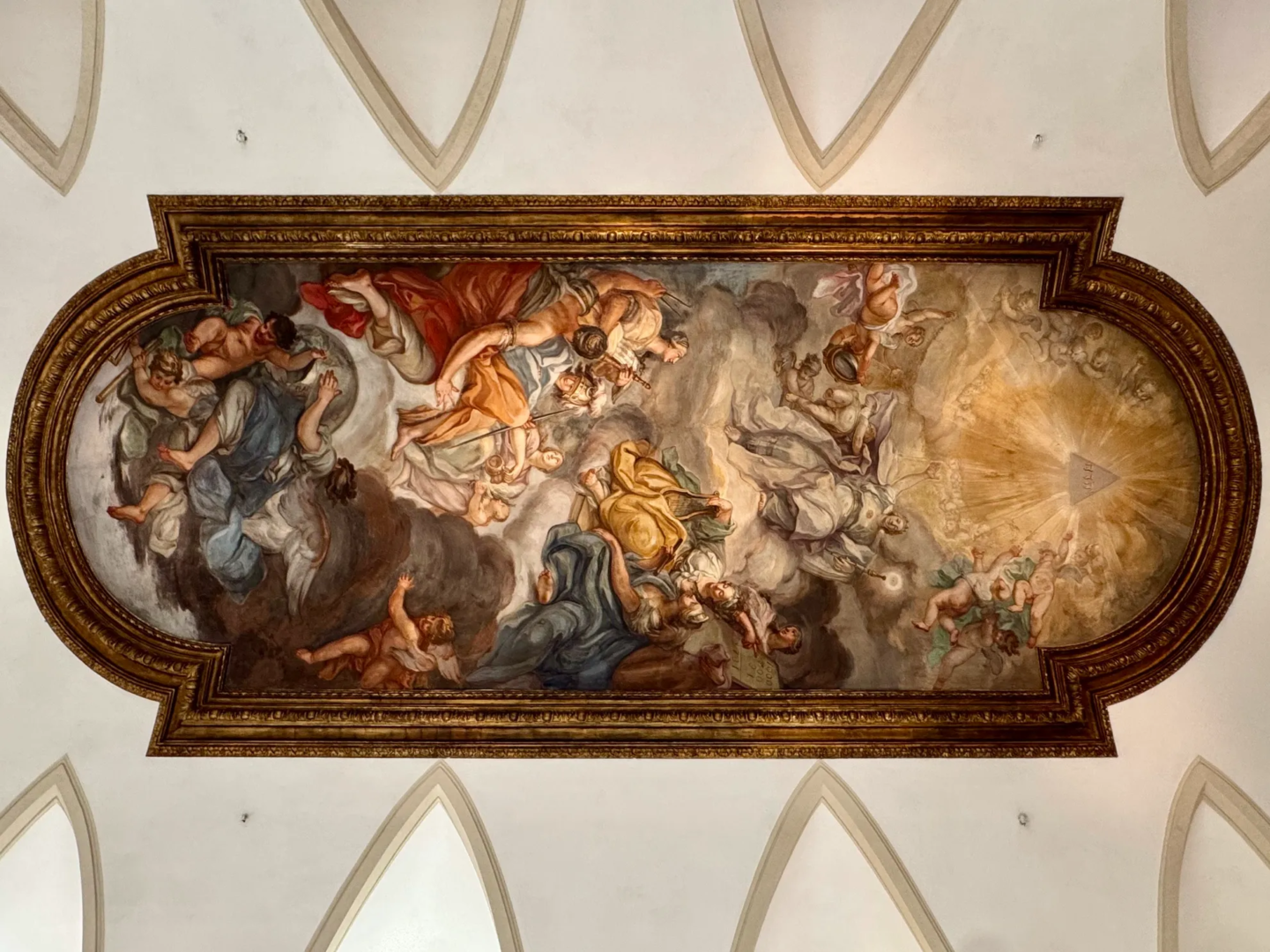
The Collegio Nazareno opened in 1630 and would define the building for the next three and a half centuries. What began as charity education gradually evolved into elite training for European aristocracy. The building grew to match these ambitions – new wings, theatrical spaces, elaborate galleries. Gaspare Serenari painted grand ceiling frescoes. Sons of noble families studied here, many becoming diplomats and church leaders.
The twentieth century brought continued prestige but eventual decline. After admitting female students in 1970, the school struggled as Rome’s center depopulated. Classes ended in 1999, leaving the building to deteriorate slowly.
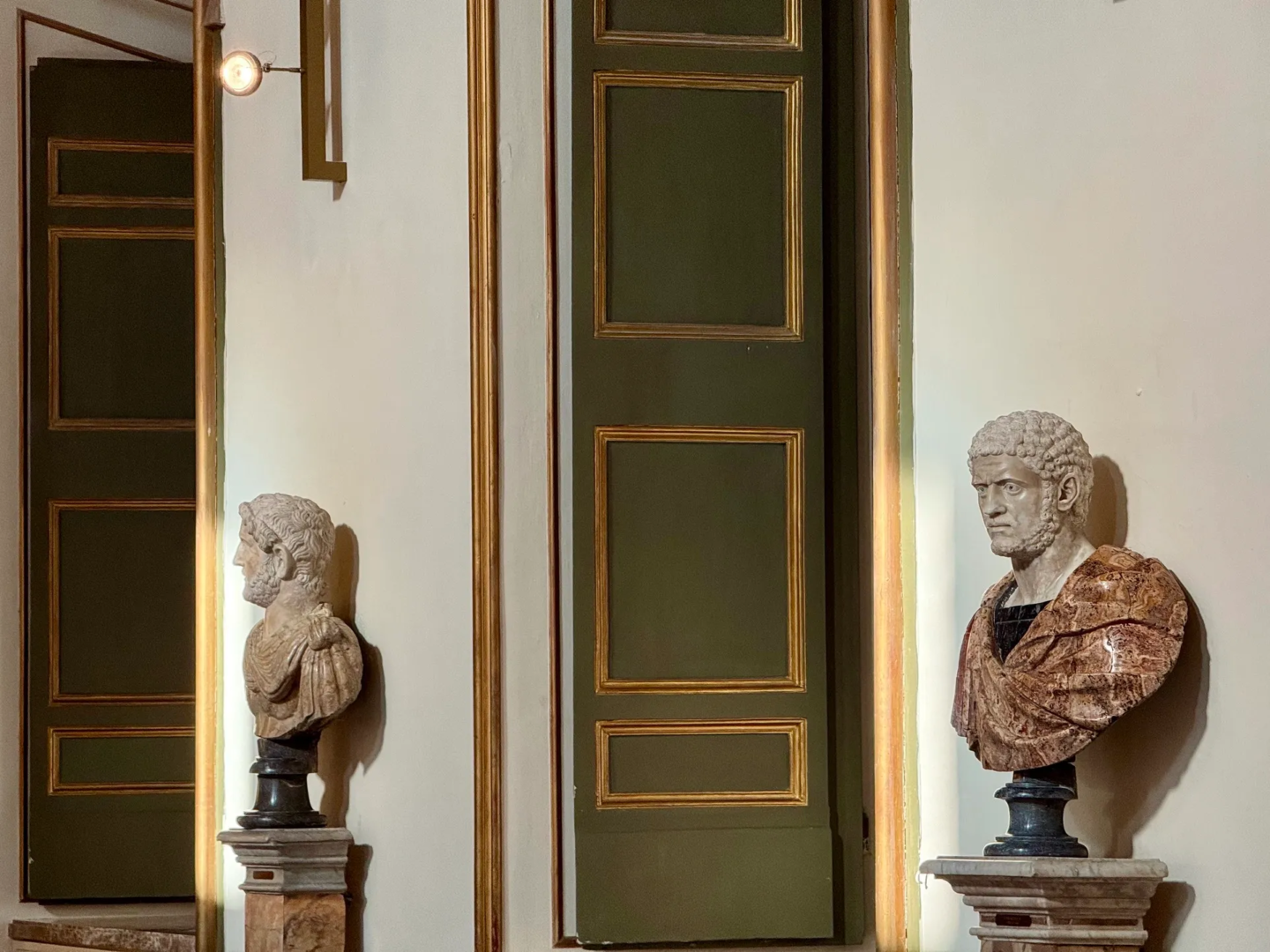
The Federici family and the decision to transform a historic Roman palazzo into a contemporary hotel
Behind this transformation stands the Federici family, Roman entrepreneurs who saw potential where others saw complexity. Their vision rejected both corporate uniformity and conventional luxury in favor of something more nuanced – residential intimacy at monumental scale, a notoriously difficult balance.
The collaboration they assembled reads like a dream team of contemporary Italian design. The result feels less like an architectural conversation across centuries.
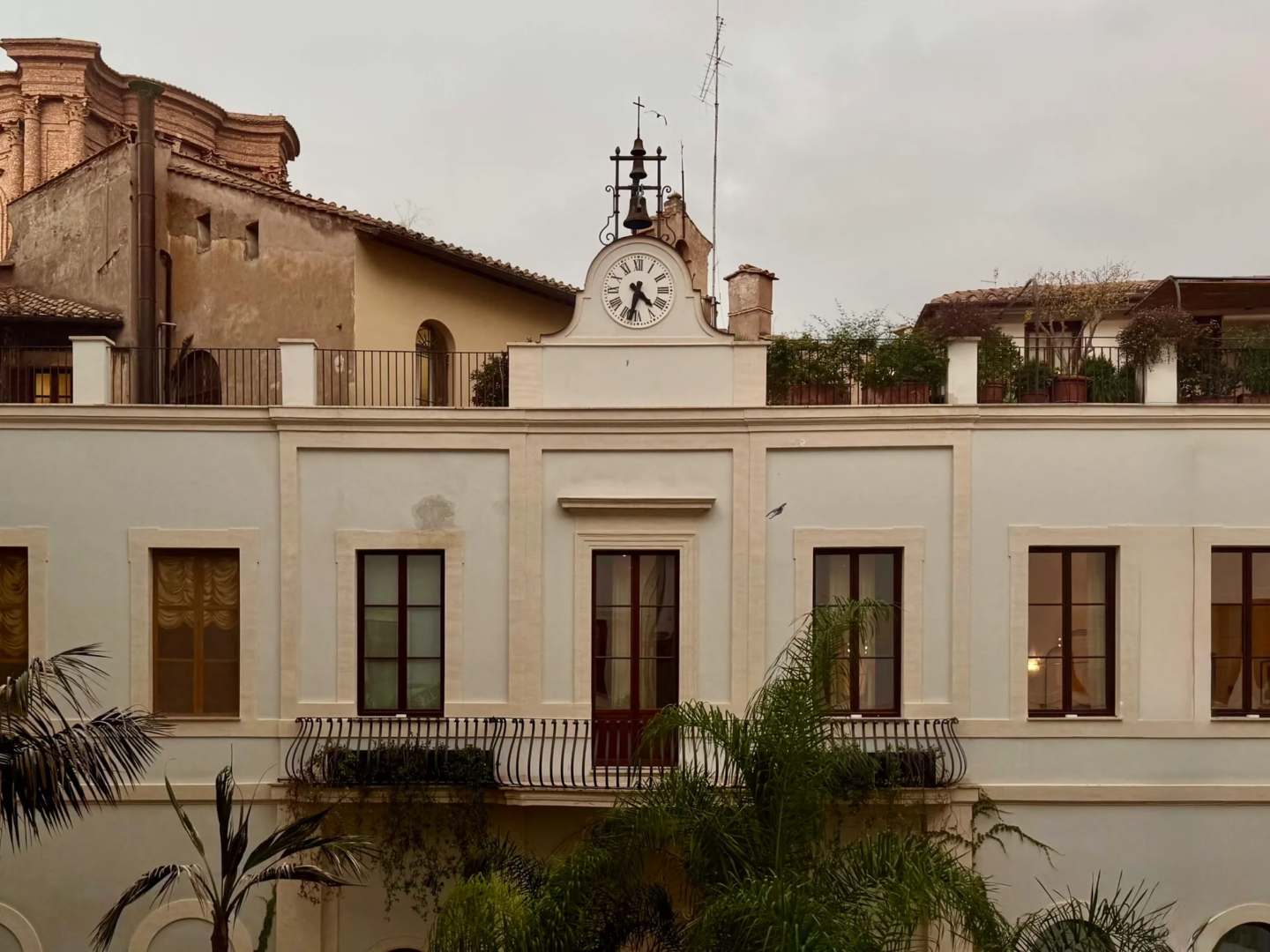
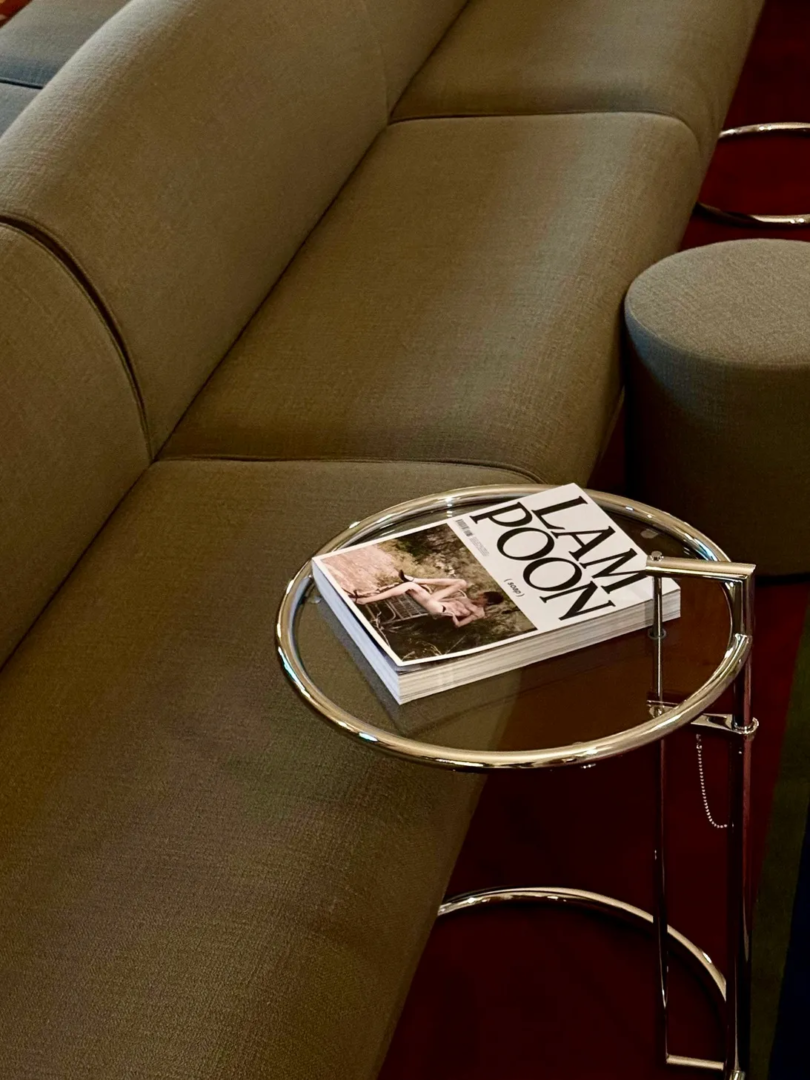
Luca Guadagnino’s interior design for Palazzo Talìa and the translation of cinematic language into space
Studio Luca Guadagnino took responsibility for public spaces – restaurant, bar, spa, and the showstopping Terrace Suite. The filmmaker’s aesthetic – evident in movies like Call Me By Your Name and I Am Love – translates beautifully into three-dimensional space. His design philosophy balances elaborate decoration with disciplined restraint, creating what Pablo Molezún, the project manager, describes as tailoring entirely new garments for an ancient body.
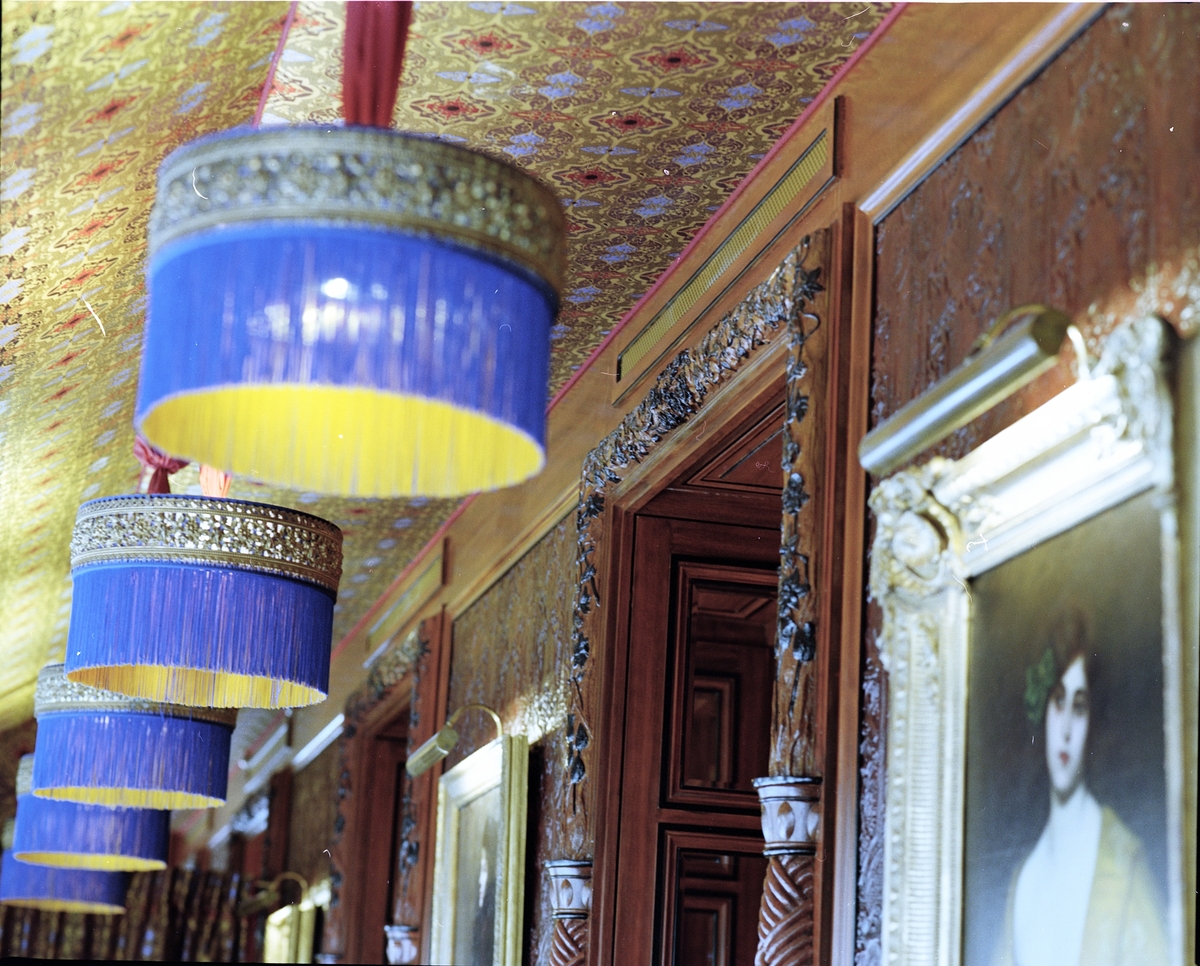
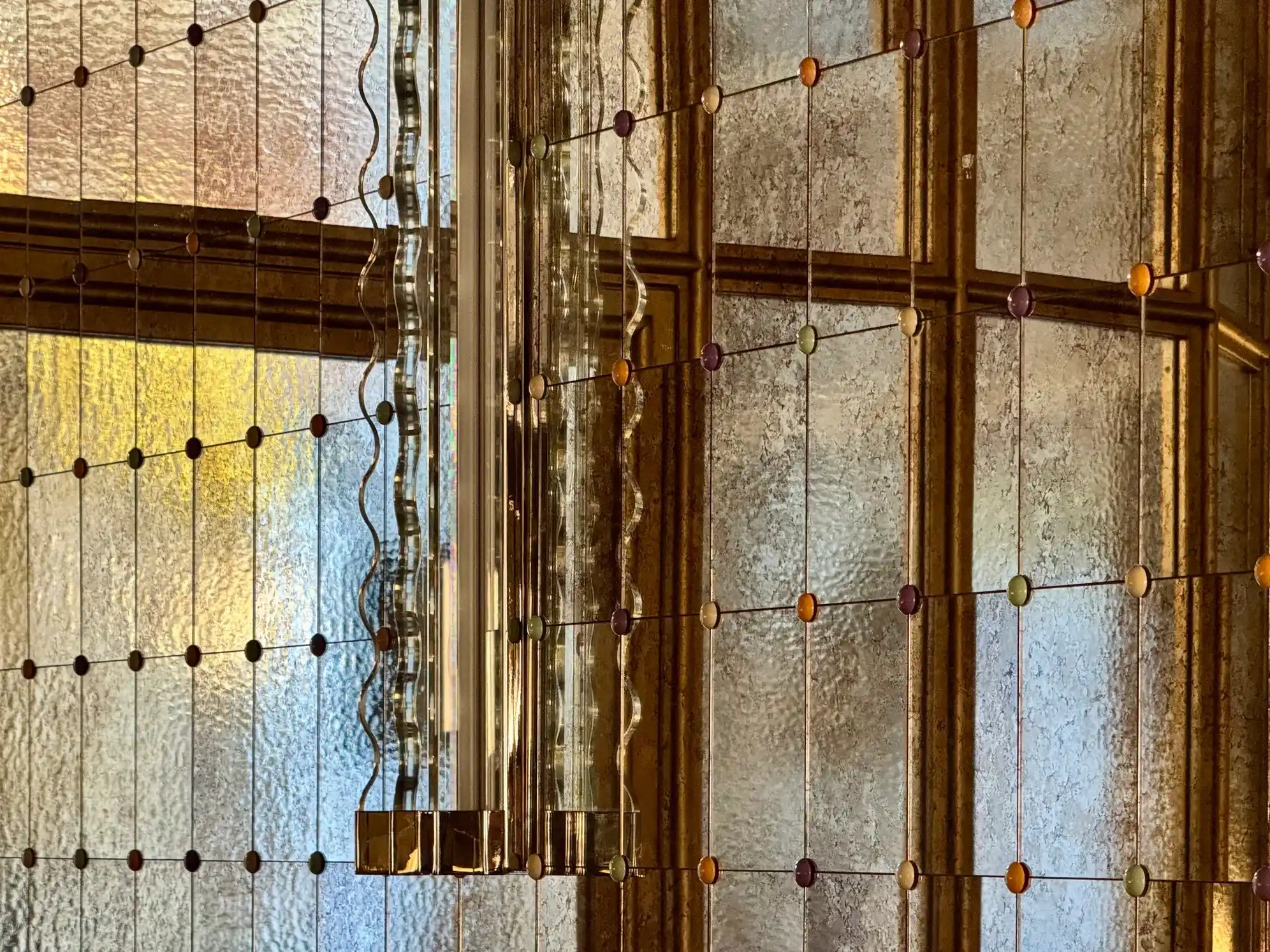
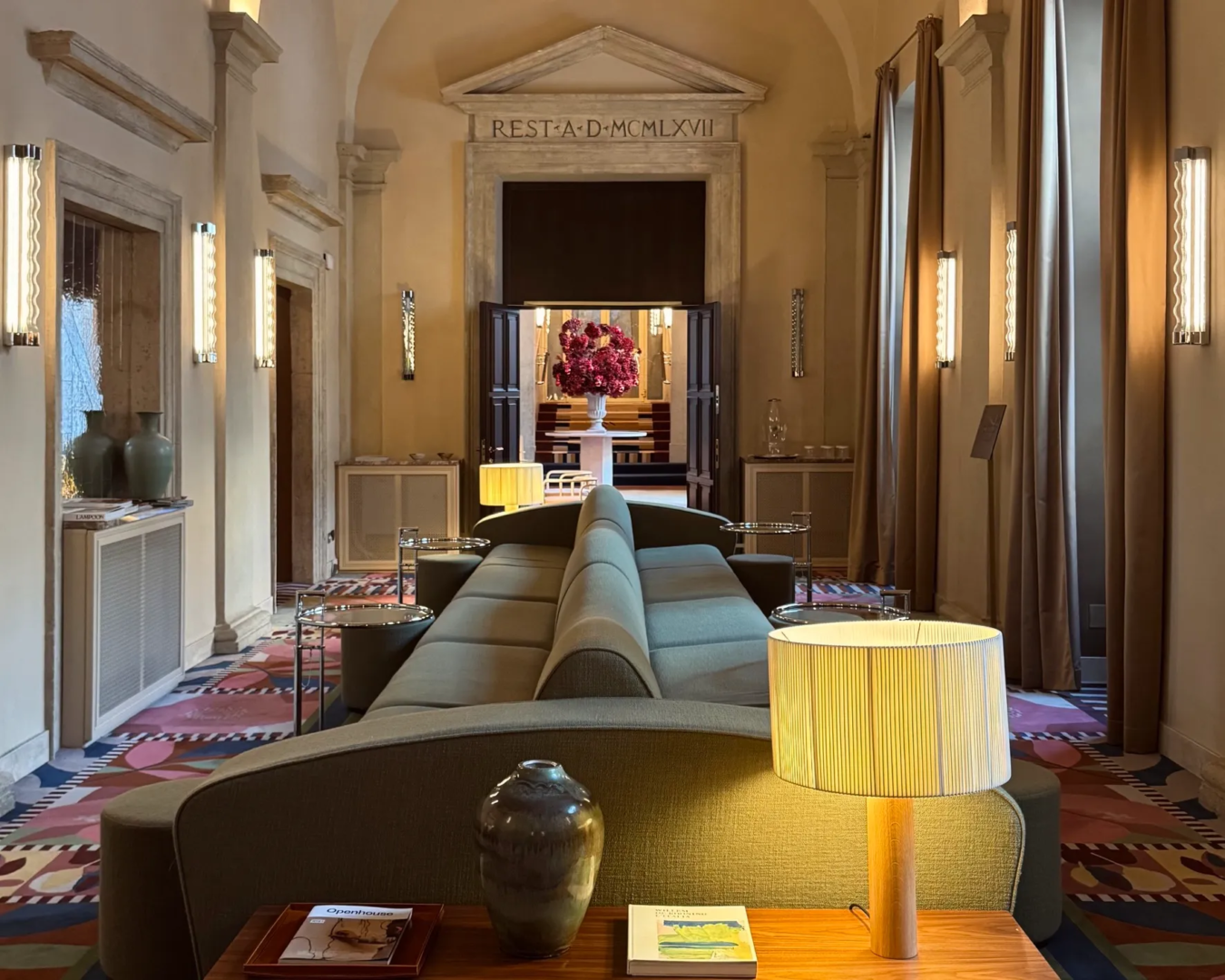
Walking through Palazzo Talìa evokes entering one of Guadagnino’s film sets. Original Renaissance frescoes meet mirrored surfaces that multiply and fragment their imagery. Terracotta flooring contrasts with plush custom carpets. Brass details glow warmly. Velvet furnishings in deep reds, roses, and wine tones create tactile richness.
Irish artist Nigel Peake designed a floor covering for the studio – a flowing textile path featuring abstracted botanical motifs in saturated colors. This carpet-tapestry guides visitors through corridors like a narrative thread connecting disparate spaces.
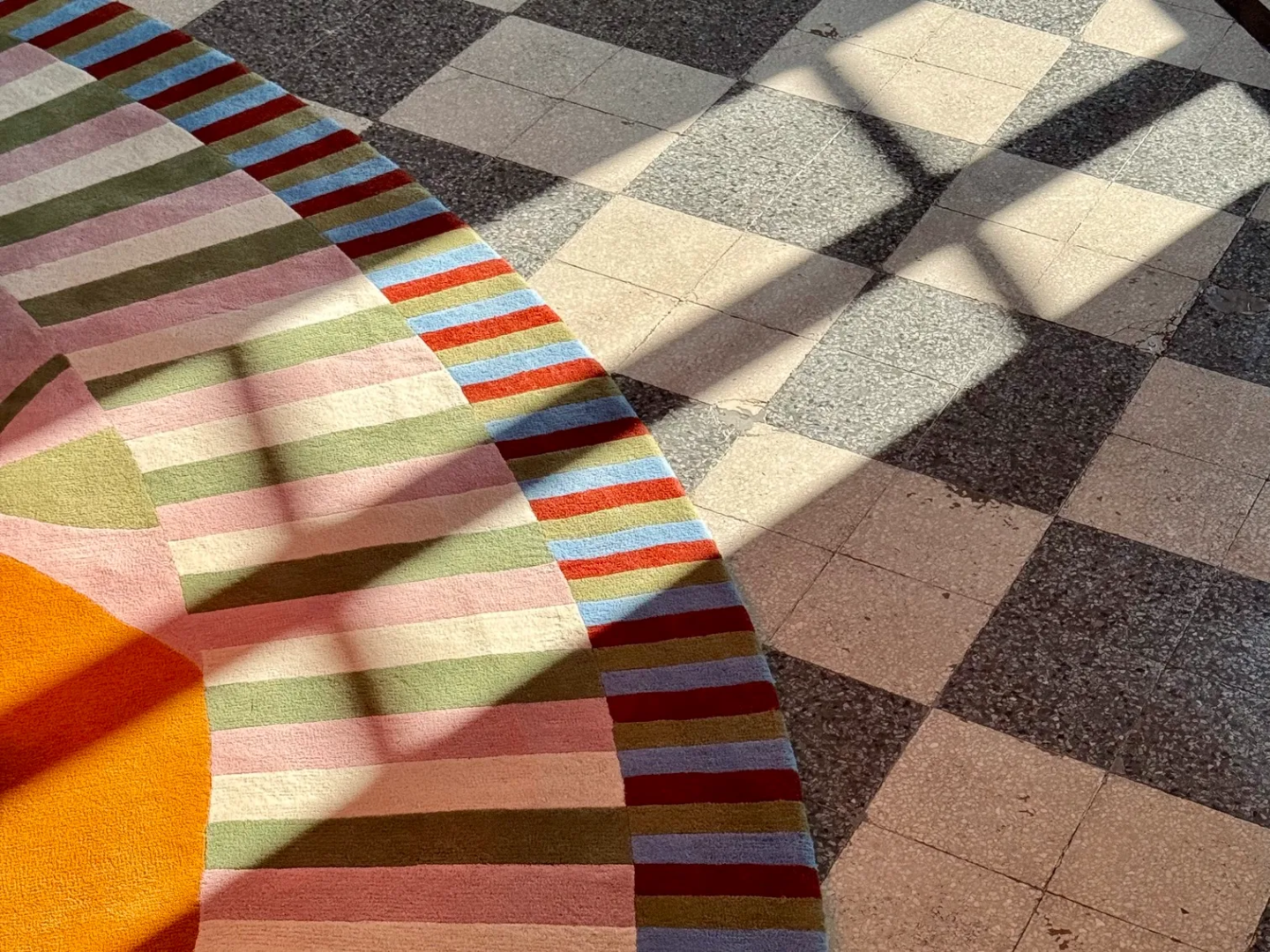
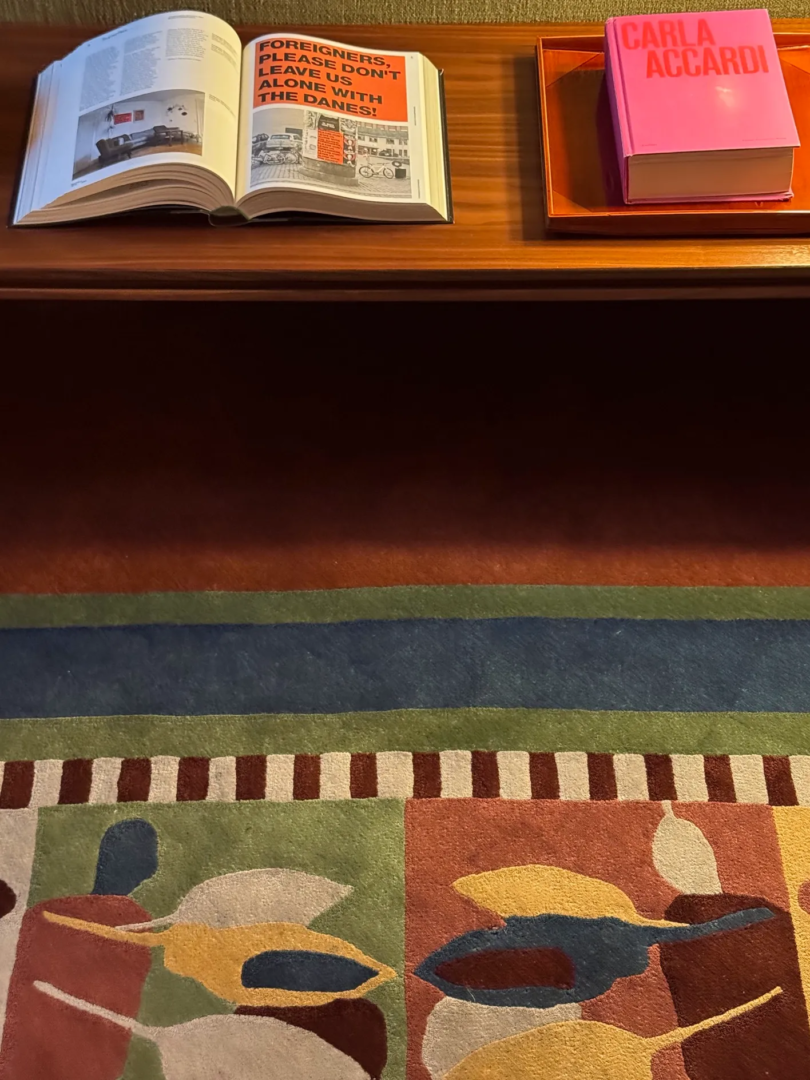
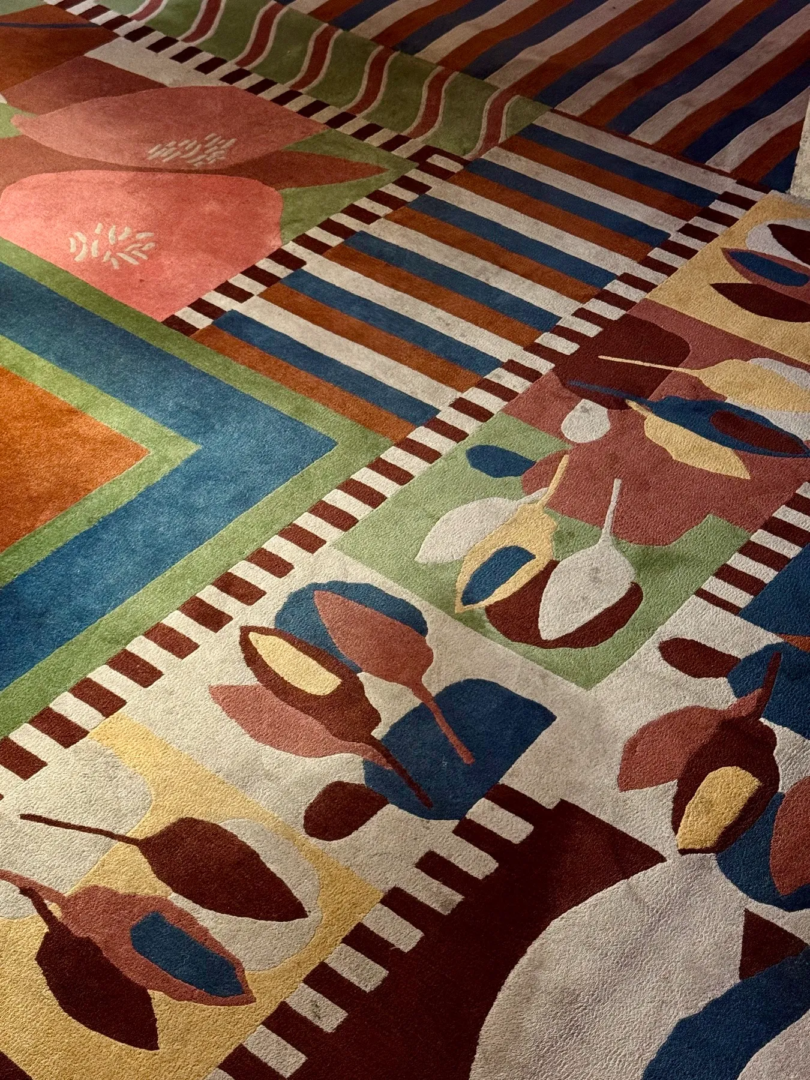
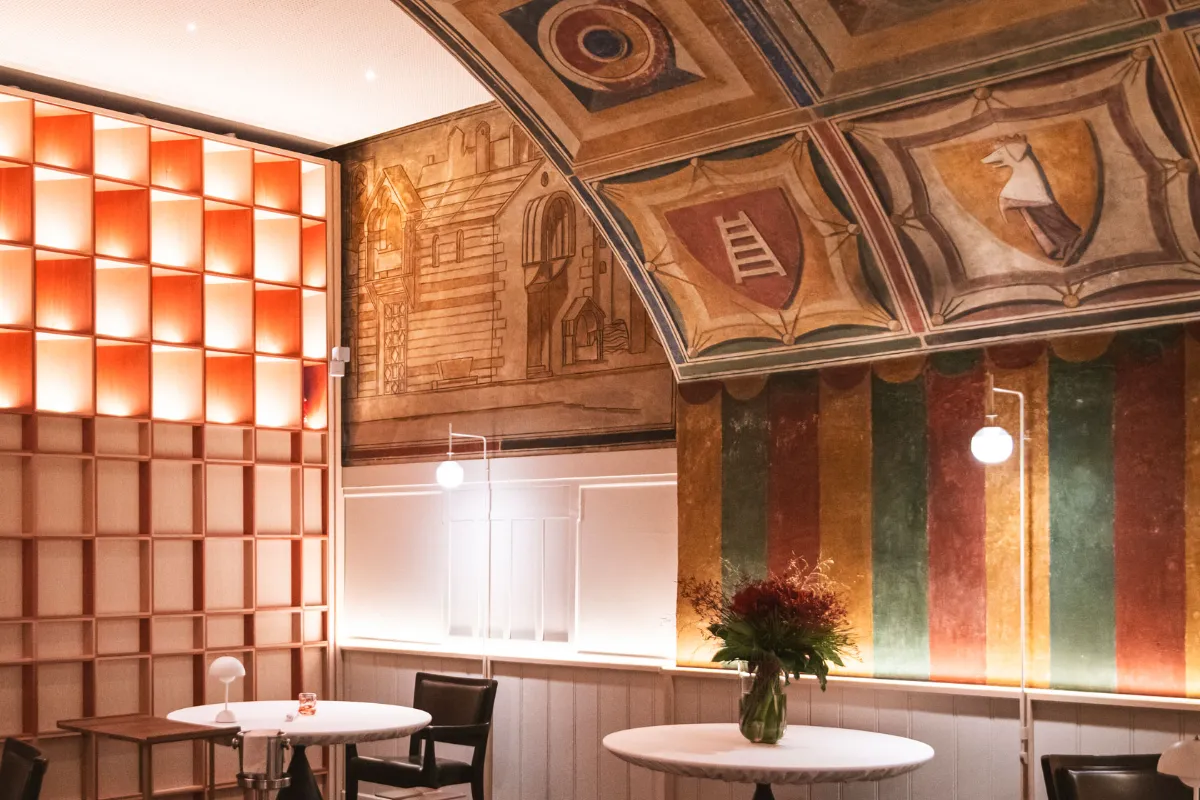
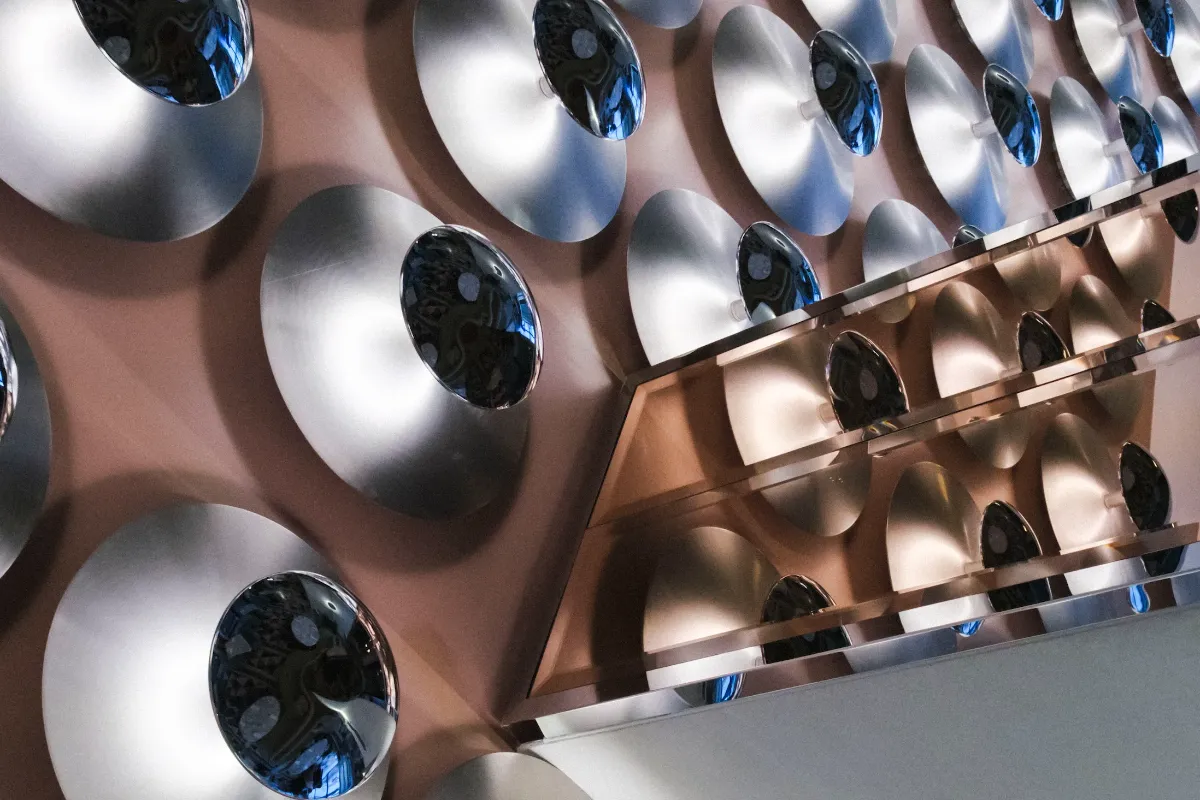
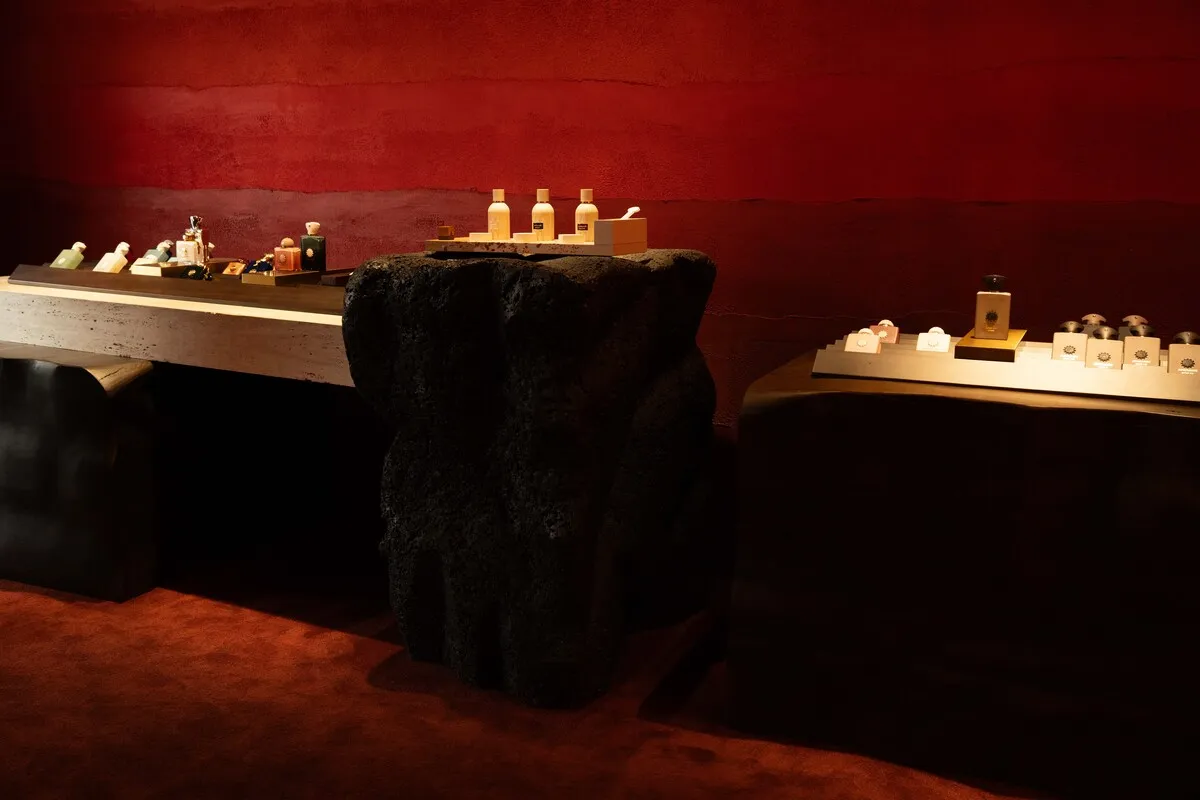
The Bar della Musa showcases Guadagnino’s curatorial approach. Beneath sixteenth and seventeenth-century ceiling decorations, vintage pieces coexist with contemporary designs. Bar surfaces use glazed volcanic stone from Catania—Sicilian lava transformed into elegant furniture. A 1940s Murano chandelier by Napoleone Martinuzzi hangs in the entrance. Gae Aulenti’s iconic chairs furnish the reception area.
His Terrace Suite occupies the palazzo’s upper reaches: peach wood wall treatments, soft pink tones, sloping ceilings, and a remarkable 66-square-meter outdoor space filled with greenery overlooking internal courtyards and the Sant’Andrea delle Fratte complex nearby. Green marble fireplace, canopy bed, cultivated serenity throughout.
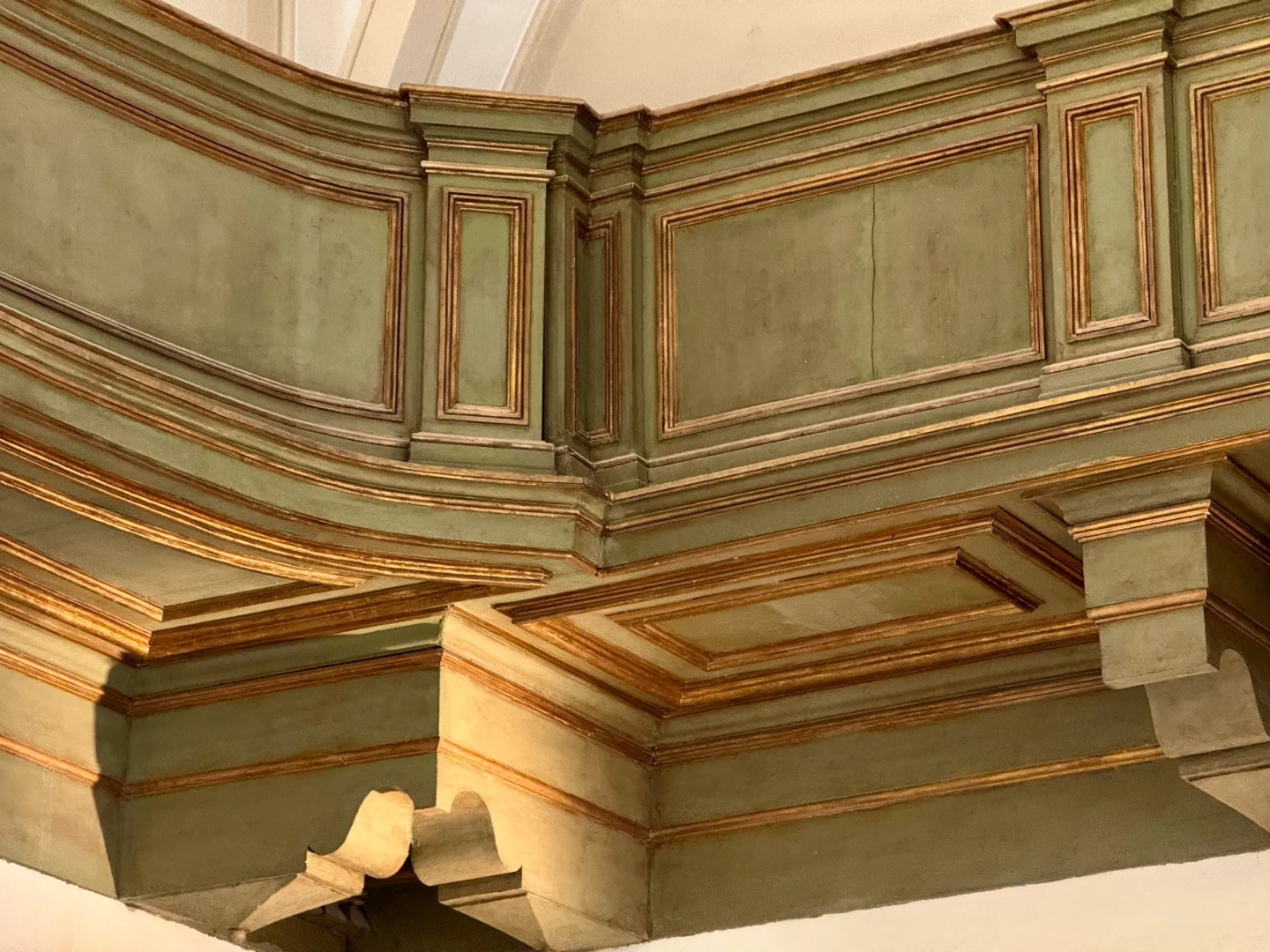
Two junior suites are connected with the Aula Magna – a dramatic room featuring Serenari’s ceiling paintings eleven meters overhead, historical marbles, and wooden choir stalls. Together these spaces span 358 square meters, accommodating eight guests or hosting remarkable private gatherings.
Guest rooms and suites at Palazzo Talìa: contemporary hospitality within a Renaissance palazzo
While Guadagnino shaped public experience, Lubrano Lavadera and Feroldi designed the 25 remaining accommodations. Their concept centers on the flâneur – the discerning wanderer who seeks authentic encounters rather than standardized comfort.
Historic palazzos naturally contain rooms of varying proportions, brightness levels, and architectural features. Rather than homogenizing these differences, the architects enhanced them, layering classical elements with contemporary touches to suggest accumulated family taste across generations—all while maintaining five-star amenities.
Custom elements include handcrafted Italian bathroom tiles in varied colors, curved sofas in rose and burgundy fabrics, and iron-frame canopy beds. Hand-blown glass lighting illuminates striped wooden wardrobes. Corridors receive equal attention: signature carpeting underfoot, mirrors creating kaleidoscopic reflections, walls that seem saturated with stories.
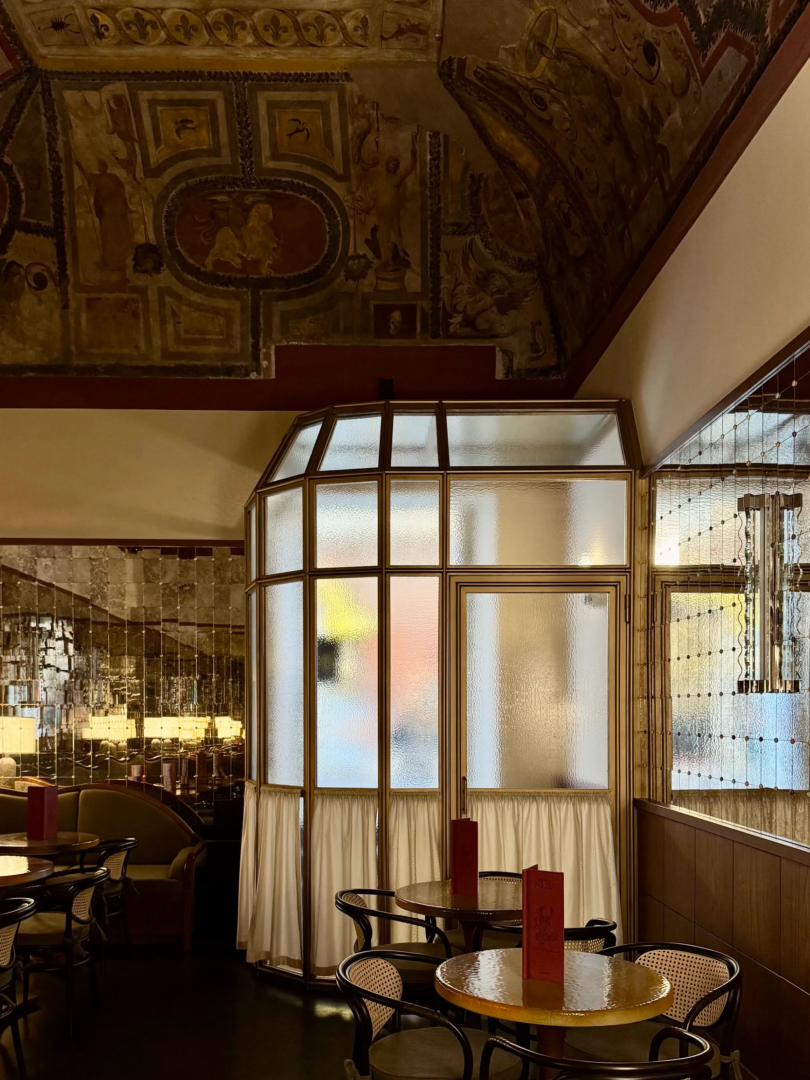
Tramae restaurant and Bar della Musa: Italian cuisine and cocktail culture at Palazzo Talìa Rome
Tramae, the hotel restaurant, channels French bistro elegance while celebrating Italian regional traditions. Executive Chef Marco Coppola, raised in Sorrento, constructs menus reflecting his coastal upbringing and deep connection to seafood.
His approach emphasizes purity – raw, cooked, smoked preparations that highlight natural flavors. Daily selections might include fish tartare, prawns wrapped in lemon leaves from the Amalfi coast, or elaborate fried seafood and vegetable combinations. Regional classics appear alongside personal interpretations: Neapolitan pasta preparations, Milanese veal preparations, Venetian influences.
Ingredients come from local suppliers and the Federici family’s biodynamic farm, Solaria, which produces legumes and olive oil using traditional cultivation methods. The menu treats ingredient sourcing as storytelling – celebrating origins as meaningful luxury.
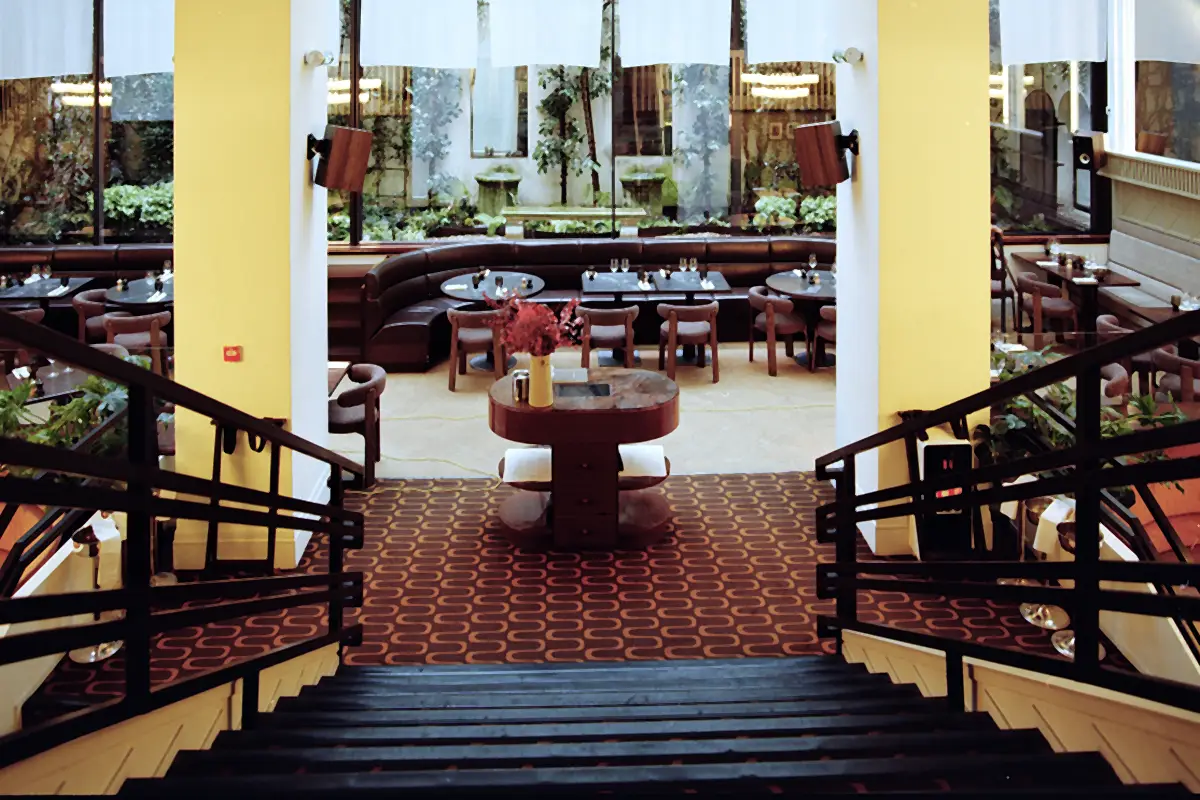
Studio Guadagnino designed the dining room with 1980s maximalist sensibility: ornate stucco ceilings where floral motifs repeat across carpets and floor patterns. Colors and textures create visual richness. The courtyard provides tranquil contrast – palm shade, extended aperitivo hours, gentle evening atmosphere.
At Bar della Musa, drinks meet storytelling. Cocktails include the Talìa Martini served at eighteen degrees below zero, and the Accardi blending coconut and mint. Fresh oysters accompany wines selected by ownership and international spirits. The atmosphere balances cosmopolitan sophistication with intimate scale – a jewel-box space equally suited to quiet contemplation or social gathering.
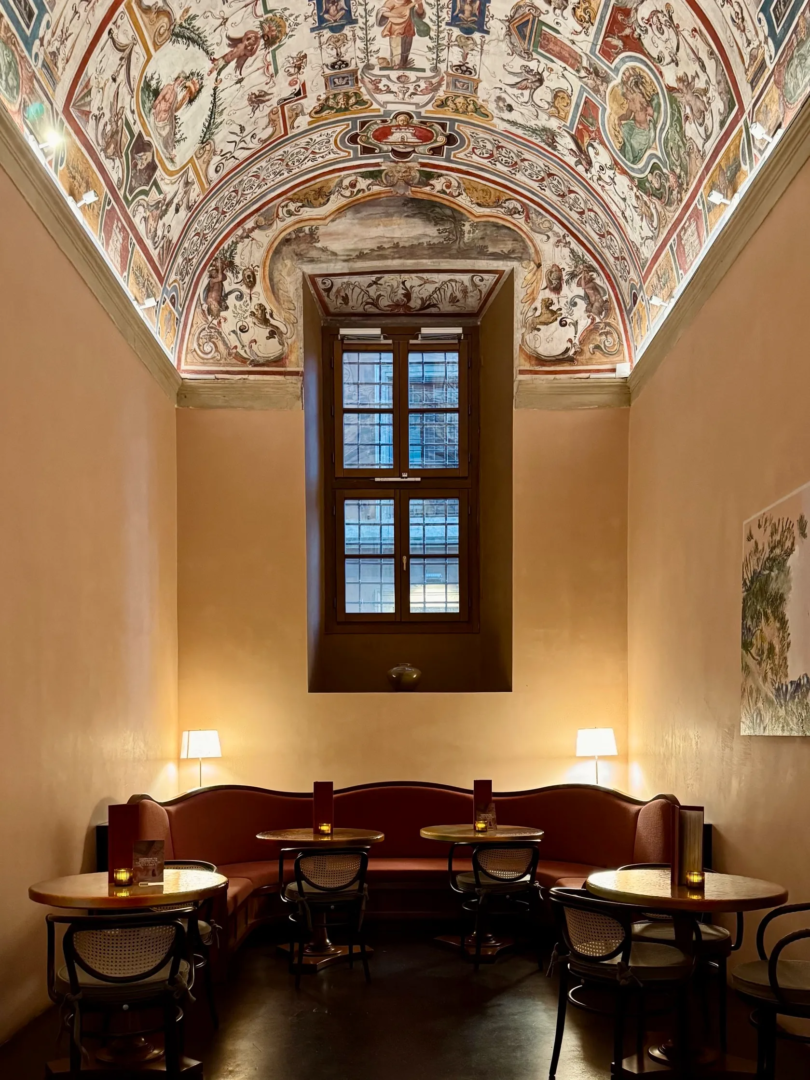
The spa at Palazzo Talìa built along ancient Roman aqueducts beneath the historic palazzo
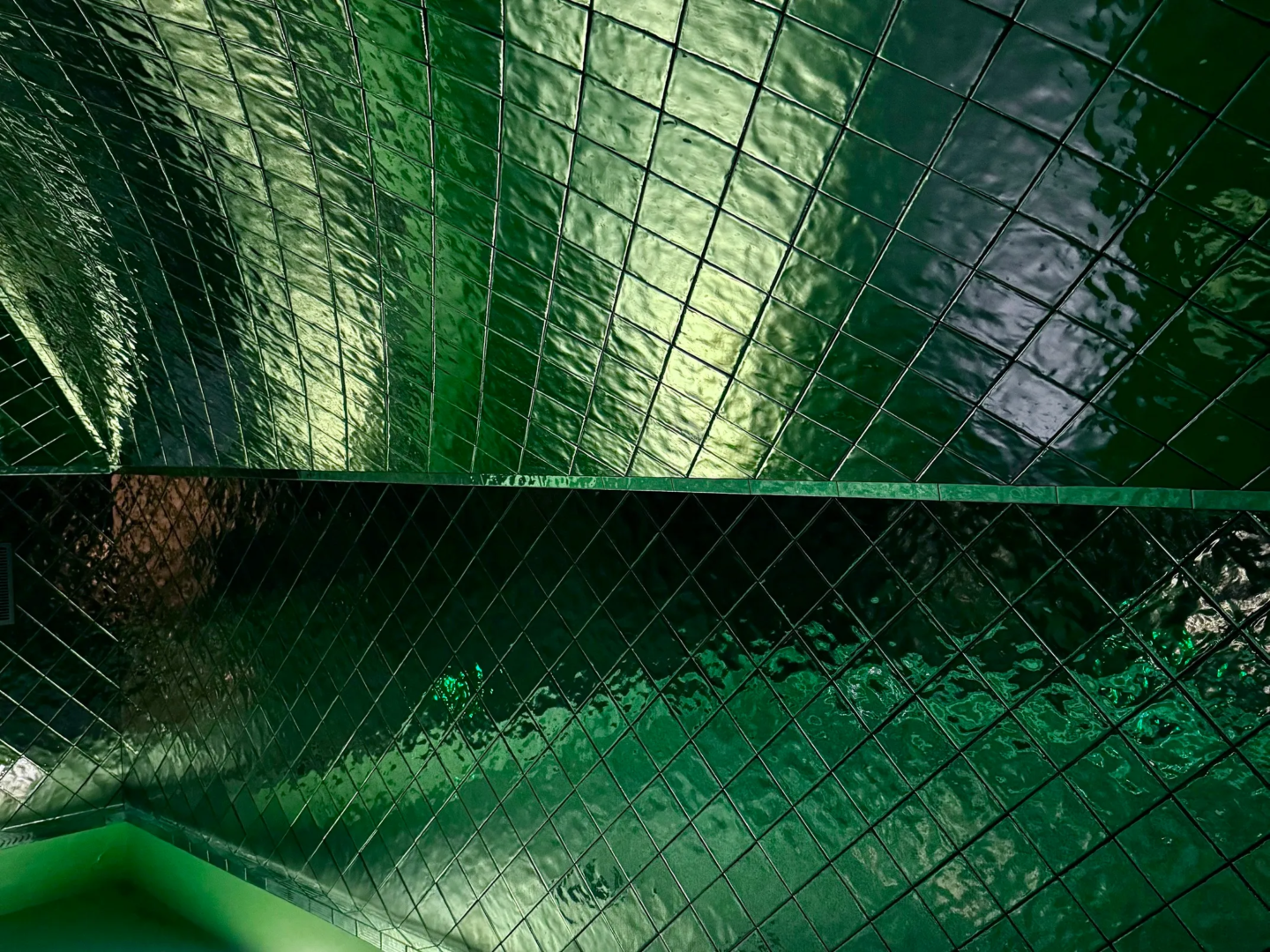
The wellness center descends toward ancient foundations. Located near the historic Aqua Virgo aqueduct path, surrounded by Roman-era stonework beneath vaulted architecture, the spa occupies the palazzo’s most secluded zone.
Guadagnino’s design references classical heritage through marble and green ceramic combinations sourced from Spanish craftspeople. The 33-square-meter pool sits within reflective-tiled architecture that multiplies light dramatically, enhancing meditative atmosphere. Sauna, steam room, ice cascade, experiential shower, fitness space, and two treatment rooms complete the facilities – a hidden retreat from urban intensity.
Matteo Mammoli