The Florentin Frankfurt: an urban retreat inside the city’s financial capital
In Frankfurt’s financial landscape, The Florentin introduces a different pace: an inner courtyard, greenery, and a design that soothes. A culinary experience unfolds beneath a starry sky
The Florentin – Frankfurt luxury hotel urban retreat: shifting the city’s business hospitality model
Frankfurt. Finance, aviation, and trade shape its urban rhythm: banks, corporate headquarters, and one of the continent’s busiest airports have long defined its identity. The hospitality landscape developed accordingly. For decades, most hotels in the city were designed primarily for business travelers—efficient, well-located, but rarely conceived as destinations in themselves. The Florentin attempts to change that perception. “Frankfurt never really had luxury hotels at this level. The idea was to create what we call an urban retreat — a place where guests arrive and feel removed from the city.”
Located in the Sachsenhausen district, a few minutes from the River Main and the Museumsufer cultural corridor, the hotel introduces a hospitality concept that turns away from the city’s vertical skyline and instead focuses inward. Courtyards, gardens, and layered interiors structure the spatial experience.
The Florentin operates under the Althoff Collection, the German luxury hospitality group known for properties such as the Althoff Grandhotel Schloss Bensberg and the St. James’s Hotel & Club in London. With 147 rooms and suites, the hotel joined Leading Hotels of the World shortly after opening, positioning it within the global luxury hospitality network.
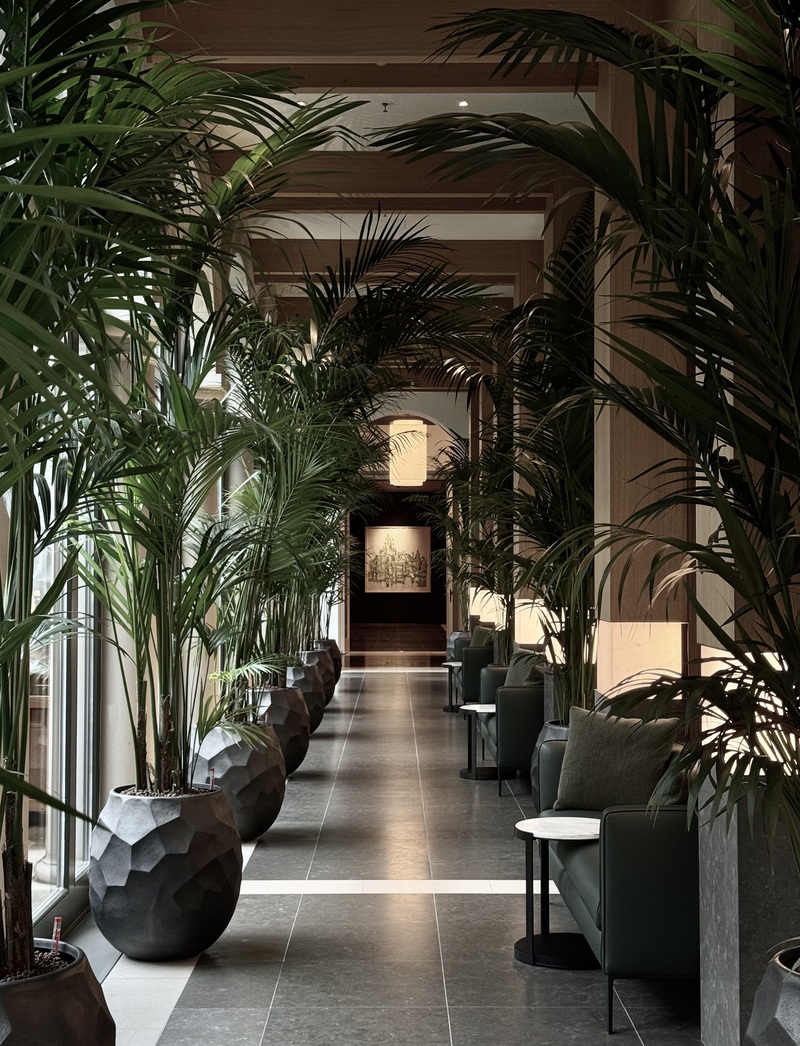
Quiet luxury in a design hotel in Frankfurt: the interiors of The Florentin by Unscripted Design and integrated art collection
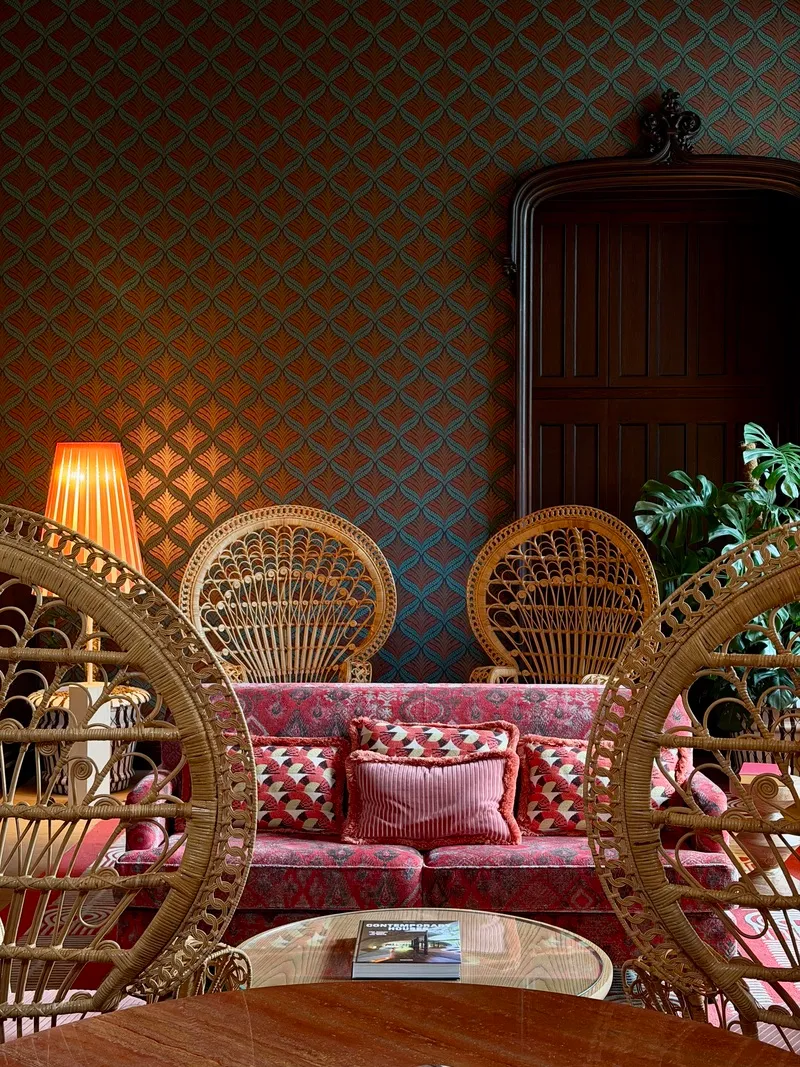
The Florentin’s interior design revolves around a specific philosophy: quiet luxury. Instead of relying on grand gestures or visual excess, the project emphasizes material quality, proportion, and atmosphere. “Nothing too much in your face. The materials are carefully selected and of high quality. The concept is similar to a boutique hotel, just on a larger scale.”
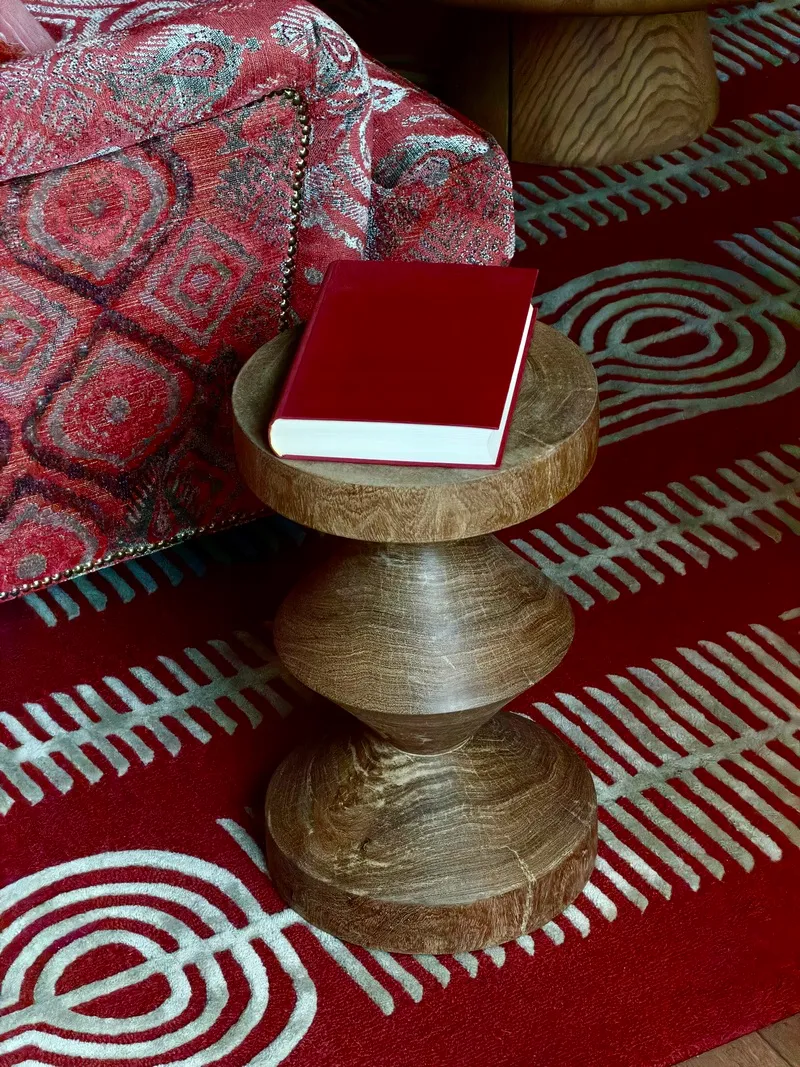
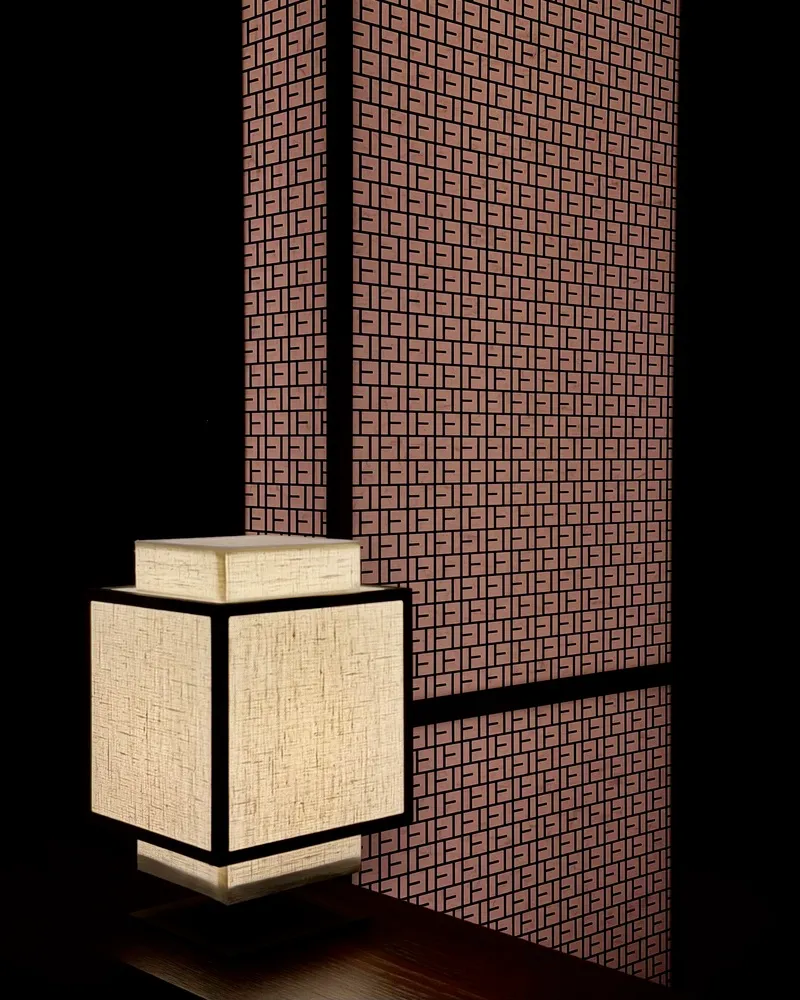
Interior architecture was developed by the Singapore-based studio Unscripted Design, while the historic villa spaces were restored in collaboration with European architects. The interiors rely on a restrained palette of natural materials—travertine, marble, oak, bronze, and soft textiles—combined with rounded furniture silhouettes and layered lighting. Rather than creating visual drama, the design aims to create a sensory environment. “When guests enter the lobby, the idea is that they feel inside a cocoon — music, scent and texture are used to create that atmosphere.”
A defining element of The Florentin’s interiors is its integrated art collection. The project’s art program was developed by the international consultancy VELVENOIR, which specializes in creating site-specific collections for hospitality and real estate developments. The consultancy worked alongside architects and interior designers from the early stages of the project. The resulting collection includes hundreds of artworks installed throughout the property, from public spaces to guest rooms and corridors.
The Florentin Frankfurt, sustainability: European materials, courtyard architecture and spatial flow
Material selection was central to the project’s development, both from an aesthetic and operational standpoint. “All the materials were sourced in Europe — the stone behind the bar comes from Norway, the wood from Italy and Spain, mainly from the Mediterranean region. We chose Molteni for most of the furniture, and Rivolta Carmignani for the textiles in the rooms. We tried to work as much as possible with materials that grow or regenerate relatively quickly, keeping environmental considerations in mind.” The same approach extends to the operational layer of the hotel, where sourcing remains consistent with the overall design logic. “Much of the tableware and interior equipment comes from European producers — for example Revol porcelain from Germany.”
The Florentin avoids the traditional grand-hotel lobby model. Instead of presenting a monumental hall, the arrival experience unfolds gradually. Guests move through a layered sequence of spaces defined by plants, seating areas, and warm lighting. Beyond the lobby, two corridors open out—interior passages that slowly reveal the rest of the property. Large potted plants line the path, while low seating areas soften the boundary between circulation and lounge. Lighting is deliberately indirect, emphasizing textures and materials.
At the center of the property lies the Garden Courtyard, the landscaped inner garden that organizes the entire complex. “It reflects a Southern European way of living where social life happens outdoors.” Unlike many urban hotels that emphasize street presence, The Florentin turns inward. The courtyard functions as the main social space, connecting guest rooms, restaurants, and public areas.
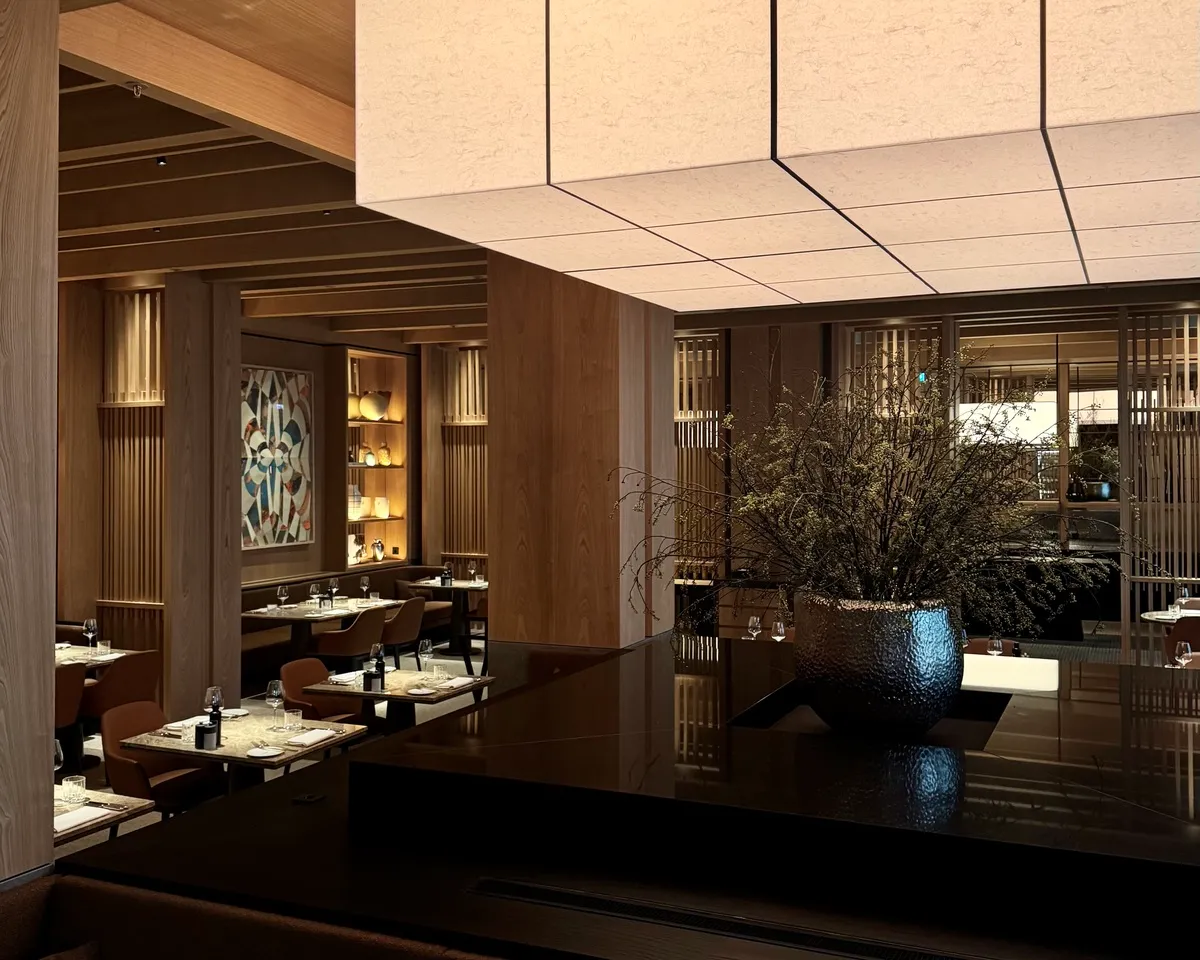
The Florentin, Frankfurt: restaurants, cocktail bar and cigar lounge as social destinations
Food and beverage are central to the hotel’s identity. “We want the hotel to be a destination for locals as well — especially through food and beverage, with two restaurants and a bar focused on high-level cocktails.”
The Garden is the hotel’s primary restaurant. The design emphasizes openness and daylight, with large windows connecting the dining room to the courtyard outside. Natural materials and neutral tones reinforce the relaxed atmosphere. The culinary concept focuses on contemporary European cuisine with regional influences and a strong emphasis on seasonal ingredients.
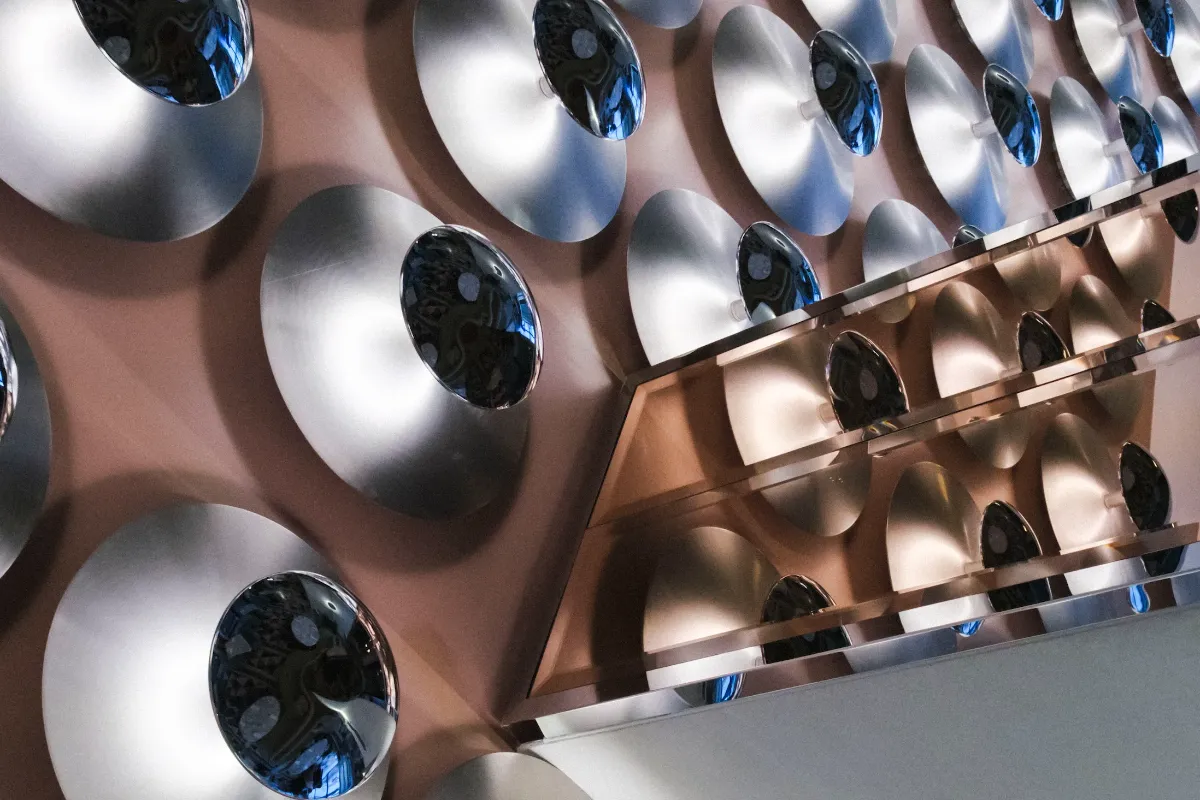
The Florentin Bar functions as the hotel’s central social hub. Located near the courtyard, it combines lounge seating with a dramatic wall of backlit bottles. The space transitions easily from afternoon meetings to late-night cocktails. The evening continues in the cigar lounge, one of the most intimate areas of the property. Defined by a dominant orange palette, the room is built around custom humidors, deep armchairs, and low lighting that evoke the atmosphere of a private club. It is designed for slow, extended evenings, pairing cigars with a curated selection of spirits.
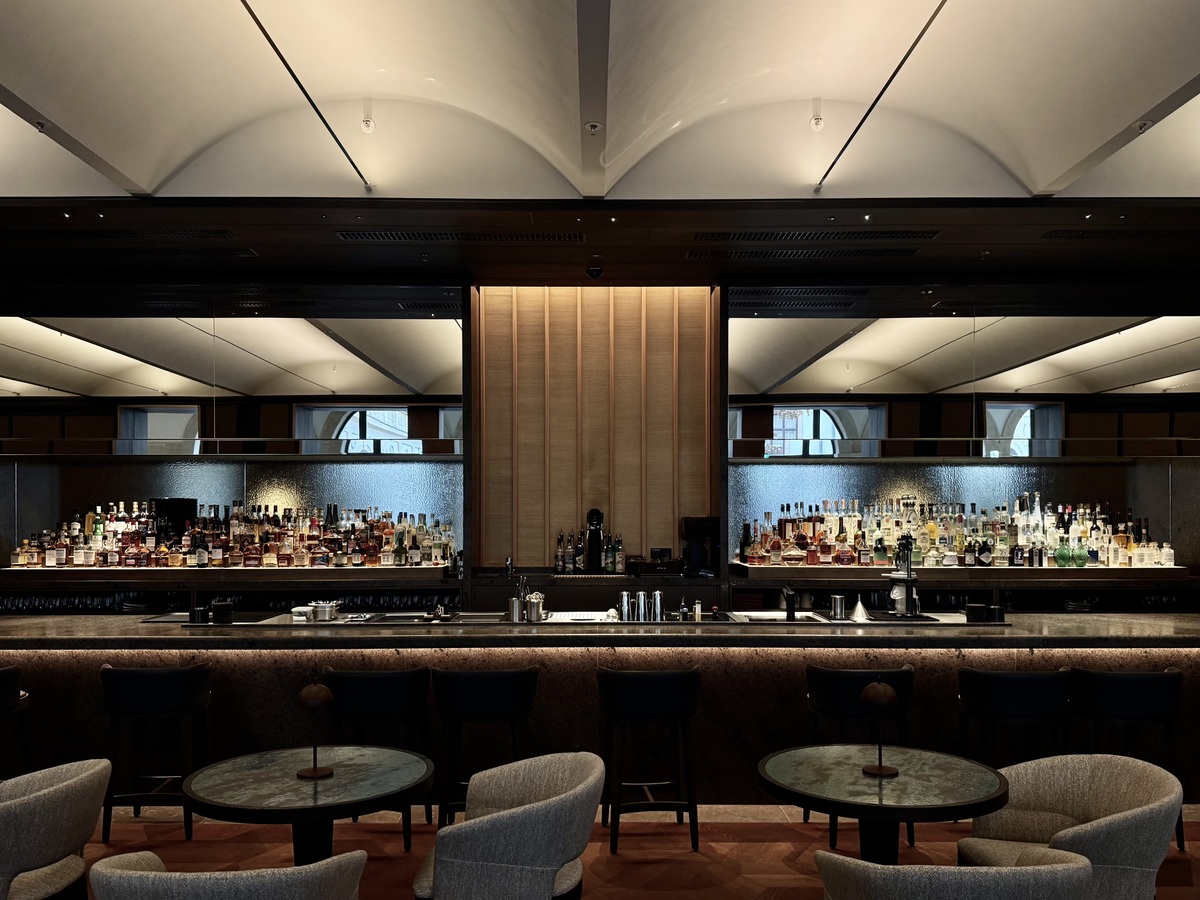
The dune restaurant inside The Florentin, Frankfurt: immersive lighting design and fine dining by Niclas Nußbaumer
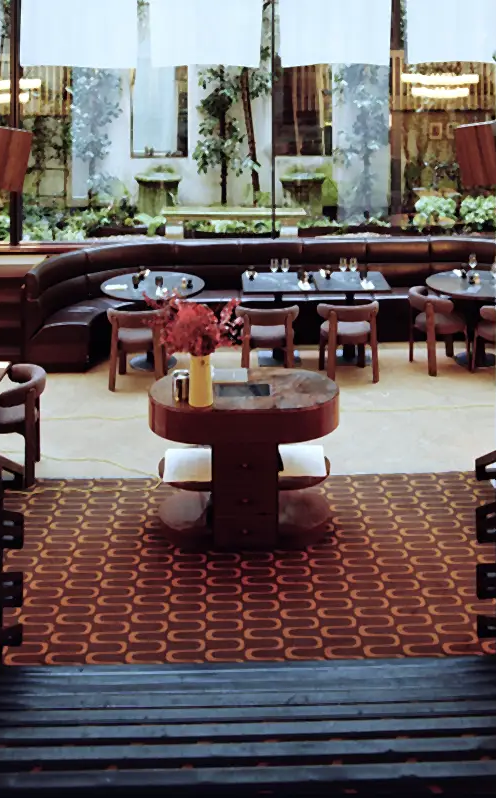
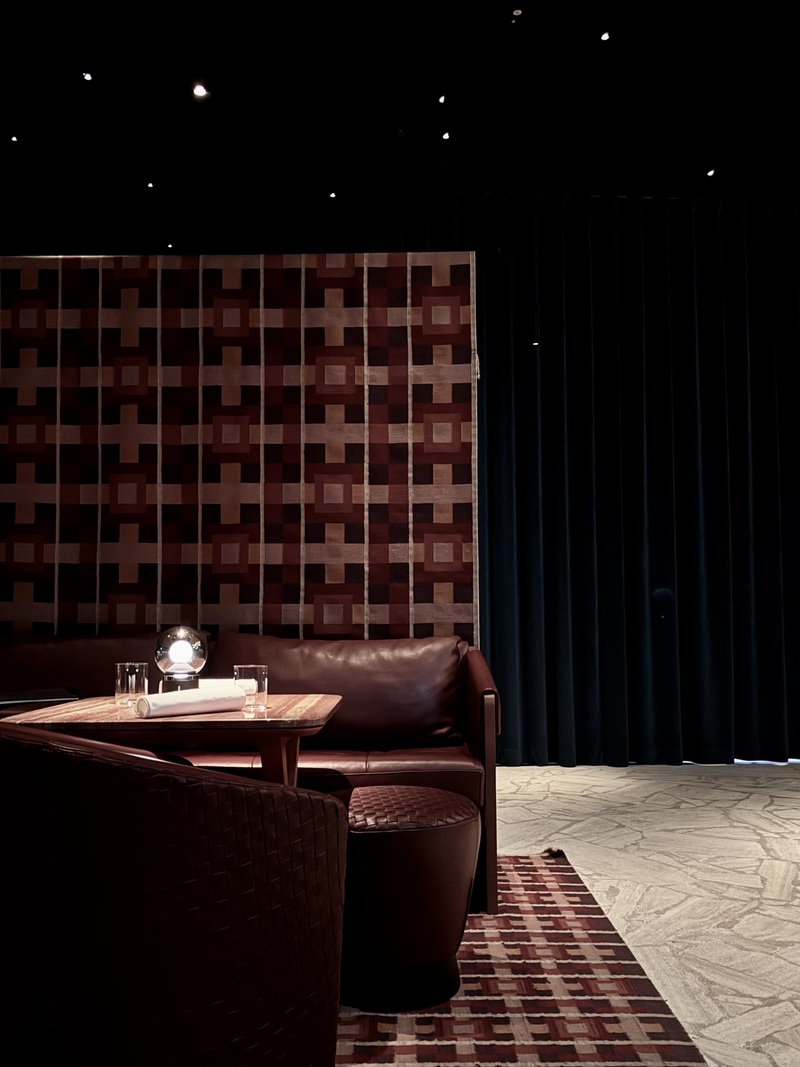
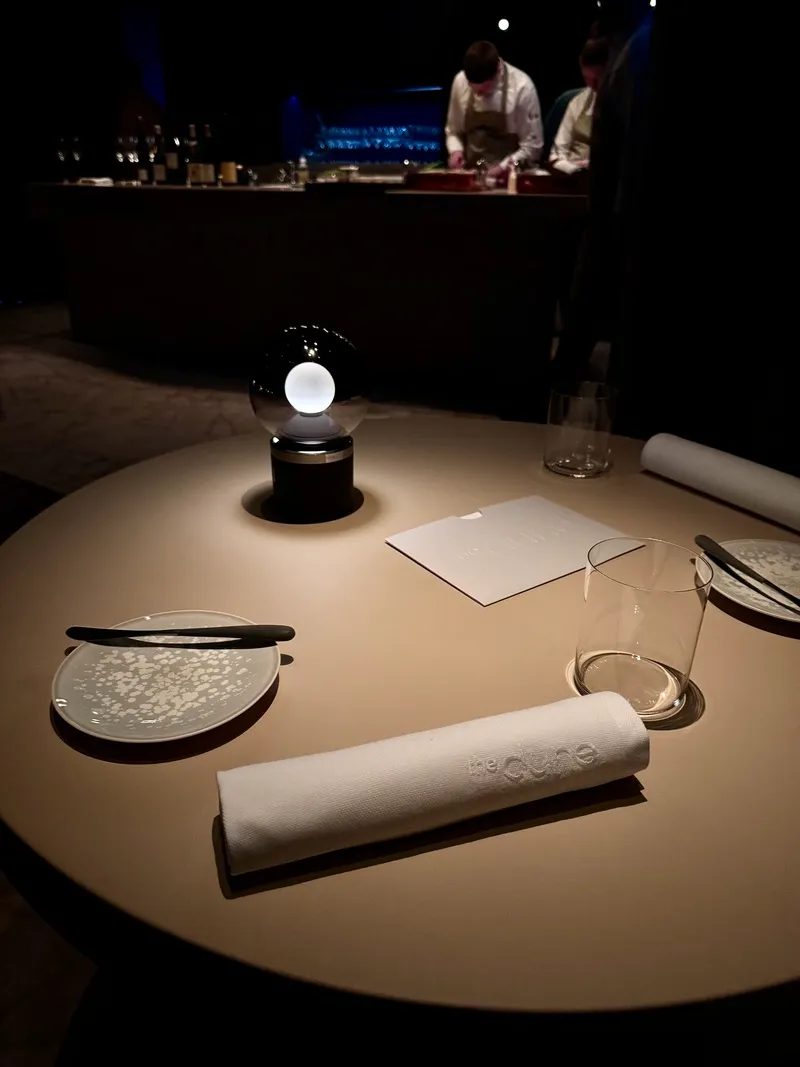
A separate chapter is reserved for the dune. The more intimate restaurant within The Florentin introduces a darker, more contained environment, conceived primarily for evening dining. The room unfolds gradually. Rounded banquettes, deep tones, and low, controlled lighting define a space that departs from the brightness of the rest of the hotel. Above, a diffused ceiling installation—subtle, almost imperceptible—recalls a starry sky, reinforcing the room’s immersive atmosphere.
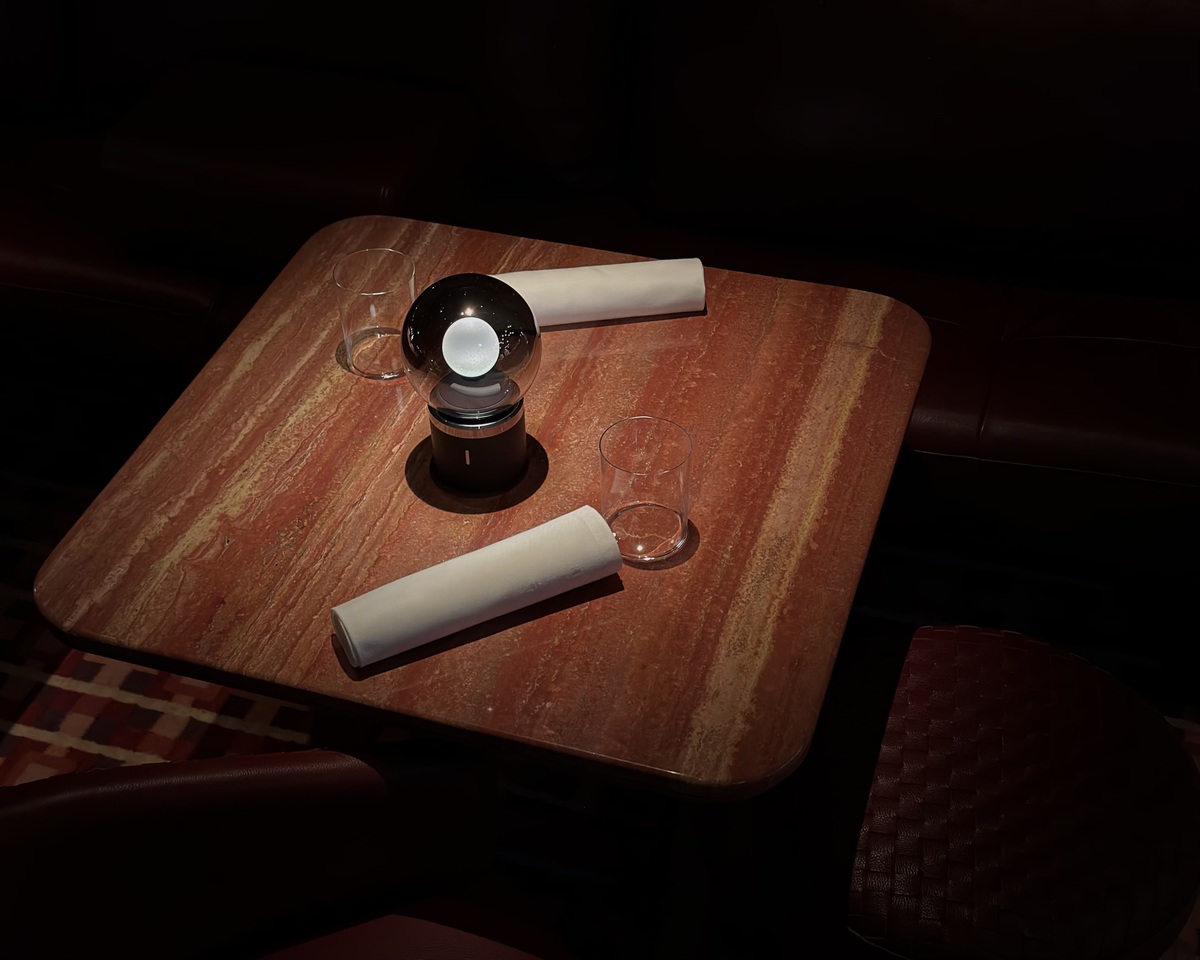
The decisive element, however, lies at table level. Each setting is defined by Occhio lamps, whose controlled, spherical light isolates the table from the surrounding space. The effect is immediate: the room recedes into shadow, details dissolve, and attention concentrates on the plate. The restaurant fragments into a constellation of individual environments, where each table becomes autonomous, contained within its own field of light.
The kitchen is led by Niclas Nußbaumer, one of the most solid figures in the new generation of German fine dining. Born in 1993, he trained in Michelin-starred kitchens before taking over Mühle Schluchsee, which he brought to two Michelin stars in a short time. His move to Frankfurt marks a shift—from an established destination restaurant to a project built from the ground up within a hotel, with full control over its identity.
Nußbaumer’s cooking is structured, disciplined, and deliberately restrained. Its foundation lies in French technique, particularly evident in the treatment of sauces, which act as the backbone of each dish rather than a secondary component. This classical base is sharpened by a precision that recalls Japanese cuisine: clean cuts, controlled acidity, and a constant attention to balance.
The Spa at The Florentin, Frankfurt: 4 Elements Spa, indoor pool and wellness architecture
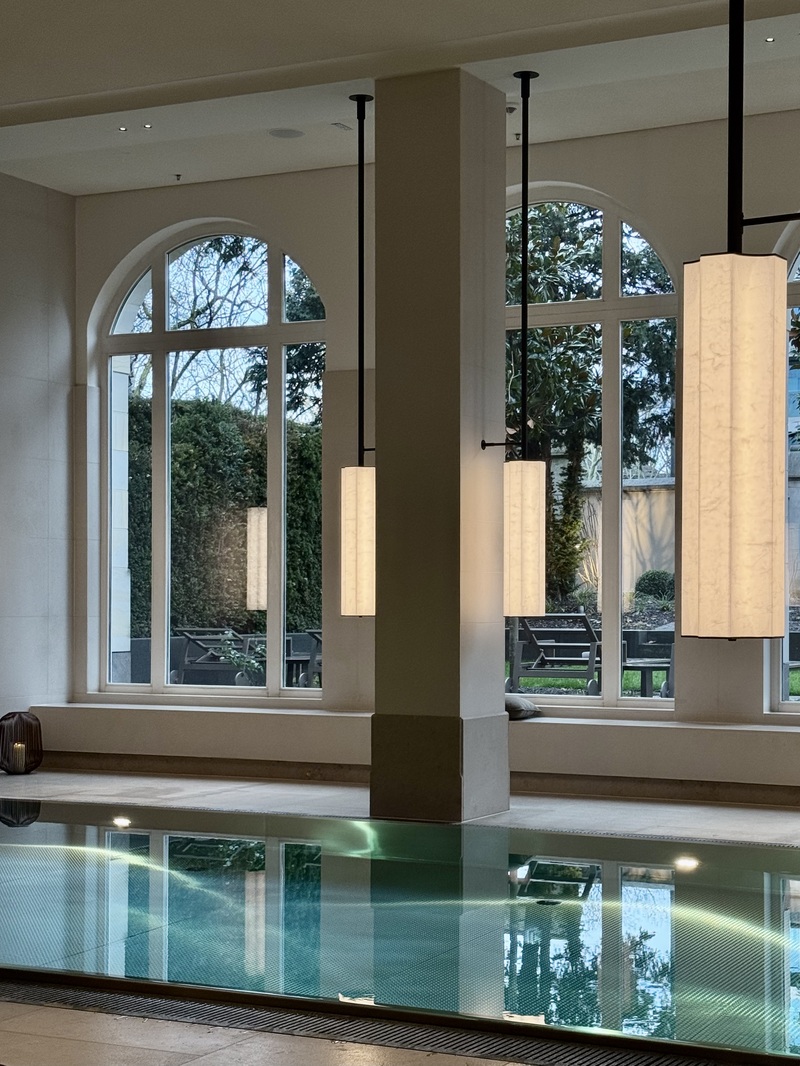
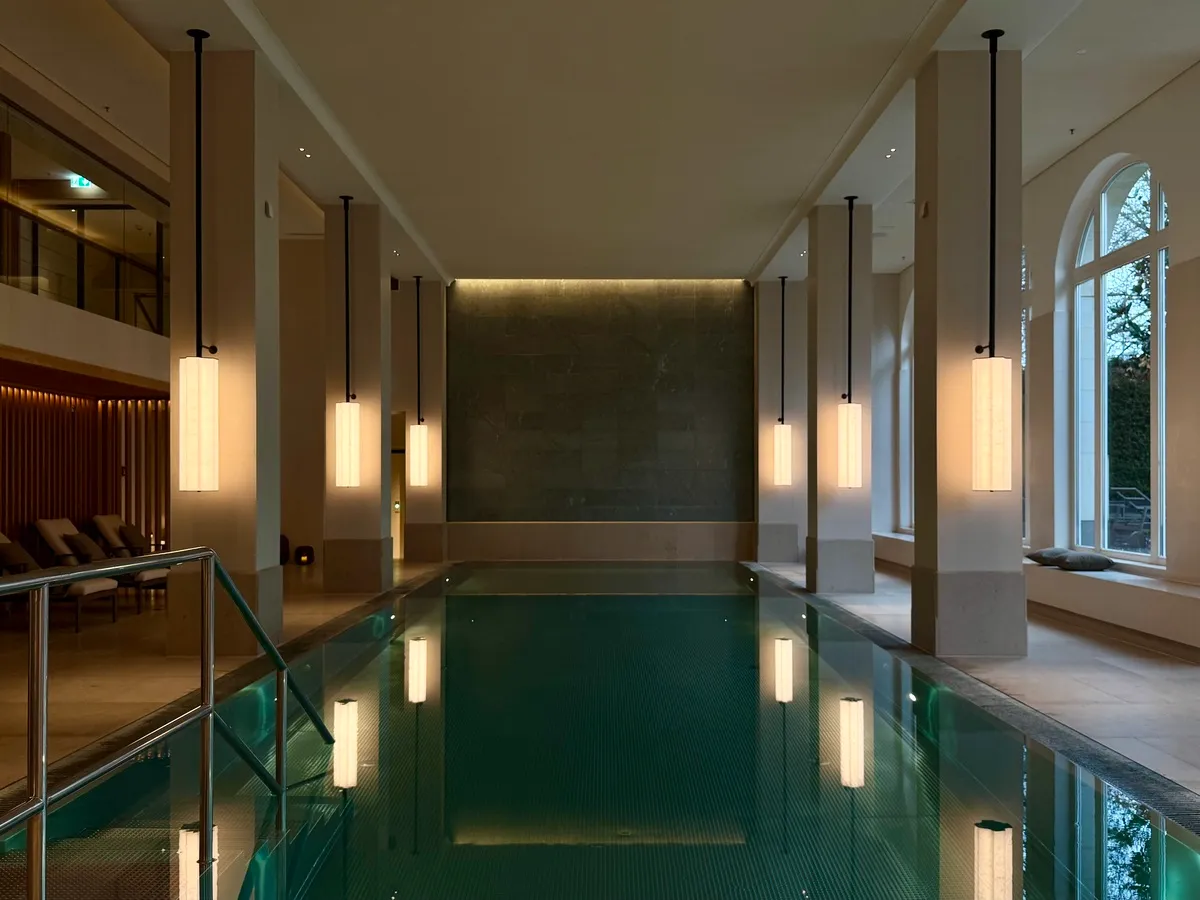
The experience does not end at the dune but continues one level below. The hotel’s 4 Elements Spa introduces a different spatial register within the property. The facility includes a 14-meter indoor swimming pool, Finnish sauna, bio sauna, steam bath, infrared sauna, and several treatment rooms. Unlike many urban spas, the pool area receives natural daylight, reinforcing a sense of calm and openness.
A Technogym fitness area and a relaxation garden complete the wellness offering. The spa follows the same design language found throughout the hotel: natural materials, soft lighting, and a restrained aesthetic.
Villa Kennedy Frankfurt renovation: energy systems, adaptive technology and spatial reconfiguration
Before becoming The Florentin, the property operated as Villa Kennedy, a luxury hotel managed by the Rocco Forte group. “It opened in 2004 and closed during Covid in 2021.” After nearly two decades of operation, the building required a complete transformation. “The new owners – a German family – decided to strip everything back to the concrete and start again.”
The renovation also addressed the building’s technical systems. “During the renovation we replaced the entire air-conditioning system to make the building significantly more energy efficient.”
Climate systems automatically adapt to occupancy. “Rooms automatically reduce heating or cooling when guests check out. The system reactivates only when the room is occupied again.” Lighting systems are equally optimized. “Lighting in corridors works with motion sensors, so energy is not wasted when nobody is there.” These technologies allow the building to maintain comfort while reducing operational energy consumption.
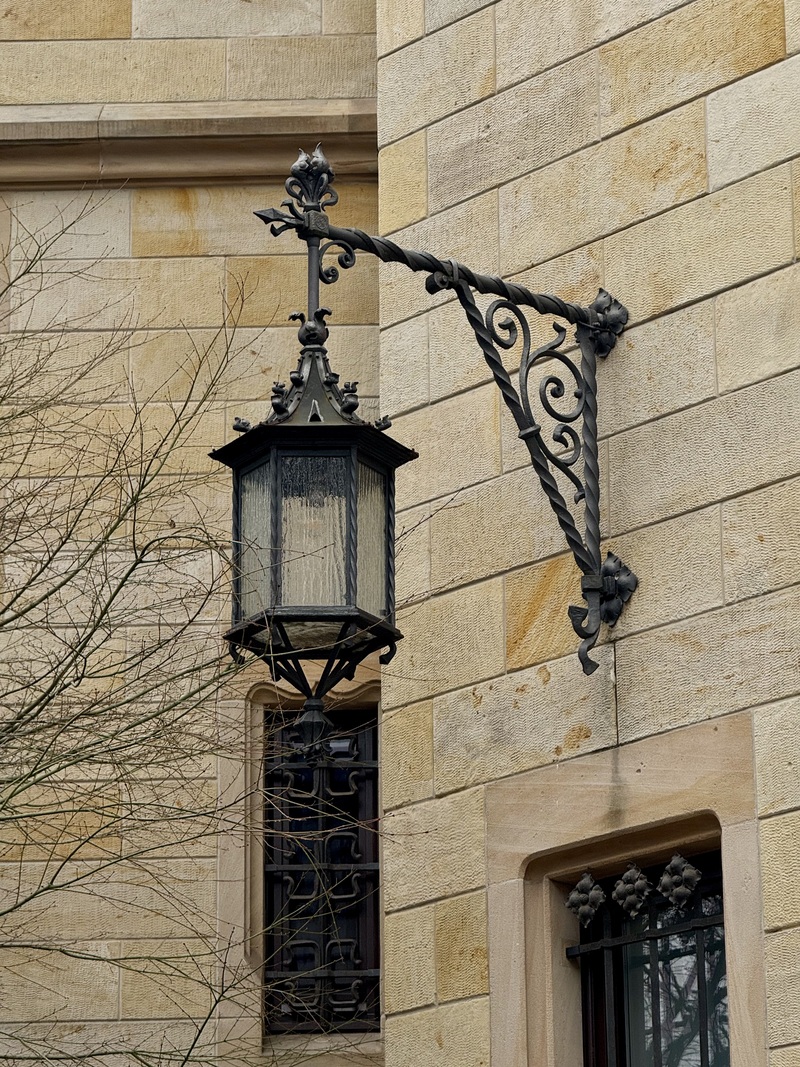
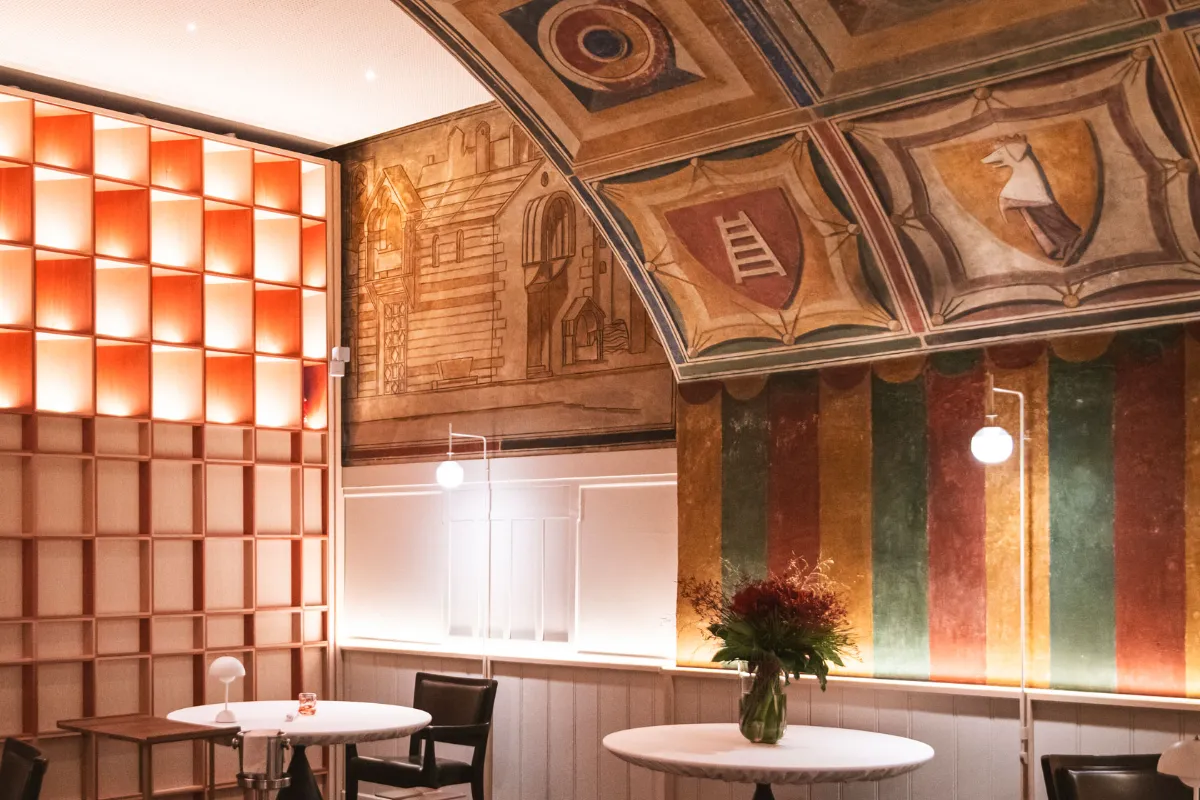
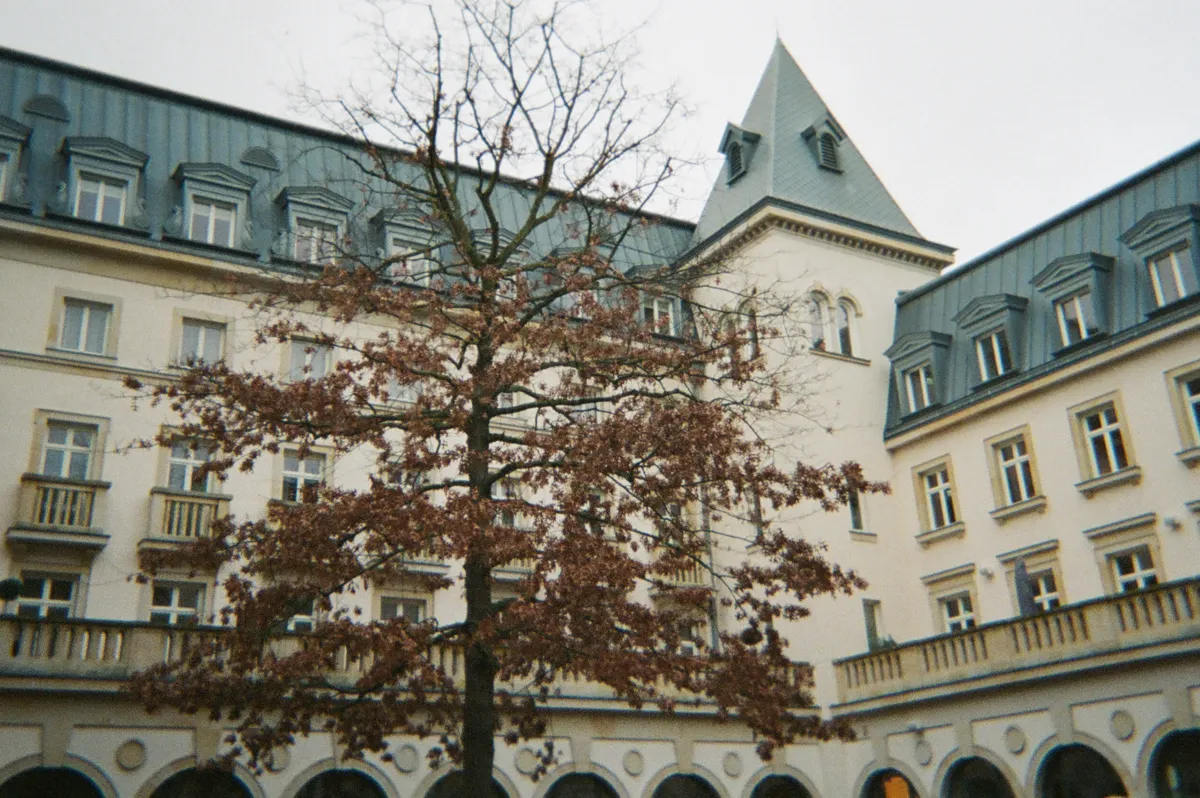
At the center of the property stands the historic Villa Speyer, the architectural nucleus of the complex. The renovation reorganized the hotel’s spatial hierarchy so that the villa became a more private area. Today the villa houses several signature suites and a series of residential-style spaces including a library, conservatory, wine lounge, and intimate salons. “Many historical elements of the former villa were restored, including the ceiling and fireplace, with Italian specialists bringing the original colors back to life.”
Villa Speyer, Frankfurt – the history
The building’s history dates back to 1901, when the original villa was constructed for banker Eduard Beit von Speyer, a member of Frankfurt’s influential Jewish financial community. Designed by architect Alfred Günther, the villa represented the historicist architecture typical of wealthy residential districts at the turn of the twentieth century.
Matteo Mammoli