Vignesh Sundaresan: from collecting digital art to building its infrastructure
With Your view matter by Olafur Eliasson, Vignesh Sundaresan introduces Padimai Art & Tech Studio, a space that commissions artworks and preserves viewer trajectories using a lightweight blockchain system
A new chapter for Vignesh Sundaresan and the evolution of digital cultural infrastructures
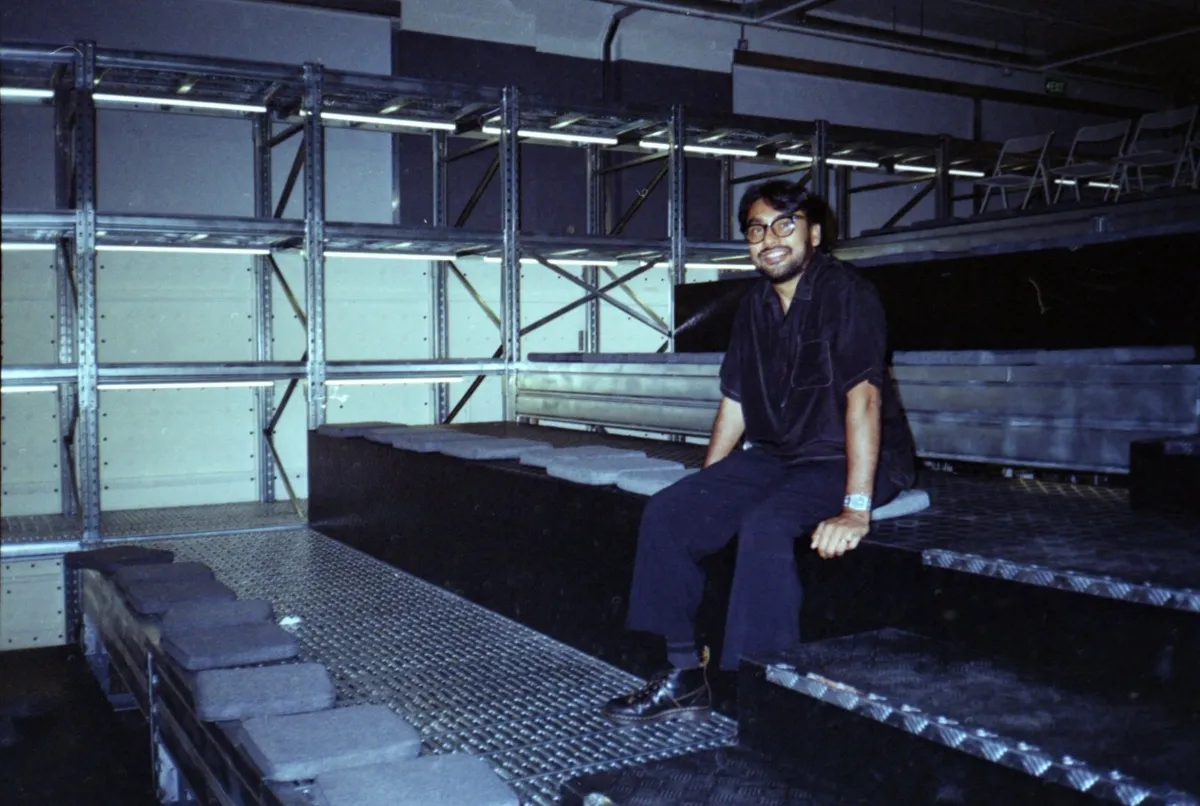
In Singapore, technologist and collector Vignesh Sundaresan—known as Metakovan, a key figure of the early NFT era and the buyer of Beeple’s Everydays: The First 5000 Days—has founded Padimai Art & Tech Studio, a space where artistic practice and technological research converge. The choice of name adds another layer to his trajectory. “Padimai is a Tamil word that means thought or philosophy — the solidifying of an idea into something,” he explains.
That earlier acquisition marked his entry into global conversations about how digital works can be created, owned and circulated. With Padimai Art & Tech Studio—and with the opening of Olafur Eliasson’s Your view matter—Sundaresan moves beyond the idea of the digital artwork as an object. He turns instead toward the conditions that shape its perception, accessibility and persistence over time.
He situates this shift within a broader reflection on how digital culture has migrated from public to private infrastructures. “The Internet today is almost entirely private. Private platforms have become the interface to our lives. I began wondering about how digital public space could be imagined again.”
Art as data and art as encounter within Singapore’s digitally fluent context
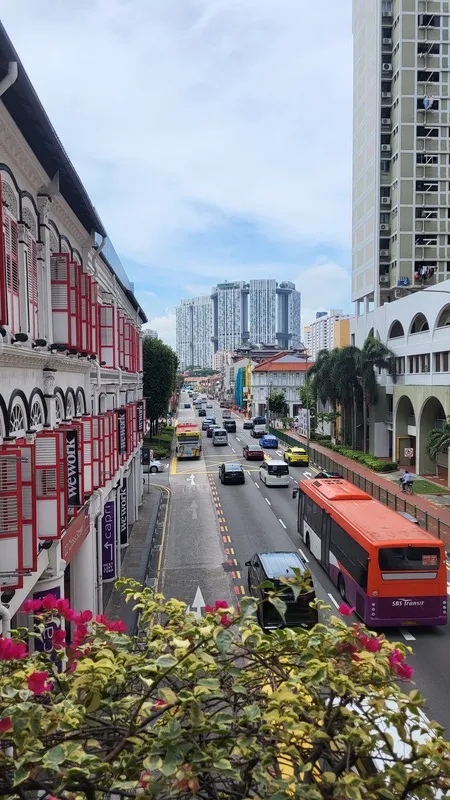
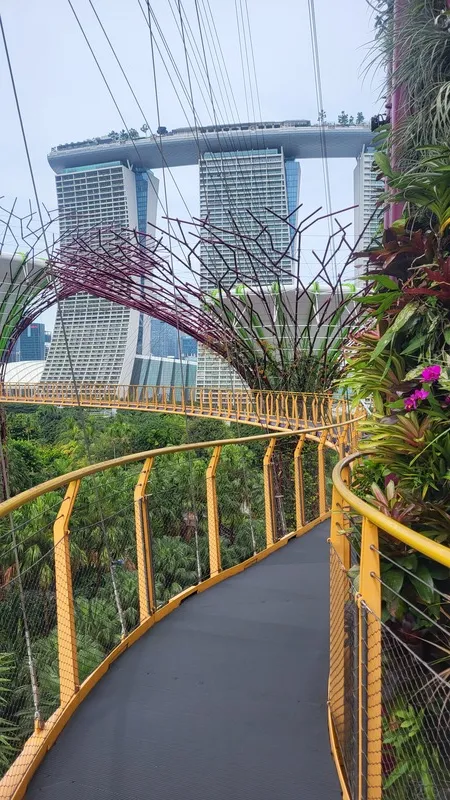
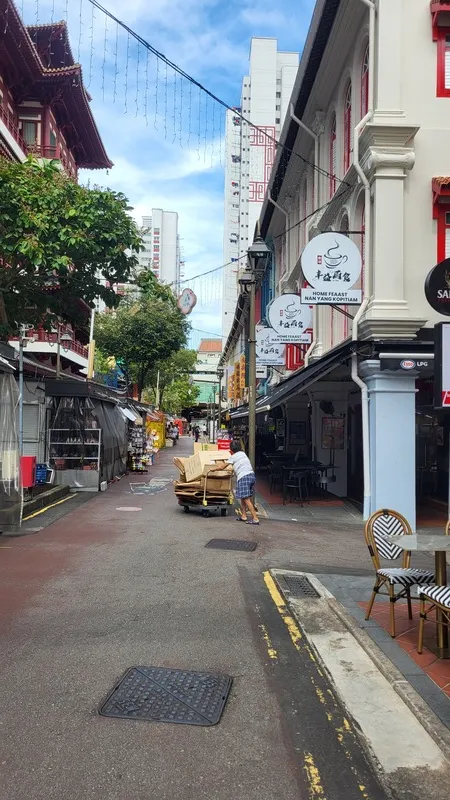
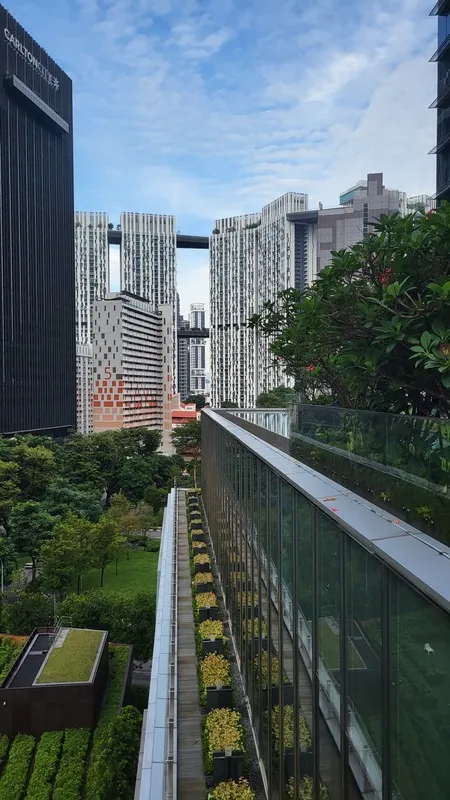
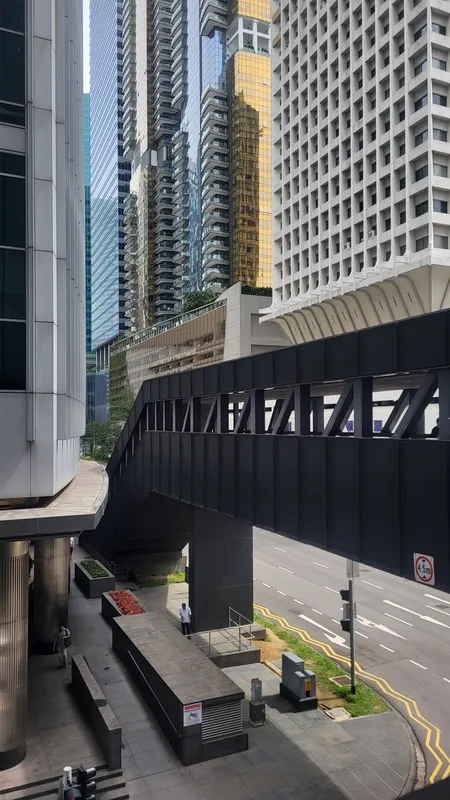
In Singapore, the encounter with art often unfolds through systems designed for a highly connected society. Access to digital tools is nearly universal, and the city-state encourages residents to approach new technologies as part of daily life. This widespread digital literacy shapes how cultural spaces emerge and how they are used.
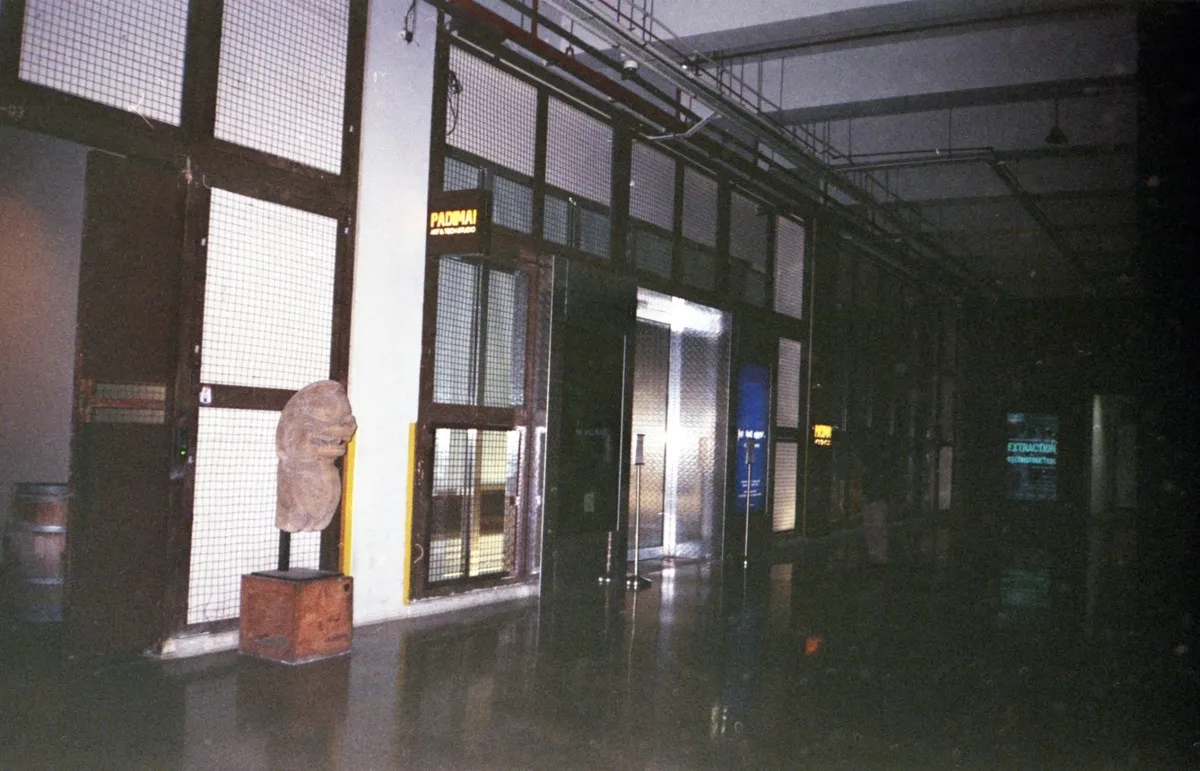
Within this landscape, Padimai Art & Tech Studio opens in Tanjong Pagar Distripark, an industrial zone that has evolved into a cultural hub where logistics, storage and exhibition spaces coexist.
The studio functions both as a physical workspace and as an intellectual structure. It is situated in a multicultural city where diverse traditions coexist under a framework of order, participation and technological fluency. Here, artistic practice intersects with digital infrastructures, and the experience of an artwork can generate data, movement and memory across decentralised archives.
Reflecting on how art first entered his life, Sundaresan recalls: “Growing up, you feel art all around you but you don’t really notice it — it’s subtle and ubiquitous. Before I even identified something as ‘art’, it was already present. The first time I became interested in art was when I saw Olafur’s glacier work for the climate conference… so simple and so impactful.”
A collection defined by process: Commissioning as a practice shaped by movement and impermanence
Padimai Art & Tech Studio was conceived without a fixed collection. Instead, it operates as a space that commissions, hosts and records encounters rather than accumulating physical objects. This approach mirrors Sundaresan’s own trajectory, shaped by continuous movement and the absence of a permanent place to display or store artworks.
His shift from ownership to commissioning also transformed how he thinks about digital works. “I imagine digital artworks as public spaces,” he says. In Singapore, where digital access is widespread and integrated into everyday life, this perspective aligns with a broader cultural environment that embraces non-material forms of artistic expression.
Padimai becomes a space where commissioning allows ideas to unfold collaboratively, and where relationships with artists develop through process rather than acquisition. Sundaresan describes his position: “I think I’m a very present-day collector. I enjoy museums — I really like Cézanne — but I never had a permanent physical space. I was always moving. My interest in art became primarily digital because of that. Commissioning artworks and working with artists is gratifying, and I learn so much from it.”
Exploring ‘Your view matter’: VR as a site of perception, geometry and embodied movement
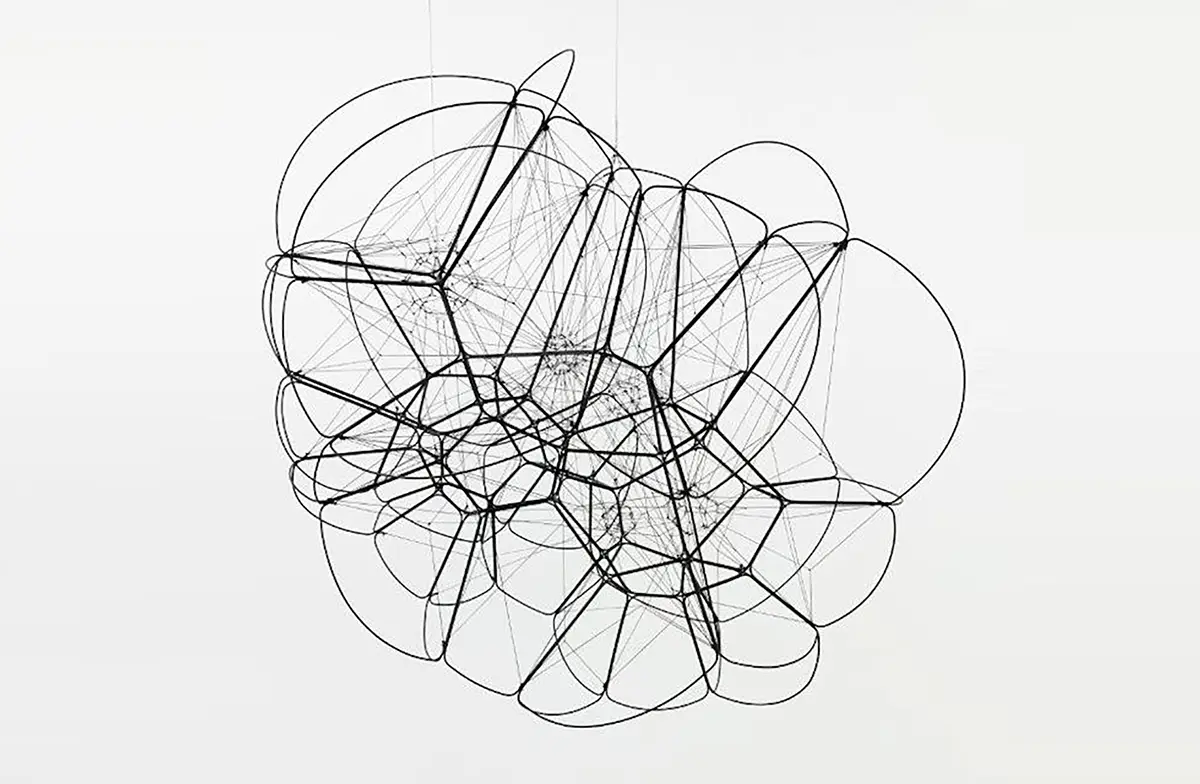
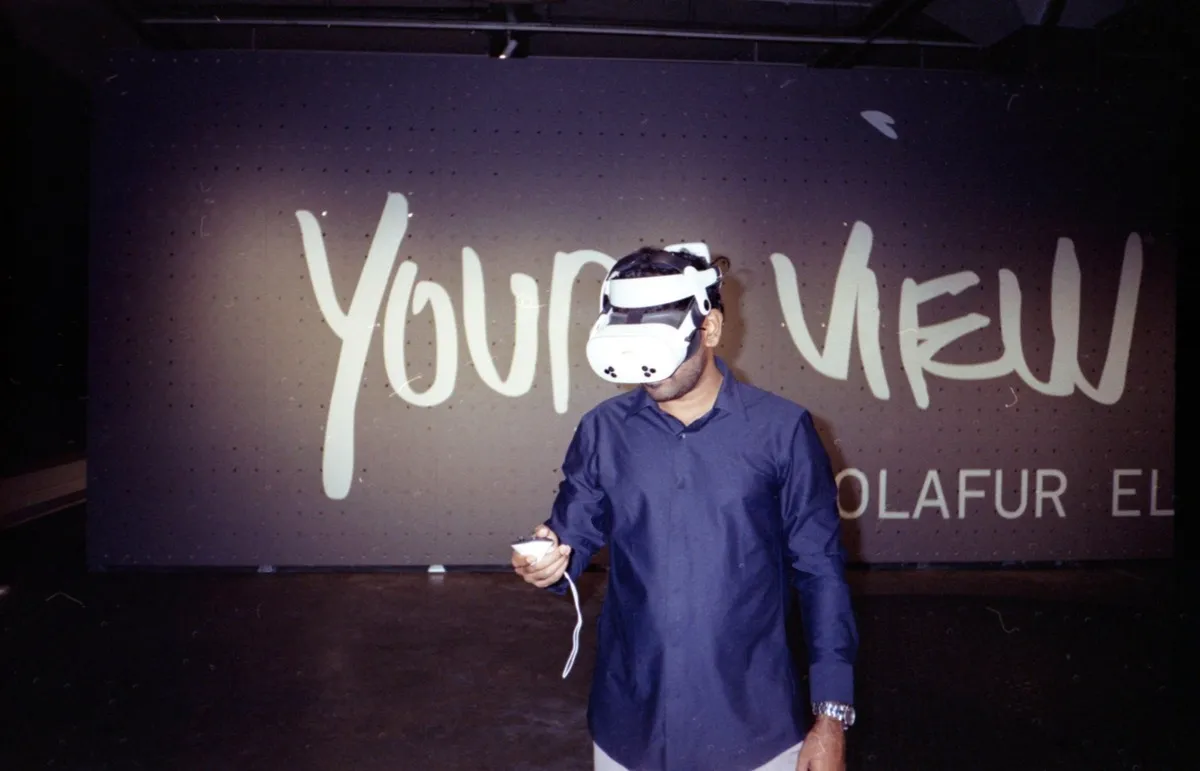
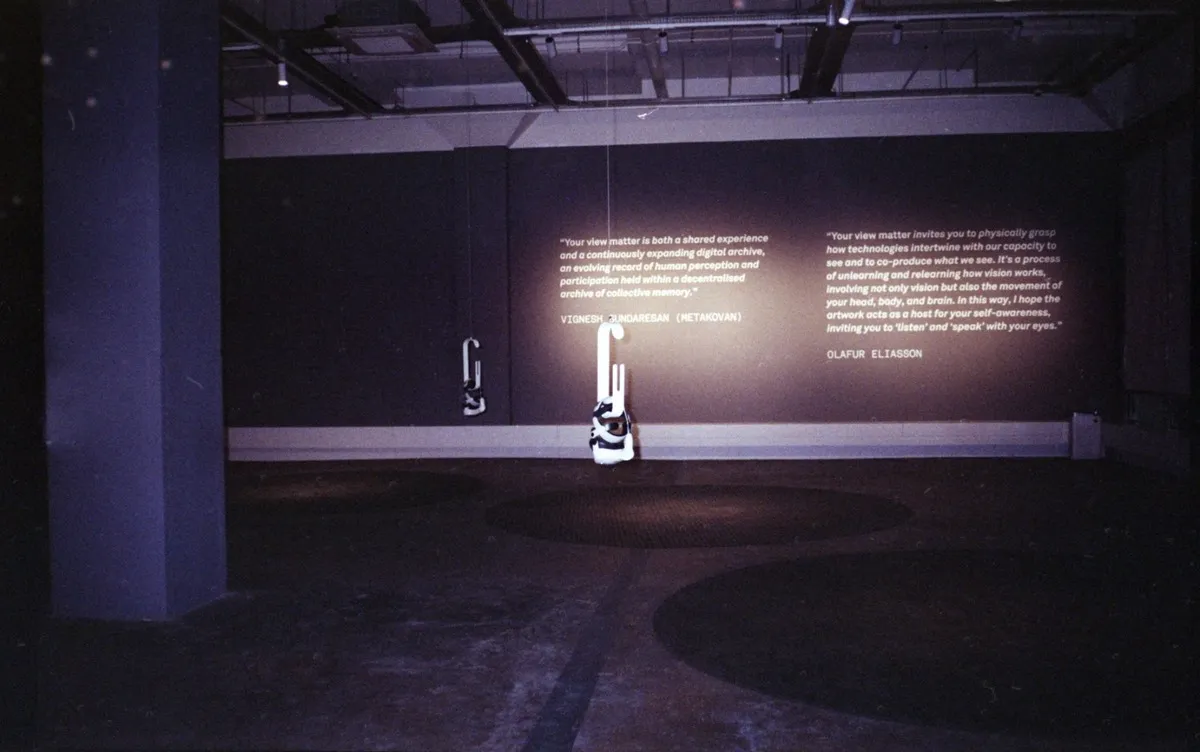
Your view matter extends a principle at the core of Olafur Eliasson’s practice: perception as an active, bodily process. The work consists of six virtual environments based on the five Platonic solids and a sphere. Each form carries perfect symmetry, yet when translated into VR, these geometries shift from ideal structures to spaces that stabilise only through the viewer’s movement.
The geometry remains constant, but the experience does not. Orientation, pace and direction of looking determine how each volume unfolds. Movement becomes the element that produces space, and the VR headset functions not as an escape but as a tool that amplifies awareness of how the body navigates its surroundings.
Reflecting on this dimension, Eliasson remarks: “VR has become just a tool in my studio. I’m interested in what it does to our awareness of our own mobility. You can quite easily draw in 3D, draw in the air. I’m interested in how we experience our own movement inside these environments.”
Working at the boundary: Technical infrastructures as part of the artwork’s continuity
If Your view matter foregrounds perception, Padimai Art & Tech Studio addresses the conditions that allow such a work to exist and persist. The studio’s digital archive records each visitor’s trajectory, but Sundaresan’s contribution extends further into the underlying system. He reflects on how data should be stored, how technological components age, and how the work can remain accessible in the long term.
He describes his role as operating at the edge of the artwork. “With a commission, especially in VR — a technical medium — sometimes there are boundaries, sometimes not. I always encourage artists to think about digital culture: I imagine digital artworks as public spaces. A lot of my contribution is thinking about the technical housing of the work.”
To support this, he adapted blockchain technology. “I took blockchain software, stripped out the monetary parts, and used it as an archiving machine — a time-logging machine. The artist can then choose how to use it. That’s where I become part of the artwork, but I never enter the artistic space. The artist creates the art; I sit at the boundary and look in.”
Eliasson describes this collaboration as one grounded in trust. “Honesty comes with a risk. We usually avoid risk, but when someone exposes honesty, it creates a condition for trust. When we started working together, that was what I recognised — even if I didn’t understand everything. That sense of trust is rare, and relevant.”
Energy, sustainability and the role of digital infrastructure in Singapore’s connected society
Singapore is built on continuous connectivity. Most households are online, smartphone ownership is nearly universal, and digital services mediate daily interactions. This infrastructure supports cultural life but also carries an energy demand that shapes how digital art is produced and maintained.
Sundaresan addresses the evolution of blockchain protocols through this lens. “There is this idea that blockchains use a lot of energy — but that was true for the early generation. Protocols evolved, and today they can be very energy-efficient. So the question becomes: is the electricity used efficient, and is it warranted? Sustainability is on every artist’s mind, but the technology keeps improving.”
He links this to Singapore’s digital environment, where identification, services and public systems operate through smartphones. Because digital platforms mediate so much of daily life, he sought to make digital art accessible everywhere. Your view matter exists online, yet the physical site remains essential. “The tradition of going somewhere as a visitor creates a point of mediation between artwork and public,” he notes.
Singapore’s multicultural openness reinforces this. “People ask, ‘What do I do with digital art?’ — but they’re excited to try,” he says.
The archive of trajectories: A plural memory of movement and perception
Padimai’s digital archive records each visitor’s trajectory as a unique file. Instead of producing a single canonical version of the work, the archive preserves differences in movement and perception. This mirrors Singapore’s broader context, where diverse communities operate within shared digital infrastructures and generate distinct paths through the same systems.
For Sundaresan, this plurality is central to understanding digital art. “Traditional physical art has its boundaries; it needs to remain the same. Digital art is different — where is the art? It’s code. It renders only when someone looks at it. Each visitor gets something based on how they move, how they look. It reminds the visitor about their own point of view. And the dynamic archive holds many perspectives.”
He imagines how such models could inspire future cultural institutions. “Blockchains today can be lightweight — sometimes two servers are enough. That allows us to imagine many small institutions running in parallel, resilient and outside private data infrastructure.”
Vignesh Sundaresan (Metakovan)
Vignesh Sundaresan is a technologist and collector whose work focuses on decentralised systems and their cultural applications. Known as Metakovan, he has contributed to discussions on blockchain as an infrastructure for creative autonomy and data sovereignty. He is the founder of Padimai Art & Tech Studio in Singapore, dedicated to the intersection of artistic practice and digital technologies.
Padimai Art & Tech Studio
Padimai Art & Tech Studio is an independent Singapore-based project dedicated to exploring how artistic practice and digital systems intersect. Located at Tanjong Pagar Distripark, it hosts commissions, residencies and exhibitions, and maintains a decentralised archive that records each visitor’s trajectory through immersive works.
Text and images Elisa Russo