Inside The Mark and its Caviar Kaspia: Parisian rituals, Upper East Side rules
Caviar Kaspia brings a century-old discipline of serving cold sturgeon roe in fixed formats, structuring space, time, and social ritual within The Mark’s interior system
The Mark Hotel on Manhattan’s Upper East Side: the landmark address redefining New York luxury
On the corner of 77th Street and Madison Avenue, steps from the Metropolitan Museum of Art and the edge of Central Park, a 1926 landmark hides in plain sight and yet sits at the center of uptown glamour: The Mark Hotel. Built in an Italian neo-Renaissance idiom and fully reinvented for the present, it has become a shorthand for audacious, high-performance luxury – discreet in posture, maximal in execution.
Its cultural and design significance has been captured in a dedicated publication, The Mark by Assouline, a volume that distills the hotel’s identity into a carefully curated narrative of architecture, interiors, art, and New York mythology, confirming The Mark not only as a place to stay, but as a fully realized world of its own.
Izak Senbahar and the Alexico transformation: building the best luxury hotel in New York City
The modern life of The Mark begins in the early 2000s, when Izak Senbahar, president of Alexico Group, acquired the property with partners Simon Elias and Niso Bahar with an ambition that sounded simple on paper and brutal in practice: create the best hotel in the world. Born in Istanbul, educated in a French lycée, trained between The Catholic University of America and NYU, Senbahar brought a cosmopolitan sensibility matched by a builder’s obsession for performance.
His approach was direct: assemble the strongest talent in every discipline, then rebuild without compromise. The renovation was total – down to the beams – yet the result never feels like a sterile redesign. The Mark lands in a rare, controlled balance: old-world comfort calibrated with contemporary design, and technology that stays invisible until you need it.
Jacques Grange interior design at The Mark: boldly lavish style, perfect lighting, and quiet luxury
The keystone was Jacques Grange, the legendary French interior designer and Officier de la Légion d’honneur. Their meeting was almost accidental – at a Guggenheim party – until Senbahar put the challenge on the table: I want to make this the best hotel in the world. Are you in? Grange initially assumed it was a residential project. Then the scale – and the freedom – pulled him in.
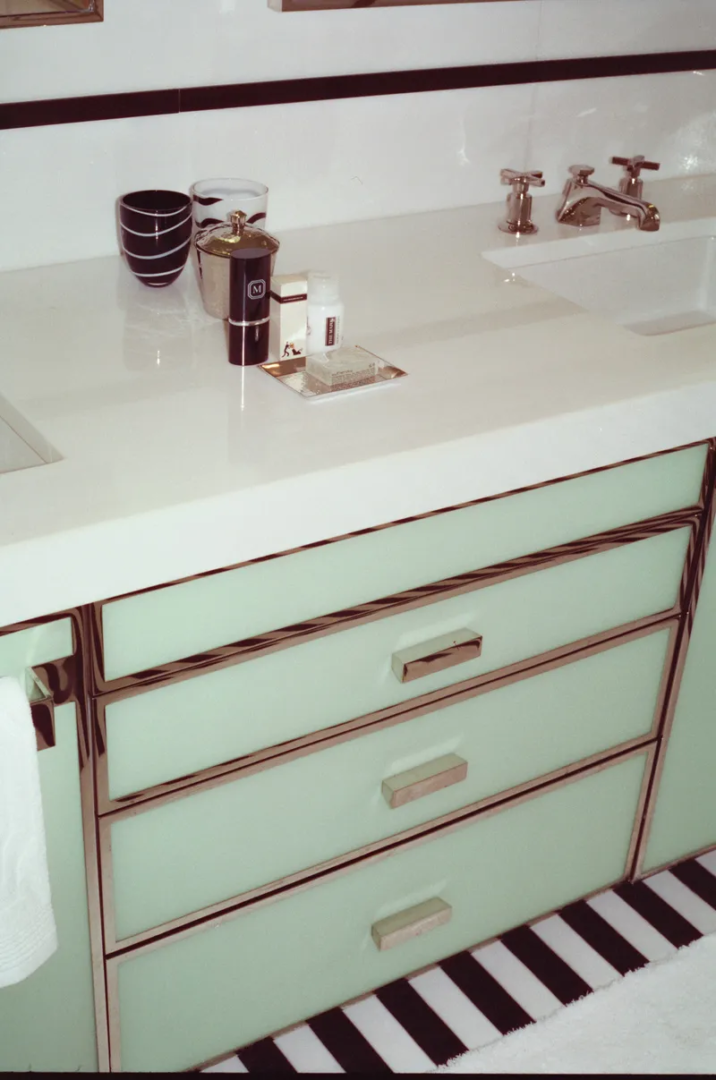
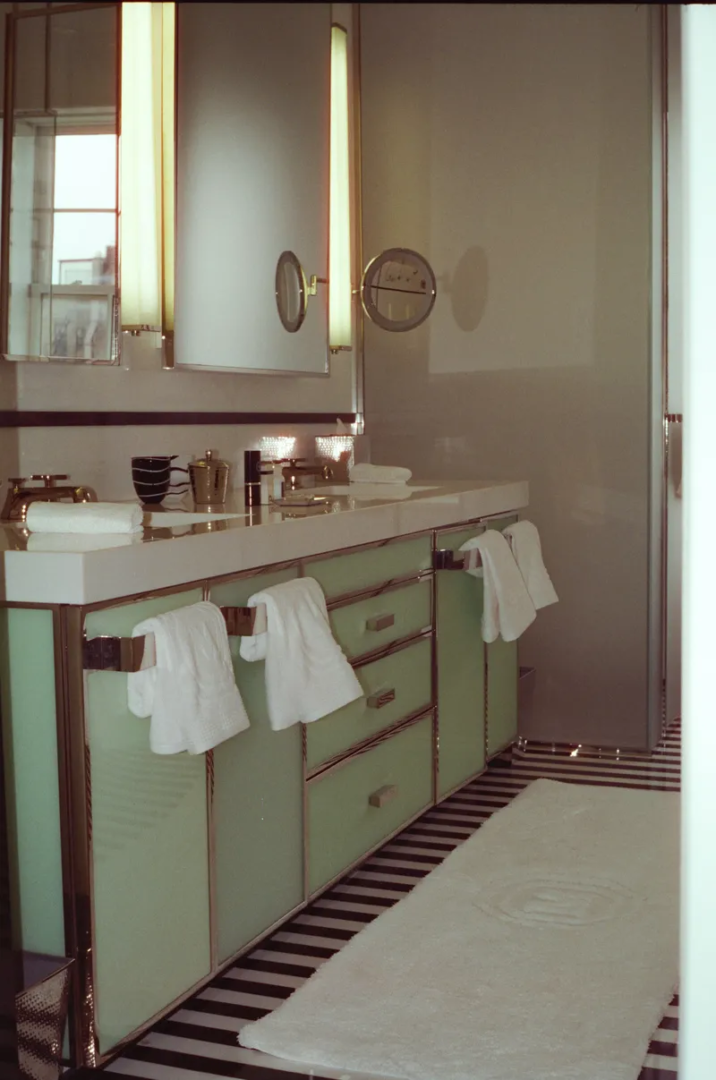
Grange began where true luxury actually lives: in function, silence, and light. He studied what the most demanding guests want from a hotel that claims to be the best: generous bathrooms, real acoustic privacy, and lighting that never fails – inside rooms, along corridors, even in elevators. He preserved the building’s Art Deco bones (originally by Schwartz & Gross) while injecting a playful modernity with a wink to 1920s Paris. The lobby’s black-and-white striped marble floor became instantly iconic, drawing the gaze downward to create intimacy rather than grandeur – an uptown trick that also lets high-profile guests move through the space quickly and quietly.
The Mark art and design collection: Ron Arad, Rachel Howard, Mattia Bonetti, and collectible interiors
What distinguishes The Mark is not taste as decoration, but curation as a complete system. Grange – working closely with his life partner Pierre Passebon, owner of Paris’s Galerie du Passage – treated the hotel as a cohesive collection rather than a set of rooms. Custom fabrics, oak floors, coffered ceilings, oversized tubs: nothing generic, nothing accidental.
In the lobby, Ron Arad’s “Ge-Off Sphere” chandelier hangs like a provocation, while Rachel Howard’s Red Mark – a glass-based work created for the hotel – anchors the space with controlled intensity. Paul Mathieu’s mohair club seating sets the tone, and Mattia Bonetti’s rock-crystal sconces and signature “Orbs” add that slightly surreal glamour that reads as Parisian confidence translated into New York speed. Eric Schmitt’s presence is everywhere, from sculptural tables to corridor consoles and statement lighting, while Anne and Vincent Corbière bring craft-forward punctuation through distinctive lamps and furniture pieces that feel bespoke rather than “hotel.”
The Mark Bar in New York City: design-driven mixology, Guy de Rougemont, and Vladimir Kagan icons
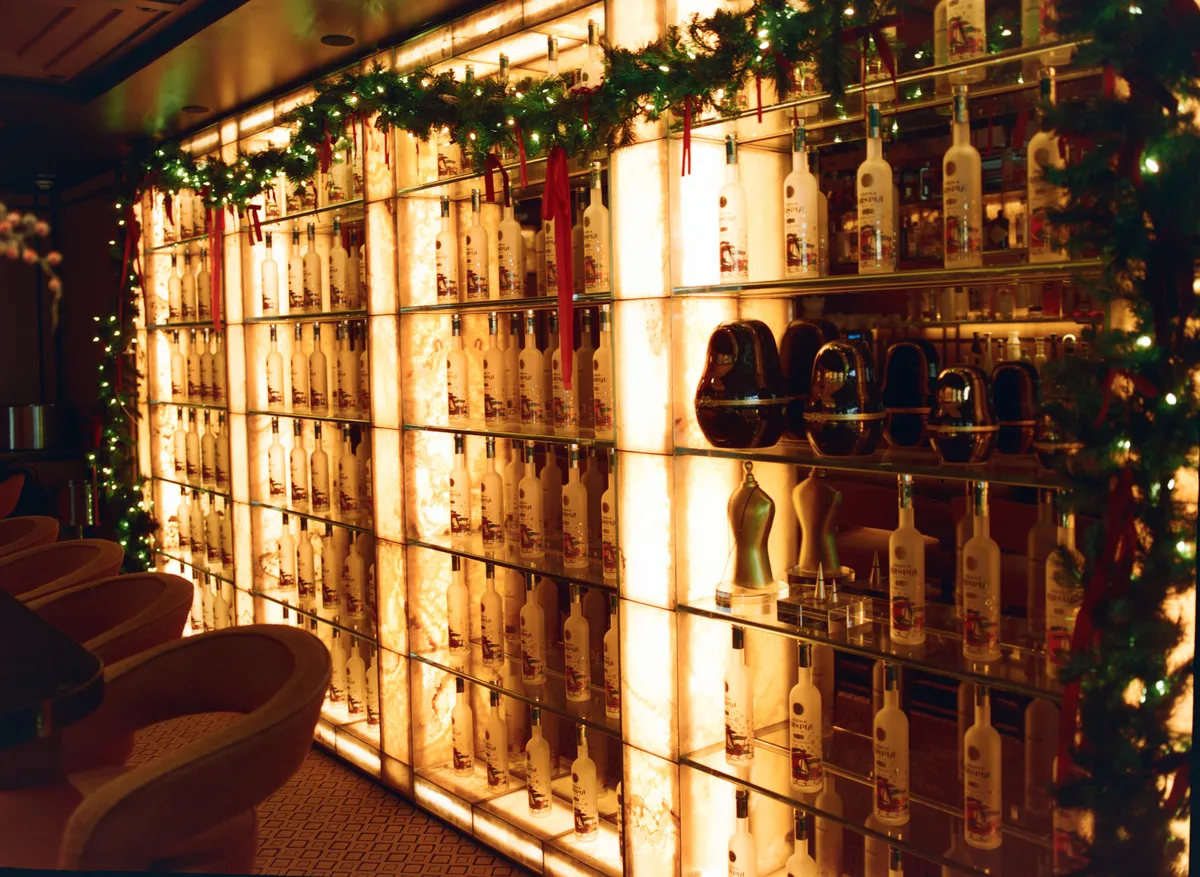
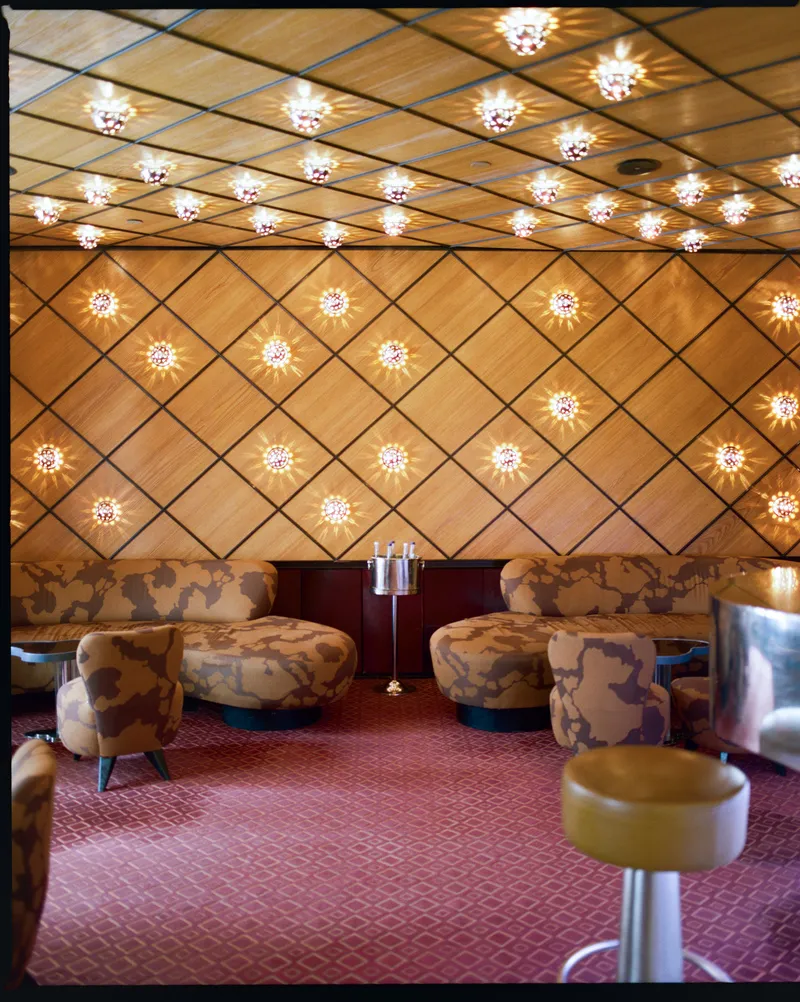
The Mark Bar operates as its own universe – less a hotel amenity than a private club with impeccable design literacy. The counter by Guy de Rougemont anchors the room with art-world authority, while the furniture feels ergonomic and avant-garde without losing warmth. A Vladimir Kagan free-form sofa delivers a visual coup: from afar it reads like cowhide; up close it reveals maps – an optical joke that becomes a signature. Handcrafted details, from bespoke textiles to calibrated lighting, complete an atmosphere that refuses trendiness and aims instead for timeless seduction.
The Mark Hotel rooms and suites: Jacques Grange furniture, Karl Lagerfeld artwork, and Piero Lissoni kitchens
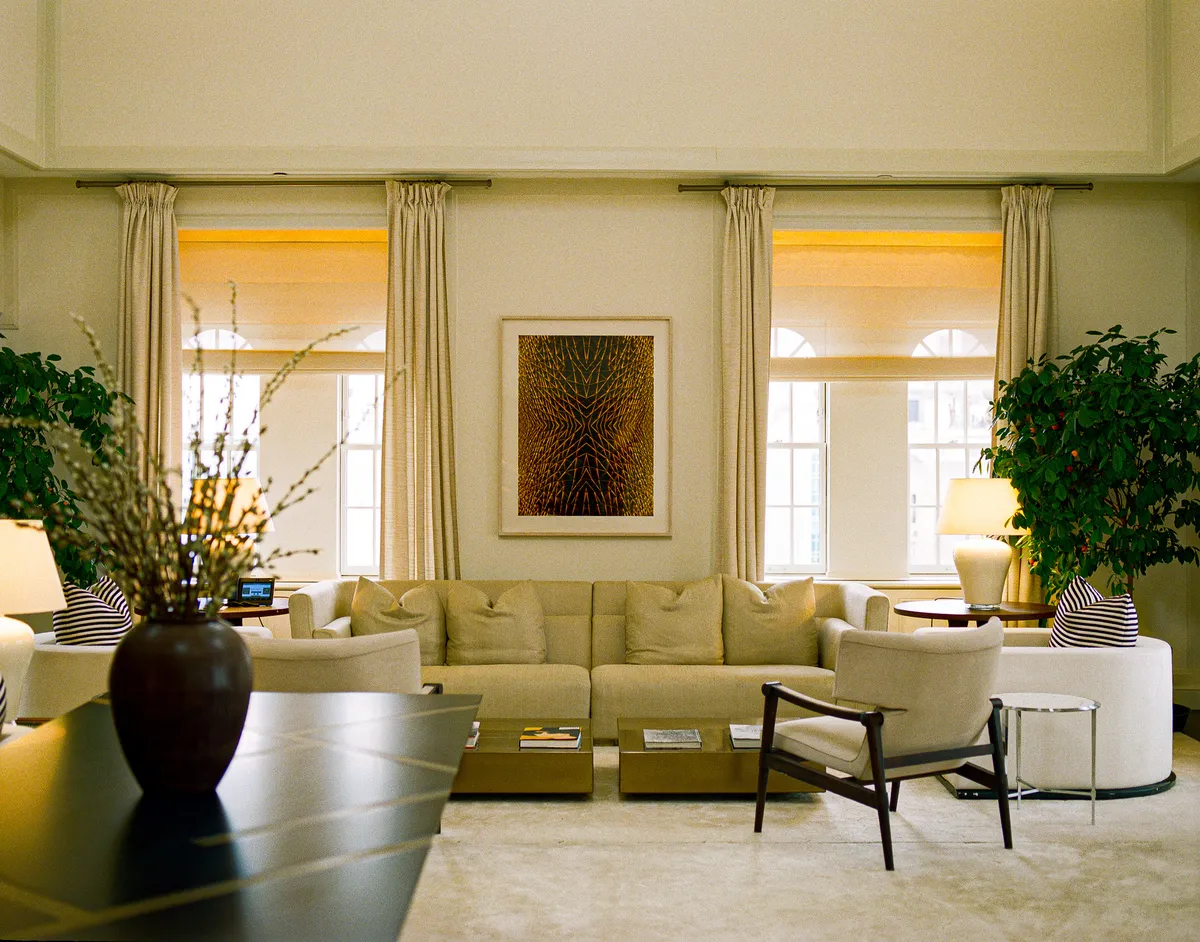
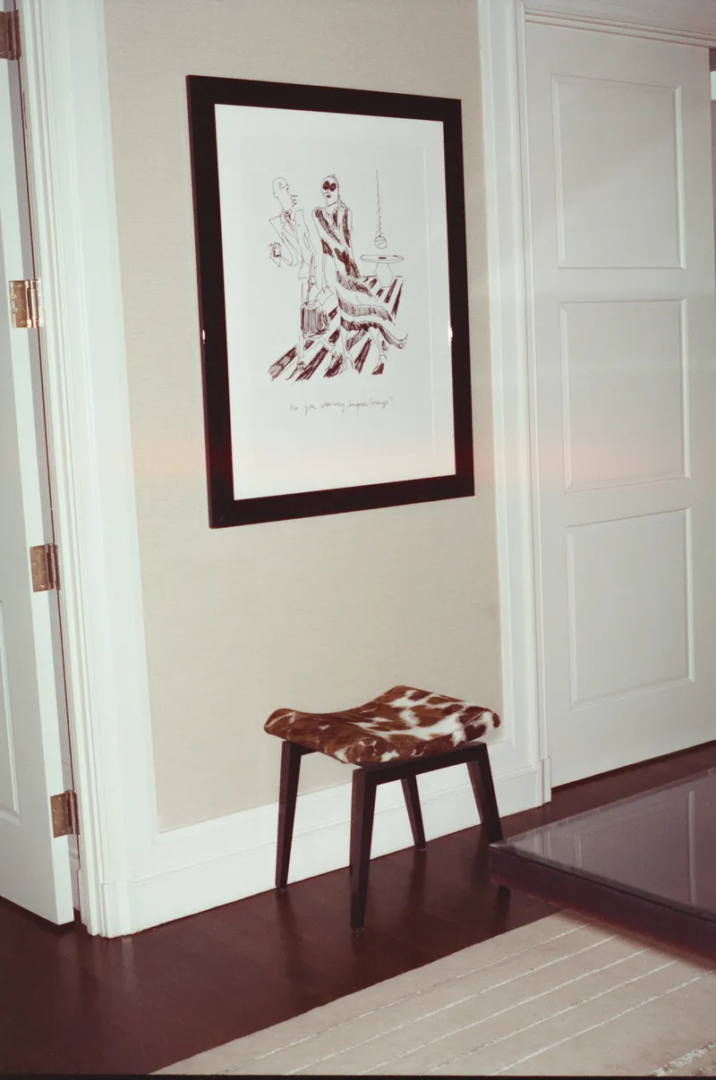
The Mark’s 106 rooms and 46 suites – ranging from roughly 400 to over 10,000 square feet – are designed as retreats with a serious point of view. Grange designed the furniture, produced in Italy by Colber, ensuring continuity from space to space. Karl Lagerfeld works appear in living areas above mohair seating, while Todd Eberle’s photography threads through bedrooms and corridors with natural-history clarity that reads clean, not decorative.
Lighting remains the hotel’s hidden obsession. Patrice Dangel – trained at École Boulle and the Valsuani foundry – created plaster chandeliers suspended with ropes, a deliberate tension between classical proportion and modern rusticity. Minimal kitchens are by Piero Lissoni with Boffi, and the private bars – black granite, Sub-Zero refrigeration, custom freezer drawers – treat “in-room” as a real lifestyle, not a compromise.
Jean-Georges Vongerichten at The Mark Restaurant: fine dining meets New York comfort food
Senbahar’s second decisive move was bringing in Jean-Georges Vongerichten. The offer was a blank canvas, with one condition that could have derailed the entire romance: Senbahar wanted “junk food” too – pizza and burgers alongside haute cuisine. Jean-Georges’ reaction was the opposite of precious: I can do whatever you want.
Today, under chef Pierre Schutz, The Mark Restaurant balances polish and pleasure without splitting into two identities. It moves easily from crisp, clean crowd-pleasers to dishes that flirt with truffles and caviar, and it keeps a confident simplicity where it counts. The result feels very New York: luxury that never loses appetite.
Caviar Kaspia at The Mark: Paris caviar culture and clubby lighting on the Upper East Side
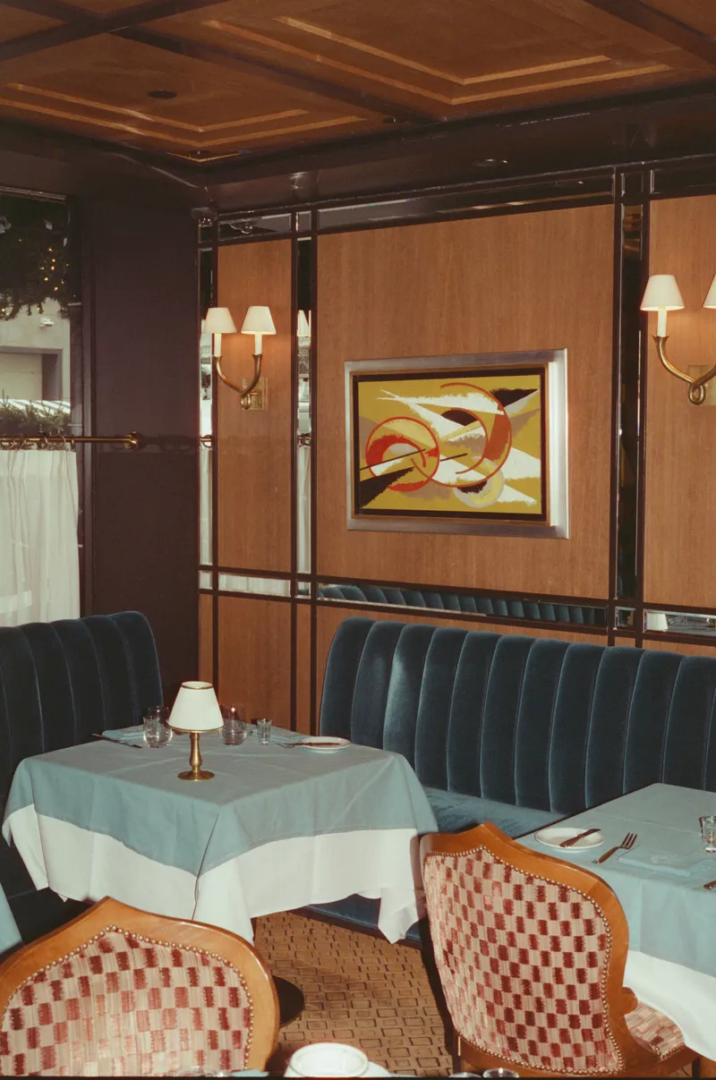
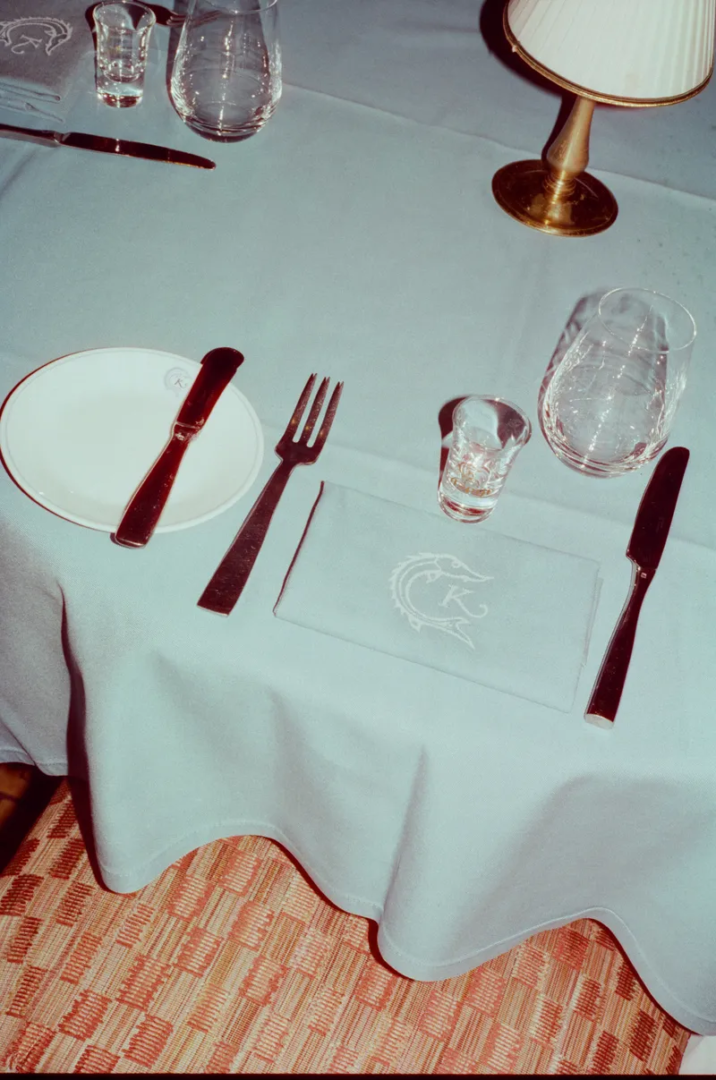
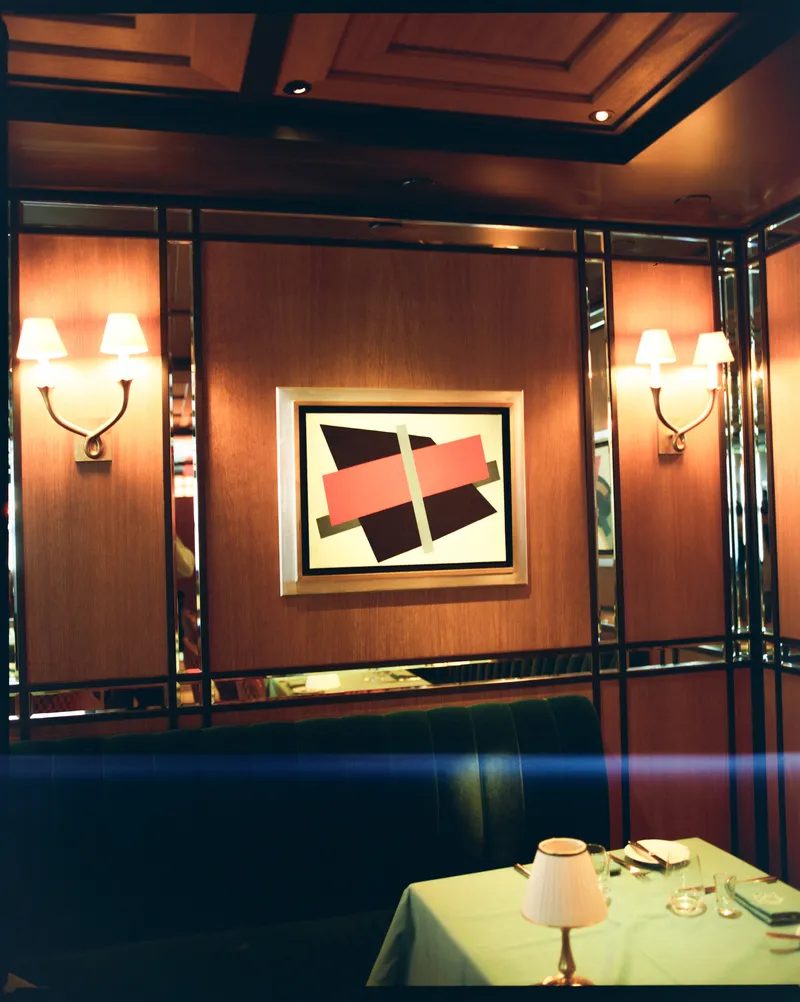
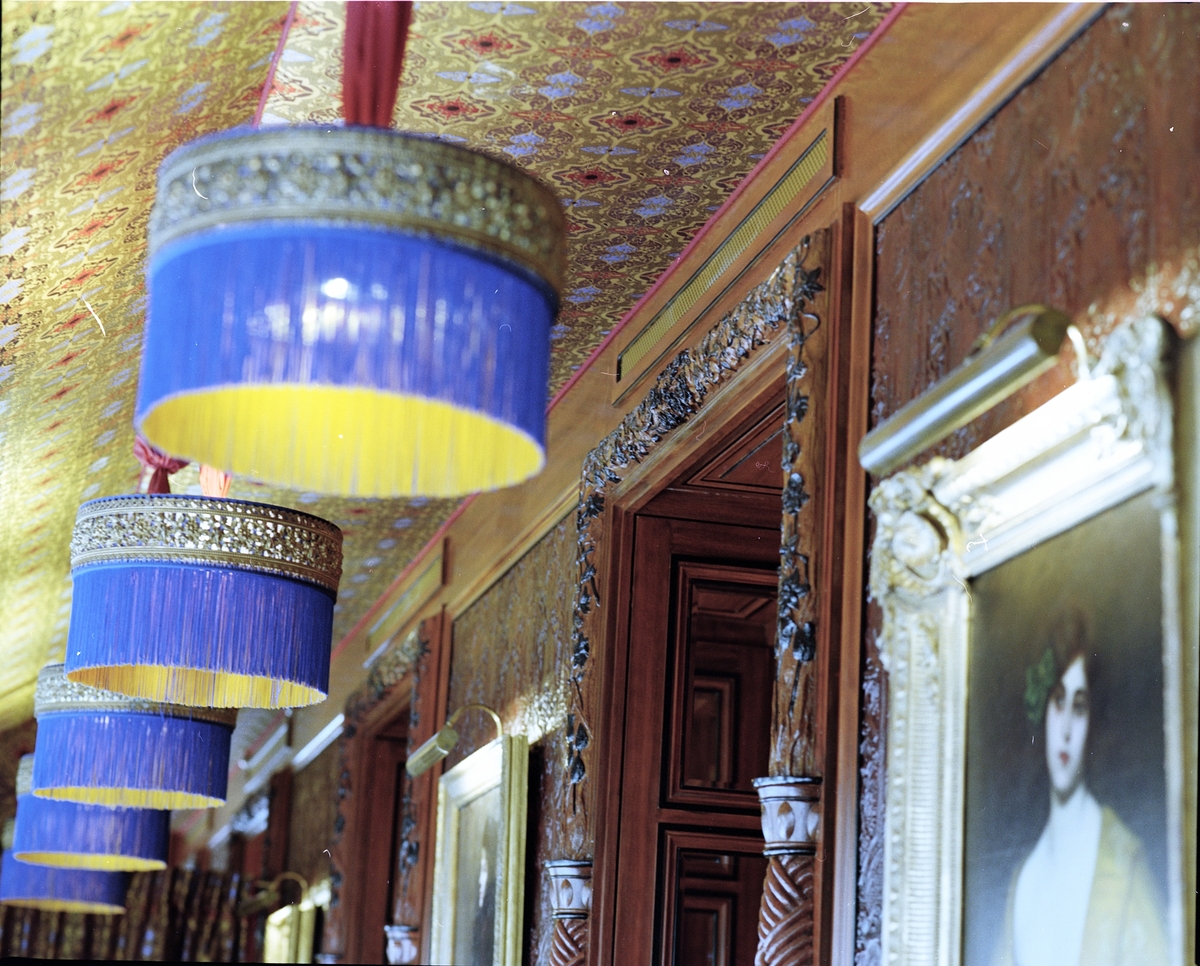
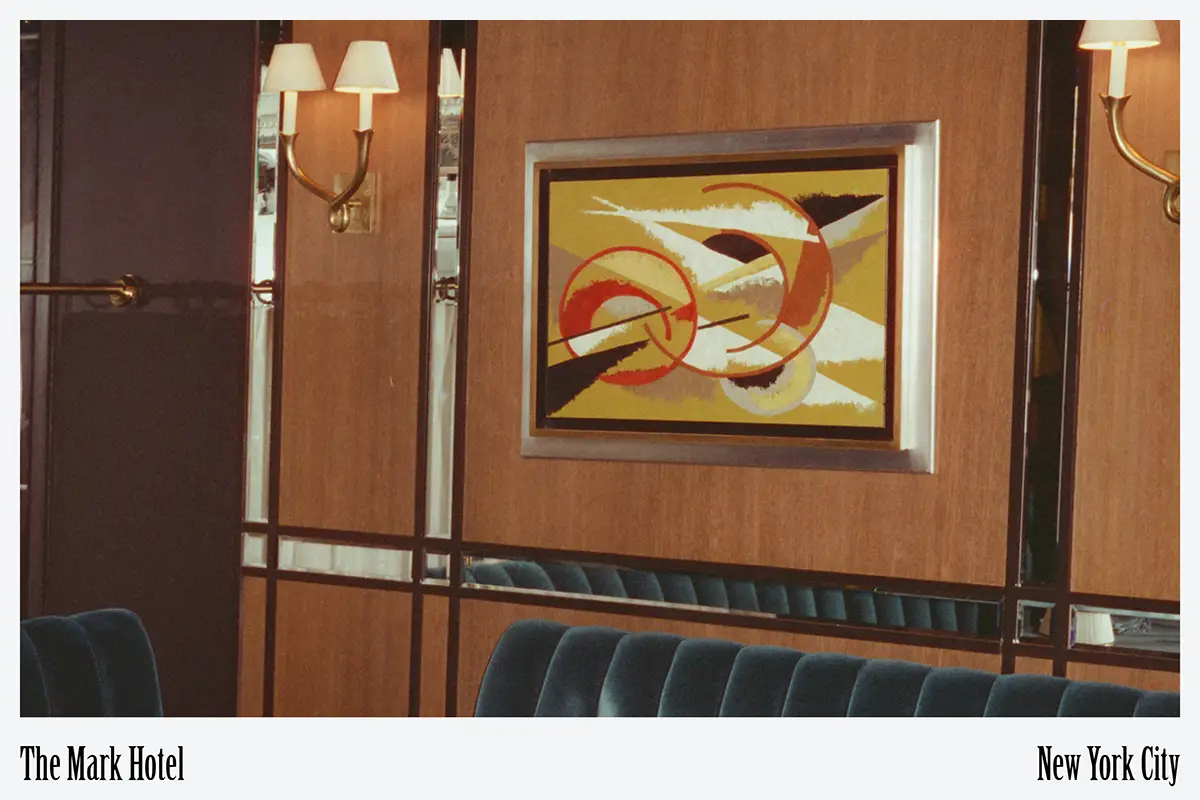
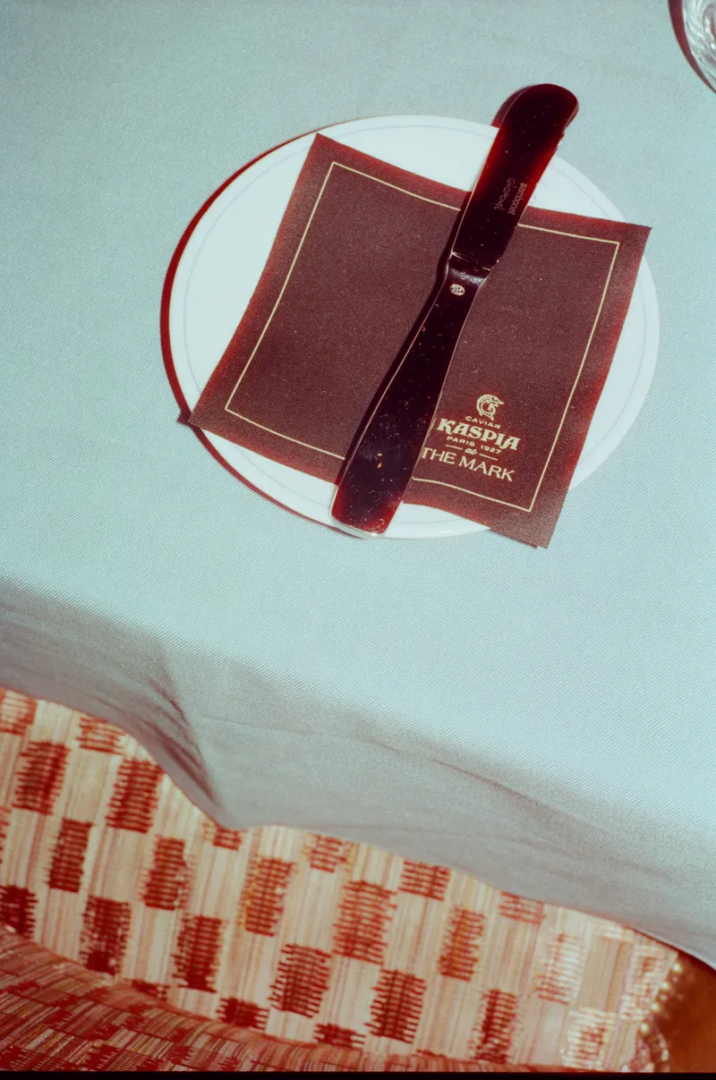
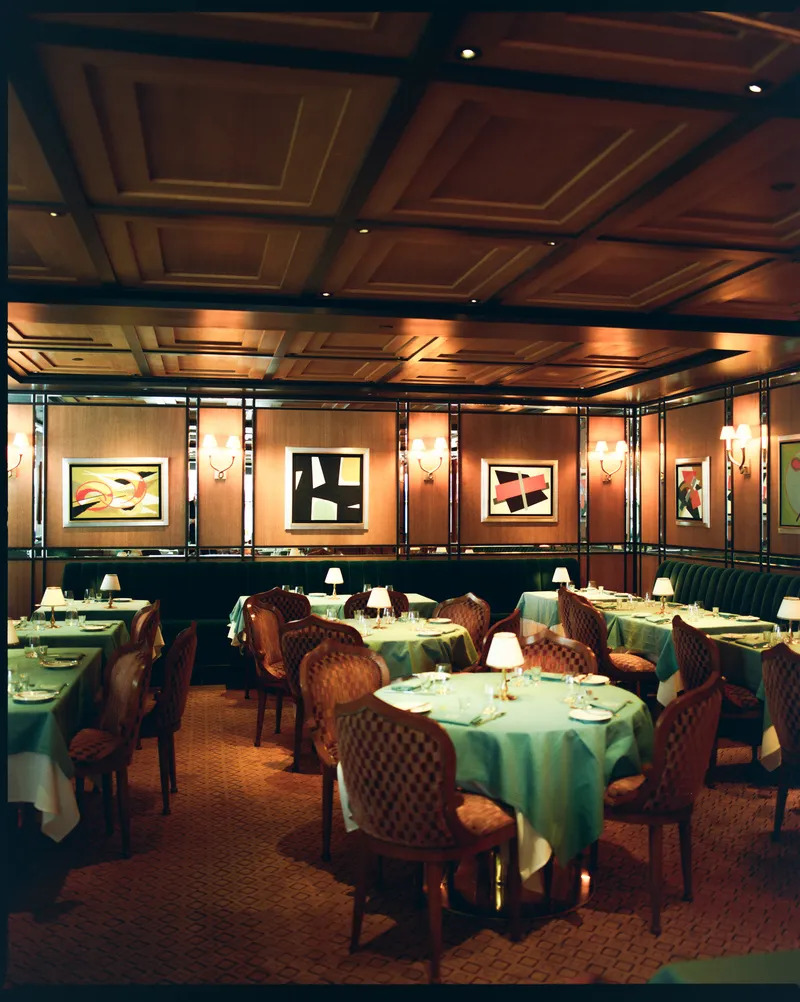
In 2023, The Mark added a new layer to its identity with Caviar Kaspia at The Mark – an unmistakably Parisian institution translated into an uptown room. Designed again by Grange, the space carries the maison’s codes: wood paneling, emerald mohair banquettes, blue tablecloths, and a sculpted black Belgian marble bar. The menu stays faithful to the myth, centered on the house rituals of caviar, blinis, and that legendary double-baked potato.
The atmosphere is engineered through lighting – tuned to feel intimate and club-like, never bright, never dim, always flattering. It’s the kind of detail that sounds abstract until you experience it, and then you realize it’s doing half the work.
Caviar Kaspia’s fixed menu logic: how Parisian caviar discipline adapts to The Mark’s Upper East Side system
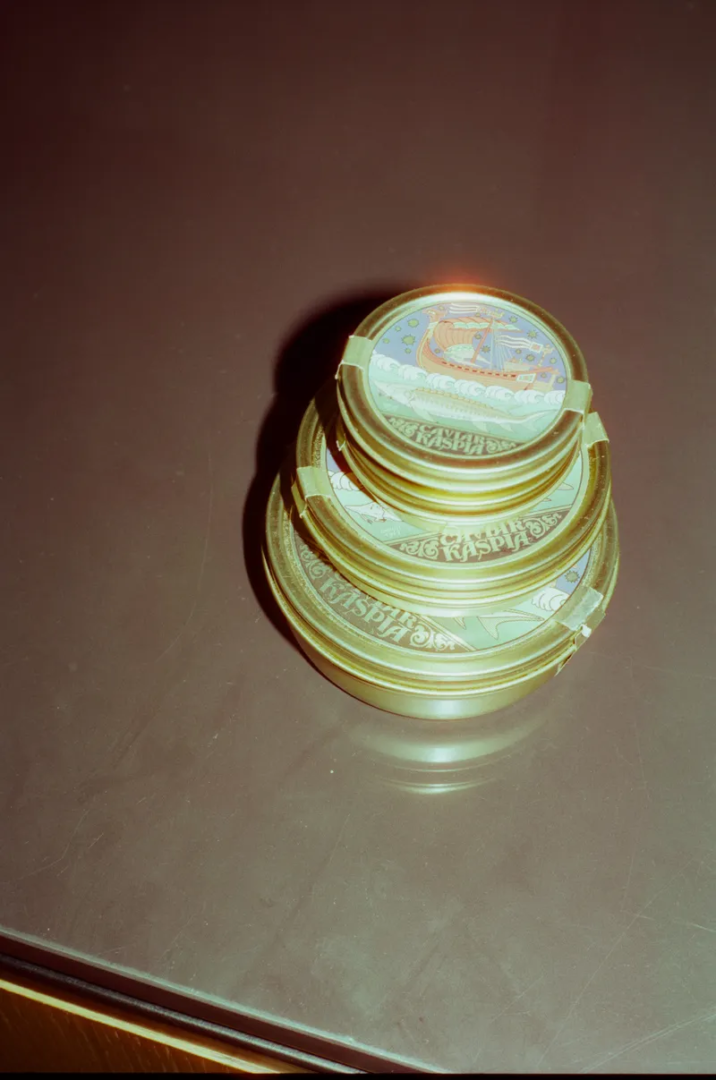
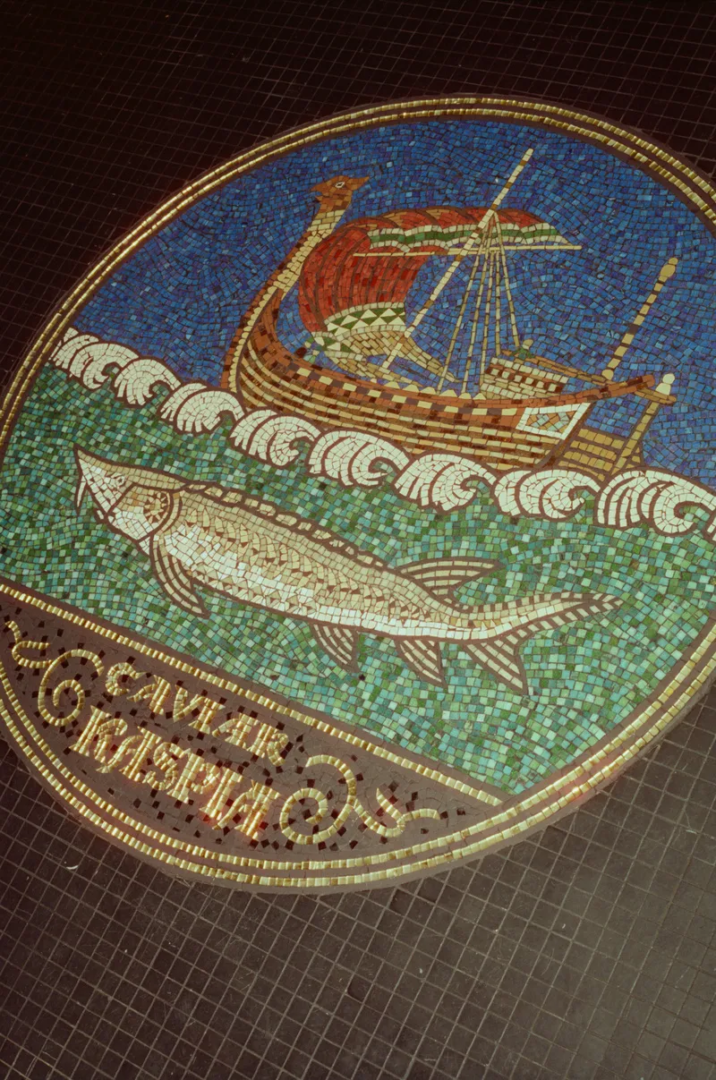
Founded in Paris in 1927 and permanently established at Place de la Madeleine from the 1950s onward, Caviar Kaspia developed its identity as a specialist house at a moment when caviar was still bound to aristocratic consumption and tightly controlled supply chains. Rather than expanding into haute cuisine, the maison refined a service protocol built on temperature discipline, calibrated accompaniments, and a limited number of neutral bases – blinis, eggs, crème fraîche, and potato – engineered to preserve grain integrity and salinity. This approach proved structurally resilient as global caviar production shifted from wild fishing to aquaculture, allowing Kaspia to maintain consistency despite radical changes in sourcing, regulation, and availability.
The menu logic remains product-driven rather than chef-led. Signature formats such as the double-baked potato topped with caviar function as standardized platforms: portion sizes, garnishes, and service sequence are fixed, minimizing interpretive intervention and keeping focus on the roe itself. While contemporary menus – New York included – now incorporate additional dishes suited to extended dining hours, these core formats remain unchanged and continue to anchor the experience. The result is a hybrid structure: a stable ritual nucleus surrounded by a flexible perimeter, capable of operating under high-volume conditions without altering internal mechanics.
Within The Mark, this operational discipline aligns seamlessly with the hotel’s own system of control and repeatability. Kaspia’s service rhythm – measured pacing, predictable sequences, low theatricality – mirrors The Mark’s broader hospitality logic, where privacy and precision outweigh spectacle. The inclusion of a retail component reinforces the maison’s identity as a product-based institution rather than a destination restaurant, extending the ritual into private consumption. Here, Kaspia does not introduce novelty but reinforces order, functioning as a stabilizing element within the hotel’s carefully calibrated social and spatial ecosystem.

The Mark experience beyond hospitality: Fekkai salon, Assouline boutique, and Frédéric Malle’s signature scent
The Mark operates less like a hotel and more like a self-contained luxury neighborhood. Frédéric Fekkai chose it for his flagship salon, turning beauty into part of the building’s daily rhythm – especially in the run-up to the Met Gala, when the property becomes a backstage city. Assouline transformed a former John Lobb shoe-shine station into a jewel box of books – small, intimate, designed for browsing, gifting, and last-minute discoveries.
Scent is treated with the same precision. Frédéric Malle created the hotel’s signature fragrance, “Jurassic Flower,” a magnolia-forward composition layered with citrus and apricot, developed with Carlos Benaïm. Senbahar’s brief was simple: it should feel joyful – and linger like a memory rather than a statement.
The Mark Penthouse suite: the largest hotel penthouse in America with Central Park views
The crown jewel is The Mark Penthouse – over 10,000 square feet indoors plus a 2,500-square-foot rooftop terrace overlooking Central Park. Spanning two floors, it reads like a private residence designed for spectacle: multiple bedrooms, fireplaces, entertaining spaces, and a roof that turns New York into a backdrop. The modernist glass addition was a high-wire act on a landmarked building, but the outcome is pure Mark logic: historic bones, contemporary audacity, and a sense that “impossible” is simply a design brief.
The Mark Hotel and the Met Gala: the unofficial headquarters of fashion’s most photographed night
No event has amplified The Mark’s mythology like the Met Gala. Five blocks from the museum, it has become the unofficial headquarters of fashion’s most photographed night – a place where celebrities prepare, designers run fittings, and glam teams convert suites into temporary ateliers. For a few hours, the building becomes a public-private theater: the lobby, the corridors, the cars at the curb, the sense of controlled chaos that only New York does well.
That visibility doesn’t dilute the hotel’s privacy; it sharpens it. The Mark is built to host attention without being consumed by it – a rare skill, and perhaps the most modern definition of luxury.
Matteo Mammoli