Hiske Altena turns doubt into a method and curiosity into a form of knowledge. A l scientific theory about how everything around us is interconnected
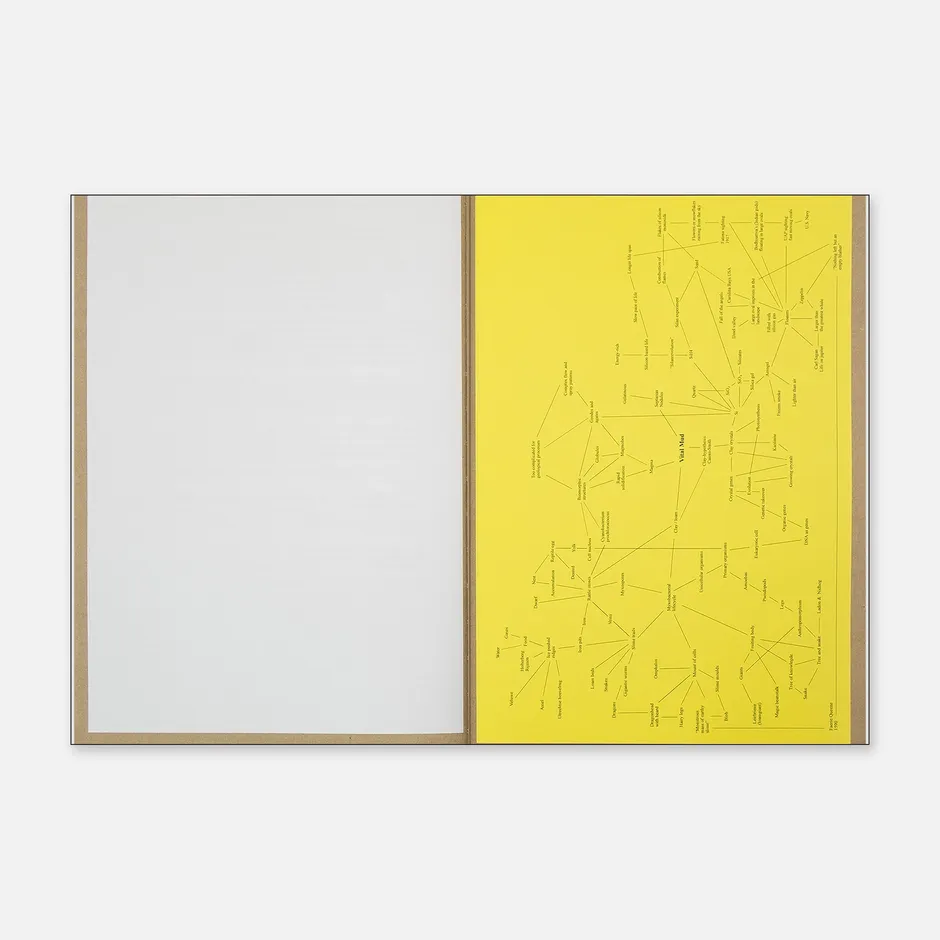
At a moment when we are losing physicality in favour of virtuality, liquidity and the digital sphere, it is significant to return to the origin of matter, and even to doubt it. What is the material that surrounds us, and that has moulded this planet, made of? Where does it come from? Vital Mud, a visual project and investigation by Dutch artist Hiske Altena, provokes these questions, activating an alternative view on the beginning of life and its forms.
Rattle stones, spherulites and the oval, repetitive shapes of the American landscape are the subjects she works with, following the hypothesis that life once arose from clay, formulated by the Scottish chemist Graham Cairns-Smith.
A theory inherited from her geologist uncle
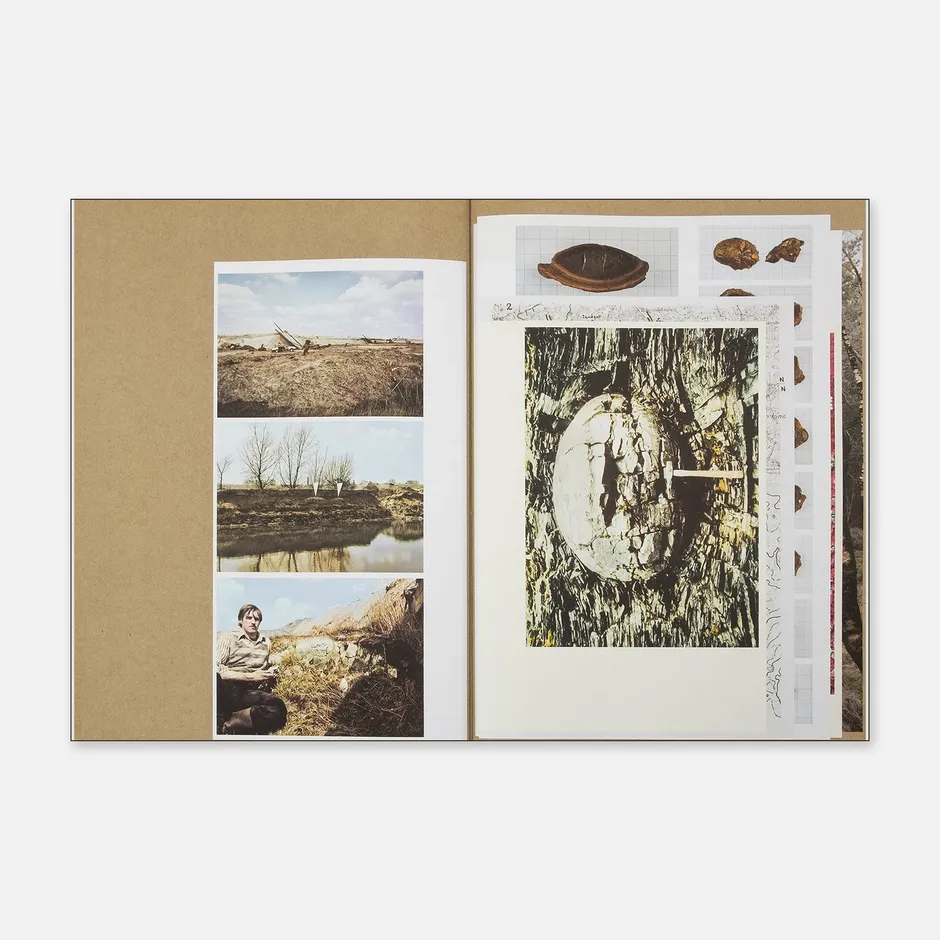
Altena had been familiar with the theory long before exploring it herself. In the 1980s her uncle, a geologist, found an unusual stone and began introducing her to this relatively little-known scientific idea. It was a rattle stone: a geode whose loose core makes a sound when shaken, so unexpected that it has always seemed magical. For centuries such stones were credited with mysterious powers, and the ancients associated the so-called eagle stones, which used to carry another stone inside them, symbol of pregnancy and birth.
What followed was an articulate collection: her uncle’s intriguing illustrations, scientific sources, and the books about dragons and giants which “sparked my imagination and in a way, challenged my way of thinking”.
Clay as a system: the hypothesis of a mineral origin of life
In its best-known version, the clay hypothesis, developed by Cairns-Smith and popularised in his 1985 book Seven Clues to the Origin of Life, reverses the usual story. : the first self-replicating systems would not have been organic molecules but mineral crystals. Clay is not an inert support, it is built of layers of silicates, each with small defects that can repeat layer after layer, a sort of primitive inheritance code. Crystals carrying advantageous patterns would have grown and spread more successfully than others, and only later would organic chemistry have taken over, making the mineral scaffold that had given it birth redundant. The theory remains unproven, and it is treated by many scientists as a fascinating minority position.
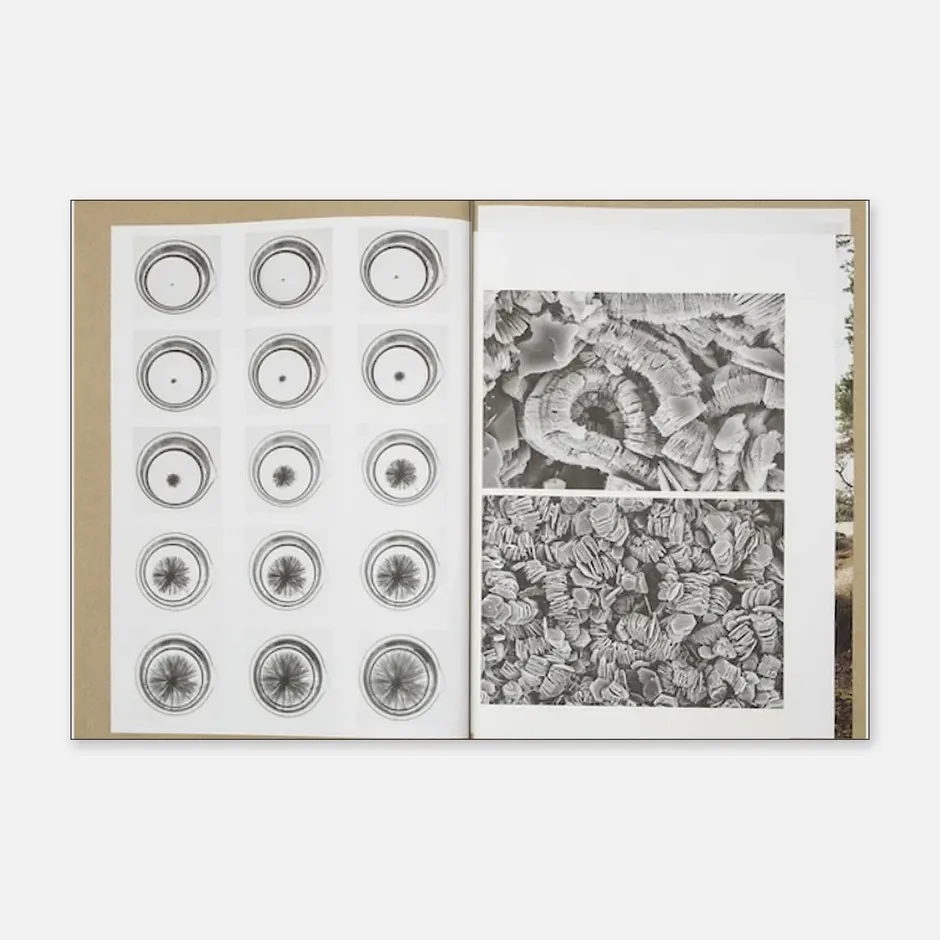
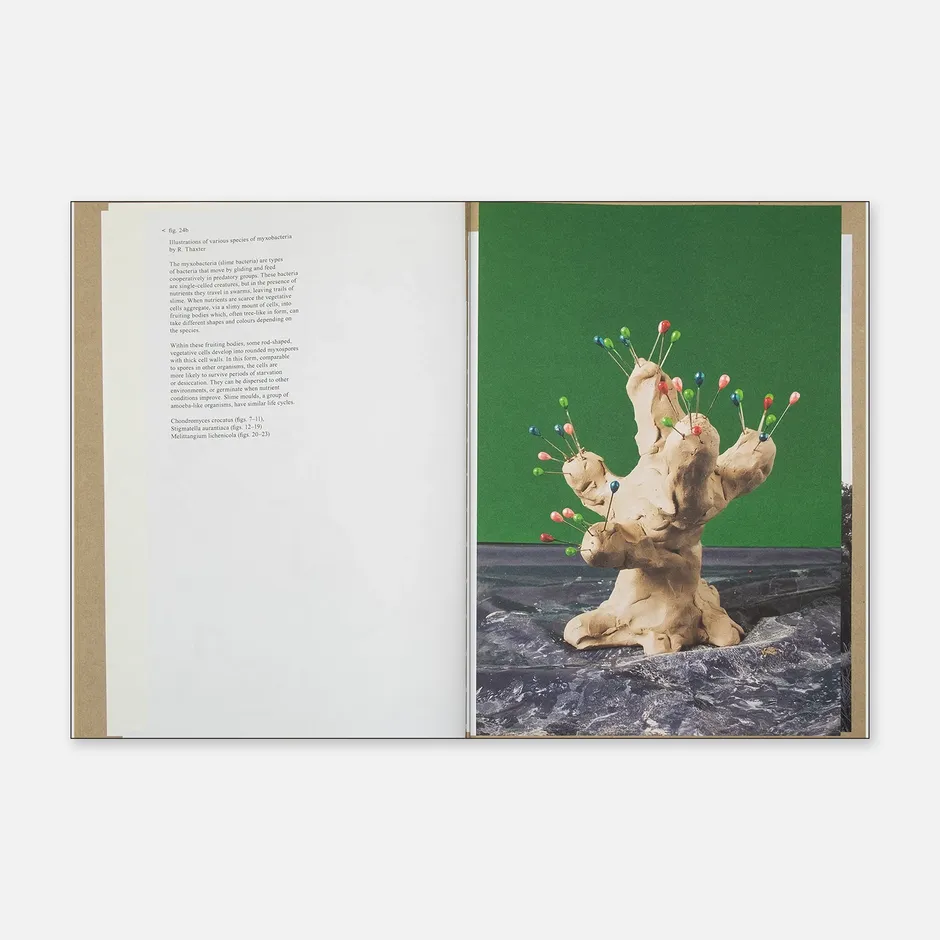
Part of what makes clay so suggestive is that, from a chemical and mineralogical point of view, it never has a fixed formula. Its microscopic particles repeat and draw a wider vital system in which everything seems intertwined. That is exactly the quality Altena’s images pursue. Inside this system clay settles, changes shape and transforms the territory it inhabits. The photographs show arborescent forms, geodes, structures that grow like trees and bacteria. Everything looks different and yet made from the same rhythm and breath: understandable and universal, but also unmanageable and unstoppable.
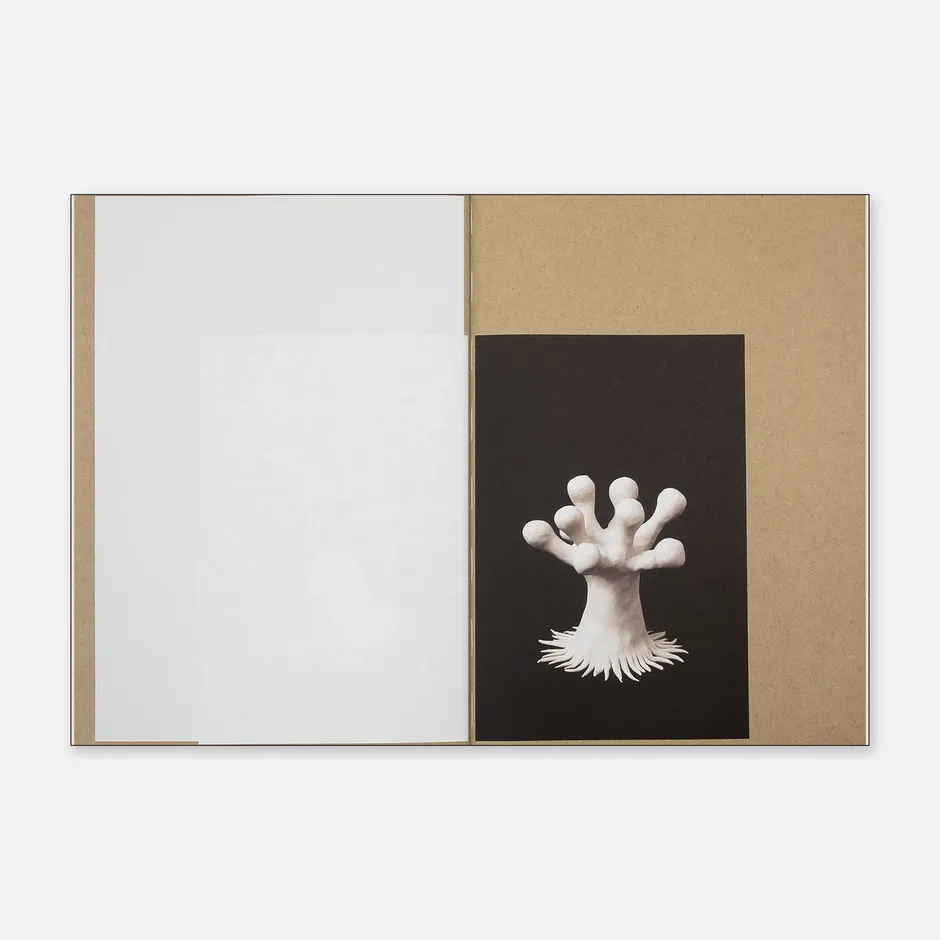
Vital Mud, a photobook designed as an archival storage box
Vital Mud took the form of a photobook in 2023, published by Erisaky Collection, and it draws its language from the scientific and the documentary. Altena chose it deliberately as a “semi-scientific” visual language, with a slight doubt about whether what you see is real. The book is designed as an archival storage box: images stacked on top of each other, captions and relevant information sit on the back, because, as she explains, «you can explore the images first before looking for an explanation.»
The same logic organises the content. The images connected to the scientific sources are printed on white sheets with the relevant information on the back, while those linked to myths, fairy tales and folk tales are borderless and carry only the title of the story. The sequence moves by association and similarity, in a very intuitive way, because the aim is not to prove or answer anything. Maps, drawings and scenes at the limit of fantasy appear, which probably recall the giants and dragons she used to read about with her uncle. The final group of images is dedicated to the “oval” shapes, showing how they follow a pattern across the flora of the American coast and its cycles of life.
Altena was careful to remain rooted in the theory. She did not invent any sources: the documents come from her uncle’s articles, letters and writings, and from archives such as that of the Mineralogical Society of Great Britain and the Botanical Gazette. Her imagination went into the visual language alone. “It isn’t about what’s the truth,” she says. «It’s about allowing yourself to consider that things could be different than you initially think.»
The red map of the Carolina Bays
A special mention goes to the map of the Carolina Bays, folded and inserted near the end of the book, a clear and massive network of elliptical wetland depressions stretching across the Atlantic coastal plain of the United States. Their origin is still debated. Wherever the wet clay-heavy mud inside the basins retains moisture, the map takes on a vivid red and pink shade. Altena’s uncle drew a similar map: «the original consists of about 200 A4 sheets that he printed and taped together, every time I looked at it I discovered something new.»
A manual for cultivating curiosity
Despite how people can react defensively when an idea differs from their own, the project works almost like a manual for cultivating curiosity.
The atmosphere is voluntarily suspended. The book opens new perspectives and invites us to doubt whatever we thought was certain, and to look again at what humans are capable of. Science is a continuous search for the unknown, and that perspective keeps shifting. Hiske Altena moves freely within this condition: she is not interested in continuing the theory or in making arise what only is true. What matters is the experience of exploring, and the freedom of finding out that everything always moves and transforms and we are probably part of the plan.
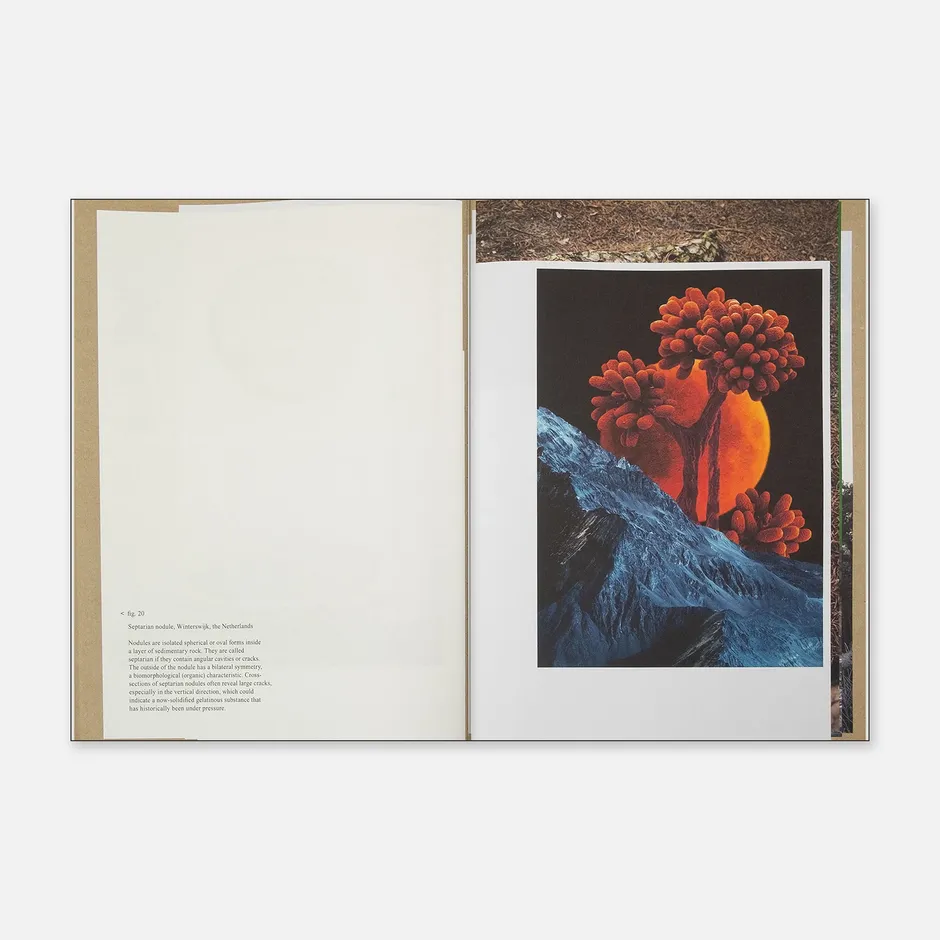
The material element: sculpting the first forms of life
The final stage of Vital Mud gives the research a structured form of its own. What did these first life forms look like, and where did they survive? To explore the question, the artist sculpts a series of bubbly, tree-like objects that communicate with all the shapes encountered so far. For her they were first of all a method of research: drawing, growing crystals, building physical things, all of it allowed to look at the clay’s theory from different angles.
In a world that has become virtual and ephemeral, the image alone is no longer enough. The relationship between the images and the maintenance of a wider system of elements makes everything more perceivable and touchable, as we can touch ourselves.
Hiske Altena
Hiske Altena is a Dutch visual artist. Her work stems from a fascination with how we relate to things that differ from what is generally accepted. Belonging, questioning the norm, curiosity, and the power of imagination are central themes in her work. To show the fun and value of a different perspective, she plays with our image of reality. Her work is often a combination of – often staged or manipulated – photographs, collages and found footage.
Claudia Bigongiari