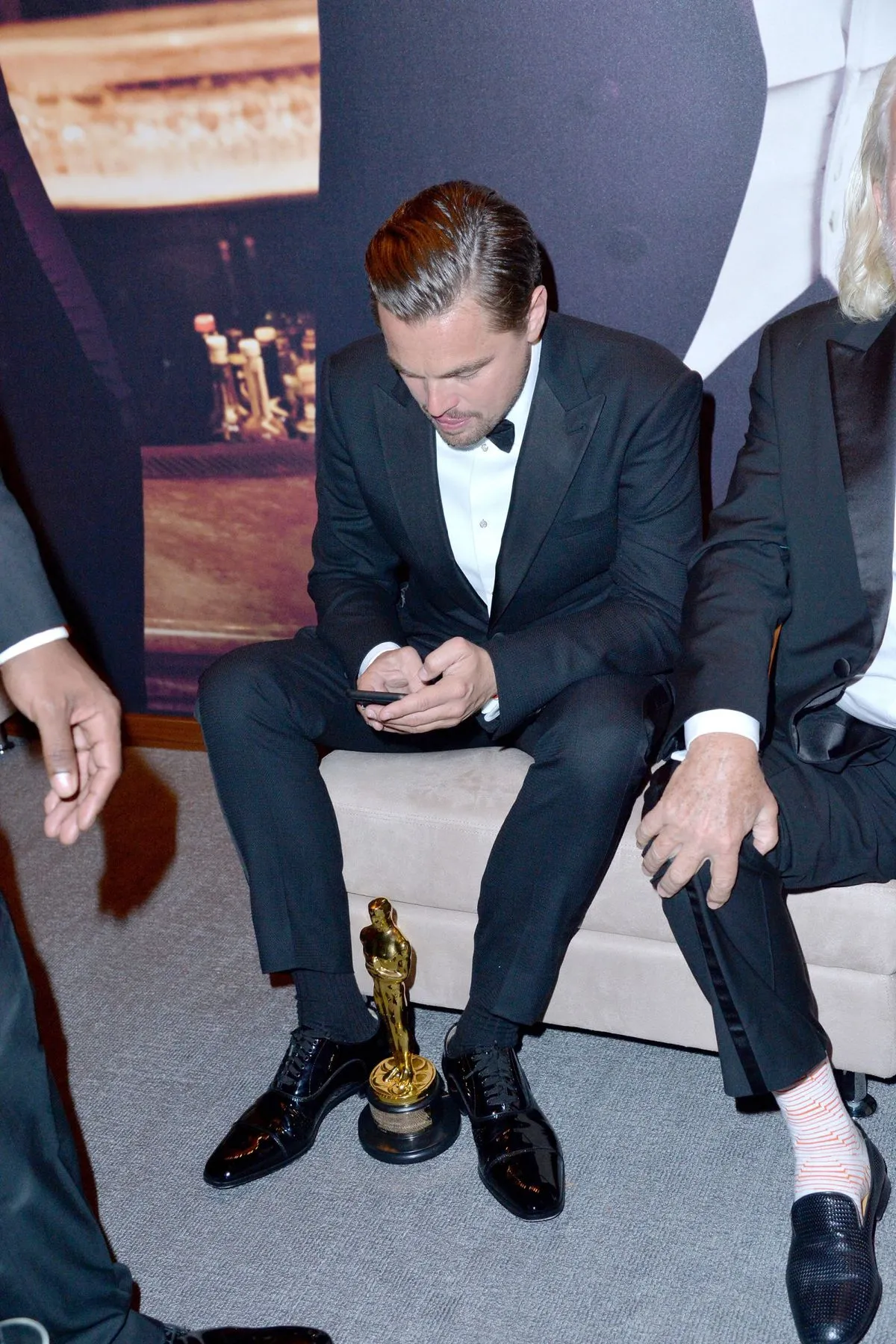
The Oscars and the Fashion industry: the most respected actors avoid being branded
Fashion ambassadorships, celebrity stylists and the red carpet economy: how Hollywood actors manage image, credibility and visibility within an industry built on alignment
The 98th Academy Awards, Sunday, March 15 at the Dolby Theatre in Hollywood. To understand how the industry actually functions in 2026, it is not necessary to watch the films. Watch the arrivals. What appears on the red carpet is rarely spontaneous glamour. Gowns arrive through agreements negotiated weeks in advance. High jewellery pieces circulate through loan contracts designed to secure editorial visibility. Fragrance campaigns often coincide with awards season, placing the face of a rising actor into global circulation when public attention peaks.
For decades the cultural expectation in Hollywood suggested that serious actors kept fashion at a distance. Brand contracts were seen as something pursued after a career peak, not while nominations accumulated. That assumption has disappeared, although not entirely evenly. Which raises a familiar suspicion: are the most respected and powerful actors those who avoid formal alignment with a brand? The distinction resembles another one often invoked elsewhere in media culture — the difference between an influencer or content creator who openly works through sponsorships and a journalist who, at least in principle, is expected to remain independent and impartial.
The two-speed system of celebrity branding: how emerging actors use luxury houses to accelerate global visibility while established performers turn distance into cultural capital
The relationship between actors and luxury houses now operates at two different speeds depending on where a performer sits in the visibility hierarchy. For emerging actors, fashion functions as acceleration. An ambassador title, a campaign image, a seat at a Paris runway show — these signals can produce international recognition faster than a filmography can.
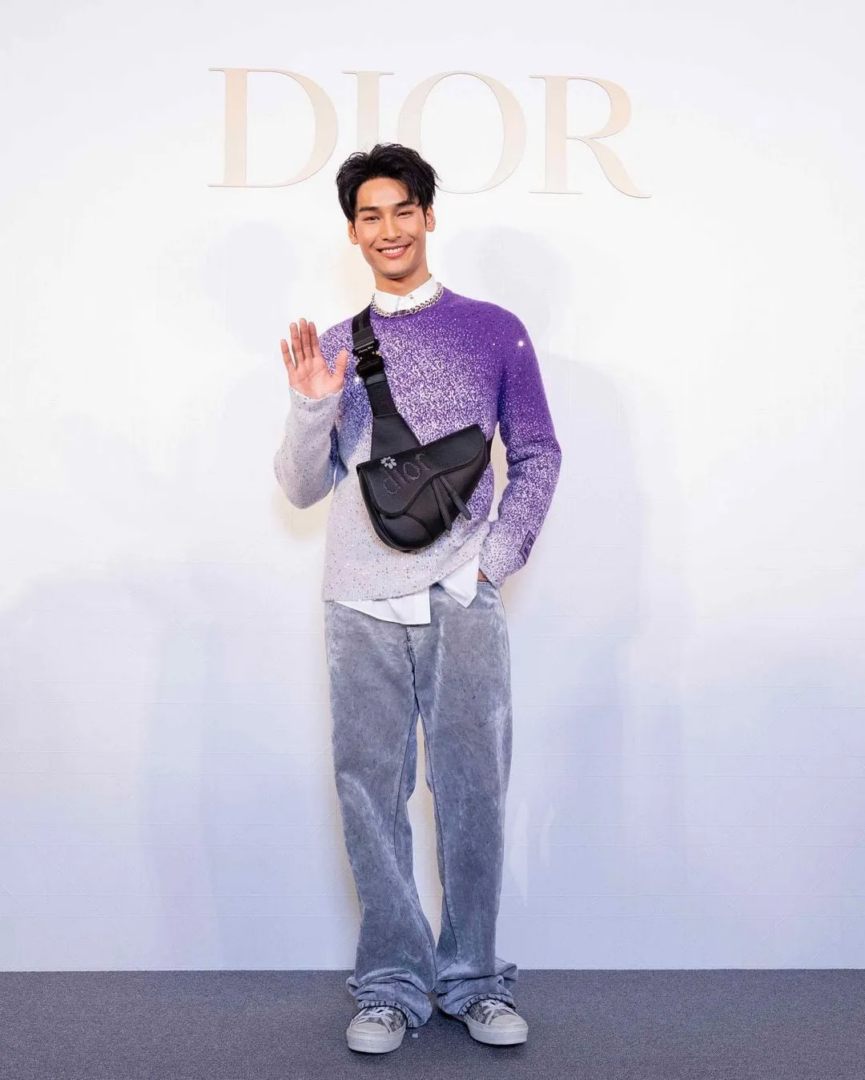
The Thai market offers a clear case of fashion functioning as career infrastructure. Within a few years, a cohort of actors from the Boys Love drama circuit used luxury appointments to cross into Western fashion media before their filmographies could do the same work. Bright Vachirawit’s Burberry ambassadorship generated several million dollars in earned media value from a single London Fashion Week appearance. Apo Nattawin later joined Dior’s circle of ambassadors, while Freen Sarocha became Valentino’s first Thai female ambassador in early 2025. Milk Pansa’s appointment at Saint Laurent sits within the same logic: the house internationalizes a face, the actor provides freshness and reach.
The pattern repeats elsewhere with similar precision. Anna Sawai became the first Asian actress to win an Emmy for Shōgun, and Cartier named her a brand ambassador shortly afterward. The timing was not coincidental. Korean actor Byeon Woo-seok saw both Prada and Cartier confirm ambassadorships within the same month that Lovely Runner made him one of the most searched actors in Asia — his international profile had barely existed twelve months earlier.
Timothée Chalamet, Meryl Streep and Frances McDormand: three different strategies for navigating fashion power without appearing controlled by it
For established actors the dynamic reverses. Luxury houses seek something that cannot easily be manufactured internally: credibility. Serious performers project selectivity, cultural seriousness and the appearance of independence from the marketing machinery that surrounds them. The paradox is that the actor who appears least interested in brand alignment often becomes the most valuable partner.
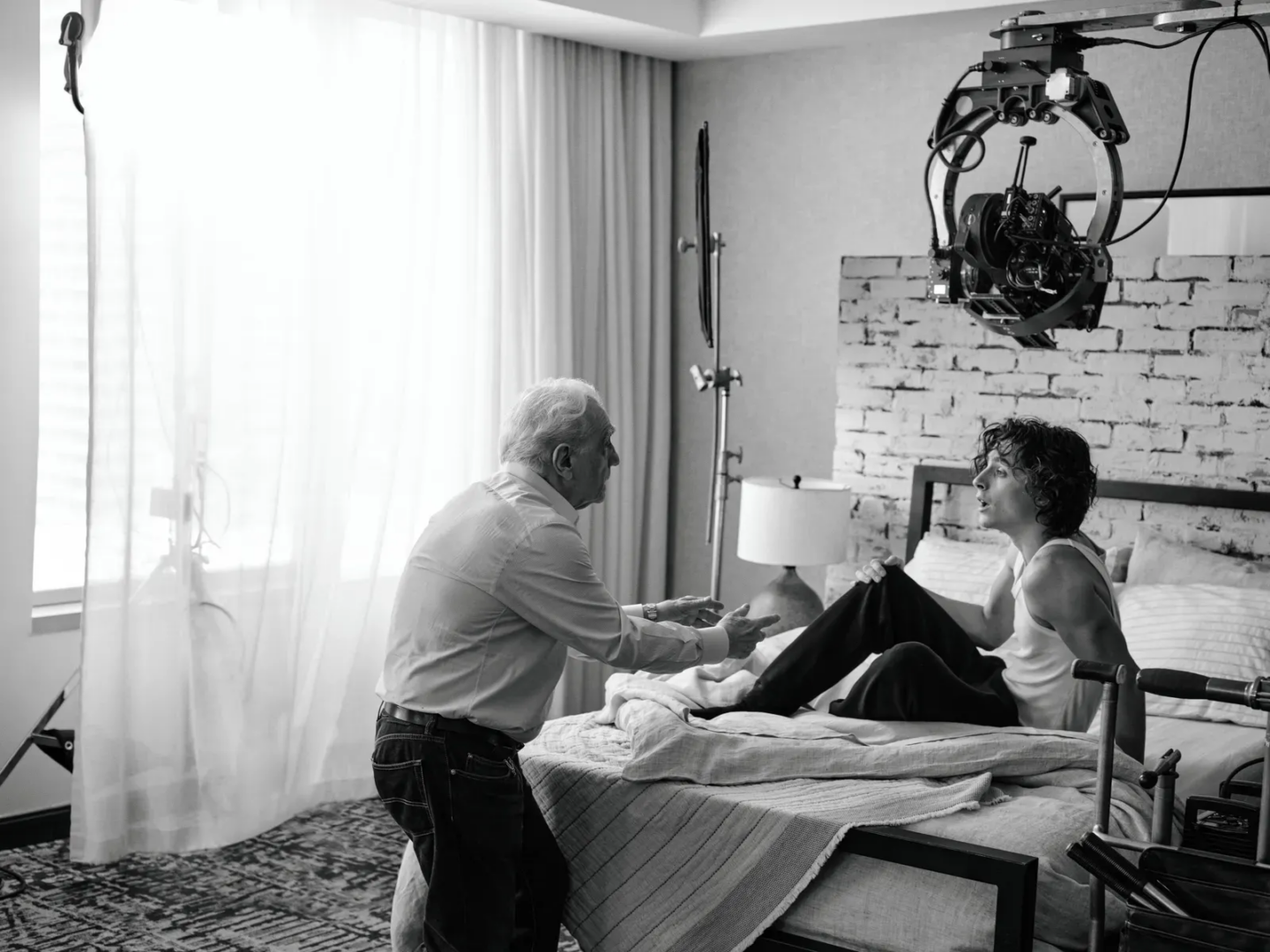
Timothée Chalamet remained for years close to the fashion system — attending shows, appearing in editorials — without formally attaching his name to a house. When Chanel eventually formalized the relationship around Bleu de Chanel, the campaign was directed by Martin Scorsese. The project was presented less as advertising and more as cinema. Whether that distinction holds is secondary. The narrative worked because the distance had been maintained long enough to make the partnership appear selective.
Which makes a recent remark by Chalamet — dismissing opera and ballet as art forms “no one cares about anymore” — somewhat discordant. The cultural authority supporting the Chanel collaboration depends on the perception of seriousness. Casual statements can disrupt that balance.
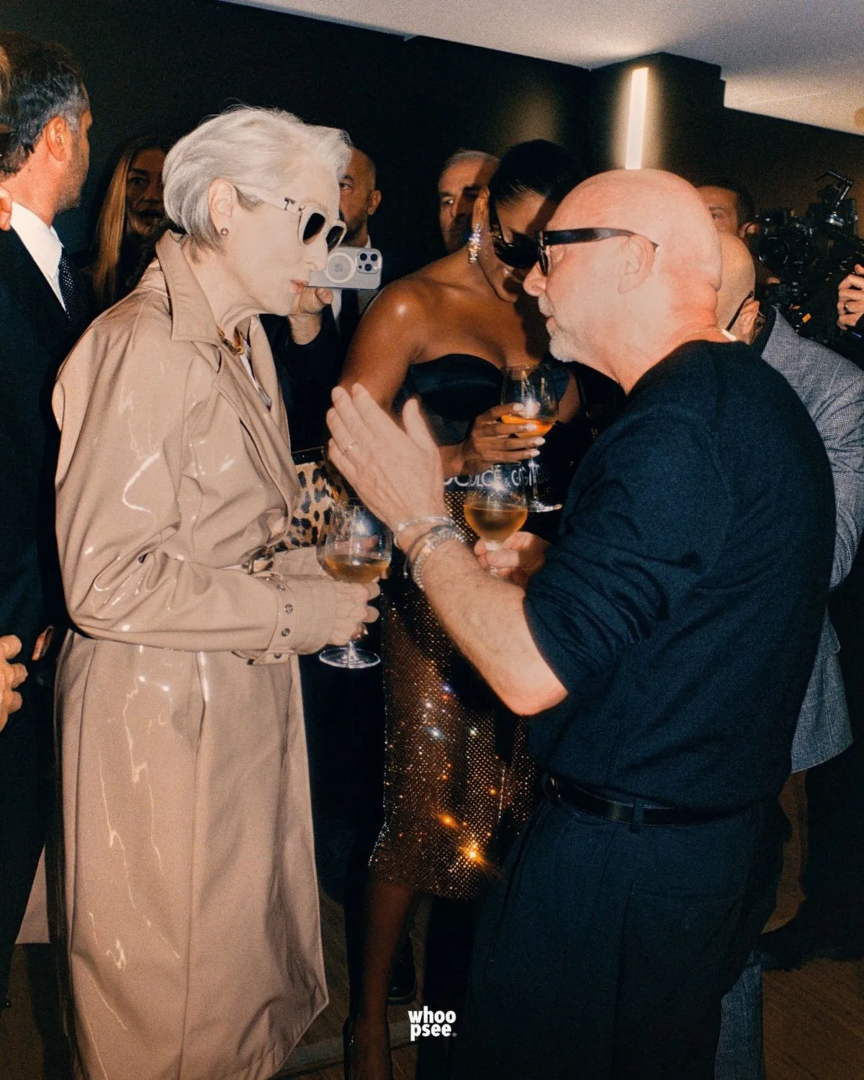
Meryl Streep and the authority of indifference
Meryl Streep operates under a different logic. She has never built her public image around a formal ambassadorial role — no long-term exclusivity agreement, no campaign structure defining her relationship with fashion houses. Over the course of her career she has worn Valentino, Lanvin, Issey Miyake and Dolce & Gabbana without appearing to belong to any of them. Houses lend her clothes for the occasion; she does not lend them her image in return.
Her own statements on the subject are blunt. She has said she could not care less about fashion, that expensive clothes are a waste of time, and that magazine covers and styled appearances are not her — “but that is what movie stardom entails.” For years that indifference earned her a reliable position on worst-dressed lists. She was not managing her image through clothing. She was barely managing it at all.
Then, in September 2025, she appeared at the Dolce & Gabbana SS26 show in Milan, dressed head to toe by the house and seated front row. It was the closest she has ever come to conventional fashion participation — and it was entirely a performance. She was on set for The Devil Wears Prada 2, playing Miranda Priestly. Backstage she told Anna Wintour: “This is my first fashion show.” The line was delivered in character, or close enough that the distinction did not matter. The only moment the system fully claimed her, she was acting.
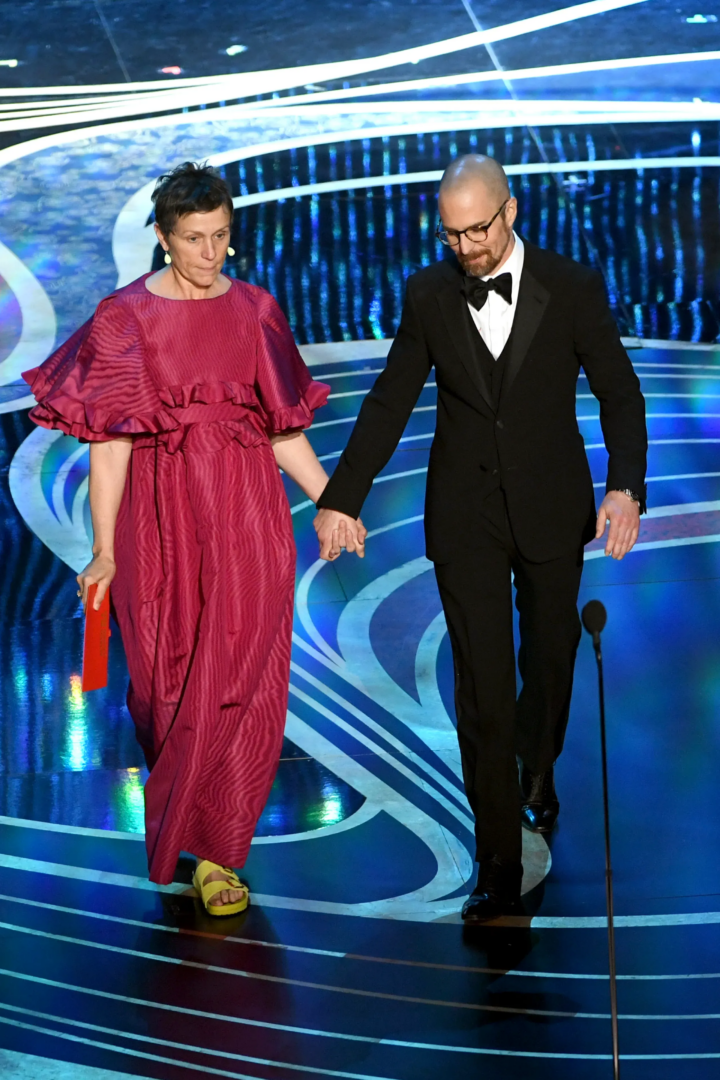
Frances McDormand and the value of selective participation
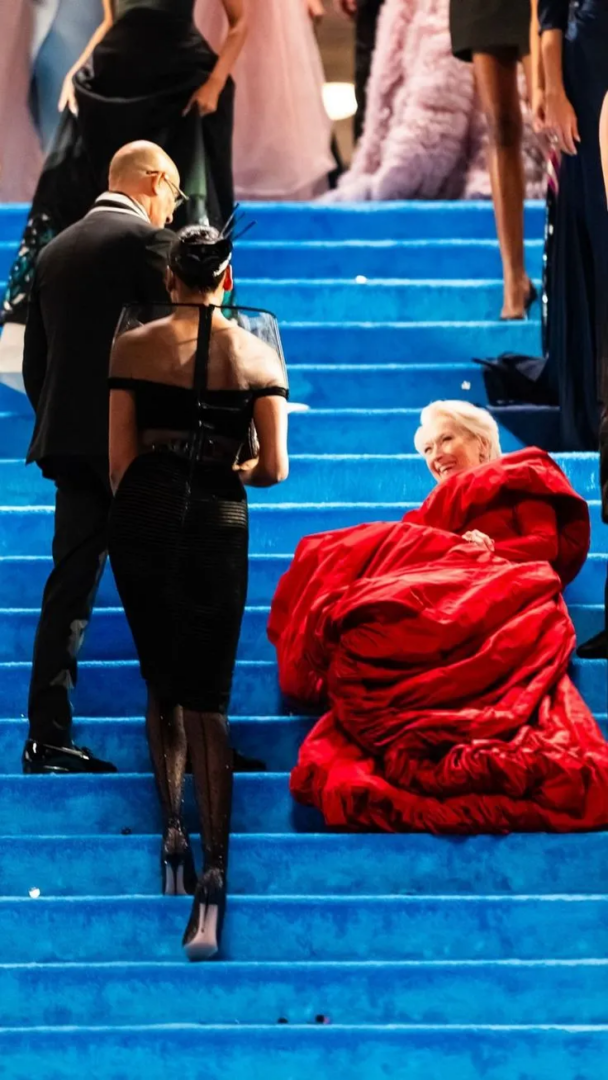
Frances McDormand moves further along that spectrum, although her case is more complicated than simple refusal. She has in fact gravitated toward Valentino — wearing couture at the 2018 Met Gala and appearing at the Oscars the following year in a pink Valentino gown paired with custom acid-yellow Valentino Birkenstocks. She described the look as a genuine collaboration born from her personal attachment to the sandal.
The relationship with the house and its then creative director Pierpaolo Piccioli developed into something closer to affinity than contract. McDormand rarely walks red carpets, appears without makeup, and has spoken openly about her lack of interest in cosmetic surgery and the industry’s obsession with performed youth. What distinguishes her position is that selective engagement coexists with genuine indifference to the machinery surrounding it. In a system built on constant visibility, someone who participates only when she actually wants to becomes, paradoxically, the most interesting figure in the room.
Jessie Buckley, nominated this year for Hamnet, represents a different and more deliberate calibration. Working with stylist Danielle Goldberg, she has moved through the awards circuit in a mode defined by restraint and polish — sculptural silhouettes, controlled palettes and a quiet severity that communicates gravitas without theatrical glamour. Goldberg is also the stylist behind Saoirse Ronan’s awards-season image, suggesting a shared approach: disciplined, slightly austere, deliberately distant from conventional red-carpet spectacle.
From Anna Wintour’s Vogue revolution to today’s red carpet economy: how celebrity style became a strategic language for Hollywood and luxury brands
The system now visible on the Oscars red carpet did not appear overnight. It emerged gradually through the convergence of fashion media and Hollywood publicity. American Vogue played a decisive role in this transformation. When Anna Wintour became editor-in-chief in 1988, her first cover presented Michaela Bercu wearing a jeweled Christian Lacroix top with Guess jeans. The image collapsed the hierarchy separating high fashion from popular culture.
A decade later the shift became explicit. In September 1998, Renée Zellweger became the first celebrity to appear on the magazine’s September issue cover. By 2003, Nicole Kidman was photographed by Annie Leibovitz in elaborate cinematic tableaux that positioned the performer as mythic surface rather than simply an actress. The merger between cinema and fashion had effectively completed itself.
From that moment onward the red carpet stopped functioning as a peripheral space around film premieres. It became an extension of the entertainment industry’s image economy. Actors were no longer trying to avoid worst-dressed lists. They were managing visibility systems that connected stylists, houses, agencies, editorial platforms and global campaigns.
The rise of the celebrity stylist: from wardrobe assistant to image architect
Behind every polished appearance sits a figure the industry has been slow to name for what it actually is: a power broker. The celebrity stylist has moved far beyond the traditional role of selecting garments. Some have adopted titles that reflect this shift — Law Roach calls himself an “image architect” — and the description is not entirely metaphorical.
The contemporary stylist constructs visual continuity across press tours, premieres, campaigns and digital circulation. A single appearance can reposition an actor’s public identity, communicating authority, severity, experimentation or glamour depending on the narrative being built. Stylists coordinate with fashion houses, agencies and editorial outlets so that every photograph circulates within a coherent strategic frame.
The Hollywood Reporter’s annual Power Stylists list, now more than a decade old, reflects how far the profession has shifted. Stylists appear on magazine covers alongside their clients, sign agency representation, publish books and host television projects. Jason Bolden, named Stylist of the Year in 2025 for his work with Cynthia Erivo, Nicole Kidman and Michael B. Jordan, operates simultaneously across film, sport and music.
What these figures increasingly control is not simply clothing but narrative timing. Erin Walsh, credited with Anne Hathaway’s widely discussed style transformation, describes the work in terms of storytelling and “grounded exaggeration.” Kate Young dressed Michelle Williams almost exclusively in Louis Vuitton during one awards season not because the actress held a formal ambassadorship, but because the visual consistency itself created meaning.
Elizabeth Stewart’s collaboration with Cate Blanchett during the Tár campaign extended that logic further. The stylist built a red-carpet strategy using pieces from Blanchett’s own archive that echoed the film’s austere aesthetic, transforming premieres into extensions of the narrative atmosphere. In that model the stylist edits both sides of the image: the actor and the character.
Danielle Goldberg, who works with Jessie Buckley, Greta Lee and Ayo Edebiri, describes her approach as privileging authenticity over trend. The aesthetic appears understated, vintage-adjacent and resistant to obvious legibility — a visual language designed to communicate taste without visible effort. Yet even that apparent naturalness is constructed.
Matteo Mammoli