Would you like it rough or smooth? Rough knitwear and the over-polished aesthetic
Coarse wool is back: B.B. Wallace is the outcome of a decade-long friendship between Meryll Rogge, creative director at Marni, and knitwear specialist Sarah Allsopp
B.B. Wallace and the Great British Wool Revival
What’s left of the British wool industry lies mostly in the north, toward Scotland and Ireland. “But in the rest of England, not so much anymore,” says Sarah Allsopp, British knitwear designer and co-founder of B.B. Wallace, who has spent years developing knitwear for labels including We-ar4 and Malo. “The industry is, sadly, dying a little bit.”
At the same time, signs of appreciation for recognizable natural materials from the region – leaving their own fingerprint on knitwear design – have been rising in post-Brexit Britain and across the European industry. (Norway, for example, is experiencing its own knitwear revival.) Projects such as The Great British Wool Revival are engaging local brands, and high-end labels like B.B. Wallace are showing interest beyond simply using the material, actively celebrating its qualities.
Allsopp explains that the renewed interest in local wool is tied to authenticity – people today value products that feels real and connected to its origins. B.B. Wallace is genuinely British and grounded in its local (wool) history.
B.B. Wallace as a knitwear label rooted in material expertise and construction
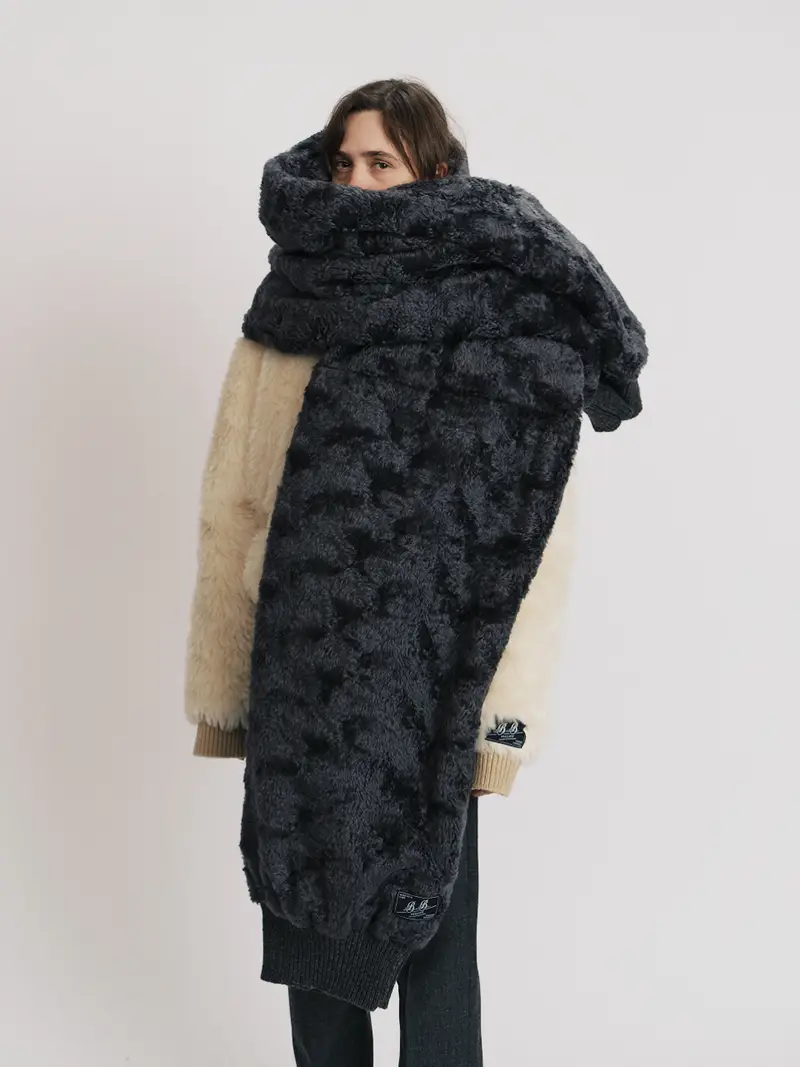
B.B. Wallace is a natural evolution of the creative friendship between Meryll Rogge, Marni’s creative director, and Sarah Allsopp, a knitwear specialist who has spent years crafting for labels like We-ar4 and Malo. Frankly, B.B. Wallace is a wholehearted second job for both of them. The Knits are called by their names (Bowie, Bacon, Ruscha) and by constructions such as ‘Double-Faced Shetland’ and ‘Deconstructed Wool’, signaling the fusion of British heritage and contemporary wool design.
While the name refers to Rogge’s sons, B.B. Wallace has more to do with materials and constructions encoded in high-end knitwear, a language Allsopp has been fluent in for years. Lampoon spoke with the British knitwear designer about continuing a heritage language with respect – but also knowing when to introduce a fresh point of view.
Launching a contemporary knitwear project through a rural setting near Amsterdam
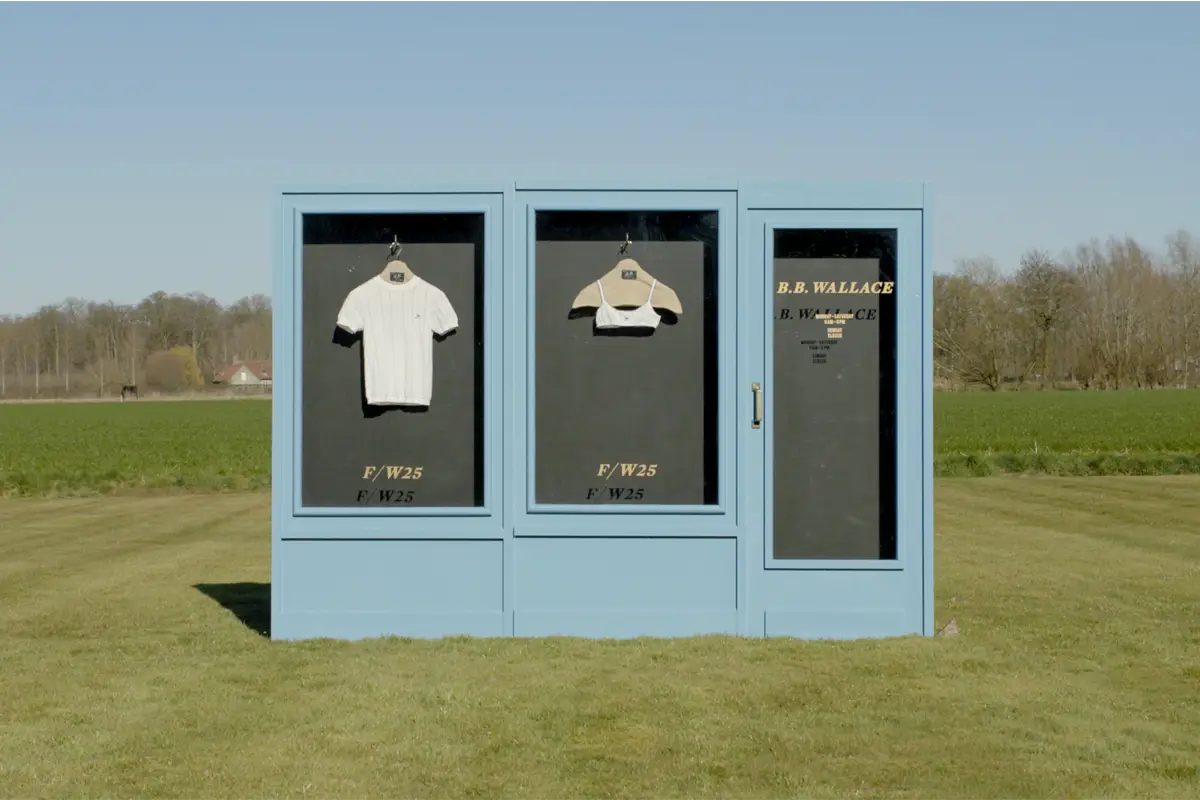
Out of the blue, just outside Amsterdam on an old farm and luxury hotel, came knitwear label B.B. Wallace – a grown-up concept in contemporary knitwear that resists easy categorization yet feels classic and made to last. Outside, a dreadfully Dutch gray blanket of clouds overshadowed the meadow. Inside, wooden tables were set with bread, butter, and salted eggs; in the back, hand-knit sweaters hung above neatly lined black rain boots. In that order.
Why launch on a farm near Amsterdam? “A happy accident,” Allsopp says. “Meryll had read about it in a travel magazine while, coincidentally, I was moving here. Amsterdam is a chosen home for me. It’s okay to take what you want from life when you know you’re meant to be in the right place at the right time.”
Shared professional background at Marc Jacobs shaping a common design language
The creative vision for B.B. Wallace grew from a friendship nearly ten years ago in New York. “We knew each other from Marc Jacobs, so we have some of his DNA within us, especially in how he approached knitwear,” Allsopp says. Their shared sensibility deepened while working on Rogge’s own label, Meryll Rogge, from 2020, a couple years after Allsopp had left New York for Europe (“a personal choice”). She worked for Tory Burch for about one and a half years until Rogge called her up again: ‘I want to do this brand, and I want to design it with you.’ Sure, Allsopp said. They took the DNA of Meryll Rogge and pushed it forward, giving it its own identity in B.B. Wallace.
Both brought their own expertise: Rogge in highly technical wovens, Allsopp in knitwear. Nine times out of ten, their vision for B.B. Wallace aligns, says Allsopp. “Our nuances are the same; we pull from the same references, but we bring in newness in different ways.”
‘Classic’ is one way to describe B.B. Wallace’s sensibility – or the vibe. “It’s been nice just to do classic fashion and for it not to require a purpose on top of it,” says Allsopp, “and to give it its own platform, rather than having knitwear lost in a ready-to-wear collection loaded with purpose.”

Shetland wool and the continuity of British spinning regions
A reference point for the brand is Shetland wool as a key material. After all, Britain is where the wool industry first took off and thrived. And there’s still quite a bit of garment industry left, especially in the Nottingham region and the Midlands, where Allsopp grew up.
“There is a strong knitting heritage in England, Scotland, and Ireland, identified both by place and by material”, she says, referencing top British wool spinners that fashion brands buy from: J.C. Rennie (Scotland, founded 1798), Todd & Duncan (Scotland, 1867), and Knoll Yarns in West Yorkshire (1978).
The latter is where Allsopp and Rogge have sourced (woven) fabrics with, first for Meryll Rogge and now for B.B. Wallace, with great admiration for their technical expertise, particularly around colorwork. “There are certain yarns from that region we always drew on when developing knitwear together; it just made sense to bring them onto their own knitwear platform.”
Top-dyed Shetland yarns and depth-driven color development
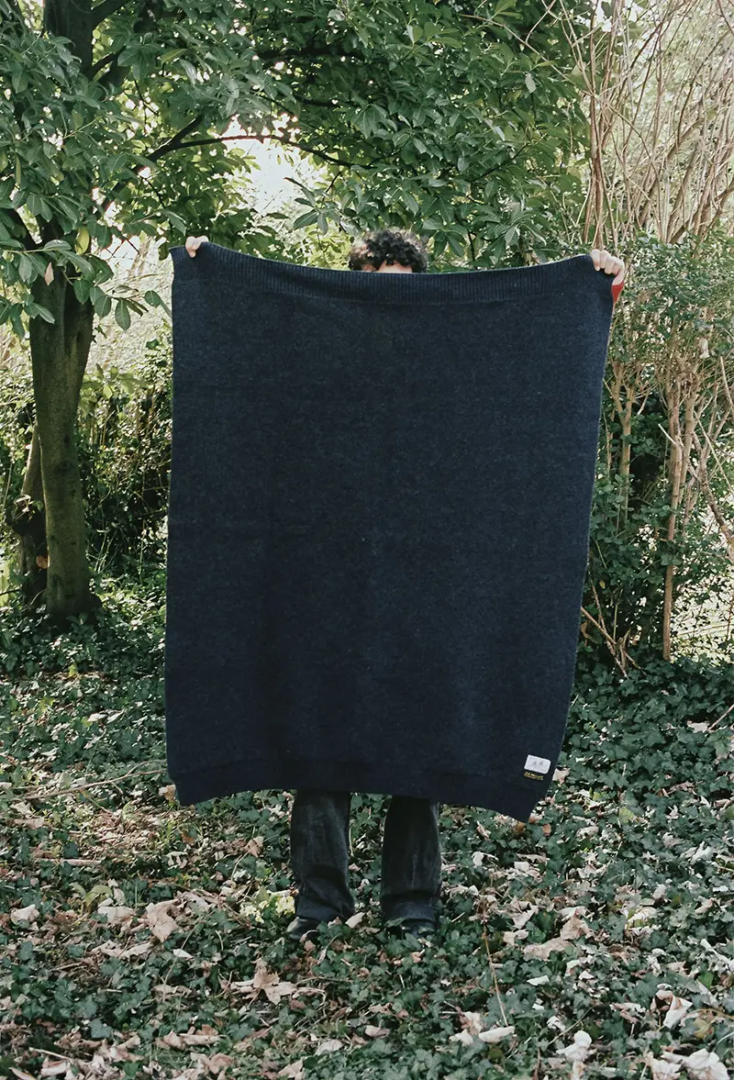
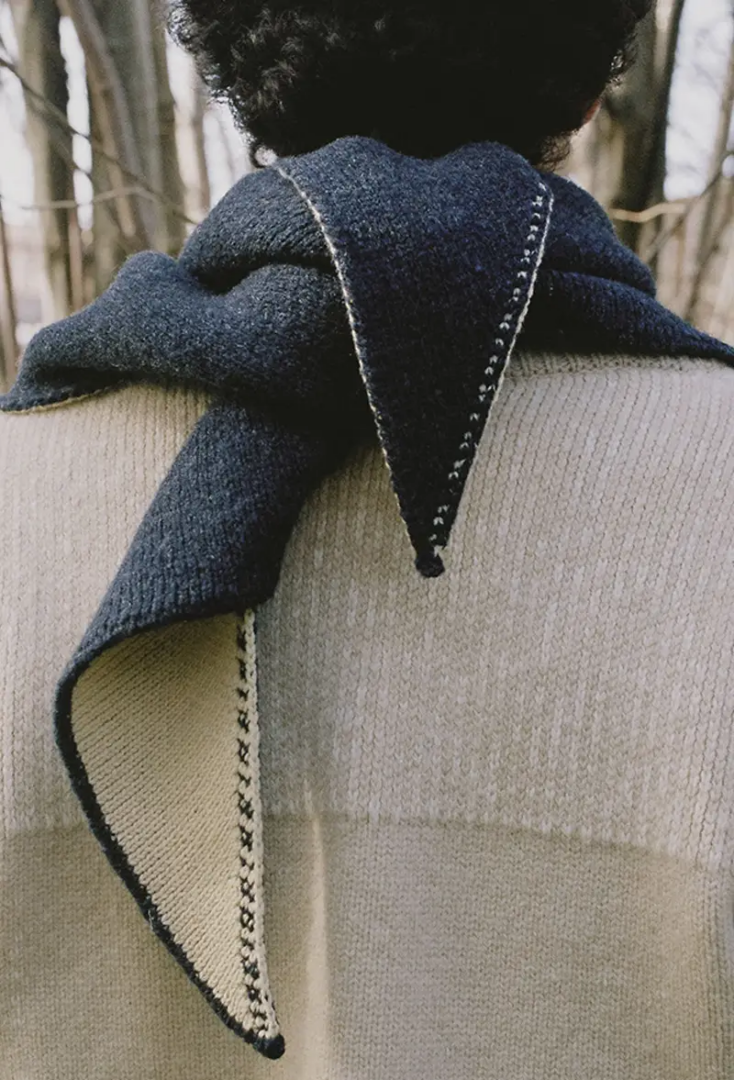
They knit their double face Wylie and Sherman cardigans with a Knoll Shetland yarn with a stock service colour card, meaning from a colour card of which the mill has copious amounts. Knoll uses a method called ‘top dyeing’, a form of dyeing that blends and mixes multiple colors together, creating a deep pigment and multi layered tones.
“With stock services, you’re kind of limited,” Allsopp admits, “but Knoll offers a vast range of option neutrals, graphite, brights. Instead of being flat, each color has multiple shades.” Plus, there are other ways to play with the design: choosing double twists or single twists, combining two colors, or switching to a different gauge, to name a few.
Adding to the typical British wool look is also the structure of the yarn. It comes from different sheep; “it isn’t so spun; the hand feel is much coarser”, Allsopp says, “I haven’t found this type anywhere else in the world.”
Industrial knitwear production across Europe and Asia as a shared network
B.B. Wallace is also industrializing in Spain, Belgium, and even China – a growing economy. Allsop takes it up for Chinese knitters who are as good as Italian knitters but tend to be left out of the story with all that’s going on in the world right now. “You can’t leave them out of the story of wool. I don’t think that’s right. Knitwear should be about community. And if someone does a good job, why not work with them?”
One of the people within B.B. Wallace’s professional yet close circle is a Spanish knitting expert called Josep. “When I went to his factory recently, I thought it’s like a chocolate box”, says Allsopp. “Tucked away in a small town called La Llacuna, just forty minutes outside Barcelona, is this amazing factory, which was his father’s and then passed down to him. He’s grown up around knitting machines. The beauty of him is that he really loves and understands how to work with the machines. He’s tinkered with (renowned) Shima Seiki machines to make them knit exactly how he wants. You can see that in the products. I’ve worked in Italy, Belgium, and Asia, but I’ve never seen anyone make a double-faced knit better than him.”
Managing heritage references to avoid dated or decorative outcomes
The risk in making heritage knitwear is that it could feel old. Allsopp knows three ways to avoid a dusty look: construction, silhouette, and the finishings you add into the design – such as whether it’s a one-by-one rib (which is stretchier) or double (which has more texture). “The devil is in the details,” says Allsopp, pointing at the buttons that could look old on another cardigan, then at the nostalgic neck labels inspired by those on vintage sweaters like Dalton’s. Modernity is also in the yellow buttermilk fabric inside all double-faced sweaters, revealed when you turn up the cuff.
She keeps referring to that model: a five-gauge, which is a bit coarser than usual, with a soft Italian cashmere on the inside. “With this structure and the tightness of how you’re knitting it, you can form a silhouette that is quite structured and bold; instead of looking flat, it really sits like a sweater. It doesn’t droop and it does not look old. It has hanger appeal.”
Introducing controlled deconstruction within a classic knitwear framework
Allsoppp acknowledges that it’s possible to take modernity too far as she examines the line of more vigorous looking Chamberlain sweaters, which feature unfinished panel cast off edge “There’s an industrial edge within a classic framework,” she notes. “For this design, we used a traditional half cardigan, or fisherman’s rib stitch, one of the cornerstones of knitting but then combined it with a “deconstructed” edge” – a cut and paste type vibe. At Meryll Rogge, deconstruction has always been central to our work. “This piece serves as a bridge, a hybrid step in that ongoing evolution.”
In the end, the duo wants to sell timeless pieces that get passed on and don’t fade away. So what’s the point of a showstopper between classics that are forever? Allsopp: “Sometimes you need to create garments that have a point of view – within the industry and within your own language.”
Color selection as a personal and non-programmatic design process
Authenticity in a sweater comes from the designer too. “I’ll have conversations with myself while I’m designing,” says Allsopp, recognizing that some designs are tied to how she is as a person and how she dresses. “I’m very unisex and straightforward. I do believe that comes across in many of the designs.”
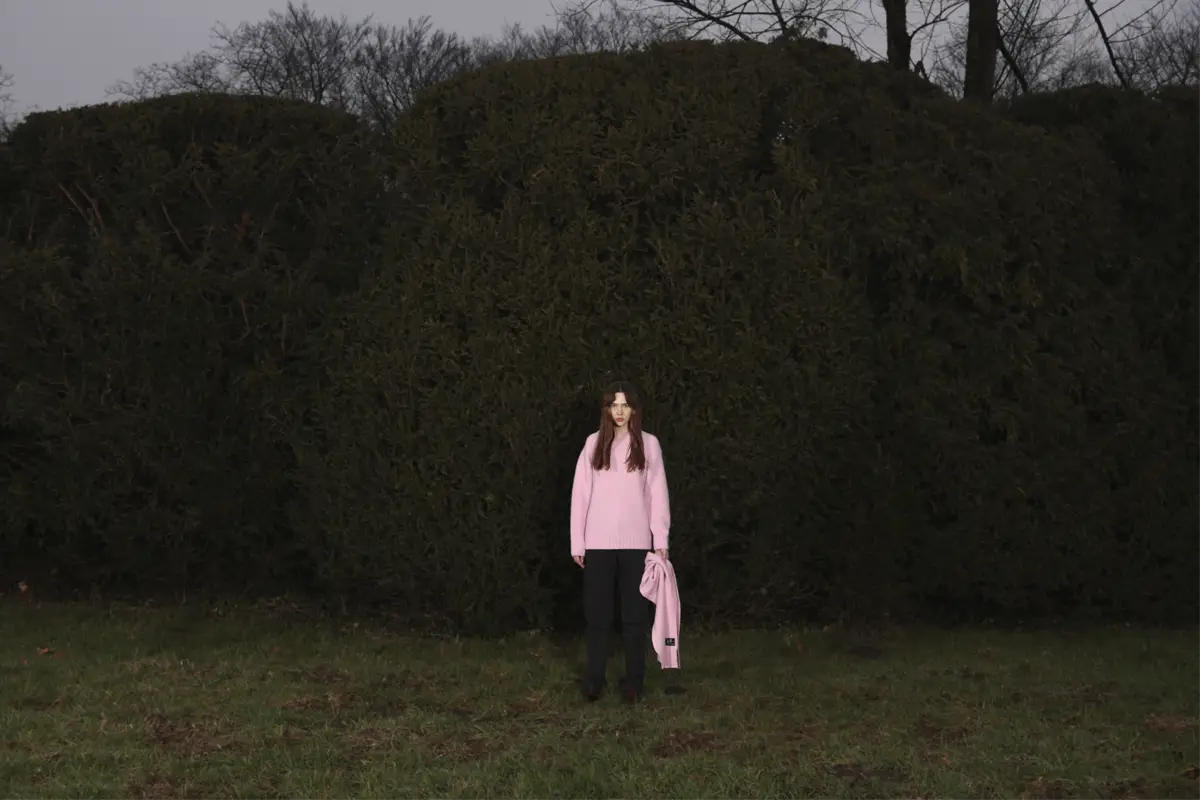
She mentions the Arbus jacket, which has a workwear feel to it, and some of the colors that have a playfulness to them: Allium Pink, Apple Green, bits of purple, then toned down with truffle or muted tones – at this point, B.B. Wallace will always be a mix with something classic.
Colors might be the most personal thing about designing a brand from scratch. “It’s a wonderful thing being able to pick and choose your own,” Allsopp says, reflecting on her career working with brand colors and trend forecasts. “Meryll and I just picked them emotionally, based on how we’re feeling. That process has been a liberating experience.”
Anna Roos van Wijngaarden