Champaca, Bengaluru. A platform for books, zines and fanzines to defend the indie-publishing scene
On the rooftop of a bungalow, a metal-staircase takes you to the store that opens into a courtyard. Founder Radhika Timbadia wanted to create a sanctuary hide-away from the city lights and traffic
Champaca, Bengaluru
Radhika Timbadia founded Champaca Bookstore, Bengaluru, Library and Cafe, in June 2019 in the metropolitan city of Bengaluru, South India.
Magnolia champaca is a tree from the botanical family Magnoliaceae. Native to Southeast Asia, it is known for its yellow flowers with a fragrance of tea, spices, and dried apricots, similar to orange blossoms. The oil extracted from the flowers is used for aromatherapy and ointments, and the blossoms are offered in ceremonies at temples across cultures. According to Tibetan beliefs, the Buddha of the next era will find enlightenment under the flower canopy of the champaca tree.
A women-run community hub
Champaca, Bengaluru is an independently-owned, women-run bookstore and cafe, thriving on its community of readers. The team curates genres covering wildlife and ecology, queer stories, feminist writing, politics, mental health, folklore and mythology, humor, caste, poetry, translations from regional languages, and fiction. The store supports indie publishing by providing a platform for books, zines, and fanzines by emerging authors.
Founder: Radhika Timbadia
Born in Mumbai, Timbadia moved to Bengaluru at nineteen. “I have had a fondness for the outdoors since childhood. I grew up in Bombay where we did not have access to green landscapes.” Her interest in nature led her to study botany, chemistry, and environmental sciences. She worked on a hill-restoration project in Tamil Nadu, then pursued a Master’s in Applied Ecology and Conservation at the University of East Anglia, UK. She also worked in Kenyan national museums before returning to India to support snow leopard conservation in Ladakh. Timbadia combines expertise in community-based wildlife conservation with interests in gender, environment, and education. Her passion for reading started in childhood: “I adored listening to my father’s stories.”
The inception of Champaca
The idea for a stand-alone bookstore came when Timbadia was reading reviews of authors like Octavia Butler, N.K. Jemisin, and Ursula K. Le Guin but didn’t know where to buy their books. “I wanted a bookstore that celebrates diversity, underrepresented authors and themes, and a children’s library, creating a community of readers,” she says.
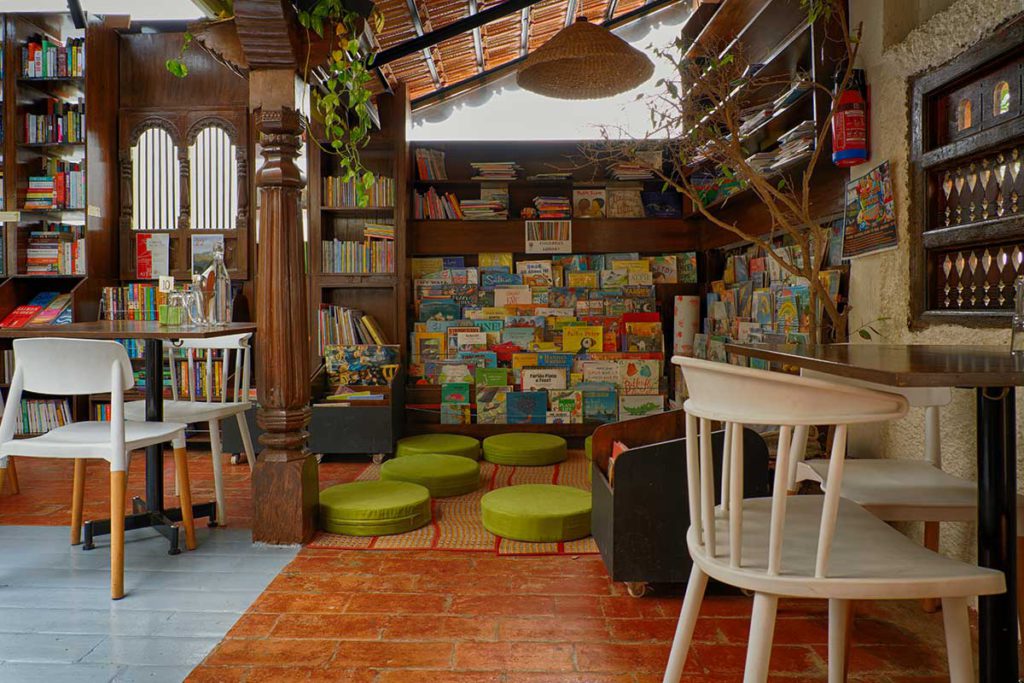
She spent three years preparing the business plan, completing a library educator’s course at the Bookworm Trust in Goa, and working with school libraries to write grants. Her experience in village communities inspired her to include a children’s library section at Champaca.
Store design
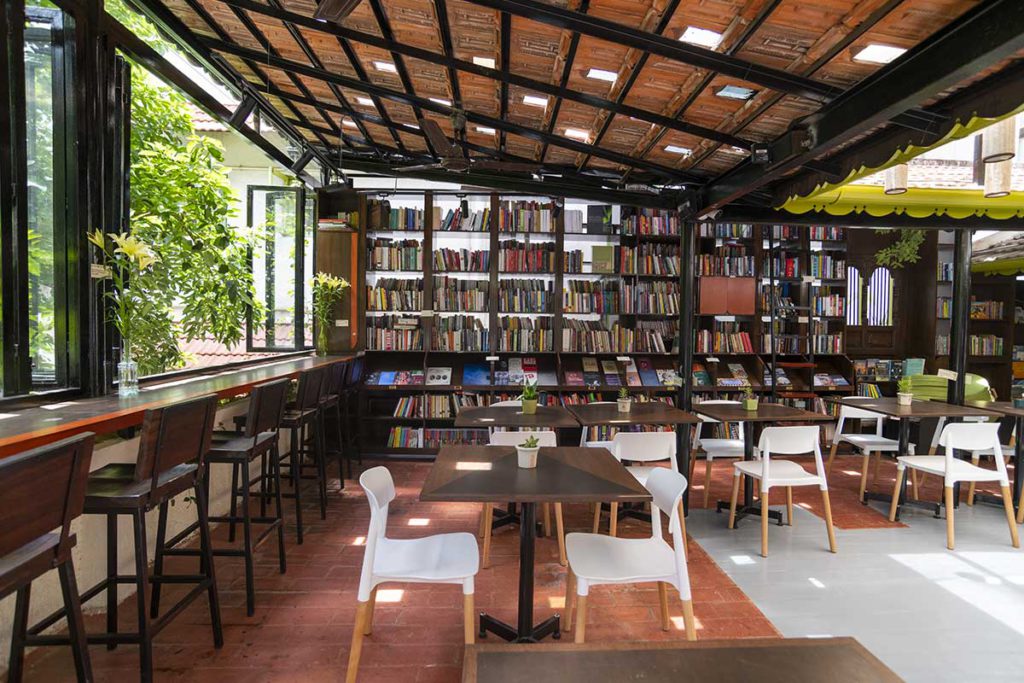
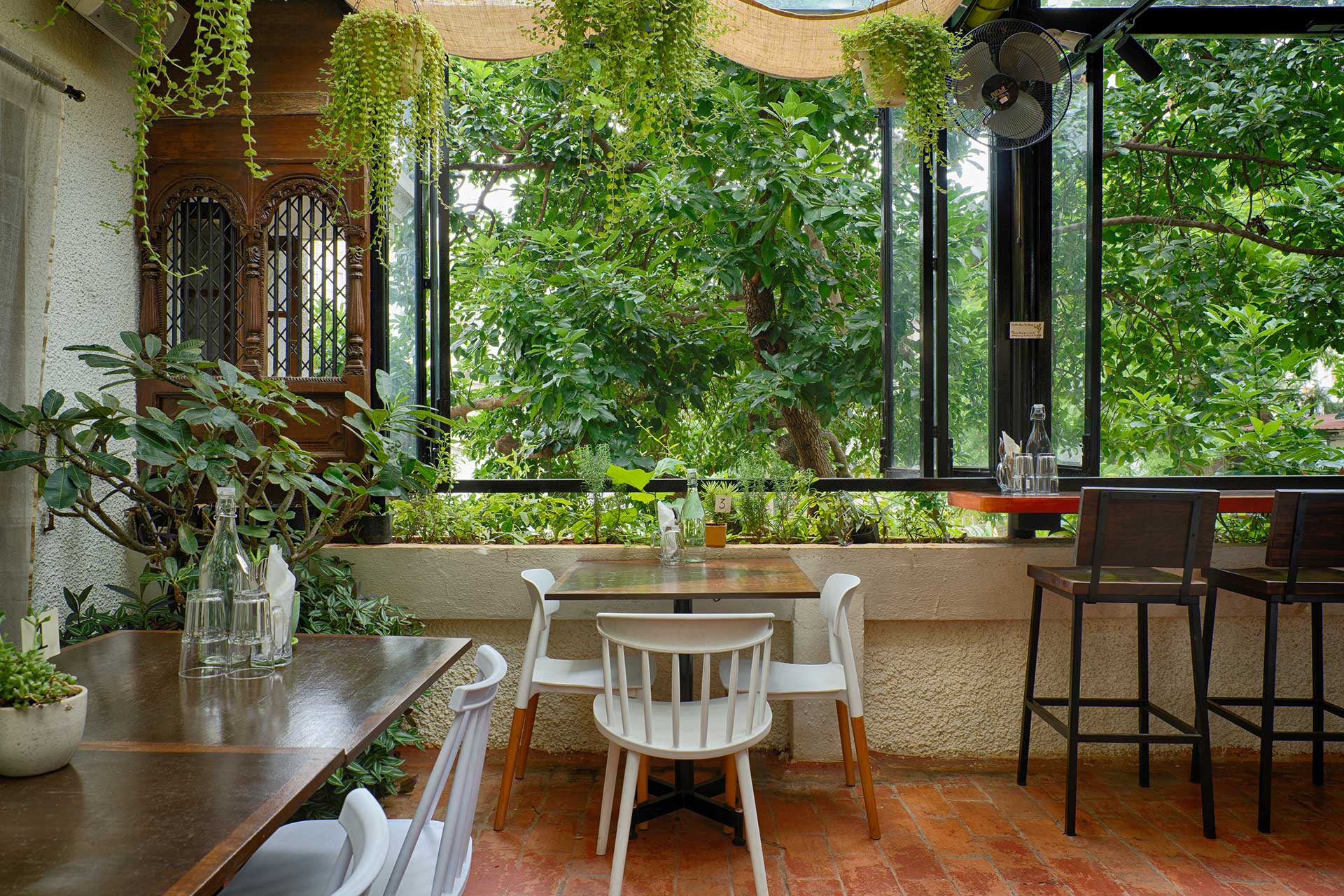
Champaca opened in summer 2019, featuring a cafe alongside the bookstore to encourage readers to linger. Bengaluru-based designer Akshara helped reimagine the interiors while retaining original elements, including Mangalore terra cotta tiles, Kerala wooden pillars, a courtyard, and a hundred-year-old jharokha. Spread across 950 square feet, the store has no segregated sections, encouraging visitors to stroll freely. A rooftop metal staircase leads into the courtyard with a children’s library on one side and seating on the other. Glass panels and bamboo mats let sunlight in, while bamboo-fiber lanterns hang from the ceiling. Floor-to-ceiling books line the walls, with ladders for easy browsing.
The cafe
The L-shaped cafe table overlooks an avocado tree in the garden. Indoor potted plants improve air quality, and the store has planted a champaca flower tree to honor its namesake. The logo, designed by Kriti Monga, features a sambar deer and drongo bird alongside the champaca flower. The menu, curated by Sarah Edward of Copper and Cloves, focuses on local dishes and sourdough breads from neighborhood bakeries. The store currently serves coffee, teas, cakes, and desserts. Signage reminds visitors: “Don’t feed the books.”
Book selection
Champaca promotes conversation and discovery. Kavya Murthy and Thejaswi Shivanand consult as editors for book curation. The team prioritizes diversity, selecting books on geography, gender, languages, and ethnicity. Shelves feature caste narratives, dystopian futures, mental health memoirs, sari-bound poetry, and translations from over twenty languages. With more than 6,000 titles, books are displayed on thematic tables that change monthly, highlighting independent publishers.
Events and sustainability
Champaca hosts events with indie publishers like Yoda Press, Red River, Tara Books, and artists, zinemakers, and film collectives. Their “Books for Now” series explores timeless texts such as Hannah Arendt’s Origins of Totalitarianism, Siddalingaiah’s A Word With You, and transgender voices in literature. Post-pandemic, the store offers online book discussions and subscriptions, delivering curated books to subscribers.
Champaca contributes to the UN Sustainable Development Goals, collaborating with Bengaluru Sustainability Forum and Science Gallery Bengaluru to promote books aligned with the SDGs, covering topics like sustainable cities, health, and gender equity.
Champaca, Bengaluru
7/1, Edward Road, Off Queens Rd, Vasanth Nagar, Bengaluru, Karnataka, India
Champaca is an independently-owned, women-run bookstore and cafe fostering community, diversity, and sustainability in Bengaluru, South India.
Champaca
7/1, Edward Road, Off Queens Rd, Vasanth Nagar, Bengaluru, Karnataka, India
Champaca is an independently-owned, women-run bookstore and cafe in the metropolitan of Bengaluru in South India.
Chetna Chopra