Matthieu Blazy and Couture as an exercise of power
Between strategic caution and craftsmanship as content, Matthieu Blazy’s first Haute Couture uses Couture as an instrument of control, rather than a space for creative assertion
Matthieu Blazy at Chanel: couture, strategic caution, and creative leadership
Matthieu Blazy—Fashion Operation Director at Chanel, not Creative Director—appears more restrained than in the prêt-à-porter show, where his hand was sharper and more immediately legible. At Chanel, couture remains an identity pillar: it reaffirms the central role of the Métiers d’art within the Maison and underpins the symbolic power that legitimizes pricing across all product categories. Prudence here is not weakness, but method. Codes are not meant to be disrupted, and creative risk is carefully calibrated. The challenge is not preservation alone, but expansion: the construction of an imaginative framework capable of restoring creative leadership—not merely media visibility—which has softened in recent years. Founding a new couture language is an ambition few houses could sustain. The question is whether Matthieu Blazy can lead it.
In a fashion system that constantly demands visible stances, Chanel adopts the opposite posture. Blazy’s direction does not pursue the memorable image or the gesture designed to dominate the feed. Couture becomes a space for recalibration: slowing down, shifting attention back to making, moving the centre of gravity from effect to process. It may read as caution, yet it runs counter to the logic of acceleration and permanent spectacle. Innovation here does not operate through rupture, but through a reordering of priorities: content before narrative, method before signature, labour before image.
Chanel Haute Couture at the Grand Palais: first look, deconstructed tailoring, exposed chain
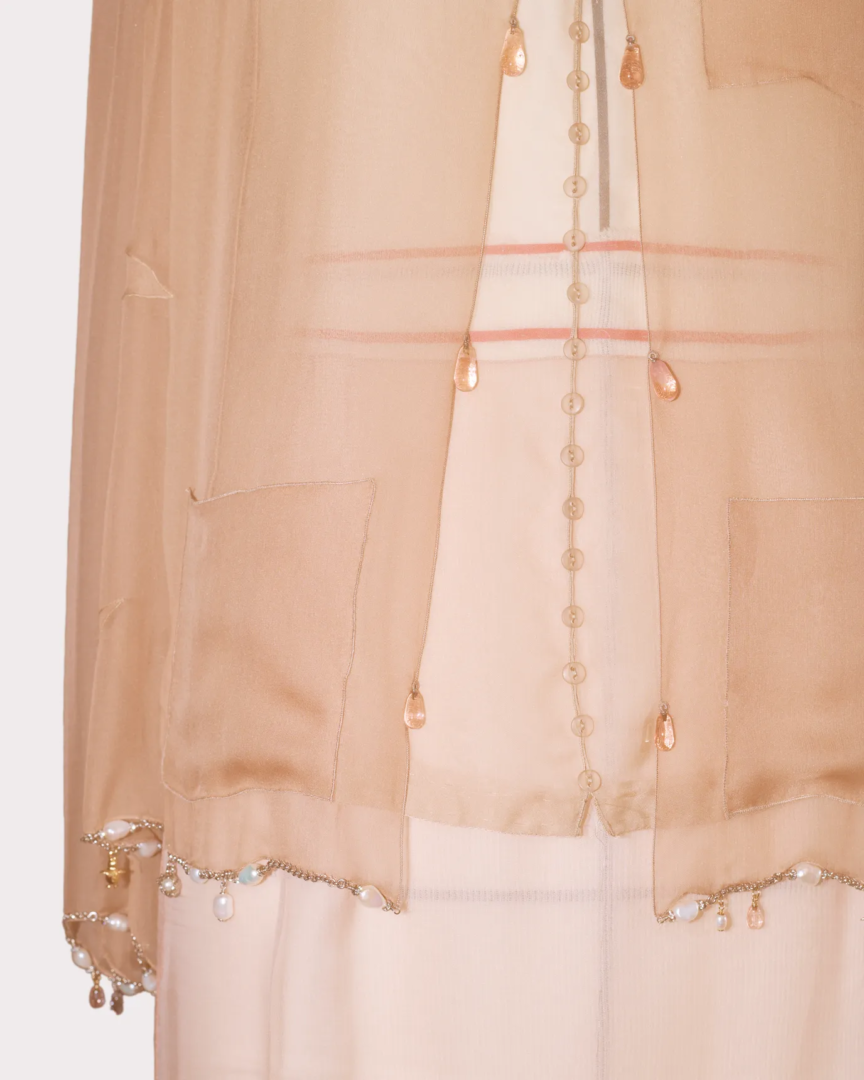
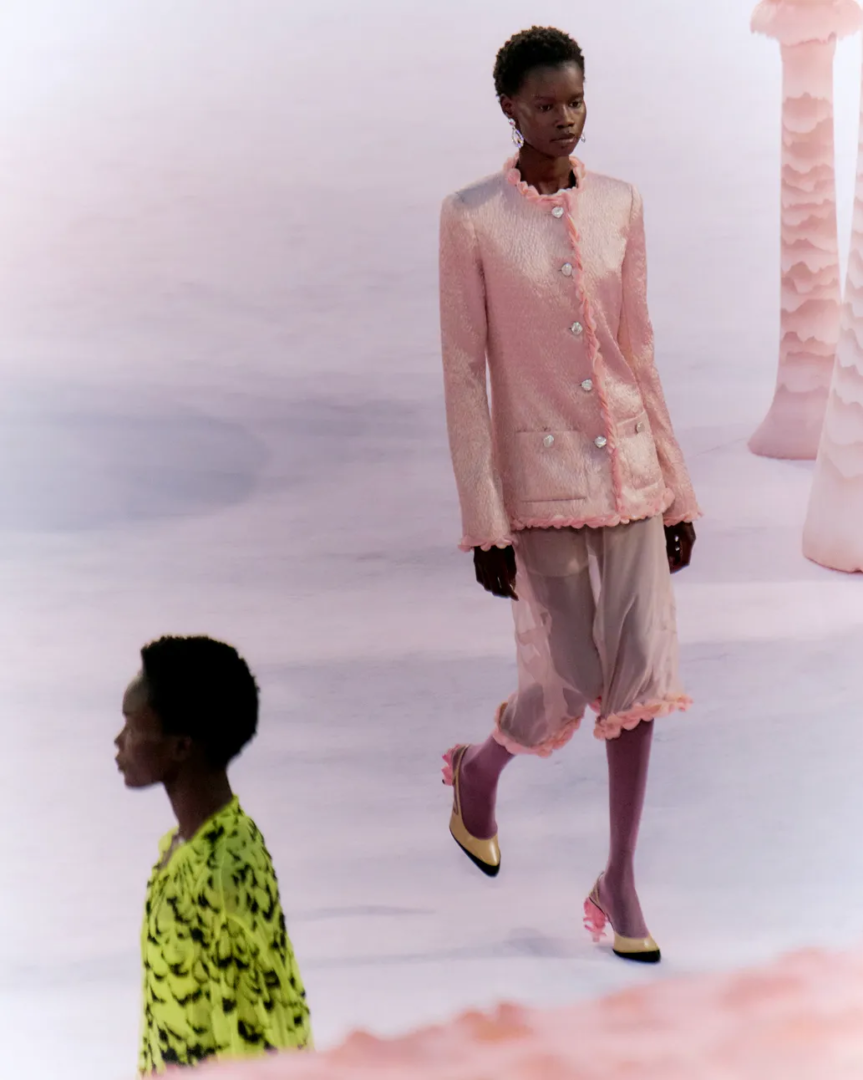
The message of Chanel’s Haute Couture show is immediate. Seated among the oversized mushrooms populating the Grand Palais, the first look sets the tone. Blazy opens with a stripped-back tailleur, reduced to its structure. Nothing remains but the form—and the chain Coco Chanel once concealed in hems, now left deliberately visible. Early looks in muslin, presented in multiple silhouettes, clarify the approach: inheritance is handled lightly, not repeated or fossilised, but updated without distortion.
Content dictates narrative, not image. This is the logic of Blazy’s operational direction. Craft is not deployed to summon myth, but to reposition it. Work resumes from the house’s structural foundations, then moves outward, following a consistent gesture: needle and thread.
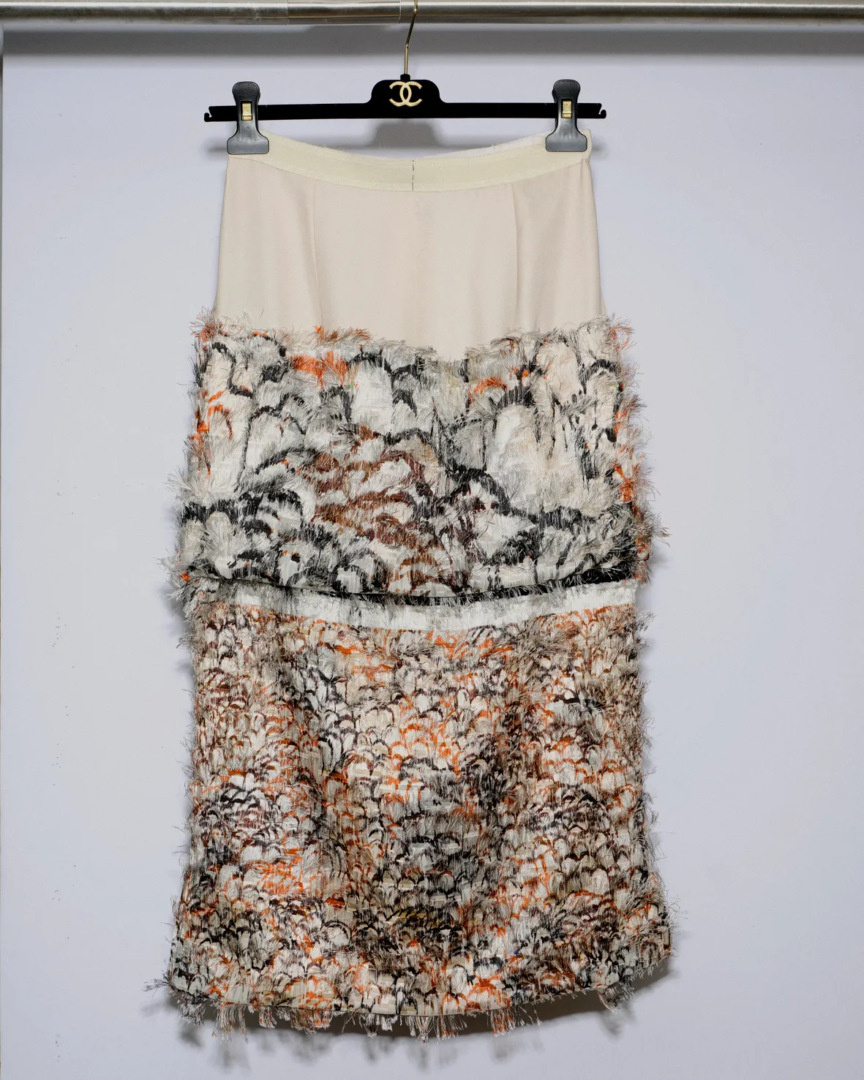
“The idea of the feather runs throughout the collection, though rarely in its natural form. Birds of all kinds appear, from the familiar to the rare,” Blazy explains in the show notes. The figure on the runway begins almost featherless: fine embroidery surfaces beneath sheer jackets and skirts, before evolving into more overt plumage—pink spoonbills, crested cockatoos, crows, magpies. Compared to the prêt-à-porter debut, rigidity gives way to movement and fluidity. The walk is less constructed. Crystal birds perch on bags and beneath collars. Mushroom-shaped heels appear. Pearls, bows, rigid tweed, camellias are no longer foregrounded.
Chanel Métiers d’art and 19M: 3D embroidery, plumage, and the construction of tailoring
Blazy, Franco-Belgian, has been at the helm of Chanel since April 1, 2025. This is his first Haute Couture show, though his language was already evident in last December’s Métiers d’art presentation. Staged in the New York subway, it brought together women of different ages and sensibilities, setting pop culture against artisanal mastery, individual lives against one another.
Blazy’s philosophy prioritizes innovation that begins with material and craft. A new fabric—the speckled tweed developed by Lesage and first shown in New York—provides concrete substance for narrative progression. Volumes and cuts establish the framework, softened and modernised through design.
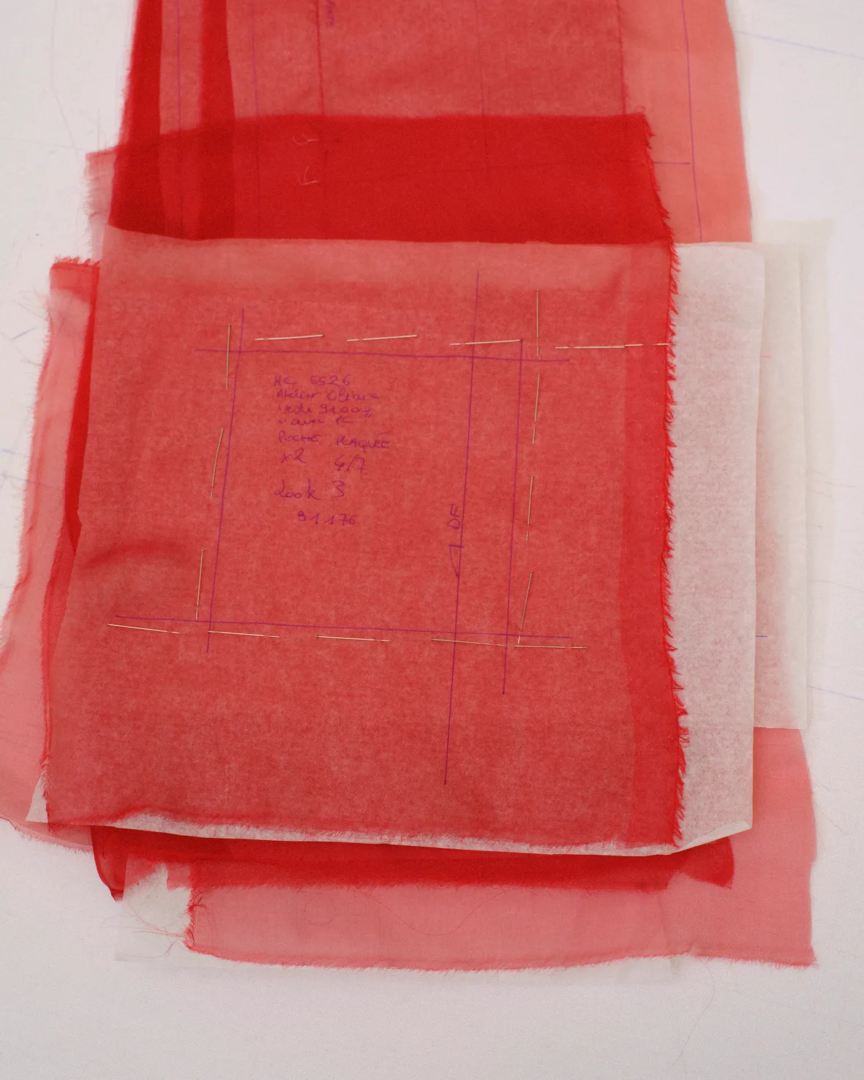
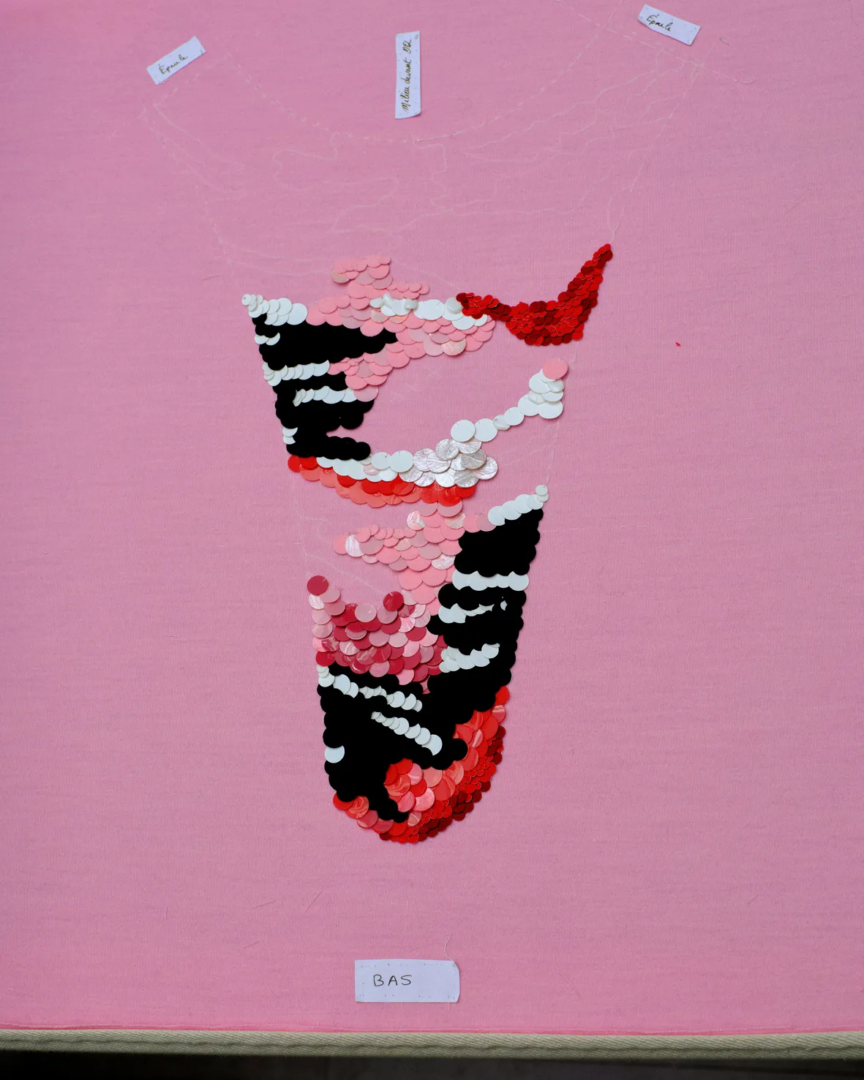
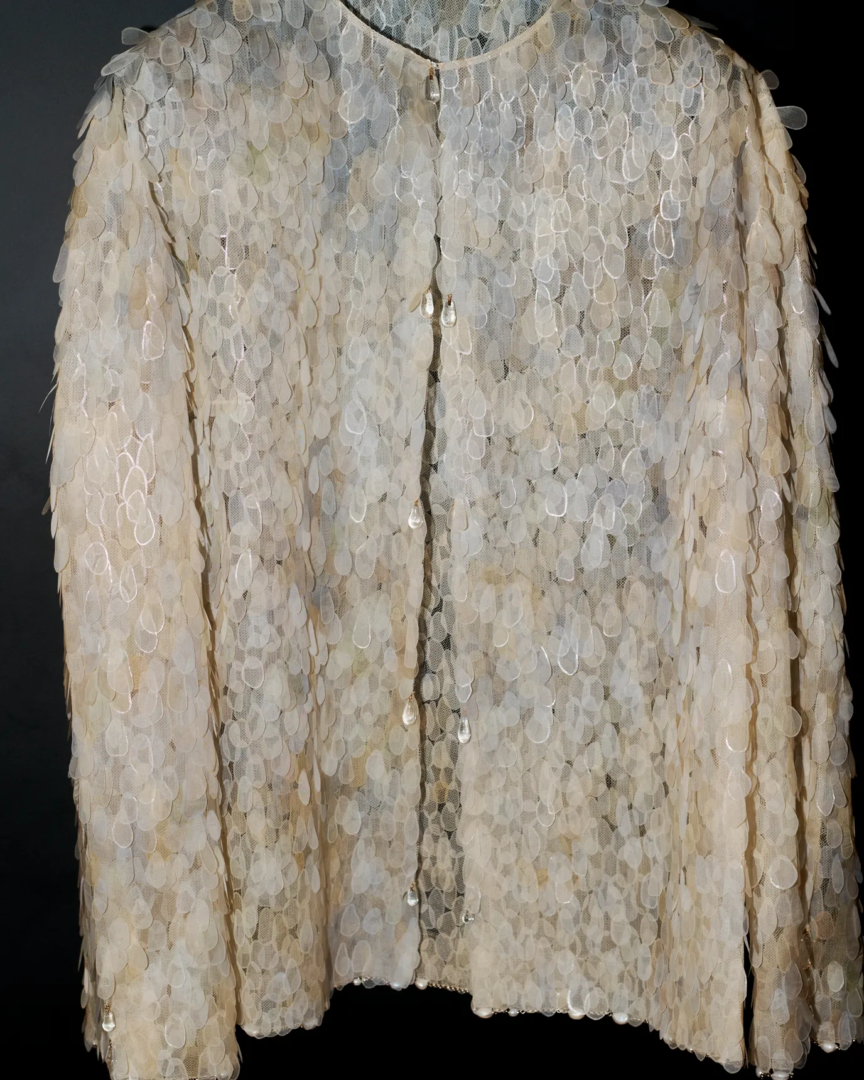
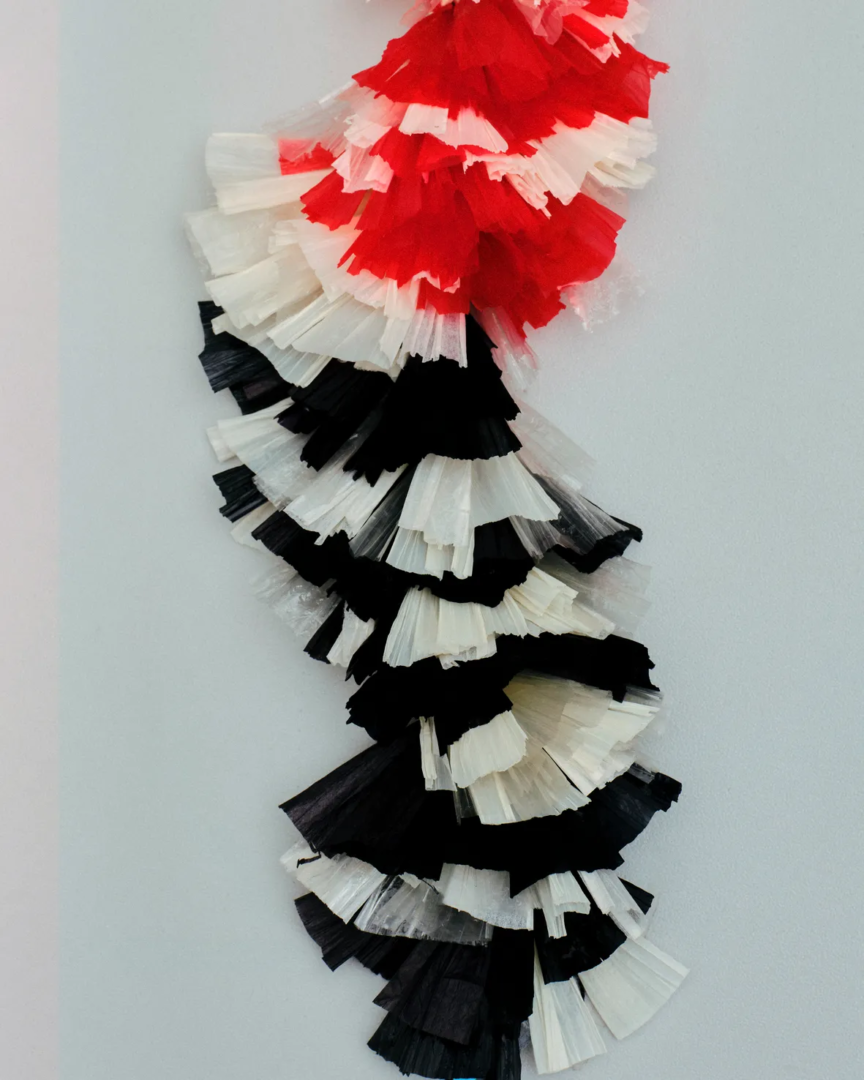
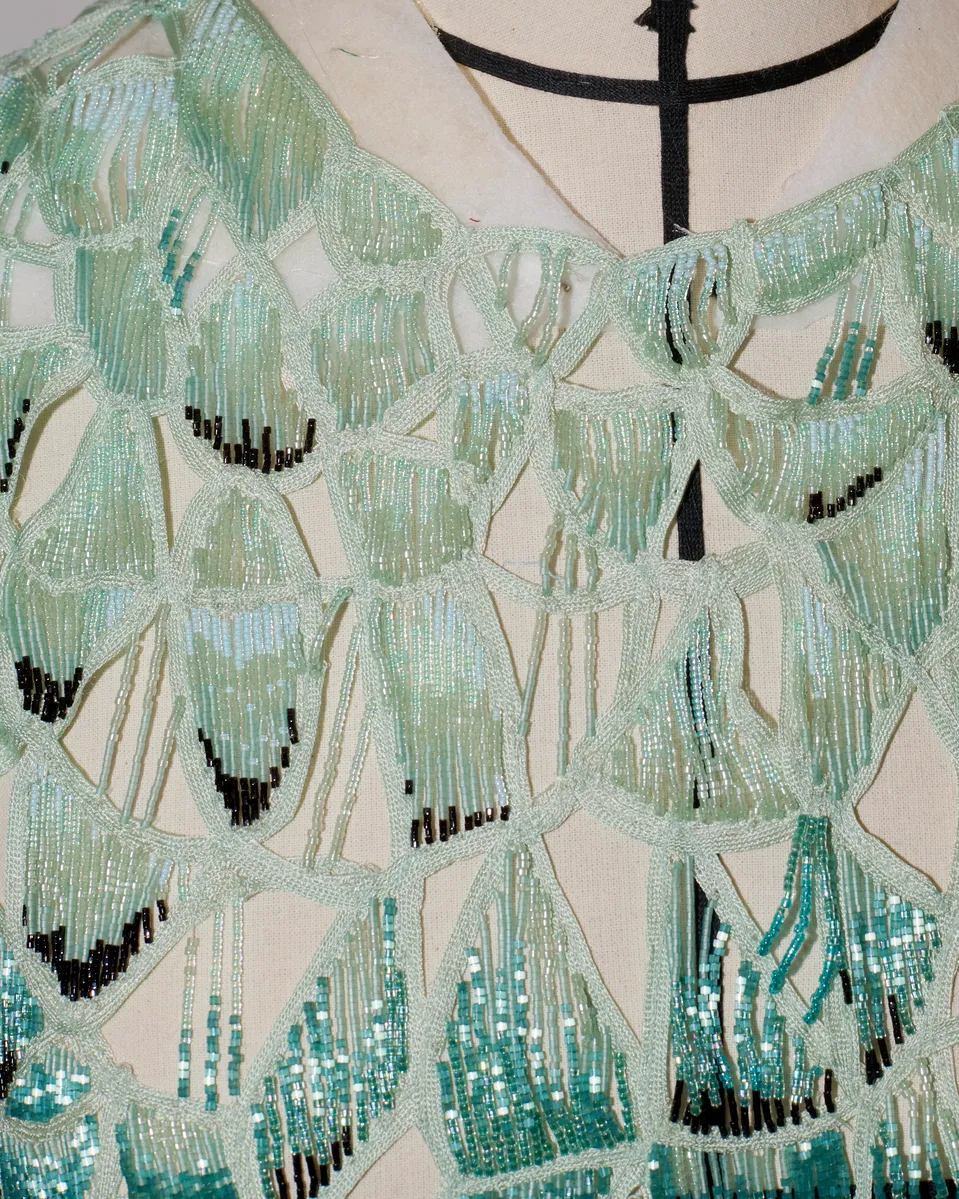
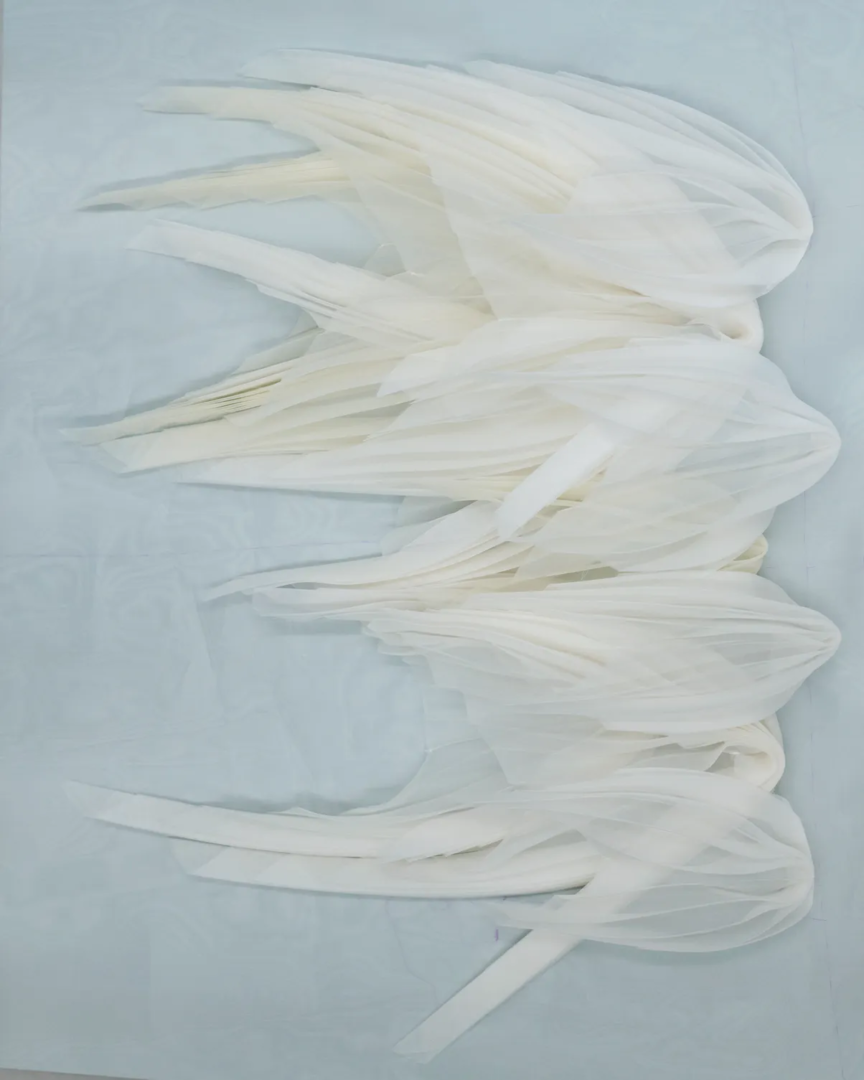
In the Haute Couture collection, the Métiers d’art are fully activated. Artisans at 19M, specialists in embroidery, feathers, and textile techniques, translate bird motifs—pigeons, herons—into 3D embroidery, hand-blown feathers, and raven-black raffia coats. Raw threads and baguette elements simulate the peacock’s plumage. The tailoring ateliers strip back the tailleur into minimal frames: light shoulders, vertical and fitted lines, construction made visible.
Identity and personalization in Chanel Haute Couture: casting, embroidered details, made-to-measure garments
From the New York show comes another development: the offer of multiple identities. The collection proposes a personal symbolic range from which to choose. Pieces are designed to be combined, loosening the rigidity of the complete look long encouraged by the brand and opening to individual layering.
The garment remains central. Each model carries a personal element incorporated into the look: a word, a phrase, discreetly embroidered or partially revealed, like a handkerchief resembling a letter held in the hand.
Haiku and the collection’s imagery: birds, chiffon jeans, a setting between atelier and fable
“Bird on a mushroom / I saw beauty at once / then nothing, flown away.” The haiku that frames the collection functions as conceptual compression rather than ornament. The ribbon-like runway, set among oversized mushrooms and pink willows, maintains a controlled lightness. A short film released the day before the show intersects with this language: a stylised fauna of birds and small woodland animals works with needles—porcupine quills—and thread on the garment that will appear as look number 24, inside the Haute Couture atelier, a white-coat environment.
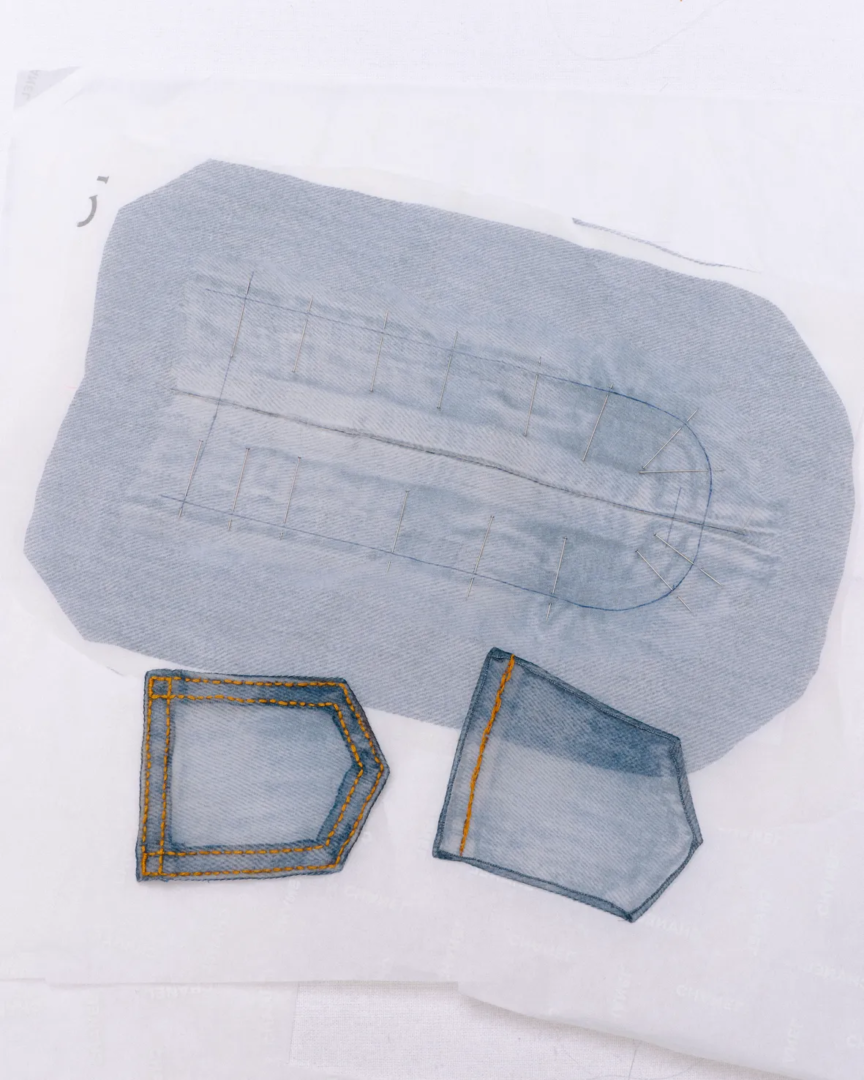
Presented in a forest of surreal, faintly unsettling mushrooms, the show avoids spectacle. There are no viral peaks, no theatrical twists. A lightweight five-pocket jean, transparent in indigo, abstracts a familiar object without severing its desirability. Craft is narrated through birds that oscillate between the exotic and the ordinary. The casting—real bodies, different ages—anchors the collection in physical presence. The garments may echo an ornithological imaginary, and the setting may verge on the surreal, but the result is not unreal. Chanel constructs an ecosystem where making is visible, and always kept under control.
Silvia Paoli