No return to nature, data is not the enemy: James Deutsher on DEEP
The raw logic behind biodiversity, technology and extraction: James Deutsher’s DEEP proposes a new ecological intelligence – humans are no longer the main character
Interview with James Deutsher on DEEP as a biodiversity infrastructure
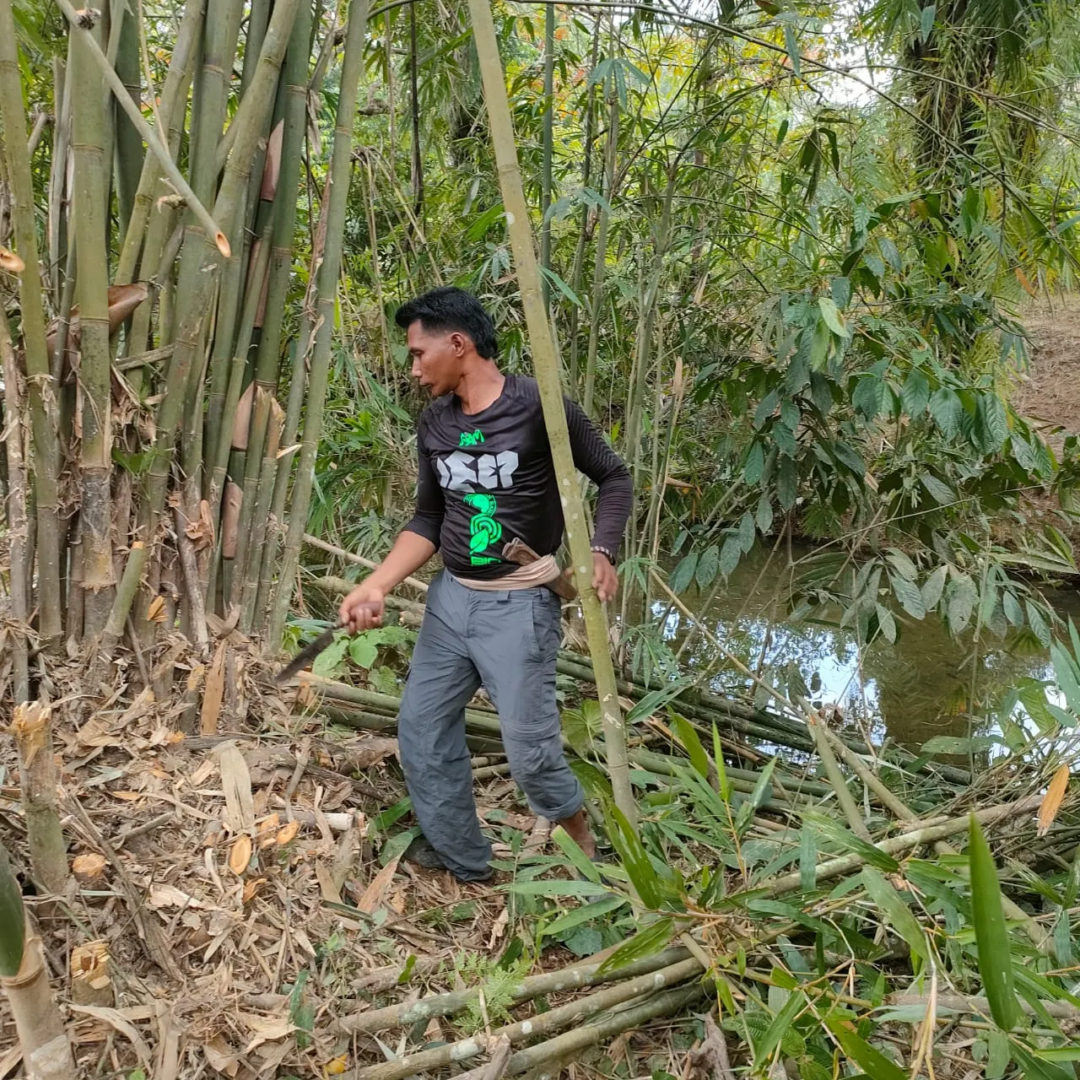
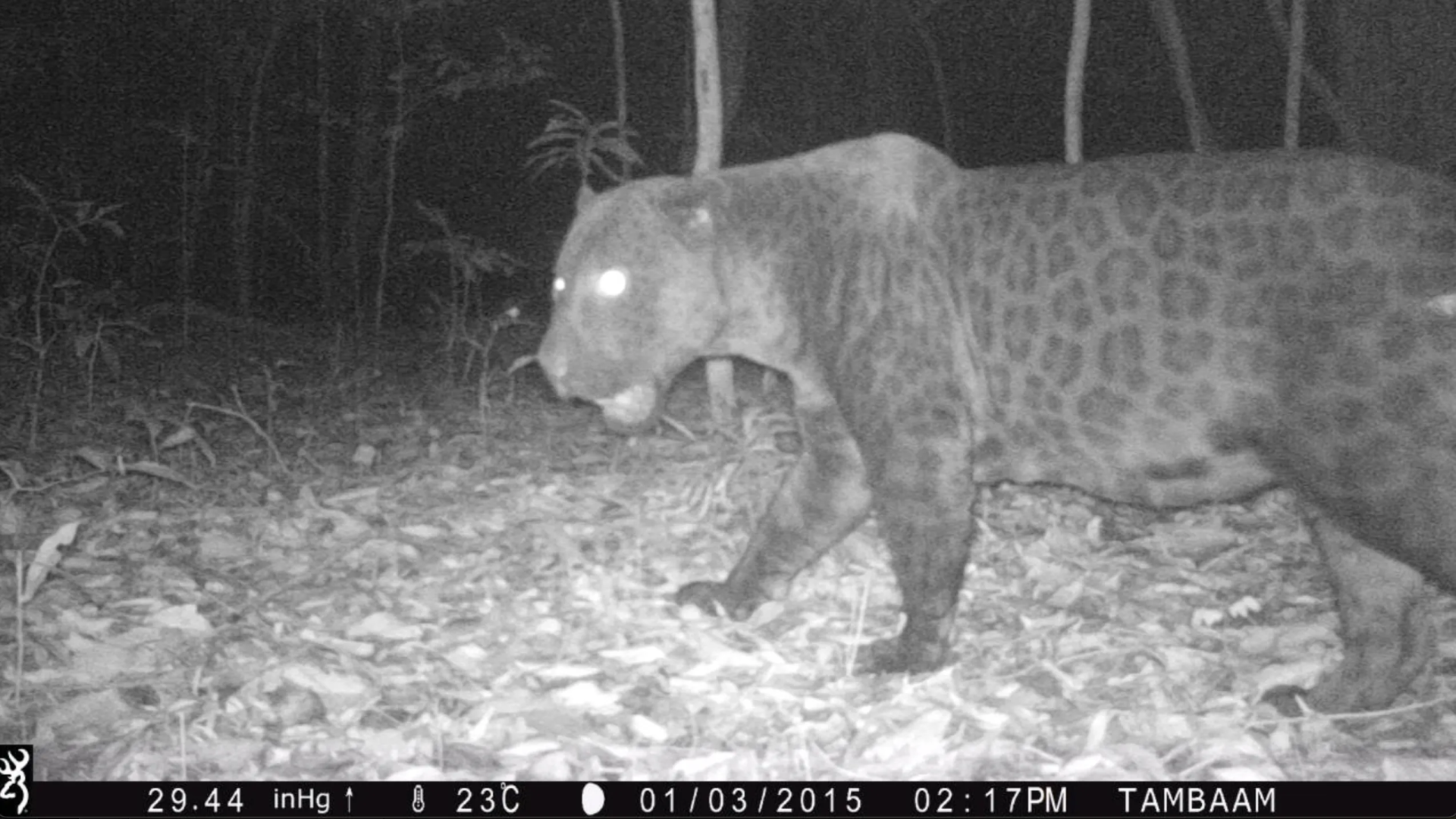
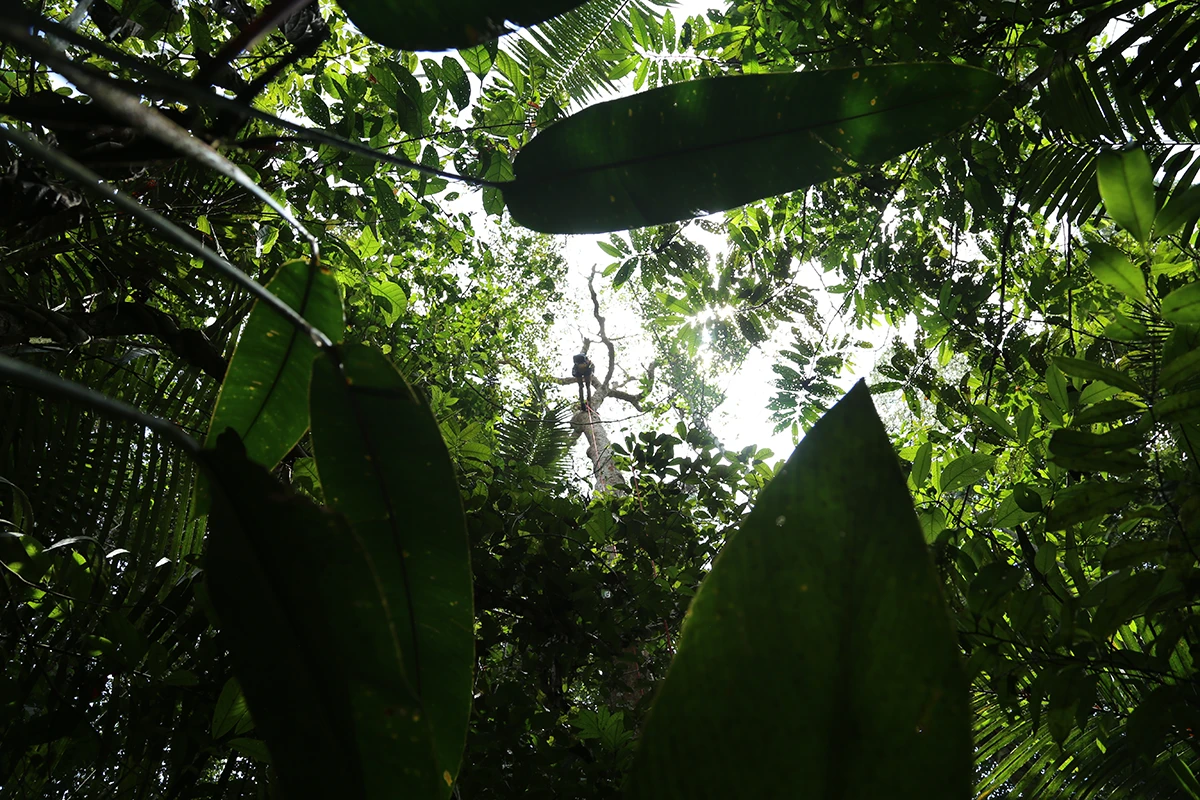
James Deutsher: The first few days of walking up rivers in the jungles of North Sumatra, as you slowly leave the remnants of civilization behind, you get to a point where you haven’t seen anybody else except your small team. You sleep on the side of rivers, with the sounds of insects. Fruits are falling from trees. You notice orangutan nests and hornbills flying past you. You go out at night with a head torch on, then the next day you find out snakes are attracted to artificial light.
I remember being on a trek in the jungles of North Sumatra, camping on the river one night. It was time for the evening shower. I stripped off, jumped into this pristine water, and there I was, alone in the river, naked in the middle of the Sumatra jungle, knowing I was being watched—not by people. I knew I was being watched by the plants, the insects, the monkeys and even tigers. I didn’t see them, but I knew they were aware of my presence. That is true rawness—being completely at the mercy of something bigger than yourself.
The idea of roughness brings in the concept of radicality—these things that are truly at the root of it all. Places that are not only wild but also remote and highly biodiverse, like equatorial zones. The idea of baseness comes up a lot in terms of how I feel toward this. When you’re in these areas, there’s a sense of being completely stripped down. You become a puddle and dissolve back into these spaces over time.
Unlike the popular narrative that pits technology against nature, DEEP uses it as a tool for listening—bioacoustics, AI and data
James Deutsher: Where many see technology as a problem, DEEP sees it as a material to be reshaped. When wielded ethically and imaginatively, it can help us build strange, intimate and resilient ecologies in the cracks of this collapsing world.
We’re building systems of ecological intelligence. It doesn’t mean one single thing—it’s everything together. Technology is a big part of it, yes, but so is community knowledge, historical data, real-time observation and communication. No one talks about the role of communication in all of this. It’s not about collecting data only. How is the data shared? How do people who rely on it interface with it?
The challenge was in the fact that none of these systems spoke to each other before. Camera trap data sat in one database, bioacoustics in another, satellite imagery somewhere else. Siloed. Disconnected. What we’re building now is something that behaves like an AI for the ecosystem. You ask it a question, and it responds by drawing on patterns from multiple knowledge systems. There is no singular truth. It gives you intersections—more chances for knowledge systems to meet. This way, the systems themselves start to offer insight. The intelligence isn’t just in us or in the tech—it’s distributed across the ecosystem.
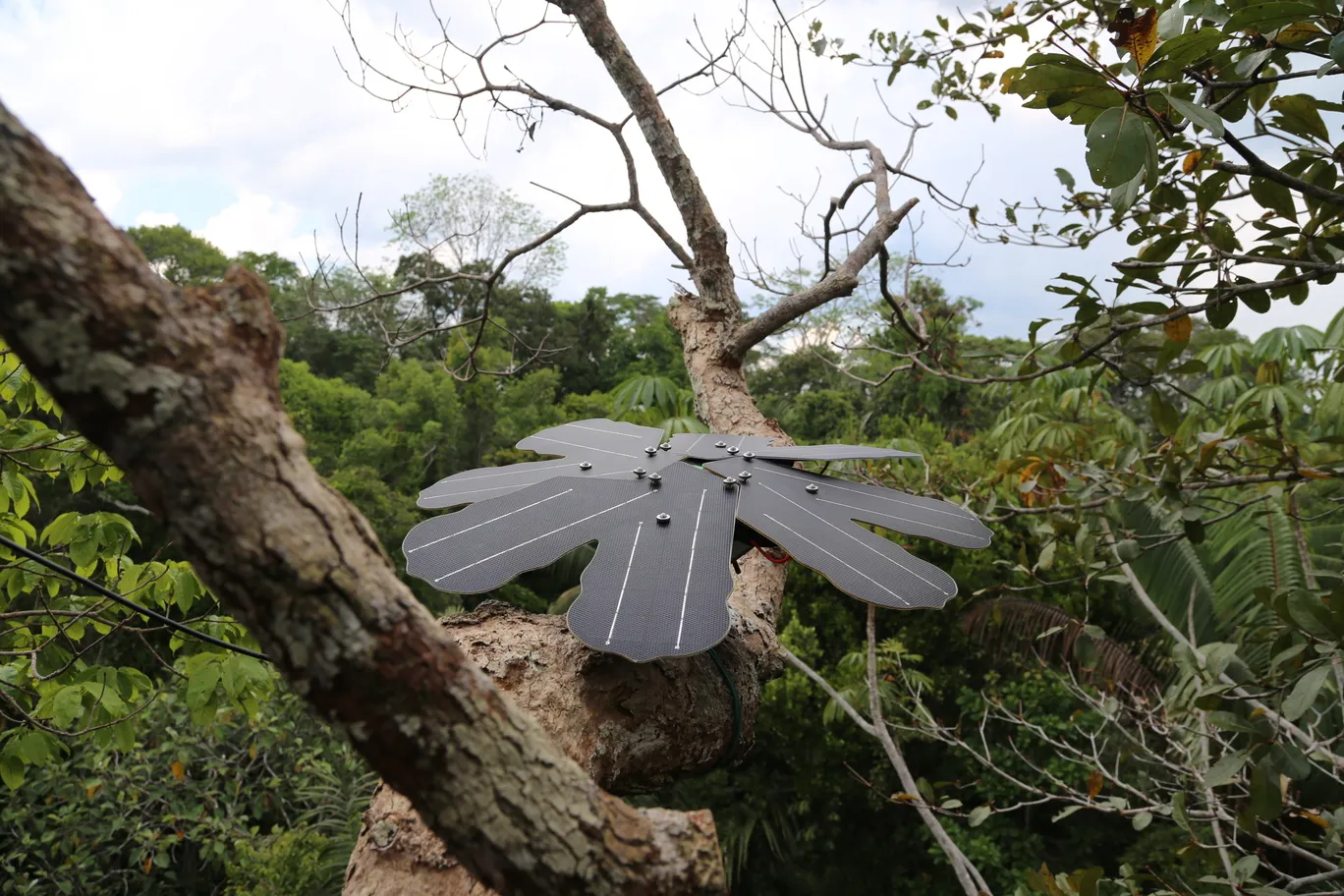
The process is nowhere near smooth. The jungle is chaotic. Deployment never goes according to plan. Starlink, for all its ethical complications, changed what was possible. Real-time acoustic monitoring from the Amazon became possible. That same network now lets poachers communicate better too. Tech helps us deploy better, but it’s just a tool. Real intelligence comes from knowing when to adapt—shifting plans on the ground, finding new ways to gather data and being willing to let go of your original ideas of what you were going to achieve.
Fieldwork is slow. It’s reactive. It’s hours of waiting, adjusting, recalibrating. You shift from human time to forest time. The real work often happens when nothing is happening.
Most of the data we collect is used directly by our partner organizations to shape and guide their actions on the ground. The biodata we collect, analyze and present arms our partners with hard evidence. It lets them go to funders and governments with data in hand—real, validated data tied to proven protocols, rather than relying on tradition or gut feelings. That’s the main way our data gets used: validating outcomes on the ground to support decisions and expand protections.
There’s more happening during these surveys. We recently identified bird species that had never been documented in that area before—species thought to live way further south. That sparked new questions about bird migration patterns, climate change impacts and insect movements. It’s possible that insects shifted due to warming climates, drawing those birds north. These kinds of findings open up new threads to follow in future surveys and research. It’s an ongoing, evolving exploration, each survey uncovering more layers and leading to new questions and insights over time.
James Deutsher on sustainability: DEEP doesn’t buy into “sustainability.” For them, it’s about facing the real impact and evolving with the living world
James Deutsher: DEEP is in no way a sustainability project. We don’t subscribe to the term. For us, “sustainability” means continuing to extract, but doing just enough to trick ourselves into feeling like we’re giving back more than we’re taking. This is in no way a reality.
The weight of cognitive dissonance is heavy for us now. Sustainability is more of a psychological survival mechanism than a lived reality. By continuing to subscribe to the notion of it, we derail the reality of the impact we have—the way we’re derailing the status quo of evolution and biological balance. Sustainability is a story. It’s not a true experience. Now, it gets co-opted completely into commerce. How do we sustain profits up and to the right while keeping extraction within acceptable levels? The real question is: acceptable by whose standards? It’s the consumer who has to accept a brand’s or an output’s allegiance to sustainability. So sustainability becomes the function of a consumer accepting a brand’s marketing narrative.
DEEP is a feeling about evolution more than anything else. How can we evolve with non-human species and relations in the world? The human intelligence platform is not the primary one in operation. The biological world outside of humans is another platform. AI and technology is another platform, which arguably is soon going to replace human consciousness as the dominant platform on the planet. And all this—the civilizations and infrastructures, the technology—doesn’t come from us. It comes from the evolution of life on Earth. The awareness about this can help us step outside our privileged place in history and realize that everything doesn’t revolve around us.
This conceptually decentralized thinking around sustainability and evolution, combined with the way we allocate funds in a very independent way, is what DEEP does differently. To be able to speak like this and not risk unsettling people or alienating a brand—that independence allows us to hold a unique position.
DEEP’s EXOPACK design was a response to a missing piece in biodiversity research tools. James Deutsher on the new possibilities it’s opened for ethical, in-depth insect study
James Deutsher: Our work on EXOPACK began through a relationship formed around 2022 with a Brazilian insect research group called Projeto Mantis, who specialize in praying mantises. Most insect researchers collect specimens by killing them, using gas traps or fumigating small sections of the Amazon to collect everything that falls, then identifying species and pinning them in labs or museums. Projeto Mantis takes a different route: they develop protocols to collect mantises alive and observe their full life cycle over several years.
When we connected with them, it became clear there was a major gap in biodiversity collection methods—nothing was designed to support this kind of live, long-term, ethical observation. That’s where the need for EXOPACK came in. We worked alongside Studio Sabine Marcelis, combining their research protocols and design expertise to create a new kind of insect housing capsule. It was about enabling researchers to observe growth, molting, mating, feeding and interaction over time. It provides far richer data than the traditional kill-and-pin method.
The ethical line was clear—killing insects to study them. The new protocols we worked with aimed to shift that line by keeping insects alive and observing their full life cycles. This approach was a significant step forward ethically, but it introduced new ethical questions, like how to ensure the insects’ well-being in captivity.
Community-led practices outpace traditional methods. James Deutsher confirms they are more adaptive, integral and ethical
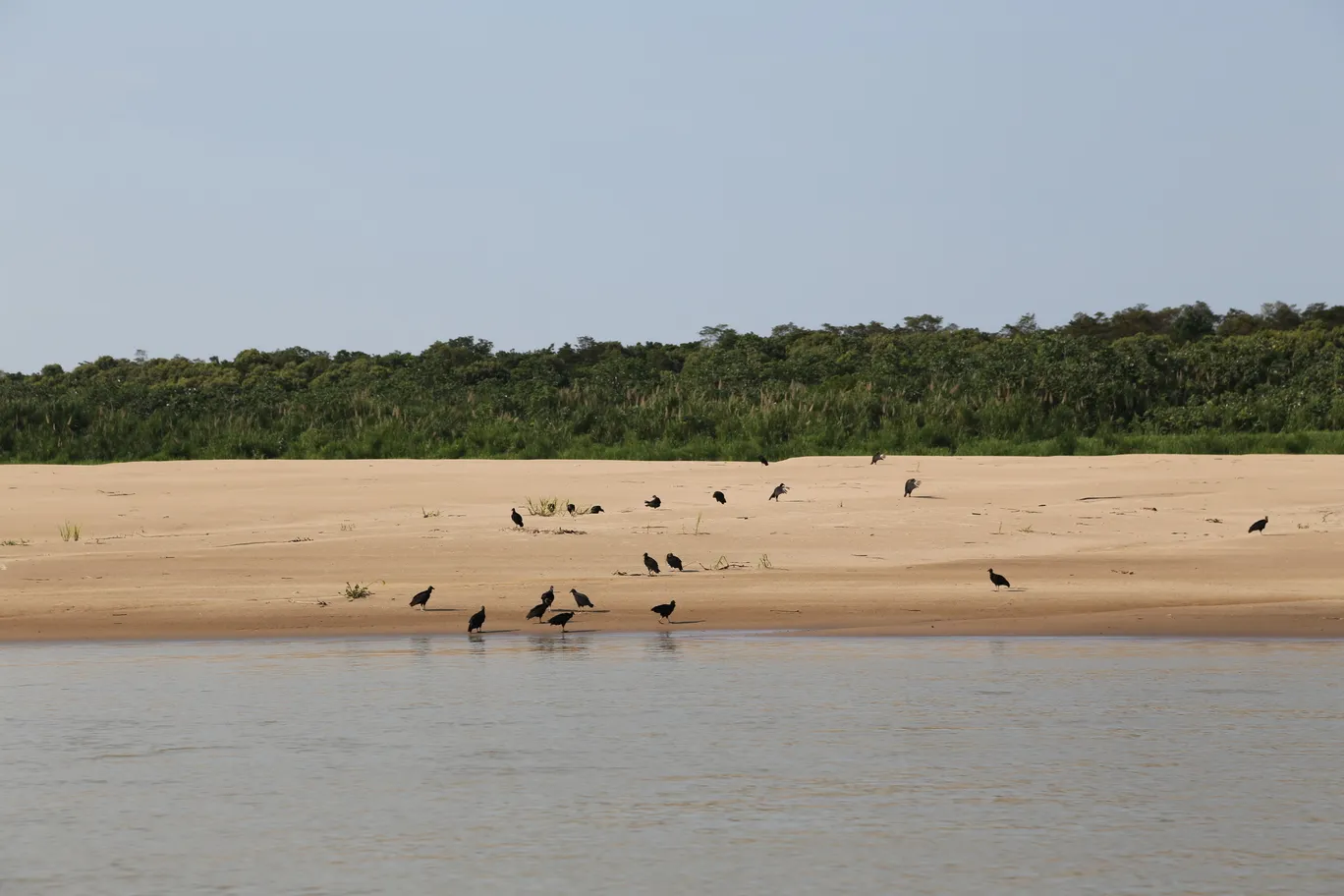
James Deutsher: One of our most long-standing projects in the Brazilian Amazon was done through our relationship with the small local NGO called Instituto Juruá. They’re based right along the Juruá River—a remote, raw part of the western Amazon. Getting there isn’t easy. You fly six hours from São Paulo to Manaus, then take a light aircraft which only runs once a week and is often canceled at a moments notice another two hours over dense canopy. From there, you’re on a boat for three days, winding through river systems.
This is one of the most biodiversity-intact ecosystems on the planet. In places like North Sumatra, you might have incredible species richness, but the surrounding forest is heavily fragmented, under pressure from logging, mono-crop palm plantations and poaching. In the Juruá, it’s still massively wild. Still whole. That gives us the rare opportunity to understand what an ecosystem looks like before commercial extraction. Before loss. That baseline is critical for preserving what’s still possible.
Instituto Juruá was founded by Hugo and João, two biologists who’ve lived and worked in the region for over 15 years. What they’ve built is more than research infrastructure. It’s a community-led model of environmental stewardship. Everything they do supports the Juruá people and their traditional relationships with the land.
We’ve seen evidence that their harvesting techniques regenerate key species populations. That flips the entire narrative of conservation from restriction to regeneration. Community-led practices consistently outperform externally led models. They’re more adaptive. They last longer. They have integrity because they’re tied to survival, to memory. As Elinor Ostrom said, the best way to govern a commons is to let the people who depend on it create the rules. What you have is embedded ecological knowledge, daily presence, long-term accountability. It’s not theoretical. It’s a lived experience.
But beyond that, there is an ethical aspect to it. The land itself holds a memory. The people closest to it know the patterns of that memory better than anyone else. They are unquestionably better stewards of that memory and better positioned to create something meaningful through their active engagement. Our role here is to provide tools and support structures. The actual building and enactment of conservation work is done by these internal actors—the communities on the ground—who are shaping the future of these places.
Conservation is not what DEEP focuses on. It’s never been about conserving, but redesigning
James Deutsher: Conservation is not the correct term to describe what DEEP is doing. Conservation is preserving something in its current state. For us, it’s not about preserving or conserving things as they were. That’s not what we’re interested in. DEEP is about radically redesigning the root relationships between humans and ecosystems. Often, this involves using tools most associated with extraction—data, infrastructure and design—in new ways.
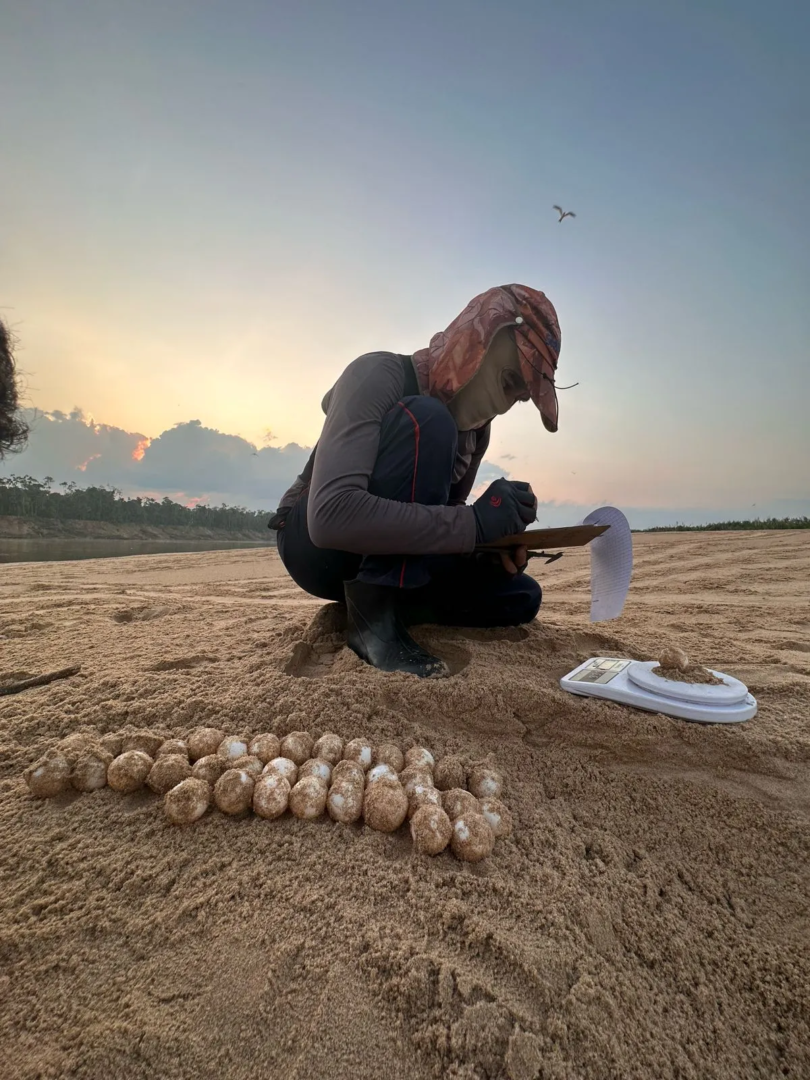
Extraction is not a word we’re afraid of. It isn’t inherently bad when it’s done in the right way. Data extraction, biodiversity in the field, community-led resource extraction—whether it’s rubber, food, açai berries, turtle eggs or community-led ecotourism —can be positive. It can sustain centuries-old cultural traditions and knowledge and economically support local communities. This support allows them to spend their time protecting biodiversity in their territories instead of being lured into poaching or logging as a means of economic survival.
Beyond protection or conservation, DEEP is about redesign.
The Apennines have been called “the Amazon of Europe.” According to James Deutsher, there may be a more fitting way to speak of this vital, biodiverse spine of the continent. A way to honor its complexity without borrowing someone else’s mythology
James Deutsher: We presented our work from the Apennines in Italy during Milan Design Week 2023, partnered with ROA. We split the talk into two parts: one covering the conservation and rewilding strategies happening in the Apennines, and the other exploring the idea of evolution as a form of design. One example of this work was the reintroduction of the white claw crayfish—a small crustacean that was nearly wiped out from European waterways due to agricultural impacts. Rewilding efforts through our partner Rewilding Apennines aim to bring this species back. This improves water quality, creates habitats for other animals, and builds a more resiliant foor web throughout the ecology. The crayfish burrows into riverbanks, reshaping the environment and enabling new ecosystems to form. This is why rewilding acts as a design process itself. It drives rapid environmental change and evolution.
The Apennines are becoming wilder, but they can only be so remote given their proximity to major cities, flight paths overhead and other human influences. In terms of biodiversity abundance, the Apennines are unique and rich, with many endemic species thanks to isolated valleys and diverse microclimates. But the sheer species richness isn’t comparable to the Amazon.
The work in the Amazon focuses on protecting vast intact ecosystems, reducing large-scale extraction, preventing habitat loss. The Apennines are still in a phase of recovery. By the mid-20th century, much of the region was heavily grazed and fragmented. Since then, there’s been massive land abandonment—younger generations started to move to cities. Biodiversity efforts in the Apennines now revolve around rewilding—removing barriers like barbed wire, reintroducing lost species, restoring habitats, managing human-wildlife conflicts.
The goal in the Amazon is to maintain the existing wilderness. The Apennines are still evolving into a wilder landscape. Two different ecological stories. The “Amazon of Europe” is not the correct term here. It would be more realistic to think of the Apennines as “Europe’s biocultural spine.”
Success for DEEP takes a different shape in each project. But what threads them together is a commitment to validating Indigenous community approaches to sustainable extraction
James Deutsher: Success is difficult to define. It shifts shape depending on the landscape, the language, the people you’re standing beside. There is no single metric—only context and translation. What’s meaningful for an Indigenous community in the Amazon might be incomprehensible to a cultural institution in Europe. And vice versa. So DEEP works in the in-between. We break down impact into forms that speak clearly across cultures without diluting meaning on either side.
Over the past five years, those expressions of success have taken many forms: more than 15 field research expeditions launched, over a million minutes of bioacoustic recordings captured and analyzed, 150 snares removed from the jungles of Sumatra, and more than 5,000 seedlings planted at the forest’s edge in Gunung Leuser National Park, creating new economic alternatives beyond palm oil. Through brand partnerships and content, over 50 million people have engaged with biodiversity narratives on social platforms. Biodiversity itself has begun to find space in cultural media, with over a dozen stories placed.
But at the heart of it, what DEEP is most proud of is validating Indigenous-led approaches to sustainable extraction through real, quantifiable data. In the western Brazilian Amazon under the community-led extractive protocalls developed by Instituto Juruá, the Pirarucu fish population has increased by 425% over ten years, thanks entirely to community-designed extraction practices. It’s a staggering number.
DEEP’s new rhythm matches the places it works in: quieter, slower, rooted in trust. The focus for James Deutsher and DEEP now is infrastructure, field design and meaningful long-term alliances
James Deutsher: We’ve stepped back from working closely with brand marketing teams. Now, we focus more on discreet, behind-the-scenes partnerships—often with philanthropic or family office funders. There, the goals are about real, measurable positive evolution over time—legacy impact and bespoke engagement—rather than just messaging.
Right now, we’re focused on partnerships. We’ve reoriented our relationships with our impact partners. We’re working on long-term, slow-burn, stealth-mode projects for DEEP. We’re setting the vision for the next 20 years. No rushing things or working at the fast cultural pace we used to. We’re working at a more real and connected pace that fits the work we’re doing. It’s been both a rewarding and challenging process to step back and reconfigure like that.
This year, we’re working on two projects. One is with Instituto Juruá, designing turtle ranger shelters for Amazonian flood zones. The other is building a wild-tapped rubber extraction network for a new ethical supply chain project. We are exploring how ethical extraction can support communities, biodiversity and habitat protection, while also providing economic support and access to communities.
Our long-term vision is to build a permanent, DEEP-designed houseboat—a mobile research and support station in the heart of the Amazon—to back all this work around the giant Amazonian turtle and other community-led initiatives. That’s what we’re focused on at the moment.
Biodiversity is perceived as scientific, political, but rarely personal. For DEEP, it’s everything. Consciousness itself is a byproduct of biodiversity. AI too
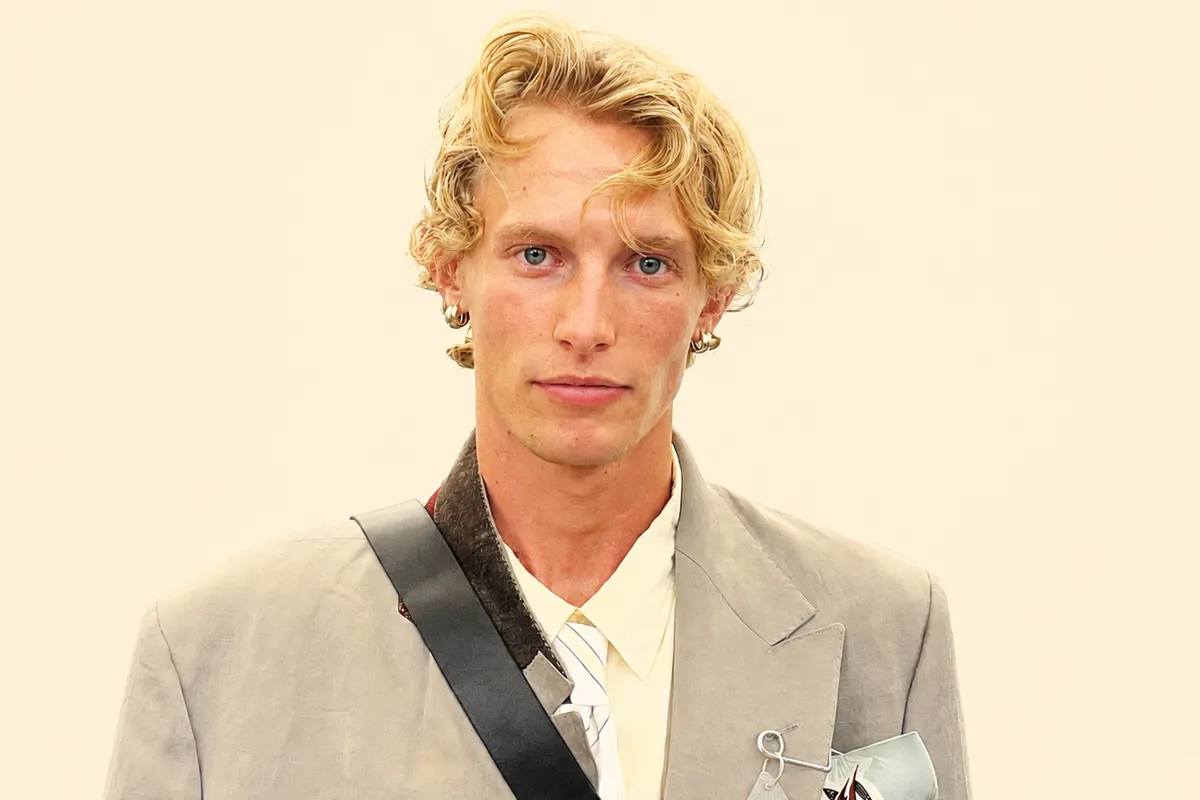
James Deutsher: Before DEEP, my path was diverse. I grew up in Melbourne and trained as an artist. From early on, my work was rooted in ecological thinking. I was drawn to people like Pierre Huyghe, Donna Haraway, Timothy Morton—artists, theorists, architects who were asking questions about systems, life and the way we relate to the world around us.
I opened a short-lived but intentional gallery in Melbourne that blended art, design, architecture and publishing. Around that same time, I co-founded World Food Books and got involved in small-scale clothing production between Hong Kong and Shenzhen, trying to figure out how to do it more responsibly and consciously, even in systems that weren’t designed for that. Then I pivoted. I spent a few years importing high-performance motorcycles and electric bikes. Through the electric bikes, by selling them to national parks and ranger fleets, I started finding myself back in wild places.
Those experiences brought me back to something raw and alive. DEEP came from that. It was never meant to be a brand—it was a response to everything that had led up to that point. A way to create a structure that could hold that energy and make it shareable.
One of our challenges now is balancing the worlds of science, design and fieldwork, getting them to communicate in a way that makes sense. DEEP acts as the bridge. The best way to do this is through experience—taking people to the landscapes we work in, putting them with the communities who live and breathe this work. It changes everything. Being there creates intimacy. It sparks care.
Biodiversity isn’t an abstract concept you can separate from yourself. It’s not a checkbox for scientists. That cotton shirt you’re wearing? It’s the product of countless ecological processes beyond your control.
The raw truth is this: despite what we tell ourselves, we are it. We’re not detached observers. We’re living, breathing parts of biodiversity itself.
Susanna Galstyan