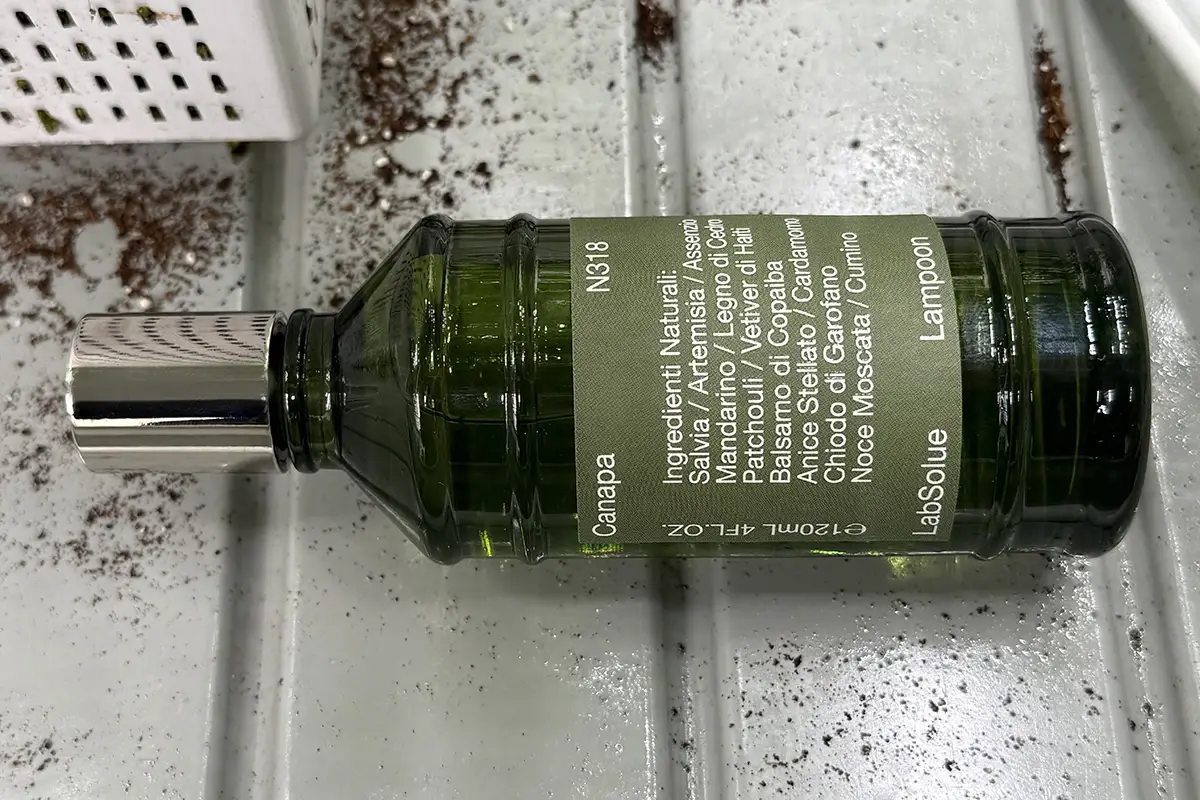
Canapa N318 Eau de Parfum: a collaboration between Lampoon and LabSolue
Ambra Martone presents Canapa N318 Eau de Parfum, a fragrance that brings hemp back to the center of contemporary olfactory creation
318 Canapa by LabSolue: hemp’s return to contemporary perfumery
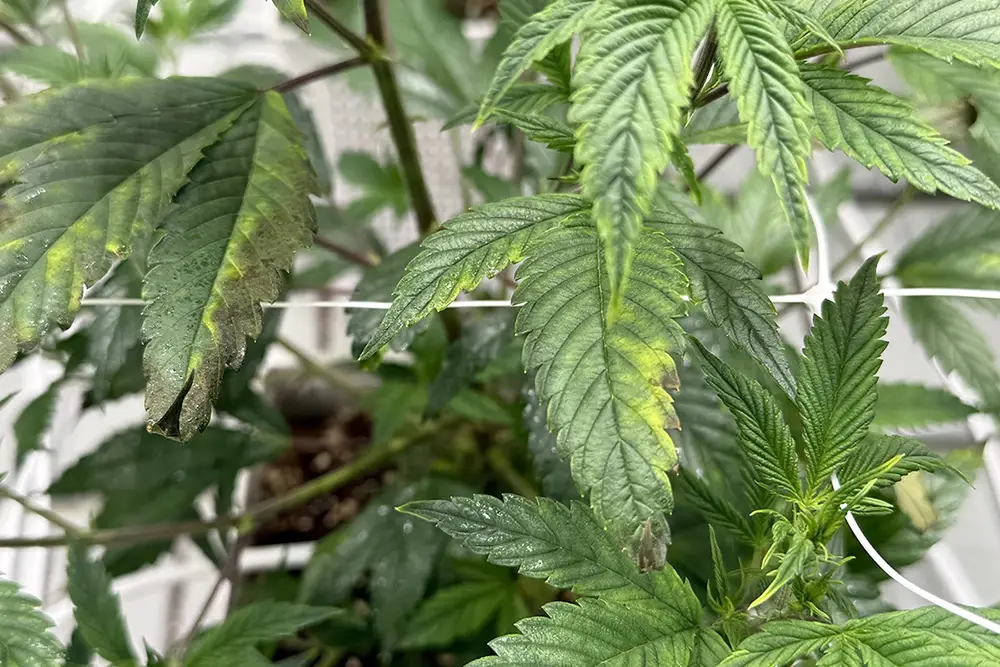
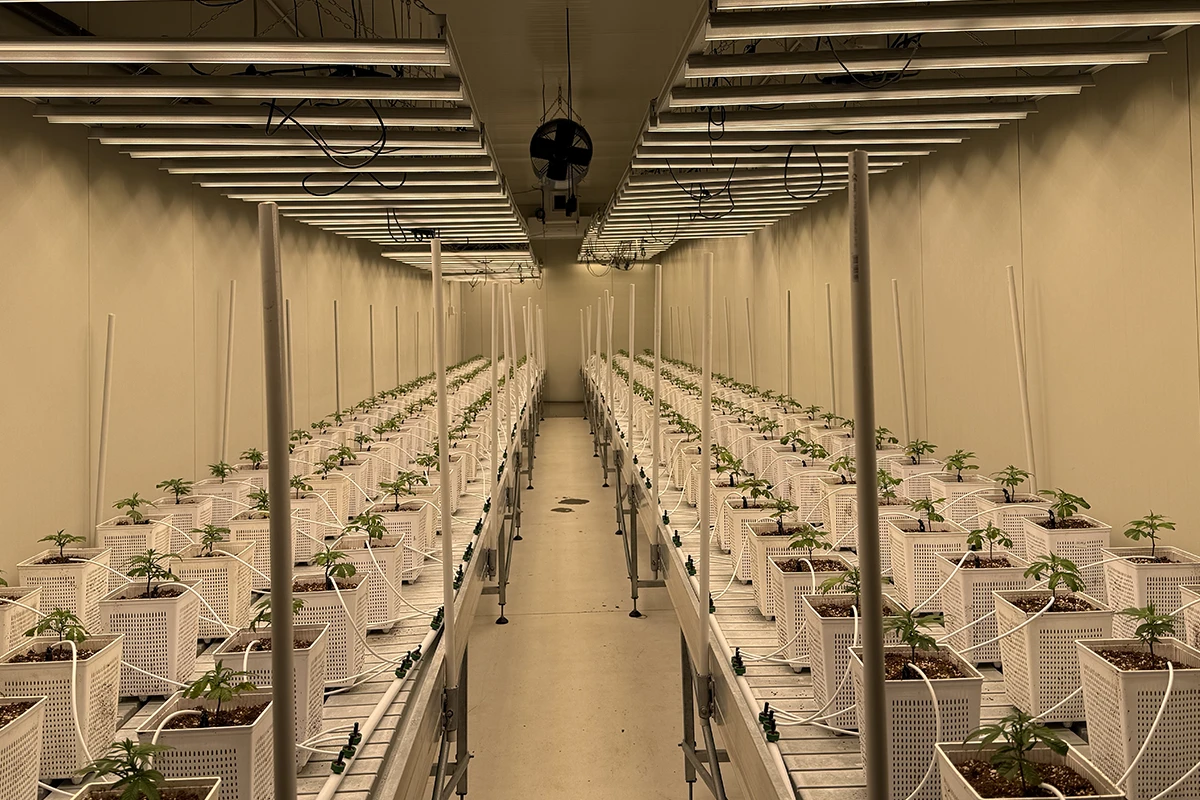
In contemporary perfumery, hemp (Cannabis sativa L.) remains a rarely used raw material, largely confined to research and experimental contexts. Perfumers’ interest is focused exclusively on the plant’s natural aromatic components—found in the inflorescences and leaves—while psychoactive substances are entirely excluded from olfactory use.
From an olfactory perspective, hemp’s aroma is defined by a combination of monoterpenes and sesquiterpenes, natural molecules responsible for plant scents. Monoterpenes, lighter and more volatile, contribute fresh, green, and resinous notes; sesquiterpenes, more structured and persistent, add woody and spicy nuances. Among the most representative molecules are myrcene, α-pinene, β-pinene, limonene, and β-caryophyllene.
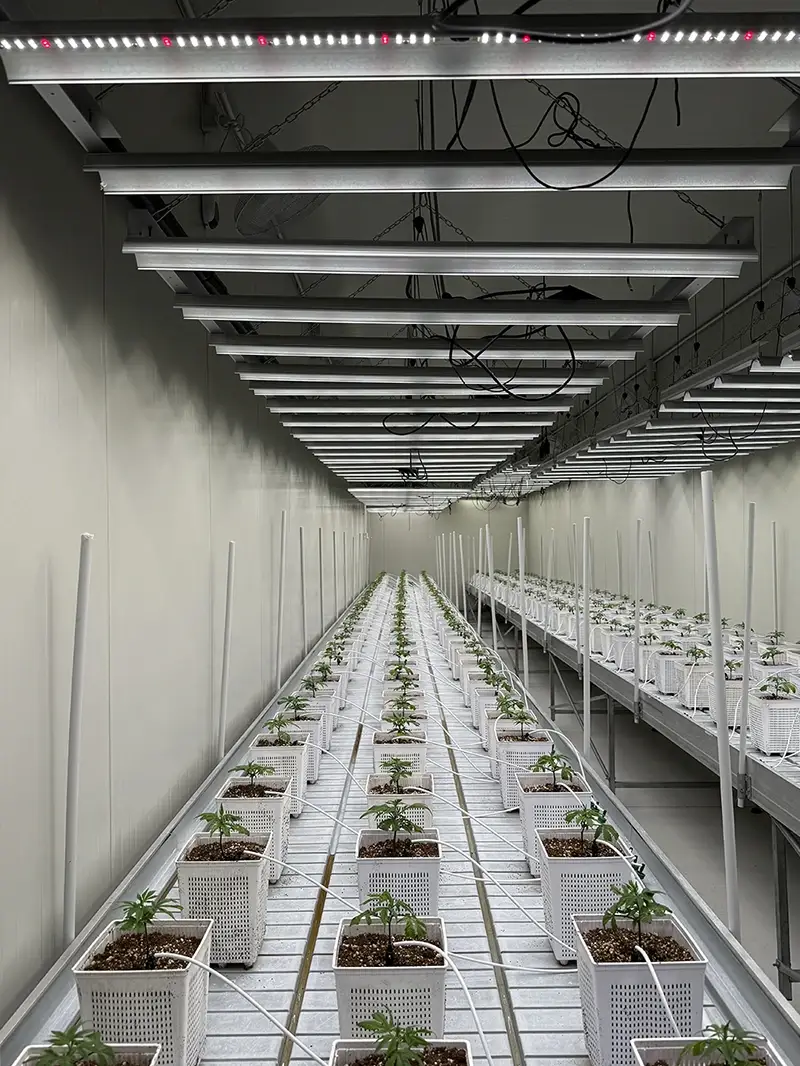
The concentration and ratio of these compounds vary significantly depending on cultivar genetics, climate and soil conditions, agricultural practices, and drying and storage phases. This high degree of variability makes hemp one of the least standardizable natural raw materials in the perfumery landscape.
It is within this context that 318 Canapa by LabSolue takes shape—a fragrance that places hemp back at the center of contemporary olfactory creation, interpreting its aromatic identity in a conscious, refined, and current way.
318 Canapa: the collaboration between LabSolue and Lampoon, between rough matter and editorial research
From this same tension between material, research, and language emerges the collaboration with Lampoon, accompanying the fragrance in a limited edition conceived as a cultural and visual extension of its olfactory construction. A rough thread, a fragrance that scratches: roughness is a key word in Lampoon’s identity—a magazine and research laboratory that finds in hemp a natural, plant-based fiber capable of embodying complexity, resistance, and transformation.
As in agricultural fields, where hemp must be harvested and cut with precision before undergoing maceration, scutching, cleaning, and carding, ultimately leading to spinning, this collaboration stages a conscious creative supply chain. Here, graphic design and packaging—developed by Lampoon’s creative team—become an integral part of the narrative. Hemp emerges as a shared language: a material to be worked, interpreted, and made visible, acting as a bridge between perfumery, publishing, and contemporary visual research.
Hemp as a raw material: agronomic profile and aromatic extraction
Hemp’s olfactory variability and instability directly affect aromatic yield and the quality of the resulting extract: “It’s a plant that grows easily, but from an aromatic point of view it never delivers the same result,” explains Ambra Martone, founder of LabSolue.
The aromatic components of hemp used in perfumery are primarily extracted through steam distillation. This process isolates a volatile fraction but presents significant structural limitations. Extraction yields are extremely low and rarely exceed 0.1% of fresh biomass weight, with variations linked to the plant’s state at harvest and drying conditions. Even minor differences in distillation parameters can substantially alter the final aromatic profile.
From an application standpoint, this instability makes hemp difficult to integrate into standardized industrial processes. Each batch must be evaluated individually—both quantitatively and qualitatively—before being considered for formulation: “We’ve observed olfactory differences between plants grown in different contexts. Formulation serves to manage these differences, not to deny them. It’s a raw material that gives very little. From an extraction standpoint, there’s no margin for error: every phase must be controlled.”
In perfumery, hemp extract is therefore used in very small percentages and integrated into broader compositional structures. Its role is not to act as a dominant note, but to contribute to an aromatic system capable of absorbing and managing raw material variability.
Natural raw materials and the method of formulative interpretation
In LabSolue’s working method, natural raw materials are treated as complex and inherently variable chemical systems. Each fragrance is named after a raw material, but the goal is not faithful reproduction of its natural scent. The raw material represents the project’s point of departure, not a final result to be replicated. This approach is particularly relevant for hemp, whose aromatic instability makes direct standardization impractical.
The laboratory thus assumes a central role in selecting aromatic components, assessing compatibility, and constructing a reproducible structure. Formulation becomes a tool of control, necessary to transform a variable raw material into a stable accord: “We don’t work with soliflores. The raw material is always an origin of work, not an objective to be copied.”
In the case of 318 Canapa, this method translates into a process that prioritizes analysis and verification over intuition. The raw material is observed, broken down, and reinserted into a composition capable of maintaining coherence even in the presence of variations between different batches.
Formulative structure of 318 Canapa: integration and stabilization
The formulative structure of 318 Canapa is designed to integrate an unstable raw material within a controlled accord. Hemp is paired with ingredients featuring compatible terpene profiles, selected for their chemical behavior and volatility. Aromatics such as white sage and artemisia create continuity among herbal components, reducing imbalances caused by hemp batch variations. The objective is not to isolate the note, but to distribute it throughout the structure.
Citrus and spicy components act as regulators of the evaporation curve, intervening in the opening and mid phases of the fragrance without altering its overall framework. Base materials, characterized by higher molecular-weight compounds, contribute to stabilizing the accord and extending its persistence over time: “The structure must absorb hemp’s variability. It cannot depend on a single raw material.”
Sustainability as a technical parameter of hemp in perfumery
In the context of hemp, sustainability can be evaluated through measurable agronomic and production parameters. The plant features a rapid growth cycle, relatively low water requirements, and strong adaptability to different soil types. These characteristics reduce the environmental impact of agricultural practices compared to other industrial crops, particularly in terms of resource consumption. In perfumery, however, these factors do not directly affect formulation, but rather the context in which raw materials are selected and managed.
Operationally, sustainability does not eliminate issues related to aromatic variability or low extraction yields. Instead, it introduces additional evaluation parameters that must remain compatible with laboratory requirements: “Hemp’s sustainability is a technical fact. It doesn’t solve formulation problems, but it defines the perimeter within which we work.”
LabSolue
LabSolue is an Italian niche fragrance brand founded in Milan in 2013 by sisters Giorgia and Ambra Martone. The brand is structured as an olfactory library organized by raw material families, with each fragrance named after a central ingredient. LabSolue’s work focuses on research and the transformation of natural raw materials through a laboratory-based approach. Production takes place in Italy, with direct control over formulation and manufacturing processes.
The name LabSolue encapsulates the project’s philosophy: on one side, the laboratory as technical competence and working method; on the other, a reference to the “absolute,” one of the most precious forms of extraction from a natural element. Within this logic, the raw material is the project’s origin rather than a model to be faithfully reproduced. Formulation serves to construct a coherent and replicable structure capable of incorporating natural variability without flattening it.
Magna Pars L’Hotel À Parfum: an integrated olfactory ecosystem
LabSolue is closely connected to Magna Pars L’Hotel À Parfum, a five-star hotel located in Milan’s Navigli area, offering a hospitality experience centered on scent. Within the complex, fragrance is not an accessory but an organizing principle: spaces, pathways, and activities are designed to establish a continuous relationship between raw material, technical culture, and everyday experience.
The first point of contact is an “olfactory check-in” in the laboratory, where suite selection is based solely on attraction to a fragrance chosen from sixty-eight options. The choice is framed as instinctive rather than rational, emphasizing the idea of olfactory memory as a trigger for immediate associations and preferences. In this model, the laboratory assumes an operational function, translating sensory experience into a concrete decision and making perfume a navigational criterion.
Each of the sixty-eight suites is inspired by a perfumery raw material and features a dedicated scent. Olfactory identity is further articulated through visual devices: each fragrance is represented by a painting and echoed through chromatic accents in the interiors, creating an environment where space becomes an extension of composition. The result is a controlled staging of raw material, rendering tangible the passage from laboratory to experience.
From industrial roots to project continuity: the Martone supply chain
The project’s history is embedded in a family continuity that begins in the 1940s with the founding of Marvin in Milan by Vincenzo Martone—initially in pharmaceuticals, later cosmetics—and continues with the establishment of ICR in 1975, which initiated collaborations with leading Italian fashion houses. In 1987 production moved to Lodi, and the historic headquarters was gradually repurposed, culminating in the 2013 decision to transform this heritage into a contemporary project capable of uniting industrial expertise, research, and cultural identity.
An operational idea of sustainability: refills, reuse, and dedicated programs
Within the Magna Pars/LabSolue system, sustainability is treated as a technical and managerial practice. Fragrances are refillable, and reuse is integrated into objects and functions, with laboratory tools repurposed for service and presentation contexts. The complex also adopts dedicated structural and plant solutions—such as groundwater use for a geothermal system—and supports specific initiatives, including programs dedicated to bee protection, directly linking biodiversity, aromatic supply chains, and project responsibility.
Magna Pars hosts two collections: LabSolue, which extends its olfactory identity to home fragrances and candles, and Aqua Adornationis, which revisits historical formulas and designs from the family archive. The coexistence of these two lines makes the project’s positioning explicit: contemporary research and technical memory are not separate elements, but complementary materials within the same construction.