Kiko Kostadinov FW26 at Paris Fashion Week: Japanese denim and the Bulgarian diaspora
Laura and Deanna Fanning present Kiko Kostadinov Fall Winter 2026 womenswear through architectural tailoring, urban plumage textures, and the observer–observed dynamic
Laura and Deanna Fanning unveiled the Kiko Kostadinov FW26 womenswear collection at Paris Fashion Week. The Fall Winter 2026 show explores the observer–observed dynamic through architectural tailoring, workwear archetypes, and iridescent textures inspired by urban wildlife. The central question sits at the heart of the collection: what does it mean to see or be seen.
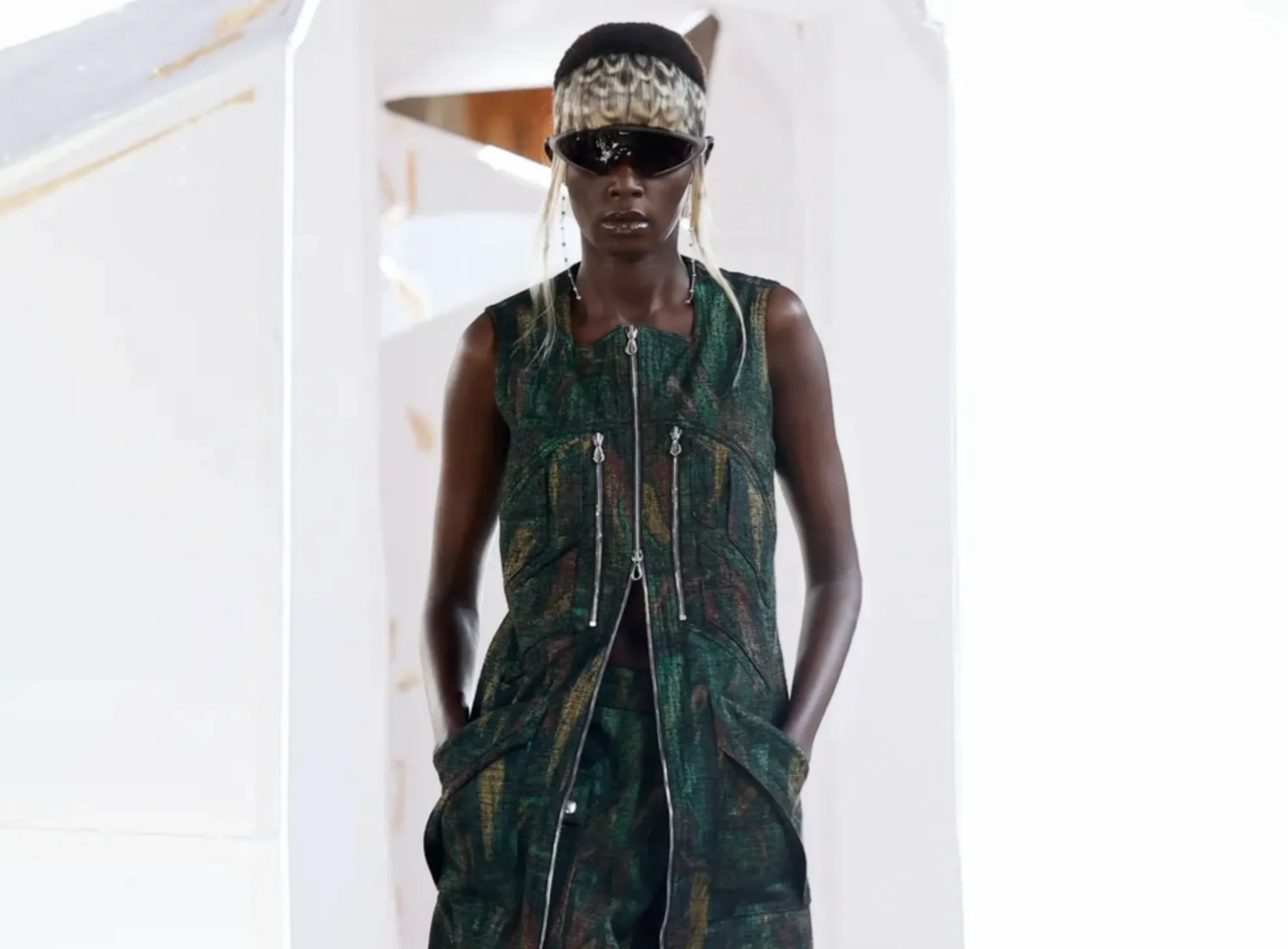
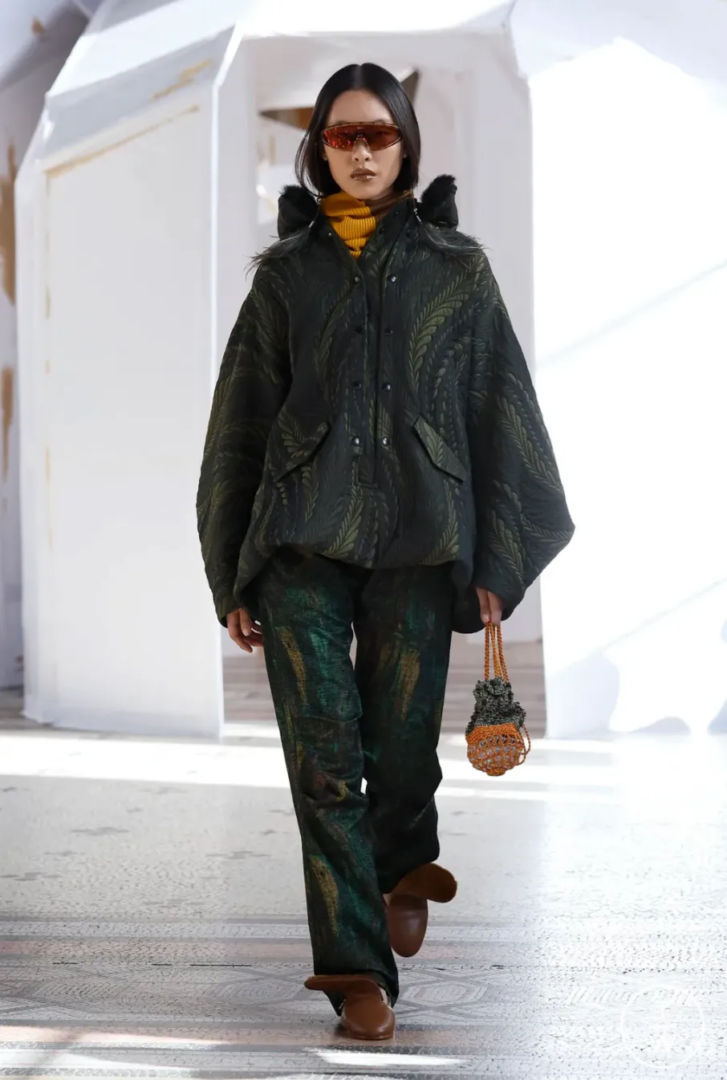
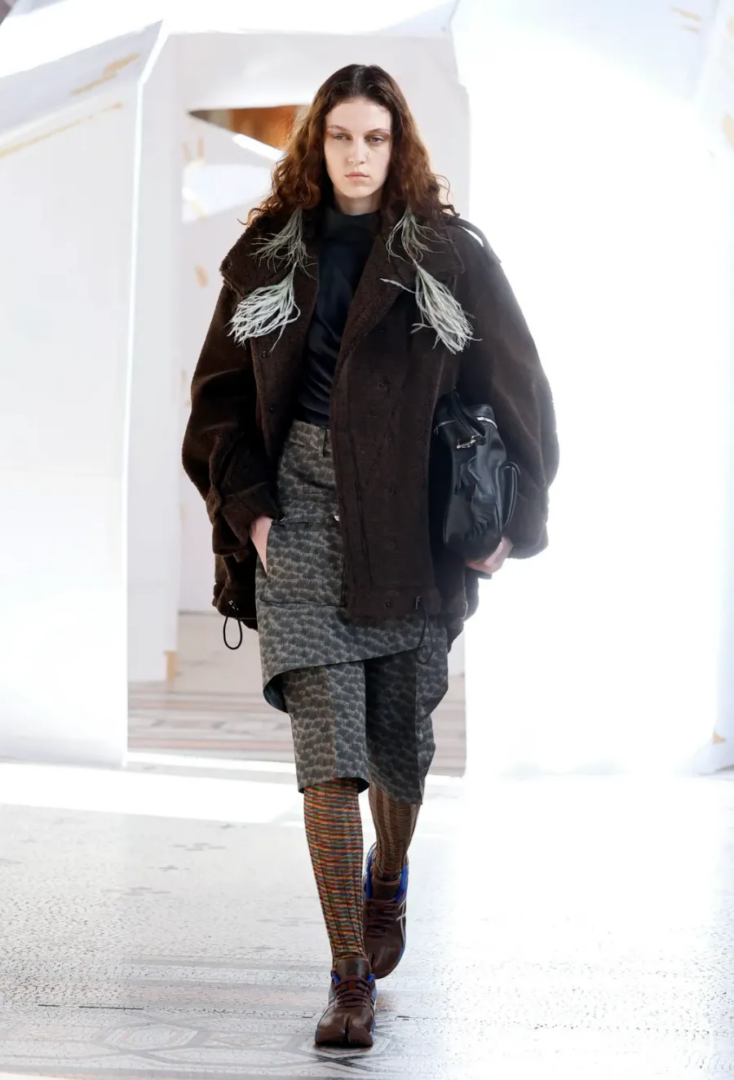
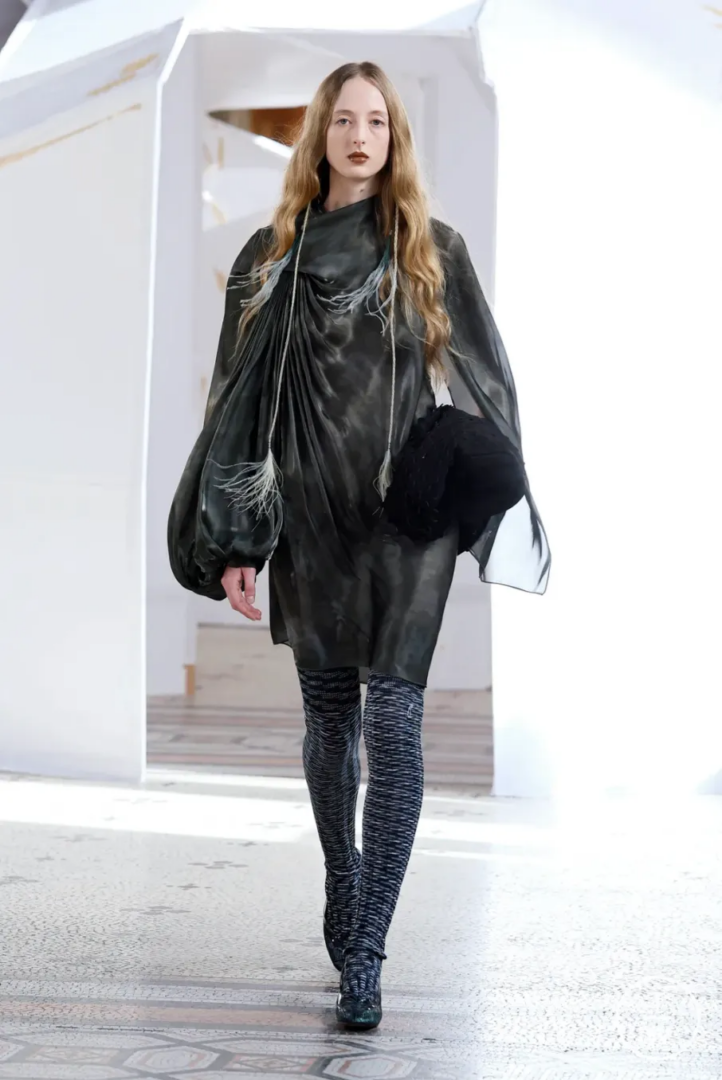
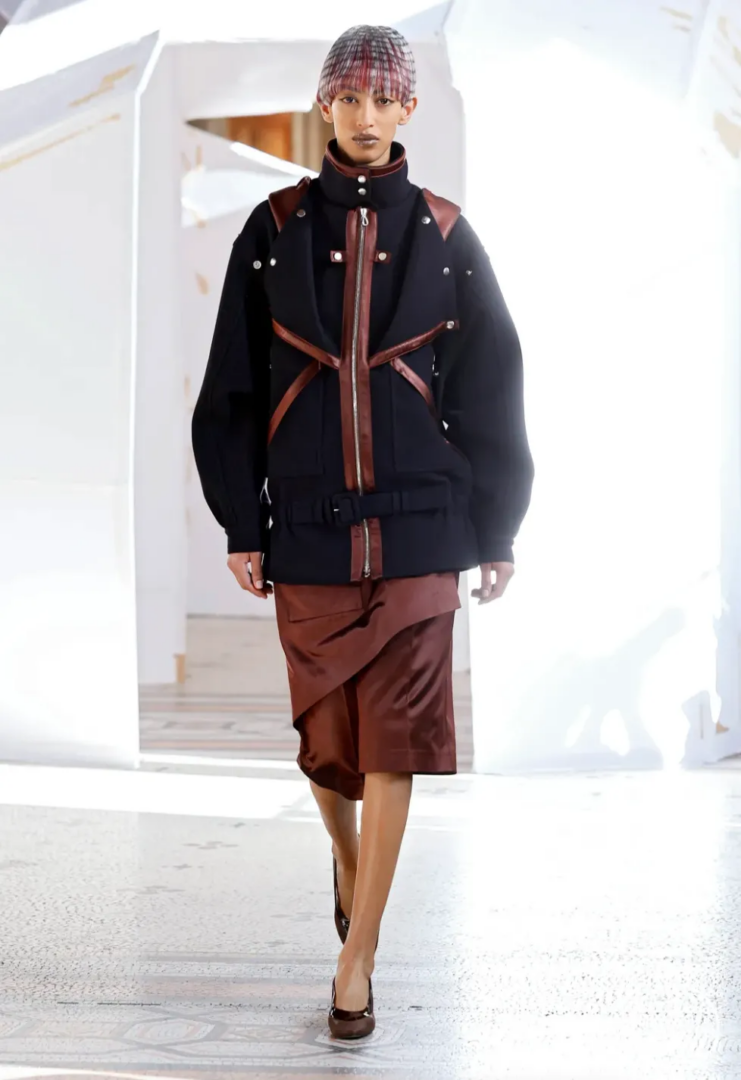
In this context, urban birds and wildlife inform a vocabulary where utility meets poetic tension. Technical tailoring balances controlled volumes. Hidden-pocket jackets, modular knits, and utility trousers appear beside iridescent dresses. Feather-like textures and sculptural sleeves allow fluid movement across the body. Fabrics shimmer and shift with light, echoing the structure of plumage. The result introduces a controlled instability where perception becomes part of the garment’s construction.
The show invitation included a functional compass attached to a braided multicolored cord. Therefore, this object acted as a direct metaphor for the directed gaze. Looking becomes deliberate navigation through space. Within the Kiko Kostadinov FW26 runway narrative, the compass captures a precise tension between navigator and navigated. The craftsmanship of the cord emphasizes the brand’s tactile discipline. Philosophy remains anchored in raw utility.
Oscar Tuazon designs the set for the Kiko Kostadinov FW26 runway
For the Kiko Kostadinov FW26 runway at Paris Fashion Week, American artist Oscar Tuazon installed architectural sculptures made from his signature materials: cardboard and paper tape. Tuazon’s practice focuses on what he defines as “honest materials”. These sharp-edged geometric volumes echoed the structural logic of the Kiko Kostadinov Fall Winter 2026 collection.
As Tuazon uses tape and cardboard to define volume and void, the garments explore how silhouette emerges through repetition, constraint, and gradual variation. Construction becomes a visible process rather than a hidden mechanism.
The collaboration extended across both the men’s and women’s FW26 presentations. In the Kiko Kostadinov menswear show, the sculptures resembled monolithic architectural structures reflecting the primary language of construction. For womenswear, Laura and Deanna Fanning reinterpreted Tuazon’s structures as white nestboxes. The gesture shifts attention toward the dynamic between observer and observed while also referencing the intersection between urban sprawl and wildlife habitats.
Kiko Kostadinov FW26 womenswear between architecture, social history, and scientific inquiry
A tension between ephemeral trends and structural rigor defines the contemporary fashion landscape. Kiko Kostadinov stands at the forefront of this territory. His practice extends beyond garment design to intersect with architecture, social history, and scientific inquiry.
The Kiko Kostadinov collection presented at Paris Fashion Week on March 9, 2026 reinforces this methodology. Research defines the brand’s position within contemporary fashion. The archaeology of workwear becomes a systematic excavation of the functional archetypes that underpin the modern wardrobe. Kostadinov’s approach reveals a cerebral sensuality grounded in engineering rather than decoration.
Twin sister Laura and Deanna Fanning apply this methodology to the female form within Kiko Kostadinov womenswear – meanwhile Kiko proceeds with the men style. Their work explores a cerebral sensuality generated through friction between the human body and the architectural constraints of clothing. The tactile and physical experience of the garment emerges precisely from this tension between anatomy and structure.
Workwear archaeology in Kiko Kostadinov womenswear
Workwear as inspiration is not unique to Kiko Kostadinov. Designers such as Craig Green and Samuel Ross also examine the aesthetics of labor and industrial uniform. Kostadinov differs in his ontological commitment to the garment as a structural artifact.
While others employ workwear primarily as a visual language, Kiko Kostadinov treats the uniform as a specimen for re-engineering. The archaeology of workwear involves uncovering the primordial function of a pocket, a seam, or a gusset. These elements are then recontextualized through industrial design logic.
The Kiko Kostadinov brand avoids the gimmick of historical accuracy. Instead, the design practice focuses on the legibility of the garment. Construction communicates purpose without the need for external storytelling. The garment speaks through its own engineering.
Uncovering the primordial purpose of the silhouette
Laura and Deanna Fanning explore how clothing mediates the gaze of the outsider. This archaeology seeks the primordial purpose of the silhouette itself. The practice prioritizes legibility and structural clarity. Clothing becomes a framework through which the complexity of the female experience can be articulated without narrative explanation.
The collection avoids traditional color lists. Instead, iridescent finishes and technical silks construct a sharp visual atmosphere. Plumage tones reference urban birds, while oil-slick surfaces reproduce the chromatic shifts visible in pigeon feathers. Fabrics change according to the observer’s angle of vision.
Shimmering textiles contrast fragmented geometric hosiery and heavy industrial fabrics. The resulting visual rhythm fragments perception. The observer becomes part of the design mechanism.
Mackintosh 0001 and the engineering behind Kiko Kostadinov tailoring
Scottish chemist Charles Macintosh patented waterproof rubberized fabric in 1823 by sandwiching liquid rubber between layers of wool or cotton. Early garments stiffened during winter and softened under summer heat. Thomas Hancock later stabilized the material through vulcanization. Since 2017, Kostadinov has served as creative director of Mackintosh 0001, a line that merges the functional archive of the British rainwear manufacturer with a futuristic design language.
Within Mackintosh 0001, Kiko Kostadinov respects these technical constraints while pushing silhouette into contemporary territory. Artisans hand-tape every seam to prevent leaks. Glue is applied by finger through a process known as smearing. This demanding craft tradition imposes a discipline of restraint. Creativity emerges from the physical limits of the material.
Bulgarian roots and the political dimension of workwear
Kiko Kostadinov’s design practice also carries the imprint of biography. Born in Bulgaria and based in London, the designer maintains production links with Bulgarian industrial infrastructure shaped during the post-Soviet era.
This context transforms immigrant workwear from a sociological category into an architectural one. In a global economy dominated by image production, the collection reasserts the dignity of manual labor.
For Kostadinov, the uniform never functions as costume. It remains a survival tool. His parents worked in construction and cleaning. The Bulgarian seam or twisted gusset becomes a form of quiet political resistance. Each structural gesture recalls the human histories of migration and physical labor embedded within the garment.
Anatomical engineering in the Kiko Kostadinov FW26 collection
Technical construction within the Kiko Kostadinov FW26 womenswear collection reveals anatomical precision inspired by wildlife movement. Diagonal cuts enable fluid motion while reinforcing the observer-observed narrative embedded in the collection.
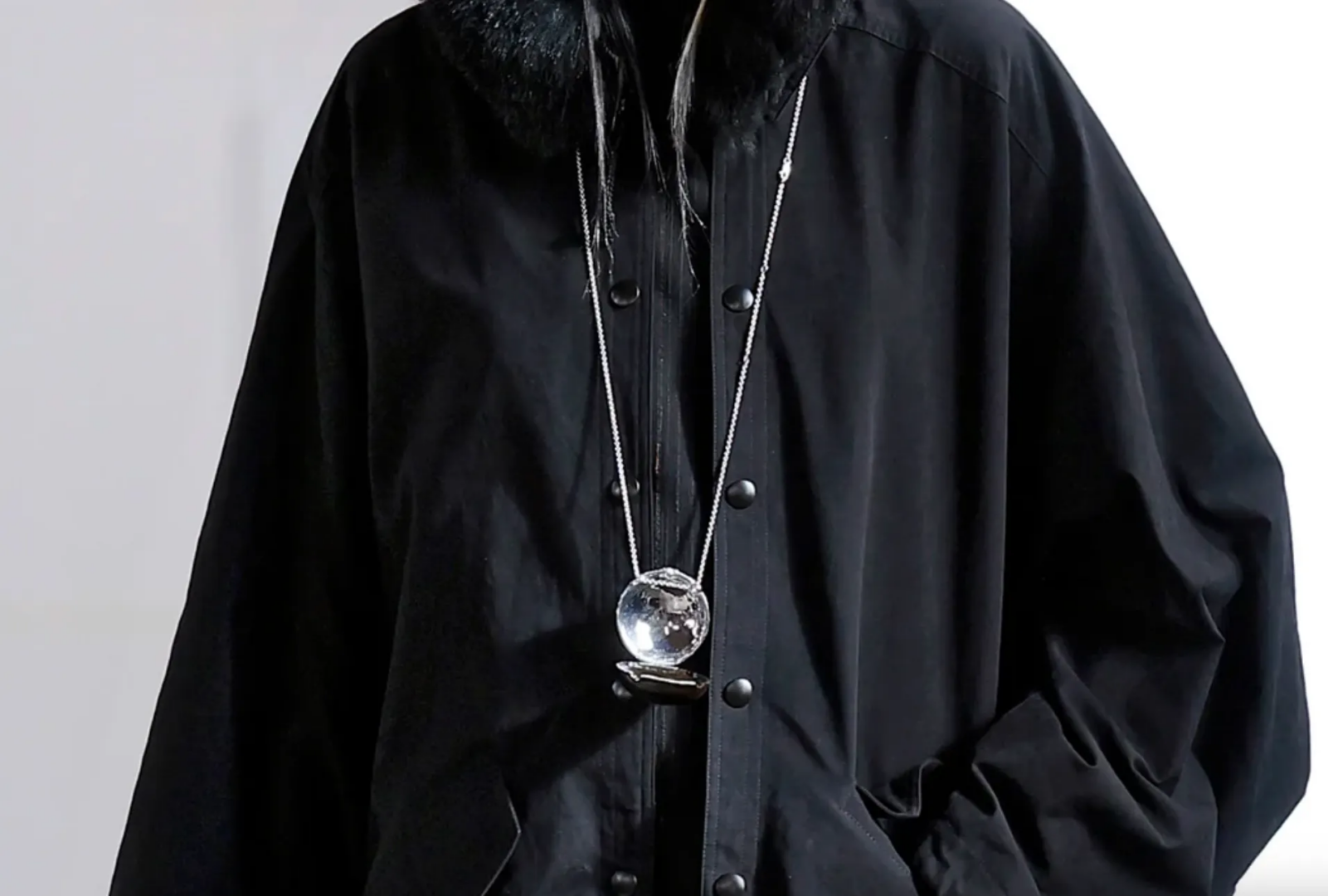
Modular knits and sculptural sleeves echo the structure of plumage. Asymmetric closures disrupt traditional tailoring codes while preserving everyday functionality. Hybrid seams and concealed pockets blur the boundary between utilitarian workwear and iridescent evening garments.
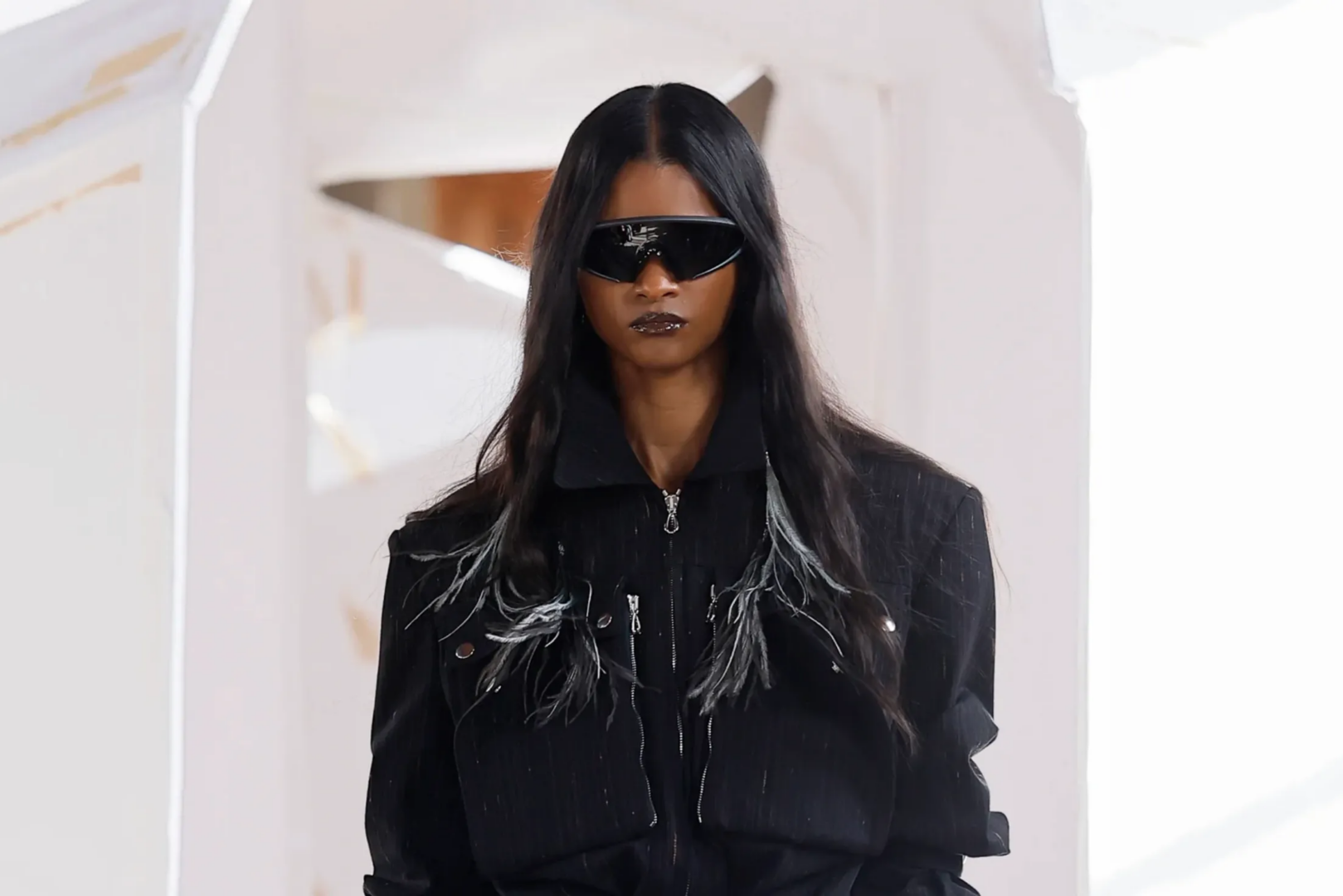
Hair-like feather textures appear across select surfaces. Fragmented geometric hosiery introduces visual interruption. The garments shimmer as light shifts across the body. Even the most minimal garment retains structural depth through the intelligence of construction.
From Asics to Oakley: Kiko Kostadinov’s technical collaborations
Kiko Kostadinov’s collaboration with Asics remains one of the most influential partnerships between performance footwear and fashion design. Kostadinov became the first external designer permitted to develop a proprietary sole unit for the brand: the GEL-Kiril.
This collaboration established a new territory between athletic engineering and conceptual fashion design. For the 2026 season, footwear continues to blur the boundary between performance and attire.
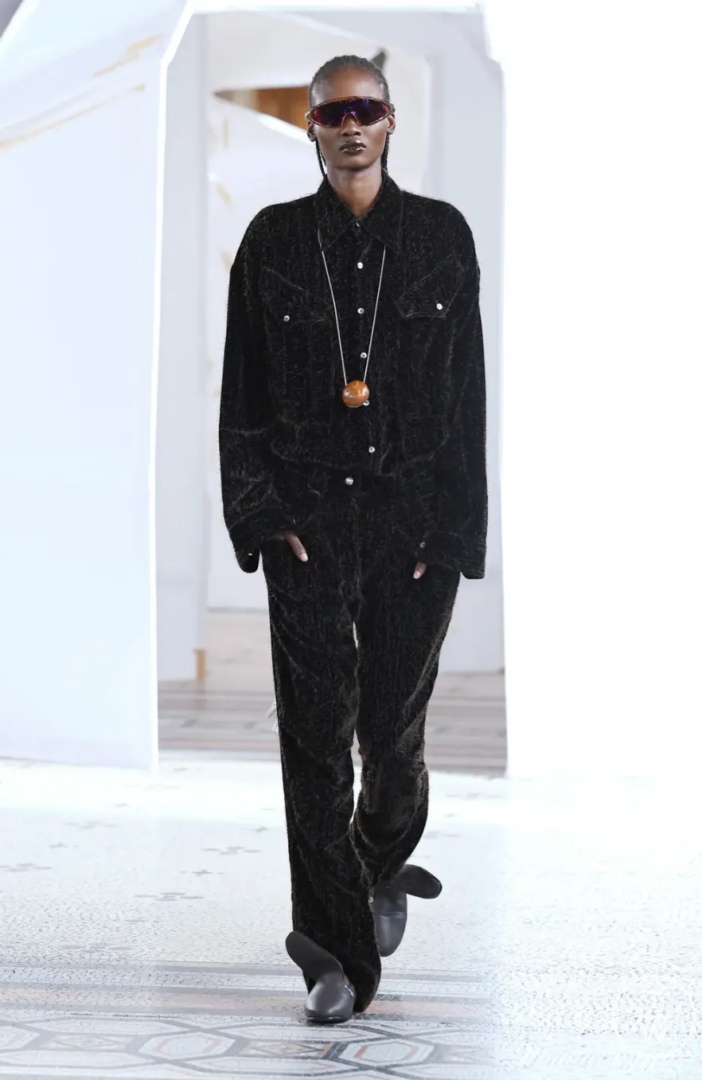
The designers also partnered with Oakley to develop eyewear that mediates the gaze itself. These sunglasses function as literal barriers between observer and observed. The frames feature architectural lines that mirror the geometric language of the garments.
Footwear in the Kiko Kostadinov FW26 collection prioritizes ergonomic precision. A low-profile loafer hybrid with split-toe construction anchors the lineup. Soles appear as sculpted extensions of the foot. Wide-calf cinched technical boots introduce an industrial counterweight to fluid silk dresses.
Kiko Kostadinov and the intelligence of construction
The Kiko Kostadinov FW26 runway show at Paris Fashion Week defines a territory where clothing must justify its own existence through structure. Kostadinov constructs garments that remain both conceptually rigorous and wearable.
Japanese denim precision intersects with the social geography of the Bulgarian diaspora. Clothes exist because their construction demands existence. The cerebral sensuality of the Kiko-verse continues to expand.
The show invitation included a functional compass attached to a braided multicolored cord. This object acted as a direct metaphor for the directed gaze. Looking becomes deliberate navigation through space. Within the Kiko Kostadinov FW26 runway narrative, the compass captures a precise tension between navigator and navigated. The craftsmanship of the cord emphasizes the brand’s tactile discipline. Philosophy remains anchored in raw utility.
Who is Kiko Kostadinov
Kiko Kostadinov is a Bulgarian fashion designer based in London. He is the creative director of his eponymous label and the Mackintosh 0001 line. His work investigates the intersection between workwear, architecture, and social history.
Kostadinov is widely recognized for structural innovation and long-term collaborations with brands such as Asics. The brand operates within a research-driven design framework that incorporates technical craft, industrial heritage, and cultural investigation.
Melis Ozek