Louis Vuitton: can creativity exceed financial power?
Louis Vuitton is an icon of financial and branding power – and yes, the womenswear is led by one of the strongest designers on the market. Can creativity remain a focus inside a system of such scale?
Louis Vuitton FW26: Nicolas Ghesquière and the Super Nature collection at Paris Fashion Week
The real dialogue taking place every season inside a house like Louis Vuitton operates on another level entirely — between a designer’s imagination and the growth targets of a conglomerate worth hundreds of billions of dollars. Nicolas Ghesquière has led Louis Vuitton womenswear since 2013. Over more than a decade, he has refined his own language — architectural, futuristic, attentive to history in ways that resemble science fiction rather than nostalgia — while remaining, consistently, within the boundaries of what sells.
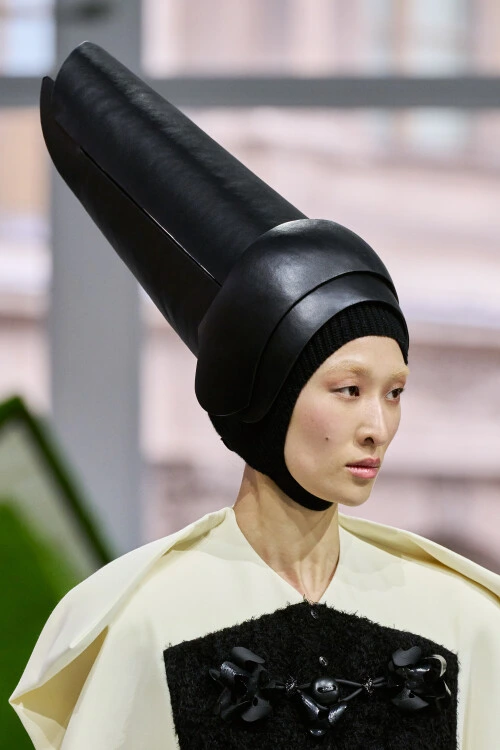
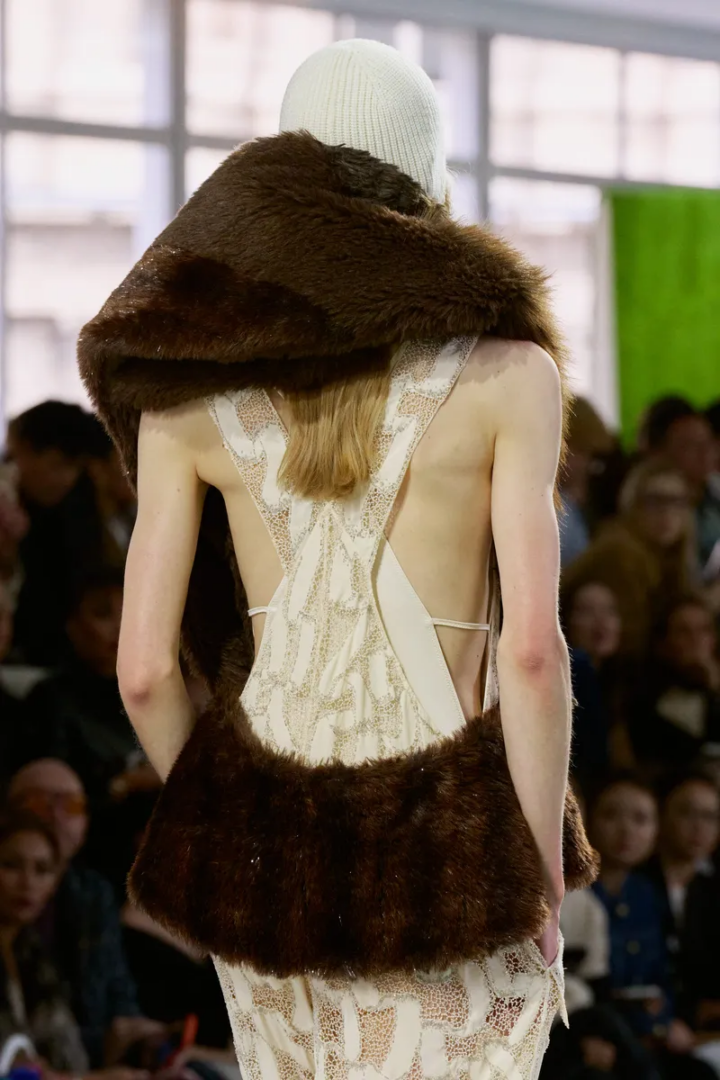
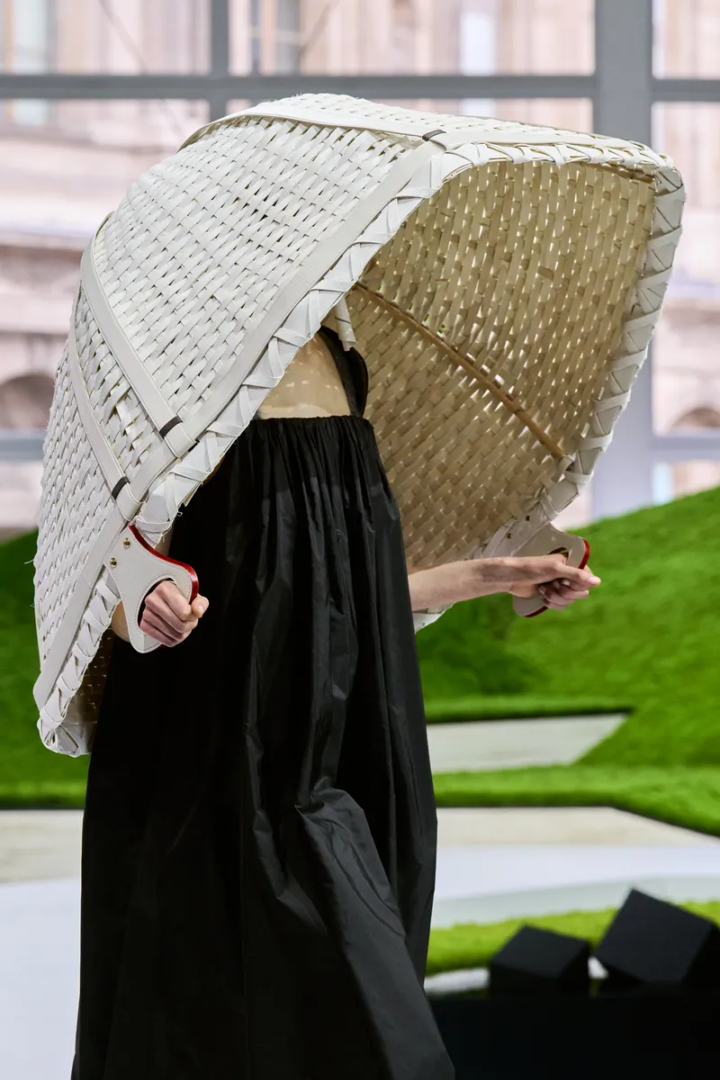
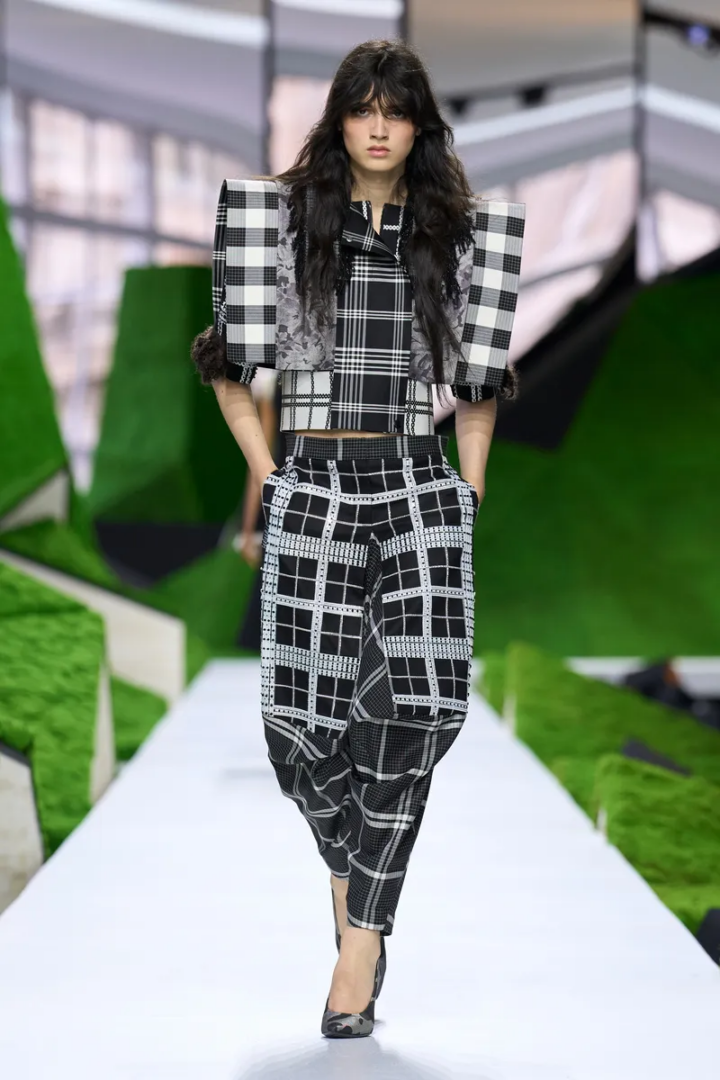
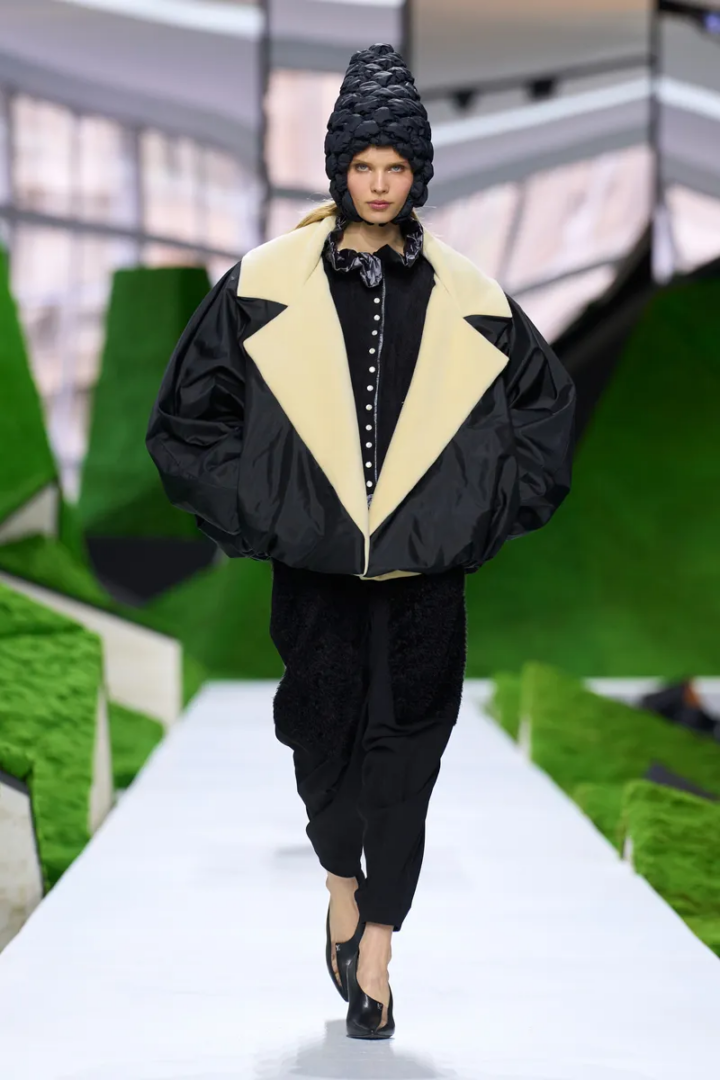
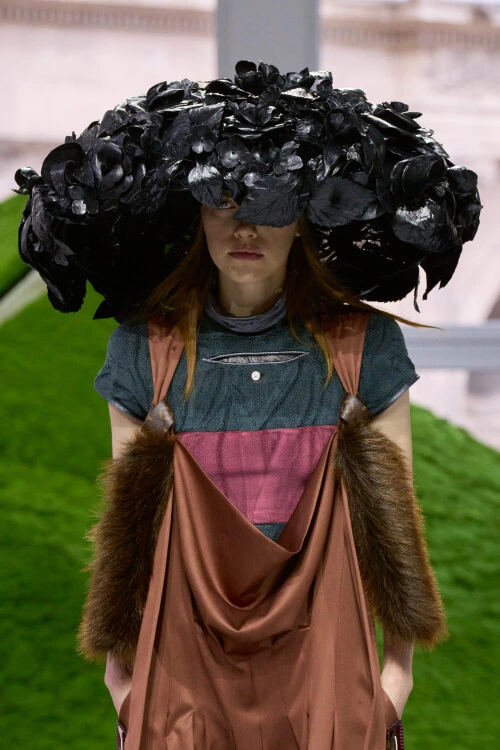
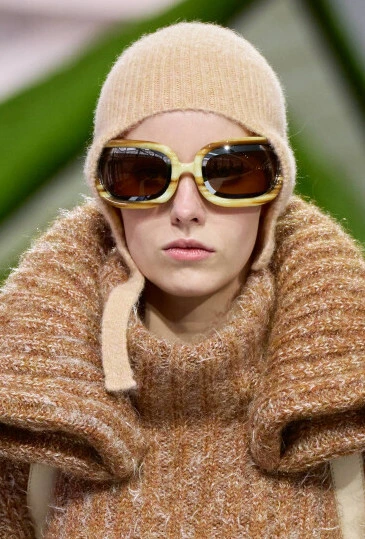
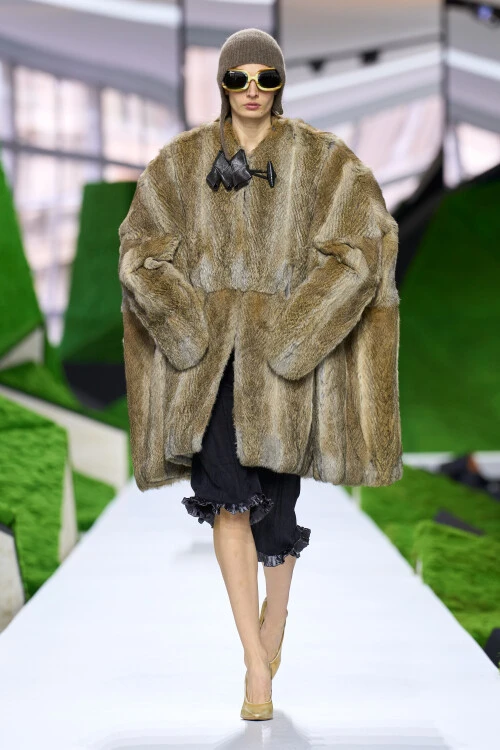
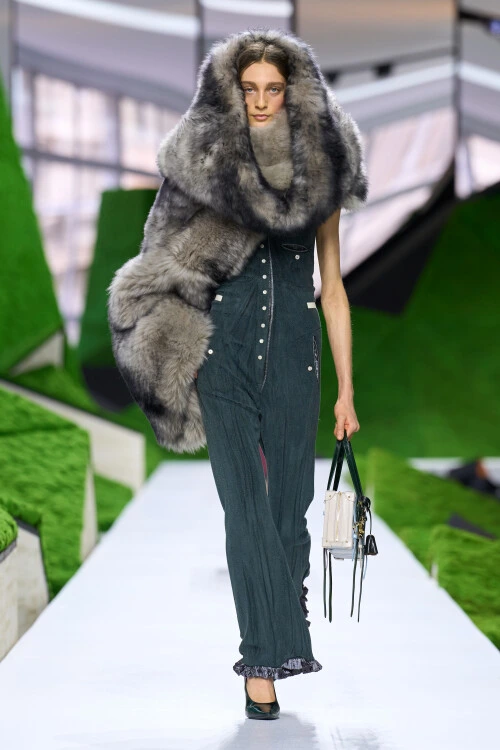
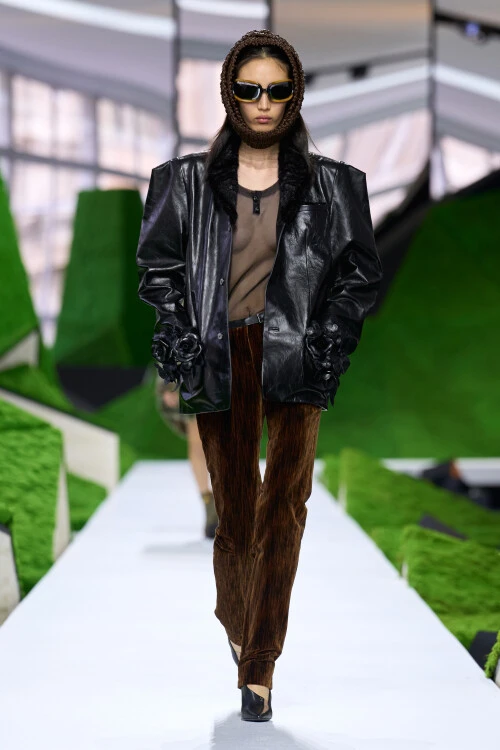
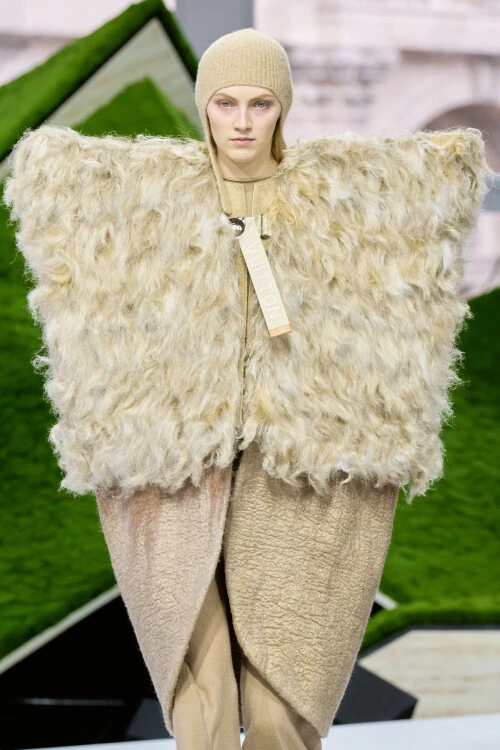
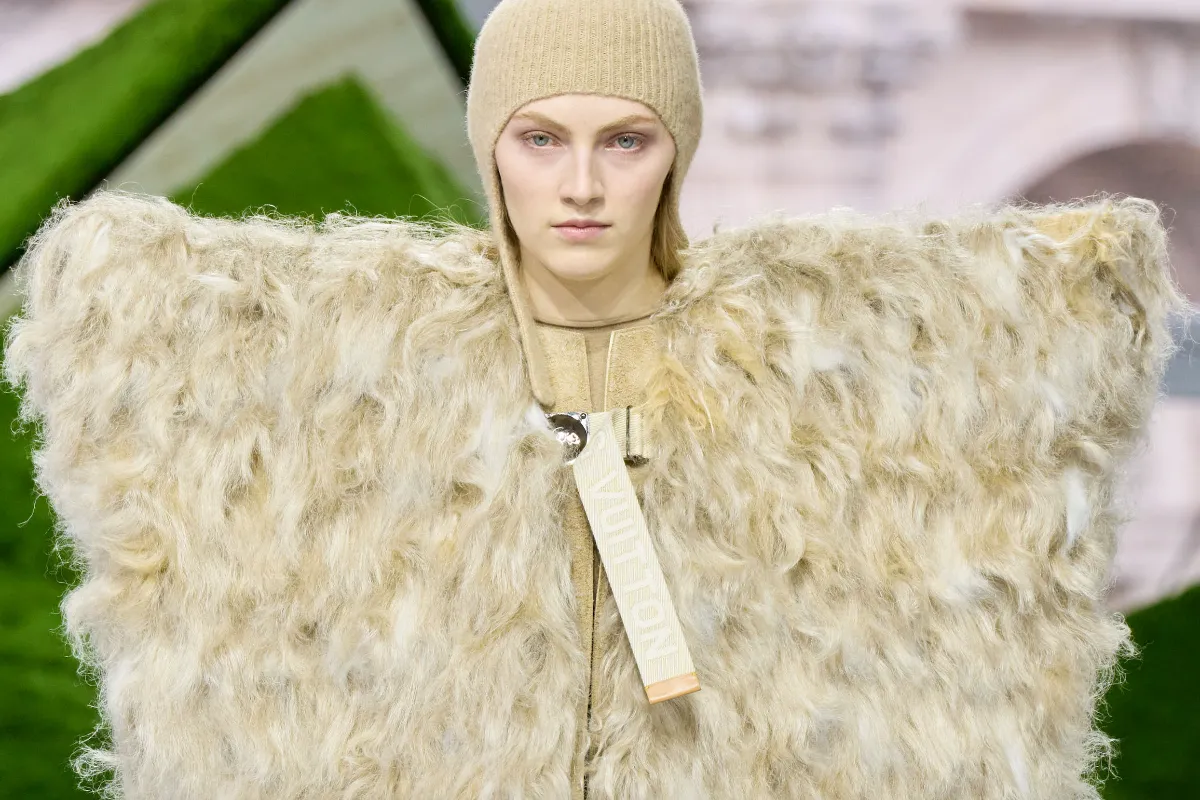
Nicolas Ghesquière sent coats and asymmetric dresses constructed to resemble tree bark. Super Nature – a concept that proposes an ancient relationship between the human body and the natural world: garments shaped by wind, rain and instinct, silhouettes born from mountains, forests and plains. Louis Vuitton FW26 opened with a scenography conceived by Jeremy Hindle, the production designer behind the unsettling interiors of Severance.
Louis Vuitton FW26 womenswear: sculptural coats, antler heels and the return of the Noé bag
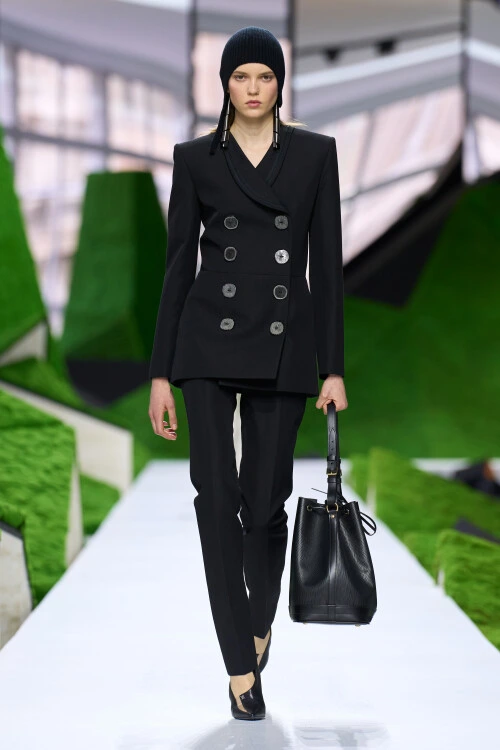
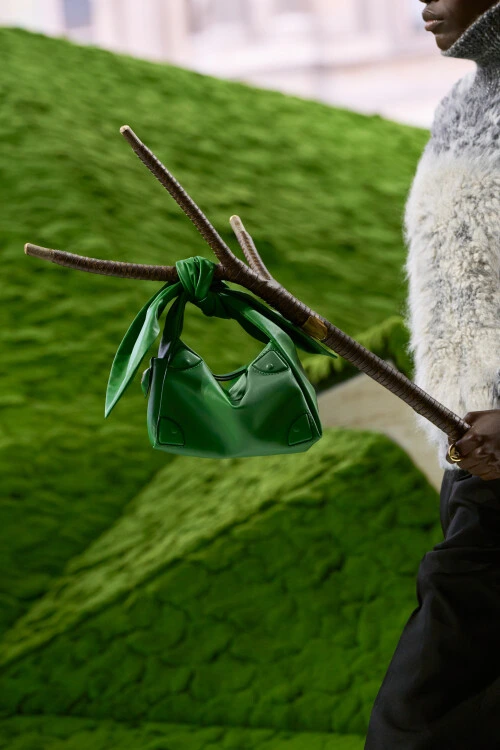
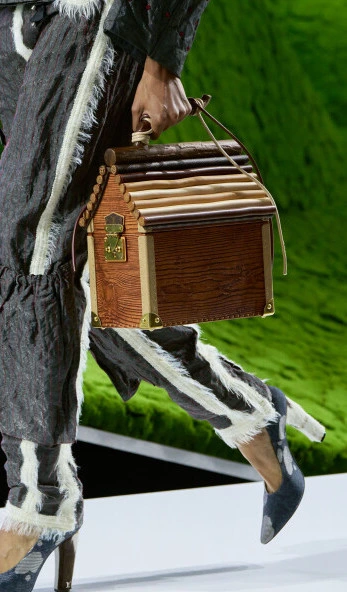
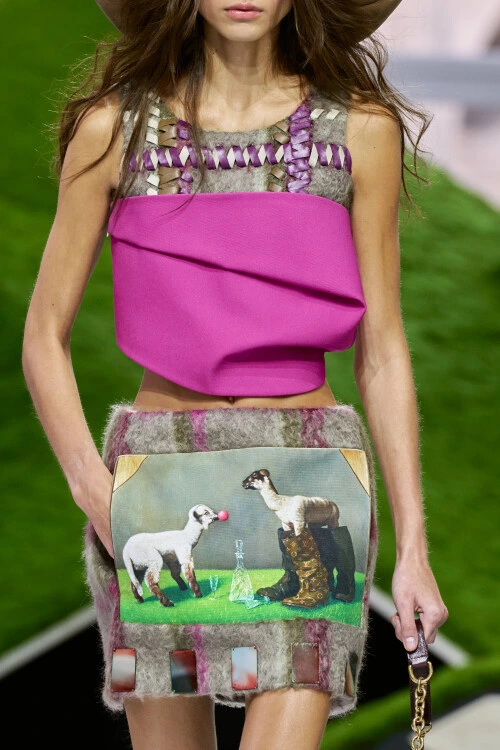
Ghesquière’s Louis Vuitton FW26. The details — mineral-effect buttons, heels referencing deer antlers, flowers molded in leather — reinforce the narrative of the Super Nature runway. Accessories remain to at Louis Vuitton fashion ecosystem: the Noé bag, originally introduced in 1932, reappears in its historical proportions and colorway.
These elements are distinctive enough to generate coverage across Paris Fashion Week, restrained enough not to alienate Louis Vuitton’s global clientele. It is a well-tested formula within the LVMH system. This tension between creativity and scalability is precisely what deserves examination.
For Nicolas Ghesquière, design operates as an architectural, intellectual and historical language with wearability at its core. His collections — even when they stop short of radical conceptualism — function as assertions about the female body. His creative drive operates as a dialogue between vision, cultural context and profit. In that sense, having a point of view is not the opposite of building a profitable fashion collection. It is the condition for it.
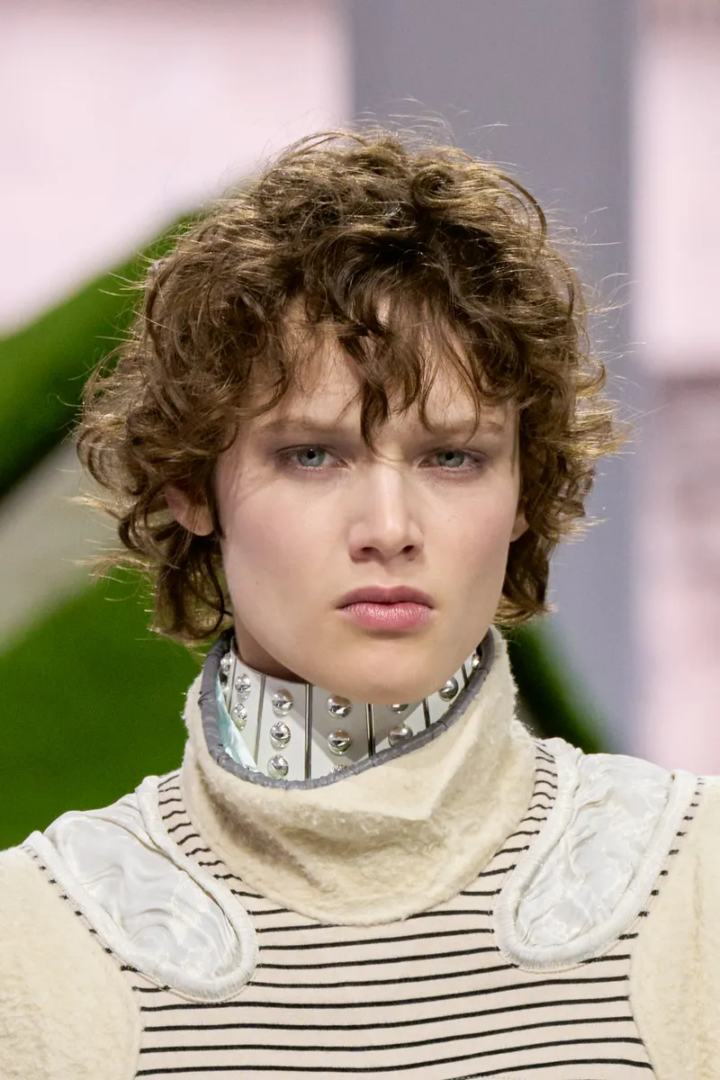
Nicolas Ghesquière’s architectural language at Louis Vuitton
We live in a moment where styling is often mistaken for fashion — where the ability to assemble an image substitutes the slower, more difficult work of building a language.
His signature has always been architectural. Curves, sinuous lines and geometric tension run through his work from the earliest collections to Louis Vuitton FW26. These are not decorative gestures but structural decisions — the visual grammar of a designer who thinks in volumes and silhouettes rather than in surfaces and trends.
This is also why the choice of venue matters. When a Louis Vuitton fashion show is staged in a space capable of amplifying the collection’s intent, the runway and the architecture surrounding it enter into a genuine dialogue. The Cour Carrée of the Musée du Louvre, transformed by Jeremy Hindle’s neo-pastoral scenography for the Super Nature show, performs precisely that role.
Once established, the reach of such a vision extends far beyond the runway. Fashion remains an elite system whose visual vocabulary ultimately diffuses throughout the wider culture. When a house with Louis Vuitton’s global reach commits to a coherent aesthetic, its imagery begins to own the market: in department store windows, across the fashion industry. That diffusion is not accidental. It is the measure of a designer’s influence.
Louis Vuitton within the LVMH economic system
The global fashion market is projected to reach $957 billion in revenue by 2026, according to Statista. Within that ecosystem, LVMH — the conglomerate founded by Bernard Arnault — has redefined the rules of luxury since the 1980s, transforming heritage maisons with artisanal Parisian roots into global commercial infrastructures.
Louis Vuitton sits at the center of that transformation. According to Brand Finance’s 2025 ranking, Louis Vuitton is the third most valuable luxury brand in the world, with an estimated brand value of $32.9 billion. Such numbers are not built by leaving designers free to experiment without constraint.
For more than three decades the industry has asked the same question: how much room remains for creativity when CEOs answer to shareholders? The Louis Vuitton model suggests that creativity and commerce coexist within a balance negotiated continuously behind the scenes.
Each Louis Vuitton collection becomes the visible outcome of that negotiation: between what a creative director wishes to propose and what a marketing department considers commercially viable; between long-term artistic vision and the quarterly pressure of a conglomerate listed on the Paris stock exchange.
Fashion creativity under the pressure of scale
This tension is not new. Fashion has always contained a commercial dimension. What has changed is the speed and scale at which a global luxury brand now operates. Understanding creativity in contemporary fashion requires understanding the industry as an economic system. With the rise of luxury conglomerates, the balance has shifted: commercial performance now shapes creative direction rather than merely following from it.
The succession of creative figures at Louis Vuitton illustrates this dynamic clearly. Marc Jacobs, who directed womenswear from 1997 to 2013, built the fashion department of the house almost from scratch. Virgil Abloh, artistic director of menswear from 2018 until his death in 2021, introduced the visual codes of streetwear and Black American culture into the Louis Vuitton universe. Pharrell Williams, appointed in 2023, has continued along that trajectory, transforming each runway show into a global cultural event. Three different creative personalities, three distinct strategies — yet the underlying mechanism: creativity used as a driver of commercial expansion rather than as its alternative. The house has not sacrificed creativity in favor of profit. It has learned how to make creativity productive.
Creative ownership in the era of luxury conglomerates
The deeper question confronting fashion today concerns creative ownership. Most fashion houses no longer belong to their founders or their designers. They belong to financial holding companies whose interests extend far beyond clothing. Within that structure, the creative director becomes a hybrid figure — part artist, part brand strategist, part cultural ambassador — responsible for maintaining a house’s identity while converting cultural attention into global sales.Not every designer withstands that pressure. The past decade has witnessed numerous high-profile departures, with creative directors leaving exhausted or in conflict with corporate management. The boundary between inspiration and industrial production grows thinner each season. Louis Vuitton appears as strong as ever : to maintain that equilibrium. Part of the credit belongs to Nicolas Ghesquière; part belongs to the institutional apparatus surrounding him.