Recycled fiberglass leads Trotter’s first Bottega chapter
Louise Trotter introduces recycled fiberglass as a material language at Bottega Veneta. Milan’s Brutalist architecture provides the reference; Veneto craft anchors the construction
How recycled fiberglass became a recurring statement at Bottega Veneta’s Fall/Winter 2026 runway
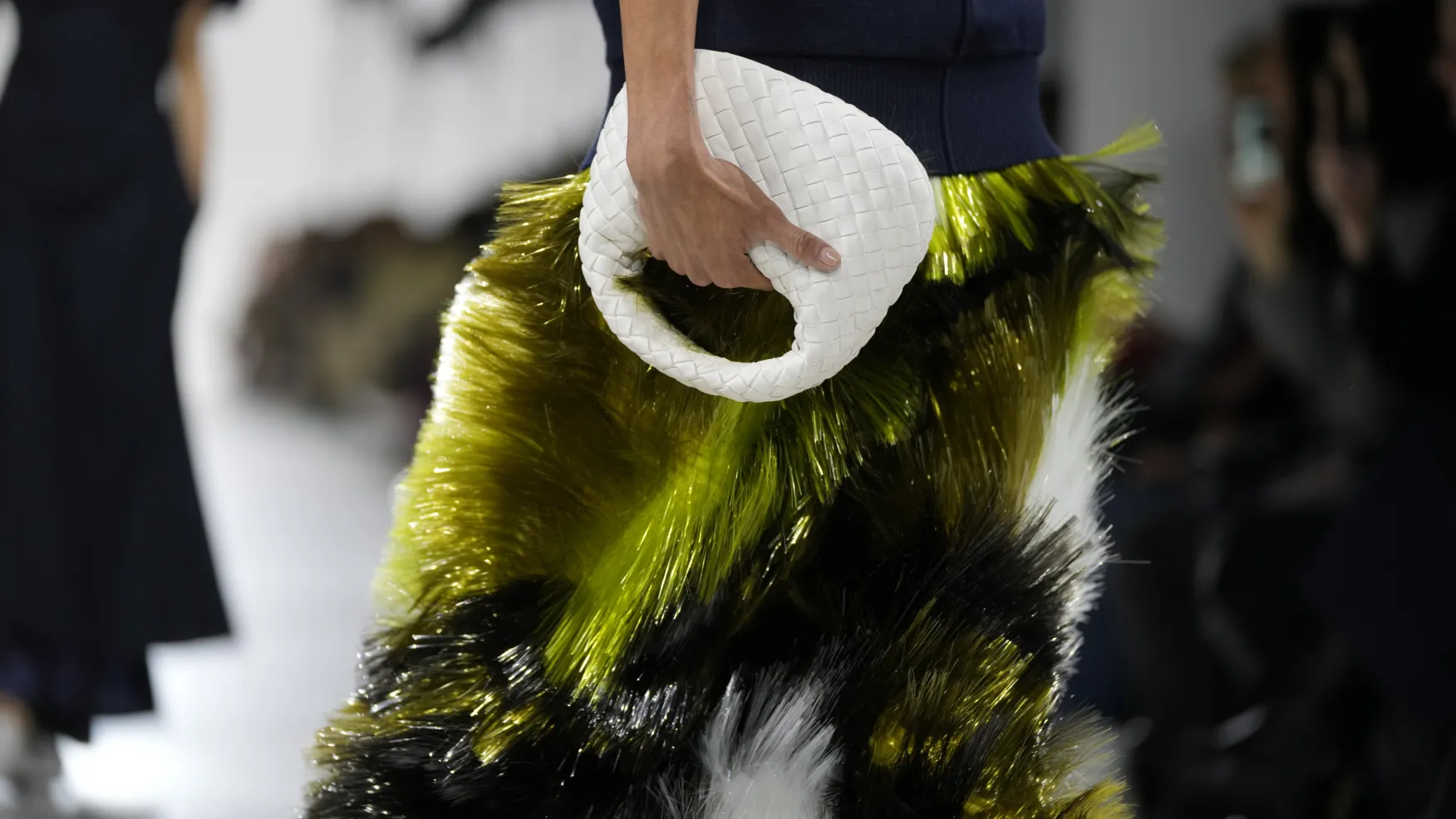
Louise Trotter’s second runway for Bottega Veneta, presented during Milan Fashion Week in February 2026, confirmed recycled fiberglass as a recurring material. The fibre appeared in shaggy outerwear and textured pieces designed to catch light and create movement. One of the most visible was a coat-length design in bubblegum pink — the surface soft and unsettled, the silhouette completely controlled.
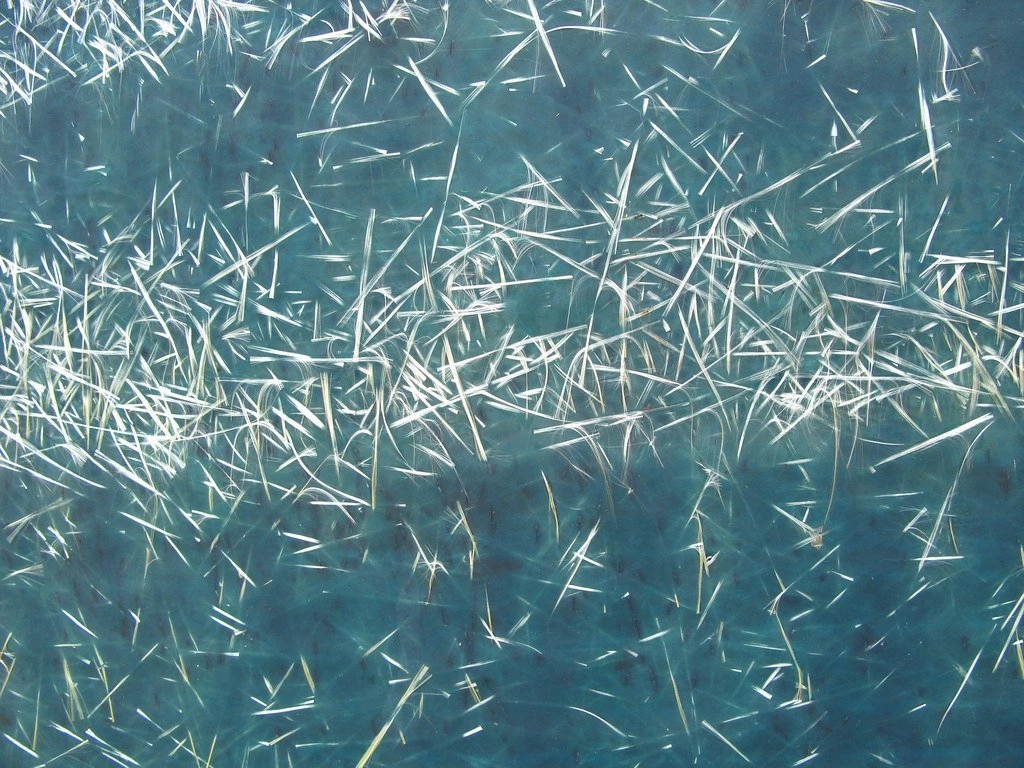
This experimentation develops within the ongoing work between Trotter and Bottega Veneta’s artisans to adapt recycled fiberglass strands for garments. The material first appeared one season earlier, at Trotter’s debut runway for Bottega Veneta — presented in Milan on 27 September 2025. Sweaters and skirts were constructed with recycled fiberglass fibres anchored to a textile base. From a distance the surface resembled fur; when the body moved the fibres shifted and reflected light differently. The effect was strange in a precise way: the garment looked unfamiliar, but it behaved exactly like a garment.
Trotter shaped the pieces through tailoring, building them to sit on the shoulder line. The silhouettes remained legible — coats, knits, skirts — while the surface carried the experiment. Before joining Bottega Veneta, Trotter’s material interests developed along different lines. At Joseph the focus was tailoring, fabric discipline and the construction of a functional wardrobe. At Lacoste, where she served as creative director from October 2018 to January 2023, she worked with technical sports fabrics — engineered knits, bonded surfaces, performance finishes.

What fiberglass actually is and why recycling it for fashion requires specific techniques
A brief technical clarification: what is fiberglass? Fiberglass is glass melted and drawn into extremely fine filaments. The filaments receive a protective surface treatment called sizing, which prevents abrasion and allows the fibres to be handled, gathered and bonded to other materials. In garments the fibres are generally anchored to a textile base so the structure of the piece remains stable.
Industrial production begins by melting mineral raw materials to obtain molten glass. The liquid glass is pushed through heated plates containing hundreds or thousands of microscopic openings, forming continuous filaments that are drawn and wound at high speed. The sizing coating is applied during this stage to stabilize the fibres and prepare them for further processing.
Fiberglass is widely used as a reinforcement material in composite systems where glass fibres are combined with polymer resins. These composites cannot simply be remelted to recover the original glass. Recycling therefore requires separating or processing the materials through specific techniques. Mechanical recycling breaks composites into granules and short fibres that can be reused as fillers or secondary reinforcement. Thermal processes remove the polymer matrix through heat and recover fibres that generally show reduced performance. Chemical processes dissolve the resin matrix and can preserve a larger portion of the fibre’s structure.
From the 1893 Libbey glass dress to Chalayan and van Herpen: fiberglass in design and fashion history
Glass fibre appeared in clothing as early as 1893, in the Libbey glass dress presented at the World’s Columbian Exposition in Chicago. The garment was cut like an evening gown using a fabric woven from spun glass and silk — proof that glass filament could behave like cloth while remaining fundamentally strange. Industrial design normalized fiberglass through domestic scale. The Eames Fiberglass Chair, introduced in 1950 as a one-piece molded shell, trained a generation of eyes to accept an industrial skin as everyday.
Fashion used the material more selectively. Hussein Chalayan cast fiberglass and resin together for his Spring/Summer 2000 Remote Control dress, a molded garment engineered to transform mechanically on the body. Iris van Herpen has also incorporated glass-fiber composites as structural elements, calibrating weight and movement so the dress reads as a moving construction. Trotter’s fiberglass sits in a different register. It is neither rigid shell nor hidden armature. It is surface — visible, light-responsive, tied to the wardrobe by restraint and by the steady construction around it.
Why Trotter referenced Brutalism and what Milan’s postwar concrete architecture has to do with a Bottega Veneta collection
Using fiberglass positions Trotter’s material experimentation in a concrete, practical field — as if the garment could be read as architecture, both materially and visually. The explicit reference for her second Bottega Veneta collection was Brutalism: a nod to Milan and to one of the identities the city developed during the decades of postwar reconstruction.
Brutalism in Milan emerges primarily in architecture built between the 1950s and the late 1960s, when reinforced concrete became the dominant material. Structure left visible, joints exposed, mass treated as presence rather than concealed behind decorative surfaces. The aesthetic reflects the context in which it developed. Postwar Milan was rebuilding quickly, driven by industry, manufacturing and a technical culture that privileged construction over ornament. This culture of building shaped the city’s broader intellectual environment. Milan positioned itself as a cosmopolitan industrial capital within southern Europe, maintaining economic and cultural ties with northern Europe while developing its own manufacturing districts. Architecture, engineering and design were closely connected to production systems.
The furniture and manufacturing network of the Brianza district north of the city supplied materials, workshops and technical knowledge to architects and designers. In parallel, figures such as Gio Ponti, Ernesto Rogers and the BBPR group promoted a culture in which architecture, industrial design and urban planning formed a continuous field of experimentation. Within this context, Brutalism in Milan was the architectural expression of a city organized around work and technical competence. One of the clearest references is the Torre Velasca, completed in 1958 by BBPR. The tower combines modern reinforced concrete construction with a form that widens toward the top, recalling medieval Lombard towers. Its exposed structural logic made it a defining landmark of Milan’s postwar skyline. A more radical example is the Marchiondi-Spagliardi Institute, designed by Vittoriano Viganò and built between 1953 and 1957 in the Baggio district. Conceived as a re-education facility for young offenders, the complex uses long horizontal concrete volumes supported by pilotis and connected through exposed structural systems. The architecture treats reinforced concrete simultaneously as structure and expression.
At Bottega Veneta, Trotter translates that vocabulary into clothing. Shoulders function as structural points, seams redirect weight, surfaces expose the material logic of the garment. The principle is the same: construction is not hidden. The material declares it.
Carlo Scarpa, Palladio and Intrecciato: how Veneto’s architectural precision shapes Trotter’s approach to construction
If Milan provides the architectural reference, the roots of Bottega Veneta remain in Veneto. The Venetian context introduces a second architectural register, more precise and more attentive to construction. In this landscape the work of Carlo Scarpa becomes a useful point of reference.
Scarpa’s architecture is built around the meeting point between materials. Stone meets concrete, metal meets glass, water meets structure. These transitions are never concealed. They are articulated through steps, grooves, metal joints and thin separations that make the connection visible. Projects such as the Querini Stampalia Foundation renovation (1961–63) or the Brion Cemetery (1969–78) demonstrate this approach: edges are treated as moments where construction becomes legible. The detail does not decorate the building; it explains how it is made. Scarpa also maintained a close relationship with Venetian glass culture through his collaborations with Venini in the 1930s and 1940s. That experience reinforced his attention to surface, transparency and the precise control of fragile materials. Glass, for Scarpa, was never neutral. It demanded careful attachment, careful finishing, careful handling of edges.
Fiberglass — glass pushed into filament — requires the same discipline. The fibres must be anchored, separated from the interior structure, finished at the edge so the material does not escape the garment’s boundary. In Trotter’s work the joint becomes visible: the point where fibre meets base fabric, where texture ends and silhouette resumes. The material operates less like decoration and more like construction.
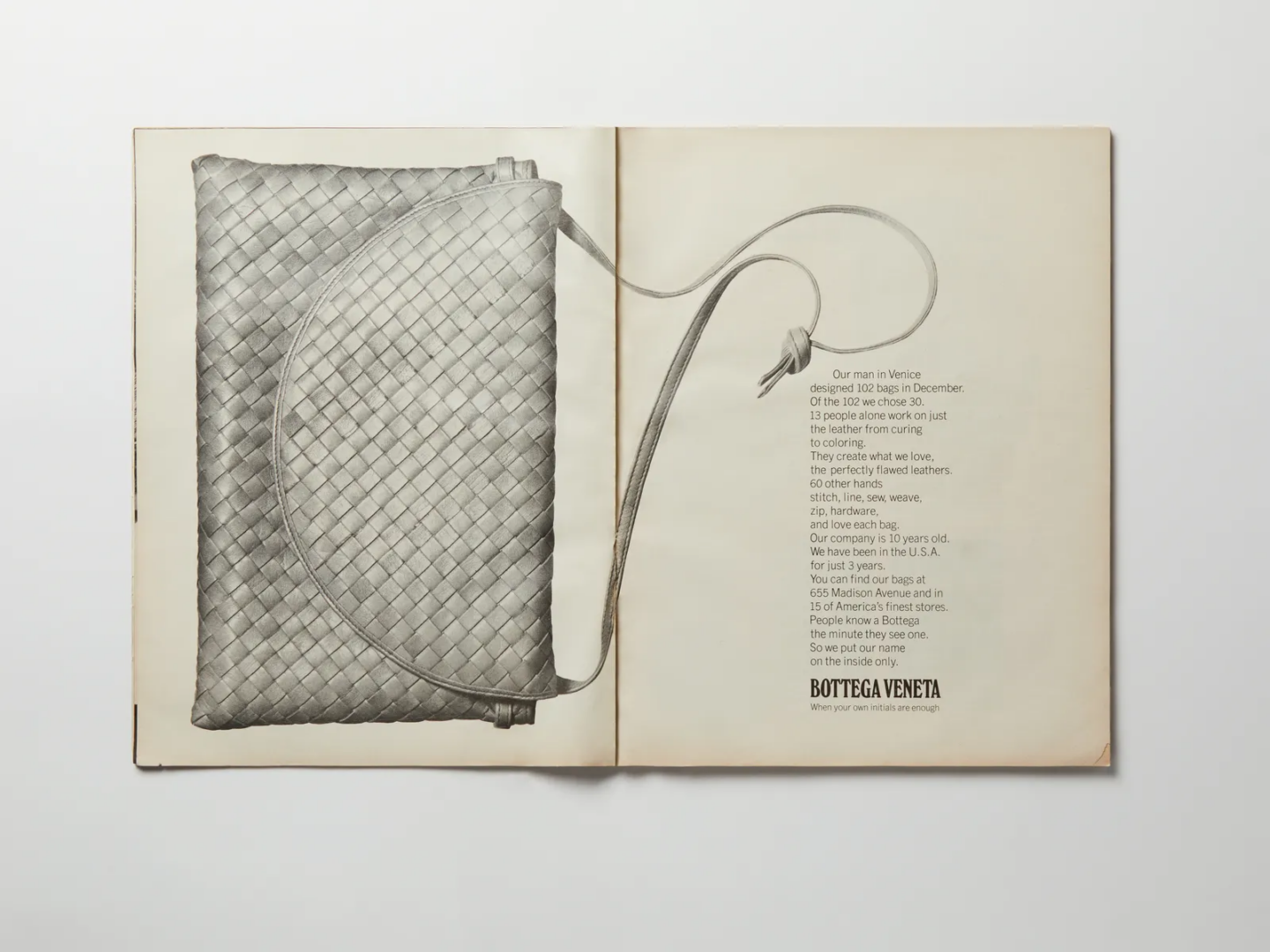
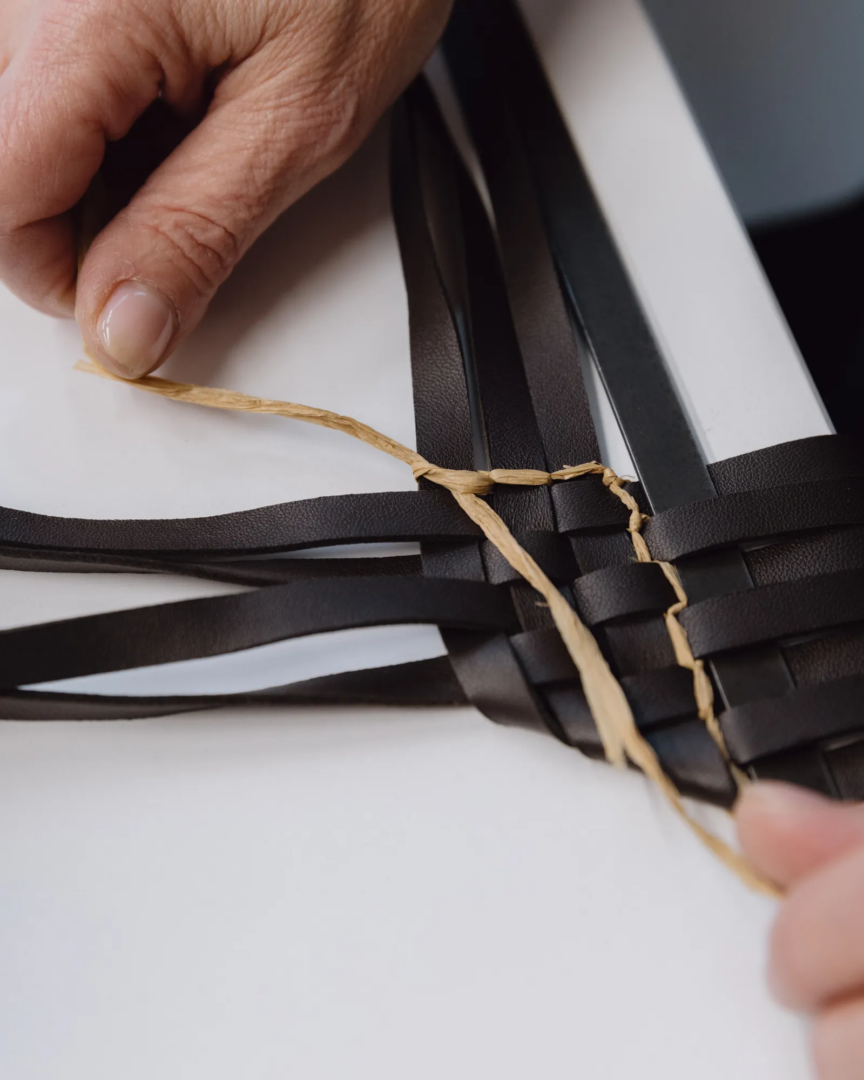
If Scarpa represents the logic of the joint, Andrea Palladio represents measure. Palladian architecture maintains coherence through proportion and repetition. Bottega Veneta’s primary historical technique, Intrecciato — introduced in 1975 — already follows this logic. Narrow leather strips are interlaced to form a woven surface. The identity of the house lies in the process.
Juergen Teller photographs Bottega Veneta’s Summer 2026 campaign across Venice, the palazzi and the Veneto plain
The Summer 2026 campaign reinforces the Venetian context. Photographed in Venice by Juergen Teller, the images move through the Giardini, several Venetian palazzi, the Lido and a flower shop near Palazzo Franchetti close to the Accademia. The city appears through interiors and passages — floors, railings, thresholds.
Matteo Mammoli