The rough erotics of male body hair
Body hair exists, but fashion rarely lets it show. Despite the bohemian male aesthetic that creative directors have spent years constructing, the imagery they actually put on stage is overwhelmingly smooth
Rough creatives, smooth models: the body hair that fashion doesn’t dare show
Fashion has a habit: body hair exists, at least in the back rooms, but it rarely makes it to the runway. Despite the bohemian, cultured, instinctive male aesthetic that the world’s most prominent creative directors have constructed — willingly or not — the imagery they actually stage is overwhelmingly hairless, a never-quite-outgrown child of the metrosexual wave that crested in the late Nineties.
Think of Calvin Klein campaigns, the Tom Ford era at Gucci, Hedi Slimane’s Dior Homme: lean silhouettes, open-collar shirts, scarves, waistcoats, fitted knitwear, hats, overcoats, foulards.
It was Mark Simpson, writing for The Independent, who coined the term “metrosexual” in 1994, and then sharpened it in 2002: a handsome, successful, urban male, obsessive about his wardrobe and his appearance. In the same piece, he described David Beckham as “the biggest metrosexual in Britain.” Two years later, Beckham was cast as the face of a new Gillette razor — a portrait of the man of tomorrow, undeniably fashionable, capable of changing his haircut weekly, and inevitably depilated.
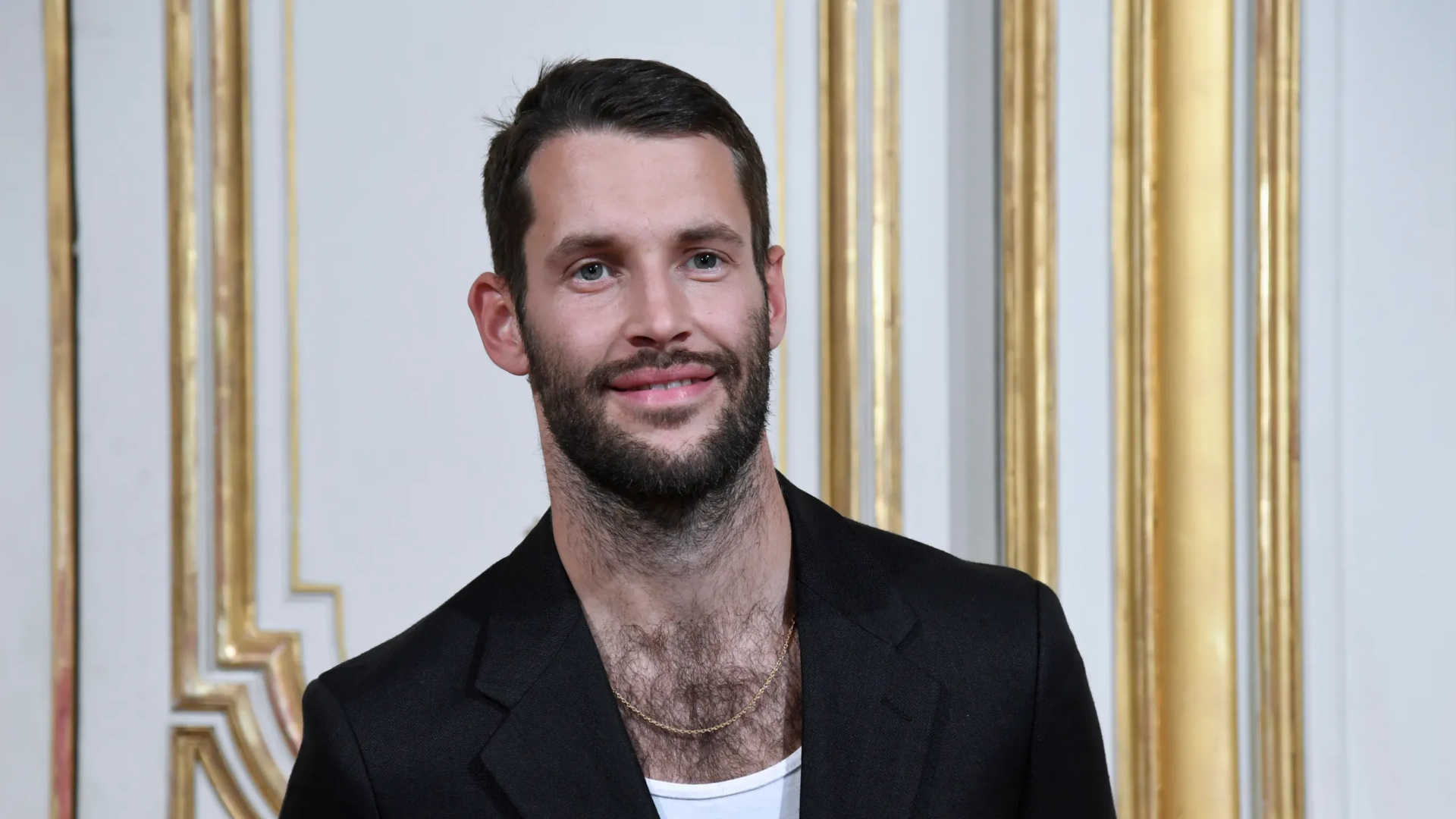
Meanwhile, the creative directors themselves look like a different species. The trim beard and moustache of Pierpaolo Piccioli (now at Balenciaga), Marco De Vincenzo (Etro), Adrian Appiolaza (Moschino). The full beards of Simone Bellotti (Jil Sander), Matthieu Blazy (Chanel), David Koma (Blumarine). The long, cascading beard of Alessandro Michele (Valentino), paired with thick chestnut hair often topped by a baseball cap or braided. And then the deliberately unkempt scruff of Daniel Roseberry (Schiaparelli) and Simon Porte Jacquemus.
From the hairy male to the hairless superhero: body hair as the battlefield of desire
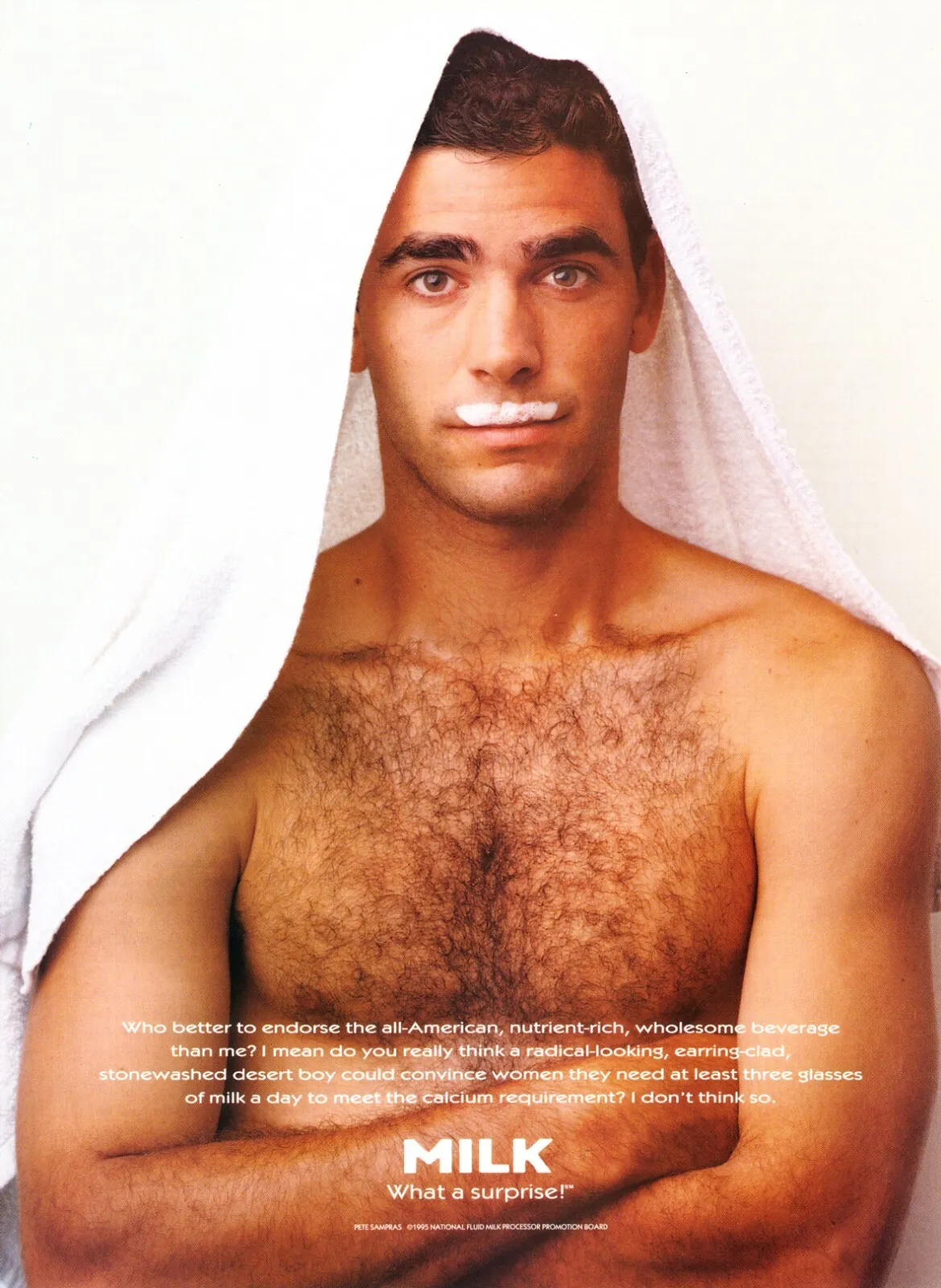
The ideal imposes itself, but hair turns out to be stubborn. In 2008, writing in the Daily Mail, journalist Tanya Gold declared: For the past twenty years, fashion has been a smooth, barren wasteland… Give me a hairy chest. Wish granted. That same year, People crowned Hugh Jackman the Sexiest Man Alive — fresh from Australia, where he played a rugged cattle drover, and the X-Men franchise, where his Wolverine came with a hairy chest and long sideburns. A rare exception in an increasingly hairless superhero universe — think of Chris Evans’s waxed, inflated pectorals in Captain America, or Jason Momoa’s oiled, Maori-tattooed torso in Aquaman.
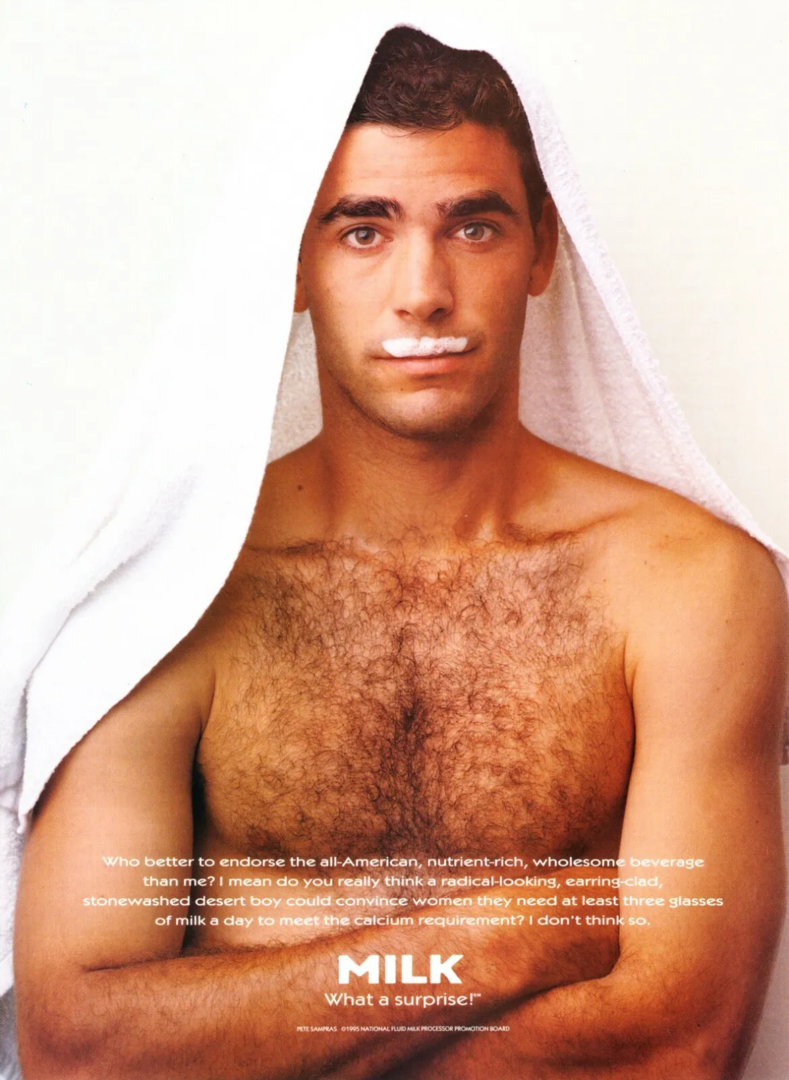
Those were different times. Tony Manero and his deep-cut shirts, chest hair peeking out. That was 1978. A decade before, Sean Connery had planted himself in the collective imagination as James Bond: flat and hairy chest, well-defined physique, clean face, furry calves. Then came Tom Selleck as Magnum P.I. — a navy officer with a thick chestnut moustache and tufts of hair covering his chest, stomach, arms and legs, spilling out of Hawaiian shirts.
But the Eighties also gave us Conan the Barbarian — Schwarzenegger, smooth as marble — and Stallone’s Rambo, with his waxed chest putting abs, pectorals, and war scars on full display. A junction point between the raw, primordial, savage force of some primal masculinity and the contemporary manscaping culture that takes the form of Beckham’s razor or Steve Carell’s chest wax in The 40-Year-Old Virgin.
To shave or to sin: the unruly history of hair between faith, shame, and desire
Body hair is one of the oldest human languages, a way of being read at first glance. Beyond its natural protective function — shielding the body from external agents and regulating skin temperature — it has always sat at the centre of ideological argument. In ancient Egypt, women shaved with resin compounds or copper razors to appear beautiful and pure. In ancient Rome, the first male depilation was practised by athletes irritated by excess hair. Then, mid-sixteenth century France: Catherine de’ Medici banned pregnant women from shaving.
Basel, 1637. During the Protestant Reformation, authorities prohibited male inhabitants from wearing long hair, wigs, or indecent braids. Depilation was considered a mortal sin — by removing hair, men acted against nature. Theologians also argued that body hair covered precisely those parts which original sin had made shameful.
In 1762, French barber Jean-Jacques Perret invented the first freehand razor. In Victorian England, a lover’s pubic hair was kept as a souvenir, and men would sometimes attach small tufts of their beloved’s hair to their hats, like a talisman. Then the short century arrives: 1915, and Harper’s Bazaar runs its first photographs of women with shaved armpits. In 1951, Charles Berg’s The Unconscious Significance of Hair revived the theological reading, describing hair and body hair as substitutes for genitalia one cannot display, linking long hair to unbridled sexuality and the beard to virility. Meanwhile, skirts shortened, depilatory creams spread, and the first bikinis hit the market. Then the Seventies, with feminist movements pushing back against depilation. Hair grew back. Longer. Another revolution arrived.
Rough by choice: when body hair becomes a position
Hair, beard, moustache, eyelashes, eyebrows, hirci (armpit hair), pubic hair. English researcher Stephen Hanß, in an essay cited by the University of Cambridge, argues that body hair “is a source of emotion and among the things people care most about. It is a product of our bodies and part of our identity.”
From the long hair of Sixties and Seventies hippies to the skinhead’s shaved skull. To hair banned, extracted by wax, cream, razor, or laser.
On one side, the revolution of the smooth body, blurring and dissolving the boundary between the sexes. On the other, the resistance of hair. In men, as a symbol of a certain masculinity — primordial or merely laid-back. In women, a first step toward liberation from yet another instrument of patriarchal control, a defiance of the male approval that has constrained female bodies for centuries — as Ben Olid argues in his essay Contropelo: o del perché spezzare la catena di depilazione, sottomissione e odio verso di sè (Fabbri Editore).
It starts with the unkempt beard and disordered moustache of artist, entrepreneur, and time-traveller Galileo Chini. Then the thick eyebrows, hairy arms and hairy chest of Sean Connery. The unshaved armpits of Sophia Loren and Brigitte Bardot. Julia Roberts at the Notting Hill premiere. The dishevelled beards of Josh O’Connor and Shia LaBeouf, Andrew Garfield’s artful scruff, Zohran Mamdani’s full beard. Lourdes Maria Ciccone’s unshaved armpits in a Calvin Klein campaign, and Emily Ratajkowski’s, photographed in an Instagram post. Jacob Elordi’s slightly haughty wisp of a moustache. The hair escaping from the open shirts of Harry Styles, Joe Jonas, and Shawn Mendes. Omar Ayuso’s monobrow.
Bodies that scratch: when body hair becomes erotic and political narrative
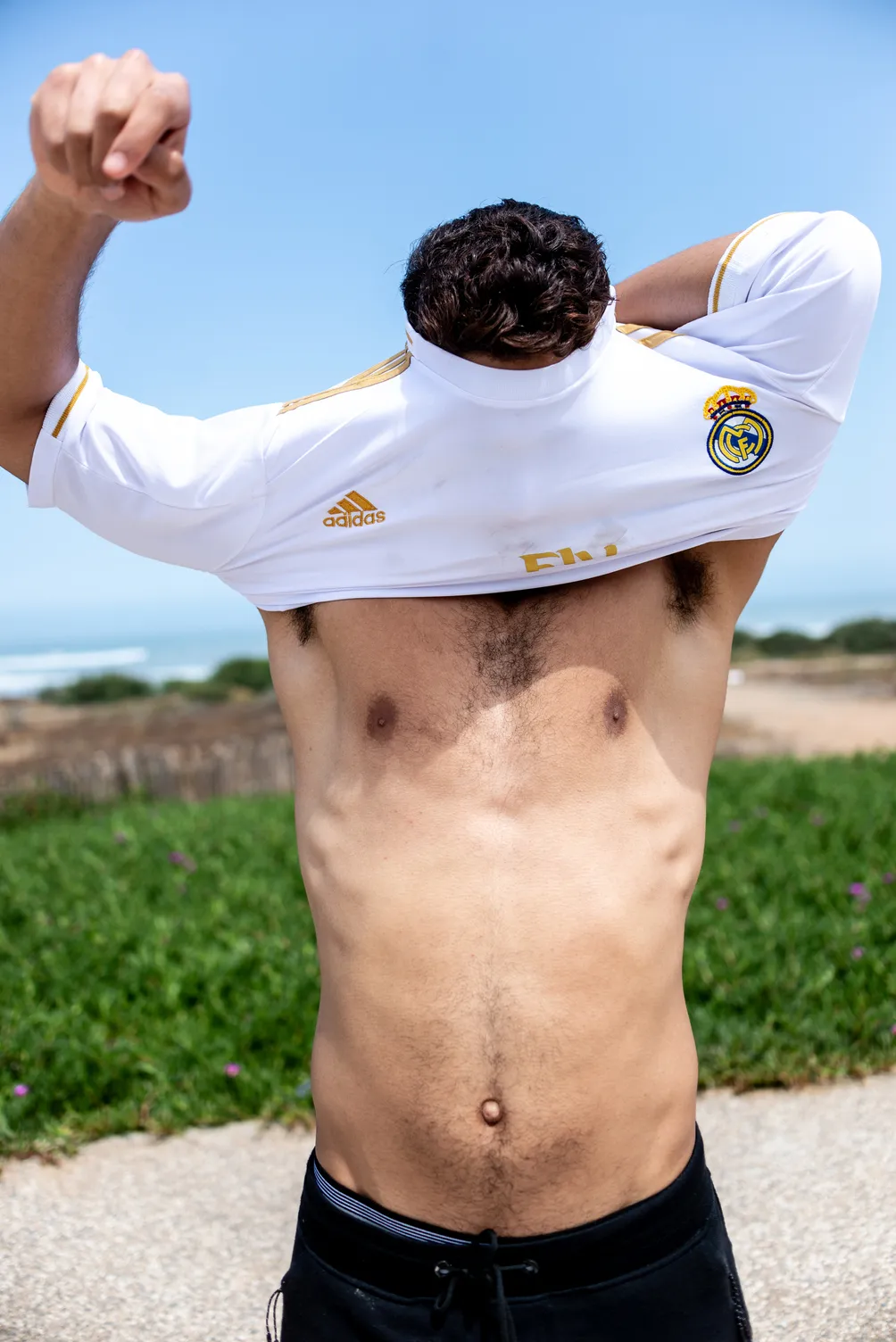
Fashion, for the most part, still treats hair as a taboo — with rare exceptions: the Mediterranean man of Dolce & Gabbana, embodied in recent campaigns by the hairy Michele Morrone, and the Adidas campaign shot by photographer Arvida Byström, a longstanding champion of the non-depilation cause. The arts, however, have always paid different attention.
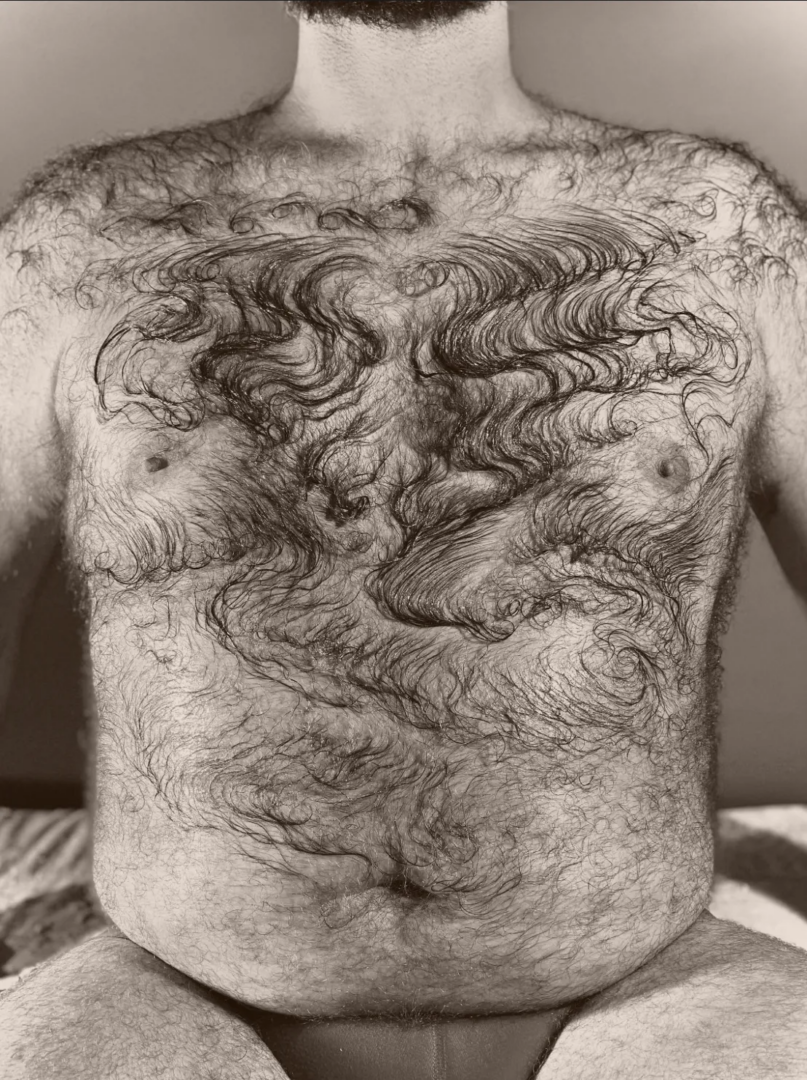
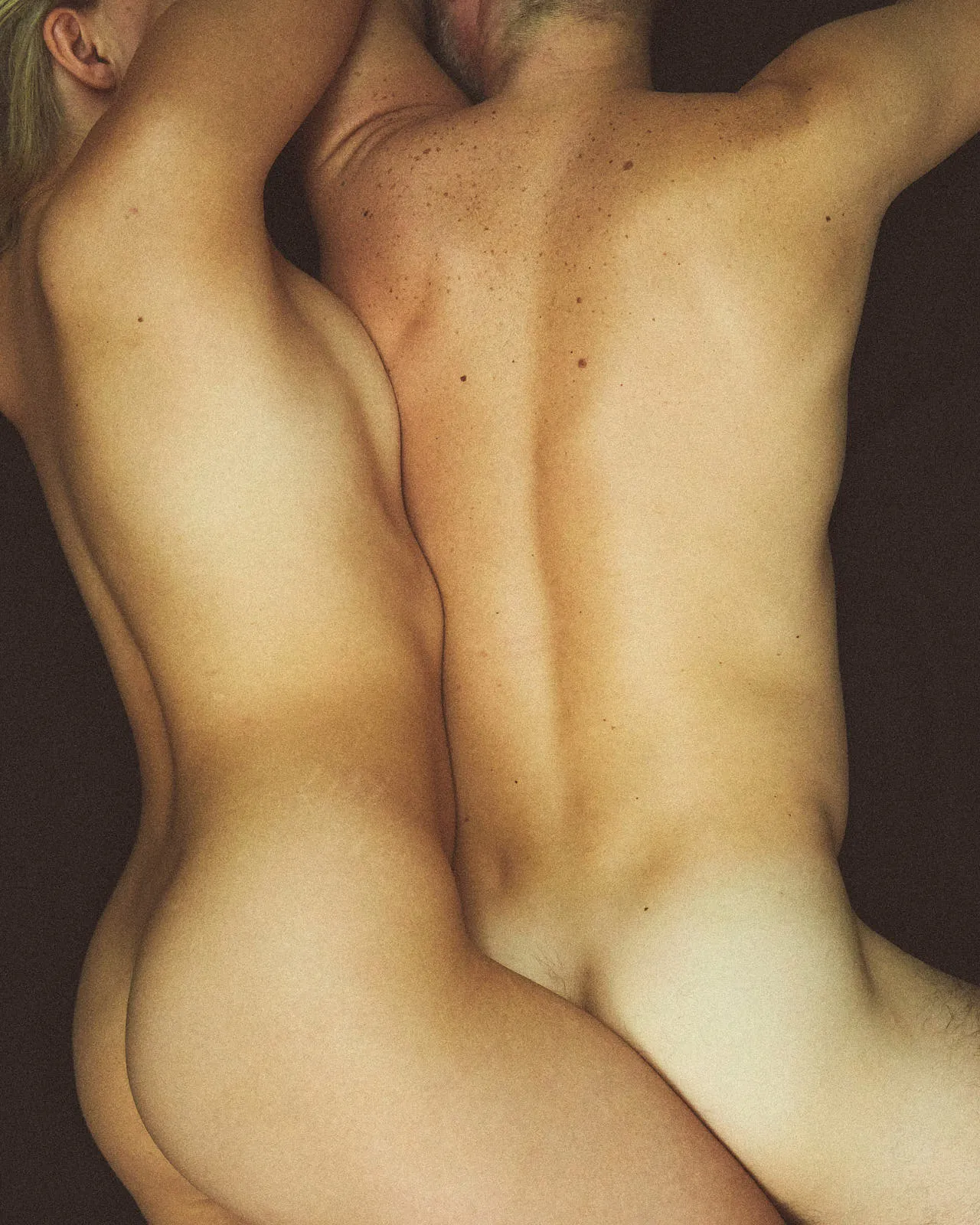
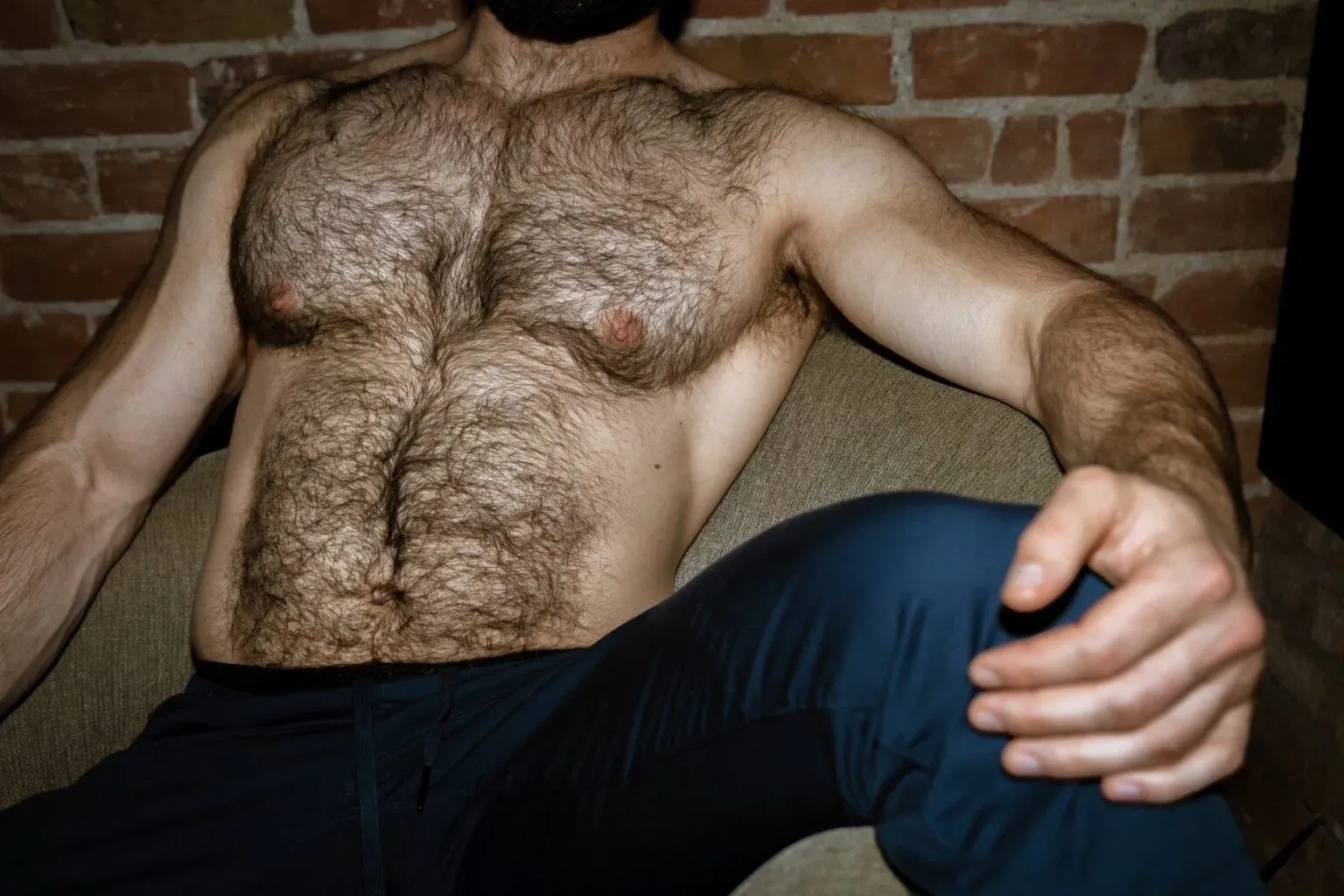
Consider the close-ups and body fragments of Ahmad Naser Eldein, a photographer born and raised in Jerusalem. In his work the body is dismembered, examined under a microscope, every hair enlarged — in each follicle a story, a night of sex, a stolen cigarette, a kiss never given. These are images you can almost smell, images of disordered geographies. Sweaty armpits, thick thighs, defined torsos, erect nipples. Hair that conceals, hair that reveals. A blessing and a curse. A mark of maleness from the beginning of time to whatever comes next.
Or take Lavinia Mannelli’s novel Storia dei miei peli (66thand2nd). The protagonist, Lavinia, is a broke PhD student and proud founder of the NoShave/Me movement, which opposes depilation as a form of patriarchal submission and repression. Her life grows complicated when she meets Daniel85 — potential OnlyFans client, spirit guide of the male gaze, and body-hair fetishist willing to pay extravagant sums for a tuft of Lavinia’s hair, and perhaps capable of putting a crack in her ideological certainties. Mannelli reminds us that body hair can be awkward and scandalous, occasionally poetic, and above all: not all men are assholes — some are just hair fetishists.
Nicolo Bellon