We’re all eating from the same trash can: Jordan Sullivan and the Sick America
“Capitalism cultivates addiction and delirium – our souls were sold long ago.” A conversation with the painter Jordan Sullivan on marginal life and contemporary American experience
An interview with Jordan Sullivan on the Collapse of Meaning in America: American Psychosis
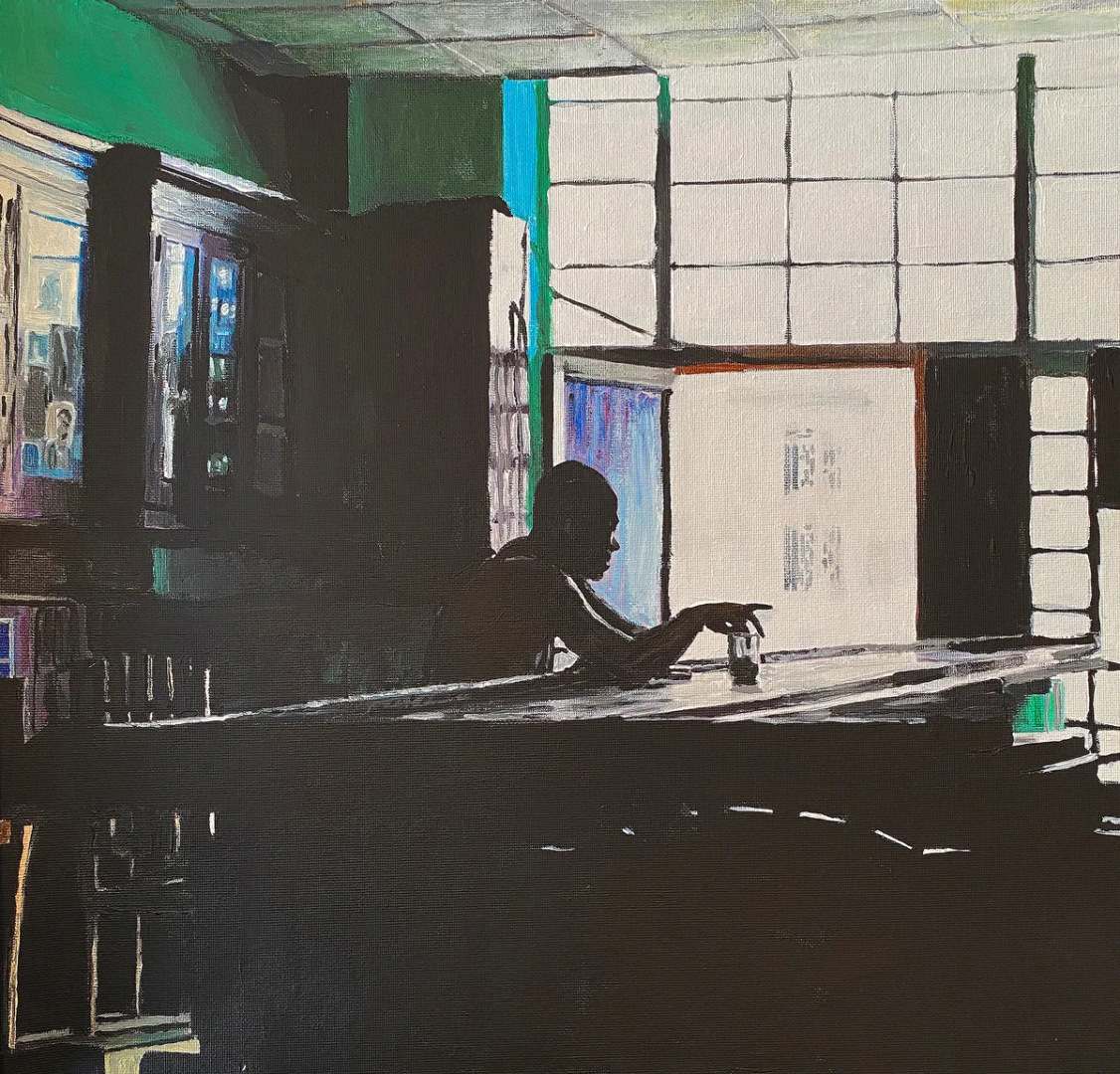
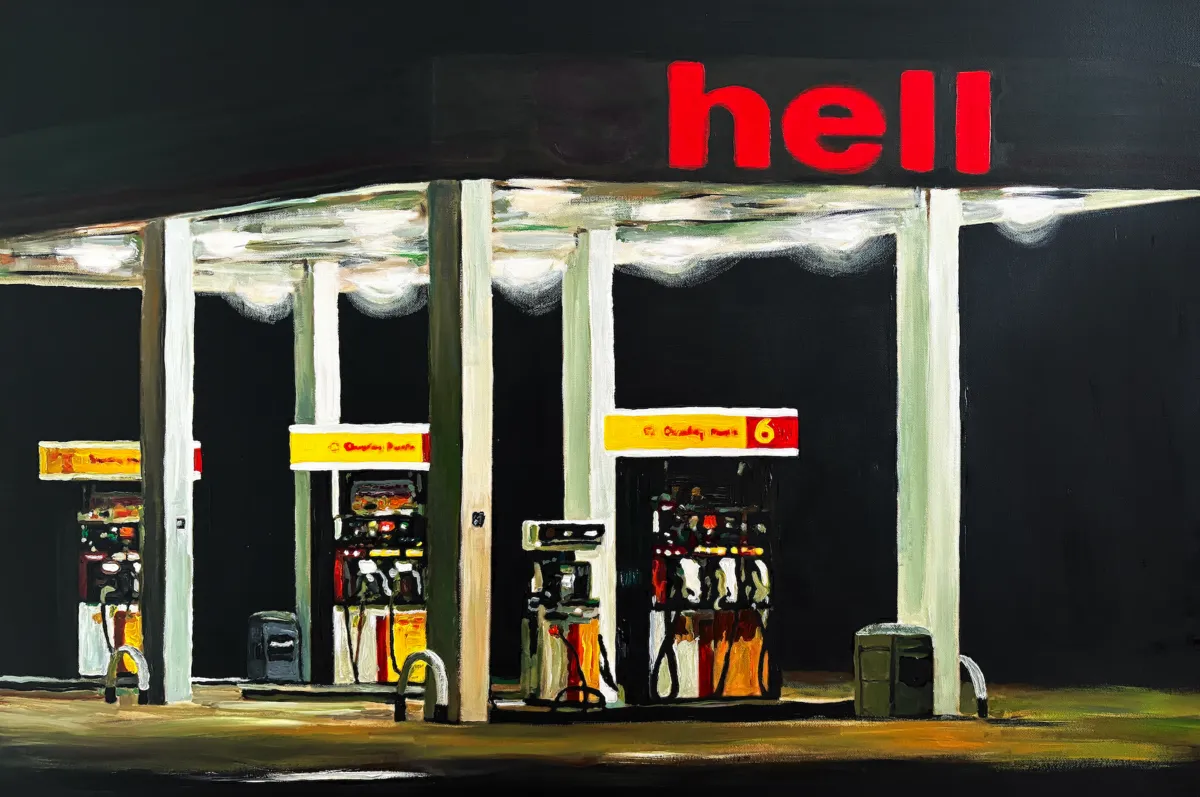
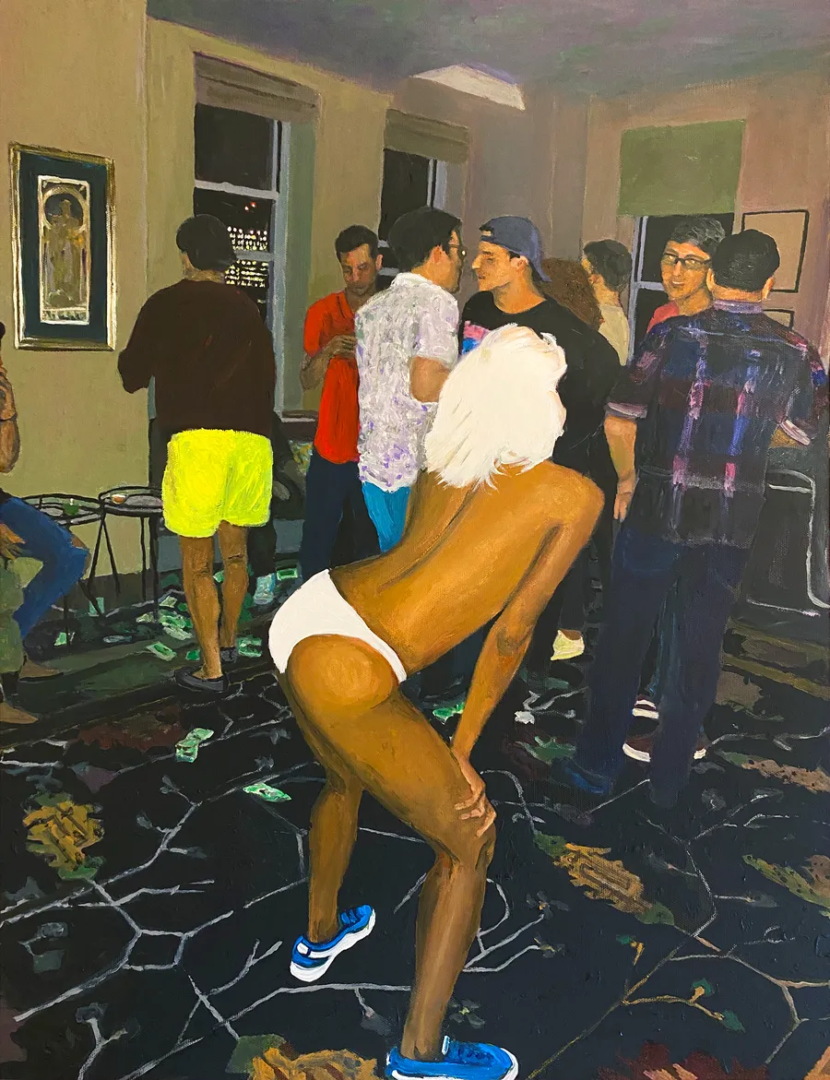
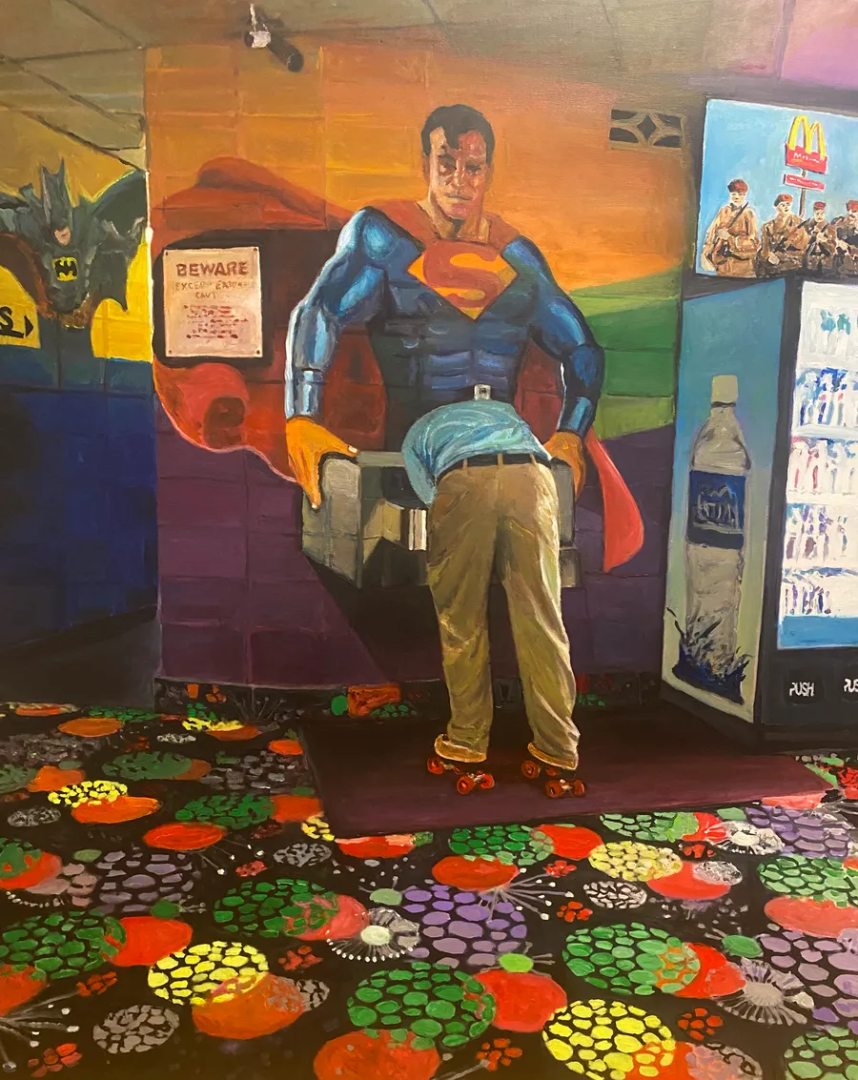
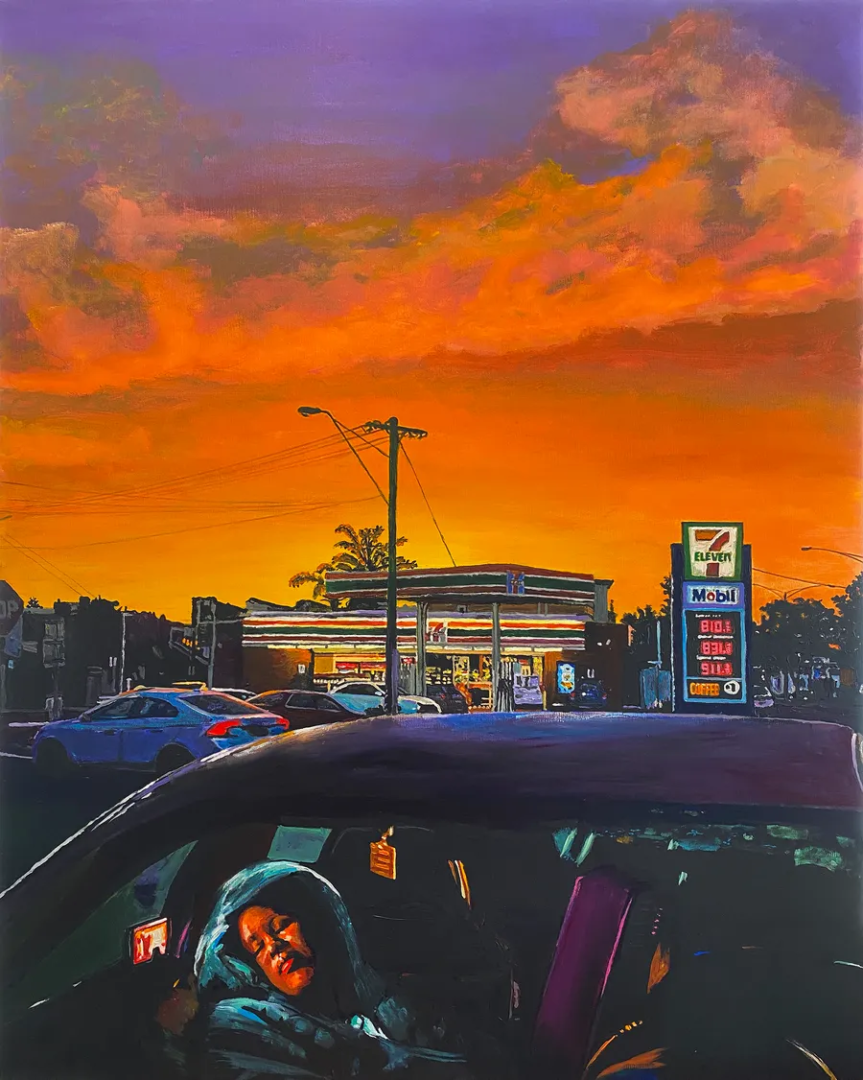
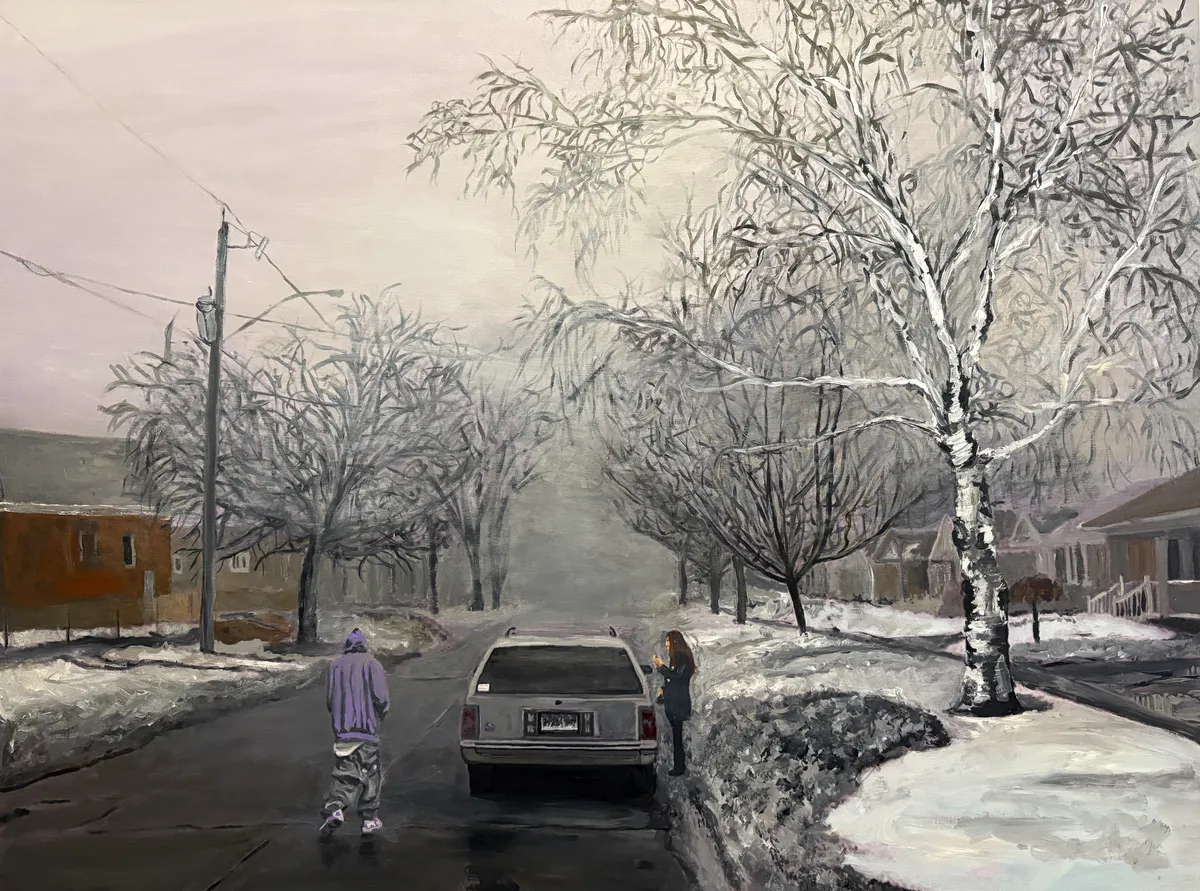
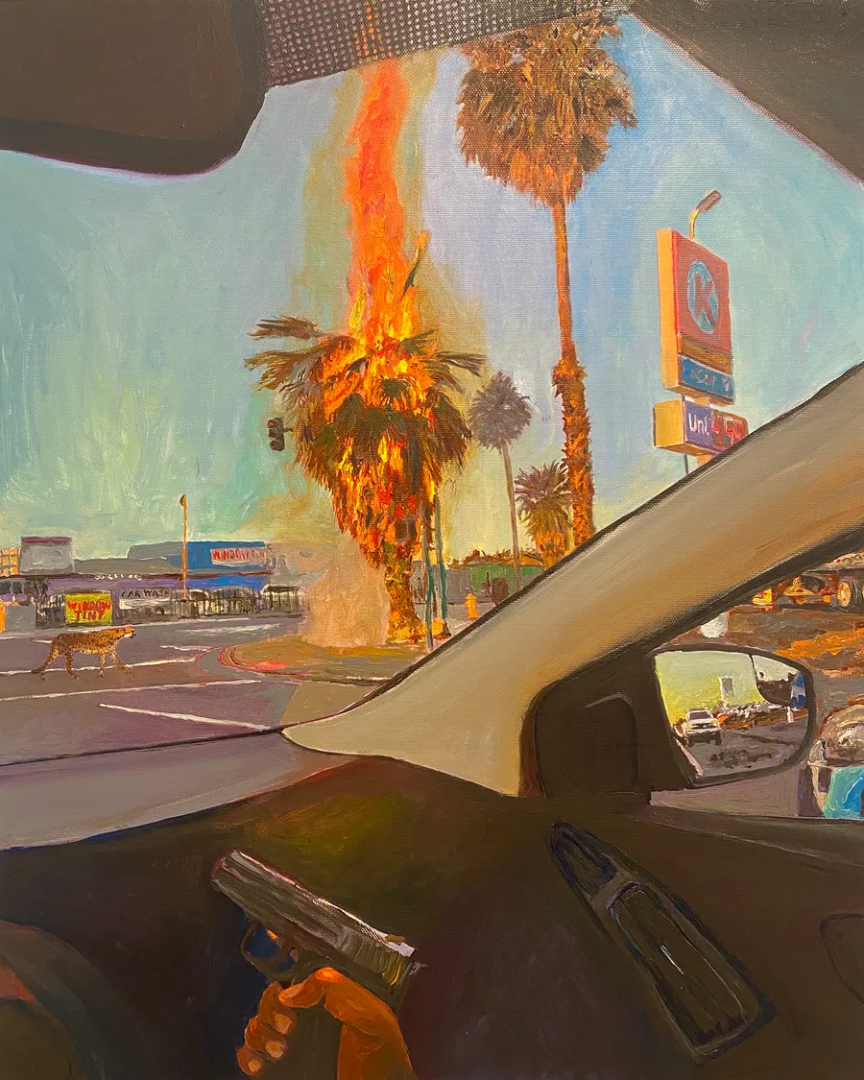
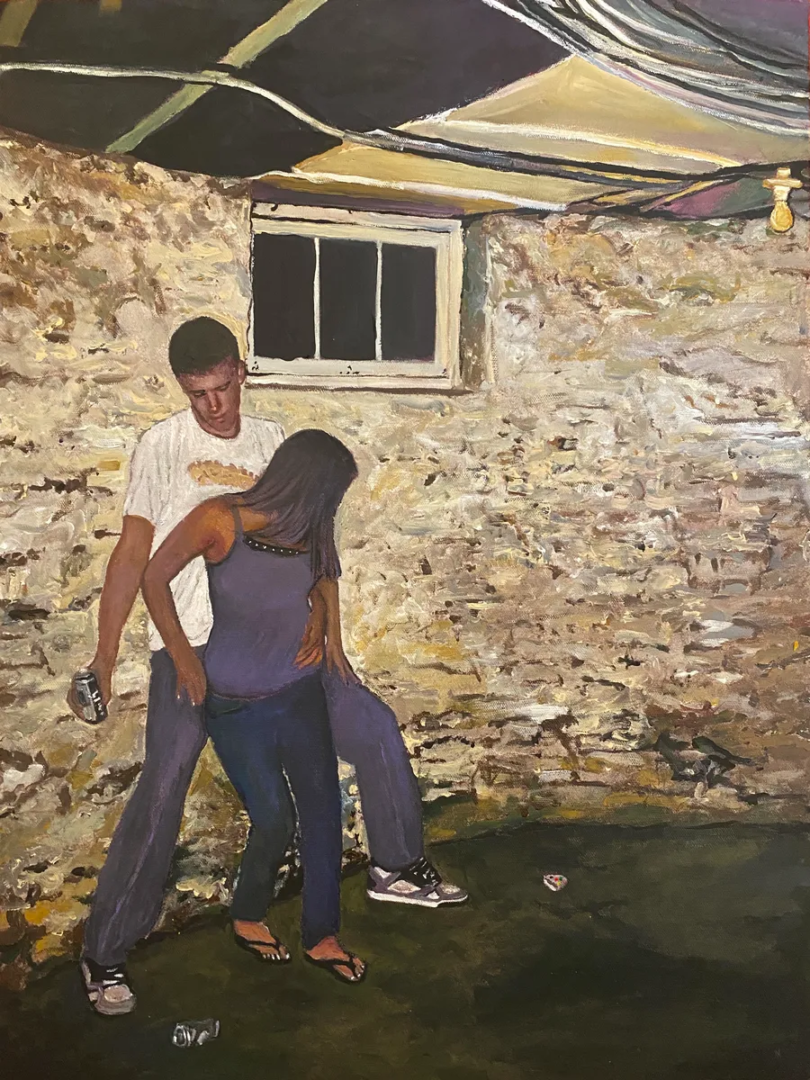
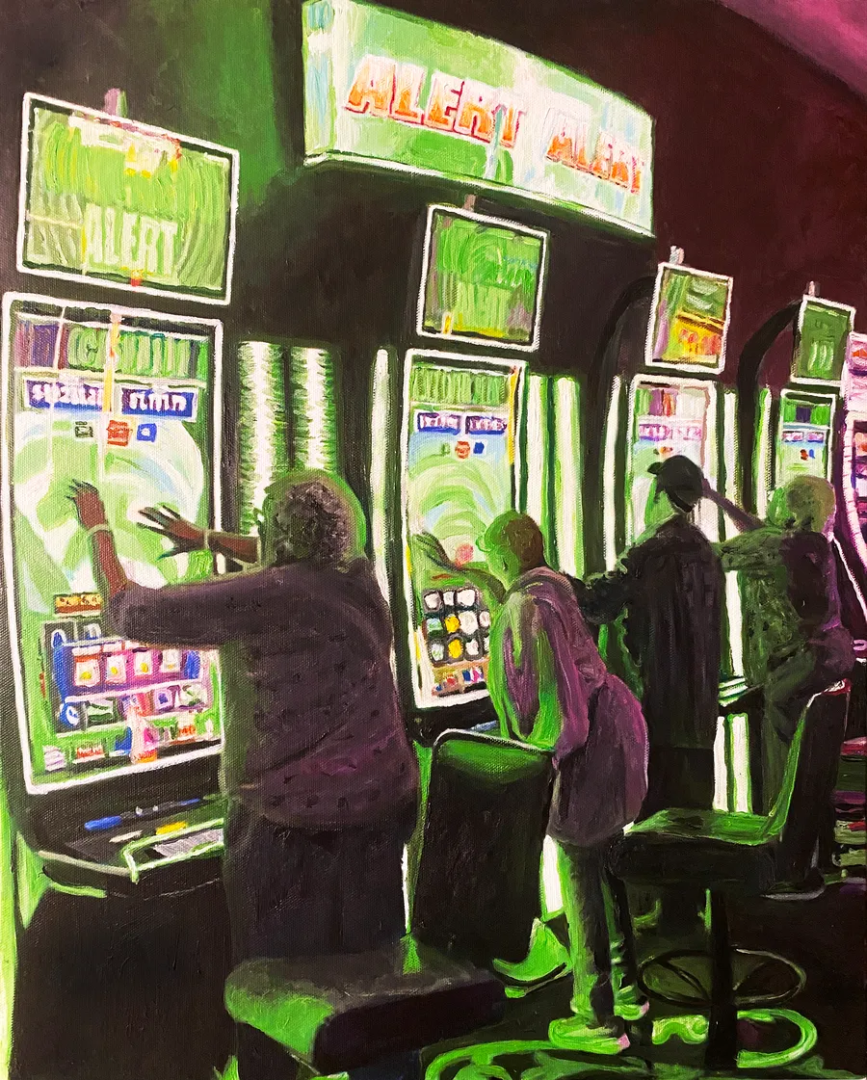
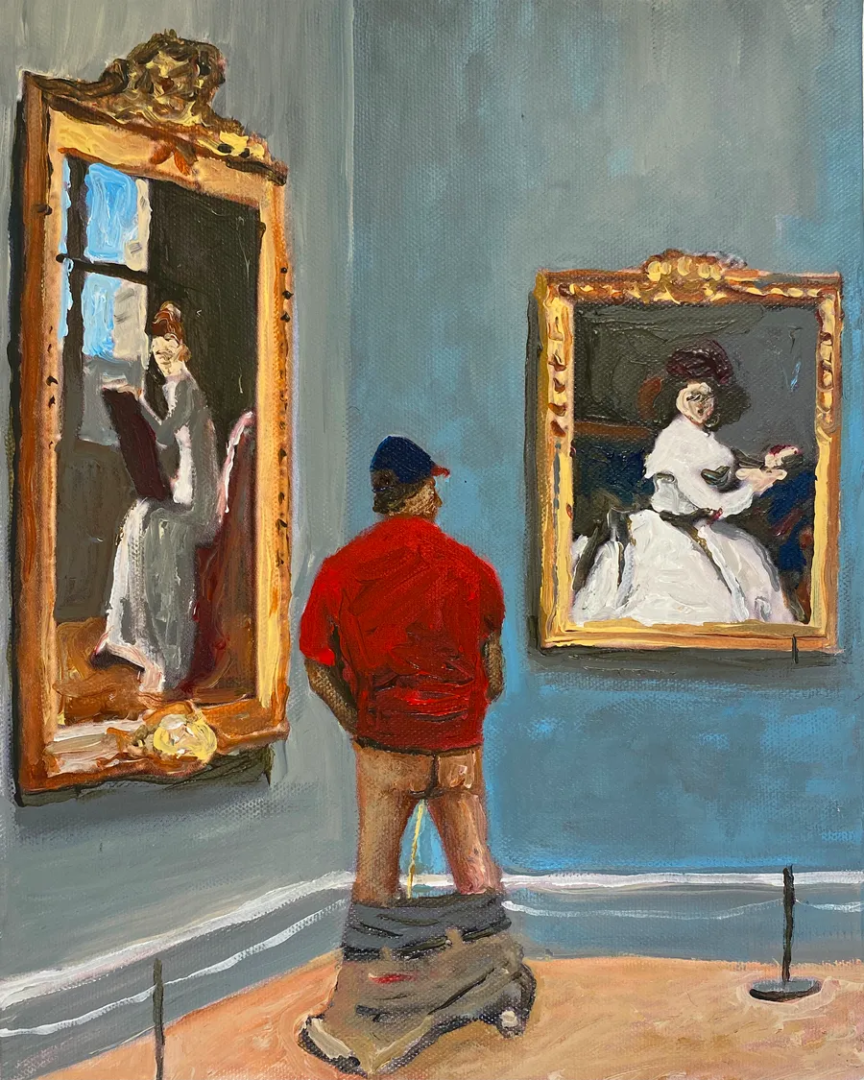
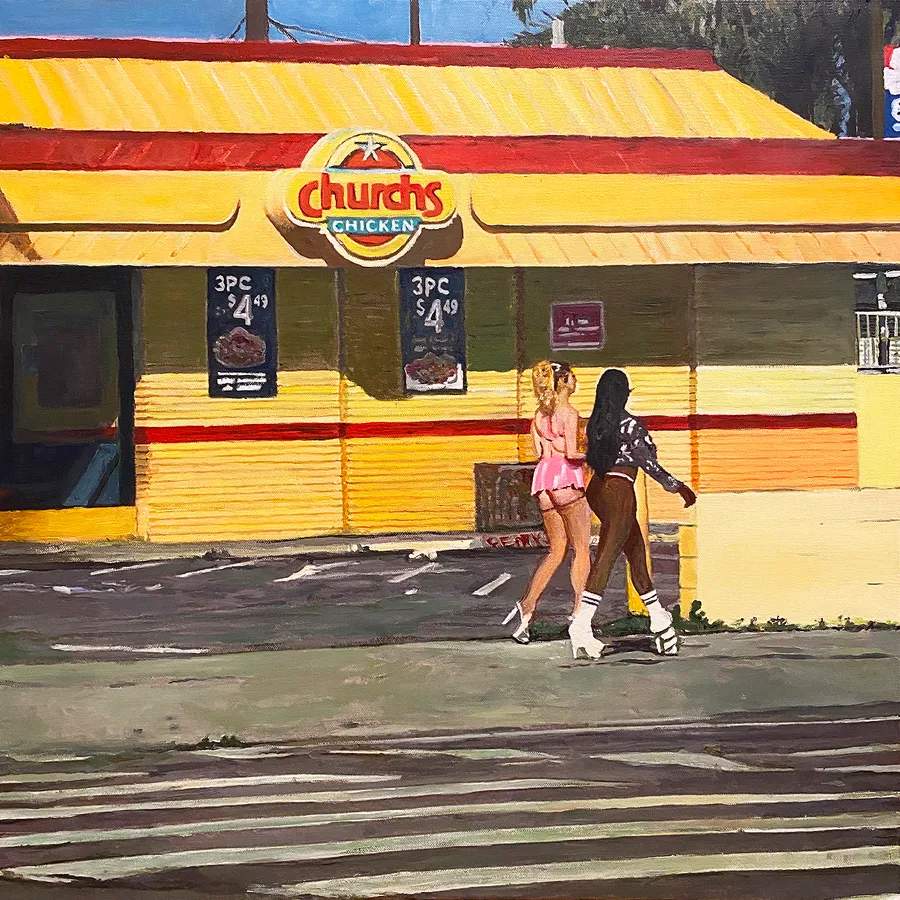
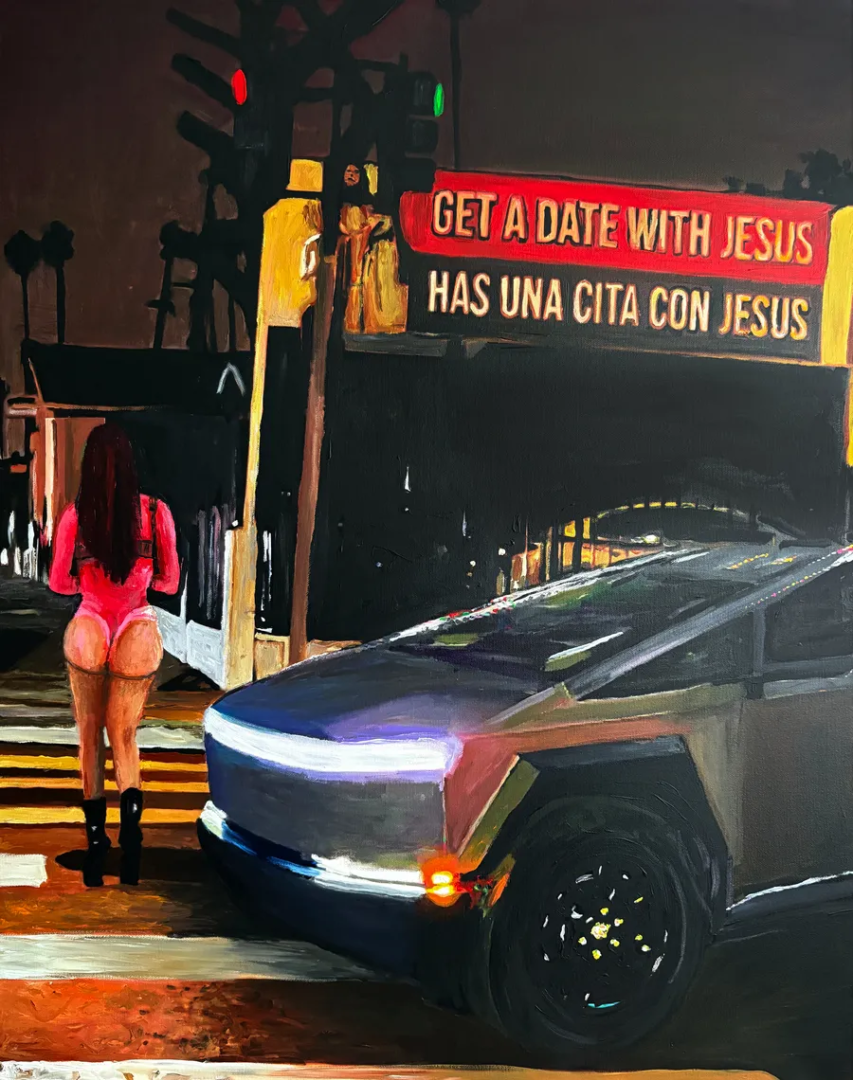
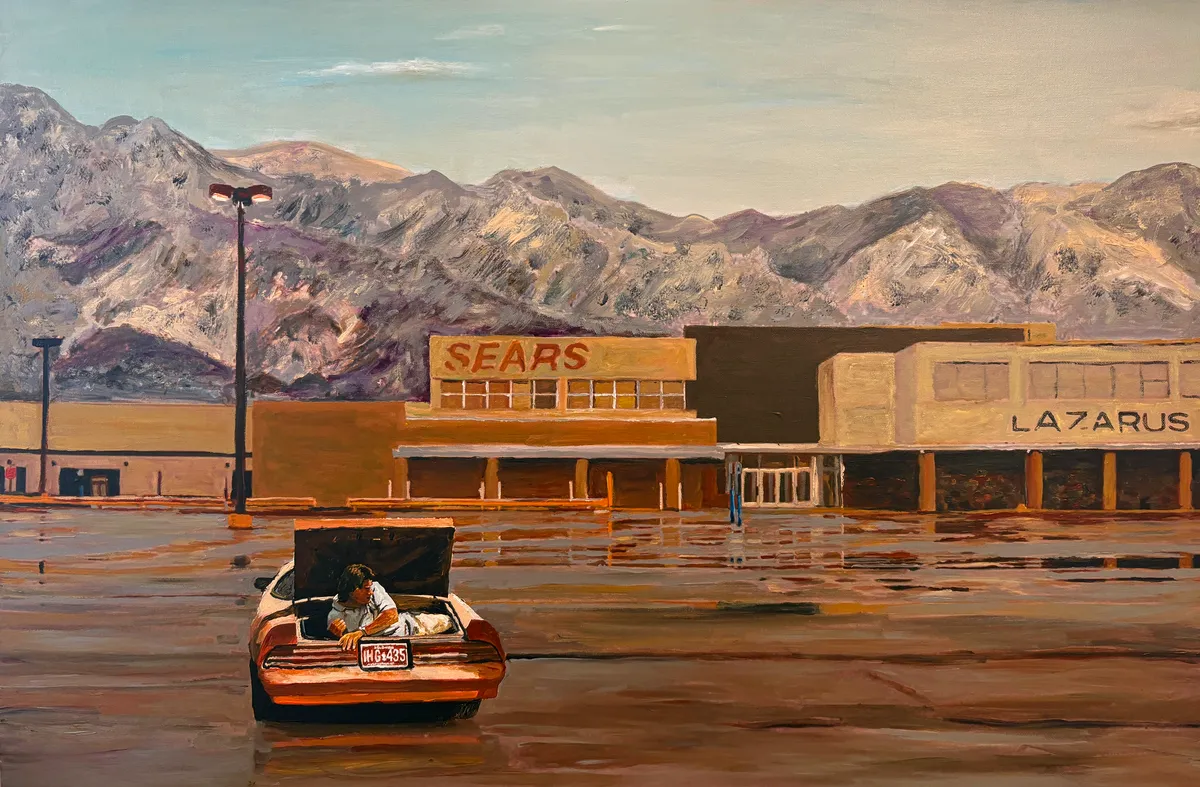
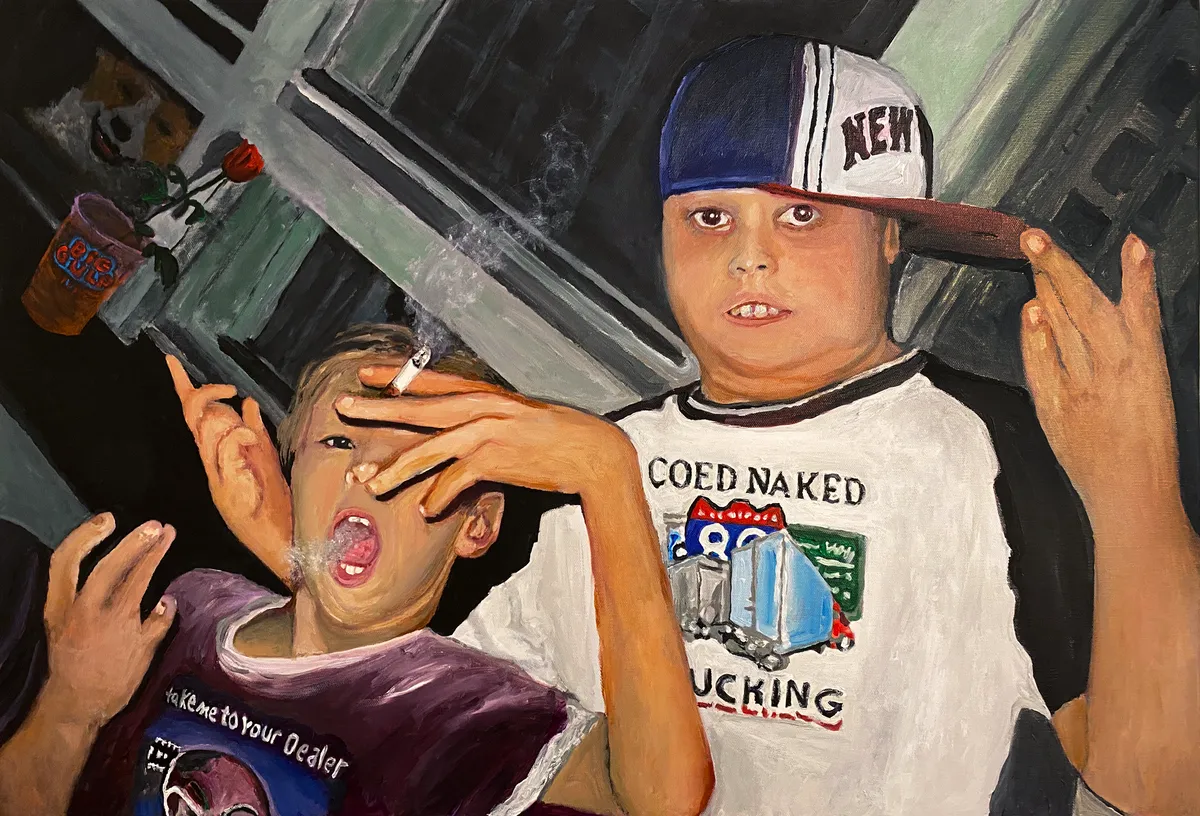
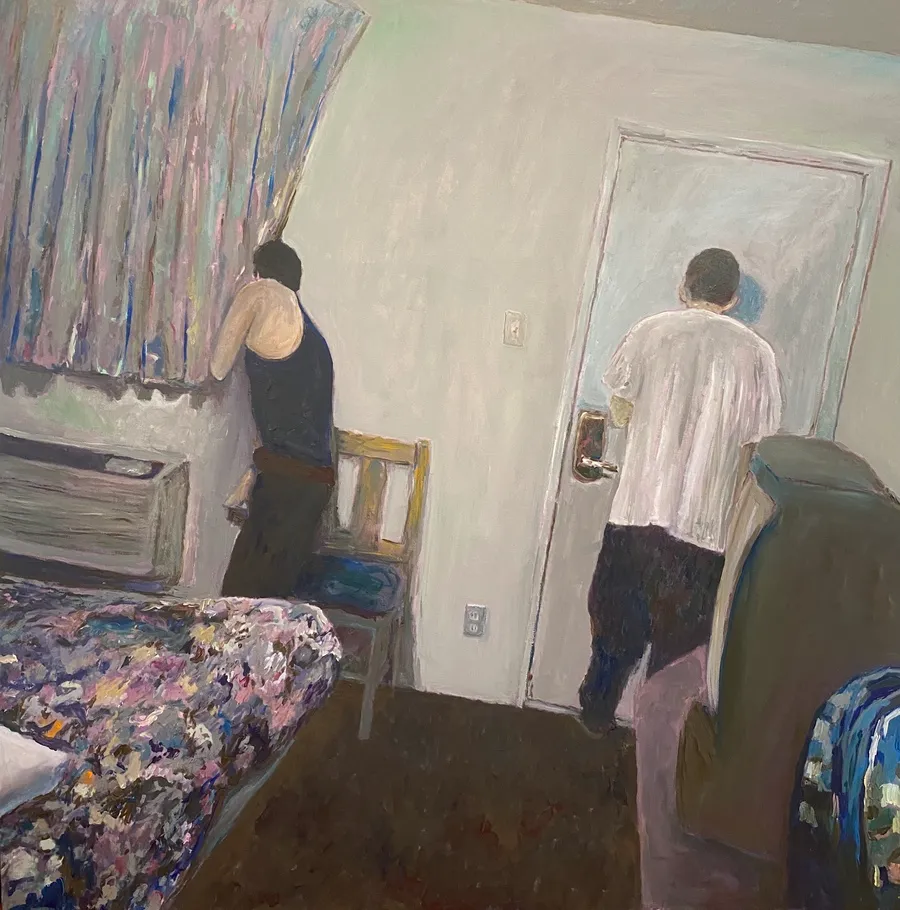
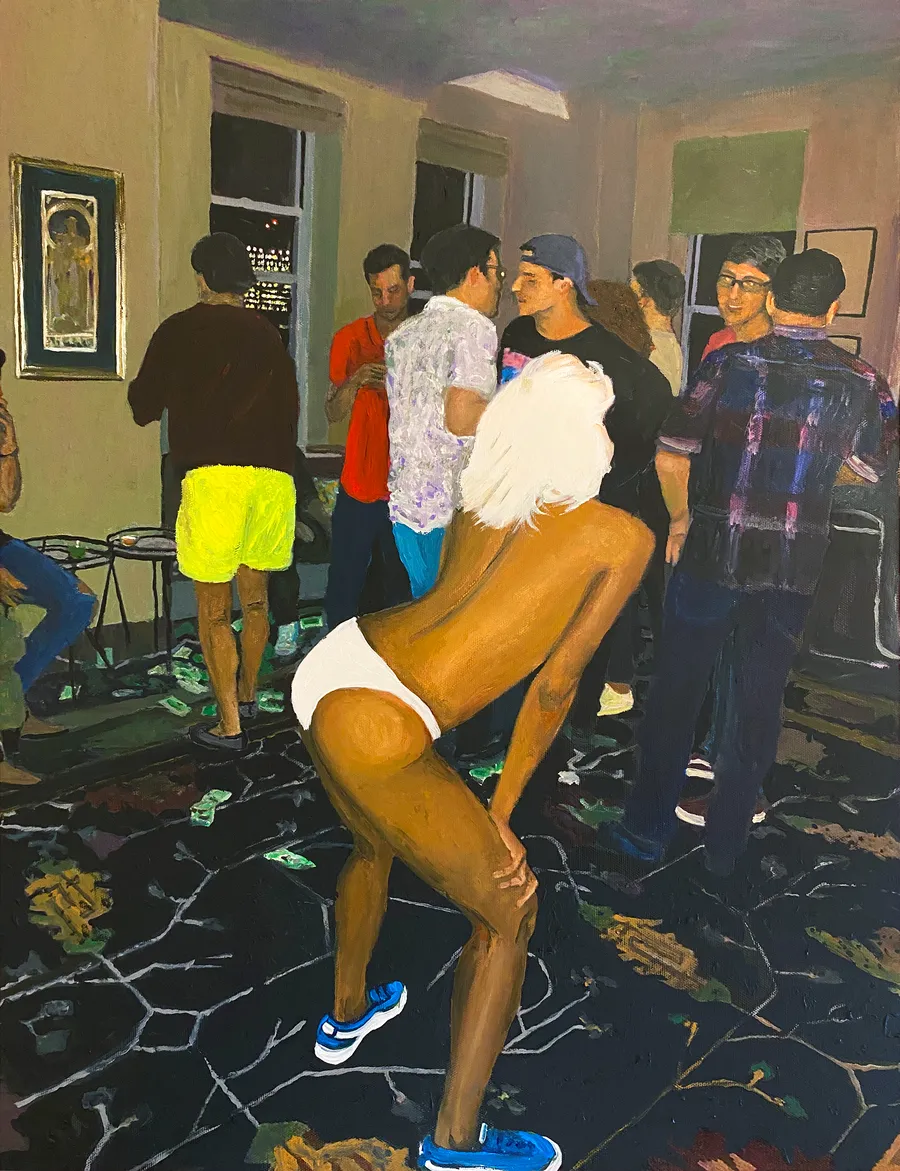
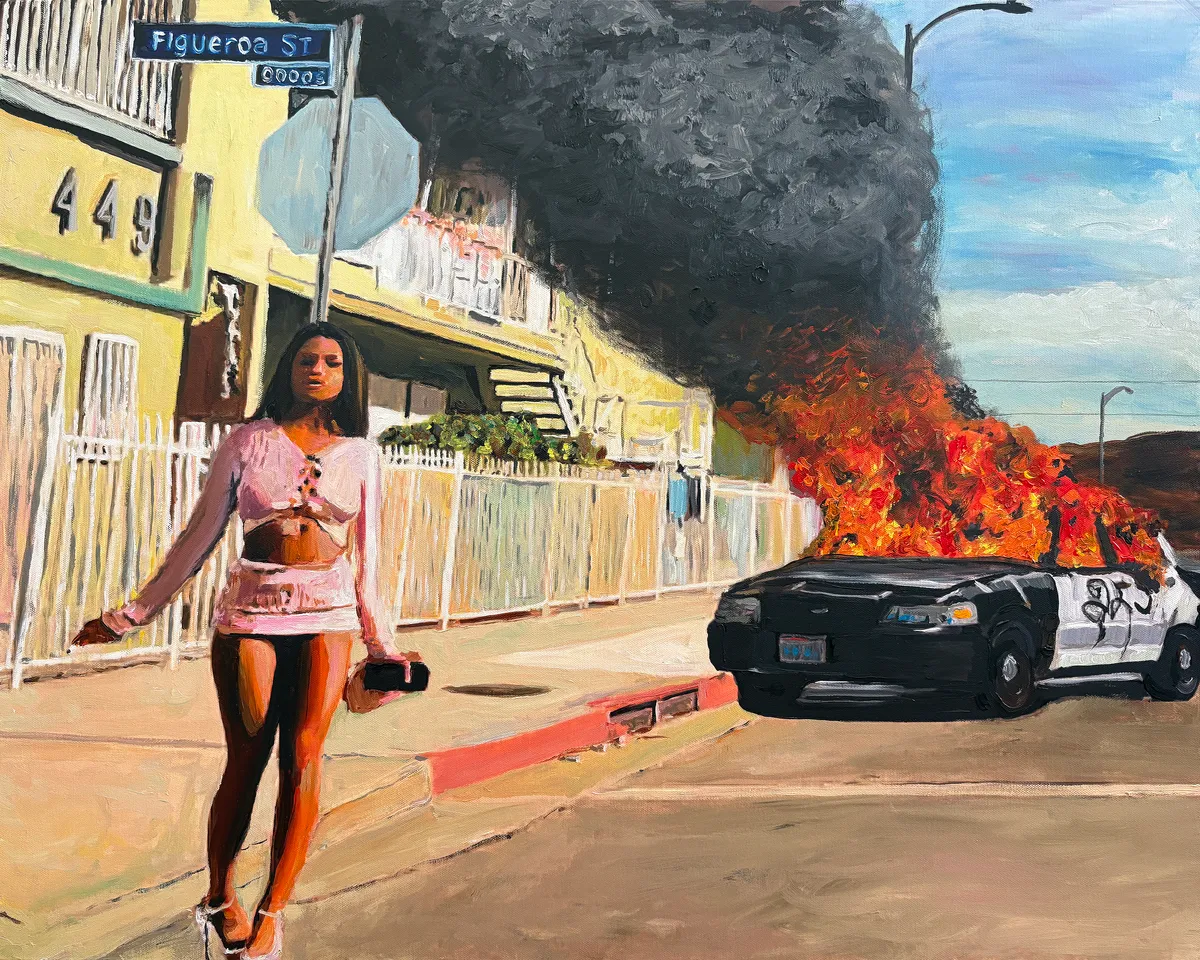
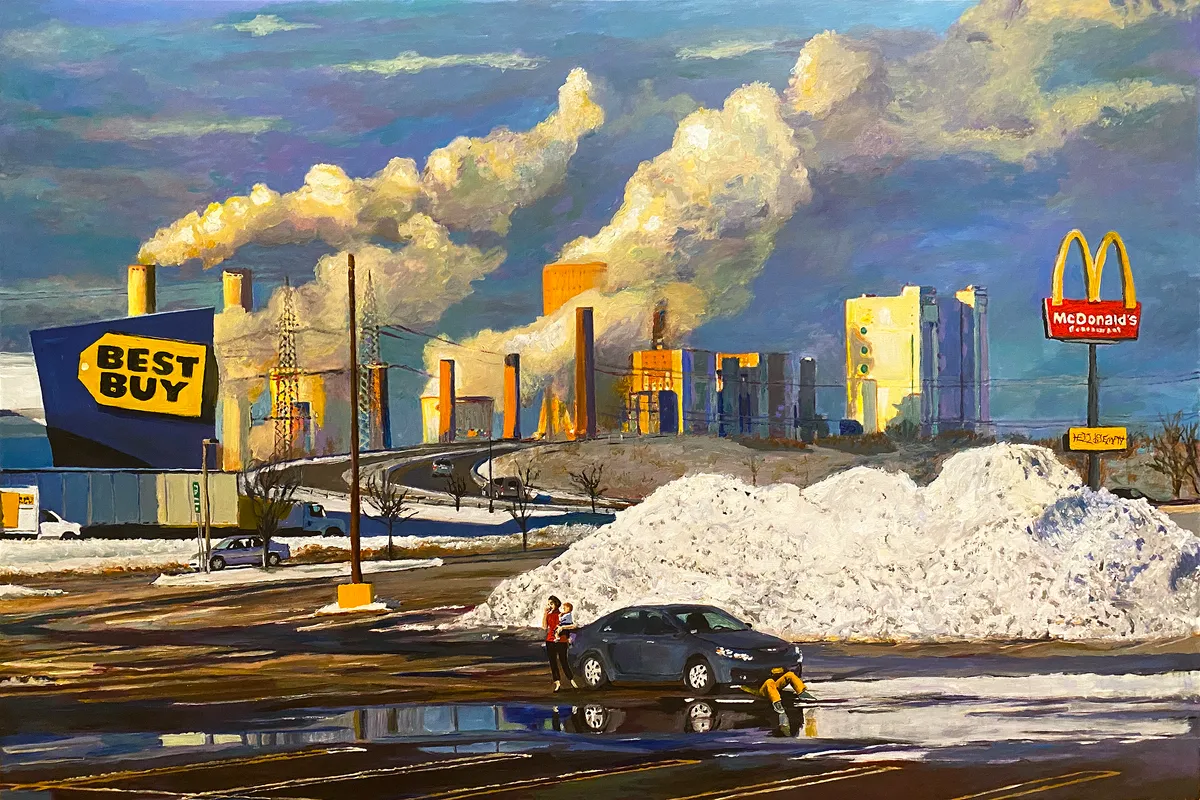
“My own life as a death-door addict was the first wound. Everything in American life feels violent and pornographic. Every image becomes a kind of accidental snuff film, whether intended or not.” American Psychosis is a painting project by artist Jordan Sullivan that takes this statement as a point of departure. Developed through a combination of lived experience and sustained observation, the project explores how addiction, violence, and psychic disorientation appear in contemporary American life, not as isolated events but as recurring conditions.
Across fragmented scenes set in suburbs, inner peripheries, and urban spaces marked by abandonment or overexposure, Sullivan’s paintings register moments drawn from everyday life. The figures that populate these works—often marginal, often anonymous—are situated within environments shaped by economic pressure, social precarity, and eroded forms of stability.
Addiction, capitalism, and the origin of a collective American wound
Jordan Sullivan: I’ve lived through drug-induced psychosis, suicide attempts, hospitals, and institutions. One must take responsibility for one’s life, yes—but capitalism cultivates addiction and delirium. At this point, it injures more people than it protects. It has outlived whatever promise it once claimed.
Capitalism, as I understand it, was meant to be a bridge toward a more humane order—toward socialism. Instead, it delivered that future only to the 1%. The work begins here: with the sense that nearly every aspect of American life is a symptom of this system, and that one of those symptoms is a collective, distinctly American psychosis.
Psychosis as a shared atmosphere in post-Trump America
MF: Post-Trump America has normalized paranoia, suspicion, and distorted readings of reality. When you speak of “psychosis,” do you mean a metaphor, a diagnosis, or a shared atmosphere?
Jordan Sullivan: I’m not convinced any of us can define reality with certainty. I certainly can’t. In this series, psychosis isn’t a medical category—it’s a shared atmosphere. A sickness that is breathed rather than diagnosed. A fog generated by the systems that govern us.
Individual lives as the clearest symptom of a broken social system
MF: In a country shaped by overdoses, violence, and loneliness, what do you see as the clearest symptom of America’s illness today?
Jordan Sullivan: I work in the bowels of the system. I’m a substance-use disorder counselor for teenagers at an underfunded nonprofit. The sharpest symptom is always individual. Sitting in my office with a teenage girl addicted to fentanyl who has been sex-trafficked, you feel the full weight of the system’s sickness. How do we ask her to imagine a future when this is the world she’s inherited?
All perceived freedoms under capital dissolve into illusions. Under capital, we possess the freedom to consume—nothing more.
Illusory freedom under American capital
MF: The places you paint feel like inner peripheries before they are geographic ones. Which American space, literal or symbolic, feels the most “sick” to you?
Jordan Sullivan: The most diseased space is the one occupied by American capital itself—so almost everywhere. More specifically, the sphere inhabited by elites, where power circulates without conscience. My Silencer series on Epstein touched this zone. His network was global, but its gravitational center was American wealth.
“This is America”: abandonment and the gentrified void
MF: The cities that form the backdrop of your paintings feel empty and hostile. Is there a specific place that made you think, “This is America”?
Jordan Sullivan: I grew up in Detroit. As a teenager, I’d go downtown and see entire streets and buildings abandoned; it felt like witnessing the future. Later, after investment “revitalized” the area—after Chase Bank and chain stores arrived—I returned and felt the same revelation. The same emptiness and abandonment, even though everything was occupied—occupied by a corporate structure that felt like a colonizing military.
The ruins were replaced, but the message was unchanged: this, too, is the future of everywhere.
Capitalist realism and the limits of political change today
MF: Your work suggests a country trapped in capitalist realism. Where, if anywhere, do you see openings for change today?
Jordan Sullivan: Zohran’s election in New York signals that people want something different. There’s a pulse of possibility there. But capitalism has built its walls thick—break through one and a thousand more appear.
I often think of Pasolini’s line that “hope is invented by politicians to keep the electorate happy.” Mark Fisher expressed the same truth in a different register in Capitalist Realism. The cracks exist—but they’re in a fortress with walls miles thick.
Racial inequality and the visual record of capitalist injustice
MF: Who is paying the highest price for American capitalism today, and how do you translate that injustice into images?
Jordan Sullivan: Poor Black and Brown people bear the sharpest edge of capitalism. For me, painting the contradictions of American life honestly is already an act of recording injustice. The image becomes a document of the wound.
The body as the last container of truth in a shattered reality
MF: Many artists represent discomfort; you paint deformation, as if the body were the only place where reality leaves a trace. Has a particular body—physical or systemic—revealed something essential to you about America?
Jordan Sullivan: This returns to capitalist psychosis—the shattering of our ability to recognize reality at all. Look directly at the horrors of this system and you understand why Americans feel broken, unmoored.
The outer world has become toxic, implausible, detached. What remains? The body. Flesh—buckets of blood and water. The last container of truth. Our souls were sold long ago.
MF: Marginality in the U.S. is often discussed in abstract terms. When you encountered it in human form—a face, a story—how did that shape your work?
Jordan Sullivan: I encountered life on the edge early. In Ohio and Detroit, I grew up amid poverty and precarity. That atmosphere seeped into me. It’s the world I know, so it’s the world I paint.
Invisible violence and the pornography of everyday American life
MF: In American Psychosis, social and internal violence merge into a single corrosive force. What invisible violence do you sense running through the U.S. today?
Jordan Sullivan: Everything in American life feels violent and pornographic. Every image becomes a kind of accidental snuff film, whether intended or not. To witness it is already to participate in its making.
We’re all eating from the same trash can. No one is innocent. Nothing gets out of this life alive.
MF: Many of your works depict a country in moral free fall, where compassion feels like a luxury. How do you perceive empathy in America today?
Jordan Sullivan: There is a profound scarcity of empathy. COVID made it unmistakably clear that America will let us die.
Painting suffering within a system that turns pain into commodity
MF: Contemporary capitalism turns even trauma into content. When you paint suffering, how do you resist its conversion into product?
Jordan Sullivan: Maybe you don’t. In America, everything eventually becomes a product—including the artist. I paint suffering, and yes, it risks becoming another commodity. That guilt is part of the work.
MF: Many argue that American visual culture has been absorbed by the market and weakened as a critical tool. What is the analytical power of painting today?
Jordan Sullivan: Painting still has the capacity to wound, to confront. Given how quickly images circulate, I’m surprised more painters don’t use the medium critically—don’t allow themselves to be furious.
Separating writing and painting as parallel forms of truth
MF: You work through both painting and writing—Drinking Margaritas at the Mall, for instance. How do words and images interact for you?
Jordan Sullivan: I keep them separate. My paintings aren’t narratives or illustrations. Writing allows for one kind of truth; painting another. I need both.
MF: What is the political task of the artist today: exposing the present or imagining alternatives?
Jordan Sullivan: The first task is exposure. You have to reveal the illness before anything else can be imagined.
American Psychosis by Jordan Sullivan
American Psychosis is a painting project by Jordan Sullivan, a multidisciplinary artist based in Queens, New York. Sullivan’s paintings depict scenes drawn from the daily lives of marginalized subjects, set within the desolate and abandoned landscapes of American suburbs. These environments are shaped by the major wounds that have marked the United States in recent decades—addiction, racism, poverty, and mental health crises—each tied to deeper economic and social inequalities.
Marco Frattaruolo