Chiuri leaves Paris behind: Fendi between Rome and milanese order
From Dior to Fendi, Chiuri dismantles the theater of haute couture and shifts the axis from Paris to Italy, balancing Rome’s legacy with Milan’s discipline
Maria Grazia Chiuri: Rome or Milan
Perhaps Chiuri, Roman by birth and shaped by a decade in Paris, will now learn to be Milanese. She operates from the Palazzo della Civiltà Italiana, Fendi’s headquarters since 2015—a monument completed in 1943, often described as a rationalist echo of the Colosseum.
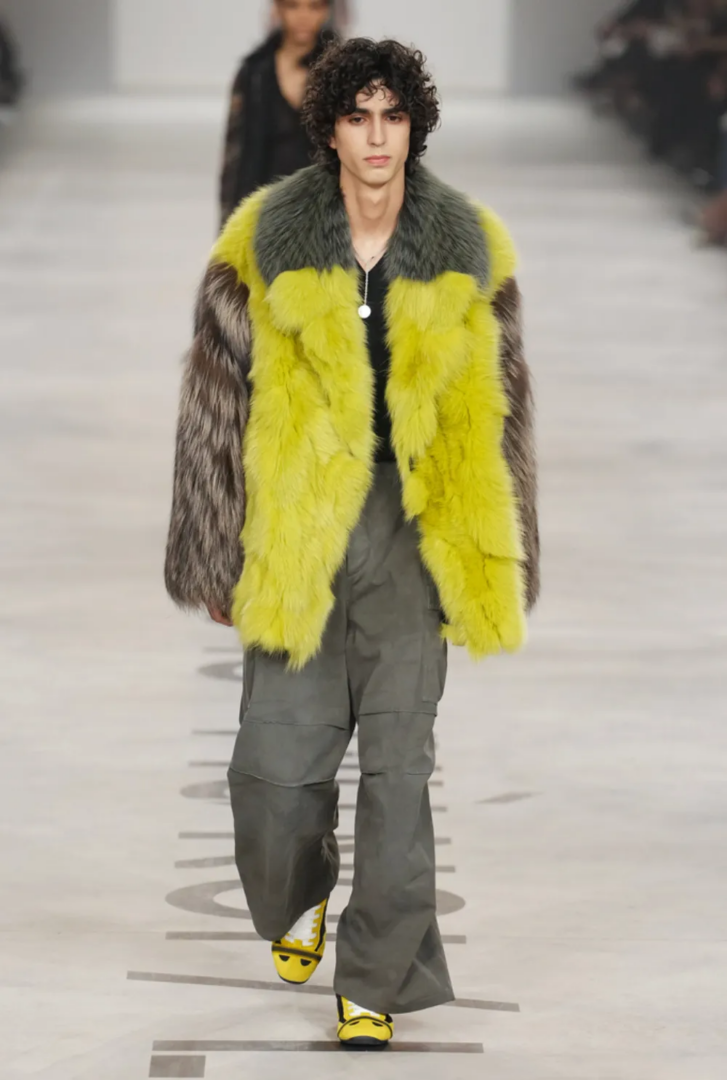
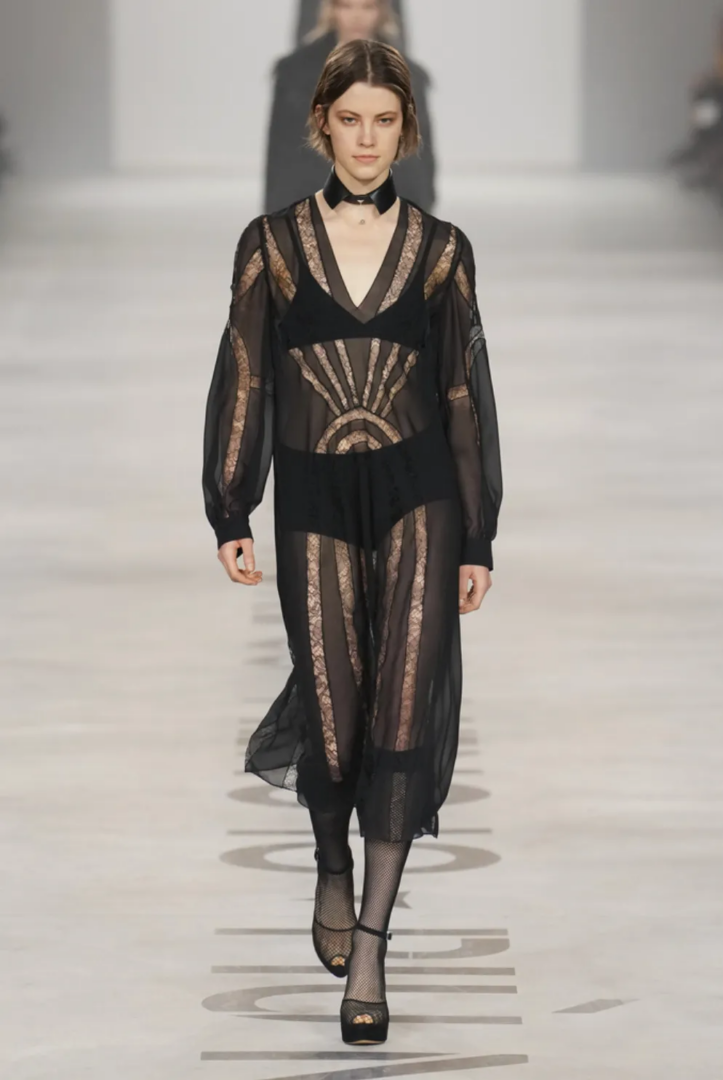
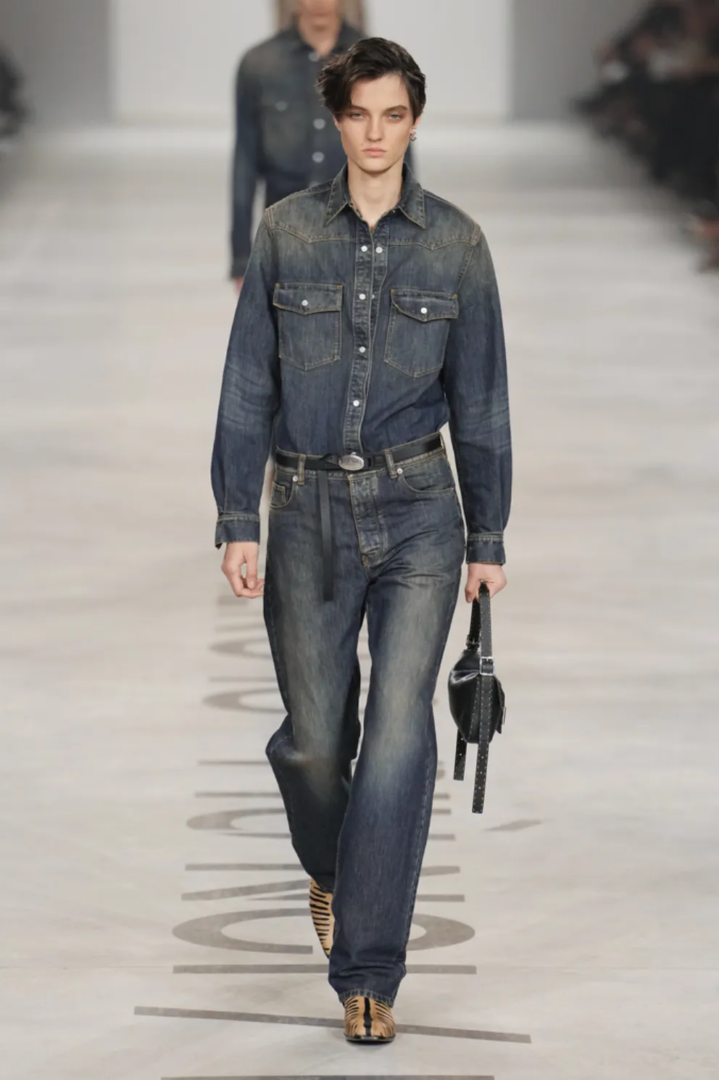
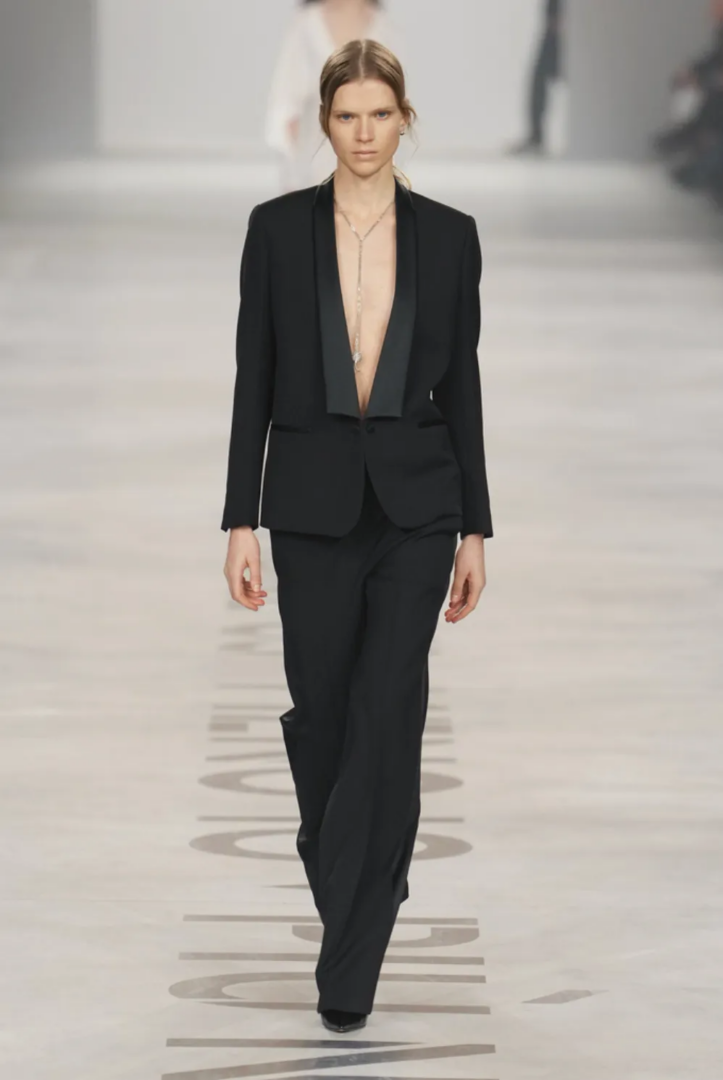
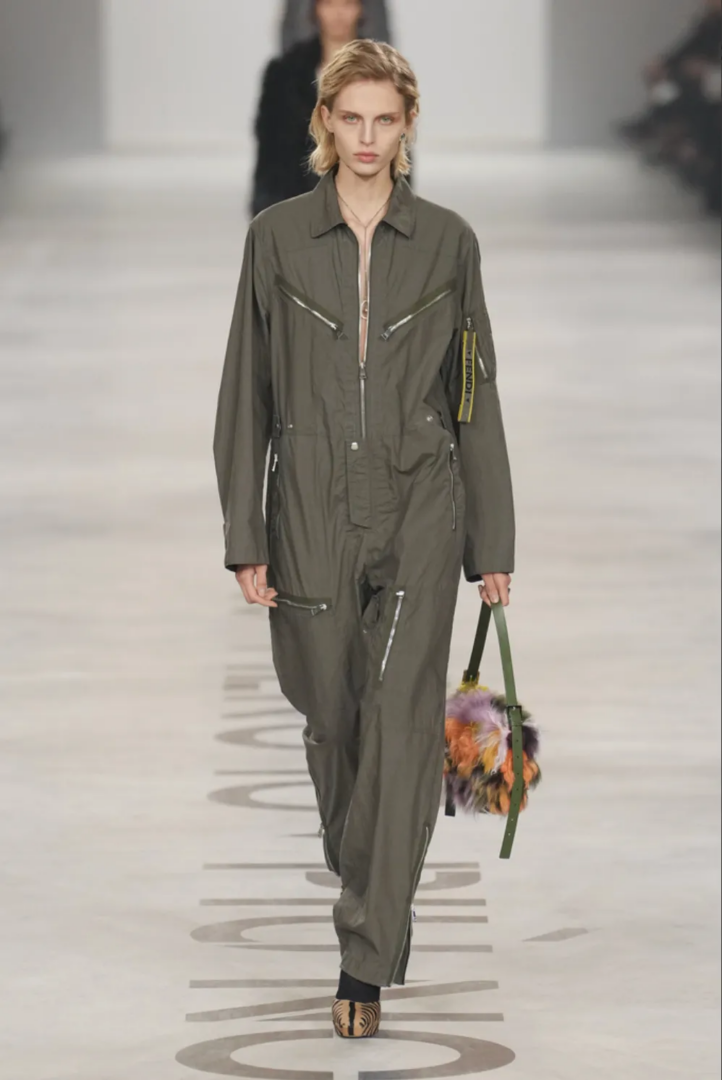
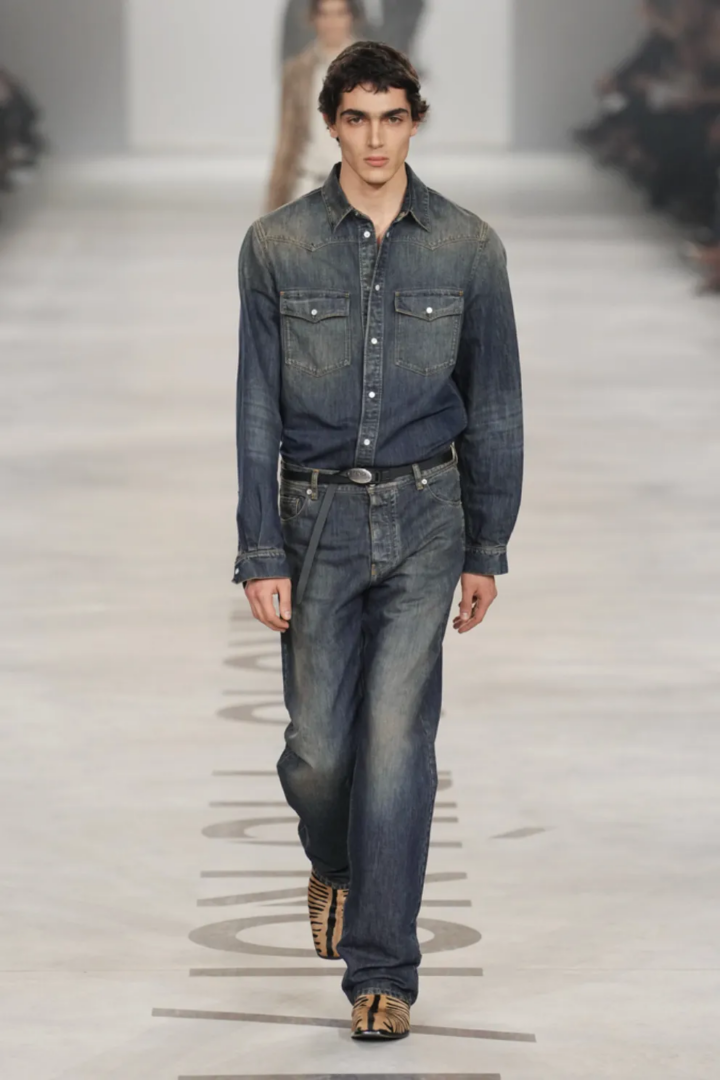
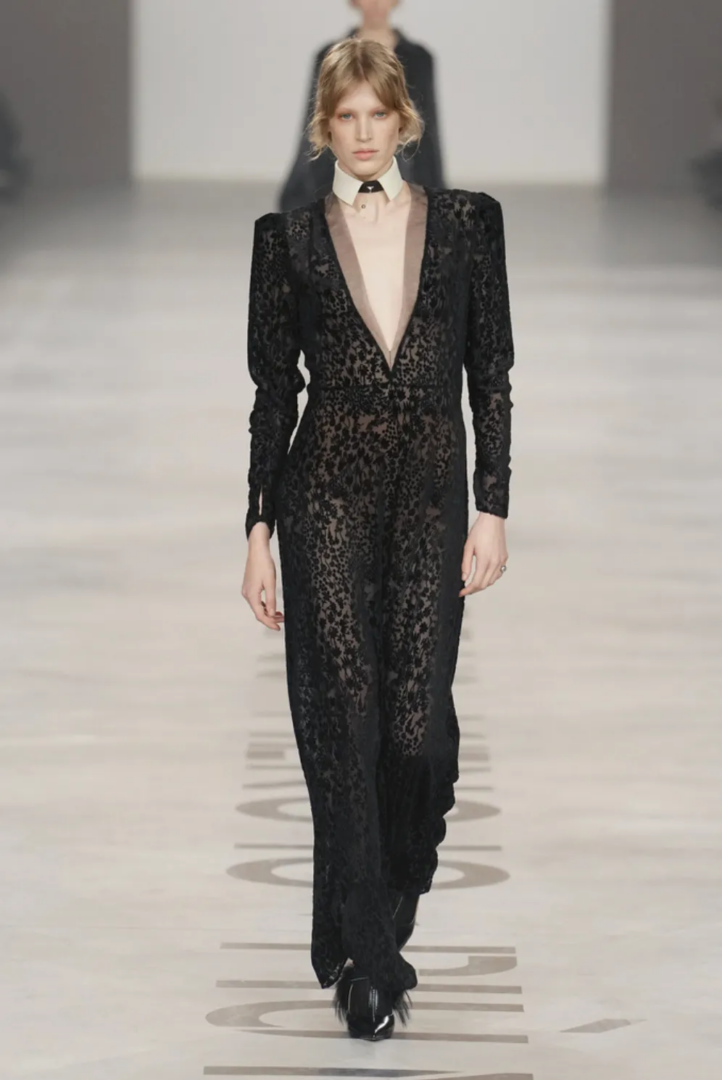
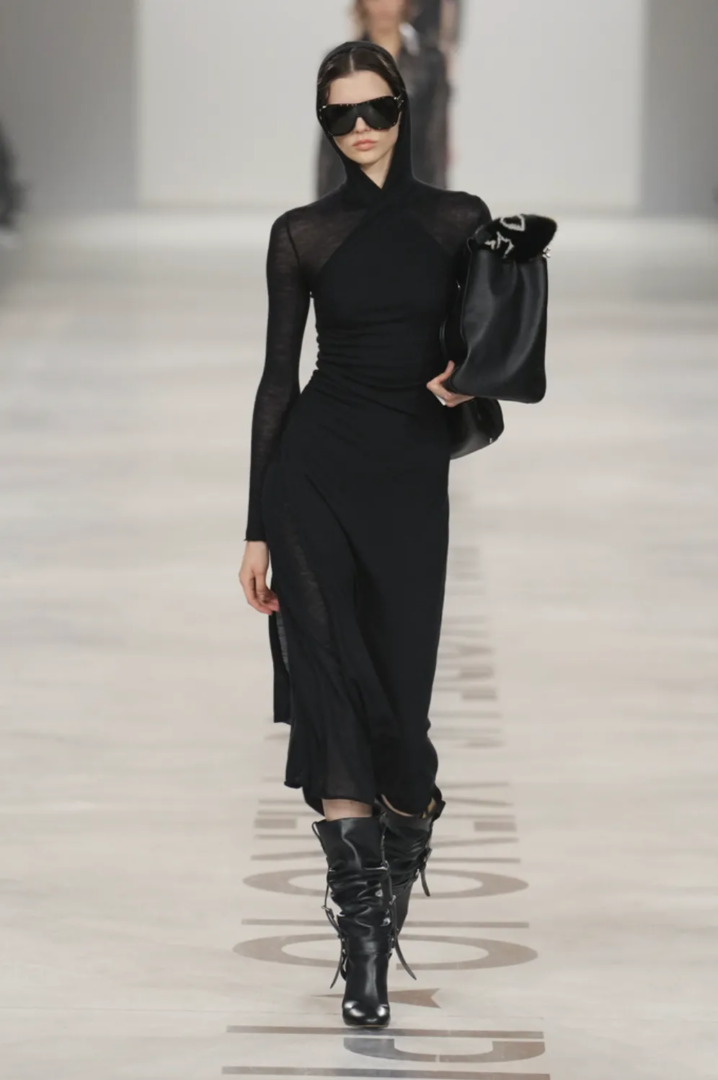
Six rows of arches. Nine across. A rigid geometry. The glow is austere. Yet Fendi’s identity has never been austere. Silvia Venturini Fendi favors “normality with a touch of perversion”: a fringe hat like hair, a cashmere sweater with a built-in glove, a shearling Baguette. Chiuri’s debut collection for Fendi, presented on February 25, 2026, clarified the direction.
An Ode to Black and the Logo – Who’s the Fendi client
The Fendi client is not the studiedly disheveled Paris intellectual associated with Saint Laurent or Celine, nor the controlled elegance of Armani, nor American campus preppy style. Even Venturini Fendi has acknowledged how difficult that client is to define. For her, style means lightness, delicate fabrics, and a measured imperfection—raw hems, texture, minimal bulk. Speaking at Teatro della Cometa in Rome shortly before the show, Chiuri described a global client in search of craftsmanship, signaling continuity with what she had begun at Dior.
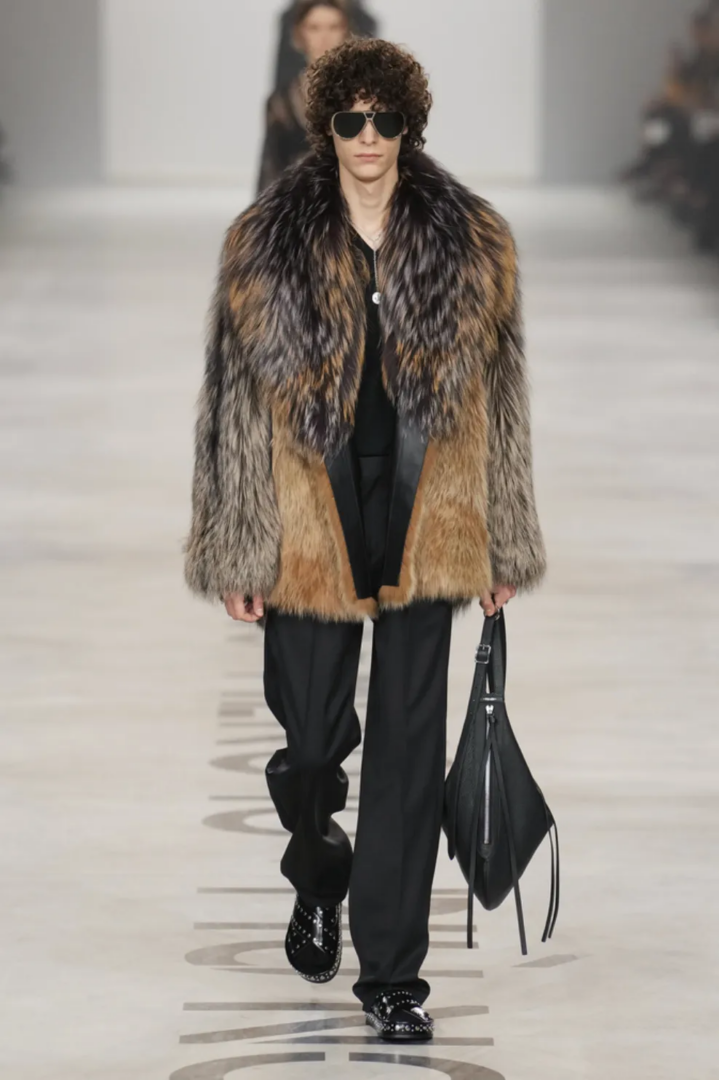
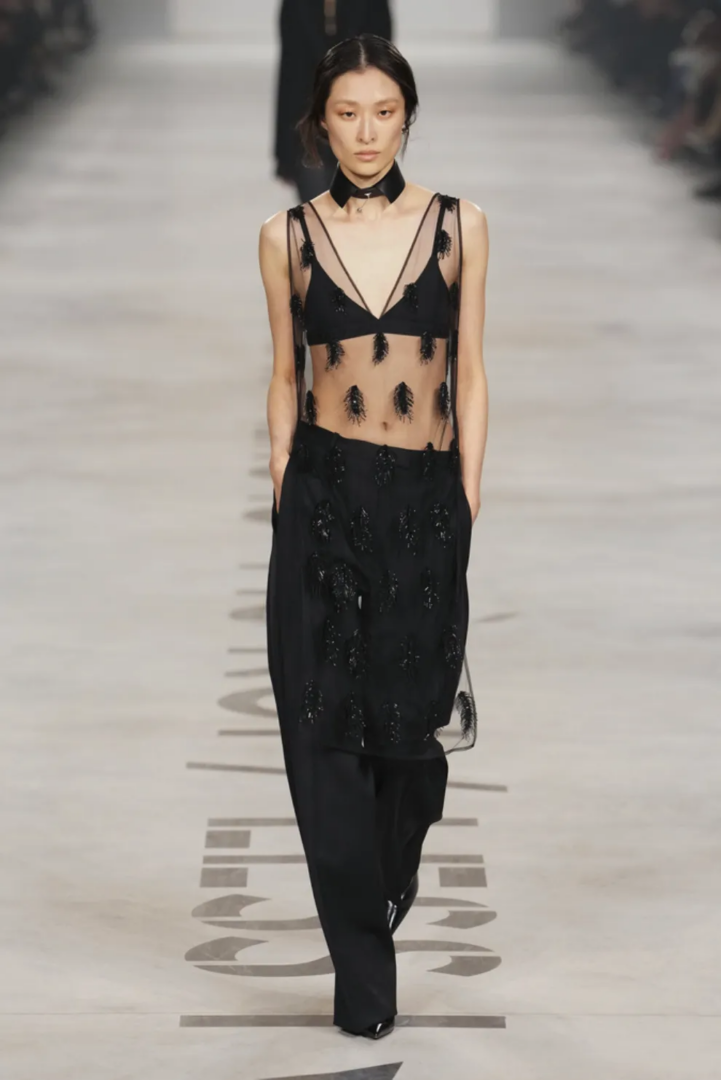
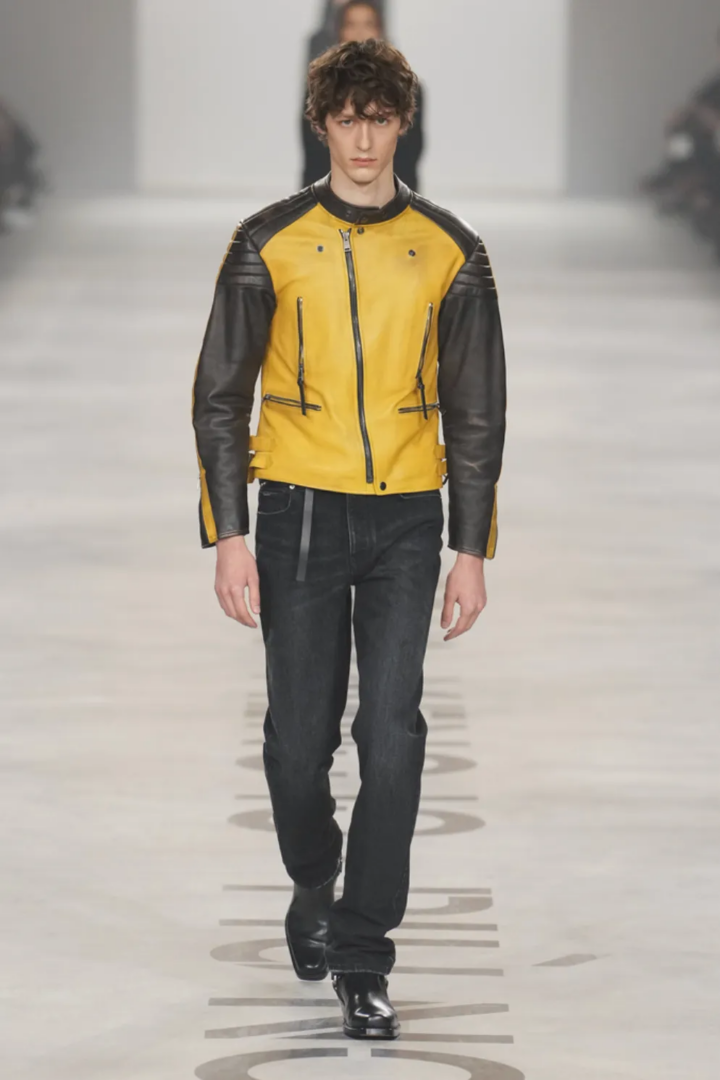
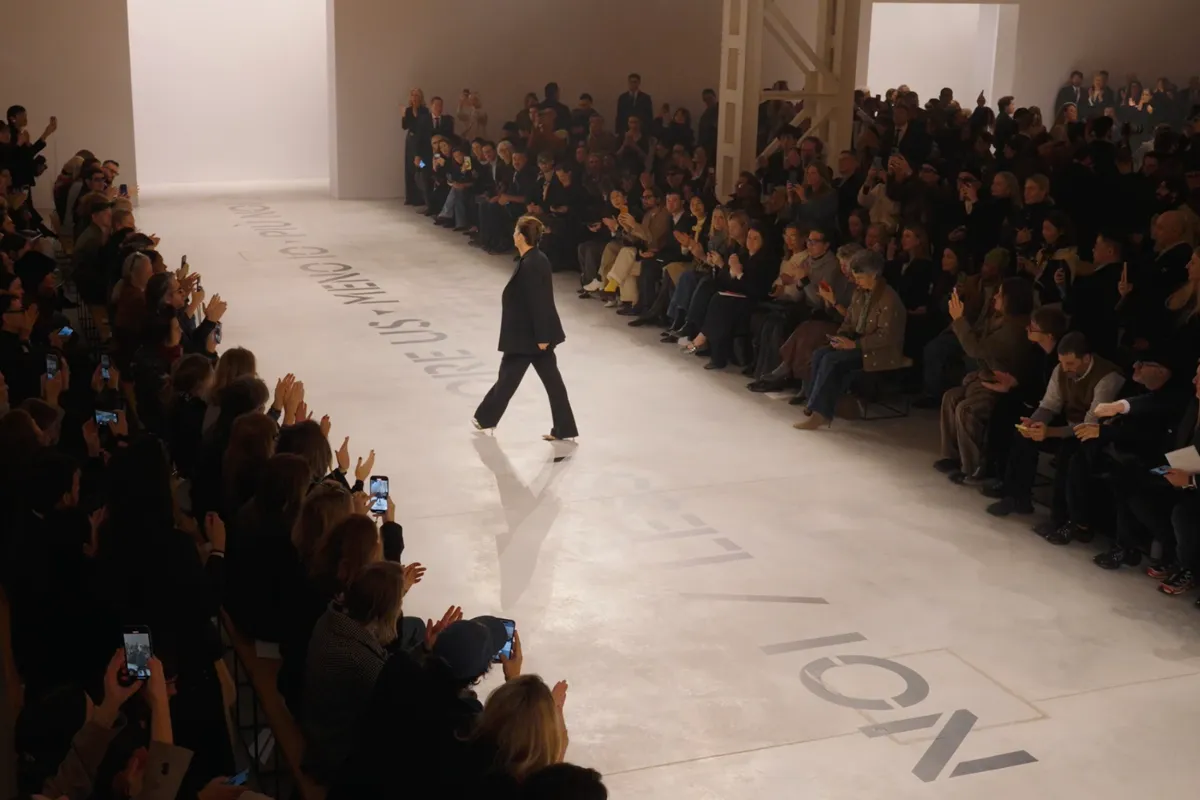
Across the runway floor appeared the words Less I, more us, a reference to her return to the house where she worked from 1988 to 1999 under the five Fendi sisters. The collection was co-ed, presented as a new chapter. Fendi’s double F originally stood for Fun Fur, Karl Lagerfeld’s concept of making fur playful. His versions were colored, fluorescent, even pasta-shaped, theatrical in spirit. In Chiuri’s debut, seventeen looks were black, featuring ballet skirts, lace, laser-cut leather, and precise silhouettes.
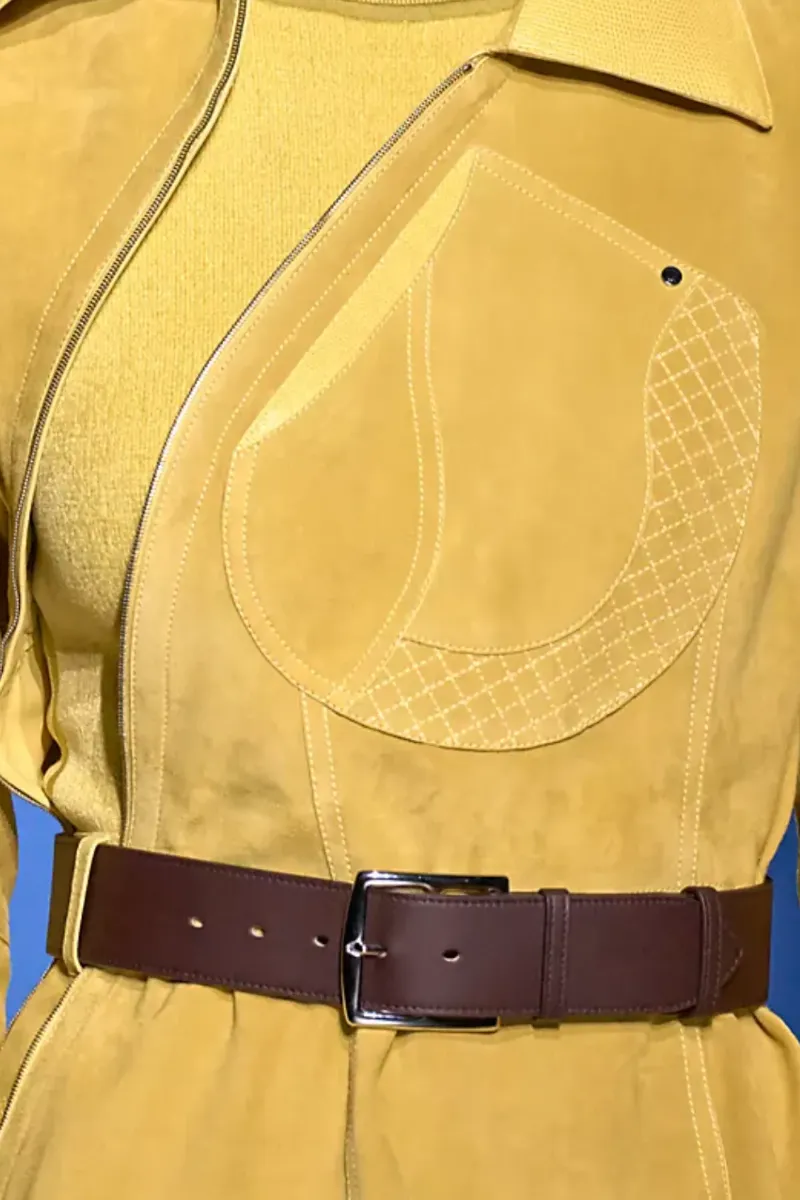
If the creative director’s role today is to reflect the world we inhabit, Chiuri fulfilled it. The prevailing tone was black, with color appearing only in restrained flashes of animal print, plaid, yellow, and red. The logo was redesigned. Working with Leonardo Sonnoli, Chiuri restored the pre–Fun Fur mark, recalibrating the letters into balanced squares—an echo of the arches of the Palazzo della Civiltà Italiana and, perhaps, of Milan’s iron gates.
According to the Fashion Pack, Milan Is a Gray Prelude to the Real Fashion Week: Paris
In 2010, journalist Holly Brubach argued that Milan, despite being home to global designers, lacked prestige. The fashion pack arrives four times a year, complains about weather and traffic, shops on Via Montenapoleone, then leaves quickly for Paris. Ask anyone from Rome, Florence, or Bologna and they’ll say Milan is all work—industrial, gray, without warmth. “I’ve heard kinder remarks about Cleveland,” Brubach wrote.
In Paris, fashion is political. The Ministry of Industry supported the creation of the Institut Français de la Mode. Shows take place in museums. Presidents and ministers oversee the sector. When Yves Saint Laurent died, it was declared national mourning. In Italy, that status went to Berlusconi. Not Valentino. Not Armani. Paris Fashion Week lasts ten days. Milan’s lasts five and a half. The first bill targeting fast fashion was passed in Paris.
Another Milan: Villa Necchi and the Discipline of Modernism
Luca Guadagnino’s Io sono l’amore (I Am Love), 2009, shifted that perception. Behind iron gates, he showed another Milan: bourgeois restraint. Tilda Swinton in tailored suits. Mother-of-pearl jewelry. Woven leather bags. Villa Necchi Campiglio. Leather-paneled dining rooms. Formal table settings.
This Milan reflects modernism at its most controlled: classical proportions, essential forms, large rooms, deliberate emptiness. In Milan, the twentieth century broke with the past and imposed order. Creativity sits inside discipline. Beauty emerges from tension—sensuality against structure. That is how Swinton’s character learned to be Italian.
Silvia Venturini Fendi once described a similar fascination. She tried to restore Rome as a fashion capital. It did not succeed. “Haute couture began here after the war,” she has said. “By the late 1980s it had weakened. Even Fendi moved from Rome to Florence, to Palazzo Pitti.”
“Beautiful confusion, like Rome,” Chiuri said. Yet Fendi, Roman, shows in Milan—the city where one lives and bills. Or lives in order to bill.
After bringing Dior to Rome for her final show, Chiuri left Paris. The last time she had shown there before Dior had been ten years earlier, as co–creative director of Valentino with Pier Paolo Piccioli. Valentino traditionally shows in Paris. In May 2025, the Dior runway referenced Cinecittà: Luchino Visconti, Fellini’s Casanova, Francesco Piccolo’s La bella confusione. “Beautiful confusion—like Rome,” she repeated.
A year later she returned to Rome—not as guest, but as creative director of Fendi. Appointed in October 2025. Another contradiction: Fendi is Roman, yet shows in Milan—the Italian capital of fashion and finance. Industry. Execution. A city defined by pragmatism—sharp, disciplined, unsentimental.
Maria Grazia Chiuri Before Fendi: The Parisian Swindle
“French haute couture leans toward the grand and the theatrical. That’s not my dimension—at least not always.” When she was appointed creative director of Dior, the Roman designer Maria Grazia Chiuri made it clear that the house’s signature silhouette—cinched waist, corolla skirt—was not hers. It had to change. Breaking the grip of the New Look became a goal. She loosened the internal structures. Kept the outline. Removed the restriction. In her final cruise show, there was no Bar Jacket. No high heels.
More than the feminist T-shirts, more than the tracksuit-princess contrasts critics debated, what mattered was the shift in the cruise format itself. She turned it from a luxury destination event into a show with intent. She questioned the idea that France owns creativity. She rejected the hierarchy that places craftsmanship below decorative art. A historical misunderstanding – or a Parisian bluff.
In each country where Dior staged its cruise shows, local artisans were treated as equals to haute couture. In a system built on taste hierarchies and on Charles Frederick Worth—the so-called inventor of haute couture—that position was disruptive. It stood against the culture of easy collaborations built on exchange: you promote me, I promote you.
Stella Manferdini