Holy water in plastic bottles: Crossover, Anastasia Sosunova and the crisis of belonging
A mass-produced white sock becomes a relic after touching Orthodox martyrs: artist Anastasia Sosunova and curator Chiara Nuzzi discuss fake faith and belief systems in Crossover at Fondazione ICA Milano
An Interview with Anastasia Sosunova & Chiara Nuzzi – Crossover: on ritual, identity, and the mutable architectures of community
Drawing from post-Soviet visual culture, vernacular spirituality, and the coded rituals of everyday life, Sosunova constructs unstable architectures of meaning. Domestic gestures, acts of protection, devotional objects, and discarded materials become charged sites where inclusion and exclusion coexist. There is no linear narrative. Instead, Crossover proposes a mutable territory in which symbols bind and divide, care turns into control, and shared rituals carry both comfort and constraint.
“In every shared gesture, there is a hidden tension,” says Anastasia Sosunova. “Rituals hold communities together, but they also reveal what we fear, what we inherit, and what we try to control.”
This tension — between care and coercion, belonging and exclusion — lies at the core of Crossover, Sosunova’s exhibition at Fondazione ICA Milano, curated by Chiara Nuzzi. Conceived as a fluid constellation of video, sculptural assemblages, and vernacular remnants, the exhibition unfolds as a series of thresholds where personal memory collides with inherited mythologies, and where intimacy becomes inseparable from collective expectation.
For Nuzzi, Crossover begins precisely from friction. “Anastasia’s work moves in the in-between — between faith and doubt, protection and suspicion, belonging and estrangement. It forces us to look at how communities construct themselves, and at what they demand from the individual.”
“I’m interested in what is inherited, but also in what is imposed,” Sosunova notes. “In the moments when identity fractures or reshapes itself.” Through the dialogue between artist and curator, Crossover emerges as a meditation on the porous borders between self and collective life — and on the rituals, myths, and intimate gestures we cross, consciously or not, in order to belong.
Conceptual Foundations of Crossover: Dialogue, Overlapping Media, and Curatorial Co-Authorship
RZ: Crossover insists on overlap and collision. What was the conceptual starting point for building the exhibition?
Chiara Nuzzi: Everything originated from dialogue with the artist. We were particularly interested in focusing on the current phase of her practice, which is defined by the overlapping of different media and by parallel lines of research that intersect and diverge. This is a moment of strong evolution in her work.
RZ: The press release mentions shifts in meaning that artifacts undergo through belief systems and collective agreements. How did you bring out these transformations without imposing a single interpretation?
CN: It was precisely Anastasia’s approach that enabled this multiplicity. Her practice is grounded in openness and in a continuous questioning of values, symbols, and meanings as they are transmitted through visual codes over time. These reflections resonate deeply with my own ongoing interest in how artworks are historically defined and legitimized within art history.
It is an almost anthropological inquiry, driven by a desire to understand what ultimately remains an act of faith. As Sosunova herself notes, genealogy is not something to be resolved, but “to be meditated on — an occasion to think about the forces of the world and our place within them.”
Temporal Disjunctions and Exhibition Narrative: Linking Works from 2022 to 2025
RZ: Some works span different periods, from 2022 to 2025. How did you construct a narrative arc across temporally distant contexts?
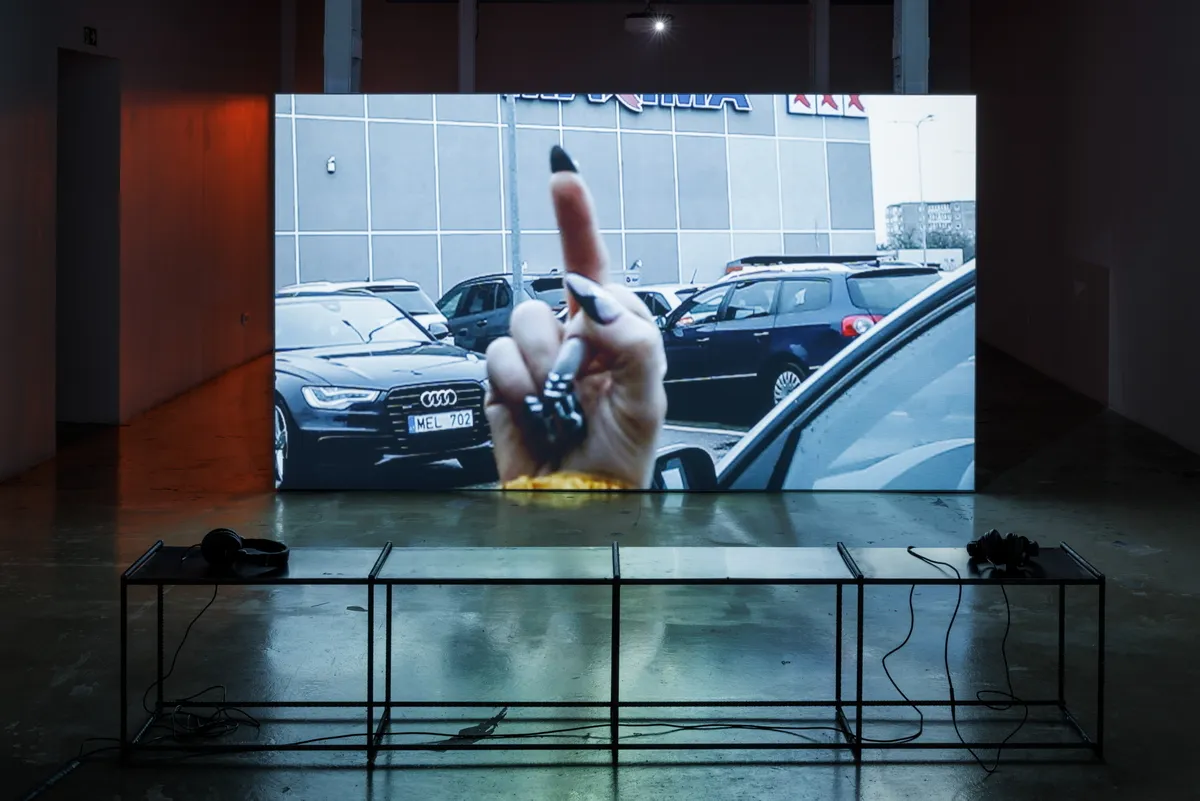
CN: Always in dialogue with Sosunova, we began by selecting the works themselves. The exhibition’s narrative emerged organically through this process. The video is the most recent pre-existing work, while the sculptures and prints were produced specifically for the exhibition. These new works function as connective tissue — linking the artist’s autobiographical past with a more collective historical dimension.
Conceptual Foundations of Crossover: Dialogue, Overlapping Media, and Curatorial Co-Authorship
RZ: Crossover insists on overlap and collision. What was the conceptual starting point for building the exhibition?
Chiara Nuzzi: Everything originated from dialogue with the artist. We were particularly interested in focusing on the current phase of her practice, which is defined by the overlapping of different media and by parallel lines of research that intersect and diverge. This is a moment of strong evolution in her work.
RZ: The press release mentions shifts in meaning that artifacts undergo through belief systems and collective agreements. How did you bring out these transformations without imposing a single interpretation?
CN: It was precisely Anastasia’s approach that enabled this multiplicity. Her practice is grounded in openness and in a continuous questioning of values, symbols, and meanings as they are transmitted through visual codes over time. These reflections resonate deeply with my own ongoing interest in how artworks are historically defined and legitimized within art history.
It is an almost anthropological inquiry, driven by a desire to understand what ultimately remains an act of faith. As Sosunova herself notes, genealogy is not something to be resolved, but “to be meditated on — an occasion to think about the forces of the world and our place within them.”
Temporal Disjunctions and Exhibition Narrative: Linking Works from 2022 to 2025
RZ: Some works span different periods, from 2022 to 2025. How did you construct a narrative arc across temporally distant contexts?
CN: Always in dialogue with Sosunova, we began by selecting the works themselves. The exhibition’s narrative emerged organically through this process. The video is the most recent pre-existing work, while the sculptures and prints were produced specifically for the exhibition. These new works function as connective tissue — linking the artist’s autobiographical past with a more collective historical dimension.
Exhibiting Crossover at Fondazione ICA Milano: Spatial Constraints, Autonomy, and Breath
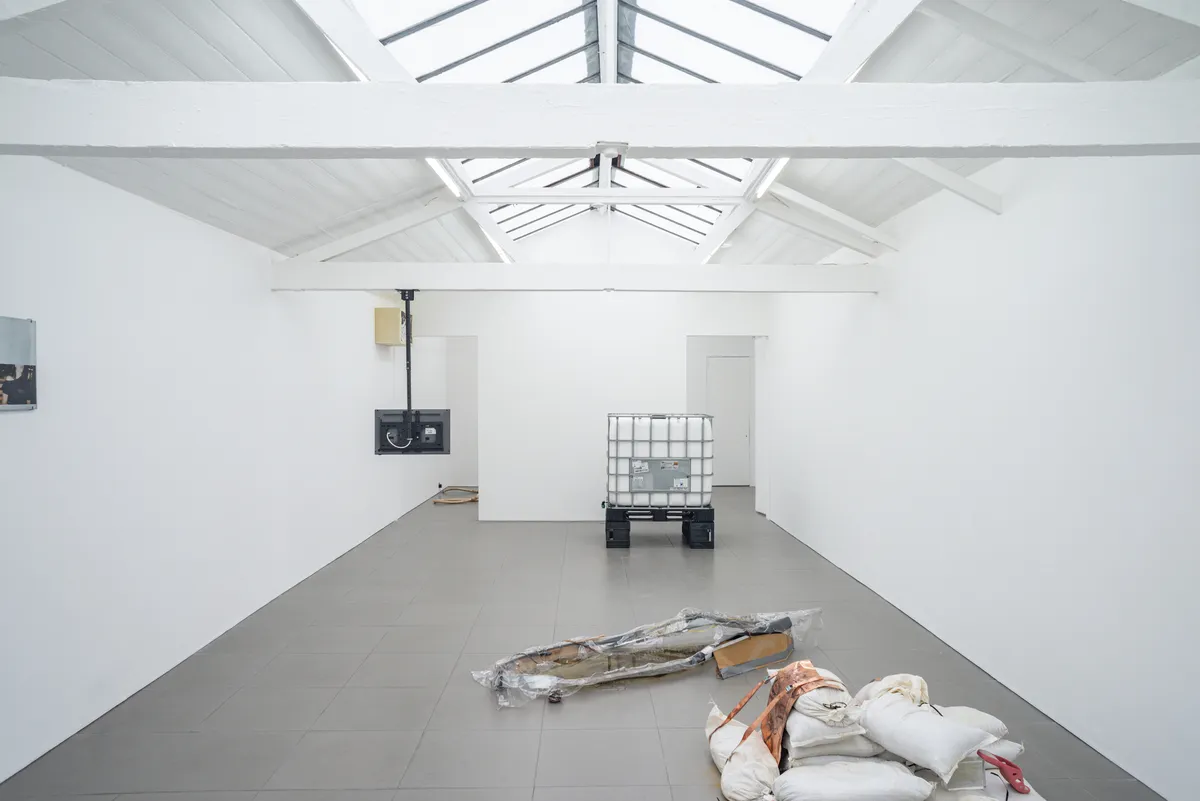
RZ: The exhibition is hosted in the project room at Fondazione ICA Milano. How did the space influence the exhibition design?
CN: The space is never neutral. Its dimensions inevitably shaped the number and type of works selected. It was important that the exhibition did not feel saturated — that each work could breathe, be experienced autonomously, and still coexist meaningfully with the others.
Ritual as Participation: Belief, Use, and Meaning in Express Method
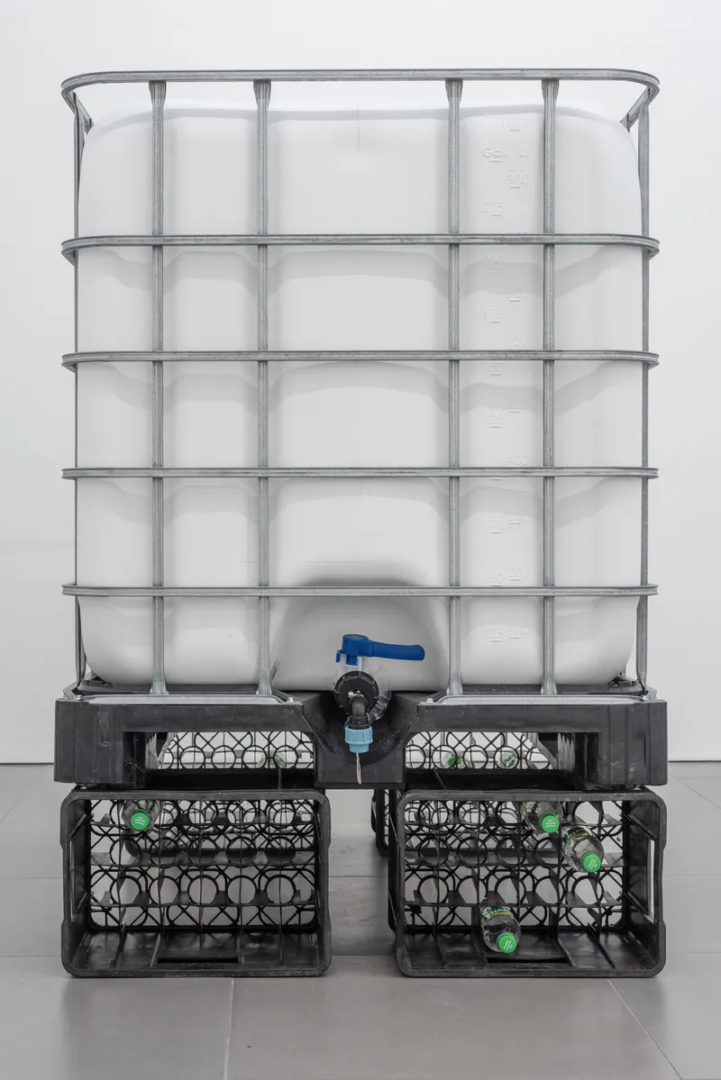
RZ: How does perception change when ritual becomes an active part of the installation, as in Express Method, where visitors can fill bottles and take them away?
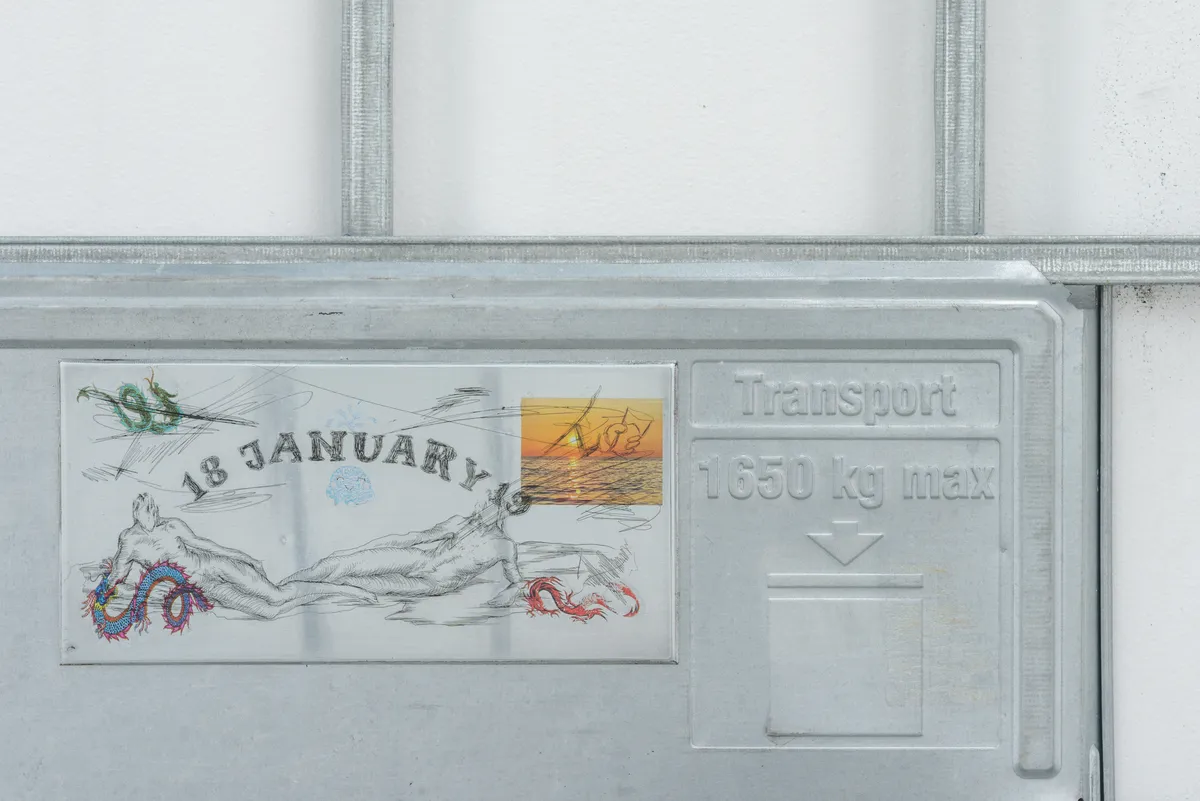
CN: The ritual itself undergoes a transformation. Sosunova uses ritual as a core element of her artistic grammar. From the outset, the work proposes a moment of redemption activated on January 18. But the essential condition is belief — belief in transformation through rituality.
Sosunova describes this tension as a “sweet spot” — a space where authenticity and manipulation coexist, and where meaning shifts through use rather than interpretation.
Intimacy, Magical Thinking, and Accessibility in Contemporary Installation Art
RZ: Sosunova often intertwines magical thinking with marginal or seemingly insignificant personal experiences. How did you translate this intimacy into an accessible exhibition language?
CN: That intimate dimension is central to her work and therefore becomes part of the exhibition language itself. It allows viewers to approach the works with ease, despite their complexity, and to empathize with them on a personal level.
Roughness, DIY Aesthetics, and Material Disorientation in Sosunova’s Sculptural Practice
RZ: Where do you locate material “roughness” in Sosunova’s work?
CN: For me, roughness is present across all media. There is a fundamental rawness, deeply connected to a DIY sensibility characteristic of the 1990s. This contributes to the sense of chronological disorientation one experiences when encountering her works.
RZ: How does assemblage allow memories excluded from official history to surface?
CN: Sosunova’s assemblage practice is deeply autobiographical. It combines collecting, discovering, and re-signifying objects. This subjective intimacy, paired with the tension of assembling disparate elements, enables alternative narratives and counter-histories to emerge.
Value, Provenance, and Erasure: Displaying the AB Prints
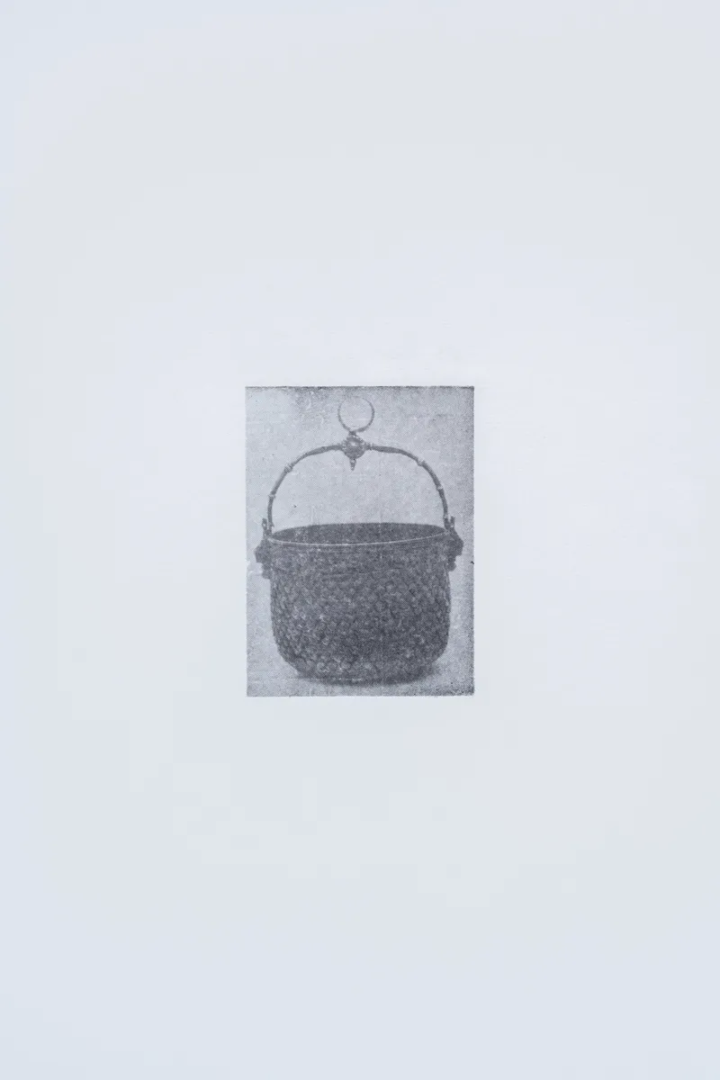
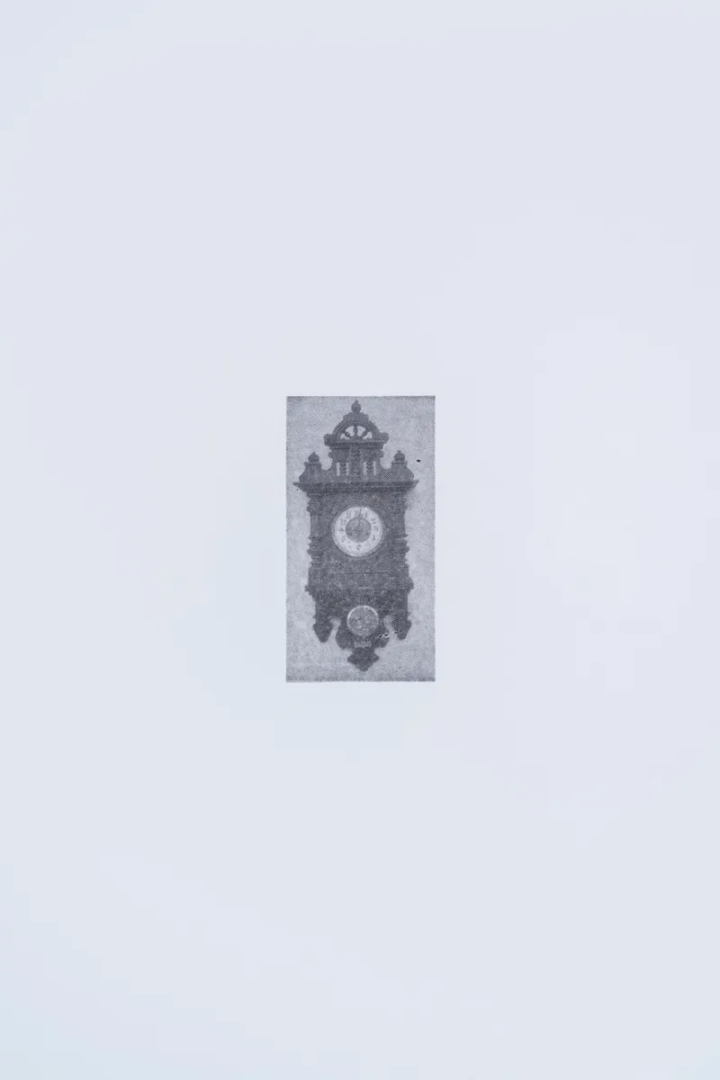
RZ: The AB Prints isolate elements from Western auction catalogues. How did you decide on their presentation?
CN: The decision was largely Anastasia’s, developed through dialogue. In solo exhibitions, I believe it is essential to leave artists significant agency over placement and display.
Anastasia Sosunova on Assemblage, Relics, and the Ethics of Material Belief
For Sosunova, materials are never neutral. “They bear witness to real events and to the imprints they leave in our bodies.”
Impossible Assemblages, Authenticity, and the Tension Between Belief and Manipulation
RZ: What role do waste and tactile material traces play in negotiating authenticity and cultural manipulation?
Anastasia Sosunova: Authenticity is an obsessive category — soothing yet counterproductive. Excessive manipulation, on the other hand, leads to fatigue and disorientation. In a world where everything can become a contact relic, the interesting zone is that precise tension.
Material traces introduce authenticity — something that bears witness to real events. But then the question becomes: how are they used? Like the water from Express Method, it depends entirely on what you choose to do with it.
Genealogy, Globalization, and the Concept of the “Impossible Assemblage”
RZ: How do you engage with the genealogy of materials drawn from different belief systems and histories?
AS: I use the term “impossible assemblage,” inspired by the “impossible bouquet” paintings of 18th-century Dutch masters — arrangements that could never exist in reality. Today, globalization makes such impossibilities commonplace.
Impossibility now refers to incoherence: conflicting politics and value systems sharing the same shelf. The religious tradition I grew up in is something I approach as an agnostic, queer person rejected by that system. Genealogy is not something to solve; it is something to meditate on — like divination.
Ethics, Fan Art, and the Politics of Reclaiming Symbolic Violence
RZ: What ethical choices arise when working with materials tied to politically sensitive collective memories?
AS: My favorite art form is fan art — it often tries to undo misrepresentation. I think I do something similar. I want art that embraces a shadow self.
A mass-produced white polyester sock exhibited at ICA Milano becomes a contact relic after touching the relics of three Orthodox martyrs who were Lithuanian — killed by pagans who were also Lithuanian. I love this sock because it mirrors contemporary polarization, where violence is always attributed to “others,” never to “us.”
Plastic, Reuse, and Folklore in Post-Socialist Material Culture
RZ: What discussions around reuse and material responsibility emerge through plastic objects in the exhibition?
AS: Sculpture is inseparable from socio-material conditions. Growing up in Eastern Europe in the 1990s, plastic was precious — bottles were reused for holy water, homemade wine, rubbing alcohol.
Today plastic floods our bodies and environments. As a wannabe anthropologist, I collect and observe. Plastic plays a folkloric role in our lives — accessible, recognizable, and derelict.
Sacred Ambiguity, Sustainability, and the Many-Headed Self
RZ: How can a project operating between the sacred and the everyday engage debates on sustainability today?
AS: I imagine myself as a many-headed animal, with each head in conflict. Art practice is my way of asking: do we let them coexist, or do we cut some off? And if we do — where?
Video as Liminal Space: Autobiography, History, and Contemporary Faith
RZ: How did you integrate the video work into the exhibition flow?
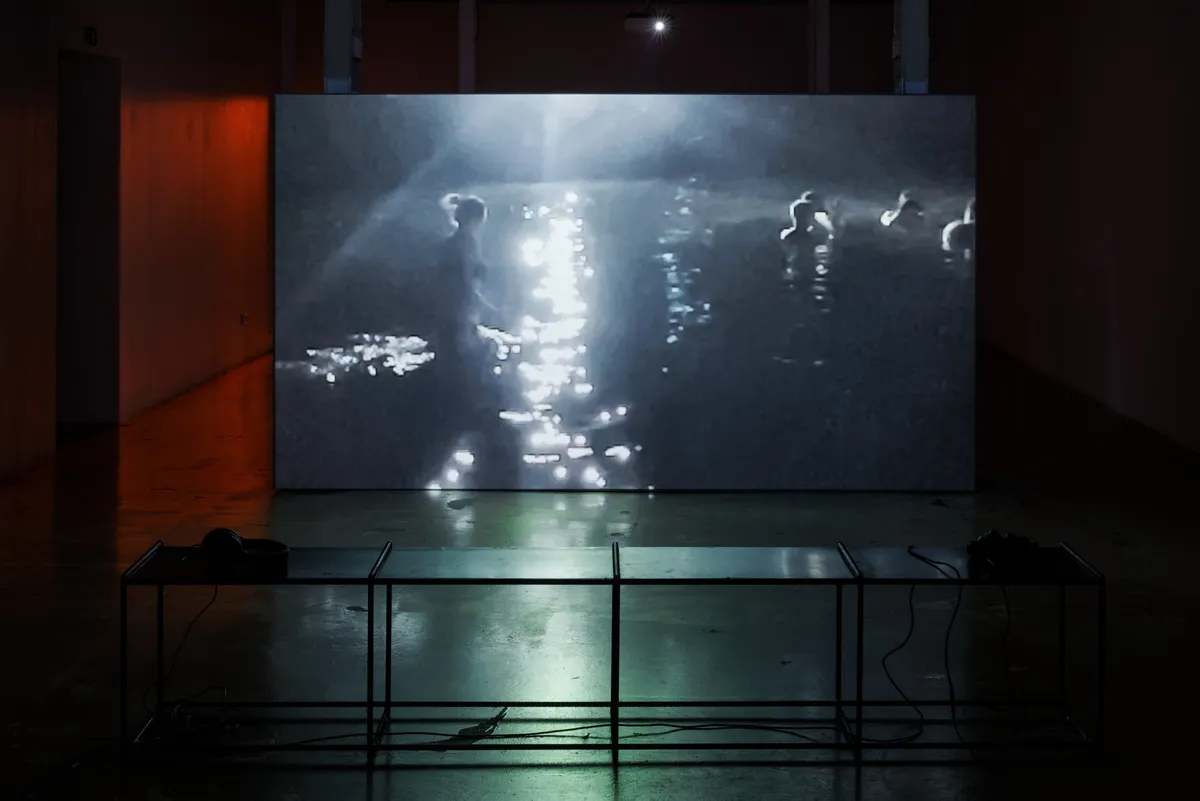
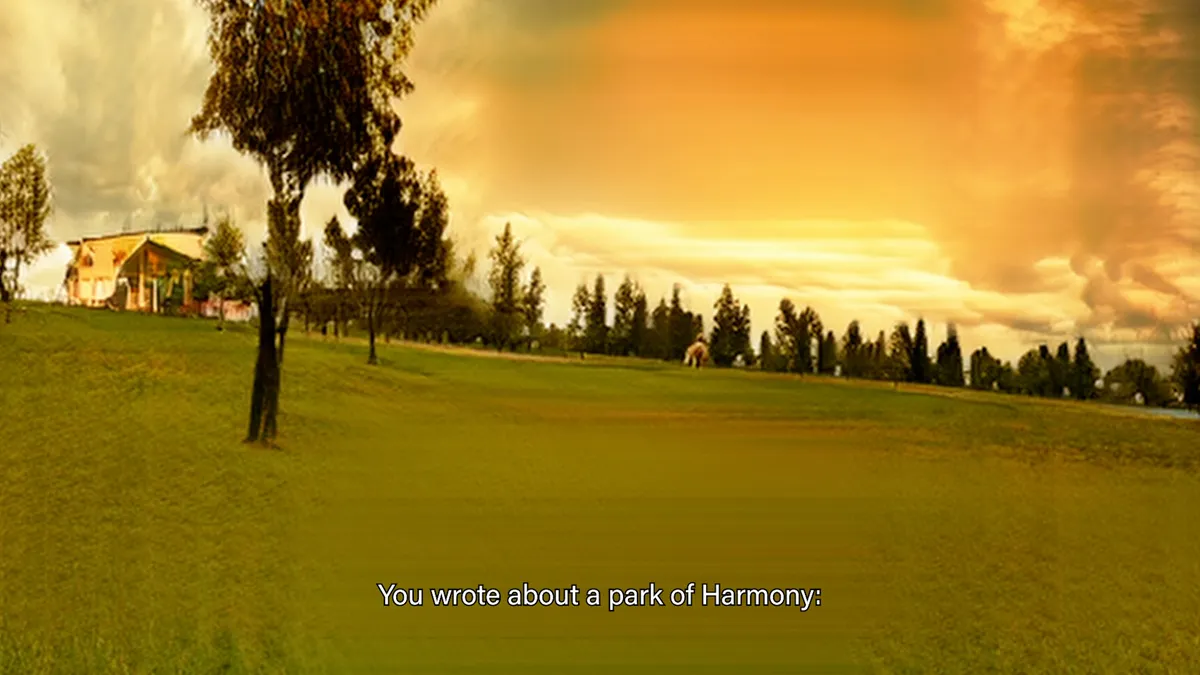
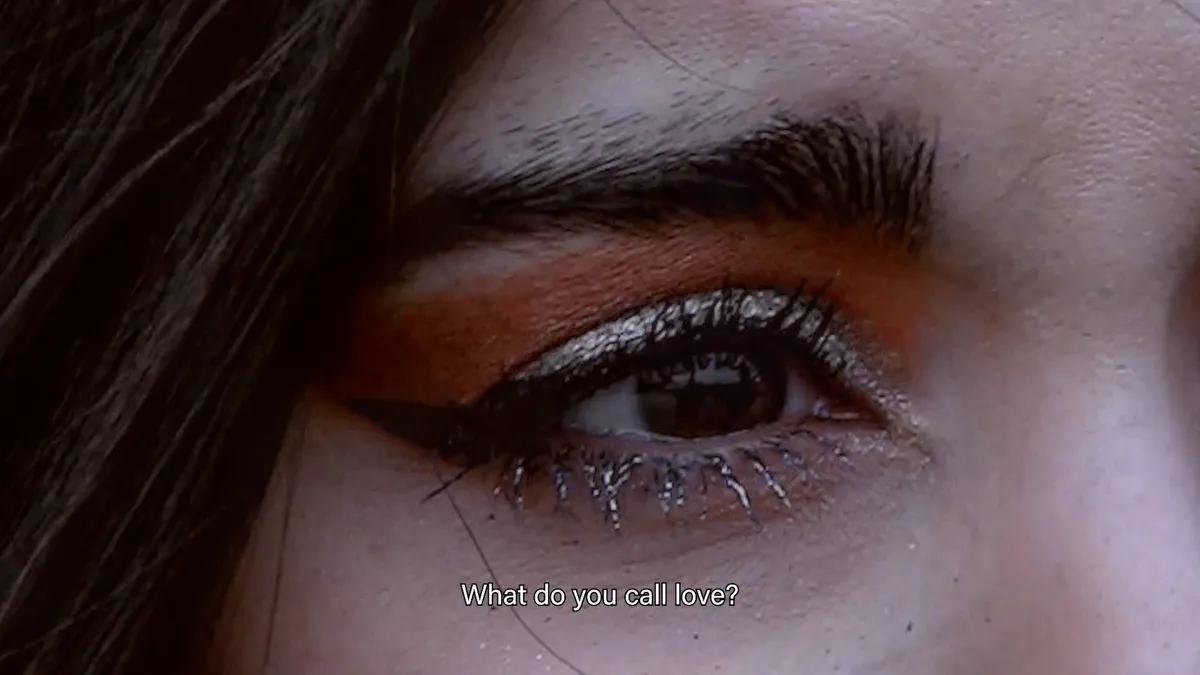
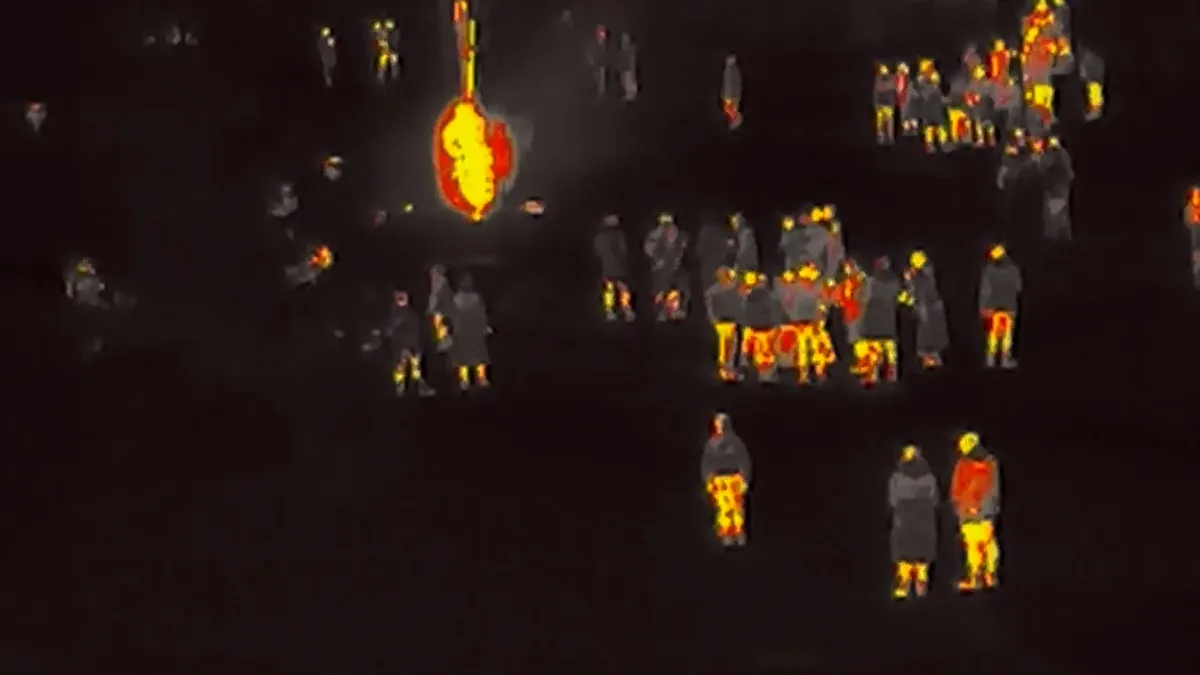
CN: The video creates suspension — between autobiography and historical reconstruction, particularly through the story of Senukai and post-independence Lithuania. Sosunova calls this a “deliberate incoherency,” rather than a stable narrative.
RZ: How does video sustain ambiguity without collapsing into a single meaning?
CN: There are no fixed strategies. It depends entirely on the artist’s poetics and on what is embedded within the work itself.
Counter-Histories, Institutional Responsibility, and the Politics of Belonging
RZ: What counter-history emerges from Crossover, and what responsibility does this place on institutions?
CN: Crossover gives voice to those excluded from official narratives — those who embrace multiplicity rather than certainty. Institutions like Fondazione ICA Milano have a responsibility to support these perspectives and to imagine alternative futures.As Sosunova reminds us, her practice is about staying with contradiction — imagining the self as “a many-headed animal” without resolving its conflicts.
Ritamorena Zotti