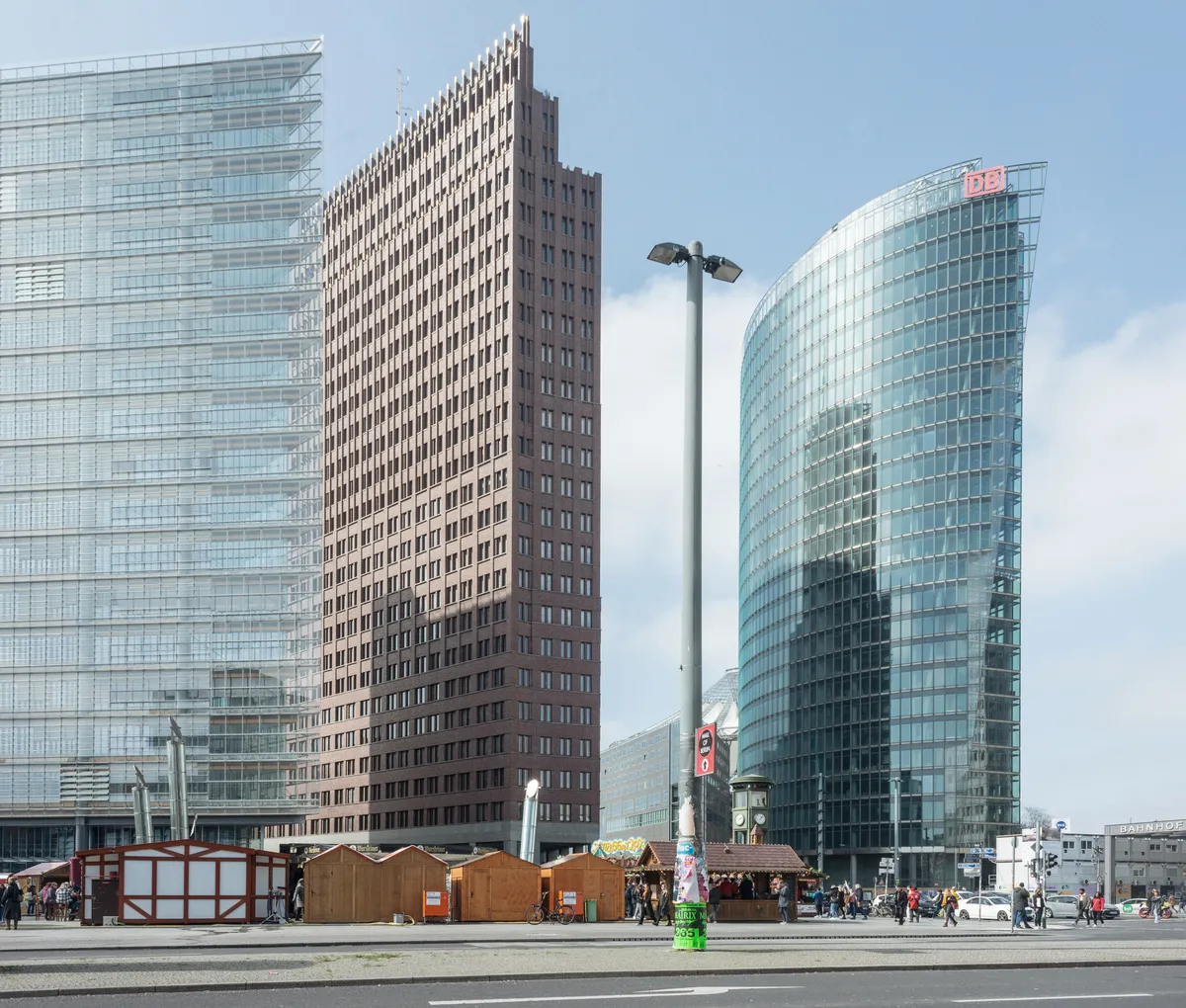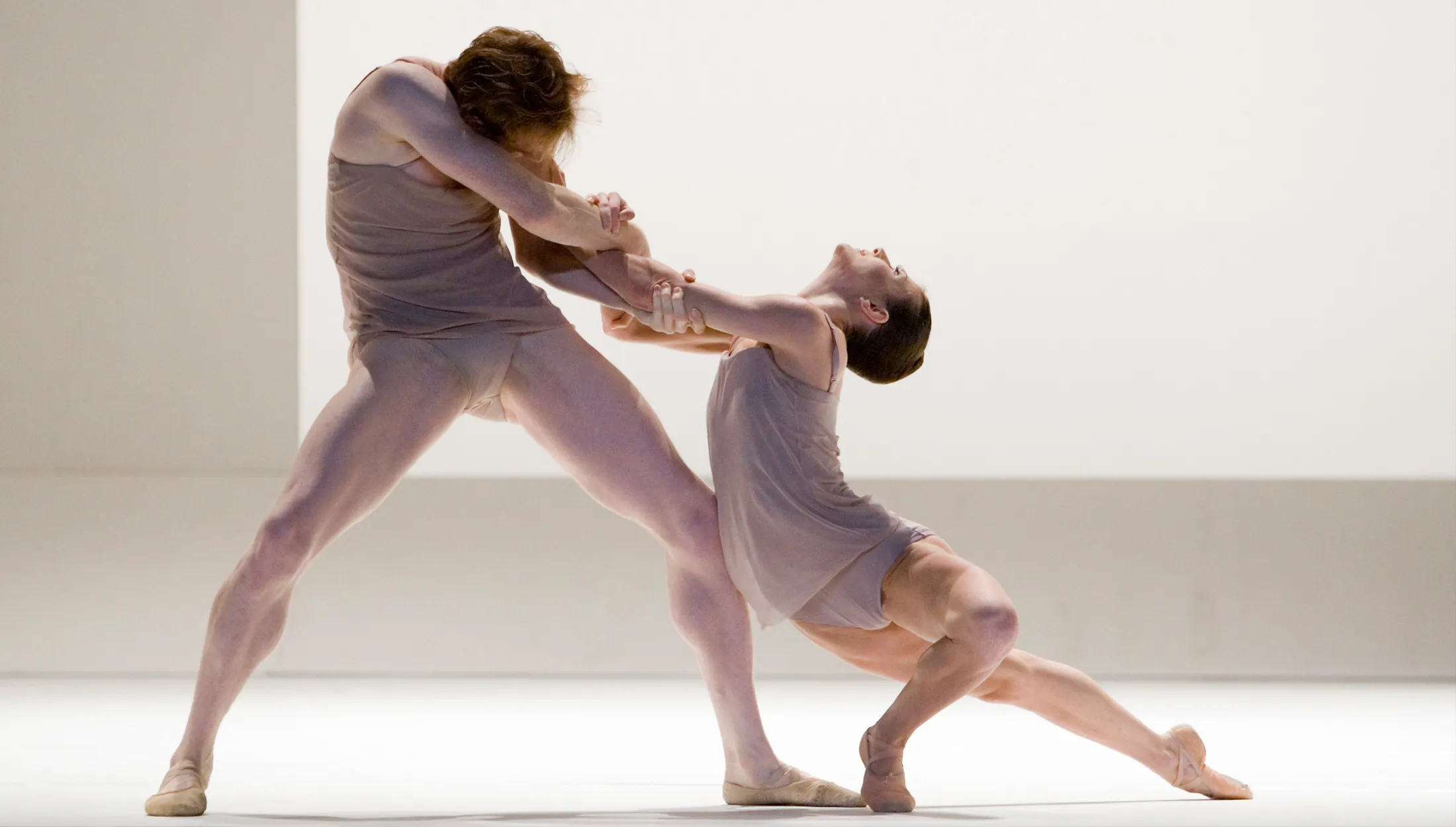
God Save the Ballet! Praise to McGregor, Maillot and Naharin at La Scala
Teatro alla Scala, maybe the primary theater in the world, stages three choreographies that make a case for contemporary dance’s continued relevance
Ballet is more alive than ever. When Timothée Chalamet declared opera ready to die, he gave voice to a broader prejudice about the performing arts. He lost the Oscar. Marty Supreme, nine nominations — no wins.
Dance — whether classical or contemporary — operates on a register that other art forms cannot easily access. It is the body itself that moves, that expresses, that carries meaning: not a voice, not a brush, not a camera, but flesh and bone in real time, in shared space. The body does not represent the world from a distance; it inhabits it, and in doing so it reads it — laterally, through the oblique angle of gesture and rhythm, and directly, because there is nothing more immediate than a human form in motion before an audience that has chosen, consciously, to be present and to pay attention.
Far from being an anachronism, these are art forms that remain fully engaged with the present — with how power moves through bodies, how time is experienced, how collective memory is stored in physical form. The program La Scala presents on March 31 makes exactly that case: Wayne McGregor’s Chroma, Jean-Christophe Maillot’s Dov’è la luna, and Ohad Naharin’s Minus 16, all new to this stage and performed by the theatre’s own corps de ballet in a new production. Three works, three choreographic languages, and a single collective argument against complacency.
The evening is organised as a benefit for Fondazione Ospedale Niguarda ETS, the charitable foundation supporting ASST Niguarda, Milan’s major public hospital. Rolex co-presents the evening as a partner of the theatre, as part of an ongoing relationship supporting the institution’s productions and special initiatives.
Ohad Naharin and the Gaga language: origins, method and why it changed how dancers generate movement
Ohad Naharin may be the one who has most changed how dancers think about movement — not just what they do with their bodies, but how they inhabit them. Born in 1952 in Mizra, Israel, Naharin’s formation was anything but linear. He entered the Batsheva Dance Company in 1974 with limited formal training, was soon invited by Martha Graham to work in New York, and subsequently studied at the School of American Ballet and the Juilliard School. The pluralism of that education left its mark: Naharin absorbed multiple traditions without fully belonging to any of them. In 1990, he assumed the artistic directorship of Batsheva — a position he would hold until 2018 — and it was there that he developed the movement language that defines his legacy.
That form is called Gaga. Not a technique in the conventional sense — no prescribed positions, no external shape to replicate — but a practice of perception: grounded in internal sensation, imagination, and a cultivated willingness to move beyond codified motor patterns. Intensity, elasticity, and reactivity are its values. The influence Gaga has exerted on a generation of performers and choreographers is considerable, contributing to a broader shift in contemporary dance away from the visible result and toward the quality of the generating impulse. Naharin will speak about Gaga’s origins, evolution, and the internal life of a company built around it in an interview appearing in the next issue of Lampoon – MECCANO.
Minus 16: cumulative structure, audience proximity and the meaning of Echad Mi Yodea in contemporary choreography
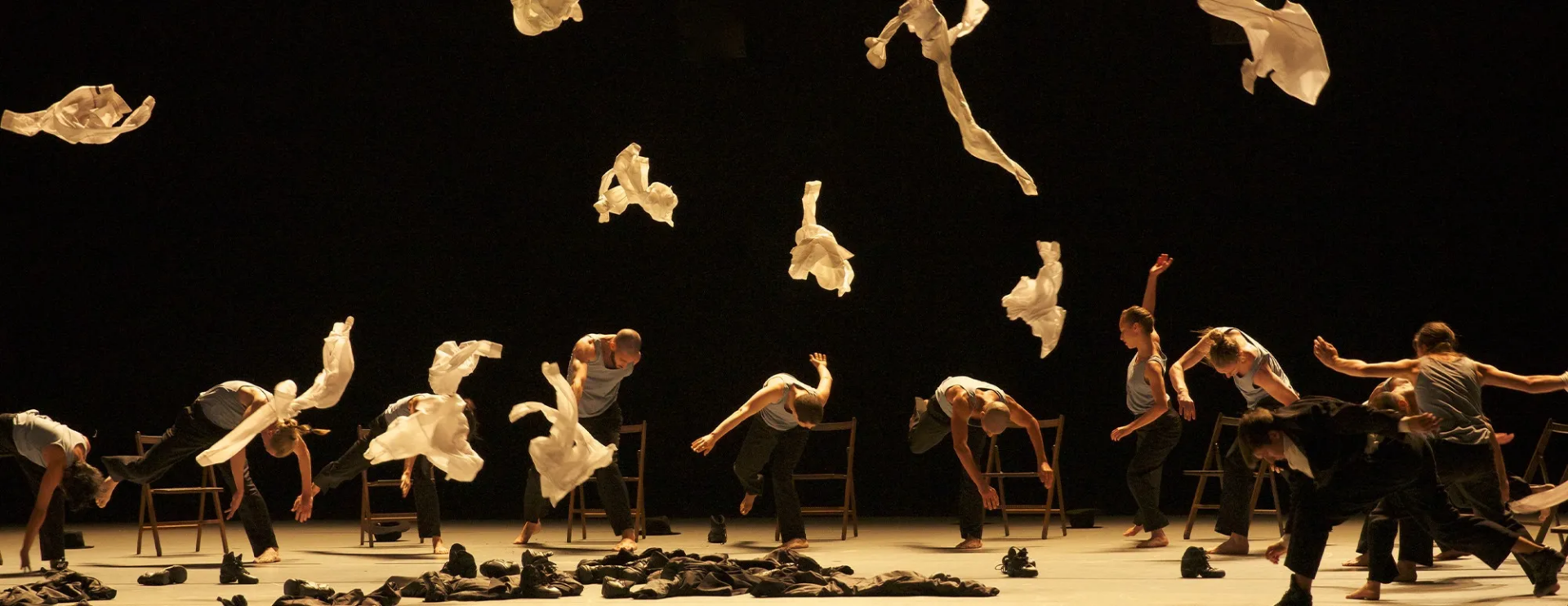
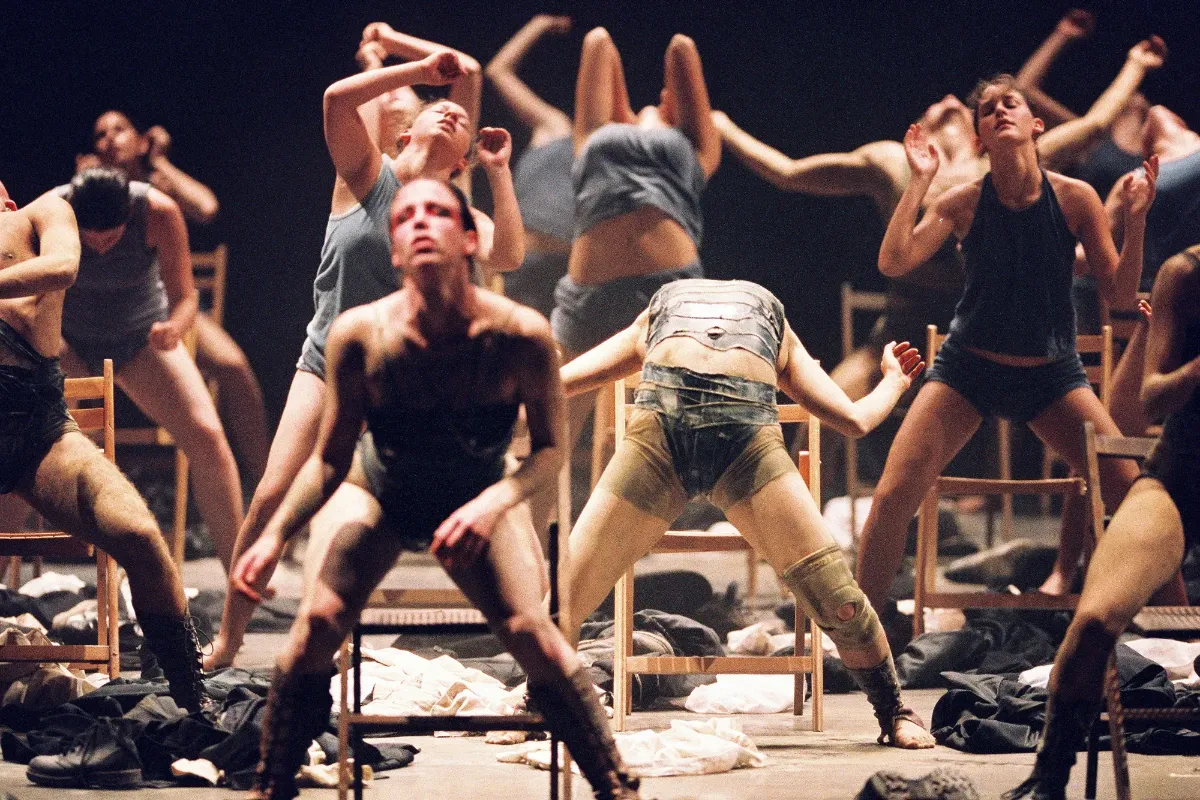
Minus 16 (1999) is assembled from choreographic material drawn from Naharin’s earlier works, functioning as a kind of archive in motion. The piece proceeds through a sequence of physical situations — improvisation, synchronization, individual exposure, group dynamics — that shift register abruptly and without explanation. Minus 16 refuses frontal presentation: dancers move through the audience, dissolve the boundary between stage and stalls, and place their bodies in direct proximity to spectators who may not have anticipated quite so much intimacy. The piece oscillates between irony and controlled violence, between lightness and tension — a characteristic Naharinian refusal of tonal consistency.
The score is built by juxtaposition, assembling a deliberately disparate set of materials: Cha-Cha De Amor arranged by Dick Dale, Vivaldi, Harold Arlen arranged by Marusha, Asia 2001, Chopin. The most recognizable element — and the structural spine of the work’s most famous sequence — is Echad Mi Yodea, a traditional Jewish song performed at the Passover Seder, the ritual dinner marking the exodus from Egypt, here arranged by Tractor’s Revenge and Naharin himself. The title translates as “Who Knows One?” and introduces a cumulative structure: each verse associates a number with a symbolic meaning (one is God, two the Tablets of the Law, three the Patriarchs, and so on through thirteen), with every new stanza repeating and building on all the previous ones. The choreographic sequence aligned with Echad Mi Yodea is organized with equivalent logic: dancers arranged in a line perform movements that accumulate and transform with each cycle of the song. Music here is not accompaniment. It is a constraint.
Wayne McGregor and the architecture of the body: Chroma, minimalism and the tension between Joby Talbot and Jack White III
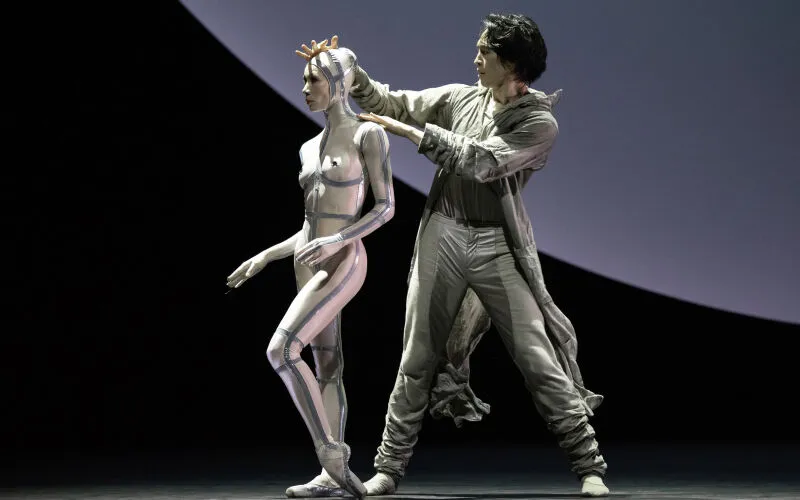
Wayne McGregor, born in 1970 in the United Kingdom, founded Random Dance — now Company Wayne McGregor — in 1992. His choreographic research is organized around a single, persistent question: what happens when you treat the body as a complex system rather than an expressive instrument? The implications of that question have led him into sustained dialogue with visual artists, architects, scientists, and musicians, and the work that results from those collaborations tends to interrogate the physical and cognitive limits of movement rather than celebrate its fluency. Chroma, created in 2006 for the Royal Ballet, is the piece that crystallized his international reputation. The title refers to color in its Greek etymological sense, and the work is built on an aesthetic of deliberate reduction.
The staging is designed by architect John Pawson, a rigorous practitioner of contemporary minimalism. Pawson strips the set to a geometric structure of essential precision, giving the movement nothing to compete with and nowhere to hide. The choreographic vocabulary responds to this severity: articulations pushed to extremes, torsions, sudden changes of direction, a dynamic that alternates between control and acceleration. Classical lines are broken, trajectories deflected, gestures destabilized into fields of force.
The score combines original music by British composer Joby Talbot with his own arrangements of songs by The White Stripes. The pairing might seem unlikely, but it is conceptually exact. Talbot’s writing is founded on clear rhythmic modules, repetition, and controlled variation — it provides Chroma with a continuous, stable sonic ground on which movement can develop. The White Stripes material introduces roughness, distortion, and a quality of controlled disorder: something less processed, more unpredictable. The body works between these two pressures, its sequences building through repetition only to be repeatedly interrupted by deviation.
Jean-Christophe Maillot and the classical inheritance under pressure: Dov’è la luna and Scriabin’s unresolved musical language
Maillot came to choreography through music as much as through dance — trained at the Conservatoire de Tours in both disciplines, a formation that left him with an unusually precise ear for the relationship between sonic and physical structure. After an early period performing, he took the helm of the Ballet du Grand Théâtre de Tours in 1983, and a decade later moved to Monaco to shape the Ballets de Monte-Carlo into the distinctive neoclassical organization it remains today. He works from inside its architecture — modifying rhythm, dynamics, the gravitational pull of the music — until the academic body finds itself in territory it was not designed to inhabit: shadow, suspension, dramatic density.
Dov’è la luna (1994) is scored for a small group of dancers and built on a quality of restraint that is, in Maillot’s hands, its own kind of intensity. The staging is intimate, constructed through precise management of light and proximity. Energy does not expand outward; it accumulates inward. The score draws on music by Alexander Scriabin (1872–1915), the Russian composer who spent the later part of his career systematically dismantling tonal stability. In conventional tonal music, chords resolve — they move toward arrival, toward rest. Scriabin interrupted this mechanism, constructing suspended harmonies and progressions that stay open, that refuse to close. The effect is a music perpetually in a state of becoming, never quite landing. The piano — performed live by Leonardo Pierdomenico — introduces a concrete physical presence into the space: not a playback, but an action unfolding in real time alongside the dancers, subject to the same contingencies of breath and timing. For the first three evenings, the cast includes Roberto Bolle in the role of étoile — a detail that sharpens the stakes of a work already built on exposure and precision.
Matteo Mammoli