Why Hemp matters in contemporary art: Nancy Jiseon Kwon and Sambe
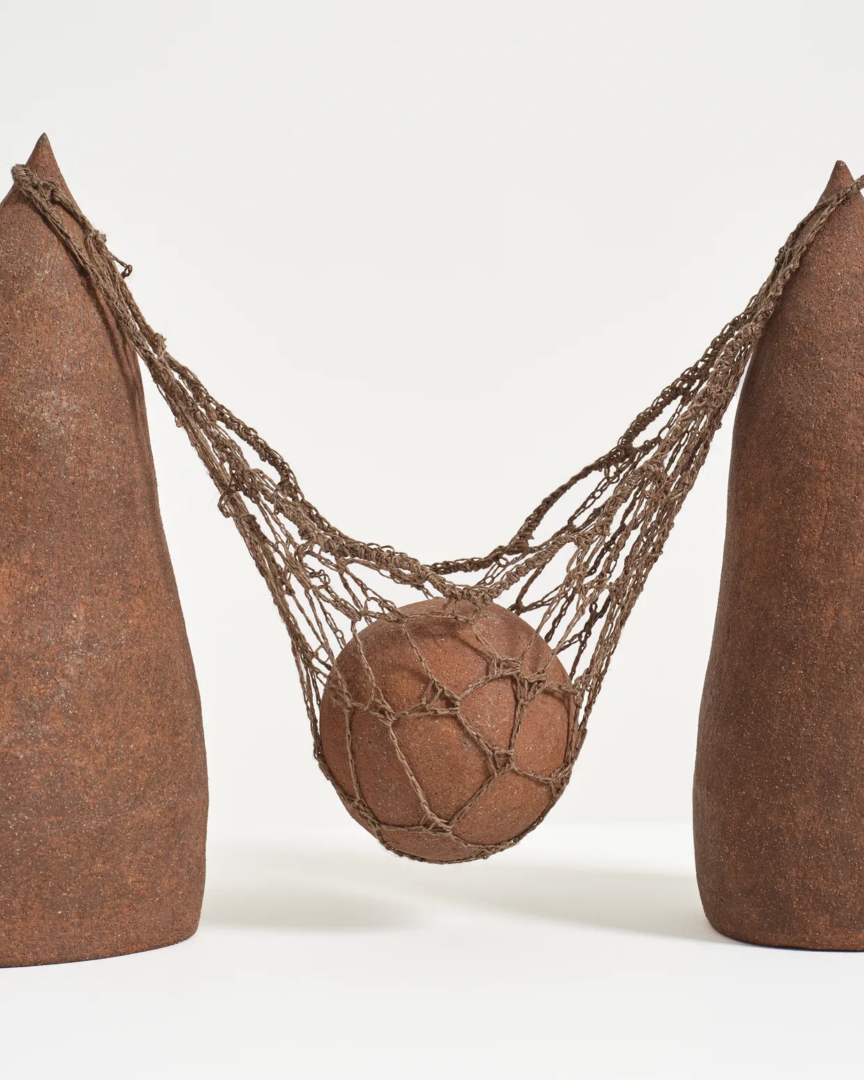
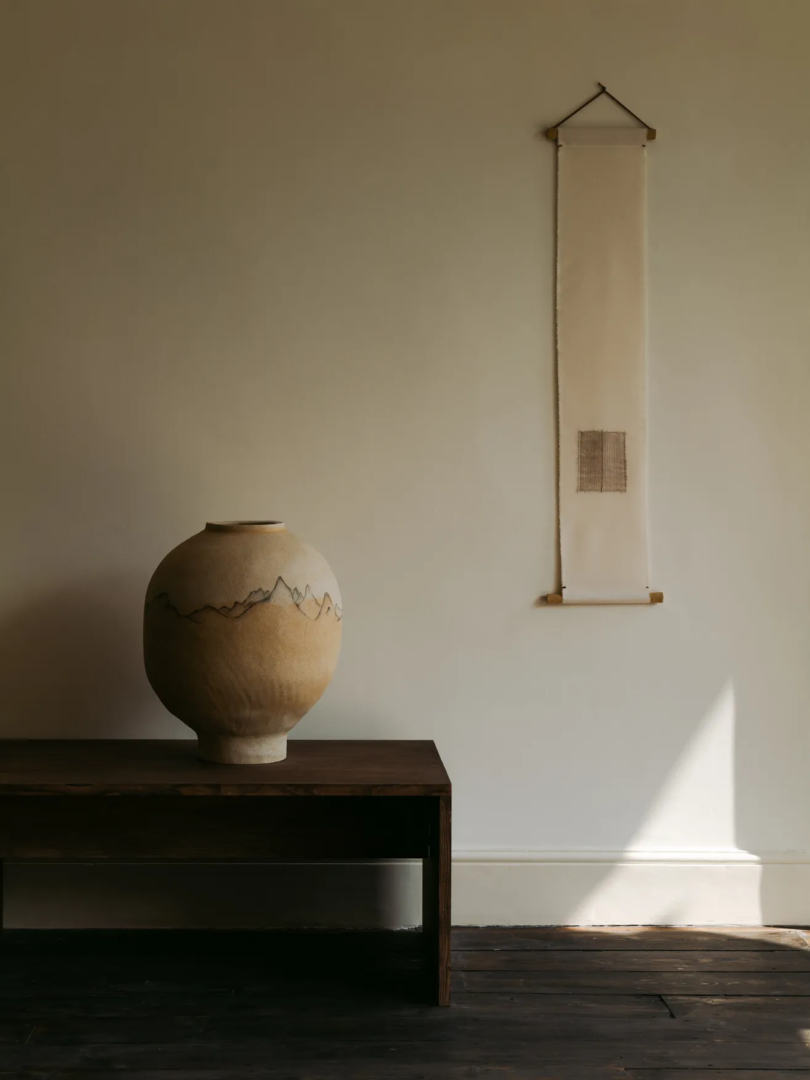
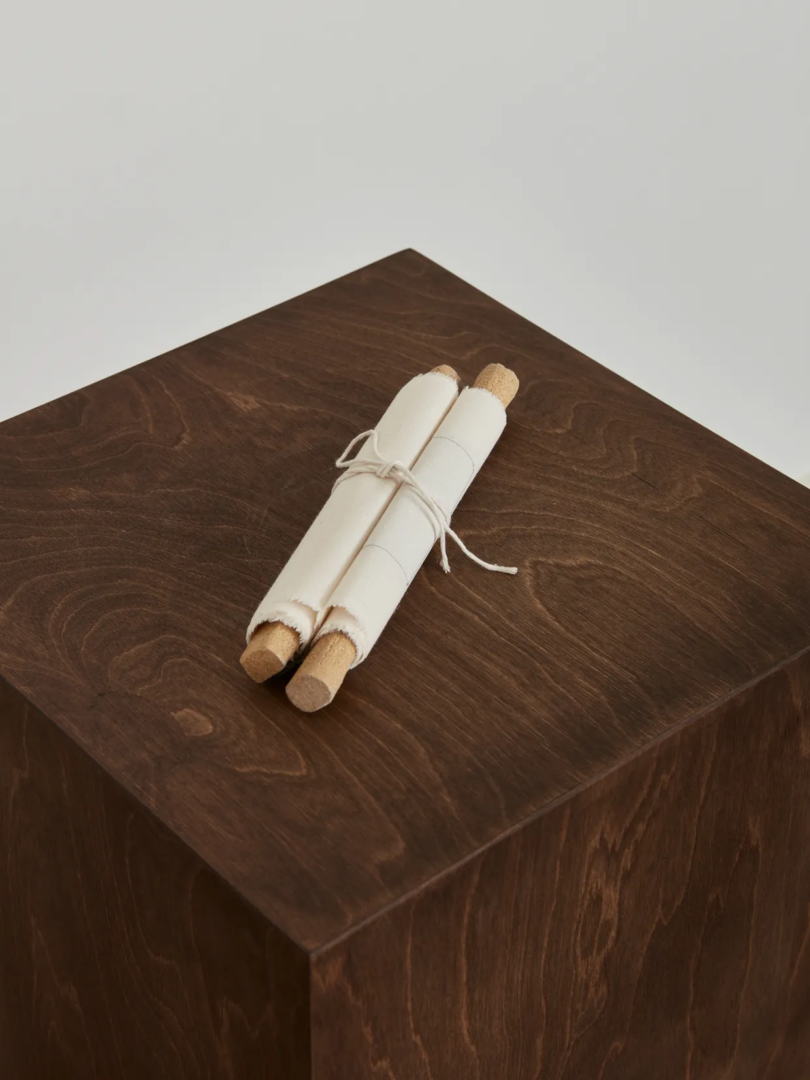
Nancy JiseonKwon has incorporated ramie, called mosi (모시), and hemp, called sambe (삼베), into her fabric scrolls and ceramic sculptures, often using threads to create her own textiles
Sambe – The use of hemp in Korean history and its cultural significance
According to textile conservator Minsun Hwang, a conservator at the Textile Conservation Department of the Metropolitan Museum of Art (MET) Korea, hemp cloth was used for day-to-day summer wear by farmers and their housekeepers. Middle-class women also had summer clothing and sanitary towels made of this fabric included in their dowries.
In her paper “Contemporary Hemp Weaving in Korea” (2006), published by the Textile Society of America, the textile conservator highlighted that since hemp cloth was the roughest and thickest of the fabrics manufactured in the Asian country, Koreans used it for funeral wear. The origin of this use might be traced back to the 10th century as shown by a Korean legend that tells the tale of the son of the last king of the Sila dynasty, which ruled the Korean Peninsula from B.C. 57 to A.D. 935, who ran during his grief to the mountains and wore hemp clothing to display his grief for the remainder of his days.
Throughout its history in Korea, hemp fabric production was domestic, but this tradition has become a thing of the past since the 1950s. In her research, Hwang found that at the moment, hemp production in Korea is confined to rural areas and practiced by a small group of older people.
The utilization of Mosi and Sambe in Nancy Jiseon Kwon’s artworks
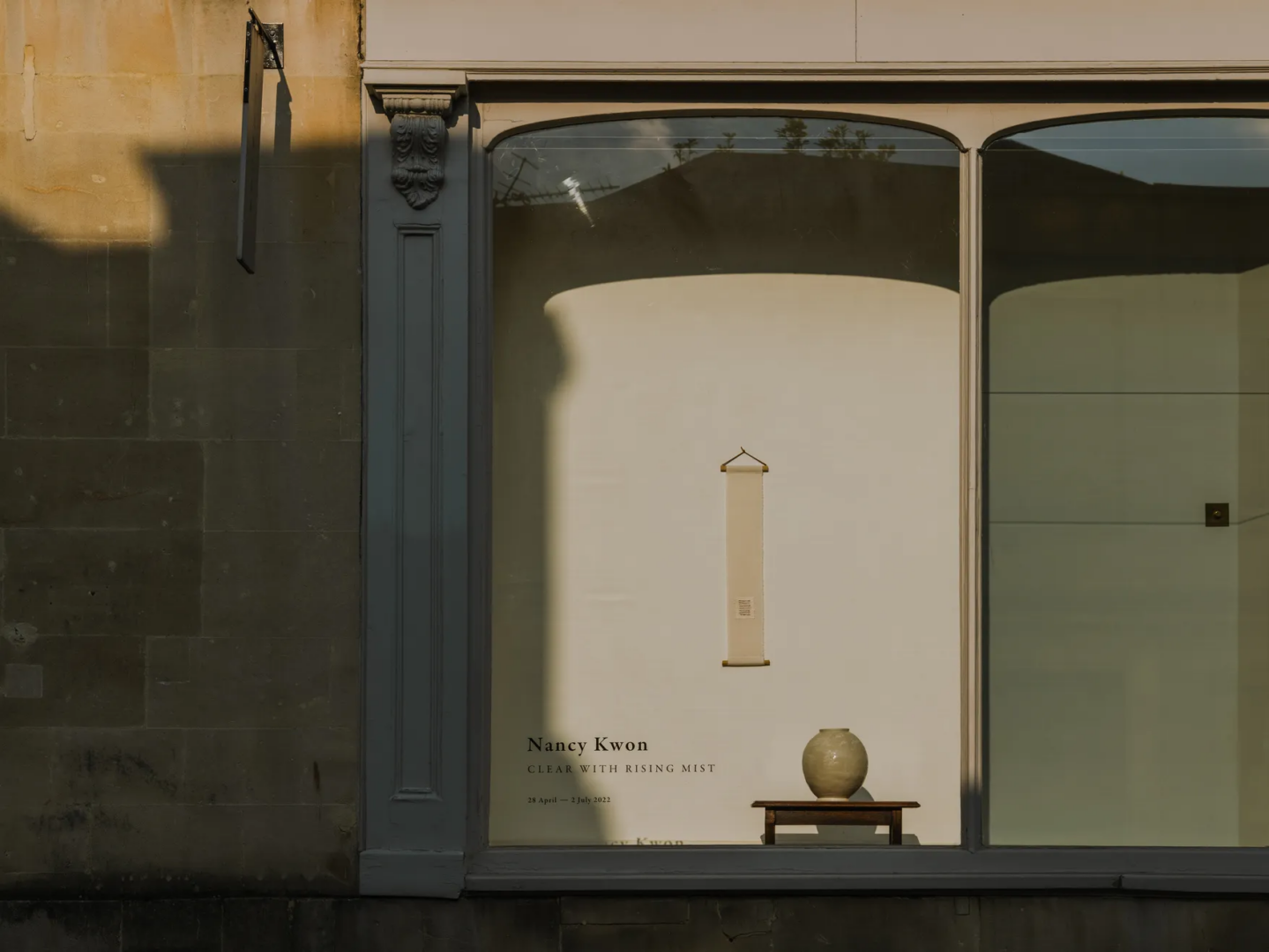
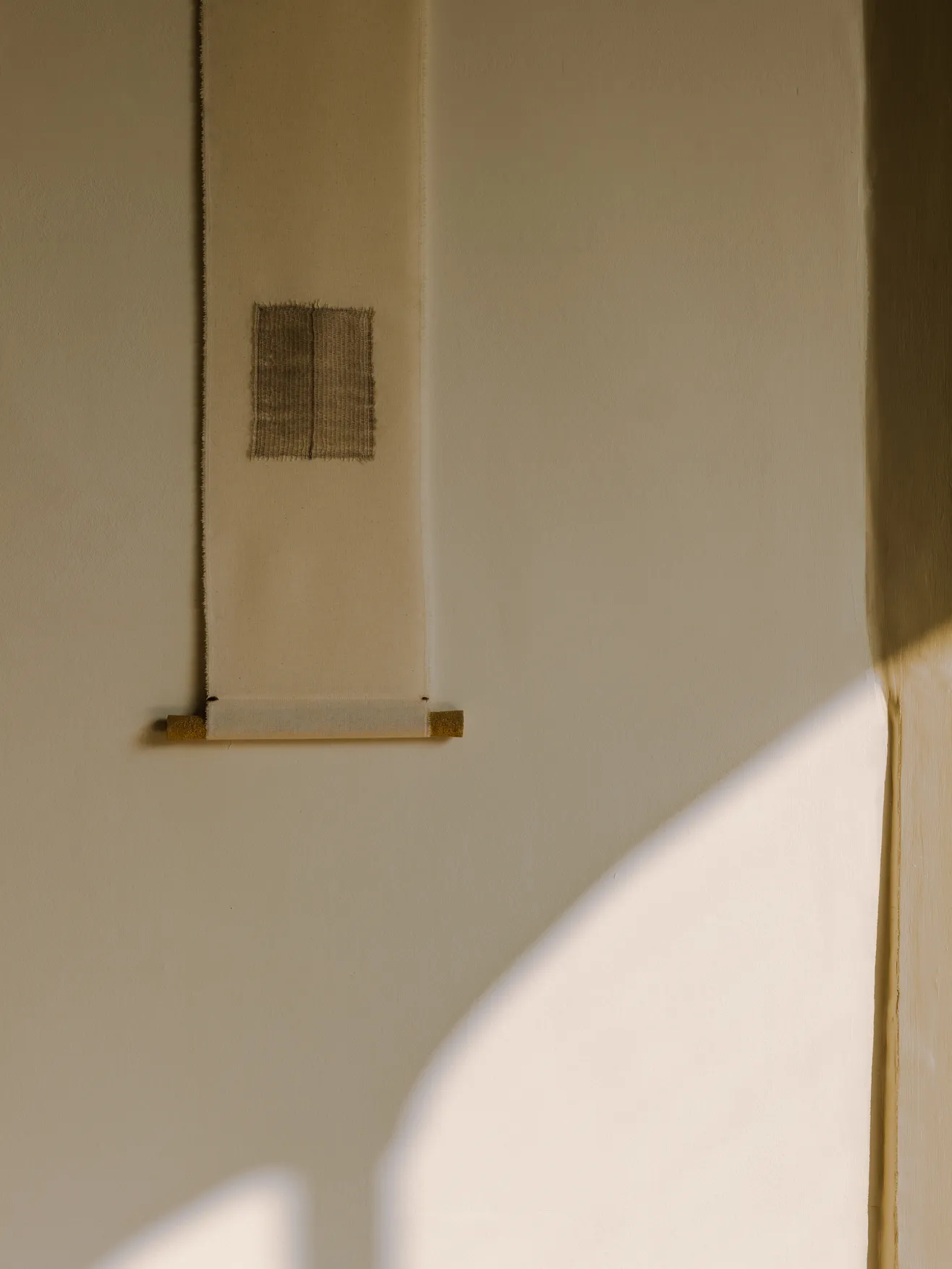
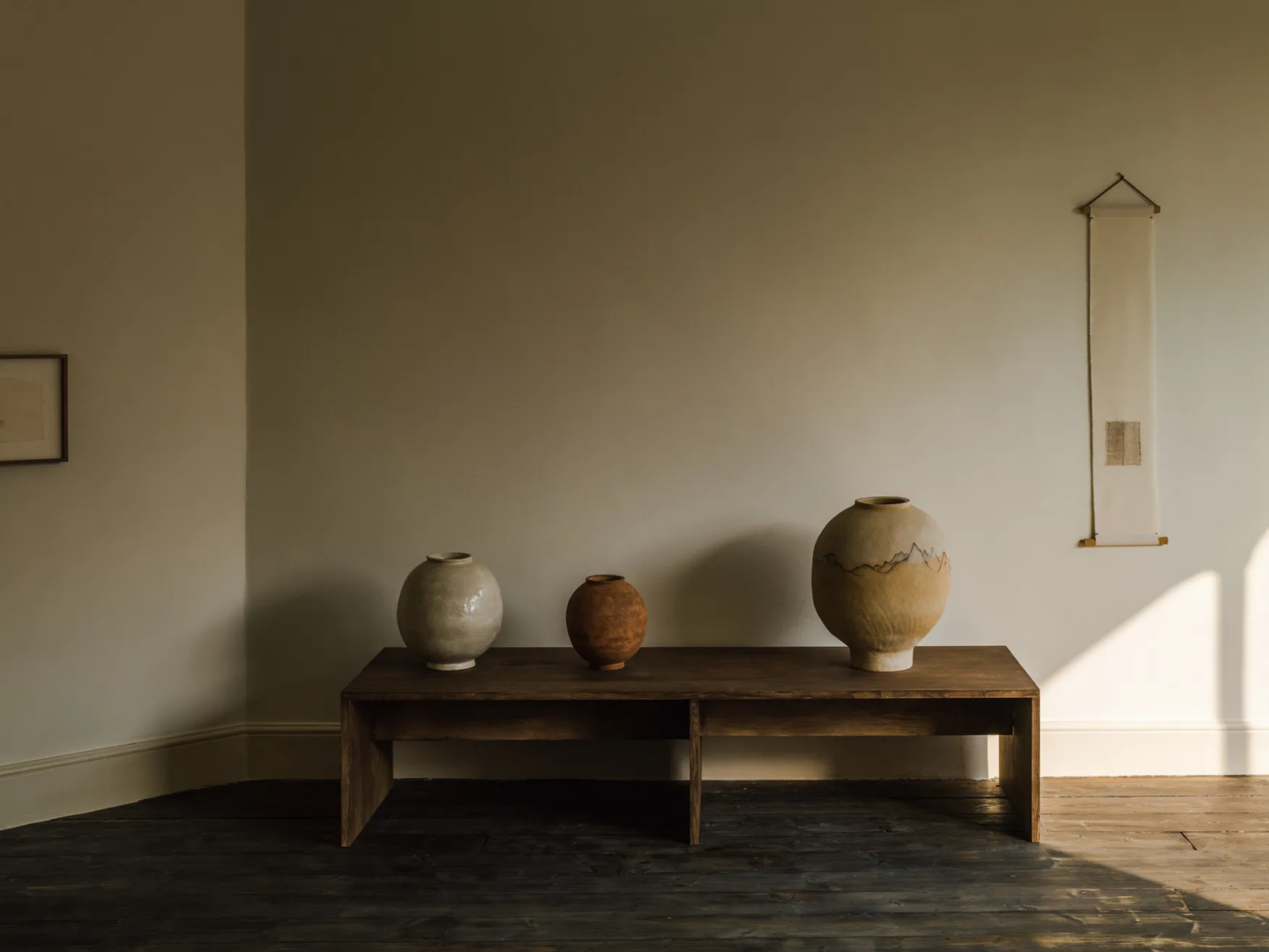
Kwon has incorporated ramie, called mosi (모시), and hemp, called sambe (삼베), into her fabric scrolls and ceramic sculptures, often using threads to create her own textiles, drawing on her Korean heritage, in her first solo show titled ‘Clear with Rising Mist’ at Francis Gallery in Bath, United Kingdom founded in 2018 by its director Rosa Park which supports the work of a selection of international artists.
She was drawn to sambe due to its cultural significance in Korea. The texture and raw quality of this material resonate with the artist, thanks to its ability to provide a sense of grounding and connection to the Earth. “I have always wanted to work with sambe because of its cultural significance to Korea. It is also used in burial clothing, and the breathable raw feeling of the fabric feels rooted to its source and connected to the Earth. It makes me feel grounded and safe”. Her works made using sambe include the scroll ‘Happiest Moment’ (2022), which she crafted with sambe and white sumi ink, a type of solid Chinese ink used in a variety of Chinese and East Asian art forms, such as calligraphy.
The journey to becoming an artist – Nancy Jiseon Kwon and art making as a second language
Los Angeles-based multimedia artist Nancy Jiseon Kwon utilizes ceramic, textiles, and glass to create works that stem from ritual and heritage, an approach that gives her works an organic feel and an earthy appearance. When reflecting on her journey to becoming a professional artist, Nancy Jiseon Kwon notes that her profession was never a conscious decision for her.
She has always engaged in art-making, which has been an integral part of her life. Due to her challenges expressing her thoughts in words, she found that creating art was a more straightforward way to communicate with the world around her. “It was just something I’ve always done and continue to do. Art making has been a part of my entire life so I just got into the habit of doing it”. Kwon revealed to Lampoon Magazine.
Creating by looking back at history – Nancy Jiseon Kwon’s interest in ceramics and traditional materials
Her creations draw inspiration from a long history of ceremonial objects made from organic materials, ranging from Neolithic petroglyphs and Etruscan votive gifts to ancient Korean ceramics and hemp burial garments. Kwon developed her interest in ceramics, textiles, and glassworks rooted in tradition while researching cuneiform clay tablets during her time working for an artist in New York City.
The permanence of clay captivated her, and she developed an appreciation for the ability to connect with the mundane thoughts of people who lived thousands of years ago through this medium. This experience led her to work with ceramics, a choice that influenced her artistic expression from then on. “I started working with ceramics shortly after and my work continues to be deeply influenced by historic artifacts”.
Heritage and universality – Combining global influences in art
When discussing how she combines influences from various cultures and historical contexts, Kwon explained that she views everything in relational terms. This perspective allows the artist to discover the connections between cultures from different parts of our world, highlighting how the shared human experience of yearning and wishing transcends geographical boundaries. “I also find that humans are the same everywhere,” Kwon said. “We are fixated on the same things and have the same hopes and desires.”
In line with her global focus and attention to the commonalities between people, Kwon’s sources of inspiration include aspects of people’s mundane existence and its hidden beauty, as well as a variety of art forms. “Daily life, the earth, the sky, the moon, the sun, my daughter, books, movies, history, family histories”.
A closer look at the artistic process behind Kwon’s artworks
Nancy Jiseon Kwon starts with writing and sketching ideas, often in the early morning and again at night before bedtime. Once she feels prepared, she moves to her studio to model her concepts in clay, although she acknowledges that the forms often evolve during the making process.
The multimedia artist notes that the variability of her artistic process is influenced by the materials she uses. In ceramics, which are three-dimensional, she experiences a greater degree of trial and error compared to her work in other mediums, as the final forms can differ significantly from her initial sketches. Motherhood influences her daily life as an artist “I am a mother of a 2 year old, so my work day starts with my daughter waking me up to play and i make breakfast for her, i often sketch ideas in my journal while she is occupied, and in the afternoon when i have someone to watch her i get to go into the studio and test out some ideas in clay, and work on things in progress.”
When speaking about the time commitment required to create her artworks, Nancy Jiseon Kwon estimates that the duration varies, but for her primarily ceramic and fiber works, the process typically takes at least two weeks and can extend to several months or even a year. At the moment, the LA-based artist is focused on crafting a series of wall pieces, which she has temporarily titled “Birdwatching.”
Nancy Jiseon Kwon
Nancy Jiseon Kwon got her BFA at the Pratt Institute in Film and her MFA at the ArtCenter College of Design, Media Design Practices in Pasadena, CA. In 2022, her work was featured in group exibition ‘Morning Calm’ at Francis Gallery in Los Angeles, CA, USA and in a solo exibition titled ‘Clear with Rising Mist’ at the Francis Gallery in Bath, UK.
Roberta Fabbrocino