Tempelhofer Feld: why Berlin legally protects its largest open urban space?
The former airport park is protected by a 2014 referendum and the ThF law, yet new building pressures reopen the debate amid housing shortages, climate concerns, and urban forestry
Walking into Tempelhofer Feld: the overwhelming vastness of Berlin’s greatest open space safeguarded by the ThF-Gesetz law
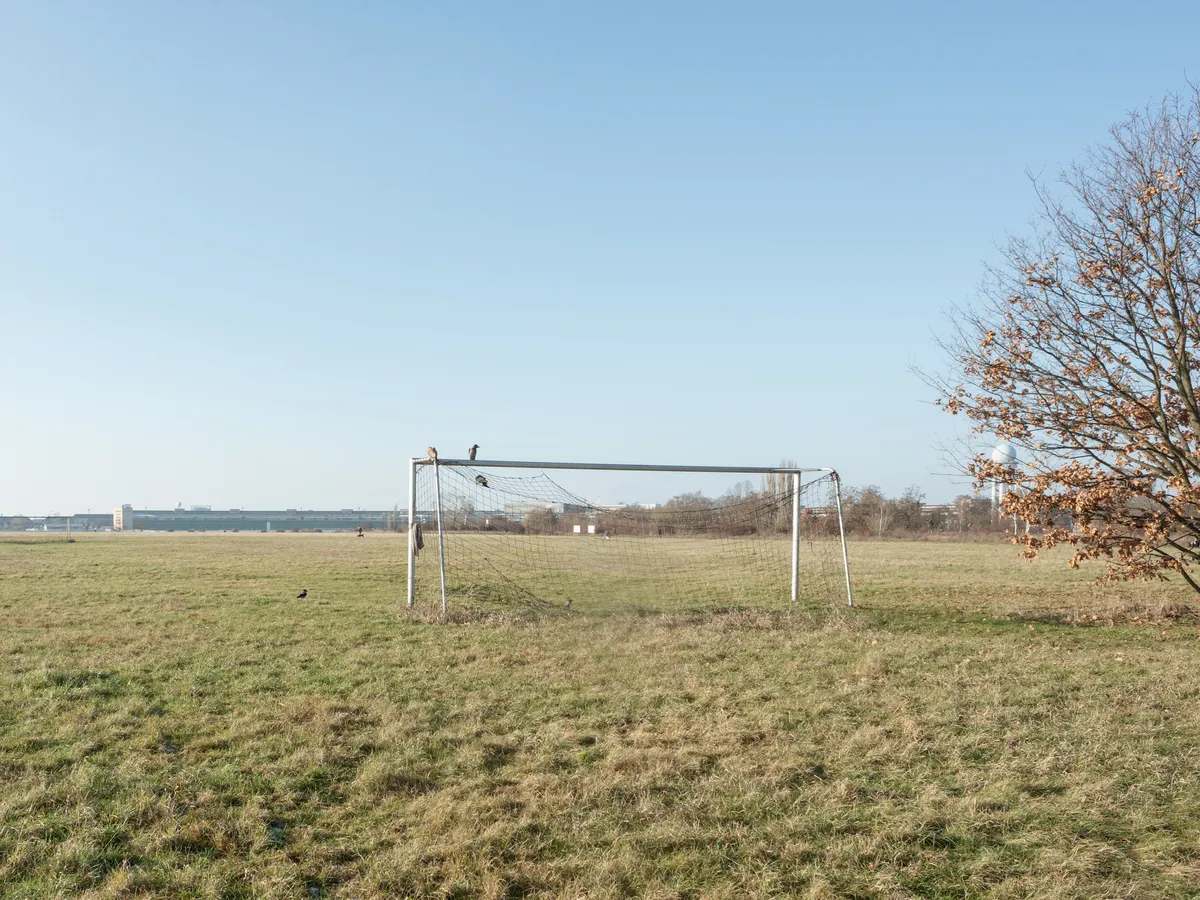
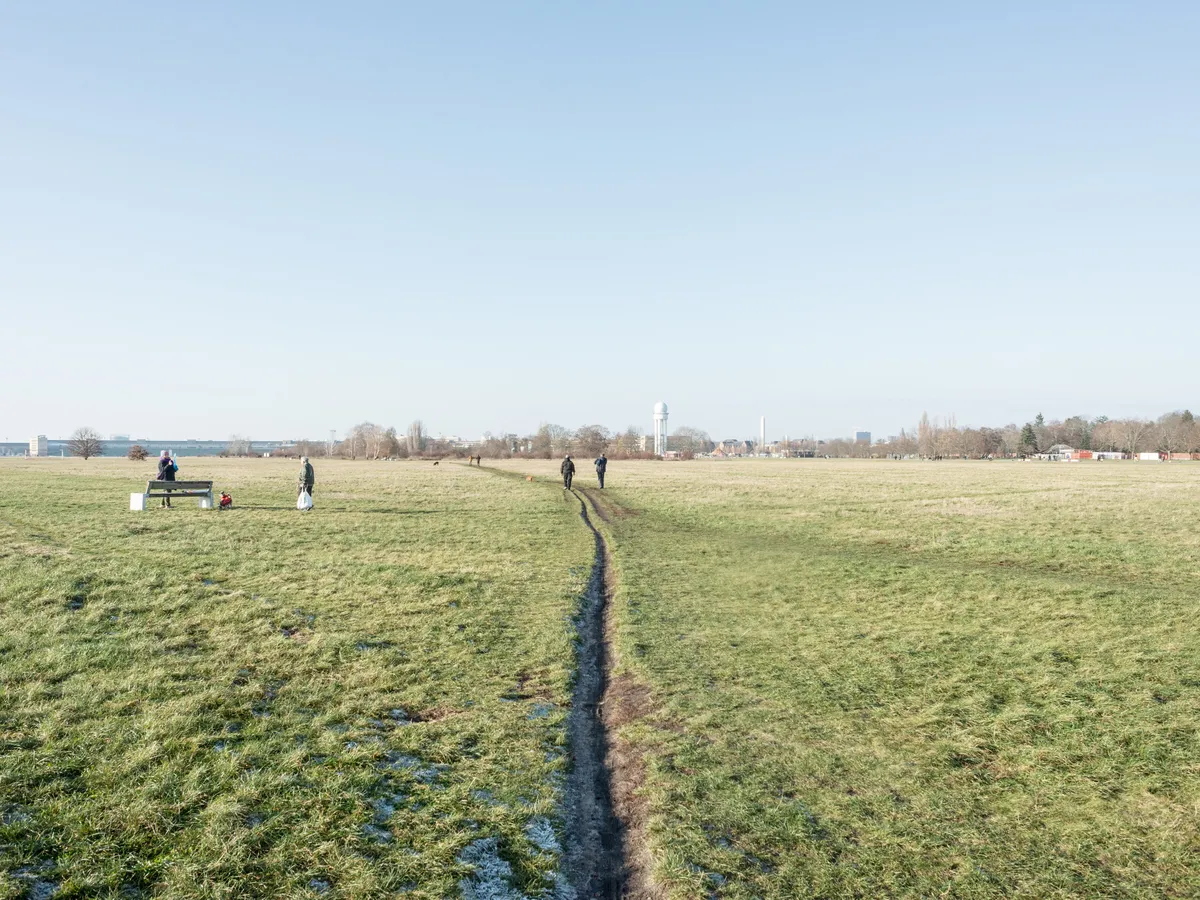
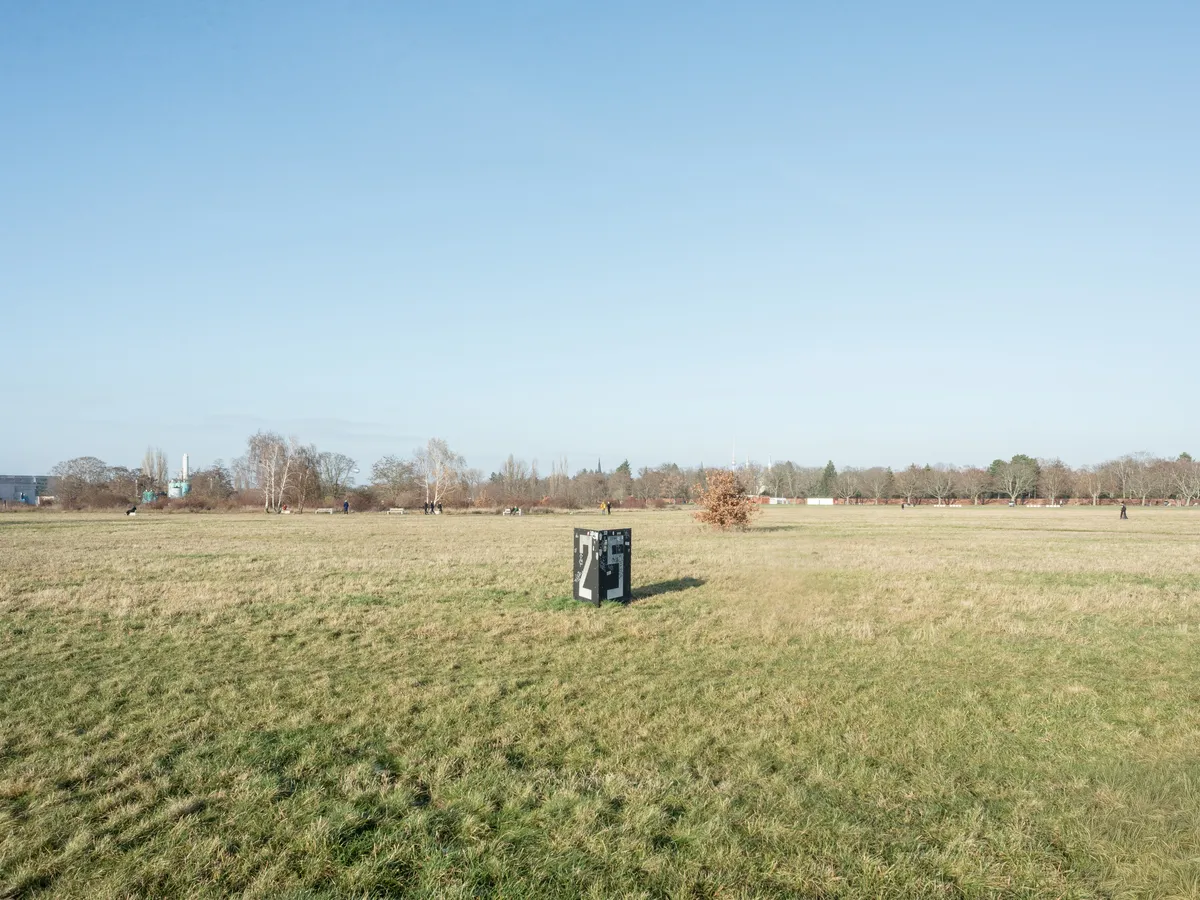
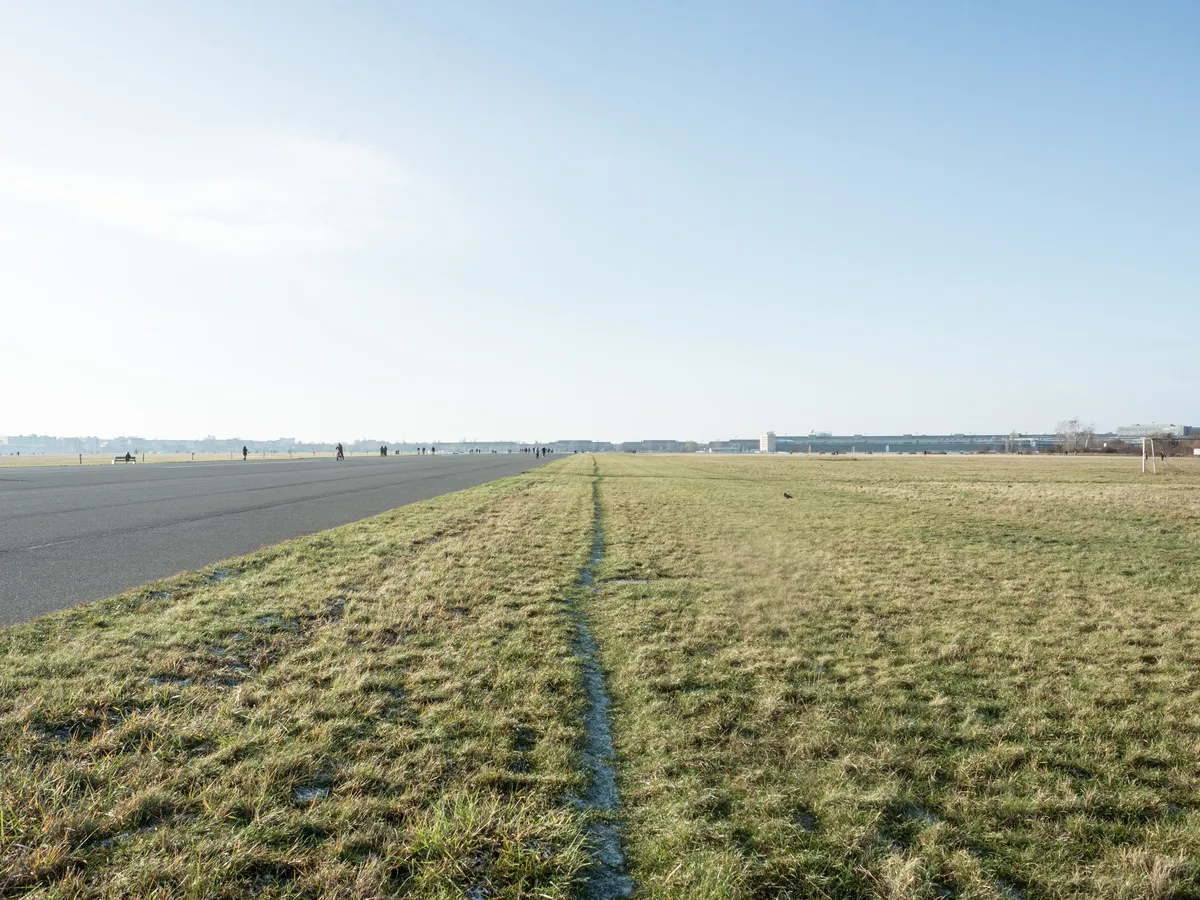
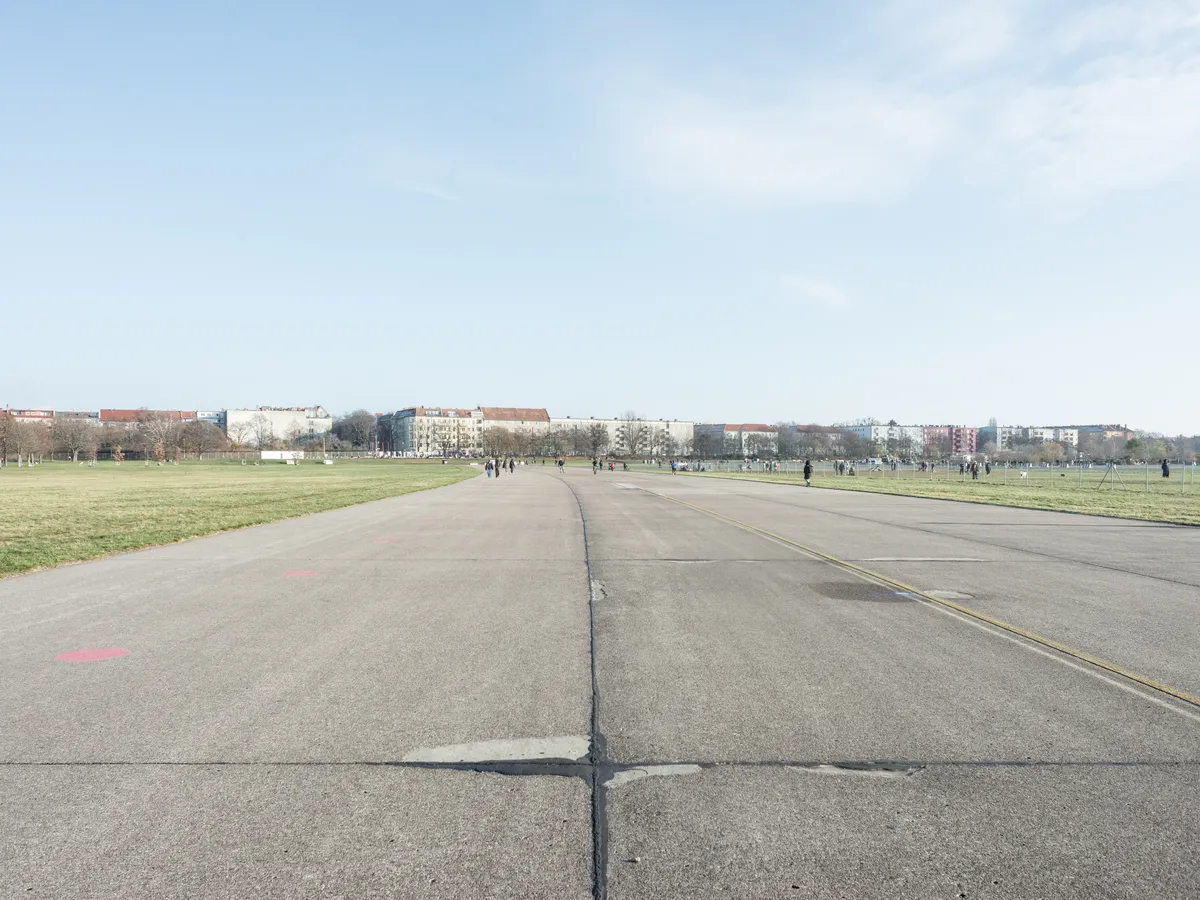
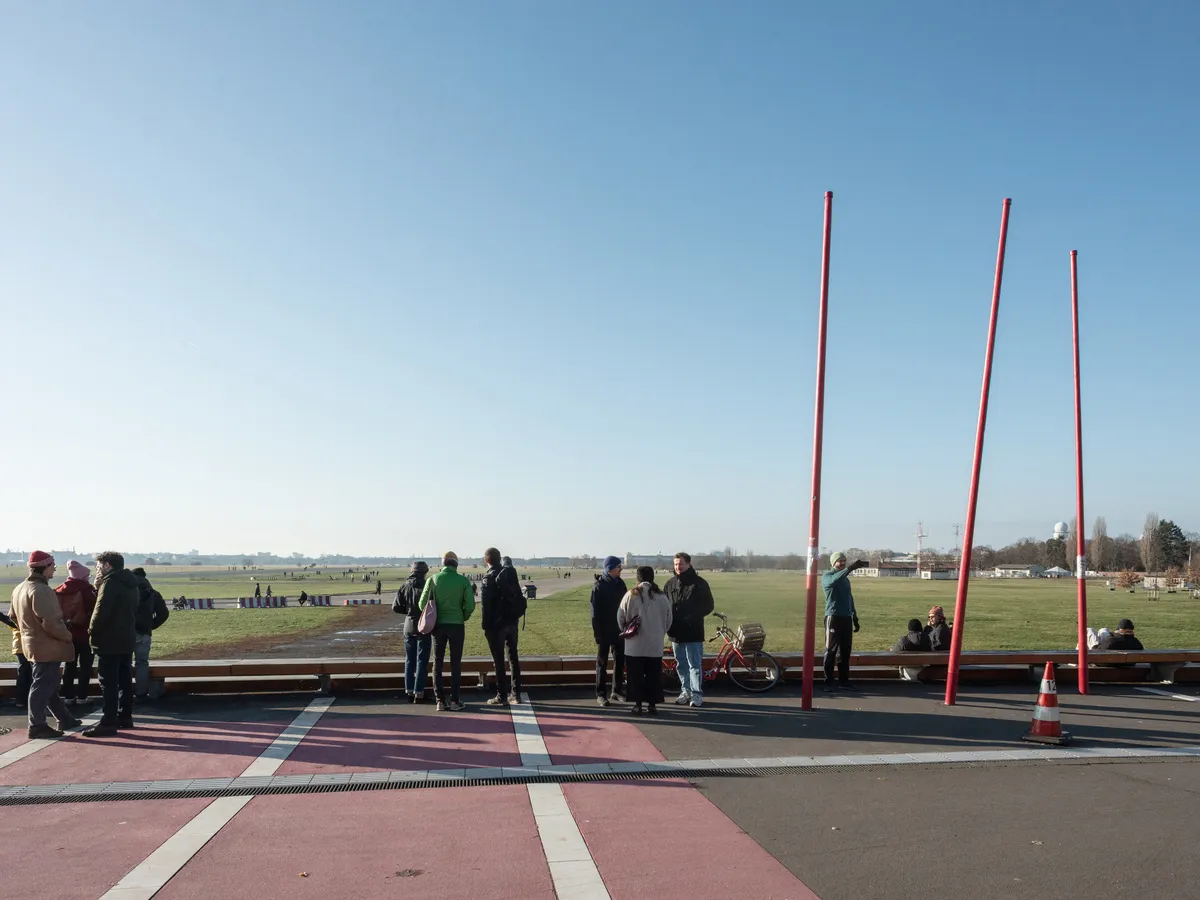
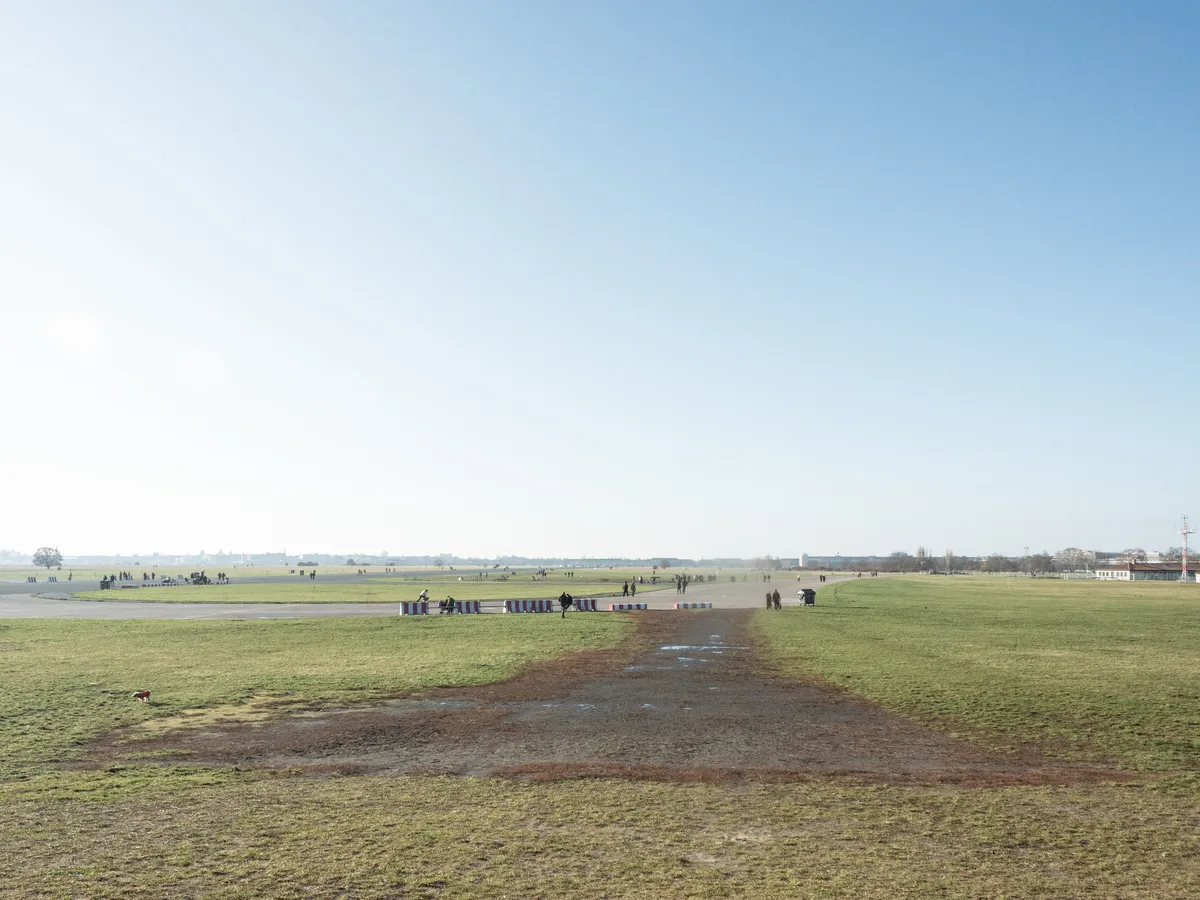
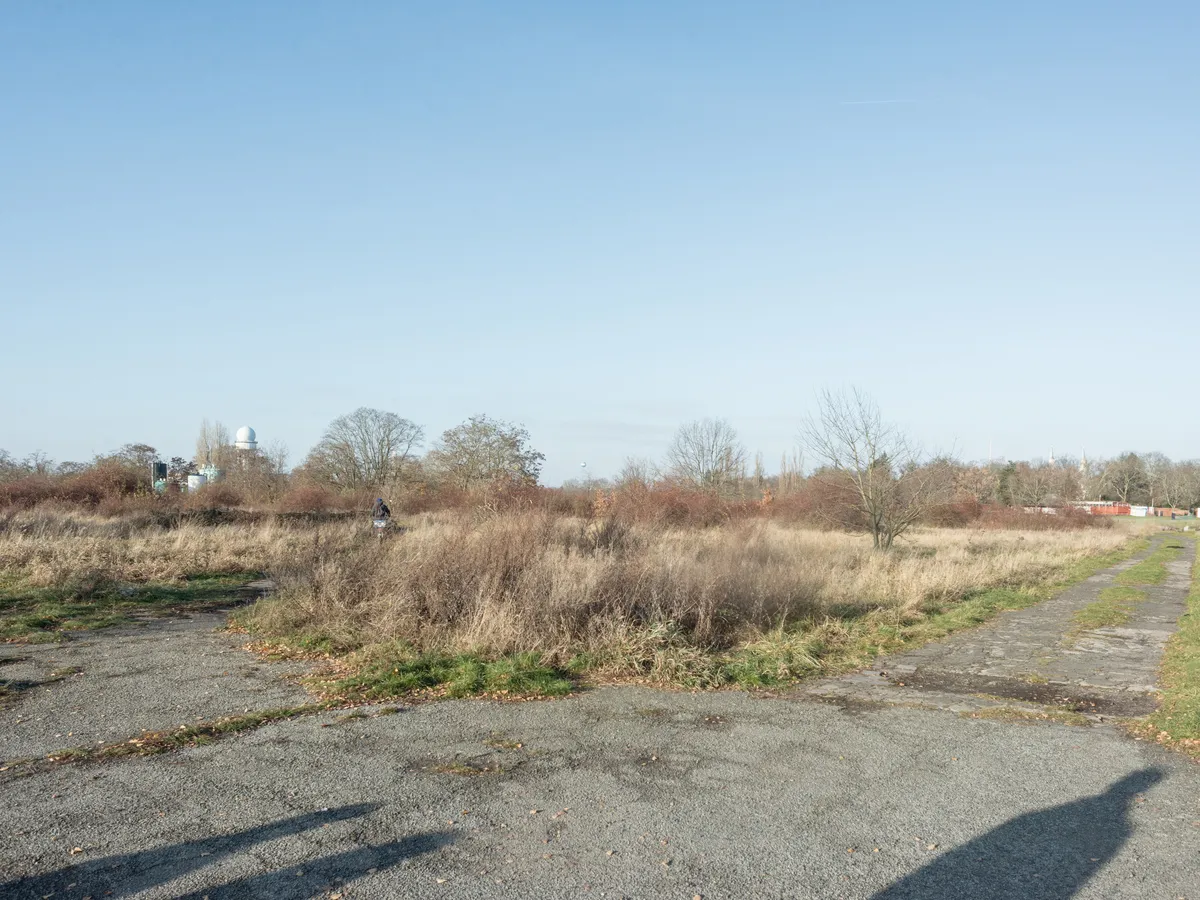
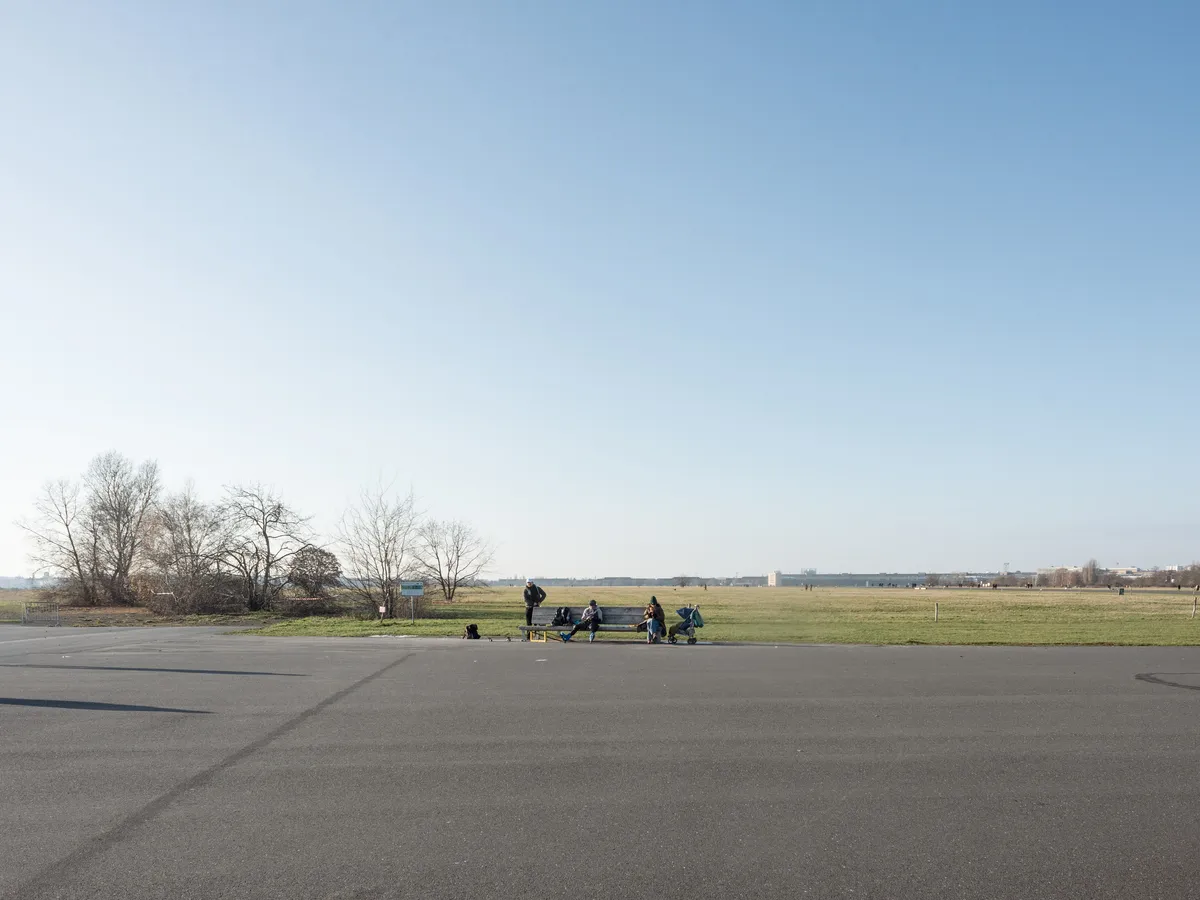
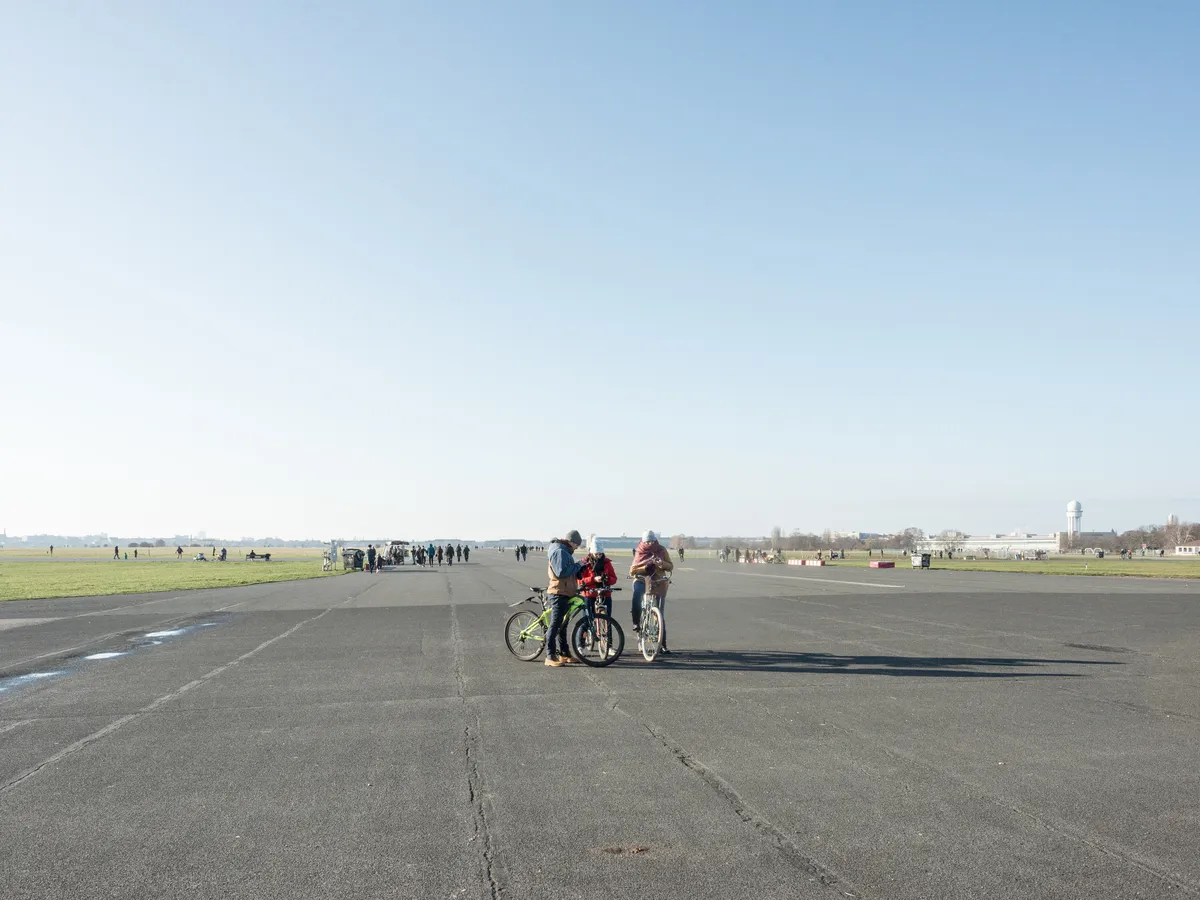
What makes Tempelhofer Feld unlike any other place on earth is its vastness, set against the density of the city that surrounds it. You are walking along a pleasant street in Schillerkiez, lined with historic buildings and mature trees, when—without forewarning—instead of the next intersection you arrive at a blinding, pale-green expanse, several meters lower than the plane of the city. The runway stretches endlessly like an abstract perspectival axis; tiny black moving dots—Berliners strolling, running, cycling, windsurfing, walking their dogs, gardening—are scattered to the horizon, the only elements capable of giving the space a sense of scale. The sensation is that of being in a coastal city, suddenly reaching the sea. As an airport, Tempelhof was not exceptional in size; as an urban void—the largest in the world—it is disorienting, almost alienating in its impact.
What is not widely known is that this vastness is explicitly decreed and protected by law. «The unique and remarkable character of the Tempelhofer Feld landscape, worthy of protection, lies a) in its vastness [Weite], unparalleled within a major city, and b) in the breadth of its long-distance vistas.» This passage appears in the Law for the Preservation of Tempelhof Field (Gesetz zum Erhalt des Tempelhofer Feldes, also known as the ThF-Gesetz, enacted on June 14, 2014), where Weite—understood as spatial perception, an unobstructed horizon, and the absence of barriers—is conceptually established as a legal value. The ThF-Gesetz was the direct outcome of the 2014 referendum, in which 750,000 of the 1.1 million Berliners who voted opposed any construction on the former Tempelhof Flughafen (airport), which had been converted into the Tempelhofer Feld (field) public park in 2010.
From Knights Templar land to Nazi landmark: the layered history of Tempelhof
This marked the end of a long and singular history, one that began in the Middle Ages (the site originally belonged to the Knights Templar, from whom the name Tempelhof derives). That deep historical layering helps explain, beyond its everyday appeal, why Berliners remain so strongly attached to the Feld.
Described by British archistar Sir Norman Foster as «the mother of all airports» and «one of the really great buildings of the modern age», Tempelhof was long considered the world’s oldest operating commercial airport. Its aviation history, however, predates modern aviation. On June 12, 1897, one of the earliest recorded aircraft accidents occurred here, when Friedrich Hermann Wölfert and his mechanic Robert Knabe were killed after their lighter-than-air craft, Deutschland, caught fire and crashed on Tempelhof Field. Just five months later, the world’s first rigid airship, designed by Hungarian inventor David Schwarz, took off from the same site. In 1909, the Wright brothers staged one of their early public flight demonstrations here.
Tempelhof was officially designated an airport by the Reich Ministry of Transport in 1923, but it acquired its monumental form during the Nazi era, when Albert Speer incorporated it into his plans for the reconstruction of Berlin as Welthauptstadt, the so-called world capital. Completely rebuilt, Tempelhof became one of the largest constructed entities in the world, a distinction it still holds today. Conceived by Hitler as the gateway to Europe, the terminal complex and adjoining buildings were designed to evoke an eagle in flight. It was here that Deutsche Luft Hansa was founded and where the infamous Stuka dive bombers were assembled.
In the final days of the Second World War, Tempelhof’s German commander, Oberst Rudolf Böttger, refused orders to destroy the base and instead took his own life. Soviet forces captured the airport during the Battle of Berlin on April 28–29, 1945. Shortly thereafter, on May 8, 1945, Western Allied and German signatories of the surrender, along with their entourages, landed at Tempelhof. Under the Potsdam Agreements, the airport was transferred on July 2, 1945 to the United States Army, becoming part of Berlin’s American occupation sector.
From the Western Allies airlift to closure: Tempelhof Flughafen’s postwar history
Tempelhof’s most iconic chapter unfolded during the Berlin Blockade of 1948–49. On June 20, 1948, Soviet authorities cut all land and water access to the Western sectors of the city, leaving only three air corridors across the Soviet zone. Rather than abandoning Berlin, the Western Allies launched the airlift known as Operation Vittles on June 26, 1948. At its peak, supply aircraft landed at Tempelhof every 90 seconds. The most emblematic episode of this period was Operation Little Vittles, during which pilots dropped candy to children living near the airport.
In the decades that followed, Tempelhof continued to operate as a commercial airport, largely without incident, aside from the hijacking of two LOT Polish Airlines aircraft in 1978 and 1981, both forced to land here and both ending with the arrest of the hijackers. In 1996, plans were initiated to consolidate Berlin’s air traffic at a single airport in Brandenburg, a process that implied Tempelhof’s closure despite civic opposition and a failed non-binding referendum.
On October 30, 2008, a Goodbye Tempelhof gala was held inside the terminal, while protesters maintained a candlelight vigil outside on Platz der Luftbrücke. At four and a half minutes before midnight, the last two aircraft took off in parallel, wagged their wings, and departed for Schönefeld. At midnight, the runway and airfield lights were switched off.
Preserving vastness in a dense city: Tempelhofer Feld as park, habitat, and contested site
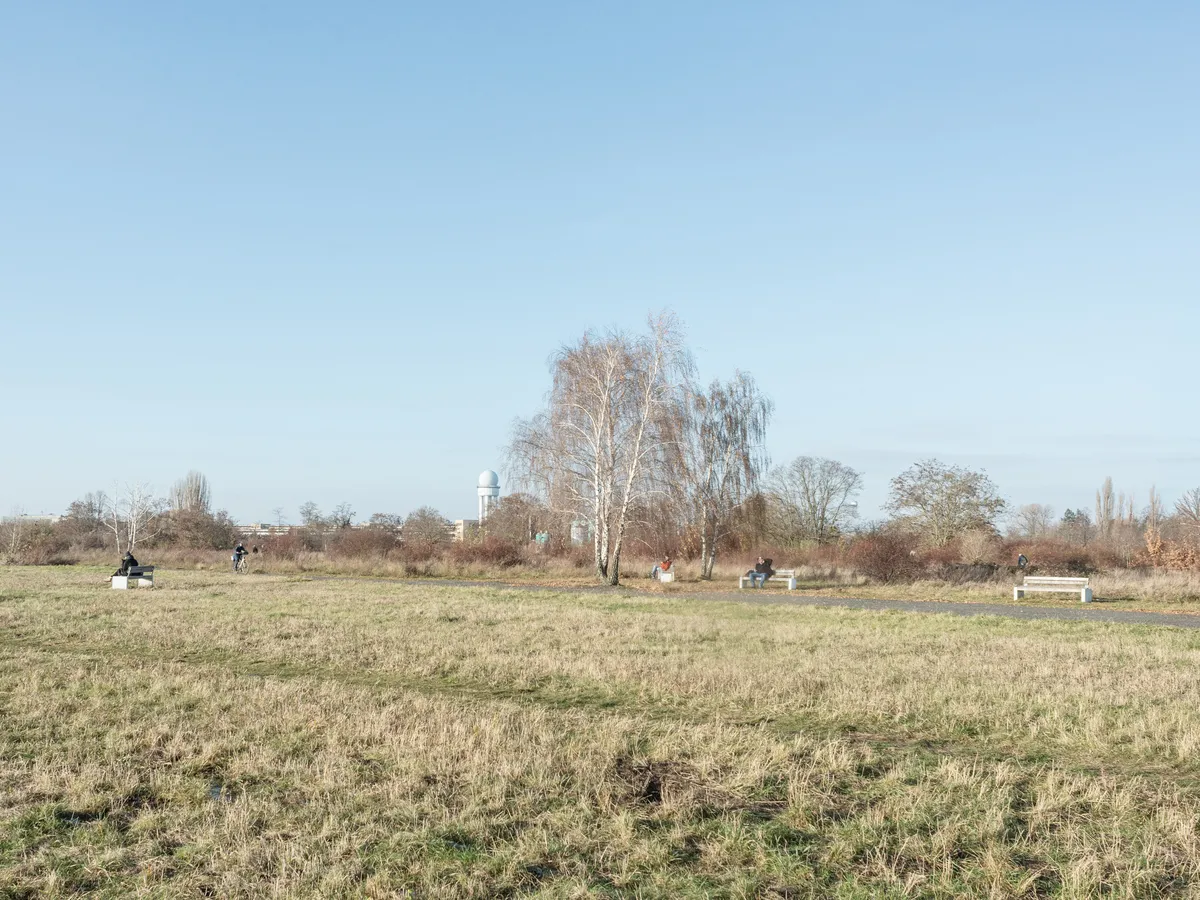
On May 8, 2010, the former airfield reopened as a public park, attracting 235,000 visitors in its first weekend. Since then, Tempelhofer Feld has hosted fairs, concerts, and major events—from the Berlin Festival and Formula E to Tempelhof Sounds—while also becoming an habitat for red-listed birds, plants, and insects. During the 2015 European migrant crisis, two former hangars were temporarily converted into an emergency refugee shelter, housing up to 2,500 people. In a final historical irony, later that same year a private aircraft was forced to make an emergency landing on the closed runway.
Since its transformation into a public park, Tempelhofer Feld has been repeatedly targeted by proposals for development and privatization. Each time, these plans have met strong civic resistance, culminating in the 2014 referendum, which definitively sealed its status as an open, non-developable public space—an urban monument to scale, memory, and spatial vastness.
Tempelhofer Feld under threat: civic activism and architectural resistance to Berlin’s housing pressures
Yet the story of Tempelhofer Feld may not be over. The site once again appears to be at risk of construction, framed as part of Berlin’s response to an ongoing housing crisis marked by chronic shortages of affordable homes. On November 13, the Berlin Senate Department for Urban Development, Building, and Housing announced an international ideas competition for the future of Tempelhofer Feld, explicitly including the possibility of permanent buildings. In an open letter responding to the announcement, the civic initiative 100% Tempelhofer Feld—active since 2011 and a vocal defender of the site—wrote: «Your insistence that the field be built on fills us with incomprehension and great concern. Without justification, there is a risk of irreparably destroying a unique open space that holds immense ecological, social, and historical value. Building on Tempelhofer Feld is neither a cost-effective nor a sustainable solution to the lack of living space, but instead threatens climate-friendly and resilient urban development.»
Anticipating this renewed urgency, 100% Tempelhofer Feld sought an ally within the fields of architecture and planning. Enter Architects4THF, an association of architects founded just one week before the announcement of the ideas competition. Their homepage declares, in bold capital letters over a photomontage depicting a gaping crater where the Feld once was: «TO BUILD IS TO DESTROY». In response to the competition, the group issued a call for contributions «to interrogate the ethical role of planners in shaping the future of cities, and to question their responsibilities within the building industry.» The selected contributions were recently published in a special issue of Arts of the Working Class, a street journal focused on art and poverty.
To better understand the situation, the most imminent threats facing Tempelhofer Feld, and the ways in which it can be defended, I spoke with Jolene Lee, architect and founding member of Architects4THF.
Monument against speculation: why Tempelhofer Feld matters to citizens, visitors, and architects
LA: What’s the role of the Tempelhofer Feld today for a Berliner, its attractive for a visitor and an architect?
Jolene Lee: In a world of capitalism and speculative planning, you rarely see spaces like this anymore, in Central Europe. In that sense, you could call it a monument against capitalism, speculation, and the way we function as a society today.
For Berliners, it represents a space of freedom, which has been characteristic of Berlin ever since the Wall came down. At the same time, it represents something the city has been losing over the past decade: spaces where you can do whatever you want and express this sense of freedom.
And for architects, it is interesting precisely because it goes against what we usually do. We build and displace, and this space is the opposite of that. It challenges us to ask ourselves: how else can we plan a city? How can we build a city without buildings?
LA: You mentioned that Berlin has been losing these kinds of spaces. Do you have any specific examples of this process?
Jolene Lee: Yes. You could categorize the Feld as a Brache, a term that emerged after the war and the division of the city. Because of these harsh divisions, Berlin ended up with many weird spatial conditions, especially along where the Wall used to be or in the in-between zones. These were voids that were not developed, because why develop Berlin at that time?
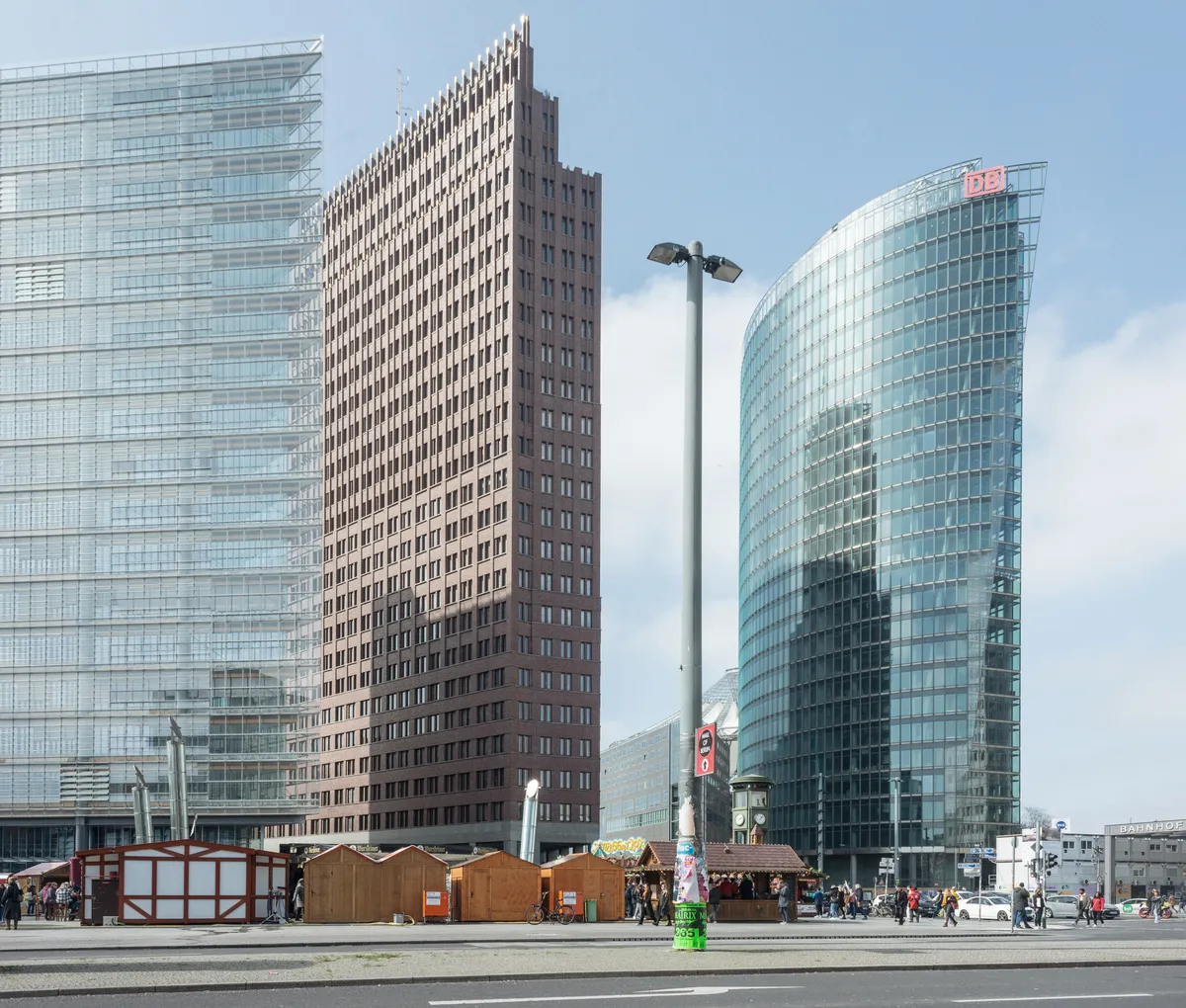
From the 1990s onward, these spaces have gradually been filled in through reconstruction and development. Potsdamer Platz, for example, was a major urban planning project meant to symbolize Berlin’s newfound wellbeing and its return as a central European capital.
When I moved to Berlin around ten years ago, there were still many open-air raves. This was very typical of the city because there were so many unused plots, land owned by someone who didn’t really care about it. Collectives and young people used these spaces to party and hang out. Today, almost all of these places in the city center are gone, and the raves with them.
This is also closely linked to Berlin’s techno culture. Here the scene thrived because it didn’t require a lot of money or strict rules. You could play loud music in central Berlin because these Brachen were empty. That shaped Berlin’s techno culture profoundly. Today, these areas are being developed under capitalistic terms, and many collectives no longer survive because they cannot afford the rent. Even going to a club has become much more expensive.
Architects as activists: the birth of Architects4THF and the fight to protect Tempelhofer Feld
LA: Why did you move to Berlin in the first place?
Jolene Lee: I moved from Kuala Lumpur to Dessau to study my master’s at the Bauhaus Dessau. From Dessau, Berlin is the next big city, only about 100 kilometers away. I had visited Berlin before, around 2012, and at that time I didn’t find it particularly special. It wasn’t a dream to move here.
But the longer I stayed, the more I appreciated the freedom it offers, the freedom to do what I want in a less conventional way. Also rent is still relatively cheap compared to other cities, and you can have a good quality of life with very little. That is probably why I am still there. I haven’t found a better alternative.
LA: How was Architects4THF born?
Jolene Lee: I initiated the group about a year ago out of a sense of urgency, and through two parallel paths. One was through a network of friends and ex-colleagues who were already engaged with the citizens’ initiative 100% Tempelhofer Feld. They have been fighting for this space for many years and won the referendum, yet even ten years later the Feld is still at risk.
With the current coalition in the Berlin Senate, they were expecting an idea competition for the Feld to be coming. Last year we started talking about this and how I could help as an architect, since they are primarily a citizens’ group and they needed help navigating this situation from a professional point of view.
One of the first steps of the competition process was a series of dialogue workshops. Letters were sent to 20,000 randomly selected Berlin residents, and I received one of them. I registered and participated, partly out of curiosity, because this kind of citizen engagement is still relatively rare here.
Even though I was not selected for the later rounds, I stayed in touch and started attending the Monday meetings of the 100% Tempelhofer Feld group. They’ve been having these meetings for the last ten years, they are an incredibly committed group. About a week or two after I started helping them, the competition was officially announced.
I then contacted friends and colleagues—an architect, a researcher, and a natural resource planner—and we discussed what we could do. The first conclusion was that we needed to raise awareness. Since it was an international call, architects worldwide needed to know that the Senate was effectively trying to overturn the referendum through this competition.
We organized our first online assembly, which attracted more than 200 participants. We invited 100% Tempelhofer Feld to give a keynote explaining the status quo, because many architects were confused, as they thought the Feld was already fully protected. But the citizens’ group knew this moment would come. That was our first concrete action.
From theory to action: how collectives and independent practices reshape architecture and urban engagement
LA: Speaking about the role of architects in this situation: in your call for contributions, you mentioned that “the role of architects and planners is shifting from utopian visionaries to agents of a market-driven industry”. How can they survive in this economy while valuing their ethics and responsibility?
Jolene Lee: It is not an easy question, and it reflects a broader dilemma within the profession. Still, I am somewhat hopeful. Architecture has evolved constantly over centuries. We used to be craftsmen who physically built houses; only in the last couple of decades we became planners working in digital environments.
Today, the primary client is often money rather than the state or society. Of course, there are exceptions; Vienna, for example, still has a strong social housing system. But globally, architecture is largely driven by private and commercial interests, and this shapes urban outcomes.
In Berlin, the last truly experimental architectural moment was the IBA, the International Building Exhibition, in 1987. That was the last time architects had the opportunity to prototype and pioneer ideas at an urban scale. At that time there was the eco-movement of the 80s, very into climatic designs, both in landscape and architecture. Those were themes that could live beyond theories. Today, we have many theories—climate-adaptive design, new materials—but they often remain theoretical because there is no framework encouraging their implementation.
As a result, many architects pivot toward writing, theory, strategy, and activism—all practices that previously would not have been regarded strictly as architects’ work. The role of the architect has changed: architect as developer, architect as artist, architect as activist. Personally, I am somewhere in between commercial practice and serving the city, but my primary interest lies in the social impact of architecture, which in Berlin often means working at the state level.
LA: Is there a sustainable way to maintain this balance, or will the divide between theory and practice continue to grow?
Jolene Lee: I am not entirely sure, but one important development is the rise of collectives. More and more young architects are forming collectives rather than traditional firms. Of course, you could say it’s more a result due to a constraint than something that they really want to do. But still, these collectives work on public architecture, activating rural areas, or doing research on materials.
We also see initiatives like Architects for Future Germany or Architects in Gemeinschaft, which address labor conditions and representation. Many architects do not make it into the Chamber of Architects. Are they still architects? They are still performing labor, so there should be a union, but there is not. As a result, they are now trying to start an architectural union together.
Personally, I try to find a balance—not half-half, but one that allows me to participate in society through architectural thinking. I engage in non-profit, non-monetary projects like Architects Without Borders, alongside my paid work. If I can sustain this balance and survive as an architect, then I consider that a success. You cannot wait for the perfect moment to do these things—you have to integrate them into your life.
And if I manage to do this and somehow survive as an architect, then I made it. It’s about making space for these types of things. If you wait until there is a moment in time when you could do such a project, it will probably never come. You just have to fit it into your life, your schedule, and hope that it all works out.
LA: Is it working out?
Jolene Lee: Yes, it is, although it was not easy. I left a partnership in an office and started an independent practice, which gave me the freedom to focus on projects and themes I care about. This kind of engagement probably represents five to ten percent of my daily work, but it is meaningful.
LA: What is your personal relationship with the Tempelhofer Feld?
Jolene Lee: Before this initiative, I would not say I had a very personal relationship with it. I often went there, and appreciated it as a unique part of Berlin’s urban fabric. Since becoming involved, I engage with it much more actively, as a kind of playground.
We have done temporary architectural interventions there with friends. The scale and openness of the Feld allow you to do almost anything, and nobody really cares, or maybe people do care, just in a positive way. There, people are more interested in what you’re doing. In our publication with Arts of the Working Class we collected the network of initiatives, non-profits, that exist on the Feld, and there were more than thirty-five, and it was already a shortlist.
If the Feld had been planned by architects or urban planners, it would not function as it does today. Everything would be zoned and programmed. Instead, people jog, windsurf, and walk their dogs side by side. Somehow, it works.
LA: It feels like a form of self-organizing chaos.
Jolene Lee: Almost like a metaverse, you just show up and do what you want.
Understanding Berlin’s housing crisis, urban densification, and the real estate logic
LA: Is that why you oppose landscaping as well as construction?
Jolene Lee: The opposition to construction is primarily about democracy. A referendum was passed, with a majority voted by the people of Berlin to not build on this place, and a law was put in place to protect the Feld. That law should be respected like any other building regulation.
Regarding landscaping, it depends on what we mean by it. Yes, more trees could be added, but not everywhere. The Feld has a specific natural biotope, and its flat, open character, like that of a meadow, is what certain species need to thrive.
There is also the EPP—Entwicklungs- und Pflegeplan—developed after the law in 2014. It already includes measures such as toilets, barrier-free access, trees, and playgrounds. The problem is not the ideas but the slow implementation. We are not against development; we are against permanent construction. The Feld is an ideal place to test non-invasive, climate-friendly approaches.
LA: Considering its past, is history another reason to preserve it as it is?
Jolene Lee: Absolutely. Both the past and the future justify preserving its vastness, which is a criteria described in the law and explicitly protected. Parts of the Feld are already under monumental heritage protection, as well as nature protection. Yet more than fifty percent of the land is still classified as building land, which seems inaccurate.
Its history—from the Nazi era to the Cold War airlift—adds another layer of meaning. And looking to the future, if we want climate-resilient cities, why would we build on unsealed land? Shouldn’t that be the last place we would build? Other countries are trying to unseal urban areas, while Berlin is still building highways in 2025. That makes no sense at all.
LA: Beyond the democratic issue of overturning the referendum and the ecological concerns, how would you explain the idea that, given Berlin’s housing crisis, the solution is not necessarily to build? That there might be a solution without building?
Jolene Lee: First of all, we are not against all buildings, and not in a dogmatic way. The argument has several layers. If we start with democracy and climate resilience, and if we treat Berlin as a place where problems should be solved responsibly, then the first step would be to say: let us not build on unsealed land. Let us not build on water bodies or in forests. Once you remove these options, what remains is the existing building fabric.
There is still potential for densification there. Even the Berlin urban planning department publishes reports every ten years on possible areas for development. The current report looks toward 2040 and identifies capacity for around 222,000 new apartments, calculated based on population growth and housing demand. The estimated housing shortage is about 180,000 units, meaning that, according to the city’s own data, the demand could already be met without building on the Feld.
So the reason to build on the Feld is not to solve the housing crisis, certainly not in the short or medium term. Development there would take decades and would never result in affordable housing. What we are really talking about is the development of prime real estate. From a developer’s perspective, of course the Feld is attractive: a protected center, uninterrupted views over a vast green space in the heart of Berlin. But that has nothing to do with solving the housing crisis.
There is also a widespread misconception about housing supply. People assume that more housing automatically leads to lower prices. That logic works in mass production of goods, but it does not apply to real estate. The value lies in the land, and land prices do not decrease simply because you build higher or denser. A 14th-floor apartment is not fourteen times cheaper than a one-story house. The real issue in Berlin is not a housing shortage, but an affordability crisis. If you are willing to pay €5,000 per month, you will find something. The problem is finding something people can actually afford.
LA: It does sound intuitive to think: Berlin has voids, Berlin has a housing problem, so let’s build. But as you said, that logic is misleading. Are there other European cases that might be comparable to the Tempelhofer Feld?
Jolene Lee: There are no one-to-one comparisons, but there are parallels. In Berlin itself, there are ongoing struggles against building on nature-protected land. I was also invited to a panel discussion about the former airport in Athens. It has a different history and is much larger, located along the coastline, but it shares a similar essence: a large open area treated as private real estate, with strong pressure from the state to develop it.
This reflects a broader human tendency toward colonizing land. As an architect, I am not immune to this. When I see an empty plot, I immediately imagine possibilities and buildings. That impulse is part of my training. But the crucial question is: why are we doing it, and for whom? And is it really necessary?
Tempelhofer Feld as a mirror of democracy: activism, storytelling, and long-term vigilance against development
LA: How can Berliners and people from outside the city help protect the Feld?
Jolene Lee: The first step is staying informed. That is also one of the main goals of the 100% Tempelhofer Feld initiative. Over the years, they have built a strong community and network, but there are many new Berliners who arrived after the referendum and are not aware of it. Even today, when you visit the Feld, it is not immediately obvious how rare and significant this place is from a legal perspective.
Another way to help is through presence: using the Feld, talking about it, keeping it alive through stories, narratives, and culture. Speculative, capital-driven planning tends to gentrify and ‘bougiefy’ cities, smoothing them out, making districts increasingly similar to one another. What gives cities character are precisely the differences, the frictions, the places where things do not fully align
Staying engaged also means understanding the political dimension. Elections matter. Who you vote for reflects different values, including attitudes toward climate protection and nature. Berlin once aimed for climate neutrality by 2025, but this was postponed to 2050, aligning with the European target. There was an attempt to move that deadline closer through a referendum, but it failed. Still, all of your actions as citizens make a difference: how you use space, the conversations you have with your neighbor, and who you vote for, all affect the city you live in, even if the connection is not always immediately visible.
LA: Looking ahead, what do you see as the main risks and hopes for Tempelhof, and for Architects4THF?
Jolene Lee: Over the past year, we have pursued several goals and formats: raising public awareness, writing an open letter, openly opposing the ideas competition, publishing a newspaper-style street art publication, and organizing an exhibition that recently concluded. All of these efforts aim to communicate that Tempelhof is still at risk.
One major unresolved issue is the land-use plan. As long as parts of the Feld are officially designated as buildable land, it remains vulnerable. Changing the land-use plan is a slow process, but that is acceptable as long as progress is being made. If it takes ten years, that is fine, as long as we are working towards it, and if politicians are serious about siding with people, protecting this field, and doing so on a legal level.
We plan to continue raising awareness, particularly during the election period, and to engage directly with decision-makers. Making political positions visible is crucial, so that people can vote accordingly. Personally, I feel that even if this conversation continues for the rest of my life in Berlin, and the outcome is that nothing gets built, I would be fine with that. Debate, disagreement, and discussion are healthy.
I recently titled an abstract for an academic open call Tempelhofer Feld as an Oracle of a Democratic City. The Feld acts as a mirror of how Berlin is doing democratically. The day it is built on, we will know that something fundamental has ended.
LA: In your publication with Arts of the Working Class, contemporary art has a huge presence. The publication itself is a very peculiar effort. Can culture help in this fight?
Jolene Lee: Yes—culture in a broad sense, not just art. We use social media, publications, and artistic strategies for a reason: these tools create narratives. The image behind me [Mila Atìrchitecture’s 2009 provocation The Berg, a proposal to build a one-kilometre-tall mountain on Tempelhofer Feld], for example, comes from a speculative proposal to build a mountain on the Feld. It was one of many speculative ideas—Tempelhofer Berg, Tempelhofer See. Even the name “Tempelhofer Feld” can be misleading: if it’s a field, it’s empty, there’s nothing on it anyway; but if it were called Tempelhofer Mountain or Tempelhofer Lake, building on it would be unthinkable.
Names create stories, and stories shape reality. That is how we collectively remember places. This is why publications and artistic imaginaries are powerful tools for protecting a site like this. Creating images, telling stories, and offering inspiration for alternatives are things architects are particularly good at.
LA: Even if that alternative is simply doing nothing, sometimes that is precisely the goal.
Jolene Lee: It is worth remembering that the recent competition is not the first one. There have already been many, many master plans for the Feld circulating online. Unfortunately.
Images and text: Luca Avigo