Shamel Pitts returns to Jacob’s Pillow and reshapes masculinity in the ring
Shamel Pitts brings the duet back to its origin after the 2020 fire, reopening the Doris Duke Theatre. A conversation on masculinity, Afrofuturism and contact reshaping the body
Shamel Pitts presents Touch of RED at Jacob’s Pillow: reopening the Doris Duke Theatre
This year, Touch of RED returns to the place where it was born—and where everything came to an abrupt halt. On November 17, 2020, the Doris Duke Theatre at Jacob’s Pillow in Massachusetts burned to the ground. In a matter of hours, a substantial part of one of the most emblematic sites of American dance—an institution that, as Barack Obama stated when awarding Jacob’s Pillow the 2010 National Medal of Arts, “thousands of people, of all ages, from across the United States and the world, have to thank for opening their horizons to dance”, defined as the “hub and mecca of dancing” by Time magazine and “the dance center of the nation” by The New York Times—was reduced to ashes.
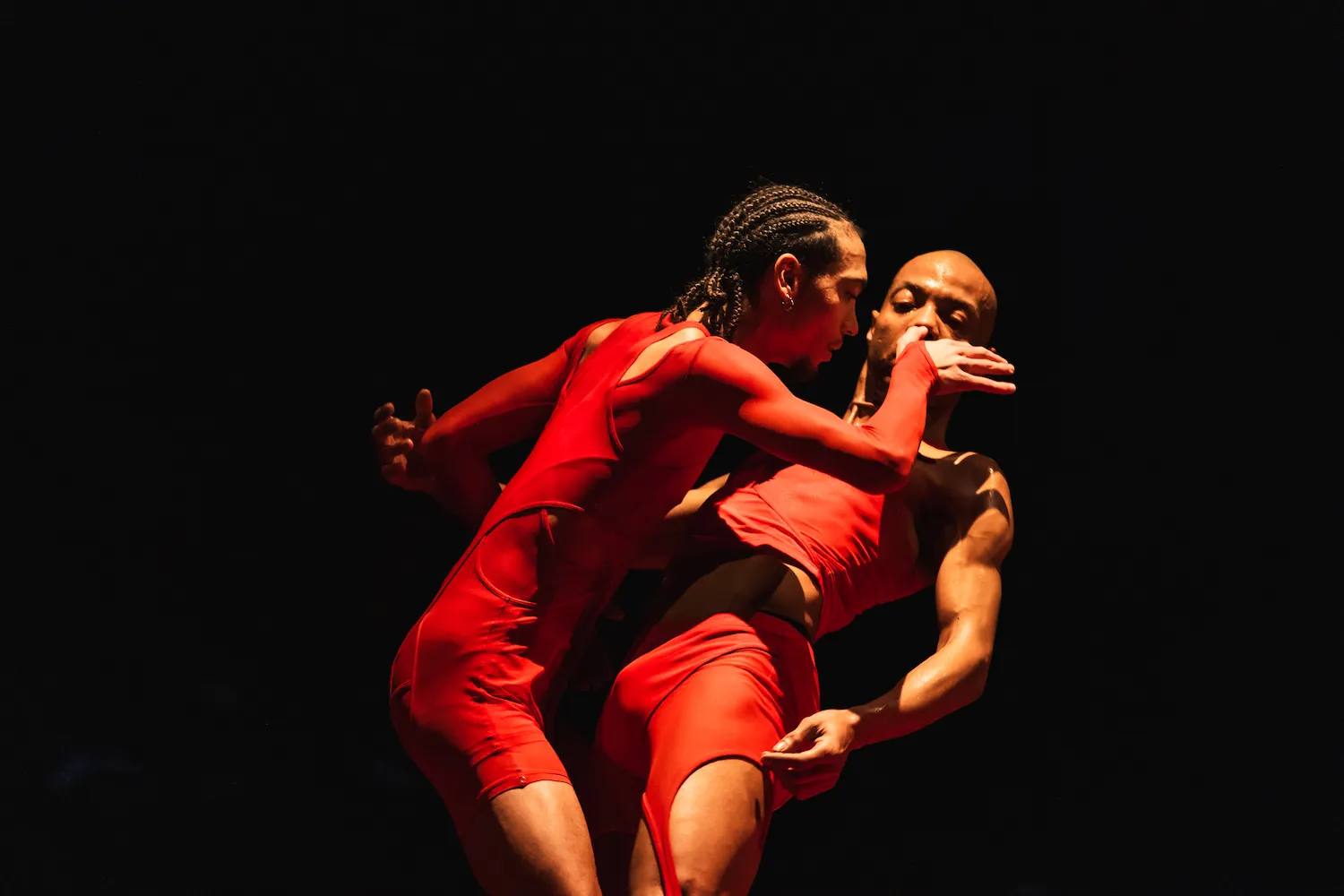
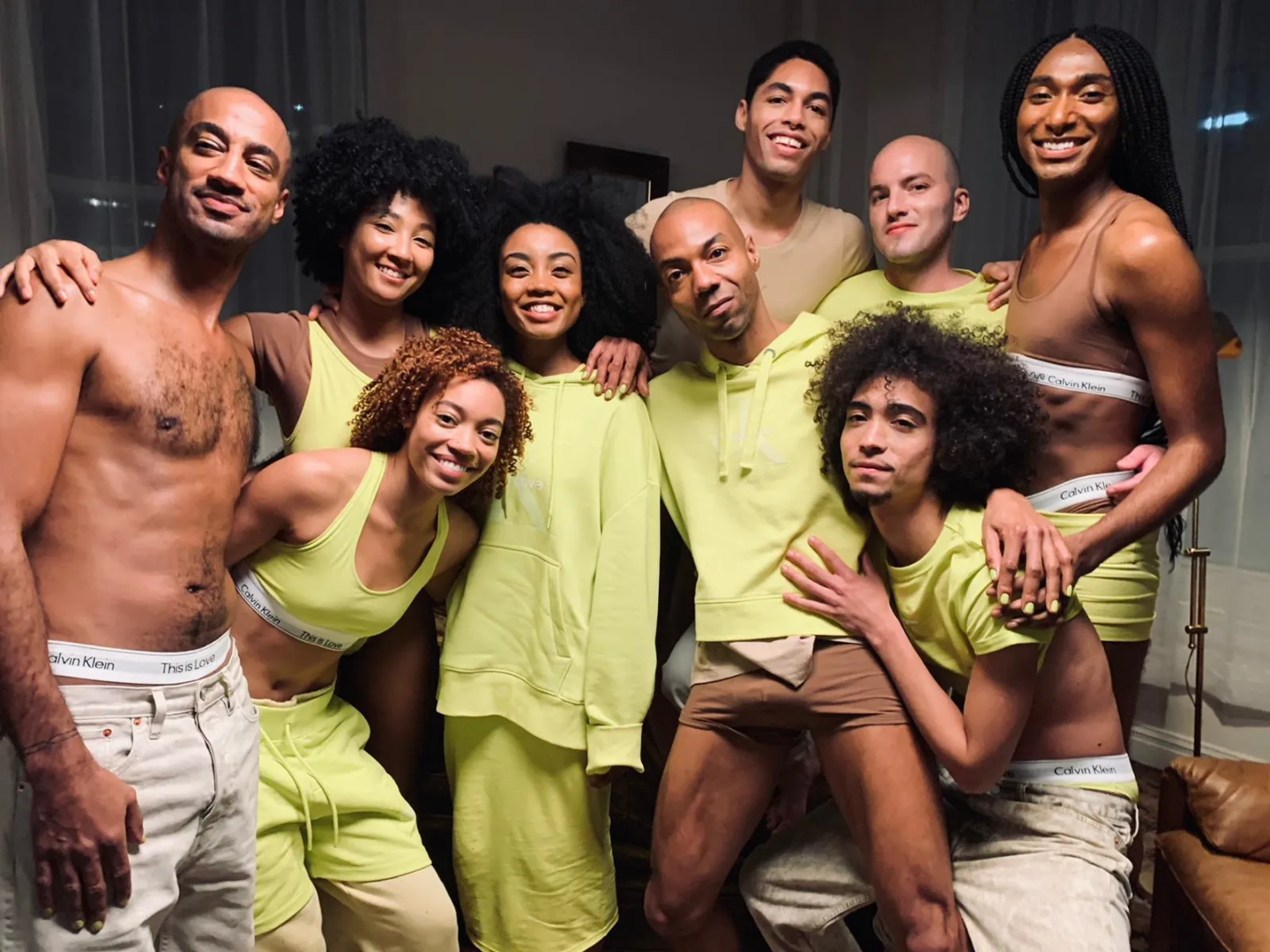
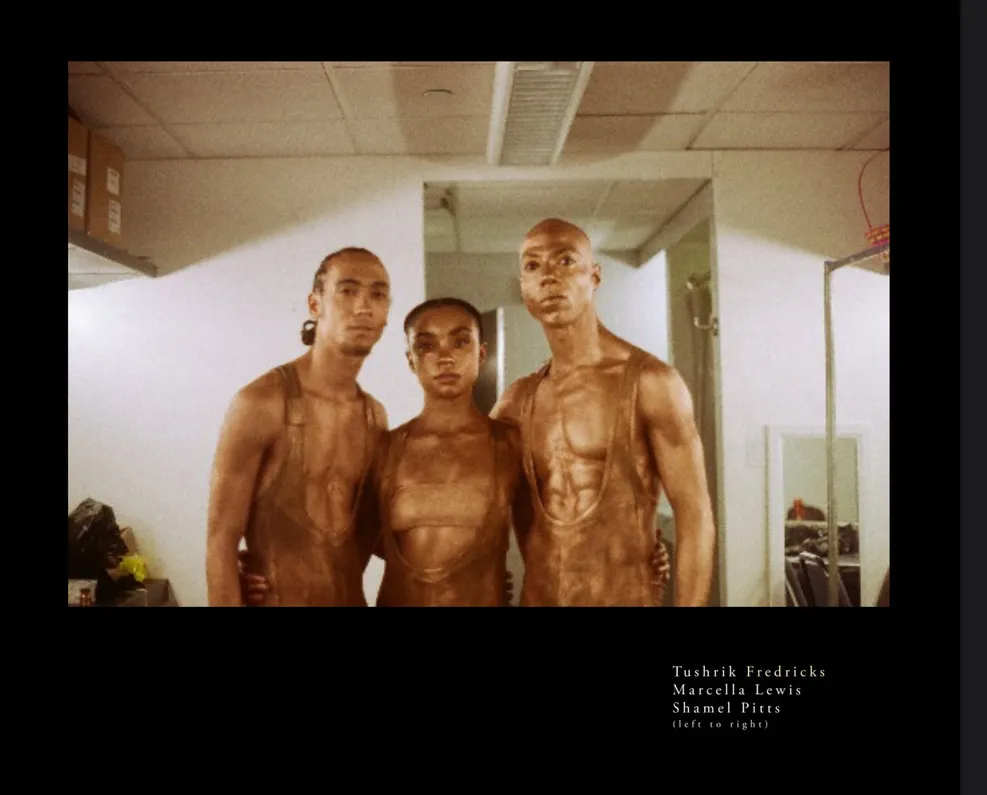
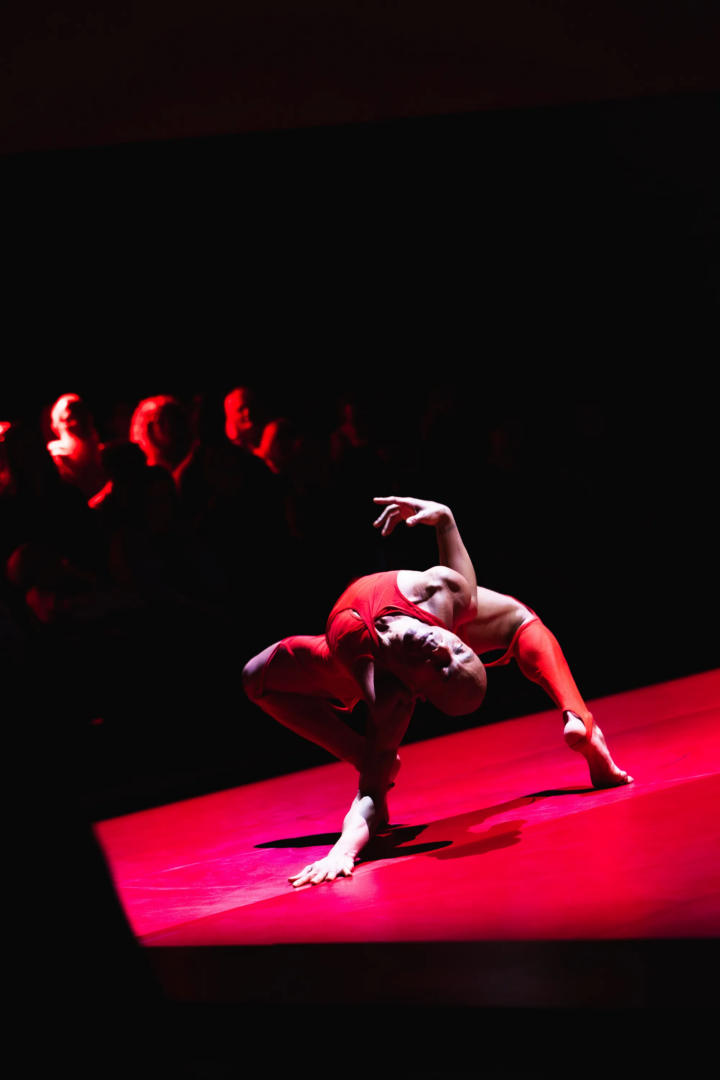
At the time of the fire, Tribe—the multidisciplinary dance collective founded by MacArthur Fellow Shamel Pitts—was in residence at the Pillow, developing a new work titled Touch of red. Conceived and performed as a duet by Pitts and Tribe collaborator Tushrik Fredericks, the piece unfolds within a space reminiscent of a boxing ring. Designed by scenographer Mimi Lien and animated by Lucca Del Carlo’s video mapping, the setting transforms the traditional proscenium stage into a 360-degree platform, around which the audience gathers as if participating in a primordial ritual. Inspired by the rapid-fire footwork of boxing, the African American jazz dance style lindy hop, Gaga movement language, and nightlife culture, the performance is structured as a sequence of “rounds”, in which physical confrontation is gradually dismantled and reconfigured into intimate contact.
The presentation of Touch of RED at the Jacob’s Pillow Dance Festival (June 24–August 30, 2026) marks the full reopening of the Doris Duke Theatre. Redesigned by the Netherlands-based firm Mecanoo, the new theater emerges as a renewed and sustainable performance space, embedded in the surrounding landscape and attentive to the site’s Indigenous memory, through the integration of medicinal native plants and artworks by Indigenous artists within both the landscape and the architectural design.
Interview with Shamel Pitts on Touch of red: beyond dance, boxing, and the body
Shamel Pitts: I was repulsed by boxing. I never understood the entertainment value of watching two men—often Black men—beat the crap out of each other. I found it too violent and would usually turn it off. But when I feel opposition toward something, I try to meet it with curiosity rather than rejection. So I started leaving the TV on and watching boxing closely.
At some point, I noticed how boxers move their bodies, how they communicate through punches and dodges. There was a lot of dancing there. Great boxers like Muhammad Ali even said he was dancing—“float like a butterfly, sting like a bee.” He had a six-step routine that was essentially dance.
What struck me most were moments of exhaustion, when boxers collapsed into each other. That collapse felt like an embrace. I wondered if these hyper-masculine men ever experienced intimacy with another man in a way that was deeply human, and not sexualized. Touch of red grew from that question: what would it mean for two men of color to enter a ring where the match is not about violence, but about inspiration and mutual actualization?
LA: Did your view on boxing change during the creation of Touch of red?
Shamel Pitts: I’m still not watching boxing, so that didn’t change. I watched a lot of it during the creation of the piece, but from an analytical perspective. What changed was my understanding of the boxing community. Beyond the match, there’s a strong sense of camaraderie and brotherhood. Boxers value the body deeply: how to care for it, how to train it, how to push it toward new possibilities. There’s a community that exists outside the ring, and that was inspiring to me.
Shamel Pitts TRIBE: Marks of RED at the Walker Art Center in Minneapolis, March 20 – 21, world premiere exploring Black embodiment, Afro-futurism and multidisciplinary performance
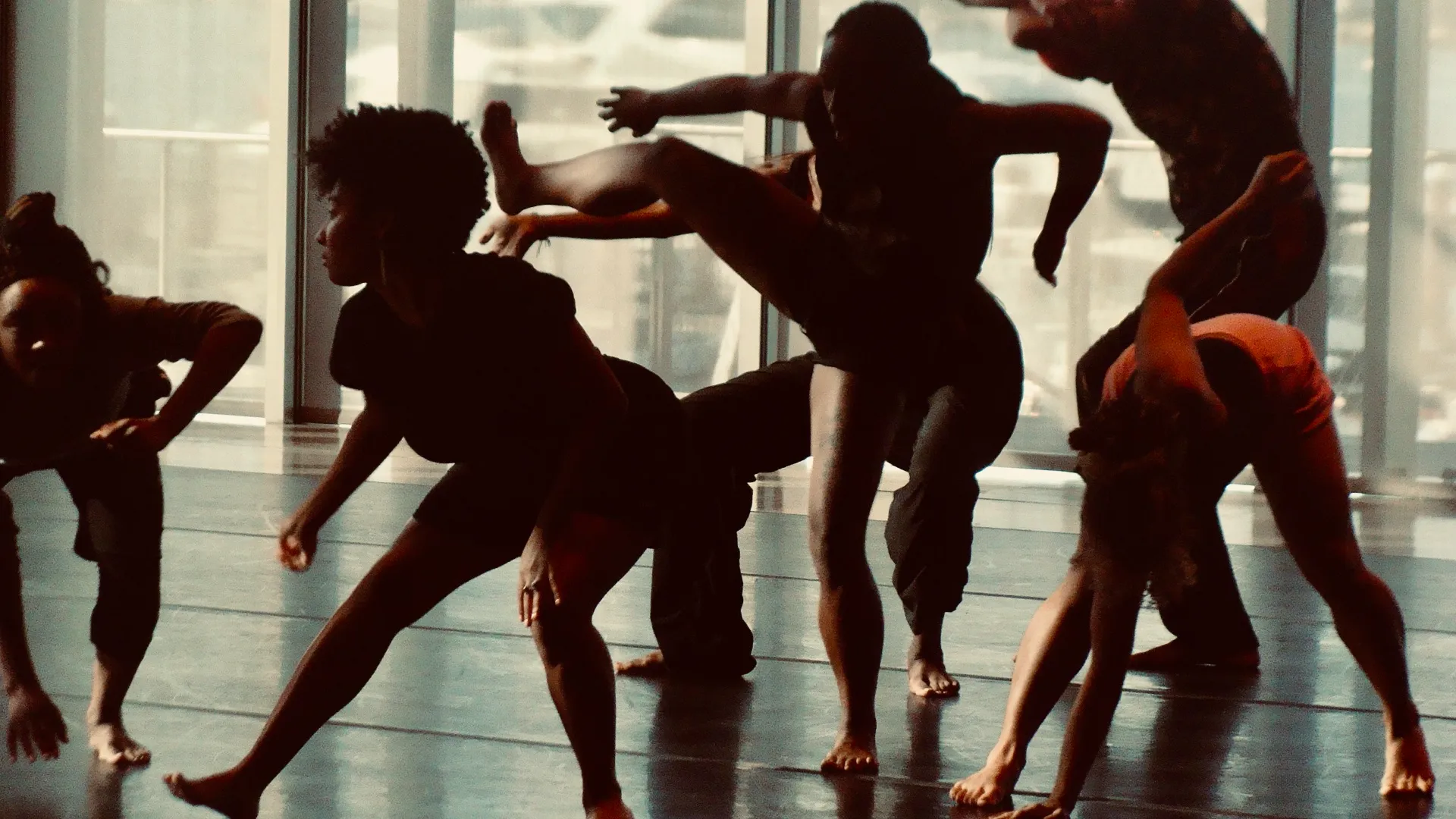
Shamel Pitts: I’m creating a new work with our Tribe artists, and yesterday we had a showcase. There were presenters from across the United States and internationally who came to New York this week to see different dance works, with the aim of presenting them in their festivals. We showed the work last night. In March, we’ll premiere this new piece, Marks of red. I’m gearing up for that now. It’s a large-scale work. The premiere will take place in March in Minneapolis, at the Walker Art Center.
I’m the choreographer and concept director of the work. Mirelle is the creative director of Tribe, so she oversees branding, marketing, and communications for all our projects.
Mirelle Martins: I danced with Shamel in two chapters of the BLACK trilogy. Our collaboration in performance began in 2016, when Shamel invited me to be part of BLACK velvet, the second chapter of the trilogy. Then the pandemic hit. During that period, we launched Tribe.
It was a delicate moment for me. I was in Brazil, and to work with Tribe and Shamel I needed to move to the United States and be physically present, while also sustaining myself. Becoming the creative director of Tribe allowed me to continue collaborating during the pandemic.
This role aligns with my main expertise, which is what I studied and worked on before becoming a dancer. It’s a privilege, because in communications you rarely have insight into how the “product” you’re presenting is actually made. With Tribe, I’ve been able to keep creating, shaping how the collective presents itself through media and how it reaches audiences. It was a significant change—from performance to creative direction—but it reflects different phases of life. Tribe, as a collective, allows these transitions.
Multidisciplinarity, the body as language, and the future of dance in the work of Tribe
LA: Multidisciplinarity is part of Tribe’s DNA.
Shamel Pitts: Although the works are rooted in dance and the body, the role of video projection, scenic design, and soundscape is fundamental. The work would be incomplete without these elements coming together. The multidisciplinary approach is essential.
Looking ahead, Tribe is also about evolution. Roles shift, people grow, and the DNA of the collective evolves over time. We try to leave space for that evolution and listen to where the work wants to go.
LA: What do you think dance brings as a medium? What can it communicate unlike any other form?
Mirelle Martins: Dance speaks through the body, so it doesn’t need translation. From the beginning of my collaboration with Shamel, I was struck by how much we could communicate conceptually without words. In different countries, audiences described emotions using the same terms we used internally while creating the movement.
That kind of communication is intense and powerful. It goes beyond the intellectual and reaches people through the body, percussion, sensation. Especially today, in a time shaped by artificial intelligence, it’s striking how skin, blood, breath, and sweat can still communicate so m
Shamel Pitts and Mirelle Martins on nonverbal communication, dance, science, and the body as a field of human experience
Shamel Pitts: I agree. The power of nonverbal communication is immense. Dance has always been a way to tap into the body’s many possibilities. Movement communicates something vast, beyond words. Words locate you in a specific place, while the body opens up a much larger field of human experience. Through dance, we tap into the soul and spirit, and the communication reaches us in a way that’s larger than any other art form. Dance brings out the aliveness of our bodies.
Mirelle Martins: I have many influences, but science is a major one. Even before I decided to dance, about ten years ago, I found relief in studying the cosmos—the movement of energies, cohesion, the idea that time doesn’t exist outside the planet. These ideas of energy and distant forces, and of being part of a cosmic dance, really shaped me. When I started dancing with Shamel, I wasn’t a dancer, and science helped me feel that I could do it, that I had some stardust too. In my artistic communication, I try to transcend the material. I see art as something that can give hope, not just entertainment. This mindset helped me go beyond my limits, try new things, and not be afraid of doing something for the first time. The universe is huge, so we might as well move with it.
Afrofuturism, hope, and responsibility in the work of Shamel Pitts: fire, rebirth, and imagining new futures
LA: And speaking about hope and the future: as you said before, some concepts are better communicated non-verbally, but if you had to explain the link between your work and Afrofuturism, how would you describe it?
Shamel Pitts: I’m inspired by Afrofuturism not as a genre, not specifically sci-fi or technology, but by its essence. For me, Afrofuturism is a call to action, a philosophy, an ethos. It states that we have the ability, the responsibility, and the possibility to create new stories that haven’t existed yet—stories featuring artists of color and artists from the diaspora, created by them. Even while acknowledging that many of these histories are tragic, it asks: how do we still look forward? How do we take agency and imagine a brighter, more hopeful future, one different from the past? That sense of hope and responsibility really inspires my work—offering different possibilities and complexities of being, adding more colorfulness to the Black diasporic experience.
Why red after black: Shamel Pitts on the RED series, childhood, fire, and the return of Touch of red to Jacob’s Pillow
LA: About this “colorfulness of Blackness”: why red? After black, why this new color?
Shamel Pitts: I love playing with words and their layered meanings. The first series we created was called the BLACK series. Black, in a way, isn’t even a color; it’s the absorption of many pigments. With the BLACK series, we explored the spectrum of black—its textures, tones, and variations—showing that blackness is not monolithic but vast.
When that series ended, we moved into the RED series. Red evokes love, blood, bloodlines, passion, fire. It’s also my nickname, what my family and friends in Brooklyn still call me. It’s my childhood name. So the RED series looks back toward childhood, creating space for lightness and childlike wonder. The BLACK series was darker and heavier, more outward-facing. The RED series asks us to look inward, to dig into parts of ourselves that go all the way back to the womb.
LA: You mentioned red as fire, which recalls what happened at Jacob’s Pillow—the fire during your residency and now the rebirth. How does it feel to return to this place?
Shamel Pitts: It feels like a phoenix rising from the ashes. The fire was traumatic, and I’m very close to the Jacob’s Pillow community. It’s one of the most historic dance festivals in the world. The festival is reimagining its future, especially around dance and technology. Tribe has also inspired them in that direction, as an Afrofuturistic and multidisciplinary collective. Regardless of the fire, we knew we wanted to continue this relationship. Both Jacob’s Pillow and Tribe are resilient. I’m really looking forward to presenting Touch of red in their new theater in spring 2026.
LA: Looking at the new project for the theater, I was struck by its connection to the land and its native past, which resonated with the almost primitive sense of reunion around the ring of Touch of red. I also saw a link between Ted Shawn, who founded Jacob’s Pillow and sought to legitimize dance for men through a muscular and innovative style, and your work. Was that something you had in mind?
Shamel Pitts: That’s really interesting. It’s true—Ted Shawn founded Jacob’s Pillow to explore what it meant to be male through dance: vulnerability, softness, camaraderie, brotherhood. That aligns with what I’m interested in. Power exists on many levels, not just physical strength. With Touch of red, which engages similar themes, it’s more of a coincidence—or maybe something cosmic. I didn’t consciously have Ted Shawn in mind, but somehow the stars aligned.
What comes after red: Shamel Pitts on duets, gender, and the future of the RED series in contemporary dance
LA: Having performed both, how does a duet with a male dancer differ from one with a female dancer? What does each bring to the work?
Shamel Pitts: I see more similarities than differences. Even when the work appears to focus on binaries like sex or race, I’m always interested in the multiplicity within those differences. Performing with Mirelle brings something deeply divine: a sense of the divine feminine, power, protection. With Tush [Tushrik Fredericks], there’s brotherhood, but also softness and femininity. With both partners, it’s about showing the full range of what it means to be human, beyond binaries.
LA: Mirelle, how did it feel to move beyond the BLACK trilogy and into the RED works?
Mirelle Martins: The RED series really began with Tribe during the pandemic. Lake of red was created in 2020. While working on the BLACK series, we already knew it would be a trilogy and that it would come to an end. I was very curious to see how Shamel would continue his choreographic path after the success of the BLACK series, which was very well received by both audiences and the media.
For me, the RED series was also a personal transition, because I moved off stage. I was consulting and collaborating creatively, while still performing with Shamel in BLACK hole. Touch of red is the first large-scale live performance of the RED series. My role shifted to supporting the work from outside the stage: helping the artist and the audience meet the piece. As a creative director, I see my role as amplifying what happens on stage. It was exciting to witness the creative process without performing, focusing instead on communication, visual language, and the evolution of the work. It was a rewarding experience and a major collaborative project involving many artists.
LA: Is a third chapter in the RED series currently in the works?
Shamel Pitts: Yes—but the RED series isn’t conceived as a trilogy. With the BLACK series, we always knew it would be one. It was very linear: BLACK box as a solo, BLACK velvet as a duet, and BLACK hole as a trio. BLACK hole, with its focus on the cosmos and new territories, felt like a completion of that journey.
The RED series comes from a very different place. It’s non-linear, more spontaneous, more childlike, and not chronological. The first work was the video piece Lake of red, the second is Touch of red, and the third work I’m creating now is Marks of red, with six women. I’m sure there will be more works in the RED series. It’s definitely not a trilogy, and I don’t yet know exactly where it will lead.
Technology, ai, and the future of dance: Shamel Pitts and Mirelle Martins on human connection, live performance, and the body in a digital age
LA: Looking at the broader context—the pandemic, and now ai, which can feel like both a possibility and a threat to traditional art forms—how do you see the near future of dance? Are you optimistic?
Shamel Pitts: I tend to think of technology not just as a tool, but as something elemental. Technology has always existed. The tools evolve, but the relationship is constant. I often say that the first technologies for dance were things like the African drum, fire, or even the moon. With ai and other technological advancements, I’m curious about how we can work with these elements rather than simply using them to serve human needs—because tools can easily become weapons. I don’t know exactly how this relationship will evolve, but I do believe that as technology advances, people will crave human connection even more. We are a species that survives through community. Live art, performance, and dance may become even more essential, because they remind us of what it means to be human and to connect in real, physical space.
Mirelle Martins: I agree. With greater technological saturation, people often start to value real human contact more. I believe in that balance. When things become overly industrial or digital, there’s usually a return to intimacy. That said, it’s very hard to predict, because public behavior is changing so quickly, especially with the consumption of digital content. My curiosity is about how the digital and the physical can collaborate without cannibalizing each other. For example, TikTok dances worry me a bit—dancing toward a fixed camera, in a single direction, without a 360-degree experience. Theater and live performance offer something different: immersion, scale, a human-sized relationship to the work, not just a screen-sized one. I think artists need to keep experimenting with these tools. Historically, artists are the ones who push technology forward before it becomes mainstream. We’re still learning, and I think we’ll need many more years to truly understand how to use these tools to our benefit.
The ritual of the bow in Touch of red: audience, intimacy, and rethinking the end of a performance
LA: A specific question about Touch of red, about the end of the show: you and Tushrik bring your stools to each side of the ring and share a moment with the audience. I was wondering if that happens every time, if it’s part of the structure of the piece, and what its meaning is, both emotionally and formally.
Shamel Pitts: Yes, that moment happens in every performance of Touch of red. We call it “the bows.” It’s our way of bowing to the audience. I’ve often questioned the traditional idea of bowing at the end of a performance—what does it really mean? Is it a genuine exchange? Sometimes it feels rooted in aristocratic or imperial structures, like in ballet, where performers would bow to a king in the audience.
Touch of red already disrupts the traditional orientation between performers and audience: the stage is in the center, with the audience on all four sides. It’s not frontal, not one-dimensional. So I asked myself what bowing could mean in this context. How could it become a true exchange, a shared and intimate moment where we say thank you to the audience, and they say thank you to us, before leaving?
In this final moment, Tush and I move to each side of the ring. For most of the piece, the audience surrounds us and also sees each other across the ring. Here, we create a private moment with each side, one at a time. We offer that intimacy and then invite them to leave. That’s our bow. It felt more generous, more intimate, and truer to what an offering at the end of a performance can be.
From Touch of red to Marks of red: Shamel Pitts on scale, collaboration, and the next phase of Tribe
LA: After Touch of red, you’re now moving toward Marks of red. What can you tell us about this new work, and how it expands the scale and vision of Tribe?
Shamel Pitts: Marks of red is the largest project Tribe has created so far. It involves six performers and around six collaborators—artists working on set design, video mapping, lighting, costume design, music, and text. It’s a major undertaking for Tribe. It’s also the first work where I’m not performing on stage myself. The March premiere is a very significant moment for us, both artistically and structurally, as a collective.
Afrofuturism: Tribe’s trajectory and the legacy of Jacob’s Pillow. From Ted Shawn to Shamel Pitts
For Tribe, this moment represents a milestone. Founded in 2019 as a non-profit collective with an explicitly political and poetic mission, Tribe was conceived as a space of discovery for artists—particularly Black artists—drawing inspiration from Afrofuturism. From the BLACK series, which interrogated Black identity as a historical, corporeal, and imaginative constellation, the collective’s trajectory has now moved toward red: a color that signals a return to instinct, a shift from symbolic terrain toward human intimacy.
It is also a defining moment for Jacob’s Pillow. Opened to the public in 1942 as the first performance space in the United States designed specifically for dance, it remains the only dance institution designated a National Historic Landmark District by the U.S. federal government, recognized as “an exceptional cultural venue that holds value for all Americans.” Founded by modern dance pioneer Ted Shawn, who purchased a farm in 1931 as a dance retreat and recruited eight men for a new company, the site began hosting “Tea Lecture Demonstrations” in its barn studio as early as 1933, planting the seeds of what would later become the Jacob’s Pillow Dance Festival.
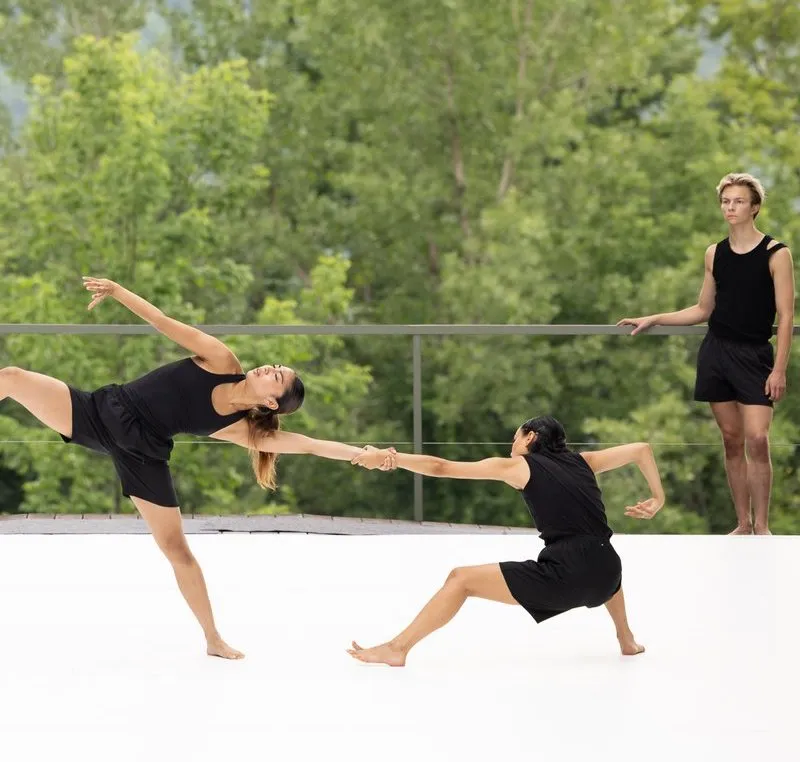
Just as Shawn and his wife Ruth St. Denis, through the renowned Denishawn Company, advanced dance forms rooted in theatrical and multicultural traditions beyond European ballet, Tribe seeks to expand the field of dance by integrating new artistic and technological practices. And just as Shawn aimed to legitimize dance as an “honorable” pursuit for men through a deliberately muscular style, Touch of red probes the vulnerability embedded within physical confrontation between men. In place of combat, contact; in place of attack, a reaching toward one another. A century after Ted Shawn’s intuition, Shamel Pitts continues to make the male body a site of inquiry, softness, possibility, and beauty.
That this collaboration reaches full realization in the aftermath of the fire, through a work that carries—both in title and substance—the color of flames, feels almost inevitable. Jacob’s Pillow moves through destruction, Tribe moves through humanity’s impulse toward violence, and what emerges is an event of rare intensity and beauty. I discussed this with Tribe founder and Touch of red performer Shamel Pitts, and with founding artist, performer of the BLACK trilogy, and current creative director Mirelle Martins.
Luca Avigo