Wythe Hotel, Williamsburg: a barrel factory became Brooklyn’s defining address
How an abandoned industrial building became Brooklyn’s first boutique hotel: the Wythe Hotel tells the story of Williamsburg itself, from working waterfront to one of New York’s most visible neighborhoods
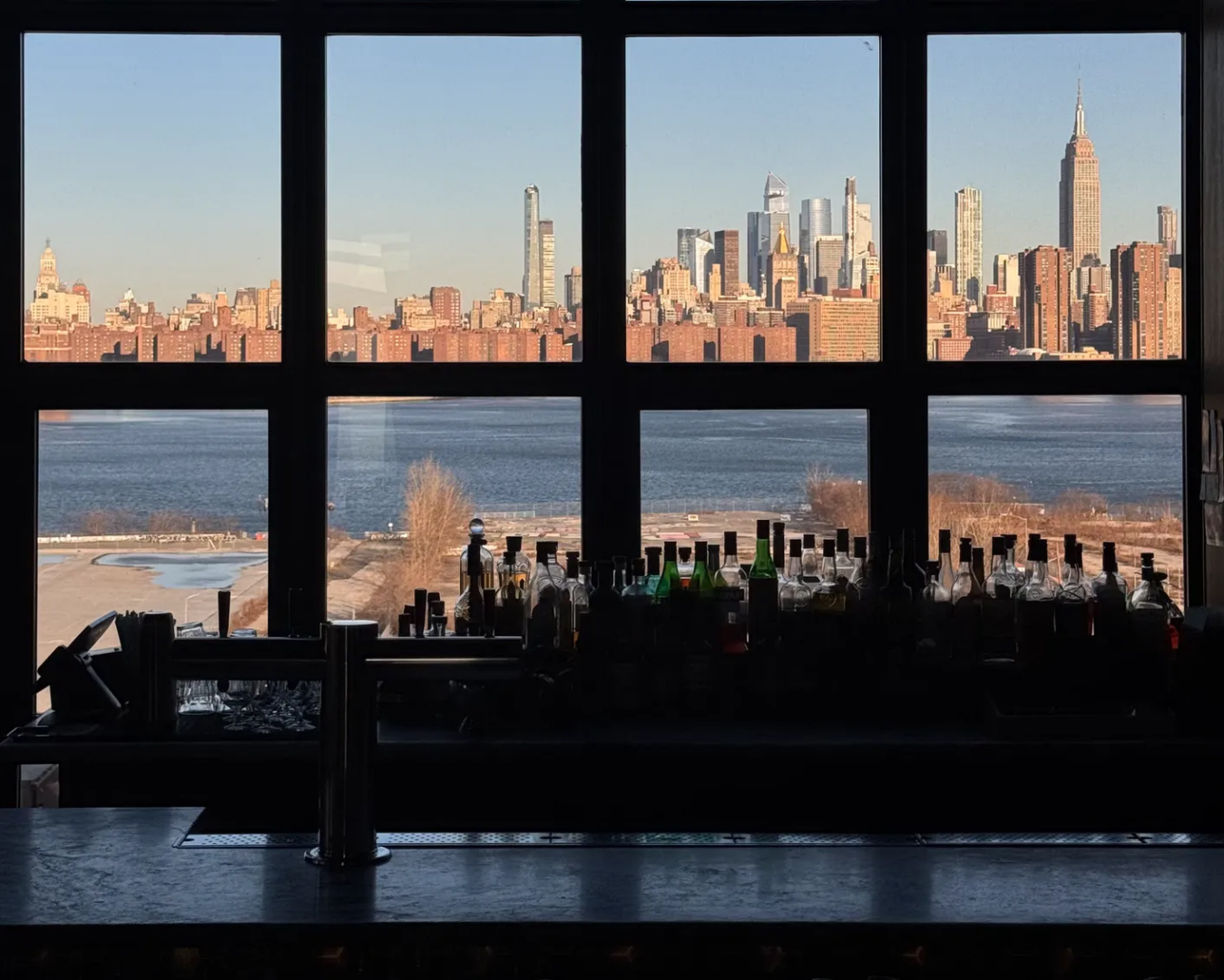
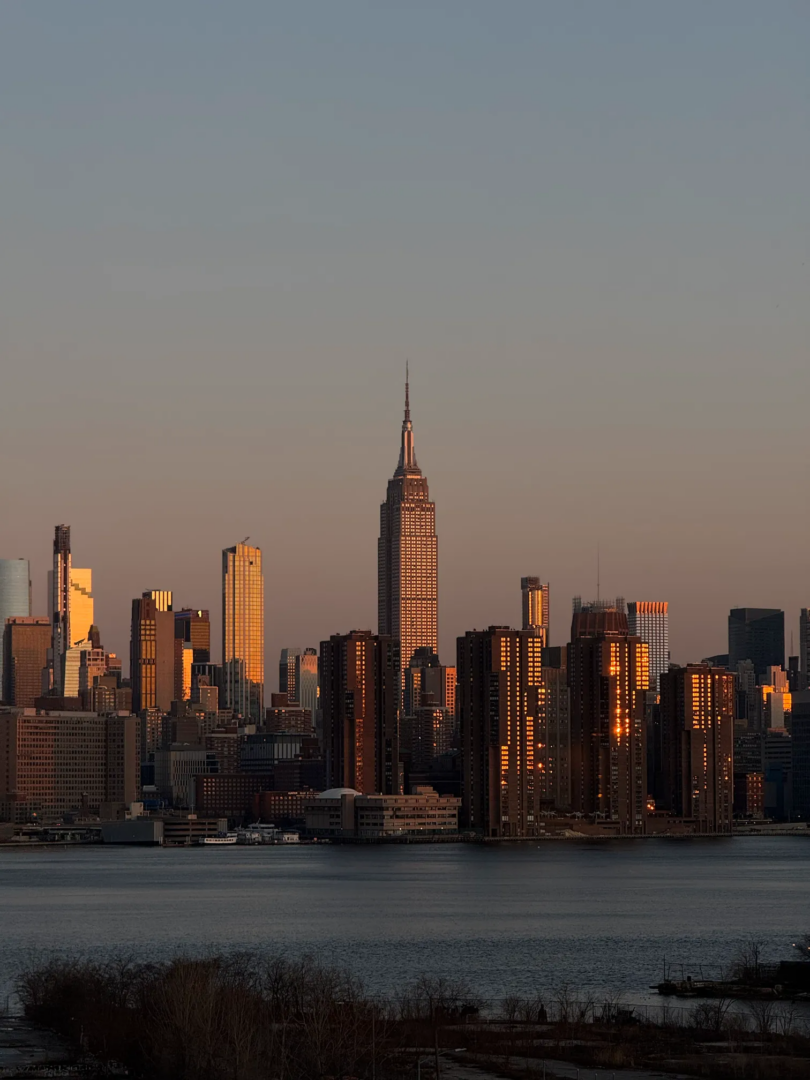
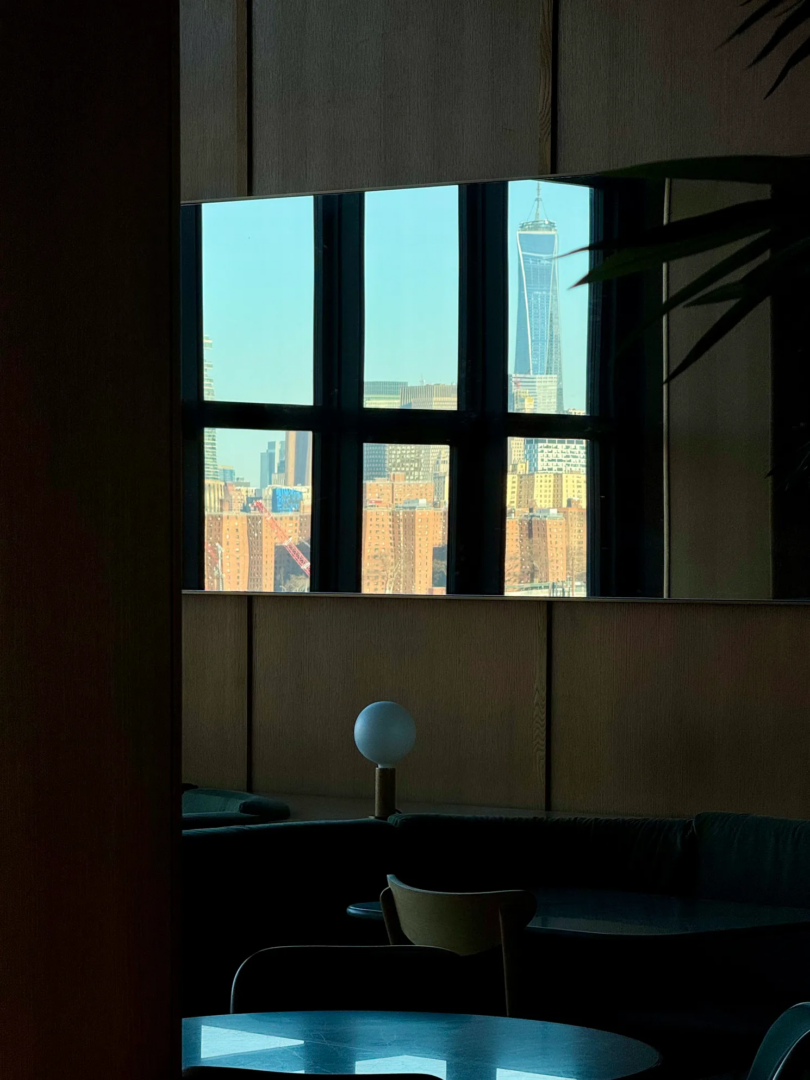
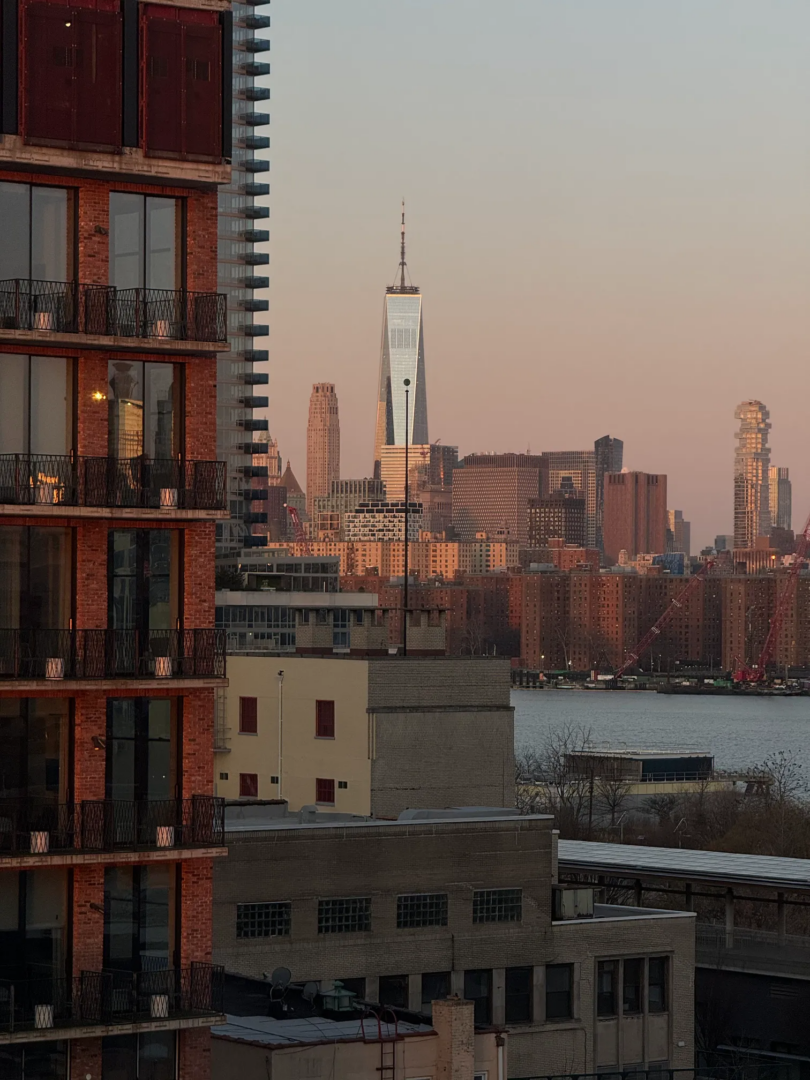
Stand at the corner of North 11th Street and Wythe Avenue on any evening and you get a clear sense of what Williamsburg has become. There is usually a line outside Le Crocodile, the French brasserie that opened in 2019 and still draws a crowd. Nearby, Brooklyn Bowl combines live music and bowling under one roof. A short walk away, the NYC Ferry connects the neighborhood to Wall Street in about twenty minutes. From the roof of the Wythe Hotel, the Manhattan skyline sits directly across the river.
The building is easy to spot. Its most recognizable feature is the large 50-foot marquee created by Brooklyn artist Tom Fruin, assembled from salvaged New York signs collected over two decades. Old fruit stands, pizza shop panels, repair ads, phone numbers, warnings — fragments of the city brought together under red neon letters spelling one word: HOTEL.
Wythe Hotel, the founders: Brooklyn’s first boutique hotel
When Peter Lawrence first saw the building at 80 Wythe Avenue in 2008, it was still derelict. The old factory stood at the edge of a neighborhood that had not yet become what it is today. Lawrence, an Australian hotelier with a background in nightlife, saw something others did not: the possibility of opening a hotel that belonged to Brooklyn rather than importing a Manhattan model across the river.
Two figures were central to making that idea real. Jed Walentas of Two Trees Management brought the financial backing and development experience. Andrew Tarlow, already well known in Brooklyn through Diner and Marlow & Sons, brought credibility in a neighborhood where that mattered.
The timing was difficult. The financial crisis of 2008 stopped construction for roughly two years. Lawrence used that period to deepen his understanding of hotel operations. When work resumed, the project moved quickly. The Wythe Hotel opened in May 2012 with a reported development cost of $32 million, becoming Brooklyn’s first boutique hotel.
The response was immediate. Occupancy stayed above 90 percent from the beginning, outperforming even the founders’ expectations. Soon after, other hotel developments followed along Wythe Avenue. The area that had once been defined by warehouses, industrial lots and underground parties was turning into one of the most visited parts of New York.
Wythe Hotel – architecture: industrial structure, restored surfaces, rooftop glass addition
The architectural conversion was led by Morris Adjmi, whose work often focuses on the relationship between new interventions and existing urban fabric. At the Wythe, the approach was not to erase the building’s industrial past, but to keep it visible.
The exterior brick was cleaned rather than covered. Inside, cast-iron columns and timber beams were exposed, old paint layers were stripped back, and even a former conveyor belt was left in the lobby. The point was clear: the building’s identity came from what it had already been.
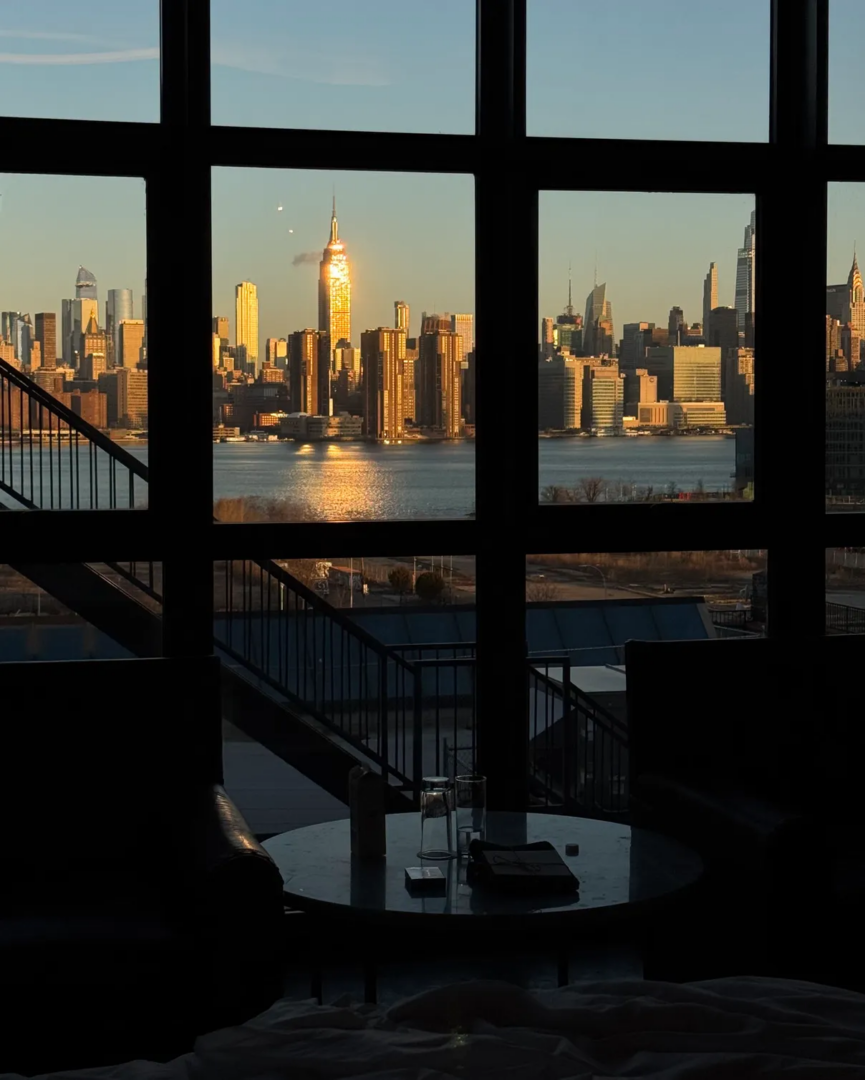
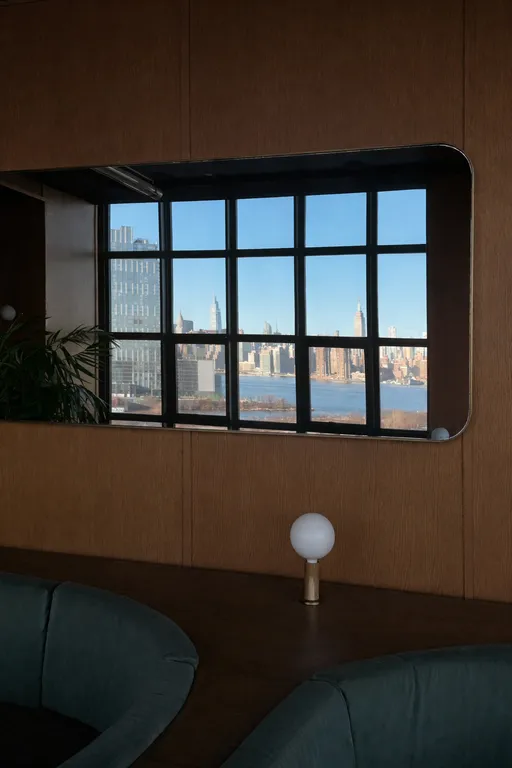
The most visible intervention was made on the west side. One structural bay was removed and replaced with a full-height glass wall, opening west-facing rooms to views of Manhattan. Above the original five-story factory, a four-story glass and steel addition was built to house rooftop spaces, bringing the building to eight stories in total. The new volume uses aluminum and glass in a way that echoes the original windows without imitating them.
The engineering work was substantial. The original masonry walls were not designed to carry the new structural loads. Removing part of the west façade required new steel framing and a reinforced stair and elevator core to support both the existing building and the rooftop expansion above.
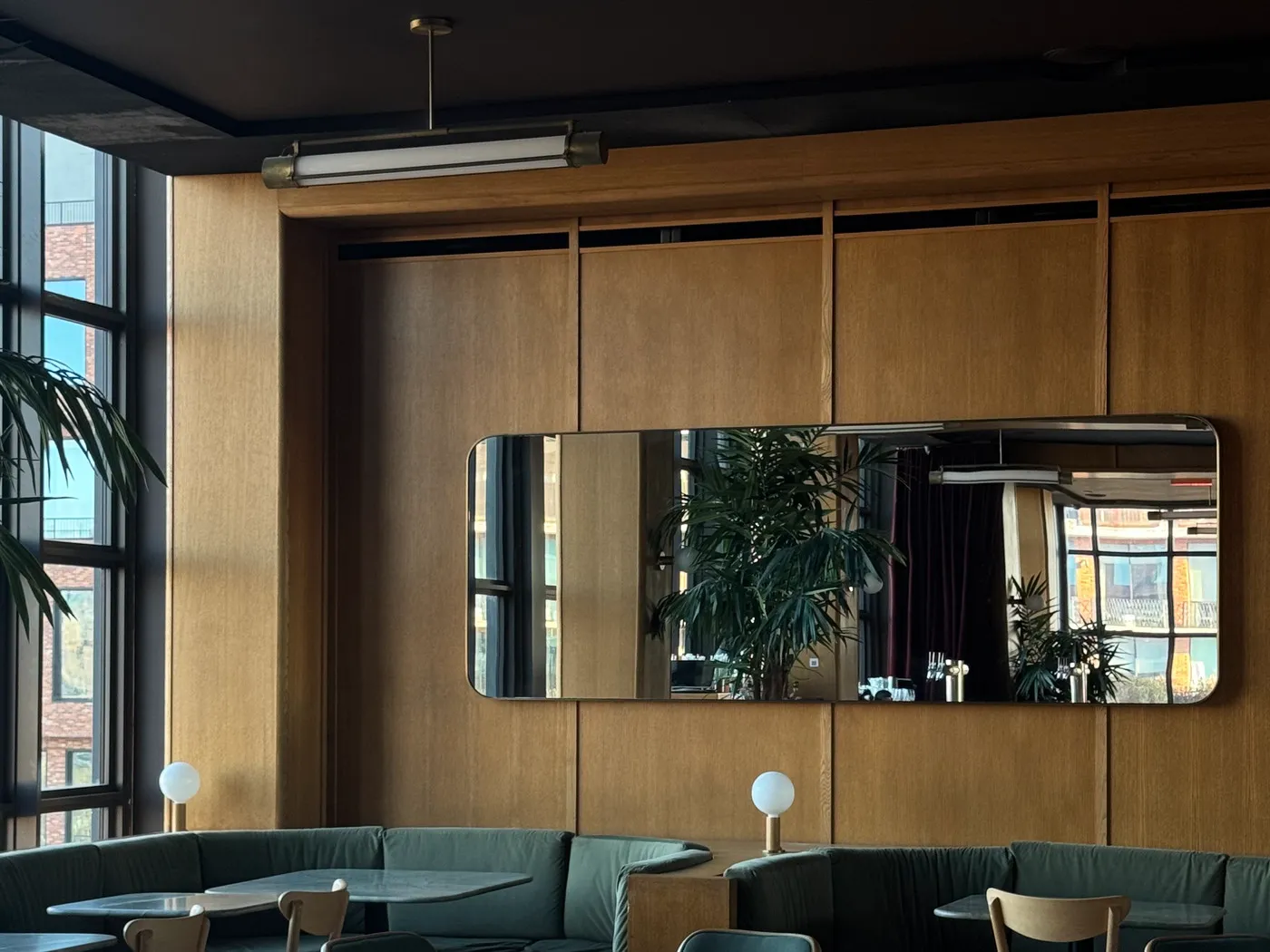
For the lobby and rooftop interiors, Adjmi worked with Brooklyn studio Workstead, founded by Stefanie Brechbuehler and Robert Highsmith. Their rooftop design — first known as The Ides, now Bar Blondeau — reflects daylight by day and the skyline at night.
Wythe Hotel – rooms: industrial scale and Brooklyn-made details
The Wythe hotel has 69 rooms, and one of their defining features is proportion. The original factory structure allowed for 13-foot timber ceilings, large windows and concrete floors with radiant heating — dimensions rarely found in Manhattan hotels.
Materials from the building were reused throughout. Reclaimed pine became beds, desks and minibars. In the bathrooms, two-way mirrors frame views toward Manhattan. The rooms are simple, though not generic.
There is also a strong local dimension in the interiors. Illustrator Dan Funderburgh created three custom wallpaper patterns for the hotel, each tied to a different stage in the building’s past: its life as a cooperage, then as a rope or textile-related factory, then as a neglected warehouse. The papers were printed by Brooklyn-based Flavor Paper. The minibar has long reflected the hotel’s preference for local producers, while bathroom amenities and textiles also connect back to small New York makers. Even the audio setup is minimal: a direct jack connection to the speakers, without unnecessary interfaces.
The idea is consistent throughout. The main luxury is not excess. It is being in this building, in this neighborhood, with the city visible just outside.
Wythe Hotel, the art collection: Tom Fruin and Brooklyn artists
Art was never treated as an accessory to the project. Lawrence understood that the Williamsburg waterfront had long been shaped by artists who moved into large industrial spaces when rents were still low. If the hotel wanted to reflect the neighborhood, that history had to be present inside it.
Tom Fruin’s marquee became the most visible expression of that thinking. Built from salvaged New York signage gathered over many years, it functions both as an artwork and as a compressed history of urban change — demolition, reuse, disappearance, memory.
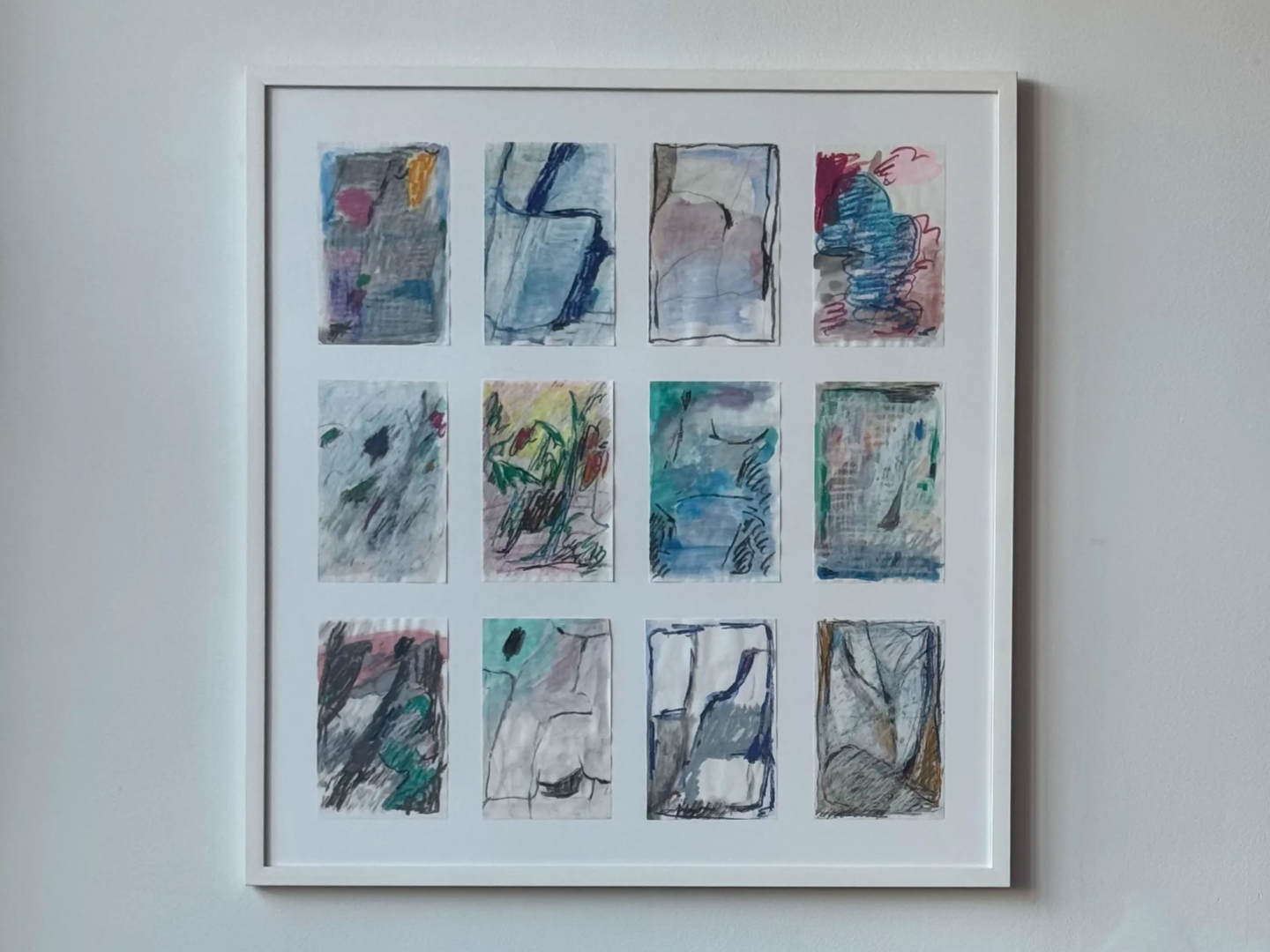
Other artists were brought into the public spaces, including Steve “ESPO” Powers and Duke Riley. The hotel also appointed Brooklyn painter Kimia Ferdowsi Kline as curator of its permanent collection, which includes works by Brad Kahlhamer, EJ Hauser, Jason Stopa, Michelle Segre, Chris Martin, Marina Adams and Rachel Eulena Williams, among others.
Today, the art program is overseen by curator Alessandra Gómez, who continues to expand the collection and organize exhibitions, performances and public programming within the hotel.
Le Crocodile, restaurant in Williamsburg
Food was always central to the Wythe’s identity. For its first years, that role was played by Reynard, a restaurant that helped define the hotel’s public image. When Andrew Tarlow stepped away from the food and beverage program in 2018, the question of what would replace it mattered.
The answer arrived in December 2019 with Le Crocodile, a French brasserie led by Aidan O’Neal. Le Crocodile was named one of “The 100 Best Restaurants in New York City in 2024” by The New York Times and has received multiple Wine Spectator Awards of Excellence.
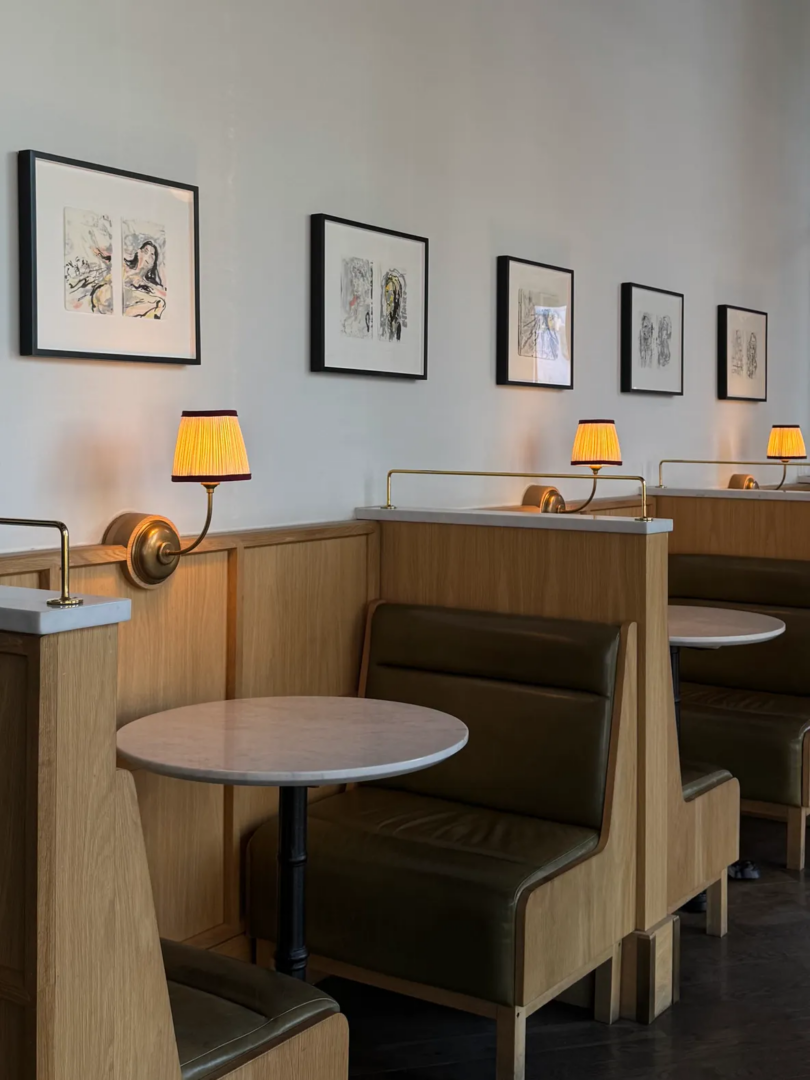
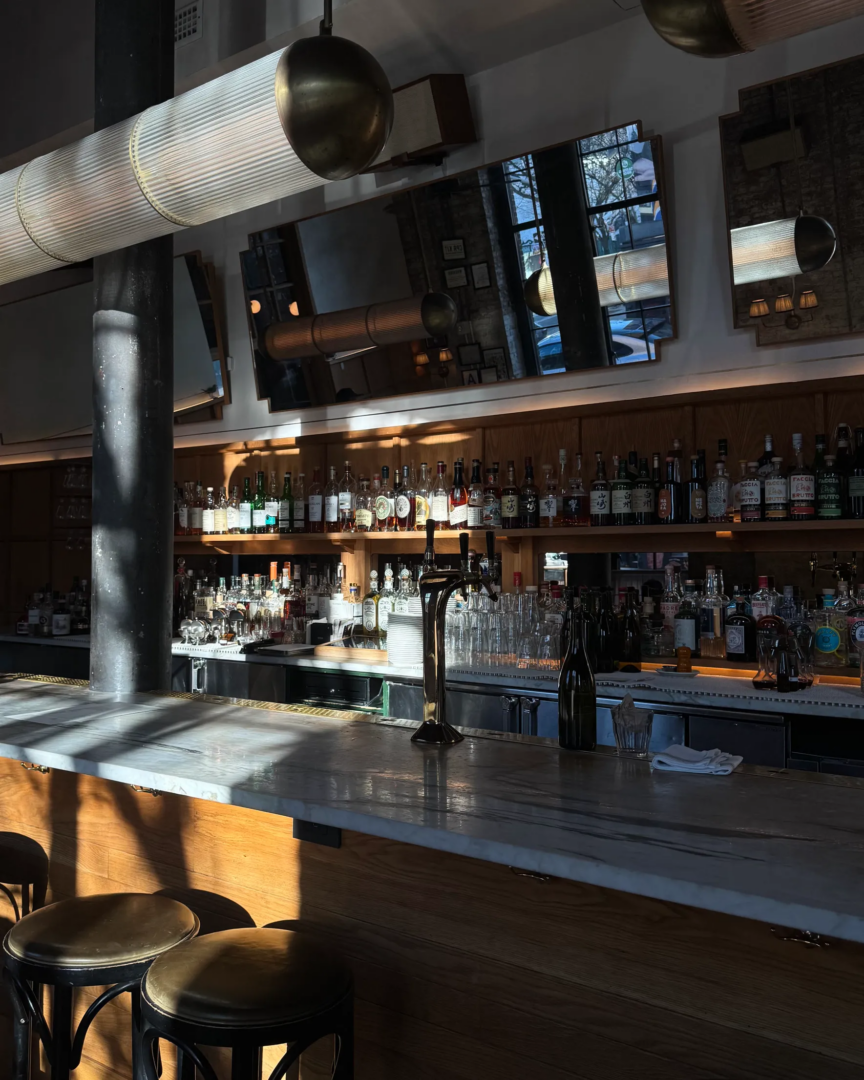
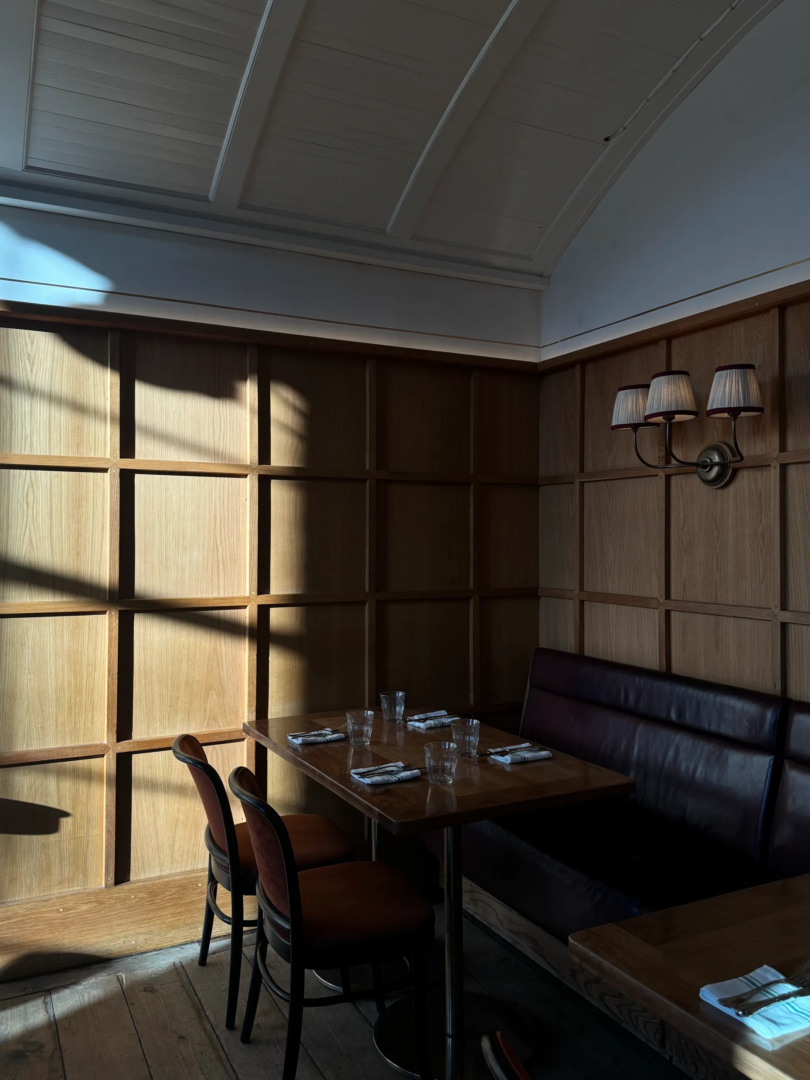
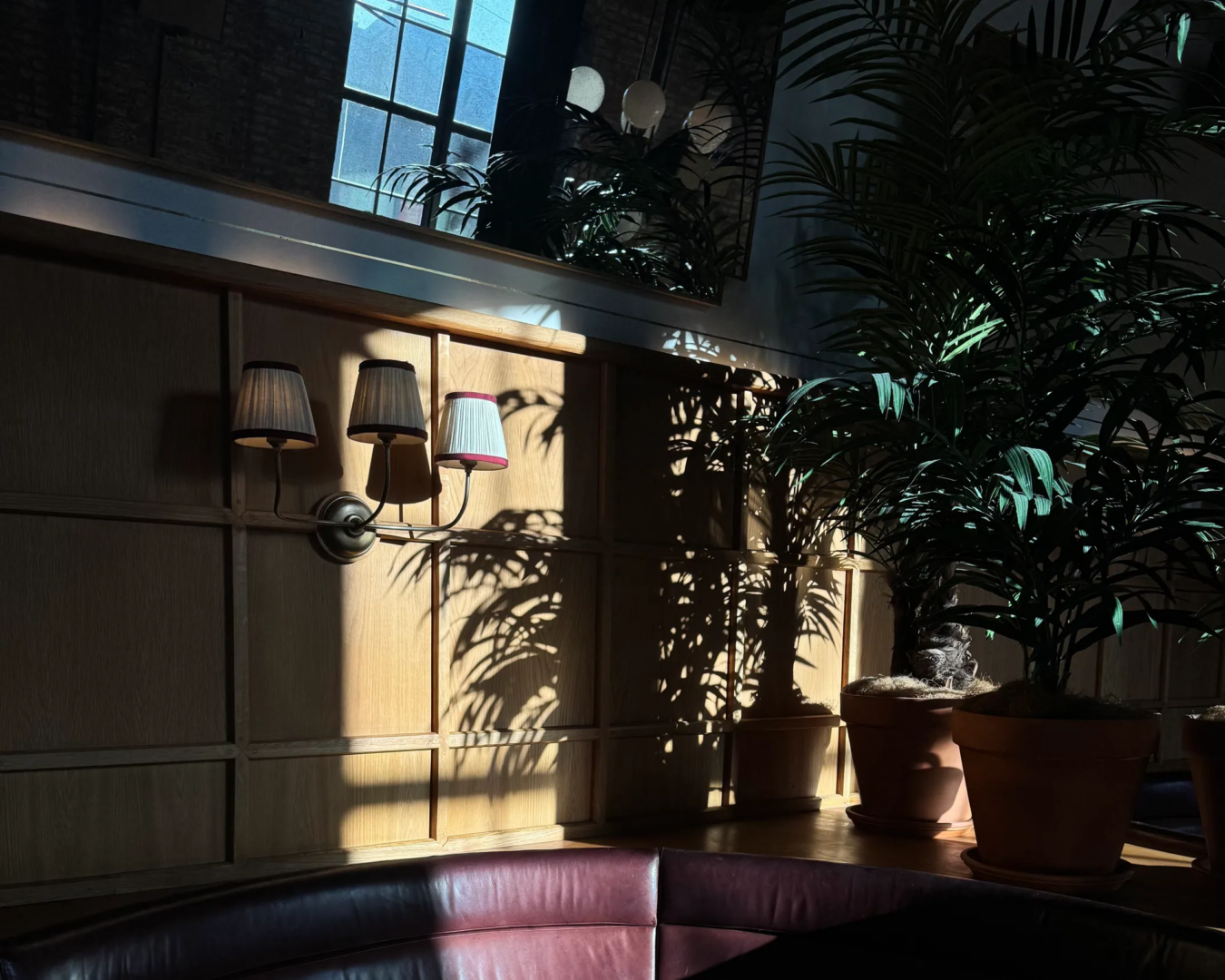
Leiber and O’Neal built the menu around classic brasserie logic rather than novelty: onion soup, moules marinière, steak au poivre, roast chicken, mushroom pâté. The beverage program is overseen by Gabriella Borg-Costanzi, alongside beverage director Jarett Karlsberg, who has been with the hotel since its opening. The dining room keeps the building’s industrial frame visible — high ceilings, worn wooden floors, arched windows, thick brick walls — while adding softer elements through booths, warm paneling and a more intimate layout.
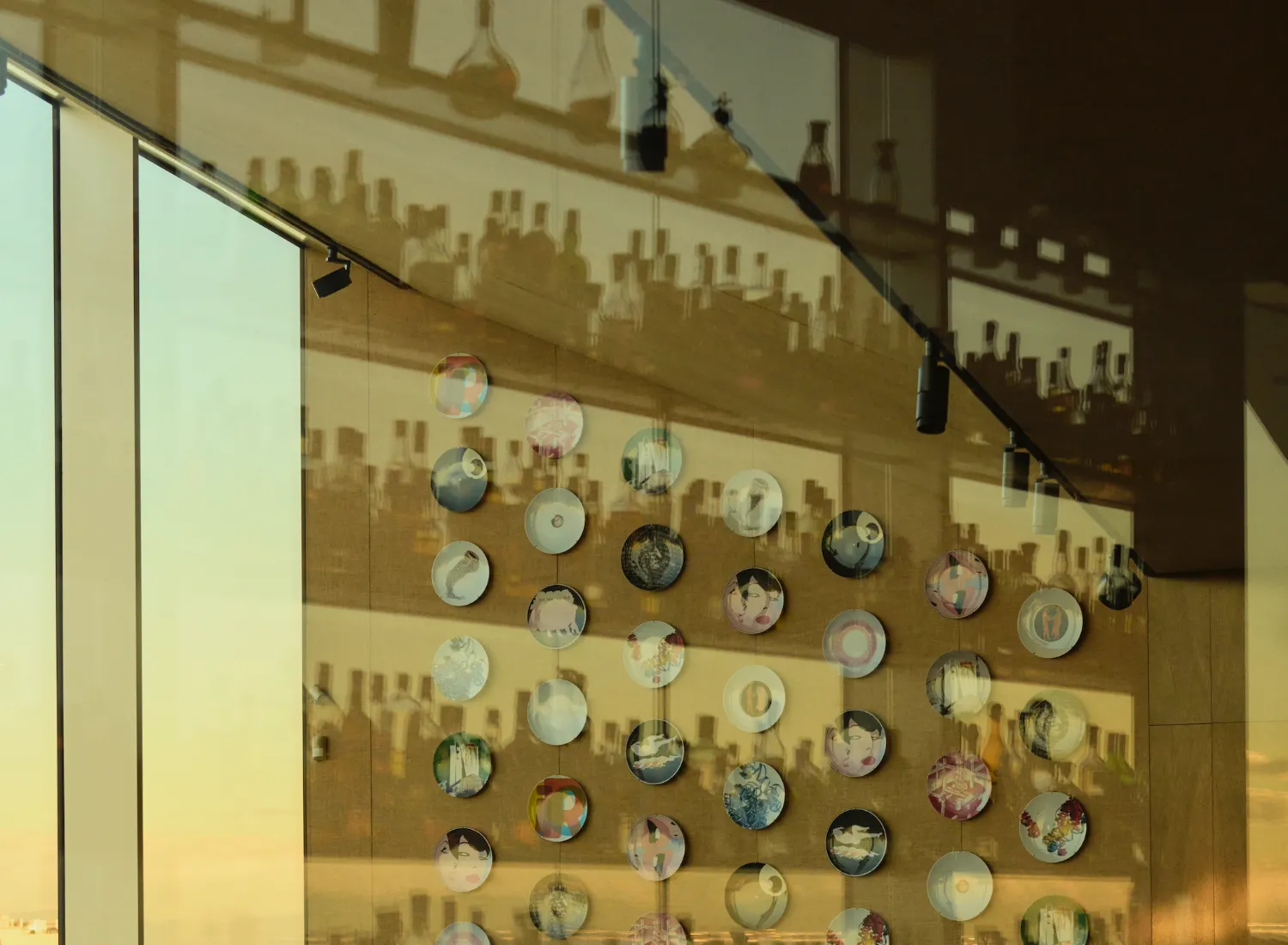
Upstairs, Bar Blondeau now serves cocktails and wines with one of the clearest skyline views in the city. It has been consistently ranked among New York’s leading hotel bars, with a program built around seasonal cocktails, natural wines and local distillers.
Wythe Hotel – sustainability: adaptive reuse as material practice
The hotel’s sustainability argument starts with the building itself. Reusing a former industrial structure of this scale — one of the last masonry-and-timber buildings constructed in Brooklyn before reinforced concrete became the norm — avoided demolition and preserved a large amount of embodied material.
That logic continues inside. Timber was repurposed into furniture. Existing surfaces were retained where possible. The project treated reuse not as decoration but as a construction principle.
On the hospitality side, Le Crocodile has emphasized local sourcing and composting practices tied back into food production. The Wythe also became the first New York property to join Regenerative Travel, a network of hotels aligned with broader sustainability goals. Whether one reads that as philosophy or positioning, the building itself makes the strongest case: the most substantial act of conservation here was not added later. It was the decision to keep the structure standing.
Wythe building – history: from cooperage to textile production
The building’s history begins in the industrial economy of North Brooklyn. In the late nineteenth century, this part of the waterfront was tied to sugar refining, and sugar meant barrels. German immigrant Paul Weidmann established a cooperage to supply that demand. After selling an earlier factory, he reinvested and, in 1893, built a large new plant at North 11th Street and Wythe Avenue, reportedly capable of producing thousands of barrels a day.
That first factory did not last. On June 12, 1900, a fire broke out on the third floor and spread rapidly through the dry wood stored inside. Workers rushed to the windows. Some had to jump into rescue nets below. The structure was effectively lost.
The family rebuilt and commissioned architect Theobald Engelhardt, one of the key German-American architects working in Brooklyn at the time. The new building used thick brick walls, cast-iron columns, pine beams, high timber ceilings and large arched windows. Its curved corner became one of its defining features. According to local legend, that scooped profile helped workers lower barrels from upper floors.
As the sugar economy changed, the building changed with it. Cooperage declined and the site later housed textile and specialty material production. At one stage it reportedly produced acoustic fabrics and materials connected to the NASA space program, while also contributing to wartime manufacturing. By the early twenty-first century, however, the building had fallen into disuse. By 2008 it was abandoned, marked by years of neglect but still carrying visible traces of its industrial life.
Williamsburg Brooklyn: from industrial district to global neighborhood
The Wythe Hotel cannot be separated from the larger story of Williamsburg. The neighborhood began as farmland in the colonial period and developed into a major industrial district through the nineteenth and early twentieth centuries, especially after improved ferry and bridge connections tied it more closely to Manhattan.
For decades, the East River waterfront was one of the most productive industrial areas in the United States. Then manufacturing declined. As factories closed and rents fell, artists and musicians began moving into Williamsburg from the 1970s onward, drawn by large spaces and relative affordability. Through the 1980s and 1990s, the neighborhood built a cultural identity that extended far beyond Brooklyn.
The next phase came with real estate. The 2005 rezoning of nearly 200 blocks opened the waterfront to large-scale residential development. What followed is the familiar New York cycle: disinvestment, creative occupation, cultural visibility, rising values, displacement. The very people who made the neighborhood attractive were pushed out by the market that followed them.
Wythe Avenue today is lined with hotels, restaurants, bars, stores and music venues. For older residents, that transformation still feels abrupt. What was once seen as remote and industrial became one of the most photographed and consumed parts of Brooklyn. The Wythe Hotel did not cause that shift on its own, though it became one of its clearest symbols.