Dolomiti SPA Hotel Fanes: cool air, altitude and body rituals in Alta Badia
From a sixteenth-century farmhouse to a five-star wellness destination, Hotel Fanes reimagines Alpine hospitality through architecture, landscape, and a deeply physical approach to wellbeing
Summer in the mountains feels different: Dolomiti SPA Hotel Fanes
At 1,500 meters, summer behaves differently. The air stays sharp in the morning, forests hold their humidity through the afternoon, and temperature stops being something to escape and becomes part of the experience itself. As cities cook under increasingly brutal heat waves, the mountains are becoming a practical choice before they are an aesthetic one. The so-called coolcation — the deliberate move toward cooler climates in the hottest months — echoes the nineteenth-century Sommerfrische, when Alpine villages served as seasonal refuges for European aristocracy and bourgeois families seeking clean air and distance from urban suffocation.
On June 4, Dolomiti SPA Hotel Fanes opens for the summer season in Alta Badia. The hotel does not treat wellness as passive escape. It frames it as physical recalibration — something that happens through landscape, thermal contrast, and measured exertion.
Dolomiti SPA Hotel Fanes: moving through forests, refuges and high-altitude meadows
Summer at Fanes begins outside. Guided hikes through Alta Badia run six days a week, crossing forests, alpine meadows, mountain refuges and panoramic trails above the Dolomites. Local guide Chantal leads guests through hidden paths, woodland stretches, and exposed ridges overlooking the peaks. Walking becomes its own sensory experience: slower breathing, colder air, the sudden opening of the landscape after a climb through trees. Stops at mountain refuges and picnic lunches in high-altitude meadows reinforce a rhythm that is, at its core, the body learning to adapt to its surroundings.
Yoga, pilates, stretching, aquagym and cycling or e-bike tours round out the offering. Mountain bikes, trekking poles and hiking backpacks are provided to guests — a small detail that says something larger about Fanes’s approach, which leans toward autonomy rather than assistance.
A sixteenth-century farmhouse, then a hotel, then something else
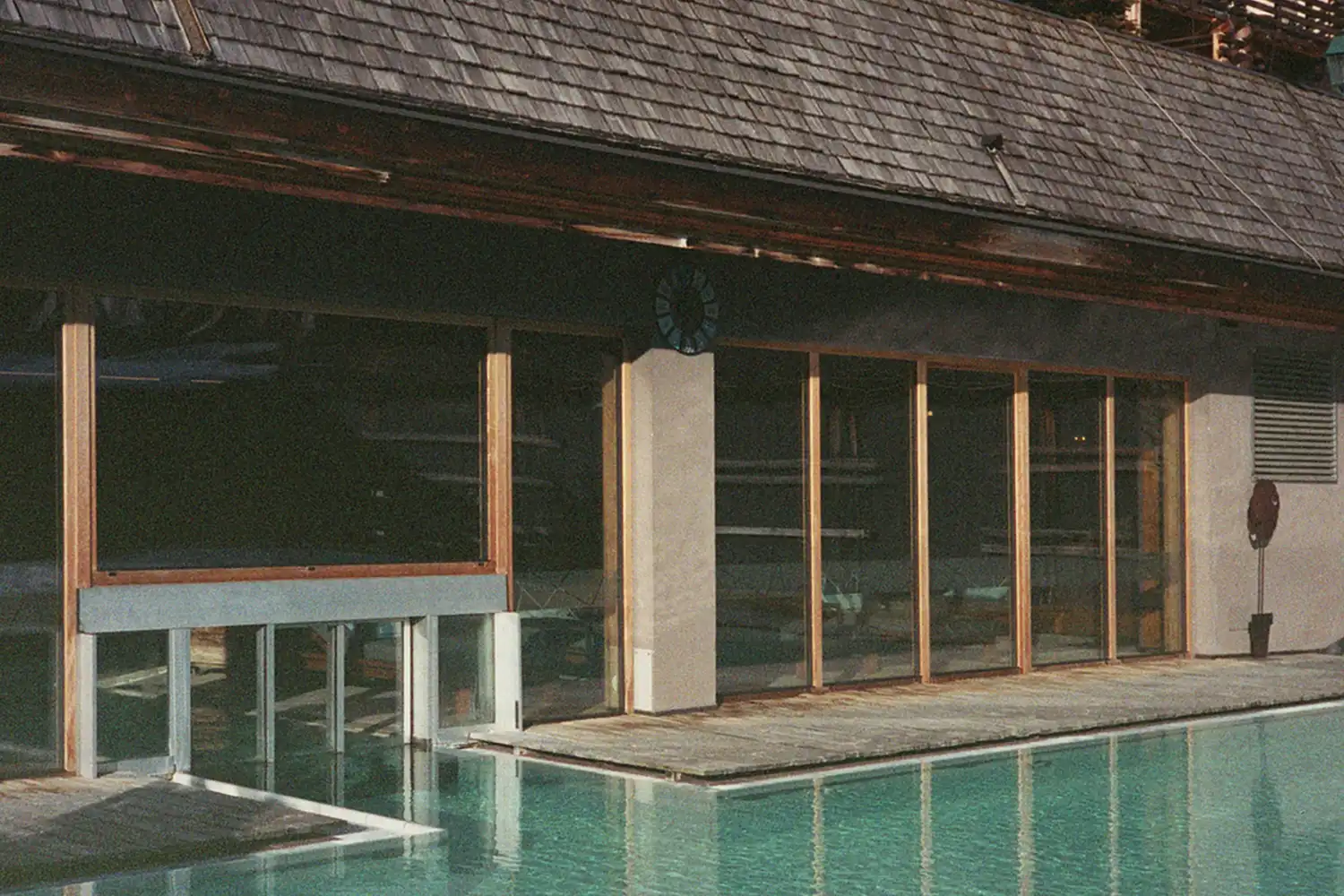
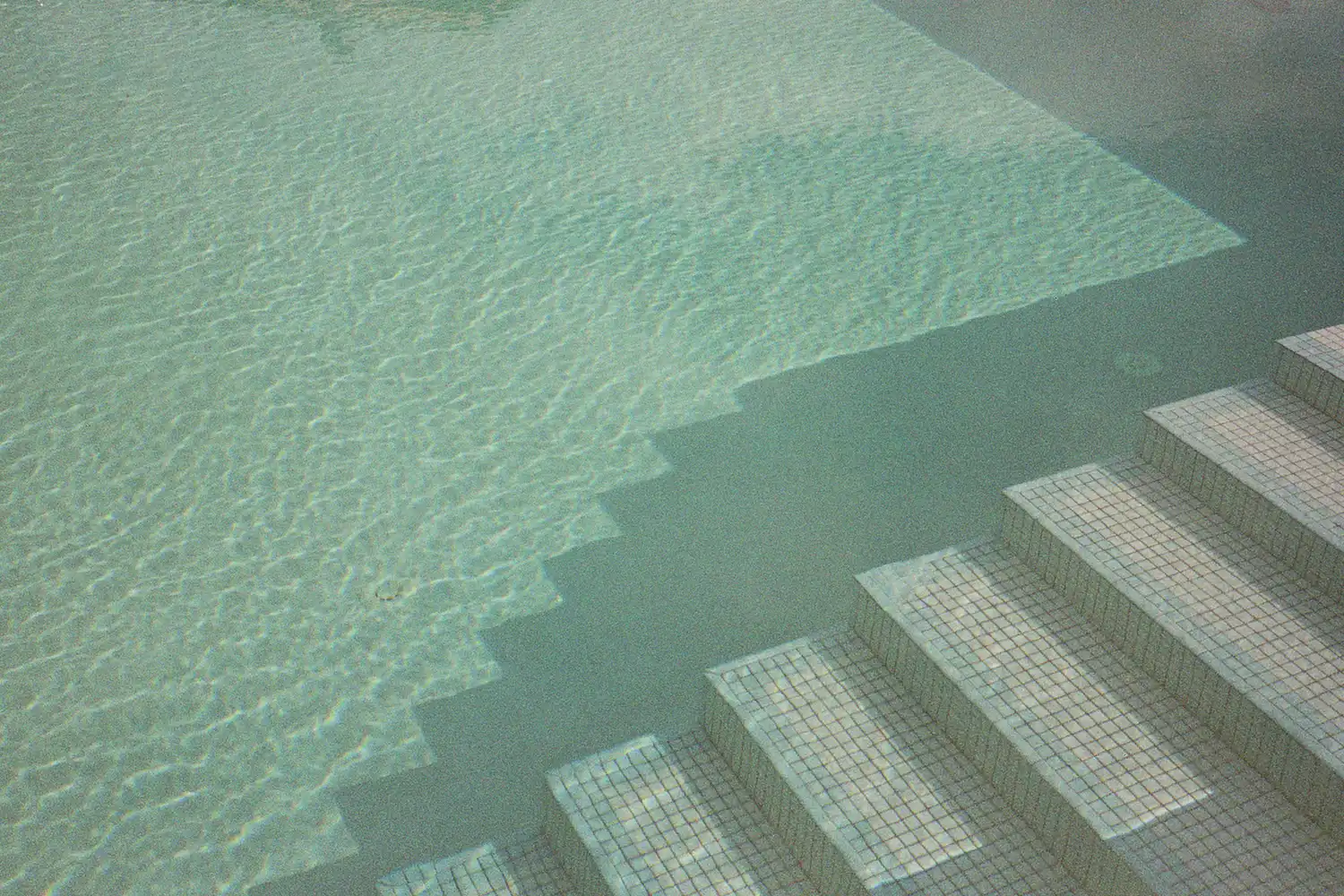
That tension between exposure and recovery runs through the architecture too. More than 5,000 square meters are dedicated to pools, thermal areas, treatment spaces and panoramic structures. Indoor and outdoor pools open visually onto the Alpine landscape; the adults-only Sky Pool extends twenty-five meters outward between mountain peaks, suspending the body above the valley rather than enclosing it between walls.
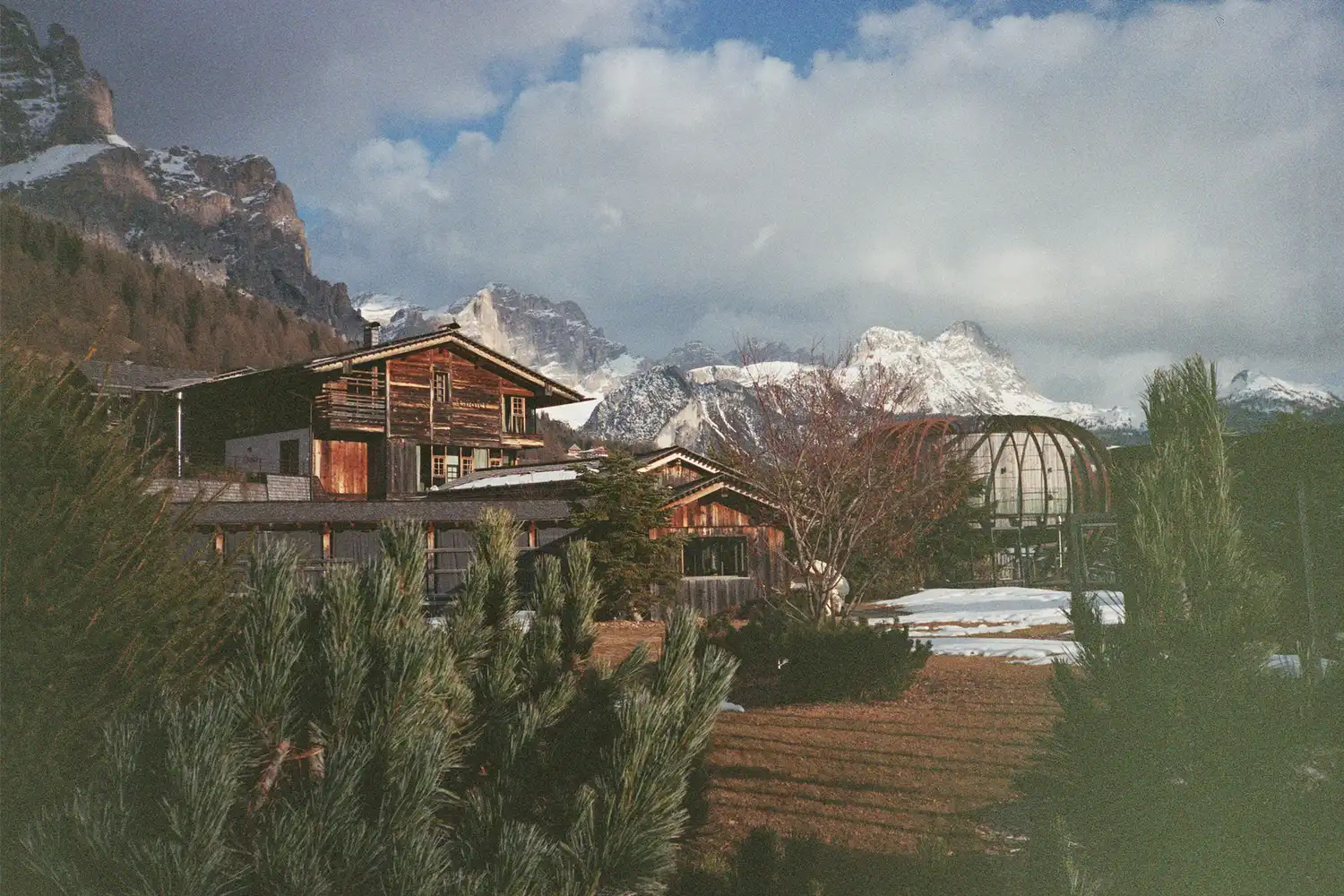
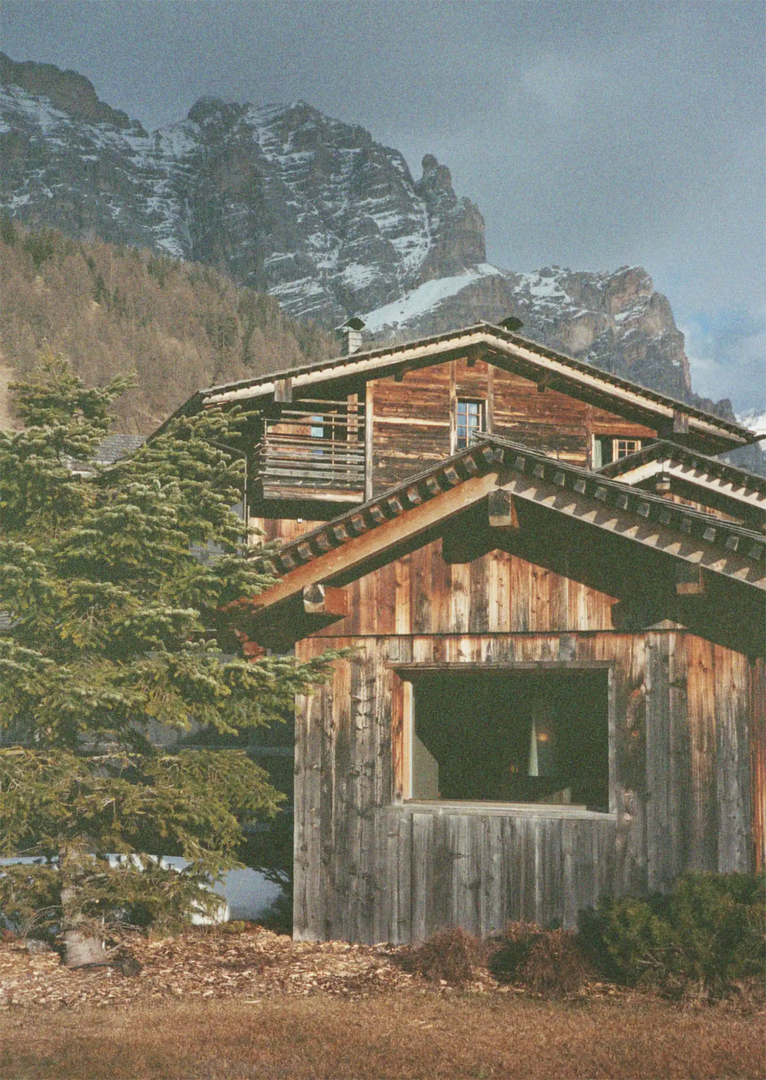
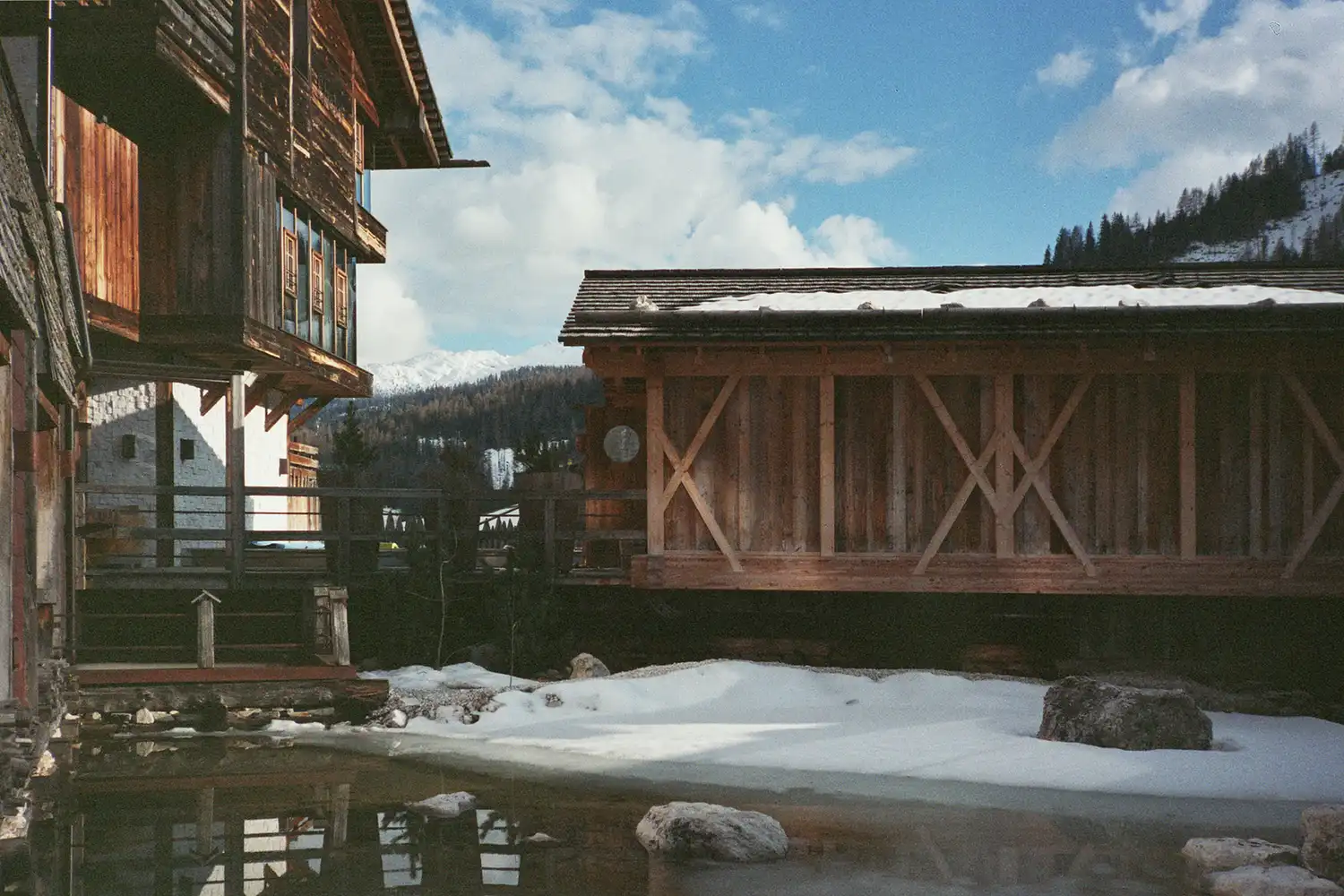
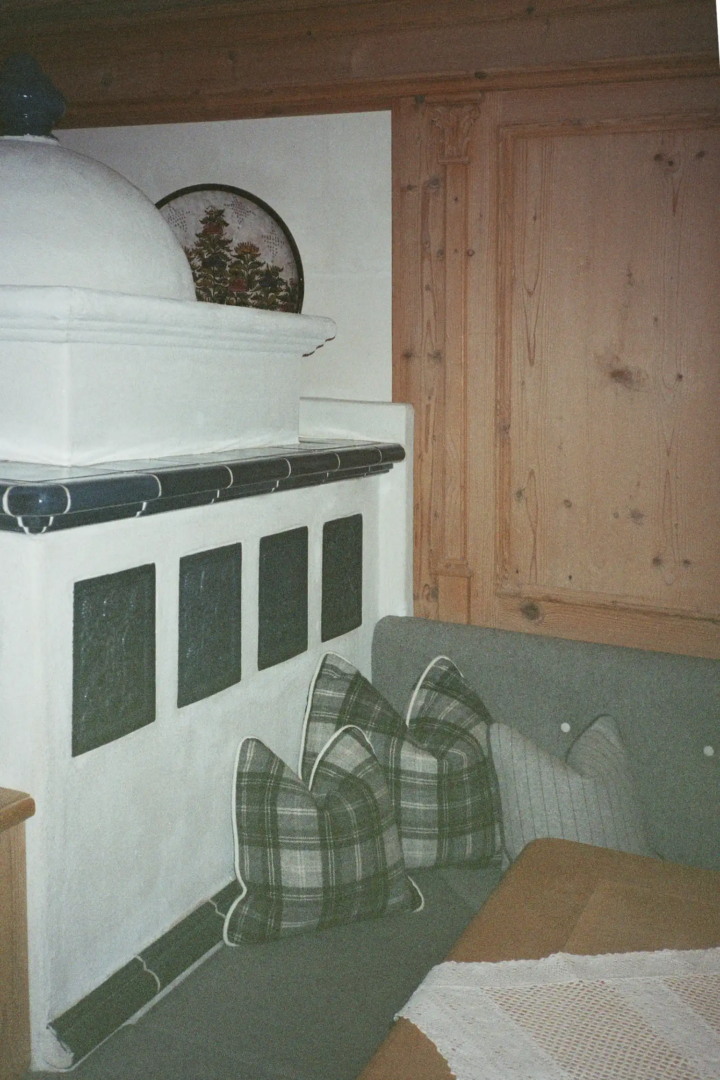
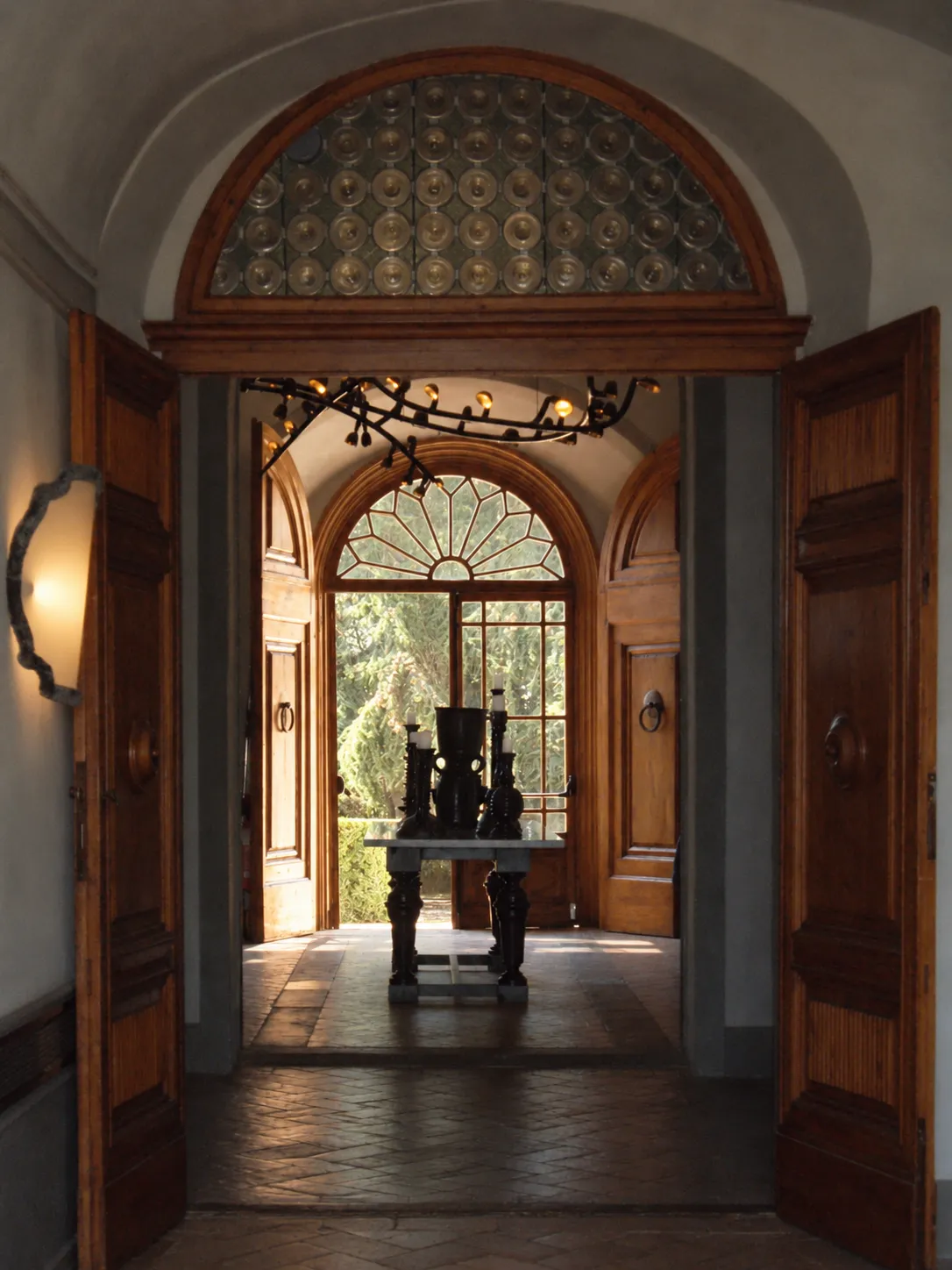
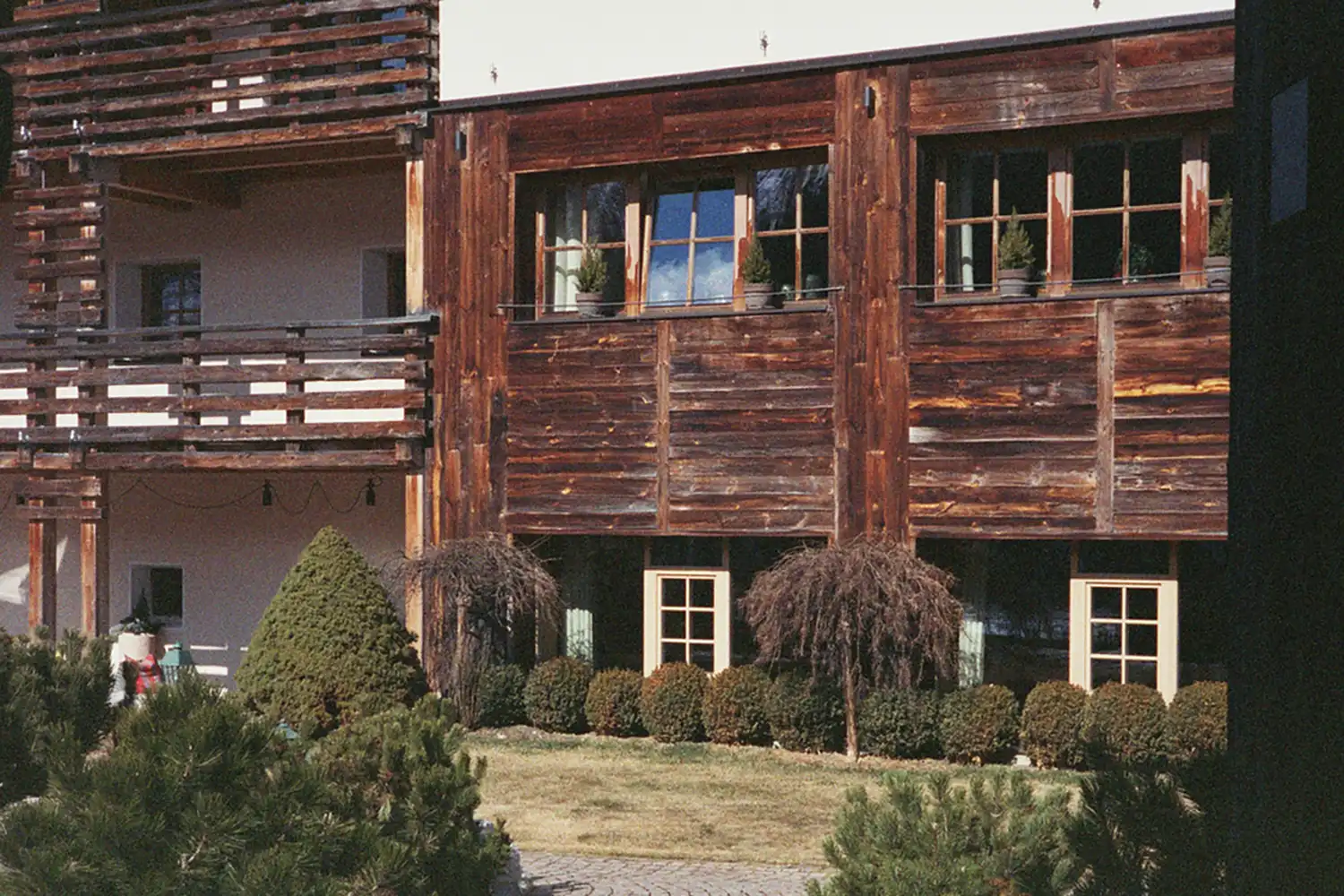
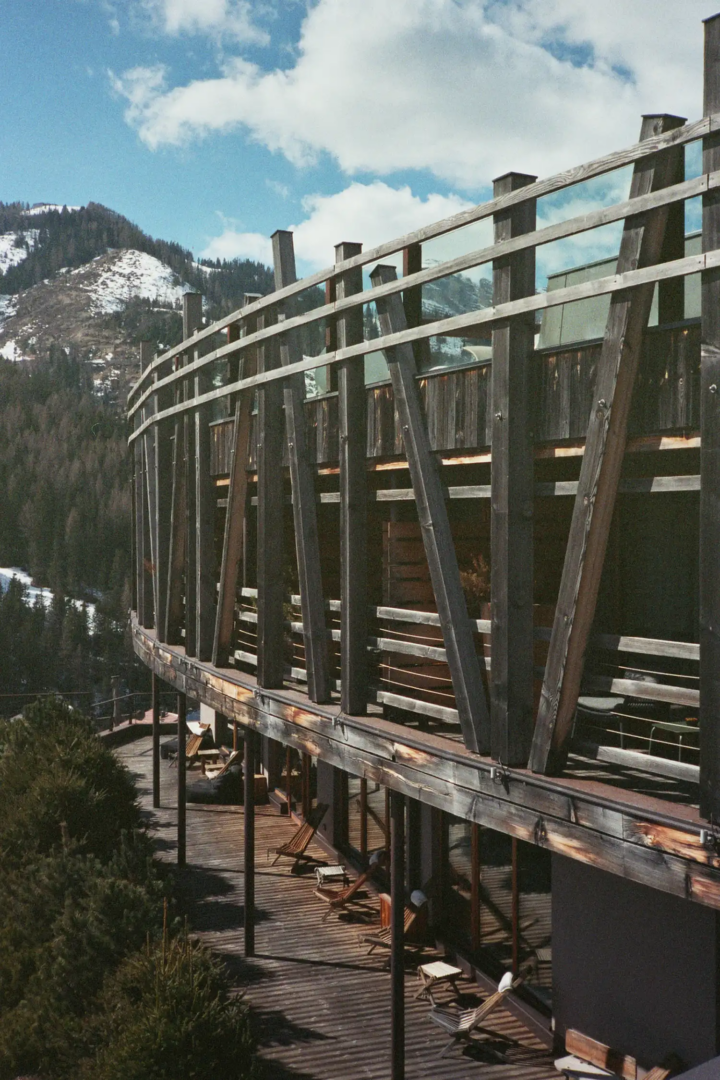
The building itself tells a story of accumulated layers. Dolomiti SPA Hotel Fanes began as a sixteenth-century farmhouse, acquired by the Crazzolara family in 1957 and converted into a small hotel. Since then, expansion has happened through successive additions, never through a single unifying vision. In 1972, Fanes introduced one of the first wellness areas in South Tyrol — sauna, whirlpool, Turkish bath, outdoor pool — at a moment when Alpine hospitality was still thinking in very different terms. Chalets, new spa areas, panoramic structures and suspended volumes followed over the decades, gradually pulling the hotel away from anything resembling a traditional mountain inn.
Dolomiti SPA Hotel Fanes: Larch wood, Lasa marble, metal and glass: Barbara Widmann’s interiors
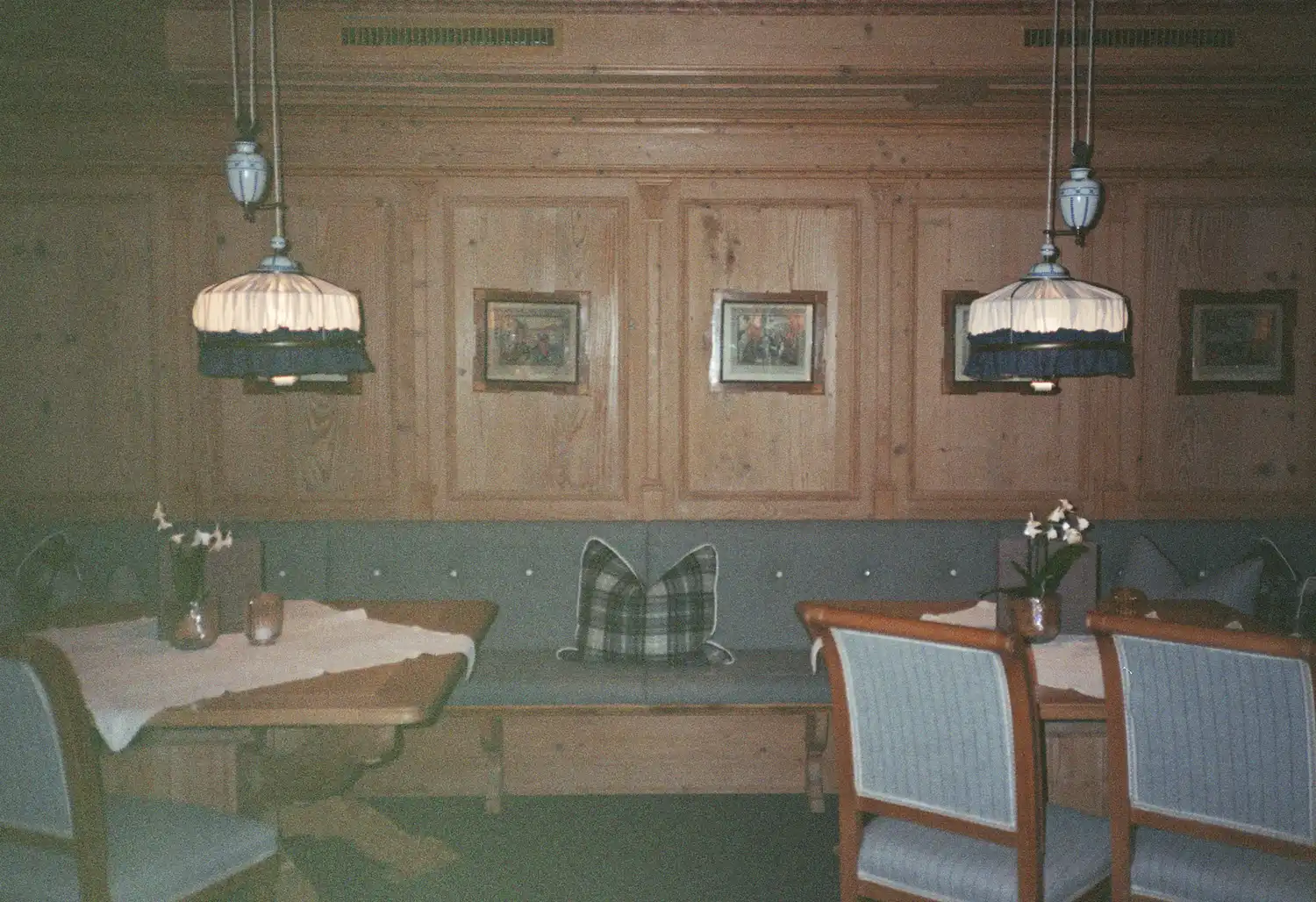
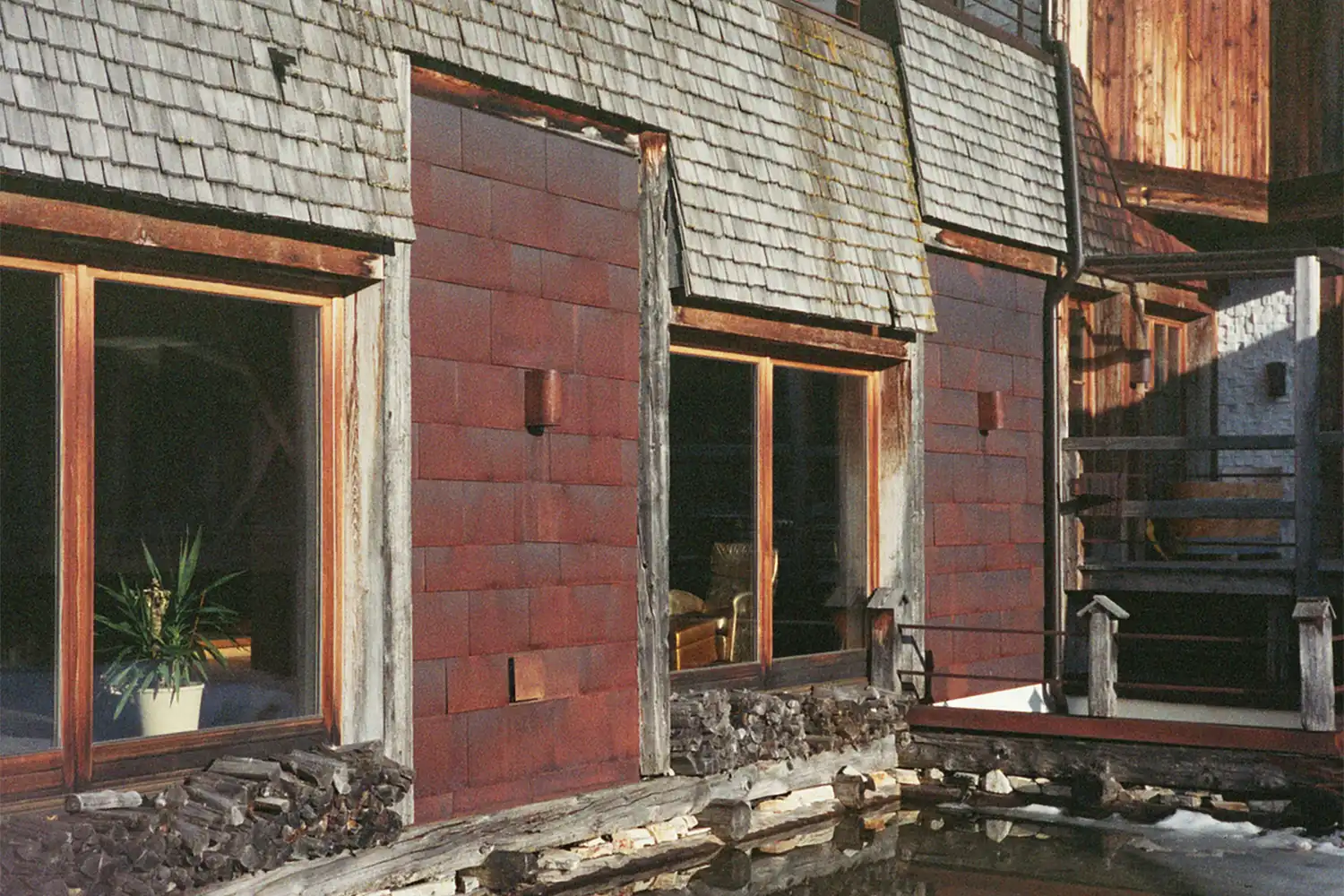
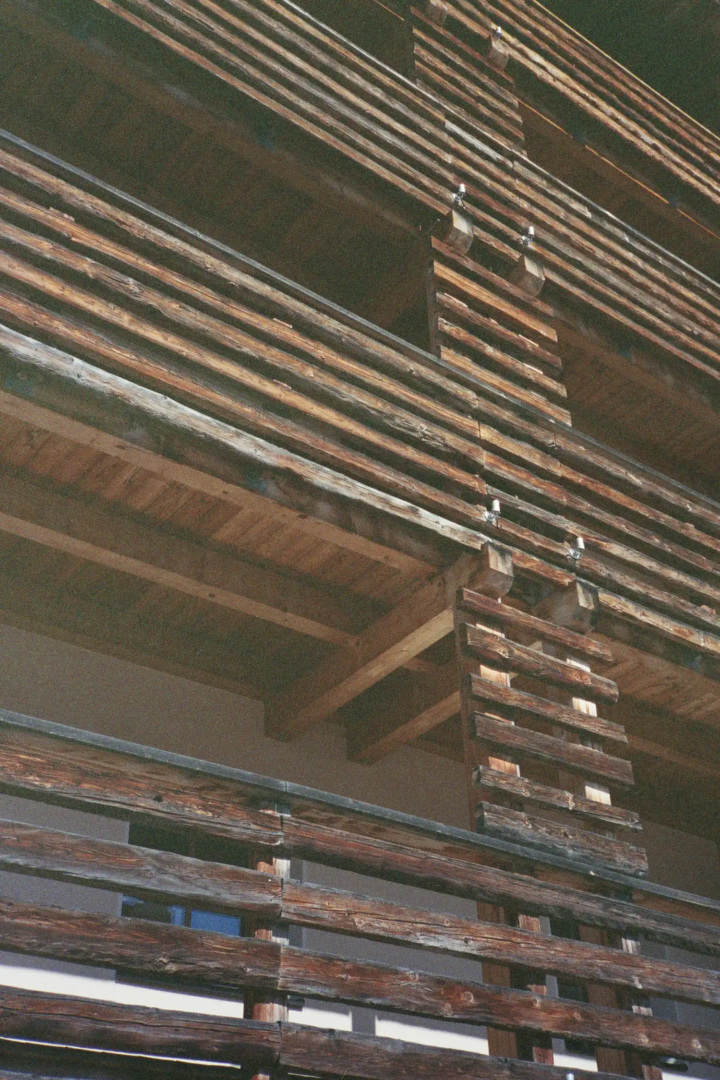
The interiors, designed by Barbara Widmann, work through the coexistence of materials that make no effort to reconcile with each other. Wood and Lasa marble dominate many spaces, anchoring the hotel within its regional landscape. But these natural surfaces sit alongside glass, metal, exposed geometries and large panoramic openings. Older sections remain visibly adjacent to newer interventions, with no attempt to hide the joints. The result is an environment built on contrast rather than continuity — closed spaces in tension with open ones, stone against glass, organic warmth against engineered precision.
The sauna that rotates above the Dolomites
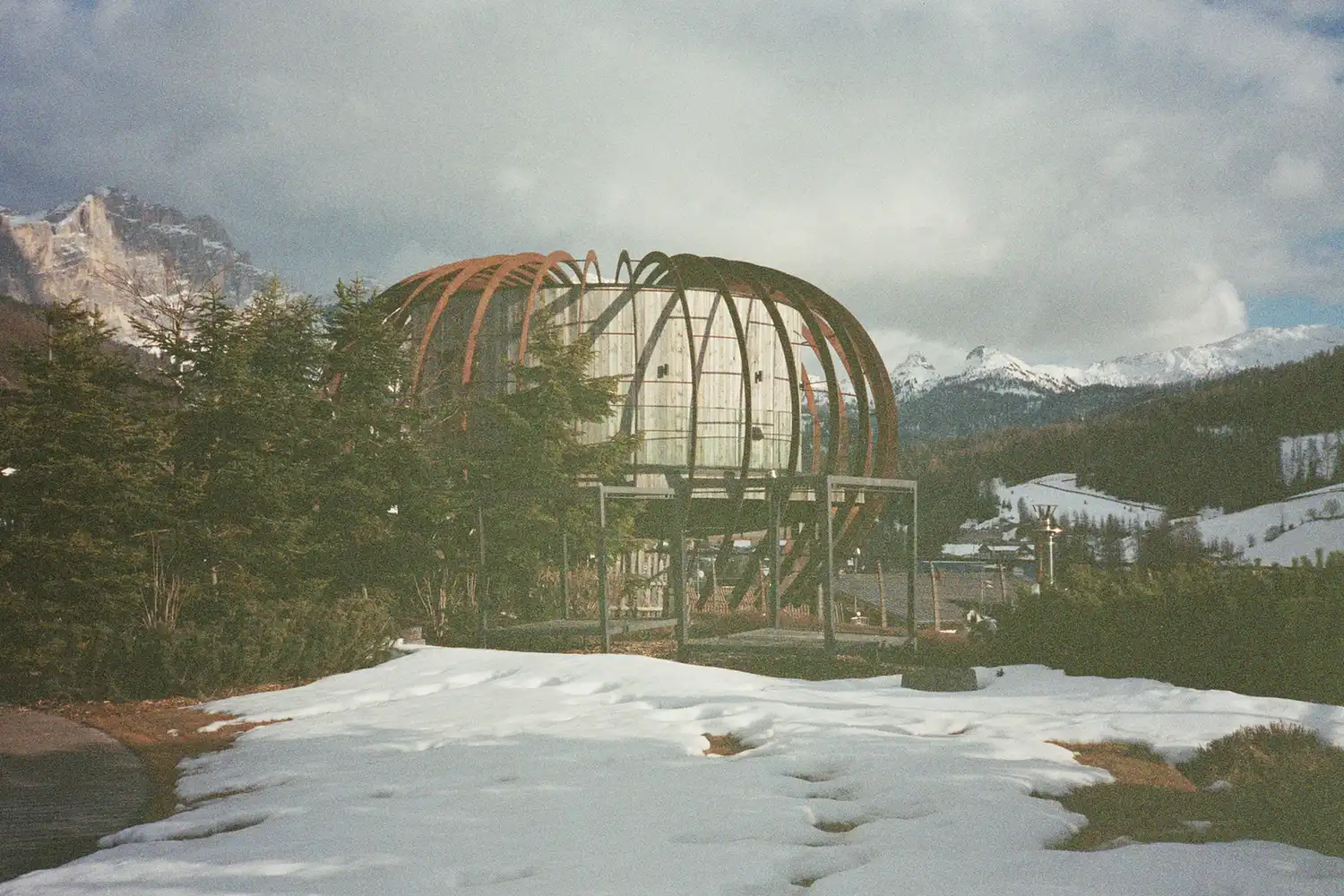
That tension finds its most explicit form in the Elements Sauna.
Suspended nine meters above ground, the cylindrical structure completes a full 360-degree rotation while facing the Dolomites through a floor-to-ceiling glass facade. It does not dissolve into the landscape — it faces it head-on. Wood and metal coexist in visible tension, natural warmth set against mechanical movement.
Inside, heat is not the first sensation. Pressure arrives before temperature fully registers. Steam moves unevenly through the space, reaching the body in waves rather than settling uniformly in the air. The structure’s slow rotation subtly distorts spatial perception. Nothing inside the room stays entirely still. Only the sound of towels cutting through air and water striking the hot stones breaks the silence.
What Aufguss is, and how it became a ritual
Before Aufguss, there is the sauna itself. In its Northern European origins — Finnish in particular — it was an environment of dry heat, wood, stone and repetition. An individual experience, unmediated.
Aufguss changed that logic. The German word means literally “pouring” — the act of ladling water onto heated stones to raise humidity and produce steam. What began as a corrective gesture inside dry saunas evolved into a structured ritual, complete with essential oils, thermal sequences, music and choreographed movement. The Aufgussmeister — originally responsible for managing heat and humidity — became a directing figure, shaping rhythm, intensity and the distribution of heat through the room. Towels, swung in precise sequences, stopped being accessories and became instruments for sculpting airflow.
Dolomiti SPA Hotel Fanes – Aufguss: heat as physical contact
At Fanes, the architecture amplifies everything. Water hits the stones and vapor expands aggressively inside the rotating structure. Towels do not circulate air gently — they compress and release concentrated waves of heat aimed directly at guests.
The heat arrives in intervals, striking the skin rather than surrounding it. Breathing changes rhythm. Muscles contract, then release. The pulse accelerates. It is not an immediately relaxing experience — it is physically confrontational. Wellbeing emerges from controlled stress, not from rest. Between cycles of heat and suspension, the body gradually learns to regulate itself. Relaxation does not coincide with stillness here. It comes after pressure, repetition and thermal contrast have done their work.
Fanes Spa by Caveau Beauté: treatments built around each guest
The same logic extends to the Fanes Spa by Caveau Beauté, where protocols are shaped around individual needs rather than standardized routines. Under the direction of Spa Manager Ingrid Crazzolara, treatments including Absolut, Blanchissante and Detox are designed as rituals of adjustment and recovery rather than cosmetic interludes. They are available individually or in dedicated couple cabins.