Komiyama Bookstore, Tokyo. Three generations of curated vintage books
Having traversed across bookstores on a global scale to locations in Europe and Northern America, Komiyama found a lack of diversity of subject matter carried in bookstores in the genre of art
The inception of Komiyama’s bookstore
Founded in 1939 in a pre-war Japan and having existed over three generations, passed down from father to son, is Komiyama Bookstore. Planted in the Jinbōchō district of Tokyo, an area known as the Kanda Book Town, Jinbōchō became synonymous to the area due to its prolific history in the integration of books and reading. Scattered across Jinbōchō is an approximate one hundred and eighty vintage bookstores, holding a set of individual traits that set them apart, like Komiyama Bookstore.
Named in honor Nagaharu Jinbō, a samurai of the Jinbō clan, the area was brought together in response to Japan’s modernization. Jinbōchō garnered the regard it has today due to the actions of Shigeo Iwanami, a schoolteacher who opened a bookstore in the wake of the fire that ravaged the district in 1913. The bookstore, over time altered its ethos and is now a renowned publishing house in the area, rebranding itself as the Iwanami Shoten Publishing House. Over the years, Jinbōchō has hosted bookstores that live side by side in every row of the district, as Komiyama Bookstore does. With its variety of vintage bookstores, Jinbōchō is home to publishers, universities, libraries, and commercial chain bookstores.
Komiyama Bookstore, a vintage bookstore catering used, and new books, resides in an eight-story building on 1 Chrome- 7 in Kanda-Jinbōchō. On the top of the building is an apartment where Keita Komiyama’s parents remain living. Komiyama Bookstore stands in the Jinbōchō community, being a pillar and provider of art and photographical literary books, an effort that was spurred by Keita after receiving the reigns of the bookstore from his father in 2003, at the age of thirty-five.
Honoring the tradition of tutoring aspiring bookstore owners
Established by his grandfather, Keiichi Komiyama, the bookstore disseminated books that were in the subject matter of history, philosophy, and archeology. «Keita is the third generation of the Komiyama family to take on over the business. He took it over from his father, Takehiko. His grandfather took to name the bookstore after his family’s surname», shares Rio Kodaira, Keita Komiyama’s colleague and employee who sat in with the owner for the interview. Upon graduating from a degree in art and design in Tamagwa University in Tokyo, Keita Komiyama re-interpreted the internal identity of the bookstore through the items that were being sold there.
Having worked in a number of part-time jobs upon graduating from his time at University, Komiyama then took on the family business – a responsibility that he foresaw in his youth. Kodaira explains that the bookstore was founded by Komiyama’s grandfather and was initiated from his time spent as an apprentice at the Isseido Vintage Bookstore in the Jinbōchō area. «Those who are from the area have involved themselves in the vintage bookstore trade across Jinbōchō. They learnt the ropes to running a bookstore and sourcing vintage and used books. They then move on and establish a vintage or commercial bookstore of their own».
Komiyama and Kodaira explain that Komiyama Bookstore has honored the tradition of tutoring aspiring bookstore owners and have hosted their fair share of apprentices. Komiyama’s ethos and focus has pivoted from the importance of selling and procuring vintage books. Rather, items sold in Komiyama Bookstore today involve literature in art and photographical books that work to bridge the gap between the East and the West in the vintage bookstore scene in Jinbōchō. «Komiyama as a bookstore, acts as a middle-point to Eastern and Western understandings of art and photography with a Japanese interpretation to it».
Having traversed across bookstores on a global scale to locations in Europe and Northern America, Komiyama found a lack of diversity of subject matter carried in bookstores in the genre of art. Utilizing the expansive volume and size of the building, Komiyama Bookstore extends across six floors, carrying used books and titles that are sought after by his readers. Alongside to this, there exists literary works in art, fashion, queer sub-cultures, and fetish art. Items are vetted by Komiyama himself. Kodaira shares that there is no stringent set of principles that are sought after for the books and magazines sold in store. «He includes the reading materials based on his experience and his gut feeling». Books are sourced through customers and vintage book markets in the environs.
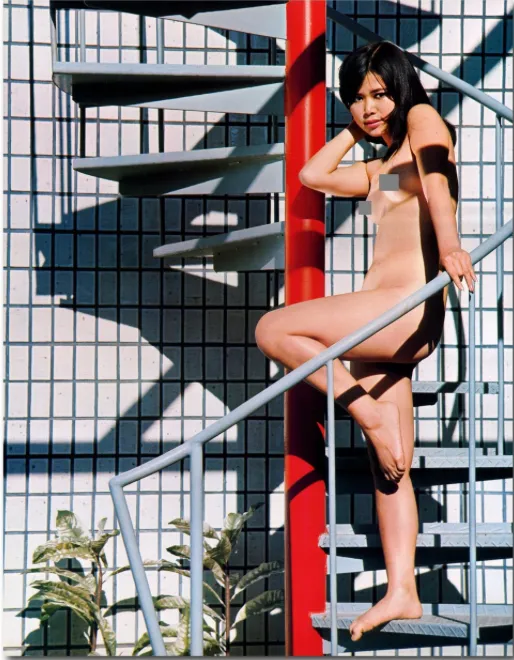
Representation of queer individuals living in Japan
Kodaira shares that Komiyama Bookstore, has drawn attention to itself and has created a significance in the area since its pivot in subject matter. «The addition of queer and fetish art and photography offers representation of queer individuals living in Japan. Keita views fetish artworks as an extension of art in itself and not a visual representation of sex». Offering works in Japanese and in English, Komiyama bookstore is a flocking site for locals and tourists visiting and living in Tokyo. Kodaira adds that Komiyama’s choice in selling visual and photographical literature has cultivated a reverence from their customers and peers, allowing them to stand out.
Alongside to selling art related literature, Komiyama Bookstore has involved themselves in art bookfairs across locations in Asia, Europe, and Northern America. Having been a part of art bookfairs for the last ten years, Komiyama Bookstore participates in these events a total of eight times in a single year. «This has led Keita to involving Komiyama Bookstore in the Arles Les Rencontres De La Photographie in Arles, France and the New York Art Book Fair for instance». Participating in these events were made impossible through 2020 and 2021 due to the COVID-19 pandemic. Operating in Tokyo, the bookstore caters to their subset of customers in the locale by providing them with books and works that they import from other countries.
Komiyama and Kodaira add that their international clientele who traverse to their store in Jinbōchō are presented with works of art and photography from the environs. «We transmit works from Tokyo and Japan based artists as a means to disperse awareness. We do this while in book fairs abroad as well». Komiyama shares that his interest in art and photography, in matters of the subjects came from his curiosity to understanding cultures from locations away from Japan. The re-interpreted layout of the store is based on the floor plan of the initial layout – spanning across one hundred meters in over six floors.
The re-interpreted layout of Komiyama bookstore
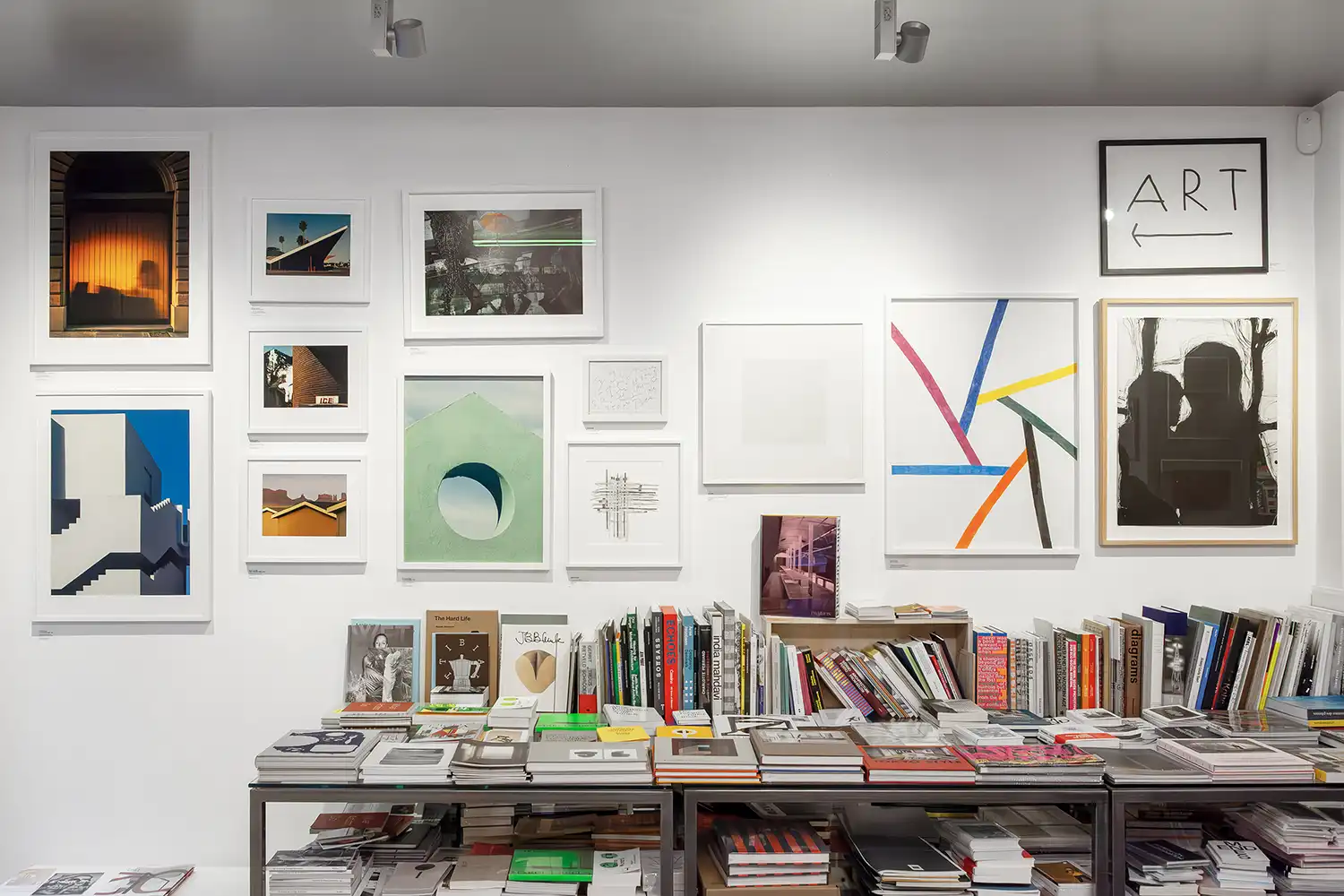
The exterior of the building was given an updated design by artist D*Face and Ben Eine. Komiyama has included a neon signage on the anterior of the store, a guided pathway leading customer to the store like moths to a flame. «It is a sort of landmark signage. Bookstores do not put-up neon light fixtures here in Jinbōchō». The first floor serves fashion magazines from renown publications based in Japan and abroad. The second and third floor exhibits photography books and contemporary art books.
The mezzanine floors between the second and third floors features works from writer and artist Yukio Mishima, art prints, art works and a gallery featuring a number of primary artists attached to Komiyama Bookstore. «For now, we are featuring artists Hajime Kinoko, Yonehara Yasumasa and Taro Tasaki. Artists reach out to Keita to display their works in the store. Keita was inspired by the works of Mishima, which led to the integration of the gallery in the store». The fourth floor holds a curated antiquarian library of rare books, stocked into glass cases. The bookstore is adorned in posters, pieces of artwork and figurines, share Komiyama and Kodaira.
Komiyama Bookstore’s stance to maintain a low-carbon footprint in the Tokyo area is done through the buying and selling of vintage books. Kodaira shares that there are fewer environmental risks that come with carrying vintage and used books. The establishment works with the city of Tokyo to ensure that waste management and recycling is conducted in a structured manner. Due to the pandemic and not being able to involve themselves in local and international art fairs, Komiyama Bookstore has curated their version of an art fair. Showcasing works from their selection of artists and those who are up-and-coming, Komiyama Bookstore looks to define their individual interpretation of hosting an art fair in Tokyo and across Japan in the coming future. «We look to feature works from the youth of Japan». Komiyama Bookstore in Tokyo looks to signify their name and identity on a global scale, beyond the restrictions of existing as a vintage bookstore.
Komiyama Bookstore, Tokyo
〒101-0051 Tokyo, Chiyoda City, Kanda Jinbocho, Japan
A family-owned bookshop/art gallery with vintage Japanese photography, fashion magazines & posters
Editorial Team