Simone Book Services, Copenhagen: a bookshop that takes Simone Weil at her word on attention
Named for Nina Simone, Simone de Beauvoir and Simone Weil, a bookshop in Copenhagen’s museum quarter asks the same of its books: that they hold a position, and are worth keeping
Simone Book Services: three Simones and a background in fashion media
The name honors three women the founders count as personal heroes: Nina Simone, Simone de Beauvoir and Simone Weil. The founders’ criterion is that each lived what she wrote or sang. French literature is the ground the couple have shared since school.
A floor without categories: how Simone Book Services understands curation
More than a thousand titles share the floor, with no sections. Art, design, architecture, photography, fashion and culture sit beside one another. Many of the titles and publishers had not been stocked in Denmark before. Most are in English. h.
Will the book still matter in a fast-moving time? Will it still be a pleasure to own years from now? What stays out is the generic, however well designed, and anything that carries the fatigue of the feed.
“A selection is a set of positions,” Ms. Kayar Subay has said. The aim of a room full of such positions, in her account, is encounters that no one planned. The absence of categories is the method. A shop divided by subject tells a reader where to look. A floor without divisions asks the reader to move from a monograph on Martin Kippenberger to Roni Horn’s You Are the Weather to a book on Max Lamb, and to find the connection between them.
The stock combines three sources. There are rare and out-of-print books; limited runs from independent publishers; and around 80 current magazines, displayed beside vintage issues.
A private library, released in parts
The rare stock began as the founders’ own collection. For twenty years they bought books for their shelves. Over time, ordinary copies gave way to editions with better content, production or rarity, and the collection moved into new fields.
Since July 2026 the collection has been released in parts, alongside finds from auctions, dealers and private libraries: artists’ books, exhibition catalogs, photobooks and monographs. Among them are Wolfgang Tillmans’s Nothing Could Have Prepared Us, published by the Centre Pompidou and Spector Books; Daido Moriyama’s Tales of Tono; a monograph on Andrée Putman; Andrea Branzi’s Architecture in Love; issues of Egoïste; and Amy Arbus’s On the Street.
The decision changes the status of the shop. A private library becomes a public one in installments, and the founders’ taste over two decades becomes the stock that others take home.
Eighty magazines and the problem of the formula
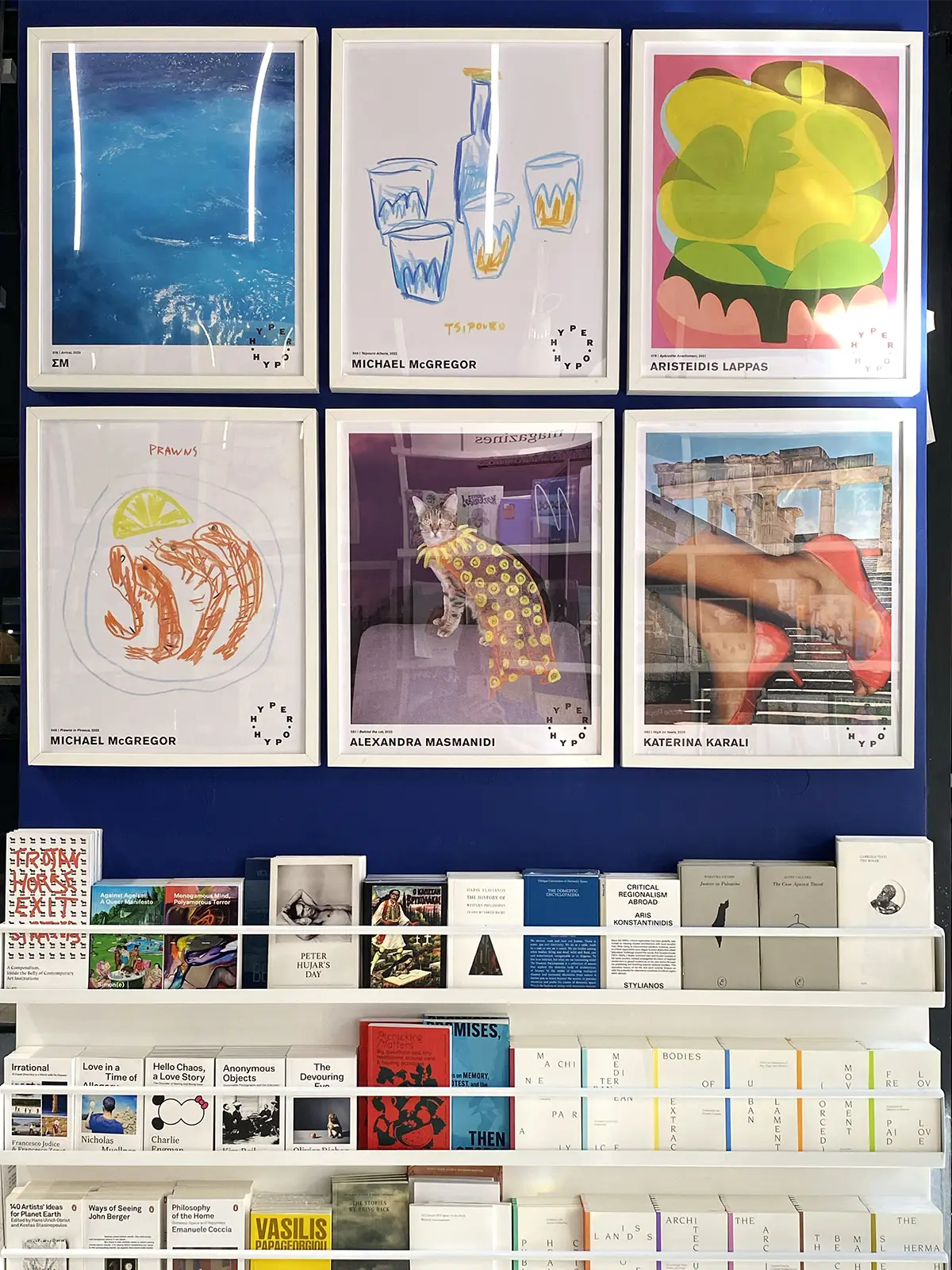
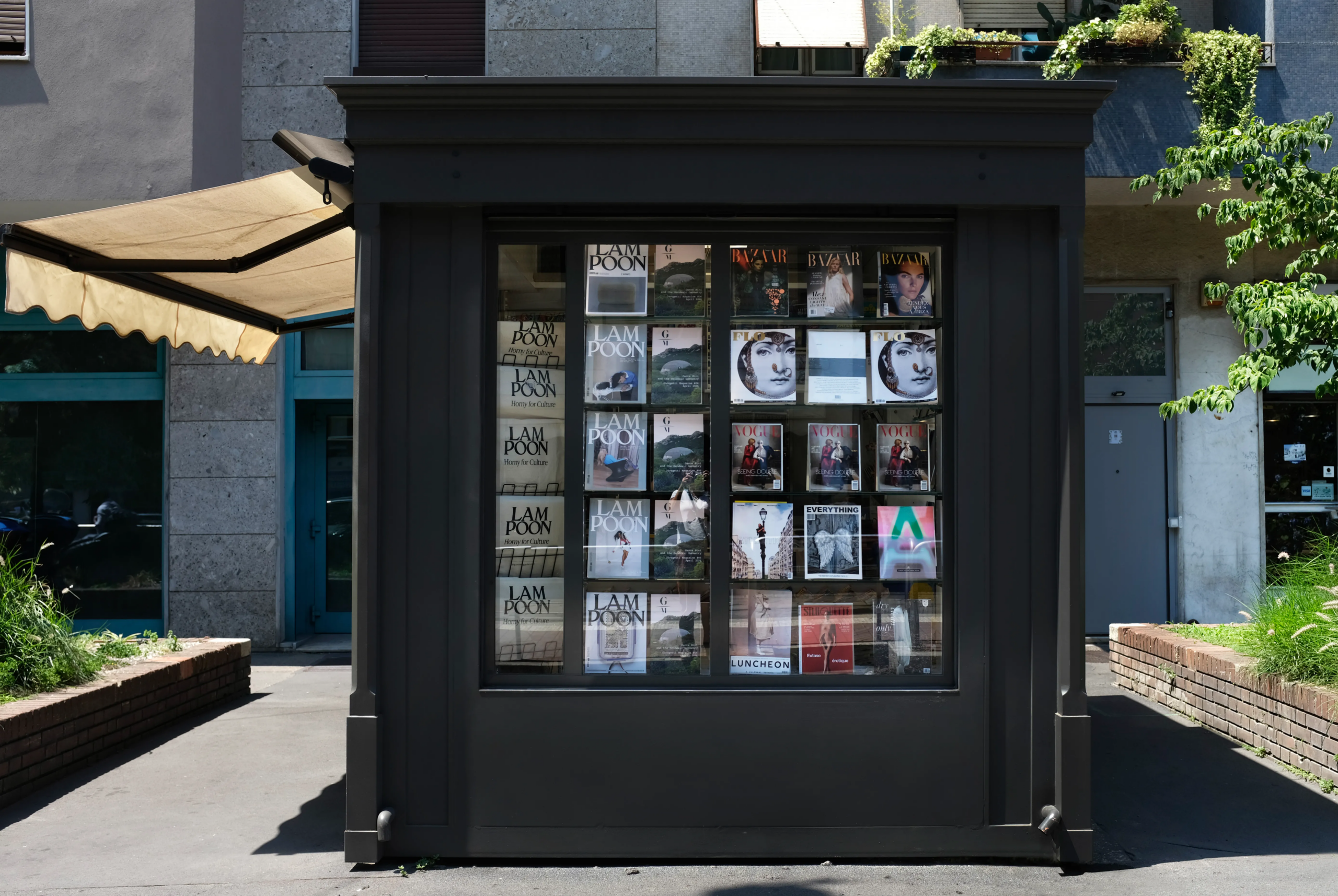
The magazine wall at the storefront carries around 80 current titles. Among them are Erotic Review, L’Etiquette, Viscose, Alphabet, See All This, Arxipelag, Conforma, Scenery, Interview, Real Review and MacGuffin.
The founders are wary of what success does to a magazine, when the reasons for its success harden into a formula. A title that once earned its place can lose it. Curation here is a position revised each season, not a fixed list.
Simone also follows Danish publishers: Bureau for Listening, At Last Books, Plethora and the Danish Architectural Press. The attention to local presses connects the shop to the city’s small-press economy rather than to an imported inventory alone.
Reading Design: a room fitted like a dress
The interior is the first chapter of Reading Design. The founders’ brief to the architect Derya Arpaç put the visitor and the reading experience at the center and asked for a modular space. Arpaç borrowed her concept from couture: the room is fitted like a garment.
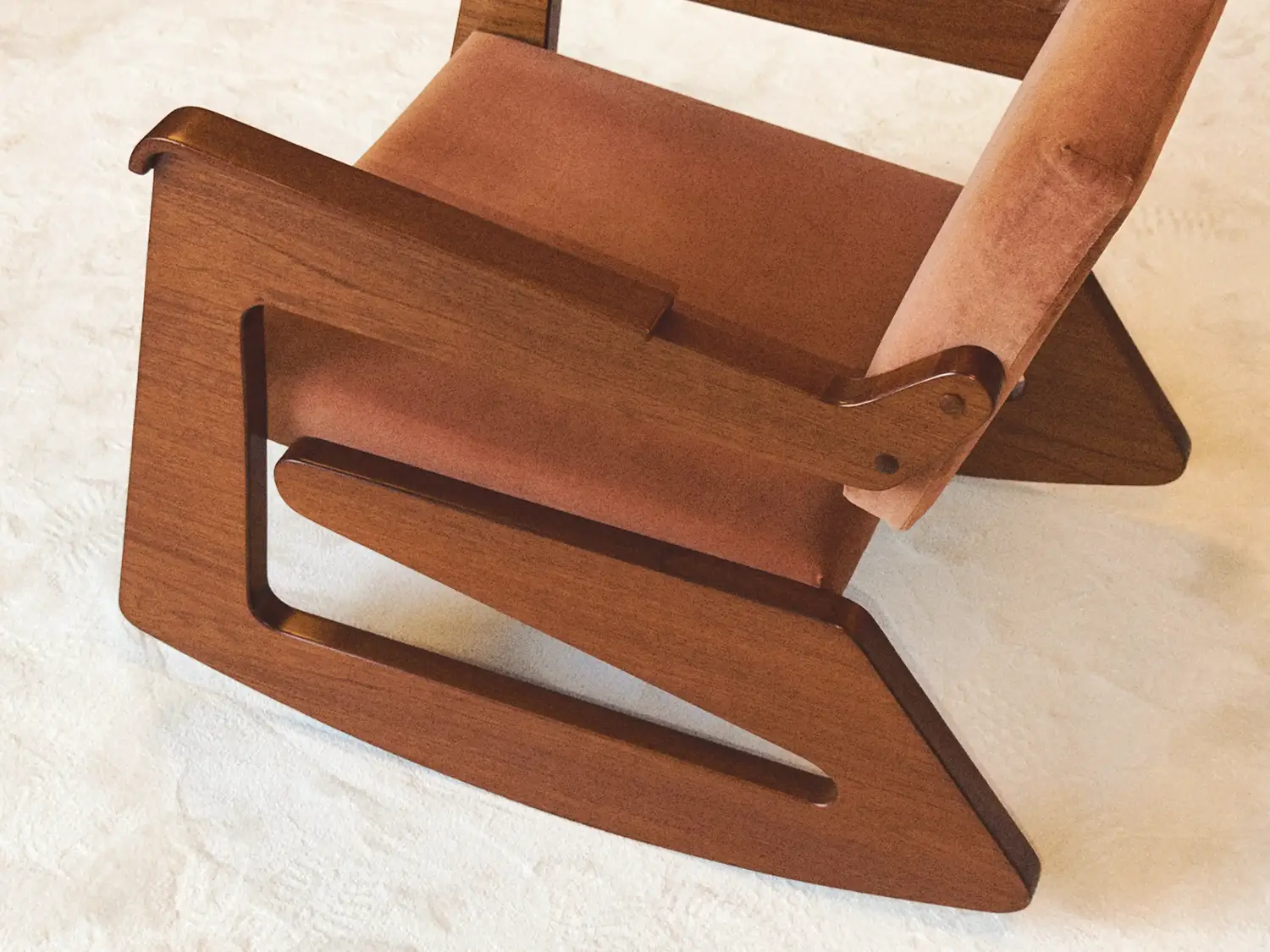
Each display element is by a different designer, made for Simone and built in Copenhagen by local cabinetmakers and upholsterers. The designers were chosen to be unlike one another.
Four materials carry the room, set on the building’s original terrazzo floor. Lærke Ryom, who brings tailoring techniques into furniture, designed the 3.6-metre counter. Its leather cover, from Sørensen Leather, is cut oversized like a coat, with zippers that open onto storage. Arpaç designed floor-to-ceiling shelving in cherry wood, recommended by the carpenter Jonas Lyndby Jensen. The wood will darken with age and show where hands have used it.
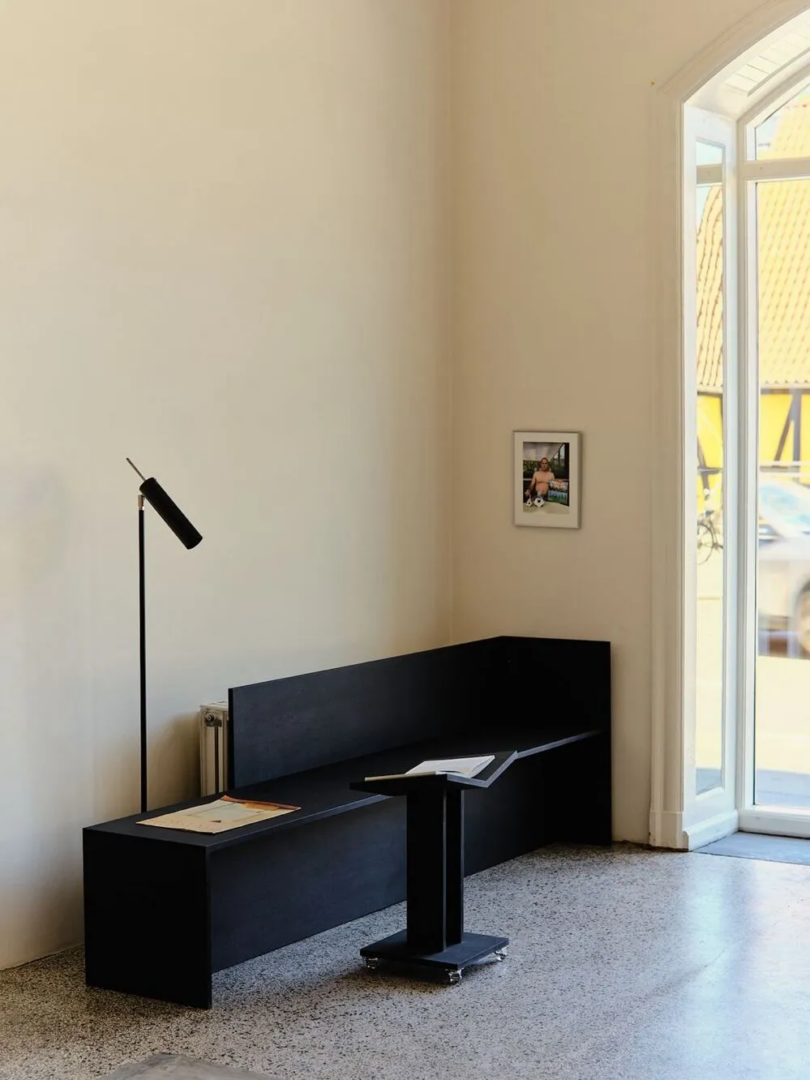
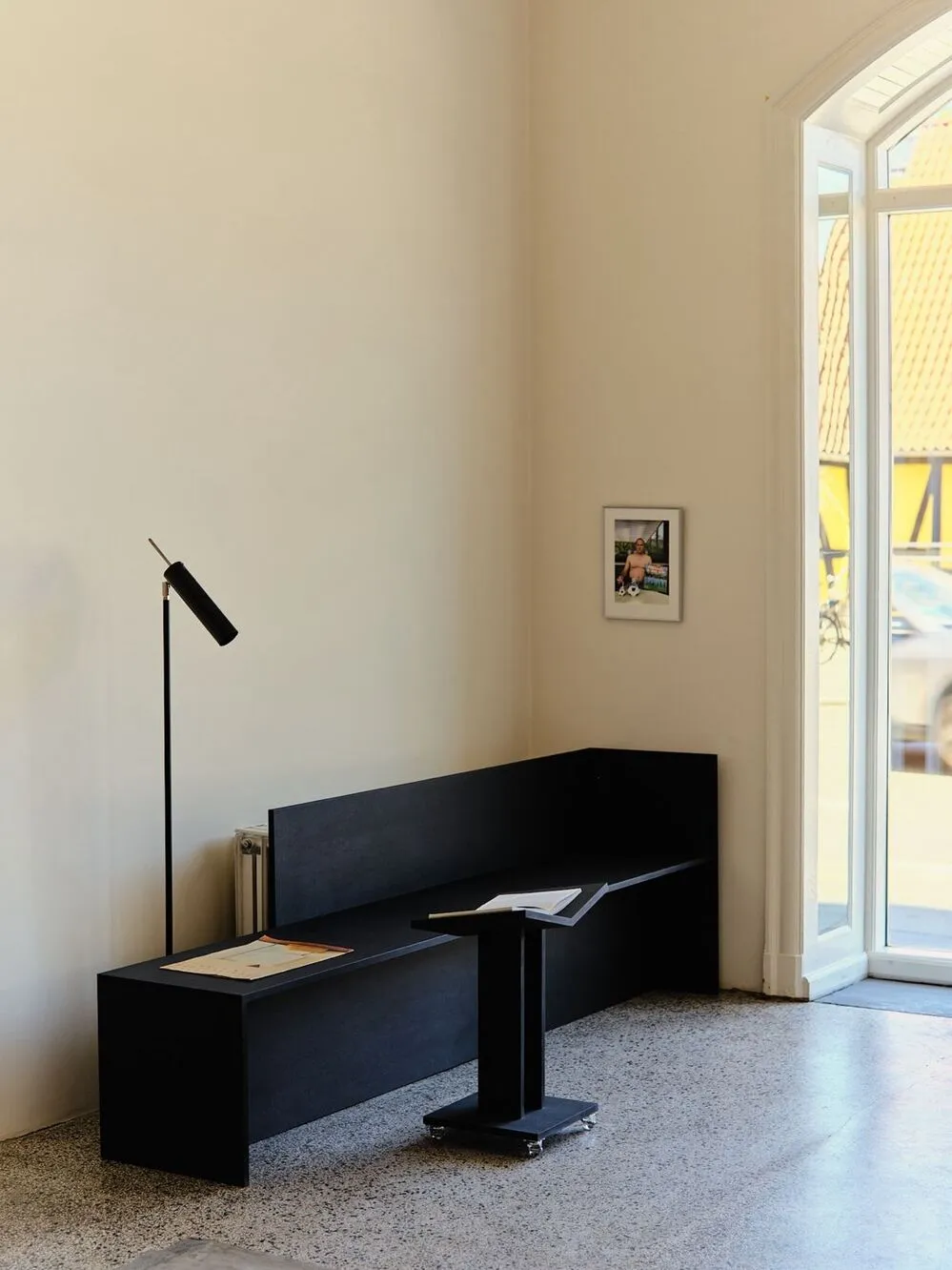
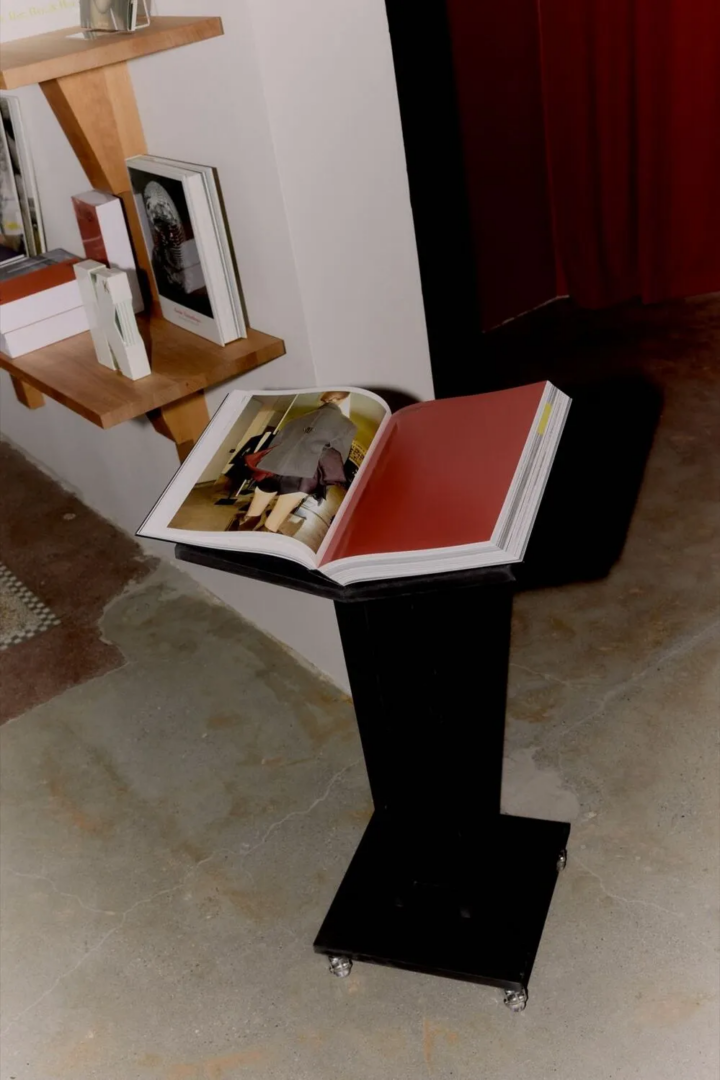
Kasper Kyster made the magazine displays from raw aluminium sheet, held with exposed black screws and bolts. Daniel Schofield designed a Reading Bench and Book Stand in black Valchromat, the plainest material in the room. The bench is where visitors sit to read. Staffan Sundström, a former art director of Kinfolk, painted three works for the walls and photographed the space. The walls are painted in John Pawson’s Flour. Alexis Mark designed the identity.
The furniture moves. The counter is mobile and the aluminium shelving freestanding, so the room can serve as a showroom, a store or a gallery for each event.
Reading Design continues beyond the interior. Simone has asked Copenhagen designers for the objects of a reading setting: displays, bookmarks, bookends, magazine holders, lighting, shelves and page weights. A first edition is in preparation for later this year. The question behind the program is how people read, turn pages and keep books at a time when owning things means less each year. The founders argue that in an attention economy reading is a deliberate choice, time taken for oneself, and that the choice deserves its own objects.
The Red Room and the programme
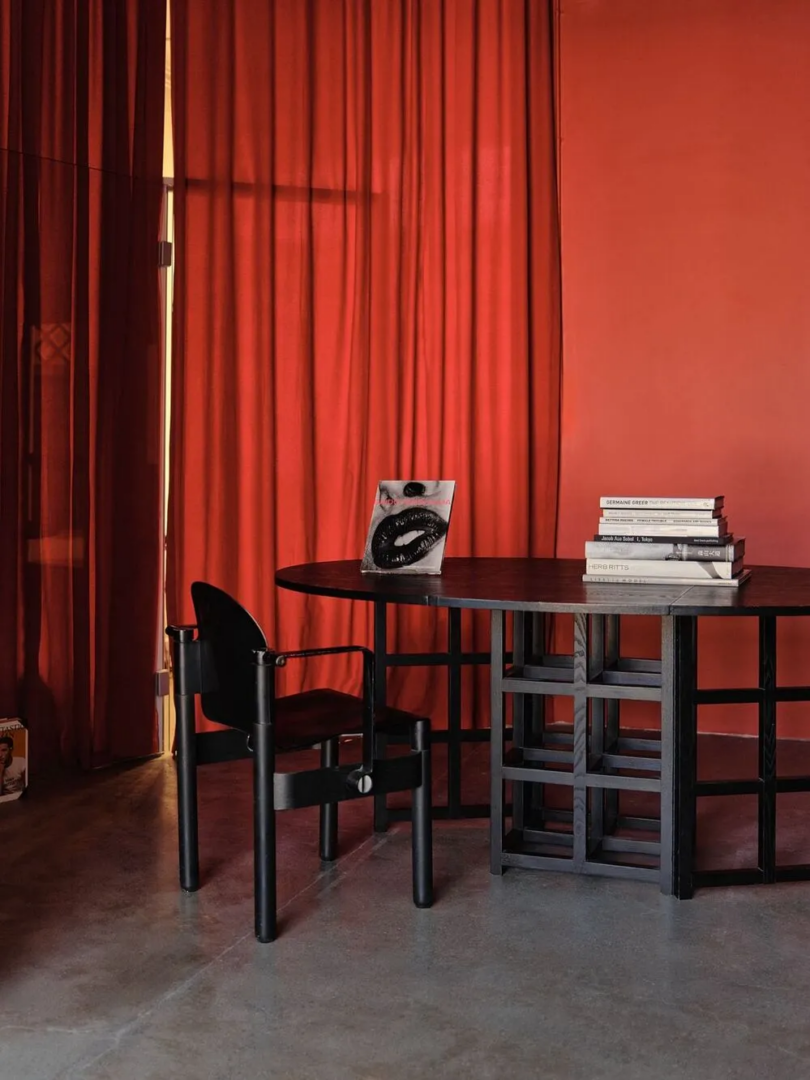
The rooms connect without doors. Beside the main room, the Red Room, about 20 square metres, hosts exhibitions. Its walls are in Cecilie Bahnsen’s Divya Red, one of Simone’s colors; the founders cite the red curtains of David Lynch. It opened on March 19 with Haute Culture, an archive of books, magazines, posters and ephemera.
Twelve events have followed since February. Their subjects map the founders’ interests in independent publishing. In April, Studio Atlant discussed its book for the Louisiana Museum’s Franz Gertsch exhibition, with the Danish Book Design Awards. In May, Bureau for Listening showed artists’ books from its Library for Listening.
In June, the photographer Lasse Dearman launched a self-published book of 25 photographs. In August, Claudia Vega presented A Body of Sun, a monograph of a friend photographed since adolescence in Faxe, published by Narayana Press in an edition of 200. The Korean duo Le Son du Couple, the musician Huh Namhoon and the writer Moa Kim, gave a performance written in the room, from its windows, shelves and books. In September, Morten Søndergaard and Lukas Lund presented a book of two acts of listening at Place Saint-Sulpice, four years apart, after Georges Perec’s An Attempt at Exhausting a Place in Paris.
Literary branding: a brand read back to itself
The second direction is book services for brands, which the founders call literary branding. Their premise is that a person’s shelves show their taste, their depth and the questions they are still living with, and that a brand’s shelves should do the same. Each commission starts from what a brand says, thinks and does, what it reads and where it goes to be moved, before how it looks, talks and sounds.
The services are library curation for brand spaces, offices and exhibitions; book branding in a brand’s communication; and book styling for campaigns, shoots and spaces. The first commission was a book and magazine selection for SP Coffee, a sibling of April Coffee, built around the café’s design and colors. For ASICS Sportstyle, Simone hosted Pink Hour in July and curated Bloom Library for the launch of Sensory Bloom. For Bonnetje, during Copenhagen Fashion Week in August, it assembled a library on tailoring and construction. For 3daysofdesign in June, it collaborated on Display / Displayed, a group exhibition of objects of and for display.
The practice places the bookshop inside commerce, and Simone states this openly. A brand’s library is a curated position like any other. The difference is the client.
Values in independent publishing: keeping, not consuming
Across the three directions, Simone’s position on independent publishing rests on duration. The two entry questions ask whether a book will matter later and whether it will be worth owning later. The rare stock is a collection kept for twenty years. The magazine list changes when a title becomes a formula. The cherry wood will record the hands that use it.
The founders set reading against the feed. A book on Simone’s floor is meant to be chosen, carried home and kept. Copenhagen sells design as objects to own. Simone sells the book on the same terms, and adds a condition: the object is complete only when someone reads it.
Vester Voldgade 106 st. tv., 1552 Copenhagen V, Denmark.
Simone Book Services
Simone Book Services is a curatorial practice for reading culture, founded in Copenhagen in February 2026 by Tugce Kayar Subay and Ibo Subay. On one floor without sections, it stocks more than a thousand titles: rare and out-of-print books on art, design, architecture, photography, fashion and culture, limited runs from independent publishers and around 80 current magazines. Through Reading Design it commissions objects for reading from Copenhagen designers; through literary branding it curates libraries and book selections for brands.
Editorial Team