Papercut, Stockholm: eighteen years of print retail in Södermalm
Alexander Dahlberg and Andreas Fryklund opened Papercut in 2008. The store trades magazines, books and film from one Södermalm address while Swedish bookshop numbers contract
At Krukmakargatan 24-26, Papercut sells magazines, art books, film and stationery from a single Södermalm storefront opened in 2008
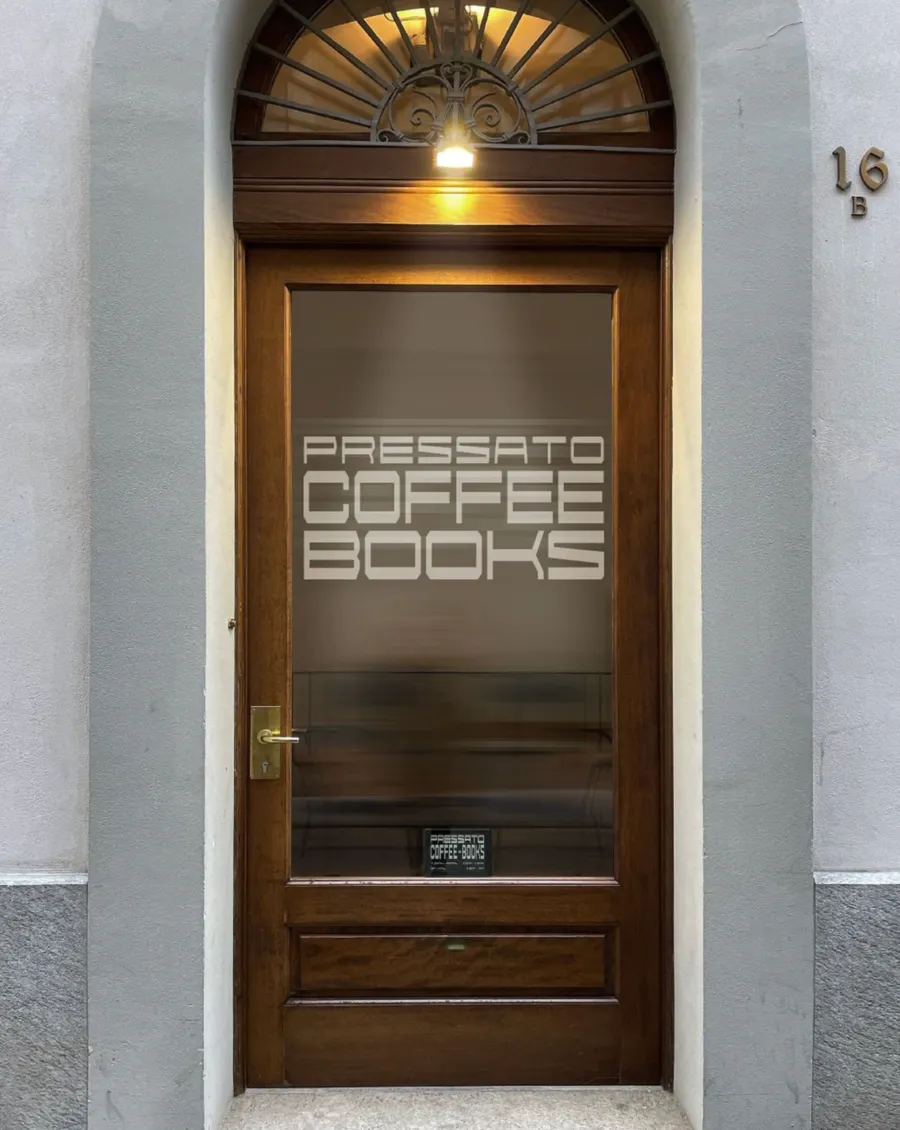
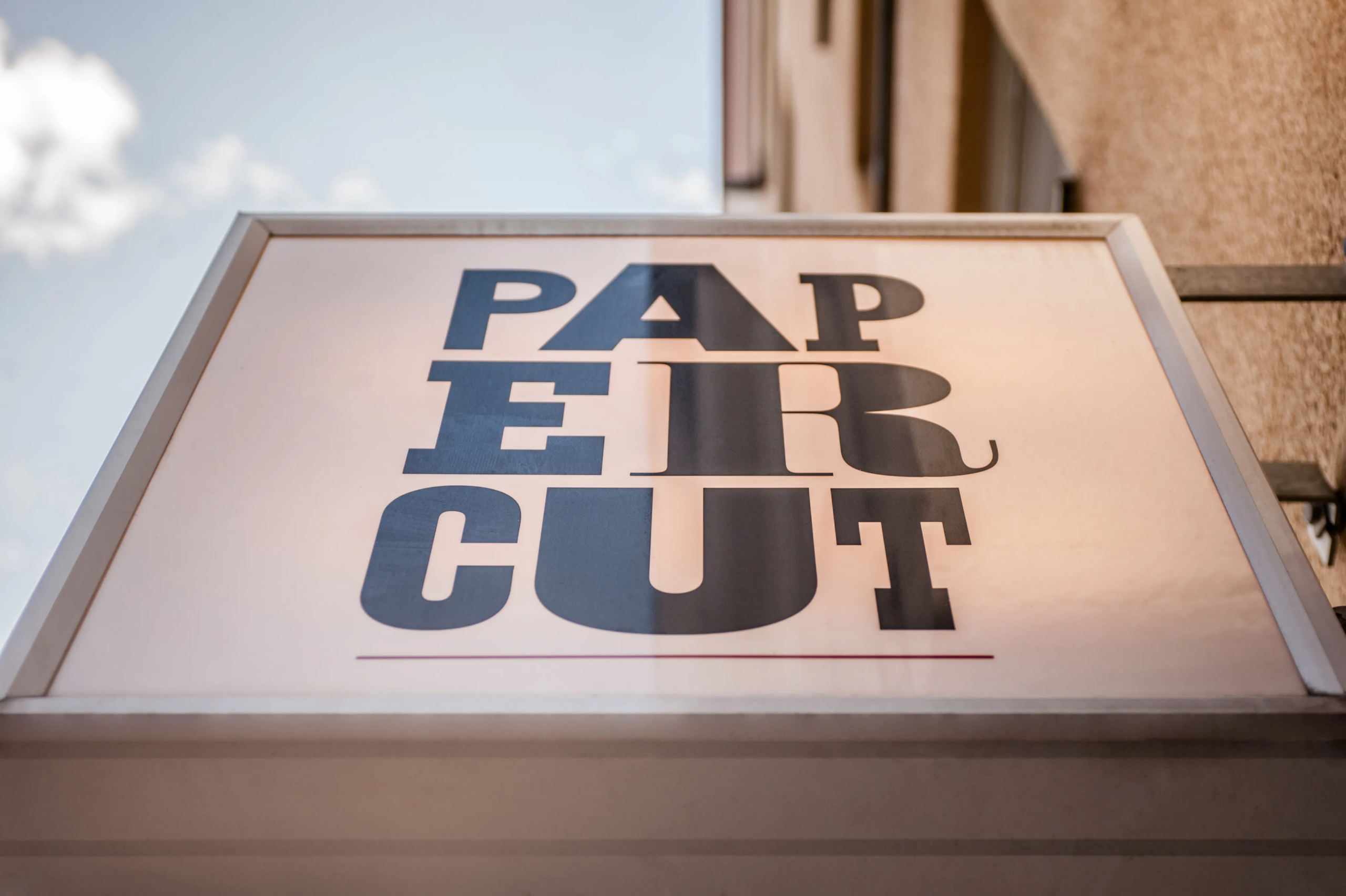
At Krukmakargatan 24-26, in the Södermalm district of Stockholm, a storefront has sold printed matter since 2008. Papercut stocks Swedish and international magazines, art and photography books, film titles and stationery. Alexander Dahlberg and Andreas Fryklund opened it in the spring of that year. Both arrived from earlier positions in Stockholm retail. Eighteen years on, the address trades under the same name and in the same category of goods. Papercut appears on the Monocle Flagship Store Directory, a list of independent retailers that carry the London publisher’s titles. The shop stands a few minutes from Mariatorget station.
That continuity runs against the direction of the wider Swedish market. Between 2000 and 2024, the number of bookshops in Sweden fell from three hundred and twenty-seven to two hundred and twenty-two. The figures come from Svenska Bokhandlareföreningen, the national booksellers’ association. It recorded one hundred and forty-eight municipalities without a bookshop at the start of 2025. Papercut sits outside the general-trade model those numbers describe. It sells a narrow range of titles to a defined readership, from one address, for eighteen years.
Two Stockholm retail histories behind the 2008 opening
Dahlberg came to the project from Press Stop, the magazine retailer on Götgatan. Fryklund came from Badlands, a film store in the same city. The two men opened Papercut in the spring of 2008. Dahlberg has since described the starting condition in plain terms: nothing of the kind existed in Stockholm at the time. The stated aim was a shop the founders would want to visit themselves. The opening mix combined magazines, books, DVDs and compact discs.
Two of those four categories have since contracted across all of retail. Streaming services absorbed most of the trade in recorded film and recorded music during the following decade. Papercut kept a film section regardless. City listings updated in 2026 still record discs on the shelves, among them titles that streaming platforms do not carry.
Krukmakargatan and the commercial map of Södermalm
Södermalm holds a large share of Stockholm’s independent retail. Krukmakargatan runs one block south of Hornsgatan and carries less through-traffic than that artery. The store’s own directions send visitors to Mariatorget station and the Torkel Knutssons gata exit. Zinkensdamm station lies around three hundred meters away. Opening hours run from eleven to six on weekdays, eleven to five on Saturday and noon to four on Sunday.
Papercut lists Nitty Gritty, DOM Hairdressing, Arketyp and Baggio Kaffebar as its neighbors. Earlier guides named Our Legacy and Uniforms for the Dedicated on the same stretch. The composition of the block has shifted across eighteen years. The clustering principle has not. Independent retailers on one street share a visitor flow none could generate alone. A customer who walks in for coffee may leave with a magazine.
A stock list organized around magazines rather than books
Magazines take the largest share of shelf space. The walls carry titles from floor to ceiling with covers facing outward. Independent publications sit next to established ones. Books follow, weighted toward photography, art, design and film. Stationery, tote bags and small goods occupy the remainder.
The store describes the selection as handpicked. Dahlberg has said the magazine trade moves constantly, and that the layout of the shop should register that movement. The arrangement follows from the arithmetic of the room: shelf space is finite, so each title held displaces another. A visitor meets a filtered set rather than a catalog. That constraint separates the format from a general bookshop, which orders to demand.
The contraction of Swedish bookselling since 2000
The national context frames the store’s position. Svenska Bokhandlareföreningen counted two hundred and twenty-two bookshops in Sweden at the start of 2025. The figure stood at three hundred and twenty-seven around the turn of the century. Half of the country’s municipalities now hold none. The association’s report attributes the decline to competition from grocery chains, online sellers and, later, subscription audio.
The revenue figures move in the other direction. The Swedish book trade turned over just above five and a half billion kronor in 2025, the highest total recorded in current prices. Physical bookshops posted the largest channel growth that year. Digital subscription services now form the single largest sales channel, ahead of internet booksellers at around thirty-four percent of the market. Fewer shops, then, and a steadier trade for the ones that remain.
The Monocle Flagship Store Directory and its European map
Papercut appears on the directory the London publisher Monocle maintains for independent retailers that carry its titles. The publisher describes the listed shops as partners rather than stockists. The European entries include Athenaeum Boekhandel in Amsterdam, magCulture in London and Librairie Candide in Brussels. Germany contributes Coffee Table Mags in Hamburg and Soda Books in Munich. Paris holds Bogo Presse and Bonjour Jacob, Lisbon MAG kiosk and Under the Cover.
Stockholm holds two entries on the same list: Papercut on Krukmakargatan and Press Stop on Götgatan, the retailer Dahlberg worked for before 2008. The directory is not exclusive by city or by country. Germany carries two entries, Portugal two, France two. The listing records a distribution relationship, and places the Södermalm shop on the same map as its European counterparts.
Independent publishers and the shelf as a distribution channel
The store operates at one end of a supply chain that has few other outlets. Independent magazines print in runs of a few thousand copies. Conventional wholesale distribution allocates shelf space by volume, which leaves small publishers with little of it. Supermarket and station racks carry the highest-turnover titles and drop the rest. A magazine with a print run of two thousand copies reaches readers through a network of specialist shops, direct subscription and its own website.
That structure gives a retailer of this kind a function beyond the transaction. The buyer’s order decides whether a title reaches Sweden at all. For a publisher in Berlin or London, placement on a Stockholm wall is a distribution decision rather than a courtesy. The relationship runs in both directions: the shop needs titles that no chain carries, and the publishers need shelves that a chain will not give them.
Showrooming and the arithmetic of independent print retail
Independent print retail runs on narrow margins. Imported magazines carry freight costs and currency exposure on every consignment. Central Stockholm rents apply to the floor area a face-out display requires. Turnover per square meter runs lower for print than for most retail categories. A shop of this kind holds a wide range of titles in small quantities, which raises handling costs per unit sold.
Showrooming compounds the pressure. Customers examine titles in the shop, photograph the covers, then order the same items from large online sellers at a lower price. The visit produces discovery for the retailer and revenue for the platform. Dahlberg has raised the point in public: praise for the shop does not settle its invoices, and stores of this format depend on the people who compliment them also buying from them.
Sound, sequence and the shop as a second channel
The store publishes a monthly playlist on a streaming service, drawn from the music played in the room. Visitors can subscribe to it rather than identify tracks at the counter. The playlist extends the selection function past print and into a format the shop does not sell.
Papercutshop.se ships from Sweden to international addresses. Each listing carries a written description of the title, which together form a running record of what the shop has held. A weekly newsletter distributes new arrivals to subscribers. The online channel serves customers outside Stockholm without replicating the function of the room, where the covers are visible at once and in sequence.
Stockholm print retail after eighteen years
The format Papercut opened with in 2008 has since spread across European cities. Independent magazine shops now operate in Amsterdam, Hamburg, Lisbon and Milan, several of them combining retail with events, launches and exhibitions. Newsstands in Italy have taken the same direction, adding public programming to newspaper distribution. Papercut has kept to retail, and the shop remains the unit of the business.
Eighteen years places the store among the longer-running independent print retailers in northern Europe. The trade it entered has contracted by a third in Sweden over the same period. What the store sells has changed at the margins, with discs reduced and stationery expanded, while the central proposition has held: a room on Krukmakargatan where printed matter is visible, selected and for sale.
Papercut, Stockholm
Papercut is an independent retail store at Krukmakargatan 24-26 in Södermalm, Stockholm, established in 2008 by Alexander Dahlberg and Andreas Fryklund. It sells Swedish and international magazines, art, photography and design books, film titles and stationery. Opening hours run Monday to Friday from eleven to six, Saturday from eleven to five and Sunday from noon to four. The nearest metro stations are Mariatorget and Zinkensdamm. The store ships internationally through papercutshop.se and is listed on the Monocle Flagship Store Directory.
Alexander Dahlberg
Alexander Dahlberg is the co-founder of Papercut, the independent print retailer he opened on Krukmakargatan in Stockholm in 2008 with Andreas Fryklund. He worked previously at the Stockholm magazine retailer Press Stop. At Papercut he handles the selection of magazines and books carried by the store, which distributes Swedish and international independent publications and appears on the Monocle Flagship Store Directory.