Paint it Black Torino: Publishing beyond print
From the artist’s book to museum bookshops and phonetics: Paint It Black reflects on the time of reading and on the role of publishing in contemporary culture
Bookshops, publishing houses and exhibition spaces increasingly share the same address. This is not merely a business model: it changes the role of the places devoted to the production and circulation of culture. In Turin, a city that has kept its bond with books and publishing, Paint It Black began as a project dedicated to contemporary art. Over time it has come to encompass a publishing house, a bookshop, an exhibition space, a public programme, a consultancy for museums, and phonetics, a festival founded with the publisher Axis Axis and devoted to independent publishing. At its heart remains the book, understood not as a finished product but as a tool for building relationships, sparking dialogue and questioning the connection between cultural production, permanence and time.
An Open Experiment
Paint It Black was founded in 2022. The initial idea involved neither a model to replicate nor a set programme; the project took shape along the way, through dialogue with its public, following directions that emerged over time. Margherita Rossi recalls the beginning: “We opened a publishing house and, almost at the same moment, a bookshop. It was an experiment, and it still is. We ask questions and we are constantly receiving answers. It is this dialogue that has made the project grow.”
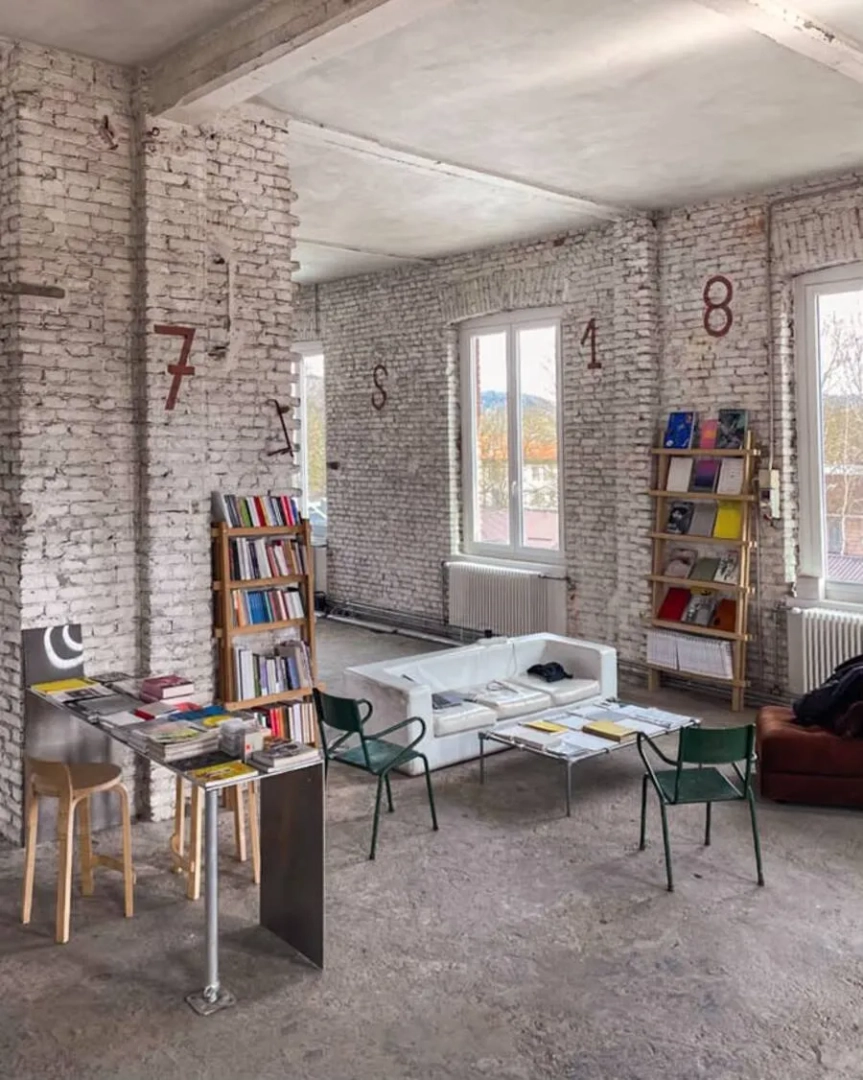
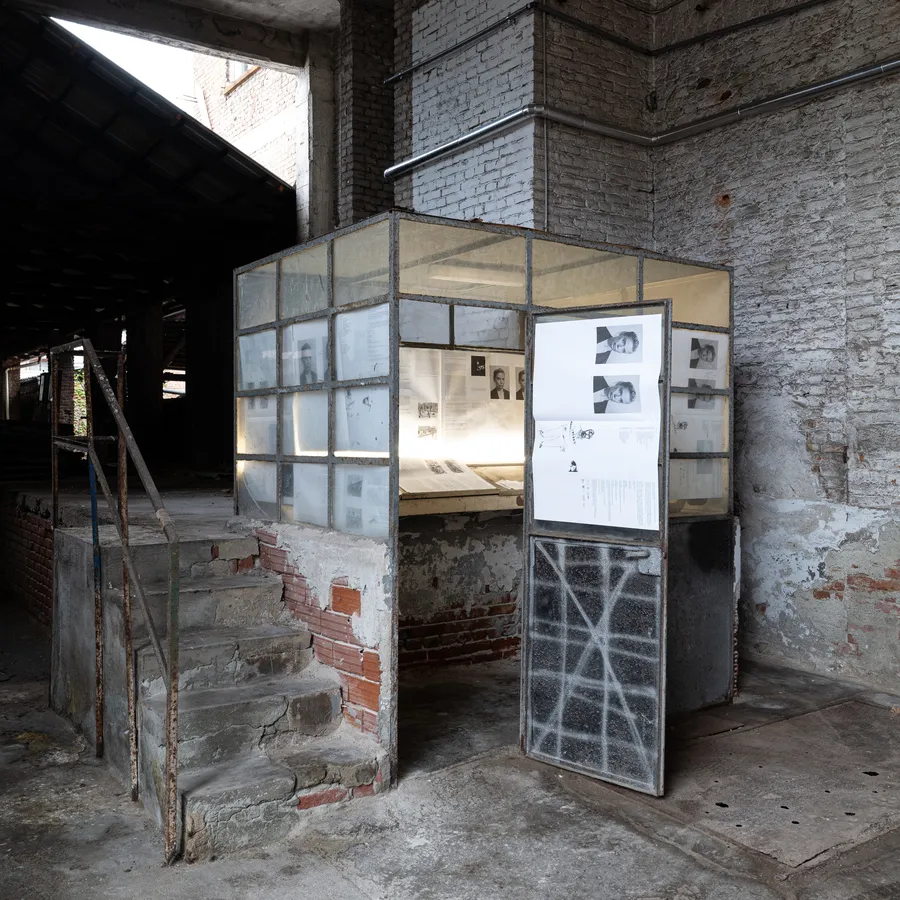
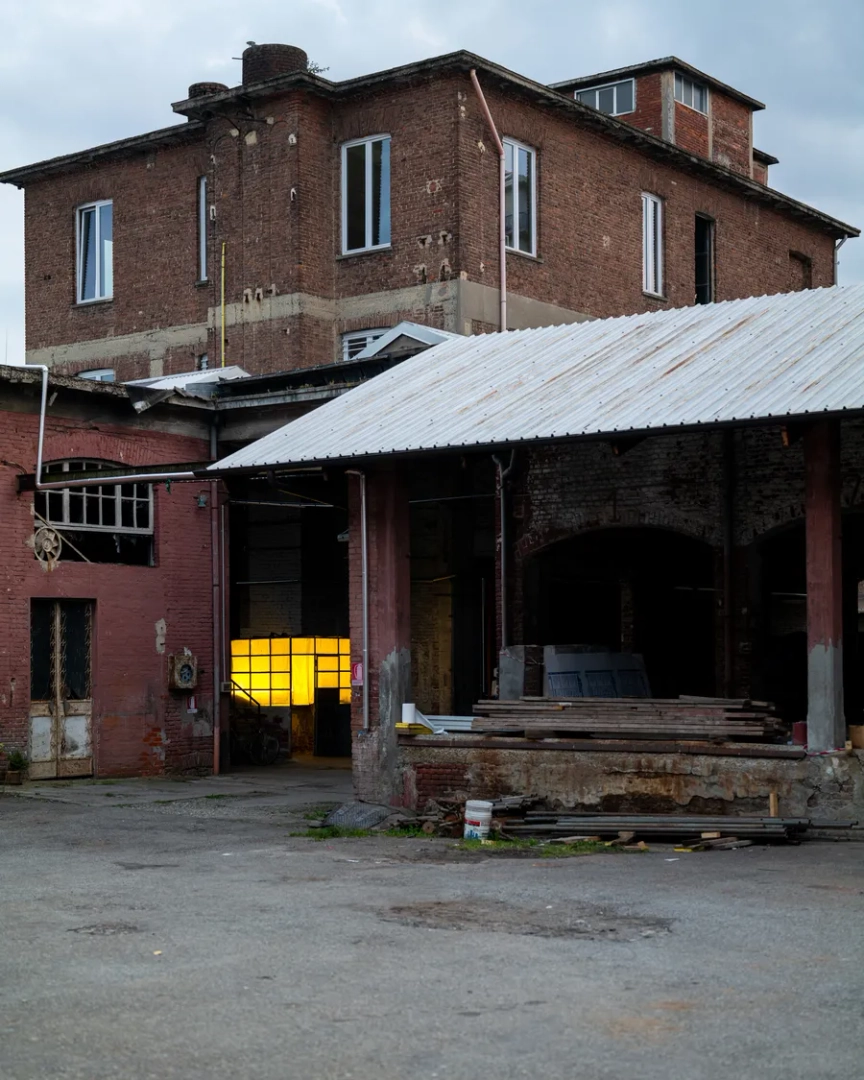
Since then the space has changed several times: it has moved to the third floor of a former industrial building, taken on new uses, and hosted exhibitions, talks, consultancy work and publishing activities. It follows no expansion plan; each step stems from the same question: what form can a place built around books take today?
Two Paths, One Language
It all began as a family project, together with Davide Caglioti: a story in which books, art and collecting are not a professional interest but an everyday practice. Onto this shared foundation, different paths were grafted: graphic design, contemporary art, architecture, restoration, anthropology and publishing converge in a project that keeps changing shape without losing its identity. Margherita Rossi brings experience gained between New York, London and Milan, working in graphic design and art production alongside galleries and contemporary artists. Davide Caglioti’s training spans architecture, restoration and cultural anthropology, before he turned to publishing through a course run by La Stampa and a period at MAXXI. Davide Caglioti describes how these paths came together: “Margherita comes from the world of contemporary art, I come from architecture and anthropology. The two perspectives met and gave rise to a multifaceted dimension that is still evolving. From that encounter, the book became the place where different disciplines began to speak to one another.”
Publishing thus becomes common ground. Not a destination, but a space in which research, the visual arts, design and curating continue to cross-pollinate.
The Sustainability of Cultural Production
Every year the publishing market absorbs thousands of new titles: many never reach their readers, are returned to the publisher or remain unopened. In this landscape, sustainability is also a matter of the pace of cultural production: not how many books to publish, but how much time to give them to be read, discussed and absorbed.
Margherita Rossi explains how this reflection has changed the way the publishing house works: “We started out at the speed of light. Then we realised it wasn’t sustainable, neither for us nor for our audience. People needed time to absorb and process what we were offering.” The programme evolved along with this awareness: publications, exhibitions and talks set aside the logic of accumulation and followed a different rhythm.
Davide Caglioti extends the reflection to the sector as a whole: “Every year an enormous number of titles are published that are never bought or read. For us, the guiding principle is that less is more.”
Reducing does not mean offering less, but giving value back to the time of reading.
Staying
The new space occupies the third floor of a former industrial building. To reach it, you have to climb the stairs or wait for the lift. In an age built on immediacy, Paint It Black has chosen a place that asks for a small act of will – which, after all, is what reading has always asked. The move accompanies a transformation of the project. The bookshop opens onto a living room, a public programme, a space in which to linger. Buying loses its centrality; time spent gains it. Margherita Rossi explains the choice: “We wanted a space where people could stay. Not feel obliged to buy, but stop for a while. Today it often happens that someone spends hours with us. For us that is a wonderful thing: it means that time has found its value.” A bookshop has always sold books. Here, it tries to hold on to time.
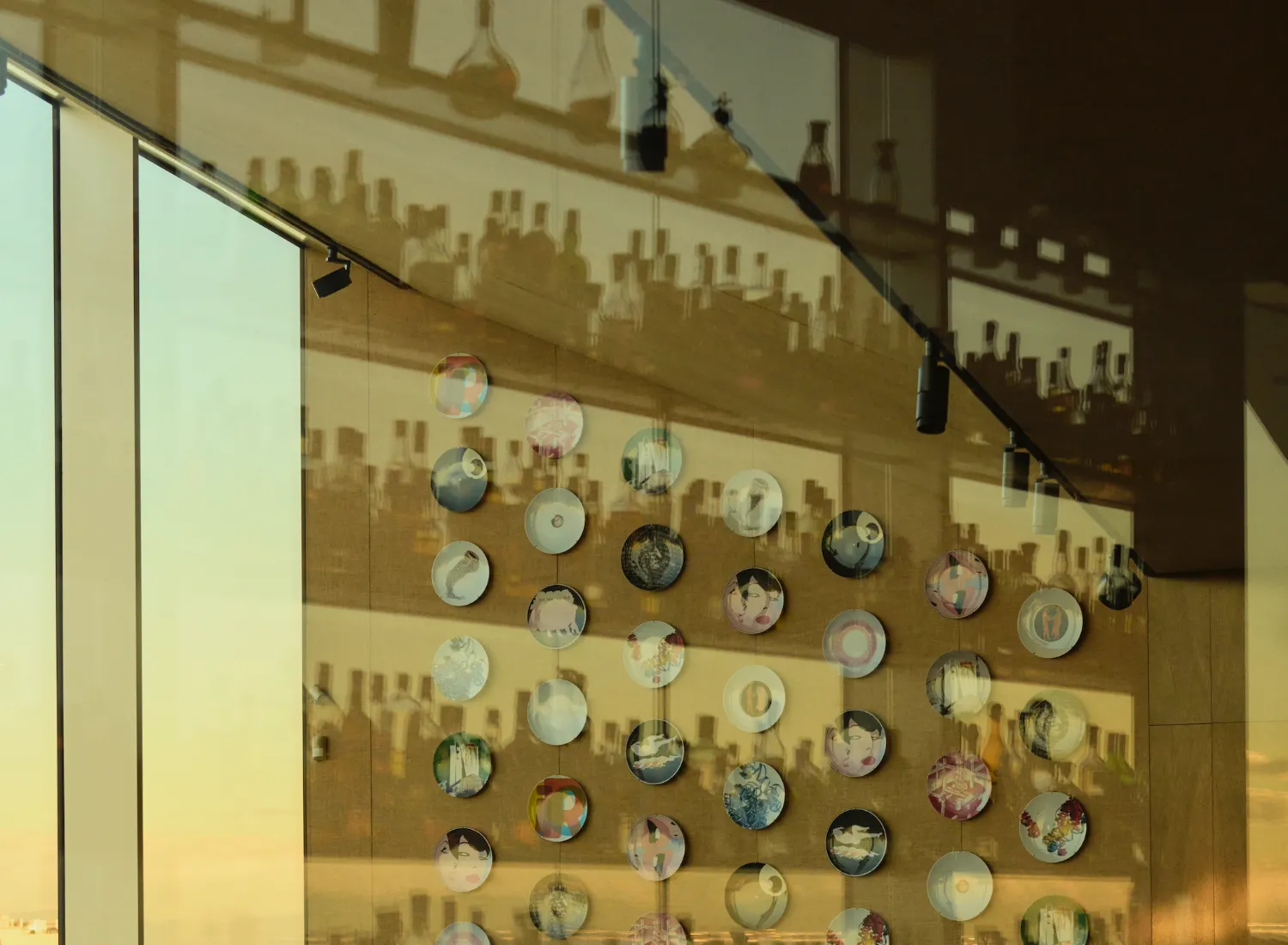
This idea of hospitality also found expression in Chez Paint It Black, the artist’s restaurant created for Artissima 2024. For two weeks the space hosted a collective project in which menu, table, music and artworks became part of a single experience. Not a venture meant to continue, but a temporary extension of the publishing research: a different way of building relationships around books.
Margherita Rossi recalls the experience: “The restaurant allowed us to reach people who perhaps would never have come in for a book. Many stopped to eat, then discovered the bookshop and came back for an event or a launch. It was a way of broadening our audience.” The experiment has come to an end, but it confirmed a direction already taken. Students, artists, educators, collectors and visitors continue to share the same place – not because they have the same interests, but because they choose to devote time to the same experience.
The Book as Curatorial Practice
In recent years the team has been working alongside museums, foundations and cultural institutions on the design of bookshops and public programmes. The book no longer coincides with publication: it becomes a tool for research, selection and storytelling. Davide Caglioti describes this evolution as a natural consequence of the project: “We increasingly find ourselves collaborating with museums and institutions. The book remains at the centre, but we use languages that go beyond the book as an object. It is a line of research that keeps changing shape while holding the same course.” One of the clearest expressions of this approach is phonetics, a festival created in collaboration with the publisher Axis Axis, devoted to independent publishing and born during Turin’s art week. More than a fair, it is a meeting place for publishers, artists, musicians and researchers, where launches, listening sessions and publications share the same programme.
Margherita Rossi sums up the principle that unites the various initiatives: “phonetics is a fair, but also a festival. We invite independent publishers and build a programme of talks, listening sessions and launches. Collaboration is always at the root of our work: none of our projects comes about without a network of people and institutions.”
In a city that built its identity on its great publishing houses, the project suggests another possibility. The book continues to take centre stage, but the way it relates to the public changes: it moves through exhibitions, festivals, museums and cultural spaces, accompanying practices that belong as much to curating as to publishing.
The Hospitality of the Book
Debates about publishing often turn to print runs, distribution and the market, and more rarely to the attention a book continues to demand. To read is to take time away from speed, to accept a different rhythm, to make room for concentration.
Davide Caglioti traces this reflection back to his own experience in art publishing: “For those who love books, that object remains a cult. Fifty years ago, culture passed mainly through books; today it has become more fluid. But a book still gives back attention, depth and care.”
This idea also runs through the artist’s book. The publication does not simply document a work: it becomes part of it. Paper, layout, photography, printing and sequence all contribute to the construction of meaning, extending the artist’s work beyond the exhibition space.
As Caglioti further observes, “the book is also a work of art. It can be reproduced in a variable print run, but it remains a fundamental form of expression. It allows artists to move across different languages.” Over the course of the conversation, a conviction emerges that runs through every aspect of the project: the publishing house, the bookshop, the festivals, the museum bookshops, the spaces devoted to encounter. The book is not defended as an object to be preserved, but as a device capable of creating relationships, sparking dialogue and asking for something that seems ever rarer today: time.
Perhaps this is the most concrete form of cultural sustainability. Not producing more, but creating the conditions for a book to go on being read, discussed, explored. Because culture, before it occupies a space, needs to find the time it takes to be inhabited.
Paint It Black is an independent publishing house and bookshop founded in Turin in 2022. Specialising in contemporary art, architecture and visual culture, it develops publishing projects, exhibitions, museum bookshops and public programmes, conceiving the book as a tool for research, curating and connection.
Elisa Russo