Two centuries of Milanese pastry in three addresses a few metres apart
From Marchesi’s rocking horses to Cova’s new panettoni and Sant Ambroeus’ ninetieth anniversary, Christmas 2026 becomes a way to read how three historic pastry houses have evolved within Milan’s Quadrilatero
In 2015, when Marchesi 1824 opened at via Monte Napoleone 9, Cova already stood across the street, at number 8. Two pastry houses born in the 19th century, a few metres apart, belonging to two international luxury groups — Prada, which had taken a majority stake in Marchesi in 2014, and LVMH, owner of Cova since 2013. A short walk away, at corso Matteotti 7, Sant Ambroeus carried on in premises opened in 1936, by then a brand present in the United States as well.
The three addresses belong to different seasons of the city. Cova opened in 1817 beside the Teatro alla Scala, when the café was a meeting place for artists, intellectuals and the middle class. Marchesi opened in 1824 as a family pastry shop in an 18th-century building on via Santa Maria alla Porta. Sant Ambroeus arrived in 1936, in a Milan already marked by new patterns of consumption and a growing number of places for eating and pastry.
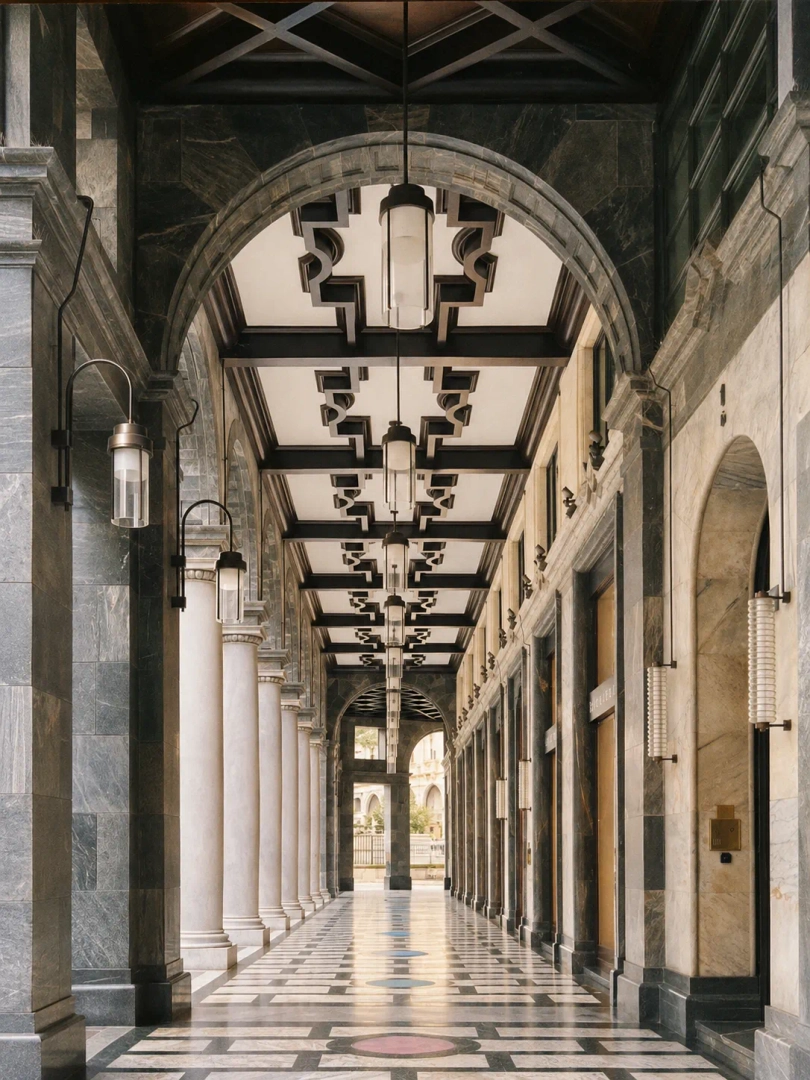
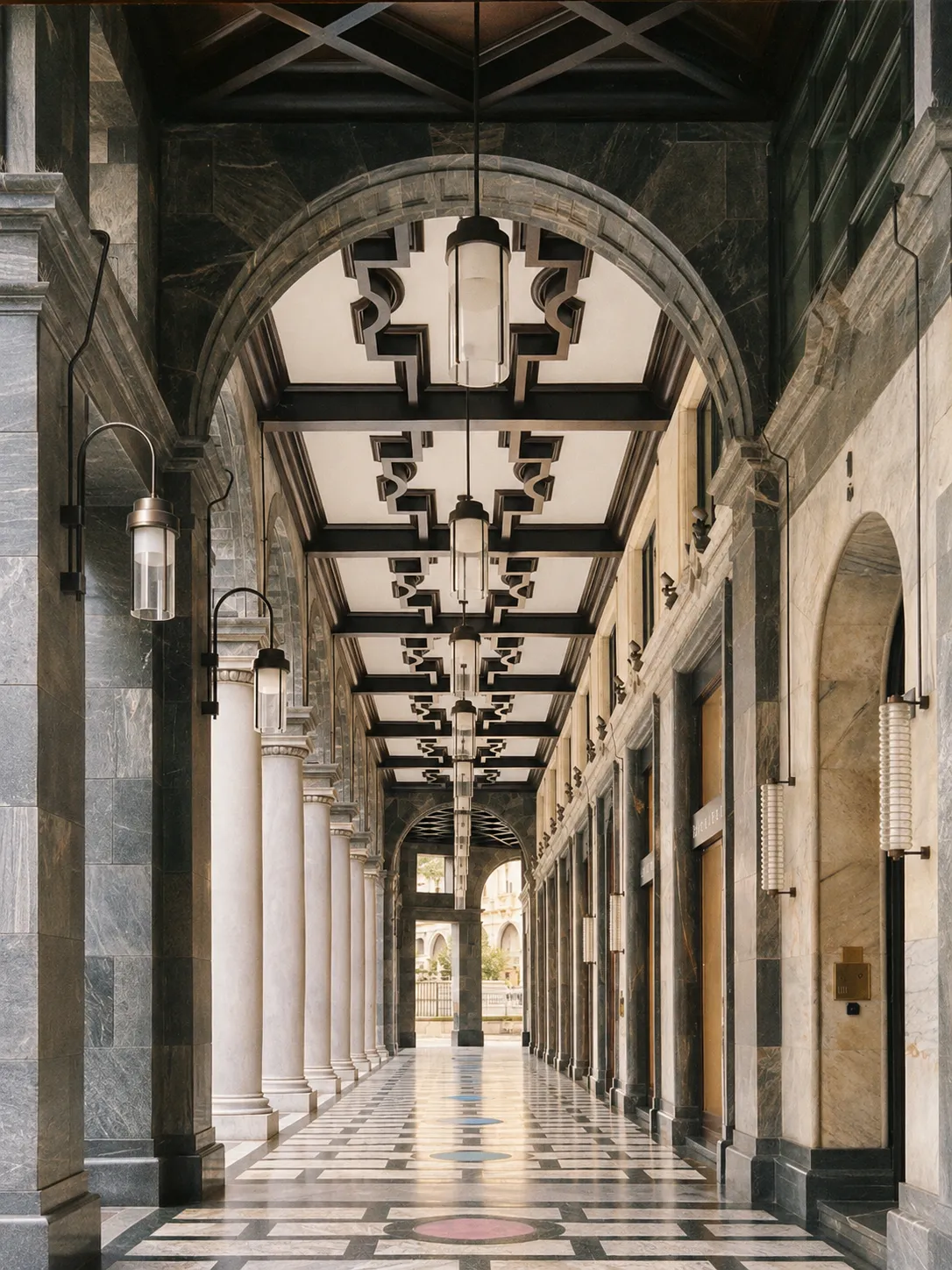
The tie to the fashion Quadrilatero came later, through relocations, new openings and changes of ownership, and the spaces became part of each brand’s identity. Marchesi draws on Roberto Baciocchi’s project to reinterpret its historic fittings; Cova keeps boiserie, marble and crystal chandeliers; Sant Ambroeus gave Fabrizio Casiraghi, in 2022, a reworking of its interiors around materials and references from 1930s Milanese architecture.
For Christmas 2026 the three houses present different collections. Marchesi takes the rocking horse as the theme of its displays and chocolate work; Cova widens its range of large leavened cakes with new recipes and single portions; Sant Ambroeus marks its ninetieth anniversary with dedicated packaging, new panettoni and a capsule collection of accessories.
Marchesi 1824 and the Prada interiors by Roberto Baciocchi on via Monte Napoleone
Marchesi began in 1824, when the family opened a pastry shop at 11/a via Santa Maria alla Porta, inside an 18th-century building. Cakes and panettoni defined the early business. In the first decades of the 20th century Angelo Marchesi added coffee service, drinks and aperitivo cocktails, turning the shop into a place to stop as well as to buy. The original premises still keep their coffered ceilings and part of the historic fittings, including the wooden counter. Marchesi has held the same address for two centuries, through the changes of the neighbourhood.
In March 2014 the Prada Group acquired 80% of the company, opening a new phase. On 9 September 2015 came the via Monte Napoleone 9 location, in the 120 square metres once occupied by Venini. The project went to Roberto Baciocchi, the architect behind many Prada stores. The work reinterprets the 19th-century rooms and keeps recognisable elements — the marble-topped counter, cherry wood, mirrors and glass cases. Walls in green marmorino hold 38 lit cabinets for chocolates, sweets and small pastry. In the two small rooms, marble-topped tables sit beside armchairs and sofas in green velvet, with walls in floral jacquard silk.
The palette, above all the green in its various tones, ties the pastry shop to the language of Prada interiors, while the retail side stays distinct: the food is shown through a system of cases and shelving drawn from the tradition of the confectioner. In September 2016 Marchesi opened a third Milan location in the Galleria Vittorio Emanuele II, on the mezzanine of the building that houses Prada Uomo, about 250 square metres whose arched windows look onto the Galleria.
Rocking horses in dark chocolate and the Barbajada panettone at Marchesi 1824
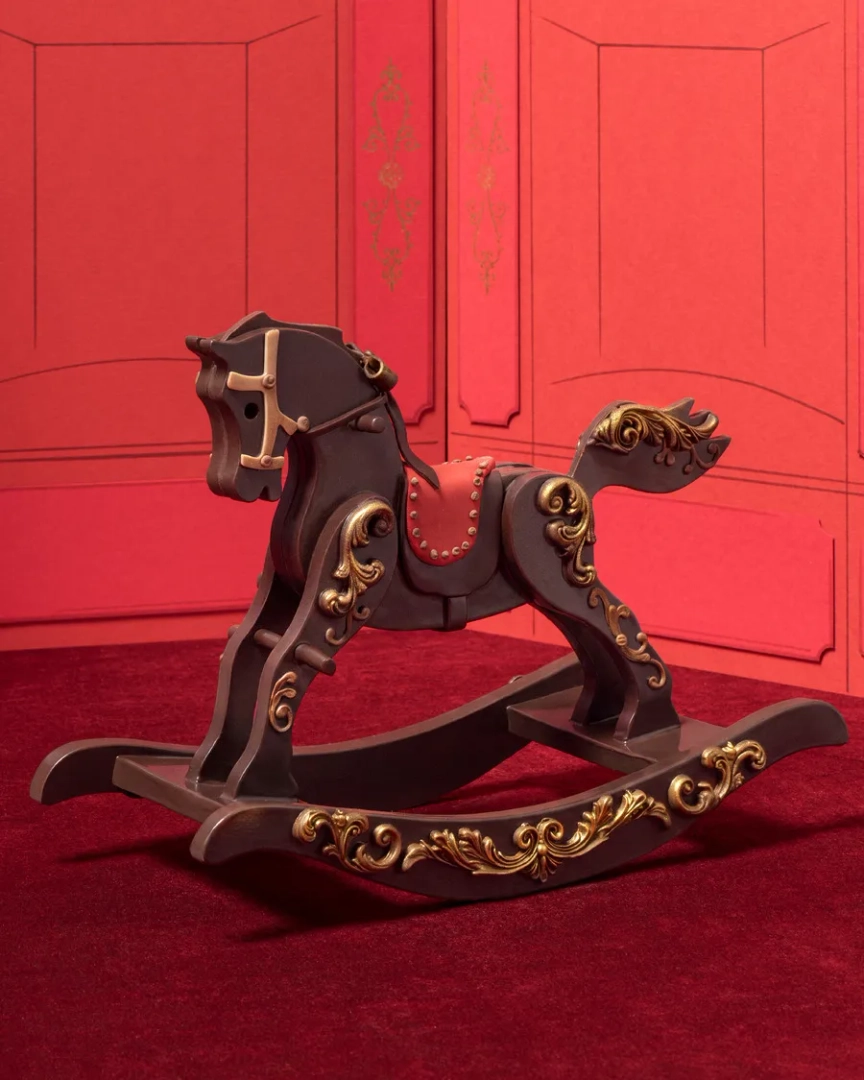
For the 2026 season Marchesi takes the rocking horse as the subject of its displays and pastry. The theme is developed by Pastry Art Director Diego Crosara, who uses chocolate, almond paste and royal icing to reproduce the forms of period toys. In the Galleria Vittorio Emanuele II window stands a large chocolate rocking horse with gilded detail, beside a Castello Sforzesco rendered in pastry materials. The same subject returns in hand-decorated panettoni, made to order, and in dark-chocolate horses of 200 and 800 grams. The collection also includes hand-painted chocolate spheres and half-spheres and a maxi bar that comes with a brush and edible colours, to paint a chocolate horse before eating it.
The classic panettone stays the centre. Marchesi uses a natural mother yeast kept for over 50 years, in formats from 500 grams to 10 kg. Alongside the pandoro and the veneziana with Sicilian candied orange and almond glaze, the list runs to a range of alternative recipes. One of the new ones is the Panettone Cioccolato Gran Cuvée 74%, made with a blend of dark chocolate and tied to the opening of the house’s new Laboratorio del Cioccolato; another is the Panettone Aurora, worked without raisins or candied fruit. Other versions bring apple, cinnamon and caramel; almond brittle and mandarin; fig, vanilla and honey; candied chestnut. The Panettone Barbajada takes the two ingredients of the old Milanese drink, coffee and chocolate, into a baked recipe. Savoury panettoni complete the range, in cacio e pepe, saffron and Parmigiano, or anchovy, caper, olive and cherry tomato, together with gastronomic formats and aperitivo boxes.
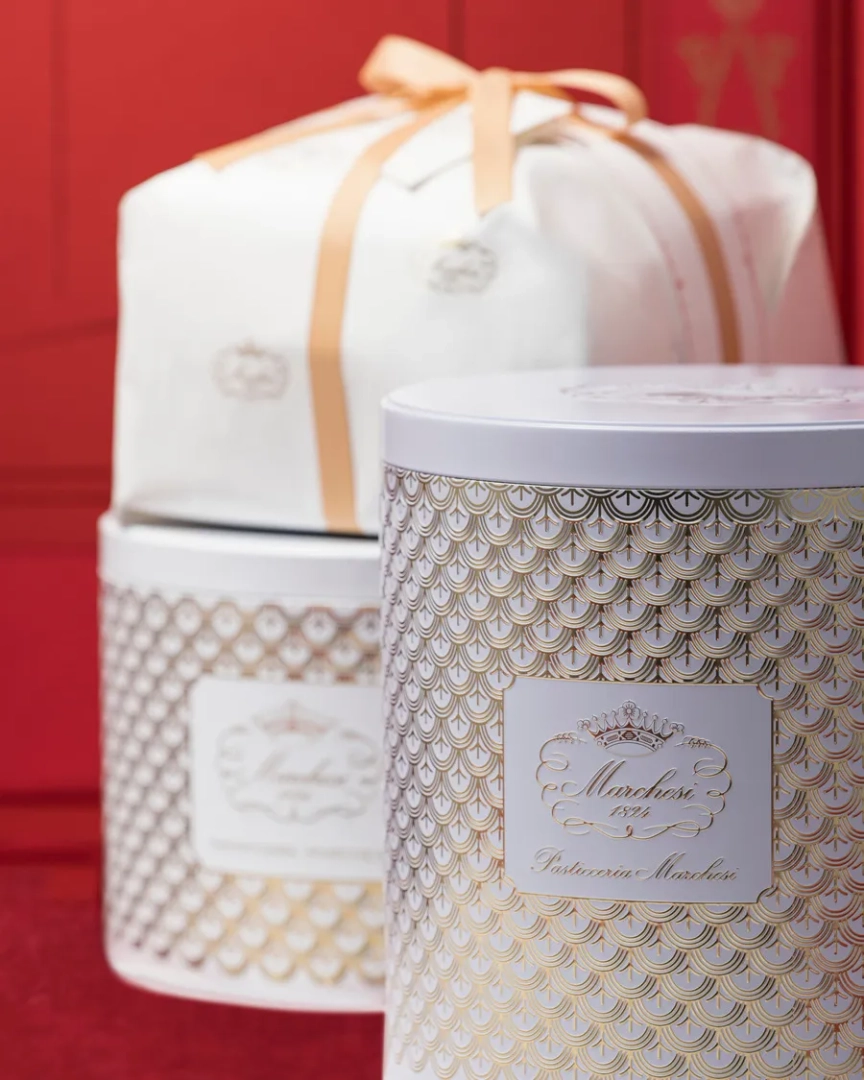
For the gift packaging, the rocking horse returns on tins alongside the gingerbread man, with Advent calendars, hatboxes, velvet trunks and modular drawer units. Between November and December Marchesi runs chocolate-decorating sessions in the via Orobia 3 workshop, and Christmas afternoon teas for children at the Galleria.
Cova from the 1817 Caffè del Giardino to the 2017 restoration on via Montenapoleone
Cova precedes Marchesi by seven years. In 1817 Antonio Cova opened the Caffè del Giardino near the Teatro alla Scala, at the corner of today’s via Manzoni and via Verdi. It began as a literary café and became one of the meeting places of 19th-century Milan, frequented by artists, musicians and intellectuals. Its history runs alongside the theatre and the Risorgimento; among its regulars were Giuseppe Verdi and, later, Giacomo Puccini. Cova also appears in literature: in A Farewell to Arms, published in 1929, Ernest Hemingway names the place, imagining a dinner in Milan and a walk along via Manzoni. By then the name was known beyond Italy.
The original premises were damaged in the bombing of the Second World War. In 1950 Cova moved to via Montenapoleone 8, keeping some of the decorative codes of the earlier rooms, as the district turned into a centre of fashion and luxury retail. The interiors run on dark-wood boiserie, marble counters, mirrors, decorated floors and large crystal chandeliers, with the counter central to the layout, separating pastry service from the rooms for sitting.
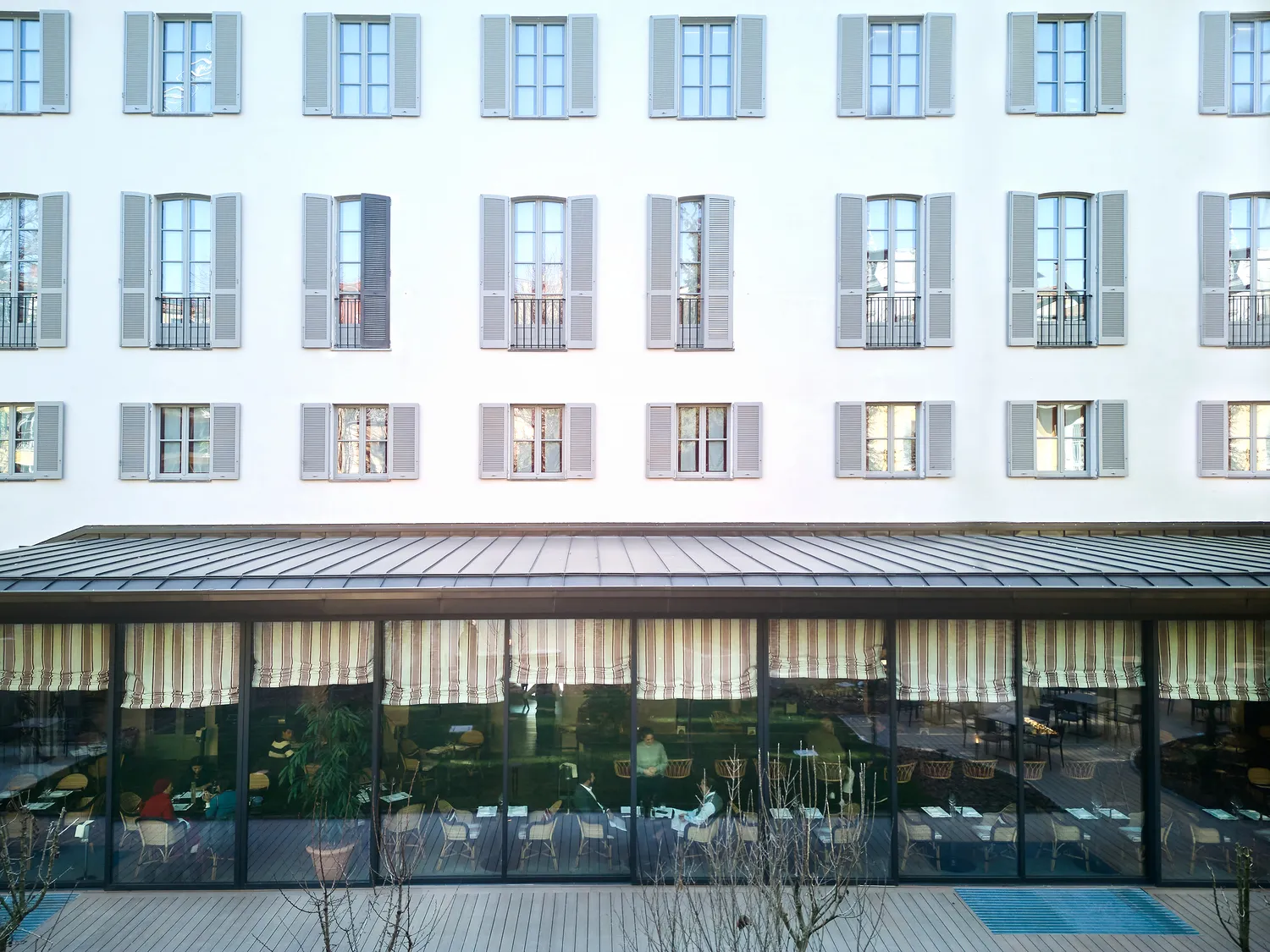
In 2013 Cova entered the LVMH Group. Four years later, for the bicentenary, the Milan location was restored and enlarged. The work lasted about three months and ended in April 2017, keeping the main interior elements, rationalising the spaces and adding around 30 square metres toward via Sant’Andrea. It also brought into use part of the neoclassical inner courtyard, tied to a late-18th-century project by Giuseppe Piermarini: the Giardino Cova added an outdoor area beyond the rooms facing via Montenapoleone. Cova changed address in the 20th century and updated its layout in 2017, keeping a recognisable architecture. The international expansion began in 1993 with an opening in Hong Kong; today Cova has nearly 40 addresses worldwide, among them Paris, Monte Carlo, Shanghai, Bangkok and Taipei.
Gianduia and Marrons Glacés panettone, Pigna, Fiocco di Neve and Tronchetto at Cova
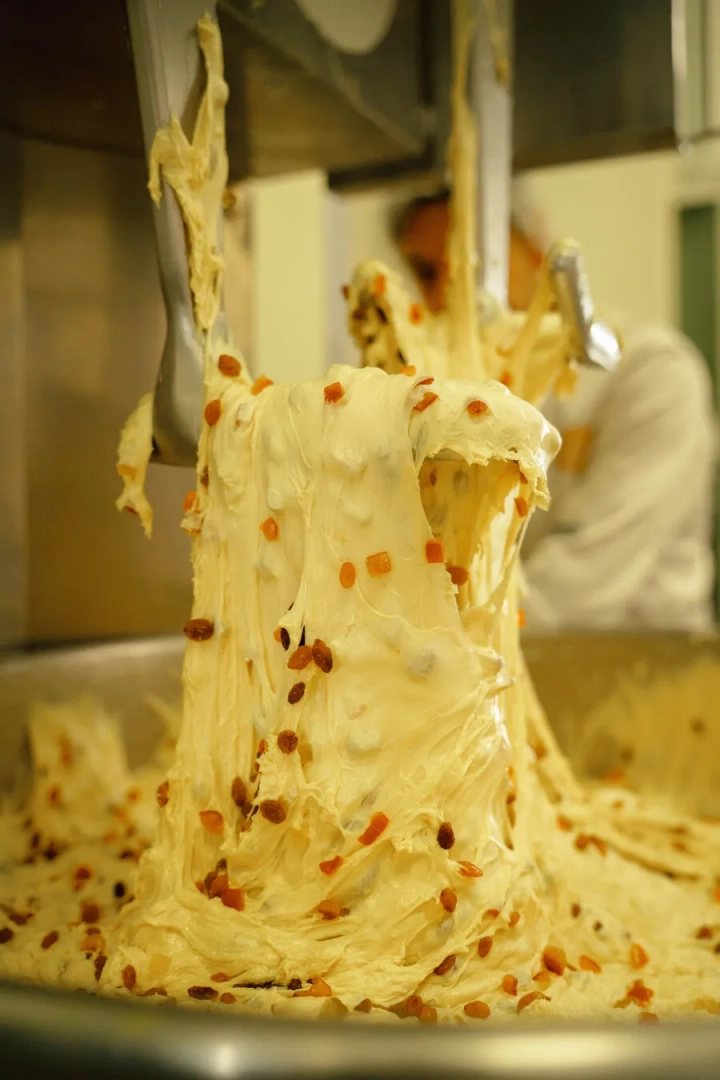
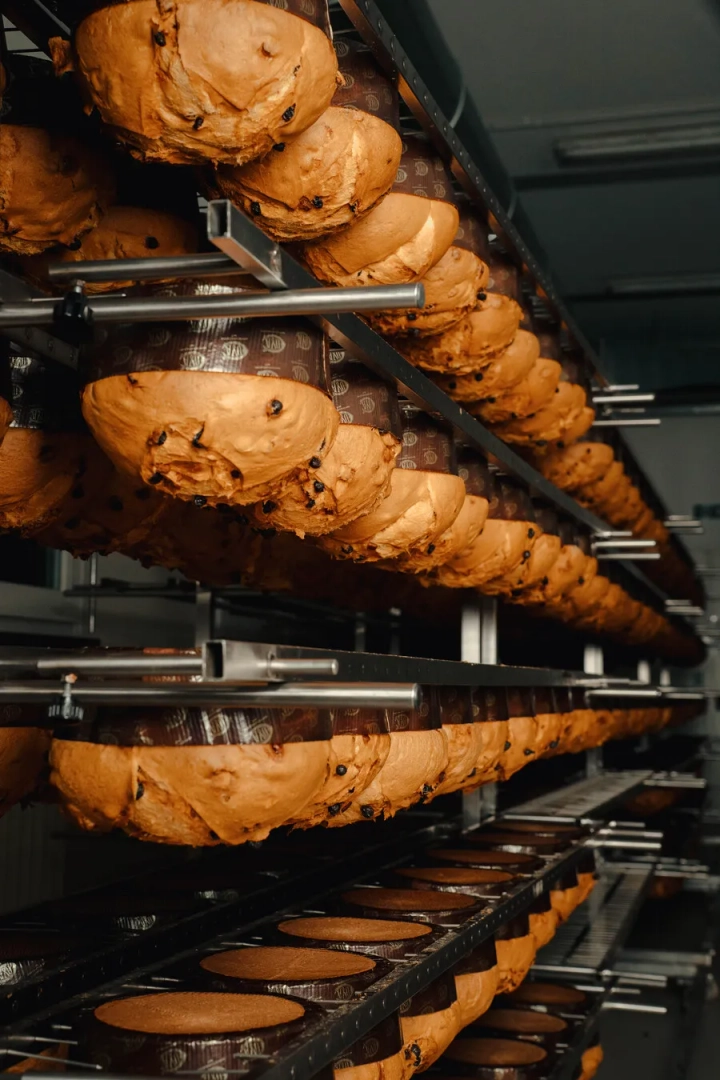
Cova’s 2026 collection keeps the traditional naturally leavened panettone at its centre, with versions that change the dough, the fillings and the aromatics. Beside the classic with raisins come the Panettone al Cioccolato Fondente, one with apricot and Tahitensis & Bourbon vanilla, and the Dolomitico, drawn from the flavours of Alto Adige. The season’s new one is the Panettone Gianduia e Marrons Glacés, which brings together two preparations long present in European pastry. The range also includes the PanVegan versions, made without animal ingredients, with raisins and candied fruit or with cocoa, candied orange and dark chocolate. Decorated panettoni are made to order, using dark chocolate, sugar paste and royal icing for holiday subjects.
Alongside the large cakes, Cova presents three new single portions that take holiday forms. The Pigna is a milk-chocolate bavarese with a caramel cremoso heart, on a chocolate biscuit and a hazelnut croccantino, its surface reproducing the scales of a pine cone with gilded detail. The Fiocco di Neve pairs a vanilla bavarese with a vanilla cremoso heart and a strawberry-raspberry gel, on almond biscuit and croccantino, finished with edible gold. The Tronchetto uses a 70% dark-chocolate bavarese, a Sacher biscuit with apricot syrup and a raspberry gelée, over a hazelnut croccante. Each builds a recognisable outer shape over an interior organised in layered textures.
The collection extends to decorated biscuits, gingerbread houses, chocolates, torrone, preserves and teas, with tins, hatboxes, gastronomic cases and made-up compositions for gifts. For Christmas 2026 there is also a Panettone Solidale made with LILT Milano, in support of the Case del Cuore, which give free accommodation to the families of children in oncological care in the city.
Sant Ambroeus, ninety years between Milan and New York and the Casiraghi restoration
Sant Ambroeus opened in 1936, when two pastry chefs set up a café and confectionery steps from the Teatro alla Scala. The name comes from Sant’Ambrogio, Milan’s patron saint, in its dialect form. The first management was the Cattaneo family’s, and the place established itself as an address for professionals, intellectuals and a clientele that used the café across the day — breakfast, a quick lunch, aperitivo or dinner. In the 1970s ownership passed to the Pauli family, which later sold the Milan premises to the Festorazzi family. In 1982 the first Sant Ambroeus opened in the United States, on Madison Avenue in Manhattan.
The American expansion gradually shifted the brand’s role. Sant Ambroeus grew in New York through cafés and restaurants that combined Italian food with international brasserie service, followed by openings in other parts of Manhattan, the Hamptons and Florida. In 2021 the Milan premises were acquired by SA Hospitality Group, bringing the original site and the American network back under one management, and a refurbishment led to the restaurant reopening in November 2022.
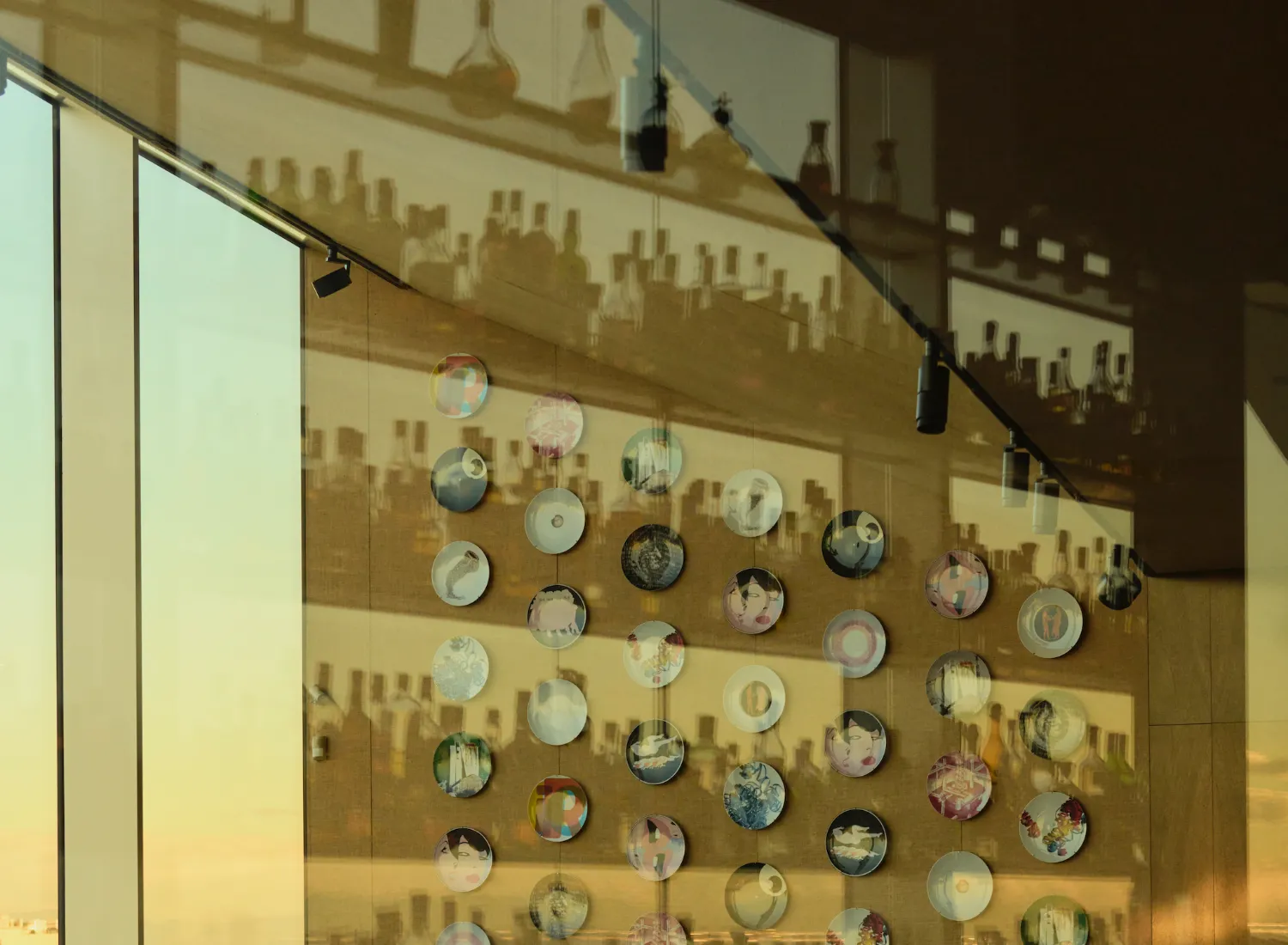
The interiors are by Fabrizio Casiraghi. The designer takes 1930s Milanese architecture as his reference, with materials recurrent in the city’s interiors of the period — varnished woods, stone, mosaic and lacquered surfaces. The work covers a building of about 800 square metres across basement, ground and first floor, with architectural, structural and services upgrades. Casiraghi chose to bring out the restaurant’s institutional character and leave the earlier interiors unrebuilt, working with materials and proportions coherent with the building.
The project uses varnished woods, mosaic floors, cream tones, textile coverings and strict geometries. The entrance keeps its role as pastry shop and café, with cases for the sweets. The main room is organised around the marble counter, with high ceilings and 12 historic Lombard coats of arms used as decoration. The thirties reference stops short of period reconstruction: the layout and some of the furnishings also draw on European and New York brasseries. The refurbishment went with a wider food offer, and beside pastry the restaurant serves Italian dishes, in particular Milanese and Tuscan, alongside preparations from American dining. The menu is overseen by Iacopo Falai, the group’s Culinary Director, with Walter Casiraghi as Executive Chef.
The apricot panettone and the burgundy capsule for the ninetieth anniversary of Sant Ambroeus
Christmas 2026 coincides with 90 years since the founding of Sant Ambroeus. For the anniversary the house has built a Christmas collection and a line of accessories that draw on its graphic identity. The Panettone Classico is made over a 36-hour process with a double dough, from Italian flours, fresh eggs, mother yeast, Italian butter, sultanas and untreated candied orange, also worked into the dough to set the aroma. For the anniversary it comes in dedicated packaging, with celebratory paper and ribbon. The pandoro gets its own packaging too, over 40 hours of work and three doughs, with Madagascar vanilla.
The new items are a Panettone all’Albicocca and a panettone filled with chantilly cream, which brings in a filling that moves it toward dessert cakes while keeping the structure of the large leavened cake. For the season there is also a Holiday Box conceived as a centrepiece, with a Panettone Classico, a chantilly-cream panettone, a box of Sant Ambroeus biscuits, dark-chocolate tokens and ventaglietti.
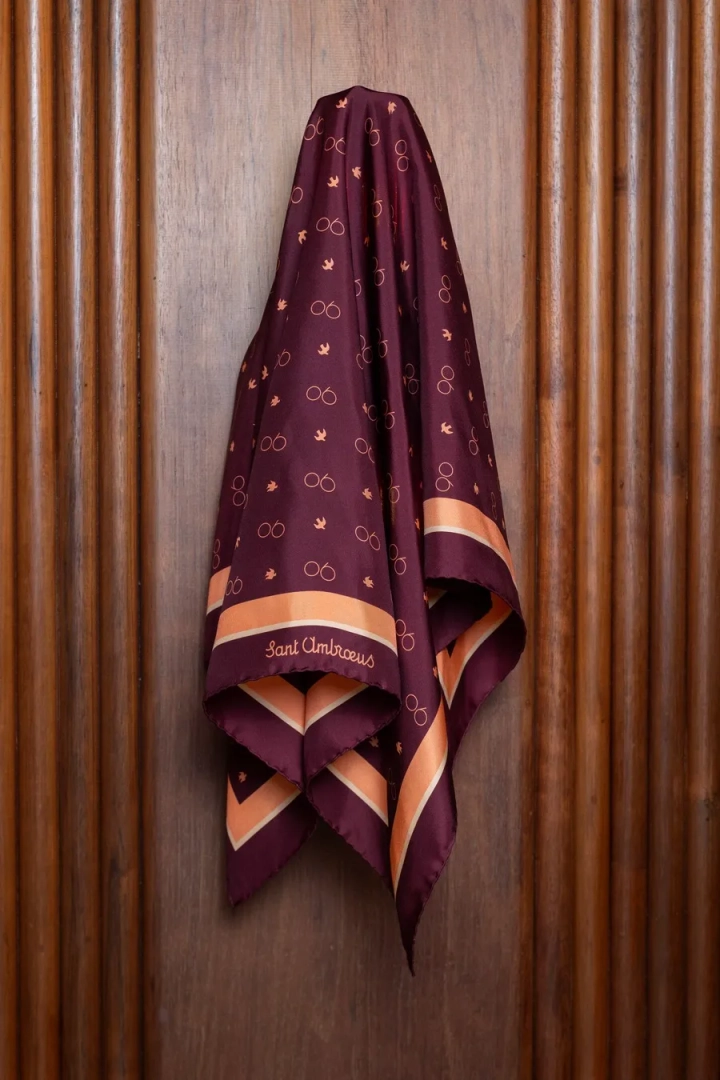
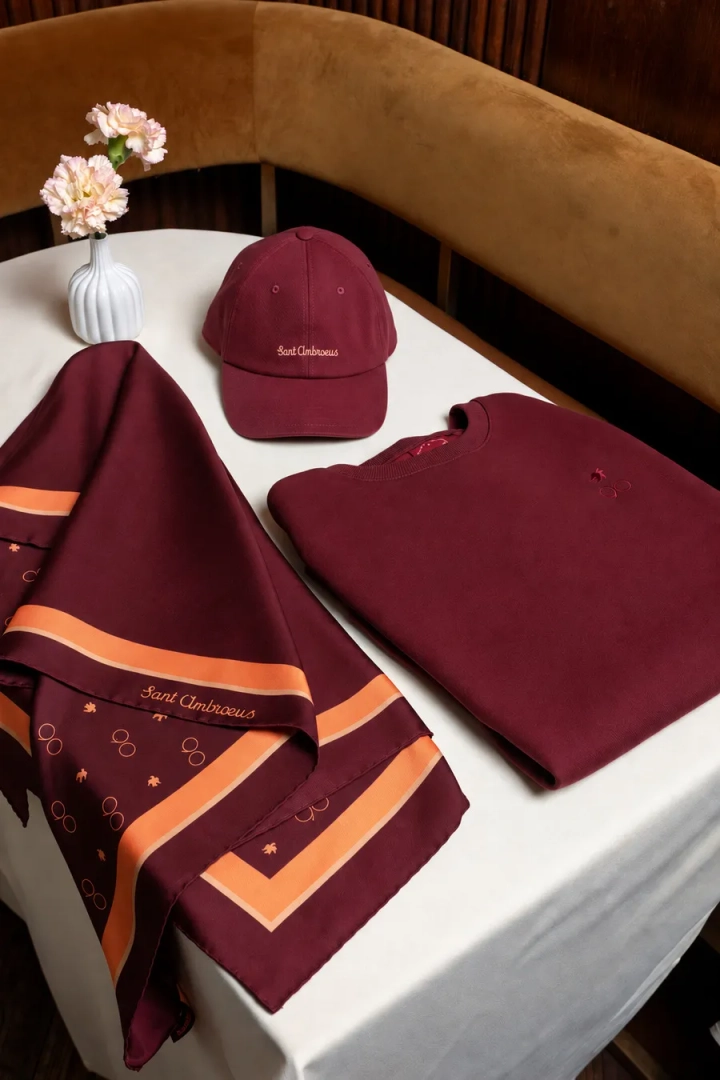
The anniversary extends beyond food through a capsule collection of three accessories, built around a burgundy tone recovered from the brand’s archive palette: a cap with embroidery and a ninetieth-anniversary motif inside, a cotton sweatshirt with a celebratory logo, and a double-face silk scarf, with an anniversary design on one side and a tone-on-tone surface on the other. The burgundy ties the Christmas packaging, the visual identity and the accessories together.