The St. Regis Rome and the return of the grand hotel as social space
The Venini Christmas tree is the latest expression of Arte di Vivere, the programme returning a St. Regis Rome built in 1894 for social life to the city through art and craft
Italians are said to be spoiled by beauty. They grow up inside it without noticing and absorb, without being taught, an art of living that is total: it runs through how they eat, dress, build and receive. The St. Regis Rome takes that phrase as a title. Each winter Arte di Vivere gathers that implicit art into a short season, and this year it begins with a tree.
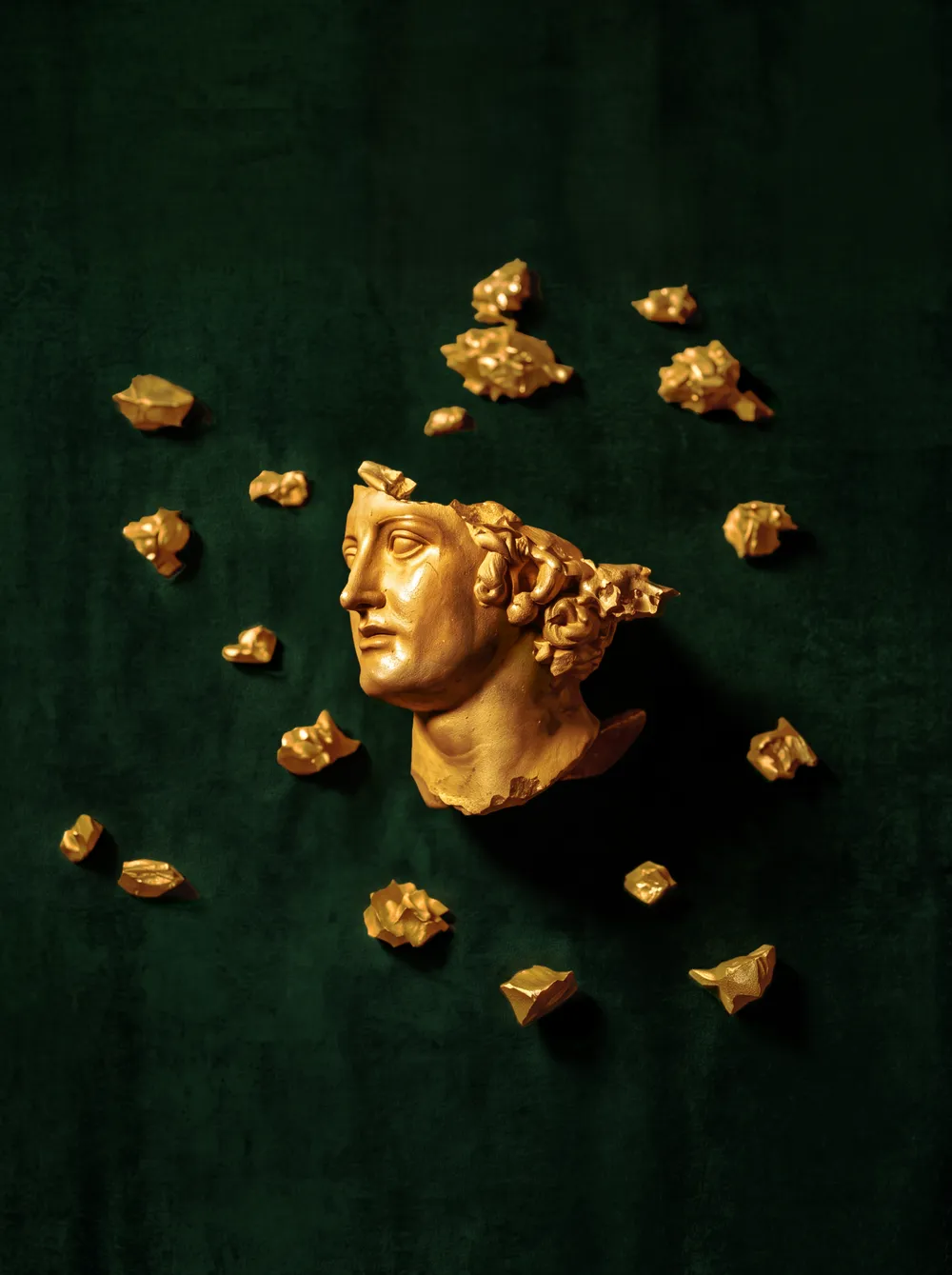
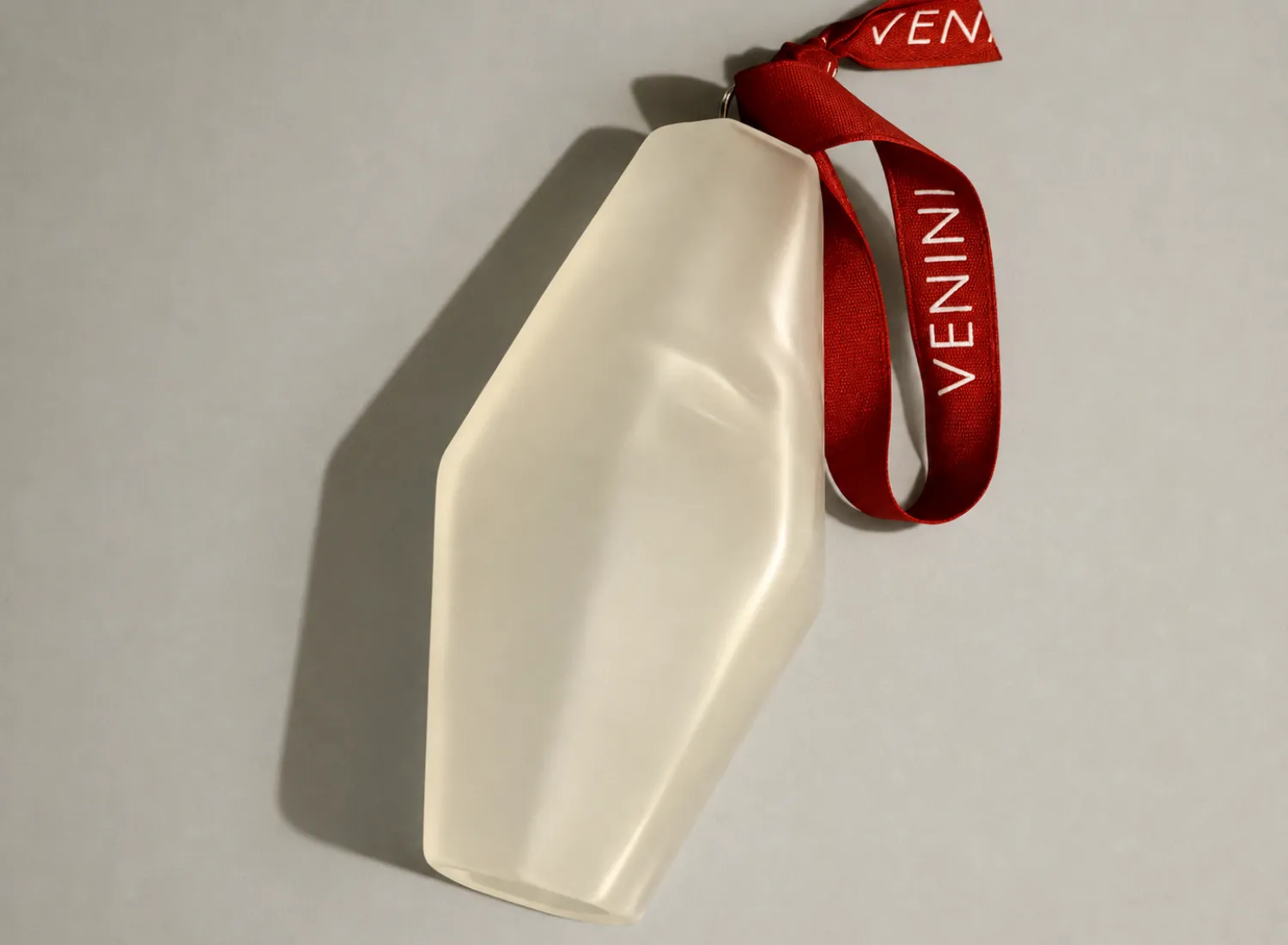
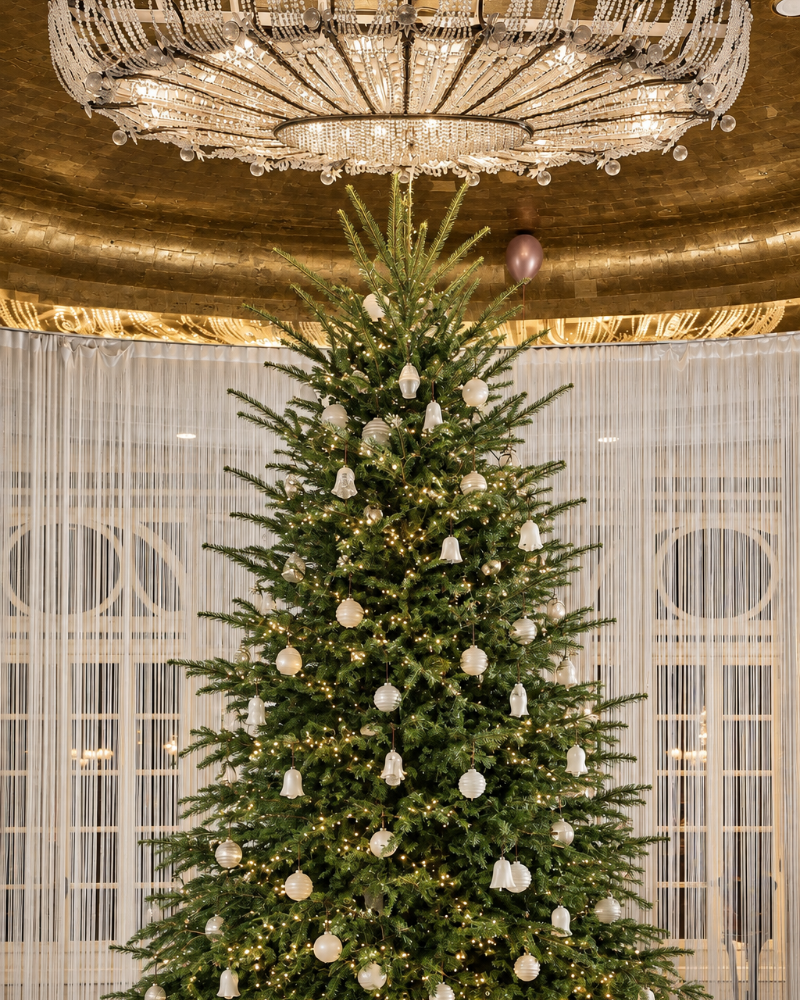
A fir 3 metres high stands at the centre of the lobby, hung with glass ornaments from the Wishes collection by Venini. The Murano glasshouse, founded in 1921, leads the fifth Arte di Vivere, the three-day programme held inside the hotel from 10 to 12 November 2026.
The tree was lit on 10 November, opening both the programme and the Christmas season. Wishes takes forms from the Venini catalogue and works them into ornaments in artistic glass, hand-blown and finished piece by piece. They enter a room that already carries Venetian glass in its structure — the historic chandeliers, and the 5-metre blown-glass element installed during the 2018 restoration. Since it opened, the building has used its rooms for more than a night’s sleep.
Arte di Vivere 2026: three days of art, music and craft at the Grand Hotel
Arte di Vivere began in 2022, promoted and cultivated by Maddalena Ciociola, director of marketing at The St. Regis Rome, with the steady leadership of general manager Giuseppe De Martino behind it, and built on the idea of using the hotel’s rooms as meeting points between disciplines. The programme runs concerts, conversations with artists, teaching activities and dinners, with part of the calendar open to people who are not staying in the building. The 2026 edition is given to a sense of Italianness, read through separate practices and skills: Galleria Continua contributes a workshop for schools and an art talk, the Cerea family of Da Vittorio works on the food and the pastry, the maître chocolatier Davide Comaschi leads a session on chocolate, and Biondi-Santi and Ciampini Roma complete the collaborations alongside the music.
The format answers the architecture. The reception rooms were conceived from the start for social life as much as for lodging, and the 2018 restoration returned that function to the ground floor, now a more open, crossable space for dining, meetings and cultural activities, while the rooms and suites above keep a layout designed for privacy. A house for the city below, discretion above — the split was built in from the start.
César Ritz, Giulio Podesti and the Grand Hotel of Rome in 1894
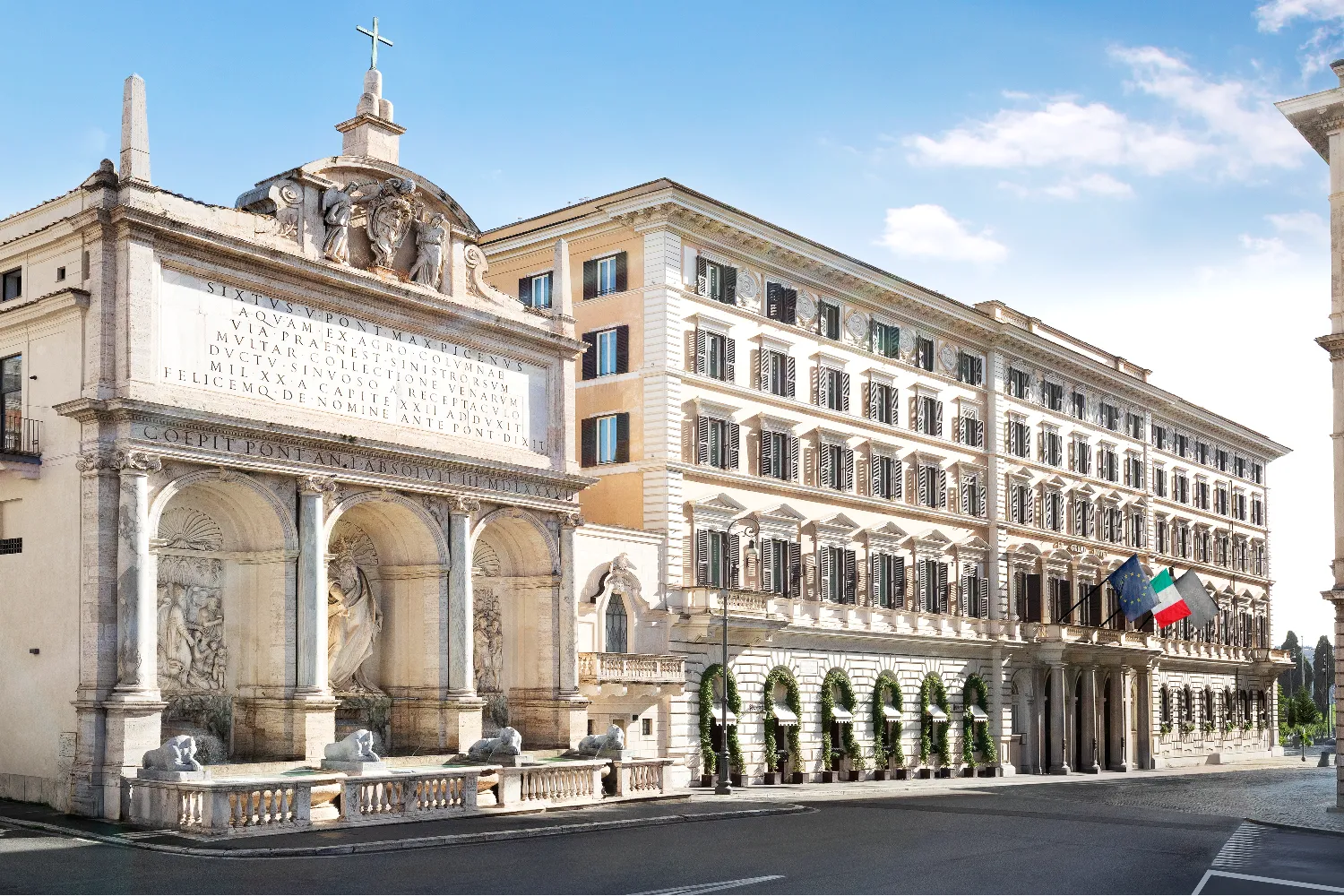
On 11 January 1894 César Ritz opened the Grand Hotel of Rome with a 16-course dinner prepared by Auguste Escoffier for 100 guests. The building, by the architect Giulio Podesti, stands on via Vittorio Emanuele Orlando, a short walk from piazza della Repubblica and the Baths of Diocletian. The address answered the transformation that followed the unification of Italy: Rome was consolidating its role as capital, and the area between Termini station, the Quirinale and the ministries of via XX Settembre was taking on administrative and diplomatic weight. The hotel was built for an international clientele of aristocrats, officials, institutional representatives, entrepreneurs and travellers.
Ritz brought services still rare in the city. The rooms had electric light, hot water and private bathrooms, past the shared-bathroom model still standard across much of Europe. The building was fitted with a lift, the 13th installed in Rome and the first in a hotel in the city; the original cabin survives and still runs on updated machinery, and at the time it reorganised the building itself, changing the relation between floors and the value of the upper storeys. Ritz’s work with Escoffier shaped the kitchen too — the organisation of the brigade, the sequence of preparations, the service standards — and the hotel became a structure combining temporary residence, restaurant and social life in one building. In 1999 it joined the St. Regis brand as its first European address, predating the American brand founded in New York by John Jacob Astor IV in 1904.
The piano nobile and the 300-square-metre Royal Suite
The proportions were never subdivided. Where many historic hotels were cut into more, smaller rooms, this one keeps wide corridors, high ceilings and large rooms, on the nineteenth-century idea of the piano nobile: the first floor carried taller, larger rooms than the levels above, which suited a period when voluminous dress needed space and proximity to the reception rooms counted. The ownership kept that organisation, leaving unused the option of drawing more rooms from the same surface — density given up to hold the character of the type.
The geometry gives the privacy: the distance between rooms, the width of the corridors and the chance to separate areas allow stays that need discretion. The Royal Suite is the clearest case, on the first floor, across roughly 300 square metres — a salon, a grand piano, a private dining room for 12, a kitchen and a bedroom with a marble bathroom. Part of the decoration keeps the original Podesti project, and interior doors connect it to further rooms, for delegations, families and guests who need autonomy. The suite is made to receive and to hold meetings, continuing the building’s original function. Royal families, diplomats and figures of international culture have stayed in it, and Gianni Agnelli kept a habitual relationship with the hotel and a private arrangement inside it.
Pierre-Yves Rochon and the 40-million-euro restoration of 2018
If the upper floors kept their nineteenth-century proportions, the 2018 restoration gave the ground floor back its social role. The work, entrusted to the studio of Pierre-Yves Rochon, with offices in Paris and Chicago, closed in November 2018 at a cost of 40 million euro, running over 3 years with the hotel open, across rooms, suites and common spaces. The main change was the ground floor. Before, the hall was dark, built on black marble and split across levels connected by stairs, with balconies hiding the bar and no sightline across the central space from the entrance; the ground floor worked as access to the rooms, with the social spaces kept apart.
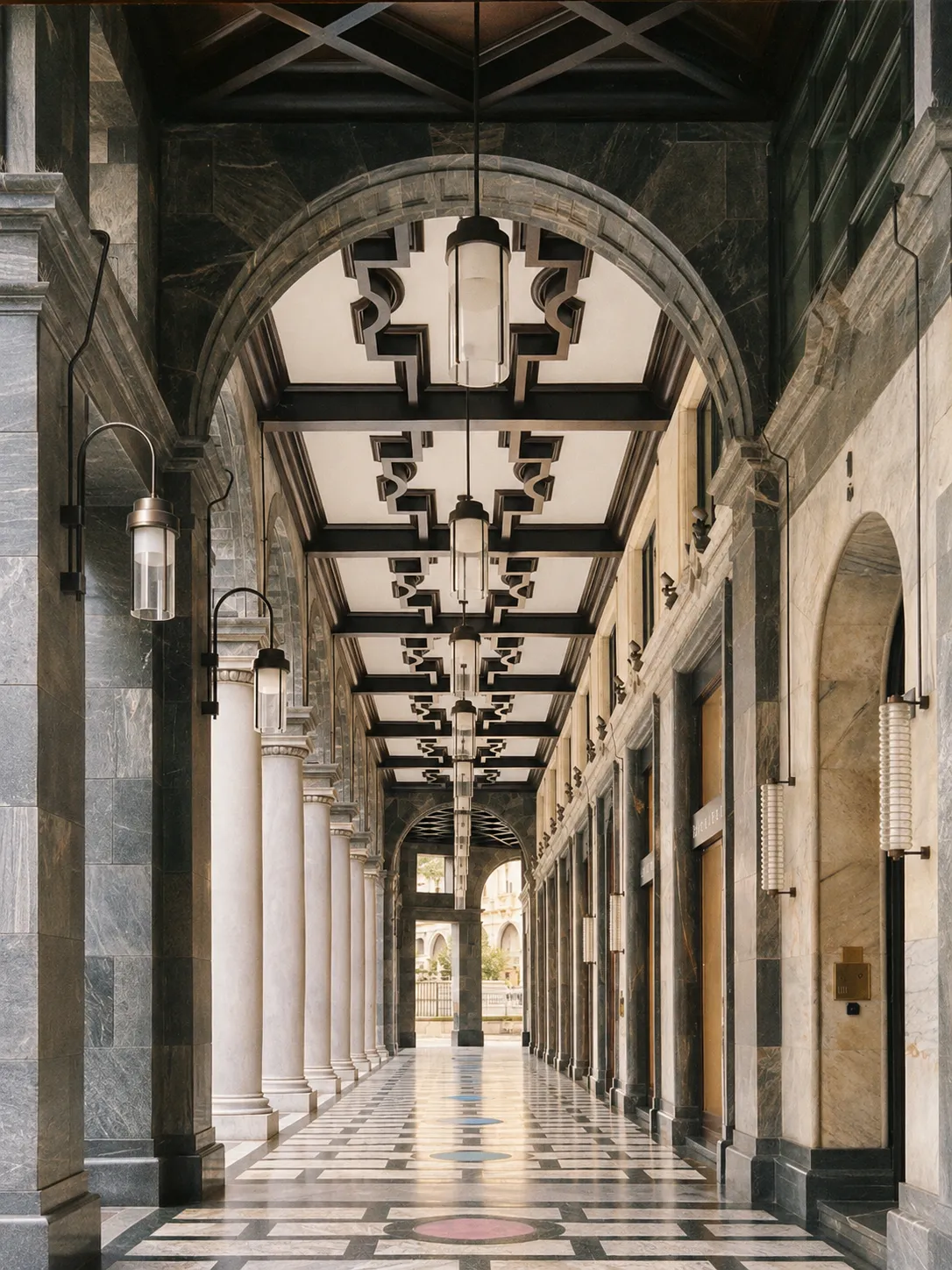
Rochon opened the sequence, working with the natural light falling from above and taking César Ritz’s original winter garden as the reference. Arches, fluted columns, decoration and monumental proportions stayed; lighter surfaces and new materials came in, travertine and bronze carrying the Roman architectural tradition, while fabrics, mirrors and contemporary finishes lift the nineteenth-century decorative weight. At the centre of the hall hangs a chandelier 5 metres high, blown in Murano glass with blue detailing — Venetian glass that returns, this winter, in the Venini tree a few metres away. Trees placed inside restore the winter-garden reference, and the hall now works as a covered square where circulation and seating coexist: Lumen Cocktails & Cuisine sits inside the lobby instead of behind a wall, so the ground floor holds hotel guests, people arriving for a meeting, restaurant customers and visitors there for the cultural programme at once. The programme now works in that opening.
In the rooms and suites Rochon works a different register, combining references to Empire, Regency and the period of Louis XV, on palettes of dusty blue and terracotta drawn from the light of the Roman sky and the surfaces of the historic buildings, with European fabrics, engraved mirrors, Venetian chandeliers and marble detailing. Specific conservation work went into the historic fabric: original decorations and colours were recovered, including where they differ from the new palette around them, and chandeliers, nineteenth-century clocks and ornamental motifs associated with César Ritz remain — floral references and solar symbols among them — with Belle Époque mirrors beside contemporary furniture.
The Ritz Ballroom by Giulio Podesti and the frescoes of Mario Spinetti
Where the lobby was reorganised, one room kept its 1894 scheme intact. The Ritz Ballroom, opened in 1894 and considered the first public ballroom in Rome, was designed by Giulio Podesti as an example of late nineteenth-century decorative culture, where architecture, painting and applied arts were integrated into the reception rooms. The decoration is by the Roman painter Mario Spinetti, tied to the Pre-Raphaelite tradition: the frescoes run to 8 scenes on rural life, the seasons and classical mythology, and the ceiling carries gilded ribs in a lozenge grid, with garlands, floral motifs and trompe-l’œil openings that read as glimpses of sky beyond the structure. The niche built for the orchestra is still in place, with a historic Murano glass chandelier. The painted surfaces went through a restoration followed by the authorities responsible for historic and artistic heritage, 6 months of work that removed later repainting and recovered part of the original colour. The room is still used for receptions, events and film production — the Paolo Gucci fashion show in House of Gucci was shot inside it — and through the twentieth century the hotel hosted cinema, politics and fashion, with Maria Callas, Fred Astaire, Elizabeth Taylor, Richard Burton and the Agnelli family among those who used its rooms.
Galleria Continua at The St. Regis Rome, from Loris Cecchini to Carlos Garaicoa
Into these historic rooms the programme also brings contemporary art. The hotel has worked with Galleria Continua since 2018 – the gallery founded in 1990 in San Gimignano by Mario Cristiani, Lorenzo Fiaschi and Maurizio Rigillo. The first intervention brought installations by Loris Cecchini, presented as the restoration was completed, followed by Ai Weiwei, Leandro Erlich, Michelangelo Pistoletto, Pascale Marthine Tayou and Sun Yuan & Peng Yu. In January 2020 the gallery opened a permanent space inside the hotel, in the Sala Diocleziano, with a programme of its own alongside the installations in the common rooms — a gallery inside a hotel reaches people who came for other reasons. The 2026 Roman programme ran Il cielo dentro by Giovanni Ozzola, between March and May, and I giardini di Piranesi by Carlos Garaicoa, from 15 May to 8 August: Ozzola works on space, landscape and light, Garaicoa on the transformation of the city and the dialogue between nature and architecture, shown in a building layered with interventions, materials and architectural languages. For Arte di Vivere 2026 the gallery contributes DO YOU DADA?, a workshop for secondary-school students on 11 November, with an Art Talk with Maite Carpio Bulgari the same day.
Lumen, the Credenza di Augusto 1894 and the kitchen of Francesco Donatelli
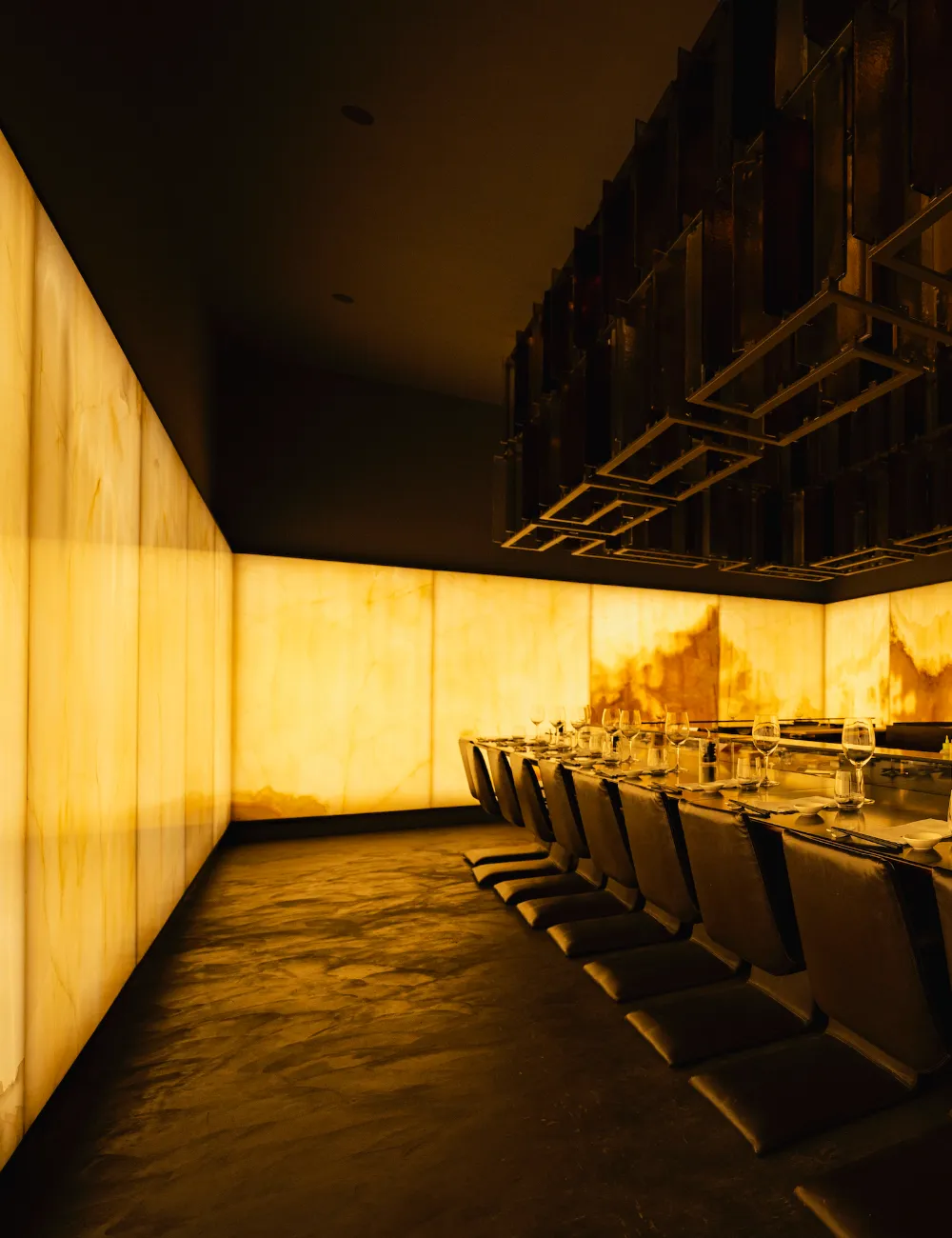
In the kitchen the reference goes back to Escoffier, whose 1894 banquet set the organisation of the brigade and a model of restaurant service for the large hotels. It is carried today by the Credenza di Augusto 1894, a room given to tasting and private appointments, which hosts the Chocolate Experience led by Davide Comaschi on 12 November. The main room remains Lumen Cocktails & Cuisine, inside the lobby redesigned by Rochon, where the kitchen coordinated by executive chef Francesco Donatelli runs Italian tradition alongside contemporary preparations across the day, from breakfast to afternoon tea, aperitivo and dinner, with live music through the programme and, every evening at seven, a bottle of champagne opened by sabrage. Lumen also hosts the Lumen Talks, on art, cinema, fashion and hospitality culture.
The main collaboration of this edition is with Da Vittorio, the restaurant of the Cerea family, founded in Bergamo in 1966 and now at Brusaporto. Its pastry enters the Tea Ritual of The St. Regis Rome for the first time, across all three afternoons, with a dinner on 12 November given to the Paccheri Da Vittorio. The programme also holds lunches of Roman dishes by Francesco Donatelli, aperitivi with Ciampini Roma, and the dinner of 10 November with Biondi-Santi, with a swing orchestra, while 11 November goes to a St. Regis Night Orchestra.
Each appointment uses the rooms without altering them: Lumen, the lobby, the historic halls and the exhibition spaces take on temporary functions while the architecture stays as it is. The holiday season, opened on 10 November with the Venini tree, continues at Lumen with music and seasonal menus, a Christmas Eve dinner and Christmas brunches with a space for children, and on 31 December the gala dinner moves into the Ritz Ballroom — back into the 1894 room with which the building’s social life began.
The St. Regis Rome – Festive Season 2026 Calendar
Weekly Events at Lumen
Tuesdays & Thursdays | Lumen Society
Signature aperitivo accompanied by DJ sets.
Wednesdays & Fridays | Live Music Dinner
Evening dining accompanied by live music.
Special Events
November 29 | Christmas Market & Sunday Brunch
A Christmas market accompanied by the hotel’s Sunday brunch.
December 9 & 19 | Orchestral Dinner Shows
Two evenings combining dining with a live orchestra.
December 10 | Lumen Talk
The hotel’s series of conversations and cultural encounters.
December 15 | Burraco Night
An evening dedicated to the traditional Italian card game.
Christmas & New Year’s Eve
December 24 & 25 | Christmas Dining
Festive dinners for Christmas Eve and Christmas Day.
December 31 | New Year’s Eve Gala Dinner
A gala dinner in the historic Ritz Ballroom, accompanied by a live orchestra.