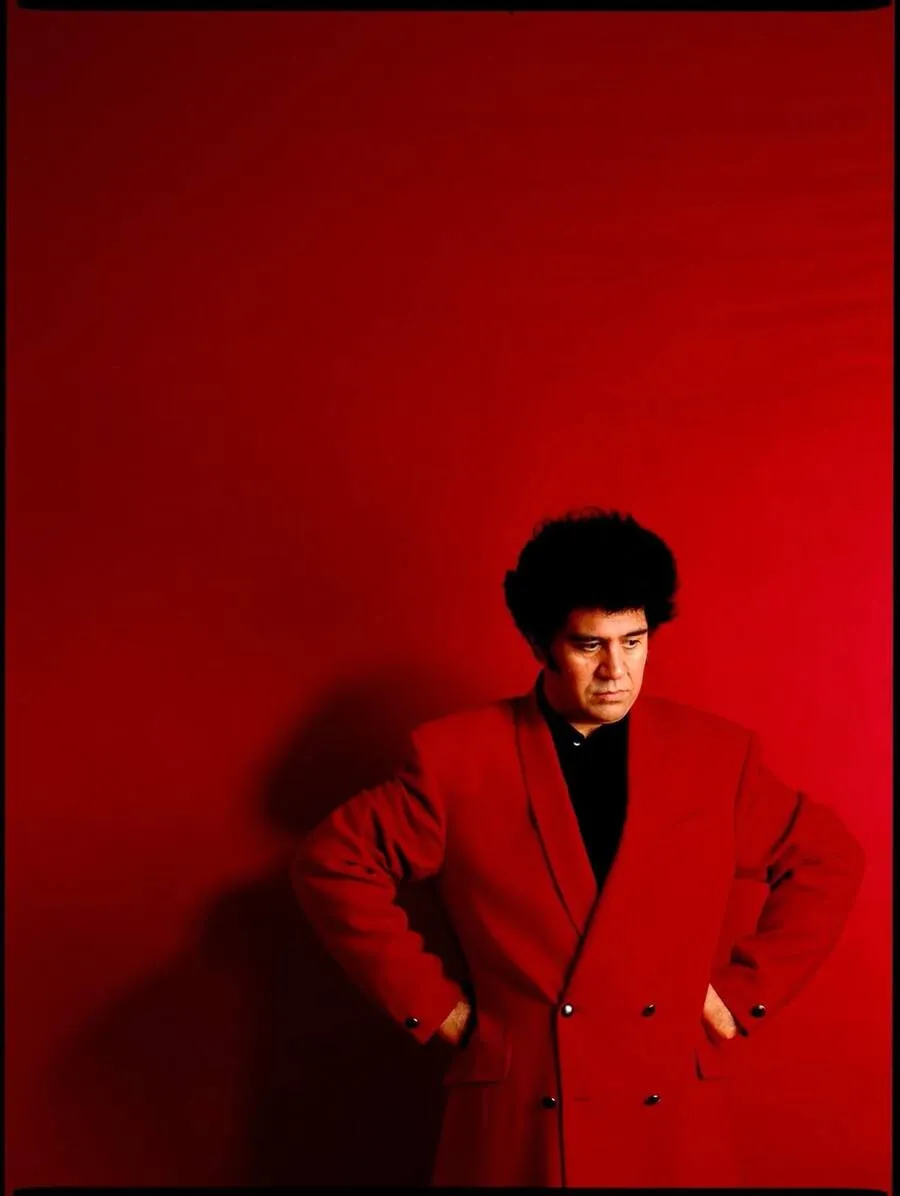
Pedro Almodóvar has spent forty years refusing to let stories end
From Madrid’s Movida to his most confessional films, the director keeps circling the same obsession: mothers, desire and the ending he still won’t accept
Pedro Almodóvar and the obsession with endings: from Dolor y gloria to Bitter Christmas
Pedro Almodóvar has spent four decades circling the same set of preoccupations: mothers, desire, the body, and the impossibility of a story ending the way its characters want it to. Born in 1949 in Calzada de Calatrava, he grew up in a household that imagined a conventional life for him — a job at a bank, a place in the local order of things. He found the scrutiny of a small town unbearable and left for Madrid, where he worked for Telefónica and became part of the Movida madrileña, the cultural explosion that followed Franco’s death. His early films carried the loose, anarchic energy of that period; commercial success arrived in 1988 with Women on the Verge of a Nervous Breakdown.
Over a forty-six-year career, Almodóvar has collected two Academy Awards, two Golden Globes, two Emmy Awards, and two Golden Lions at the Venice Film Festival, one of them for lifetime achievement. Hollywood offered him the chance to direct both Sister Act and Brokeback Mountain; he turned both down, choosing instead to keep making films on his own terms, in his own language, with his own repertory of actors and obsessions.
His filmography reads as a long inventory of the same handful of themes returned to from different angles. Motherhood runs through All About My Mother, High Heels, and Talk to Her. The body, sex, and desire in all their instability drive The Skin I Live In, Tie Me Up! Tie Me Down!, Live Flesh, Law of Desire, and Matador. Transgression and the search for freedom shape Pepi, Luci, Bom and Other Girls Like Mom, Labyrinth of Passion, and What Have I Done to Deserve This?. Later, the confessional turn — a director looking directly at his own life and what came before it — produces Bad Education, Volver, Pain and Glory, and now Bitter Christmas, where cinema becomes, more explicitly than ever, a tool used against death.
Almodóvar has described the early years in Madrid as a period of constant celebration, though he was, by his own account, always the first to leave a party — he needed to wake early and write. Writing, for him, has never required the right conditions; it happens anywhere, constantly. What has shifted, especially in the last decade, is the register. In The Room Next Door, in Parallel Mothers, in Pain and Glory, endings stop behaving like resolutions and start behaving like the thing that cannot be avoided, waiting behind a red curtain, ready to take everything away. Almodóvar no longer performs the illusion that he is still an illusionist. He knows exactly where the ending is standing.

Bitter Christmas: stolen stories, absent mothers, and a director in crisis
Almodóvar’s latest film, Bitter Christmas, is a story built from other stories — imperfect, broken apart, picked up and abandoned, full of missteps, love, and neurosis. None of them know how to end, so the film swerves and starts again, treating every conclusion as a new beginning. All the familiar elements return: the girls from the old gang, the mothers, the daughters, the strippers, the alcohol, the broken embraces, that specific shade of red so recognizable it has earned its own Pantone, the way Valentino’s has.
At the center is a director’s alter ego carrying the same vices, the same faults, the same Prada polos, the same glasses, the same white, unkempt hair Almodóvar himself wears. In Pain and Glory that role belonged to Antonio Banderas; here it belongs to Leonardo Sbaraglia, playing Raúl.
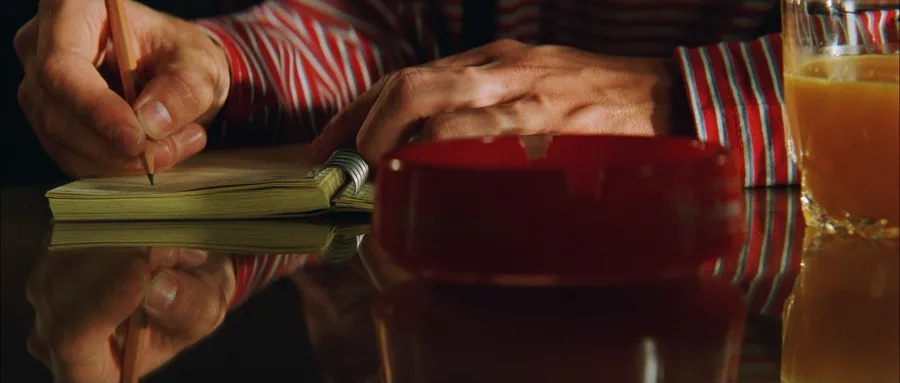
The frame holding the film together is the oldest one in cinema, going back to Fellini: a director wants to make a film and cannot. He writes and rewrites, pulling from daily life without a clear plot or ending, in the spirit Chekhov worked in. He scavenges other people’s lives to save them, and to save himself. The film Raúl wants to make follows Elsa, herself a cult director — meaning the author of two films that failed commercially, who moved into advertising and now navigates a beautiful, devoted boyfriend she may not actually love, a friend who lost a child, another friend whose marriage is falling apart, and her own need to write something new out of the lives of the people she loves most.
Bitter Christmas works like a Russian doll, story folded inside story, each one searching for a better ending that never arrives, and when it does arrive, is never the one anyone wanted. Every character in it is entangled with a director absorbed in himself, fragile, self-interested, capable of love only up to a point, still fighting a grief that never resolved.
Elsa’s mother has died, and Elsa cannot accept it — the same refusal that defines Raúl, and Almodóvar himself. Almodóvar’s own mother died in 1999. Shortly before she died, she reportedly asked her son not to tie her feet together, as local tradition required; she wanted to be left free. She is the same mother Almodóvar returned to again and again on screen, and the same woman who, watching his films, would scold him for exposing his family, his life, his friends. Artists, whether through grace or bad luck, never listen.
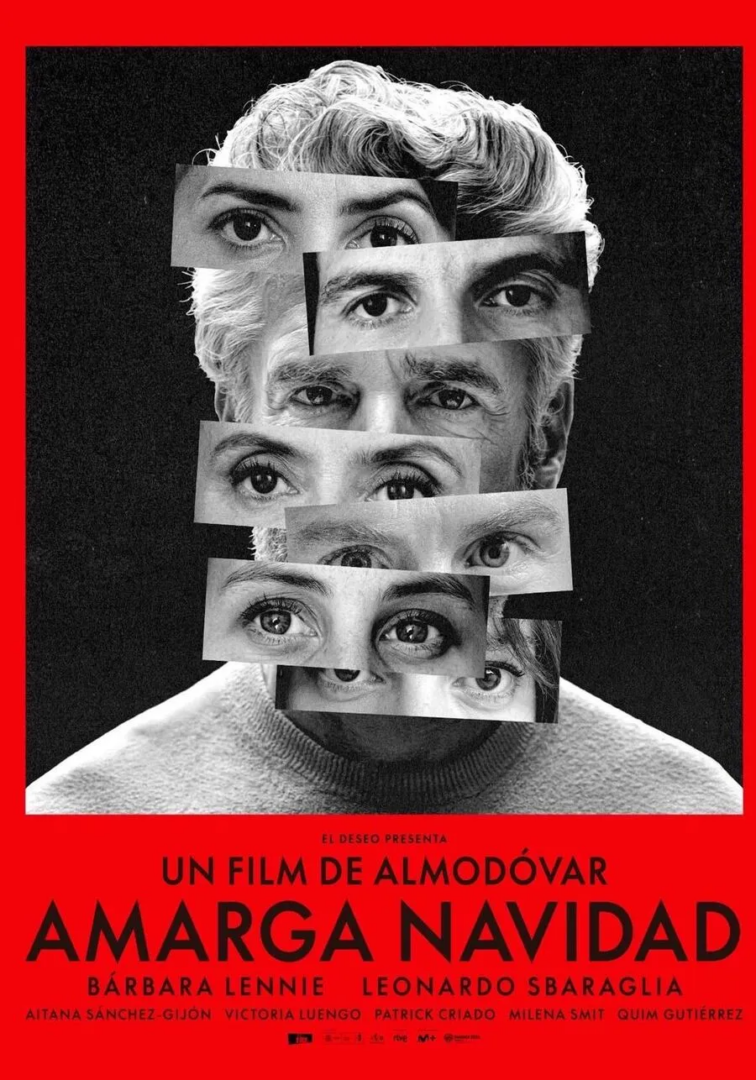
Cinema against death: why Almodóvar keeps rewriting the ending
Elsa — who is Raúl, who is Pedro — wants to write a film that rewrites her mother’s death, hands her friend a better ending than the one her marriage seems headed for, and offers a sliver of hope to the friend sunk into depression after losing her son. She writes convinced she alone can decide the right conclusion for each of these stories.
But Bitter Christmas is built as a hall of mirrors. Just as Elsa is reminded that endings arrive on their own terms, Raúl’s assistant tells him plainly that he cannot save anyone through his films, and that his best work is already behind him. Raúl, and by extension Pedro, refuses to accept it. Cinema functions here as an obsession, and obsession consumes everything it touches — it changes how a person looks and holds themselves, steals the breath, speeds the heartbeat. It confuses hatred with love, sets its own timing, and answers to no conditions. There is still time to say goodbye. For now, the writing continues.
The old gang has aged: Almodóvar reckons with time
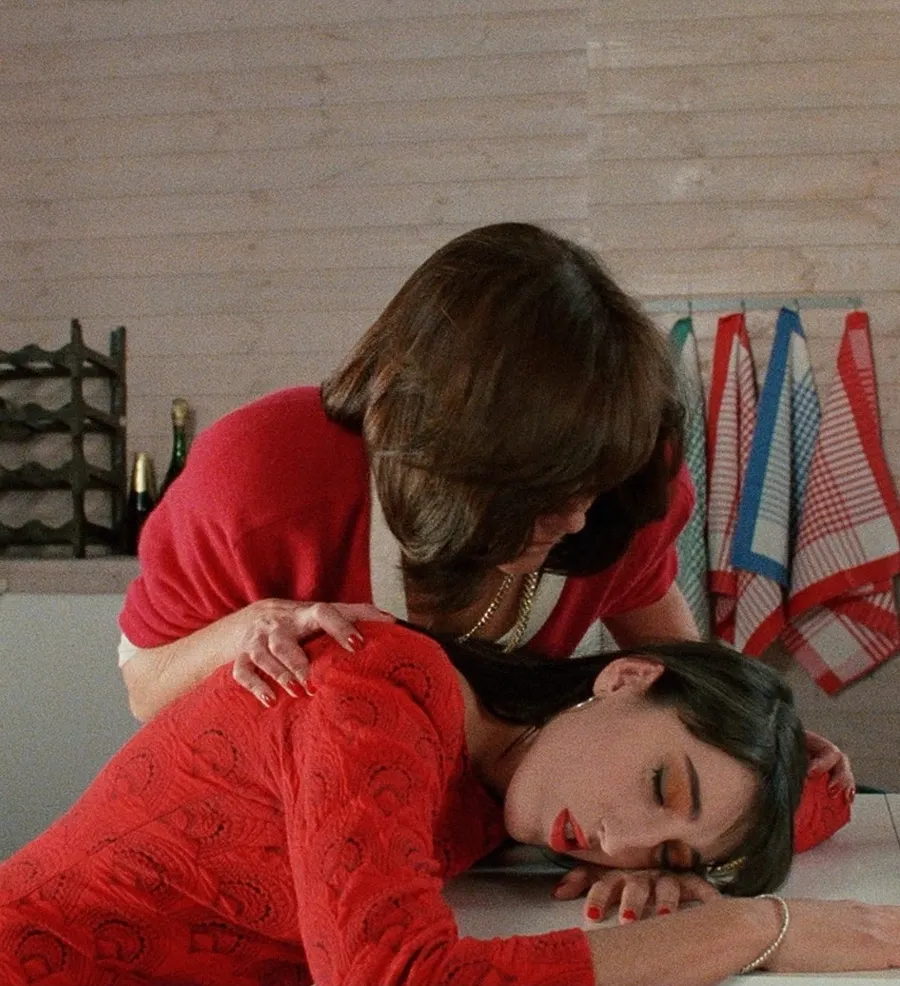
Inside Almodóvar lives a child still eager to stay out until morning, alongside a man — father figure, brother, uncle, grandfather, former lover — who watches that child with tenderness and a clear-eyed lack of illusion. Bitter Christmas puts the past into perspective, takes stock of everything that has happened, and counts what remains. The old gang has aged; life has tested all of them, and they remain the only ones capable of saving themselves, and each other. Sex has largely stopped happening; visits to the brothel are for looking only, and the strippers have become firefighters. Everyone still gets worked up over nothing. People still die of love. And the red keeps showing up: in Pepa’s gazpacho in Women on the Verge of a Nervous Breakdown, in the tracksuit pants of Bad Education, in Rebeca’s glasses in High Heels — red telephones, red shirts, red curtains, red nail polish, red rope. The color of excess, of life, of passion, of rage, of force, of sex.
That single touch of red is enough to remind the audience that nothing stops an ending, that aging is unpleasant, that artists behave selfishly and rudely, that there are headaches that feel like storms, friends who need saving, loves that need forgetting, deaths that need surviving. All of it is true, and the film seems, at several points, to be over. It never is. Almodóvar needs only a flash of red — a kiss, an embrace, a shot of mezcal — to say: not yet, not today. The ending can wait. Keep dancing.