A Modigliani at $100 million and a box of flashlights on Bantayan
From the Grand Palais, where 211 galleries showed Warhol, Duchamp and Holzer, to the island where the fellowship funded by one of the fair’s partners buys diving lamps
Art Basel Paris was due to run until Sunday 25 October. At seven on Friday evening the fair closed its doors, in view of the demonstrations planned for the weekend, and the 2026 edition ended two days ahead of schedule, after several days that had gathered galleries, artists, collectors and institutions at the Grand Palais.
The fifth edition counted 211 exhibitors from 41 countries and territories: 183 in the Galeries sector, 16 with solo booths in Emergence, 12 with projects in Premise, 32 of them at the fair for the first time and 64 based in France. It was the first edition directed by Karim Crippa, previously head of the fair’s communications, and the first in which the Conversations programme moved into the Grand Palais Auditorium. What the fair produced lay in the individual works and in the connections that emerged between generations, materials and visual languages.
Warhol’s Vesuvius and Duchamp’s readymades at Larkin Erdmann and Gagosian
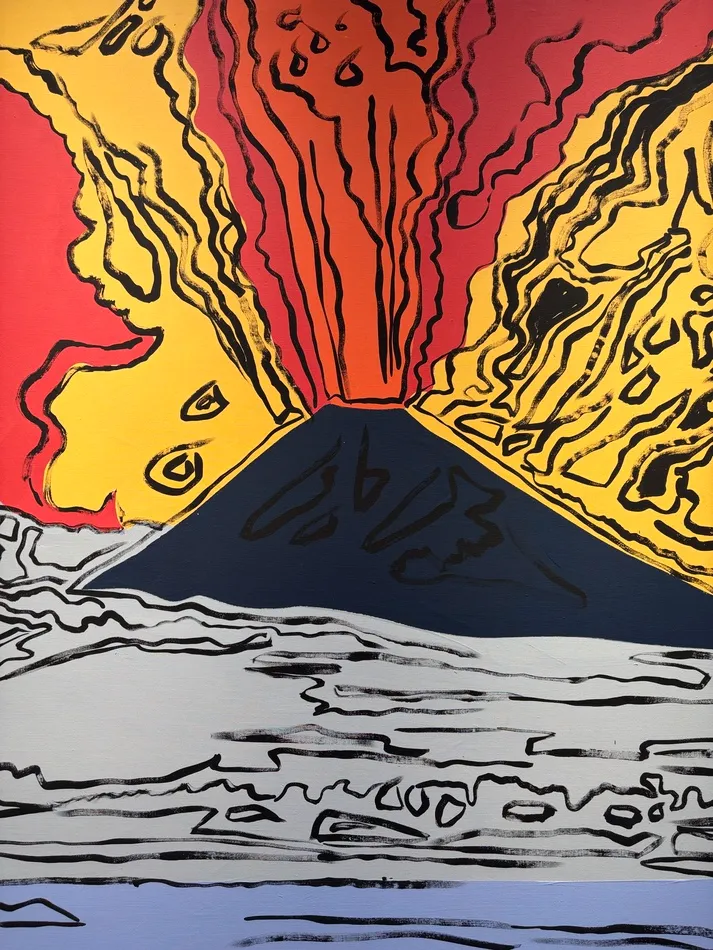
Red ran through several stands, a week after the demonstrations that had crossed Paris and other European cities. At Larkin Erdmann, at its first Art Basel Paris, Andy Warhol’s Vesuvius held a volcanic eruption in an incandescent palette, between catastrophe and representation.
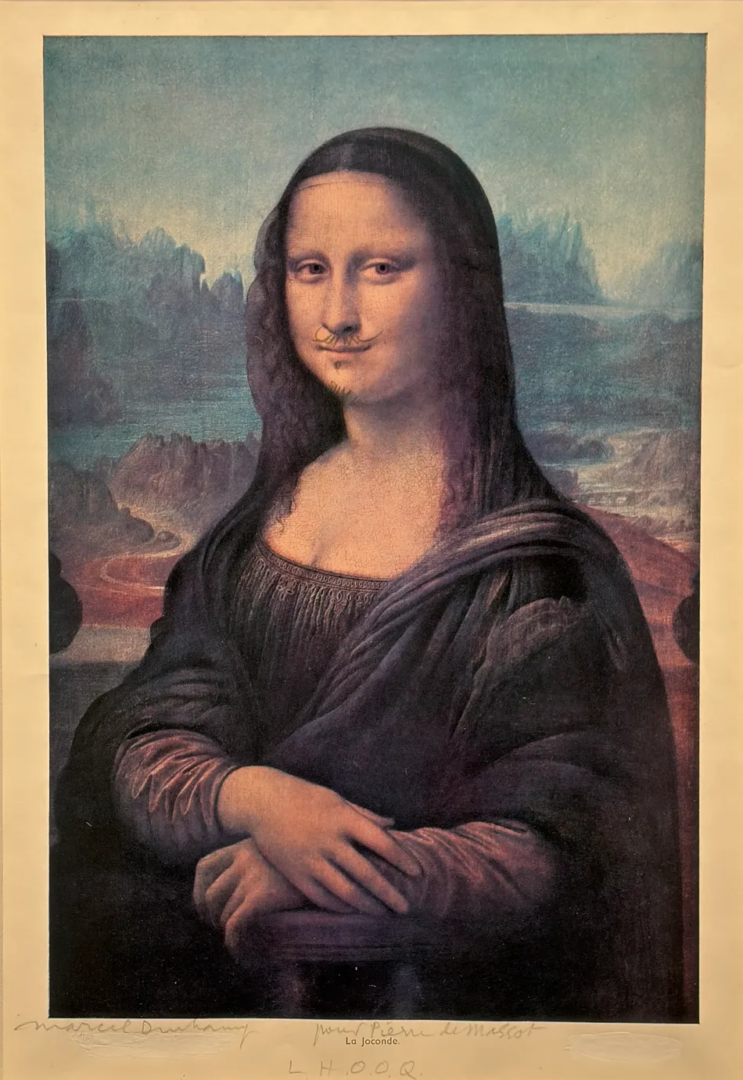
The same gallery showed Marcel Duchamp’s L.H.O.O.Q., the intervention on a reproduction of the Mona Lisa that took on the authority of one of the most recognisable images in Western art. At Gagosian, Fountain and Roue de bicyclette, both in their 1964 editions, returned to two of Duchamp’s readymades, where an ordinary object becomes a work and the conventions that define artistic value and authorship come up for question.
Dubuffet at Nahmad Contemporary and Modigliani at more than $100 million
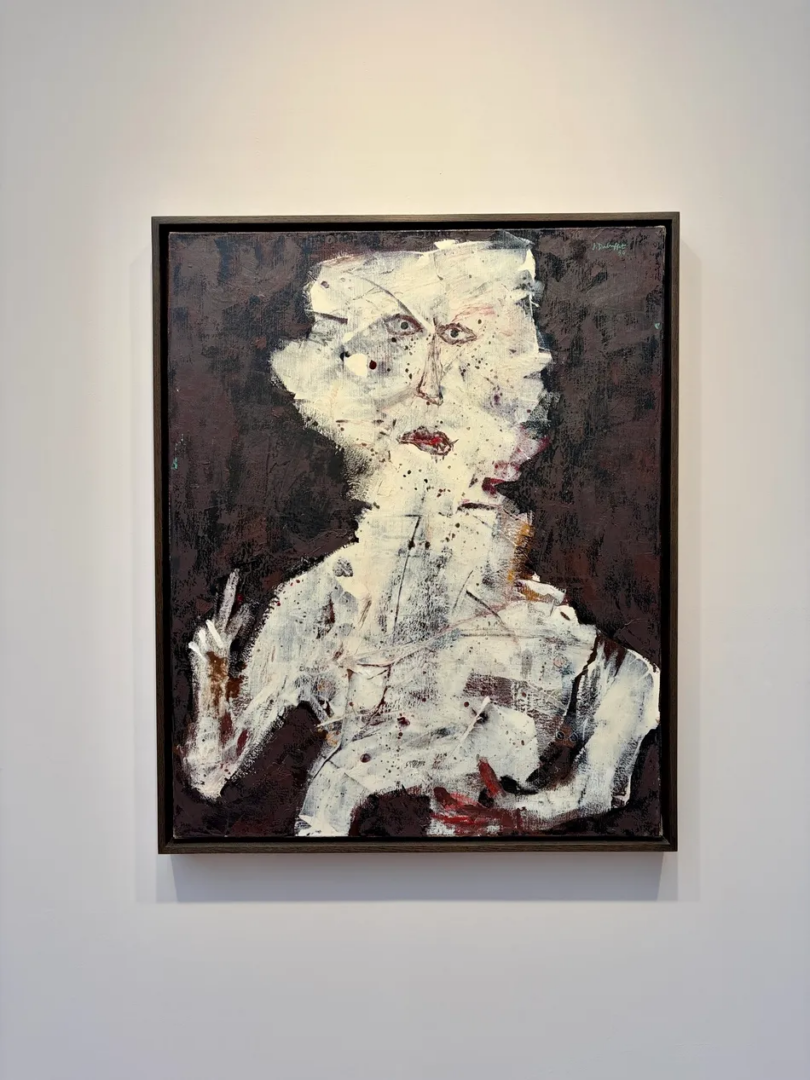
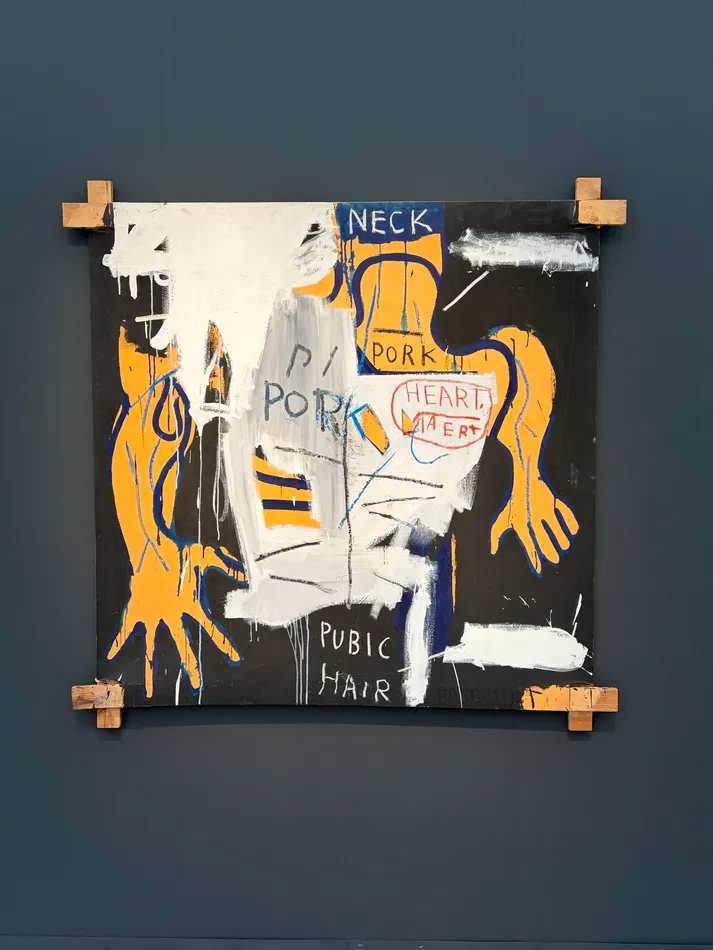
Jean-Michel Basquiat’s Pubic Hair, at Van de Weghe, brought together the body, language and the raw mark-making that runs through his work. Jean Dubuffet recurred across the fair, and Nahmad Contemporary devoted its stand to thirteen paintings made between 1944 and 1980, which trace his sustained interest in the human figure and in the expressive possibilities of unconventional forms and surfaces.
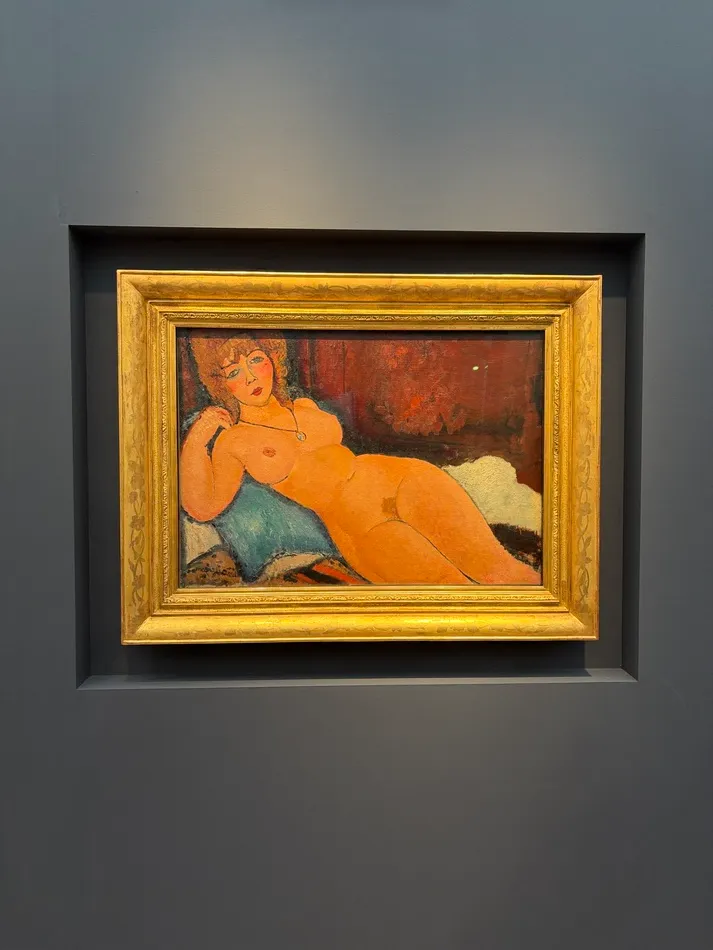
At Pace Di Donna Schrader Galleries, Amedeo Modigliani’s Nu étendu (Lolotte), from 1917, was offered at more than $100 million. The painting carries the status certain works acquire over time, an intimate image turned into a cultural reference, and its presence put rarity, desire and collecting in the same room as the work.
Jenny Holzer and On Kawara, language and dates on the stands
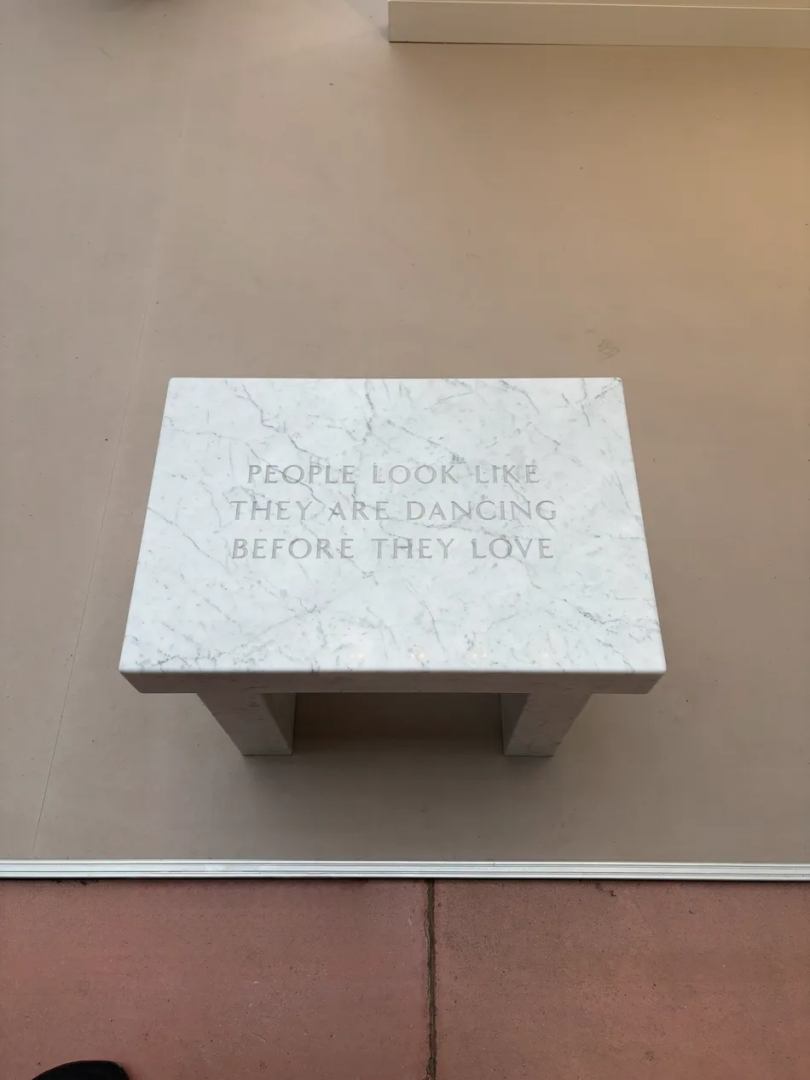
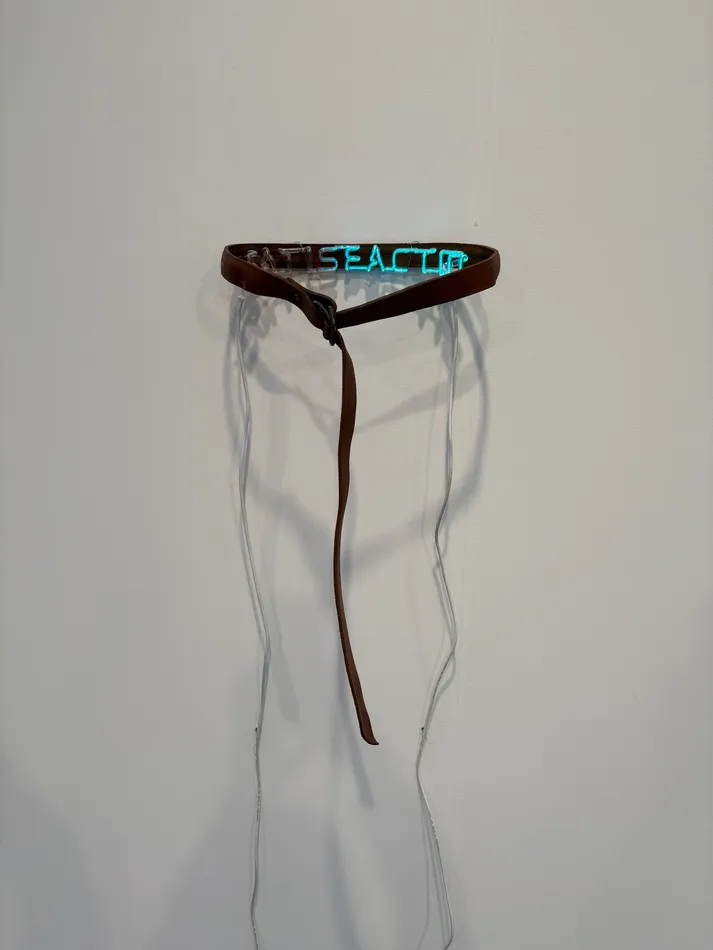
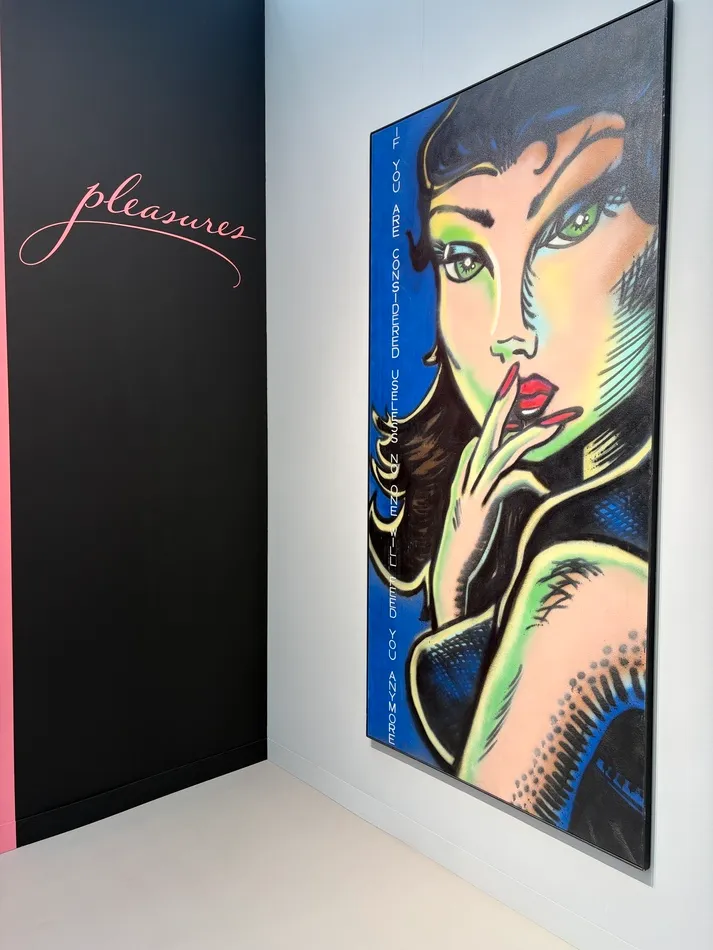
At Hauser & Wirth, Jenny Holzer’s Providing (2024), from the Redaction Paintings series, brought her work on language, power and censorship into the fair: passages of text are obscured, and what remains visible is built into a surface, so that withholding information becomes the visual event. Her work appeared at Sprüth Magers too, in dialogue with Sylvie Fleury, while her exhibition J’ai vu ran at the Musée d’Orsay.
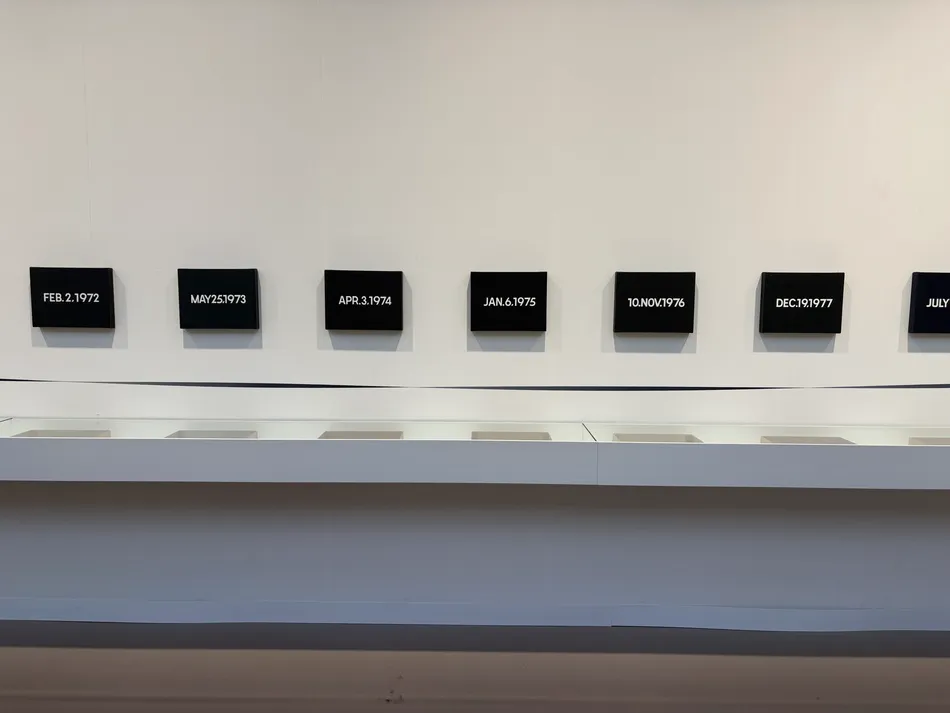
Zander Galerie gave its stand to On Kawara. The date paintings, with their restrained format and precise inscriptions, ask for a different kind of attention from the immediacy of Warhol or Basquiat: they turn the passing of time into the subject, and give an ordinary day the weight of a record.
Art Basel Paris Encore and the Public Program across nine sites
The early closure moved the fair onto Art Basel Paris Encore, a digital platform where visitors could continue to look at available works and contact galleries. It keeps a conversation open after the doors close, and it leaves out what happens in front of an object, its material presence and the chance encounter.
Outside the Grand Palais, the Public Program occupied nine sites across the city: Tracey Emin’s bronze sculptures on the Parvis des Droits de l’Homme, Robert Indiana’s LOVE Wall in Place Clemenceau, and works by Niki de Saint Phalle, Simone Fattal, Alicja Kwade and Marcello Maloberti along Avenue Winston Churchill.
Zegna, Official Partner, and the commissions that stay where they were made
Maloberti also appears in ALL’APERTO, the programme of permanent commissions that Fondazione Zegna has placed in and around Oasi Zegna since 2000, curated by Andrea Zegna and Barbara Casavecchia, with Daniel Buren, Dan Graham, Alberto Garutti, Stefano Arienti, Liliana Moro and Roman Signer among its artists. Zegna, an Official Partner of the fair since 2025 across Basel, Paris, Miami Beach, Hong Kong and Doha, commissions works instead of buying them: a purchased piece can be moved, lent or sold, while a work made for one place stays inside the conditions it was made for.
The clearest of those is Roman Signer’s Horloge, from 2012, in Via Roma in Trivero, in front of the main entrance of Lanificio Zegna, where Ermenegildo Zegna founded the mill in 1910. It is a four-metre station clock with an enamelled dial and no hands, and every quarter of an hour it releases a puff of high-pressure steam, taking its medium from the factory roof it faces and its schedule from the divisions of a working day.
The same partnership funds the Visible Situated Fellowship, run with Cittadellarte – Fondazione Pistoletto, which in 2026 went to GOODLand, the platform founded in 2020 by the Dutch-Filipino video artist Martha Atienza on Bantayan Island, in the Visayas. The money goes into rechargeable flashlight systems for fishers who dive on air pumped from the surface through a hose, and into coastal and underwater clean-ups. Six days in the Grand Palais, and a line of equipment reaching an island on the other side of the world.
Geste de Consolation, Alice Diop at the Palais d’Iéna with Miu Miu
At the Palais d’Iéna, Geste de Consolation, conceived by the filmmaker Alice Diop and presented by Miu Miu, Official Partner of the Public Program, brought together film, photography, sculpture, poetry, dance, music and performance around memory and consolation, in the territory where contemporary art, fashion and cinema now overlap.
A Paris art week works this way, in the museums, the historic buildings, the independent spaces and the streets between them, and the fair that shut early is one part of a city that was preparing to march. An art fair runs on public space, movement and a degree of security, and none of those can be bought.
Baselitz, de Kooning, Mehretu: the sales after the closure
Despite the early closure, the final sales reports released by participating galleries pointed to a positive edition, with significant transactions across the postwar and contemporary markets. At Hauser & Wirth, Georg Baselitz’s Der Hirte (1965) sold for around $10 million. Gagosian reported the sale of a 1987 Willem de Kooning painting for an eight-figure sum, while White Cube sold two paintings by Julie Mehretu for $7.85 million each. The figures reflect activity across different generations of artists, from postwar European and American painting to contemporary abstraction. The fair left a clear impression: the market’s momentum continued, while the city’s wider cultural life extended far beyond the Grand Palais.
A Paris art week works this way, in the museums, the historic buildings, the independent spaces and the streets between them, and the fair that shut early is one part of a city that was preparing to march. An art fair runs on public space, movement and a degree of security, and none of those can be bought.
Carolina Santi