Wideyes Sound Garden at La Cutura: a night of electronic music built on pietra leccese
Cristina Lazic, the Curly Brothers, and Gianni Sabato play a glasshouse courtyard in Giuggianello, where a DJ console cut from quarry offcuts stands on the stone that carried Lecce Baroque
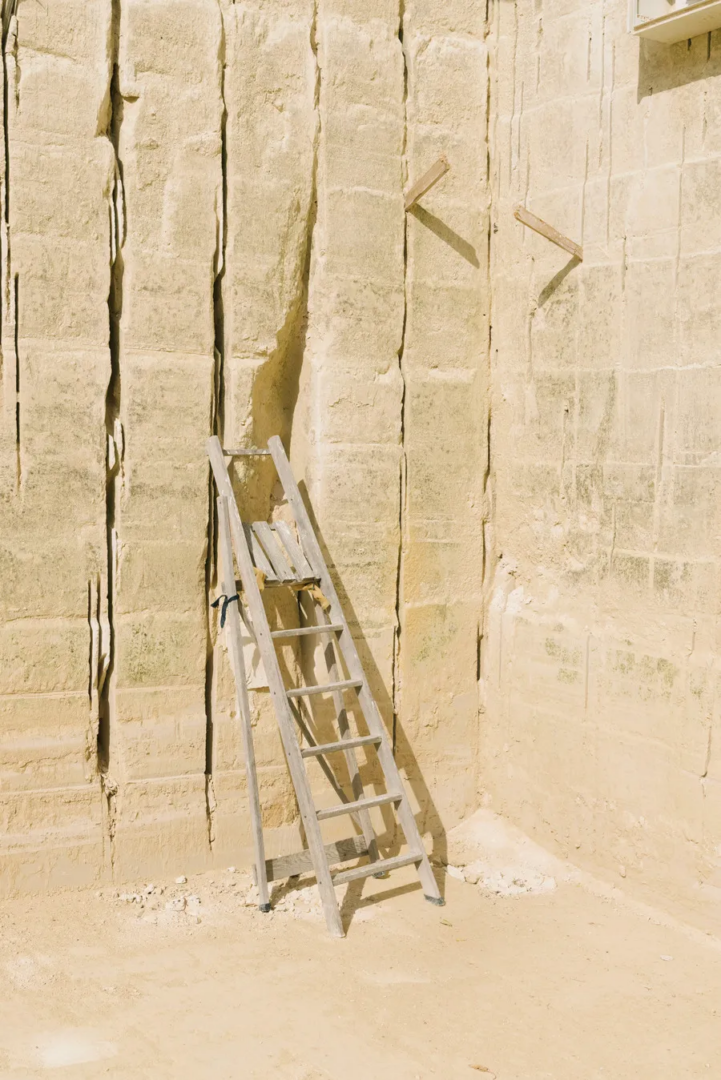
The stage is a stone courtyard at the center of a tropical greenhouse: arched openings, dry walls, the limestone the Salento has been cutting for centuries, formed under a Miocene sea — gold under daylight, red under stage light. On 30 July 2026, WIDEYES brings Sound Garden to the Giardino Botanico La Cutura, in Giuggianello, between Maglie and Otranto.
The line-up pairs Cristina Lazic, DJ and producer from the European house circuit, with the Curly Brothers, a Salento duo working between groove house and deep textures, and Gianni Sabato, an Apulian selector who mixes contemporary electronics with a Mediterranean sensibility. DJ sets run alongside lighting interventions and installations.
How WIDEYES builds an edition: from the cloisters of Santa Maria alla Fontana to the Salento limestone
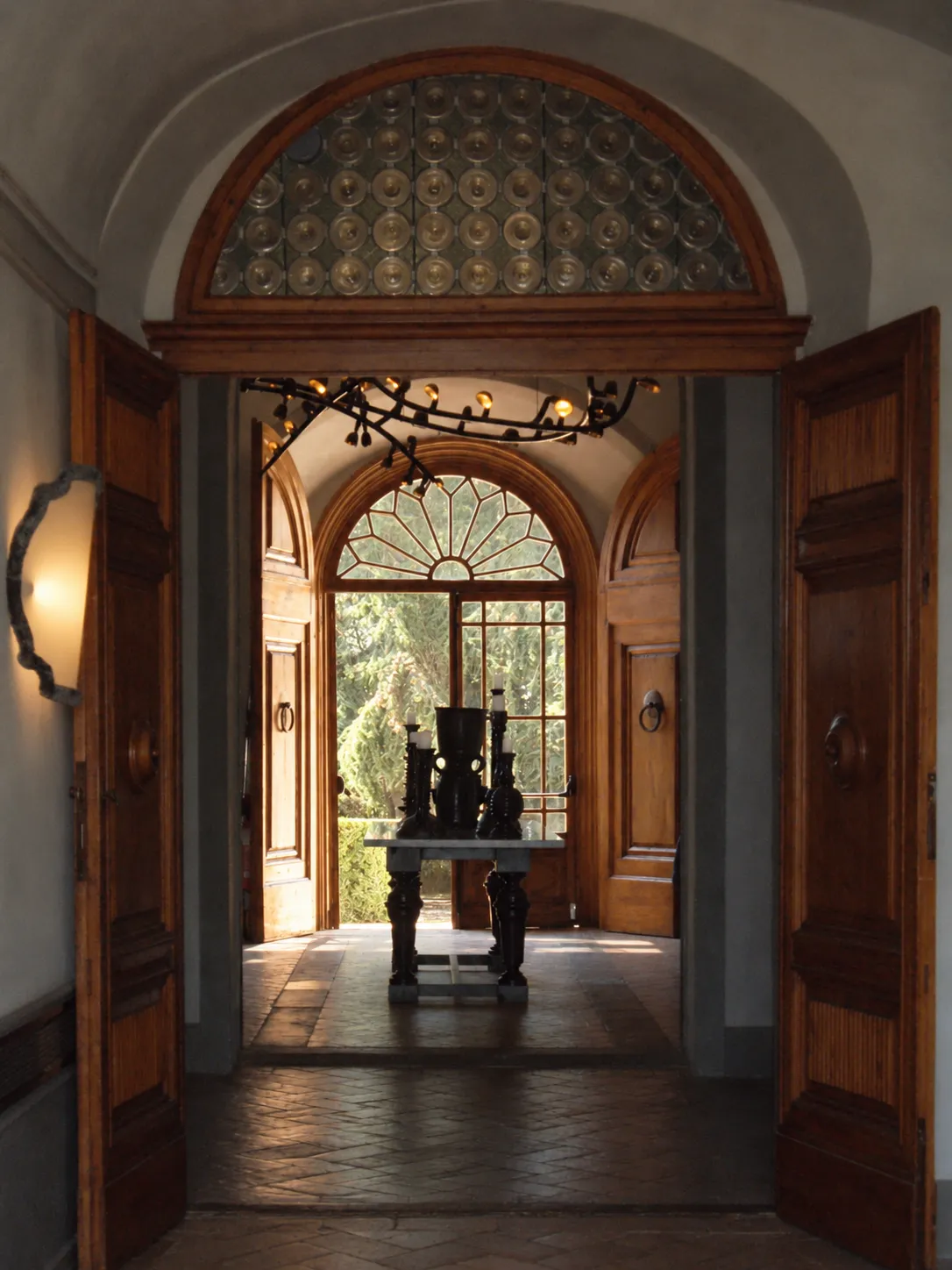
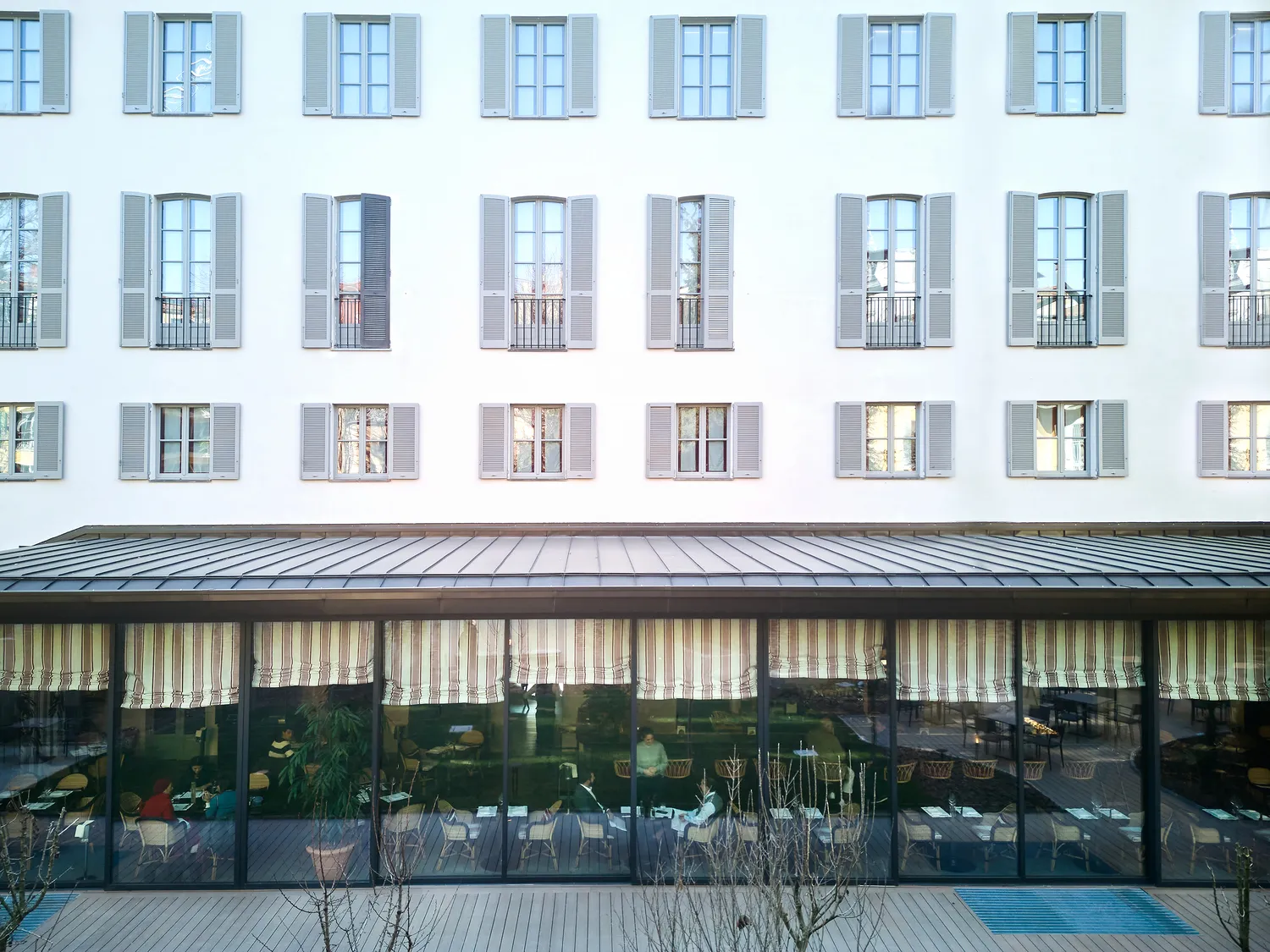
WIDEYES works with a fixed set of ingredients: a programmed line-up, design installations, a bar, and a venue with another function — a church cloister, a botanical garden. The previous chapter, in April 2026, ran during Milan Design Week, in the Renaissance cloisters of Santa Maria alla Fontana in Isola. The church was begun in 1508 over a spring whose water was credited with miraculous cures, and the design has been attributed at various points to Leonardo and to Bramante. WIDEYES turned the cloisters into a listening bar, furnished with Kartell pieces, and closed the program on 24 April with DJ Tennis and the Curly Brothers.
The third chapter moves south, and the material changes. The Milan edition worked with brick, plaster, and spring water; La Cutura is built on limestone, which has its own acoustic behavior, its own color under artificial light, and quarries a few kilometers away. A DJ console cut from quarry waste, standing under a greenhouse roof of iron and polycarbonate, inside a stone courtyard built for cacti: three material systems in one room for one night.
Gabriele Pici cuts the DJ console from Cursi quarry offcuts, on camera
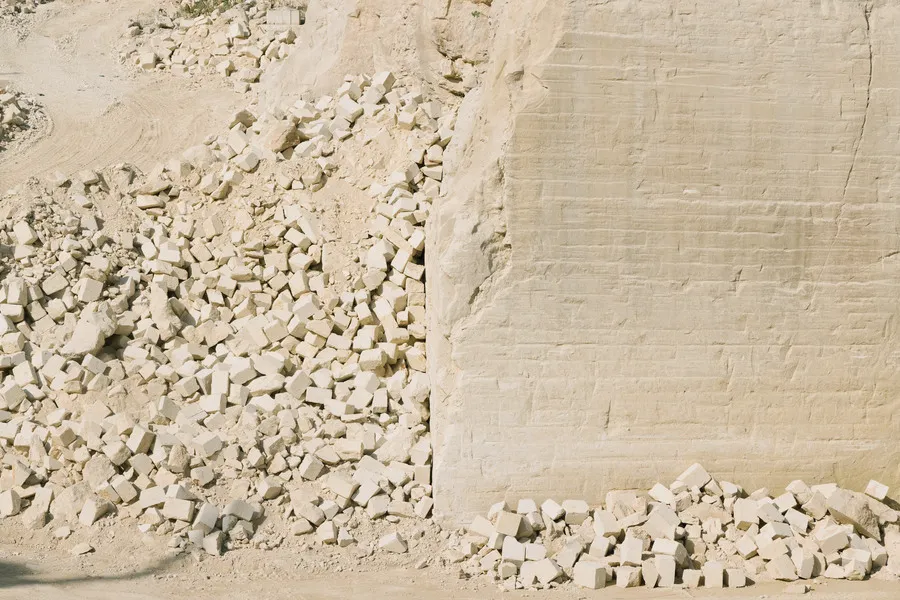
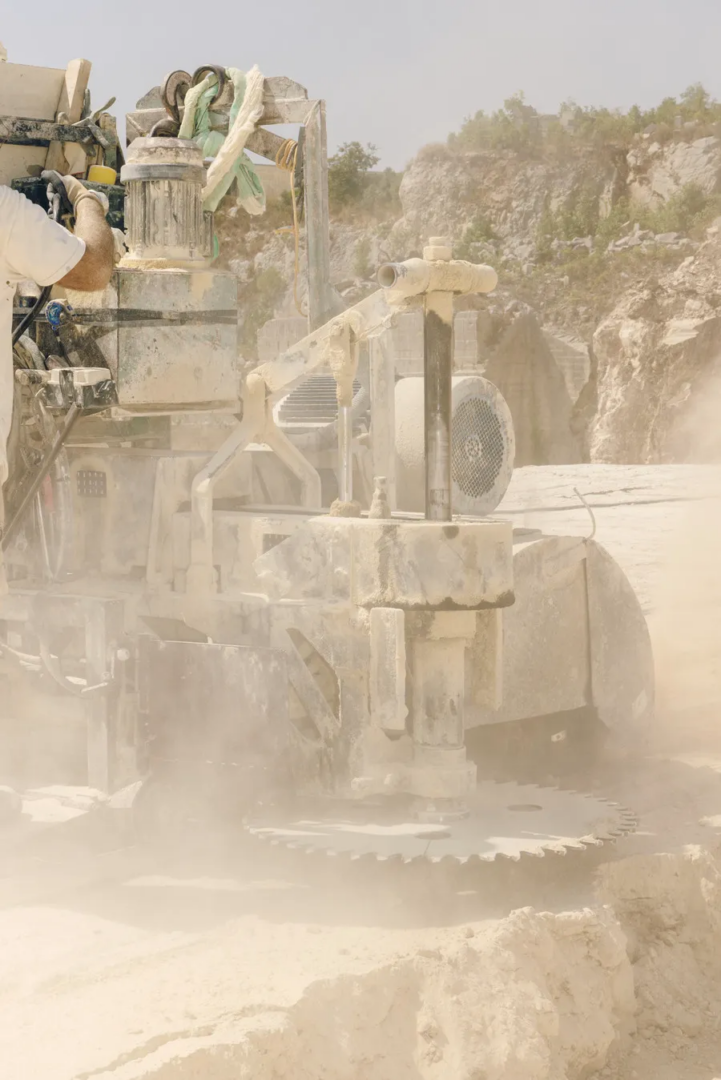
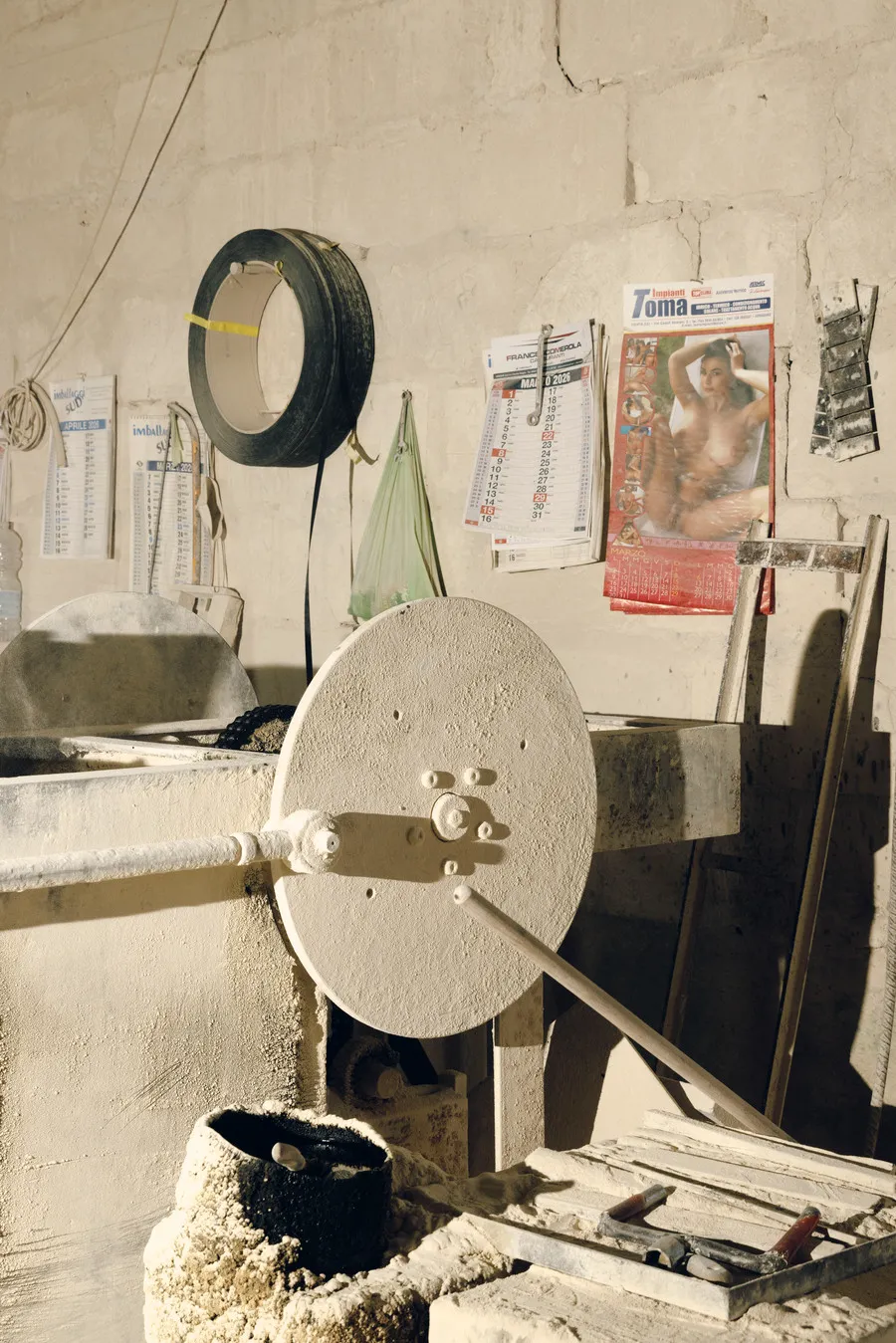
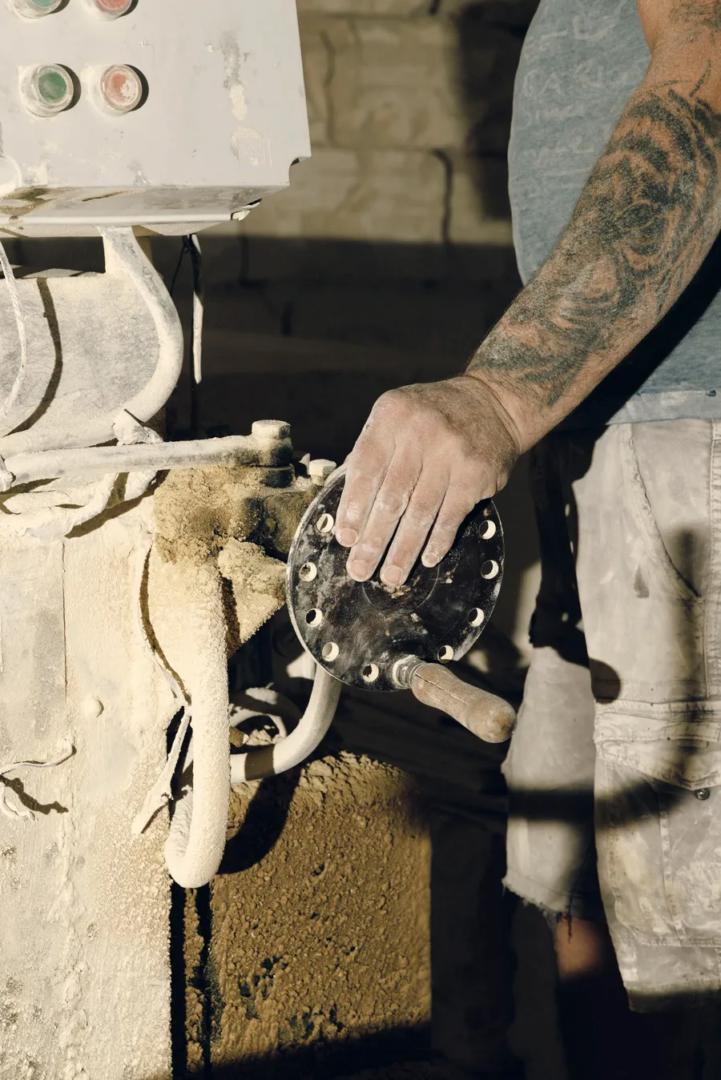
WIDEYES commissioned Gabriele Pici, a stonemason working the quarry territory around Cursi, to build the mobile console for the courtyard. The material is what the working face produces and discards: raw blocks, offcuts, scrap. The process was filmed start to finish. At the quarry, selection of blocks and scrap. In the workshop, Pici sketches the console by hand before any cut is made. Carving follows the same logic the Baroque masons worked with — soft stone, hand tools, a shape taken out of the block rather than added to it. The finished piece then travels to La Cutura for installation inside the glasshouse courtyard, with a final pass of customization on site before the set begins.
The seating around the stage uses textile developed by imNative for the outdoor living room on the courtyard perimeter: fabric against stone against glass against plant.
Giardino Botanico La Cutura: Salvatore Cezzi’s 3,500 species on the limestone of Giuggianello
La Cutura takes its name from cute, the Salento word for the hard calcareous rock that breaks through agricultural soil. Salvatore Cezzi — Toto — worked in a bank and collected plants. In the 1970s he inherited an abandoned nineteenth-century estate from his paternal grandmother and found the initials cut into the iron gate matched his own. Over four decades of exchange with collectors and botanical gardens abroad, Cezzi and his three sons brought the site to thirty-five hectares, around twelve on the visitor route, and a collection past 3,500 species from subtropical, arid, and temperate regions. Cezzi died in July 2020.
The greenhouse — iron and polycarbonate, close to 16 meters at the ridge, 1,000 square meters — holds more than 2,000 specimens under regulated temperature and humidity: cacti and succulents from Mexico, Peru, Bolivia, and across Africa, Agave, Euphorbia, and plants carrying crests and fasciations kept for their scientific value. Outside it, a rock garden reproduces American desert habitat on the limestone bank, bounded by dry stone walls that absorb heat through the day and release it after dark; a rainwater basin of papyrus and Nymphaea irrigates the whole park; a Giardino dei Semplici carries seventy medicinal varieties. At sundown on 30 July, the glasshouse becomes the fulcrum of the evening, on a route the public crosses freely.
Lecce Baroque and the goat milk that sealed the carvings of Santa Croce
The workability of pietra gentile made Lecce Baroque possible, between the end of the sixteenth century and the middle of the eighteenth. Spanish plateresque supplied the reference — carving at the density of goldsmith work — and Salento masons had a stone that would hold it. Gabriele Riccardi, Francesco Antonio Zimbalo, and Cesare Penna cut festoons, volutes, caryatids, and mascarons; the Basilica di Santa Croce, begun in 1548, carries the date 1646 on its rose window, and Zimbalo built the Duomo between 1659 and 1670.
The same clay fraction and open porosity that let the chisel in also let the weather in, so Baroque builders answered with dairy. Freshly carved blocks went into whole milk, often goat milk; casein and lactose entered the surface micropores, and the casein set as an insoluble, water-repellent biopolymer film that closed the outer porosity while letting the stone transpire. The reliefs are still there.
Pietra leccese geology: acqua di cava and the window in which the stone can be carved
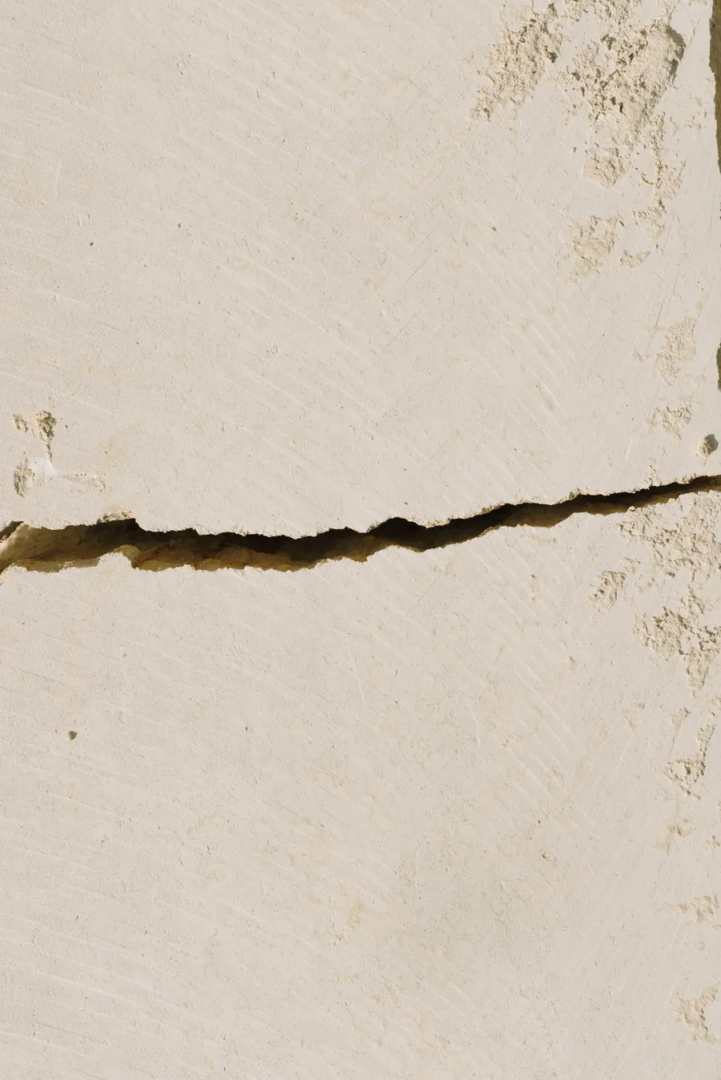
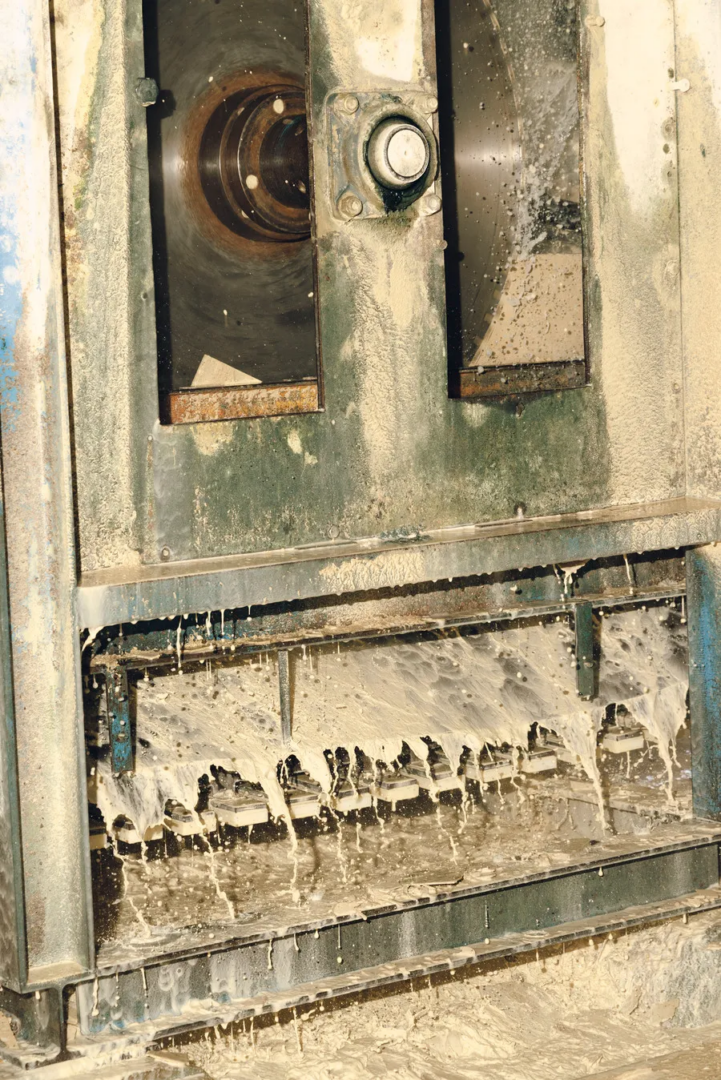
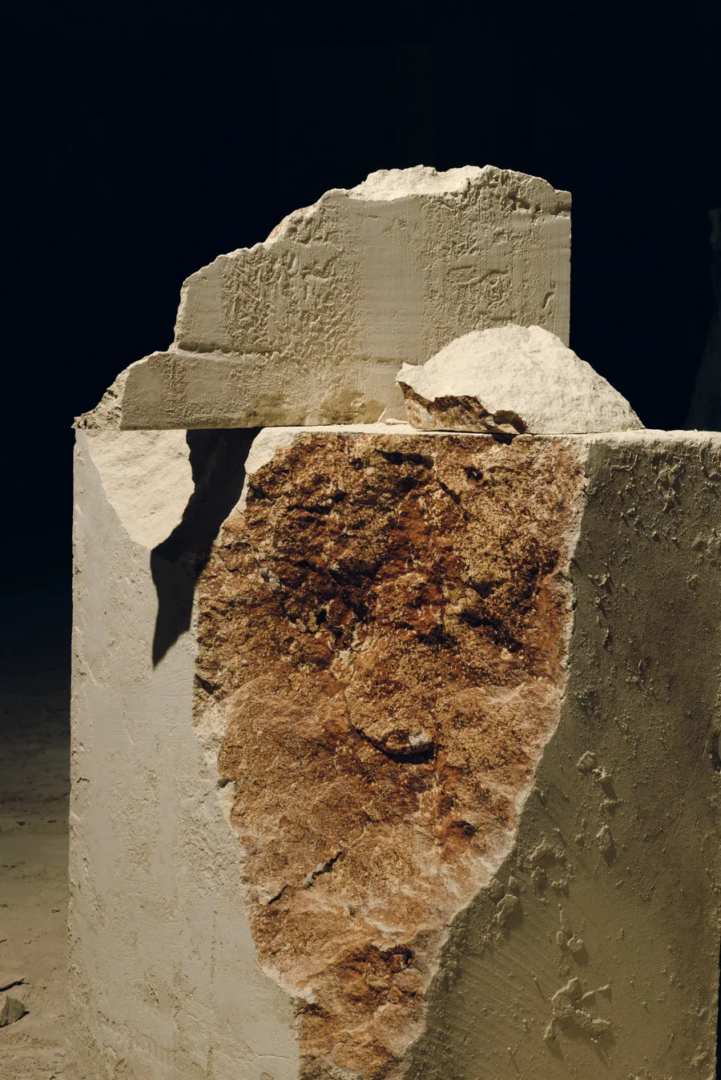
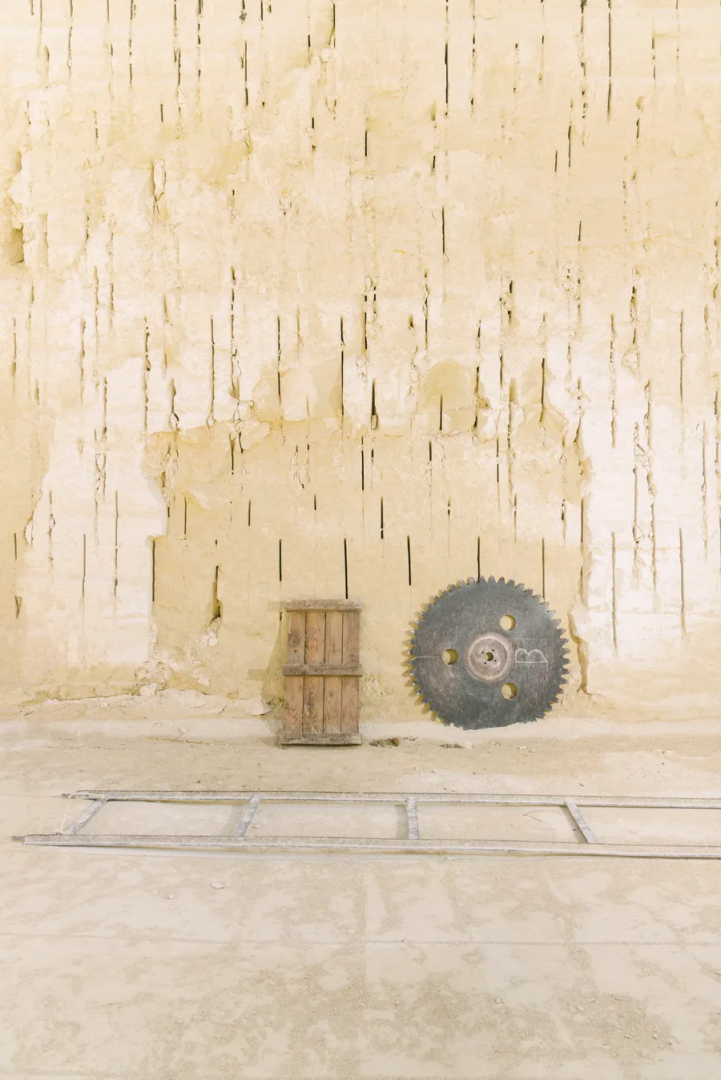
Masons call it acqua di cava — the water the micropores hold at the moment of extraction. While the block retains it, the stone answers to carpentry tools: saws, planes, rasps, chisels; it can be turned on a lathe. Then it dries. Water leaves the pores, atmospheric gases reach the surface, calcium carbonate recrystallizes, and the block gains hardness as its color moves from straw to honey. The window for shaping closes on its own.
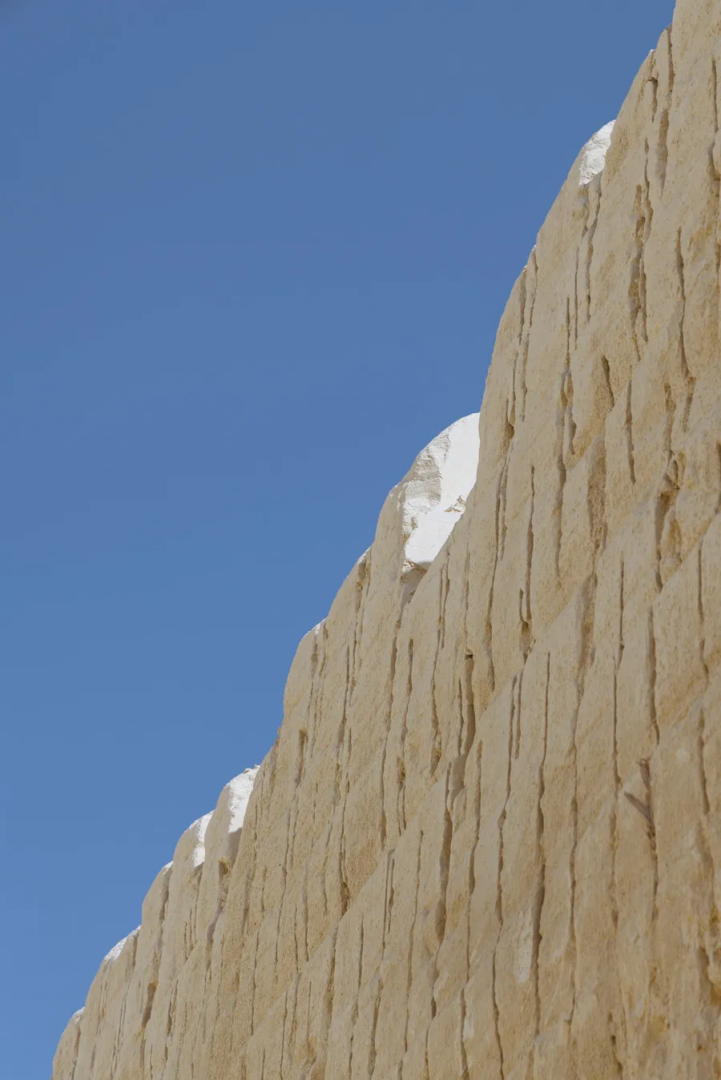
The formation dates to the Miocene, between the Burdigalian and the Messinian, roughly 20.5 to 5.3 million years ago, when the Salento peninsula sat under a shallow marine shelf. Skeletal remains and microfossils accumulated in calcite cement — planktonic foraminifera, phosphatized shells, fragments of cephalopods, corals, shark teeth, turtles, dolphins, and other cetaceans, all legible in the block. Contemporary extraction with rail-mounted saws is calibrated in part to keep those fossils intact. Calcium carbonate accounts for 92 to 95 percent of the matrix; porosity runs to 36.4 percent, dry bulk density to 1,730 kg/m³, compressive strength to 20.4 MPa on a dry specimen. High porosity and low density give the stone thermal insulation and sound absorption, and its capacity to take up water, which is also its exposure to weathering.
The extraction trade codified the bank’s variations by working behavior. Pietra gentile, from the Lecce depocentre, is fine-grained and takes detail. Piromàfo, grey-green and glauconitic, resists heat and went into fireplaces and flues. Saponara delaminates once exposed; màzzararesists more and carves less. Around Cursi and Melpignano the names multiply: cucuzzara, tosta, bianca, dolce, gagginara, niura. Two harder stones from the same peninsula, carparoand mazzaro, took the load — foundations, piers, walls meeting coastal damp — while pietra leccese took the ornament, because it alone in the region would hold the cut.
WIDEYES — Sound Garden
30 July 2026
Giardino Botanico La Cutura, Via Provinciale Giuggianello Minervino, 73030 Giuggianello (Puglia).
Editorial Team