Paris Photo’s 29th edition coincides with the bicentenary of photography
Rather than a retrospective, a reading of the medium that questions its history, technical updates and new forms
Paris Photo’s twenty-ninth year and the Bicentenary of photography
Paris Photo is a thermometer of the state of the photography market. Every year, the exhibitors shift, reflecting historical and contemporary work, and the artists, practices and perspectives behind them.
Two hundred years ago, the world’s earliest surviving photograph, View from the Window at Le Gras, was taken via heliography with an eight-hour exposure by French inventor Joseph Nicéphore Niépce. Now, Paris Photo is the first international event celebrating the Bicentenary of photography, under the patronage of the French Ministry of Culture. Instead of a retrospective, it features a «reading of the medium that questions its history, technical developments and new forms».
The international photography fair Paris Photo will complete its twenty-ninth year of drawing together galleries, artists, publishers, and collectors this year. It was the earliest fair dedicated to image and photography. Initially housed at the Carrousel du Louvre, it moved to the Grand Palais in 2011.
What shapes Paris Photo
Anna Planas, artistic director of Paris Photo, and Florence Bourgeois, director of Paris Photo—when asked in an interview by Brendan Embser—explain that each edition is shaped by relationships, within the fair and to the world. Bourgeois highlights that the fair is shaped by the market, embodied by participating galleries and international institutions, collectors and audience. They seek to renew the yearly content with new galleries, artists, practices and perspectives. These connections are nurtured through their travels during the year, to gain insight into what is happening in the world of photography, in practice and trade. Their Selection Committee, international experts who select galleries and publishers, acts with this knowledge—Planas adds—alongside invited curators tasked to develop specific sectors and new ways of looking.
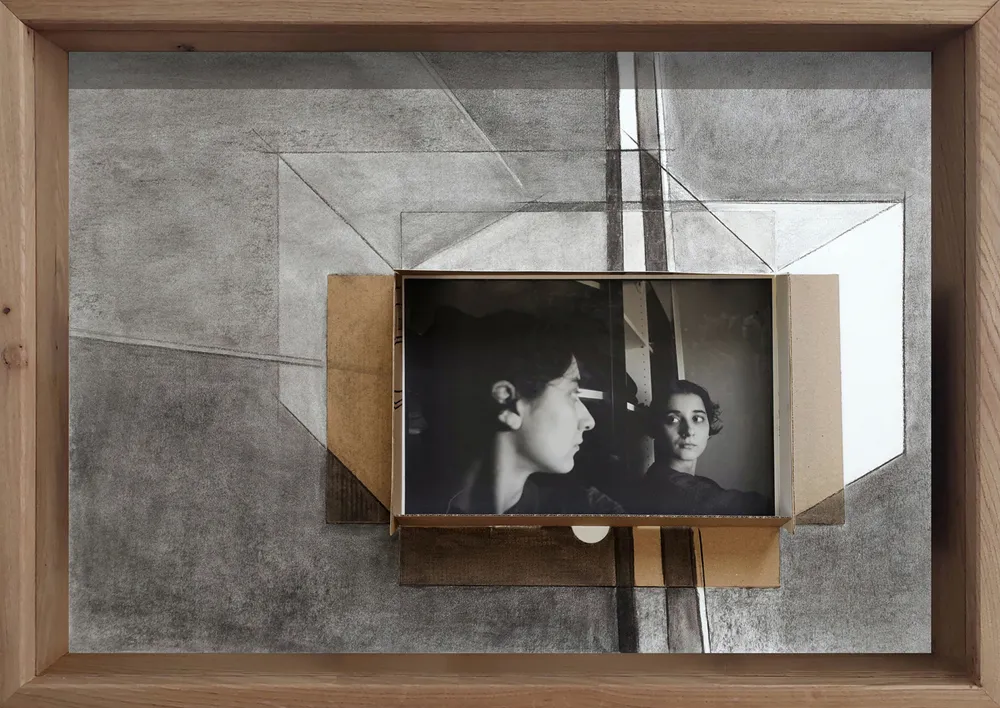
A fair spread across five sectors frames a panorama of the medium
Under the Grand Palais’ glass ceilings, the fair is spread across five sectors, which frame a panorama of the medium. The program this year is dedicated to the Bicentenary. Beyond the sectors are a series of conversations, book talks, signings as well as partner museums, foundations, institutions and galleries, as the occasion manifests within and outside of its main site.
Main sector and Prismes projects
Positioned at the central nave of the Grand Palais are the one hundred fifty-two international galleries from thirty-two countries that make up the Main sector. Contemporary and historical work by different generations of artists is united, and so are their histories of photography—as a medium used for documentation, but whose dimensions take shape in art, politics and experimentation. Among these are Bienvenu Steinberg & C (New York), Lia Rumma (Milan), La Cometa (Bogotá), Proyectos Monclova (Mexico City), Silverlens (Manila) and L’Atelier 21 (Casablanca). Prismes—part of this sector—presents large-scale projects.
Upon arrival at the Grand Palais, visitors are met with a thirty-six-meter-long retrospective installation dedicated to Thomas Ruff—a collaboration by David Zwirner, Konrad Fischer, MAI36, Lia Rumma and Sprüth Magers galleries. The piece joins forty years of creation by the photographer from the Düsseldorf School, who has explored subjects and techniques in analog and digital form.
Several galleries specialize in vintage photography—these include Hans P. Kraus Jr., Bruno Tartarin, Gilles Peyroulet, Lunn, Barnabé Moinard and Serge Plantureux. Hans P. Kraus Jr.showcases work realized through the oldest processes by some of the first photographers—Louis Daguerre, William Henry Fox Talbot, Anna Atkins and Girault de Prangey.
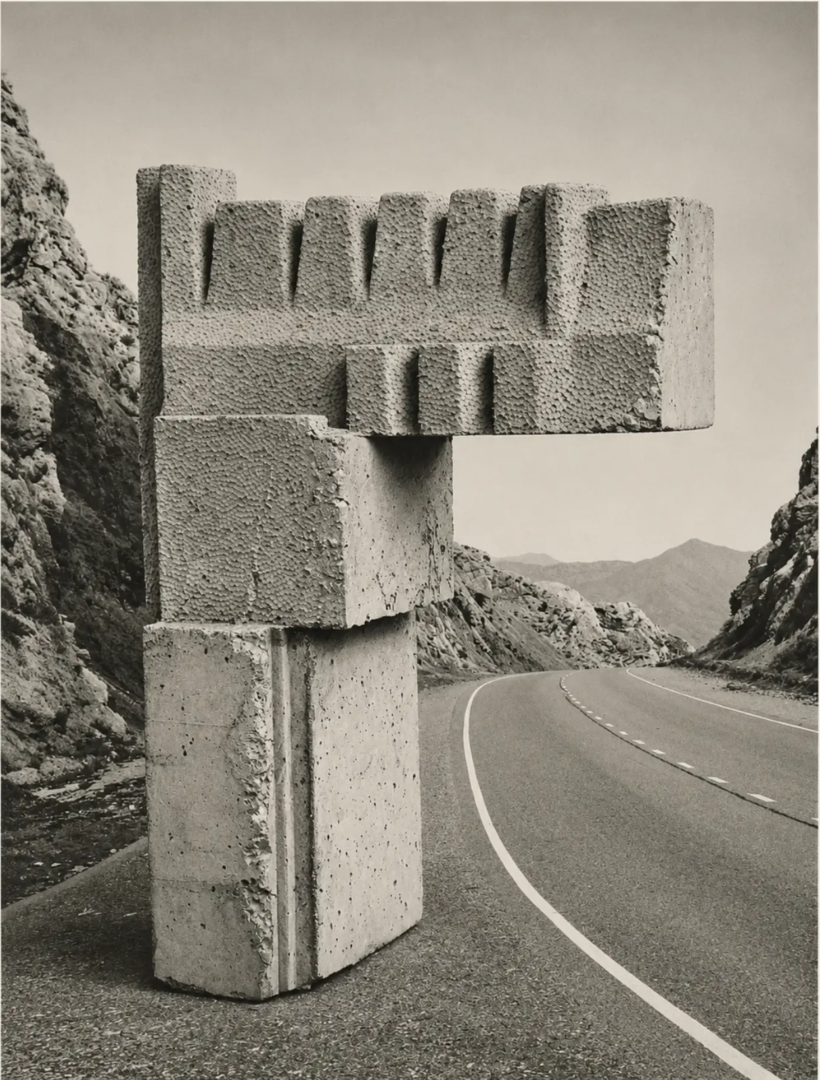
MEM presents a project on Subjective Photography in Japan. Christophe Gaillard presents a solo show by French contemporary artist Isabelle Le Minh—which addresses the history, forms and limits of photography—and an installation by transdisciplinary artist and researcher SMITH. Echoes, presented by Large Glass, ties threads through new and vintage photographic work of Mario Cresci, John Gossage, Guido Guidi, Mark Ruwedel and Ursula Schulz-Dornburg.
The historical series Dirty Windows by Merry Alpern is put forth by Miranda Gallery. Duncan Miller presents photographs taken by Stanley Kubrick in the fifties. A series by Miguel ÁngelRojas on clandestine encounters in Bogotá cinemas in the seventies is put forth by La Cometa. Series by Kati Horna are on view at the Proyectos Monclova booth. The work of Mexican Alejandro Cartagena is shown by Patricia Condé. Elle Pérez’s contemporary New York is captured at Public Relations. Nadine Ijewere’s photos are presented by Huxley-Parlour. Juan Manuel Echavarría is showcased at Bienvenu Steinberg & C.
Eleven duo shows include the juxtapositions of Ion Grigorescu and B. Wurtz at Gregor Podnar (Berlin), Jo Ann Callis and Tania Franco Klein at ROSEGALLERY (Santa Monica), as well as Kusukazu Uraguchi and Laure Winants at Écho 119 (Paris).
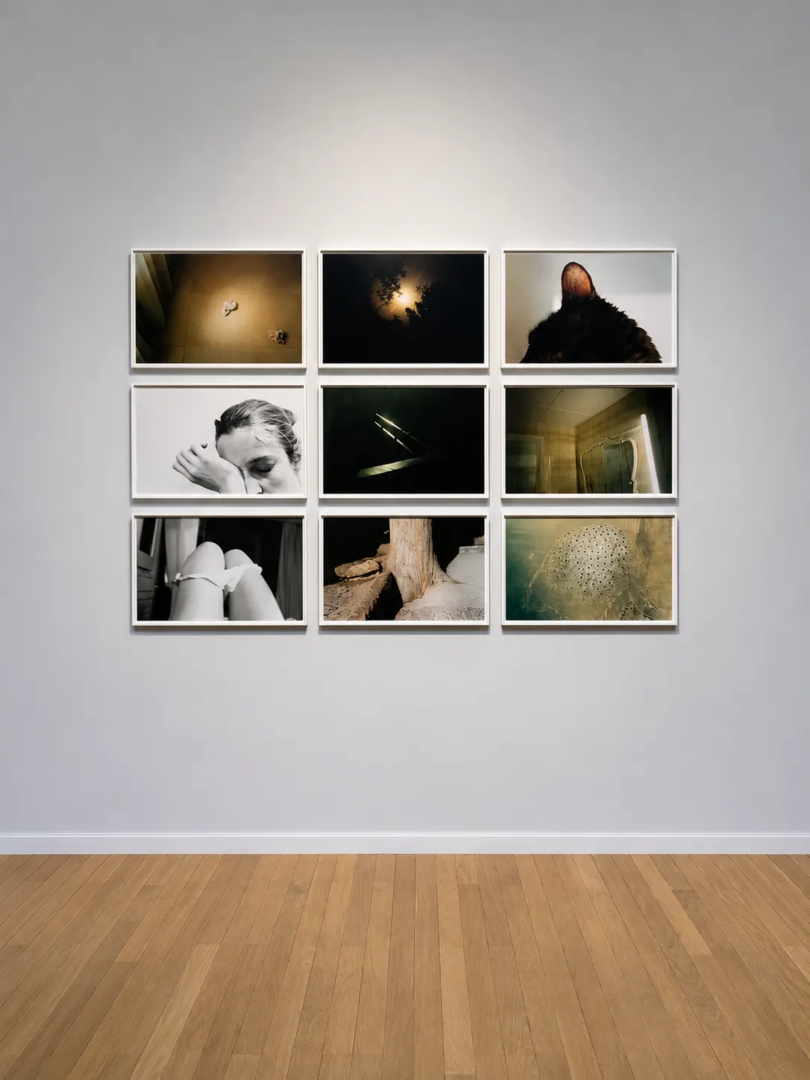
Voices sector: Disappearance
Launched in 2024, the sector invites guest curators to develop a yearly proposal to embody their contemporary outlook on photography. This year, Zasha Colah—Indian curator and writer—and Francesco Zanot—Italian photography curator, writer and lecturer—have put forth the theme of Disappearance, displayed beneath the nave. Disappearance is based on a paradox: photography is designed to preserve what might disappear, and its Bicentenary is celebrated at a moment when its form and our perspective of it are transforming. This is an implicit reference to the oldest surviving photograph—View from the Window at Le Gras—as it «rethinks an anniversary that can also be read as a threshold: between commemoration and obsolescence, between mourning and renewal». The history of photography is acknowledged as inseparable from cultural, political, and material conditions of disappearance.
Historical pieces created to document subjects, places and phenomena are on the verge of vanishing, while contemporary pieces employ photography to resist the marginalization of vulnerable communities, endangered landscapes, and fragile social realities. Some artists engage this notion with works designed to alter, fade, or self-destruct over time; others question what is considered photography by employing other mediums in conjunction with it—painting, sculpture, installation, or other languages and disciplines—to the point where the image and its process become lost. Algorithmic editing, software manipulation, and artificial intelligence become present here. In this light, «disappearance» can also be used to describe our perception of visual representation.
Digital sector
Corresponding to the Voices sector, the Digital sector explores perspectives on the medium, how digital technologies are transforming the production, circulation and perception of images. Photography becomes transitory, and yet inscribed within the timelines of technology. Thirteen contemporary art galleries, curatorial platforms and special projects have been joined to scan the theme. Curator Marco De Mutiis specializes in art in the digital age at Fotomuseum Winterthur in Switzerland.
De Mutiis states that three decades of digital imaging have made it so we «no longer see through optics alone». Layers of Photoshop, social media visuals and facial recognition are examples of this. Our vision is «augmented, extended, and contested», and it becomes in part non-human. Such conditions reshape perception, authorship and agency.
Featured artists interrogate and expand on this position, highlighting the medium’s kinetic quality by reinventing formats, materials and techniques. De Mutiis also integrates photographic revolutionary history here, «experimental yet rooted in the photographic», and how we may see it in the next two hundred years, considering legacy and future.
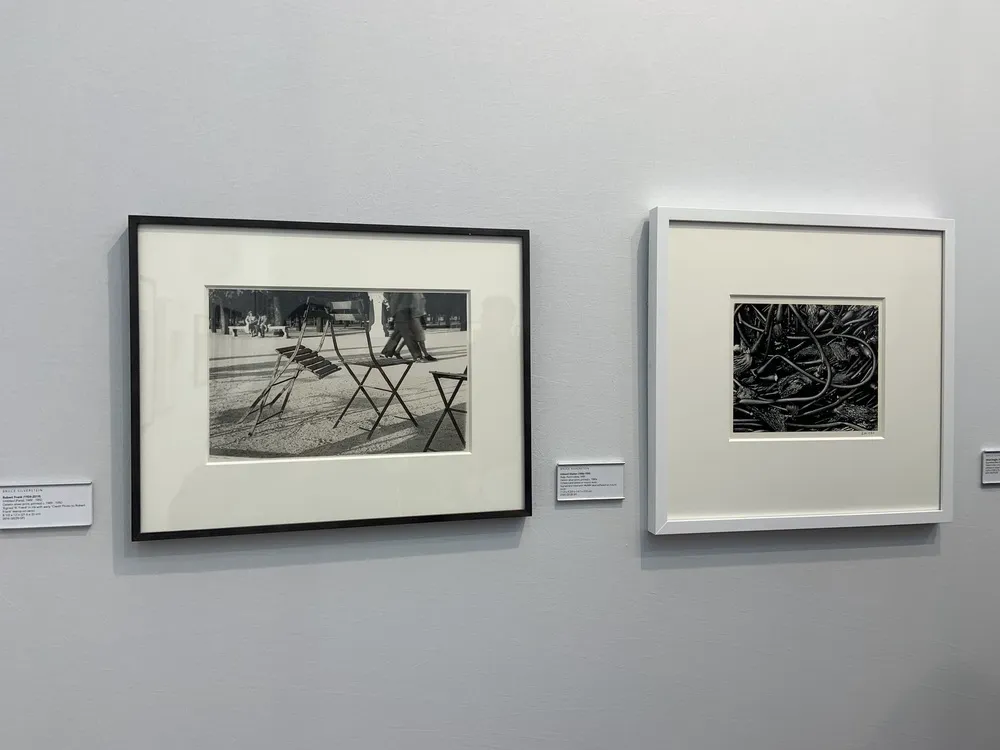
Emergence sector
On the first floor of the Grand Palais are twenty monographic projects by a new generation of artists from nine countries. Together, they survey parallel realities embedded in personal, historical and political narratives.
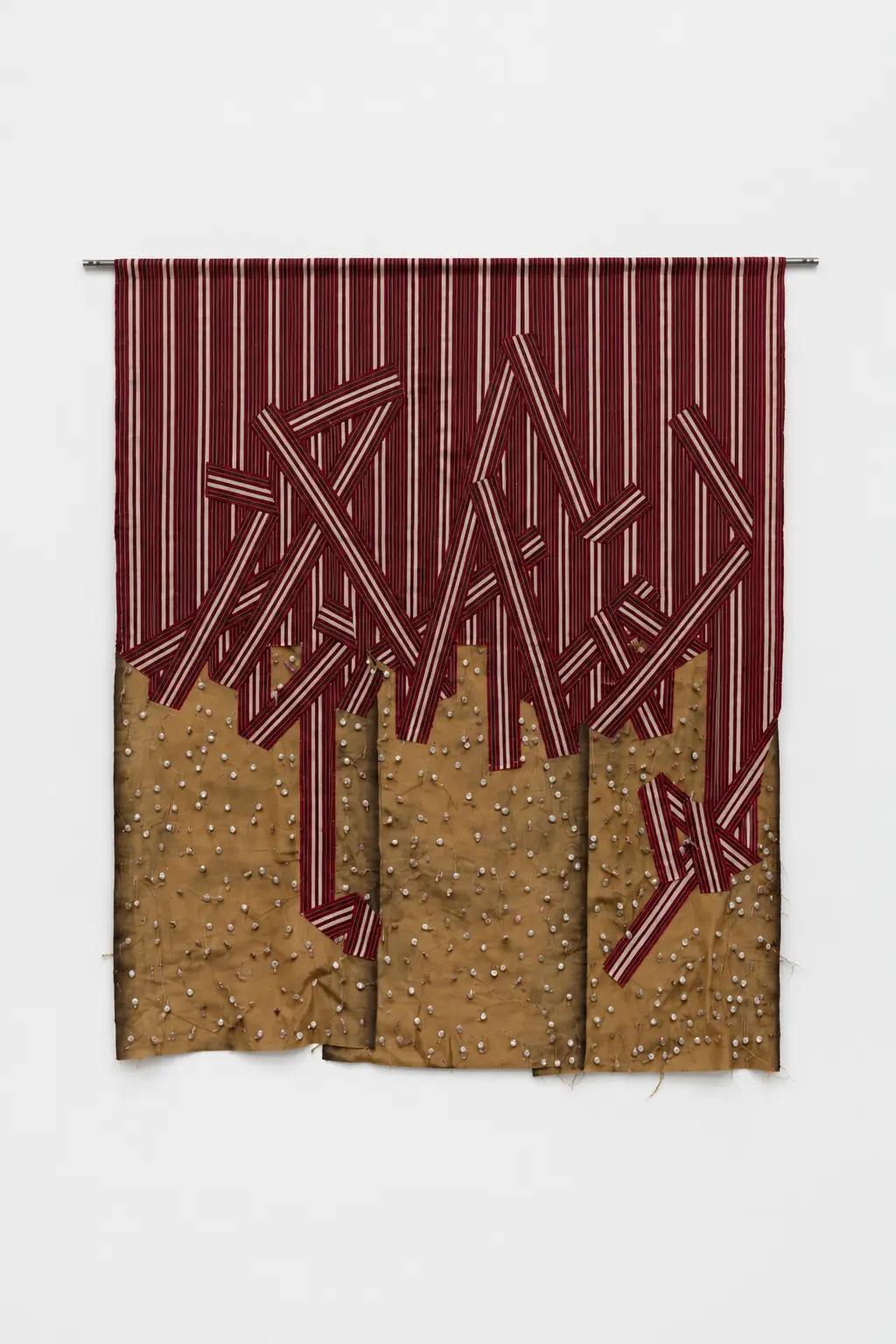
Ricardo Cases (Galeria Reus, Palma) considers the quotidian as he features a series of a carpenter napping in his studio. Randa Mirza (Tanit, Beirut) recalls the destruction of war in South Lebanon, using photography, poetry and calligraphy to grasp absence. Norwegian artist Dev Dhunsi (Melk, Oslo) works with photography and textile to capture document and myth, archival and allegorical nature of the personal, diasporic and colonial.
Book sector
On the first floor and in the Courbe Gallery of the Grand Palais, forty-eight publishing houses and vintage booksellers have been brought together to establish an overview of international photographic publishing. MACK (London), Atelier EXB (Paris) and Aperture (New York) have returned, while Gato Negro and Obsidiana (Mexico City), Palm Studios and Sun Archive (London), and FW Books (the Netherlands) are among the introduced houses.
The Centre Pompidou: Revealing
While it is closed for renovation, the Centre Pompidou presents a selection of works as a journey through photographic practices from the twentieth century to today. The nearly one hundred works by thirty artists come from its collection, integrating archives and recent acquisitions.
An ever-present relevance for photography
The Bicentenary, which began in September, will continue for one year in France and abroad.
Bourgeois and Planas were asked why collectors should continue to focus on photography—which today can mean vintage prints, series, an archive, alone or in combination with other mediums. Bourgeois says that photography «shapes the way we see and understand the world, which is perhaps one of the strongest reasons to engage with the visions of artists».
Luiza Livingston