Hemp and textile recycling: Dell’Orco e Villani in the circular supply chain
In the Prato district, Dell’Orco e Villani develops technologies for textile recycling and hemp applications in construction and automotive, amid regulatory constraints and supply-chain challenges
Dell’Orco e Villani: technology, supply chains and textile hemp
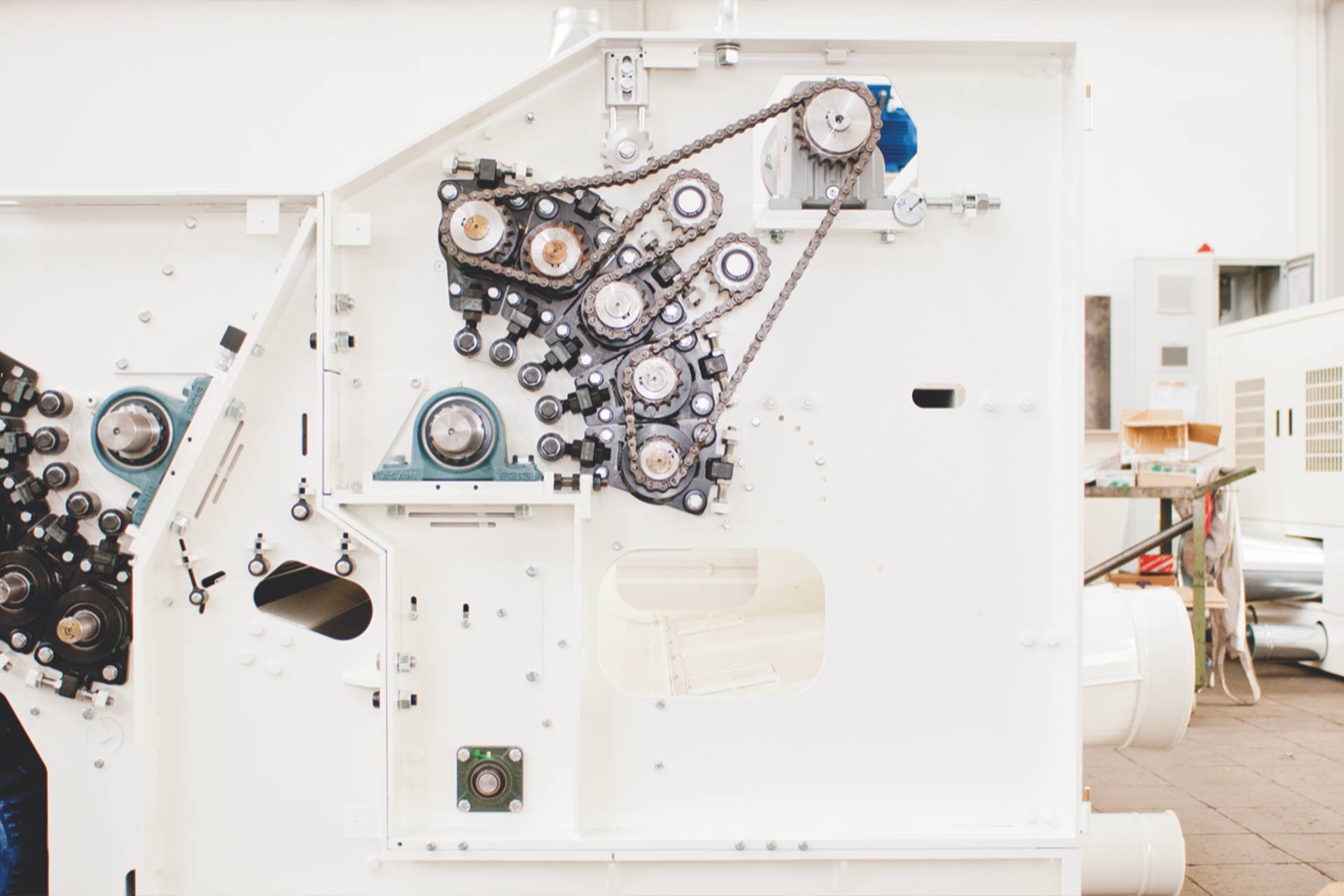
Dell’Orco e Villani is a mechanical engineering company based in Capalle, in the municipality of Campi Bisenzio. Since 1964, it has designed and manufactured machinery and production lines for recycling and regenerating textile fibers. Over time, the company has expanded its scope beyond regenerated textiles to include the processing of natural materials such as hemp. In recent years, it has developed partnerships with international companies in bio-construction, including Hempitecture, which specializes in hemp-based insulation panels. The aim is to help develop circular supply chains that transform textile waste or plant-based raw materials into new industrial products.
From a Tuscan garage to a global circular economy network
Founded by Giovanni Dell’Orco and Silvano Villani in response to the spread of man-made fibers, the company grew from a local workshop into an industrial business serving an international market: «At the time, the first man-made textile fibers were beginning to appear», Sara Villani explains. «My father and his business partner came up with a machine that could process these new fibers more efficiently».
In the 1970s, the company moved to its current facility in Capalle, covering approximately three thousand square meters. It remains a family business, led today by Sara Villani, her brother Andrea and their father Claudio. Ninety-eight percent of production is exported: «We chose to remain in Tuscany because our connection with the region and its textile tradition is part of our identity, but our work brings us into contact with clients all over the world».
The history of Dell’Orco e Villani closely follows the evolution of Prato as a textile district: a territory that built its industrial identity around fiber regeneration and is now facing the challenge of integrating new fibers and processes.
From recycling to textile hemp: an expanding supply chain
Textile regeneration remains the historical core of Dell’Orco e Villani’s business. Its machinery and production lines open, clean, blend and prepare textile waste and fibers for reuse: «Our company was founded to give textile waste a new life, and we continue to invest in technologies that make it possible to recover materials that would otherwise end up in landfill».
Experience gained with wool and cotton has enabled the company to extend its work to plant-based fibers such as textile hemp: «Every fiber has specific requirements, and every project has to be calibrated to the production context and the result to be achieved».
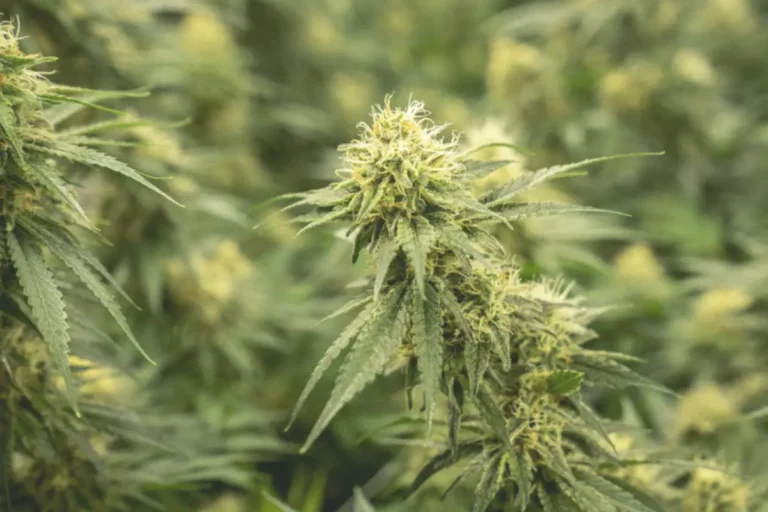
Because of its agronomic and mechanical characteristics, hemp is a versatile resource: it can be used as long fiber for yarn, as short fiber for felts, or as a structural component in insulation panels. This range of applications requires engineering expertise and technical adaptations that the company is equipped to provide.
Circular economies: designing machinery to give fibers a new life
The company sees the principle of circular economies as a driver of innovation: «Our work is to design plants that make it possible to use what already exists, reducing environmental impact and creating new business opportunities».
The machinery is not standardized: each system is designed around the raw material and the required end product. The objective is not simply recovery, but the transformation of waste into resources capable of competing with virgin materials in terms of quality and performance, closing the production loop.
From fiber to panel: the partnership with Hempitecture
Among the company’s most significant projects is its partnership with Hempitecture, a US company producing hemp-based insulation panels: «Almost two years ago, we completed a plant in the United States with Hempitecture», explains Massimo Pisaneschi, who works in sales for Dell’Orco e Villani. «They produce insulation panels for construction using hemp mixed with five to ten percent thermobonding fiber. The compound is then heat-set in an oven to produce panels designed for wall cavities in homes».
The timber-frame construction system commonly used in US housing favors these materials: «The project was financed through crowdfunding, with results that exceeded expectations».
Sustainable textile industry as production infrastructure
A sustainable textile industry is one of Dell’Orco e Villani’s main objectives: «Our task», Sara Villani says, «is to provide tools that make it possible to transform waste into new resources, avoiding waste and reducing pressure on the cultivation of virgin fibers».
Villani stresses that sustainability must guide the design of production processes from the outset: «We need to think in terms of a closed loop, in which a product can become raw material again at the end of its life».
The in-house laboratory and testing room therefore become spaces for experimentation, where technological innovation meets environmental and market requirements: «They allow us to identify the most suitable solutions and ensure that the process works with the actual material. Every plant is the result of a dialogue with the client, who needs to understand the material, the final product and the context in which it will be used. We provide the experience accumulated over sixty years of working with different fibers».
Natural raw materials: from hemp to automotive composites
Demand for natural raw materials has also grown in industrial sectors beyond textiles: «In Poland and Germany, components for vehicle interiors are produced using blends of natural and synthetic fibers», Pisaneschi explains. «These parts also need to be visually appealing and are molded into shapes specific to each vehicle model».
These examples show how plant-based fibers such as hemp can replace plastic or synthetic materials, helping to reduce environmental impact while providing high-performance solutions for mass industrial applications.
Textile hemp: structural limits and prospects for Italy
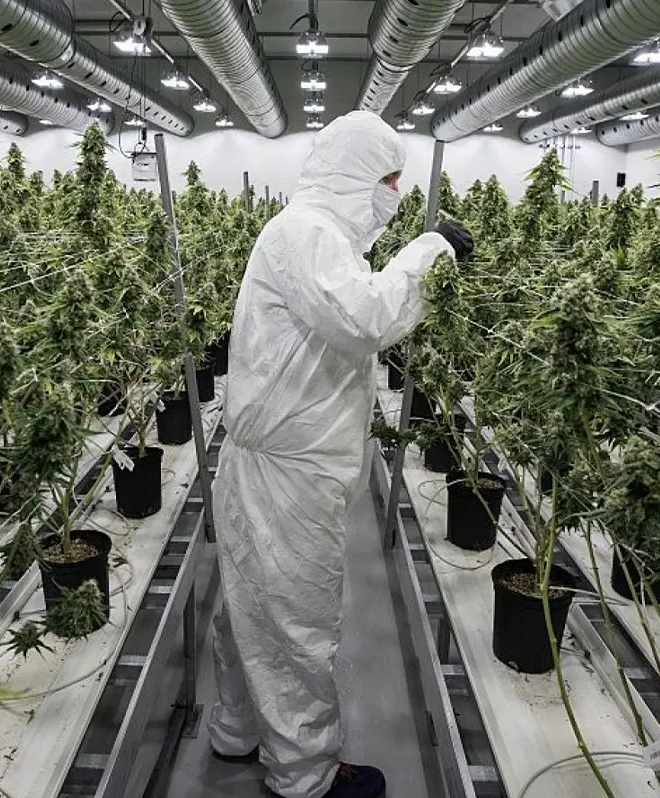
According to Pisaneschi, Italy’s hemp supply chain has not yet reached industrial scale: «There are many micro-initiatives, often linked to agriculture or small start-ups, but the sector requires investment in industrial plants. Without projects at scale and adequate financial support, it is difficult to develop a competitive supply chain».
Comparison with other countries reveals significant differences: «In France, the hemp supply chain is supported by solid companies and favorable policies. In Italy, we have had limited and discontinuous experiences. Machinery derived from agricultural equipment is often used, and it is not always suitable for large-scale production».
The crucial issue remains the absence of a coherent industrial policy connecting agricultural production, mechanical processing and end markets.
Logistics and production proximity: circular economies at territorial scale
Applying circular economies to bulky, lightweight materials such as insulation panels requires short supply chains: «Transport has a major impact on cost», Pisaneschi explains, referring to hemp-based insulation panels, «and it is more economical to manufacture close to where the products will be used. Yarn and fabrics, by contrast, have a more favorable weight-to-volume ratio for export».
This dynamic influences the strategic choices of companies and their clients, encouraging decentralized and regional production models that are more resilient to logistics and environmental crises.
Prato: a historic district facing a transition
Dell’Orco e Villani’s trajectory is rooted in the history of Prato, where the reuse of rags and textile waste created an industrial model now regarded as a precursor to the circular economy. Remaining in Tuscany is not merely a logistical choice, but evidence of a connection with a district that has developed specific expertise in fiber processing.
Machinery for textile regeneration remains the core of the business, but its expansion into plant-based fibers such as hemp and into non-textile applications – from building insulation to technical composites – shows how the boundaries of the sector are being redrawn. This transformation requires adequate infrastructure and a consistent supply of raw material, neither of which is yet guaranteed in Italy, particularly in the hemp sector.
The Hempitecture case shows that mechanical engineering can be integrated with emerging plant-based supply chains where a favorable regulatory environment exists and capital is available to support industrial facilities. In Italy, where hemp cultivation remains marginal and fragmented, the possibility of replicating similar models depends on the ability to coordinate farmers, processors, machinery manufacturers and end users.
Plant-based supply chains and the challenges of a circular economy
The spread of circular economies based on plant fibers faces obstacles linked to agricultural organization, fragmented supply chains and a lack of coordinated investment. The regulatory framework affects the ability to plan stable cultivation and industrial outlets, while logistics limits the export of bulky products.
International demand exists for applications in bio-construction and automotive, but meeting it requires reliable, standardized processes. The transition from a textile economy based on virgin fibers to a system that valorizes waste and natural raw materials requires collective choices: regulation, investment, logistics infrastructure and research. The challenge extends beyond the textile sector to the manufacturing system as a whole, agriculture and the way resources are managed and transformed.