Why does Prato continue to attract designers from around the world?
Designers, companies and researchers come to Prato to develop new prototypes – Lottozero experiments with a distributed textile supply chain based on hemp, linen and silk
Why does Prato continue to attract designers from around the world
Over the past twenty years, the textile supply chain has stretched across borders: design, product development and production often take place in different countries. Prato is an exception. Within a few kilometers, spinning mills, weaving mills, dyehouses, finishing companies, knitwear manufacturers and specialized businesses coexist, making it possible to follow much of a product’s development without leaving the district. This continuity is what attracts designers, artists and researchers from Europe, Asia, Australia and the Americas.
Since 2016, part of this flow has passed through Lottozero, a cooperative founded by Arianna and Tessa Moroder in a converted former industrial warehouse in Prato’s textile district. International residencies, product development, research, technical consultancy and a shared laboratory come together here: «We wanted to provide space, tools and expertise to a creative community working with textiles. The area is dense with textile manufacturing companies. Widening the circle slightly, you also find fashion, leather goods and other sectors. This is an asset because it allows us to develop everything from the idea to the finished product within our territory, staying close and keeping control over every step».
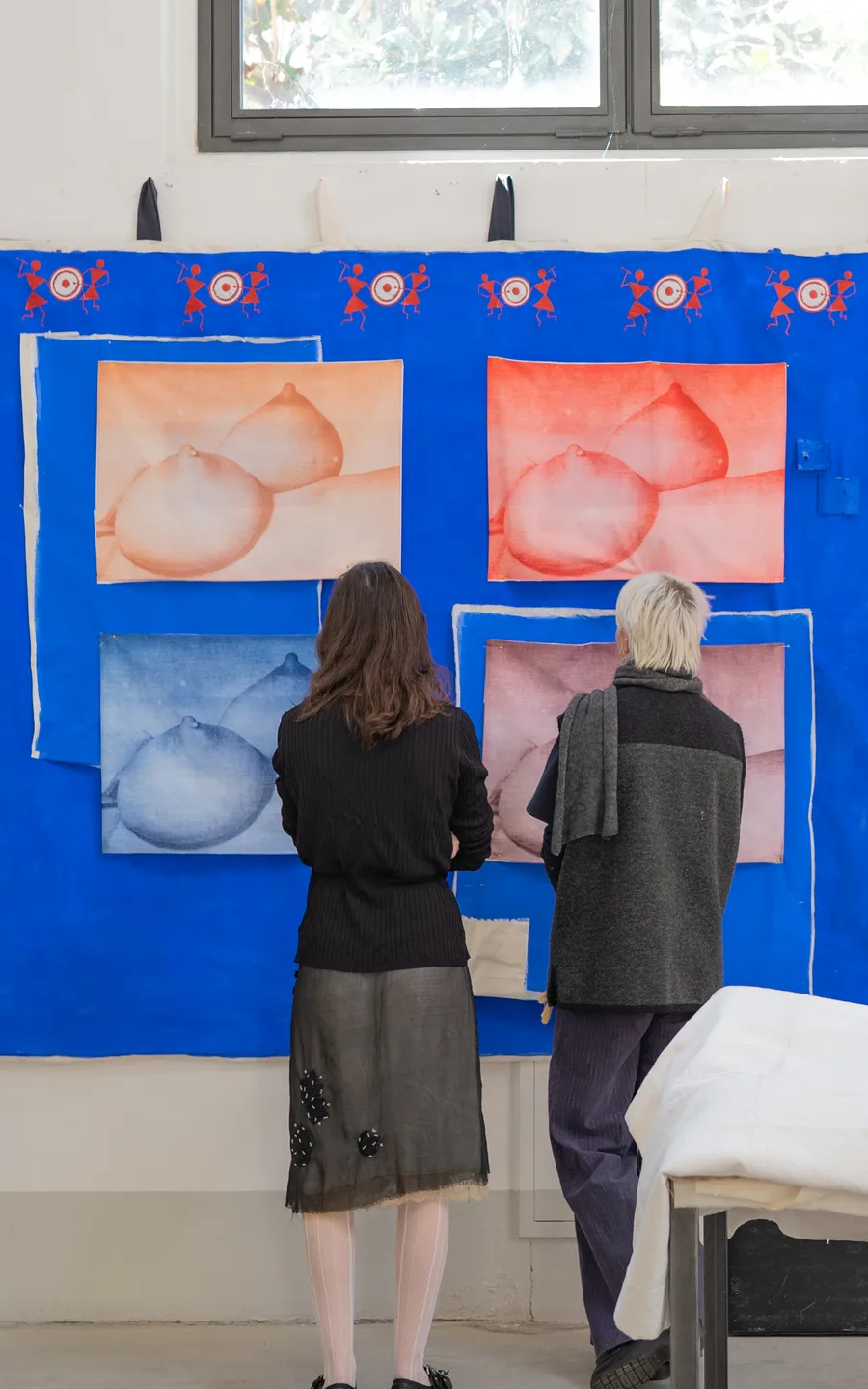
In 2026, the program welcomed Carla Schwering, Paulina Włostowska and Michał Szuwar, whose research ranges from jacquard weaving and screen printing to the relationships between visual arts and textile manufacturing. Most residents come from the Netherlands, Germany, Belgium, Australia and the United States, a pattern linked to the availability of public funding for culture and research in different countries: «It is not so much a question of interest as of the conditions that allow artists and designers to devote time to this kind of work».
Alongside these activities, Lottozero runs a Kunsthalle devoted to temporary exhibitions, a coworking space and a specialized textile library that is part of Italy’s National Library Service.
Lottozero: Italian manufacturing still needs a translator
Many designers arrive with an idea but without knowing how Italian manufacturing works. Companies, by contrast, possess highly specialized technical expertise but can rarely follow every experimental project. Lottozero acts as an intermediary: «There is a need for a kind of translator who can bring these two worlds closer together. Part of our mission is precisely to translate, often literally from one language to another, and to connect local manufacturing with those who could benefit from it. We can take a project all the way to the finished object, work only on researching materials, suppliers and techniques, or support just the production stage».
Its status as a nonprofit cooperative shapes this model: «Profit is not part of our mission, which is to support young designers and make the fashion world more sustainable, accessible and transparent. If one day we made a profit, we would reinvest it in new production activities».
The laboratory where companies’ «no» becomes a prototype
Many projects reach Lottozero after a series of refusals. Requests are considered too complex, too expensive or simply incompatible with standard production flows. The laboratory steps in by identifying the necessary technical expertise and building a dialogue between designers and companies.
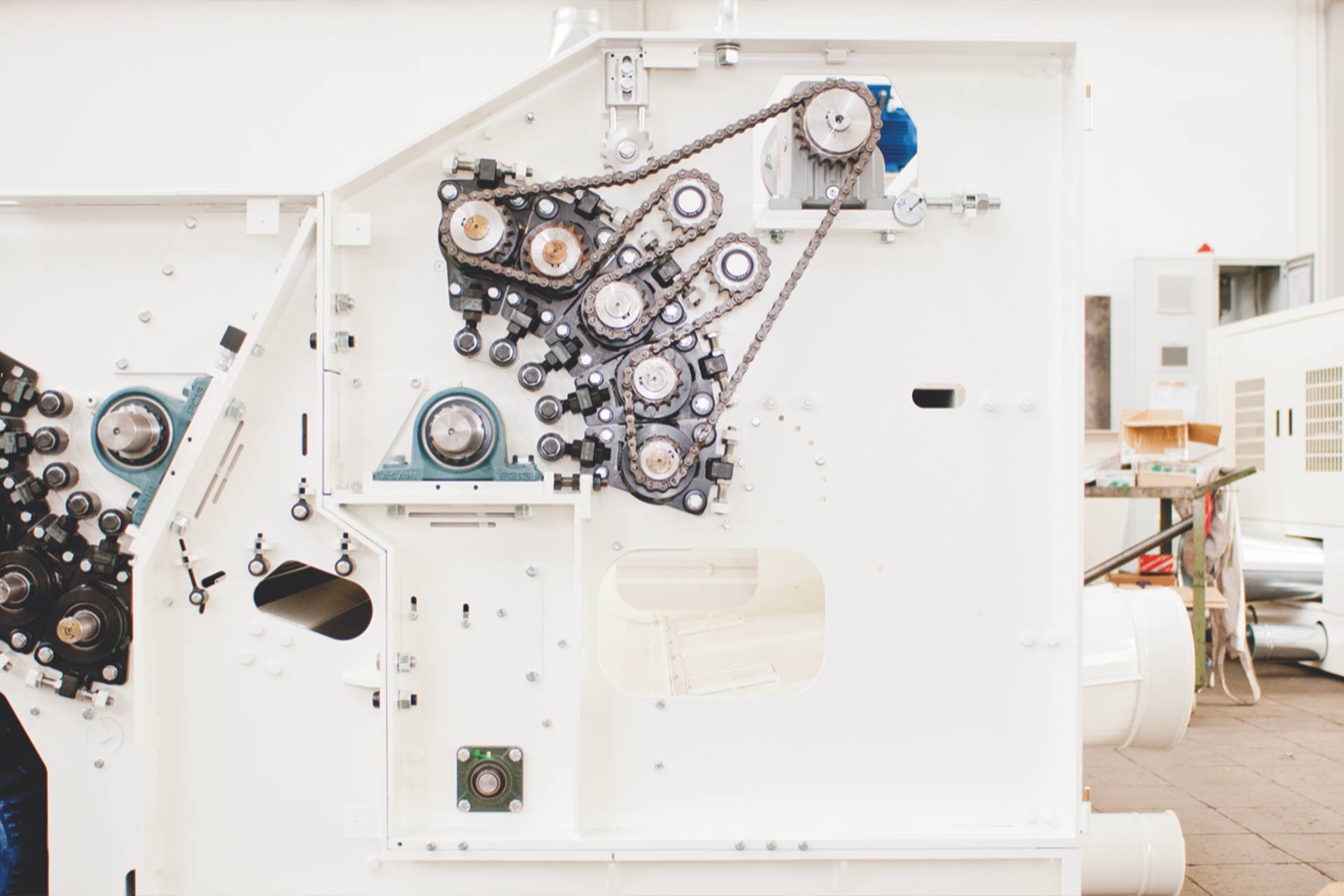
The laboratory provides looms, knitting machines and equipment for dyeing, printing, felting, spinning and carding, allowing craft techniques and industrial processes to coexist in the same space. One of the first residencies involved Luca Vanello, an artist interested in textile shredding, a historic process in the Prato district. The aim was to turn the wardrobe that had belonged to his professor’s wife into new fiber: «There were beautiful clothes and we struggled to convince the shredding company to go ahead».
Another project, conceived by Laura Losi, required the production of a fifteen-meter-long digital jacquard fabric with no repetition in the pattern: «More than half of the production cost went into developing the production file, which was enormous. Anyone familiar with digital jacquard weaving will understand that it is a fairly crazy thing to do».
Alongside artists come designers working on garments woven directly into their final shape, eliminating cutting waste, or designers asking to use industrial machinery in ways different from its usual function: «We always throw ourselves into these challenges, pushing those involved in production beyond their mental and technical limits».
For the Moroder sisters, the laboratory has also become a privileged observatory on changes in the sector: «Research and experimentation pass through here. We are constantly finding new materials, discussing them and experimenting with different forms of application».
Who will teach textiles when the laboratories close?
In recent years, many schools have progressively reduced investment in laboratories and machinery. According to the Moroder sisters, this shift risks interrupting the transfer of skills that, in textiles, still depends on direct experience: «A great many schools no longer have access to laboratories. Over the years they have disinvested in machinery, so they use our laboratory to complement what they do in the classroom».
Lottozero’s training is aimed primarily at students, young professionals and designers already working in the sector. The cooperative develops targeted programs, often entrusted to technicians from the district who possess specific expertise. The transmission of knowledge also concerns the relationship with materials, at a time when part of the design process risks progressively losing contact with physical objects: «Today we see everything through a screen and everything becomes flattened. A physical object has a whole series of physical steps behind it, and these need to be understood and appreciated».
In 2026, Lottozero launched Textile Art Factory, a program developed with the Prato Textile Museum and Studio Corte 17 within the Tuscany Regional ESF+ Program 2021–2027. The project selects artists and curators under the age of thirty-six for six-month residencies devoted to research, artistic production and direct knowledge of the Prato textile district.
The return of natural raw materials in the Tuscan Apennines
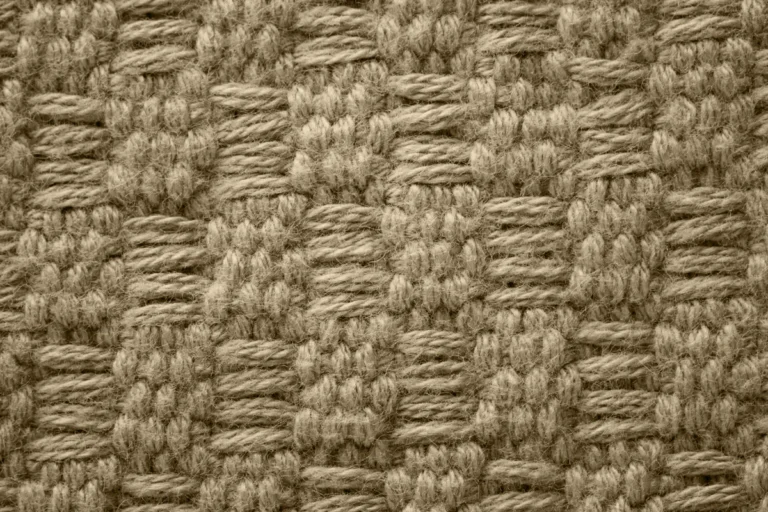
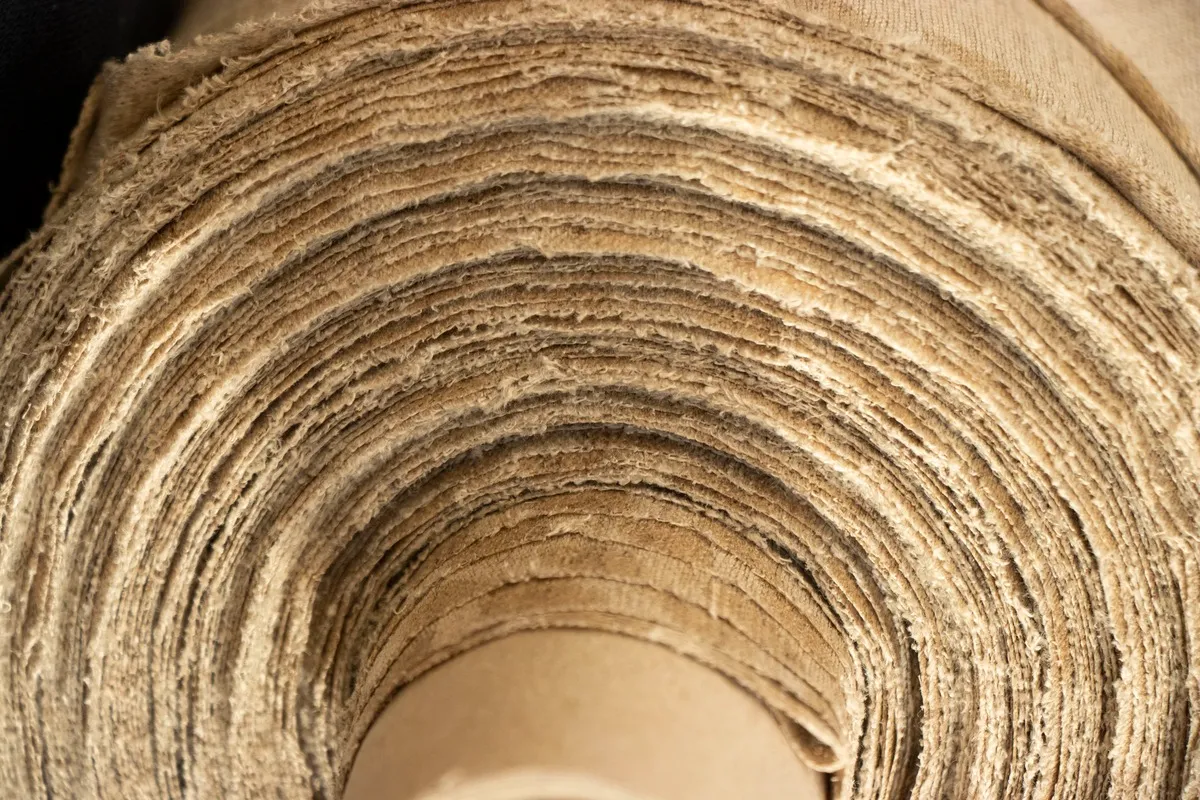
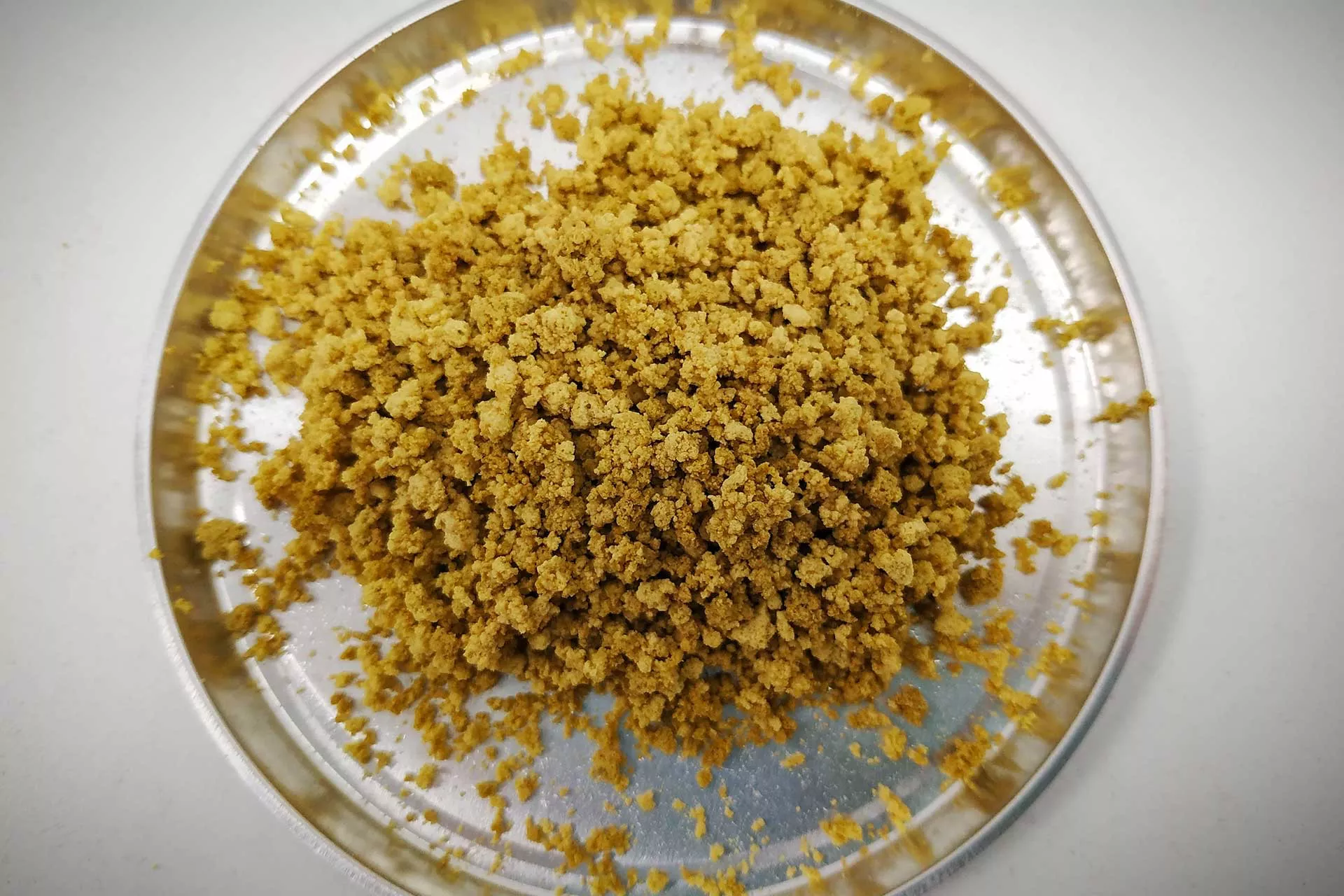
After ten years spent connecting designers, companies and the district, Lottozero decided to intervene at the beginning of the supply chain as well. It is currently developing a microfactory in an area of the Tuscan Apennines, along the valley connecting Prato and Bologna. Here the cooperative has restored a disused production building and started its first experimental cultivation of natural raw materials: «We started with hemp and linen and are also studying how to introduce silk».
The project stems from observing a change affecting the textile sector and inland areas at the same time. On the one hand, some brands are showing growing interest in shorter, more controllable supply chains; on the other, many small municipalities in the Apennines continue to lose population and productive activity: «We found ourselves in the fortunate position of having a property of our own, abandoned for more than forty years, fifteen minutes by train from Prato. It is a Tuscany different from the postcard image, an inland area that in recent years has begun to attract interest again. For us, it is also a question of values. It means rehabilitating and giving value to places that have so far been forgotten. We have communities that need new opportunities and materials that can be cultivated again. Giving value to people, places and materials is part of the same vision».
From hemp to silk, a microfactory to rebuild the Italian textile supply chain
The microfactory, which is expected to open in 2027, represents the extension of work begun in 2016: rebuilding the connections between stages of the Italian textile supply chain that have progressively separated over recent decades.
The project will bring fiber cultivation, spinning, weaving, prototyping, research and training together in a single place. The intention is to offer designers and small brands the possibility of following every stage of product development while maintaining direct control over the entire process: «We carried out fairly thorough research and found many pieces of the supply chain, but not everything under one roof. A brand will be able to come to us and develop the entire process».
Alongside production, the training activities already launched in Prato will continue. The idea is to bring young designers from Italy and abroad to the Apennines, putting them in contact with a territory that still preserves manufacturing and agricultural skills that are becoming increasingly rare: «We aim to reactivate this knowledge before it disappears and bring it into contact with a new generation of designers. Just as we built our work in Prato, we will do the same here: slow steps, sustainable for the scale of our reality. We begin with the first experiment and proceed gradually. Research, design and development will come first; material results will take more time».