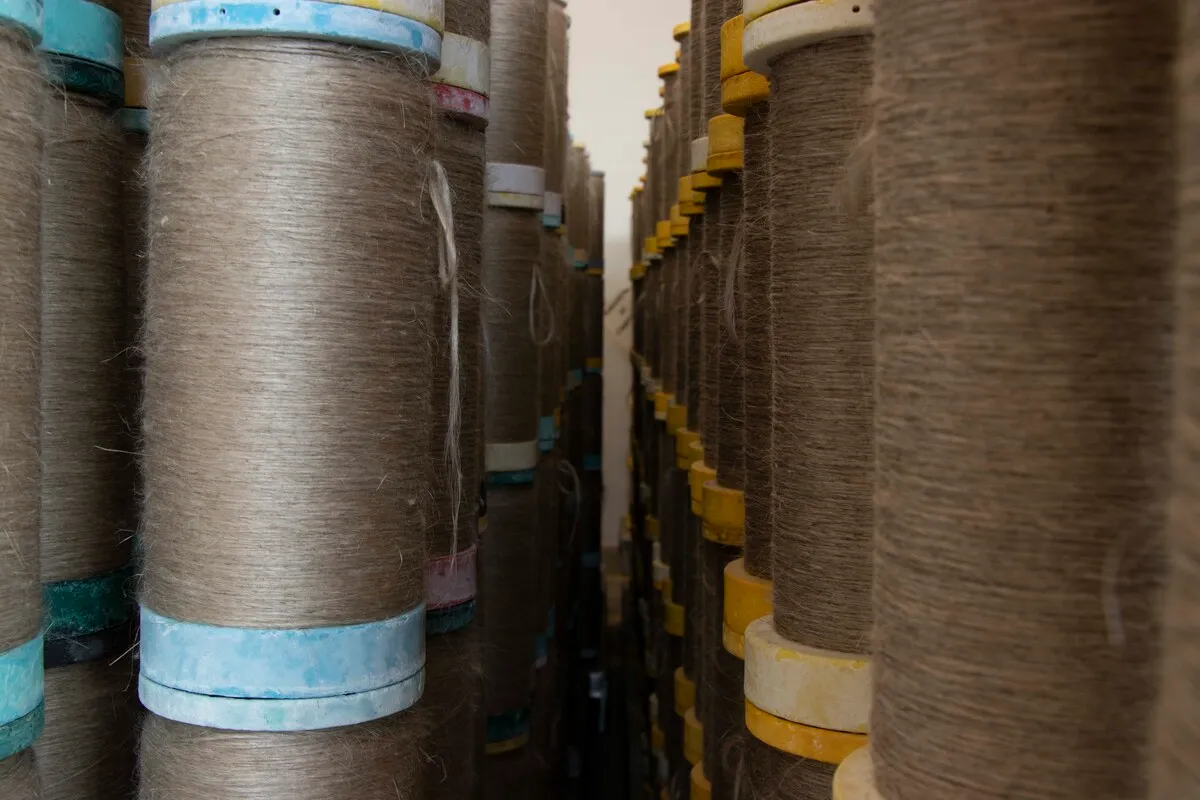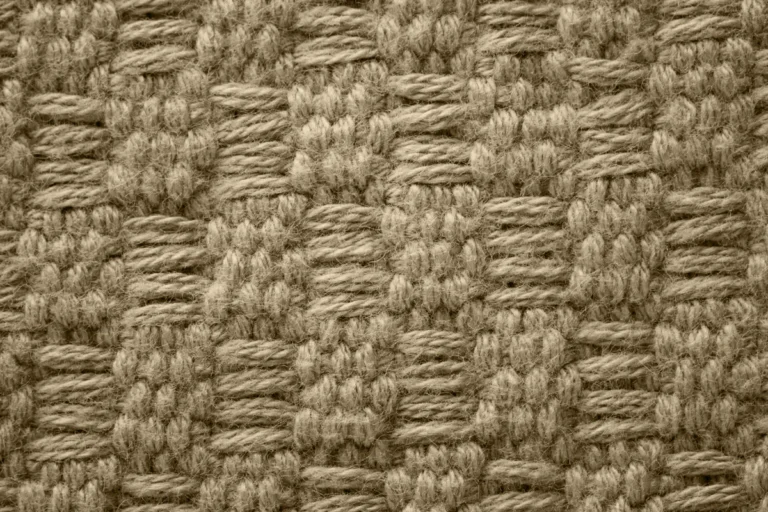
La Methode hemp yarn: color changes over time, with no repeatability
From Flemish hemp to fine spinning, Bruno Mocchi develops long-fiber garments while confronting repeatability, natural dyeing and market constraints
La Methode, a project based in Cardano al Campo, Varese, makes hemp garments
La Methode is a textile project based on fiber hemp, created by Bruno Mocchi in 2018 as an evolution of Produce Sinapsi. The latter was founded in Prato as a research laboratory for natural fibers, focusing on fine spinning and the recovery of skills linked to textile hemp. Mocchi uses Chinese hemp processed through wet spinning, experimenting with high yarn counts and monitoring the behavior of the fiber across different batches.
The transition to La Methode marks the shift from research to continuous production: «I started by developing around twenty articles in pure hemp or hemp-cotton». The project is not structured as a capsule collection or seasonal operation, but as a stable line built around the fiber.
Between 2018 and 2020, the articles were presented in Paris and shown to several luxury brands, in both menswear and womenswear: «Many saw the collection, but there was no real interest». The company is now based in Cardano al Campo, Varese.
The repeatability the market demands from fiber
The only structured collaboration was with Armani, which included a hemp knit in its collection for one season. The experience became a technical case study. The initial sample was approved, but when production began, the available batch showed visual differences from the first one: «I had to send new samples explaining that this was the available batch and asking whether the difference was acceptable».
Production went ahead, but the episode highlighted the main limitation of fiber hemp: continuity between sample and production. «Color repeatability is the hardest thing». With the same yarn count, different batches react differently to dyeing. Absorption, the presence of tow, the natural base tone and the degree of retting all affect the final result: «If you buy the same count in four different batches, it will not even look like the same yarn».
For brands working with planned restocking and fixed color palettes, this variability represents a risk. Requirements include yarn-dyed fabrics, stripes and jacquards with guaranteed color stability over time. Pure hemp, especially in fine counts, retains an element of natural unpredictability.
Defect management also affects the final price: «If you expect three or four holes per meter and each invisible repair costs five or seven euros, the price rises quickly». In finer counts, the fiber is less forgiving than industrially stabilized yarns. La Methode chooses not to use invasive treatments to force uniformity.
Chinese vs European hemp: quality is measured in bast fiber
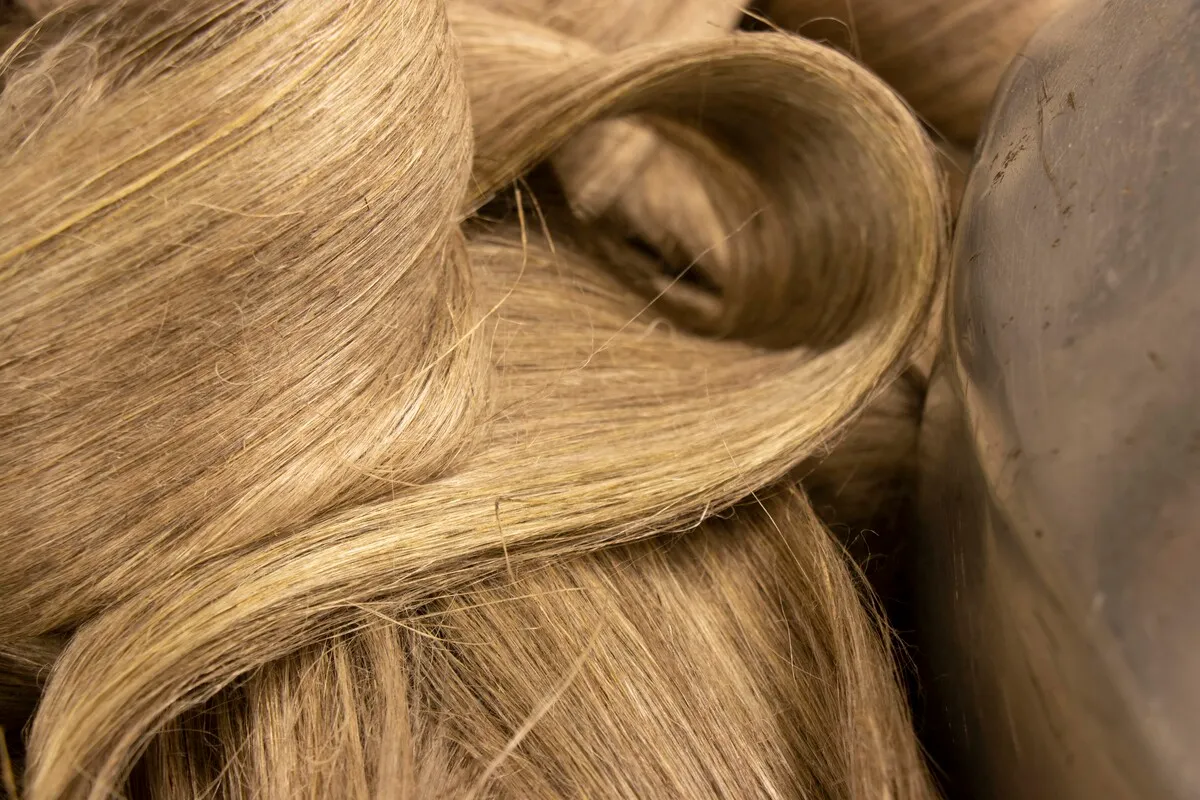
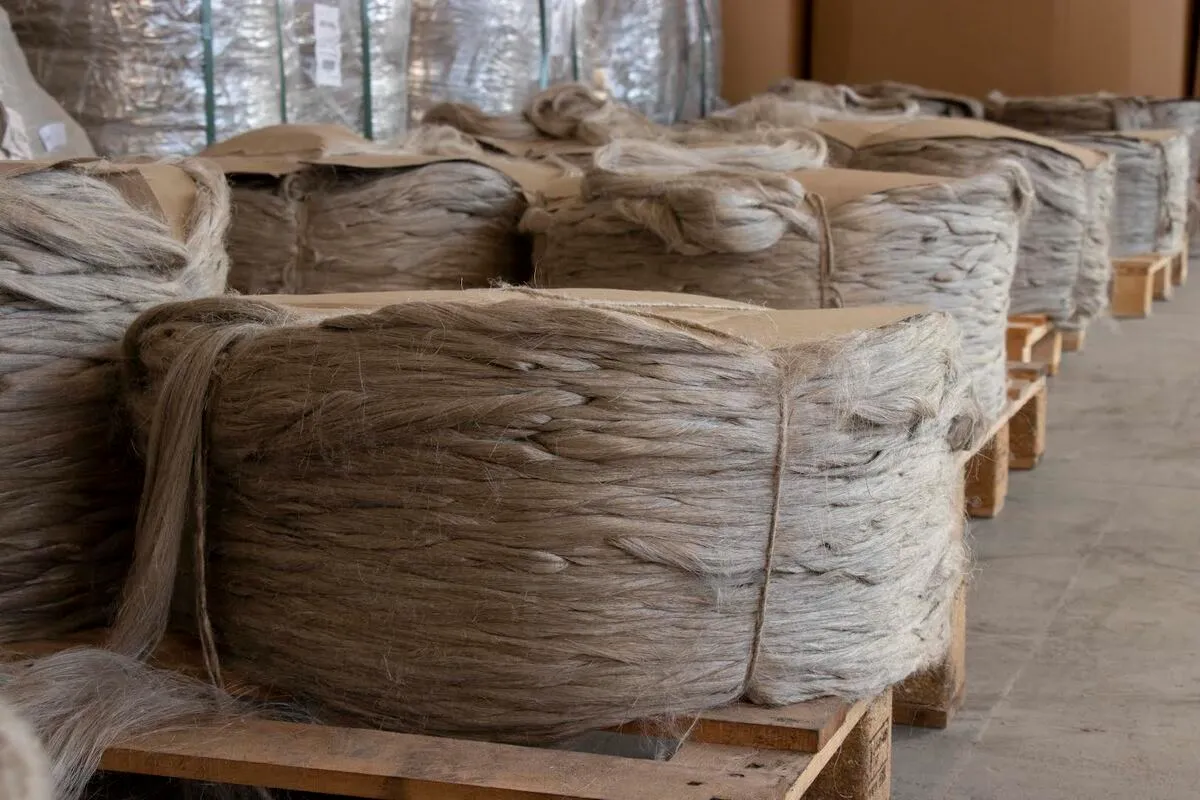
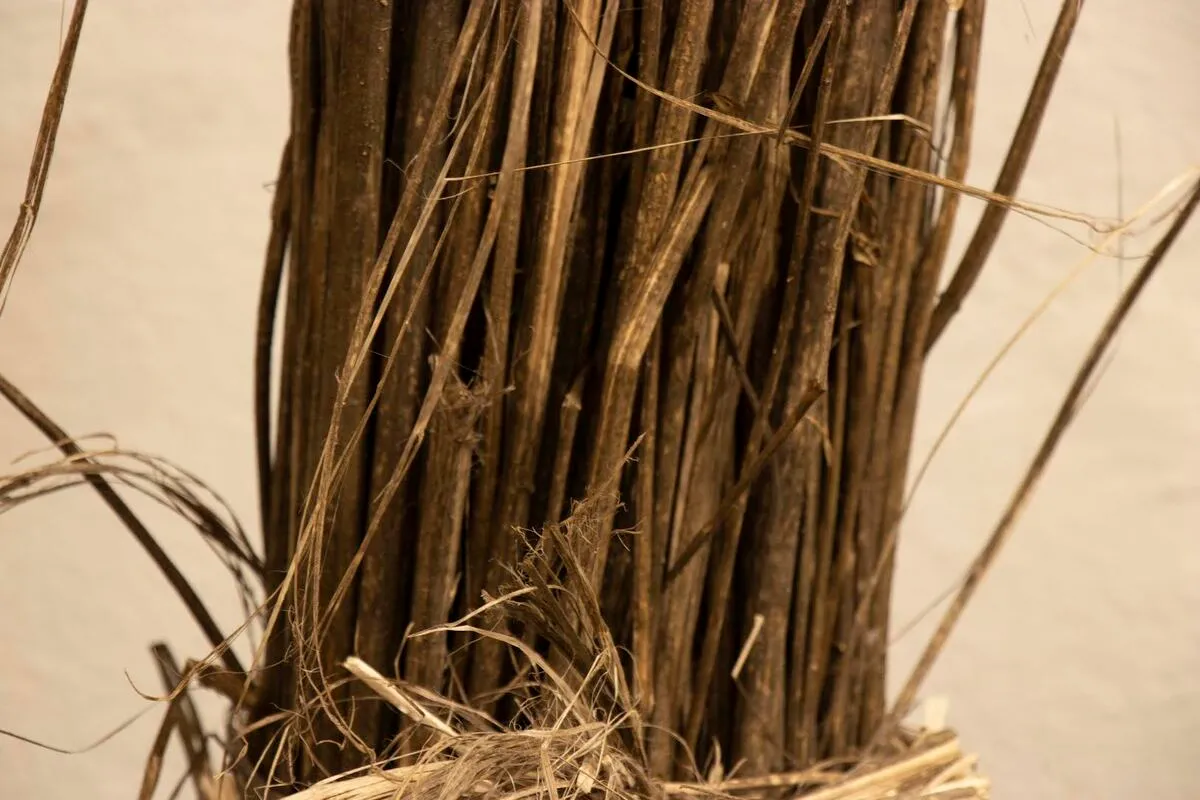
During the Produce Sinapsi phase, Mocchi worked with Chinese Kingdom hemp processed in the Prato area: «It was very regular, with a clean carded sliver». Quality is assessed through the bast fiber, the long fiber extracted from the cortical part of the plant stem and intended for fine spinning. Bast fiber is the most valuable portion of textile hemp: the longer and more uniform it is, the stronger and more stable the yarn.
La Methode now works mainly with European hemp from Flanders, an area historically associated with the cultivation of long fibers for textiles. Compared with the Chinese raw material used previously, European hemp shows greater variability linked to cultivar, sowing density and retting methods. If the long fiber is continuous and well combed, wet spinning preserves cohesion and breaking strength.
When the fiber is shorter or contains woody residues, the yarn loses stability.
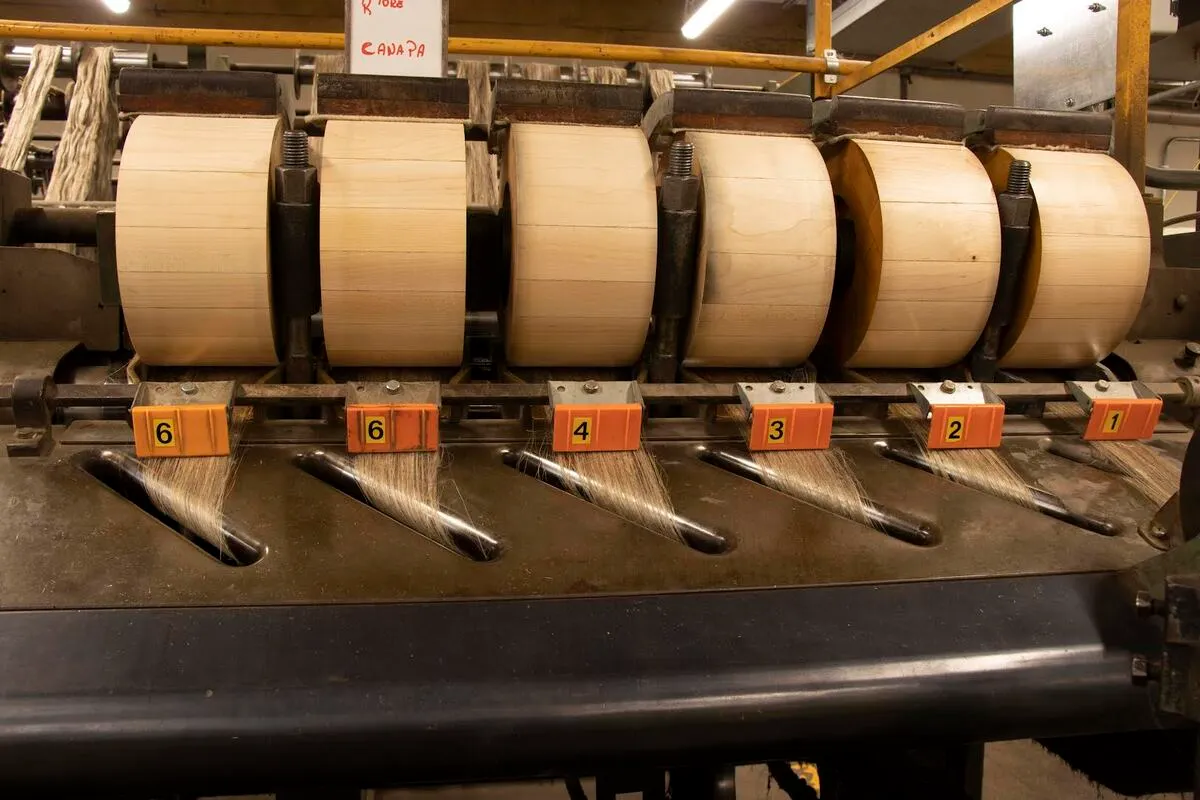
To achieve higher counts, many producers blend hemp with ramie: «Fifteen or twenty percent ramie makes the yarn more regular». This facilitates spinning but changes the nature of the product. Today Mocchi uses pure European hemp with counts reaching Nm 18,000.
To achieve even higher counts, the quality of the bast fiber alone is not enough. Hemp fiber is naturally rich in lignin, a component that provides rigidity and structural strength but makes spinning very fine counts more complex: «To go further, you have to intervene in the fiber’s internal bonds». Chemical treatments can reduce lignin’s rigidity, making the fibers easier to open and align during spinning.
This makes it possible to move toward finer, more easily standardized counts, but it alters the original structure of the bast fiber, potentially reducing mechanical strength and durability.
Another technique adopted by industry is cottonization. In this process, the long fiber is shortened and made to behave more like cotton fiber so that it can be processed using machinery widely available on an industrial scale. The practice can be coherent when it uses waste from long-bast combing, meaning fibers already selected as shorter.
When applied instead to new, intact fiber, cottonization means losing hemp’s strongest and most structural component. The resulting yarn is easier to industrialize, but performs less well in terms of strength and durability.
Natural dyeing exposes hemp to the variability of time
La Methode has progressively eliminated synthetic dyes, replacing them with processes based on natural substances — walnut, weld, rust, chlorophyll, algae — applied through prolonged immersion. Time therefore becomes a technical variable. Oxygenation contributes to the color result, as do temperature and the concentration of the dye bath.
Color is not stabilized to guarantee absolute uniformity from one batch to another: «I do not force natural dyeing into industrial parameters». This means it evolves over time: «After twenty or thirty washes, it changes». Household detergents, designed for industrially treated fibers, act on the organic pigment and alter its intensity.
The result also depends on the structure of the fabric. Yarn count, weave density and the presence of micro-irregularities influence color absorption. This approach makes large-scale production more complex and limits the possibility of guaranteeing uniformity, but allows hemp to remain closer to its original structure, avoiding chemical stabilization that would alter its behavior and durability.
Sustainable manufacturing and circular economies: durability as a production choice
La Methode does not follow seasonal cycles. Styles remain in production over time, subject to fabric availability. The absence of six-month deadlines makes it possible to work on continuity of the fiber rather than product turnover.
Durability is integrated into the project, which aims to position itself among sustainable manufacturing practices: «I offer a ten-year guarantee. If a garment is damaged, I repair it». The value of the product, therefore, lies not in speed to market but in material stability and the possibility of maintenance. The strength of bast fiber allows prolonged use even under high mechanical stress. La Methode’s clientele is made up largely of athletes and climbers.
The company also follows the principles of circular economies. Waste from long-bast combing is not automatically discarded. The shorter fiber — separated during selection because it is unsuitable for finer counts — can be redirected toward more structured fabrics or controlled blends: «I do not throw away anything that can be reused».
Integrating remnants of yarn-dyed cotton into new production follows the same logic: reducing stock accumulation and managing raw materials in line with the quantities that can actually be processed.
Without dedicated agriculture, an Italian textile supply chain cannot exist
For Mocchi, yarn quality does not begin in the laboratory but in the field: «The first step is the farmer’s investment». Hemp is a self-adapting plant: the same seed grown in different territories produces fibers with different characteristics. It is not only a matter of climate, but of agronomic management.
Sowing density and harvest timing directly affect fiber micronage. Denser sowing encourages thinner, more elongated stems, but requires greater attention at harvest: «If the plant reaches full flowering, the fiber thickens because it has to support the flower». Earlier cutting makes it possible to obtain finer fibers suitable for spinning, but reduces overall yield per hectare.
Historically, cultivating textile hemp required up to one thousand hours of manual labor per hectare. Industrialization favored biomass production, which is more compatible with large-scale technical and industrial applications. Fine spinning, by contrast, requires dedicated cultivation and coordination with primary processing, from retting to decortication.
In Japan, for example, the fiber is extracted fresh, before traditional water retting: «Hemp processed immediately produces long, pale bundles». This approach preserves the length and integrity of the bast fiber, but requires a close connection between agriculture and primary processing.
The reconstruction of the Italian textile supply chain depends on this technical continuity: agronomic expertise, knowledge of bast fiber, suitable decortication plants and machinery for wet spinning.