Erwan Bouroullec on Maap for Flos: I prefer instinct over dogma
A rural childhood, the roughness of making, and the logic hidden in disorder: Erwan Bouroullec on the genesis of Maap for Flos — why chaos is the most honest design tool
The sound of chaos: Erwan Bouroullec between primitive gesture and domestic light
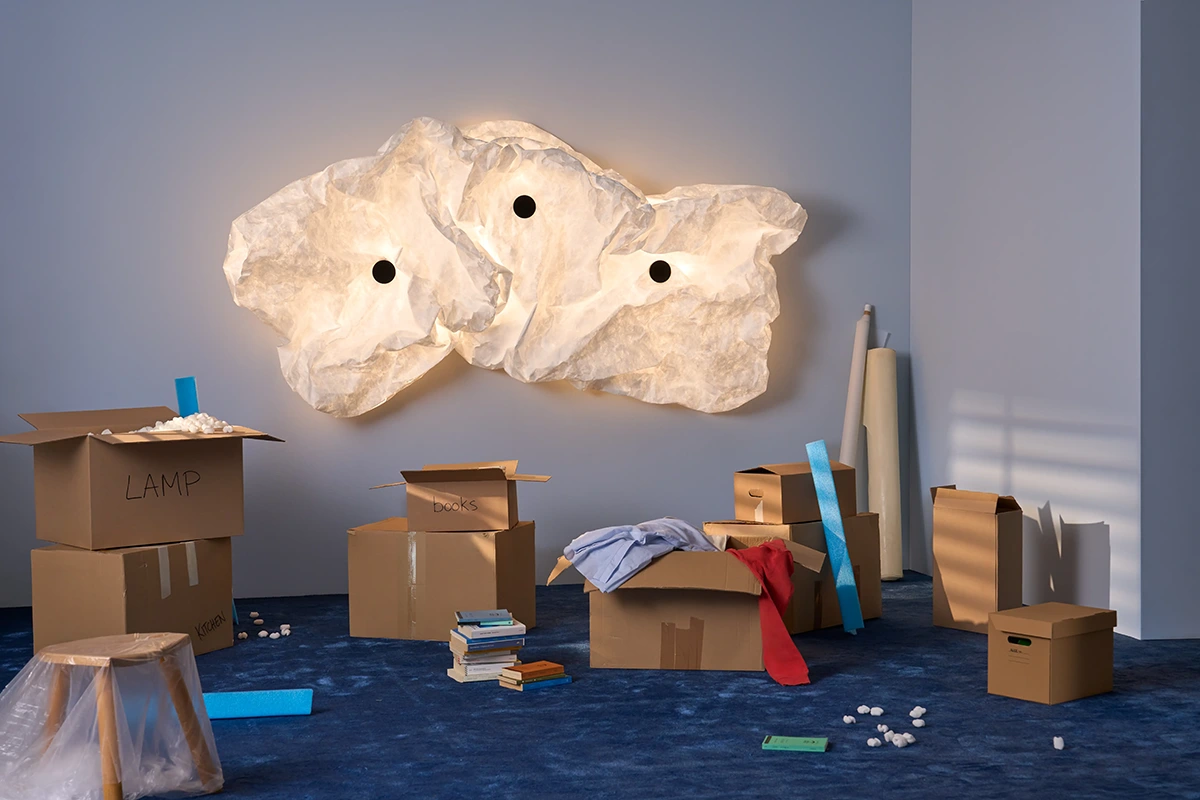
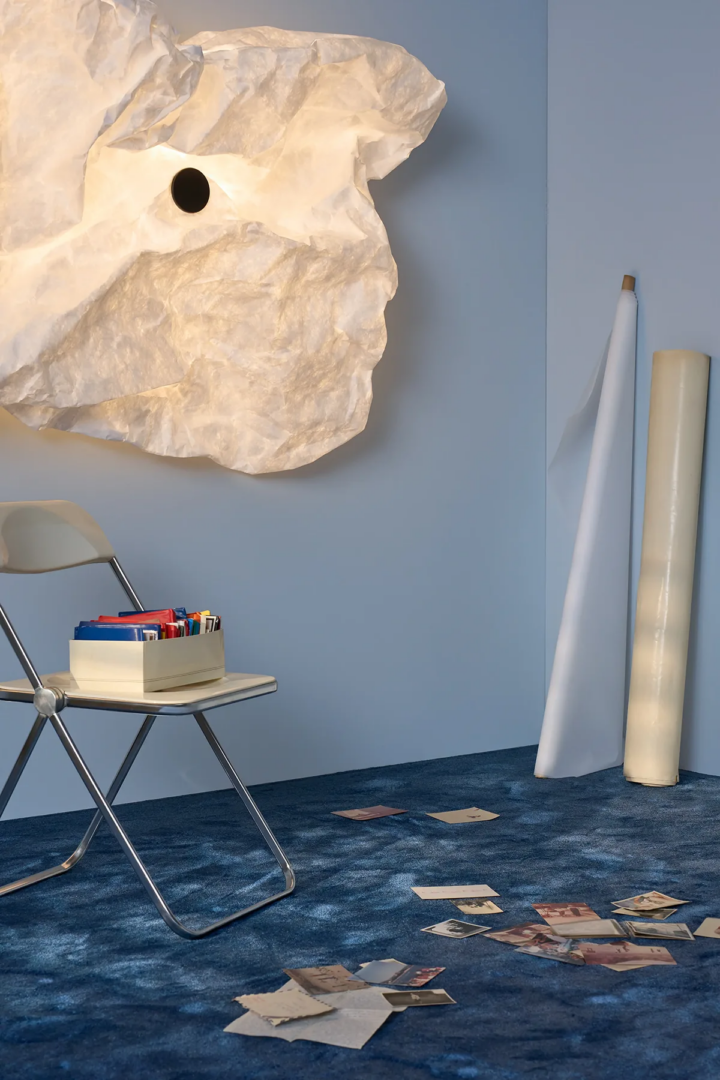
Before order, there is always disorder. Before design, instinct. Before form, gesture. In the work of Erwan Bouroullec, design seems to return to an original condition: not one of absolute control, but one in which matter reacts, folds, resists, and finds its own balance. The lamp appears as a crumpled surface, almost improvised, yet perfectly calibrated. A presence born from chaos and transformed into structure. There is nothing decorative in the conventional sense of the term; rather, there is a primal energy — something that belongs more to the body than to the drawing board.
Bouroullec speaks about the hands, about making directly, about the need to free design from excessive theory and return it to a concrete, physical, almost animal dimension. “Design is not a discipline that should be taught as theoretical knowledge. In the end, people do not do that — they simply interact directly with objects.”
When home becomes chaos: moving as a design manifesto
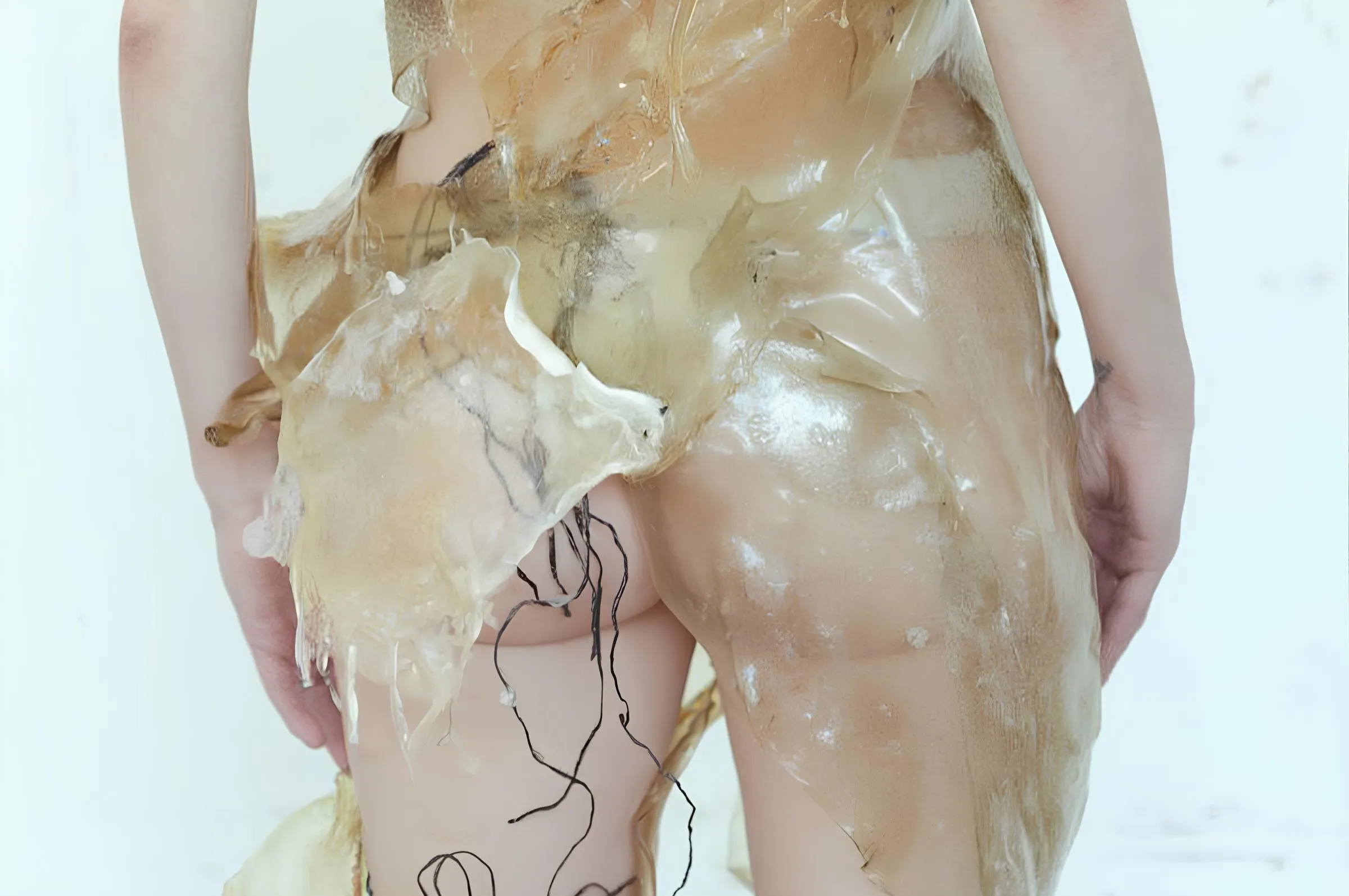
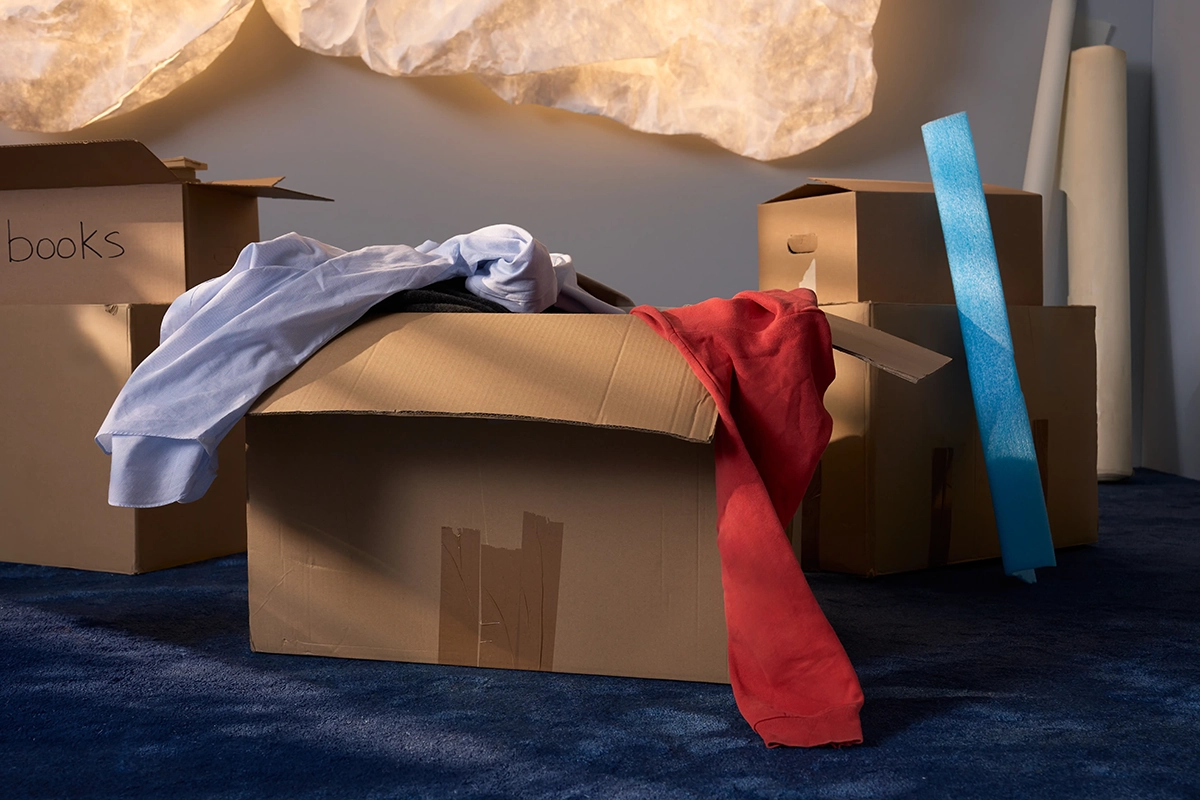
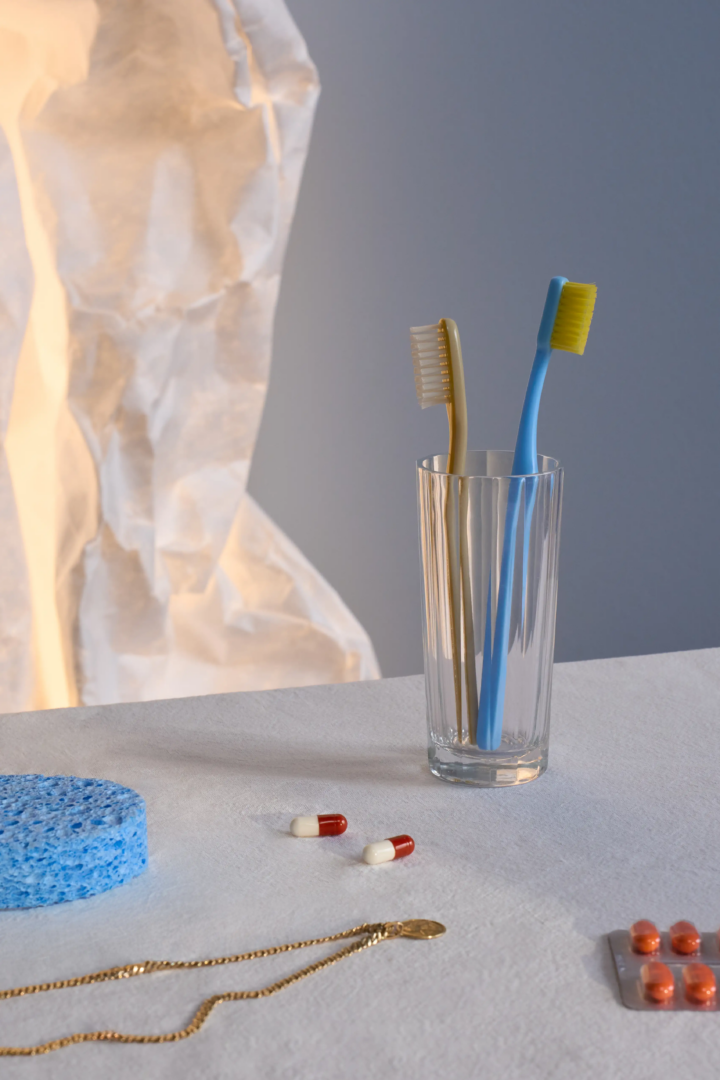
Open cardboard boxes, stacked books, abandoned clothes, scattered tools, phones balanced precariously: scenes of moving house, suspended places, rooms in transition where nothing is yet settled. Moving is a form of contemporary chaos — it interrupts habits, dismantles hierarchies, and returns every object to its condition. It is a moment when the home stops being representation and becomes matter. Within this temporary landscape, Maap does not decorate; it orients. It does not embellish; it gives form to passage.
Light passes through the ultra-light, paper-like fiber as if filtering through thin rock, a compressed cloud, a topography still in motion. The wall becomes relief — a domestic orography. It is a lamp, but also a spatial event.
Roots in the raw: how Arte Povera shapes Erwan Bouroullec’s vision
It is no surprise that Bouroullec acknowledges a debt to Arte Povera — not as a stylistic quotation, but as a mental attitude: a rejection of ornament, trust in material. “I was born in the countryside, and much of my family had farming roots. On a farm, you need to build a fence, make a door, repair something constantly. And you do it in an incredibly raw, direct, essential way.”
In these words, a key to understanding Maap: beauty not as polished perfection, but as the unexpected consequence of a necessary gesture. Though trained close to contemporary art, Bouroullec resists being read as an artist in the traditional sense. “I don’t want people to look at what I do the way they look at an artwork. I always want everything to pass through something concrete.”
This is what makes his work so relevant today. In a time dominated by flawless surfaces, polished images, and predictive algorithms, Bouroullec reintroduces error, fold. He reintroduces chaos as a primary form of material intelligence.
Maap does not seek industrial perfection; it seeks tactile truth. It reminds us that every inhabited space begins first as disorder, then as choice. First as accumulation, then as rhythm.
Interview with Erwan Bouroullec: on instinct, wildness, and the memory of objects
Erwan Bouroullec Most of the time I build projects for concrete reasons, grounded in reality. Maap is about lightness and ease of installation. Something else also happens within it: the eye keeps questioning it. Many visual memories are hidden within this chaotic surface. Inside each of us lives a sort of primitive monkey. In the case of Maap, this “monkey” is almost disoriented. It sees a mountain, a cloud, something familiar. Yet, at the same time, it cannot fully conclude that this is simply a lamp made of a sort of paper. It has a strong presence, suspended between the symbolic and a permanent question about what it is. For this reason, it helps architecture a great deal. It is the kind of object that, if a child sees it, years later they will say: “I remember that house where there was that big white thing.” It is symbolic — it enters memory.
LM The surface of Maap appears folded, creased, almost shaped by a physical gesture.
Erwan Bouroullec I have spent my life in workshops, and I grew up in the countryside — I could dig a hole in the ground, build something in a tree, pick up a piece of wood or any other material. My father had a small workshop, so I could use a hammer and other tools. Then came art school, where I kept making things with my hands, naturally. I have always been surrounded by what I call “toys” — for me, a tool is a toy.
When I work, I do it in a direct, almost brutal way. I do not prepare everything perfectly. I can think for a long time about something — perhaps for days — and then realize it in a couple of hours with whatever I have in front of me. It is a process. Perhaps, I am trying to recover what one senses in certain abstract painters: an almost wild energy in the act of making.
When you work like that — quickly and instinctively — you arrive at something true. When you work quickly and roughly, you cannot corrupt the structure, you cannot corrupt the material. There is no room for superfluous elements. This crumpled paper is the natural result of that process. There is something slightly wild in this gesture.
All of this also comes from art. I have always been fascinated by artistic forms that are not exactly “made” by the artist in the traditional sense. I think of Sol LeWitt. I was also drawn to artists like Lawrence Weiner, who would write a sentence on a wall and leave it to people to reflect on it. All of this exists within Maap.
Erwan Bouroullec on Maap: installation, touch, and the value of making by hand
LM In Maap, form is not determined solely by the designer, but also by the way it is installed. Can we talk about customization in contemporary industrial design?
Erwan Bouroullec Fifty years ago, manual skill was much more present in our lives. With Maap, I would prefer people to think of all this as a normal part of life — a natural, manual gesture inserted into an ordinary process. That is why I distrust the opposite idea: turning it into a symbolic act, as if people were creating an artwork.
That said, one of my uncles was a mason. He built a house for his family with his own hands. And when he was doing it, there must have been something almost magical in that gesture. He was thinking of himself, his wife, their three children. It was simply the act of building. The use of the hands. At times I sound a little animistic.
One of the great roles of design is to help us construct richer social protocols. There is a glass on the table. When we drink water, partly it is because we are thirsty. Another part of the gesture is saying “welcome” to the other person, creating a relationship, moving the conversation forward.
Industrial design or decorative object? Erwan Bouroullec on symbols, Flos, and form follows function
LM Lighting design is no longer only about technology or luminous performance, but also about constructing atmospheres. Which architectural references informed Maap?
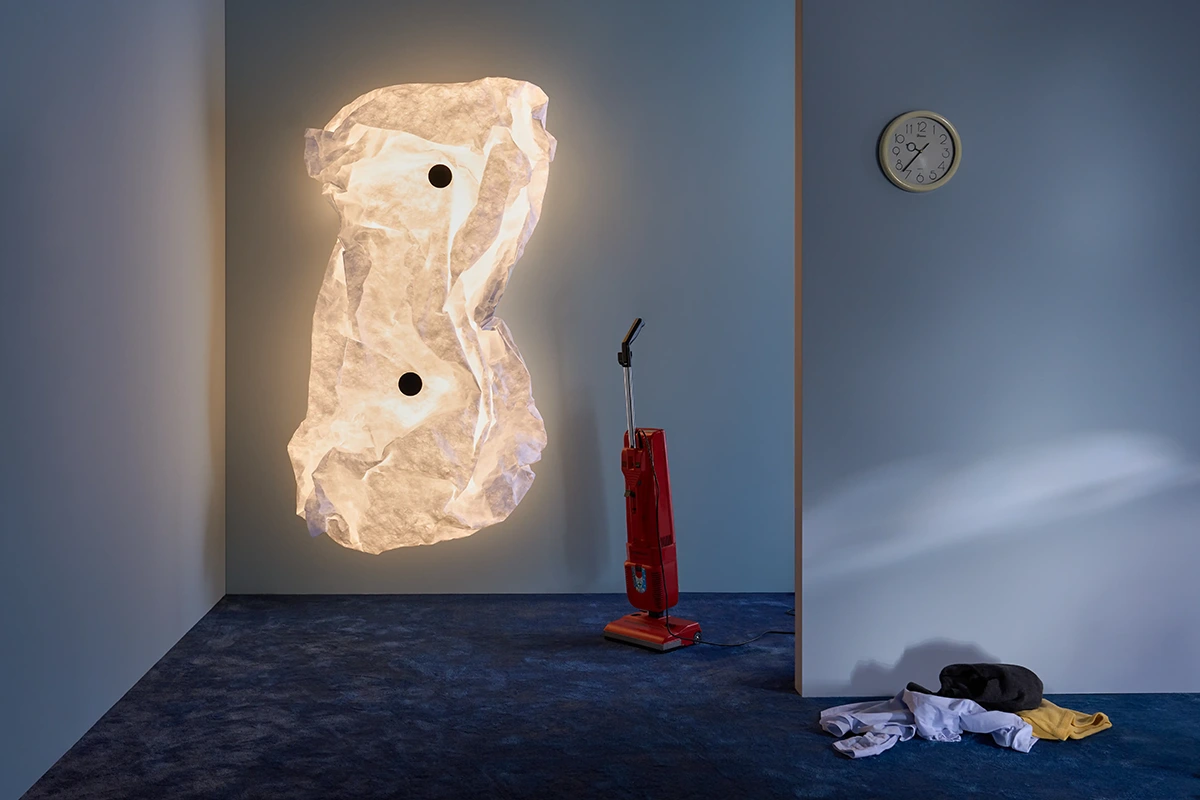
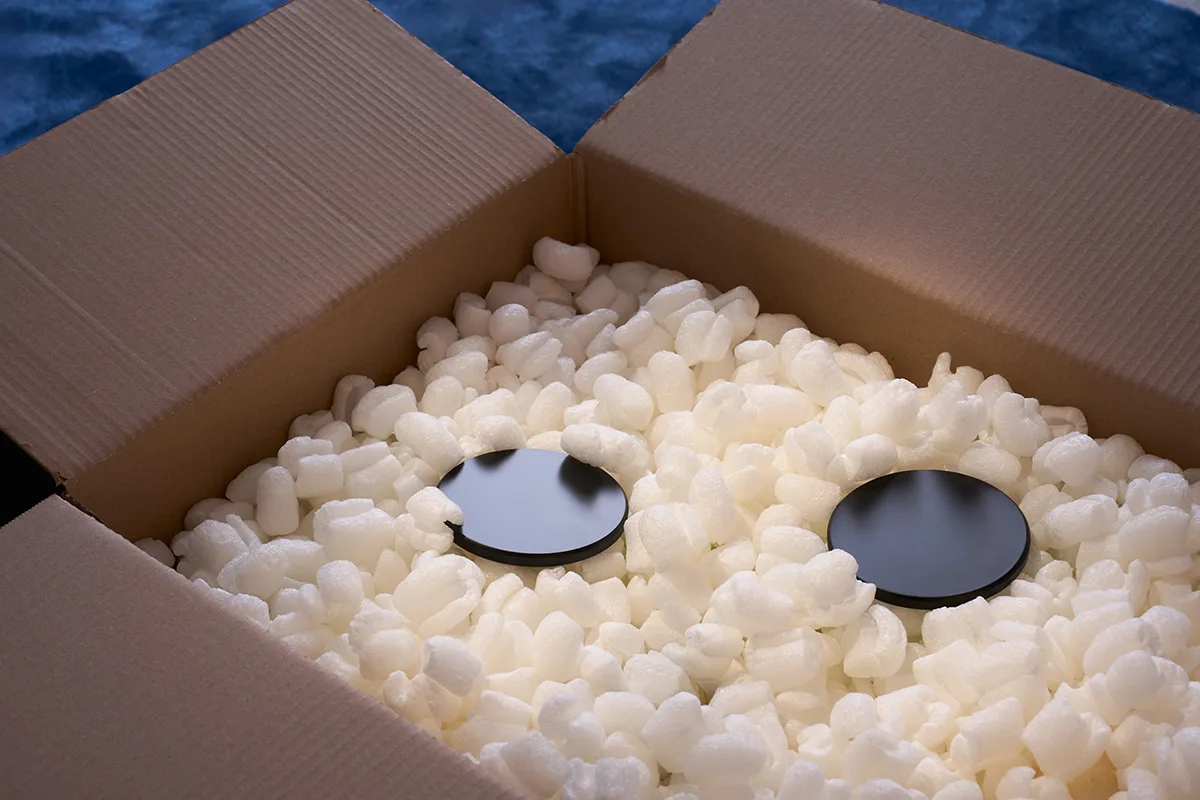
Erwan Bouroullec Maap is a concrete and lightweight project. One could say it is as simple as a flower —a flower is complex to design. Imagine engineering one: everything is based on tiny thicknesses, structural and non-structural parts, transparencies, delicate balances. Maap is built on contrast. Two very raw, almost symbolic points. An extremely simple geometry. Around them, the flower develops.
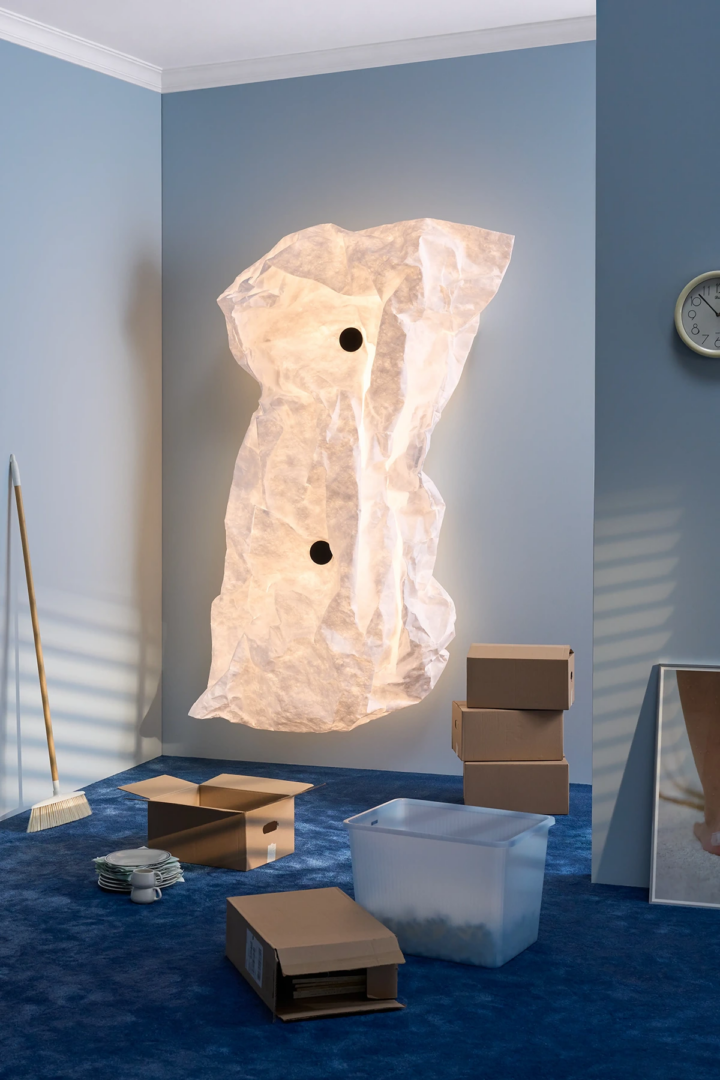
Rural buildings, those meant for work — very clear volumes, almost pure blocks, often monochromatic: all wood, or painted metal. That is why I imagine Maap in an old house, on a rough wall. Folds, creases, a complexity that nourishes the eye. On a perfectly smooth white wall it might risk appearing too virtual. Maap needs a frank, direct context to fully express itself.
LM: What Flos codes are most recognizable in Maap, and how does it position itself within Flos’ culture?
Erwan Bouroullec Think of the Snoopy or the Toio. It is not about fashion: it is about creating to endure. Flos objects have become part of contemporary civilization. One of its pillars is Achille Castiglioni — a master whose projects seem built out of symbols. Maap too embodies certain symbols: the contrast between the structural points and the floral, organic part.
I prefer instinct. I can be dogmatic, repeating formulas like form follows function. I am attracted to the idea of creating symbols rather than functions. There are false dogmas in design. One is that formula. Another is that one should not create beauty, because beauty would be useless. In reality, we are not that pure.
Erwan Bouroullec on chaos theory, paper folding, and the geometry hidden in instinct
LM Maap seems to move away from object production and closer to an artistic practice.
Erwan Bouroullec Yes — but once again I reject that definition. We could mention Jackson Pollock: the gesture of dripping, the acceptance of doing something you cannot control. Part of Maap could just as well be rooted in cooking. When you cook, you perform many gestures with your hands — you must use smell and touch. You may have a recipe book, but a recipe book is far from enough to really know how to cook. You must involve a deeper part of yourself. Something that activates the senses. Something you cannot repeat identically.
LM Maap seems to originate from simple movements rather than predefined geometries. Would you define it as a simple or a complicated design?
Erwan Bouroullec Maap is based on chaos. Chaos is something simple. I read Chaos: Making a New Science by James Gleick. With the arrival of computers, people returned to studying an area of physics and mathematics previously ignored because it produced irregular results. These formulas were considered wrong, of no interest. With computing power it became possible to repeat calculations on a large scale — and what emerged was surprising: up close, the phenomenon seems irregular; widen the view, and structure, geometry, and balance appear.
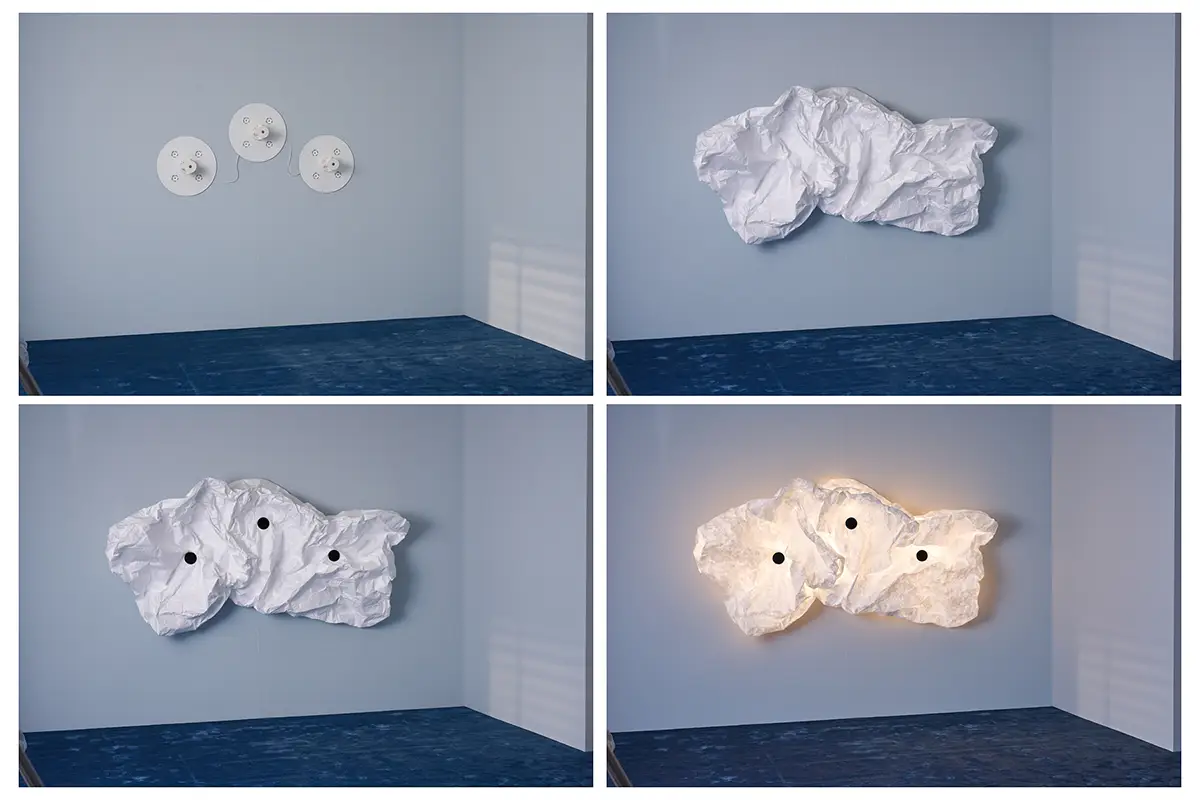
A sheet of paper, taken as it is, is unstable. Fold it once, it becomes more stable. Keep folding in all directions and you stabilize it completely. In this apparently instinctive gesture, I am distributing all tensions perfectly. Through a process I do not fully control, I am producing something that contains advanced physics and complex geometry.
The inner monkey sees a tree and understands it. Yet we cannot perfectly describe a tree, measure it, or reproduce it. Maap contains this logic — chaos as its main constructive tool.
Organic design and perfect imperfection: Erwan Bouroullec on nature, contrast, and Maap
LM Can Maap’s aesthetic be described as organic?
Erwan Bouroullec I do not want the project to be read as a simple quotation of nature. I am interested in the logic through which nature builds forms, not in nature as image or decorative reference.
Finding the right balance between paper, magnet, dimensions, weight — sometimes it was too large and fell. Sometimes too weak. A bit like designing a flower.
One aspect required attention: the risk that Maap would be associated with a cloud. If it had been read only as a cloud, people would have reduced it to that. Maap possesses many visual resonances, but none that can be identified precisely. That is a good thing — the instinctive eye keeps questioning, perception remains active.
LM In Maap there is a quality that could be described as perfect imperfection: forms that are not entirely regular yet remain balanced. Was imperfection something you intentionally pursued?
Erwan Bouroullec In Maap there is a pivot, and then disorder. Disorder without a pivot would not be interesting. The pivot without disorder would perhaps be nothing.
I once visited Isamu Noguchi’s stone-carving workshop in Japan. When you entered, the first space was a large veranda built literally on the rock. The floor was not flat, and a small stream ran through the stone. There was a table. The wife of the sculptor worked with flowers. On the table, a large bouquet, wilting, almost beginning to rot. It was good.
I can see beauty in things that look badly made, or apparently wrong. Not what you find on some cheap Instagram or décor magazine: the perfect set, the candleholder placed in just the right spot. It must be terribly boring.
LM Taking as reference the title of the multimedia installation accompanying the presentation of Maap: what is, for you, the sound of chaos?
Erwan Bouroullec The layering of everything. Chaos is life. There is a book, Caos Calmo by Sandro Veronesi — that image of the protagonist sitting motionless after the death of his wife. The sound of chaos is sitting in a café, watching people, observing everything moving. It is life. It’s stratification.
Lucia Mannella
Credits
TEAM
photography Alice Beltrami
set design Michela Tacchini
graphic Letizia Agosta