Hannah Levy: why a prehistoric crab makes sense in her sculpture
With Blue Blooded at Museo Nivola, Hannah Levy turns the horseshoe crab — harvested for modern medicine since before memory — into the most coherent subject she has ever chosen
From furniture to the horseshoe crab: why Blue Blooded seems like a rupture in Hannah Levy’s sculptural language
Over little more than a decade, she has done one thing with consistency: Hannah Levy takes familiar objects — above all furniture and medical supports — and estranges them by setting metal against a biological vocabulary of silicone, glass, prosthetics, skin, claws, and human and animal postures. For an artist who has often described her works as creatures rather than artworks, suspended between the zoomorphic and the anthropomorphic, the starting point has always been the cultural object, the designed thing, the artifact already saturated with human meaning.
With Blue Blooded, her solo exhibition at Museo Nivola (Orani, Nuoro – Sardinia), on view until July 12 and curated by Giuliana Altea, Antonella Camarda, and Luca Cheri, she appears to do the opposite: she begins with a creature already alien in itself, the horseshoe crab, a marine arthropod whose blue blood is used to test the safety of vaccines and medical devices. Two further firsts mark the show — lost-wax casting and the use of a plinth. For an artist who once said that everything we make contains traces of our underlying values, building a body of work around something that predates culture by aeons seems, at first, like a contradiction.
Look closer, and it isn’t. The horseshoe crab blood-harvesting process — bodies immobilized in harnesses, lab workers in sterile environments, a biomechanical logic at once grotesque and hyper-designed — already looks uncannily like a Levy sculpture. More than a break, Blue Blooded sharpens some of her central obsessions: the tension between human and nonhuman bodies, the vulnerability embedded in structures of support, the unstable boundary between organism and apparatus, between care and violence. The animal is not even really a crab, but a chelicerate, more closely related to arachnids than to crustaceans — which makes its presence feel even more apt given her recurring spider-like forms. In parts of Asia it is considered a delicacy; in the United States it has long doubled as fishing bait, echoing earlier photographic works involving a worm pierced on a hook.
Then there is the connection to the space itself. Levy always begins with the architecture and history of the venue hosting her work, and here she discovered something almost too good to be true: the beaches of Long Island where she had collected horseshoe crab shells for years are the same coastline where Costantino Nivola first experimented with sandcasting. The idea of taking these objects from Nivola’s adopted home and bringing them to the place he originally came from gives the exhibition a logic that feels less constructed than inevitable.
What might have seemed like a reach ends up feeling like the exhibition she was somehow destined to make. I spoke with her about all of this, as well as aliens, smelly pee, digital-hoarder behavior, and Duchamp.
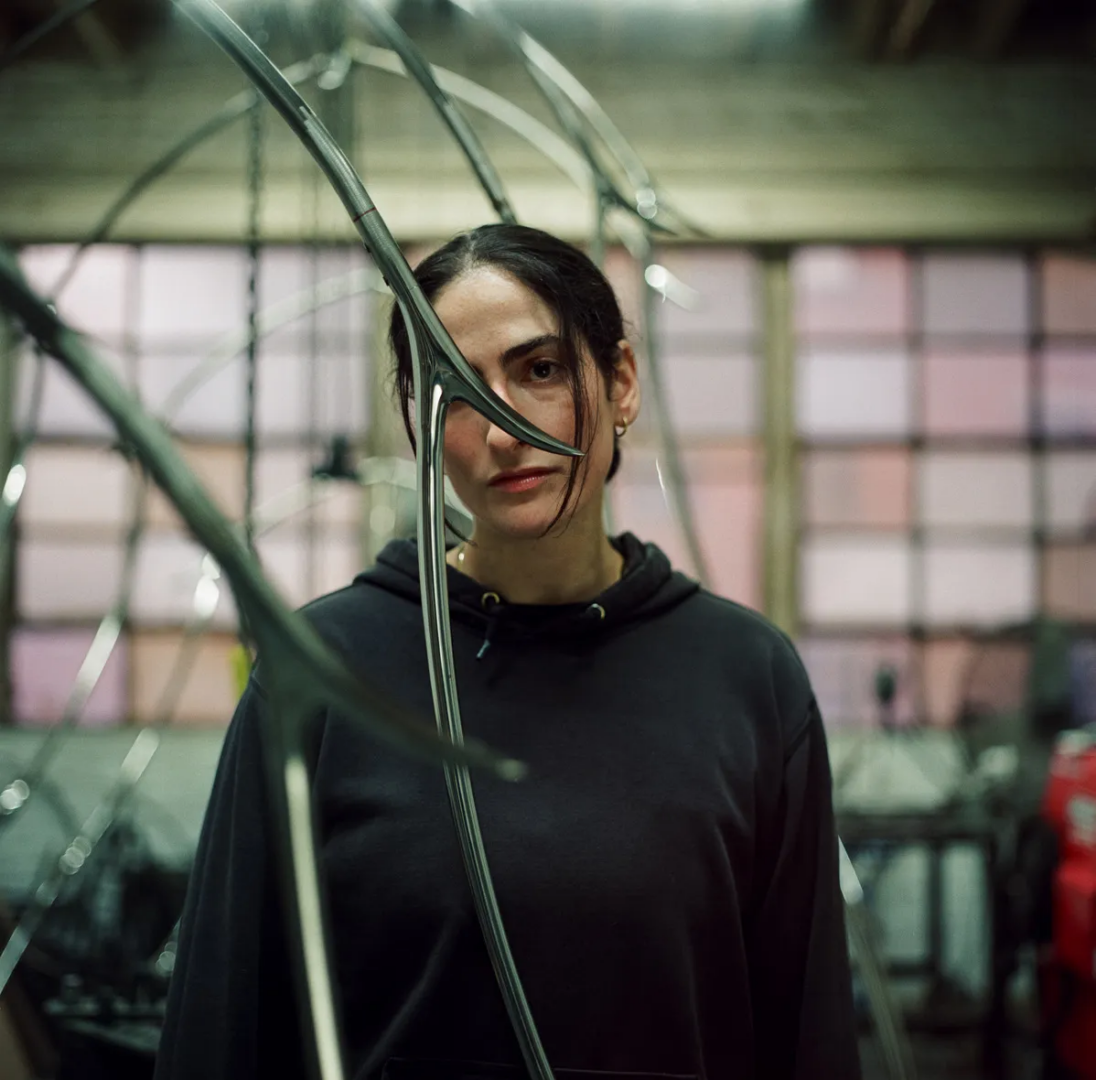
Hannah Levy on continuity: the horseshoe crab as a bodily object
LA: Does this feel like an evolution in your work, or was it already implicit?
Hannah Levy: For an Italian audience the horseshoe crab probably is unfamiliar, but if you’re from the Northeast of America, these shells are everywhere on the beach. My work has always been about bodily interaction with the objects around us — furniture, medical equipment, exercise equipment. It comes back to the experience of having a body in space, with all the anxieties and discomforts that come with that.
The horseshoe crab was a familiar shape to me, but I had no idea it occupied such a strange place in the medical world. This animal has interfaced directly with your body — some part of it may have touched the swab used on your skin, the needle used to draw blood, or the vaccine that entered your body — is striking. Then, while reading about Nivola, I found out that the same beach where I had been collecting these shells was also where he first developed sandcasting. The idea of taking objects from his adopted home and bringing them to the place he originally came from felt right. It’s less a departure than a continuation.
LA: Were you familiar with Nivola’s work?
Hannah Levy: I had seen his public sculptures in New York without connecting his name to them. Before the exhibition was even confirmed, I had already started researching him.
LA: Your work often describes the human body as a vulnerable “flesh cage.” The crab has an exoskeleton. Do you feel a tension there?
Hannah Levy: The more relevant tension is that its insides have, in some sense, touched our insides. When I’ve used casts of fruit or vegetables, I’ve thought about them similarly — shapes we have intimate interactions with. We talk about ourselves as though we were mostly our mental state, but our mental and physical states are tightly bound. The way we feel and interpret the world is bound up with the physical reality we exist within.
LA: Is there a parallel between the asparagus — a recurring subject in your work — and the horseshoe crab? Both affect the body in ways people rarely think about.
Hannah Levy: Yes. With asparagus, it’s the after-smell of your pee — rarely discussed, but always there for the people who know it. The horseshoe crab is similar: a shape most people never think about, yet one that has had direct contact with their bodies. Its blood is still used to test for endotoxins — an alternative was approved in Europe only in 2021, and the shift is still incomplete. If you are older than six, you have almost certainly had some kind of medical contact with it.
Alien abductions and arched cats: humor and image-making in Blue Blooded
LA: The blood-harvesting process — bodies immobilized in harnesses, drained and returned within twenty-four hours — already looks like one of your works. Or a Cremaster film.
Hannah Levy: It looks like science fiction. There is always a layer of humor in my work, even when it’s not immediately visible. To me there is something bizarrely funny in that process — and it is exactly how people describe alien abductions.
LA: This exhibition feels more serious than your previous work. Where is the humor?
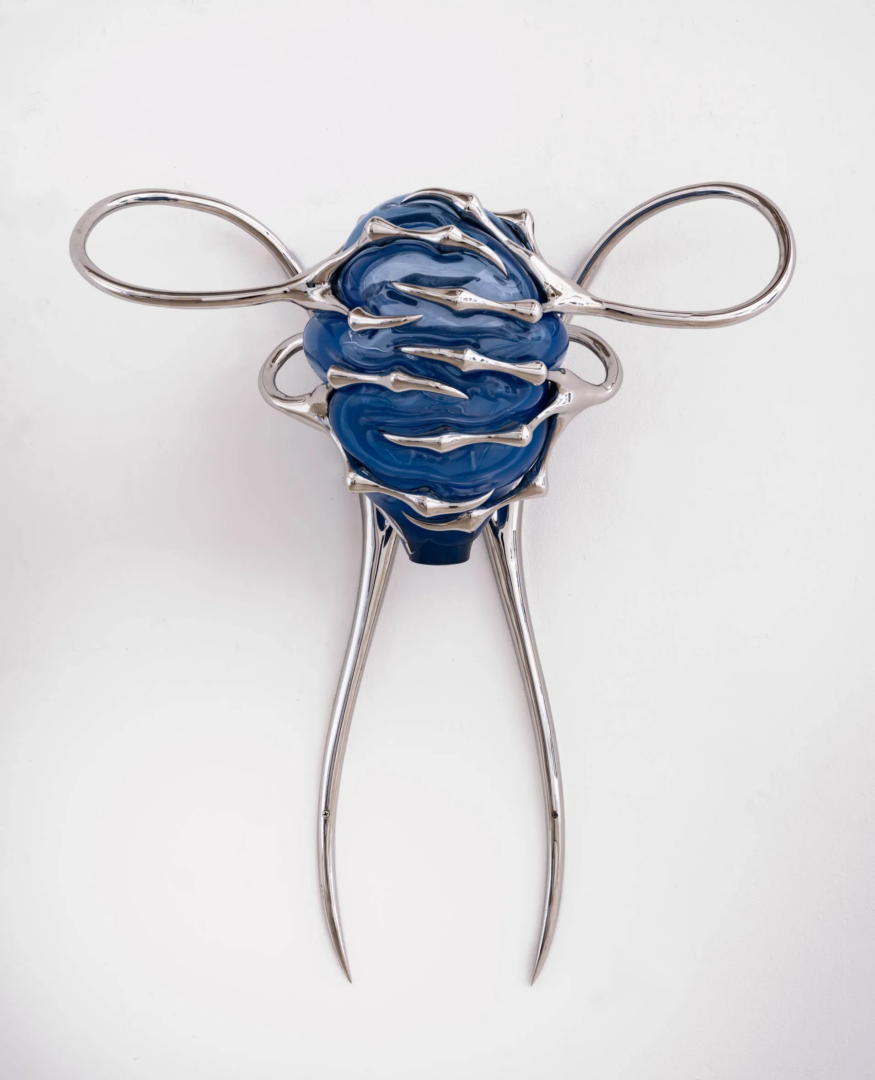
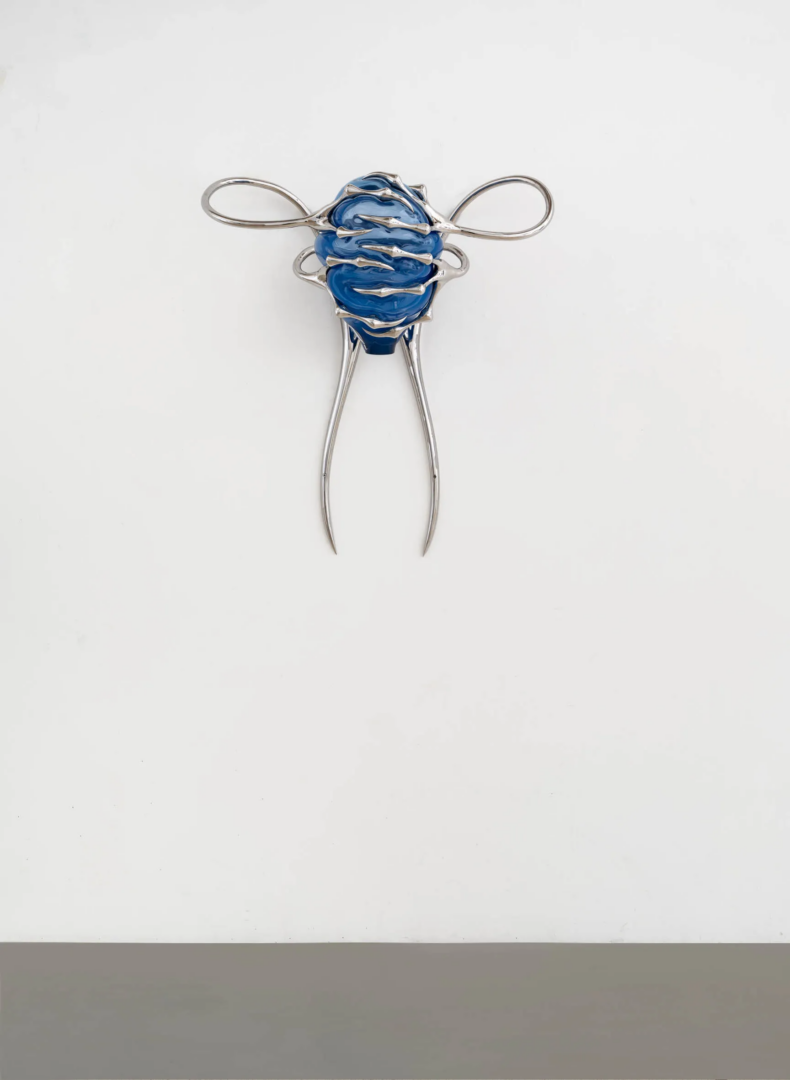
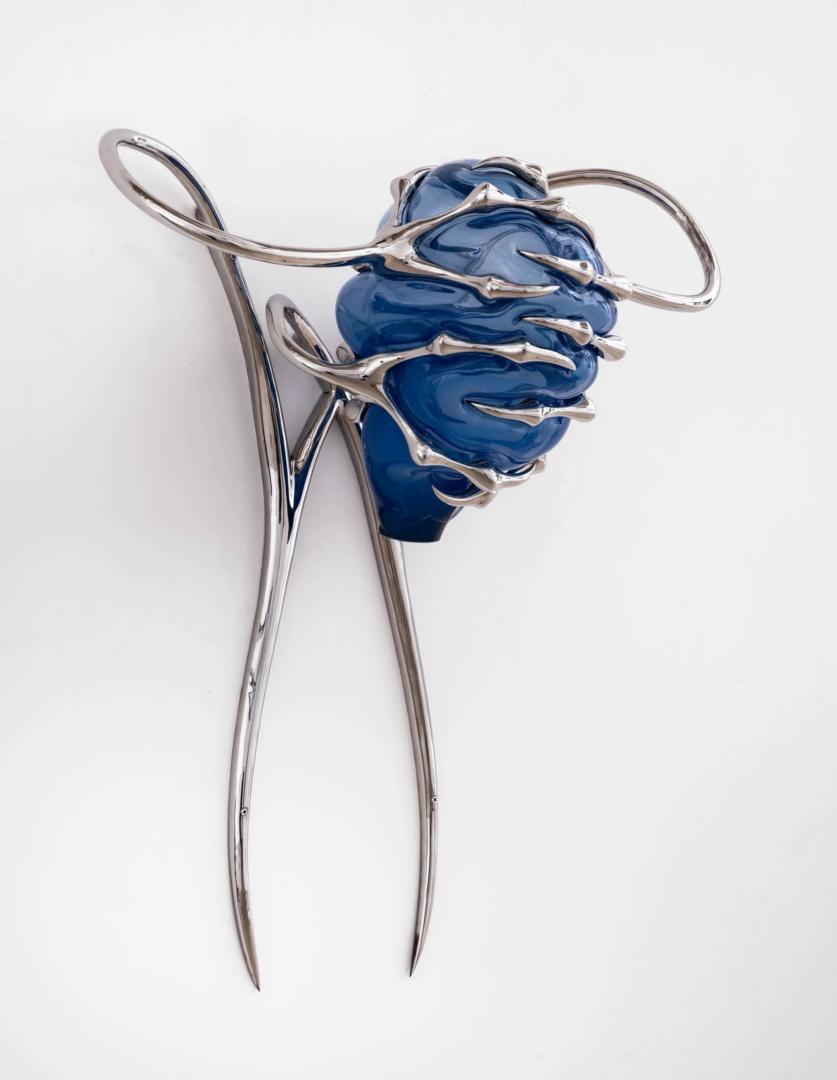
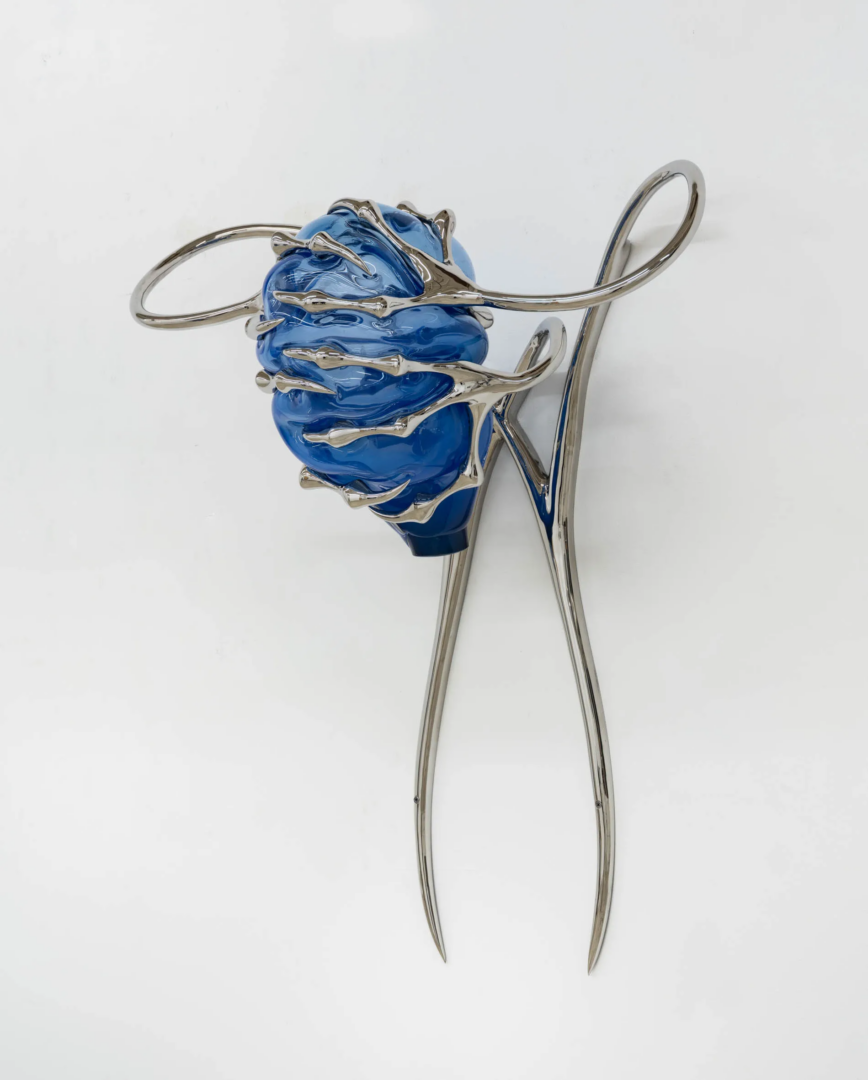
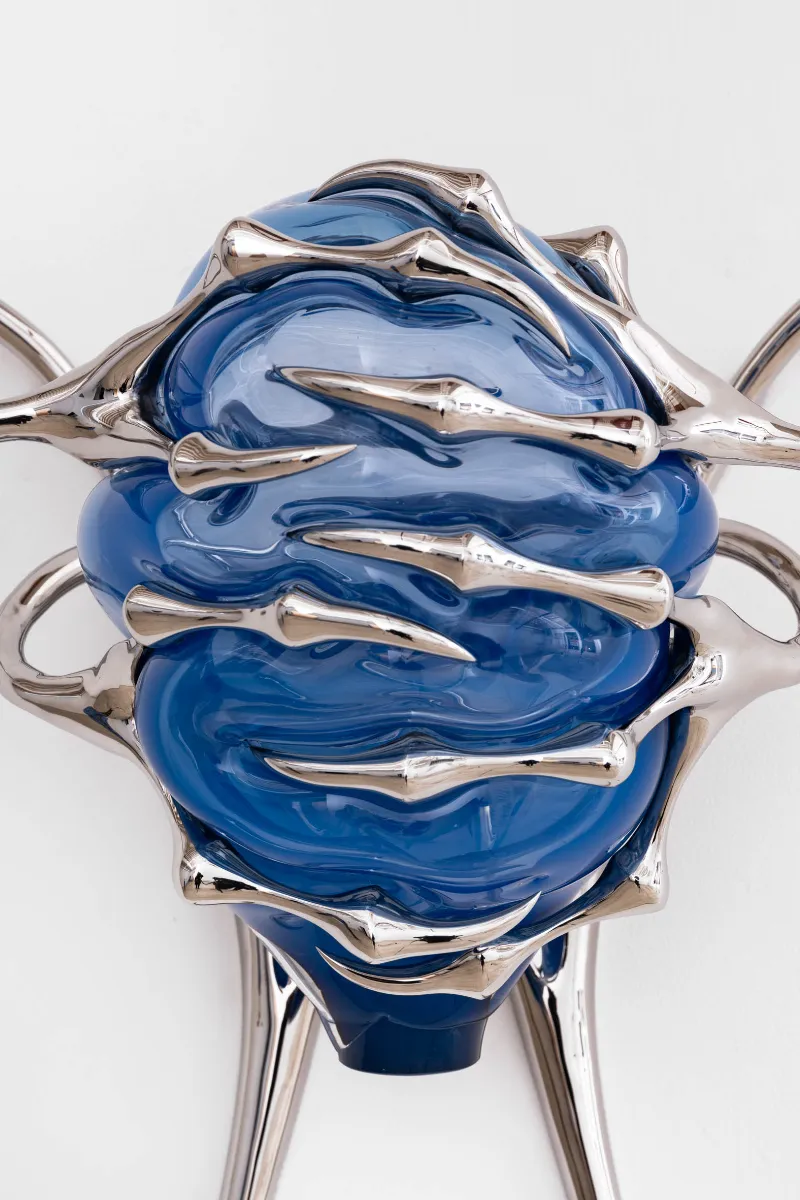
Hannah Levy: The wall works have claw-like elements gripping glass — almost headless creatures emerging from the wall and clutching a blob. The large central sculpture reads like a skeletal silhouette, but it’s partly based on images of cats with arched backs. Whether that translates to other people only becomes clear once the work is installed.
LA: What other images were you working from?
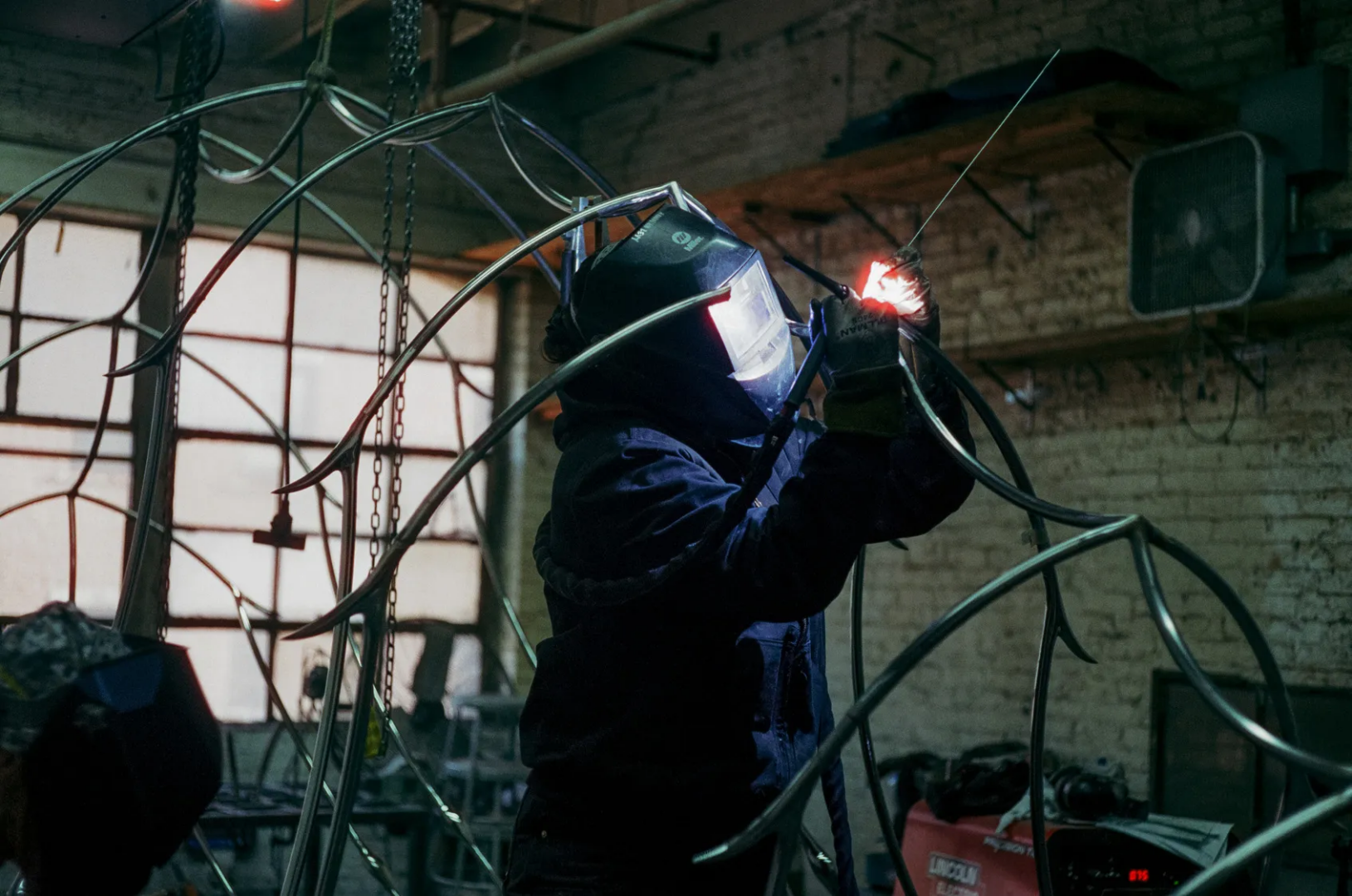
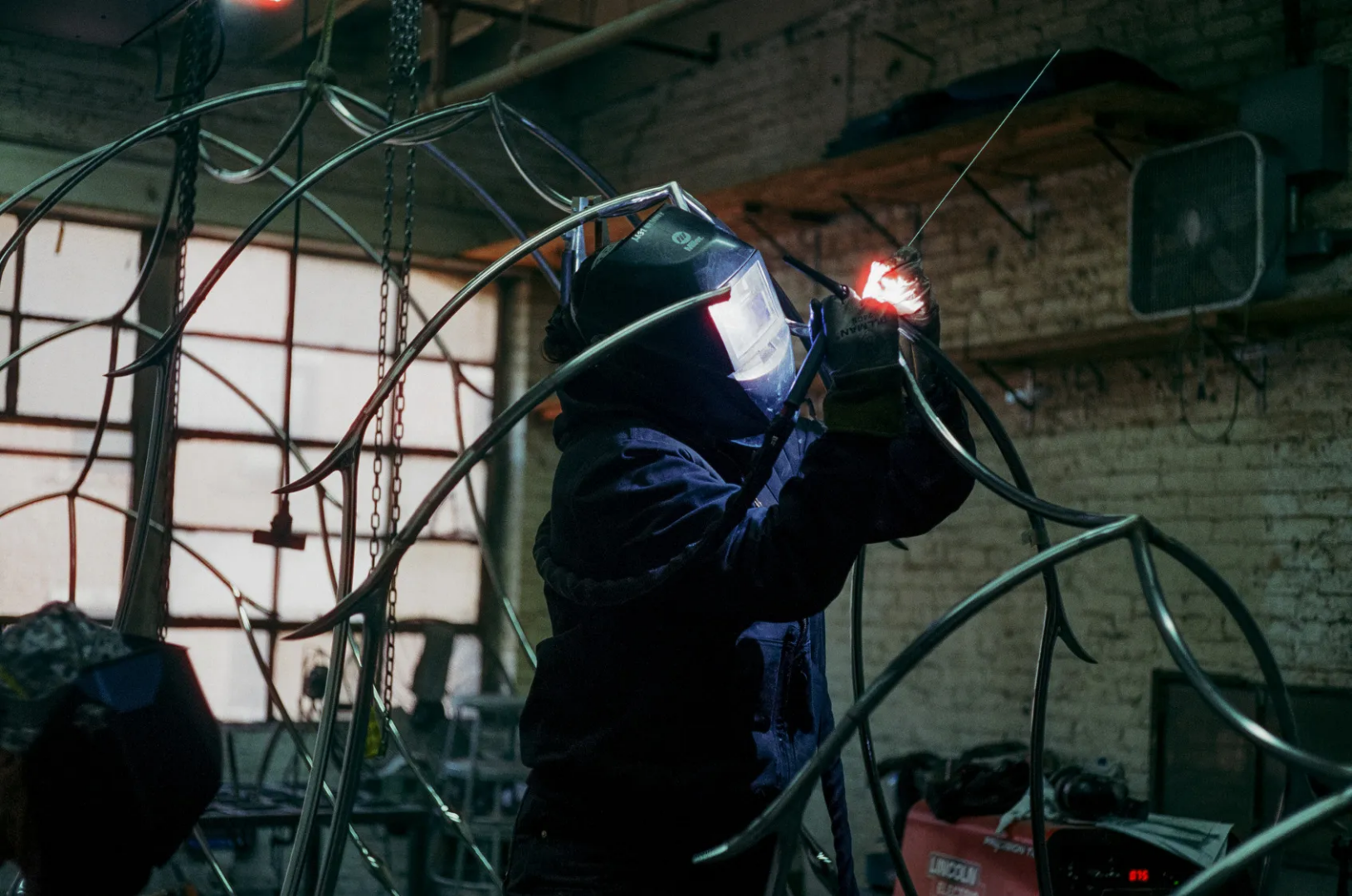
Hannah Levy: The central sculpture is a large tent. When I first saw the exhibition space — long, narrow, with wooden structures in the ceiling — I thought of a skeleton, and of whale skeletons in natural history museums. The tent also references beach shelters, which ties back to the horseshoe crabs and to Nivola. Most of the sculptures have two, three, or four different images behind them. I don’t expect anyone to identify all of them. The goal is to create something that contains familiar elements while remaining strange.
Art, architecture, and the social life of designed objects
LA: Both you and Nivola are described as exploring the boundary between art and architecture. How do you think about that relationship?
Hannah Levy: My starting point is the physical experience of having a body and interacting with things — buildings, furniture, chairs. My interest in design history comes from wanting to understand the social and cultural context of the objects that surround us, because they all have histories that produce the forms we take for granted. There is a lot of overlap between art and architecture, but I don’t feel the need to define how culture at large should think about that relationship.
LA: Would you ever make something intended for serial production?
Hannah Levy: I wouldn’t rule it out, but there would have to be a specific reason. The bench I made for the High Line — in the shape of an orthodontic retainer — made sense because the High Line is first and foremost a park. People sit on it, climb on it. Making something designed for that interaction felt right. If the context demanded it again, perhaps.
Plinths, lost-wax casting, and the blue of horseshoe crab blood
LA: Your work often resists plinths and barriers. Is that the case at Museo Nivola?
Hannah Levy: This exhibition actually includes my first intentionally plinthed sculpture. I don’t categorically reject plinths — I just want them to make sense rather than exist as a default. Even a white rectangular pedestal is another object in the space, and it should earn its place. For this piece, I gave the crabs a long, curved, almost tongue-like tail that the real animals don’t have, and I wanted them hanging off something and flopping over it. I had a pedestal made specifically for that work. The tent sculpture is a different case — it’s very large, and the museum may want barriers around it. In my ideal world it would be something you could walk up to, but that’s ultimately the institution’s call.
LA: You also used lost-wax casting here for the first time. What drew you to that process?
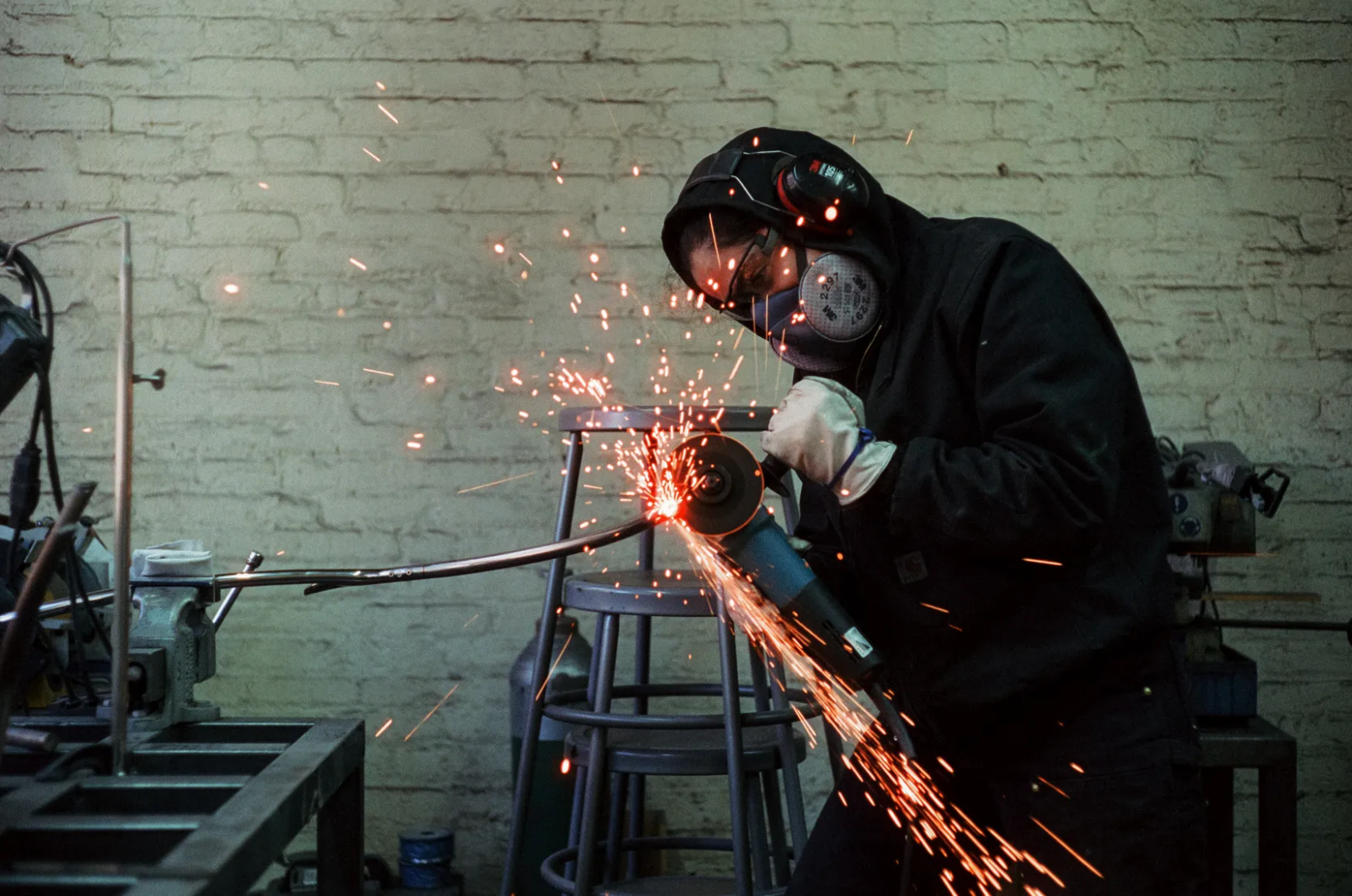
Hannah Levy: It was partly practical. I had made glass versions of the horseshoe crab at a residency and wanted to combine them with metal — the idea was a hard metal outer shell with a blue glass interior. I love the interaction between two materials, and lost wax was the best way to achieve it. I cast the wax and the glass components myself, but worked with a foundry for the metal casting, since I don’t have access to those facilities on my own.
LA: Every piece in the show has some blue in it — a color you hadn’t really used before. How did you arrive at it?
Hannah Levy: When I reference the body in my work, I tend to use colors with bodily connotations. In this case the bodies I was thinking about had blue blood, so blue became the bodily color for the show. There was variation in the color when I looked at images of horseshoe crab blood, so there is variation in the blues across the show as well — but they all refer back to that blood.
Blue Blooded, status, and the ethics of harvesting
LA: The title has an obvious literal meaning, but “blue blooded” also evokes status and distinction — themes that run through your work. Was that double meaning intentional?
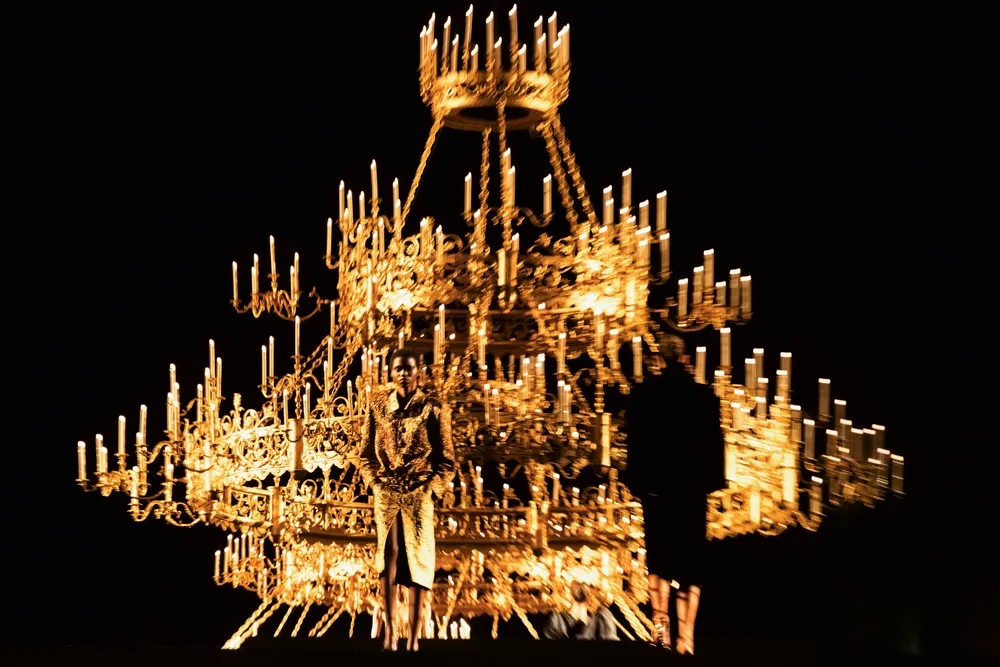
Hannah Levy: Yes, and I liked that it translates directly into Italian. Status wasn’t an explicit conceptual axis here the way it was in works like the chandelier, but beaches carry all kinds of coded class implications — whether you’re there for leisure or work, what you bring with you. It’s present in the imagery without being the subject.
LA: The exhibition also raises a question about care and violence — the horseshoe crab is harvested for medicine but at a cost to the animal. Do you have a position on that?
Hannah Levy: I don’t have a moral conclusion. Some activists argue that medical reliance on horseshoe crabs is actually part of what keeps them protected — that continuing to value them medically may be what prevents them from becoming endangered. So even though the process seems obviously cruel, the ethics are not straightforward. More broadly, if you make and ship objects, you are constantly negotiating that tension between doing the right thing and making work you believe is meaningful. That push and pull is just part of being alive in 2026.
LA: How do you actually ship glass from New York to Sardinia?
Hannah Levy: There is always risk, and it relies on trust in the people building the crates. Glass is one of the most archival materials there is — ancient glass survives in remarkable condition where other materials don’t. So there’s a funny contrast: it ages beautifully, but everything depends on how it’s handled in transit.
LA: And in the worst case you’d end up with something like Duchamp’s shattered Large Glass.
Hannah Levy: Or I would remake it. The metal cages I make for the glass function almost like molds — if you can blow into them once, you can blow into them again. It wouldn’t be identical, but it would be close.
Duchamp, Louise Bourgeois, and the uncanny object
LA: Duchamp comes up in writing about your work — the Bride, the infrathin. Is he a reference for you?
Hannah Levy: Not a primary one. Anyone working today has been influenced by Duchamp in some way, even indirectly. When people first encounter my work, they often assume the metal structures are readymades — preexisting chairs or design objects. They’re not. I put a lot of work into making them look as though they could plausibly exist outside the artwork. So there’s influence, but not direct reference.
LA: Have you ever worked from a found object?
Hannah Levy: Not yet, but I’m not opposed to it. A lot of polished metal furniture is plated, which makes welding onto it toxic. Raw steel or stainless steel would be workable. The right object just hasn’t come along.
LA: Louise Bourgeois is a closer reference. Her spiders come to mind looking at the tent sculpture — and the horseshoe crab is taxonomically closer to arachnids than to crustaceans. Was that part of the appeal?
Hannah Levy: What appealed to me more was the ancientness of the shape — creatures that haven’t had to change for millions of years because they were already equipped to survive. What I take from Bourgeois is her use of materials and her way of thinking through the uncanny. If you want to make something that reads as both furniture and animal, the spider is a natural form to draw from. It’s not a direct visual quote.
Images, cities, and everyday life as Hannah Levy’s archive
LA: What was the final spark that made the horseshoe crab the center of this exhibition?
Hannah Levy: I had been collecting the shells for years — whole ones are rare, so when I found one I’d keep it in the studio. I learned about their role in medicine through a podcast a few years ago, and that’s when I started collecting them with the work in mind. The final spark was discovering Nivola’s connection to the same beach.
LA: You’ve said you keep reference images on your desktop. What’s on it now?
Hannah Levy: Thousands of images — it’s a kind of digital-hoarding. The last thing I screenshot was probably an Art Nouveau fence ornament. The problem is that when I need something I have to search through hundreds of images to find it, and half the time I can’t remember whether it’s on my phone, my desktop, or somewhere else entirely. Organizing them is permanently on my to-do list.
LA: Outside of art and design, what are your main cultural influences?
Hannah Levy: Cities. Daily life in cities. My favorite thing is to walk around and absorb what’s happening — I always preferred the street to the park. Everyday things in the world are probably my main reference point above anything else.
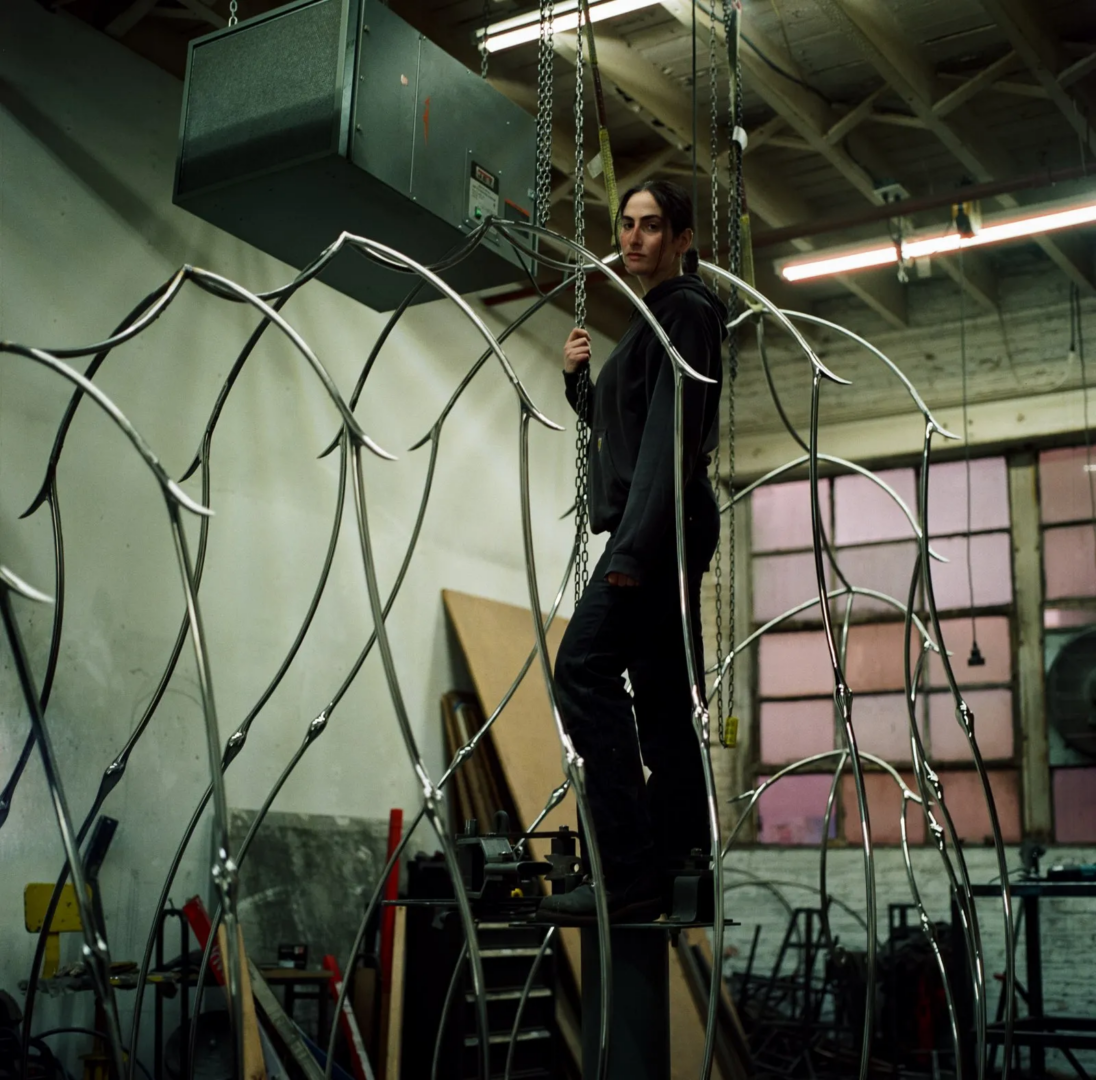
Hannah Levy (New York City, 1991) lives and works in New York. Recent solo exhibitions include Casey Kaplan, New York; BAMPFA, Berkeley; and The Arts Club of Chicago, alongside her 2021 High Line Commission Retainer. In 2022, she participated in the 59th Venice Biennale, The Milk of Dreams.
Luca Avigo